On Sept. 22, 2008 The Cedar Rapids Gazette published my letter to the editor, titled, “Americans should reject new type of patriotism.” Too few people got the message, so here it comes again.
Americans should reject new type of patriotism
Most veterans don’t talk much about their service. Concerned that we might lose our lives in combat, we signed up and mustered out hoping to make the military a better place by devoting our best efforts to it in the defense of our values. We did it for duty, honor and country, and this is the essence of patriotism.
Patriotism does not belong to a political party. Veterans pay attention to where the country is going, engage in public discourse, and believe it is our responsibility to do so.
Yet there is a new form of patriotism that is unacceptable: the patriotism that proclaims “America first.” True patriotism concerns itself with ethics, law and devotion to the common good.The new patriotism concerns itself with the moral responsibilities toward other members of “our” group and by definition diminishes responsibilities toward non-members. New patriotism manifests itself in English-only legislation, poor treatment of returning casualties of war, and blindness to the effects of war on foreign populations.
New patriotism can accept extreme poverty, famine and genocide in African countries. New patriotism says, “what’s in it for me?” without regard for the impacts that wish fulfillment may have on the rest of society.
As a veteran, I will have none of this new patriotism, nor should any of us if we care about our country.
A year ago Governor Kim Reynolds signed a proclamation of disaster emergency regarding COVID-19. It’s still on. I had to get out of the house today to preserve my sanity.
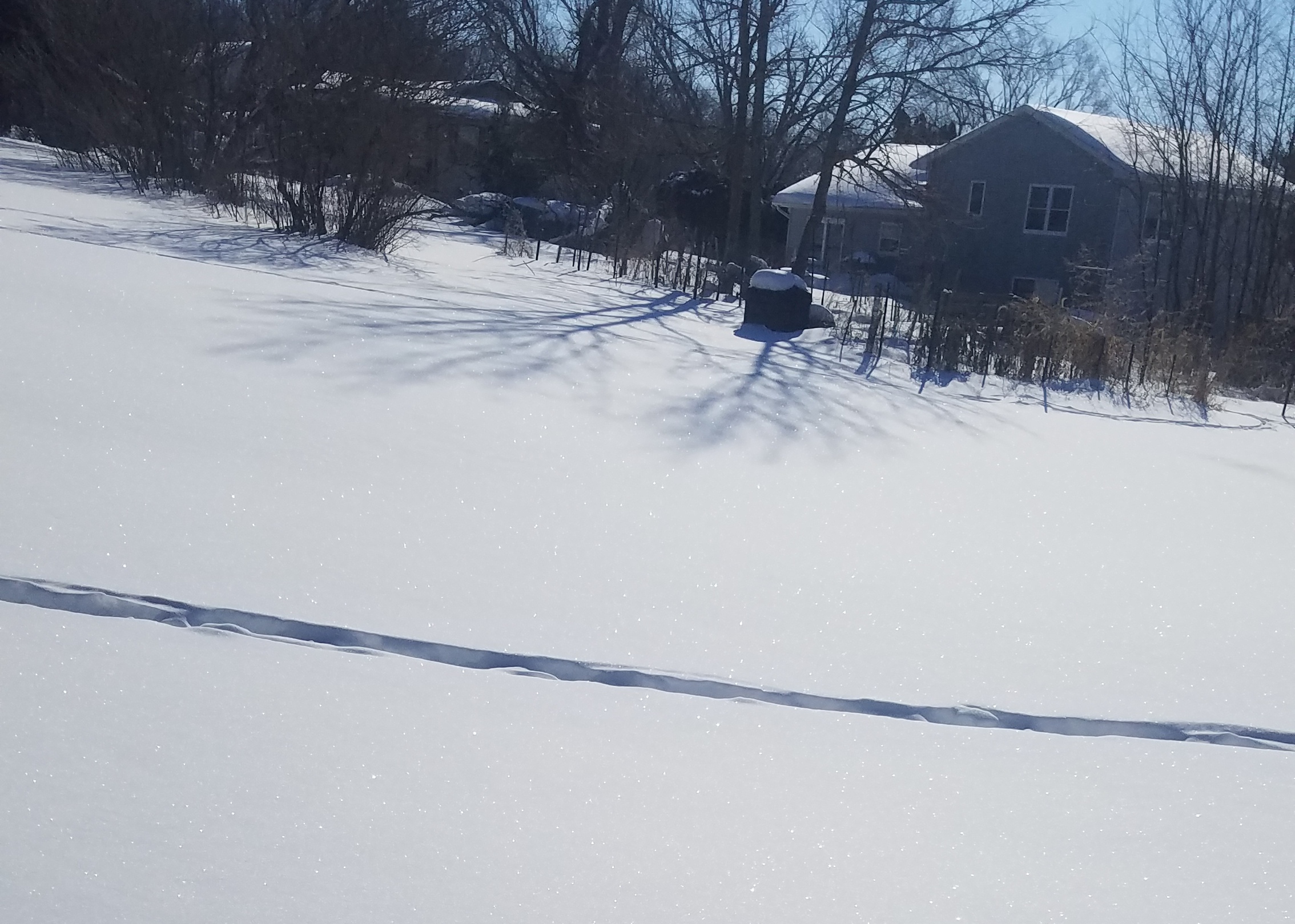
I put on my army boots with buckled overshoes bought in Indiana, my Carhartt coat from the home, farm and auto supply store, the U.S. Army issued scarf I wore in the Fulda Gap, my Johnny’s Selected Seeds stocking hat, and ventured into the unbroken snow. I found deer tracks and followed them to the black composter. It was a cure for cabin fever.
A large animal lay down in the snow near an apple tree, leaving a mark in the snow. I walked all around the house and emptied two five-gallon buckets in the composter. The ambient temperature was really comfortable and bright sunlight felt good. I wasn’t outside long, enough to break the spell.
On days like this it is tough to concentrate. I finished seasoning the new cookware and stored the pieces. I washed dishes, and viewed our daughter’s on-line stream. While there was plenty of work, I didn’t feel like doing much of it. Cabin fever.
Of course, it’s now tomorrow. A chance to begin work anew. Also it’s Friday, whatever cultural resonance that might evoke in the post work-a-day world of the coronavirus pandemic.
If one needs a palate cleansing after the bitter taste of the Trump years, Stacey Abrams’ Our Time is Now is just the book to read.
I didn’t know what to expect going in. I knew of her close Georgia gubernatorial race in 2018. I followed the Georgia U.S. Senate runoff elections last month and knew she played a role in voter turnout after declining to be a candidate herself. If anything surprised me about the book, it was how timely is Abrams’ message as the Biden-Harris administration gets to work.
There are some key takeaways:
She emphasizes the importance of counting everyone during the U.S. Census. Undercounting the poor, persons of color, and other disenfranchised U.S. residents serves to further disenfranchise them. President Trump attempted to politicize the U.S. Census. President Biden reversed Trump’s executive actions and seeks to give the Census Bureau needed time to make the best count possible. That means a delay in states receiving information required for their decennial re-districting process. Biden knows what Abrams suggested: the U.S. Census is important to restoring political power to people.
Abrams emphasizes that people should vote. She also criticized the voter targeting methods use in the 2016 and 2018 Democratic campaigns. Voter registration continues to play a key role in citizens gaining political power. It goes without saying voting does as well. The conclusion I drew from the book was that no voter should be ignored during campaigns.
The book refreshes our collective memory about voter suppression efforts by Republican lawmakers. Abrams’ story was she overcame systemic voter suppression during her Georgia gubernatorial campaign by the sheer number of new voters they activated. The permanent solution is for voters to take control of the electoral process by electing more Democrats at every level. With Democratic control of state legislatures, it is less likely voters will be suppressed.
As a child I learned the importance of civic engagement. Unlike most Americans today, I study the issues and candidates, and vote in every election. I don’t know what happened yet we need to return to that basic tenant of governance. If we seek to retain government by the people, participation is required. That is Abrams’ message.
I read a lot of political books and Abrams’ book is well-written and relatable. If we seek to move our country forward, elect more Democrats. Stacey Abrams has provided a roadmap in Our Time is Now.
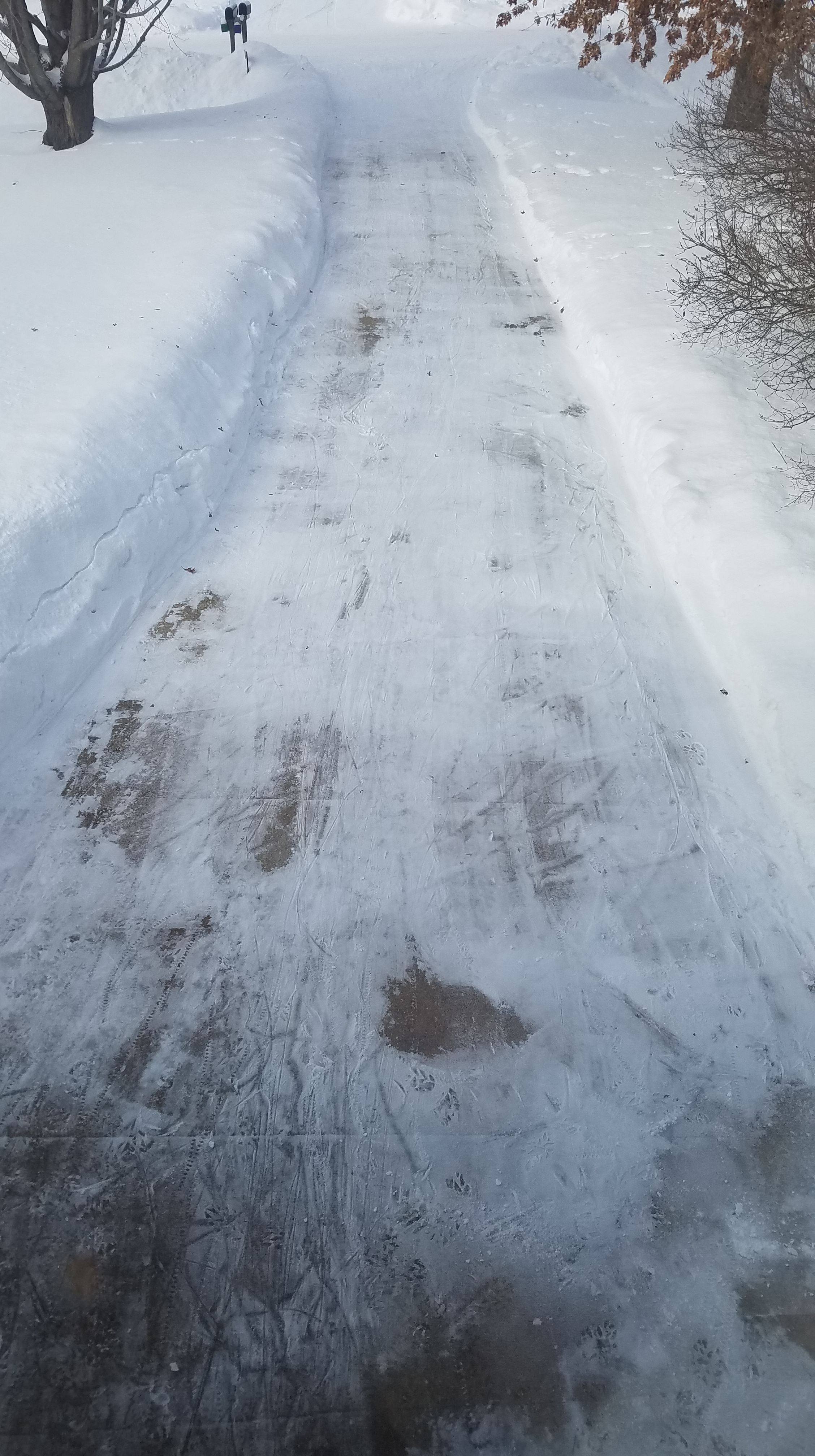
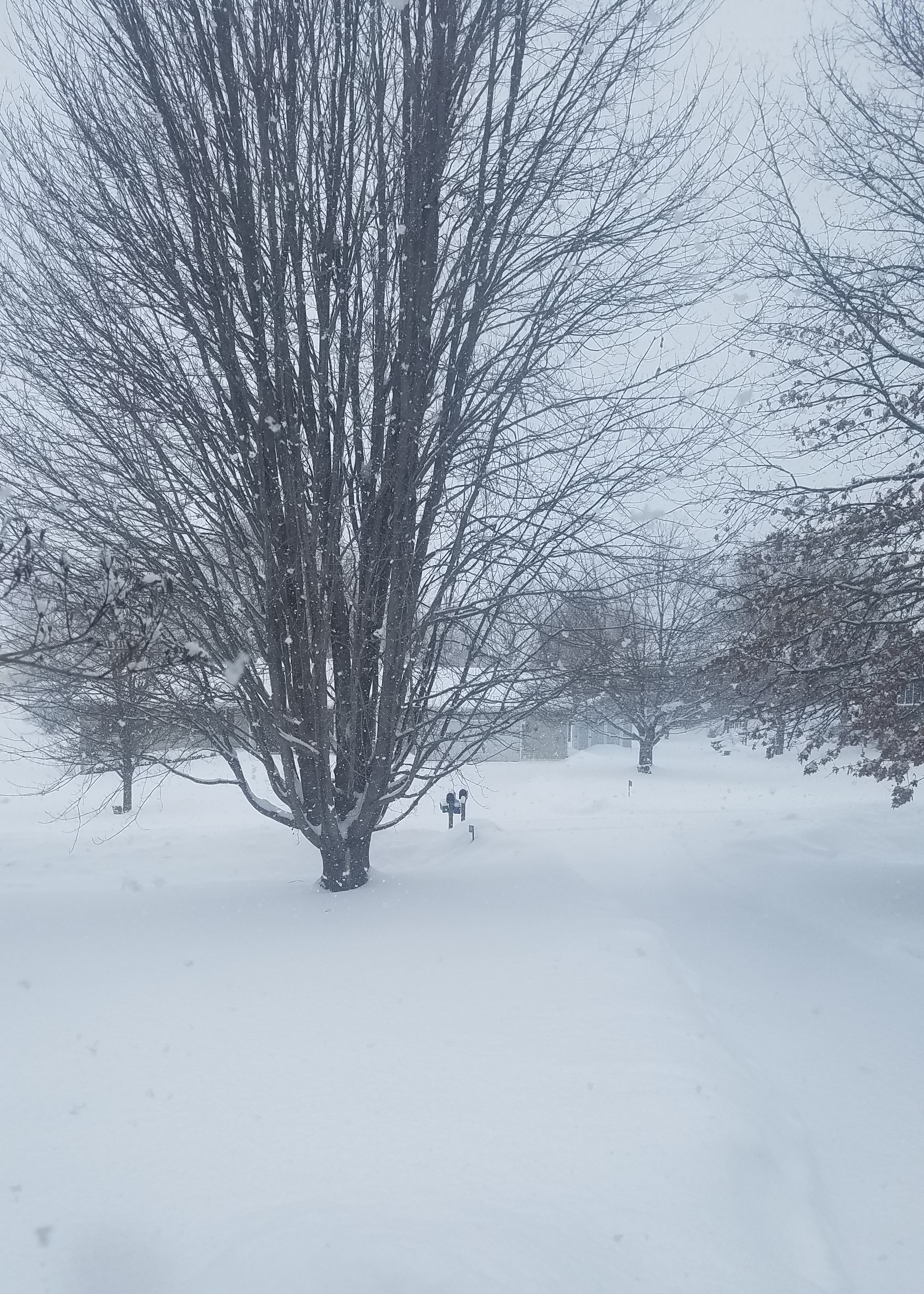
I cleared the driveway of snow a dozen times this year, including yesterday. There has been snow cover for weeks and it is expected to continue. It’s the first real winter, the kind we had when I was a kid, in a long time.
The record-setting cold that has gripped the central U.S. has pushed snow cover across the 48 contiguous states to an all-time high in the 18-year database of the National Operational Hydrologic Remote Sensing Center.
Snow covers about 73.2 percent of the U.S. to an average depth 6 inches (15 centimeters), according to the agency. A year ago 35.5% was covered to an average depth of 4.6 inches.
Restricted at home during the coronavirus pandemic, there are new things to explore. While tracing an internet order, I noticed the delivery vehicle had a satellite tracking device which updated location every 10 – 30 seconds. For a while, in between reading passages in a book, I followed the truck around our area on the map, noting where it stopped and the routing. The driver used roads I don’t normally think of using. There were a lot of stops. Anticipating arrival of the package, I opened the curtain and watched her truck pull up. Curiosity satisfied, I’m not going to spend a lot more time at this yet it’s something new to break the pattern of living at home with just the two of us. A different aspect of life in Big Grove.
I spoke to the local medical clinic to confirm my upcoming blood test and follow up appointment. They will provide the COVID-19 vaccine once it becomes available. They didn’t know when that would be. If they have it by my appointment, I can get it then. That’s the second opportunity in our area once the vaccine supply chain starts flowing.
It appears the new president takes the pandemic seriously and we have a chance to return to normal. At a town hall meeting in Wisconsin last night, CNN reported this from President Biden.
President Joe Biden would only commit to a return to normal by next Christmas during a CNN town hall on Tuesday, saying he did not want to boost Americans’ hopes when he could not be certain of a still-early vaccine rollout.
The prediction of nearly another year in pandemic-dampened conditions was admittedly not optimistic. But Biden still said it was as good as he could offer with any level of confidence.
“As my mother would say, with the grace of God and the goodwill of the neighbors, that by next Christmas I think we’ll be in a very different circumstance, God willing, than we are today,” Biden said. “A year from now, I think that there’ll be significantly fewer people having to be socially distanced, having to wear a mask.”
He added: “I don’t want to over promise anything here.”
An octogenarian friend talks about “shooting from the hip.” The way I take it is absent guidance, leaders will step up and help us navigate through difficult times together, leaving no one behind.
We need more of that because our political leadership is failing during the coronavirus pandemic and the resulting economic crisis.
Responding to a perceived need, and not any urging from government, my friend began organizing the logistics for a mass COVID-19 vaccination near where we live. With the structure in place, one hopes the supply of vaccine will be forthcoming. I expect it will be eventually.
People do plan for emergency response. They should. That such planning for a pandemic response appears absent from our government makes leaders among us shoot from the hip because the need is now, and it is real. Maybe that’s what our governor wants. She should just come out and tell us we are on our own. It is one hella way to go about a national and global crisis, though. It makes me wonder why we even have a government if it cannot respond adequately to a once in a hundred years pandemic.
On Feb. 6, 2020, a 57-year-old California woman died suddenly after feeling ill for several days. She was the nation’s first known victim of the coronavirus.
Since then, more than 462,000 U.S. residents died from the virus, including more than 5,000 Iowans. Despite modern communications and improved record-keeping we don’t know the exact number of COVID-19 deaths. Causes of death can be complicated in normal times. Suffice it many have died of the virus, or complications from it, and it seems likely we will surpass the number of deaths during the 1918 influenza pandemic.
The combination of physical isolation and communication via social media has made the last year a weird one. Because of the isolation, especially by exiting my retail jobs, I felt healthier during this time than I have for a while. Social media, on the other hand, seems populated by people with their hair on fire about one or another aspect of the pandemic and government response to it. Of things I can control, turning social media off most of the time is one of them. The reduced diet of noise has been better for me. I recommend it.
A year after a national public health emergency was declared by the U.S. Department of Health and Human Services on Jan. 31, 2020, the death toll climbs, unrelenting. After surging, the number of hospitalizations were recently down in Iowa, which contributed to the governor’s decision to relax her recommended restrictions, according to news reports. Frequent email reminders from the state government, to take a survey and get tested for COVID-19 if needed, ceased some time ago.
In our area the senior citizens group is organizing logistics to do a mass vaccination (300 doses) at the Catholic Church in partnership with the local pharmacy. The idea is to help seniors with limited mobility get vaccinated. When doses of vaccine will be available is unknown. I signed up for the vaccine and to volunteer.
Friday afternoon, Iowa Governor Kim Reynolds issued a new proclamation of disaster emergency. Because of our age, we fall into the category “vulnerable Iowans.” Here is the governor’s guidance:
I continue to strongly encourage all vulnerable Iowans, including those with preexisting medical conditions and those older than 65, in all counties of the state to continue to limit their activities outside of their home, including their visits to businesses and other establishments and their participation in gatherings of any size and any purpose. And I encourage all Iowans to limit their in-person interactions with vulnerable Iowans and to exercise particular care and caution when engaging in any necessary interactions.
Governor’s proclamation of disaster emergency, Feb. 5, 2021.
This is Iowa. No mandates here. People are on their own. Just do the best you can.
The coronavirus pandemic is unlike anything I’ve known. So far, so good, despite a lack of political leadership in preparing for a potential pandemic, or, after it arrived a year ago, in mobilizing national resources to combat it. Iowa and the nation are playing catch-up.
For people in our group — financially stable, without major health risks, and able to live without working a job for pay — it is easy to figure out what we can be doing to stay healthy. Neighbors who contracted COVID-19 have recovered, except for those who died. There is no sense of everyone pulling together to get through the pandemic, which is disappointing.
We have become isolated in society, waiting to see the existential facts of what the virus is and what it does to us. It’s a sad day for a nation that mobilized to enter and win World War II. I suppose too many people don’t remember the people who fought that war to make the analogy meaningful. I remember and am doing what I can to help.
Depending upon which family tree one ascends, I am fifth generation American. The line descends from Prussia near Poznan during the late 19th Century partition of Poland. American politics was not as high on the list of priorities in 1883 when great great grandfather bought land.
An account of the funeral of the first Polish immigrant in Lincoln County, Minnesota says who we are as well as anything.
The first death that occurred after the Wilno Poles arrived “out of the wind,” as Róza Górecki had put it, was an occasion not only to mourn the deceased, but also to reflect on being buried in an alien land, far from the graves of friends and relatives. The funeral of Anna Felcyn (who died leaving several small children) in 1886 featured a procession with 30 wagons. Beginning at her home at 8 a.m. and proceeding past nearly every farm in the community, the procession lasted for six hours before reaching the church. Everyone stopped work for the entire day to attend the funeral Mass. A final procession to the cemetery — nothing more than a plot of land set in the vastness of the wind-swept prairie — ended in a graveside sermon by the pastor that was so emotional that all present — men, women and children — were moved to tears.
Poles in Minnesota by John Radzilowski
What stands out in this story is the sense of community. It takes a commitment to each other to make a six-hour funeral procession to the church. Over the years, these Minnesota Poles stuck together in numerous ways. After the turn of the century, the community advocated for Polish independence and for U.S. Government aid for their struggling homeland. They elevated George Washington and Abraham Lincoln into the pantheon of Polish heroes like Tadeusz Kościuszko and Kazimierz Pułaski in a process of assimilation that preserved their Polish ethnicity while entering the mainstream culture of Americans. Their politics came from this sense of community and causes that mattered to them based on their recent immigration and efforts to settle in Minnesota. I don’t know if they viewed it as “fun” yet absent these cultural ties, our politics has become less so.
Vestiges of community remained when I was growing up. Not so much a Polish community — although there was that — as much as a cross section of society created by my Virginia-born father and Illinois-born mother moving to and living in a community of mostly descendants of German and Irish immigrants.
Working out of the union hall where he was a member, Father organized the neighborhood to elect John F. Kennedy in 1960. When he finished organizing our neighborhood, he helped with another one nearby. The union hall provided the materials, although there were no computerized databases of voters like there are today. He worried about who lived here and how they might vote.
I was spoiled by the landslide victory of Lyndon Johnson in 1964 at age 12. Given recent Democratic presidents — FDR, Truman and Kennedy — I figured our party would dominate politics going forward. Living in Iowa, I knew the state was Republican yet Johnson’s decisive win created a false sense of security that political things would proceed in a commonsense, productive manner. Then came Nixon.
During the Nixon administration our politics lost grip of the rudder. He made some positive, logical steps in governance. He was perhaps the last president to do so in a way that benefited every American. At the same time, he appeared a drunken, vindictive, and lying politician. In the end, he was forced to resign. Since then, the party of our presidents rotated between Republican (Ford, Reagan, Bush I, Bush II, Trump) and Democratic (Carter, Clinton, Obama, Biden). The main common political direction has been supporting the military by spending too much money. For the rest, Republicans negated Democratic initiatives and vice versa as time went on.
After Nixon, the potential for a landslide election like in 1964 was diminished. Increasingly our electorate became divided into factions. It took a global pandemic to enable our politics to focus on resolving the contagion and the economic crisis it helped create. When Joe Biden won the election it was absent a feeling of jubilation. Responses were subdued, more a sigh of relief that we could grab the rudder and steer the ship more toward sanity and discipline, at least for the next four years.
There is no returning to the 19th Century sense of community. Remnants remain yet it is no more as it once was. In the fifth generation since immigration I see we must make our own way. In politics we seek other means to connect with fellow citizens, although the connections are not deep as they once seemed. Increasingly achieving political goals is not fun. Those of us with progressive ideals accept political solutions to our most pressing problems are beyond the ken. On the long journey home we accept its length.
From time to time images of the six-hour funeral procession come to mind. We don’t understand fully what we’ve lost.
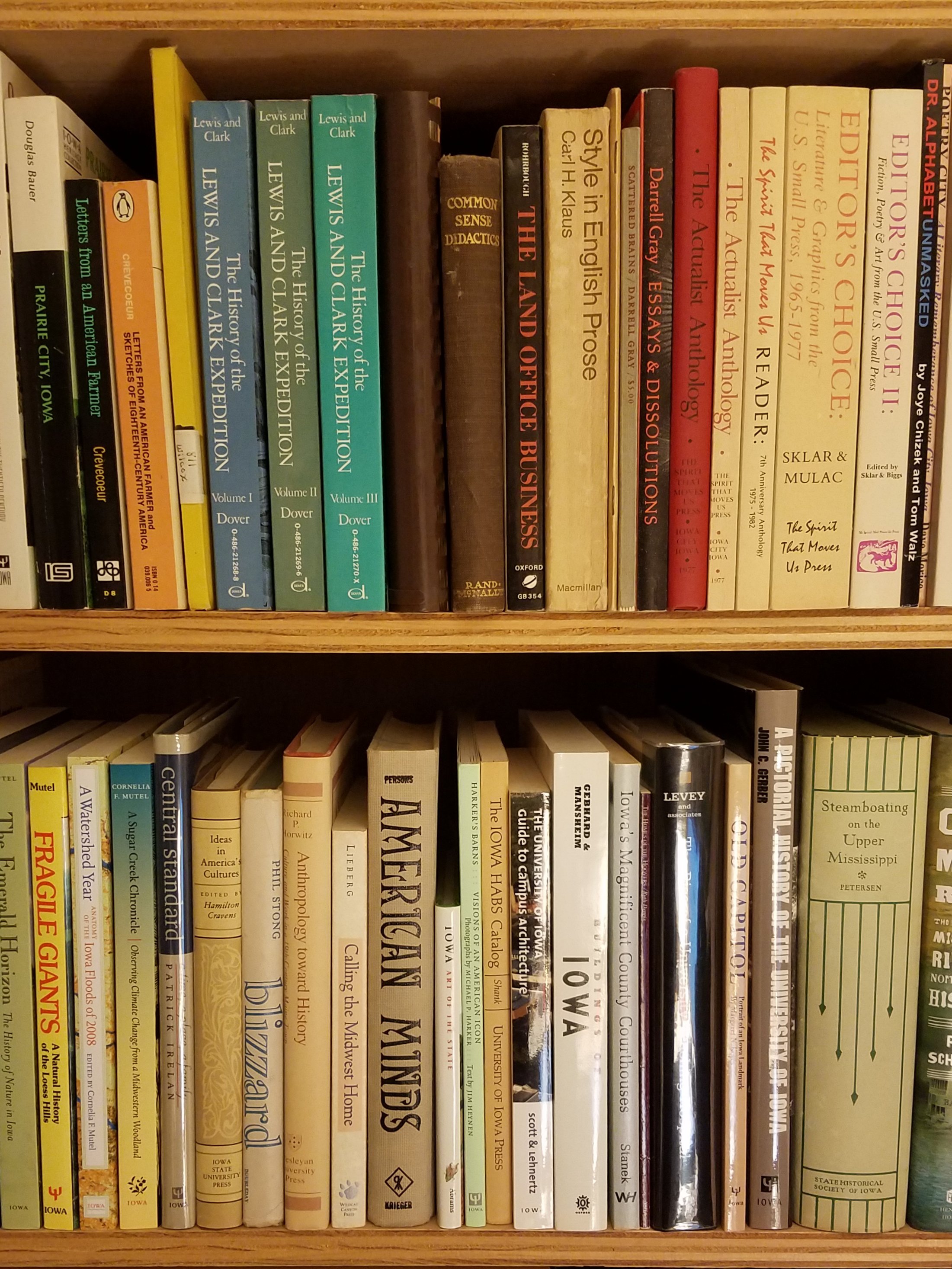
Toward the end of my seventh decade I continue to buy books. I should stop, turn that around, and reduce my stacks each week. I am loathe to do it.
From my earliest days, going back to 1959 at least, I had a small library of books either given to me, or once I started working, ones I bought. The library has grown too big, and in truth, that happened years, maybe decades ago.
The easiest change would be to start reading books on an electronic reader instead of buying paper copies. Readers are convenient and the font size can be adjusted, making words easily legible. Quality of eyesight is increasingly an issue. A reader is better for reading in bed, and in a recliner or comfy chair. It would not be a big change to start reading fiction in that format. Adopting technology is a good thing and it would stop growth of the stacks.
A lot of volumes in my library were written by people I know, with whom I took classes, or did things. Others were special gifts. They have a souvenir value, a remembrance of time together.
For example, I made a driver recruiting trip to Southern Illinois University where, in addition to my recruitment event, I spent time with some teachers who felt isolated in the coal mining area. Students were more interested in getting a job in the trades — truck driving, coal mining, or manufacturing — than in learning. The teachers stuck together as a form of intellectual society. One of the group was Lucia Perillo who wrote a book of poetry, The Oldest Map with the Name America. I return to it often as a reminder of the challenge of intellectual pursuits in our time. I don’t recall if I met Perillo, but she was part of the group and it doesn’t matter to the memory.
The problem with books is they can be used as reference materials for my writing. It is a justification to keep almost any book. The idea I may return to it later for “research purposes” may sound good, but there is so much research and so little time. I need to thin the stacks. That, too takes time.
Our daughter expressed an interest in inheriting my books when I go. It would be a crime to leave her everything because some are more significant than others. If anything, the ideas of an inheritance will force a reckoning, a reduction in quantity, and an improvement in quality.
I started filling boxes that arrived containing mail ordered books with duplicates and others in which I lost interest. The idea is to give them to the public library for their used book sale. I have three boxes so far and it’s a start. I should fill more boxes.
Books are an addiction. In the scope of things, it is an inexpensive addiction. I spend no time on sports, movies and television, and go shopping only when we need something. Books can produce value in our lives. I’m reading more of them. Partly due to the coronavirus pandemic, but also because I realize the limited number I can consume before my inevitable ending. There is an increased urgency to read.
A friend said I should get rid of all the books. So did my late Mother. While I’m not ready to do so, a reasonable goal is to fit all of my books in the writing room. I have a long way to go to accomplish that, if it can be accepted as an operating premise. Today, I’m not sure it can.
The Federal Contested Election Act of 1969 is the statutory basis, designed by the Congress, to resolve election disputes like the one between Rita Hart and Mariannette Miller-Meeks in Iowa’s Second Congressional District. With a six-vote margin, it was as close as it could get.
The Hart campaign identified 22 legally cast votes that were not counted. Miller-Meeks has not contested them. They should be counted.
I read Miller-Meeks’ response to the appeal and it argued, in part, Hart did not exhaust all state-level venues for her contest. No she didn’t. That is not relevant. There is no legal requirement under Federal law to exhaust other remedies in this election dispute. If anything, the House Administration Committee is exactly where this dispute should be decided as the Congress designed the statute specifically for this type of case.
I would understand if Miller-Meeks contended the 22 ballots identified by Hart were in some manner suspect. She didn’t. Whatever the Congress decides on the rest of it, those 22 votes should be counted.
~ This letter first appeared in the Jan. 28, 2021 edition of The Daily Iowan
In The Hidden History of American Oligarchy: Reclaiming Our Democracy from the Ruling Class, Thom Hartmann recounts three periods of increased hegemony of oligarchs in American society. He posits that with the inauguration of Joe Biden as president on Jan. 20, 2021, we citizens have work to do to reclaim our democracy from the control of wealthy Americans.
The history of increased influence of wealth in the United States is becoming well known. Stories about it appear frequently in newsletters, on radio and television, and in books and other publications. In this book, Hartmann adds a needed layer of historical context to the discussion.
Readers may be familiar with the Powell Memo, Citizens United, the rise of dark money interests coordinated by Charles and David Koch, and the power they wielded to take control of our government, including the judicial, legislative and executive branches. Donald J. Trump’s presidency is a logical extension of these influences. We left democracy behind and become an oligarchy ruled of, by and for the rich, Hartmann said. The next step is tyranny if democratic values don’t return to dominance.
“The United States was born in a struggle against the oligarchs of the British aristocracy,” Hartmann wrote. “Ever since then the history of America has been one of dynamic tension between democracy and oligarchy. And much like the shock of the 1929 crash woke America up to glaring inequality and the ongoing theft of democracy by that generation’s oligarchs, the coronavirus pandemic of 2020 has laid bare how extensively oligarchs have looted our nation’s economic system, gutted governmental institutions, and stolen the wealth of the former middle class.”
Hartmann lays out his argument in plain, easy to understand terms and gets to the crux of it quoting former President Jimmy Carter, “So now we’ve just seen a complete subversion of our political system as a payoff to major contributors, who want and expect and sometimes get favors for themselves after the election is over…. The incumbents, Democrats and Republicans, look upon this unlimited money as a great benefit to themselves. Somebody who’s already in Congress has a lot more to sell to an avid contributor than somebody who’s just a challenger.”
More simply put, Al Gore said in his 2013 book, The Future: Six Drivers of Global Change, “American Democracy has been hacked.”
The book quickly works through the origins of oligarchy in America from the invention and wide use of the cotton gin, the rise of industrial robber barons, and the Reagan revolution. Hartmann’s focus is not only on reminding us of history.
In the final section Hartmann details a dozen ways to break the hegemony of the oligarchy. They include addressing media, taxing the rich, restoring election integrity, and rebuilding a progressive Democratic Party. While readers can’t do everything alone, the book serves as a roadmap for where progressives can go from here to combat the oligarchy.
Like Hartmann’s other Hidden History books, this one is a quick but important read for people who are engaged in progressive politics and seek a change from the power of moneyed interests and concentration of wealth among the richest Americans. The Hidden History of American Oligarchy is a must read. It will be released on Feb. 1, 2021.




 Journey Home
You must be logged in to post a comment.