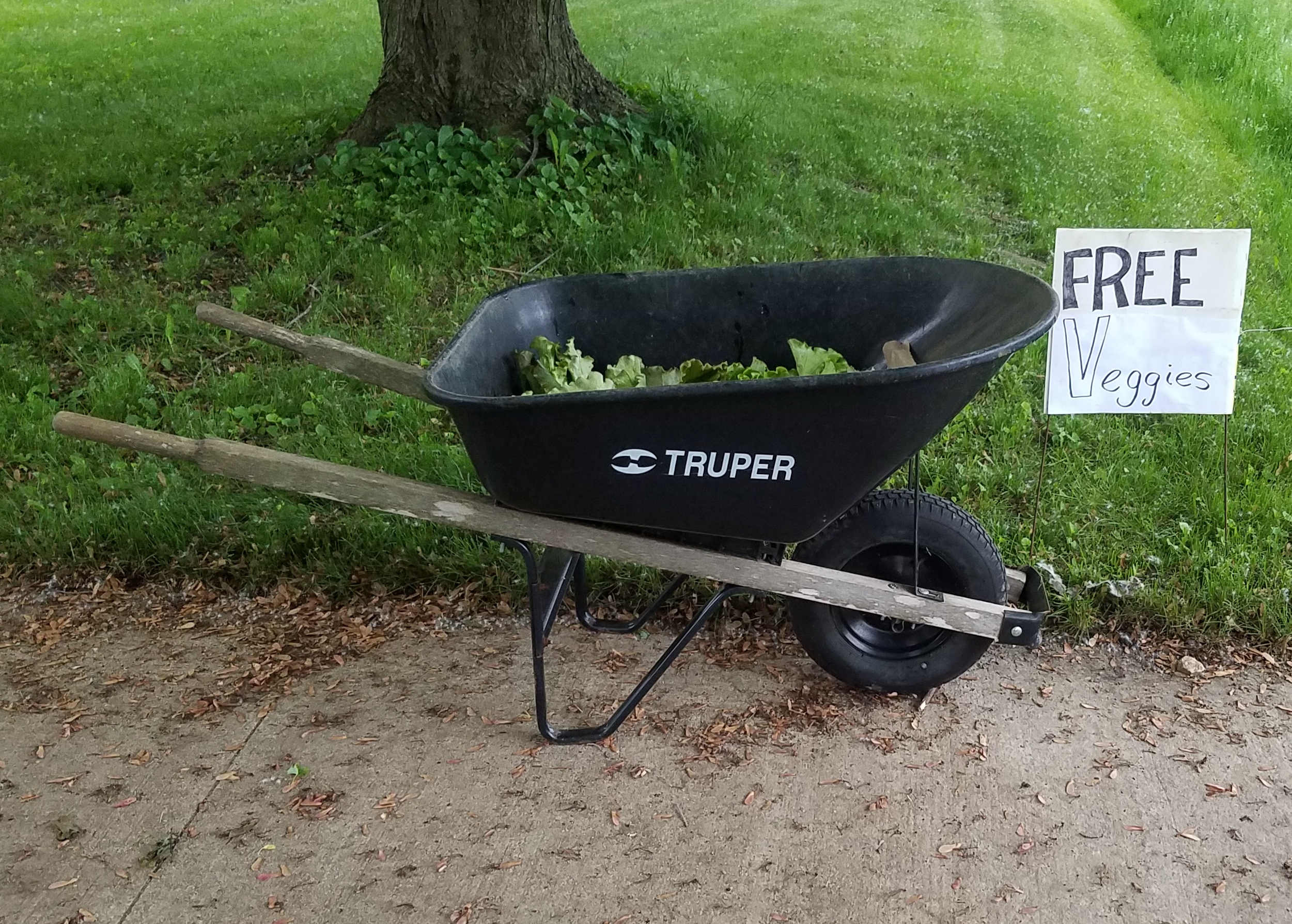
I reached out to a long-time friend who manages the community food bank to ask if they would like some of my excess garden produce.
“We would be most grateful for your fresh produce!” they emailed.
I put a recurring event on my calendar to deliver something every Monday morning beginning June 7 through the end of season. I look forward to seeing her in person on Monday, for the first time since an event during the Elizabeth Warren campaign before the Iowa Caucus.
The goal of a kitchen garden is to match garden production with what a cook can use in the kitchen. Gardeners put a lot of promise in the ground and not all of it comes to fruition. When it does, though, it is time to share the bounty. What better way to do it than donate food to people who need the help of a community food bank?
I participated in a call this week where a group of white Iowans, most with grey hair like mine, were working on a political advocacy project regarding the climate crisis. Halfway through the call, I realized there was no discussion of economic justice, that the people most impacted by the climate crisis are low income, black, indigenous, and people of color. I raised the issue and was surprised by the response. The suggestion was the impact of the climate crisis on low income individuals was mostly in countries other than the United States. OMG! We have a long way to go. The moral is if we don’t raise the issue of economic justice, and its companion, climate justice, it won’t be addressed, even among climate activists.
Thursday was almost perfect, maybe a little hot with low humidity. It was the kind of day I remember from childhood, one without need of air conditioning, where the outdoors was a great place to spend purposeful time. As an aging gardener, I get most of my work done in the morning before it gets hot and humid. Even so, during peak temperatures in the high 80s, it wasn’t so bad.
In driving us to stay home more, the coronavirus pandemic provided a new perspective on daily life. We notice things that our busy lives hid from view. Things like the food bank, climate justice, and the condition of garden plants. That is a good thing.
Associated Press ran a story on June 1, dateline Keokuk, Iowa, “Past the point of no return?” Iowa Dems hopes fading. It was a bit of a downer based on interviews with prominent Eastern Iowa Democrats bemoaning changes in the electorate that resulted in what we now know was a Republican rout in the 2020 general election.
The article featured the Second Congressional District race, which Republican Mariannette Miller-Meeks won by six votes. Even this week some Democrats grumble, “count all the votes.” The race is over and candidate Rita Hart has not announced a rematch in 2022. The contest should never have been that close.
Johnson County, where I live, may be a liberal bastion in the state, yet that has little relevance to statewide elections. Even my precinct, in Iowa’s most liberal county, felt the sting of across the board Republican wins. My neighbors chose Donald Trump as president, Joni Ernst as U.S. Senator, Mariannette Miller-Meeks as U.S. Representative, Bobby Kaufmann as State Representative and Phil Hemingway for County Supervisor. Had there been two more Republicans in the race for county supervisor, they would likely have won here too.
So yeah, we Democrats are licking our wounds. We believed the results of the 2020 election would be much better than they turned out. What we didn’t expect was Secretary of State Paul Pate’s decision to mail an absentee ballot request to all registered voters because of the coronavirus pandemic would net so many Republican votes. The trope that increased voter turnout helps Democrats turned out not to apply.
What else are Democrats doing? Life goes on. We’re re-grouping.
Like most everyone in the electorate, we have lives that take precedence over politics. In my community that means continuing work with neighbors that never stops for elections. Unless I look at the county voting records, I don’t know if many of my neighbors are Democratic, Republican or something else. We felt the coronavirus pandemic here. One neighbor died of the virus and at least half a dozen got COVID-19. The condolence card I sent to the widow was no different based on party affiliation. As more people get vaccinated against COVID-19, thanks to the Biden administration’s work on vaccines, we’ll exit the pandemic and take up many of the things we used to do in early 2020. A lot of my neighbors are presidential election voters, so politics is not a constant priority.
Most of my political friends are wondering which Democrats will run for office in 2022. The governor and U.S. Senate races are at the top of the ticket, and there are plenty of public sources for information about which Democrats may be running for what. Rank and file Democrats are keeping our powder dry until we know who will run to replace Governor Reynolds, Senator Grassley and Representative Miller-Meeks. There is only so much to do before there is a candidate.
We are all watching the national political scene because it impacts Iowa politics as much as anything. The expectation here is now that a grand jury has been convened in New York, Donald Trump will be brought up on criminal charges. I read an article about how he could run for president from prison. There’s no telling anything to true Trump believers.
As far as the national Democrats go, they struggle to get their voice heard amidst the noise of FOX News, talk radio, social media and, increasingly, at large employers who have disclosed their politics. According to these right-wing outlets, Democrats can do no good. I mean, God help us if the Vice President of the United States posts on Twitter, “Enjoy the long weekend.” The flippin’ sky must be falling to hear their side of it. Information about the good Democrats have done during the Biden administration — and there has been a lot of good — is being actively suppressed. Active Democrats I know are trying to understand what the administration is doing and find ways to inject that into the negativity so prominent in daily life.
To answer the AP article question, no, Democrats are not past the point of no return. We are living our lives, keeping our powder dry, and preparing for the next opportunity to mount a campaign to win in 2022. In a way, that’s what Democrats always do. We don’t expect to take guidance from the media or Republicans.
167.7 million Americans have been vaccinated against the coronavirus. That’s 50.5 percent of the total population, according to this morning’s Washington Post. Society is loosening a bit, although when I went shopping last week, most people were wearing face masks in the store.
My sister-in-law came for a visit on Friday, the first time the two sisters spent time together, in person, since the pandemic began. A return to doing certain things has a trajectory of its own. People feel comfortable being together without a significant risk of dying or getting sick. COVID-19 may be lurking in the background, but being vaccinated, we feel okay forgetting about it for a while.
This summer will be a time of re-making how our small family lives. The Memorial Day weekend traditionally, unofficially, kicks off summer, so this post is some thoughts about what is next.
During the coronavirus pandemic we paid off our debt and improved retained earnings on our balance sheet by 12 percent. The pension structure we planned, with Social Security and Medicare at its core, will serve us well for the next 10-13 years. If the Congress does not address the projected shortfall after 2034, our pensions could be reduced. Developing a plan to deal with this possibility is in the mix of priorities, yet not high on the list.
I have little desire to be a wage earner again. I do seek some supplemental income aligned with my interests. No hurry here as we are getting along for the time being.
We’ve been blessed with reasonably good health. Improved diet and daily exercise are both important. So are regular visits to the doctor.
The pandemic changed our transportation needs. Our 1997 and 2002 automobiles need upgrading to a single, newer one with appropriate range to meet our lifestyle. The move will likely be to an electric vehicle, a new one. The question of hauling stuff like bales of straw, garden supplies and home improvement materials remains to be addressed.
This blog changed into something else during the pandemic. I welcome whatever changes are needed to make it relevant going forward. My morning habits have become ingrained. It’s hard to imagine starting each day differently from the way developed during the last 15 months.
Big projects. It became clear that I can work on only one big project at a time, whether it is right-sizing number of possessions, writing, gardening, preparing the house for our aging, or whatever. An air traffic controller can land only one plane at a time and so it is for us. This brings clarity and focus.
Finally, having an active, healthy mind is important. Some things we can’t control, yet a life of engagement in society can maximize use of our critical thinking capabilities… as long as we don’t begin tuning into FOX News. Reading the newspaper and linked articles on Twitter is part of this. Engaging in politics, social justice, and the climate crisis is another. It goes without saying that being supportive of our small family is also important to mental health.
There’s a clear path to finishing the initial garden planting today. My garden work is one of the few things that hasn’t changed because of the pandemic. Let’s hope that remains so going forward.
A soldier feels a sense of connection to his country that is like few other things. That connection is to current events, but to the lives of past soldiers as well. Being a soldier can be a form of living history.
When I left the 2nd Battalion, 87th Infantry, and the Robert E. Lee Barracks in Mainz-Gonsenheim, Germany, I returned my service revolver to the arms room and never looked back. It was with a sense of duty, family tradition, and adventure that I had entered the post Vietnam Army. My enlistment was finished, I resigned my commission, and like many soldiers turned civilian, my main interest was in getting back to “normal,” whatever that was.
A soldier’s connection to country includes being a part of living history. For example, many of us are familiar with Lieutenant General George Patton from the movie starring George C. Scott. When I stood at Patton’s grave in the Luxembourg American Cemetery and Memorial there was a personal connection. I learned a history I had not known. He died in a car accident after the war and his life seemed visceral, real…he was one of us. His actual life story, considered among the American soldiers laid to rest in Luxembourg, was real in a way no movie ever could be.
Words seem inadequate to describe the feeling I had when visiting the Normandy American Cemetery and Memorial at Colleville-sur-Mer in France. I was traveling with some friends from Iowa and we went to Omaha Beach and Pointe-du-hoc, where the United States Army Ranger Assault Group scaled the 100 foot cliff under enemy fire. It is hard to believe the courage it took for these men to make the assault that was D-Day. The remains of 9,287 Americans are buried at Normandy. What moved me was that so many grave markers indicated deaths within such a short period, buried at the site of the battle. The lives of these men embody the notion of devotion to country.
The Andersonville, Georgia National Cemetery is where some Civil War dead are buried. This cemetery is active with veterans and their dependents continuing to be interred there. Andersonville is a part of our history that is often forgotten. Some 45,000 Union soldiers were confined at Camp Sumter during its 14 month existence. More than 13,000 of them died “from disease, poor sanitation, malnutrition, overcrowding, and exposure to the elements.” It was an ignoble death for a soldier and emblematic is the large number of graves marked “unknown” at Andersonville. It saddens us that citizens activated to serve the cause of preserving the union ended up this way. It seems like such a waste in an era when we have knowledge that proper public health procedures and basic sanitation could have prevented many of these deaths.
A friend of mine in Davenport kept the bullet that killed a relative during the Civil War on a “whatnot” in her living room. It was a constant reminder of the sacrifices servicemen and women make when they put on a uniform. It is also a reminder that defense of the common good is no abstraction.
On this Memorial Day, it is worth the effort to consider those who made the ultimate sacrifice for our country and pay them respect. People and organizations are decorating cemeteries with American flags, reminding us that military service is not about images and speeches. It is about the decision individuals make that there is something more important than themselves and that from time to time it is worth giving one’s life to defend the common good.
~ First published on May 29, 2011 on Blog for Iowa.
Editor’s note: I’ve written about Memorial Day so many times I can’t remember them all. This retro post is from May 29, 2010. Back in the day I would occasionally post live blogs of my activities to note an occasion. I was still writing to understand how to blog. This year the number of activities planned is less and there won’t be any live blogging. Instead, I’m hoping the rain abates and I can finish planting the garden. Happy Memorial Day weekend!
Friday: 9:00 AM: Five Mile run. Saw many (stopped counting at 30) goslings with parents near the shore.
1:00 PM: Trip to Stringtown Grocery. Perhaps the favorite item is popcorn, which comes in several varieties and is sold in bulk. It is worth the trip to Kalona for the popcorn. They also had local lettuce for a dollar a bag and brown eggs for $1.79 per dozen (much less expensive than at the farmers’ market). The clear blue sky made driving along Highway One a pleasure. The antique stores had banners unfurled and seem ready for business.
5:15 PM: Peace vigil at the Pentacrest.
7:00 PM: Iowa Press with the three Democratic US Senate candidates Roxanne Conlin, Tom Fiegen and Bob Krause.
Saturday: 4:15 AM: Wake and coffee made.
7:00 AM: Arrived early at the farmers’ market, parking on Iowa Avenue near the Unitarian Church to avoid the congestion of the lot south of Chauncey Swan parking ramp. Ran into Tom Baldridge and we discussed Nicholas Kristoff’s article in the New York Times on Sister Margaret MacBride of Phoenix. We passed a happy half hour, waiting for the whistle to blow, starting the sales. I bought a cucumber, asparagus, a bunch of turnips, a bunch of radishes and two quarts of local strawberries.
8:00 AM: There was a crowd of twenty outside the Solon Public Library when I arrived, waiting for the early bird opening. $5.00 to get in before the crowds to search through the 9,000 books on sale this year. There was a tall stack of free t-shirts and I took a couple for me and two to send to our daughter. I had a bag, which I filled, moving quickly among the piles to get through the majority of tables. I bought two dozen books, hoping to find time to read them. They are, community cookbooks from Mount Pleasant, Nauvoo, Illinois, Keokuk, Victor and Fort Madison. John Gardener’s Nickel Mountain, New Directions 27, The Life of Honorable William F. Cody, Now Playing at Canterbury by Vance Bourjaily, Vachel Lindsay’s Collected Poems, a biography of Mary Baker Eddy, the book and lyrics for Brigadoon, Kiss Me, Kate, West Side Story, Fiddler on the Roof, Porgy and Bess and other musicals of the American Theatre. There was a book of Tennyson, Tulip Fever by Deborah Moggach about the Dutch tulip speculation. A second copy of Passing Time and Traditions: Contemporary Iowa Folk Artists by Steven Ohrn. Iowa Inside Out by Herb Lake, a book about the art inside the U.S. Capitol provided by former congressman Ed Mezvinsky. Selected Letters by Robert Frost, Robert Kennedy: In His Own Words, Mason and Dixon by Thomas Pynchon and a hardcover copy of The Bonfire of the Vanities by Tom Wolfe. Two more; Hope Here: Beyond East and West by Norimoto Iino and The Idea of Fraternity in America by Wilson Carey McWilliams. Quite a lot to tote from the truck; more of a commitment to read them all. Should be set for the next year.
9:30 AM: Garage work. Cleared out a space for one car. Collected grass clippings for the garden. Ran 2.5 miles.
2:45 PM: Made lemonade out of lemons. Listened to Awful Purdies on the radio. Wrote post for BFIA tomorrow.
5:25 PM: Gardening to prepare for dinner.
6:00 PM: Picked spinach, made a big salad for our dinner while listening to A Prairie Home Companion.
Sunday: 3:15 AM: Wake and first loads of laundry over coffee.
4:30 AM: Wrote post for BFIA on Memorial Day.
6:30 AM: Jacque and I attended the Solon Firefighters Breakfast in town, at the fire station.
Fire Fighters Breakfast
7:45 AM: Take a nap from being up so early and too many carbohydrates for breakfast.
9:53 AM: Weeding the Garden.
11:16 AM: Drink leftover lemonade after weeding. My shoes fell off and barefoot I walked and crouched in the dry soil, pulling weeds. Working in the garden takes practice, a hundred times of squatting and pulling unwanted grasses by the root by digging fingers deep in the soil.
12:44 PM: Departure for Iowa City.
Plum Grove Historical Site
2:47 PM: Return from Plum Grove. The home of Iowa’s territorial governor from 1838-1841, Robert Lucas, can be found at the south end of the streets Dodge (for Augustus C. Dodge an Iowa Territorial Representative to the US Congress), Governor and Lucas (both for Governor Lucas). It is open during the summer and there was an interpreter today, along with costumed interpretations of the governor and his wife, Friendly Ashley Sumner. The house seems typical for the time, and something I learned was that Governor Lucas was a part of the temperance movement and wanted Iowa to remain a dry state. That didn’t really work out.
5:30 PM: Dinner potato salad burger and baked beans.
6:10 PM: 2.5 mile walk by the lake. Very hot and sunny. Met neighbor’s new baby in a pram. Lots of pontoon boats out on the lake. The grasses are grown tall and gone to seed.
7:15 PM Prepared strawberries and ate a bowl of them for dessert. They taste much better than the ones trucked in from California.
9:02 PM: Just finished the last load of laundry. Took all day! Tomorrow morning is the ceremony at the Oakland Cemetery, and then more gardening and preparing for the coming week’s work.
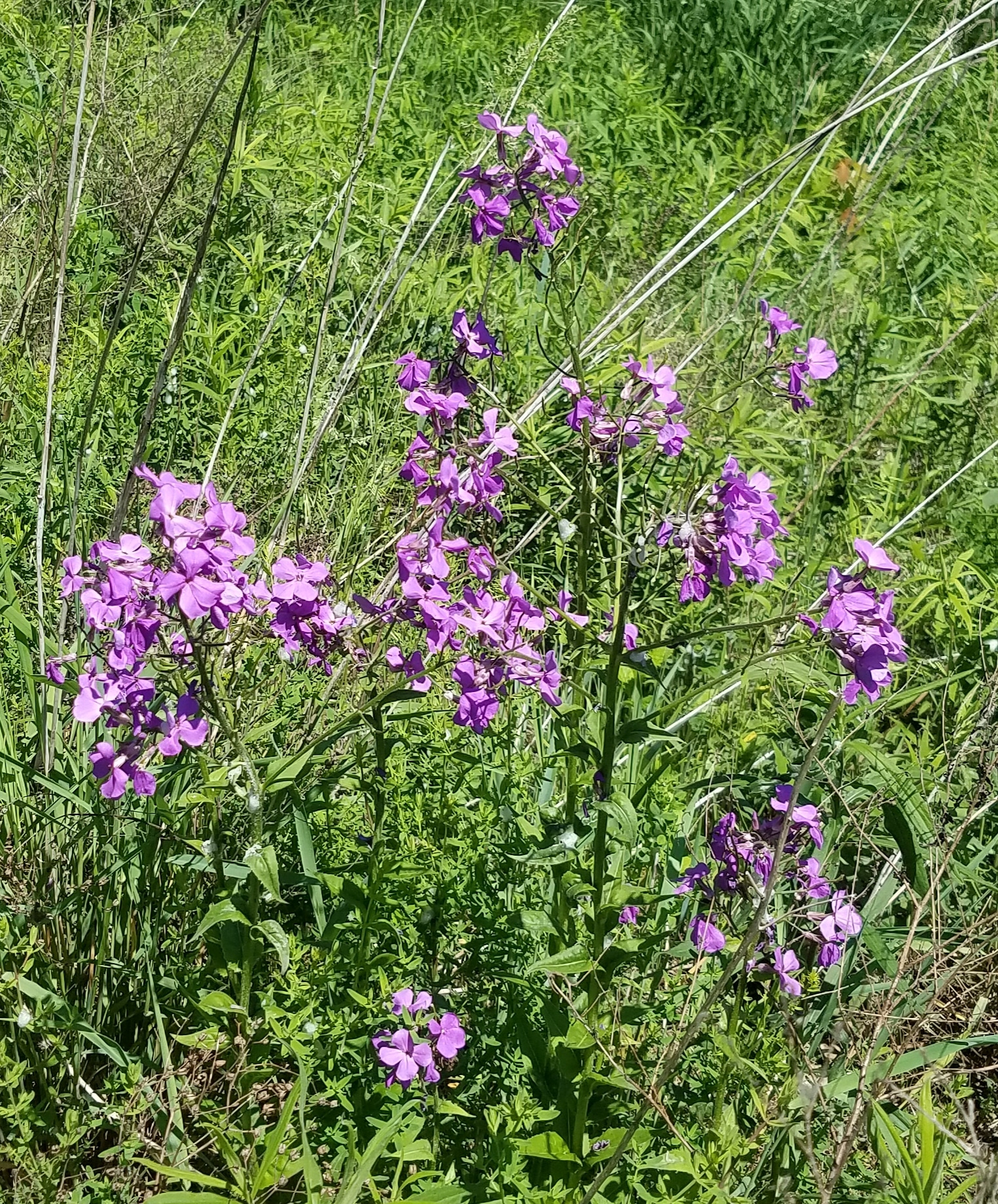
Wildflowers on the Lake Macbride State Park trail, May 26, 2021.
Fourteen months after the World Health Organization declared COVID-19 a global pandemic, it was time to get the newer car serviced. For the most part, the 2002 Subaru sat in the garage or driveway during the pandemic. Wednesday I drove it to town, dropped it at the shop, and walked home along the Lake Macbride State Park trail. It was a near perfect day for a long walk, with clear skies and ambient temperatures in the mid 70s.
Rain is today’s forecast, as it has been for the last two weeks. We haven’t gotten much rain, only enough to retard gardening progress. It looks like drought will be more Iowa’s problem this growing season, although there has been enough moisture here.
In an effort to stop taking a post-operative opioid pain killer, I skipped a dose yesterday afternoon. I’ll likely skip another dose at 11 a.m. today and if the pain is subsiding, switch back to Ibuprofen (or nothing) before bedtime. It was useful to have access to a strong pain killer.
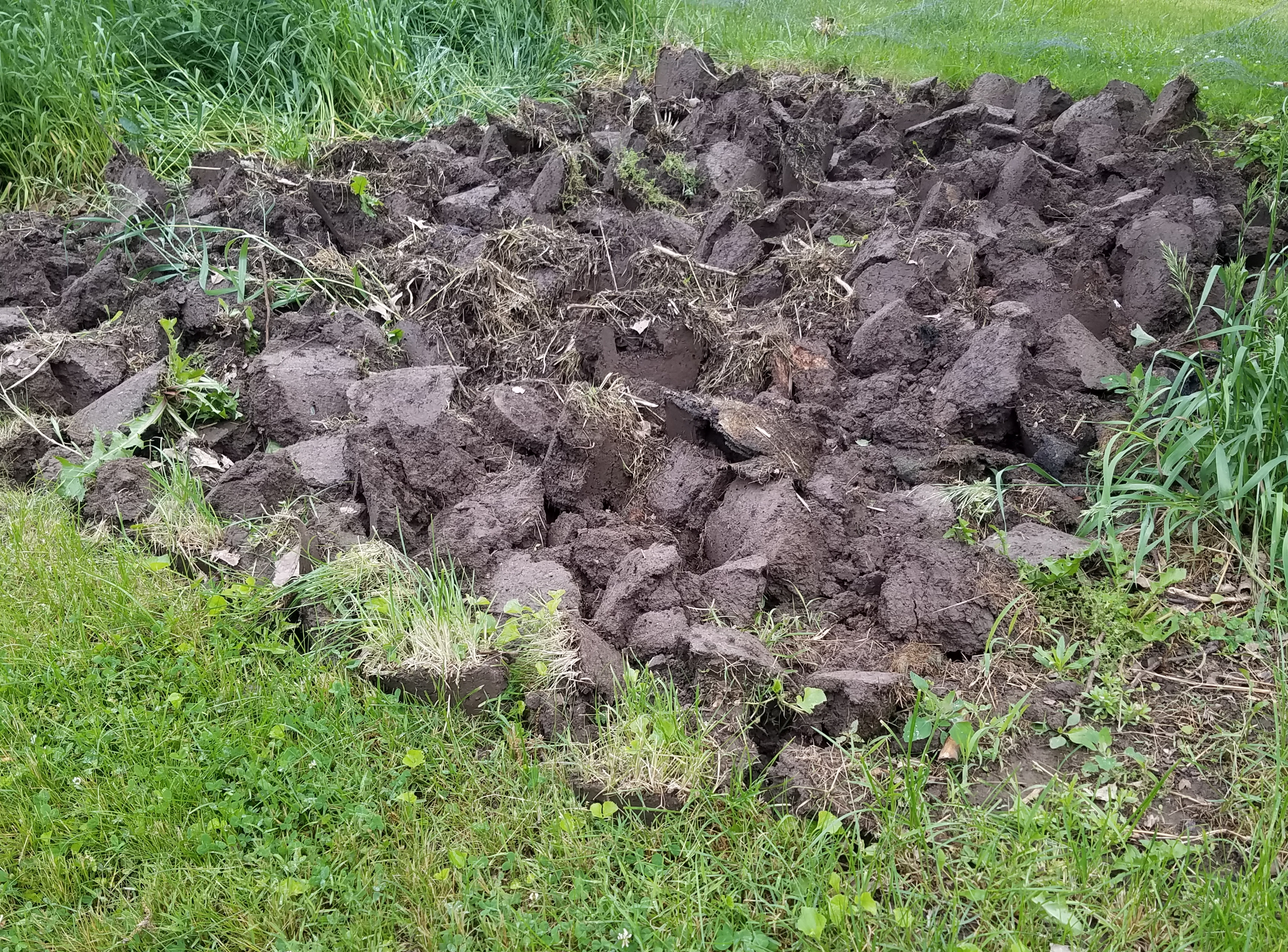
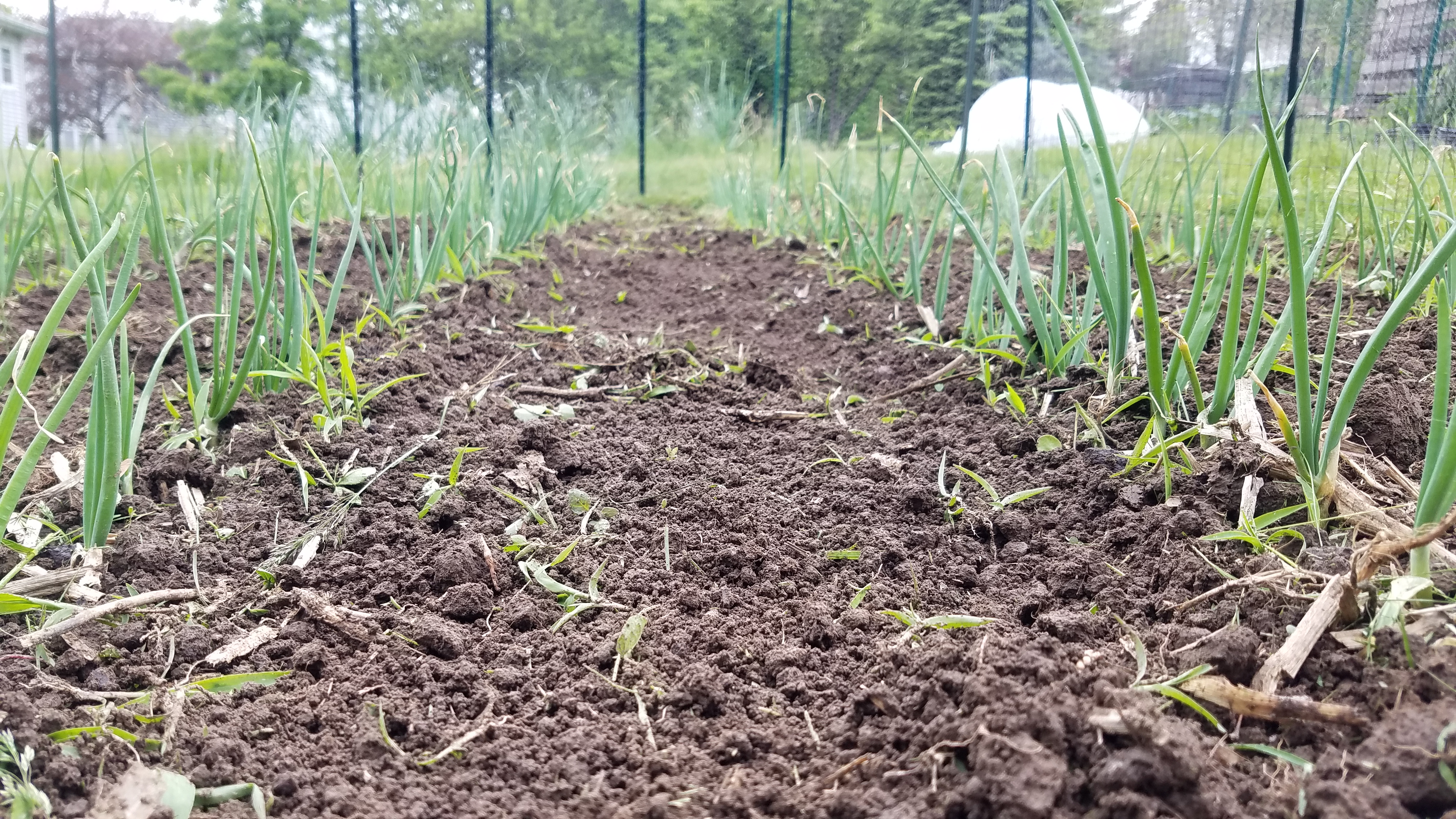
I’ve been mostly out of the garden since I put the tomatoes in and need to finish up initial planting with Guajillo chilies, eggplant, cucumbers, squash, pumpkins, cantaloupes, and acorn squash in plot seven. I also need to weed… a lot.
I’ve been reading Mark Bittman’s new book Animal, Vegetable, Junk: A History of Food from Sustainable to Suicidal. It presents a broad history of food in society, focusing on the detrimental aspects of agriculture. I’m reading the chapter on branding — the rise of Chiquita, Campbell’s, Heinz, Kraft and others. In my autobiography there is a section about the rise of grocery stores and branded prepared foods, so Bittman provides a great background for that work just when I need it. The current average rating on Goodreads is 3.88 which seems about right. I can’t say there is much new to me in the book yet he does part of my research for me.
At 9 a.m. this morning there is a 100% chance of rain, according to my weather application. As soon as the sun rises at 5:36 a.m., I plan to grab my spade and turn over as much of plot seven as I can before it starts. After being waylaid for a week, I’m ready to get back to the garden.
Beginning with pain in my tooth after biting a piece of cheese last Thursday, it only got worse.
By Friday afternoon I was ready to see a dentist, although because it had become so late in the day I couldn’t get in until Monday morning. It was a sleepless, uncomfortable weekend because of the pain, even with Ibuprofen.
It was tooth #14, the same one on which I had a root canal in 2018. At the end of eight hours of diagnosis, including a three dimensional X-Ray, the endodontist determined the large root had cracked open and re-doing the root canal would provide no positive benefit. I went back to my regular clinic where they extracted it.
After the morning visit, I went to the pharmacy to get a prescription for pain killers and antibiotics. I knew it was serious medicine when the pharmacist asked to see my driver’s license. The guide to medication said, “Even if you take your dose correctly as prescribed you are at risk for opioid addiction, abuse, and misuse that can lead to death.” The handout mentioned death a couple more times. I waited until I returned home from the extraction to take the first pill.
I intend to get off the opioid as soon as I can tolerate the pain.
I have a couple of things to say about the episode.
First, both clinics were very accommodating to get me in for the emergency procedure. The fact that I get a regular checkup created a health care infrastructure upon which I could rely with the onset of unexpected pain. I sent each clinic a thank you note for going above and beyond normal expectations.
I’ve had dental care most of my life, since I grew teeth. I also worked at the University of Iowa Dental Clinic and had work done by students. I’ve learned to pay attention to what the practitioner says and does. Understanding each step of the process as we went along relieved any anxiety I may have had. Local anesthesia highly recommended.
Over the weekend, in my sleepless delirium, I had a dream that I went to the garage and extracted the tooth myself, and with ease. In real life, the top part of the tooth broke up during extraction because it had become brittle. Each of three roots had to be extracted individually. The one that had cracked open proved to be particularly difficult. Moral: don’t try to extract your own teeth even if you think you can.
The episode took six days out of my life and just today I got out in the garden to work for a while. I’m supposed to take it easy for a couple of days. I’m not sure I know how to do that, but will try. While I’m on opiods, there were only twelve pills and I don’t plan to get more.
We moved to the Southeast side of Cedar Rapids, Iowa in 1985 to be closer to my work. My daily commute was still long and it took me past a number of churches and the Islamic Center of Cedar Rapids. I recognized the Islamic Center was different from the other religious edifices I passed, although I didn’t pay it much attention. The nearby Mother Mosque was the first mosque built in North America and Islam has a long, rich history here. In Iowa most of us are used to the valuable contributions of Muslims in the community.
That was before anti-Muslim sentiment rose to prominence in the United States, changing everything.
In her recently released book, Demystifying Shariah: What it is, How it Works, and Why it’s not Taking Over Our Country, author Sumbul Ali-Karamali writes about the recent change.
Between 9/11 and 2010, hate crimes against Muslims had actually declined in the United States. But in 2010 they spiked, for no easily discernible reason–no terrorist attacks by Muslims, no ISIS horror stories. Mark Potok of the Southern Poverty Law Center identifies two causes for the increase in hate crimes: (a) the deliberately engineered controversy about an Islamic cultural center, modeled on Jewish Community Centers, in New York, and (b) a report by lawyer and anti-Muslim propagandist David Yerushalmi and others asserting that Muslims were trying to impose shariah in American criminal courts.
Demystifying Shariah, Sumbul Ali-Karamali, pp. 189-190.
Ali-Karamali explained the “Islamophobia industry,” a network of individuals and organizations who disseminate anti-Muslim propaganda into the public discourse. At its center was claims “shariah law” was creeping into U.S. society and given time would impose Islam on hapless Americans. The phrase “shariah law” reflects a lack of understanding of what shariah is.
“Shariah itself mandates that Muslims follow the law of the land in which they live, whether the land is “Islamic” or not.
Why, then, have the last several years seen the rise of ominous new concepts like “creeping shariah: and “shariah takeover”? Amazingly enough, the current shariah scare, groundless and vituperative, is due largely to one man (David Yerushalmi).
Demystifying Shariah covers the history of Islam from the birth of Muhammad around 570 CE to the present. For Americans who know Islam exists, yet know little about a religion with more than 1.8 billion world-wide members, it is a great way to learn more about shariah and Muslim-American communities. Knowledge is the best defense when right wingers attempt to scare us for political motivation. Ali-Karamali draws on scholarship and her degree in Islamic law to explain how shariah operates in the lives of Muslims and what it means in terms of law. As the title suggests, shariah is not taking over our country.
The book is organized into three major parts: the basics and foundations of shariah, including the birth of Islam; the story of shariah which addresses the scary stuff (like amputation and stoning) perpetuated by the Islamophobia industry; and recognizing Islamophobia and the causes of Muslim stereotypes.
Whether readers know a little or a lot about Islam or shariah, this book is worth reading. Ali-Karamali presents well-researched and useful information about the history of Islam and the rising consequences of Islamophobia in America after 2010.
A Star Trek fan, Ali-Karamali grew up in California answering questions on Islam because she was one of few Muslims in her schools and community. She’s still answering those questions. To learn more about her and her work, check out her website, https://subulalikaramali.com.
Thank you Solon Economist for the articles about the June 8 special election to fill the board of supervisors vacancy created when Janelle Rettig resigned.
Turnout in special elections is always light, and that makes your vote count even more.
I listened to the May 19 Johnson County League of Women Voters forum and all three candidates appear to have qualifications to be a supervisor. I favor the Democrat Jon Green who was nominated at the special convention. Who do you favor?
I did my patriotic duty serving in the U.S. Army and plan to vote on or before June 8. Now it’s your turn to do your duty as a U.S. citizen and vote June 8.
~ Published in the Solon Economist on May 27, 2021.
Delivery vehicles ply the neighborhood on a daily basis, more than I remember. Increased numbers are partly a function of more online shopping due to restrictions of the coronavirus pandemic.
The U.S. Postal Service has always been here. UPS, FedEx, and Amazon are also here daily, often multiple times a day. The creamery a few miles away makes home deliveries of fresh dairy products ordered online. Will this level of online shopping persist when more people are vaccinated for COVID-19? Yes, it will.
A pandemic lesson learned is the value in quickly finding what one needs, ordering it, and receiving it within a couple of days without starting a vehicle. How does that impact local retailers? If Sears and Roebuck didn’t drive local merchants out of business, neither will the rise of online shopping. Rural retail has its roots in people ordering from catalogues. Here’s a refresher from the Sears Archives website:
The 1943 Sears News Graphic wrote that the Sears catalog, “serves as a mirror of our times, recording for future historians today’s desires, habits, customs, and mode of living.” The roots of the Sears catalog are as old as the company. In 1888, Richard Sears first used a printed mailer to advertise watches and jewelry.
The time was right for mail order merchandise. Fueled by the Homestead Act of 1862, America’s westward expansion followed the growth of the railroads. The postal system aided the mail order business by permitting the classification of mail order publications as aids in the dissemination of knowledge entitling these catalogs the postage rate of one cent per pound. The advent of Rural Free Delivery in 1896 also made distribution of the catalog economical.
We piled in our car and went to Sears as a family when I was a child. Frequently it was a special time together. Our lives were more about living than shopping in the 1960s. Automobile trips became family outings and visiting Sears was another trip to make. If father looked over the Craftsman tools while we were there, that was a side benefit. The pandemic taught us automobile culture was not as important as we may have believed.
In a life not far removed from the frontier, shopping wasn’t that important. When my great, great grandparents settled the Minnesota prairie, there were few retail merchants and no internal combustion vehicles. Making do is how they lived. Distribution infrastructure as we know it now did not exist at the time Sears mailed the first catalogues. The pandemic forced many of us to return to making do and online shopping became part of that.
The rise in online retail is significant. I placed my first order with Amazon.com on Dec. 23, 1998. In the early days, Amazon lost money to gain market share. Today they are profitable, more profitable than other large retailers, by a distance. Sears as we knew it is no more. Amazon’s gross revenue is astounding, far surpassing any locally owned store.
There is a nearby ACE Hardware store, about 20 miles away. They suffer from the same lack of inventory as every other local retailer. While helping customers find something, if they don’t have it in stock, they take us over to a computer terminal. They search the store’s inventory and if they find the item, place the order, and notify the customer when it arrives. Why couldn’t I cut out the middleman and find items online myself? I can and during the pandemic, I did.
America is becoming a land of rich people and the most of us who are not. While we don’t want to say it, we have returned to a form of post-serfdom society, similar to Poland during the partition era. Forced off the land and into wage earning, it has become harder to get along on wages. There is no unspoiled prairie to seek and start over. Time, money, and efficiency have become mainstays in our effort to live. If we can get inexpensive, efficient help, and save time by shopping on line, we will.
That is the future of shopping after the pandemic.






 Journey Home
You must be logged in to post a comment.