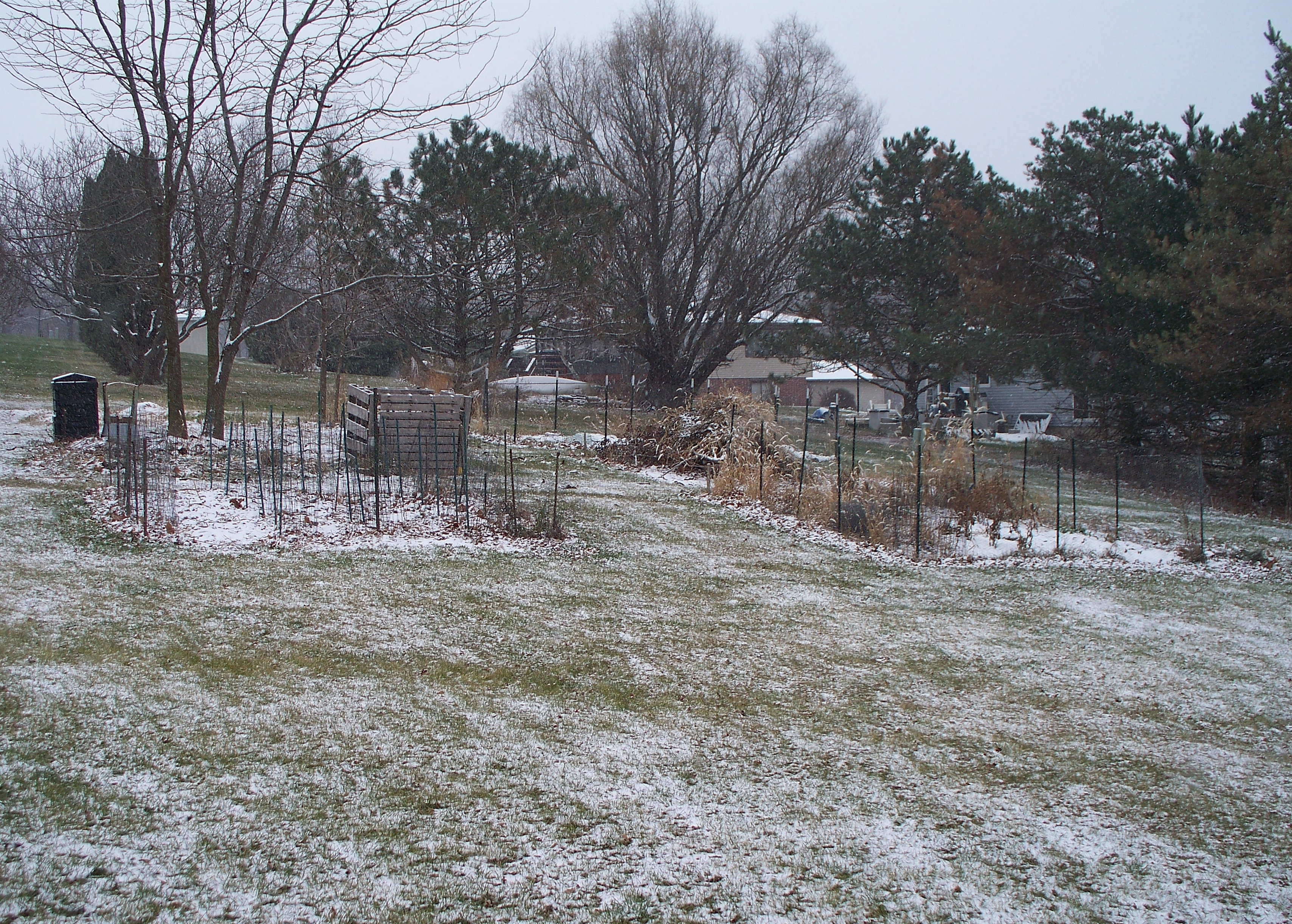
Snow fell and a day later it began melting. The ground is partly snow-covered in today’s predawn darkness. With a forecast high of 30 degrees, there will be more melting in sunny areas. Eleven days remain in winter.
With President Biden’s March 8 announcement, “We’re banning all imports of Russian oil and gas and energy,” U.S. gasoline prices increased immediately. I’m planning to round up our gas cans, take them to town, and fill them. I expect prices to continue to climb because of Russia’s continuing aggression in Ukraine. The country should get completely off fossil fuels, although there has been a lack of political will to do so.
Lettuce and herbs are beginning to germinate on the heating pad. As soon as the snow melts I can build the burn pile and clear the first planting plot. As the growing season begins, I’m ready.
I have some exciting news to share: I’m running for re-election to the Iowa Senate! I was born and raised in Oxford, Iowa where I’ve farmed and served for 28 years in law enforcement. For most of my life, I have tried my best to protect the most vulnerable Iowans. Whether it be through the Sheriff’s office, the school board, or the legislature, helping people has always been my top priority.
State Senator Kevin Kinney
I believe that the things we rely on to live a good life – quality healthcare, good schools, public safety, a paycheck that is reflective of hard work, affordable living – are bigger than politics. These are basic rights that every Iowan deserves.
I’m running for re-election to continue my lifelong work of protecting victims of sexual assault and human trafficking, helping Iowa farmers make ends meet, and ensuring all Iowans’ access to affordable, quality healthcare.
As a result of redistricting, I’m now running to represent District 46. My new district might be the most competitive in the entire state, but with supporters like you by my side, I know we can win in November. Can you chip in today to help my re-election campaign get off to a strong start?
In my past campaigns, outside special interests have spent hundreds of thousands of dollars trying to defeat me. I’ve won because I’ve always been able to communicate my positive message to the voters – but I can only do that if I have the resources in this campaign too.
I would be honored to continue my work representing the people of Johnson, Iowa, and Washington counties in the legislature. With your help, we can elect leadership that puts everyday Iowans first.
Sincerely, Senator Kevin Kinney
Paid for by Kevin Kinney for State Senate. Senator Kevin Kinney is not accepting contributions from lobbyists or PACs at this time.
Joint Statement from the Nuclear Weapons and Arms Control Working Group Condemning Russian Nuclear Threats
WASHINGTON, DC— Senators Edward J. Markey (D-Mass.), Jeff Merkley (D-Ore.) and Representatives Don Beyer (VA-08) and John Garamendi (CA-03), co-chairs of the Nuclear Weapons and Arms Control Working Group, today issued the following statement condemning Russian nuclear threats:
“On Sunday, Russian President Vladimir Putin ordered his country’s nuclear deterrent forces to be put into an alert status, further intensifying his unjustified and unprovoked invasion of Ukraine by threatening a nuclear attack.
“We, the Co-Chairs of the Nuclear Weapons and Arms Control Working Group, condemn President Putin’s threats to escalate a conflict of his own creation into nuclear war. His invasion of Ukraine has already resulted in the tragic loss of life, and an escalation to nuclear war would bring untold additional suffering.
“President Putin should recall what he said in January, along with leaders from the United States, France, China, and the United Kingdom, that ‘a nuclear war cannot be won and must never be fought.’
“We applaud the Biden administration for trying to deescalate against such provocative actions and for making clear that America’s own alert status has not changed. It is in the fog of war that there is the greatest risk that a conventional conflict escalates into a nuclear one. That is why it is imperative that the United States, Russia, and all nuclear powers back a No First Use nuclear policy and affirm that the sole purpose of nuclear weapons is to deter the use of nuclear weapons. The crisis in Ukraine is evidence that there are no plausible military options for direct confrontation between the United States and a nuclear armed adversary – and the folly of investing $1 trillion in unusable new U.S. nuclear capabilities.
“At the same time, as the U.S. works in lockstep with our European allies to rebuff Russian aggression, we must coordinate closely on our nuclear policy as well. The U.S. Department of Defense should also continue its efforts to open military communication channels with Russia, as they have done in other theatres where the Russians are present, so that “red-lines” are not inadvertently crossed.
“President Putin has already made his country a global pariah by launching an unjustified and unprovoked war against Ukraine. His threat to escalate his meritless invasion of Ukraine into nuclear war would cross a line from which our world cannot return. The United States and its allies must do everything in their power to disincentivize this dangerous and costly mistake.
“We continue to stand firmly with the people of Ukraine in this crisis as they fight to preserve their sovereignty and democracy,” the lawmakers said.
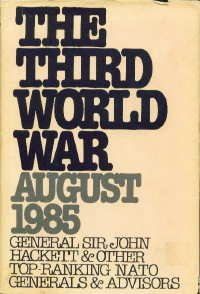
In his 1979 book The Third World War: August 1985, General Sir John Hackett identified that the public generally disregards the possibility of war. He wrote about the role media embedded in combat units would play in his hypothetical war, bringing home different aspects of the conflict from what had been experienced in previous wars. What he didn’t predict was the role of mobile devices sending video and photographs from war zones like those we see on social media posts from Ukraine.
At the time, when I was returning to Iowa after leaving military service in West Germany, Hackett’s book was a page from the lives of everyone like me who participated in making battle plans to defend Western Europe as Soviet army units attempted to penetrate the Fulda Gap. Hackett was right about new methods of reporting from war zones. The experience is more immediate after the rise of Twitter and social media. It changes everything.
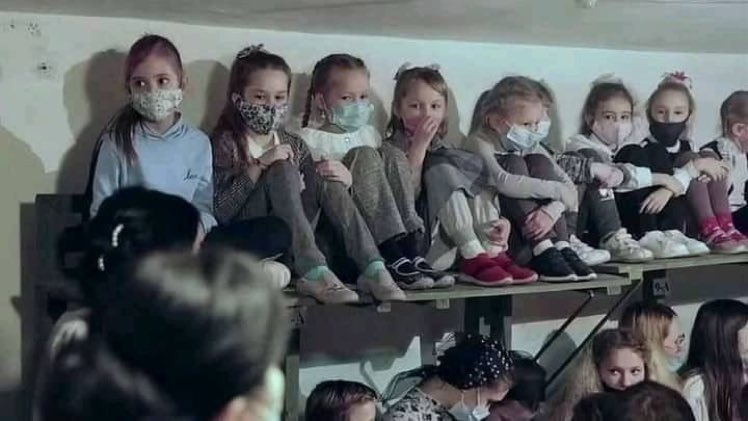
It is difficult to winnow kernels of fact from streams of social media. While something real goes into images posted there, their meaning and veracity, is an open question. It is not helpful that certain photos, like those of children in a bomb shelter, get the most views. I mean photos like this.
We should take video and photographs coming out of Ukraine with a grain of salt. We should resist confirmation bias and let the events tell their own story. That may not be possible, yet it is important to how we determine what political action our country should be taking.
For example, is this photograph posted on Twitter real or fake? I separated it from the accompanying text which appears below.
The post appears to be real. While the reliability of this reporter is known, there has been an attempt to create a fake profile of him as part of a larger disinformation campaign by the aggressors.
Most reasonable people know social media posts are hardly unbiased information. We should remind ourselves as they become a major source of information about the Russia-Ukraine conflict.
The craftsmanship of Bet the Farm: The Dollars and Sense of Growing Food in America by Beth Hoffman is good, better than many books I read. For people unfamiliar with the challenges of Midwestern, sustainable agriculture, it is a good introduction, covering most issues.
Hoffman is a member of Practical Farmers of Iowa and so am I, so there are some connections. Even though we never met, I know people she mentions in the book and we would likely have friends and acquaintances in common. The PFI community is not that big.
For nine seasons, I worked with beginning and experienced farmers who operate community supported agriculture projects, large vegetable or fruit farms, and raise livestock, so I know some of the work and the challenges. In total, I worked on or did interviews for newspapers on a dozen or so of them.
As she mentions more than once in the narrative, she is from the coast and the land was owned outright by the Iowa family. The former is more typical of beginning farmers, the latter isn’t. It is a good book, yet I hoped there would be a connection to the author and her narrative. There wasn’t.
Bet the Farm was a quick read and if a person is interested in this topic, there are a number of other works by beginning farmers I’d read first.
I wish Beth and John good luck on their farm and would read another book about their progress after they have been farming five or ten more years.
Around midnight I woke with my mind racing. There was a high-pressure fire hose full of news on Monday. It is continuing into Tuesday.
With Ukraine being eight time zones ahead, there were a lot of reports coming in via Twitter when I looked at the mobile device in bed. Much of the information was negative. The fact there is a war in Ukraine at all is negative. If Russian Federation President Vladimir Putin intended to make quick work of conquering Ukraine, he failed.
Putin put Russian nuclear forces on high alert and no one is certain what that will mean, other than creation of an opportunity for unintentional detonation of nuclear warheads. Monday President Biden said people should not fear a nuclear war. He obviously has information I don’t, yet knowing this is happening raised my personal tension a notch.
The Intergovernmental Panel for Climate Change released their latest report yesterday. The last sentence of the 3,675-page report says it all. “Any further delay in concerted anticipatory global action on adaptation and mitigation will miss a brief and rapidly closing window of opportunity to secure a livable and sustainable future for all.”
The U.S. Supreme Court heard oral arguments in West Virginia v. EPA on Monday. Justice questions centered around “major questions” which should be decided by the Congress, not by a regulatory agency. The fear is SCOTUS will severely limit the kind and amount of regulation the Environmental Protection Agency can introduce, sending any action on controlling greenhouse gas emissions back to a stalemated Congress. With a 6-3 conservative tilt, Republicans got what they wanted when President Trump appointed three justices during his term in office.
Republicans in the Iowa Legislature are making laws without regard for dissenting voices. They have a clear majority and are passing whatever laws pop into their heads. The degrading of intellectual standards among lawmakers is obvious and frustrating.
I continue to wait for dust to settle and determine personal next steps. Spring will soon be here, I’m working on income taxes, and once garden planting begins there will be a rush toward Memorial Day. Things seem a bit out of control.
Later this morning I will take a nap. Otherwise, I’m unlikely to make it until supper time. With everything going on, it is hard to sleep and unlikely there is any returning to normal. It is hard to know what the new normal will be.
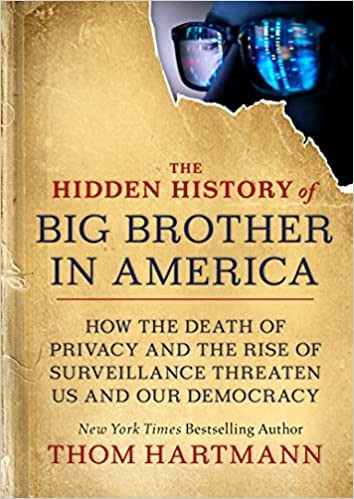
In The Hidden History of Big Brother in America: How the Death of Privacy and the Rise of Surveillance Threaten Us and Our Democracy, author Thom Hartmann focuses on Big Data and its consequences for all aspects of our lives. In the framework of surveillance and social control, Hartmann traces the history of surveillance and the threat of violence to control behavior, thought, and belief by our political and social masters.
Referencing George Orwell’s book 1984, Hartmann wrote, “Orwell was only slightly off the mark. Big Brother types of government, and Thought Police types of social control, are now widespread in the world and incompatible with democracy.”
What makes this book timely is the way Trump campaigns used Facebook and Cambridge Analytica to scrape personal data about tens of millions of voters from the internet, and then custom targeted them with tens of thousands of distinct daily ads designed to either persuade people to vote for Trump or not vote at all. On the day of the third presidential debate in October 2020, Hartmann wrote, team Trump ran 175,000 variations of ads micro-targeting voters. These ads were, for the most part, not publicly seen.
Here in Iowa the Republican legislature seeks to control our behavior with legislation intended to address perceived constituent needs. Iowa Republicans approach it with a dull knife. For example, because of feedback and paranoia about transgender girls, Republicans introduced legislation to ban trans females from Title IX activities. This legislation would create discrimination for sure, and potentially a bullying environment for children. They seek to control our behavior and even such crude attempts at social control are anti-democratic. By using bludgeoning methods, Iowa Republicans were not nearly as effective as Trump’s use of Big Data to spy on voters and use what they found to influence their decisions.
Thom Hartmann
Whether one is liberal, conservative, libertarian or whatever, we have concerns about how Big Data firms like Google, Facebook, Oracle, Microsoft, Amazon, and others surveil and use data we consider to be private. In the beginning we considered such data collection and use to be for advertising like generating sales for a brand of energy drink. Whether it is conservatives who have paranoid feelings that “Big Data” is collecting personal information, censoring and manipulating people, liberals who see companies like Cambridge Analytica violating their privacy, or Amazon Ring customers concerned about law enforcement gaining warrantless access to video from the camera at their doorstep, Big Brother is watching us, eroding our privacy, and threatening our democracy.
In The Hidden History of Big Brother in America, Hartmann uses extensive examples to highlight the consequences of Big Data on our lives. He traces the history of surveillance and social control, looking back to how Big Brother invented whiteness to keep order, and how surveillance began to be employed as a way to modify behavior. “The goal of those who violate privacy and use surveillance is almost always social control and behavior modification,” Hartmann wrote.
Big Data threatens privacy and enables surveillance, Hartmann wrote. The lack of alternatives to lifestyles that involve feeding into Big Data leads to almost forced participation in surveillance by Big Brother. Surveillance and lack of privacy are a threat to freedom, he wrote, because the information gathered can be abused, people have a right not to be observed, and being observed is an intervention that can affect those who are observed.
Are we doomed to live under Big Brother’s watchful eye? How much social and political control should corporations have in society? How much Big Brother will modern people tolerate? For discussion of answers to these timely questions and more, I recommend the Hidden History of Big Brother in America.
Thom Hartmann is a four-time winner of the Project Censored Award, a New York Times bestselling author of thirty-two books, and America’s #1 progressive talk radio show host. His show is syndicated on local for-profit and nonprofit stations and broadcasts nationwide and worldwide. It is also simulcast on television in nearly 60 million US and Canadian homes.
To buy a copy of the Hidden History of Big Brother in America: How the Death of Privacy and the Rise of Surveillance Threaten Us and Our Democracy, click here. The book is available March 8, 2022.
Ajuga is a hearty plant. In the 1990s, we brought some from my father in law’s home to use as ground cover. It spread until plants were visible all along the drainage ditch on the north property line, stretching some 80 feet from the house into the ditch. We hope to use it in the planting area in front of the house this spring.
The last couple of years, before the coronavirus pandemic, there was a small crew of guest workers from Ukraine at the orchard. They were great guys, hard workers, and all with families left behind as they worked in Iowa. They lived in an apartment over the retail space and could be seen hanging around outside their apartment as I left work each day. I hope they and their families are alright during the war.
Our household has been consumed by news of the Russian invasion of Ukraine. We feel powerless. After receiving more than two dozen messages from politicians asking for a donation yesterday, I got an idea.
World Central Kitchen came to Iowa to support us during the aftermath of the 2020 derecho. Chef José Andrés set up World Central Kitchen on the Ukraine-Poland border to feed refugees. I went to a computer and found the non-profit and made a small donation.
It’s a drop in the bucket of needs for humanitarian assistance. It was something useful. We need more of that as the tension escalates.
An inch or two of snow fell overnight indicating winter is not finished.
There is not enough trash and recycling to roll the carts through freshly fallen snow to the street for pickup. I’ll wait until daylight to blow snow from the driveway, without cart tracks and my footprints. With our intent to stay home, I could let it go and natural warmth would clear the driveway within 24-48 hours. I’m ready for some outdoors activity.
Despite snowfall, one senses a pivot toward spring.
The ten-day forecast is for ambient temperatures to begin climbing above freezing tomorrow. After that, highs are forecast in the upper thirties to mid forties going forward. I’m reminded some of our worst Iowa blizzards have happened during March. It may not be the end of winter, yet one can’t help but think of spring. The ground remains frozen.
We hope for spring, even if another thing that fell overnight was Russian missiles on Kyiv, Ukraine.
I try to shut out commentary and focus on news of the Russian invasion. There is plenty of news available, although one needs a filter to separate wheat kernels from the chaff. A cook can’t make bread from opinions. It is ironic that U.S. companies maintain large grain export operations in Ukraine and Russia when Iowa grows 50 percent of its corn to make ethanol. Ethanol should be eliminated due to its impact on the environment. That is commentary readers may not welcome.
While stationed in Germany as an infantry officer, I prepared to fight a European land war against the former Soviet Union in the Fulda Gap. A soldier should know that if Russia planned to lay siege to Kyiv, it would begin this morning at dawn. There is no satisfaction from seeing my prediction come true as it did. Spring is not the best time for tanks to navigate through the countryside. One presumes Russia will make quick work of the invasion and occupation of Ukraine, while the ground remains frozen, before spring thaw and planting time arrives.
I have reading and writing to do and welcome a couple more days of cold weather. I’d like nothing better than to browse a bookstore for a while to see what is available. Instead, due to a lingering coronavirus, I’ll stay in and follow the news of the Russian invasion while keeping my eyes on imminent spring. The pivot has already begun.
The Republican elected officials who represent me have forgotten the most important thing about education: its purpose is to educate children.
On Nov. 9, 2021, Rep. Mariannette Miller-Meeks introduced the CHOICE Act (HR 5959) which is a bill that takes federal money from public schools for private schools in states like Iowa. This bill is going nowhere if Democrats hold the majority.
I asked a group of parents and educators whether they had heard of the CHOICE Act. They had not. It is a distraction from the main goal of educating our children. What is the congresswoman up to?
Miller-Meeks seeks to acquire some more Iowa Republican extremism in education to garner a few votes in the midterm election.
Iowa Republicans support discrimination against a class of young children (HF 2416), seek to lock up teachers who don’t do what they want (SF 2198), and play three-card monte with childcare by doing nothing except raising the number of children each provider can serve (SF 2268).
No public dollars should go to private schools. We should focus on educating children, not playing political games with their future.
~ Published by the Cedar Rapids Gazette on Feb. 24, 2022








 Journey Home
You must be logged in to post a comment.