Categories
Work Life

Labor Secretary Finalizes Minimum Wage Hike

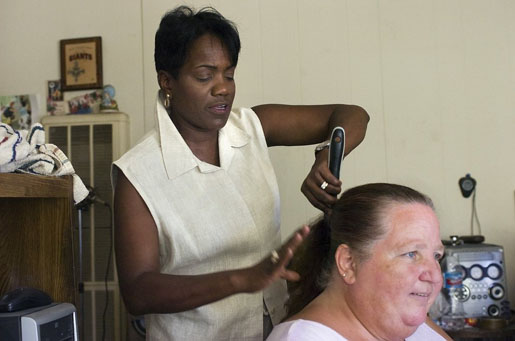
Home Care Worker: Photo Credit San Francisco Sentinel

On Wednesday, Oct. 1, Labor Secretary Thomas Perez issued a final rule raising the minimum wage for federal contractors to $10.10 per hour, effective Jan. 1, 2015. According to the Associated Press, the change will impact more than 200,000 workers.

The top ten federal government contractors in 2012 were Lockheed Martin, Northrup Grumman, Boeing, SAIC, Raytheon, General Dynamics, Hewlett Packard, Booz Allen Hamilton, Computer Sciences Corporation, and DynCorp International. They will feel the minimum wage hike a bit, but for the vast majority of Americans, especially the working class, the changes by the Labor Department will pass unnoticed.

The Labor Department also announced that effective Jan. 1, 2015, most direct care workers will be entitled to receive federal minimum wage and overtime pay protections. Direct care workers are workers who provide home care services, such as certified nursing assistants, home health aides, personal care aides, caregivers, and companions.

This is how change happens: bit by bit, incrementally, and job by job.

While many hoped for big changes when President Obama was sworn into office, expectations were set so high, he had an impossible task to meet them. While some small companies may complain about the new federal minimum wage rules, it is a basic tenant of living in our country that companies that secure a federal contract should pay a reasonable wage. Likewise, the notion that home care is real work, and that when a person runs a business that provides home care, they should be subject to paying the federal minimum wage with overtime is obvious. The rules set by the secretary create a floor, one that has been needed for a long time.

People who operate businesses want to make a profit, and that’s no crime. Running a profitable business is something basic and needed in our society. The political debate has been about the amount of government regulation and subsidy, and the dynamic of our bicameral legislature has been to create an environment that favors large, corporate businesses in the post-World War II era. Businesses like the top federal contractors.

At the same time, there is an economy of low wage workers, like those that provide home care. Someone knows a friend or relative who needs care, and an agreement is reached for compensation. The amount of compensation may not be as important as providing the service, especially when people can’t afford professional care. Personal relationships enter into the picture. Often this work is done off the books.

My point is this. Between the publicized, formal programs of the Labor Department and the reality of daily life there is and always will be a gap. That’s where many of us live our lives. We should appreciate the work of the Obama administration to fix known problems like those related to federal contractor wages and home care workers. In the working class, we may view that as nice, but less relevant to our lives than all of the brouhaha suggests.

It is something that we even noticed President Obama did what he said he would with regard to setting the minimum wage for federal contractors. But then that’s what blogs are for.

~ Written for Blog for Iowa

Categories
Living in Society

3 Things about the Iowa Senate Race

Jefferson's Autobiography
Jefferson’s Autobiography

Partisan politics, and the manner in which the founders set up the federal government with its bicameral legislature, yielded an inability to deal with problems much beyond our noses. The founders planned it that way.

“A government of representatives, elected by the people at short periods, was our object; and our maxim at that day was, ‘where annual election ends, tyranny begins;’ nor have our departures from it been sanctioned by the happiness of their effects,” wrote Thomas Jefferson to Samuel Adams in February 1800.

With due respect to a fellow Virginian, the Congress seems unable to solve the most pressing issues of our time and that is becoming problematic. In a choice between Congressman Bruce Braley and State Senator Joni Ernst, Braley is the only choice to meet today’s needs. He isn’t perfect, but who is?

The constant reference to getting things done through bipartisanship by both candidates indicates a failure to understand the nature of what the founders intended in favor of politics of the day. That is not all bad, but it misses the point.

What has changed since the 18th century is humanity’s increasingly global perspective and interconnectedness. I’m not only talking about the Internet, although that is part of it. On any given day, I run into people from most inhabited continents, but from China especially. They are in Iowa to study at the university, but they have an opportunity to make connections that was unlike anything the 1700s. These travelers will take home what’s best about Iowa, and I don’t mean corn, soybeans and pork.

Additionally, business has gone global. When I worked for the oil company, we did business in 89 countries. With their merger with BP, the footprint grew even broader.But that is not all of what is different.

A global perspective on business was evident in the 18th century, and one might say the “discovery” of the Americas was part of business growth. At the same time, the need and desire to comprehend laws and culture throughout the globe and leverage that information for profit has grown to a scale unimaginable three hundred years ago. The U.S. is not isolated from the rest of the world, and it is unbecoming for politicians to assert that we can do what’s best for Iowa without examining a global context.

That said, there are three things I would like to hear from the Republican contender to be Iowa’s junior U.S. Senator, but likely won’t.

I would like to hear something other than that there is a problem with Social Security. Ernst is a parrot of the Congressman Paul Ryan plan for Social Security. In a cynical ploy to retain votes, she asserts keeping the sacred trust to seniors and those approaching retirement, but advocates doing something else, although she hasn’t decided what, for younger people. She indicated privatizing Social Security is on the table, but what she really means is that future retirees will have to fend for themselves.

She recently criticized Braley for not solving the problems with Social Security during his eight years in Washington, but the truth is that Republicans have never been fans of Social Security and have worked to chip away at its benefits since its inception. Ernst is no different and Braley has defended Social Security.

I would like to hear how Ernst would address our nuclear complex. The late Robin Williams pointed out, “remember the big weapons− huge weapons− the ones that really can do us in− are not in the hands of us. Something much bigger. Whether you believe in intelligent design or just a guy named Phil who’s pissed.” The threat of nuclear annihilation is not funny, even if Williams was. Would Ernst have the U.S. join the international humanitarian campaign to abolish nuclear weapons, or is she already under the spell of John Bolton and other conservative hawks that continue to assert U.S. hegemony through a weapon that could end or change permanently civilization as we know it without solving any of our most pressing problems?

Finally, I would like to hear what Ernst will do about the tangible impact on business and society of our changing climate. I heard and previously wrote about her lack of understanding about climate change as stated in the debate with Braley. Either she is incompetent to be a U.S. Senator, or she can learn. If she can learn about climate change, what is she willing to do to protect our common interests in air, water and the conditions that currently nurture life in Iowa and throughout the globe? Bet we don’t hear from her on that either.

The challenge this election cycle is the media and its corporate backers have created such a firestorm of disbelief among voters, that many are expected to skip this cycle. There are more than three things I’d like to hear from Ernst, but I am already confident of where Bruce Braley stands, so why should I insist. That would be time taken away from convincing people to vote for Bruce Braley.

Click here to get involved with the Braley campaign.

Categories
Social Commentary

Pent Up Demand

FencelineLAKE MACBRIDE— While the dental hygienist was scaling, I noticed an odd shape on the upside down computer screen above my head. Leviathan? No. Ink blot? No. It was an image of a jaw bone and the hygienist was recording gingival margins as she poked and scraped with the tool. The screen is used to record information, view X-ray panels, and who knows what else. What I know is getting regular dental checks is one of the few remaining luxuries in life, and when at the dentist’s office, I pay attention to everything that’s going on.

Within earshot, another patient was defending Obamacare, saying the popular conception, that the law was a bad deal, was wrong. All of his children were now covered with health insurance thanks to the law, including one with preexisting conditions. He was grateful and appreciative, and spreading the good news.

For small talk, I chose my warehouse work where I was scheduled for a shift that afternoon. I had my work uniform on so discussion came naturally with the same hygienist I’ve had for a number of years. While we don’t know each other, we chat. She lives in the same town as the warehouse, so we had that in common.

When I changed health and dental insurance policies after implementation of the Affordable Care Act, I cancelled our dental policy because dollars covered were less than the cost of premiums. We have been paying directly for dental care since, and while there is a cost, it’s not that expensive with a successful dental practice.

When people don’t have enough money, dental care is one of the first things to go, especially if there are no symptoms. Right behind that is preventive maintenance on automobiles. That’s where my day of relieving pent up demand to take care of things began.

Motor oil has a useful life beyond the 3,000 miles shops write on the windshield sticker for the next change. My last oil change was in March, so even with my extended interval, service was past due. Partly, the challenge was making time, but partly, I knew from the last inspection some work would be needed, and was avoiding it. I inspect my own tires from time to time, and without a gauge, I could tell the tread depth was well below 4/32nds of an inch, and winter is coming.

The dealer had noted an axle going bad in March, and the local technician confirmed it and gave me a $700 estimate for four tires, a replacement axle and some other necessary repairs. The local labor rate is far below the $100+ per hour charged at the dealership, so it is good business to buy locally.

I declined the offer on the tires knowing my next stop was Cedar Rapids for the dental appointment. I had some time to kill. We have used the same tire dealer for most of the 20 years since we moved back to Iowa. I arrived and he had many options, including one priced much lower than our local repair shop. I bought four tires which were changed in about 20 minutes.

One thing led to another on a day designed to meet existential needs. I stopped at the hardware store and bought a couple of wooden toilet seats. I stopped to eat at a sandwich shop in North Liberty, spending the six dollars in my wallet on an Italian-style sub. I accessed the app for my hair salon and saw there was no waiting. I checked in and drove there to cut the shaggy ponytail beginning to grow in an effort to look my best at the presentation scheduled in ten days. There is a different stylist each time, so no relationship. We talked about my warehouse work.

From there I drove to the warehouse where I spent the shift chatting with scores of people. Afterward, I bought two loaves of bread, a gallon of milk and a bag of tortilla chips, all for $10.51, and headed home.

In the darkness of the drive home through the lakes, I thought about the mash-up that was the fourteen-hour day and about how, except for the Obamacare comments, there was no political talk whatsoever. That is bad news for the candidates in the 2014 midterms. Lack of buzz means lower voter turnout.

Delayed existential errands were checked off a mental list, however, the pent up demand was not for that. What we crave is human contact. In sustaining a life, we need it that way, and appreciate each day of living. Sometimes pent up demand takes care of itself.

Categories
Living in Society

Iowa’s Final Stretch – 2014

Photo Credit BruceBraley.com

LAKE MACBRIDE— With yesterday’s top of the ticket U.S. Senate debate between U.S. Representative Bruce Braley and State Senator Joni Ernst, the Iowa political season moves into the final stretch. For those who don’t recognize it, that’s a horse racing metaphor, and at this point, Ernst looks to lead by a nose, although based on the aggregate of polling, it is still neck and neck.

A lot can happen between now and Nov 4. Braley is leveraging the existing ground organization of the Iowa Democratic Party, comprised of the usual cast of characters plus a contingent of out of state organizers. Ernst is doing a “full Grassley,” which means talking to the faithful in all 99 Iowa counties. Both candidates are raising every nickle they can.

Both have third party groups, financed by people we know, advocating for their respective campaigns. Based on the candidate comments last night, Charles and David Koch are causing the most trouble for Braley, and NextGen Climate, financed by venture capitalist Tom Steyer, is hitting Ernst’s campaign hard enough for her to omit from her comments the other groups backing Braley. The playing field is not equal between the Koch Brothers and Tom Steyer, but there is a tendency to depict it as such. There are other groups supporting both candidates, but they didn’t get a mention during the debate.

The race will be won by whoever secures the largest number of so-called “no-preference” voters. If the truth will out, and one hopes it does, Braley will win. Whether it will is an open question. Both Braley and Ernst confirmed who they are in their responses last night, something that is not news to those of us paying attention. The trouble is it will be a couple of weeks before most people, no preference voters particularly, start engaging. Most that I know with this registration have not begun to engage in the race.

Ernst was asked, “what do you believe about climate change? What would you do about it?” Her response began, “I grew up drinking well water on a farm. My dad is a conservationist. Most Iowa farmers are phenomenal conservationists.” The head scratching began.

“I don’t know the science behind climate change, but I cannot say one way or another whether it is man-made or not,” she continued.  “I have heard arguments on both sides.”

In framing up a well worn climate denier argument, Ernst affirmed her relationship with the oil and gas lobby. More importantly, she revealed that she does not have the intellectual capacity to evaluate what many believe is the most important issue of our time. This has larger consequences when applied to issues of war and peace, helping the needy, controlling our national budget, nuclear disarmament, and many others.

Her statements about the relationship between recycling, conservation, the Environmental Protection Agency, Cap and Trade, farming and well water would not stand up to the light of day if people could hear what she said. Whether the Braley campaign will effectively get the word out to likely voters remains another open question.

For those of us in the working class, this is pretty theoretical. We have bills to pay and a reality in which to live, one that is not always pleasant, as this news story indicates.

Richard Engel Interview
Categories
Work Life Writing

Life Minus Television

You Bet Your Life
You Bet Your Life

LAKE MACBRIDE— It has been a while, more than a year, since the television has been turned on with any regularity. I fired up the tubes to view President Obama’s address to the nation on the campaign in Syria, and occasionally we follow extreme weather, but mostly the set rests darkly in the corner, collecting dust.

That’s not to say we disconnected. We cut back the service to basic cable to save a few budget dollars, and maintained what we had for the bundling with Internet service. With the recent demise of my laptop, and acquisition of a desktop to replace it, I have less screen time generally. The computer has become a work station in a life with many of them— a post-television life of screen time.

Early on, I realized the boon to productivity that was word processing software. It’s hard to believe how much time was spent typing and re-typing a finished paper or article on my Smith Corona and Olympia machines. I kept the typewriters for sentimental reasons, and don’t know if I could find a new ribbon should I want to use them again. While we lived in Indiana, I bought a word processing machine and produced some documents that survive, including a journal— electronic word processing was a miracle.

On April 21, 1996 we bought an Acer home computer and logged on to the Internet at home for the first time. Making the decision to add the $25 monthly subscription to an already tight budget was a big deal. There’s no going back now, and communications services is a big chunk of our monthly budget, one I would like to cut back on.

Now there’s the hand-held mobile device with an Internet connection and many applications. It is used mostly to check email and news, and every once in a while, I make a phone call. Owning this machine has made a laptop less relevant, and communications with people who matter easier.

With the conversion of the industrial economy to one based more on services, the most important element, one that changed everything, has been constant human contact. At the warehouse, I interact with hundreds of people each day when working a regular shift. At the orchard, on a busy Saturday I will greet 500 people or more. It is this human contact we crave, despite how it drains energy from our day.

When we lived on Madison Street, before I entered first grade, I longed to stay up and watch “You Bet Your Life” with Groucho Marx on television. My parents would not allow it for reasons that have become obscure in the river of time. Partly they felt I should be in bed by 9 p.m. when the show aired, but there was more.

As I moved through the grades and left home, television viewing was always a second tier activity, one for after a day’s work was done, whether it be school work or a shift at a job. When I lived in Germany I bought a television late during my tour of duty, and got rid of it after a few months. There is no going back to television now. I’d rather spend my time with people, and see the diverse human experience for myself.

Categories
Work Life

Fall Arrived

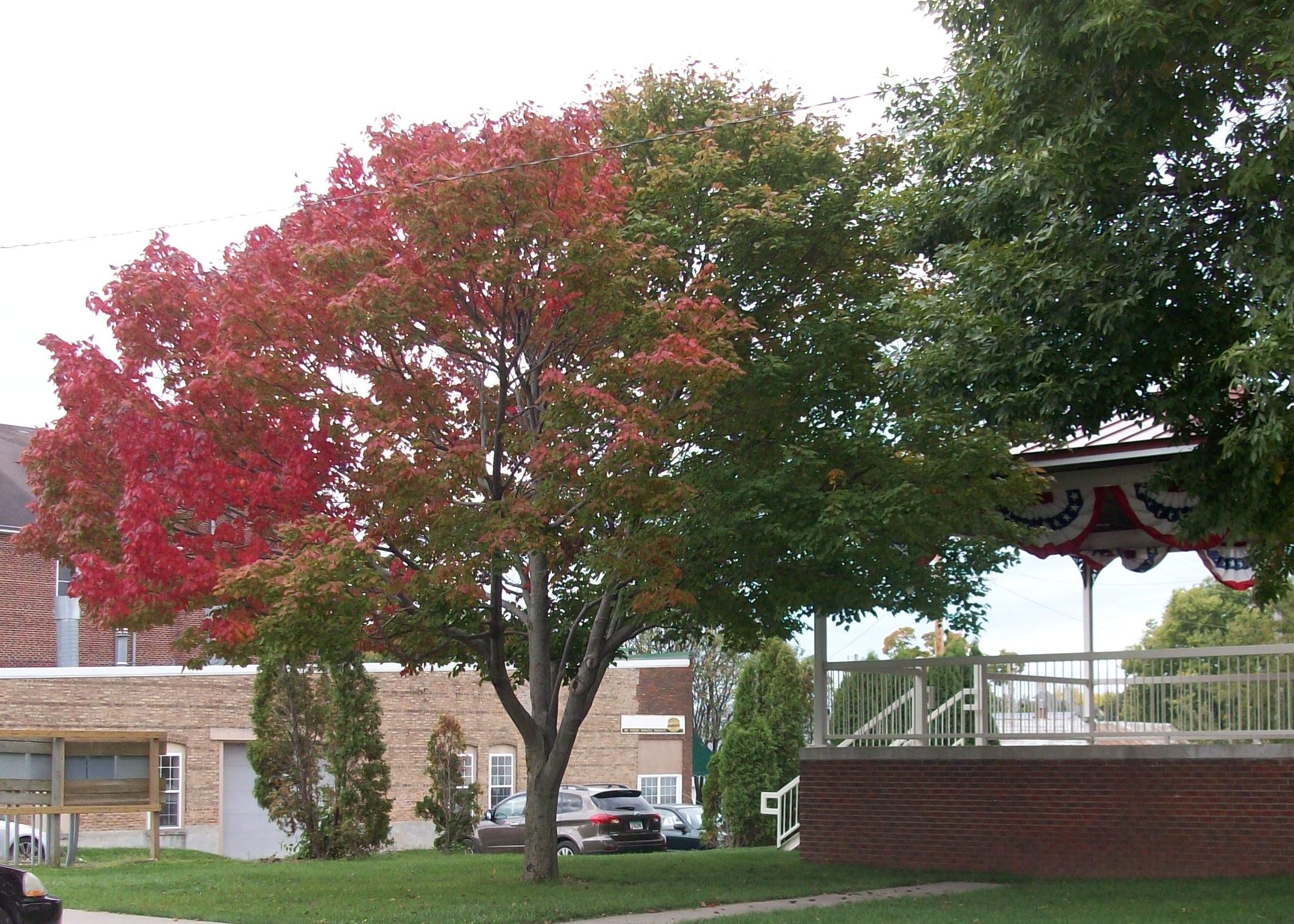
Band Stand
Band Stand

JOHNSON COUNTY— In a post-career life there is never a day off. I’m okay with that because days become a time to see the world through a new lens during and between existential errands.

Pepper Harvest
Pepper Harvest

After morning chores, I drove to the CSA to pick two bushels of bell peppers for freezing. Next, I went to the orchard and picked two dozen apples. I wanted some Wolf River and there were plenty on the trees. I also picked Jonathan, Jonafree, Gala, Haralson, Kandil Sinap and Marshall’s McIntosh. I picked up a half dozen apple cider donuts and a half gallon of fresh cider. Next I stopped at the newly opened Casey’s General Store on Highway One. It had opened for the first time that morning. From there, I went to the newspaper office to report that it was open, and that the current store would be cutting back from 24 hours per day.

Cemetery Pump
Cemetery Pump

I took some photos of the band stand, the cemetery, the Mexican restaurant on Main Street, and of the Bangkok peppers in our garden. It was a tour of the local, and I relished each moment before getting back to work.

Today is the first day of early voting in Iowa, and political field organizers are trying to bank votes. The Democrats seem better at it than the Republicans, but the latter now recognize it is a thing. Most likely I will vote early, but there is more learning to do before I do. A level of participation in our government that matters, so some energy spent researching the candidates and issues is time well spent.

Now on with today’s priorities in this too short life on the plains.

Categories
Living in Society

Early Voting in Big Grove

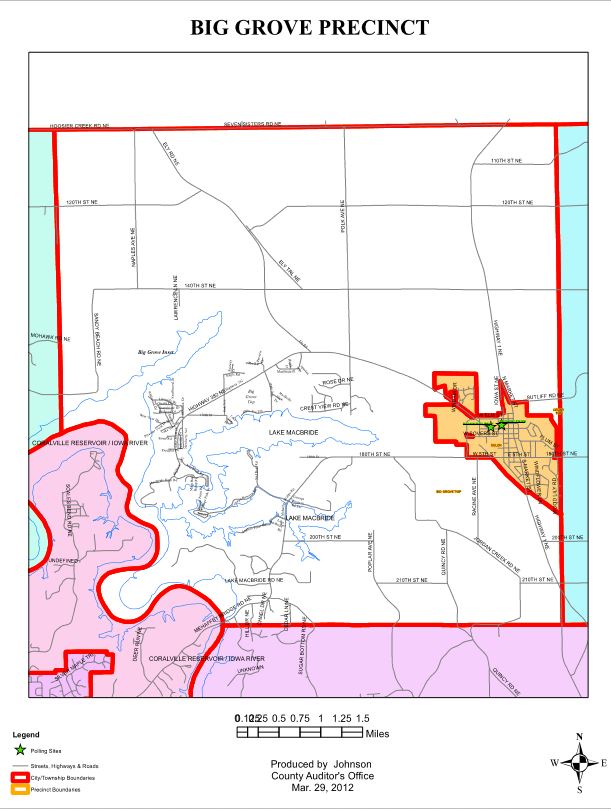
Big Grove Precinct
Big Grove Precinct

BIG GROVE— Early voting for the Nov. 4 general election begins on Sept. 25, and I’m in no hurry. I’m also willing to bet that I’ve given more thought to the entire ballot than most voters in the precinct.

The top of the ticket is easy, with votes for Bruce Braley and Dave Loebsack almost foreordained. Given the views of their competition, there is no contest.

We were sick of Terry Branstad the last time he gave up the governorship. He has done nothing to endear us enough to vote to retain him in office. There are four other gubernatorial candidates, and the only reasonable alternative is a vote for Jack Hatch and Monica Vernon, the Democratic candidates for governor and lieutenant governor.

Tom Miller for attorney general and Mike Fitzgerald for state treasurer are solid and expected to win. Based on everything they do for the state, they merit our vote. I particularly appreciate Miller’s help during the 2012 campaign I managed, and Fitzgerald’s College Savings Iowa, which made a significant contribution to college affordability in our household.

Brad Anderson will get my vote for secretary of state. I met him, I like him, and going backward to Paul Pate or the minor party candidates would be the wrong direction. Secretary of state is an important job, and making life easier for small businesses and including as many voters as possible in elections represents what should be the foundation of our society. It hasn’t been that way under the current Republican’s tenure.

The other statewide races need study. I’m not sure what qualities to seek in a state auditor, and while I lean toward Democrat Jonathan Niederbach, and will likely vote for him, I’m not quite ready to say yes.

Secretary of Agriculture is a key race in our household, and the Democrats fielded a candidate with weak credentials in Sherrie Taha. I met Bill Northey and have heard him speak several times. I don’t feel a need to vote the strait ticket, and this is a race where I might vote for the Republican. Jury is still out on that.

State Senator Bob Dvorsky is running unopposed, and I have been communicating with him about the needs of our precinct, especially with regard to Lake Macbride, since we moved to Big Grove two decades ago. Another easy vote, even if there were a challenger. The same holds true for the court house races: Tom Kriz for treasurer, Janet Lyness for county attorney, and Kim Painter for recorder are all running unopposed, and I know and support them.

For state representative in House District 73, there are two candidates, Democrat David Johnson and Republican incumbent Bobby Kaufmann. Since I waged a campaign to defeat each of them in 2012, neither represents my best option. How I decide to vote won’t be discussed here or anywhere else in public.

There is a three-way race for two seats on the county board of supervisors, with incumbent Janelle Rettig, Mike Carberry and John Etheredge on the ballot. My votes will go to Rettig and Carberry. Although I’ve gotten to know Republican Etheredge better during his term, he is likely to be the burr that gets sanded off in the wood shop that is this heavily Democratic county.

I am one of three township trustees and one position is on the ballot after the resignation of long-time trustee Elmer Vanourney, and subsequent appointment of Dewayne Klouda to replace him. Klouda will get my write-in vote since he failed to file in time. Ryan Hajek is on the ballot for clerk, and was appointed when Klouda moved to trustee. He is interested in the work of the trustees, and will get my vote.

Figuring out the rest of the ballot is more difficult.

The other non-partisan offices? Who knows? There are five candidates for five positions on the ag extension council, and one supposes that if they are interested enough to get on the ballot, why stop them? Same with the single candidate to fill a two-year term. Soil and water commission has two candidates for two positions. Judicial retention in the court of appeals, District 6 District Court and District 6 District Associate? Again, who knows? They had to file for retention, so at least we know they want it that much. This is always a puzzler unless there is some controversy.

There are two ballot issues, the Local Option Sales Tax, and the county court house bond issue. I don’t support increasing sales tax, and once the ballot is printed, I’ll see what my choices are. I will vote for the court house bonding, and there is almost no public opposition to moving forward with it, so hopefully it gains the 60 percent required.

What I’m saying here is that voting early is good for the top of the ticket, but can be bad for down-ticket candidates and issues. Understanding as much as possible before we vote is important. If that means waiting until election day, then so be it.

Categories
Juke Box

Juke Box – Tears in Heaven

Categories
Work Life

Day of Work Photos

From sunrise until sunset I made a retreat, preparing for winter.

Preparing to Open the Garage Door Pre-dawn
Preparing for the Day Predawn
The Door is Open
The Door is Open
First Tracks in the Dew
Sunrise
Sunrise
Fog Burning Off
Fog Burning Off
Foot Tracks
Foot Tracks
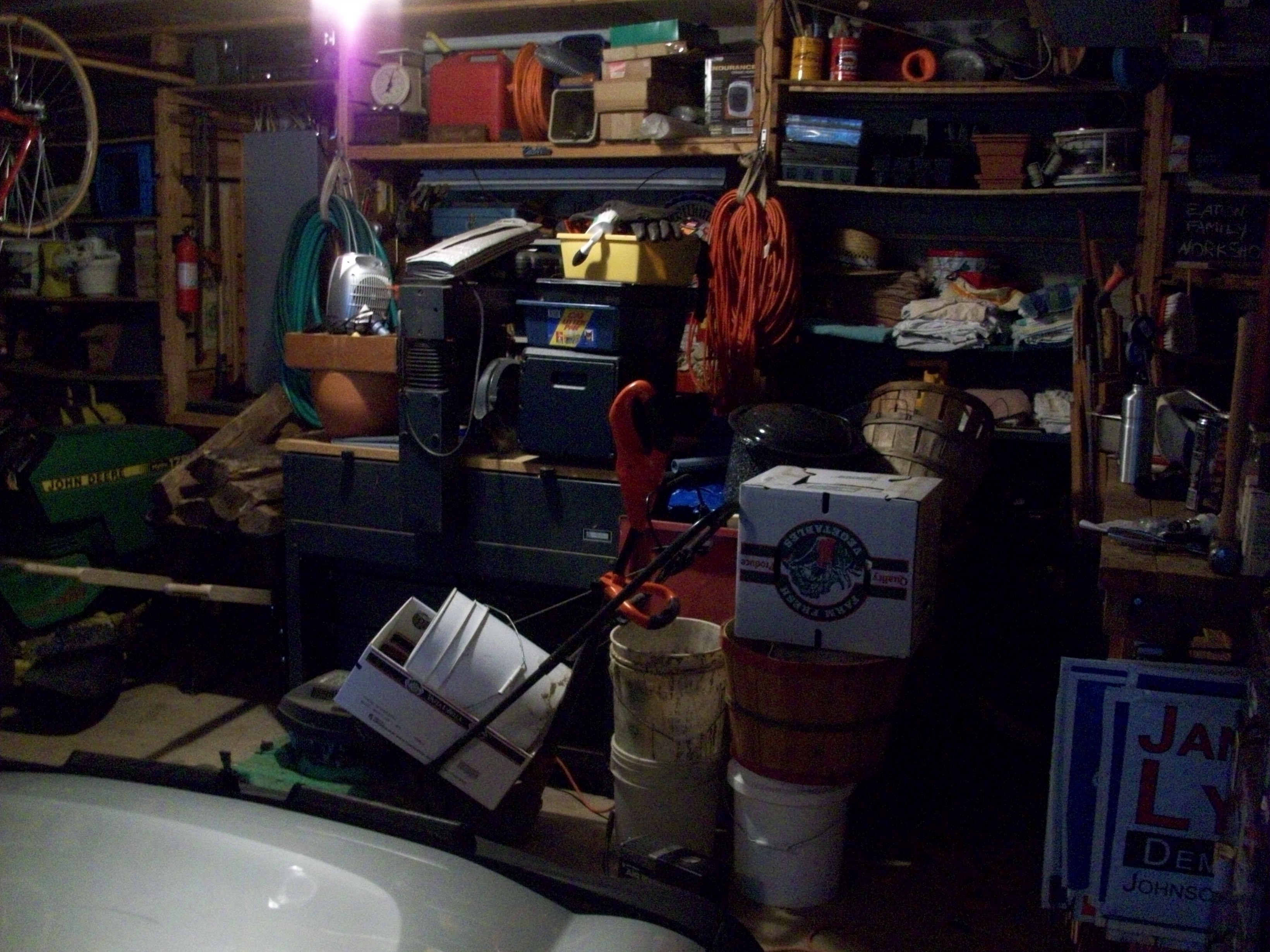
Moving the Cars Out of the Garage
Variegated Leaves
Variegated Leaves
Work Gloves
Work Gloves
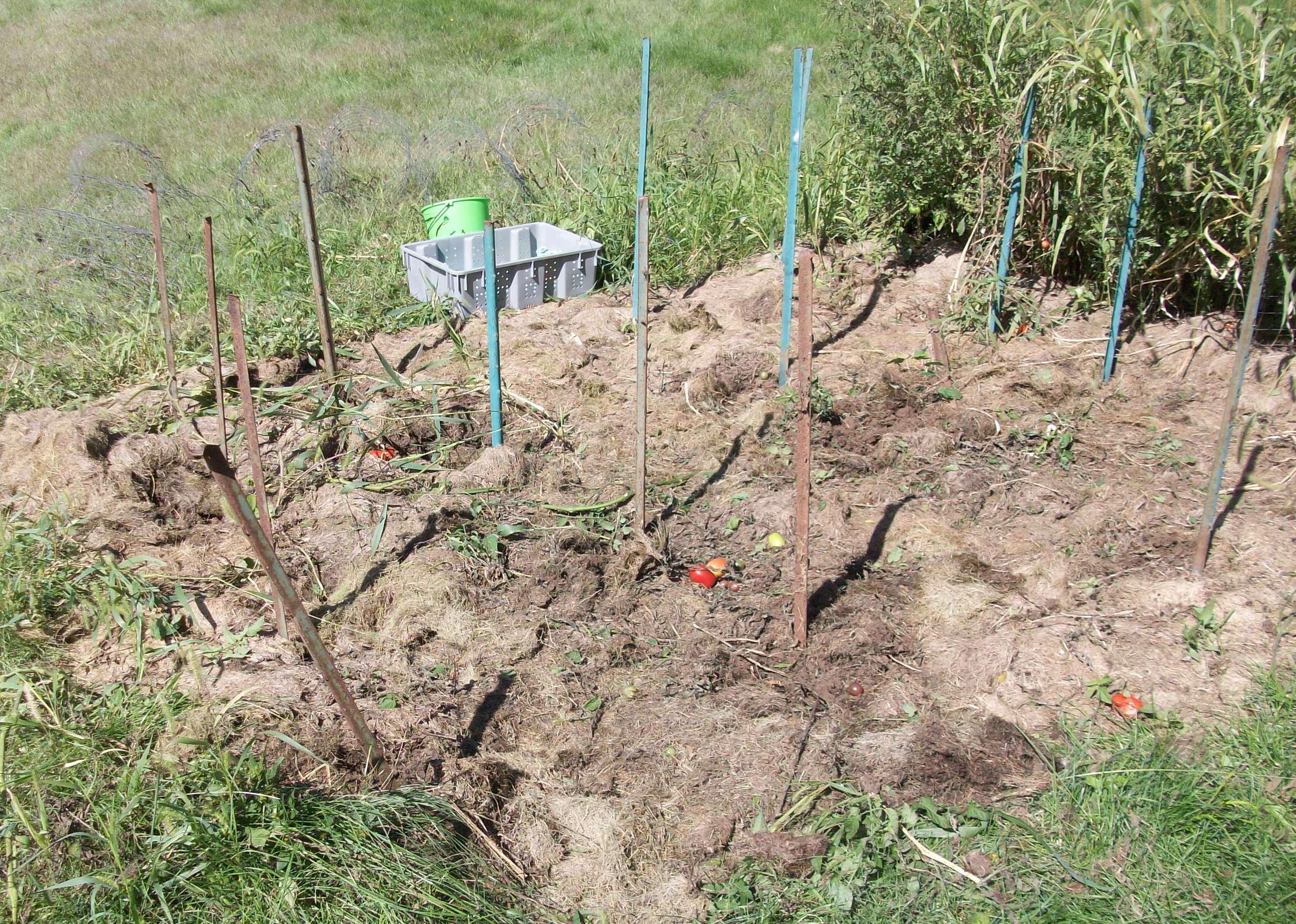
Former Tomato Patch
Former Tomato Patch
John Deere Tractor
John Deere Tractor
Serrano Peppers
Serrano Peppers
First Red Delicious Apple
Categories
Home Life

Fall Arrived Unawares

Harkin Steak FryLAKE MACBRIDE— The chill in the air is undeniable as summer activities wrap up— ready or not.

The last share from the CSA picks up tonight, and Tuesday is to be a full day of outdoor activities, with Wednesday the rain date. It is time to harvest and prepare the yard and garden for the apple harvest and winter. The neglect of this summer may or may not be overcome with a single day’s work, but that is the time I can afford.

Yesterday I arrived home from the warehouse in time to hear Hillary and Bill Clinton’s speeches at the Harkin Steak Fry telecast on C-SPAN. The finality of this last annual event is one more reason Senator Tom Harkin will be missed. The 2006 steak fry is where I met Barack Obama in the rope line. The full video is archived on C-SPAN and readers can listen and decide the meaning for themselves if interested.

Despite the abundance of food in our house, the amount of cooking has declined over the summer. Sandwiches, soups, stews and other stored fare have lingered in the fridge, and make quick heat and serve meals. Tomorrow is expected to bring in most of the tomatoes, peppers, celery and kale, all of which will require some processing. The Red Delicious apples look quite good this year. Tomorrow will be the first taste test before an onslaught of apple dishes. What food we have prepared has been seasonally fresh and tasty. What more could a person ask?