Categories
Home Life

No Winter January

My Cookbook
My Cookbook

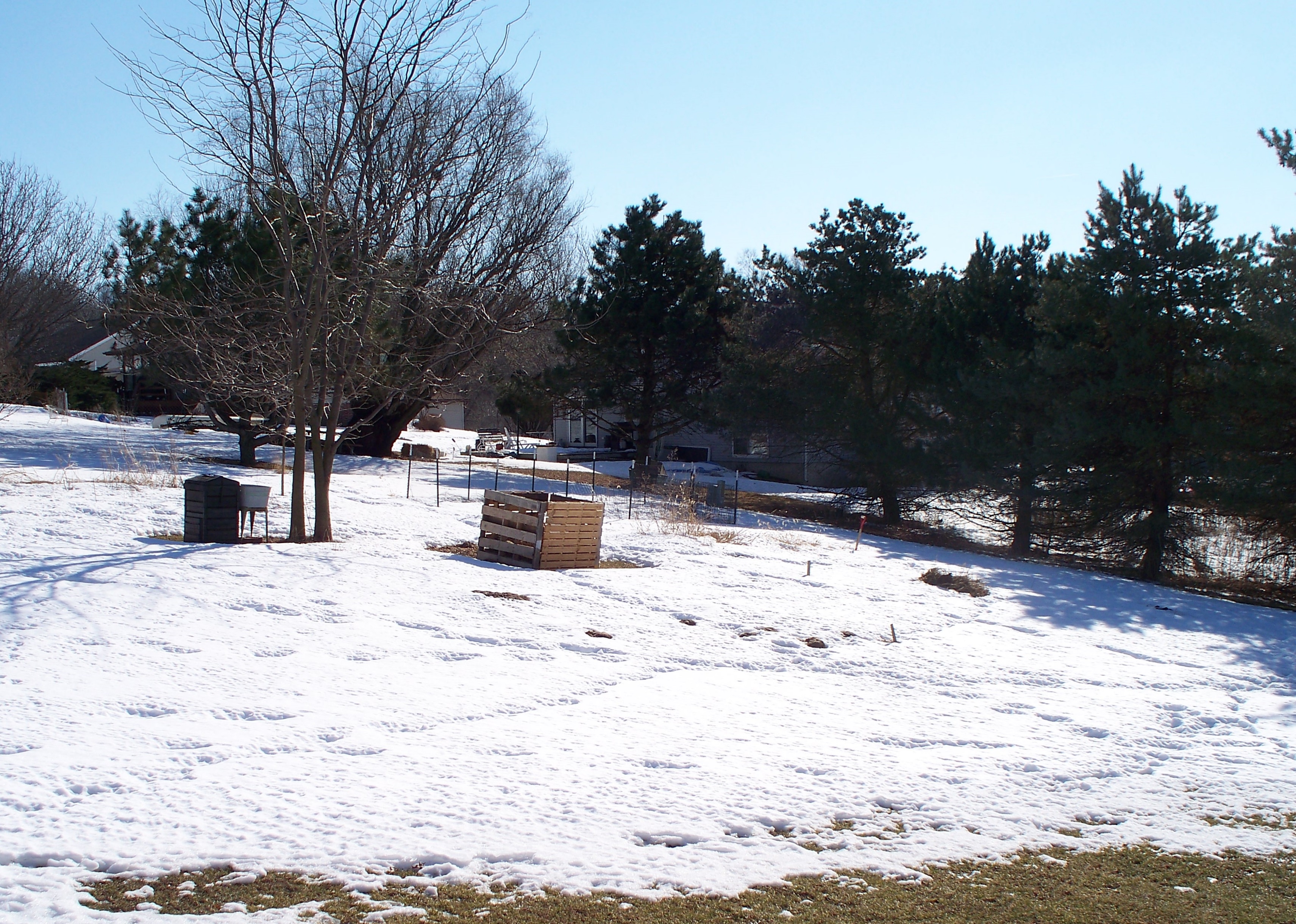
We had a brief, light snowfall this month, and that’s it. With four days left in January, it seems unlikely winter as we know it will come.

We have had the scenic vistas, frozen lakes and automobile crashes associated with Iowa winter, but the temperatures have been nowhere near cold enough to kill off pests we want dead come spring.

I’m not an entomologist, however, it’s a problem if bugs over-winter.

On the other hand, even with warmer temperatures, most of life at home is indoors. Drawing down the pantry, preparing to file taxes, reading, writing, budgeting and planning take up much of the desk time. It’s okay, but not as much fun as it may seem.

It is time for the Patient Protection and Affordable Care Act to enter the tax filing scene. Businesses utilizing part time workers in their operations are expected to have a reckoning with the Internal Revenue Service. Depending on what time period is audited, businesses with part time employees with more than 780 hours in six months, or 1,560 hours in 12 months, will be required to pay full benefits. My 2014 totals for the job where this is relevant were 694/1,249, so my employer is in the clear.

This has been a complaint about the ACA It is said to limit how much money part time no benefits people can earn and make it more expensive for employers to add employees. IMHO, those are bad arguments against the law. If the government had provided Medicare for all instead of the ACA, the financial burden would have been much less for everyone.

As it is, the cost of health insurance premiums went up post ACA. I’m not sure this was caused by the law, or by insurance companies using it as an excuse to improve margins.

From a cost standpoint, the ACA made health insurance less expensive only in the framework of what certain lower income people pay for health insurance. There were more dollars, just shifted around with government subsidizing many newly insured people.

What matters more about the ACA is how employers manage their business.Employee costs are always a concern and a key part of any business model. Let’s face it. Small and mid-sized businesses would like to get away with all employees being independent contractors without benefits from the company. The problem is the wages paid are comparable to what used to be offered in the form of wages plus benefits, only without the benefits or the amount of money it takes to provide them.

I’ve heard I will have a reckoning with the IRS in the form of a question on my tax return about health insurance. For 2014, the answer is we had it.

As the sun rises it’s time to turn to other work. Working on newspaper articles, planting seeds and cooking will figure prominently as we work through January hoping winter actually comes.


Categories
Home Life

Sunrise

Dawn at Home
Dawn at Home

The sky was colorful and glorious. Then dawn came.

January is waning. To what it will yield is uncertain. We haven’t had winter yet— the killing of pests, stopped flow of sap and soil moisture protection. Whether winter will come at all is also uncertain in these days of extreme weather. Many wouldn’t miss winter. However, I would.

Categories
Home Life

Snowfall

Imagination can better capture the actuality of falling snow. Better than my smartphone, or camera. Better than words on a page or screen.

Falling snow is.

That is enough.

Categories
Work Life

Now and Then a Day Off

Parker Putnam Building, Davenport, Iowa

On Saturdays I took the bus downtown to pay my newspaper bill. In the mid-1960s my home town had a downtown, and it wasn’t unusual.

Newspaper carriers collected subscription fees from customers, then remitted the cost of the papers at the building where they were printed. Whatever was left—a few dollars at most—was our margin.

I spent mine on the bus trip, on snacks at the automat inside Parker’s Department Store, and for an occasional book or magazine. Back then there were at least four department stores downtown and I shopped at them all from time to time.

I continue to have an urge to go downtown on my day off, but of course there is no downtown the way there was.

Sometimes I give in and go, but the impulse is less about the trip itself than feeding a connected and primal need. It’s not the same even though today’s mental awareness is connected to that long ago paperboy. Usually I end up buying things we need if I venture out, like food, light bulbs and hydrogen peroxide.

Days off are more complicated than they were. On every day there is some paid work to be done whether at a work site, or at my desk. I don’t mind. Modern life is about choices we make.

After re-purposing, there was no idea where the road would lead, and that was mostly a good thing. I knew there would be constant work to sustain a life outside of the old fashioned single big paycheck. I embraced the change. Some say over 40 percent of the U.S. workforce, or 60 million people, will derive their livelihood from this kind of “freelancing” also known as “working as needed.”

Dig a bit deeper, and what I am doing is a harbinger of the near-term future, which according to the Intuit 2020 Report, is where “2020 will see a new breed of senior citizens with ‘unretirement’ and active engagement best describing their lifestyle choices.” Translation: my cohort will be working for money until we croak.

So even if I feel the urge to venture downtown, a place that no longer exists, capitulating from time to time seems okay. I would argue it is necessary because so much depends on our connections to the past that if we don’t periodically revisit them, sustaining a life in the present would be nigh impossible.

So now and then, I take a day off.

Categories
Living in Society

Politics in the County Seat

Warm Winter Temperatures
Winter Warm Spell

With sun shining and temperatures above freezing, yesterday was a pleasant day to be out and about in the county seat.

Four interviews for the newspaper, a stop at a used bookstore, and afternoon conversation with friends over coffee. We discussed the world as we know it… and politics.

There was news in the political world. Governor Terry Branstad gave his inaugural address after omitting any mention of a key local issue—supplemental state aid to the K-12 school system—in his condition of the state address earlier in the week. He left it to analysts to figure out he plans to underfund schools this budget cycle. One of the local school districts is advocating for a six percent increase in funding. The governor proposed roughly one percent depending upon how the numbers are interpreted.

The Iowa legislature is open for business after the formalities of the first week, and K-12 funding is one of many issues they will consider this session.

Today, the Iowa Democratic party is expected to elect a new chair to replace outgoing Scott Brennan. Not having a dog in the race, I wish them well.

On Tuesday the president delivers his state of the union address to a joint session of congress. The television audience is expected to be the lowest of any of his state of the union speeches. Iowa’s junior Senator Joni Ernst has been selected by congressional Republicans to deliver a rebuttal immediately following.

There has been a lot of very public political action this month, but what I would like to know is what area families have to say about this political window dressing. I’d also like to identify the voters who were for both Dave Loebsack and Joni Ernst in 2014. I believe unlocking their motivations is key to understanding the electorate and determining a path forward after a disastrous general election.

During the 2012 campaign we door-knocked an enclave in northwest Cedar County. Because of the low number of homes, I decided we would knock on every door, rather than the lists created by algorithms in the party’s voter database. It was eye-opening.

What we found was families who were giving considered thought about candidates before voting. They were willing to listen and debate and be open minded. There was no presumption of voting for one or the other candidate, even if the voter had a party affiliation. If we had followed the algorithm, we would never have found them and the lesson therein.

The model used by Democrats to target voters has outlived its usefulness. The idea that outside organizers can invade the high population areas of the state and produce a victory may have worked for a while, but has grown stale and ineffective. What must happen is a return to the basics, where community political organizers—people who live in the community and are not hired consultants—canvass every voter in their geography and look for supporters. We haven’t been doing that for a couple of cycles.

The simple truth is Republicans have gotten effective at exploiting the every voter canvassing method, and the 2014 election results stand as evidence. Democrats are in a position of playing catch up, and my sense is in many cases they don’t realize what is going on.

So before we lock into the political stress and storm of the 114th Congress and the 86th Iowa General Assembly, let’s pledge to spend some part of each week talking to people in our neighborhood. By identifying issues important to people, we will gain information that can work toward winning the next general election, where like the one just past, a lot will be at stake.

Categories
Living in Society

January in Winter

Garden Cart in Winter

The ambient temperature dropped four degrees since waking. Morning’s gray light brightened the plains as the new day arrived without fanfare.

One of the dozens of viruses and colds making the rounds has me feeling punk. That’s understating it. The arc of disease seems to be on the downside: there is energy to post a few items.

In what seemed like a fragmented, hesitantly delivered speech, Governor Branstad today reported “the condition of Iowa is strong.” It is hard to argue with the general topic areas of his initiatives for the coming legislative session: moving the economy forward, education reform, strong and healthy families, agricultural production, protecting our resources, transportation, safety and security, and open government. It was Branstad’s 20th condition of the state address, and we’ve heard much of it before.

A couple of progressive web commenters complained that Branstad used fallacious job creation numbers and made no mention of “middle class priorities” like increasing the minimum wage. There was a decided lack of interest in the speech, so few were likely listening to the commentators or the governor.

No one is listening. There is a lack of interest in government among a middle class that makes up most of 3.1 million Iowans. If some have their interests, written on a legislative agenda, most do not. The disinterest goes beyond what the 86th Iowa General Assembly does or does not accomplish.

The bubble in which we Americans live is real and is becoming the ridicule of the world. It is as if we took what’s best about our country and locked it up in a strongbox to protect it from those who might steal it. We venture from our borders to loot planetary resources, wage war and assert hegemony where we can. We have become exceptional in these things and our culture is the less for it.

The near term prospects for making a change are not good.

That’s not to say it is hopeless. In a world that has grown increasingly small during my lifetime, global cooperation is more important than ever. The rest of the world is coming together around a few issues—the environment, nuclear abolition, and poverty—but like in the French rallies over the weekend, the U.S. has been noticeably absent.

The current debate over Iran is a good example. Much of the world has come together to bring Iran’s nuclear program into compliance with their obligations under the Nuclear Non-proliferation Treaty to which they are a party. A deadline was set to conclude the talks, but the State Department asked for more time. Political hawks believe this is a stalling tactic on the part of the Iranians to further develop enriched uranium for nuclear warheads. The State Department and those who watch it believe negotiations are almost finished and a resolution at hand.

Rather than give the negotiations more time, the Republican majority in congress is poised to pass new sanctions against Iran.

“If we pull the trigger on new nuclear-related sanctions now,” Samantha Power, U.S. ambassador to the United Nations said, “we will go from isolating Iran to potentially isolating ourselves.”

The political hawks don’t mind, because to them, all that matters is assertion of American hegemony and sovereignty.

The late Howard Zinn points us in the right direction for action.

“History is instructive,” Zinn said in a 2005 interview.

And what it suggests to people is that even if they do little things, if they walk on the picket line, if they join a vigil, if they write a letter to their local newspaper. Anything they do, however small, becomes part of a much, much larger sort of flow of energy. And when enough people do enough things, however small they are, then change takes place.

This short piece may not be much—it is a little thing. But what ails me is not a virus contracted while living in society, or the cold weather. It is the disinterest in things that matter: a reversion to what in the Siouan language was Ioway—the sleepy ones. We must wake up and soon.

Categories
Home Life

On Rotisserie Chicken

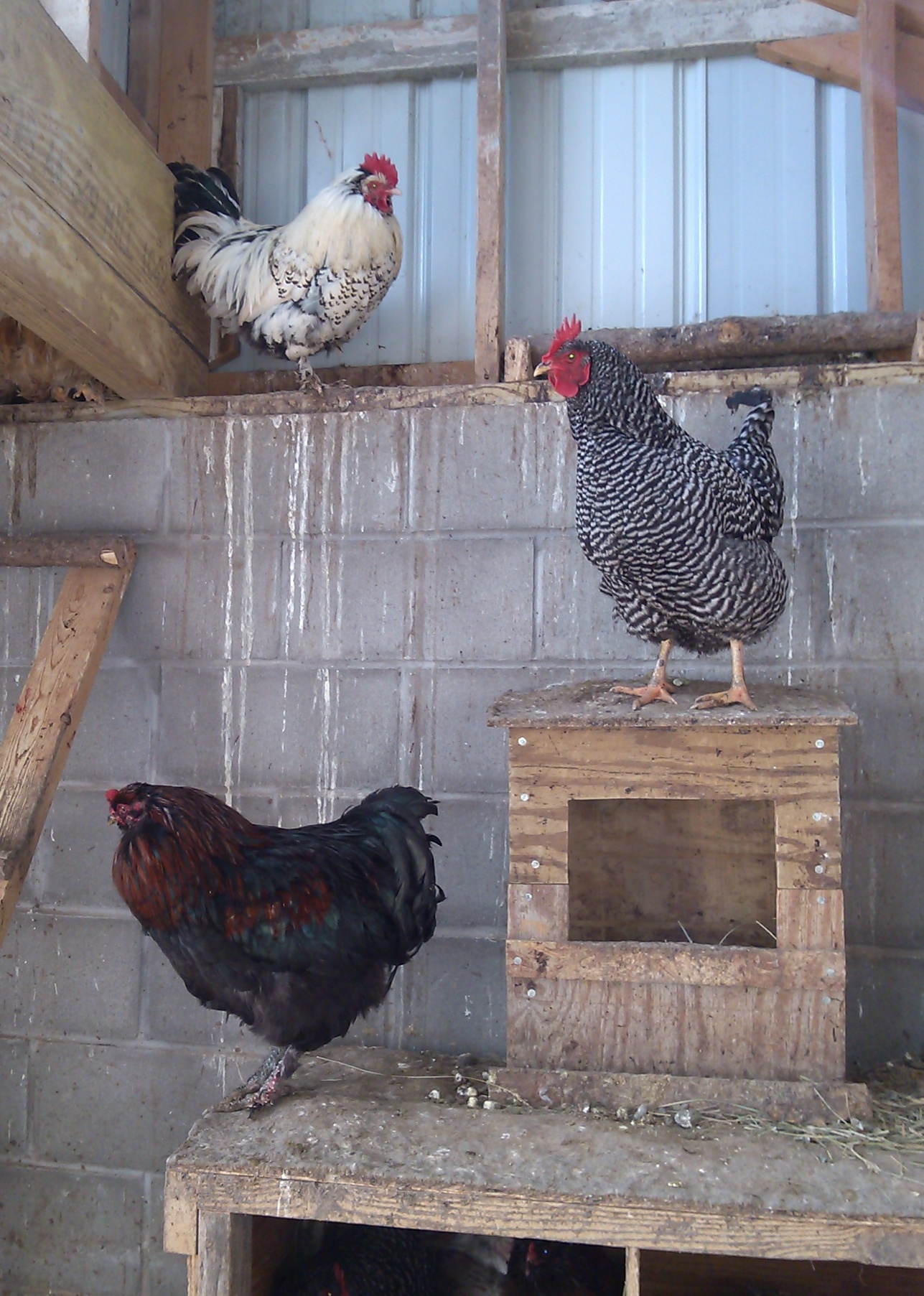
Three Chickens
Three Chickens

As a vegetarian household, we have never had a rotisserie chicken within our walls. In fact, if we brought home chicken of any kind, I can’t remember it. As an omnivore, my chicken eating takes place elsewhere, and even so, I recall eating exactly zero rotisserie chickens in my lifetime, although I made soup out of the carcass of one a single time in Colorado.

Rotisserie chickens are so not us.

Yet I see them everywhere. In arguably the most liberal county in Iowa—the only county that did not vote for the Branstad-Reynolds ticket last year—one would think this cultural phenomenon would have long ago surrendered to home-grown poultry, self-cooked. It persists.

I posted this on Facebook over the weekend:

I see all these people toting around rotisserie chickens and wonder what they do with them. Not just a few. A lot. Do they tear off the legs and eat them first like a poor man’s version of King Henry VIII? Do they cut them up with a knife to make another dish? Will the carcass become soup or stock? Do they extract the breast and throw the rest away? Do they eat them in the car and throw the bones out the window? I don’t know, but I do see a lot of these chickens when I’m out in society. I had thought with Ron Popeil’s device no one would ever buy a rotisserie chicken again. The answer is probably simple, but I don’t get it.

The Facebook friends who responded confirmed my beliefs about what people do with these cooked birds with surprising uniformity. A couple talked about the economics of chickenry, but that is really not at issue. Chicken is and has been a poor person’s protein, and for those leaning vegetarian, not a choice at all. Why kill the chicken that lays the eggs for ovo-lacto vegetarians?

What I wondered most, and was confirmed, was that people make soup and stock of the rotisserie remains—at least they said as much. Soup is life more than bread is the staff of life. Although the anti-gluten craze has reduced bread eaters to secretly coveting and eating their loaves, or making ersatz bread from barley and rice flours, it is fitting that bread and soup go together to make a meal. Chicken soup is tasty and satisfying to most omnivores.

So what’s my point?

Don’t you ever wonder what goes on behind external appearances? One sees the device that cooks the chicken and the warming display case. One sees people choosing and toting rotisserie chickens into the parking lot. There are testimonies about what people do with chickens, recipes and more. In the end, though, rotisserie chicken is not about chickens. It is about life.

Finding meaning in society is challenging and some find it in carrying a rotisserie chicken home. It is easy to make something of what everyone can observe. What is hard is to understand the motivation for life in society in its many manifestations. In the end the motivations and designs people have are more important than any chickeny artifacts.

Rotisserie chickens help us see into a deep well of life in society and forgo the question of the chicken or the egg. A better question is what shall we do with our lives today?

And that’s the meaning of this post about rotisserie chickens.

Categories
Home Life

Turning to Food

Vegetarian Stew
Vegetarian Stew

When the budget is tight we turn to meals from the pantry, cupboard and refrigerator. We cook.

It reduces the need to shop for anything but essentials. It enables dollars in the checking account to go to utility bills, fuel, interest and insurance. Cooking from the pantry produces great meals from forgotten times and ingredients.

From memory come preparations for roux, sauces, reductions, soups and stews that are filling and fill in the financial gap for those who live on part-time work without the regular big paycheck of a career.

Energy remains inexpensive in the U.S. kitchen, so there is no endless searching for firewood for the cook stove as there is in other countries. Just turn on the stove and there it is. Turning to food is turning to the source of our memory and being.

When I was young there was a mom and pop grocery store on the corner. Mother would send me the block and a half to pick up a forgotten ingredient for dinner. If there was a question when I arrived, they would call her for clarification. I mostly remembered, so it wasn’t a problem.

I remember the cost of 10-ounce bottles of soda pop at the store. Depending upon the brand, a six pack was either 54 or 60 cents. The idea of buying the sugary treat was present long before sodas became ubiquitous. One of the bottling works was on Washington Street, and we would watch the process through the large plate glass window on the sidewalk. I looked forward to earning enough money on my paper route to buy a whole six pack in varied types.

While in Colorado Springs helping our daughter move, I checked the pantry for dinner ingredients while she was at work. There was a lot to clear out before moving day. Some frozen chicken breasts, brown rice and vegetables made a delicious dinner for the two of us when she returned home. I used a meat thermometer to make sure the chicken was done and instructed her in how to use it. I remember the sun setting over Pike’s Peak as viewed from her front doorstep.

On Thursday, I sought ingredients for stew. I had a bag of steak tips vegetarian-style, and used organic carrots, the last of the summer potatoes, turnips and celery from the garden, and a big onion. After learning to make a roux, stews became an easy way to use up old vegetables and make several meals. I’m thinking about having some leftovers for lunch before my shift at the warehouse.

More than anything, maintaining a well-stocked pantry is a source of food security. If income slows down, we can draw the provisions down, ensuring we won’t go hungry while working toward better times.

That’s why tough times have us turning to food.

Categories
Living in Society Social Commentary

On Elvis Presley

Elvis Presley
Morning Coffee with Elvis Presley

Elvis Aaron Presley would have been 80 today. He remains a presence despite his premature death on Aug. 16, 1977. He was one of the most celebrated musicians of the 20th century, and part of my life before and after his death.

I watched Elvis films at my first sergeant’s on-base apartment in Mainz, Germany with other members of our S-1 unit. We were cognizant of Presley’s military service in nearby Friedberg. It was just out of the the valley leading to the Fulda Gap where we went on maneuvers. We could connect to the King as a real person.

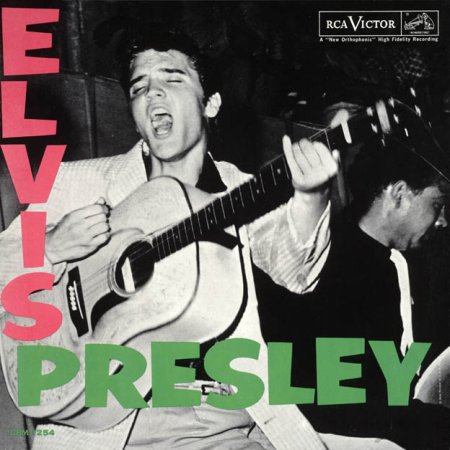
Elvis Presley Debut AlbumToday I realize that Presley’s military service was carefully planned by his producers at RCA records, who didn’t miss a beat releasing new records while he served. Presley died during the first year I was stationed in Germany and the “Aloha from Hawaii” version of Presley wasn’t my favorite. His southern roots resonated with our family history reaching back to the hills of Appalachia. I felt he was one of us.

Besides my USPS coffee mug, I have no Elvis memorabilia in the house, nor do I seek any. There are no plans to visit Graceland, or the birthplace in Tupelo, Mississippi, or anyplace else Elvis walked the earth. From time to time, I remember his work and God willing and the creek don’t rise I might watch Blue Hawaii one more time.

We don’t pick the times in which we live, yet we control our own destiny. Elvis Presley is an example of someone who made something unique of his life. While I won’t be impersonating him, I am glad to have lived part of my life when he lived his.

Categories
Work Life

Snow Day

Hiking in Subzero Weather

The warehouse called me off this afternoon because of the weather. It created an opportunity to work my long to-do list and that’s positive, even if I’ll miss the income.

While driving home across Mehaffey Bridge Road on Sunday the front end of my automobile started vibrating at speeds above 35 miles per hour. Slowing down, I made it home safely.

The two brothers at the auto shop in town agreed to check it out Monday morning. I dropped the car off and walked the three miles home in an ambient temperature around seven degrees below zero. The walk was invigorating and needed.

They found one of the brake calipers had gottenĀ  stuck and was causing the vibration. It was a quick repair and I picked up the finished vehicle just as Monday’s snow started to fall.

I had to go to the county seat today, so I shoveled the driveway and ventured out. Between four and seven inches had fallen and the light, powdery snow made for quick removal.

After my meeting I picked up a few groceries, got a haircut, and headed home to weather the cold. The next warehouse shift is not until Friday, and as I mentioned, it’s an opportunity to get things done.

Between the warehouse, the car repair and the long walk home is another topic: consumer credit.

Because of the way we transitioned into a post-career life, we have credit. We have a line of credit against our home at a very low interest rate. We have credit cards to take the bumps out of monthly cash flow. Instead of creating immediate stress, the car repair went on the credit card and when income exceeds expenses, we’ll pay it down. These two financial tools make funding cash flow doable and to some extent, life easier.

Using credit is also a precarious thing to do.

There is the presumption of being able to pay it off, something not always possible. A lot depends upon getting the jobs and hours needed to generate income. Then there is the interest, an expense in its own right. Middle class people should get and use credit in a way that serves sustainability and nothing more. That’s what I try to do.

What else can working people do? What we always do. Keep working toward a life with a newer car, predictable income and less need for credit. However, if we get there, we will continue to take long walks on cold days.