Categories
Living in Society Social Commentary Work Life

Slavery and the Costco Halo

Slave Vessels - Photo Credit AP
Slave Vessels – Photo Credit AP

On Thursday the Los Angeles Times reported a Costco member sued the retailer on allegations that it knowingly sold frozen prawns that were the product of slave labor.

The lawsuit, filed Wednesday in U.S. District Court in the Northern District of California, alleges that Costco was aware that the prawns it purchased from its Southeast Asian producers came from a supply chain dependent on human trafficking and other illegal labor abuses.

The suit, which seeks class-action status, named seafood producers Charoen Pokphand Foods Public Co. in Thailand and C.P. Food Products Inc. in Maryland as defendants.

Based on claims of unfair competition and fraudulent practices, the lawsuit seeks a court order stopping Costco from selling prawns without a label describing its “tainted” supply chain and from buying, distributing and selling products they know or suspect to be derived from slave labor or human trafficking.

Read the rest of the article here.

If the allegations are true, the Costco halo with regard to labor relations should dim.

More than any other large retailer, Costco is in the good graces of members of the progressive community for its labor practices.

In January 2014, President Obama choose a Costco in Lanham, Maryland to advocate for an increase in the federal minimum wage because the retailer is “acting on its own to pay its workers a fair wage.”

“To help make that case, look no further than Costco,” said Thomas Perez, secretary of labor at the event. “Costco has been proving for years that you can be a profitable company while still paying your employees a fair wage. They’ve rejected the old false choice that you can serve the interests of your shareholders, or your workers, but not both.”

“Labor union officials and backers agree,” according to an article in USA Today, “saying other retailers, such as Walmart, could learn from the way Costco treats its workers and the results.”

Costco’s example is on the left end of the retail spectrum, and is set up to be taken down a notch. Slavery in its supply chain is nothing new as their shelves have long been stocked with canned tuna derived from a Thailand based fishing trade that sources from slave vessels. The Costco halo has protected it… perhaps until now.

When in high school I enjoyed having a tuna melt sandwich at Ross’ Restaurant in Bettendorf after working on the stage crew. The warm tuna salad, with a slice of melted cheese, served on toasted bread was sensually appealing and delicious. We are not in high school any more.

We live in a society where the mere mention of symbols of 19th century slavery creates cacophonous public debate. Just look at the recent news cycles regarding use of the Confederate battle flag in public places. It was a media firestorm with the defining act arguably being removal of the Confederate flag from the South Carolina state capitol grounds. Modern day slavery? Barely a word about it.

Whether Costco’s association with slaves in its supply chain will become an issue among its members is uncertain at best. As a society don’t like to take down the symbols in our hagiography, even if all large-scale retailers, including Costco, are far from saintly. We take comfort in developing patterns and relationships with our retailers, creating a refuge from a world that seems increasingly hostile. “I like this brand,” a consumer might say.

The argument comes down to the face of the farmer. When we discover the farmer is a slave, it requires action on our part. That is, unless we concede the world is so screwed up there is no hope.

I’ve never eaten a prawn, and don’t plan to start. If the lawsuit is successful, I’m not sure it will matter among prawn-eaters or other Costco members. However, progressives should care, and stop referring to Costco as a model for labor relations until it pledges, and lives up to the pledge, to take slavery out of its supply chain.

~ Written for Blog for Iowa
Categories
Milestones

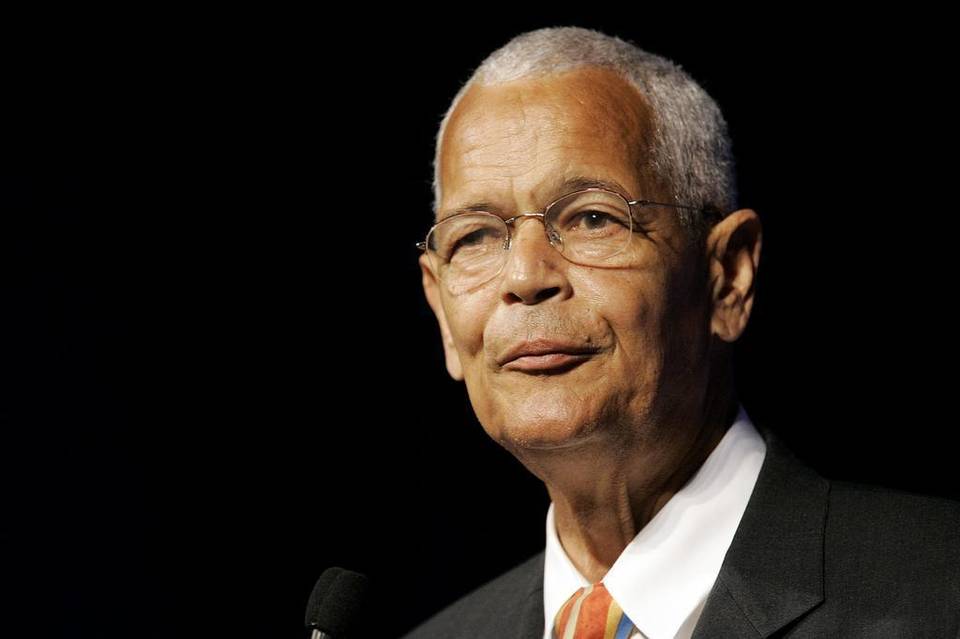
Julian Bond and Social Justice

Julian Bond Photo Credit - AP
Julian Bond Photo Credit – AP

On Nov. 12, 1970 I heard Julian Bond speak at the University of Iowa Field House. My memory of the event is wondering why I should care about a Georgia legislator who found his way to Iowa, other than the classroom assignment to report on five university events that semester.

Hearing Bond’s speech changed me in ways that persist at his passing this week, leaving an indelible mark for which I am grateful.

When Bond joined Morris Dees and Joe Levin in 1971 to help found the Southern Poverty Law Center as its first president, I joined and followed the cases they took over the years.

At first, their work showed me how far out of touch I was with the legacy of the south. Why should I care about their 1972 plan to apportion voting districts in Alabama? If I knew then what I know now about redistricting I would have paid more attention.

As a result of their litigation in Nixon vs. Brewer, attorneys for the Center argued, “blacks made up one-fourth of the Alabama population but were unable to elect representatives of their choice under the current at-large voting system.” After a successful outcome in federal court, the state adopted the Center’s plan for apportionment. In 1974, 15 blacks were elected to the state legislature. This is the type of social justice for which I remember Bond.

Like most of my friends, I knew few people of color in my youth. When I was coming up our family visited the plantation where my father lived while attending high school in Tallahassee, Fla. My father’s ease with black acquaintances from his youth taught me acceptance of people as people with whom we have much in common. Bond’s example teaches that we need not just acceptance, but social justice.

Julian Bond was called home too early. His legacy follows the arc of social justice that has been part of public life for most of mine. I feel a sadness at his passing. Not for what he was, or for the loss, as much as for how far we have to go.

Categories
Living in Society

5 Take-Aways From The Wing Ding

Rural Polling Place
Rural Polling Place

Clear Lake, where the Iowa Democratic Wing Ding was held Friday, was an impossible venue for most Iowa working people.

Over 160 miles away in my case, driving there after work was not an option. To make up for the distance, I viewed the Des Moines Register webcast on my desktop. It wasn’t the same as being there, but it felt close in the twitterverse.

A key question for the Feb. 1 caucuses is who will show up, and this year one expects a significant number—not as many as in 2008—will not be activists. The campaigns will be judged by how well they organize and turn out their supporters that night. A failure to bring new people to the caucus process could be fatal for a candidate’s hopes. One of two tickets out of Iowa will go to Hillary Clinton.

Here are five take-aways from the Iowa Democratic Wing Ding.

What not to like about Martin O’Malley? Whether O’Malley can challenge Sanders for the second ticket out of Iowa is uncertain, but he is campaigning in a personal, energetic and personable way. He has had multiple bites at the policy-setting apple, and long time political activists, as well as quadrennial Democrats, can find a lot to like about O’Malley’s ideas and campaign tactics.

The Democratic political establishment is overly reliant on resources the eventual nominee will bring to the table. While Trump and Carson stage circus-like extravaganzas that bring new people into the political process, Democrats place stock in large, formal events like the Wing Ding which target existing political activists. Such events have a role. The better question is what are Democrats doing to bring new people into the process? Prove me wrong, but they aren’t doing much except dusting off the same old sawhorses for the post-caucus campaign. Is anyone else tired of hearing the name Jerry Crawford?

Bernie Sanders’ stump speech is getting old. Progressives are supportive of Sanders’ ideas, but the message is little changed since he appeared in Johnson County to support Bruce Braley before the midterm election. Maybe the idea of political revolution doesn’t need to change. His speech at the Wing Ding wasn’t helped by the fact he was losing his voice. The ideas remained strong, but delivery suffered. The novelty of Sanders is wearing off.

Chafee is actually a Democrat. If there is any question about Chafee’s allegiance to mainstream Democratic ideas, he inoculated the political bloodstream with his better than expected Wing Ding speech.

Hillary Clinton gets a ticket out of Iowa but her challenges lie ahead. In case you missed it, Hillary Clinton is a woman. Set aside all the policy ideas you agree or disagree with—your niggling objections—and it is much less than a sure thing the electorate will support a woman for president in the general election.

We live in a culture where women are considered to be second class citizens and worse. No one knows this better or has done more about it in public life than Hillary Clinton. She has done a lot globally to support women and girls, but the battle is not won. Far from it. Despite her impressive credentials, for reasons that include her gender, Hillary gets short shrift. Like many women, she will have to work smarter and twice as hard as the others to achieve her goals. The glass ceiling isn’t broken yet.

By Labor Day, most Democratic activists—people who invest time and resources into political campaigns—will have decided for whom they will caucus. Many already know or have signed up for a campaign. Some wear their preference on a T-shirt or car bumper. Others keep close counsel. The veil—already wearing thin—will be shed in a few weeks.

There is a desultory feel to this year’s caucus season, which began April 10 in Des Moines with speeches by Jim Webb and Martin O’Malley. Some show enthusiasm for their chosen candidate, yet most people I encounter are tuned out of politics. With each election the life cycle of interest in voting seems shorter.

As Iowans seek relief from summer’s heat and humidity we have had a chance to get to know the five Democratic contenders. Deciding which one to support will be easier because of Iowa’s first in the nation status. What everyday Iowans do about it is an open question.

~ Written for Blog for Iowa
Categories
Living in Society

Senator Rob Hogg In Coralville

State Senator Rob Hogg

CORALVILLE — The Johnson County state Senate delegation — Bob and Sue Dvorsky, Joe Bolkcom, and Kevin and Deb Kinney — hosted their colleague, Senator Rob Hogg at a fund raiser Tuesday afternoon.

Under a tent erected on the manicured lawn of Backpocket Brewing in Iowa River Landing, about 30 local Democrats gathered to hear Hogg’s positive vision for our future.

“Let’s work and get Congress to function to solve problems,” Hogg said.

Hogg is exploring the possibility of challenging incumbent U.S. Senator Chuck Grassley in the general election.

Hogg mentioned key issues Iowans are concerned with in his fifteen minute speech: ending discrimination, raising the minimum wage, addressing infrastructure, youth employment, and creating a vibrant, full-employment economy that works for all Americans. He would address the social safety net, public health including mental health, and his signature issue of implementing proven solutions to address the climate crisis.

“During the next presidential term there will be four justices — Scalia, Ginsburg, Kennedy and Breyer — over the age of 80,” Hogg said. “The question is who do you want making the decision about who’s going to confirm the next justices?”

“We do not want to go backwards on the Supreme Court,” he added.

Foreign relations is an important part of serving in the U.S. Senate, Hogg said.

“We need a foreign policy for the U.S. that is strong, and smart, to promote peace and to promote global environmental sustainability out of our own self-interest,” he said. “We need the United States to lead the world on these issues.”

Challenging Grassley will be a daunting challenge if Hogg decides to run.

“I believe in making government work,” he said.

“You need to elect candidates who want to make Congress work, who want to make government work,” he said. “We also need a new kind of politics.”

“The easiest way to change the way we do campaigns in this country is to run a campaign in a different manner. To draw upon our country’s best traditions and values to build relationships, build communities, educate and empower people at the grassroots, put forward a positive vision for our future, and to win,” he said. “If we can do that, in that singular act, of climbing the mountain, shocking the world, upsetting a 42-year incumbent, in that singular act we can transform American politics forever and for good and for the better for the citizens of this country, and our future.”

People organization ideas and money are what it will take to mount a campaign Hogg said. He invited attendees to join his effort.

For more information about Senator Rob Hogg, go to robhogg.org.

Categories
Living in Society

In Andrew Jackson’s Name

Andrew Jackson 1844 Photo Credit - Wikimedia Commons
Andrew Jackson 1844 Photo Credit – Wikimedia Commons

It is fitting the Iowa Democratic Party plunge into navel gazing in the wake of the June 17 shootings at the Emmanuel African Methodist Episcopal Church in Charleston, S.C. by renaming, or considering whether to rename, its annual Jefferson-Jackson dinner.

Knowing more than a little about both presidents, I never understood why it was named the Jefferson-Jackson dinner in the first place. I couldn’t afford to attend unless someone else was paying my ticket. Democrats are a party of the elites and moneyed interests these days, not of the common man. By a distance.

“I’ve had it with white males,” said a friend last night.

Let’s dump Jackson, and Jefferson, Jackson particularly, another said.

I would have suggested a prominent female office holder, but no Democratic female governors or congresswomen have yet been elected, and the prospect for closing the era of Iowa white males in 2016 is slim unless Hillary Clinton or Monica Vernon is elected.

The idea that Jacksonian Democracy is relevant in 21st Century America is absurd. “Jacksonian democracy promoted the strength of the presidency and executive branch at the expense of Congress, while also seeking to broaden the public’s participation in government,” according to Wikipedia. Just look at the reins Congress placed on President Obama, blocking much of his agenda, even when he had a majority of the House and 60 members of the Democratic caucus in the Senate.

The only political party I see encouraging new people to participate in politics is the Republican Party, with their extravagant affairs like Ben Carson’s in Des Moines last weekend, and Donald Trump’s a couple weeks back. We can say they border the wacky side as much as we want, but the truth is they are expanding their base. Witness Senator Joni Ernst, the first product of their base expansion. Unless Democrats get to work, there will be more.

It doesn’t matter who a political event is named after. A better option would be to annually sell the naming rights to the highest bidder. These big political wing dings are more about raising money in politics than inclusion, just be what you be Democrats.

Perhaps a little harsh, but if Andrew Jackson were still alive, the 247-year old ex-president, former slave holder, and veteran of the Battle of New Orleans and the Seminole wars would likely be enraged by what’s going on. That’s who he was, but outrage is has gone out of style unless one expresses it in social media.

I’m still registered as a Democrat and expect to continue to be. However, as a party we need to get beyond naval gazing and work to have a reason for new voters to sign up.

The naval gazing announcement in its entirety:

On Aug. 8, Josh Levitt, press secretary, released the following:

DES MOINES — Today the Iowa Democratic Party’s State Central Committee voted in favor of a resolution to begin the process to change the name of the Jefferson-Jackson Dinner. The change will take place following the 2015 dinner. IDP Chair Dr. Andy McGuire issued the following statement on the resolution:

“Today the Iowa Democratic Party’s State Central Committee voted to begin the process to change the name of the annual Jefferson-Jackson Dinner following the 2015 Dinner.

“The vote to change the name of the Jefferson-Jackson Dinner comes after much debate and discussion among our activists and grassroots leaders around the state. This was not a decision that was made lightly. The vote today confirms that our party believes it is important to change the name of the dinner to align with the values of our modern day Democratic Party: inclusiveness, diversity and equality.

“Moving forward, we will continue the conversation with Iowa Democrats about what the new name should be. The process for changing the name will be as inclusive as possible. We will ensure that all Iowa Democrats have the opportunity to have their voices heard, and offer suggestions for a new name.

“Iowa Democrats are proud that we are never afraid to move forward and modernize, and we continue to work hard everyday to elect Democrats all across Iowa.”

The SCC today also elected Kimberley Boggus as the party’s new Affirmative Action Chair.

“The Iowa Democratic Party is wholly committed to making our Party as inclusive and welcoming as possible. Today the State Central Committee took a major step in advancing these goals by electing Kimberley Boggus as our new Affirmative Action Chair. Kimberley is a strong leader who has proven to be a fierce advocate for Democratic values. With Kimberley at the helm, I am confident that the Iowa Democratic Party will continue to grow more diverse and inclusive as we bring our Democratic message all across the state,” added McGuire.

Categories
Home Life

Weekend Miscellany

Swiss Chard
Swiss Chard

Bits and pieces of a life surface in the early morning of high summer.

A plastic bag holding brown rice disintegrated in the cupboard, leading to discussions with my spouse about what to do with old food.

The plastic bag was biodegradable, although the expectation was it would last a while longer. Removing the cupboard contents to clean up and reorganize turned up food with expiration dates going back to 2003. The hoarder in me wanted to keep or cook some of it, but best to compost and recycle as we can.

What project did I have with tapioca? Why weren’t there more celebrations for which to bake a box cake, and inadequate festivities to use up two bottles of grenadine syrup? What the hell with the marshmallow fluff? There are answers, but the memories conjured by this project we not so memorable.

Today begins my weekend, which of course, is not free of work. My editor sent me three story ideas and the three-day hiatus from the warehouse is filled with activities already. Not the least of these activities is picking apples, which are getting ripe fast. The first wave will be a big one, with lots of juice and maybe some sauce and apple butter in the works.

Categories
Home Life Kitchen Garden

Garden – Yard Work Day

Fallen Apple Pile
Fallen Apple Pile

The ground is dry with eighth-inch cracks under the apple trees. There has been talk about a wet spring, yet the rasp on knees as I picked up wind-fallen apples before mowing was uncomfortable… and harrowing.

Relenting, I poured a gallon of water on the cucumber plants which were withered in the sun from lack of moisture. It helped—they recovered this time.

Ripening Apples
Ripening Apples

The garlic patch is also dry, in fact the whole garden could use rain. I had better see if the 50 percent chance of precipitation materializes later this morning and then water if it doesn’t.

The branches of the apple trees are burdened with fruit, making it difficult to get under them to mow. The walking mower wouldn’t start, so I spent half an hour cleaning and troubleshooting it. After replacing the spark plug and adding fuel, it fired up. I mowed under the fruit trees and in the ditch near the road pushing the small machine.

Taking a quart of canned whole tomatoes to the kitchen, I went back outside and gathered basil, Swiss chard and an Amish Paste tomato for pasta sauce. Along with a kale salad it made a satisfying dinner… sustenance against tough times.

Categories
Living in Society

Revisiting Webb 2016 in Iowa

Photo Credit: jimwebb.com

After re-reading my post “5 Reasons Jim Webb’s Stock is Up” I stand by what I wrote.

For a blog post it holds up reasonably well.

At the same time, tick-tock for #WebbNation in Iowa.

Two weeks later and three weeks until Labor Day, I don’t see the Webb ground game in action, except occasional emails, list-serve messages, and social media posts. Joe Stanley is working, and posts about activities occasionally in social media. Webb has a small number of Iowa events planned. If there is more, it’s invisible.

“There is a lot of work for him to do before Labor Day to catch up with Clinton and Sanders,” I wrote, believing the campaign would make progress. “It’s going to take more than Joe Stanley’s happy face to develop and execute a Webb ground game.”

I’m not the only one who noticed Stanley. On Tuesday Rachel Weiner of the Washington Post tracked me down for a discussion and quoted me in a blog post she wrote.

Stanley was quick to respond on Twitter and proceeded to protect his tweets, as Weiner reported. What gives?

Hillary and her staff know the game, having been through it before. Bernie Sanders’ campaign experienced rapid growth pains, but now also knows the drill. Martin O’Malley seems disciplined and personable, and the first time I attended one of his events, he had caucus commitment cards available and ready to sign. This is what Iowa Democrats expect of presidential candidates. Identification of and turning out your people caucus night is what provides a ticket out of Iowa.

If Webb is playing strategy close to the vest, what could it be if it doesn’t include the block and tackling typical of winning Iowa’s Democratic caucuses? One expects a canvasser from #WebbNation would have called or reached out by now, something the Clinton, Sanders and O’Malley campaigns have already done, multiple times.

There aren’t many other paths for #WebbNation.

There are a lot of veterans in Iowa—enough to win the caucus outright if a candidate can unite enough of them behind him or her. Veterans represent a natural Webb constituency, and a list of Iowa Democratic veterans exists. Webb should be working it. But is he?

Jim Webb ≠Joe Stanley, as Stanley tweeted yesterday. They have known each other and campaigned together for a long time. Stanley is one of the faces of #WebbNation and his antics on social media serve as a distraction from what else Webb may be doing to ID caucus supporters.

Whatever that may or may not be, there is very little evidence of a Webb ground game in Iowa. High profile events like the Des Moines Register Soap Box at the state fair, and the stock and trade of county fair and central committee meetings, yes. But not the political grunt work needed to organize for a candidate in Iowa.

“How different has this time been with the Internet?” emailed a friend from a past campaign yesterday. “I feel like everyone is mini-stalking people in Iowa through Twitter.”

The Internet serves a weird function this cycle, making for laziness among reporters anxious to generate clicks. Yes, some stalking is going on, but to win the caucuses actual people need to show up at a specific time and place. Making that happen takes work that lies outside the Internet.

The clock is ticking until Labor Day when the next phase of the canvass begins: a mad rush to end of year holidays, the new year and closing the deal with Democratic caucus goers.

I like Jim Webb and would like to see him win delegates to the state convention. The question is whether the campaign will emerge from the special ops mode it is in and organize. Today it is an open question and there is time, but not much time, to make it happen.

~ Written for Blog for Iowa

Categories
Living in Society

In Iowa’s Hands

#OccupyIowaCity Initial General Assembly

The Johnson County Board of Supervisors set a public forum Aug. 12 to collect information regarding its proposal to increase the county-wide minimum wage to $10.10 per hour in three stages by 2017.

Something bigger than incremental hourly wage increases is at stake.

There are legal hurdles for the supervisors to jump in passing an ordinance, but to a person they are smart people and a vocal minority of the community has been supportive. State Senator Bob Dvorsky, who represents part of Johnson County, Cedar County and the City of Wilton weighed in favoring the proposal this week.

This action is indicative of local frustration with failure to act on the part of state and federal government. This is the third such prominent case where local authorities have taken things into their own hands absent governance.

The most familiar is the lawsuit initiated by the Des Moines Water Works over its increased costs of removing nitrates, mostly generated from farming operations, from the capitol city’s drinking water. Governor Branstad asked the public utility to “tone it down and start cooperating” in its criticism of the agricultural community. The water works is planning to spend $183 million for new nitrate treatment equipment because of increased levels in the Raccoon River resulting mostly from farm runoff.

Art Tate, superintendent of Davenport public schools, said he was going to break state law after the state legislature failed to provide adequate resources to his district during the most recent legislative session.

These examples present a dim picture for state governance, as each problem could be governed by the state with more effectiveness and broader impact.

Taking things into our own hands is a native impulse and very American. It is the same kind that gets small scale entrepreneurs to start businesses and community groups to form to solve local problems.

When in western Iowa a couple years back, a group of us stopped at a small diner attached to a truck stop in Missouri Valley, hoping to grab a quick breakfast before our scheduled event in Des Moines. The place was packed, but we placed our order, mindful of the time.

After about 20 minutes, a woman came from the kitchen and made an announcement, “Our cook just quit, and I’m not sure what we’re going to do about it.”

A regular patron stood up and said, “Hell, I can cook eggs, and rushed to the kitchen before anyone cold stop him.”

After ten more minutes, we tipped our server and said we had to go without eating.

The native impulse to take things into our own hands is part of what’s good about living in Iowa. What would be better is if people would connect the dots between the problems we all share and the purpose of government.

There are minimum wage earners who would spend extra money in their paycheck. Urban dwellers don’t deserve to pay for an unrecognized cost of agriculture. School children deserve the best education possible, and it’s possible to do much more than we are. Importantly, we deserve better governance.

Until people take matters into their own hands and elect men and women who will serve the electorate more than moneyed interests, we will be stuck. It is possible, using the same hands with which our country was built, we will engender democracy again by using the ballot box. It’s something sorely needed in Iowa.

~ Written for Blog for Iowa

Categories
Living in Society Work Life

Missing Pieces of #RaiseTheWage

Working the Alley
Working the Alley

The loud but small-sized movement to raise the minimum wage is made up of good people. There are not enough of them to make a difference. Their voice is amplified in corporate news outlets, but neither the federal nor state governments have acted to raise the minimum wage in a long time.

Today the Johnson County Board of Supervisors is scheduled to discuss a county ordinance to raise the minimum wage to $10.10 by 2017. Iowa City native David Goodner feels this is not enough and called for raising it to $15. As we posted yesterday, Iowa labor commissioner Michael Mauro said the ordinance Johnson County is discussing is inconsistent with Iowa law and therefore unconstitutional. The county attorney has not reported to the board on the legality of a potential ordinance.

Goodner wrote in the print edition of today’s Iowa City Press Citizen, “According to the Iowa Policy Project, a livable wage for a single worker in Iowa is $13.04 an hour. A single mom with kids needs $28.07 an hour to make ends meet. Married workers with two kids need $16.89 an hour each.”

The numbers are a familiar construct and seem reasonable to progressive readers who follow the Iowa Policy Project. Peter Fisher and Lily French’s article, “The Cost of Living in Iowa – 2014 Edition” is well researched and often quoted. “The Johnson County Board of Supervisors know what the research says. So why not $15 an hour now?” wrote Goodner. “Why should workers have to wait to earn a livable wage?”

Where is the groundswell of support from the 3.3 million U.S. workers who are at or below minimum wage to raise it? The answer is complicated, but Pew Research Center gets us started in answering the question.

People at or below the federal minimum wage are disproportionately young (50.4% are ages 16 to 24; 24% are teenagers age 16 to 19); mostly (77%) white; nearly half being white women; and largely part-time workers (64% of the total), according to Pew. They work in food preparation and serving; sales; personal care and service; office and administrative support; building and grounds maintenance; and other low-skill occupations.

Work needs doing and competitive compensation is required of businesses to get it done. If minimum wage gets the job done, and for the most part it has, there is no natural incentive to raise it.

Some try to subsist on a single minimum wage job. It is hard to tell from the Pew numbers how many people that is. What is borne out by my experience is it is unreasonable to assume people work a single minimum wage job to make household ends meet. Actually, as Iowa Policy Project research shows, it’s impossible.

At the same time, the old sawhorse of taking the current federal minimum wage of $7.25, multiplying it by 40 hours per week for a result of $290 per week gross income is essentially meaningless. It is no justification for much of anything. Minimum wage jobs are worked in a complex cultural context that matters more than the rate of pay.

From talking to dozens of low wage workers, I’ve found — in every case — taking a minimum wage or lowly paid job has been a trade-off of priorities and a temporary measure for those earning an hourly wage. What matters more is a social support network that includes income from a second job, pension or other household members; shared housing; alternative food sources; shared or public transportation; and no-cost child care from family and friends. Health care is a significant expense in terms of time off work, deductibles and co-pays. Our health care system has a long way to go to be affordable for low wage workers.

If the Johnson County supervisors decide to raise the county minimum wage, it would in part reflect a dissatisfaction with state and federal government for failing to act. People can demand what they want, and low-wage workers will take it.

People who talk about raising the minimum wage don’t get that cancer, hip replacements, divorces, incarceration, poor diet, addictions, lawsuits, sore backs, weak knees, bullying, discrimination, firearms, transportation, lack of access to health care and everything else involved in living in our society enter into the picture.

If government is going to raise the minimum wage, be quick about it. Then get on to solving more pressing problems that impact low wage workers.

~ Written for Blog for Iowa