LAKE MACBRIDE— Tomorrow I’m doing something for me. I’m taking a three hour course in pruning apple trees at the orchard where I worked last fall. The cost is $10, but what is best is the opportunity to learn from people who prune apple trees for a living. There is a lot else that needs doing tomorrow, but the pruning class takes precedence.
There is also more to tell, but that will be later.
LAKE MACBRIDE— It has been a day of staying busy indoors. The driveway is loaded with snow, and without any need to leave the property, we didn’t. Tomorrow is the big dig to get ready for work and a trip to the grocery store, but not today.
There was some kitchen work. I brought the last of the fall apples upstairs, setting aside some for baking, and made apple sauce of the rest. The Winecrisp and Gold Rush apples were past their prime, but stored well. I also made a pot of winter soup which is simmering as I type. The malady about which I wrote Saturday is on the mend. What I know is health care is about staying healthy, and I’m working on that.
The good news is I feel well enough to start reading again and picked out a book. By tomorrow I hope to be ready to wield a shovel and dig the way out to the road that leads to town.
LAKE MACBRIDE— Newspaper writing and club demonstrations have taken a toll on everything else as I developed a process to incorporate new work and income into this life. Winter is a good time for it.
Seven adult deer were browsing in our yard. With a full girth, they appeared healthy, but were seeking food where there was none. One rose on its rear legs to nibble a pine tree. Others browsed the stubble that is the winter garden. One was favoring its right rear leg, limping along. A herd of scavengers.
The refrigerator light came on as I opened the door. It illuminated heads of cabbage, a drawer full of root vegetables, organic carrots and celery from California, and leftover soup and apple cider. The end of fresh food is near.
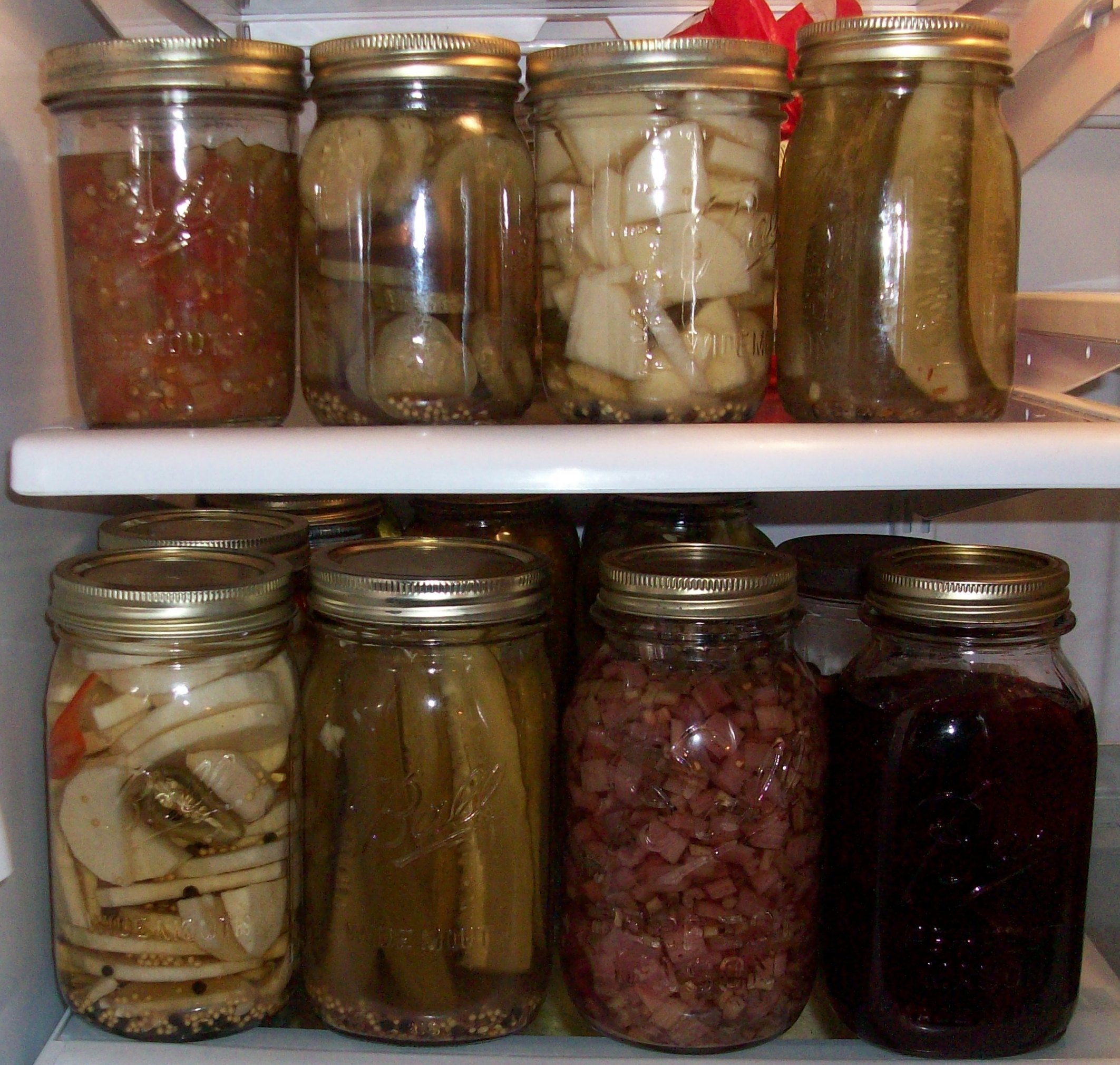
There are pickles. Beets, cucumbers, radishes, tomatoes, chard stems, sauerkraut… the makings of zakuski. All one needs is a bottle of vodka and friends stopping over. The former is more available than the latter, as in 21st century Iowa, unexpected guests are mostly youths seeking empty cans and bottles for their deposits, and strangers who want something. Such guests are seldom invited inside. Vodka acquired decades ago evaporates in unopened bottles.
It’s my weekend, with no paid work until Wednesday. It’s time to finish up winter work— taxes, garden planning, vehicle maintenance, house cleaning— and get ready for spring.
LAKE MACBRIDE— Exposure to society can bring sickness and disease. After living without significant illness, not even a cold since leaving my life in transportation, I’ve been waylaid by what I’ll call a “bug.” The last two nights found me sleeping under a dense array of blankets and afghans after work until morning, snoring profusely while letting the malady run its course.
In addition to the afghan treatment, I’ve been taking acetaminophen and Saint John’s Wort, the latter presented in a solution of vodka. One hopes the illness will have a short arc of persistence.
Two paychecks into my job as a part time supervisor for a company that does in-store product demonstrations at a warehouse club, it has been a struggle to arrange a process for living that will keep life moving forward. The new job is likely the source of the bug, as I have been exposed to countless people, some 1,500-2,000 per day, learning to supervise a diverse crew of folks demonstrating and selling retail products. I like the work, if not the bug. I wrap up my training this weekend, and will then have a more normal schedule— a new beginning.
As things sort out, 2014 has promise. Hope for financial viability, a hope to write more, with some of it paid. Moving into a new encampment— a staging area for the corps of discovery that is sustaining a life in a turbulent world.
LAKE MACBRIDE— Iowa is having a regular winter. By that I mean the cold temperatures and snow resonate with winter memories from grade school. In the late 1950s and early 1960s, it was nothing to bundle up and walk to school in 20 below zero weather. It was accepted as another part of life in Iowa. Not so much any more.
With the advent of radio, television, the Internet and mobile phone mass messaging, information and opinions about the weather are easy to disseminate. Opinions, like a two hour school delay, or cancellation because of inclement weather, blast forth to citizens with a clear and present danger. Keep the kids safe, it’s too cold outside.
It’s hard to argue with taking precautions so children don’t get frostbitten toes and fingers. At the same time, I don’t believe my parents were any less concerned than today’s parents when they tied a scarf around my face so tightly that my neck got stiff, and sent me through the subzero weather for a several blocks walk to school. Something else has changed.
Tempted to insert comments about the nanny state that regulates behavior so as to mitigate liability should some child be hurt in the cold, that’s not where I’m going. School administrators have a job to do, and one hopes they are doing the best they can.
This cold weather is clear evidence of the effects of global warming, just as the weird winters of recent memory, early springs and droughts have been. Not going there either, although there’s a lot I could say.
On this 14 below zero morning, I’m remembering my college anthropology teacher June Helm, and her lectures about working with indigenous people in the Northwest Territories. How people lived in a climate we recognized, but seemed so different.
They made lives grounded in their environment, and what was available. It was something hard to emulate then, when we were used to availability of a wide variety of goods at the end of nascent global supply chains. Our lives seemed so abundant and protected compared to what we now call the First Nations Helm discussed. Their lives were spare, different, diverse, and resilient. That seems relevant.
The anthropology department at the University of Iowa was just getting started when I was in college. I was an undisciplined student who received a low grade. Nonetheless, I learned we needn’t distance ourselves from the shivering cold, but can embrace it. We can make a life in it. Importantly, if within a circle of family and friends, we are unaware of what others take for granted, and separate from mass culture, it’s okay to build on that.
This knowledge doesn’t make the cold less bitter. It does help one cope, and that is something brilliant on another cold night before sunrise in Iowa.
LAKE MACBRIDE— The sound of scraping entered the house and overpowered the muffling noise of the furnace fan. It will require work to get to town for a meeting. At least the snow plow did its part.
The driveway is snow-packed from the car tires, so whatever fell last night won’t be easy to remove. Work was planned for indoors this morning: to write a story for the newspaper. Snowfall is a happy coincidence that will break the quiet and be part of today’s process of fresh air, physical labor and writing. It’s as good as it gets.
Whatever funk descended upon me in December is gone. The new jobs, the promise of spring, and hope that a sound financial platform will enable better writing portend great things. Here’s hoping I’m equal to February’s promise.
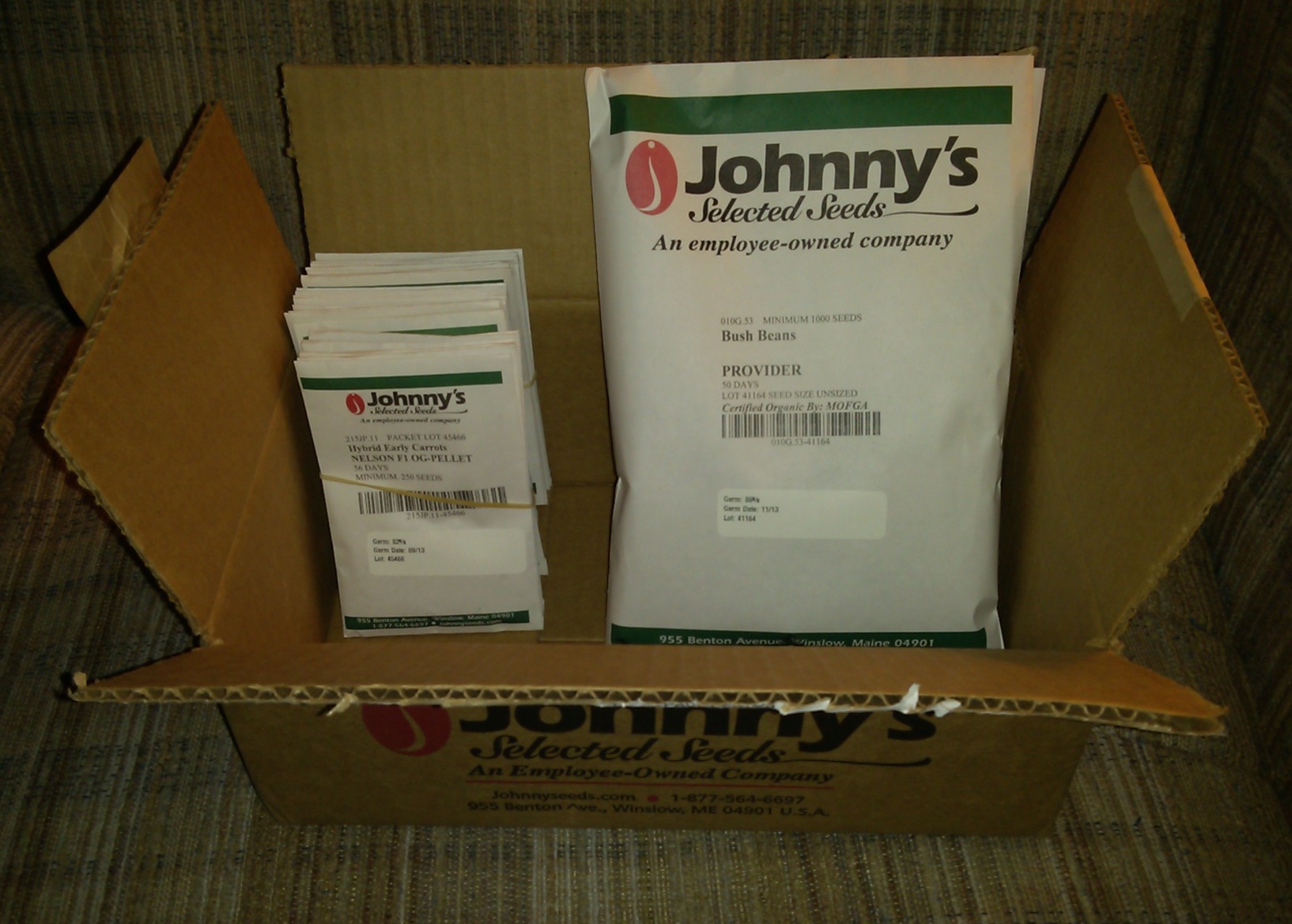
LAKE MACBRIDE— People have been talking about the coming storm like they never experienced an Iowa winter. Yes, we should be safe… but what else? On wintery days, I drive Jacque in to work so she doesn’t have to broom the snow from her automobile after her shift. While back at home waiting, I’ll make a dinner to be heated up when she returns, and begin garden planning. There are about 50 kinds of seeds including 36 purchased this year to be plotted out on a chart, but first, dinner.
Pecos Pasta
We make chili in big batches. To use some of the leftovers, we make a dish called Pecos Pasta. It is simple. Take a cup of dried elbow macaroni and prepare according to the instructions. Drain the noodles and pour back into the pot. Add one quart of leftover chili, one cup frozen cut corn, and heat until the mixed begins to boil. Turn the heat down to low simmer, and top the dish with shredded sharp cheddar cheese. Cover with a lid and heat thoroughly until the cheese melts.
I’ll drink a beer with Pecos Pasta when we have them, but last year’s case is long gone, so water will suffice (Note to self: put a quart of cider in the refrigerator). A quick and tasty meal that satisfies as the wind howls outside.
Only two dates are sacrosanct in our garden: March 2 and July 25. The former is when “Belgian lettuce” is planted, or as soon as the ground can be worked thereafter. The idea is to broadcast last year’s leftover lettuce seeds and see what germinates. I don’t know why it is called Belgian, except that’s what my maternal grandmother called it. The latter date is when to plant the fall crop of turnips. In our garden, turnip greens are a primary crop used to make soup stock by the gallon. Besides those dates and crops, everything else need looking up and planned. There is plenty of work to keep me busy until the end of her shift.
This morning I began working on our income taxes, and it looks like we sent in enough early payments last year to receive a small refund. I report all of our income and pay taxes on it— some don’t, but I do. As a self employed writer and farm worker, my business tax rate is 15.3 percent of 92.35 percent of income. For example, if I earn $1,000 dollars, the tax rate applies to $923.50 and amounts to $141.30, or 14.13 percent of the total.
The Internal Revenue Service began doing this to capture people who work like employees, but are considered to be independent contractors by the company from whom they are compensated. Seems to me they could be chasing some of those corporations who make the big bucks and pay no taxes instead of folks like us trying to get by. In the end, our overall federal tax rate, including the business tax, was 4.7 percent of total income, so not much to complain about here. It is well worth it to participate in our society.
LAKE MACBRIDE— An article in yesterday’s issue of The Telegraph began with the sentence, “Facebook will lose 80 per cent of users within three years before eventually dying out ‘like the bubonic plague,’ according to U.S. scientists.” I don’t know about that, but I posted a link to the article on my Facebook wall with the following comment:
I don’t know about FB dying out “like the bubonic plague,” but for me the newness is worn off, and there may be better platforms (electronic and otherwise) to more easily connect with people and ideas that matter. In March, I will have been on the social network for five years. I downloaded my archive and while I knew FB was collecting my data, I was stunned by how much info they have about me, especially info that doesn’t seem related to my FB activity. Why do you like it?
24 hours afterward, no one liked or commented on the post out of the 750 Facebook friends with whom I shared it. There is no evidence that anyone else even saw the post. Guess I’ll have to answer my own question.
The reason I joined Facebook was to follow our family and close friends. I registered my account on Thursday, March 20, 2008 at 6:44 p.m. CDT, according to the service. By then, our daughter had moved out of state, and along with my blogging, Facebook became a way to bridge the geographical distance. The social media became much more.
I began connecting with real world friends on Facebook. During 2010, I created a Facebook group for our 40th high school class reunion, and a number of classmates joined the group and friended me on Facebook. As time went on, I started friending people I knew from other associations, and then people in those circles that I did not know. While there is a reason for each one of my Facebook friends, some I know well, some I have gotten to know, and some I don’t know except for the point of contact that brought us together. As I mentioned I am up to 750 friends as of this writing.
In general, I log in and update on Facebook about ten times a day, depending upon my schedule. I know this because of the detailed statistics Facebook keeps on my activity. Mostly, I like to see what’s circulating in my news feed. Most of it is trash, but some of it is interesting. I like what people I know post the best, and family photos are particularly engaging. It isn’t that much time, but there is something built into Facebook that speaks to our inner voice, “it’s time to do something more constructive with your time.”
With my fifth anniversary as a Facebooker coming up, what will this milestone represent? Not much. I expect I’ll keep the service, and cut back on some of my inactive friends. In the end, it’s primary uses remain: to keep up with family and personal friends, and to follow about half a dozen clusters of people with whom I have associations outside Facebook: The Climate Reality Project, people who live near me, my Veterans for Peace chapter, the peace and justice movement, and some others. It’s not my life. One could argue it isn’t even a life viewing the blue-toned screen.
In the end, some form of Facebook is expected to be around despite the prediction of it’s arc, because while it goes viral from time to time, a plague it isn’t.
LAKE MACBRIDE— When the drunken arctic air finished its swagger through the upper Midwest, patches of brown grass reappeared in the white landscape. Pools of water formed on the driveway like dammed up dreams, ready to be cut loose when the rest of the snow melts— a false hope of Spring. Feeling restless, I went to town.
Partly, to proofread the newspaper comme d’habitude on Saturday morning. More than that, one of the county supervisors was holding a community discussion at the public library. If life is anything here, it is partly about politics. Several friends were there, and it was good to break winter for a while. It was a campaign stop for the June primary, and also a chance for conversation with friends and acquaintances.
Topics included drug testing, marijuana decriminalization, ever changing synthetic drugs, the overcrowded jail, trails, the para transit service, loss of services in the new mental health regions, and roads— lots of talk about roads. One who lived west of the Ely blacktop mentioned his road specifically. “When will the county address Curtis Bridge Road?” he asked. I listened mostly, and raised an issue or two. It was all good.
Toward the end a woman came in and talked about geoengineering, wanting the county to take action. She had a confusing message. She asked the county to do something about it, but couldn’t say what “it” was. She had a handout with a website which could be the subject of another post… or not. There’s only so much mental capacity and too little time to consider everything.
But allow me to end my drunken swagger. Time has come to be less distracted. Before we accept it and focus, however, the super bowl is coming, marking the last feasible (albeit lame) excuse to delay and celebrate the holidays. What’s the rush? The needs of the growing season will soon be here, catching us unaware. “Just one more thing, that’s all I ask,” he said to himself.
Whatever the human capacity for wonder, the hydrant of behavior must be articulated so we can focus on one thing at a time. Engaging as hanging with friends may be, and good for the soul, if we don’t focus, our lives will be no different than the recent polar vector— chilling us for a few days only to leave without stunting the disruptive vectors approaching our lives.
When I worked for the oil company, we had employees in about 100 countries. On staff was an expert in addictions. He worked not only on drugs, alcohol and tobacco, but on almost everything that could trap people and diminish productivity. When I spent time with him as part of my training, I learned more about distraction and its relationship to addiction than I thought possible. Admitting we have a problem is first step. My addiction is to following life’s many ideas to wherever they lead. I admit it, and don’t really want to do much about it. There it is.
It will freeze again this month, at least I hope it will. There’s pruning to do, a garden to plan, and income to be generated. A season to be made. Things don’t happen without our engagement. All the while, Saturday turned to Sunday. The proof reading is finished, the auto fueled, and the groceries were bought. It’s time to set things aside and focus on one thing at a time, and maybe get some of them done.
LAKE MACBRIDE— A winter byproduct of an active local food life is several dozen jars of soup and soup stock in the pantry and refrigerator. Curried lentil, root vegetable, kale and carrot, leftover chili, and many others. With summer abundance, leafy green vegetables (turnip greens especially) are suited for soup making and several large stock pots get canned as excess vegetables and garden seconds appear in the kitchen. Soup will serve as dinner on many nights during the long end of year holiday season, and through the first spring harvest.
Most nights between Christmas and New Years we watch a movie with our supper. This year I got out bankers boxes of VHS movies we collected, when that was the current technology, and hooked up the player. Last night it was “Sense and Sensibility” directed by Ang Lee. After a number of years, I am beginning to understand that the story is about more than Mrs. Dashwood marrying off her daughters. Others we watched are “It’s a Wonderful Life” directed by Frank Capra, “Christmas in Connecticut” directed by Peter Godfrey, and a version of “The Nutcracker,” with Mikhail Baryshnikov and Gelsey Kirkland, directed by Tony Charmoli. This morning I viewed Edwin S. Porter’s “The Great Train Robbery,” one of the first narrative films, made in 1903. It’s online here and if you haven’t seen the 12-minute film you should.
VHS Movies
Once our video-cassette player wears out, I’m not sure what we might do. They continue to be sold and we used to keep an extra one in the house, but no more. When we reach the creek, if ever, we’ll cross that bridge.
There is an open question about a diversity of technology over the long term. Will we be able to open *.jpg and *.bmp files in 20 years? What about Microsoft Outlook files where tens of thousands of emails are stored? Will Amazon.com and their Kindle files persist? There is too much life to be lived to worry about that now. Presumably, we’ll go with the flow, and break out the old technology to access them like we do with the VHS tapes. Like in so many ways, we are in this together as a society, and as is currently said on the Internet, these are first world problems.
It is a simple pleasure to find the boxes of tapes in storage, set up the machine and pick one each night to watch with family. It is part of a workingman’s life, subject to change. Technology and popular culture are the least of our worries as we go on living in the post-Reagan society.




 Journey Home
You must be logged in to post a comment.