Hannah Ritchie is the kind of data head I would like to be and her new book, Clearing the Air: A Hopeful Guide to Solving Climate Change in 50 Questions and Answers is part of the reason. In it, she explains many aspects of solving the climate crisis using data to back up her statements. This one is worth reading.
Because the book is written in ten topical parts–fossil fuels, renewable energy, electric cars, and such–it is easy to find whatever topic is relevant to a current discussion. Once a reader picks a topic, the uniform format–question, answer, charts, discussion, and what we need to do–the information is quickly accessible. It reads less like a narrative, and more like a scientific research tool, which I suppose is the point.
The section on nuclear power challenged my way of thinking about the power source. It opened the possibility that because of its long overall positive safety record, it could fill a need in a renewable energy powered electrical grid currently being addressed by fossil fuels. She points out the significant obstacles to nuclear power in the United States, and addresses paths to overcoming them. Every part and individual question and answer is like this.
Her five questions to separate fact from fiction are a simple, straight-forward way of evaluating anything read in the news media, in books, and on social media. That alone s worth the price of the book.
So many terms about climate change solutions get bandied about public discourse. Having a reliable way to access information about heat pumps, aviation fuel, electric cars and the like, helps avoid stress caused by trying to digest claims that may or may not be true.
My recommendation is get a copy from your public library and read it. You will likely be glad you did.
Joe Trippi’s 2004 work to mine the internet and empower supporters of the Howard Dean campaign was revolutionary. As he described it, it was an “open-source revolution” that went beyond the dissemination of campaign messages. Using Meetup.com, blogs, and other media, he turned hundreds of thousands of volunteers into decentralized, self-organizing activists who powered fundraising and local organizing — like a “virtual mid-size city.” It was something to see in real time.
Since then, there have been two distinct iterations in the use of information technology in campaigns. The first was the Republican Party’s use of Cambridge Analytica to microtarget individual voters during the 2016 Trump campaign. While the success of this operation continues to be debated — and how it worked was not transparent — it was a compelling idea for moving beyond bulk messaging that delivers identical messages regardless of individual differences. What made it a game changer was that voter persuasion could be individualized at scale. On the darker side, Cambridge Analytica announced it was shutting down and filing for insolvency in May 2018. The closure was a direct result of intense media scrutiny, investigations, and the loss of clients following the March 2018 revelations that it misused data from up to 87 million Facebook users.
That progressives need to catch up with Republicans in the use of technology seems evident. This challenge is complicated by the advent of readily available, yet still unproven, artificial intelligence technologies like Claude, ChatGPT, and Google Gemini.
Today, it isn’t entirely clear how artificial intelligence will be used in campaigns. We do know a few things. U.S. Senator Bernie Sanders recently sat for an interview with Anthropic’s Claude. (Click here for a clip from that conversation, which exposes some of the motivations for collecting data from internet users.) We also know we need to balance ethical safeguards on AI with innovation in tools that could benefit progressive causes. Finally, misinformation and AI-generated propaganda could undermine democratic processes. What do we do?
What we can’t do is stick our collective progressive heads in the sand. I can’t count how many people I’ve heard say something like, “AI uses too much energy, so I won’t use it.” Two things about this. First, privacy issues are more important than energy use. Second, energy use compared to what?
In her new book, Clearing the Air: A Hopeful Guide to Solving Climate Change in 50 Questions and Answers, author Hannah Ritchie writes, “Data centers currently use only a few percent of the world’s electricity. The big question, though, is whether this will explode with the rise of AI. Probably not.” She discusses a Pareto-style analysis that points to the true energy hogs. Not surprisingly, these are industry, buildings, electric vehicles, air conditioning, and heating, with data centers eighth on the list at around 1-3 percent of consumption. At a minimum, progressives need to stop hyping unknown energy scenarios and instead resolve issues around privacy (Senator Sanders has a bill) while pressuring Google, OpenAI, and Anthropic to meet their corporate climate goals.
Dealing in facts, not hyperbole, is always good advice.
AI is imperfect and no substitute for grassroots knowledge about campaigns and the real voters who will participate in elections. While the database of personal profiles AI draws upon is vast, the granular knowledge that a political activist in a specific race possesses is more relevant to an individual’s potential behavior than AI ever will be.
Like other technologies, AI is a tool that belongs in campaign toolboxes. It is an extension of what Joe Trippi did so long ago — and it is worth learning about instead of shunning.
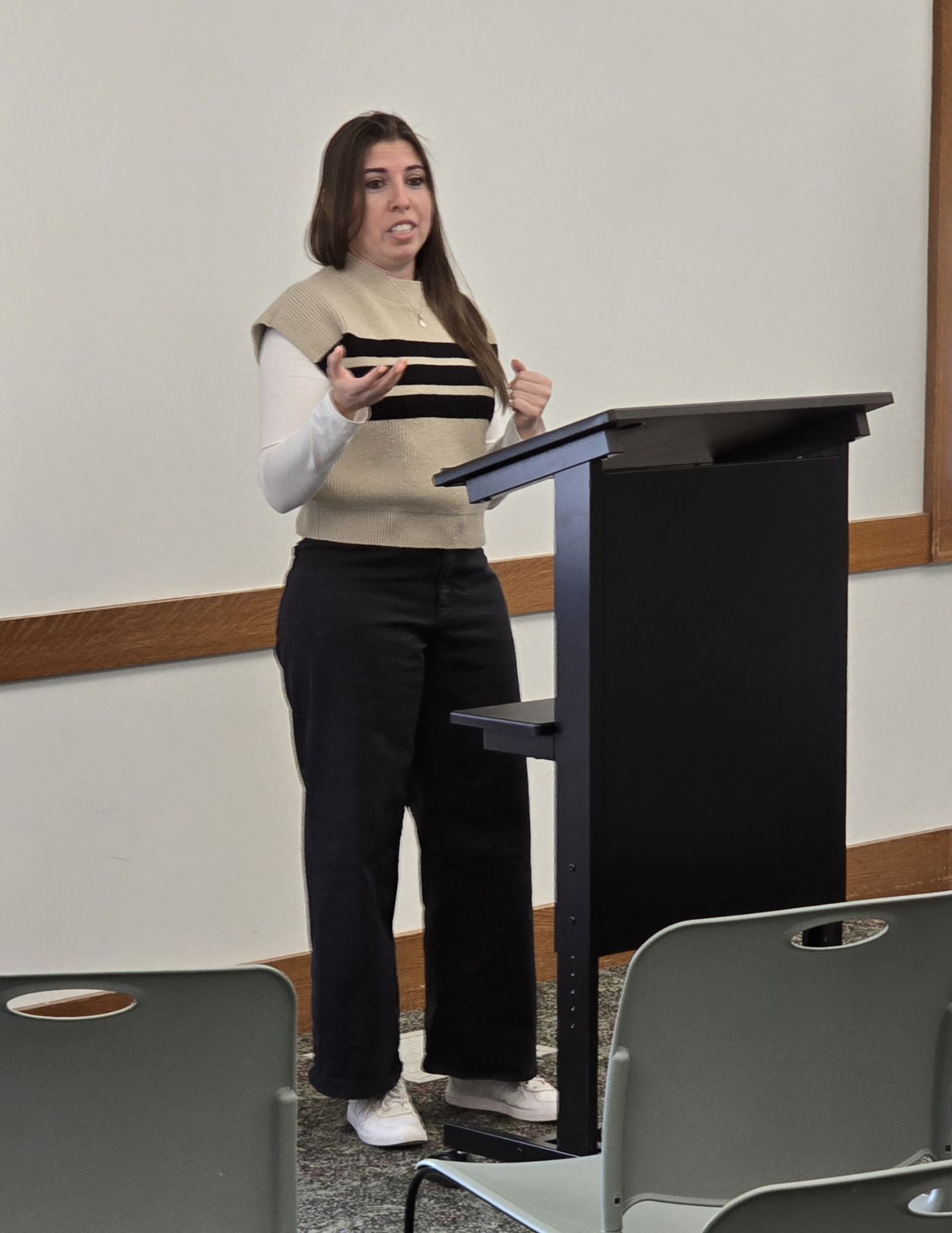
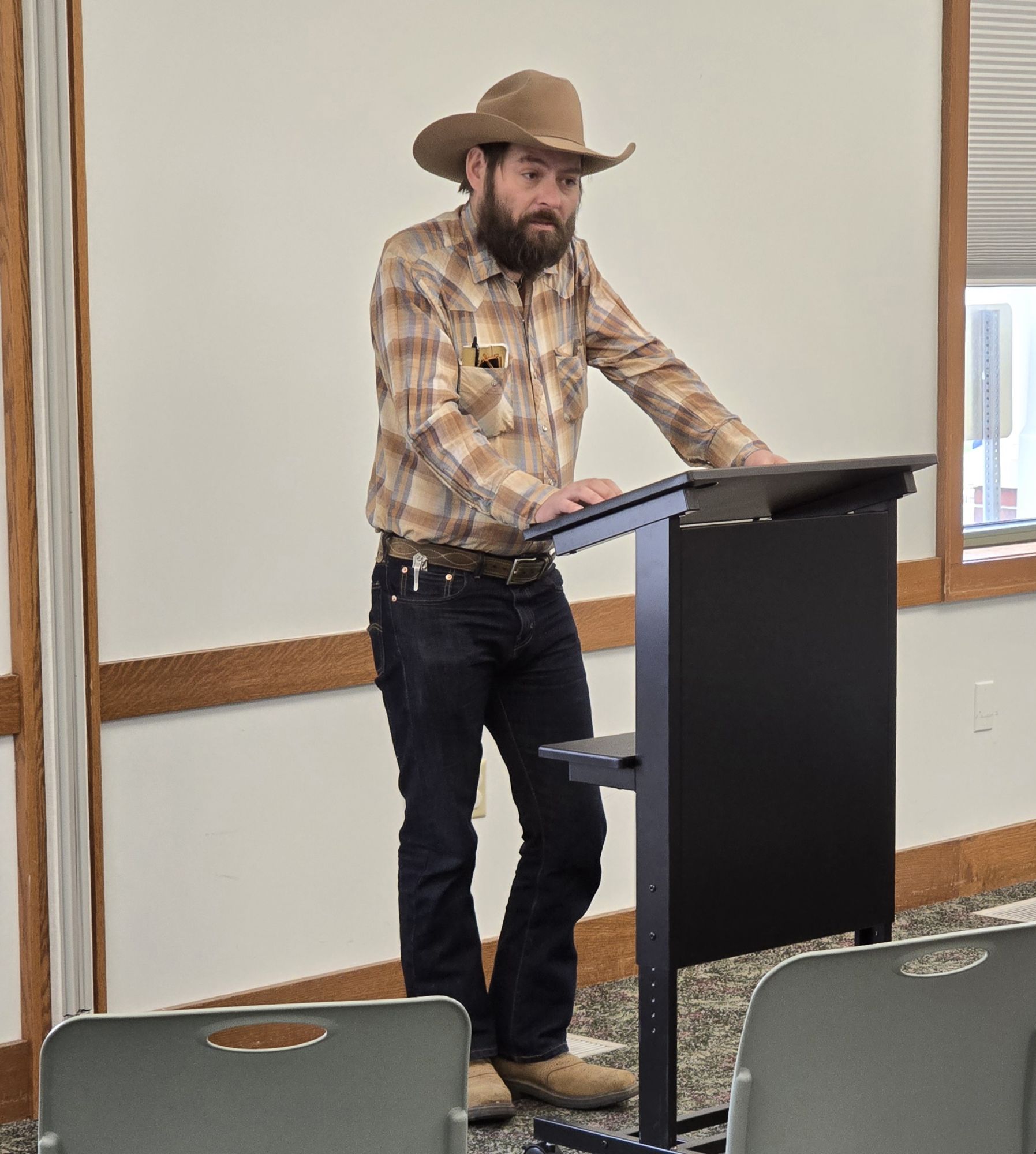
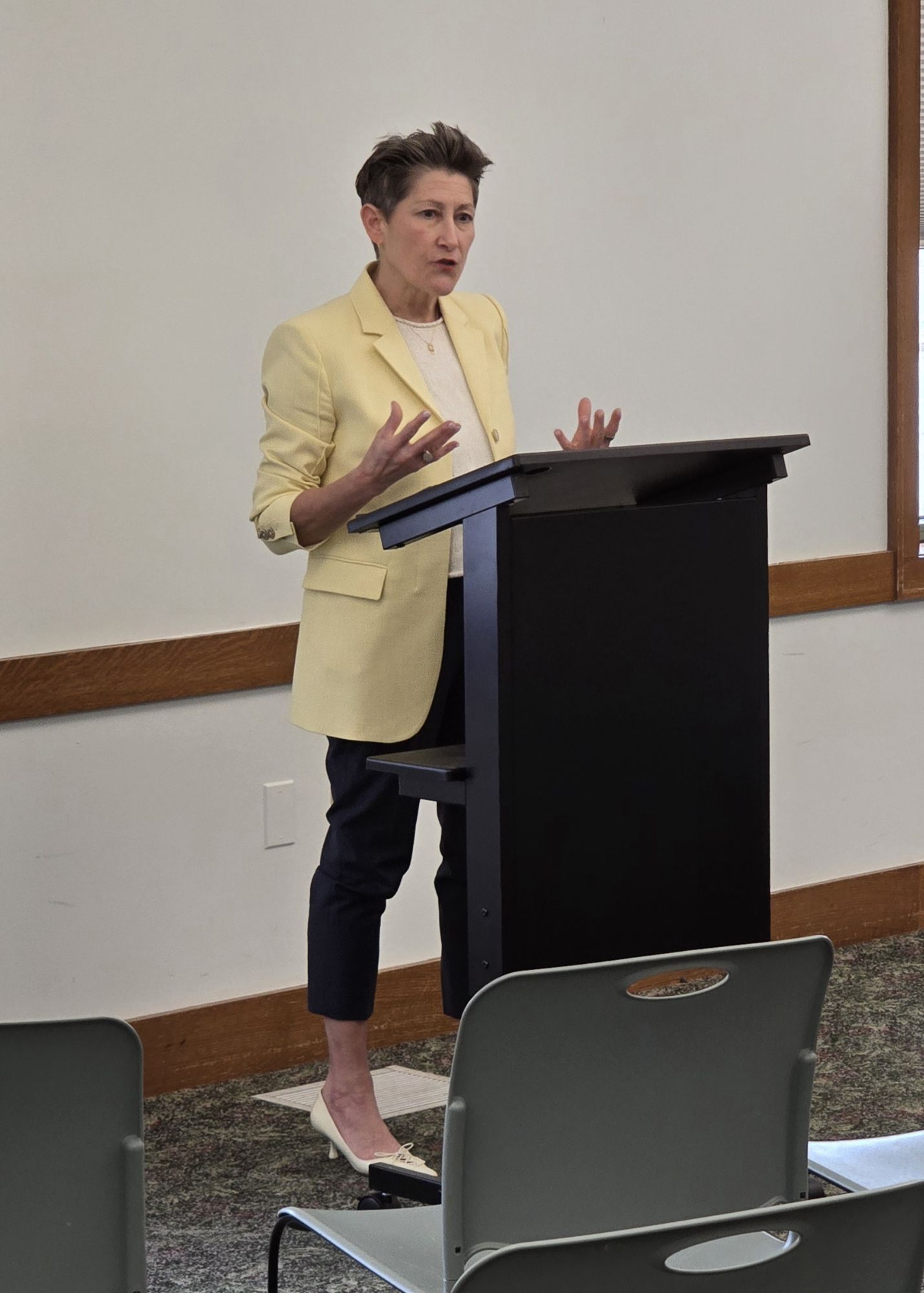
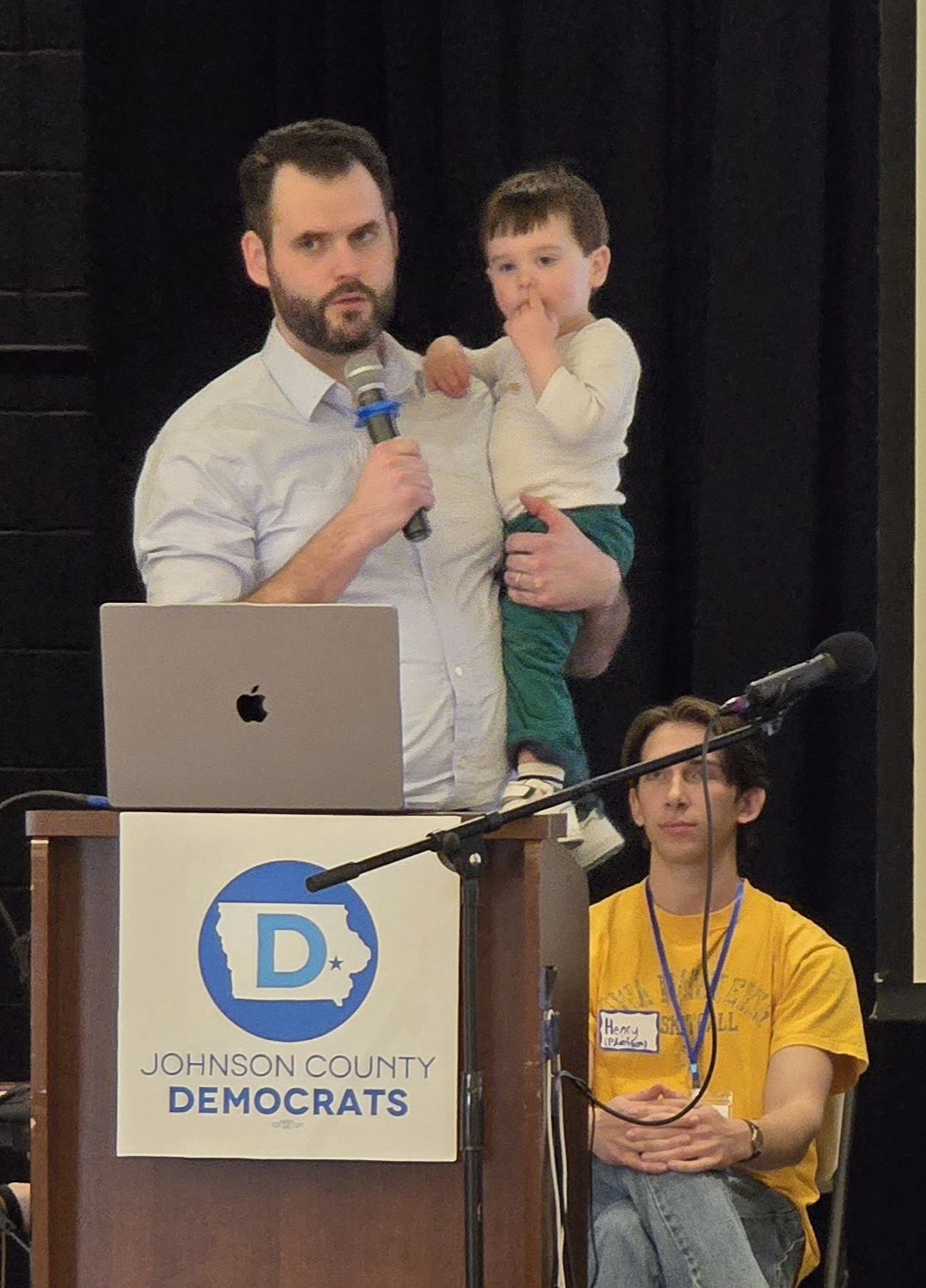
Jessica Andino, Jon Green, and Janet Godwin address Solon Area Democrats at a March 28, 2026, meet and greet at the Solon Public Library.
After talking with the three candidates for Johnson County Supervisor in District 2, I decided to support Jon Green in the June 2 Democratic primary. All three would make great supervisors, but Jon, the incumbent, is the person who worked to gain consensus among board members on building a new jail. That was difficult work, and I support his re-election so he can finish it.
It’s no more complicated than that.
The Republican in this race is Phil Hemingway. When I was covering Iowa City Community School District board meetings for the North Liberty Leader, I listened to him ask questions — often multiple ones at each board meeting. He was engaged and once won election to the school board.
I looked at historical voting numbers in the precincts that make up new District 2, and the votes are there to defeat Hemingway resoundingly in his sixth bid for supervisor — badly enough that he will never run for this office again. That would free him to return to automotive work until he retires.
I am working for Green to win the primary. If he doesn’t, whoever does will have my full support.
Thunder and lightning woke me early Tuesday morning. We needed the rain and could use more. When I went for my daily walk a few hours later, the driveway was almost dry. The ground just soaked the water up, wanting more.
The next county over is experiencing drought conditions, noting one of the drier starts of a year. 51.8% of the state is experiencing moderate drought or abnormally dry conditions. I’m not a climatologist yet I would say this is the new normal.
Fields and pastures where I travel in Eastern Iowa show the strain of limited moisture. Some corn is planted and just emerging. Subsoil moisture, built during wetter seasons, can carry the plants only so far before they begin to show stress. What matters most in the growing cycle is not just whether it rains, but when. If heat and dry conditions settle in during July pollination, the crop has little margin for error. Today, we notice how quickly ponds and ditches recede after a decent rain. In many years, a single well-timed rain can bolster a crop. In others, storms miss us, and that absence becomes the story.
Lawns are beginning to green up after losing color over the winter. Garden soil remains pliable, yet hardens between rains and watering. We simply hope the next storm will stay longer than the last.
That I see such patterns, repeated over multiple seasons, is part of a broader conversation about climate change. While our current dry conditions can be attributed to natural variability, the increasing frequency of such conditions aligns with projections of more erratic precipitation and warmer temperatures. Drought cycles persist, making recovery more uncertain.
I remember the 2012 drought and how it negatively impacted corn yields. Luckily, soybeans had time to recover. In July, I attended a meeting with the governor and farm groups and came away with this conclusion:
Whether it was acknowledged or not, today’s meeting of farmers, citizens, elected officials, bureaucrats, media and advocates is what climate change looks like. Grown men and women who have invested a lifetime in doing what they think is right, facing the existential reality of a changing climate.
It is unclear whether an extended drought will take place this year. It depends upon soil moisture going in, weather timing, and heat. What I can say with some certainty is I’m glad it rained Tuesday morning and hope we have more. So much depends upon it.
I am enjoying the discussion of how the City of Solon came to be named. Both versions—the newspaper’s “after the famous, ancient Athenian lawmaker and poet,” and Antonia Russo’s “Solon Langworthy, one of Dubuque’s Langworthy brothers”—have something to offer, even if neither considers the account mentioned by Harold Dilts in From Ackley to Zwingle: The Origins of Iowa Place Names, which says, “Solon…was named in memory of one of P.B. Anders’ sons. Anders and a Mr. Kerr founded and platted the town.”
The 1850 U.S. Census makes clear the P.B. Anders family was well established in Big Grove Township. Later accounts say the town was named in memory of his son, but no such child appears in the census, and no burial evidence in township cemeteries has been found.
As with many stories about the pioneering days of Big Grove Township and later Solon, there is no single “right version” of how the city was named. It is lost in history. Russo is right to tie the naming to Dillon’s Furrow, reflecting the networks through which people traveled and settled. That there are both a Solon in Johnson County and a Langworthy in Jones County is no coincidence. These names were part of a shared world, shaped by the same influences and carried along the same paths.
Why did 19th-century folk name people and places after an ancient Athenian? It reflected how Americans understood themselves and what they hoped their communities would become.
~ Submitted as a letter to the editor of the Solon Economist.
Postscript: I found the Anders marker on March 30, 2026, in Oakland Cemetery, Big Grove Township. It was difficult to read beneath the moss that grew there. The place where P.B. Anders name was is completely obscured by moss. On the side, it marked the grave of “Meline,” wife of P. B. Anders, who died in 1853. No other stones stood with it. If there had been more, they were gone. The name remained, but the family did not.
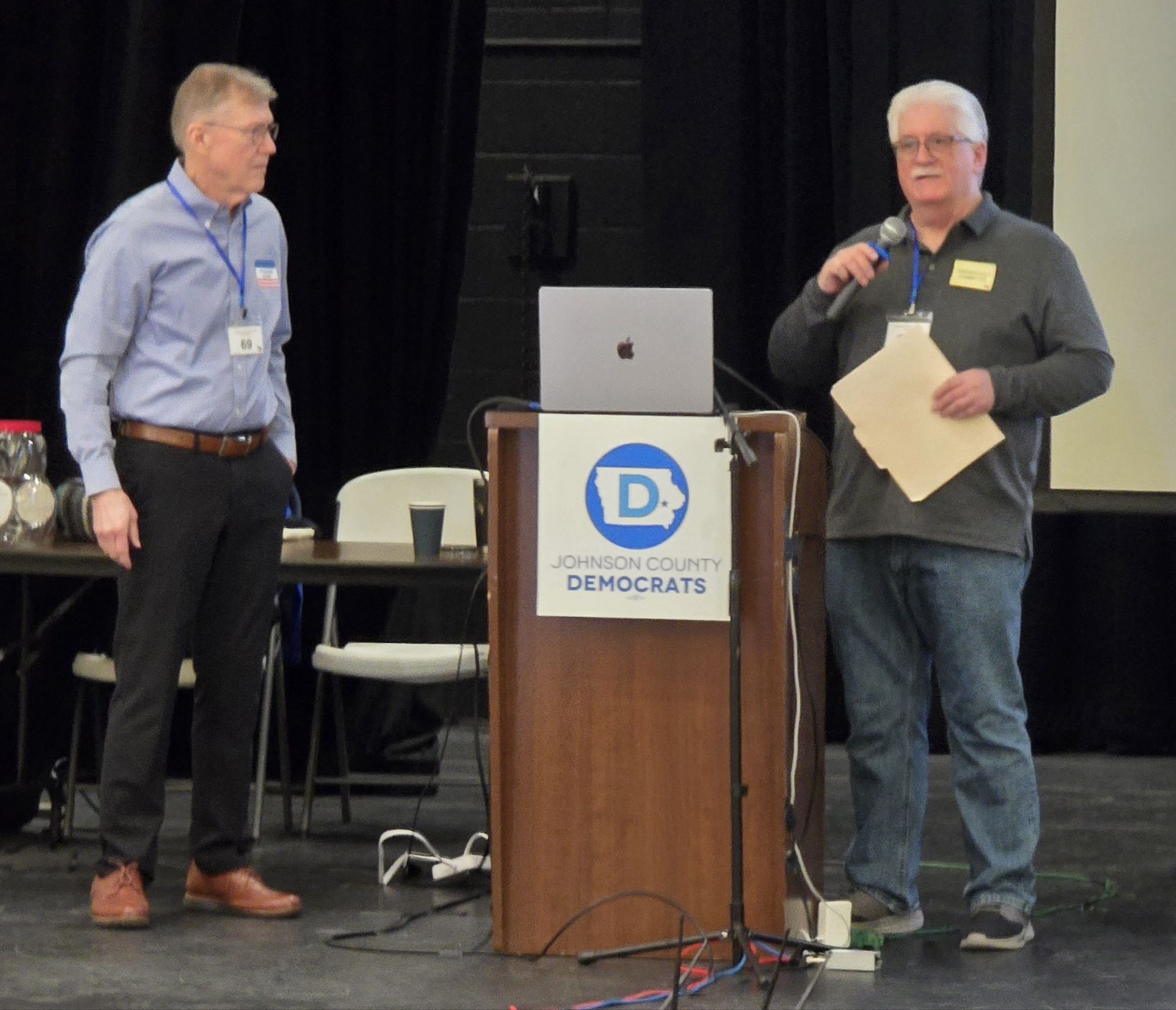
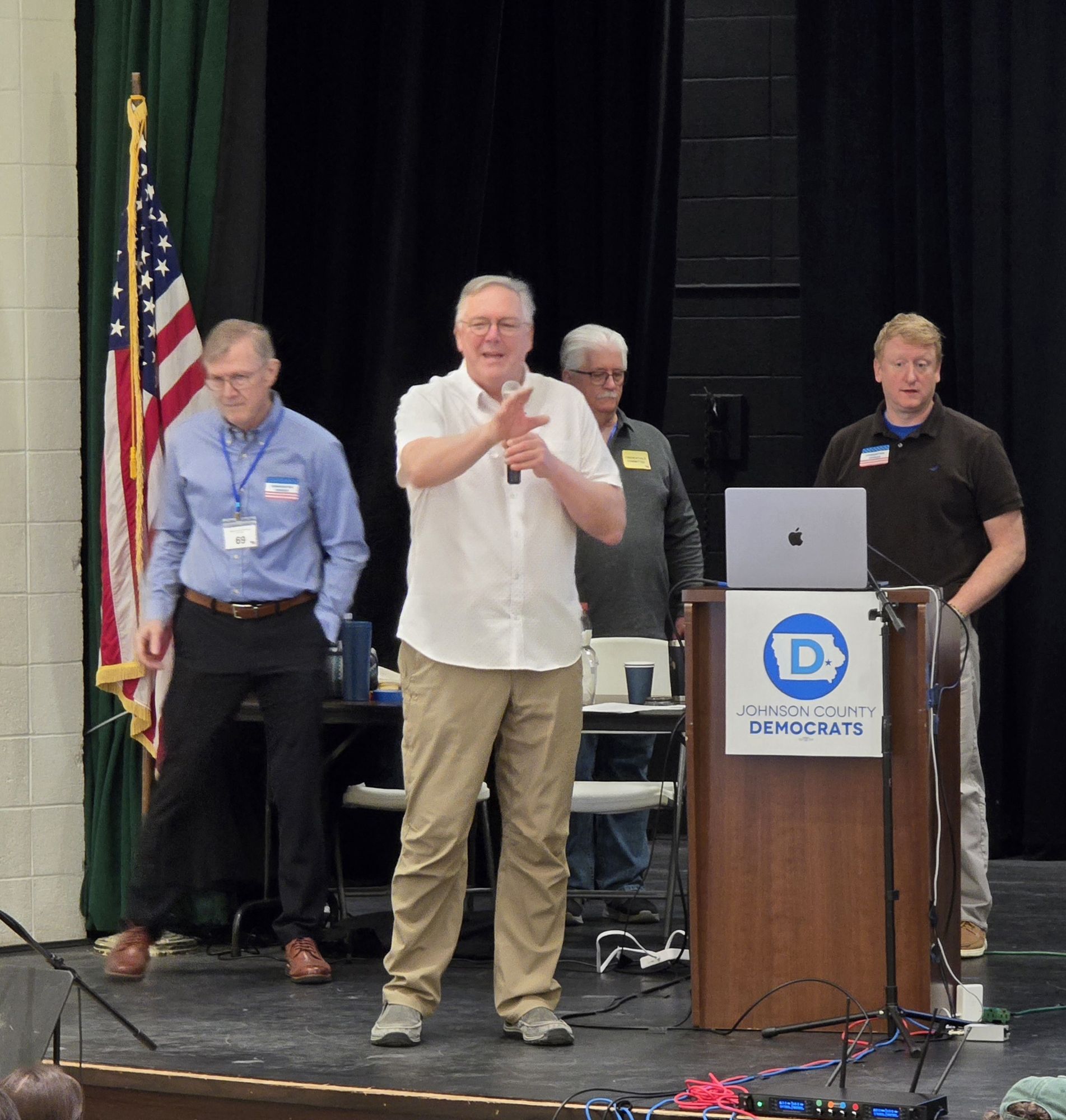
Ed Cranston and Tom Larkin announcing the number of delegates (114) attending the county convention on March 21, 2026.
With the county convention in the rear view mirror, it’s time to organize for the Democratic primary. Our votes are important, yet three races are at the top of the list here: the U.S. Senate race between Zach Wahls and Josh Turek, and the District 2 county supervisor race between Jessica Andino, Janet Godwin and incumbent Jon Green lead. The U.S. House race matters, yet Christina Bohannan is widely expected to win the primary over challenger Travis Terrell. It’s her third go-around, so she should. My main work this week has been organizing a supervisor meet and greet event this afternoon at the Solon Public Library. After that, it is a mad rush to the June 2 primary.
There was no competition in Johnson County to be a delegate to the district and state conventions and that’s okay. I decided not to advance to district either. There are too many other things begging for our attention to engage in rituals. The thrill is gone from Democratic conventions, and that too, is okay. Promoting Democratic policy in our communities is where most of the action will be in 2026, I predict.
What does that mean?
Partly, it means participating in campaigns. It also means talking to voters about the race and why it is important to support Democrats. The latter is not a given and this graphic of results from the 2024 general election in my precinct tells why:
Race
Republican
Democrat
President
Trump
Harris
699
598
U.S. House
Miller-Meeks
Bohannan
700
617
State Senator
Driscoll
Chabal
741
526
State Representative
Lawler
Gorsh
716
545
We voted Obama twice and Trump three times shifting from blue to solidly Republican. The numbers suggest it is possible to turn that around but not without significant work. My first order of business is to figure out which activists remain after we suffered some people becoming less active, moving out of the precinct, and dying.
Once more activists are located, the next step is finding ways to talk to neighbors and then convert them, if possible, to turn the precinct from red to blue.
There are two parts to this, in my precinct, and in the rest of the state and country. Both run through the ballot box.
The first is voting: making sure we take care of ourselves by checking our registration and then voting in person, either early or on election day. Encourage everyone we know to do likewise.
The second is changing the public narrative about life in Iowa and in the United States. We should not accept narratives being fed to us by media outlets, churches, interest groups, and political parties. Rather, we should develop our own new narratives that reflect how we live despite our differences. I predict this will change how we vote.
If we can do those things, there is a chance to make society a better place to live, possibly this election cycle.
Now it’s a matter of getting out there and doing it.
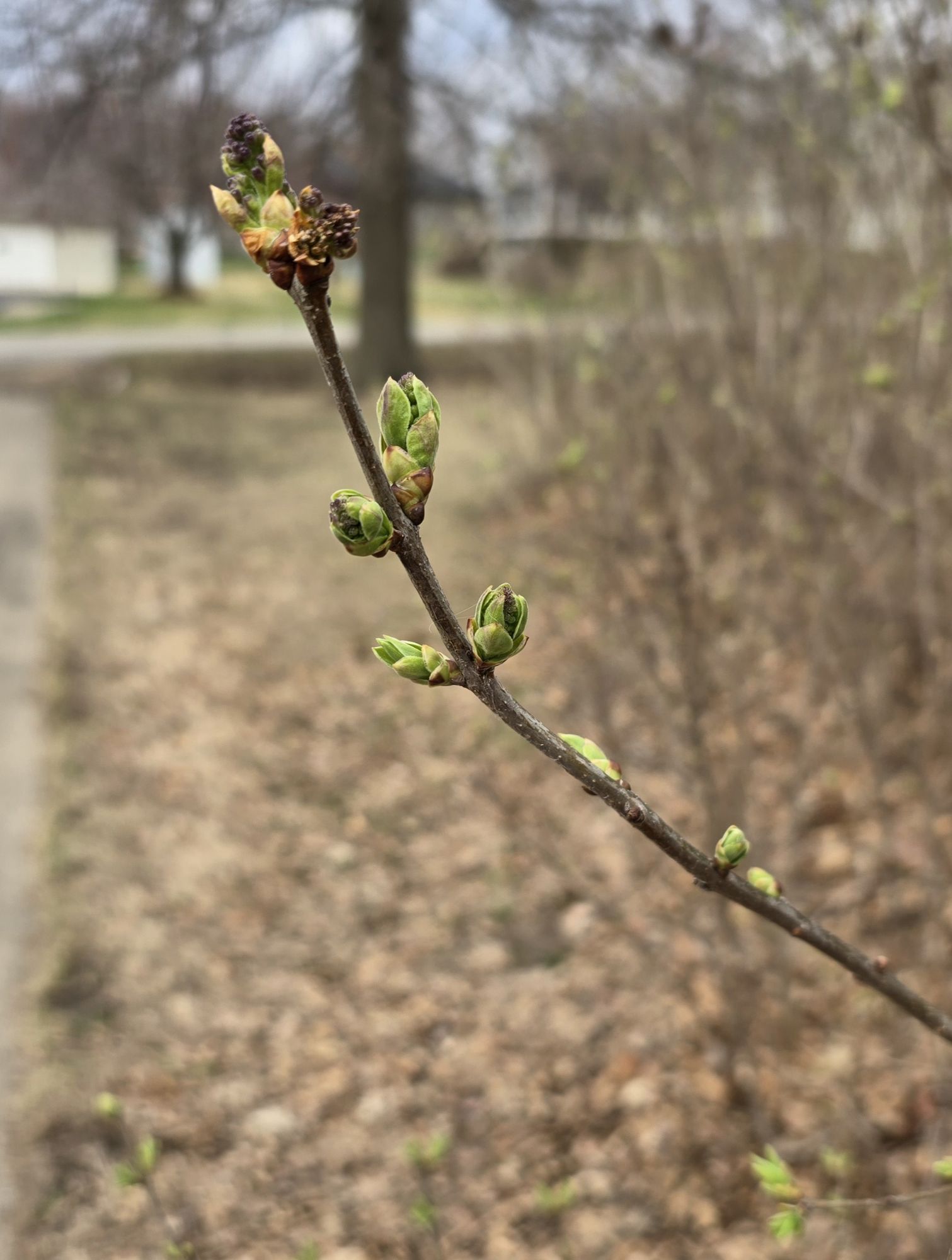
Ambient temperature reached 87 degrees on Saturday in Big Grove. On Sunday it dropped to the 50s, and Monday, it was below freezing. Not really Spring, is it? The lilacs appear to be surviving the temperature fluctuation… so far. It is hard to know what will hold.
While it’s still cold, I’ve been working on The Great Book Sort — more boxes of books to the public library used book sale, and a growing “to be read” bookcase. The project asks a question in 2026 America: What will get our attention?
Books are an easy answer. They are disconnected from the digital world and the daily discipline of reading at least 25 pages lends itself to both respite from society’s noise and engagement in new things. That hour a day with a book, and selecting the next one, are needed forms of intellectual engagement.
What else?
Let’s cross off some things. We don’t watch television in our house — no antenna nor subscription to cable television service. I am not a gamer. The extent of my computer gaming was stopping once at a truck stop during a blizzard and playing a Pac-Man console for a quarter. Mother showed me how to play Solitaire on her work computer when I visited her. Radio is something for listening in the car, or while working in the garage. It never gains my complete attention. Since the Saturday lineup on Public Radio was disassembled — about the time Garrison Keillor left A Prairie Home Companion the second time — that era ended. Mostly I listen for favorite tunes and to see which political groups are advertising.
If I know you and you send me an email, I will read it. Email is my most used social media application. I remember presenting a case for email to a company I worked for because it connected everyone in a global organization at my previous employer. They did not sign up right away. I also read texts, but contrary to popular culture, they are less immediate to me than email.
When our child streams on Twitch, I turn it on and have it in the background. My main interest is the sound of a familiar voice, someone with whom I have been since their beginning.
I read two newspapers: The Cedar Rapids Gazette and the Solon Economist. The former recently changed hands and format. The jury is out on whether I will continue. The latter was recently purchased by the Daily Iowan and is gravitating toward being a college newspaper in most respects. Two of them for now, about 10 minutes for each edition.
Bluesky is my social media account and I check in repeatedly throughout the day. I follow 88 other accounts and there is not a lot of action. It is a good source of national and world news.
The rest of my attention goes to work, family, and a few friends, mostly centered around home, cooking, cleaning, writing, home repairs, and gardening. On a chilly day most of the work is indoors.
I am currently reading The Attention Merchants: The Epic Scramble to Get Inside Our Heads by Tim Wu. The premise and business model most often used has been providing free diversion in exchange for a moment of consideration. Such attention is harvested, then sold to the highest-bidding advertiser. I’m sure my attention has been harvested. With some products, I’m not even aware of it, yet I can think of only a few instances where it hooked me.
For example, I watched the appearance of the Beatles on the Ed Sullivan Show on February 9, 1964. That summer, I bought a trade paperback book about the Beatles at the corner drug store. In the fall I went with Mother to the King Korn Stamp Redemption Center. The television show had me thinking I could be a musician. I remember a light snow falling on us as we returned to the car with my new Kay acoustic guitar.
As The Great Book Sort continues, I harvest my own memories while touching books I bought for many reasons, the least of which was whether it was advertised. When spending my attention on a life imperfectly lived, there is hope I can avoid the pitfalls of the attention economy.
Sometimes I simply want to walk on the state park trail and pay attention to the sunrise of a new day. For now, that is enough.
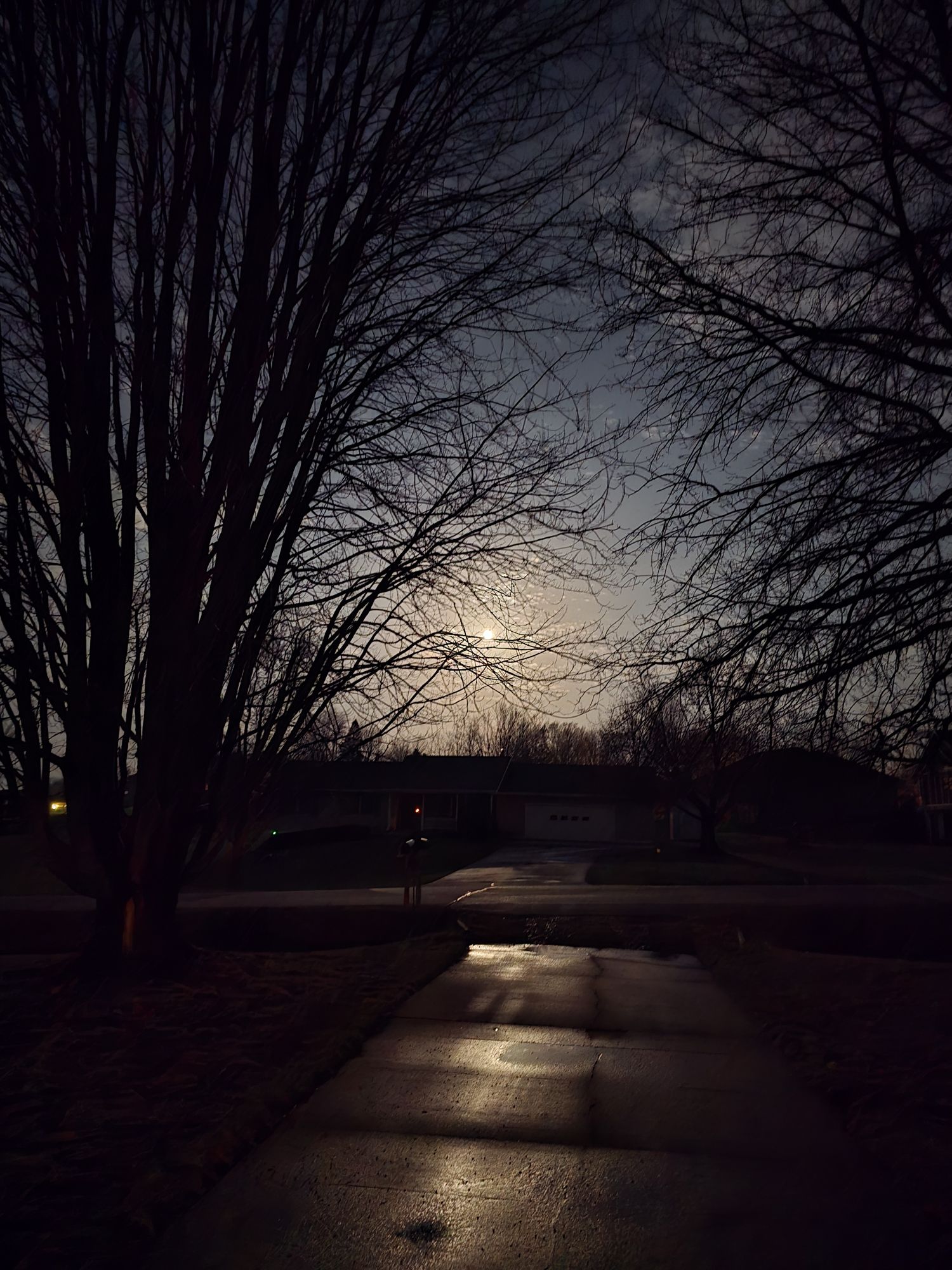
Pre-dawn light on the state park trail, March 23, 2026.
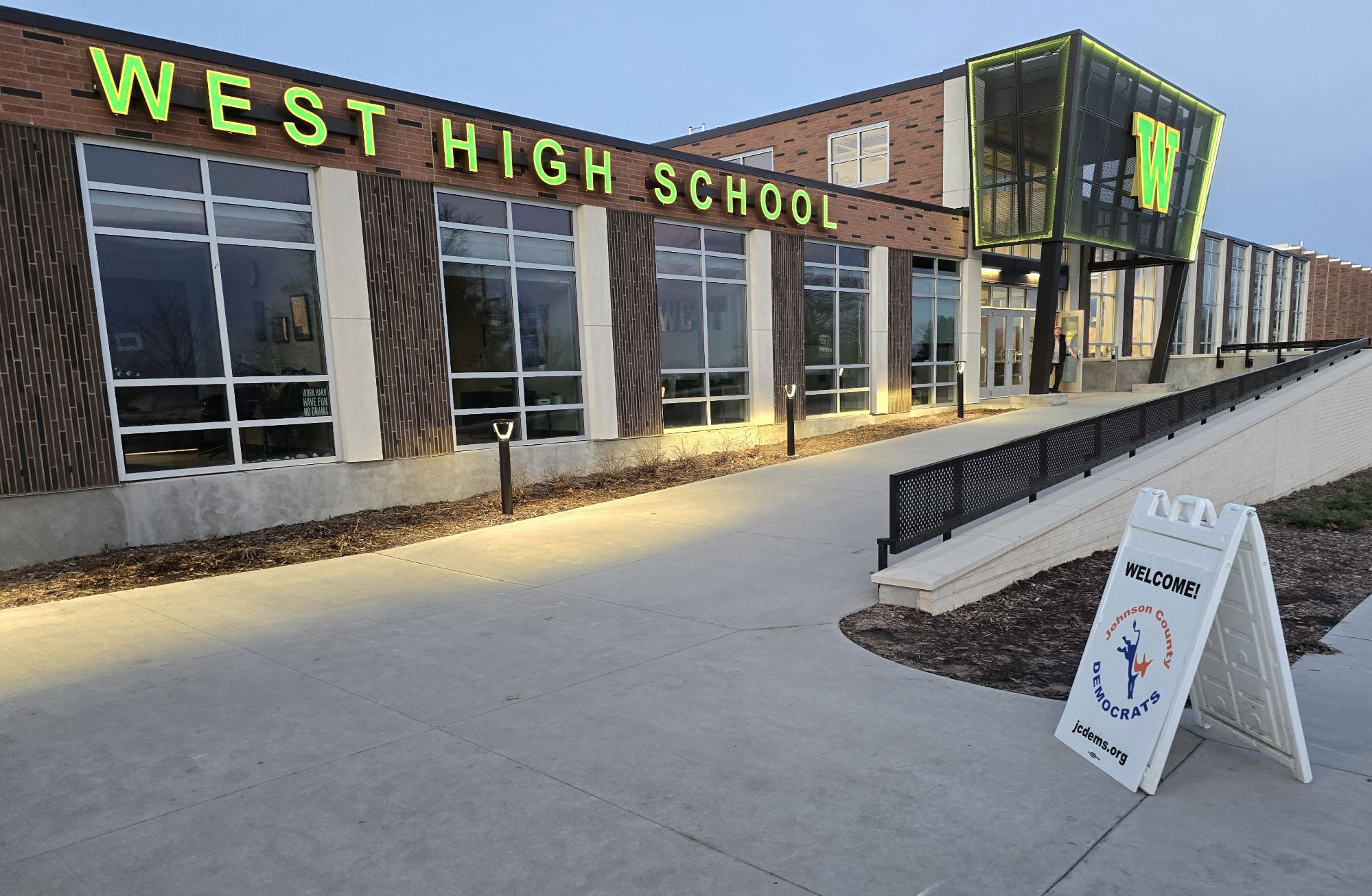
Iowa City West High School. Location of the Johnson County Democrats County Convention on March 21, 2026.
114 delegates to the Johnson County Democratic Convention gathered on Saturday, March 21, at Iowa City West High School. It was an intense day of political conversations, which physically drained me. Here are my favorite photos.
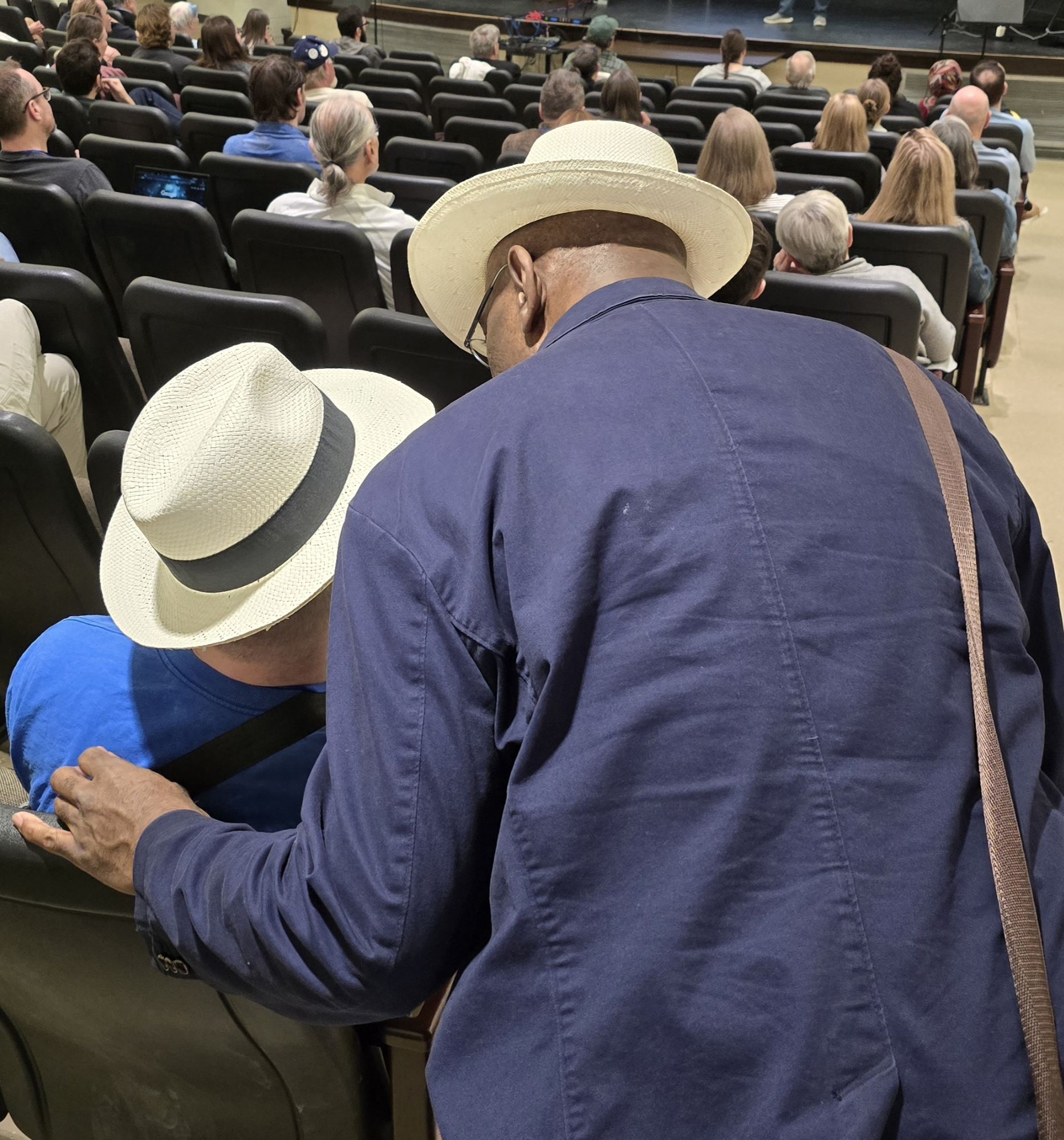
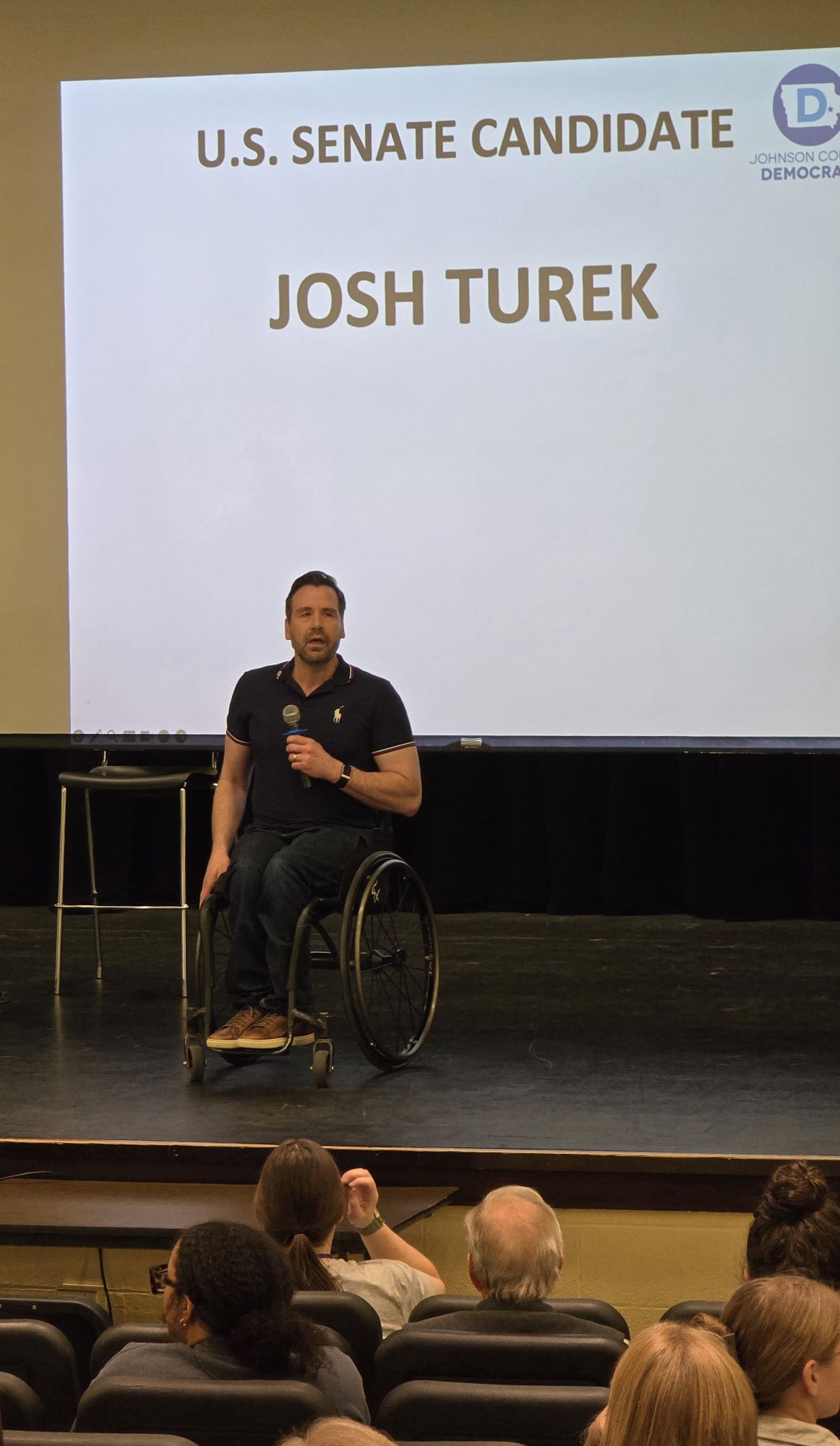
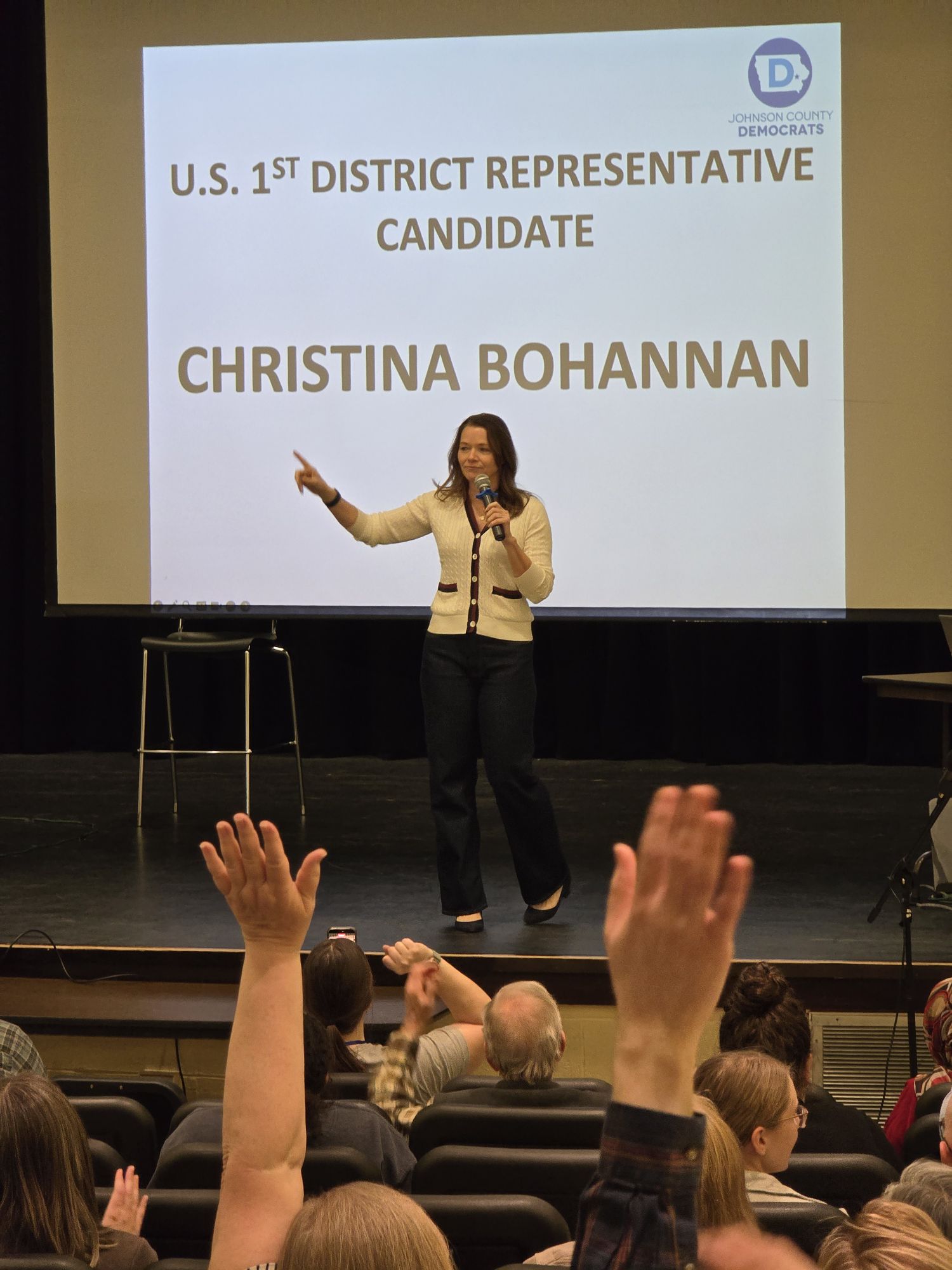
Party Chair Ed Cranston with Credentials Co-Chair Tom Larkin announcing number of delegates.Donation collection team with matching hats.Josh TurekChristina BohannanChris Jones for Secretary of Agriculture.U.S. Senate candidate Zach Wahls and son.Placard in front of West High School on March 21, 2026.
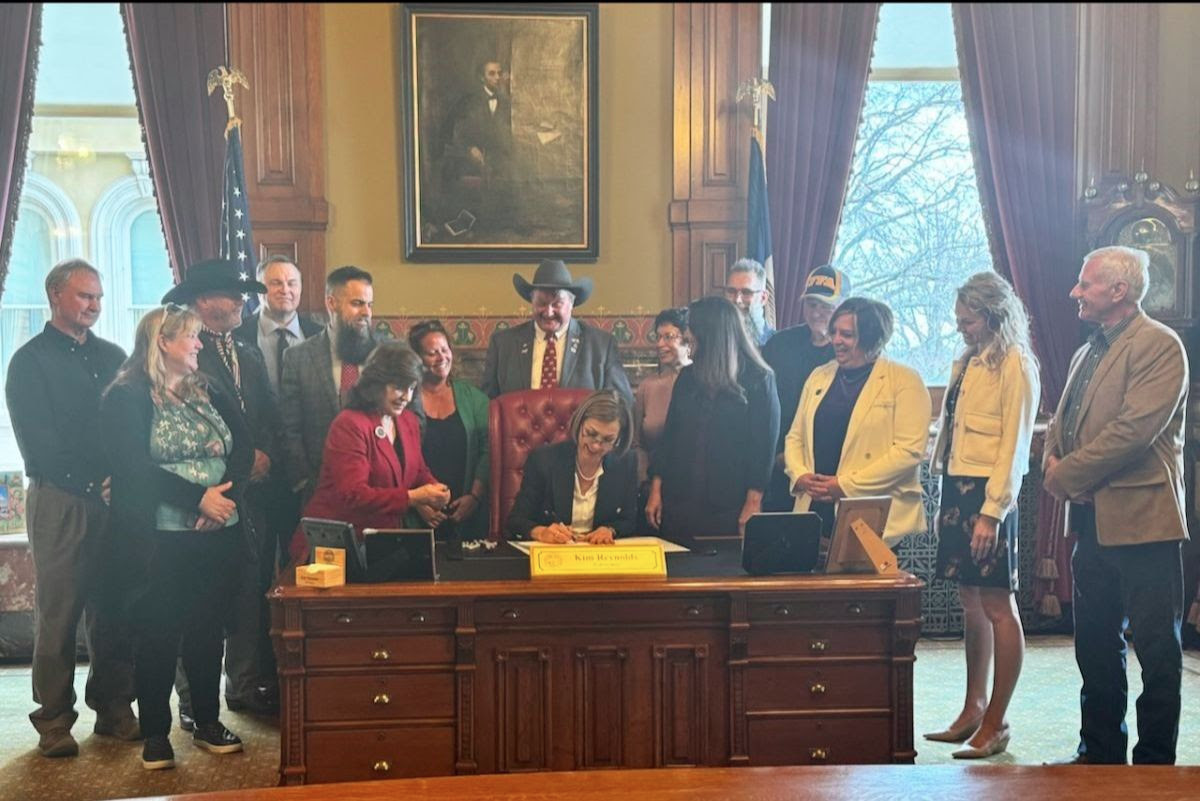
Governor Kim Reynolds signed into law Senate File 75 on April 11, 2025. Photo provenance unknown.
When Governor Kim Reynolds signed Senate File 75 into law on April 1, 2025, a crowd of Republican well-wishers was present.
Senate File 75 mandates that Iowa counties containing a Board of Regents university — specifically Johnson, Story, and Black Hawk — change their county supervisor elections from an at-large to a district-based system. The law has gone into effect and we are working through the new process.
Those at the signing ceremony included one Phil Hemingway who ran repeatedly and unsuccessfully for supervisor in Johnson County where I live. Hemingway backed this legislation. This week he filed for election to the Johnson County board of supervisors again, this time in newly created District 2. His is the bellwether race to see if Republican ideas on this prevail. Can they win a seat on the now all-Democratic board?
“Important to me personally was the passage of the county supervisor election reform bill,” Republican State Senator Dawn Driscoll said, “which protects the voices of our full-time residents in counties with large student populations.”
Driscoll’s colleague Republican State Representative Judd Lawler was not far behind.
“This legislation will improve local representation and accountability at the county level,” he said. “By using districts in these counties, the law promotes a more fair representation structure. This is particularly important in areas with highly transient populations, as it allows for better representation of all county residents, particularly rural and small-town residents.”
Driscoll and Lawler both represent parts of Johnson County.
Opponents, including local officials, argued the law targets specific areas and violates county home rule principles. A lawsuit filed in late 2025 challenged the law’s constitutionality, claiming it violates equal protection.
Iowa Attorney General Brenna Bird filed a motion to dismiss the lawsuit, arguing that the law does not impede any voter rights and that the state has a legitimate regulatory interest in differentiating counties that host a regents-led university. The court rejected the motion.
“While the matter may be appropriate for disposition on summary judgment, the Court is not persuaded that it is the exceptional type of case that is appropriate for dismissal at the pre-answer stage of litigation. Therefore, Defendants’ Motion to Dismiss should be denied,” the ruling states.
The district court also denied the motion for a temporary injunction which would have immediately blocked the law from going into effect. A non-jury trial is set to begin on March 3, 2027, long after the first election under the new process.
The horse seems out of the proverbial barn.
Even if plaintiffs win the case at trial, what happens next? That will be up to the judge. My Kentucky windage best shot is the new law is here to stay because if they were inclined to stop it, the court would have granted the injunction.
In the meanwhile, my small group of Democrats is organizing a get to know the supervisor candidate event in the new District 2, on March 28, at 1 p.m. at the Solon Public Library. Three Democratic candidates filed: incumbent Jon Green, Janet Godwin, and Jessica Andino. The winner of the June 2, primary will face Hemingway during the November general election.
Since making this post on May 1, 2011, society’s view of ICE has deteriorated for good reason. The problem with illegal workers runs right up to a home owner’s front door where choices are made. This post is unchanged.
While walking in the neighborhood last fall it was hard not to notice a gang of 21 roofers working on a neighbor’s house. The job of removing and replacing the shingles took about 5 hours. It looked like there was not enough room for all of them up on that roof. I tracked down the foreman and asked him to price my roof and after a few measurements, he quoted a very low price. He worked as a subcontractor during the week and on weekends he sought additional direct work to keep his crew busy.
On Wednesday, nine people were arrested by Immigration and Customs Enforcement Officers in Hiawatha, Iowa at a roofing job site. They could not produce paperwork indicating their immigration status, were detained, and then charged with immigration violations. All of them were from Mexico. We have yet to hear about what may be the real crime in this incident.
According to the news story, Eastern Iowa Construction (EIC) sub-contracted the Hiawatha roofing job to a business in Iowa City. What this means is that EIC made a sales commission on the job and did not perform the actual work. Photographs in the news story showed that the equipment on the site belonged to EIC. They likely received financial consideration for that as well. Nothing wrong here as that is what business is about, buying low and selling dear. Did EIC know the sub-contractor engaged undocumented workers to perform the labor? Hard to image they did not.
The question is about the sub-contractor. Did he comply with Federal Immigration law? Obviously not adequately. Did the sub-contractor pay the minimum wage? Maybe. But do the math on a roofing job. There is not enough to pay for the supplies, disposal of the old shingles, the sales commission, the subcontractor’s gross margin and a living wage for nine workers. This is the untold crime in the news story, the exploitation of undocumented workers.
While negotiating a new roof on our house, the author refused to sign a contract as long as the roofer kept language that he could sub-contract the work. He told me he needed to keep this option open, and it seemed most of his customers did not question that provision. I gave the job to someone who would do the work themselves without subcontracting.
We live in a society of law and crimes should be punished. Some portray ICE agents as the bad guys, when they are doing their job. Where are the unions in this picture? Where are the home owners to specify contractors who comply with the law instead of taking a lowest price based on worker exploitation?
One hopes the nine workers arrested by ICE make it home safely, and that in Iowa, home owners will start being concerned with the rights of workers as much as they are concerned with trying to maintain a life style in a time of austerity. It is easy to blame our problems on undocumented immigrants, on ICE, and on a host of others. These problems can literally be solved much closer to home.




 Journey Home
You must be logged in to post a comment.