LAKE MACBRIDE— Farmers are back in the fields after a wet spell. According to today’s hourly forecast, there is a window for planting that lasts until 2 p.m. when scattered thunderstorms are expected.
Suddenly the house is full of greens and soup vegetables, mostly from the CSA— there is plenty to eat. But if planting isn’t done soon, there will be only a slight garden harvest.
After proof reading six late breaking stories for the newspaper, and making soup from last night’s asparagus steaming water and bits of asparagus ends, the rest of the day is mine for the garden.
Turn off the Internet and walk into the garden. That’s how today will be spent.
LAKE MACBRIDE— A friend was coming to overnight, so I baked a cake— an applesauce cake with rhubarb sauce.
The challenge of growing and preparing local food is cooking, and I don’t mean heating up the latest frozen concoction from H.J. Heinz. It is understanding what types of fruit and vegetables can be consistently sourced locally, then working those items into a localized cuisine— a micro cuisine specific to a household.
For example, we have four apple trees, and at some point we stopped letting them fall for wildlife and started processing them into food. Among other things, I make applesauce— quarts and quarts of it— from the Red and Golden Delicious apples grown on our trees. Are Red Delicious the optimal choice for applesauce? Probably not, but they are what we have.
Over the years I developed two critical things: a recipe for applesauce cake as a way to use up the abundance of canned sauce; and occasions like the visit of a friend to prepare and serve them. Both are important.
This spring we received an abundance of rhubarb from the CSA, so we needed a way to use it. A bag or two from last year is in the freezer, so we don’t need more there. Nor do we dip it in sugar and eat it raw, so I decided to get sauced, making a simple rhubarb and raw honey sauce to top slices of applesauce cake. The recipe is simple cutting, mixing and tasting.
Rhubarb Sauce
Finely dice a large bunch of rhubarb stalks and place into a saucepan.
Add a tablespoon of water to create the initial steam. The rhubarb will produce a lot of its own moisture, so much that most of it can be removed before adding the honey.
Add a generous amount of local honey to the cooking rhubarb. I used raw honey from the same farm where the rhubarb grew.
Stir until it is incorporated, bring to a boil, and then turn the heat to a simmer and cook. Taste the sauce and adjust honey. No spices are needed, but feel free to add if you like. The rhubarb-honey taste will carry the sauce as it is served.
Cook until the sauce thickens a bit. Serve hot or chilled.
Applesauce Cake
1 cup brown sugar
1-1/2 cups applesauce
1 tablespoon cinnamon
1/2 teaspoon ground cloves
2 teaspoons baking soda
1-1/4 cups whole wheat flour
1-1/4 cups unbleached flour
1/2 cup melted butter
1 cup raisins
Cook the raisins in water until plumped. Drain and set aside.
Incorporate applesauce, sugar, cinnamon, cloves and butter in a large bowl.
Sift the flour and raisins into a separate bowl and add the raisins. Stir until the raisins are coated with flour.
Add the dry ingredients to the wet ones and beat well until fully incorporated.
Line a cake pan with parchment paper and pour the cake batter in.
Bake in a 350 degree oven for 45 minutes.
Place the cake on a cooling rack.
Serving suggestion. Cut a 1-1/2 inch wedge and place on a small plate. Pour 1/4 cup rhubarb sauce on top and serve. Add whipped cream if you like, or decorate the plate with fresh fruit.
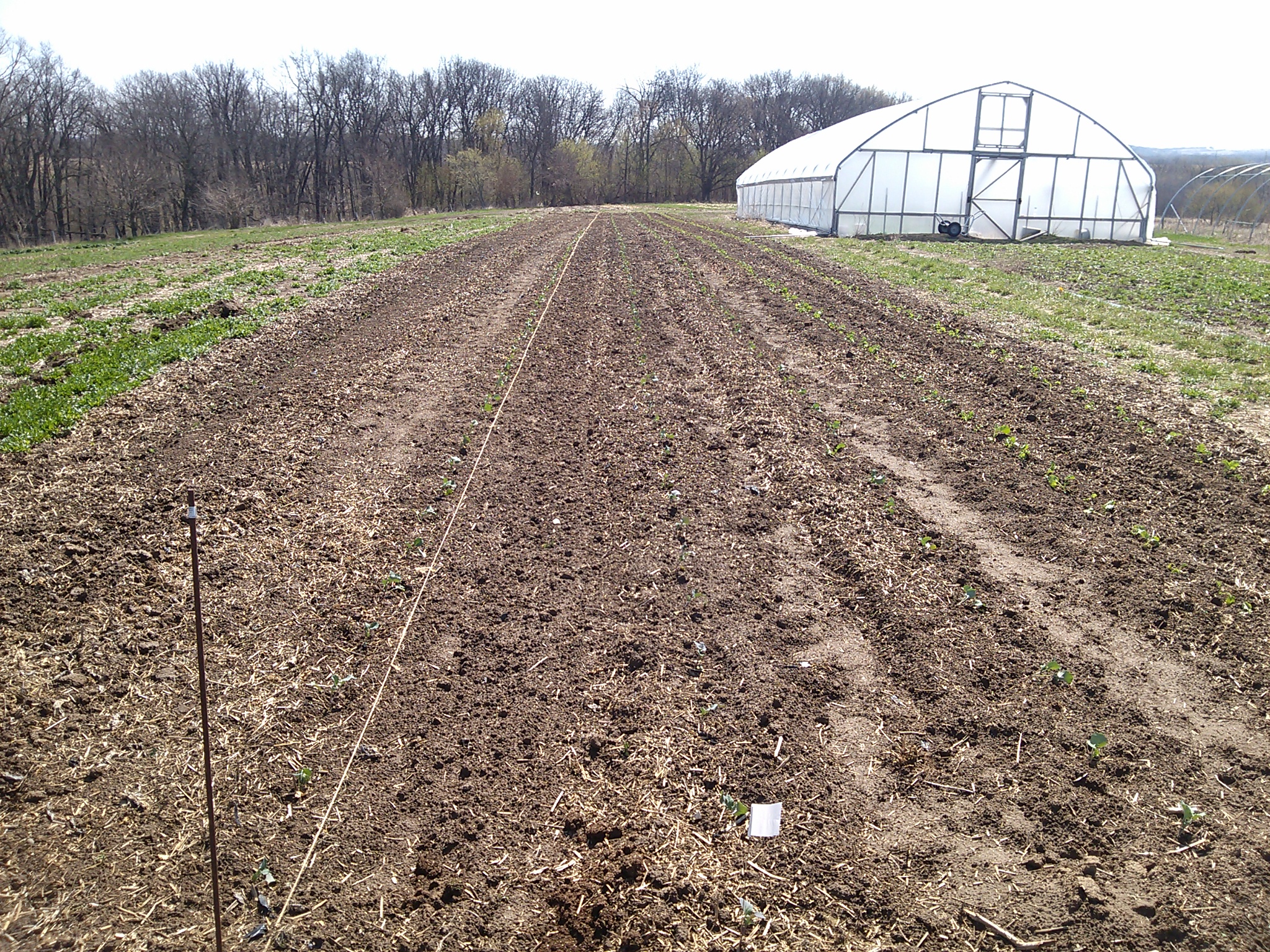
LAKE MACBRIDE— The U.S. Drought Monitor shows Big Grove Township to be abnormally dry, even with the recent rainfall. Gardeners and farmers need rain, but this year the cold, unevenly dry conditions of early spring made for late planting and a tough job preparing the soil for transplanting seedlings from bedroom to garden. The weeds have started to take root, requiring some hoe work to break up the clumps of earthworm and bacteria-laden loam.
A gentle rain fell yesterday— the perfect kind for nourishing new seedlings, had they been planted.
“We farmers pray for rain, but it must be the right kind and at the right time and when we need it most,” wrote local farmer Eric Menzel. “When we get it, it’s more than often a torrential storm that washes topsoil and comes with a cold front that stunts growth to new tender annuals, while giving naturally-occurring perennials (a.k.a., weeds) just what they need to thrive.”
While inventorying tomato seedlings, it turned out that some were only lightly connected to their root structure. The rain had me in the garage transplanting them into larger containers for further development before putting them in the ground. It was probably for the best. There are enough extra tomato seedlings to make up for deficiencies, yet I would like the tomato plan outlined in yesterday’s post to come together. All tomato plants are not created equally, nor are the soil conditions in which they germinated uniform. These are challenges of trying to grow a diverse crop of tomatoes.
Turned Over
On Wednesday, former Reagan administration secretary of agriculture turned lobbyist John R. Block published an opinion piece about organic marketing in the Des Moines Register. This thinly veiled advocacy for big agriculture may be well received among fans of the late president, but its vapid positioning was transparent.
“We’ve witnessed a remorseless campaign based on junk science or no-science attacking food grown with modern fertilizers, pesticides, GMOs and other technologies,” Block wrote. His argument failed to recognize that the same corporations that prop up high-tech agriculture have a vested interest in organic marketing— corporations like General Mills that also owns Muir Glen Organic and Cascadian Farm, and recently introduced GMO-free Cheerios. That’s not to mention large organic operations like Earthbound Farm Organic in California that benefits from technology, if not the one Block defends. Block’s ideas could only gain traction among people already drinking the Kool-Aid. There is a strong case to be made for small-scale farming without fossil fuel-based fertilizers and pesticides to solve the world’s food production problem.
Any farmer who uses organic practices is well aware of the deficiencies of the “USDA Organic” label. If the limited energy and resources of small-scale local food growers were diverted to the straw-man argument about labeling, there wouldn’t be enough time for farm operations. What I know is the quality of vegetables I delivered to CSA customers last night was superb and well received. A CSA is based on a simple concept, that is impossible among producers of fungible crops: know the face of the farmer. More than the land-locked limits of conventional agriculture, this represents the future of feeding the world. My garden is a small part of that.
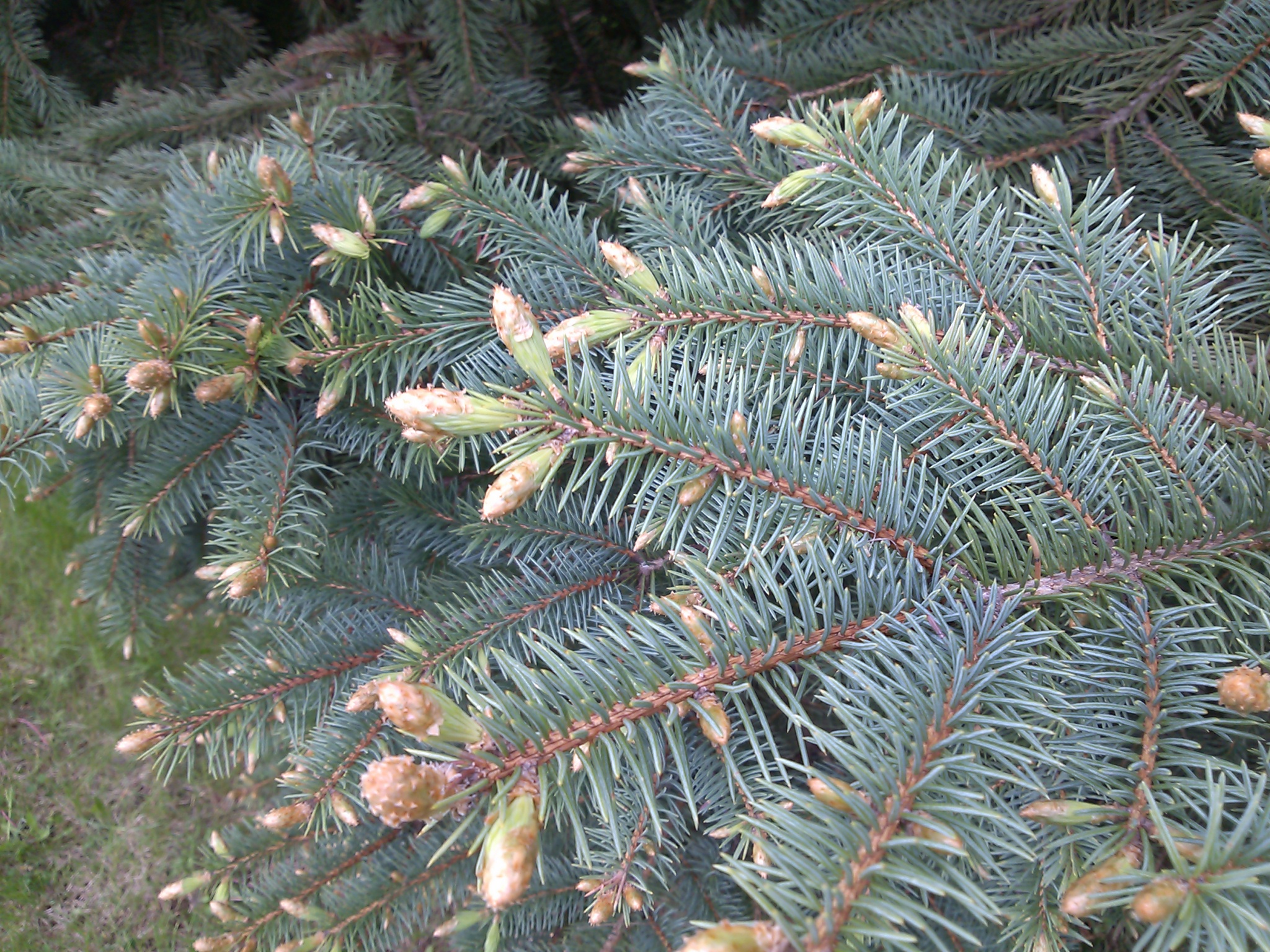
LAKE MACBRIDE— The Blue Spruce (picea pungens) showed new growth during my yard and garden walk. The tan-colored tips are breaking away, revealing young needles below. What was once a nine-inch seedling is now more than nine feet tall. It has been a nice, non-native addition. We are all transplants of a fashion. While it was not my intent when planting the Blue Spruce, it serves as a reminder of many recent trips to Colorado.
Apple Blossoms
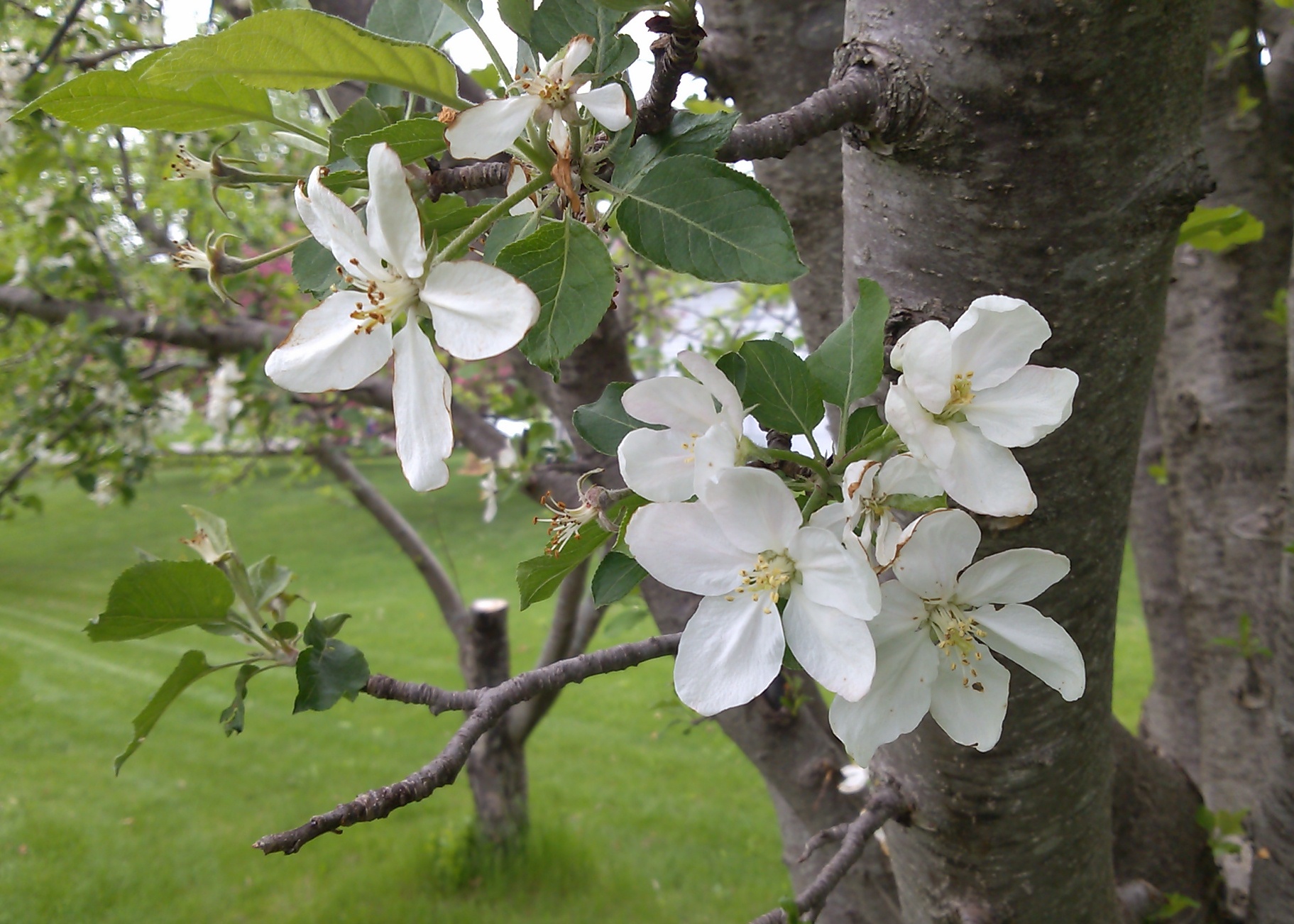
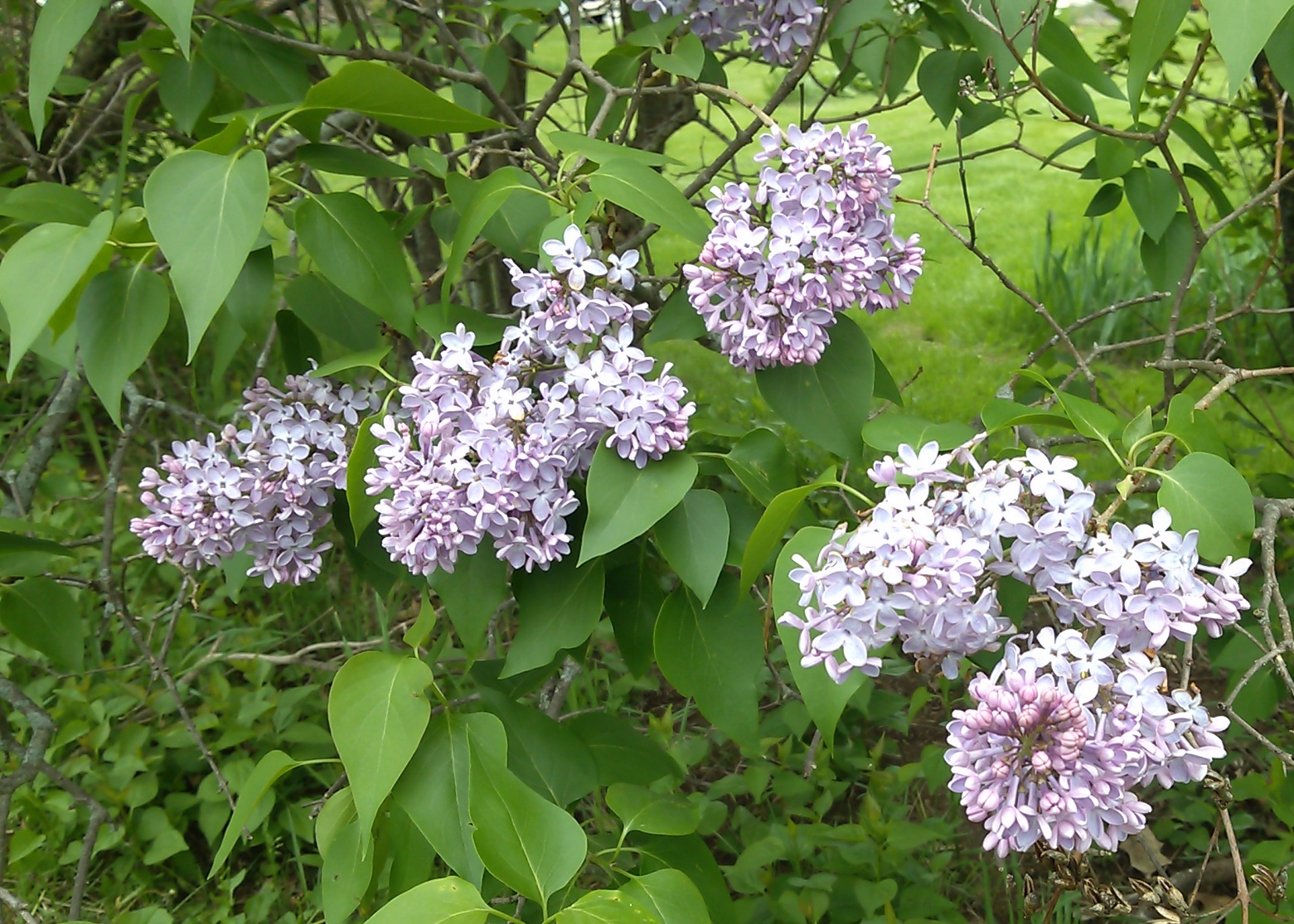
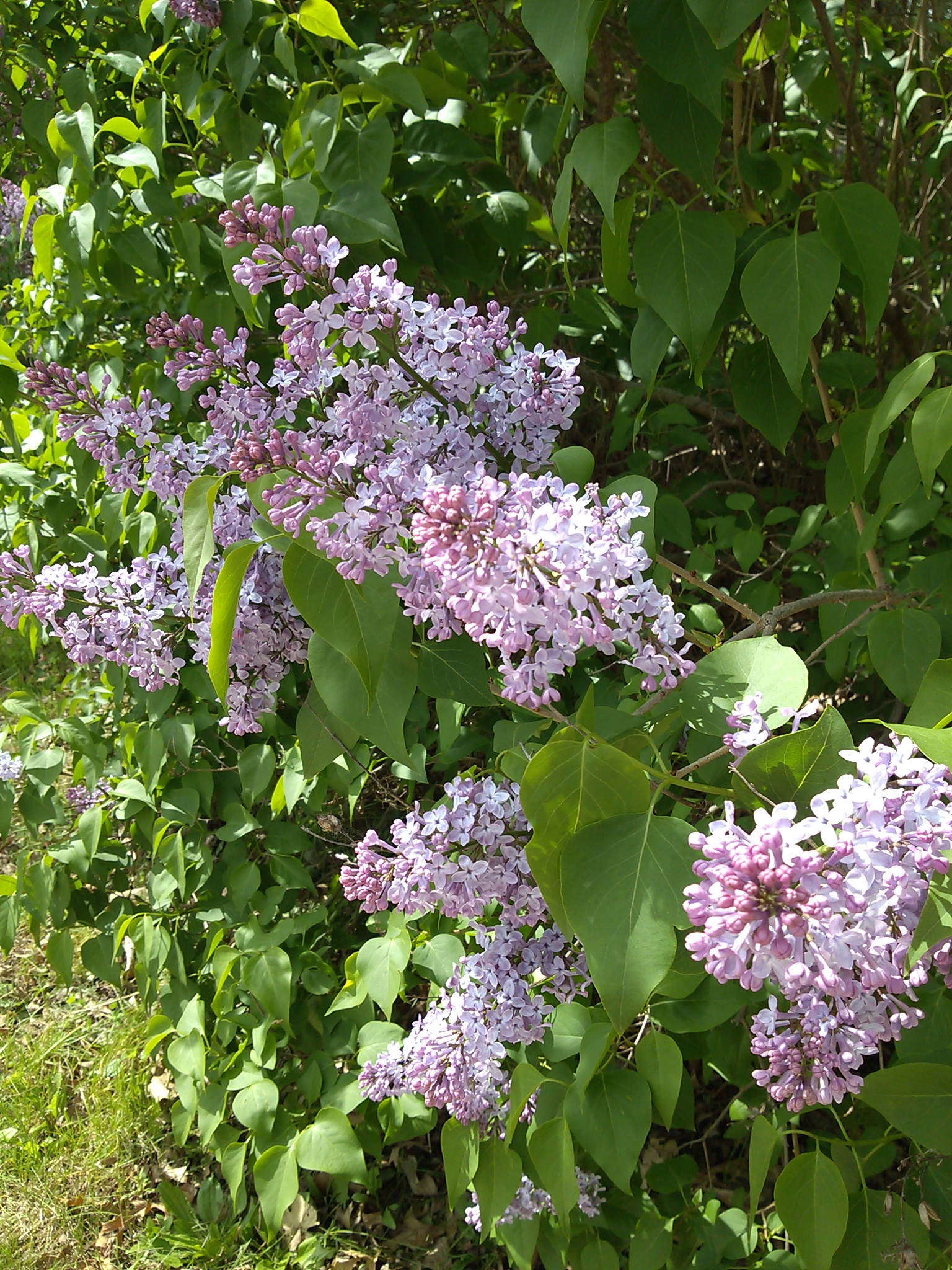
The lilacs and apple trees in bloom made the first lawn mowing memorable with fragrances that bond me to this place. The bare rooted plants from the nursery were dormant but have come alive and enliven me.
The mowing deck was set as high as possible during the first cut of lawn. The grass was long and my process is to prepare for re-cutting and collecting the clippings today. After the first cut, the lawn looks lush.
Space for 18 Tomato Plants
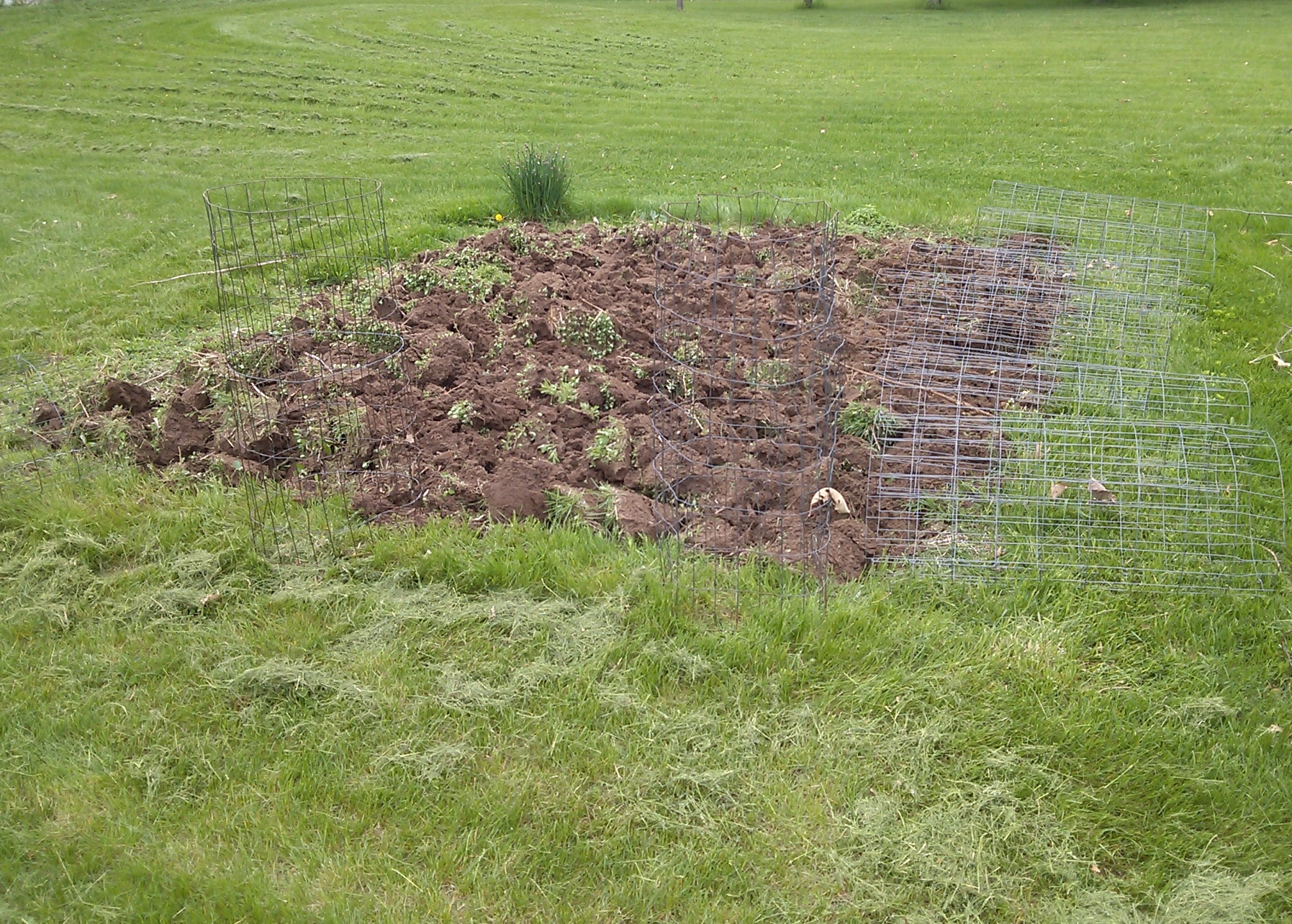
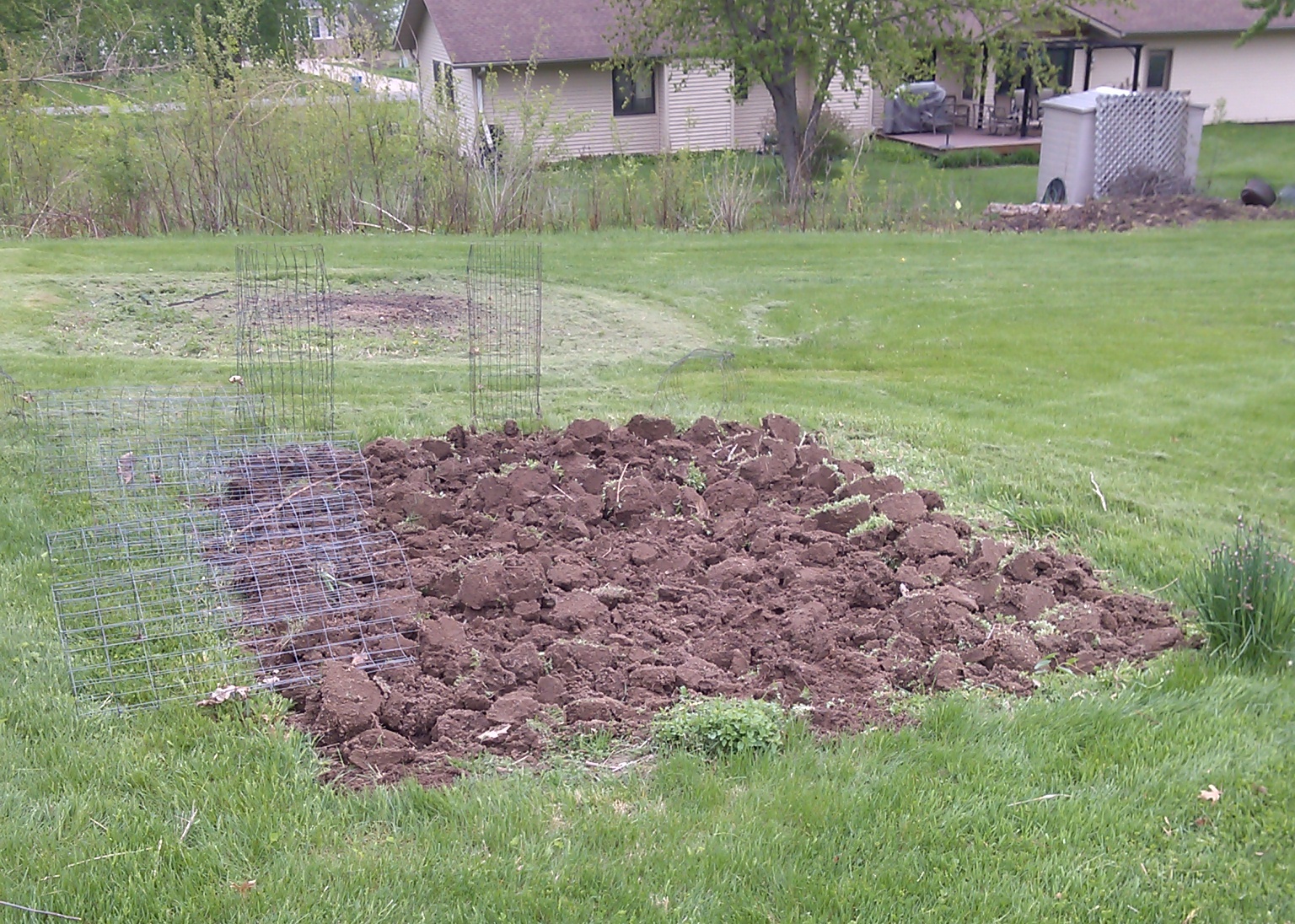
I spaded the first of two tomato plots. After working the soil with a rake, I’ll plant the first seedlings and dump the clippings directly on the plot as I cut them. I left a shallow row on the north end for existing chives and oregano. That space will be filled out with other herbs.
The tomato decision has been made. The first plot will be home to eighteen growing cages bonded together in couples on a single stake. This is to reduce the number of metal stakes used and optimize the space around them. One row will be the Martin (F1) Italian tomato which retains a variegated green and red color when ripe. The intent for this tomato is ketchup making, although that may change as they mature and we see what they taste like. The center of the plot will be three types of cherry tomatoes (Sweet Olive (F1) baby grape tomatoes, Black Cherry (OG), and Gold Nugget (OG) golden cherry tomatoes). The third row will be Olivade (F1) and Monica (F1) (OG), two tomatoes for use in sauces, and Rose (OG), an heirloom pink tomato. Unlike in past years, I plan to keep closer track of the varieties and how they produce.
Lilac Blooms
The other tomato plot hasn’t been finalized, but it will be some combination of Acer, Beefsteak and Best Boy planted in similar couples. The Beefsteak and Acer are slicers, and the Best Boy will be canned whole. Whatever tomato seedlings I don’t use will go to my sister-in-law’s garden.
A local chef is seeking spring garlic, and it looks like my plot will produce an abundance. Once it matures to spring garlic stage, I’ll harvest a couple of bunches and take it to his restaurant to barter for store credit.
LAKE MACBRIDE— Jaime Oliver and Gennaro Contaldo taught me to make pasta without tomato sauce. The two television chefs went searching around London for wild rocket, brought it to Oliver’s kitchen, and made a simple pasta dish with it. That local greens could be the beginning of a pasta dish was a new idea I am adopting into my cooking.
We have an abundance of baby bok choy from the CSA and a large bag of leaves separated from the stems was the starting point for last night’s dinner.
Ingredients: a bread bag of roughly chopped baby bok choy leaves, three full heads of garlic peeled and sliced thinly, bits and pieces of aromatic vegetables leftover from salad making (carrot and bell pepper), a cup of grated Parmesan cheese, a half pint of last summer’s pesto thawed from the freezer, a roughly chopped large onion, and salt and pepper to taste.
Process: Bring a pot of water to boil for the farfalle. While the water is heating, perform the chopping work: rough chop a large onion, dice the carrot and bell pepper, rough chop the greens and peel and slice the garlic heads. This is a lot of garlic, and our kitchen has two dozen from last year needing to be used up before the spring garlic comes in.
In a large frying pan sauté the onions and carrots in olive oil. Add salt. Add the bell pepper next and when the onions begin to soften, add the sliced garlic, stirring to prevent the garlic from burning. Once everything is soft, add the baby bok choy leaves, turn down the heat and cover to let them wilt. Take the pan off the heat and let it rest until the pasta is done.
Drain the farfalle and put it in a large bowl. Add the cooked greens mixture, half a pint of pesto and a cup of grated Parmesan cheese. Mix gently with a spoon and serve, adding freshly ground pepper on top, and salt to taste.
Notes: The greens mixture is a form of mirepoix, and my ingredients were chosen because they were on hand: the operative principle in this local food dish. Farfalle is used because of the broad surfaces for the sauce to adhere. Most other forms of dried pasta would work well. Last summer I made and froze three different kinds of pesto based on what was coming from my garden. Any pesto would be fine in this dish. Other ingredients to consider would be pine nuts, fresh herbs, leeks or shallots.
LAKE MACBRIDE— Taking photographs of spring flowers isn’t necessary. Nor does it record the pink, blue, red, white and violet petals in a way that persists like the collective memories of 20 years of spring in this place.
The Red Delicious apple tree has an abundance of blooms, just like last year. I thought 2014 would be apple bust because there were so many last year. It is very exciting to see blooms on two apple trees and on the pear tree.
I am lagging behind the neighborhood on making the first cut of lawn. I saw bumble bees in the dandelions— a hopeful sign. I want to give them as many pollinating opportunities as possible. We have a light carpet of violets among the blades of grass. I don’t want to cut until I need to mulch the tomatoes and peppers. It won’t be long, but not today.
The scents of the flowers are intoxicating. Anyone who doesn’t know what I mean should get outside more— now. The varied fragrances last so short a while, but we drink in their liquor like hikers after following the trace of Dillon’s Furrow from the city.
LAKE MACBRIDE— The apple trees are in pink, which means the blooms will soon follow. Because my trees were not properly pruned until last winter, the number of blossoms will be low. Last year was the best ever for fruit, and 2014 tree energy is likely to be devoted to forming next year’s buds. Hopefully pruning cleared enough space for sunlight to encourage the fruit that does form.
Neighbors are out mowing lawns, and I am usually the last to make the first cut. I stopped trying to get an even and lush green lawn, eschewing chemical applications ten or more years ago. I bag my Spring clippings to use as mulch in the garden. A former neighbor once told me I should leave it to mulch the grass, but why waste it?
Two years of drought have thinned the grass, leaving a patchy mess before cutting. Where deer droppings fell are mountains of green. Once I mow, it will all even out… at least enough to stay out of the neighbors’ attention.
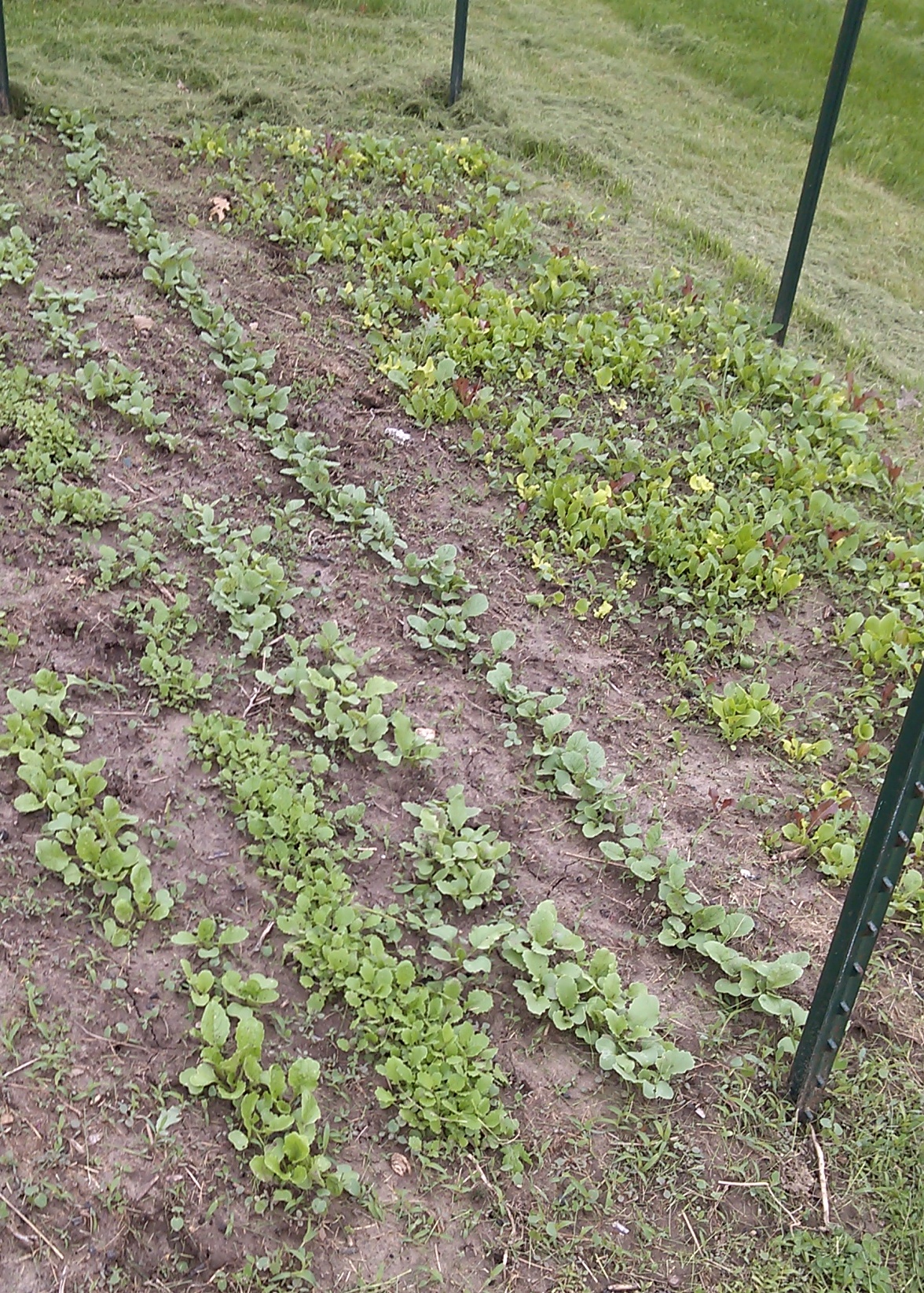
After a shift at a farm I hope to spend a few hours in the garden fencing the recently germinated spring vegetables. There is a burn pile on top of a tree stump. If winds are calm, I’ll burn it, hopefully taking the stump with it. I bought a bag of “natural charcoal” to use as a stump remover. If the burn pile doesn’t take this stump out, charcoal will be next.
More than 1,000 seedlings are growing in our bedroom, way more than usual. I am re-thinking how to plant everything. Maybe two full plots of tomatoes if we can afford the new cages. With all the varieties, this may be the year to make the most of it. I also want to plant all the germinated bell pepper seedlings to increase yield. Peppers don’t grow uniformly and the more plants, the more chances for decently formed vegetables. The celery is developing, but at this stage looks very delicate. I’m thinking about cucumbers and squash, but I want to wait a bit before planting them until after the squash beetle eggs.
Here’s hoping for some time in the garden and yard squeezed in between paid job in this complicated schedule of a life on the prairie.




 Journey Home
You must be logged in to post a comment.