Categories
Writing

Who Knew It Would Change That Fast?

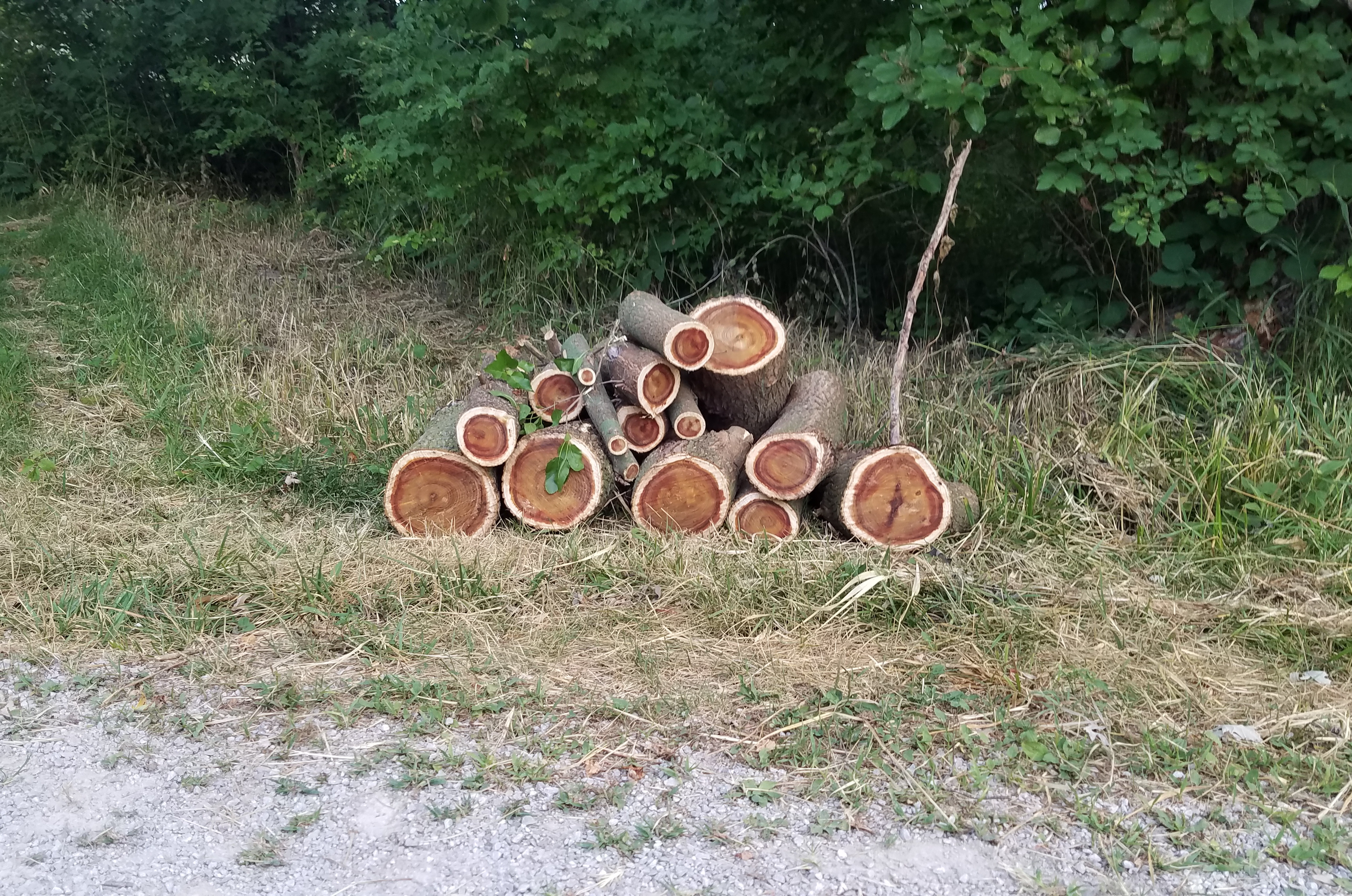
Firewood left on the state park trail.

When I retired the first time in July 2009, there was an office party with a sheet cake at the transportation and logistics company. The founder’s son telephoned me with well wishes. I wasn’t done working at age 57, yet knew where I worked for the previous 25 years would be seen only in the rear-view mirror. I never looked back.

When I retired for the second time, in April 2020 during the pandemic, I had little idea that would be it. Our household managed to avoid COVID-19 and my health was better than it had been for a long time, and still is. Funny how when you stop being with people, fewer upper respiratory diseases are contracted. Now that the coronavirus is normalized, I thought there would be something next. So far, most of my work has been centered around writing and home life. There has been no next and I need one.

With five COVID-19 vaccinations, I am as protected as a person can get. Recently, most friends who contract the virus don’t die from it unless there are complicating health factors. It seems a lot of people continue to test positive for COVID-19. The virus is our permanent companion and a reminder of our mortality.

I visit the doctor’s office more frequently, although that is partly because I have extra time available. I know there are benefits included with Medicare that have no co-pays. I press the clinic to deliver those services. Based on their current financial condition, they could use the revenues. The end result is my health seems closely monitored and I’m ready for what’s next.

So what am I waiting for? In part, for the second coming:

Turning and turning in the widening gyre   
The falcon cannot hear the falconer;
Things fall apart; the center cannot hold;
Mere anarchy is loosed upon the world,
The blood-dimmed tide is loosed, and everywhere
The ceremony of innocence is drowned;
The best lack all conviction, while the worst
Are full of passionate intensity.

Of course, this is William Butler Yeats from The Second Coming. In a similar and more personal way, I wrote about things falling apart to the chair of the county Democratic Party after our last central committee meeting, “I haven’t found anyone to replace me on the central committee yet. There is almost no interest in doing extra things in politics or anything else. We, as a society, didn’t used to be this way.” While Yeats was writing about World War I, a lot of anarchy has been loosed in society in 2023. There is not a lot of visible conviction.

I’ll get through this patch of anarchy and find passionate intensity again, no doubt. I just wish I had realized earlier how fast everything would change.

Categories
Sustainability

Medical Journals Call For Nuclear Abolition

International Physicians for the Prevention of Nuclear War. Photo Credit: Wikimedia Commons

International Physicians for the Prevention of Nuclear War issued the following press release on Aug. 2, 2023.

Medical Journals Issue Urgent Call for Elimination of Nuclear Weapons

More than 100 medical journals, including the Lancet, the British Medical Journal, the New England Journal of Medicine, and the JAMA have issued a joint call for urgent steps to decrease the growing danger of nuclear war and to move rapidly to the elimination of nuclear weapons. At a time of expanded fighting in Ukraine and increased tensions in Korea, leaders of the global health community underscore that any use of nuclear weapons would be catastrophic for humanity.

The unprecedented call to action comes in the form of an editorial co-authored by the editors of 11 of the leading medical and health journals, the World Association of Medical Editors and leaders of the International Physicians for the Prevention of Nuclear War (IPPNW). The editorial is being released this week in conjunction with the start of the UN Nuclear Non-Proliferation Treaty (NPT) Preparatory Committee Meeting and the 78th anniversary of the bombing of Hiroshima.

“The danger is great and growing,” the editorial warns.   “The nuclear armed states must eliminate their nuclear arsenals before they eliminate us.”

Citing the special responsibility of the health community, the editorial urges “health professional associations to inform their members worldwide about the threat to human survival and to join with the IPPNW to support efforts to reduce the near-term risks of nuclear war.”

It calls on the nuclear armed states, and those allied with them to take three immediate steps: “first, adopt a no first use policy; second, take their nuclear weapons off hair-trigger alert; and, third, urge all states involved in current conflicts to pledge publicly and unequivocally that they will not use nuclear weapons in these conflicts.”  

The editorial also urges them to, “work for a definitive end to the nuclear threat by supporting the urgent commencement of negotiations among the nuclear-armed states for a verifiable, timebound agreement to eliminate their nuclear weapons in accordance with commitments in the NPT, opening the way for all nations to join the Treaty on the Prohibition of Nuclear Weapons.”

“This is an extraordinary development,” said Chris Zielinski of the World Association of Medical Editors. “Normally medical journals go to great lengths to ensure that the material they publish has not appeared in any other medical journals. That all of these leading journals have agreed to publish the same editorial underlines the extreme urgency of the current nuclear crisis and the need for prompt action to address this existential threat.” 

“The medical community needs to warn the general public of the enormity of the threat we face,” explained Dr. Arun Mitra, one of the authors of the editorial.  “It is an integral part of our responsibility as health professionals.”

“We have to support the efforts of civil society organizations like the International Campaign to Abolish Nuclear Weapons and the Back from the Brink campaign in the United States,” added Dr. Ira Helfand, another co-author.

This Editorial is being published simultaneously in multiple journals. For the full list of journals see: https://www.bmj.com/content/full-list-authors-and-signatories-nuclear risk-editorial-august-2023

Click here to read the Editorial.

Categories
Living in Society

Last Move (I hope)

The craft room is packed.

It has taken four days to recover from the move in Des Moines. Surprisingly, it wasn’t temperatures in the high nineties that affected me. The killer was walking up and down stairs endlessly as we loaded basement stuff into the truck. My legs began to hurt at home on Monday and have been sore ever since. By Thursday I felt on the return trip to normal health, yet am not there yet. I hope this is the last move in which I help someone else.

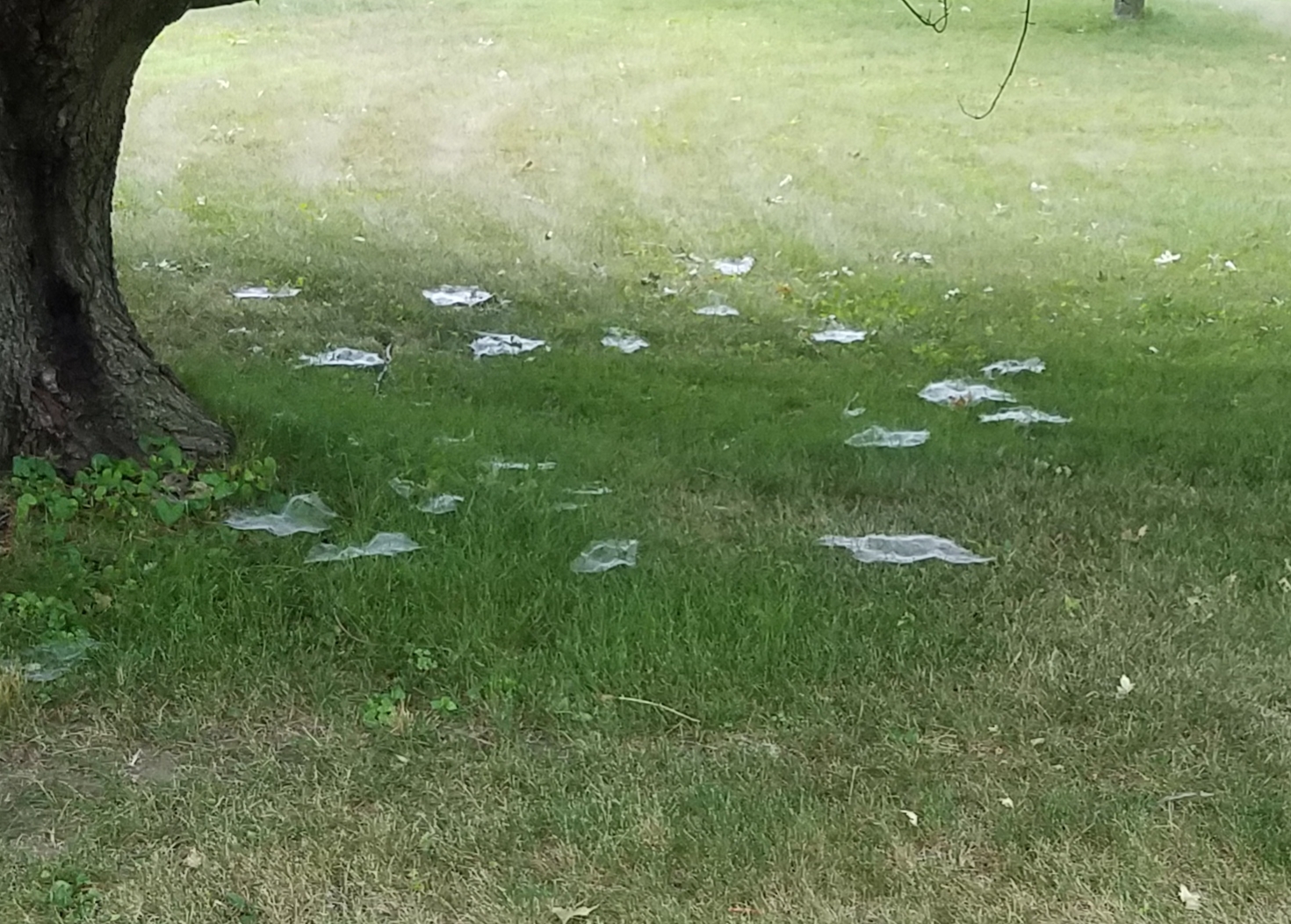
We’ve entered the humid part of summer. As I write there is a fog over the landscape. Thursday the yard was covered in spider webs with condensation on them.

Spider webs with condensation.

On the plus side, tomatoes are beginning to come in. Another summer day in Big Grove. I plan to make the most of it.

Categories
Living in Society

Cranes for Our Future

Paper Cranes. Photo by the author.

Take action to raise awareness of the need to eliminate nuclear weapons by folding a crane for peace between Aug. 4-9, along with others associated with the nuclear disarmament movement and the Nuclear Threat Initiative.

Crafting a brighter future starts with all of us. Between the anniversaries of the atomic bombings of Hiroshima and Nagasaki in August, people around the world fold and share paper cranes on social media with a message about what a future without nuclear weapons means to them.

Join people across the globe in demanding a more peaceful, hopeful future.

This project is simple. First, fold a paper crane. Instructions are in this short video.

Next, take a photo of the crane or cranes you folded. Craft a message about why we must move closer to, not further from, a world without nuclear weapons. It could be as simple as a single word or phrase. Finally, post your photo to social media with your message and the hashtag #CranesForOurFuture.

Please join us in this fun project with a broader meaning. For more details, click here.

Categories
Living in Society

January 6: Meadows Edition

Thom Hartmann Photo Credit – Thom Hartmann Website

With last night’s indictments of former President Donald J. Trump, handed down by a grand jury comprised of 23 ordinary citizens, a number of unnamed co-conspirators were mentioned yet not included in the indictment. The focus on the biggest fish is appropriate, the small fry having been pursued and jailed in significant numbers. What about Mark Meadows who sat in the middle of everything on Jan. 6, 2021 when he was chief of staff? What about the members of congress who were part of the plot? There remain many unanswered questions.

Former White House Chief of Staff Mark Meadows may be behind the scenes of the attempted coup against the United States. Thom Hartmann points out we can’t let go of investigations of him and 50 members of congress who joined the plot to overthrow the government. It’s an outrage they haven’t been investigated and appropriately charged already. The United States House Select Committee to Investigate the January 6th Attack on the United States Capitol focused on small fry under Democratic leadership. Apparently there was a deal with Republican committee member Liz Cheney.

For what it’s worth, Heather Cox Richardson reported the following earlier this morning:

Los Angeles Times senior legal affairs columnist Harry Litman concluded that the absence of Trump’s White House chief of staff, Mark Meadows, from the indictment indicates he’s cooperating with the Department of Justice.

Letters from an American, Heather Cox Richardson, Aug. 1, 2023.

Watch this 5:24 minute video for Hartmann’s important take.

Categories
Living in Society

I Swear It’s Not Too Late

RAGBRAI is finished, sweet corn is coming in, tomatoes are ripening, and home gardens and farmers markets are going full bore. Dinner may consist of a thick slice of tomato, steamed green beans, and boiled sweet corn. It’s life in Iowa, as good as it gets.

August is also the commemoration of the end of World War II with the atomic bombing of Hiroshima and Nagasaki. After the war, most nations agreed to eliminate nuclear weapons. More than 75 years after the atomic bombings, we are not close to giving up nuclear weapons. In the United States, the U.S. House passed the National Defense Authorization Act in a bipartisan vote that will spend more than ever on our nuclear weapons complex. The U.S. Senate passed a different version, equally spendy. The bill is heading to a reconciliation process when the Congress returns from summer break.

President Truman made the decision to drop the Hiroshima and Nagasaki bombs. The myth these two decisions ended Japanese aggression is just that: a myth. Truman’s decision to drop the bomb created a culture in which people were afraid for their very existence in a world with nuclear weapons. That culture persists, even if it has taken different forms. It is not too late for peace.

I wrote the following post three years ago:

75 Years After Hiroshima

President Harry Truman did not need to drop the atomic bomb to end World War II.

The first test explosion of an atomic bomb, called Trinity, was conducted by the U.S. Army July 16, 1945, as part of the Manhattan Project on what is now part of White Sands Missile Range.

The day after Trinity, U.S. Secretary of War Henry Stimson flew to Potsdam, Germany where President Truman was meeting with Winston Churchill, Clement Attlee and Joseph Stalin to determine the fate of Germany which had surrendered unconditionally on May 8.

Truman wrote about this meeting with Stimson in his memoir:

“We were not ready to make use of this weapon against the Japanese, although we did not know as yet what effect the new weapon might have, physically or psychologically, when used against the enemy. For that reason the military advised that we go ahead with the existing military plans for the invasion of the Japanese home islands.”

A committee had been established to evaluate use of the atomic bomb once testing was successful. On June 1, 1945 the committee of government officials and scientists made their recommendation, which Truman recounts:

“It was their recommendation that the bomb be used against the enemy as soon as it could be done. They recommended further that it should be used without specific warning and against a target that would clearly show its devastating strength.

Ultimately Truman made the decision to drop the atomic bomb on Hiroshima and on Aug. 6 the U.S. Air Force delivered it. On Aug. 9 the Air Force bombed Nagasaki. The Japanese surrendered Aug. 10.

Historian Gar Alperovitz, in his book The Decision to Use the Atomic Bomb, asked two well-known questions about Truman’s decision.

“To what degree did (the president) understand that a clarification of the officially stated demand for ‘unconditional surrender’ specifying that Japan could keep its Emperor would be likely to end the war?”

“To what degree did (the president) understand that the force of a Russian declaration of war might itself bring about an early end to the fighting?”

The book based on his research is 847 pages.

The idea that dropping atomic bombs on Hiroshima and Nagasaki saved tens of thousands of allied forces lives by ending the war early is a myth perpetuated by those who would absolve our country from a decision to kill tens of thousands of Japanese children and as many or more other non-combatants. Historian Howard Zinn asked, “Would we have sacrificed as many U.S. children to end the war early?” Obviously we wouldn’t.

A friend, the late Samuel Becker, was in Guam in August 1945 preparing for the invasion of Japan. I recently asked him about the atomic bombings of Hiroshima and Nagasaki. The reaction in Guam was positive he said. U.S. military personnel were in favor of it because they felt it would bring a quick end to what could have been a prolonged, bloody conclusion to World War II. Before he died, Becker changed his mind. With time and reflection he found the notion that the atomic bombings saved many lives was a myth. The Japanese were already in a position to surrender.

Alperovitz said in a recent webinar that, to a person, contemporary military leaders went on the record to say there was no need to use the atomic bombs to end the war early. The war had already been won.

Truth matters and one truth is the atomic bombings of Hiroshima and Nagasaki were unnecessary. Their effects would fuel the Cold War and the idea of mutually assured destruction should they be used. This is crazy talk. Nuclear weapons must be eliminated and the only way to do that, to pierce the wall of our federal government, is citizen action demanding it.

On the 75th anniversary of Hiroshima it’s past time we took action.

~ Written for the Cedar Rapids Gazette and published Aug. 9, 2020.
Categories
Writing

Heat of the Day

Kirby’s Moving Company van on July 30, 2023.

While moving someone across Des Moines the last few days, the ambient temperatures have been exceedingly hot… close to 100 degrees some days. I drank a lot of water and took frequent breaks from work.

On Sunday I was present for the second truckload of stuff heading to the new place. Being a long-time transportation person, I hung with the crew most of the day, helping load, then unload the stuff. It was kind of them to allow a septuagenarian weakling to be a small part of the operation.

The owner served three tours in Operation Iraqi Freedom, so I compared notes about being in the military. He said the first tour he dined solely on Meals – Ready to Eat (MREs) for 29 days, which I found to be appalling. I mean, for as much money as the U.S. spent on that war, they could at least have furnished a mess crew with provisions to prepare meals. From time to time, someone hunted a deer and the dried the meat into jerky. At least they had that to look forward to.

I made it a point to talk to each crew member. At the loading location there were more crew members, some of whom had another job in the afternoon. At the unloading point there were three of them, plus me. While I’m not as strong as I used to be, it was great hanging out with strong, young men and unloading the truck.

The new place is a 100-year-old home with everything that means. The house isn’t standard anything and that created some challenges. There will be a process of working through them. The laundry equipment is in the basement where I could envision a homemaker working a wringer washer like my aunt did. Luckily the current machine is a couple upgrades from a wringer washer. The unusual layout could be nice once all the settling in is accomplished.

Tomorrow I start posting at Blog for Iowa for the month of August. I plan to cross post here, so stay tuned!

Categories
Environment

Trapped by Our Lack of Learning

Vegetable harvest on July 25, 2023.

Smoke was everywhere on Tuesday. The aroma was distinct, constant, and originated in Canadian wildfires. The haze was not bad, yet the smell filled the air. Smoke was a constant reminder of how little we progressed in our advocacy to do something about the climate crisis. Our lack of education, in the need to address the climate crisis, covers us like a shroud.

June was the hottest month on Earth since we began keeping records. July looks to be worse. I tried to function with outdoor ambient temperatures in the low nineties. Functioning meant using air conditioning to mitigate the heat most of the day.

The world just sweltered through its hottest June in the 174-year global climate record. 

Additionally, Earth’s ocean surface temperature anomaly — which indicates how much warmer or cooler temperatures are from the long-term average — were the highest ever recorded, according to scientists from NOAA’s National Centers for Environmental Information.

National Oceanic and Atmospheric Administration, July 13, 2023.

I don’t mean to slight the efforts of teachers, many of whom I know to be decent people. Yet, the fact is too many young people arriving to power in the 2020s don’t understand the reasoned need to act on our deteriorating climate. While we recognize a long procession of extreme weather events and conditions, we view them as a live blog of the end times over which we have no control. How did we get to this place?

In part, with electronic communications and social media, we are more aware of the pockets of culture that reject common sense to pursue tribal interests. They receive undue amplification. A reader of history knows this segment of the population has been present for multiple millennia. More than “pocket,” though, the amplification in social media presents an idea there is an organized movement. I’d call it the “know-nothing movement” yet that term has already been used. It’s not that people are dumb. It’s that they don’t know how uneducated they are. There is a name for this: the Dunning Kruger effect.

The Dunning–Kruger effect is a cognitive bias whereby people with low ability, expertise, or experience regarding a type of task or area of knowledge tend to overestimate their ability or knowledge.

Wikipedia

I am part of the Climate Reality Project whose mission includes:

We train and mobilize people worldwide with four global campaigns to unlock transformational change this decade and help us reach true net-zero by 2050 – the point where global warming can stop in as little as three-to-five years and the Earth begins to heal.

The Climate Reality Project website.

The Climate Reality plan is to reduce emissions, call out greenwashing, end financial support for using fossil fuels, and support international cooperation using the Conference of the Parties framework that brought us the Paris Agreement on climate. There is hope these things can be accomplished, according to former Vice President Al Gore last night. None of it will be easy. The fact that we need organizations like Climate Reality and others to educate, lobby and advocate for action to address the climate crisis is a sign of how far our education system has deteriorated. These topics should be front and center in our schools and in career development for students coming up. There are many obstacles to training the coming generation of Americans to take up the climate crisis as a main stage endeavor.

We do what we can. The trouble is we don’t always realize how much potential we possess to address the climate crisis. Its time to figure that out.

Categories
Kitchen Garden

Sweet Corn

First sweet corn of the summer.

Sweet corn became available Saturday afternoon and we tried a dozen ears. About half of the ears were under-developed but the rest of it was as good as sweet corn gets. Since our standby outlet closed a couple years ago, only marginal corn has been available. It is unclear whether there will be enough good sweet corn available to put some up.

Our area, like most of the upper Midwest, is under drought conditions. This complicates farming with a residual effect on folks like us who rely on farmers for sweet corn. We aren’t going to go hungry.

I caught a deer in my tomato patch yesterday. When it saw me coming, it attempted to jump over the eight foot fence. It got caught and ended up bending the fence over to make its escape. The fencing system implemented this year is not working, although I am getting more exposure to deer behavior. Next year it will be better.

I delivered my spouse of 40+ years to her sister’s home on Sunday. They are preparing for a move after closing on a home at the end of the month. She will be gone for about two weeks, although these things are never certain. I reverted into some form of myself I don’t quite recognize. The main characteristics of this are changes in eating habits (spicier), and a weird feeling of loneliness when I realize no one else is home.

I’ve been preparing an editorial calendar for the 23 posts I will make on Blog for Iowa in August. I have outlines for half a dozen so far and feel there will be no shortage of topics. The trick is to make them relevant to August 2023. I’m not sure what exactly that means during the resurgence of Republican state governance. Well, I do, but I can’t post every day about what the Biden administration is doing.

It is hard to miss that Elon Musk directed Twitter to become X. It’s probably for the best as it drove me to become more of a lurker than a poster in social media. What am I worried about? Here’s a definition of media addiction:

Social media behavioral addiction is defined by being overly concerned about social media, driven by an uncontrollable urge to log on to or use social media, and devoting so much time and effort to social media that it impairs other important life areas.

The Addiction Center website.

Musk X’d that out.

Soon I’ll harvest the rest of the red cabbage, celery and potatoes. Arrival of sweet corn is a sign we’ve turned to corner of the gardening season. As long as deer don’t eat the entire tomato crop there will be plenty to do in our kitchen garden. I’m ready for it.

Categories
Kitchen Garden

Month Into Summer

Summer salad made mostly with ingredients from the garden.

Battle with squash bugs began this week. Egg laying is concentrated on the patty pan squash plants but they are throughout the squash plots. I am catching some of the egg clusters just as they are hatching. This year I am determined to get rid of them before I have to get rid of all the plants. Daily diligence in removing eggs and any squash bugs is the only way to do it without chemicals. Even that may not be successful. There were fewer eggs today than I found yesterday. I’m hopeful I can be master of my garden.

The main objective is to save the pumpkins and winter squash. A person can eat only so much zucchini and patty pan, so no loss there.

The onions are cured and ready for storage. I emptied the greenhouse Friday afternoon. Soon I will pack it away for the season. The main crops of peppers, eggplant and tomatoes are about to begin. There are many cabbage heads coming, kale, chard, and collards for leafy green vegetables. Potatoes will soon be ready to dig. There will be no shortage of fresh vegetables in our kitchen garden for a while.

There is more to life than gardening and eating the results. Not much more, though.