Categories
Living in Society

Closing Down the Offices

Barack Obama at the 2006 Harkin Steak Fry. Photo by the author.

Editor’s note: This post is from Nov. 10, 2008, written after helping close down the county Democratic party campaign offices. It captures the hope of that time. Hope remains, but is a mere ember these days. Electing Barack Obama president changed my life and those of many others. We must keep hope alive.

Even I got teary eyed after the election this year, only it did not hit me until I was southbound on Highway One heading to help the county party clean out the offices. And there I was, passing the recently harvested bean and corn fields, large round bales of corn stalks resting in the fields and tears started.

A political life that had been stolen from us and was regained on Nov. 4. The theft began in 1968 with the assassinations of Robert F. Kennedy and Dr. Martin Luther King Jr. Then Nixon took the 1972 election from George McGovern using underhanded tricks that ultimately led to his resignation from office. Carter, he was better than the alternative, but his one term presidency was more a staging ground for the rest of his life as something else. The Reagan years were darkness with a veneer of pleasantry on it: good for Republicans, but not for the country as well being never trickled down to where we lived. When Clinton was elected, a new kind of politics came into being led by James Carville, Karl Rove, Mary Matalin and their ilk. It purloined our best hopes for unity as a nation and pitted red states against blue states, Republicans against Democrats, liberals against conservatives. It is difficult to forgive Clinton and Bush as their presidencies were cast in this same mold that led us to our current life in society. If we thought life was better under Bill Clinton, it was because we had become used to settling for less than what was possible. On election night something changed.

I went to bed shortly after the speeches. Obama already appeared weighted down by the impending responsibilities. At work the next day, I heard the backlash and denial of co-workers with nothing good to say about the outcome of the election. But now, with some rest and clarity, I am beginning to believe that we can change the course of our society and its place in the world.

What brought me here was the trip to Colorado where the support for Senator Obama was evident everywhere. It was reading the nightly posts from political friends on Twitter and Facebook, the messages indicating that we were registering a record number of voters and winning in Ohio, Florida, Virginia and Nevada. It was the web site FiveThirtyEight.com which told the story that I was hearing, that we would have a big win in the electoral college. Above all, what caused me to believe in the possibility of change again, was the abundant evidence that I had become part of something bigger than myself that sought to serve the greater good. As Abraham Lincoln put it, “We are not enemies, but friends. We must not be enemies. Though passion may have strained it must not break our bonds of affection. The mystic chords of memory, stretching from every battlefield and patriot grave to every living heart and hearthstone all over this broad land, will yet swell the chorus of the Union, when again touched, as surely they will be, by the better angels of our nature.” This realization caused the tears to come.

And as we began the work of putting the artifacts of the election away, some to storage, some back to the candidates, some to recycling and to charity and some to the landfill, Ed and I shared the remainder of a bottle of whiskey we found in the office. We drank from the same cup. Ed pointed out that veterans get a free breakfast at HyVee on Tuesday as recognition for their service on veterans day. And so the campaign is put up, and the volunteers and staff continue with their lives and the real work of changing the world begins. We can all be a part of this.

Categories
Writing

Winter Writing Plan – 2023

Writing desk while living at Five Points in Davenport in 1979-1980.

The writing choice before me is a garden of forking paths. What winter 2023-2024 produces will depend upon a number of decisions I make this month. As I pursued completion of an autobiography, things got complicated.

Do I next work on the first part, leading up to the time of this photo, or pursue the second part? I wrote more than 60,000 words in each thus far. Part I is about me being born through graduate school, Part II is about marriage, fatherhood, career, health, socialization, and intellectual development.

There is a case to work on Part I. I sent out copies of the draft finished last winter to a few friends. The feedback presented ideas of which I hadn’t thought. There is a substantial revision in the future. Do I do that now, while the feedback is fresh?

There is an equally powerful case to work on Part II. Stylistically, I’m not sure what I will do, yet the chronological approach of Part I does not seem as relevant or possible. Fleshing out what that will be is a time-consuming process with potential revisions and re-writes ahead. Do I take a stab at it and get something down on paper this winter before editing and revising the whole work?

I’m leaning toward the second path. The chronological format until 1981 makes sense because I was enacting a path to education that was part of my upbringing. By that year I felt my education was finished and it was time to live the life for which I spent 30 years preparing. The rest of the book is that story.

The trouble is there is too much information, too many resources, and too many complexities to incorporate in the narrative without making it too long. I must choose which elements will be presented. Some of this is easy, and parts are complicated.

Part of the narrative is the highlights of our life as a family. It is no one’s business what goes on in a family. At the same time the context of family makes us who we become. I want to lay down a bare bones history for our child to read and hopefully know in addition to their own memories and narratives.

Work life is also important. Beginning with my time in transportation and logistics, earning money to support our lives took much energy, physical and mental. Family and friends saw one side of this. Preserving what I experienced is equally important.

Two geographies stand out. The first is described on the U.S. Geological Survey map titled Davenport, which includes Davenport, Iowa City, and the part of Cedar Rapids in which we lived. Most of my life was spent in this geography. The second is what I call The Calumet. It is Lake County, Indiana and Chicago, yet more than that. For six years Merrillville, Indiana was the base camp from which I explored the Eastern United States with work. In addition to annual waterfowl migrations, lake-effect snow, and a culture driven by the end of the industrial revolution’s expansion, it was the place where our child started school and we owned our first home.

There may be additional narratives which include politics, volunteer work, my writing life, cultural engagement with music, radio, television, and photography, and development of a kitchen garden. The book will end with the coronavirus pandemic and a hopeful look forward at the rest of my seventies and eighties.

Just writing this post has been helpful in picking which path. As soon as I get the garlic planted, I’m ready to devote my full attention to writing. Next step will be de-doing the outline.

This outline will need re-doing.
Categories
Kitchen Garden

The Gleaning

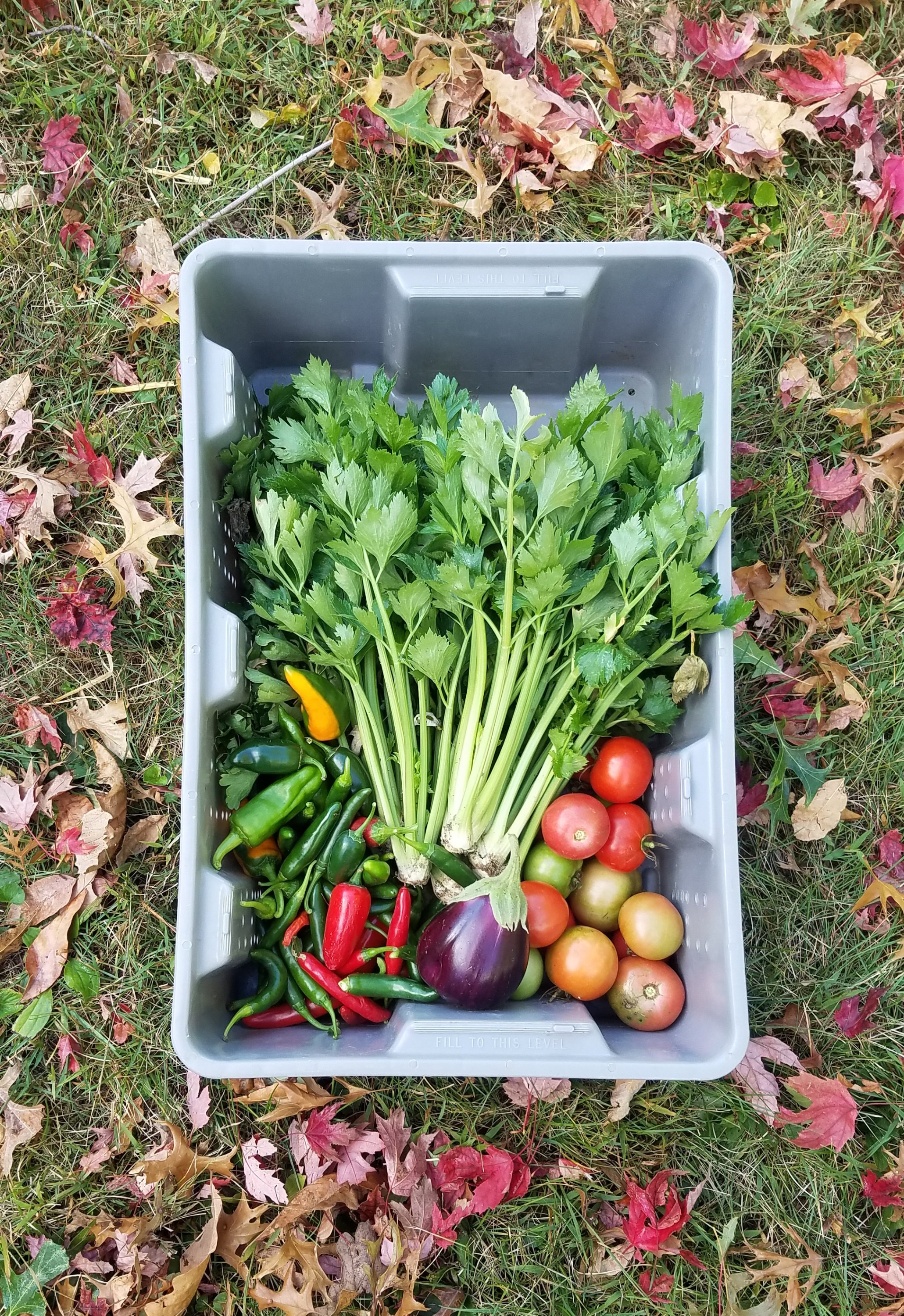
Gleaned from the garden just before first frost.

Deer make their way to our small orchard at sunset. They come for apples left on the ground and for the last two months there were many of them. As many as eight deer arrive, and based on what remains in the morning, they return through the night to eat their share of fresh apples. At some point last week, I decided the rest of the apples on the tree were for wildlife. The last few days they cleaned the ground of apples completely.

Birds eat some apples as do bees and wasps. If nocturnal creatures share in the harvest, I don’t see them. I used to worry what to do with fallen apples. Now I know they are just part of community building.

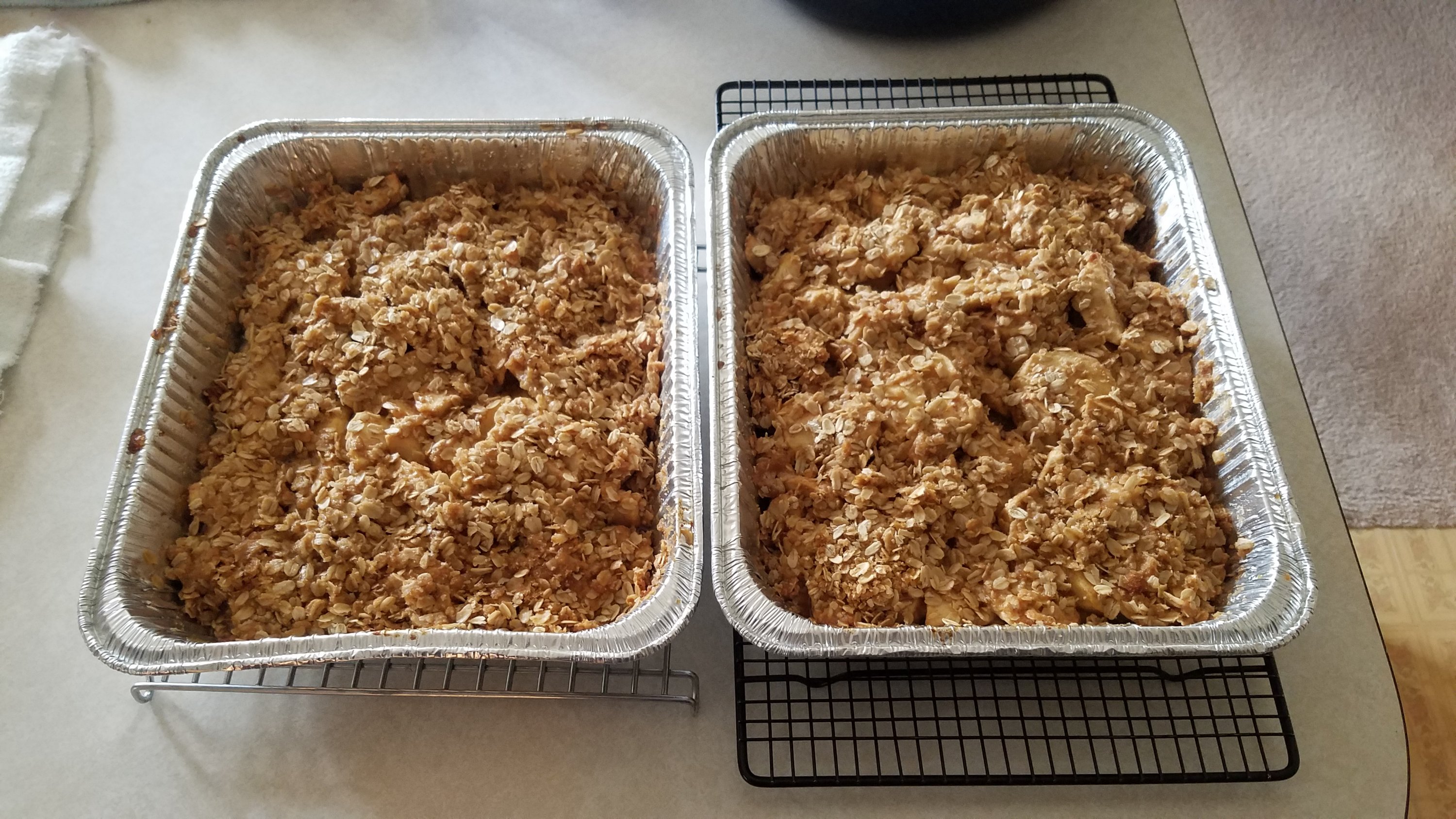
I used some of my share of apples to make 32 servings of apple crisp for the county party fund raiser this afternoon. They came out looking good. I’ll deliver them to the fairground in a couple of hours.

Apple crisp with backyard apples.

I was up late last night processing the gleaning. There is almost always something growing in the garden, so there is never any final gleaning. All the same, the first hard frost is a big deal. There was celery to dice and freeze for soup, Redbor kale to freeze, tomatoes to clean and process into juice and tomato sauce, hot peppers to make into chili sauce, and the counter is lined with the last green tomatoes for ripening. We’re almost at the end of the season.

It has been a good gardening season. I’m ready for fall.

Categories
Living in Society

Politics Changed

Prepping next year’s garlic patch.

There is political action in the county this weekend. The university homecoming parade was Friday and the county Democratic party had an entry. Today is the prep day to set up tables and chairs at the fairgrounds for the annual fundraiser. Sunday is a day for canvassing, followed by the annual fund raising barbecue. The planning committee is bringing in a popular podcast creator from Missouri as the keynote speaker. While there will be mostly political positives this weekend, my participation is limited: I bought a ticket to the fundraiser yet won’t attend except to drop off 32 servings of dessert. That will be that.

I’m losing interest in local politics. Beginning in 2016 my precinct turned Republican. In addition, interest in Democratic politics is not what it was in 2004 when the electorate was fed up with President George W. Bush. The elections of 2006 and 2008 were glory days for local Democratic politics. We won our congressional seat and the presidency. Republicans began clawing back majorities in 2010 and today dominate the area. A constant barrage of conservative media has many voters tuning out of politics. I’m not, yet am at a loss of what I can do differently to turn the tide given the general lack of interest.

My plan is to finish my term as a central committee member, then relinquish the position to whomever shows up at the January 15 precinct caucus. We already carry one empty seat on the committee. Mine will make two as I have low expectations anyone will step up to the position. It is a thankless job.

It’s not that I’m uninterested in politics more generally. The disconnect is in the diminished role politics plays in daily conversations with friends and neighbors. There is plenty of work to be done just to live as a retiree. A person has to set priorities. Voting and staying informed about issues will remain a high priority. Canvassing for the party and attending central committee meetings and other party functions will not.

Our local weekly newspaper published its annual report this week. The Solon Economist presently distributes 640 copies per week. For a city of 3,000 with a surrounding population of another 10,000, that’s not a lot. It reflects the general loss of interest in civic affairs and the economics of competing with online information sources. The publisher wrote an article in which he suggested we contact our member of congress regarding HR4756 The Community News and Small Business Support Act which was introduced in Congress in July. I dutifully wrote a message to my congressperson raising awareness of the bill. As long as there is a local newspaper, I’ll continue to subscribe and try to help. It is an important part of our local community.

My turn from politics has been a long time coming. It is the last external commitment from which I turned since retiring. Instead, I’m focused on preparing the garden for winter. I hope to plant garlic next week and organize the hardware of cages, stakes and fencing for winter storage. We wrote a task list for the house and there is more to do than resources currently permit. That’s not unusual when we’ve lived here 30 years. I know what happened to the rest of my interests outside our home: life changed and politics changed along with it. I plan to accept the change and live life as best I can.

Categories
Living in Society

Banned Books Week

Photo by Olena Bohovyk on Pexels.com

Banned Books Week, sponsored by the American Library Association, is ongoing. At the same time, states like Montana, Missouri and Texas severed ties with the 150-year old institution as part of a public debate over what and how to teach about race, sex and gender. Like with public attitudes about vaccines and climate change, the ALA is caught up in larger social movements driven by ignorance and stated religious and racial preferences. Banned Books Week took on a different meaning this year.

Books about LGBTQ people are becoming the main target for book banning. Citizens don’t want their children exposed to that in any form. A large percentage of complaints about books come from a small number of highly active adults. Their impact has been nationwide.

The larger question is whether public libraries will survive. If the content of K-12 school libraries has some basis in how sex education, race and gender roles are taught, public libraries are designed to serve the broad needs and interests of the citizenry. To understand whether public libraries will survive, we must look at how they originated. The following 2015 article by Ben Young from the Solon Public Library website describes our local library’s history originating with a young women’s club and voluntary funding through donations.

In the mid 1960’s, to serve all members of the community all year round, the Solon Young Women’s Club established a library in Solon. In its earliest days, the library was beneath the downtown bandstand. It had no windows, and whenever it rained, water would run from one side of the library to the other. The library was funded from cookbook sales, local businesses, rummage sales, the City Council, food sales, and a stage show. Most of the books were purchased or donated by individuals around the Solon area.

The library was staffed with volunteers from the Solon Young Women’s Club and the Solon Study Club. At first, the library was only open on Wednesdays and Saturdays, usually in the afternoon. To promote the use of the library, it would also open its doors whenever the Solon High School had band concerts on Wednesday evenings.

In 1967, the City Council voted that the library would come under the sponsorship of the City of Solon and thus, the Library Board was created. A year later, the library moved across Main Street into the old print shop that is now Solon Swirl. A few years later when that building was sold, the library relocated to its third location which was the former Solon jail and firehouse on Iowa Street.

Space soon became limited with the growth of the community and the Library Board initiated plans for a new building. After several years of fundraising and planning, the Solon Library moved to its current location at 320 West Main Street. The building had its grand opening ceremony on June 24, 2001.

Solon Public Library website.

The conversion from volunteer staffed and publicly donated funding to government supported was significant. In addition to providing a stable financial platform and human resources management system, a direct connection to elected officials that didn’t previously exist was formed. Support for our local library continues to remain strong, but the new political element could mean loss of funding and other restrictions as political winds change. They are changing in many parts of the state and country.

In my interview with School Board Member Jami Wolf, we discussed the fact that book banning has not been elevated to the board. Hopefully teachers, librarians and parents will work through any questions about library resources without such escalation. That’s as it should be.

Cutting off the ALA is a mistake for states that choose to do so. The ALA provides a modest amount of funding for programs, and does good in underfunded libraries, especially in rural areas that have trouble affording books, computers and other library resources.

Iowa and other states should resist severing ties with the ALA for political, cultural or policy reasons. By establishing a dialogue with the ALA, states could resolve issues for which the organization has resources to help. In a time when every community is concerned about costs, severing ties with the ALA would be akin to cutting off one’s nose to spit one’s face. That is this years message during banned books week.

Categories
Living in Society

Day Trip to Chicago

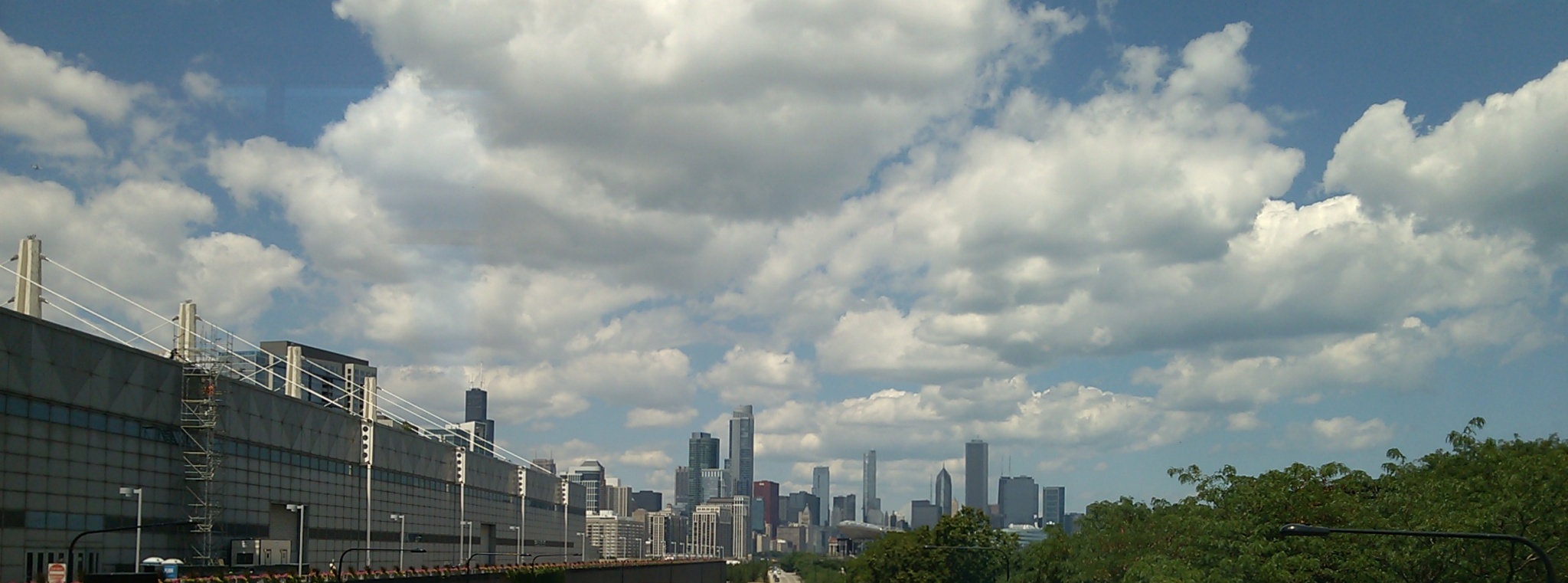
Chicago Skyline from McCormick Place. Photo by the author.

Signs along Interstate 88 in Illinois mark the Ronald Reagan Memorial Highway. Officially designated as the Ronald Reagan Memorial Tollway, whatever it is called, it is one of the better-maintained, low traffic roads in the Midwest. I made a day-trip to Chicago using I-88 on Tuesday. Partly because of that highway, a day trip to Chicago by automobile is possible.

I drove all the way from Big Grove to the DeKalb Oasis without stopping. The DeKalb oasis was constructed at milepost 93 in 1975, prior to the route’s designation as I-88. Our family has been stopping there since we lived in Lake County, Indiana in the late 1980s and early ’90s. Besides clean rest rooms, gasoline sales, and multiple fast food vendors, what I appreciate is the long circuit a walker can make around the indoors perimeter of the building. It is air conditioned and great for stretching after a long time sitting in an automobile. I also use the stop to consult maps and plan my final drive into Chicago, a necessary step for good navigation into the city.

The tolls in the highway’s name are now paid without stopping. A driver sets up an account on line, cameras take a photo of the license plate, and the charges are automatically billed to credit card. It is a pretty slick deal. I wonder how the labor union felt about losing toll-booth attendants with this convenient automation.

Apparently, once a person is a Chicago commuter, they are always a Chicago commuter. Listening to the rapid-fire WBBM radio traffic report “on the eights,” I picked up an accident near the Park Ridge exit close to Touhy Avenue, right where I was going. I made my exit from I-294 on Balmoral Drive and finished the drive on back roads. Why yes, I feel pretty good about it and was on time to my destination.Years of commuting into Chicago sticks with a person.

Farmers were harvesting corn and beans on Tuesday. A lot of soybeans were already in the bin, based on fields I passed. Combines in the field were harvesting beans 4:1 over corn. With temperatures in the upper 80s and no rain, it was a good day for it. The erratic levels of the Mississippi River are causing headaches for soybean farmers. This is go time for soybean barge traffic and low water levels slow traffic. A majority of exported soybeans normally move on the river in October and November.

I couldn’t live in the Chicago area again yet a day trip was pretty satisfying. I don’t know how many more such trips I will make. If they are like yesterday, I won’t mind making them.

Categories
Home Life

Fiona Ritchie Gets Axed

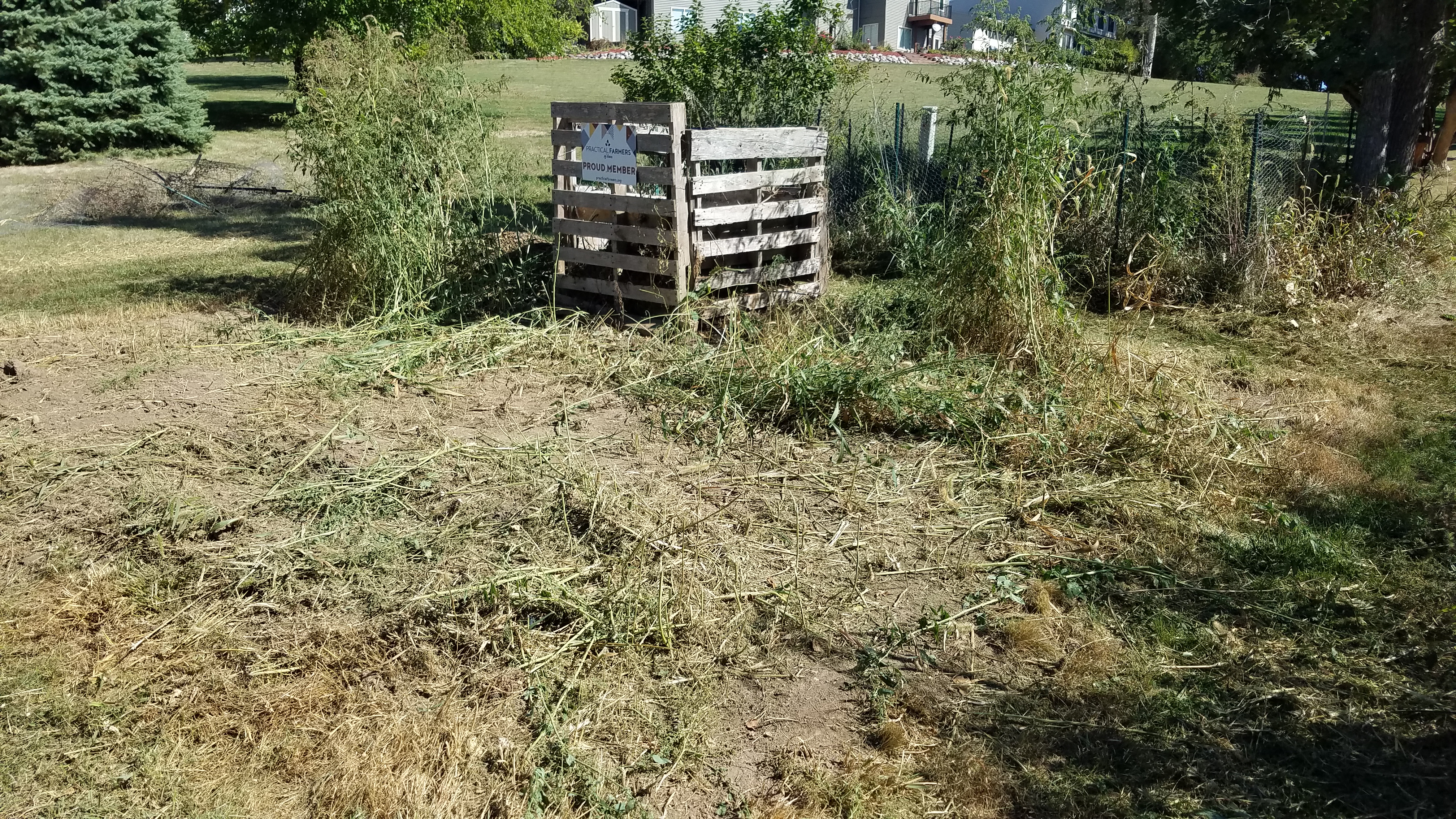
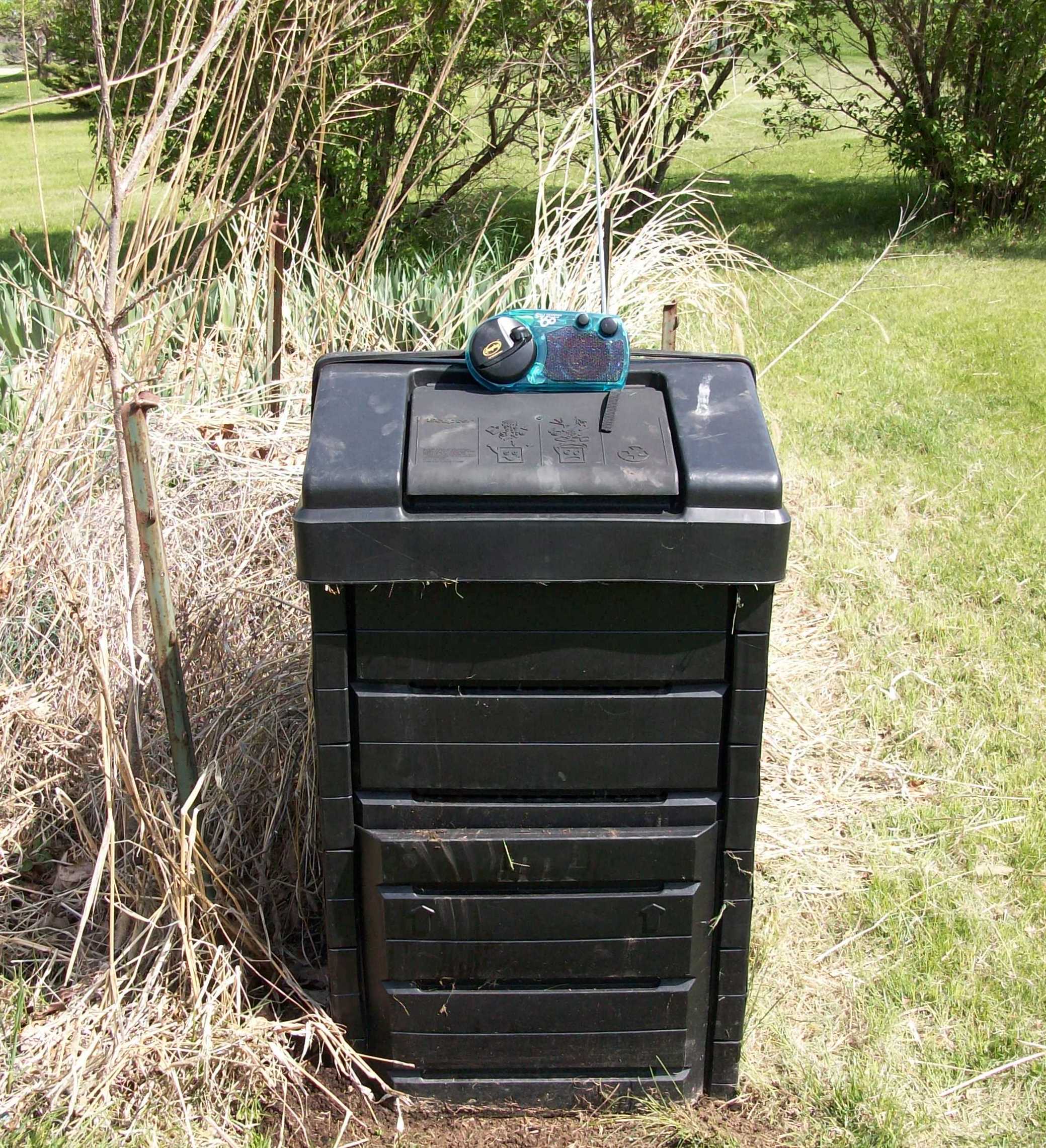
Compost Bin with Solar/Spring Powered Radio

While in the kitchen making soup this week, Iowa Public Radio announced new weekend news programming. Someone had to be removed to make room in the lineup. It was sad when they announced it was Fiona Ritchie whose Thistle and Shamrock I’ve been following for many years. She has been a mainstay of my weekend radio listening. The only remaining folk music program will be The Folk Tree with local host Karen Impola who arrived in Iowa from the East Coast in 1990.

Since Garrison Keillor’s A Prairie Home Companion transitioned and then ended, the statewide public radio station had been cutting purchases of outside programming for weekend listening. Today much of the afternoon lineup is locally produced. Some of the replacement programming is good, others not so much.

I could get my Fiona Ritchie fix by streaming her content, yet that’s not the same as live radio: turning on the radio and accepting what is programmed while preparing dinner or doing dishes. To make streaming work, I’d need a device that connects to the internet with me in the kitchen. We have Wi-Fi, yet I’m not ready to give up radio just yet. It means something for the broadcast to be received live while I’m working.

Most public radio news programs are intolerable. While they mastered a format, the content has been less than engaging. The reporters are too familiar with themselves and less focused on listeners. We did donate our last two used automobiles to Iowa Public Radio, so I feel a sense of investment in what they do. It has not been a happy experience of late.

I can live without Fiona Ritchie like I live without Keillor and the rest of the former weekend lineup. Living today isn’t what it was when we moved to Big Grove Township in 1993. It stabilized, yet I can’t say it’s better. Thistle and Shamrock is one more piece of a past life receding into memory. It’s the part of aging I don’t enjoy. Thanks for the time together, Fiona Ritchie. Best wishes for a bright future.

Categories
Living in Society

Write a Budget, Fund the Government

Mariannette Miller-Meeks at the Iowa State Fair, Aug. 13, 2010. Photo credit – Wikimedia Commons.

It is a basic function of government to fund operations. With the Federal Government, it’s complicated, yet is a primary reason we send U.S. Senators and Representatives to Washington.

Both Iowa Senators, Joni Ernst and Chuck Grassley recognize the need to fund the government without shutting it down first. This is evidenced by their vote for a 45-day continuing resolution this week. However, U.S. Representative Mariannette Miller-Meeks has come up short in the recognition category, voting on a meaningless impeachment inquiry, and planning her annual tailgate fund raising event, instead of persuading Republican colleagues to avoid a shutdown and work on passing a budget.

It is unfortunate, yet Miller-Meeks has turned into a non-entity since she entered Congress. She is a hollow shell, a place holder, towing the line of her Republican superiors and the moneyed interests like the fossil fuel companies that fund her campaigns.

Why hasn’t Miller-Meeks pushed to get the Farm Bill passed?

Why hasn’t she dismissed the impeachment of the president for the waste of time it is?

If the government shuts down because the House Republican caucus can’t agree among themselves, Miller-Meeks bears some of the responsibility.

We must remove her from office in November 2024 and replace her with a Democrat like Christina Bohannan that knows why they are sent to Washington.

~ Prepared and submitted as a letter to the editor of local newspapers.

Categories
Writing

Dreaming into Autumn

From the Lake Macbride trail on Sept. 27, 2023.

I’ve been sleeping in fits: lucky to get five straight hours, I’d rather have, and need seven or eight. This morning I woke after five, couldn’t sleep, read 50 pages of poetry, and still couldn’t get back to sleep. I got up and worked my daily routine, made breakfast, and laid down and slept for another two straight hours. It’s no way to live.

During those two hours I returned to a dream from another sleep. I dreamed I was in Germany with one of my farm buddies and other people who weren’t alive yet when I was last there. I returned for a lost item from the previous dream and found it. Then I returned it to my farm friend and woke up.

Details are already sketchy. In typical fashion, I’ll forget about it quickly. For a little while, I wondered what the hell that meant. Then I decided to accept it and get on with my day.

Today is about care packages. I will finish assembling the one to go to our child with garden produce. I’ll also make soup and chili to take to my spouse and her sister the next trip to the state capitol. I don’t know if I’m finished dreaming, yet I hope not.

Will see what today brings.

Categories
Kitchen Garden

Apple Cider Vinegar Day

Ten half-gallon jars of apple cider vinegar fermenting.

There was an opportunity to fill the apple cider vinegar containers so I took it. With an abundant apple harvest there are plenty to juice and turn into vinegar. I’ve written about vinegar-making multiple times in the last ten years. All I have to add is this is one of the best apple seasons since I planted the first trees in 1994.

The apple juice produced by these Red Delicious apples is quite good, even better once the impurities are filtered out. I have a couple of five gallon buckets of juice apples ready to convert and store in large glass jars. It tastes better than anything I buy at the store. Key to good taste is drinking it fresh rather than canning it.

Vinegar-making is the end of the garden harvest season. I’ll glean the garden a couple more times and pick more apples should I need them. The main work is done.

Last year I planted garlic on Oct. 15 and expect about the same this year. A neighbor with a pickup truck already took me to a local farm where I bought four straw bales for mulching. They are resting in the garage and ready to go once the cloves are in the ground.

This is a punk autumn because everyone but me is away and sick. On Monday I went to a pharmacy that had the just-released COVID vaccine and got inoculation number seven. I am determined to avoid getting COVID. This means avoiding most human contact of a duration over ten minutes. With our child living on their own and my spouse at her sister’s home for an extended stay, the chance of contracting the virus at home from one of them is close to nil. I restrict movement as best I can and wear a KN-95 mask when with groups of people. For good measure, I also got the seasonal influenza vaccination last week.

With vinegar fermenting on the shelf, I am at the point of apple season where I need a big project to use the harvest before it goes bad. In the meanwhile, if I want a snack, it will contain apples. Breakfast? Apples. Lunch? Apples. Supper? Baked apple dessert. We look forward to this time of year so I plan to enjoy it.