LAKE MACBRIDE— During the last two months my work performance with a temp agency was described as awesome more times than can be counted. It was a bit startling insofar as the word “awesome” was not a regular part of the vocabulary of managing people during my 25 year career in transportation. The tendency of managers and supervisors was to take people down a peg rather than lift them up. Yet in 2013, awesome I came and awesome I exited the temp job, with repeated entreaties to return if my situation changed. Things may change, so the door was left open.
The reason for the awesomeness was good work habits drilled into us by the nuns and clergy in elementary school. They taught us there was a way to behave in society and, separate from religious life, respect and diligence were expected and freely given outside the enclave of a Catholic grammar school. It was a matter of exercising our free will.
When agreeing to work for the temp agency, I showed up on time, made an effort to understand and comply with the work rules, and didn’t cause any trouble. This very basic outlook toward work is apparently lacking in the majority of people who find their way to temp jobs— hence, I was awesome.
While tempted to linger on, I would have gone broke keeping the temp job. What was attractive about it was no one knew or had heard of me before I walked in the door. It was a clean slate where employees were judged on the quality of work, with clearly defined processes and measurements. The conversations I had with colleagues were genuine and fulfilling. It was a form of acceptance that was severely lacking in other experiences.
The temp job provided valued insight into a world of labor and management in contemporary Iowa. After exiting the land of awesome, there is freedom to write more in public about outsourcing, labor and management based on my experiences. As understanding and recovery from the manual labor comes, I will.
LAKE MACBRIDE— The Friends of the Solon Public Library decided to do away with the Memorial Day Weekend used book sale. The decision leaves a gap in my usual habits for summer, and adjusting to change as best as is possible, I picked these books for 2013 summer reading.
“The Great Gatsby” by F. Scott Fitzgerald. It is a marker that summer has begun and I read it every year. I plan to clear a spot under the locust trees in the garden and read it there this time. I have an old Persian rug to lay on the grass, and a folding chair. I would prefer an Adirondack chair, but haven’t built one to my specifications— yet.
“How the Other Half Lives” by Jacob Riis. Revisiting Riis reminds me of the lives of immigrants in New York, and how the 1880s resonates with today.
“Cooked: A Natural History of Transformation” by Michael Pollan. His latest work, and I try to keep up with Pollan, even if I feel he is a bit too special.
“Murder as a Fine Art” by David Morrell. Morrell has been promoting this period piece on his Facebook page for a while. I took a modern fiction class from him during my undergraduate work at the University of Iowa.
“Reinventing You: Define Your Brand, Imagine Your Future” by Dorie Clark. I met Clark at a Democracy for America training session in Cedar Rapids a few years back, and have been following her burgeoning career.
“Revenue Matters: Tax the Rich and Restore Democracy to Save the Nation” by Berkley Bedell. Bedell sent me a copy of this book when it came out, and I owe him a report on it.
“Inside the Red Zone: A Veteran for Peace reports from Iraq” by Mike Ferner. I met Mike in Dubuque with my peace and justice work, and have delayed reading his 2006 book for too long.
“Doing Time for Peace: Resistance, Family and Community” edited by Rosalie G. Riegle. I met peace activist Brian Terrell in Iowa City and he has an article in this book. He is being released from prison again today. My interest is in the role of civil disobedience in creating social change. I am skeptical of the way it is currently being used, with celebrity arrests, and a small group of people who seek arrests the way gunfighters in the late nineteenth century notched the handle of their pistol. I hope to learn something.
BIG GROVE TOWNSHIP— In her remarks before adjournment sine die of the first session of the 85th Iowa General Assembly, Senate President Pam Jochum made a statement that included the following, “the biggest challenge of this session was how to help Iowans who, despite working every day, still cannot afford health insurance.”
The Iowa Senate addressed the issue in Senate File 446, the health and human services budget, which was 60+ pages and reported from the conference committee late yesterday. Some house members wanted to read the bill before voting, and were concerned that there would be time. It was difficult determining the status of things in the wee hours of this morning, but the house adjourned until 9 a.m. this morning, giving legislators time to pull an all-nighter and read the bill.
At the warehouse where I work with some of the same people Senator Jochum referred to in her statement, there is neither a health care plan provided, nor is there adequate pay to enable workers to buy a health insurance policy. This forces employees to seek medical care in their social networks and on the open market, and is at the core of the problem SF 446 seeks to address. Like it or not, business interests drive dependence on programs like Medicaid.
It is unclear by how many layers temp jobs like mine get outsourced: at least two or three. The job is organizationally far removed from the parent company that ultimately buys our labor. American business, in its global footprint, bankruptcy declarations and restructuring, mergers and acquisitions, and increased outsourcing, successfully stripped away the part of employee compensation related to providing health care, while improving productivity and decreasing the cost of labor.
For a single person, buying private health insurance can cost $350 per month or more. For a family of two, a monthly premium can be more than $800. Do the math. At an hourly wage of $9.25, with limited overtime, and no paid holidays, disability insurance or sick leave, a person can expect to earn just short of $18,000 per year, taking home about $15,000. There is no room in the budget for health insurance.
Why do people take jobs like mine? Regardless of the social commentary about living wages, minimum wages, prevailing wages, and general working conditions, the money is green at outsourced jobs, and people need it to help get by. There appears to be no shortage of people willing to work slightly above minimum wage, without benefits.
My co-workers have no time to worry about getting sick, or about how to pay for health care. The presumption is any illness will get treatment in one’s social network, with a visit to a clinic, emergency room or doctor’s office being the last resort. Whatever the Iowa government does with the Senate’s health and human services budget, it will be a band aid on a problem that wants a better solution— one that lies more in the global business community and with workers than with government.
We’ll see the Iowa house reaction to the senate bill today. Presumably the conference committee had support for the bill before reporting it out of committee. Here’s hoping the legislative band-aid does some good if and when it is signed into law.
LAKE MACBRIDE— What will it take for the Iowa House to get a bill considered on the floor of the Iowa Senate? Representatives Dave Jacoby and Bobby Kaufmann are hoping that pairing a Senate Democratic priority— funding passenger rail in order to be eligible to receive a substantial grant from the Federal Railroad Administration to upgrade railroad tracks to handle 79 mile per hour traffic— with House File 219— an act relating to eminent domain authority prompted by a controversy in Clarke County— will do the trick.
Rep. Bobby Kaufmann has invested considerable political capital in the eminent domain issue. A March 11 story in the Muscatine Journal provides some background information, including the fact that HF 219 passed the Iowa House 93-6. According to Kaufmann, he recruited Rep. Dave Jacoby to co-sponsor the eminent domain bill, asked Jacoby to help write the language, and has spoken publicly about his positive relationship with the popular Coralville Democrat. Eminent domain is one of Kaufmann’s signature issues this session, and he has a lot riding on the outcome, personally and politically. The text of their joint press release is below.
To outsiders, it is unclear what is the secret sauce for getting Republican house bills like HF 219 to an up or down vote in the senate. What is clear is the process is complicated. Democrats can appreciate the complexity, and for the most part, the results of the Senate’s actions. In any event, how this bipartisan collaboration plays out will be something to follow in the closing days of the first session of the 85th Iowa General Assembly.
Kaufmann-Jacoby Joint Press Release May 21, 2013
Kaufmann and Jacoby offer a compromise to the Senate
Rep. Dave Jacoby (D-Coralville) and Rep. Bobby Kaufmann (R-Wilton) have offered an agreement on two key issues that have garnered a lot of interest in the last several legislative sessions. “The eminent domain language passed the Iowa House four times this session, each time with over 90 votes,” said Kaufmann. “There has also been much bipartisan support in the Senate, but it has not been brought up for a vote.” The legislation ensures that land cannot be condemned for recreational purposes by skirting the 2006 law. A controversy in Clarke County has been an impetus for the bill.
The passenger rail proposal which includes matching federal funding for an initial run between the Quad Cities and Iowa City (with possible expansion to Des Moines) has met with significant resistance. The $5.5 million dollars would be a part of the state match. “Passenger rail is an important initiative for my district, and our local Chambers of Commerce. This compromise reflects the continuing spirit of all legislative districts being heard and I believe gives both issues new life and a new pathway into becoming law,” said Rep. Jacoby.
As the 2013 session winds to an end, proposals like this could very well be the lynch pin to adjourning.
LAKE MACBRIDE— Does Tom Vilsack’s 2007 consulting agreement with MidAmerican Energy matter any more? It does, but not in the way conservative pundits characterized it, as a form of political corruption, after President Obama appointed Vilsack to his current job as secretary of agriculture.
The case can be made that beginning in 2003, then governor Tom Vilsack was a driver in governmental policy that created a regulatory environment for Iowa’s growth in renewable energy. Particularly in wind powered electricity generation. MidAmerican Energy was a key partner with Iowa government in developing wind farms in Carroll and Crawford Counties, and in other parts of the state. Most people agree, wind energy, along with ethanol production and biofuels development, have been good for Iowa. Vilsack should be given credit for his policy contributions to the development of Iowa’s renewable energy capacity.
At the same time, Vilsack was promoting all forms of electricity generation in Iowa, so the state could become a net exporter of the commodity. His advocacy for coal, natural gas and nuclear power generation is often forgotten, and resulted in a favorable regulatory environment for utilities to consider, and in some cases, build new coal and natural gas fired power plants. The release of CO2 pollution into the atmosphere by these new plants contributes to warming the planet and the liability of its climatic consequences. Tom Vilsack gets some of the blame.
Vilsack’s consulting relationship with MidAmerican Energy was said to help the company develop renewable energy sources, but it would be naive to believe the conversations he had with his client did not include coal, natural gas, nuclear and other sources of energy, especially since Vilsack made an issue of them as governor.
Why would Warren Buffett’s MidAmerican Energy pursue the legislative changes required in Iowa to make an investment in nuclear power more palatable to Wall Street investors? It is because Tom Vilsack started the conversation. His Oct. 12, 2006 speech to the Council on Foreign Relations (CFR) is evidence of this. Vilsack said,
“In the last seven and a half years we’ve had six new power plants built, some of them state-of-the-art coal and natural gas facilities. We have embraced renewable energy and have now become the number one state in the country for wind energy per capita. And we, of course, have expanded dramatically our interest in ethanol and soy diesel, to the point where the state of Iowa is now the number one producer of each.
And we’ve been able to do this by working with the private marketplace and private sector in partnership. We changed regulations to provide greater stability for our utility companies so that they make the billions of dollars of investment to build new plants.”
If we consider HF 561, an act relating to the permitting, licensing, construction, and operation of nuclear generation facilities, from Iowa’s 84th General Assembly, the legislature attempted to do exactly what Vilsack said in 2006 was the intent, to provide a regulatory environment to attract investment money in new nuclear power plants. From the CFR speech,
We should take a look at the long-term impact of nuclear. […] we ought to be looking at ways in which either the risk (of nuclear waste) can be matched with opportunities that folks are looking for, or that we can create a compensation system that makes it easier for people to assume and accept that risk.
Vilsack sought to open a door that was closed for decades with regard to new nuclear power and its radioactive waste. He started the conversation. When the people of Iowa saw how the conversation would develop, that the high risks of nuclear power would be borne by rate payers so that Wall Street would invest, they saw through MidAmerican’s ploy and rejected the changes proposed by the legislature.
By then, Tom Vilsack was in Washington, but his energy legacy lived on back in Iowa.
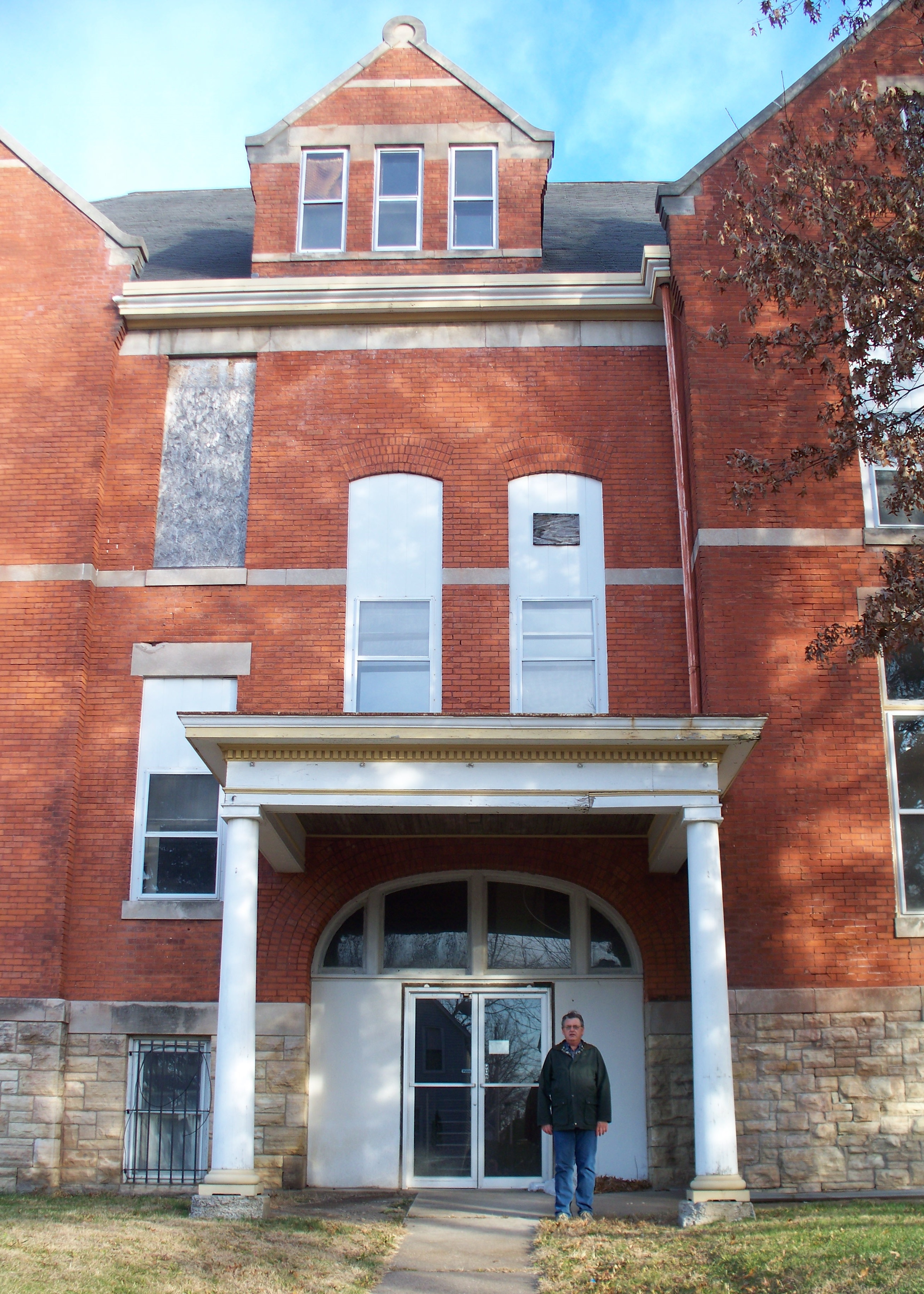
DAVENPORT— That the building at 1420 W. 16th St. was used as a Catholic grammar school, and housed a convent on the top floor, was air-brushed from the article in the Quad City Times reporting the building’s conversion to a senior living facility. One supposes the secular developers would have freaked if it were mentioned.
Its public history as Jackson School or Public School No. 6 was news from the article to me, although one never thinks to ask the history of a building as a grader. We were caught up in the existential reality of learning to read, operating a paper route, waiting turns to swing on the swing set, playing marbles, softball, red rover and four square in the playground, and figuring out how society worked. When I was last there, the building was abandoned— replete with broken windows in my former second grade classroom.
Grade School
It was here I took piano lessons, plagiarized the encyclopedia for a report on Johannes Brahms, experienced Kennedy’s assassination, heard Charlotte’s Web read by the fourth grade teacher, lost my Baltimore Catechism, served Mass in the convent, sang songs from the play “The Sound of Music,” learned the Palmer method of handwriting, and spent some of the best days of my life with people I would come to know well. I finished sixth grade in the building, before moving to the new school on Marquette Street. It was the best of times. Times before society started chipping away at native instincts.
The conversion to senior living space is okay with me, although there is an unseemly side to the government money, without which the project would not likely move forward. The neighborhood has declined, and this island of new among the worn down homes seems out of place. Not my problem, I guess. The proposed rent is much higher than our budget would allow for an apartment.
J.P. Morgan Chase Bank N.A., the Renaissance Companies, and Baxter Construction Company will likely make out on the government backed deal. Private companies often know how to negotiate their profits, something government these days does not. At least the construction company is based in Iowa, keeping some of the money in-state.
Regardless of the building’s use going forward, it will always be a source of memories for me. Memories to be revisited from time to time as life brings me back to the old neighborhood.
LAKE MACBRIDE— Swiss chard, collard greens and kale have sprouted in the seed trays as the garden fills up with my plantings, and weeds. Spring has everything growing. After pulling weeds for a couple of hours, all we will need is mild temperatures, some rain, and then more weeding.
It is uncertain the transplanted lettuce seedlings will survive. After 24 hours in the ground some look a bit wilted. Will see how watering and the night air does them. The backup plan is to use the other half of the tray for replacements if needed.
The broadcast lettuce and arugula did very well, and will soon be ready for harvest. Broadcast seems the way to go for kitchen garden lettuce. A few snips and there would be salad for two or four without worrying about nicely formed heads. The epiphany about lettuce growing was working at the CSA and planting individual lettuce seeds in soil blocks. It takes time, but the results can be worth it if transplanting can work here as it does for others. There is really no reason it can’t— it takes practice.
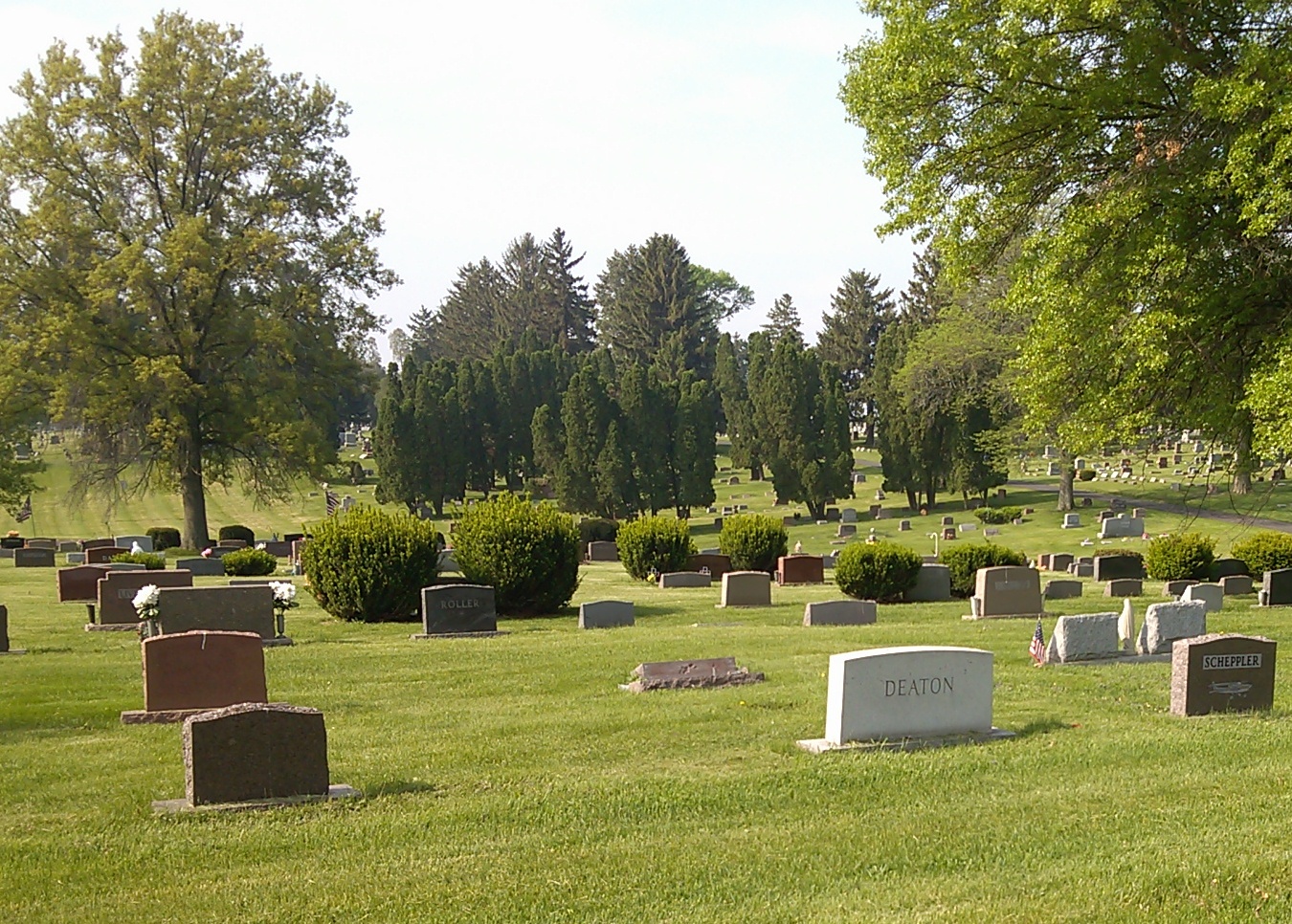
Deaton Grave Marker
I attended a funeral today. Mass was held in the church where my parents were married and where I was baptized and received First Communion. Mass was held for my father there in 1969, although he was not Catholic. Today, someone shared a memory of Dad’s funeral from when she was singing in the eighth grade choir. It was a special moment, possible only in special places in our lives.
A generation is passing to the other side, and recently, there have been plenty of funerals to attend. Parents of my cohorts, especially the World War II generation, have been leaving us for a while— their numbers among the living are dwindling. Each event has been a reunion, and a moving forward. We miss them, but know there is new life to be lived.
I stopped at the cemetery where my father and many relatives are buried. Birds left their excrement all over Dad’s marker. After pulling dandelions from around it, I regretted leaving the grass clippers on the work bench. Next trip over, I’ll bring clippers, a gallon of water and rags to tidy the grave— to feel like I contributed something. That memorial day is approaching escaped me and what the hell. The birds own the cemetery most of the time.
An accident on Interstate 80 had traffic backed up for miles, making the trip home tedious and desultory. As we crawled toward the scene of the accident, a wreck of a car was being winched onto a flatbed. There was a magnetic sign on the side that said “caution: student driver.” They use those signs for a reason.
By the time I returned to Big Grove, the idea of proof reading the newspaper was out. After watering the garden, I walked over to a neighbor with a gift box of seedlings for their garden. Her two little children were with her in the yard, learning about the world. Is it possible to see things a they do, at least for a while? Answering that question is the stuff of dreams.
LAKE MACBRIDE— Arriving home after midnight, it is difficult to resist pausing in the fragrance of the twelve-foot lilac bushes. 19 years passed since planting them in a row, angling from the corner of the house toward the surveyor’s mark. They are mature, as am I.
No cloud blocked my view of the crescent moon and stars. The moon was yellow— as in a children’s book— descending into the atmosphere on the horizon. Alert, I breathed the perfume of spring.
One can’t help but sense spring’s transient nature in the night air. Bound to our memories, and becoming aware of our pausing, we linger until the house lights beckon. And we go in.
RURAL CEDAR TOWNSHIP— A group of us transplanted eggplant seedlings from a sprouting tray into individual soil blocks. The work brought new learning about how to do this important work. Naturally, my native practices left something to be desired.
The key is to make sure the tap root of the plant, identifiable because it is very long, gets completely covered with soil. The other thing is to plant the seedlings with the first leaves as close to the top of the soil as possible. Previously, I left some of the stem exposed, thus making survival riskier. It goes without saying, and is likely part of genetic breeding, to pick the biggest seedlings for transplant. The new work was considered a promotion, although there was little rank among today’s group of workers.
After finishing transplanting some workers headed to the field to pick asparagus and I tagged along to see how they did it. Another learning process, and bonus dividend of this year’s work at the CSA.
The talk of the day included my onion patch, spring garlic, and questions about seedlings, basil, parsley, and the time to plant tomatoes. The farm began planting tomato seedlings yesterday, and based on our discussion, I am going to hold mine, at least until this weekend. They are about the point of being root bound in their cells, but I want to make sure we are past the frost.
Our household received a bulk mail post card from a competing business— someone who is taking market share from small CSAs like ours. We discussed it as a competitive reality to be dealt with.
There is not enough discussion of the impact of capitalization on local food, and I generated an idea for a future post. Between giant growers like Earthbound Farms Organic, and our CSA there is a middle range of farm operations that are well capitalized, and impact how local food is perceived. They trade on leveraging other growers, the previous marketing of local food, and consumers who have heard little about the local food movement. Watch for that one.
On the home front, the apple blossoms are falling like drops of silk, with or without a breeze, indicating the bees are doing their work. The lilac bushes are in full bloom, generating an aromatic that prompted memories of many happy spring days spent in Big Grove.
LAKE MACBRIDE— Sometimes gardening is about trees— mistakes that were made with saplings, acorns planted intentionally, and a host of maple and locust tree seeds that sprout voluntarily. If you work a full-time, stressful job, I don’t recommend planting saplings or growing oak trees in the garden, as they can get away from you before you know it.
Locust Tree
My locust trees are forty feet tall and growing in what used to be the center of the garden. Each year they yield a host of seed pods and invariably dozens of seeds sprout in the spring. Temping as it is to grow more full sized trees, the seedlings are plucked and composted. Two mature trees in the garden is enough. Their shade protected the spinach and lettuce during last year’s drought.
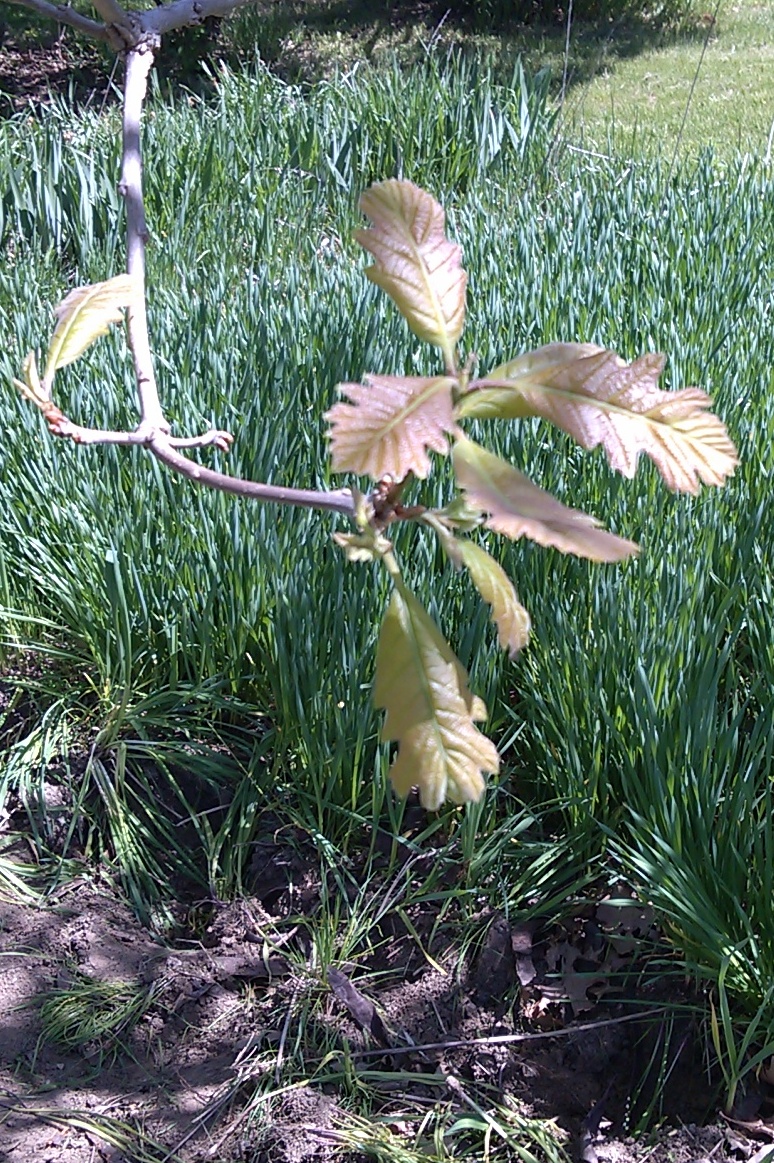
I have a row of three oak trees planted from acorns collected the year our daughter graduated from high school. The challenge will be to dig them up and place them around the yard now that they are ten to twelve feet tall. I have a mind to replace the misshapen green ash tree with one of them. The other two will likely go on the south side of the house for shade in a decade or so. Moving them would make the garden plot where they sprouted and grew more usable for vegetables. It will be a big job.
High Fence
Growing trees requires a different way of thinking from planting vegetable seeds. Our yard had two trees when we moved here, of which only the mulberry remains. The rest of them are a reflection of thinking and planning, some better than the others, and we appreciate the shade and fruit our trees provide.
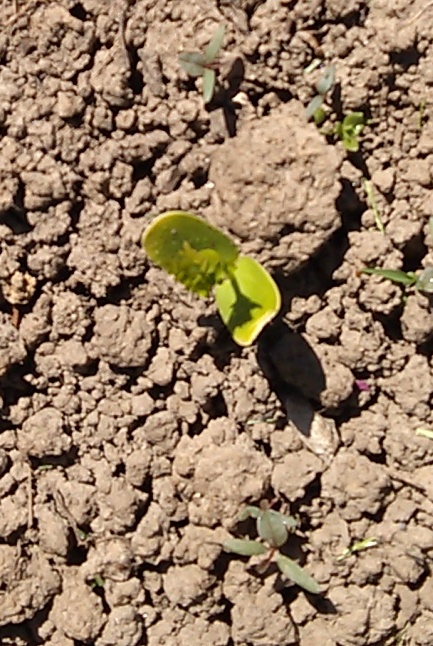
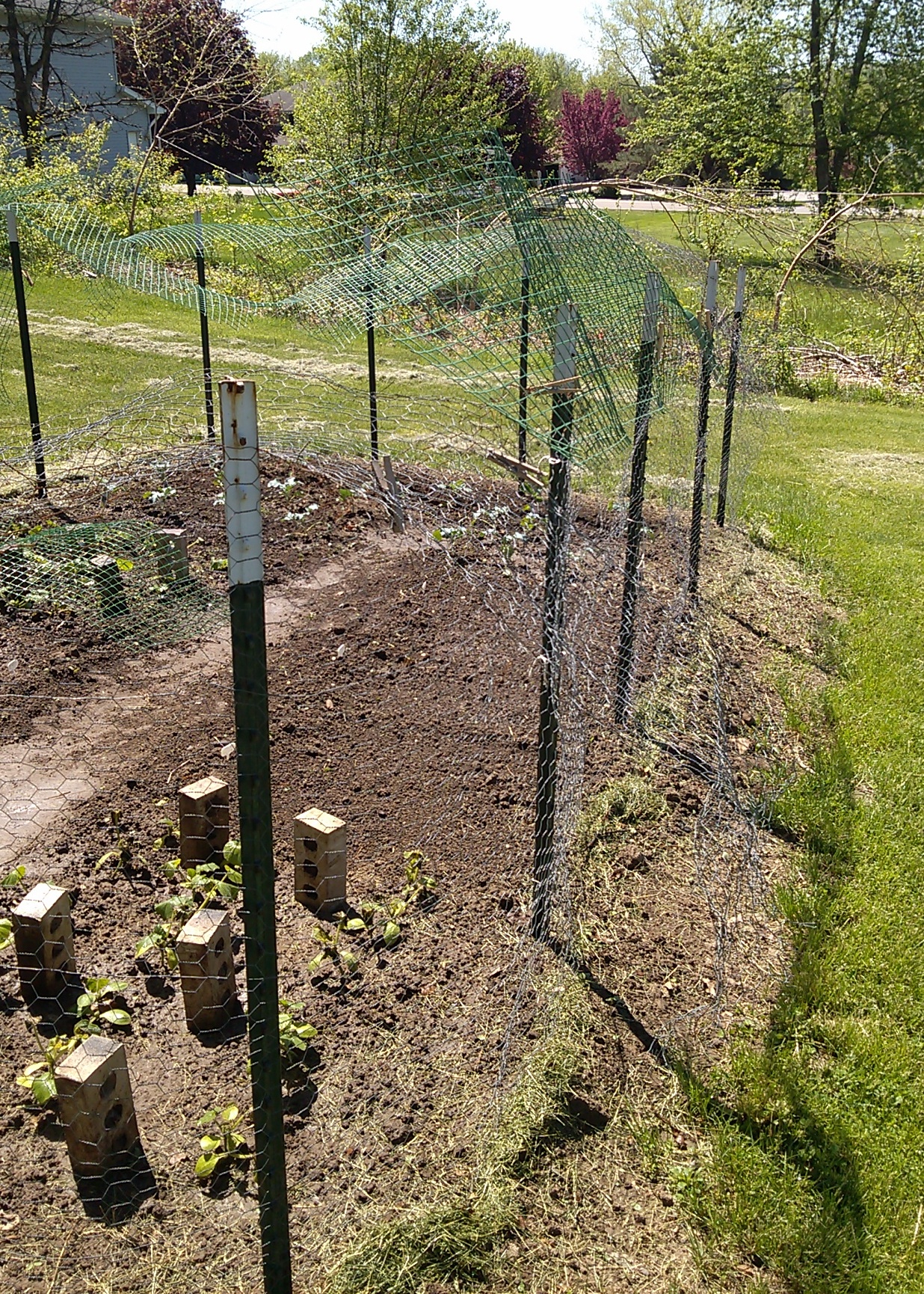
Today’s garden report is of planting green pepper and parsley seedlings, and sowing spinach, collard, kale and Swiss chard seeds. The weeding has also begun. I also re-potted some broccoli seedlings and started a tray of leafy green vegetable seeds. I continued to experiment with a high fence to discourage deer from jumping it. It looks kind of dopey, so maybe the deer will shun association with it. Here’s hoping.
I feel like calling off work and continuing to work in the garden, something I have never done in my work life. Nice as the weather is, it’s very tempting.







 Journey Home
You must be logged in to post a comment.