LAKE MACBRIDE— Pete Seeger died on Jan. 27, 2014. He influenced my life, and so many others. Others have written obituaries, including the New York Times and Singout!
I’ll remember him for his song Abiyoyo, and so many others.
LAKE MACBRIDE— Pete Seeger died on Jan. 27, 2014. He influenced my life, and so many others. Others have written obituaries, including the New York Times and Singout!
I’ll remember him for his song Abiyoyo, and so many others.

LAKE MACBRIDE— Journal and blog writing is an open book filled with blank pages and freedom. There are few rules, and readership is limited, even when posting publicly on the Internet. Sometimes a writer wants to be read, and others, not so much. There is a formative urge that drives us to understand our world through language. Not everything we write is suitable for framing, in fact, most isn’t. We are driven to write, and occasionally to be read.
In the darkness of night, by the glow of the laptop, it is quiet. Mistake not this silence and solitude for separation from society. What we sense of the world is from constant acculturation beginning before our birth. If we write well at all, it is because of engagement in a world beyond the walls we see. There are no walls, there is no other, only the one of which we are all a part.
 LAKE MACBRIDE— When I was in the military, I bought my first and only packs of cigarettes. I tried a few puffs, and never had another. Tobacco control is a complicated issue that affects much of society, and has little to do with one person’s choices about tobacco use. It is one where tobacco control advocates need to stick together.
Tobacco products are readily available to anyone who wants them today, despite restrictions on sales to minors. Tobacco is a legal, addictive substance, the use of which is widely accepted. The disease treatment costs of tobacco use have been quantified, and tobacco use presents a tangible, persistent and preventable threat to public health.
Both of my parents smoked tobacco when I was a child, and until the Iowa Smoke Free Air Act was passed in 2008, the air in many public places contained tobacco smoke. We don’t hear as much about tobacco issues these days, despite the ubiquitous presence of tobacco products in retail stores. The legal struggle between tobacco companies and tobacco control advocacy groups has continued, but has largely gone silent.
In Iowa, the coalition of tobacco control advocates includes the American Cancer Society, American Heart Association, American Stroke Association, American Lung Association, the Iowa Tobacco Prevention Alliance (ITPA) and Clean Air For Everyone Iowa Citizen’s Action Network (CAFE Iowa CAN). I was previously a board member for the latter organization. The work of this coalition is focused on securing government funds for a comprehensive tobacco control program.
In a December 2013 letter to legislators, the group wrote,
Smoking cessation efforts are essential public health initiatives that both directly and indirectly impact our entire state. Statewide programs that are funded through the Division of Tobacco Use Prevention and Control can help reduce the enormous financial toll attributed to tobacco related use, not to mention the 4,400 Iowans who die each year from usage. Annually, tobacco related disease costs Iowans nearly $3 billion, of which $301 million is billed to Medicaid. To substantially reduce this expenditure, the CDC recommends Iowa appropriate $36.7 million annually to properly implement a comprehensive tobacco control policy. However, last year the division only received $5.3 million.
Governor Branstad’s budget proposal would reduce expenditures in the tobacco control program by $75,000, with reductions targeted to printed educational materials and social media funding. It is a small percentage of the total, and depending upon who the governor appoints to fill the vacant director of the Iowa Department of Public Health position, the proposed budget should have support. It is a modest budget compared to the CDC recommendation.
What is at issue during the remainder of the 85th Iowa General Assembly is regulation of e-cigarettes, which are currently unregulated. Tobacco control advocates want e-cigarettes regulated as a tobacco product, something the U.S. Food and Drug Administration (FDA) would like as well. The tobacco industry is working toward creating an environment where e-cigarettes are socially acceptable, are widely available, and can be used everywhere. At the beginning of the legislative session, the issue was largely off the radar of legislators who were focused on the youth prevention aspect of this issue. Tobacco control advocates are expected to change that, and are trying to pass legislation they can support.
There are at least three bills pertaining to e-cigarettes written by the tobacco industry (companies like Altria and RJ Reynolds). In parentheses are the tobacco control advocates’ concerns with the legislation as written. The bills were all introduced by Democratic legislators:
HF 2034, which will define e-cigarettes as other tobacco products, regulating them like most other tobacco products. (In this bill, e-cigarettes are not rolled into the Iowa Smoke Free Air Act).
SF 2038, prohibits the sale of e-cigarettes to minors. (The bill doesn’t define e-cigarettes as other tobacco products).
SSB 3101, prohibits the sale of e-cigarettes to minors. (The bill doesn’t define e-cigarettes as other tobacco products).
Like with any legislation, the pro- and anti-tobacco control lobbyists will advocate with legislators to get favorable wording in any potential law. I have lived in Iowa long enough to know that the probable outcome of the legislative initiative may be for Iowa to wait until the FDA rules on e-cigarettes, then deal with the regulatory issues. I’m not hopeful the legislature will pass any of these three bills this session. Preventing the tobacco industry wording in them would be a victory of sorts for tobacco control advocates.

LAKE MACBRIDE— We had just made it home from dinner at a relative’s home when the wind picked up. We timed the visit so as to return before yesterday’s storm. When we got in, the windows rattled while a neighbor’s wind chimes clanged in the stiff breeze. Snow blew all night, covering our tire tracks leading to the garage. “Blizzard conditions, strong winds and life-threatening wind chill values (were) all possible in Iowa on Sunday,” according to the National Weather Service. This morning, the wind has died down, leaving temperatures below zero and the driveway to shovel.
Two new paying jobs are in the works. I am officially a newspaper correspondent. The publisher gave me a couple of story assignments on a trial basis. There is a school board meeting in the county seat tomorrow, and a city council meeting the following week. I’m to write a brief article about the events for publication in our local papers. Saturday morning I spent an hour training with one of the editors, talking about process and expectations. I’m looking forward to the challenges of a new form of writing. As she said Saturday, the pay is pocket change.
The other new job is as a shift supervisor at a warehouse club in Coralville. I will be part of a three-person management team for a company that does in-store product demonstrations. It has been a very social job, comprised of constant interaction with retail shoppers. I enjoyed that aspect of the work during my first week’s training. With the new work, about 85 percent of the year’s expenses are funded, which means the hunt for more paying work will continue.
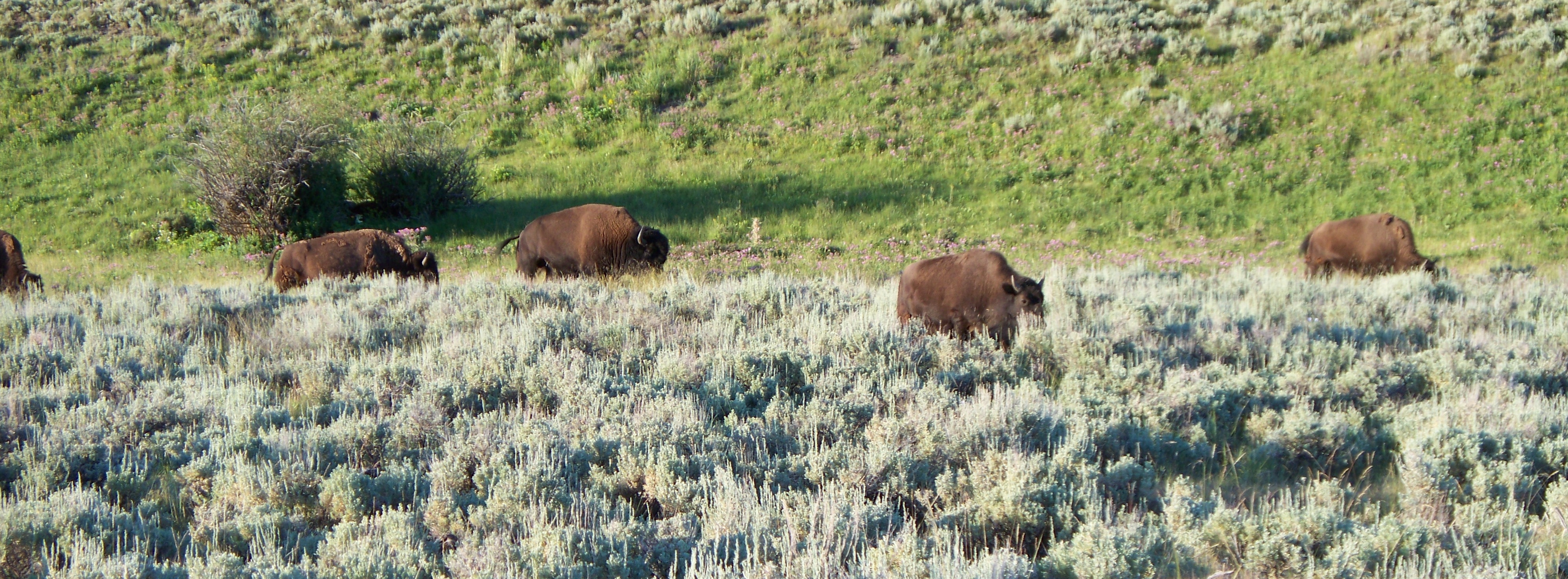
Final news of the weekend is the seed packets arrived on Saturday. By my grandmother’s oral tradition, the time to plant “Belgian lettuce” is March 2, so there is plenty of time to write a plan for the garden. Last year, the ground was still frozen on March 2, and with the crazy weather we have been having during recent years, I won’t predict. As soon as the ground is workable, I’ll plant the remainder of last year’s lettuce seeds in a tribute to Grandmother.
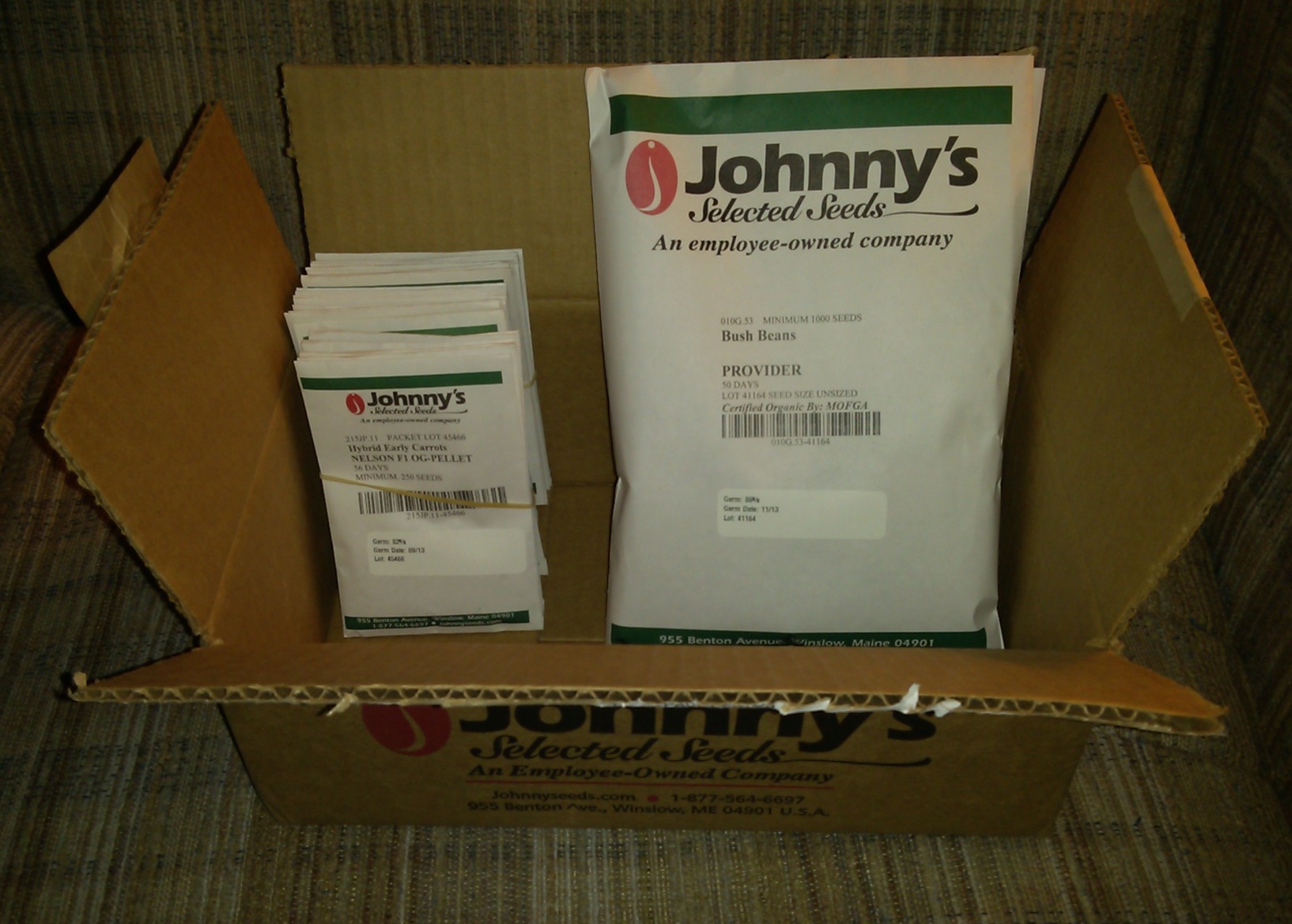
I bought celery seeds, and am looking forward to the experiment in growing this vegetable. There are also a lot of carrot seeds, seven varieties of tomatoes, six varieties of peppers, and much more. I have worked a garden of some kind every year since our wedding. This year’s garden is expected to be another layer of refinement in a process that has developed steadily over more than 30 years. I’m looking forward to setting up the table near the south-facing window to start seeds indoors again. Simply put, there is hope on Monday, after the storm.

LAKE MACBRIDE— An article in yesterday’s issue of The Telegraph began with the sentence, “Facebook will lose 80 per cent of users within three years before eventually dying out ‘like the bubonic plague,’ according to U.S. scientists.” I don’t know about that, but I posted a link to the article on my Facebook wall with the following comment:
I don’t know about FB dying out “like the bubonic plague,” but for me the newness is worn off, and there may be better platforms (electronic and otherwise) to more easily connect with people and ideas that matter. In March, I will have been on the social network for five years. I downloaded my archive and while I knew FB was collecting my data, I was stunned by how much info they have about me, especially info that doesn’t seem related to my FB activity. Why do you like it?
24 hours afterward, no one liked or commented on the post out of the 750 Facebook friends with whom I shared it. There is no evidence that anyone else even saw the post. Guess I’ll have to answer my own question.
The reason I joined Facebook was to follow our family and close friends. I registered my account on Thursday, March 20, 2008 at 6:44 p.m. CDT, according to the service. By then, our daughter had moved out of state, and along with my blogging, Facebook became a way to bridge the geographical distance. The social media became much more.
I began connecting with real world friends on Facebook. During 2010, I created a Facebook group for our 40th high school class reunion, and a number of classmates joined the group and friended me on Facebook. As time went on, I started friending people I knew from other associations, and then people in those circles that I did not know. While there is a reason for each one of my Facebook friends, some I know well, some I have gotten to know, and some I don’t know except for the point of contact that brought us together. As I mentioned I am up to 750 friends as of this writing.
In general, I log in and update on Facebook about ten times a day, depending upon my schedule. I know this because of the detailed statistics Facebook keeps on my activity. Mostly, I like to see what’s circulating in my news feed. Most of it is trash, but some of it is interesting. I like what people I know post the best, and family photos are particularly engaging. It isn’t that much time, but there is something built into Facebook that speaks to our inner voice, “it’s time to do something more constructive with your time.”
With my fifth anniversary as a Facebooker coming up, what will this milestone represent? Not much. I expect I’ll keep the service, and cut back on some of my inactive friends. In the end, it’s primary uses remain: to keep up with family and personal friends, and to follow about half a dozen clusters of people with whom I have associations outside Facebook: The Climate Reality Project, people who live near me, my Veterans for Peace chapter, the peace and justice movement, and some others. It’s not my life. One could argue it isn’t even a life viewing the blue-toned screen.
In the end, some form of Facebook is expected to be around despite the prediction of it’s arc, because while it goes viral from time to time, a plague it isn’t.

LAKE MACBRIDE— Almost every creative person could use more money. This has been true, not only for the vast majority of writers I have known, but for artists, musicians, potters, actors, dancers, painters, singers, theater technicians, and others who pursue creative endeavor. Very few people make a living in creative endeavor without working at something else for money that pays basic living expenses. It is tough to blend a personal economy with being creative without compromise. It is impossible to keep the two in separate isolation chambers, nor would we want to.
During my senior year at the university, a group of creative people shared expenses in an old house in Iowa City. We each had our own room, but shared the common space, holding periodic meetings when an issue arose. Residents came and went, poets, artists, musicians, a travel guide, a tropical fish breeder, and a mechanic. There was always something going on, most of it interesting, and some of it annoying. It was the creative life.
One day a poet arrived to set up shop. She found a job in town, and wrote every morning in the entryway. As an early riser, I encountered her often, and tried not to disturb the work in progress as I walked to the kitchen to make breakfast and get on with my day. After a while, and after giving a few readings in town, she left for California with another poet who was a frequent guest. She adjusted to a sparse life, focused on experience and her writing. Our shared moments seemed to be a way station on her longer journey. She swiped the cooking pans my grandmother had given me when she left, evidence she could have used more money.
That living arrangement and my undergraduate years were a way station for me as well. Early on, I was an admirer of people who worked a career and wrote, notably the pediatrician/poet William Carlos Williams. I thought I could do something similar. It takes a certain kind of career to avoid disrupting one’s creative outlook and I found my time in transportation and logistics wasn’t it. I’m thankful for the ability to earn a living, and led a full life. For 25 years, creativity wasn’t as much a part of my life as I would have liked. It took leaving the security of that work environment to enable writing. Now there is new hope.
Most days I get a chance to write here or off line. I continue to need monetary income to pay monthly bills, although I am no longer in search of a career, having left the one I had. That’s where gardening comes in.
The less than $200 in seeds and supplies will multiply tenfold in value during the growing season: home grown food reduces the need for money. I have a couple of paying jobs, and need one or two more to make ends meet. That’s life in the personal era of creativity. The good news is the garden seeds have been shipped.
I hopefully await arrival of the germinal package, and the chance to forget about money for a while and work directly with Earth’s bounty. Money may always be tight, but nature can help us survive if we are paying attention— and invest in the work.

SOLON— If not careful, I will get sucked into partisan politics again. It’s physics. The general lack of interest in partisan politics, combined with party work needing to be done, creates a vacuum that sucks all willing volunteers into the chambers of events.
There is the Democratic county convention (March 8), the district convention (April 26) and the state convention (June 21), to organize and attend. In our precinct, there were seven caucus goers, and we elected one of two central committee members. We all know how much work is involved in being on the central committee, and for most of us, we have been there and done that, resulting in a position remained unfilled. I agreed to be on the committee on committees, mainly interested in the work of preparing for the county convention. All other committee slots went unfilled. Par for the course among experienced caucus goers in our rural part of the county.
A big part of the work at the caucus is signing the nominating petitions. There were more than 20 of them from federal, state-wide and local candidates. Bruce Braley is running to replace U.S. Senator Tom Harkin, Dave Loebsack is running for re-election to a fifth term in the U.S. Congress without a primary opponent, Jack Hatch was the only Democratic candidate for governor with nominating petitions, and it seemed that all of the state-wide offices had candidates. At the local level, county attorney Janet Lyness had a nominating petition for re-election, and four supervisor candidates had thrown their hats into the ring: Mike Carberry, Lisa Green-Douglas, Gerry Kuhl and incumbent Janelle Rettig.
David Johnson of West Branch, who is running for state representative in House District 73, spoke to the caucus cluster of five precincts. I spoke on behalf of supervisor candidate Mike Carberry. We were the only two speakers for candidates.
This year there were only three resolutions, so the most painful part of the caucuses went quickly. I made a motion to accept all resolutions. It was seconded, but during the discussion someone asked that they all be read. What was on our minds was support for the locked out CWA workers at South Slope Cooperative Communications in North Liberty, setting a minimum Social Security benefit of $1,000 per month, and bringing electronic cigarettes under the same regulatory umbrella as tobacco products. What little discussion there was was useful and brief. My motion passed.
Because of the caucuses, the Iowa legislature was not in session. I ran into both my state senator and state representative by chance in the district before arriving at the caucus. Naturally I covered an issue with each of them. Dump trucking more than one issue during a chance meeting diminishes chances of anything being heard, so I picked carefully. I had an email response from my state representative before I went to bed. They are both people committed to making Iowa a better place to live, and I enjoy working with them, even though I don’t always agree with them.
When I arrived home, a buddy called me and said he had been elected to the Republican party’s county central committee. His resolution to repeal the Patriot Act was accepted without discussion. He indicated the dynamic was the governor’s supporters were trying to limit the influence of the Ron Paul wing of the party, presumably to get out of the pickle they found themselves in during the 2012 cycle, and to prevent a challenge to lieutenant governor Kim Reynolds at their state convention. He offered to collaborate on shaking up both parties’ establishment, and I made a note.
After our conversation I made a post on twitter about the second district Republican congressional candidates, and eventually identified there may be three Republican primary candidates for the seat, state representative Mark Lofgren, third time candidate Mariannette Miller-Meeks, and Some Dude Matthew Waldren.
What I failed to mention is among the mostly grey-haired caucus goers are a lot of long time friends. Getting a chance to socialize with them was the best part of the evening.

LAKE MACBRIDE— Unlike many in my cohort of grade school classmates, I stay in touch with my elected officials and have written them on important issues. Dave Loebsack is my U.S. Congressman, I like him, and it’s no secret. Loebsack receives his share of criticism, but I have stuck by him and will for three simple reasons: who he is not, who he is, and who he could be.
Dave Loebsack is not a Republican. His predecessor, Jim Leach was. I had a long constituent relationship with Rep. Leach. He was elected while I was in the military, and my first letter to him in 1980 was about disposal of radioactive nuclear waste during the nuclear freeze movement. Our views met on a lot of issues over the years. Two things turned me against Leach: his participation in the Kenneth Starr investigations during the Clinton administration, and his authorship of the Gramm-Leach-Bliley Act that repealed part of the Glass Steagall Act. Leach’s role as chairman of the House Banking Committee during Whitewater was the turning point, with repeal of Glass Steagall being the topper.
According to Bill Clinton, “in the House Banking Committee, Chairman Jim Leach… trumpeted every bogus charge against Hillary and me, alleging that we had made, not lost, money on Whitewater, had used Madison Guaranty funds for personal and political expenses, and had engineered David Hale’s SBA fraud. He promised ‘blockbuster’ revelations, but they never materialized.”
I thought it was a ridiculous waste of time that Leach participated in this political witch hunt, and told him so in a letter. By the time I got active in politics again, I felt Leach had to go, and thankfully wasn’t the only one.
Who is Dave Loebsack? His biography is readily available, but from the beginning of my relationship with him, he has been concerned, humble, appreciative and direct in his approach to me and to the political world. This passage from a March 25, 2005 email from Loebsack in response to my questions about raising money for the campaign and gaining support of the political establishment depicts what I mean:
“At the moment, I am quite honestly not sure that I can raise tons of money. However, I think my extensive contacts in the area, the state, and beyond give me a much better chance to do so than many past candidates. Therefore, I am trying even now to raise funds in this ‘exploratory’ stage. And I am not afraid to ask for help. Indeed, you may write me a check (to Loebsack Exploratory Committee) and I will deposit it in an account specifically set up for ‘testing the waters.’
I am sure I have not fully eased your mind on these matters, Paul, but I hope this is a good start.”
I don’t receive personal emails from Loebsack anymore, and I’m okay with that because I see him several times a year in a variety of settings. I have a type of accessibility to my congressman that is part and parcel of why we get involved in politics. As one out of 762,000 constituents, that is pretty good.
The third reason I like Dave Loebsack is the most important, what he could be. I don’t know how he got his initial committee assignments, but as far as I’m concerned, his membership on Armed Services and Education and the Workforce made the effort to elect him worth it.
Over the years, I haven’t agreed with all of Loebsack’s votes, especially on Armed Services. At the same time, ordinary citizens like me understand that we do not elect drones to the U.S. Congress, nor do we want to. It is precisely his outlook and process in the congress, combined with his committee assignments, that make him a strong legislator, one who will hopefully serve for many more years. As time goes by, Dave Loebsack will gain seniority on two committees that are critical to the future direction of our country. Committees whose work is important to the lives of everyday citizens where I live.
As we enter the 2014 election cycle, it’s time to stand up and get to work. I know what I’ll be doing— working to re-elect Dave Loebsack to the U.S. Congress.

SUTLIFF— Baxa’s Sutliff Store and Tavern in rural Johnson County, Iowa is a place to hang out after outdoor activities. It is tucked away in the sparsely traveled recesses of the Cedar River Valley, next to a restored Parker truss bridge that is on the National Register of Historic Places. It is accessible by automobile, although a main attraction is as a stopoff on a snowmobile, motorcycle, bicycle or hiking trip around the area. The tavern is frequented by hunters, and trophies and pelts are mounted on the walls. “There really is no town called Sutliff anymore but there still is a great small town bar. When you come inside the bar you will find a ceiling that has ‘who knows’ how many dollar bills with names and messages written on them,” according to a restaurant brochure/menu.

Baxa’s Tavern is part of a destination attraction that includes the historic bridge and miles of rural, less traveled roads. The food is typical bar food, or “pub grub” as some locals affectionately call it. There is a full page of appetizers on the menu, including familiar items like chicken wings, mozzarella sticks, onion rings and French fries. There are also local specialties of gizzards, fried green beans, fried pickles and corn nuggets— breaded and deep fried just about anything. Prices for appetizers range from $2.25 for fried potatoes to $5 for 12 chicken wings.
There is a selection of sandwiches, featuring the signature Baxa Burger or the Sutliff Philly Steak. Prices ranged from $2.25 for grilled cheese up to $5.50 for the Baxa Burger. “Everything includes ketchup, mustard, pickle and onion,” according to the menu, reflective of the basic bar food fare. There is a limited selection of salads, including potato salad, macaroni salad, coleslaw, cottage cheese and a lettuce salad. I asked some patrons for their review, and every comment about the food was positive.

Beverages include bottled and canned domestic beer and soda, along with a couple of wine selections. Beverages were served in their bottle or can, providing the ambiance of hanging out at a friend or neighbor’s house during the 1960s.
For a while, time can stand still at Baxa’s Sutliff Store and Tavern. While the food and beverages are industrial food service specials, the venue is very popular and worth a try if you are in the area seeking traditional pub grub. Here is some basic info.
Baxa’s Sutliff Store and Tavern
5546 130th Street NE
Lisbon, Iowa 52243
(319) 624-2204
Bar hours (Closed Monday)
Sunday 10 a.m. until 11 p.m.
Tuesday – Thursday 10 a.m. until 10 p.m.
Friday and Saturday 10 a.m. until ?
Grill hours
Sunday – Thursday 11 a.m. until 9 p.m.
Friday and Saturday 11 a.m. until 10 p.m.

SOLON— An inch of snow had accumulated while I was inside working on next week’s newspaper. When one is the proof reader for a small weekly paper, he gets a preview of what’s happening. There is some action, but not much.
The second session of the 85th Iowa General Assembly began last week, as evidenced by the multitude of newsletters from our state representatives and senators. Our circulation spans two senate districts, so there were a total of four in my folder. As a recovering political junkie, I had already read the four at home, and then some. There was little news, except to say it’s open season in the Iowa legislature. My state representative was holding two listening posts today in Bennett and Lowden. Had the weather been better, I would have driven over.
What was in the news was that J.C. Penney is closing 33 stores and laying off 2,000 employees. On Thursday I accepted a part time job requiring white shirts, and I didn’t have any decent ones. I went to Penney’s yesterday morning to buy them. (Note to self: throw the rags in the closet away, as they are not shirts any more).
Upon arrival, I was one of a small number of customers in the store. A gent greeted me close to the door, offering his assistance. My shirt is an oxford-style, buttoned down collar with long sleeves. The gent attempted to compliment me by suggesting a size smaller than I required, but the photo of the tag from my old shirt clarified the matter. He helped me find what was wanted in short order.
I am baffled by the pricing scheme at large box stores. The tag on the shirt said $30. There was no other price posted. The gent told the cashier to make sure I received the 25 percent unadvertised discount. When she rang it up, the computer/cash register gave me a 50 percent discount. While discussing payment terms, she asked if I had a J.C. Penney credit card. I explained that I do, but prefer to keep all my charges on a single card, so I would use my MasterCard. Another discount. My final cost was $12.75 plus tax per shirt or 42.5 percent of the listed price.
Keep in mind there was no visible price advertising in the store and when I mentioned the discrepancy to the cashier she said the amount was correct. Price was dependent upon the cashier’s entries, the bar code and the computer database. The personal shopping experience was compelling because the price seemed to get lower every step taken toward payment. How do they make money that way? They’ve taken logic out of the process, and one supposes they have their reasons.
I pointed out to the cashier that our store wasn’t on the list to close. She said they were rated number one in the U.S. for sales by size. She asked if I had ever been to the Muscatine store scheduled to close. She had been, and wasn’t surprised because they had so little merchandise in it. We had a nice conversation.
The whole shopping experience was engaging on many levels, but I don’t see how this store could be making any money with so few customers and the vagaries of pricing. If they stay open, I’ll be back if I need additional shirts.
When I got home from the mall, I ordered garden seeds— 26 varieties costing $122.75 including shipping. That plus herb seedlings to be bought at one of the farms and I should be ready for planting. As soon as the snow lets up, I’ll be ready to get outside and prepare the soil.
For now there is snow, and I’m okay with that.

 Journey Home
You must be logged in to post a comment.