Categories
Social Commentary

Navigating Change in Health Insurance — Part 4

Kathleen Sebelius in Cedar Rapids (2008)
Kathleen Sebelius (2008)

LAKE MACBRIDE— The folks at the insurance exchange caught me in the barn yard, and we had a conversation about the challenges of not knowing what my 2014 income will be. The operator said, “we didn’t anticipate that people wouldn’t know how much they would earn in 2014.” She said they were working on the software to enable us to revise our application and someone would call me back when it was fixed. It has been a couple of weeks since that conversation, so we are in a holding pattern.

The impact of the Affordable Care Act (ACA) on most people I know is nil, mostly because they already have a health insurance policy that complies with the ACA. The requirement to get health insurance is vaguely understood, and there have been zero times someone has talked about the financial penalties for not having insurance. There has been no impetus for people to sign up for a policy any different from before the open enrollment period began Oct. 1.

There is a fee for not having health insurance, and it ranges from $95 or one percent of income up to the cost of buying a specific plan (whichever is higher) in 2014, up to $695 or 2.5 percent of income in 2016. People who pay a fee will also be required to pay the entire cost of their health care. What isn’t clear is how emergency rooms will deal with the group of patients who show up at their doors for treatment without insurance— something else people are not talking about.

What we know is the Dec. 15 deadline to change policies for Jan. 1 will be here soon, and action will be required. The easy decision would be to keep our current health insurance policy. That postpones things for a year, providing time for the bugs to work out of the system. It’s our default position.

When the exchange calls me back, I’ll re-do our application, which will finalize eligibility and costs, and enable us to make a decision to change or hold our policy for another year. Until then, we watch, learn and wait.

Click on the links to read Part 1, Part 2 and Part 3.

Categories
Writing

Into the City

Book Shelf
Book Shelf

LAKE MACBRIDE— Having never been a fan of the UNESCO City of Literature designation for Iowa City, I can see why people like it. It gives the social mavens something to preen over. In telling the story of Iowa’s development into a cultural oasis among fields of row crops, mine is somewhat different than what I read and hear about from the source of brightly lit night skies to the south. The main benefit of what the late Darrell Gray described as the U.S.S. Prairie Schooner has been an increased ability to hear writers, authors and lecturers invited by the local literati to speak or read from their work. Last night it was Margaret Atwood.

I don’t know Atwood or her work at all, so it was easy to listen to her talk without prejudice.  Somewhere in a box, I have a copy of “The Handmaid’s Tale,” which someone posted on social media is “canonical.” First to admit my deficiencies, I looked up canonical and it means, “included in the list of sacred books officially accepted as genuine.” Genuine is good, and when I find my copy, I’ll give it a try.

What most engaged me was Atwood’s question and answer period. Between you, me and the Internet, I didn’t care much for some of the questions, especially if they revealed too much about the questioner. One teacher went on about a group of women students and their class. She had one of Atwood’s works on the syllabus, but it appeared she wasn’t very knowledgeable about it. An awkward moment that soon passed. While I’m complaining, in the row in front of me was a couple behaving like they were in Juliet’s boudoir, and one or both of them needed a shower to wash away an offensive body odor that reminded me of stints in the oil patch of West Texas. Get a room people and take a shower before coming out in public. My neighbor to the right made a comment about reading the Guardian on my handheld device while waiting for the event to start. Nonetheless, we live life’s diversity, and these things were not a real distraction, even if recalled here.

I perked up at the question about the e-book – paper book divide. Atwood said the market share of e-books had declined from 30 to 20 percent, and that e-readers were better suited for short works. That resonates. She also mentioned her “Three Reasons to Keep Paper Books,” which can be found here, and is worth a read.

Margaret Atwood was smart, witty and attentive to the audience. I was happy to immerse myself in the weird, smelly, nosy and boisterous literary scene in the city just to hear her speak.

Categories
Environment

Monday Morning

We Stand With YouLAKE MACBRIDE— Spending the weekend with 25 or so environmental organizers and activists kept me busy, and engaged. Meeting new people and matching names with faces is important to any social justice effort, and the weekend did not disappoint in that regard.

Erin Pratt and Patty O’Keefe from Minnesota 350, and Erika Thorne of Training for Change arrived in Iowa Friday night, and led the workshop Saturday and Sunday. The focus of the workshop included planning strategic actions and campaigns, leadership skills, and tools for building a local team. The logistics were well organized, but the stars of the show were the Iowans who participated for part or all of the workshop. Old friendships were renewed, and new ones initiated. It was all good.

That said, it’s Monday, and the recurring, and ever present question, what’s next, needs answering… again.

Is there anyone on the planet that believes something positive will come from COP 19, the United Nations Framework Convention on Climate Change conference of the parties in Warsaw? The web page on decisions coming from the conference hopefully says, “decisions will be available shortly.” I doubt it.

In order for COP 19 to take substantial steps to mitigate the causes of global warming after Warsaw, the United States and other security council members have to lead. Ours is a country where a significant number of people are pro-life, anti-UN, anti-taxes, and tuned out to most of what the rest of the world does. Because of the influence of this small, but powerful minority view, the chances of the U.S. government leading this year are between slim and none.

A lot of the conversations at our workshop were around political influence to address climate change. Political change is important, but do we have time to implement a carbon tax and dividend, or to amend the U.S. Constitution to overturn Citizens United? Both seem to be good intentioned, but hopeless pursuits. Investing our time and resources in such endeavors occupies bandwidth that could be used for other needed activities, the most important of which is organizing and educating our communities about the existential threat to our way of life represented by greenhouse gas emissions. For me, some part of today will be working toward that end.

Categories
Environment

Closure on the Garden Season

Iowa Row Crops
Iowa Row Crops

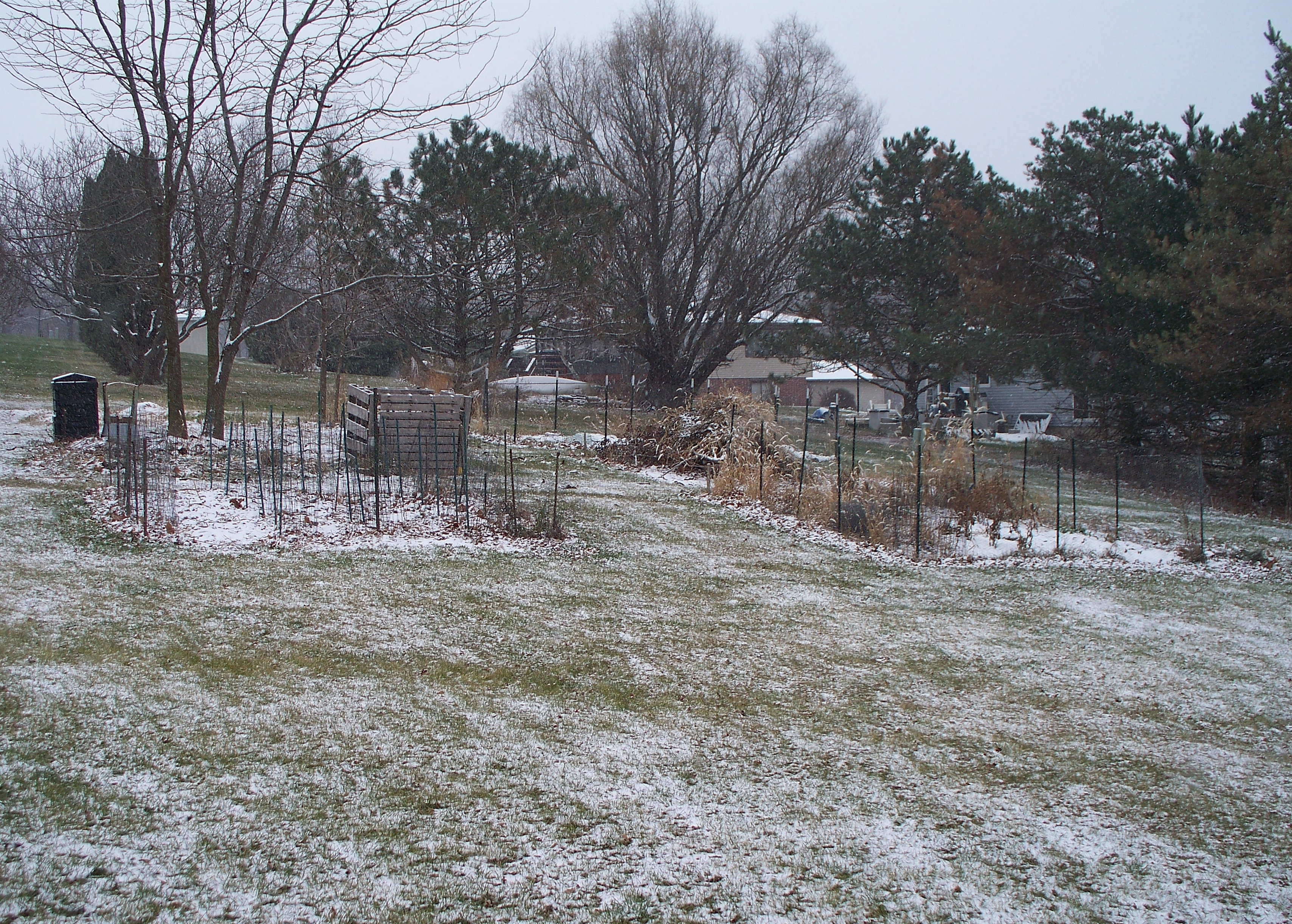
LAKE MACBRIDE— Taking down the fences and mowing the garden plots brought a sense of closure to this year’s growing season. It’s over, and it was time. The remaining fall task is to plant garlic, and while it is late for that calendar-wise, if the warmth continues, the roots may get a couple of week’s growth before frigid temperatures set in and produce normally. With the variability in our weather, all bets are off about predictability. Why not plant garlic? The worst that could happen is it fails to grow, and we have plenty for winter eating.

Yesterday, the U.S. Environmental Protection Agency (EPA) announced a proposal to reduce the renewable fuel standard for ethanol. This is a first, and within hours, Iowa governor Branstad reacted negatively toward the idea (statement here). The New York Times posted a valuable article on the issue here. The EPA’s proposed 2014 renewable fuel standard program is here. The Wikipedia article on ethanol is here. While widely expected, the EPA announcement kicks off what is expected to be resounding resistance here in corn country.

The world has changed since ethanol was first blended with gasoline, and it is appropriate to re-evaluate the percentage mixed with motor fuels. Following is my take on the matter from a Big Grove perspective.

It is hard to argue with governor Branstad’s statement, “the EPA has turned its back on rural America, and our economy and family farms will suffer as a result. Corn prices have already dropped to the cost of production, and this will likely further squeeze corn producers and negatively impact income growth in rural America. We have more than 50 ethanol and biodiesel plants in Iowa, and these EPA reductions would negatively impact thousands of Iowa jobs.” All of this is true, but what the governor didn’t say is that if anything, Iowa farmers are resilient. Re-directing growing patterns to deal with the over-abundance of corn is possible and should be done.

People seem to forget that the gasoline gallon equivalency of ethanol is 1.5:1. This means it takes one and a half gallons of ethanol to create the energy of one gallon of gasoline. The reason ethanol blended motor fuel costs less at the gasoline pump has little to do with the energy it produces, and everything to do with the current structure of federal government subsidies. Ethanol is not cheap by this standard, or by any reckoning.

This week, U.S. crude oil production exceeded imports for the first time in more than 20 years (USA Today story here). To the extent ethanol use increased in response to domestic oil production declines, that trend appears to have been reversed, precipitating a need to re-evaluate the renewable fuel standards. The bad news is the increase in domestic crude production is due to the environmentally questionable process of hydraulic fracturing. In any case, as a society, we should reduce the amount of fuel we burn to supply energy, so this is a red herring argument. We should divest ourselves of fossil fuels.

Ethanol has provided a market for corn growers, comprising as much as 40 percent of sales. Some argue corn for ethanol has less market share when the value of distillers grain and other by products are considered, but in any case, a lot of the corn crop goes to ethanol production. This market is at the core of governor Branstad’s argument against revising the fuel standards. The thing is, either Republicans want society to suck at the pap of big government, or they don’t. This is the core hypocrisy of a group that seeks favorable treatment on only those issues that effect their segment of society. The EPA rules, once finalized may impact corn markets, and in the end, the markets will set an appropriate price. Farmers, like everyone else, will have to deal with it.

Finally, there is a criticism that the corn crop should be going to food, not fuels. In a self-serving way, industrial farmers tout their ability to feed the world. Freeing up some of the corn crop to serve a growing global population should be a suitable market, right? Have you ever bitten into a kernel of No. 2 field corn? Without processing it’s hardly food for humans. The overall trend for food production will be to produce it locally and sustainably, something that sending vessels full of Iowa grain to Asia and Africa does not accomplish. While a short term market for grain exports may exist, in the end, large scale buyers, will produce the same crops much closer to home.

Anyone who has studied the matter can’t believe corn ethanol production is good for the environment. The EPA is on the right track, and the public comment period enables people who are impacted by the proposed rules to have their say. Not sure what ore we want from our democracy.

Categories
Kitchen Garden

Restless Night of Pickles

Daikon Radish Pickles

LAKE MACBRIDE— Reaching for the two empty quart Mason jars in the cupboard, I filled them, and another pint— with daikon radish pickles. Rather, there will be pickles once the mixture of sliced daikon, vinegar, filtered water, salt, agave nectar, mustard seed, peppercorns, garlic cloves, jalapeno and Serrano peppers has been in the refrigerator a few days. The kitchen work was finished before 4 a.m.

There is more to the story of a sleepless night. Perhaps there was solid sleep, but after midnight, it would not return. As the screen from the mobile phone illuminated the room, I found a recipe for pickles in my twitter feed. The ingredients were in the refrigerator and pantry. The allure was too much, the daikon radishes too many. I turned on the light and started to get busy.

The day was ruined after that. Not enough sleep. A couple of hours at a farm planting garlic, then to town to get a gallon of milk and some limes. An afternoon of dozing in and out of activity. No dreaming. That’s the worst of it.

For if dreams kept me awake that would be good. Instead, it was a restless night of pickles, such restlessness leading to a day of discontent, and dreamless wonder— wondering about what’s next. Was it concerns of advancing age, with a spicy pickle to distract from quotidian blandness? No, it was the idea of pickles, as they were just made, not ready to eat. Not what I’d hoped for when I was young, this imaginary pickle making life.

As the sun moves toward the horizon, the day is coming back to life. The pickle disruption is over, with ingredients melding in the refrigerator. Fully awake, filled with wonder, I’m ready to take on a project. My restless pickle-making finished, at least for now.

Categories
Writing

Autobiography, Blogging and Canning

Apple Sauce 2013
Apple Sauce 2013

LAKE MACBRIDE— The afternoon was spent making applesauce with the last of the fallen apples from the Sept. 19 storm. They stored well, and six quart Mason jars and a pint are processing in the water bath canner. It’s local food more so than most: they fell about 30 feet from the kitchen window during the storm.

After experimenting with applesauce techniques, I cored, but did not peel the apples, cut each into about 16 pieces, steamed them in a bit or water until they released their own juice and begin to fall apart, and processed them through a food mill. I also made chunky-style apple sauce, using a potato masher before spooning it into a jar. No spices or sweeteners here. They can be added when serving, but this applesauce really needs no additives.

Is the story of my applesauce afternoon worth writing or reading? I don’t know about the latter, but the process of writing helps me understand life on the plains in a way that takes the rough, dull and lonely parts out, rendering it into a sweet pulp to serve to friends and family, and packaged to give as a gift. Seriously. Who wants to hear about the rough, dull and lonely parts of life anyway?

There is the actuality of the time spent and the image above. If that’s all there were in this post, an autobiography of a moment in time, it would not be worth reading. The hope is that by imagining a life, and writing it down, some value can be added, and if we are lucky, an epiphany reached.

According to WordPress, there are more than 72 million blogs on their site. Add in the other sites and there is a lot to read, many thoughtful, some hate-filled, and more than a person could ever consider. For the blogger, it is a way to write, an outlet for expression in a world where only a very small number of writers get read, and even less get paid. We need outlets.

There is a first draft quality to a blog post. A flawed freshness that can be like the life from which it is expressed. Sometimes it is sticky, syrupy sweet or messy, and that goes with the territory. We’re not the Scientific American or Harvard Business Review in the blogosphere. What we hope to be is an expression of the imagination. Taking the desultory moments of a modern life as the ingredients of something better, something universal. Bloggers mostly fail to reach the sublime, but once in a while, things come together.

So there it is, the ABCs of writing in autobiography, blogging and canning. Write about what one knows, do actually write on some platform, and think in terms of a finite product that is useful to someone, to nourish a body, but more importantly, one’s intellect and spirit. There are benefits, not the least of which can be jars of applesauce.

Categories
Environment

Climate Disruption and Farming

Following are prepared remarks for my talk at the Iowa United Nations Association event, “Speaking of… The Environment!” held at Prairie Lights Bookstore in Iowa City, Iowa on Tuesday, Nov. 12.

Thank you Iowa United Nations Association for organizing this event, and to Prairie Lights Bookstore for hosting us tonight.

Climate change is real. It’s happening now. Just ask a farmer. There are few people as close to the intersection between the natural world and human activities as they are. Any conversation I have had with a farmer, included discussion of long term changes in our climate, and how they dealt with them.

Recently, I had a conversation with farmers about this year’s crazy weather: a wet spring that delayed planting, followed by drought conditions in July through September. It was bad, but the worse news was that we can expect more of the same during the next several years.

What does this mean? For one thing, this year’s soybean crop is in and reports from the field are that pods formed on the plants, but didn’t fill out with beans because of the lack of rain. What could have been a great year for soybeans turned into an average one because of drought conditions related to our changing climate.

According to a group of Iowa climate scientists and academicians, the consequences of climate change on farmers are easy to understand. “As Iowa farmers continue to adjust to more intense rain events, they must also manage the negative effects of hot and dry weather. The increase in hot nights that accompanies hot, dry periods reduces dairy and egg production, weight gain of meat animals, and conception rates in breeding stock. Warmer winters and earlier springs allow disease-causing agents and parasites to proliferate, and these then require greater use of agricultural pesticides.” In addition, changes in our hydrological cycle cause increased soil and water runoff, and complications with manure applications. There is also pressure on crop yields.

Everything I mentioned puts pressure on our food system. We can expect more of the same going forward.

There is overwhelming evidence that climate change is anthropogenic, or caused by humans, yet most farmers don’t accept it, even as they deal with its effects.

Scientists don’t know where the tipping point lies, but the effects of climate change on farm operations are clear, and getting worse. Yet, even as we adapt, and farmers do adapt, we can do something about the causes of global warming and climate change without changing our way of life or hurting our economy.

We could start by dealing with the fact that globally, each day we dump 90 million tons of CO2 pollution into the atmosphere as if it were an open sewer. That has to change.

I’m not alone when I say we can do something about the causes of global warming and climate change to protect our food system before it’s too late. We should. Thank you.

Categories
Writing

Technology in the Present

GUI Search
GUI Search

LAKE MACBRIDE— To support a couple of significant projects, more computing capacity is needed in our home on the lake. It seems unlikely any funds will be disbursed to support the projects. Rather, old computers and equipment will be located, resurrected and deployed in a way to create a couple of new work stations and bring focus to these new intentions. What does that mean?

Like many who have been on-line since the mid-1990s, we bought, sold, donated, gave away and recycled a significant number of computers. I lost count, but over the years, at least 20, with a number of them still in the house. At first, the trouble was finding a way to dispose of them without tossing them in the landfill. Some were given to a local political activist for potential use in campaigns. Too, for a while we donated old equipment to Goodwill, and now, they have a local specialty store called Reboot that will take old computer hardware and recycle it. In the case of those remaining at home, ample storage space and entropy have accumulated ten CPUs or so. There are plenty of working processors for new projects.

What are the projects? Two are most important. First, there is the persistent need of consultants to focus on business development. Determining how we will pay the bills and seek fulfillment at the same time requires a minimum number of distractions. For this, I chose an old laptop the battery charging function of which ceased to work and is too expensive to repair. It works fine while plugged into an electrical socket. Whatever work is not backed up may be at risk, but that can be addressed with good backup habits.

Secondly is a big writing project that requires a focus on words on a screen. For this project, no Internet access is needed or wanted. Regardless of the information available on the web, the craft of writing is done a word or phrase at a time, and distractions of any kind are unwelcome. For this work station, I picked a CPU returned from a family member with a monitor returned from another. The main challenge will be getting the same version of Microsoft Word installed on all three CPUs without feeling guilty about using the same license on more computers than the software package allows. There is also the issue of finding the disk, which eludes me at present and will eventually show up (I hope).

Operating systems? The desktop CPU has Windows XP, and the two laptops have Windows 7. XP is on the writing CPU, so that will take me into a different world when I boot up, and that may be okay. Regrettably, it has a 2002 version of Microsoft Word on it, and that’s too different from the 2007 version on the other two.

All of this is minor accommodation to a person who continues to recall the MS-DOS command prompts, and using computers before the introduction of the graphical user interface. One suspects people don’t even recall what is a GUI, but they have gotten much better.

Just about done with the setup, so now, let the working begin, he said hopefully.

Categories
Sustainability

Veterans Day 2013

Maternal Grandfather Marker

LAKE MACBRIDE— From Nov. 11, 1919 until June 1, 1954, we commemorated Armistice Day with a moment of silence to recognize the 20 million who died during World War I. A second moment of silence was dedicated to those left behind. Beginning in 1954, All Veterans Day replaced Armistice Day as an official U.S. holiday to honor all veterans, and has become a time to pay tribute to our perpetual wars.

I appreciate the thank yous for my service, however, the better effort would be to work to reduce the number of military veterans being produced through adjusted national policy. On days like today that is heard almost nowhere.

I’ll head to town to participate in the Armistice Day observance organized by Veterans for Peace, and work toward that end. That will have to do for today.

Categories
Environment

On Typhoon Haiyan

Typhoon Haiyan 2013 Photo Credit: EUMETSAT

LAKE MACBRIDE— The news about Typhoon Haiyan is horrifying. For the moment, it is hard to determine the exact damage, but these quotes from the corporate media provide preliminary estimates.

CNN: “No building in this coastal city of 200,000 residents (Tacloban, Philippines) appears to have escaped damage from Super Typhoon Haiyan.”

USA TODAY: “As many as 10,000 people are feared dead in one city alone after Super Typhoon Haiyan— one of the most powerful storms ever recorded— slammed into the central islands of the Philippines, officials said.”

CBS NEWS: “The central Philippine city of Tacloban was in ruins Saturday, a day after being ravaged by one of the strongest typhoons on record, as horrified residents spoke of storm surges as high as trees and authorities said they were expecting a ‘very high number of fatalities.'”

REUTERS: “The death toll is expected to rise sharply from the fast-moving storm, whose circumference eclipsed the whole country and which late on Saturday was heading for Vietnam.”

LOS ANGELES TIMES: “What may be the fiercest typhoon in recorded history smashed into the Philippines early Friday morning, carrying winds that make Superstorm Sandy look like a weak relative. Even Hurricane Katrina, the modern measure of nature’s disastrous force on the United States, pales when compared to the punch and expected devastation from Typhoon Haiyan.”

Typhoon Haiyan was the second category 5 typhoon in the Pacific Ocean this year. While we consider the damage, and what it means, it’s time for a moment of prayer for the dead, and for the survivors.