The world has not tamed the nuclear beast and we should be concerned.
Later this month, the Bulletin of the Atomic Scientists (BAS), a group formed 70 years ago by some of the physicists who worked on the Manhattan Project, will decide whether to update their Doomsday Clock which says, “It is 5 minutes to midnight.®”
The clock has become a universally recognized indicator of the world’s vulnerability to catastrophe from nuclear weapons, climate change, and emerging technologies in the life sciences.
This may seem alarmist. So why should Iowans worry when most don’t think about nuclear weapons at all, yielding to the cacophony of radio, television and Internet noise?
Iowans don’t need to freak out, but they do need to be aware and concerned.
In 2009, President Obama announced pursuit of a world free of nuclear weapons in Prague. Things have gone another direction under his leadership.
“I note the United States does not support efforts to move to a nuclear weapons convention, a ban, or a fixed timetable for elimination of all nuclear weapons,” said Adam Scheinman, U.S. delegate to a Dec. 8, 2014 international conference on the humanitarian consequences of nuclear weapons in Vienna, Austria.
Jaws dropped in the room where people from around the world had gathered to hear the witness of Hibakusha, people who had survived the nuclear explosions in Hiroshima and Nagasaki. It was a tone-deaf statement.
According to the Congressional Budget Office, the administration plans to spend $355 billion over the next 10 years to modernize our nuclear arsenal, and a trillion dollars over the next 30 years. This is an absurd waste of taxpayer dollars on weapons that should never be used.
The Doomsday Clock is a reminder that we can’t afford the luxury of an incremental approach to nuclear disarmament.
The ambient temperature dropped four degrees since waking. Morning’s gray light brightened the plains as the new day arrived without fanfare.
One of the dozens of viruses and colds making the rounds has me feeling punk. That’s understating it. The arc of disease seems to be on the downside: there is energy to post a few items.
In what seemed like a fragmented, hesitantly delivered speech, Governor Branstad today reported “the condition of Iowa is strong.” It is hard to argue with the general topic areas of his initiatives for the coming legislative session: moving the economy forward, education reform, strong and healthy families, agricultural production, protecting our resources, transportation, safety and security, and open government. It was Branstad’s 20th condition of the state address, and we’ve heard much of it before.
A couple of progressive web commenters complained that Branstad used fallacious job creation numbers and made no mention of “middle class priorities” like increasing the minimum wage. There was a decided lack of interest in the speech, so few were likely listening to the commentators or the governor.
No protests in the Capitol rotunda ahead of governor’s condition of the state. Quietest I’ve seen it… #iagovpic.twitter.com/Jldx8ORq37
No one is listening. There is a lack of interest in government among a middle class that makes up most of 3.1 million Iowans. If some have their interests, written on a legislative agenda, most do not. The disinterest goes beyond what the 86th Iowa General Assembly does or does not accomplish.
The bubble in which we Americans live is real and is becoming the ridicule of the world. It is as if we took what’s best about our country and locked it up in a strongbox to protect it from those who might steal it. We venture from our borders to loot planetary resources, wage war and assert hegemony where we can. We have become exceptional in these things and our culture is the less for it.
The near term prospects for making a change are not good.
That’s not to say it is hopeless. In a world that has grown increasingly small during my lifetime, global cooperation is more important than ever. The rest of the world is coming together around a few issues—the environment, nuclear abolition, and poverty—but like in the French rallies over the weekend, the U.S. has been noticeably absent.
The current debate over Iran is a good example. Much of the world has come together to bring Iran’s nuclear program into compliance with their obligations under the Nuclear Non-proliferation Treaty to which they are a party. A deadline was set to conclude the talks, but the State Department asked for more time. Political hawks believe this is a stalling tactic on the part of the Iranians to further develop enriched uranium for nuclear warheads. The State Department and those who watch it believe negotiations are almost finished and a resolution at hand.
Rather than give the negotiations more time, the Republican majority in congress is poised to pass new sanctions against Iran.
“If we pull the trigger on new nuclear-related sanctions now,” Samantha Power, U.S. ambassador to the United Nations said, “we will go from isolating Iran to potentially isolating ourselves.”
The political hawks don’t mind, because to them, all that matters is assertion of American hegemony and sovereignty.
The late Howard Zinn points us in the right direction for action.
“History is instructive,” Zinn said in a 2005 interview.
And what it suggests to people is that even if they do little things, if they walk on the picket line, if they join a vigil, if they write a letter to their local newspaper. Anything they do, however small, becomes part of a much, much larger sort of flow of energy. And when enough people do enough things, however small they are, then change takes place.
This short piece may not be much—it is a little thing. But what ails me is not a virus contracted while living in society, or the cold weather. It is the disinterest in things that matter: a reversion to what in the Siouan language was Ioway—the sleepy ones. We must wake up and soon.
As a vegetarian household, we have never had a rotisserie chicken within our walls. In fact, if we brought home chicken of any kind, I can’t remember it. As an omnivore, my chicken eating takes place elsewhere, and even so, I recall eating exactly zero rotisserie chickens in my lifetime, although I made soup out of the carcass of one a single time in Colorado.
Rotisserie chickens are so not us.
Yet I see them everywhere. In arguably the most liberal county in Iowa—the only county that did not vote for the Branstad-Reynolds ticket last year—one would think this cultural phenomenon would have long ago surrendered to home-grown poultry, self-cooked. It persists.
I posted this on Facebook over the weekend:
I see all these people toting around rotisserie chickens and wonder what they do with them. Not just a few. A lot. Do they tear off the legs and eat them first like a poor man’s version of King Henry VIII? Do they cut them up with a knife to make another dish? Will the carcass become soup or stock? Do they extract the breast and throw the rest away? Do they eat them in the car and throw the bones out the window? I don’t know, but I do see a lot of these chickens when I’m out in society. I had thought with Ron Popeil’s device no one would ever buy a rotisserie chicken again. The answer is probably simple, but I don’t get it.
The Facebook friends who responded confirmed my beliefs about what people do with these cooked birds with surprising uniformity. A couple talked about the economics of chickenry, but that is really not at issue. Chicken is and has been a poor person’s protein, and for those leaning vegetarian, not a choice at all. Why kill the chicken that lays the eggs for ovo-lacto vegetarians?
What I wondered most, and was confirmed, was that people make soup and stock of the rotisserie remains—at least they said as much. Soup is life more than bread is the staff of life. Although the anti-gluten craze has reduced bread eaters to secretly coveting and eating their loaves, or making ersatz bread from barley and rice flours, it is fitting that bread and soup go together to make a meal. Chicken soup is tasty and satisfying to most omnivores.
So what’s my point?
Don’t you ever wonder what goes on behind external appearances? One sees the device that cooks the chicken and the warming display case. One sees people choosing and toting rotisserie chickens into the parking lot. There are testimonies about what people do with chickens, recipes and more. In the end, though, rotisserie chicken is not about chickens. It is about life.
Finding meaning in society is challenging and some find it in carrying a rotisserie chicken home. It is easy to make something of what everyone can observe. What is hard is to understand the motivation for life in society in its many manifestations. In the end the motivations and designs people have are more important than any chickeny artifacts.
Rotisserie chickens help us see into a deep well of life in society and forgo the question of the chicken or the egg. A better question is what shall we do with our lives today?
And that’s the meaning of this post about rotisserie chickens.
When the budget is tight we turn to meals from the pantry, cupboard and refrigerator. We cook.
It reduces the need to shop for anything but essentials. It enables dollars in the checking account to go to utility bills, fuel, interest and insurance. Cooking from the pantry produces great meals from forgotten times and ingredients.
From memory come preparations for roux, sauces, reductions, soups and stews that are filling and fill in the financial gap for those who live on part-time work without the regular big paycheck of a career.
Energy remains inexpensive in the U.S. kitchen, so there is no endless searching for firewood for the cook stove as there is in other countries. Just turn on the stove and there it is. Turning to food is turning to the source of our memory and being.
When I was young there was a mom and pop grocery store on the corner. Mother would send me the block and a half to pick up a forgotten ingredient for dinner. If there was a question when I arrived, they would call her for clarification. I mostly remembered, so it wasn’t a problem.
I remember the cost of 10-ounce bottles of soda pop at the store. Depending upon the brand, a six pack was either 54 or 60 cents. The idea of buying the sugary treat was present long before sodas became ubiquitous. One of the bottling works was on Washington Street, and we would watch the process through the large plate glass window on the sidewalk. I looked forward to earning enough money on my paper route to buy a whole six pack in varied types.
While in Colorado Springs helping our daughter move, I checked the pantry for dinner ingredients while she was at work. There was a lot to clear out before moving day. Some frozen chicken breasts, brown rice and vegetables made a delicious dinner for the two of us when she returned home. I used a meat thermometer to make sure the chicken was done and instructed her in how to use it. I remember the sun setting over Pike’s Peak as viewed from her front doorstep.
On Thursday, I sought ingredients for stew. I had a bag of steak tips vegetarian-style, and used organic carrots, the last of the summer potatoes, turnips and celery from the garden, and a big onion. After learning to make a roux, stews became an easy way to use up old vegetables and make several meals. I’m thinking about having some leftovers for lunch before my shift at the warehouse.
More than anything, maintaining a well-stocked pantry is a source of food security. If income slows down, we can draw the provisions down, ensuring we won’t go hungry while working toward better times.
Elvis Aaron Presley would have been 80 today. He remains a presence despite his premature death on Aug. 16, 1977. He was one of the most celebrated musicians of the 20th century, and part of my life before and after his death.
I watched Elvis films at my first sergeant’s on-base apartment in Mainz, Germany with other members of our S-1 unit. We were cognizant of Presley’s military service in nearby Friedberg. It was just out of the the valley leading to the Fulda Gap where we went on maneuvers. We could connect to the King as a real person.
Today I realize that Presley’s military service was carefully planned by his producers at RCA records, who didn’t miss a beat releasing new records while he served. Presley died during the first year I was stationed in Germany and the “Aloha from Hawaii” version of Presley wasn’t my favorite. His southern roots resonated with our family history reaching back to the hills of Appalachia. I felt he was one of us.
Besides my USPS coffee mug, I have no Elvis memorabilia in the house, nor do I seek any. There are no plans to visit Graceland, or the birthplace in Tupelo, Mississippi, or anyplace else Elvis walked the earth. From time to time, I remember his work and God willing and the creek don’t rise I might watch Blue Hawaii one more time.
We don’t pick the times in which we live, yet we control our own destiny. Elvis Presley is an example of someone who made something unique of his life. While I won’t be impersonating him, I am glad to have lived part of my life when he lived his.
The warehouse called me off this afternoon because of the weather. It created an opportunity to work my long to-do list and that’s positive, even if I’ll miss the income.
While driving home across Mehaffey Bridge Road on Sunday the front end of my automobile started vibrating at speeds above 35 miles per hour. Slowing down, I made it home safely.
The two brothers at the auto shop in town agreed to check it out Monday morning. I dropped the car off and walked the three miles home in an ambient temperature around seven degrees below zero. The walk was invigorating and needed.
They found one of the brake calipers had gotten stuck and was causing the vibration. It was a quick repair and I picked up the finished vehicle just as Monday’s snow started to fall.
I had to go to the county seat today, so I shoveled the driveway and ventured out. Between four and seven inches had fallen and the light, powdery snow made for quick removal.
After my meeting I picked up a few groceries, got a haircut, and headed home to weather the cold. The next warehouse shift is not until Friday, and as I mentioned, it’s an opportunity to get things done.
Between the warehouse, the car repair and the long walk home is another topic: consumer credit.
Because of the way we transitioned into a post-career life, we have credit. We have a line of credit against our home at a very low interest rate. We have credit cards to take the bumps out of monthly cash flow. Instead of creating immediate stress, the car repair went on the credit card and when income exceeds expenses, we’ll pay it down. These two financial tools make funding cash flow doable and to some extent, life easier.
Using credit is also a precarious thing to do.
There is the presumption of being able to pay it off, something not always possible. A lot depends upon getting the jobs and hours needed to generate income. Then there is the interest, an expense in its own right. Middle class people should get and use credit in a way that serves sustainability and nothing more. That’s what I try to do.
What else can working people do? What we always do. Keep working toward a life with a newer car, predictable income and less need for credit. However, if we get there, we will continue to take long walks on cold days.
Joni Ernst will make history two ways tomorrow when she is sworn in as Iowa’s next U.S. Senator. Both are because of her gender. She will be the first female to represent Iowa in the U.S. Congress, and the first female military veteran to become a senator in the history of the upper chamber. Here’s hoping her accomplishments during the next six years transcend gender.
“I am there to work for Iowa and to work for what I believe is the best path for the United States of America,” Ernst said in a Des Moines Register interview. “I would love for people to give me the benefit of the doubt just as I give others the benefit of the doubt.”
Ernst won the 2014 general election and there’s little reason not to give her the benefit of a doubt. If Iowa progressives were to walk away from Ernst and senior colleague Chuck Grassley, the chances of their issues being heard in Washington would be reduced from slim to none.
Let’s say the slate is clean for Ernst. What are are the expectations?
If Ernst mirrors Chuck Grassley’s constituent services operation that would be a plus. Whether one agrees with Grassley or not, his office is consistently efficient at getting back with a response. When I have visited Grassley’s office in Iowa or in Washington, staff would take an appointment and devote reasonable amounts of time to hear me out. Ernst should do no less.
One of my concerns about Ernst during the campaign was that she is a field grade military officer. Her appointment to the Senate Armed Services Committee is equally concerning. Control of the military should be in the hands of civilian political leadership rather than the cadre of military officers. Ernst recently decided to stay in the National Guard so she begins with a liability. The test for Ernst will be whether she can take the necessary steps to reduce the U.S. military budget. In particular, the nuclear complex budget is bloated, with a plan to modernized weapons that have little practical use on the modern battlefield. Will Ernst be a yes-woman for military expenditure or will she demonstrate thoughtful restraint in cutting the defense budget? We’ll be watching.
Incoming Senate majority leader Mitch McConnell has a to-do list that includes forcing approval of the Keystone XL pipeline, repeal of the Patient Protection and Affordable Care Act, and approving new sanctions against Iran instead of allowing the diplomatic process begun by the Obama administration to continue. Ernst is expected to support McConnell’s initiatives as a junior senator.
The senate Republican caucus was well disciplined when they were in the minority. They rarely broke ranks until the voting got close. They blocked many Democratic initiatives, something the Democrats will presumably do during the 114th Congress now that the tables are turned. One expects Ernst to keep her nose to the grindstone and a low profile as she gets started in the senate. That includes sticking with Republicans where it matters.
All told, Ernst has an opportunity to distinguish herself. Whether she is able to rise above politics and do so is an open question that soon will be answered.
This weekend is arguably the end of the holiday season. I previously suggested the holidays end Super Bowl Sunday, this year on Feb. 1, but who except people working for large corporations can write off the whole month of January?
So the work begins.
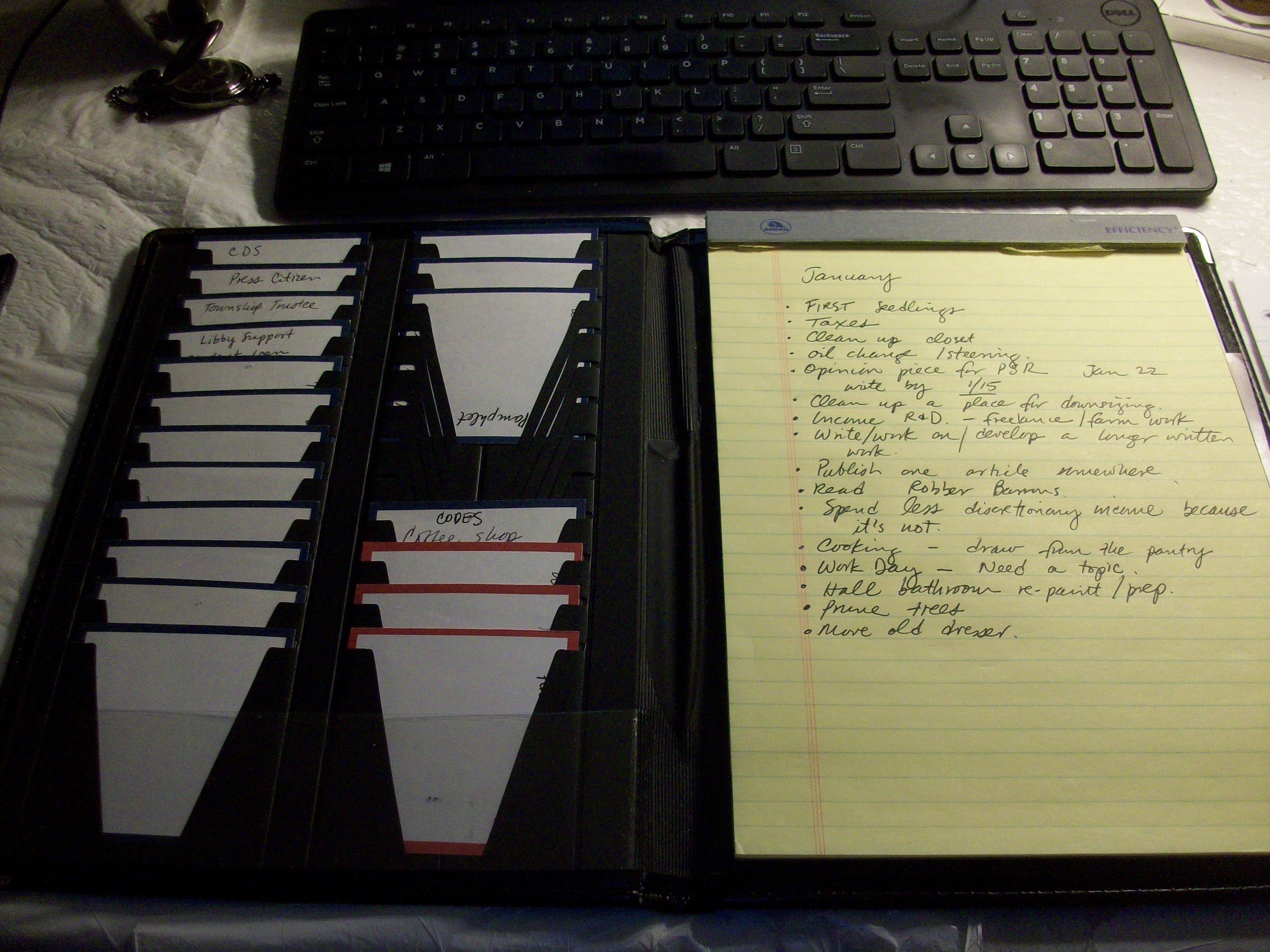
Part of the work is paid, and more paid work is needed in 2015. Partly to make up for one-time revenue streams that ended, and partly to ensure financial stability which ultimately will lead to financial sustainability. My preference is to find additional free lance writing jobs and some portion of research and development will be devoted toward that end.
The easy resolution to the income shortfall would be to take one of the many $9.25 per hour part time jobs that are available in the area. If it fit in my existing schedule, such a job would fill the cash flow gap short term. I may end up doing this, but am not ready to give up on other options yet.
2015 is planned to be a down-sizing year and some one-time income could be realized by selling some items. This may fill the February cash flow gap, buying me more R & D time, if January affords enough time to work on it. We’ll see if that happens.
At this point the road to a successful 2015 is open and full of opportunities. With an open mind and a ready attitude I have taken the next steps toward sustainability and a life worth living on the Iowa prairie. Here’s hoping for a happy new year.
LAKE MACBRIDE— New Year’s Day was for rest and household chores. The bed sheets were laundered, along with work clothes. As the washer and dryer ran, I rearranged the ice box and cooked chili and apple crisp—two dishes that have long been part of our cuisine.
People who complain about Red Delicious apples have likely never tasted one directly from a tree. At the end of the season a bowl remained to make one last apple crisp.
As I cut and peeled, the apples were ambrosial. They yielded sweet, almost divine fragrance with each cut. Not the crisp freshness of new apples, but the mature, aromatic drift of delicious.
There were bad spots, but plenty of good slices for the bowl—just enough.
The issue with local food is a lack of citrus fruit in Iowa, impossible to live without. It may be possible to re-create a greenhouse environment—carefully modulating soil, moisture, temperature and light—to grow citrus in Iowa. Why would we want to?
In winter I use imported lemon juice: Italian Volcano organic lemon juice, and there are few better things in the kitchen. A couple of tablespoons in the apple crisp and the flavor turns from tasty to insanely pleasurable. Combined with the apple aromatics, it makes a dessert fit for kings and queens. Since there are no American royalty, we’ll have to eat it ourselves.
Over many years I have tinkered with the chili recipe and have it about right. At one point I read every chili recipe I could find, especially those produced in the neighborhoods where I grew up, including my mother and grandmother’s recipes. We are solid on this dish.
That said, even if there is a recipe, the cooking of each instance of it is always a little different. The ingredients are simple: onions, kidney beans, Morningstar Farms® Recipe Crumbles, tomatoes, tomato paste, cumin, chili powder and salt are the main ones. There are a couple of key elements to preparation.
Don’t use oil for this vegetarian chili. Instead, drain the tomatoes and use the liquid to cook the onions until translucent. When they are finished, add tomato paste until the liquid is the desired thickness. Pile in the rest of the ingredients and cover with tomato juice. When there is time to simmer the chili for 6-8 hours, use it. Don’t be afraid to add lots of beans.
While these aren’t really recipes, the dishes are common enough for cooks to find and modify their own. To learn how they taste, you’ll have to visit, unless you are royalty. In which case, nuts! Have your staff make your own.
Having bit my tongue for several years about the state of our electorate, 2015 will be a time of writing about our politics and society in a process of working through ideas, to determine a path by which progressive ideas can gain more solvency in government.
Meeting so many people since 2012—in politics, in retail sales, in farm work, and in writing—my understanding of how society works, and the attitudes of people who live in it has grown. Society is not what I thought—at all.
My formative years began when in 1959 I secured a card for the public library bookmobile that stopped near our house. I read biographies about people important to the growth of our culture. There were a lot of them, although the names I remember are the Ringling brothers, Thomas Edison and George Washington Carver. I gained an understanding that through personal industry, thrift and good ideas, a person could create things that mattered in society and made life better.
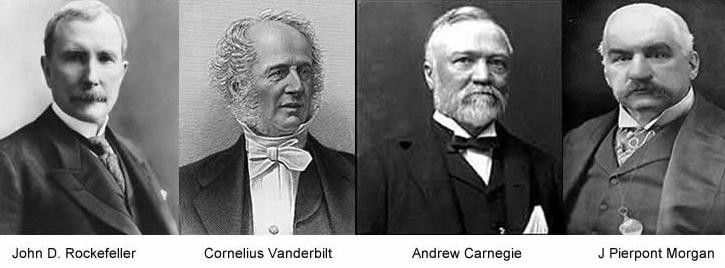
I wasn’t the only person who learned this as the ideas grew from the founders and persist. Matthew Josephson articulated this American idea in his 1934 book The Robber Barons.
In a brief cycle, the laissez-faire political philosophy of a Jefferson, having given free reign to self-interest, would stimulate the acquisitive appetites of the citizen above all. These, whetted by an incredibly rich soil, checked by no institutions or laws, would determine the pattern of American destiny. The idealism of Jefferson’s Declaration of Independence, and his Inaugural address of 1801, would be caricatured in the predatory liberty of the “Valley of Democracy” where, as Vernon Parrington has said, Americans democratic in professions, became “middle class in spirit and purpose;” where freedom came to mean “the natural right of every citizen to satisfy his acquisitive instinct by exploiting the natural resources in the measure of his shrewdness.”
With minimal modification, Josephson’s language could describe attitudes of an electorate that in the same year brought us U.S. Senator Joni Ernst and Representative Dave Loebsack. It elected State Senator Bob Dvorsky and State Representative Bobby Kaufmann. It is a spring which nurtures dichotomies: people worked long hours to elect President Obama while others fly the confederate flag; row croppers manage the land with chemicals while others restore it to prairie; consumers are more connected to the world, while seeking small enclaves to live their lives in isolation. The picture isn’t clear, but clarity is coming.
Josephson describes what so many people want to get to—satisfying our acquisitive instincts through exploitation of a world that hangs in a balance because of human activities since the dawn of the industrial revolution. This is a bankrupt idea in light of what we know about the interconnectedness of our lives, but it persists, driven by a social setting in which church, family and work play a pronounced role.
The rest of understanding will come. While beginning the new year I plan to spend more time in the garage, yard, garden and kitchen while continuing my work in sales, writing and other odd jobs assembled to sustain us financially. Hopefully that will be a sustainable framework for exploring these ideas.
There is everything to gain and nothing to lose as we sustain our lives in a turbulent world.
 The world has not tamed the nuclear beast and we should be concerned.






 Journey Home
You must be logged in to post a comment.