Miller-Meeks attended COP26, but her record on climate isn’t promising
To address global carbon pollution everyone must get involved. Even Republicans understand this. In response to the climate crisis, and to political pressure, Republican Congressman John R. Curtis (UT-03) launched a “Conservative Climate Caucus” last June. My member of Congress, Rep. Mariannette Miller-Meeks joined.
Solutions to the climate crisis will take government at all levels. In the United States, only the federal government has the reach to take effective national action which could impact the globe.
To my surprise, Miller-Meeks showed up at the 26th Conference of the Parties in Glasgow, Scotland, where she participated in a podcast with other caucus members extolling the positions of conservatives on climate.
“As a member of the Conservative Climate Caucus this issue is important to my colleagues and myself,” she wrote me in an email.
Well okay. Welcome aboard, I think.
Miller-Meeks’ votes against the Infrastructure and Investment Jobs Act and the Build Back Better Act, both of which address the climate crisis, indicate she is not really on board with federal climate action.
For a Republican to admit they have a problem is the first step toward recovery. Let’s hope Miller-Meeks can resist her addiction to D.C. talking points and do something positive to address carbon pollution.
~ Published in Little Village Magazine Dec. 6, 2021, Iowa City Press Citizen on Dec. 8, 2021, Cedar Rapids Gazette on Dec. 11, 2021.
On walkabout I saw the damage to the Mulberry tree. From the stain emitting from the cracked trunk, we can tell it was trauma. I suspect it was damaged during the Aug. 10, 2020 derecho. Because the damage faces Northeast, away from the house, it wasn’t noticed until now.
I’ll observe the progress of the wound to see how it goes. I believe the tree is a goner, yet will let nature take it’s course. I’m in no hurry to take it down with a chainsaw.
While the mulberry was a junk tree presumably from a seed dropped by a bird sitting on a length of rebar left by a surveyor as a property marker, it has been with us for our whole time here.
It produced berries, mostly for birds, and there may be more crops ahead. It is the last of two volunteer trees growing here when we bought the lot.
If it dies or falls apart I won’t replace it with another. It’s trunk grew to straddle my lot and two adjacent ones. It’s better to keep trees on my side of the line. One should not rush into tree management. Decisions made today are consequential for years to come. Sometimes we make the wrong decisions as I have.
After a quarter century, I’m getting to know the lot we developed. It is time to get outdoors and spend more time in the environment in which we live. Even if that means little more than walking in the yard.
I added a walkabout to my daily routine. Once the sun rises, and after I finish daily writing, I leave by the garage door and walk the property line of our 0.62 acre. Each day I saw something unanticipated.
The condition of trees, activities of squirrels and birds, and windblown trash deposited on our lawn. The walkabout provides an opportunity to take stock of our land and consider what needs doing, what should be left alone. I’m discovering a lot of neglected work.
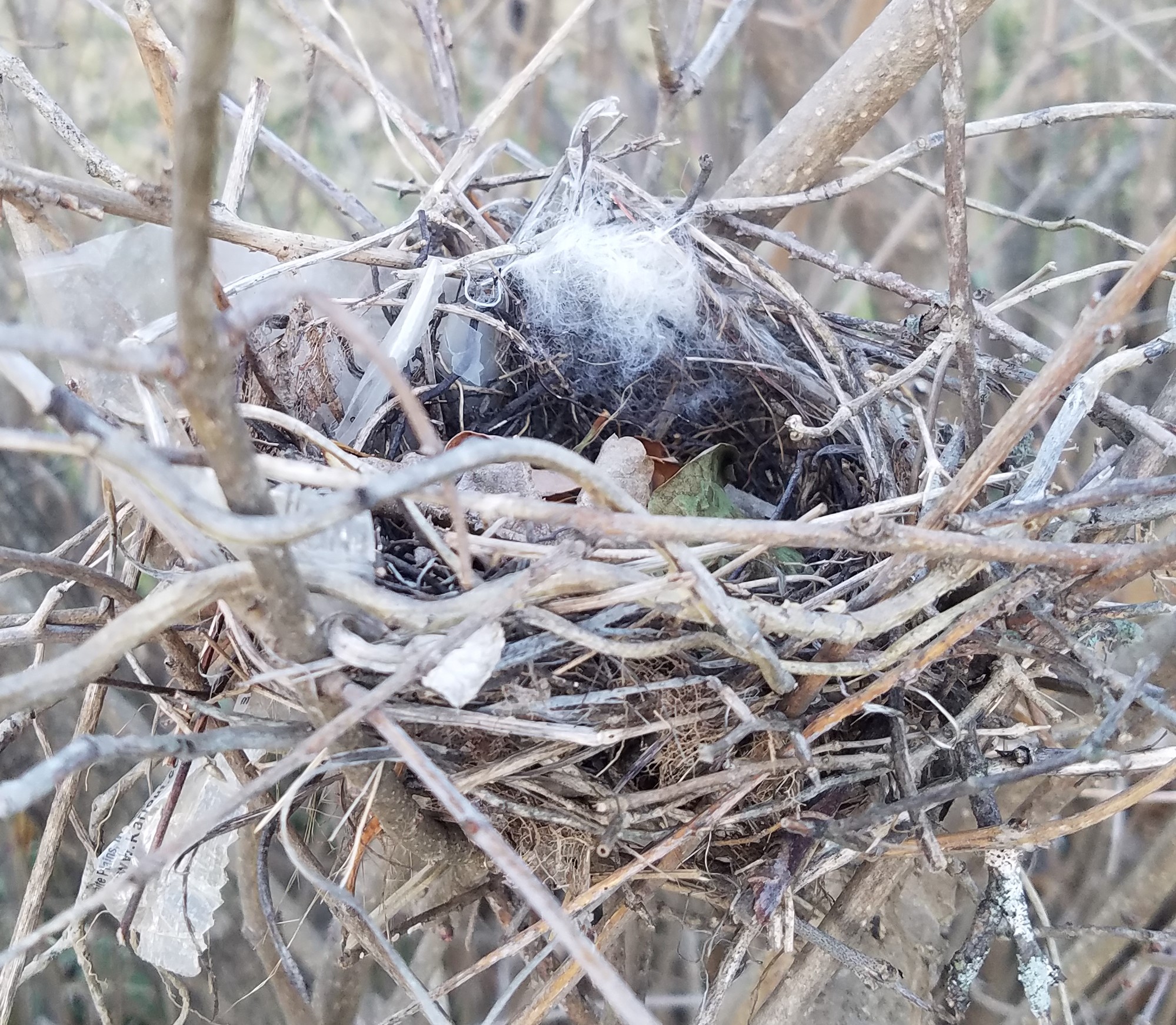
There are at least three bird nests I’ve found. I’m amazed at how they take found objects and craft them. Anything pliable seems a likely building material, including plastic wrap and bits of fiber. I don’t remove the nests unless they fall from the tree or bush. For the most part they are woven into live branches with a sense of permanency.
I’d forgotten how large our yard is and how many distinct landscapes are in it. As we head into winter the walkabouts will be a time for observing, thinking, and planning our landscape. I don’t know how I went so long without this as part of each day.
2021 has been a great year of progress in the kitchen garden. As the seed orders find their way to us via U.S. Postal Service, some reflection on the positives seems in order.
Apples
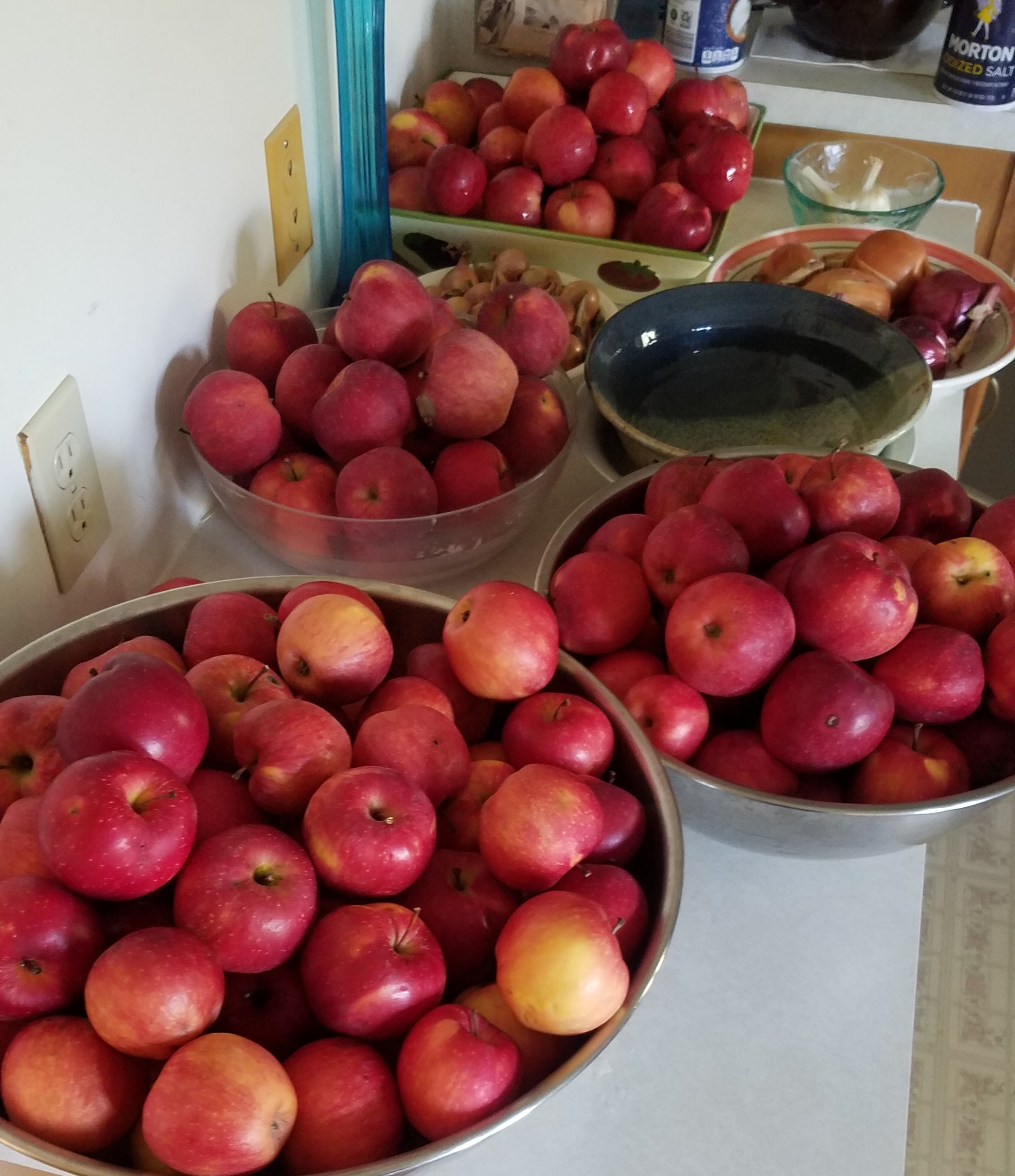
This has been one of the best years for apples. In our yard the three legacy trees bore abundantly and we used them for everything we needed. At the orchard (by this I mean Wilson’s Orchard and Farm, where I worked from 2013 until 2019) there was an abundant crop to supplement the two varieties that yielded here. The pantry is loaded with everything we need in terms of processed apples. We should have enough apple butter, applesauce, dried apples and cider vinegar to last two years until the next big crop. If our trees bear next year, that will be a bonus.
We had enough to take what we needed, let our neighbors pick some, and plenty for the deer once we harvested the best ones. The combination between our trees and a nearby commercial orchard meant we didn’t have to buy a single apple from the grocery store.
Vegetable broth
Each garden year begins with a couple dozen quart jars of vegetable broth. As I grow a diverse number of greens, I switch which ones dominate. Turnip greens have produced a consistently tasty broth, yet they all are good. We use this broth to cook rice, in soups, and as an alternative to using oil when frying vegetables for some dishes.
Guajillo Chilies
It took a few years but the integration of Guajillo Chilies into our cooking is complete. The main product is a cooked and preserved pepper combined with garlic, salt and apple cider vinegar in a food processor. Once the fresh chilies are gone, this becomes the main way I use chilies in cooking. I tried the technique with jalapeno peppers and while a little hotter, it also serves for our culinary needs.
Polish-style Soup
When growing up, Mom’s cooking was pretty “American.” That is, outside the occasional Polish-style ravioli brought home from visits to LaSalle, Illinois, Polish heritage cooking was absent. That was also true of memories of my maternal Grandmother who often found paid work as a cook in settings where American cooking prevailed. It was discovery of the cook book Treasured Polish Recipes for Americans by the Polanie Club that enabled me to come to terms with my heritage.
Based on studies of the soup chapter, I developed a consistent soup recipe that uses vegetables grown in our garden. The ingredients in the book were the same as what I have been growing for years. The main characteristics of the soups are they are thickened with barley, I add lentils as a source of protein, and use onions, celery, broccoli stem, parsley, grated zucchini and other frozen vegetables from the growing season. I use whatever greens are in season, and frozen kale if they are not. I also add potatoes, turnips, and whatever root vegetables are on hand. Settling on a soup recipe has been a long time coming.
Sweet Bell Peppers
After years of experimentation I finally produced enough bell peppers to eat raw, use in cooking, and preserve in the freezer. This was a watershed year.
Tomatoes
I grew the largest number of tomato plants ever and had plenty to eat fresh, can, freeze, and give away. The main successes were:
Developing a method to extract moisture and freeze the pulp into small servings using a cupcake pan was a breakthrough. The idea is to use a couple of tomato “buttons” to make pizza sauce for our weekly, home made pizza. I use them in everything to add a small amount of tomato sauce when needed.
I learned to grow enough Roma tomatoes so I can use them to can whole. I’m still working off a backlog of preserved tomatoes, but the system is in place for growing to match canning needs. Romas are the best to can whole.
Our local food bank welcomed my extra tomatoes. My weekly seasonal donations took the pressure off of using tomatoes in a timely manner.
I grew a wider variety of tomatoes this season, maybe 25-30 varieties. The benefit was I discovered some new favorites and we had tomatoes for every dish throughout the season.
I can extra liquid from tomatoes if I don’t use it fresh. I try to use everything and the canned liquid goes into soups.
I planted earlier than my peers in the local food movement and because of that, I had tomatoes earlier than they did. I risked frost only once or twice and using old bed sheets to cover the plants, was able to make it through without damage.
Squash, eggplant and cucumbers
I’m pleased with the way the squash came out. There was plenty of zucchini, and pumpkins and acorn squash produced beautiful fruit that tasted good. A little goes a long way with zucchini and I grew and preserved enough for soup all winter. I also froze cooked pumpkin flesh in one cup sized buttons to use in pumpkin bread.
A little eggplant goes a long way for us. I had six or seven varieties of seeds and planted some of each. I’m looking for enough to make one or two eggplant Parmesans and roasted rounds for the freezer. I had plenty this year.
The cucumber crop wasn’t as big as we’d like although it produced enough for plenty of canned sweet pickles to last us until next year. I’m on the way to striking a balance of varieties to meet our needs and this will be an ongoing experiment.
Garlic
The garlic crop was the biggest yet with large heads, about 75 of them. The disease that was prevalent last year was absent this year. That’s because I was particularly diligent to pick clean cloves for seed. The main uses are fresh in cooking and in the prepared chili sauces mentioned above. I still harvest enough green garlic from the volunteer patch I planted decades ago.
Celery
There was a new celery seed this year and it produced a better crop. We eat celery fresh in season and use it in cooking. The extra gets sliced in soup style and stir fry style and we produced a lot of it this year. We’ll be eating it all winter.
Greens Patch
I set aside a plot for cooking greens and the concept proved to be useful. We had greens for the entire season. The main change was cutting back the number of kale plants and planting chard , collards and mustard as alternatives. I also grew several kinds of cruciferous vegetables like kohlrabi and bok choy. I plan to further develop this concept.
Onions
I grew seven varieties of onions and shallots and would term it a success. It is the second year of having a big crop and the quality was quite good. I used a mixture of plants I started from seed and starts from the seed store. The starts from the seed store, along with the shallots, did the best. The challenge is picking storage varieties and then using the shorter storing onions first. This all worked out in 2021.
Herbs
I successfully grew parsley for the first time. There was plenty of it to use fresh and I used the cupcake pan method to freeze some in water to add to soups during winter. I also had plenty of chives, savory, rosemary and basil. I froze many parsley stems for use in winter cooking. I feel more confident after this season and will likely expand my herb growing next season.
Row Cover
I bartered for some row cover and used it to grow an eight foot row of lettuce and herbs. It made a huge difference. It enabled succession planting in a way I hadn’t had before. More planning is in order for 2022 to make row covered vegetables a bigger part of the garden.
When we took the land after the 1832 Black Hawk Purchase, it was decimated to make neatly cut rectangles of farmland. People are used to that now. Today Iowa farmland is used mostly as a production landscape for hogs, cattle, corn and beans. For too long, Iowa’s air, water and land have been used like an open sewer to support these operations. Farmers are used to what they know and don’t want to change. That’s true for people besides farmers.
Iowa is not an empty place where someone can do what they want with the land. A utility should not be able to build pipelines and transmission lines, or construct large-scale wind farms and solar arrays with impunity. The current crop of Iowa farmers is possessive of the right to their land and to use it as they see fit. They believe they know better than government what works here and what doesn’t. They don’t want infringement on their rights. The myth of farmers as the original environmentalists persists despite evidence to the contrary.
When solutions to the climate crisis require cooperation between large corporations and Iowa farmers there is resistance.
The new carbon capture and sequestration proposals of Summit Carbon Solutions and Navigator CO2 Ventures will confront these well-established beliefs. Even though a prominent farmer, Bruce Rastetter, is behind Summit, the rollout will follow a path familiar to anyone who knows the history of electricity transmission lines and oil pipelines here. Farmers will push back.
Donnelle Eller of Gannett stated the obvious about Summit in Monday’s Iowa City Press Citizen, “The company, a spinoff of Bruce Rastetter’s Alden-based Summit Agricultural Group, says the project would help ethanol and other energy-intensive ag industries remain viable as the nation seeks to cut greenhouse gas emissions in half by 2030 to address climate change.” The Iowa governor spoke about a low carbon economy, but failed to mention climate change or how CCS fits in such a framework. This underscores a key problem with CCS. They are just out there and bottom line, it’s backers don’t give a hoot about climate change. It’s another opportunity for capital investment which could yield big profits.
The sides are already lining up for this fight.
Opponents of CO2 pipelines have also been opponents of the Rock Island Clean Line and the Dakota Access Pipeline. Rural Iowans do not speak of one mind on this yet a common theme is big money, not farmers, are behind these transmission schemes. They claim the voices of farmers are not being heard. They also claim climate change is a lie.
What is the purpose of CCS if not to address climate change? That’s the wrong question. These projects are about investing capital to get a return on investment. If the government is a source of start-up capital, more’s the better for investors. The words “climate change” aren’t needed in this transaction.
“The world must reach net-zero CO2 emissions by 2050 in order to achieve the 1.5 degree Celsius global average temperature increase limit,” according to Summit’s website. “A dramatic increase in carbon capture and storage (CCS) is crucial to achieving net-zero CO2 emissions.”
The second sentence is unlikely to be accurate. The problem is Summit and Navigator seek to change nothing about industrial use of fossil fuels. They seek a profit from ethanol plants and other CO2 emitters who keep on doing what they are doing now. CCS has become a gigantic boondoggle instead of a solution to climate change.
“Climate and other environmental and public safety concerns about CO2 pipelines are important,” Ed Fallon wrote in a Nov. 11 email. “But as with Dakota Access Pipeline, in terms of mobilizing the broadest possible coalition of opponents, the strongest argument is the abuse of eminent domain.”
In a filing with the Iowa Utilities Board, Janna Swanson, whose land the Summit pipeline would cross, had this to say about the project and climate change:
There are a whole bunch of plans to mine our tax money for revenue and the excuse is Climate Change. When using that as an excuse then any action against humans is justified.
Summit Carbon Solutions will want the right of eminent domain. They will say that because of Climate Change that their business model is for public use.
When one paints with that wide of a brush then no one’s property is off limits for anything. No one has rights.
Let’s be clear. Summit and Navigator are in the CCS business to make money, as much of it as they can. Comments like Swanson’s are setting up climate change as a talking point instead of the reality of extreme weather it is and that must be dealt with.
It is early in the process yet already many comments have been made to the Iowa Utilities Board regarding the potential CCS proposals of Summit and Navigator. If you’d like to make a comment, here’s the information.
Written comments or objections to the proposed pipeline can be filed electronically using the IUB’s Open Docket Comment Form, by email to customer@iub.iowa.gov, or by postal mail to the Iowa Utilities Board, Attn: Docket No. HLP-2021-0003 (Navigator) and/or Docket No. HLP-2021-0001 (Summit) , 1375 E. Court Ave., Des Moines, IA 50319.
The downside of the CCS approval process is it turns rural Iowans against a second science-based phenomenon. Only 56.5 percent of Iowans are fully vaccinated against the coronavirus. There is no inoculation against extreme weather made worse by climate change that Iowans already experience.
Beginning today, I’m spending less writing time here and more on other projects. Due to the coronavirus pandemic, I’ve gone long stretches of posting every day. The uninterrupted string of posts may end soon, even if the pandemic doesn’t.
I’ll continue to cross post from other platforms, although my main work lies elsewhere, at least until spring.
Now that the end of year holidays kicked off with Thanksgiving, I’m ready to go. However you celebrate year’s end, have a good one.
Thank you for reading Journey Home. Hope to see you on the other side.
Finn Harries and All Gore at the Climate Reality Project leadership training in Cedar Rapids, Iowa on May 7, 2015. Photo Credit: Finn Harries Twitter account.
In 2015, Finn Harries sat at our table during former vice president Al Gore’s Inconvenient Truth presentation in Cedar Rapids. I didn’t know his history as a YouTuber with his identical twin brother Jack. I was assigned as his mentor during the training yet Finn didn’t need a mentor to work on the climate crisis.
Friday, Nov. 26, Finn Harries made this statement on Instagram after attending COP26 in Glasgow, Scotland:
One of the responses I often hear from older people when I talk about the work I do is “your generation gives me hope”… but this is the wrong way to think about how we go about tackling the climate crisis. In effect, this is the same strategy that has got us so deep into this mess… just passing the problem down to the next generation. What’s different this time is that we don’t have enough time to wait for our generation to be in institutional seats of power… we don’t have any time at all. So we’re flipping it around. We’re passing the problem back, up to those who can actually instigate change. Our role as young activists is to hold people in positions of power to account. To make sure they do what they’ve said they will do. In this way, we all have a critical role to play.
Harries is right. It will take all of us to make a difference during the climate crisis. In the U.S. we are not doing enough to hold people in positions of power to account.
According to a recent Washington Post – ABC News poll, “A clear majority of adults say that warming is a serious problem, but the share — 67 percent — is about the same as it was seven years ago, when alarms raised by climate scientists were less pronounced than they are now.” What will move the public opinion needle and lead to effective climate action?
In Iowa, the effects of climate change are clear. I outlined some of them in a letter to my federal elected officials. What are the two Carbon Capture and Sequestration pipelines to transport liquefied CO2 from Iowa to North Dakota and Illinois but a response to the need to reduce CO2 emissions into the atmosphere? Our political leaders don’t even acknowledge the climate crisis while supporting CO2 removal from the atmosphere.
We do have a critical role to play to prevent the worst effects of global warming. Implementing a solution will require us all.
Here is the YouTube video Finn’s brother Jack Harries made for the Conference of the Parties 26 in Glasgow, Scotland. It features an interview with former president Barack Obama. Young people like the Harries twins are not buying much malarkey. We, as a society, need to act.
In between kitchen duties of helping prepare our Thanksgiving meal, I spent time finalizing a seed order for the 2022 garden. Between Johnny’s Selected Seeds and Totally Tomatoes, I found most of what I needed to adjust the seed inventory before next year’s planting.
When our daughter left Iowa we lost our way during the holidays. Old habits fell away and Christmas decorations we displayed each year after Thanksgiving remain in storage as they have for the past several years. Given the changes, it is hard to determine the meaning of the end of year holidays. What they meant isn’t any longer. For the most part we embrace the change… and plan the next year’s garden, and other activities.
Behind these blog posts, a lot is happening related to my writing. Last winter’s work was one of getting words down on a page, an average of 1,218 per day during the first half of this year. This winter I’m putting together the structure and plugging drafts into slots on the narrative frame. I cleared a shelf which now contains a dozen empty three-ring binders. Inside them will go the draft book, along with key reference material. I hope to fill those binders during the coming months. I will have a better idea of what progress is possible after the first pass.
The days after Thanksgiving are a quiet time. We all need a break and thrive in peacefulness. On April 21, 1996 we bought our first home computer. During the last 25 years, we learned how to spend long periods of time in front of a computer screen. Most of that time is dull, yet occasionally we find something of interest. Something engaging is always a click away, or so we believe. The information comes at us so quickly on line. One story after another piles up, invoking rage, happiness, and joy, but seldom denouement or catharsis. When we are sitting, looking at a screen, we often get tense or anxious. Sometimes we are outraged, which causes us to stand up and converse with others, to let off steam, to slow things back down to a normal pace. We appreciate the relative quiet in between times.
This Thanksgiving weekend is an in between time. Now that seed orders are placed, the next main event will come along soon enough. It’s getting so I no longer look forward to “main events.” I would much rather be in between.
(Editor’s Note: The events in this retro post occurred on Friday, Nov. 25, 2011. I refer to my photo blog on Flickr, yet that has been deleted like all of my Yahoo accounts. I remember this home town adventure like it was yesterday. Many thanks to my friend Dan for taking the photos).
For a number of years, a grade school friend and I have been getting together in Davenport to talk and go to Blain’s Farm and Fleet the day after Thanksgiving. In a change of habits, except we did go to Farm and Fleet, we created a project to visit some of the places I have been posting about in my photo blog on Flickr and shoot photographs. We started at 8 a.m. when I picked him up at his parent’s home. A cup of coffee in tow, we got right to work, driving past his former home on Fillmore to my birthplace in this parking lot.
At My Birth Place
The parking lot is actually an upgrade from the vacant lot that sat for a number of years where the old Mercy Hospital was torn down. We both shared our experiences there, and then moved over to the church where I was baptized two blocks away.
Holy Family Church
When I secured a copy of my baptismal record to apply to the Bishop to attend seminary, I found they got my middle name wrong. In my experience in dealing with record keepers, this type of error occurs frequently. What is a person to do, as the wants of historical revisionists are not wanted by record clerks, most of the time. The historical record is what it is. After this, we continued South on Fillmore Street.
At the intersection with Locust Street, I pointed out the place where I heard JFK had been shot in Dallas. Continuing South on Fillmore we passed the duplex where I lived during my first year.
Fillmore Street Duplex
Continuing on, we came to the building where I attended grades two through six. It looks abandoned and the window in the room that was second grade was broken.
Broken Second Grade Window
We walked around the building and headed back to the church where I had parked my pickup truck.We drove by the former Geifman Foods, Northwest Bank and Trust and headed to Five Points where the Spudnut Shop used to be. It was gone, as were so many other neighborhood businesses from the old days.
We ended up by the old Turners Hall, which was a combination gymnasium and social club created by German immigrants and modeled after the Turnhalles in Germany. It too had fallen into disrepair.
Near the Turners Hall
Next we went to Fejervary Park which has long been a place for family gatherings. We checked out Mother Goose Land and Monkey Island and both looked to have renovations in progress. I found the stand of woods where my great grandmother’s family used to set out a picnic and converse in Polish.
Traditional Family Picnic Area
We drove past the place where my friend’s first house in Davenport had been located. It had been torn down. We drove past the Bishop’s old residence wondering if the Catholic Bishop still lived there. Next stop the place we moved after Fillmore Street at 919 Madison.
919 Madison Street
The hill is so steep on Madison I set the parking brake for the first time in over a year. We took lots of photos here, and the brick-paved street was particularly photogenic.
Madison Street
Next we drove downtown to River Drive past the old city cemetery where the cholera victims are buried in a mass grave. Turning left, we headed to Oscar Mayer.
Oscar Mayer Davenport Plant
I posted another photo of Oscar Mayer on my photoblog.
From here, East on River Drive, past KSTT Radio to where we lived behind the Wonder Bakery, now called Continental Baking. The house had been converted to a parking lot. Leaving there, we drove to Mississippi Avenue and stopped at the building where I had an apartment before leaving for the Army. I lived in the apartment in the second floor, far right window.
Apartment on Mississippi Avenue
As long as we were in the area, we stopped by the apartment on Walling Court where I lived with a high school friend while I was waiting to enter the seminary. It is located near where the jazz musician Bix Beiderbecke was born. From here, we wove our way around Grand and Farnum to Central Park and then the Village Inn on Harrison where we stopped, drank a cup of coffee and had bagels while we loaded the photos on my computer and reviewed them.
From here we went to Farm and Fleet and browsed the farm clothing. My friend bought some tins of popcorn for work presents and we dropped them back at his parents home where the women of the family were having a wedding shower. Threatened with our lives for intruding on the long planned, all female event, we headed over to the other family house, a few blocks away, where the men were gathered watching the Hawkeye v. Corn Husker football game, eating Kielbasa, bologna and ham salad sandwiches and drinking Kamikazes. We had lunch and I headed back to Big Grove around 1 p.m. It was a day about as good as they get.






 Journey Home
You must be logged in to post a comment.