LAKE MACBRIDE— There was a time when wearing a suit to work was de rigueur. While commuting to the Chicago loop I wore and wore out countless suits purchased to fit into the corporate culture of 200 East Randolph Street, the Illinois Center and the Prudential building. Those days are over. Silk ties hang on a rack in the back of the closet, lined up behind woven plaid shirts purchased long ago. There are only one or two decent dress shirts on hangers until a funeral or formal presentation wants the attire.
My work clothes on the farm have become blue jeans, a T-shirt and a pair of Justin boots purchased while working in west Texas. No collar, indicating the meaninglessness of so-called blue or white collared work. Most of the people I know in the local food system are either working on a degree, have a bachelors, or have done postgraduate work and have a masters or doctorate. Some wear collars, and some do not. Clothing is functional and long lasting if it is anything— less a symbol of an arbitrary status or social class.
While writing, it’s the same attire, sans shoes with white socks. After buying cheap tube socks for decades, I switched to a heavy cotton sock purported to be for wearing with steel-toed shoes. They are deluxe. The cost of one of my Chicago suits could have purchased a lot of them.
LAKE MACBRIDE— After arriving at the farm, I took this photo and headed to the high tunnel to plant lettuce. The western sky was illuminated by the sun, a harbinger of rain, which came, along with lightning and thunder, within the hour. I continued planting while the drops pattered against the heavy gauge plastic and nature’s light show played in the distance. We need rain, but not much fell. There are only three more weeks in the CSA and already we are preparing the farm for winter.
Part of the work was setting up irrigation in the high tunnel, repairing the drip line where it leaked and making sure it aligned closely to the rows of newly planted seedlings. It is more time consuming than one would think. When people depend on a vegetable crop, there is no choice but to irrigate when drought comes. It is difficult to budget for the extra labor of irrigation— one more uncertainty in the life of a farmer.
Using a margin trowel, I dug five or six holes in a row and then planted seedlings, covering each over the top of the soil block. By the end of the day, my shoulder was sore, so one flat remained from the job— perhaps tomorrow on that one.
There was a sense of connection today. Not only to the cycle of planting and harvest, but to everyone else. While I may have been alone, the presence of everyone I have known was with me. It’s hard to explain, but being protected from the storm in the high tunnel was part of it as I labored in the field of an indeterminate future— hopefully one with lettuce.
CEDAR RAPIDS— A friend is saying her long goodbyes to Iowa before moving to Florida, so I broke from the tomato canning extravaganza to have coffee with her at a shop in Cedar Rapids. We exchanged gifts. I brought summer squash, cabbage, tomatoes and other produce. She brought an arrangement of Hydrangea for my spouse. We had just an hour before I had to leave for the farm, so we were concise, something that can often be difficult among people of a certain age with much in common.
We covered a lot of ground, including her recent attendance at the Democracy Convention in Madison, Wis. However, the substance of our chat was the systemic dismantling of the union movement in our post Reagan world, coupled with the decreasing relevance of today’s union leaders. That’s a mouthful, but the upshot is that corporations have been working hard to reduce labor costs and shed union contracts. The result for our generation has been a large cohort of middle aged managers and specialists whose positions have been systematically eliminated through outsourcing, reorganization, or the work of human resources consultants like Towers Perrin and Hay Group. What’s a person to do?
For a long time, I chased the available labor from downsizing and off-shoring, hoping to find over the road truck drivers. The idea was that as long term factory workers, they would possess behavior that was stable and well suited to the boredom and long hours a truck driver’s job entailed. What I found was people who would do almost anything to preserve their way of life, get their children through high school and continue living in the community they worked so hard to create. During those years from 1987 until 1993, I had some of the toughest conversations of my life, with people who were desperate to go on living and had the rug pulled out from under them so workers in Mexico, and later China and South Korea, could manufacture the appliances, auto parts and other goods they made for so many years.
A return of unions in private companies seems unlikely, mostly because workers who will accept less than a living wage dominate the unskilled labor pool. There is no shortage of people who will work for an hourly wage around $9 per hour. In some communities, like Minneapolis-Saint Paul, Minn., service industry companies have included minimum wage labor availability assessments in their expansion plans, and it has not been a substantial constraint. There are plenty of people willing to work in the unskilled market, which is what most non-professional jobs are.
When a person takes a job, there are inherent compromises. For a while, I supervised fuel purchasing where our company spent more than $25 million per year. Knowing what we know about the impact of CO2 emissions in the atmosphere, burning fossil fuels in heavy trucks contributes to global warming. I also knew that if I didn’t want the job, someone else would. This created an institutional bent toward doing things we know are wrong despite our self-consciousness about the behavior.
Politicians say they want to help create jobs, but during our conversation, we were not so sure. What people want is to live with economic security and the promise of American life. Few, if any corporations have that in mind when they lay out a business plan. What’s most important is maximizing return on investment, and that includes laying off highly paid, long-term employees, then hiring two low-wage workers for the same money. I’m not complaining. I’m just sayin’ that’s the way it is. And how progress will continue in our turbulent world.
LAKE MACBRIDE— Part of yesterday was clearing the dead and dying squash plants from the garden and planting turnips and transplanting butternut squash seedlings. It is dicey as to whether the squash will produce because of the timing of first frost compared to the 110 day growing cycle. Too, the abundance of squash beetles have nowhere to go without the zucchini and yellow squash plants, so even though they had not found the seedlings this morning, one suspects they will visit and if they like it, attempt to stay.
In that plot, the Brussels sprouts are thriving, as are the three kinds of peppers, Swiss chard and collards. This is the most bountiful year of gardening we’ve had.
In the cool downstairs await six bins of tomatoes and two of broccoli for processing. This is part of a work for food arrangement with a local organic grower. Combine it with the approaching and massive apple harvest and there will be plenty of work to do.
Yesterday I planted three trays of seedlings: lettuce, kale, broccoli, kohlrabi and squash. There is plenty of time left during the growing season for these crops to mature, and I am particularly hopeful about new cucumbers for pickling.
As summer races toward Labor Day and October frost, there is much to be done in the garden and in life. We have to eat to live, and because of this summer of local food, there will be no shortage there. It’s enough to sustain a life on the Iowa prairie, at least for a while.
LAKE MACBRIDE— There are eleven more posting days in my work for Blog for Iowa, after which I’ll fade into the background from that very public blogging. I have been covering for a colleague who is taking a summer break and if the opportunity is around next summer, I might do it again.
After re-starting pauldeaton.com last March, I didn’t know where it would go. The 196 posts thus far have been focused on topics related to the blog’s title, “On Our Own: Sustainability in a Turbulent World:” Farming, gardening, cooking, eating, work life, home life, local event coverage and discussions of the two biggest threats humanity faces: climate change and nuclear proliferation. There is more to say on these topics.
Today, there are 281 followers of On Our Own, which is posted on my home page. Of those, WordPress is counting my 233 twitter followers who see a link to my articles after they post. I don’t see readers who find me through WordPress’s reader, except if they like my posts or begin to follow me. I appreciate every person who finds their way to pauldeaton.com.
After Labor Day, the posting is expected to settle in around homelife and worklife, which have been the most popular topics. I’ll revisit this year’s work on the CSA and in my garden, and who knows what else? Here’s hoping followers and readers stay tuned.
In adding my congratulations to Mike Owen for his promotion as executive director of the Iowa Policy Project, I also suggest readers check out his latest blog post titled, “We promise: We won’t cook burgers.” It is about the spurious advice of Visa® and McDonald’s®, that their lowly paid workers should become financially sustainable by working a second job. Iowa Policy Project is one of the few Iowa think tanks that has done substantial work studying living wage, low wages, and minimum wage. It is a subject close to my interests, and Mike and his team’s work at Iowa Policy Project have informed some of my thinking on low wage workers. It will be good to have Mike as executive director.
With regard to the Visa® and McDonald’s® suggestion of securing a second job, it seems a bit reactionary to me. Another low wage worker employer, Walmart, has been consistently hammered by progressive writers (see Thomas Stackpole at Mother Jones) for advising their employees on how to leverage the governmental social safety network of energy assistance, SNAP, Medicaid and other programs. The second job suggestion is an alternate version of the Walmart story: we won’t pay a living wage, so employees are on their own to sustain financial viability.
There is more to working a low wage job than pay. There has to be because the cost of living, including health care, transportation, food, shelter, and interest on debt, is more than low wage jobs pay, even two of them. Little would change if the minimum wage were raised to over $10 per hour as some propose. Low wage jobs fall short of a living wage, so people have to adapt, and one of the ways they do is to take advantage of governmental assistance programs. Beside government programs and working additional jobs, what else is there?
Another payday for low paying work is building a social network to help meet basic economic needs— one based in direct human contact, unfiltered by electronic media. A host of services are available because of work relationships in a low wage job. A tattoo artist offers his ink at a discount, people of means offer loans, and gardeners offered to exchange vegetables and baked goods. There is ride-sharing, child care and a network of discovery of ways to escape low paying work for something better. Human society in low wage work places is like a living coral reef, where everyone’s needs can be met at a certain level. These things have little to do with the progressive argument about wages, but they are every bit as important.
The tone deaf suggestions of Visa® and McDonald’s® demonstrate a lack of understanding of how people operate. Namely, if the company articulates the deceit, people may start believing it, maybe they will stay with the company a bit longer, and the cost of employee turnover can be reduced. A cynical view? Not really.
Working two jobs may be a necessity for many, but if we are on our own, as corporations want us to be, life becomes less about the job and more about who we know that can help us when we need a hand. Thanks for the suggestions and financial planning tools corporations, but no thanks, we can get by with a little help from our friends.
LAKE MACBRIDE— In a strip mall in Cedar Rapids, a temp agency opens at 6 a.m., ready to place workers in temporary jobs. A registered applicant can enter the waiting room, sign in on a clipboard at the counter, and wait for placement in a job in construction, hospitality or warehouse work— often the same day. There is no talk about careers or perquisites, and some days a person gets placed, others not. Every time I entered, someone was waiting for a placement— there seemed to be no shortage of labor. In a society where people need paying work, this is one place they find it.
Managing the bottom line for a large or small company, the cost of human resources stands out as a high percentage of expense. Owners and executives seek to manage these expenses— their argument is they have to to remain viable in the marketplace. They will do what is legal and necessary to optimize the dollars spent on people. One of the ways they do this is to transfer the risk and expense of having employees to other entities, like the companies that employ temp workers.
We hear a lot about outsourcing and off-shoring, but until lately little attention has been paid to temp workers: that group of low-paid people that works in our community, doing office work, construction, hospitality, light manufacturing, property maintenance and more. Large corporations have become masters of outsourcing, and when we ask where have all the jobs gone, some of them went back into the community in the form of subcontractors that use temp workers, and take expense off the bottom line.
Mike Grabell wrote an article in ProPublica titled, “The Expendables: How the Temps Who Power Corporate Giants Are Getting Crushed” which is worth reading. He wrote, “the people […] are not day laborers looking for an odd job from a passing contractor. They are regular employees of temp agencies working in the supply chain of many of America’s largest companies– Walmart, Macy’s, Nike, Frito-Lay. They make our frozen pizzas, sort the recycling from our trash, cut our vegetables and clean our imported fish. They unload clothing and toys made overseas and pack them to fill our store shelves. They are as important to the global economy as shipping containers and Asian garment workers.”
Massachusetts passed a temporary workers right to know law that requires temporary staffing agencies to provide basic information about jobs offered to temporary workers. Essentially, it is a temp worker bill of rights.
Perhaps Iowa should consider a similar law, even if groups like the American Staffing Association and the American Legislative Exchange Council would be expected to fight it.
On the other hand, Iowa is a state where organized labor has struggled to pass any initiative in the legislature, notably the recently failed campaigns for fair share and choice of doctor. This when Democrats, the party that received substantial political contributions from organized labor, controlled both chambers of the legislature and the governor’s mansion.
Temp workers are here to stay in Iowa. The protections they have are the bare minimum provided by the law. Companies push the envelope of the law to keep their bottom line expense of workers very low. For progressives, helping protect temp workers in Iowa should be on our short list of priorities. The situation lies mostly below the radar and is calling for justice.
LAKE MACBRIDE— To say yard work has been a low priority is an understatement. During the 20 years since we built our home, landscaping has been a haphazard process governed by whim and fancy— and a vague sense of design that sufficed to get trees and a large quantity of lilac bushes planted.
An important consideration of buying a 0.6 acre lot was planning a large garden, but there is more to it than that. Trees were planted with an idea of gaining privacy on what was a barren piece of farm ground turned residential lot. Until the neighbor’s bordering evergreen trees began to die and were cut down last year, we had succeeded in getting as much privacy as one can in a rural subdivision.
The only surviving tree from the two that came with the lot is the mulberry tree. Since arriving we added four bur oak, one pin oak, two maple, two green ash, four apple, one pear, and two locust. With the mulberry, that makes 17. It took me a week to prune and cut up the fallen branches from all of these.
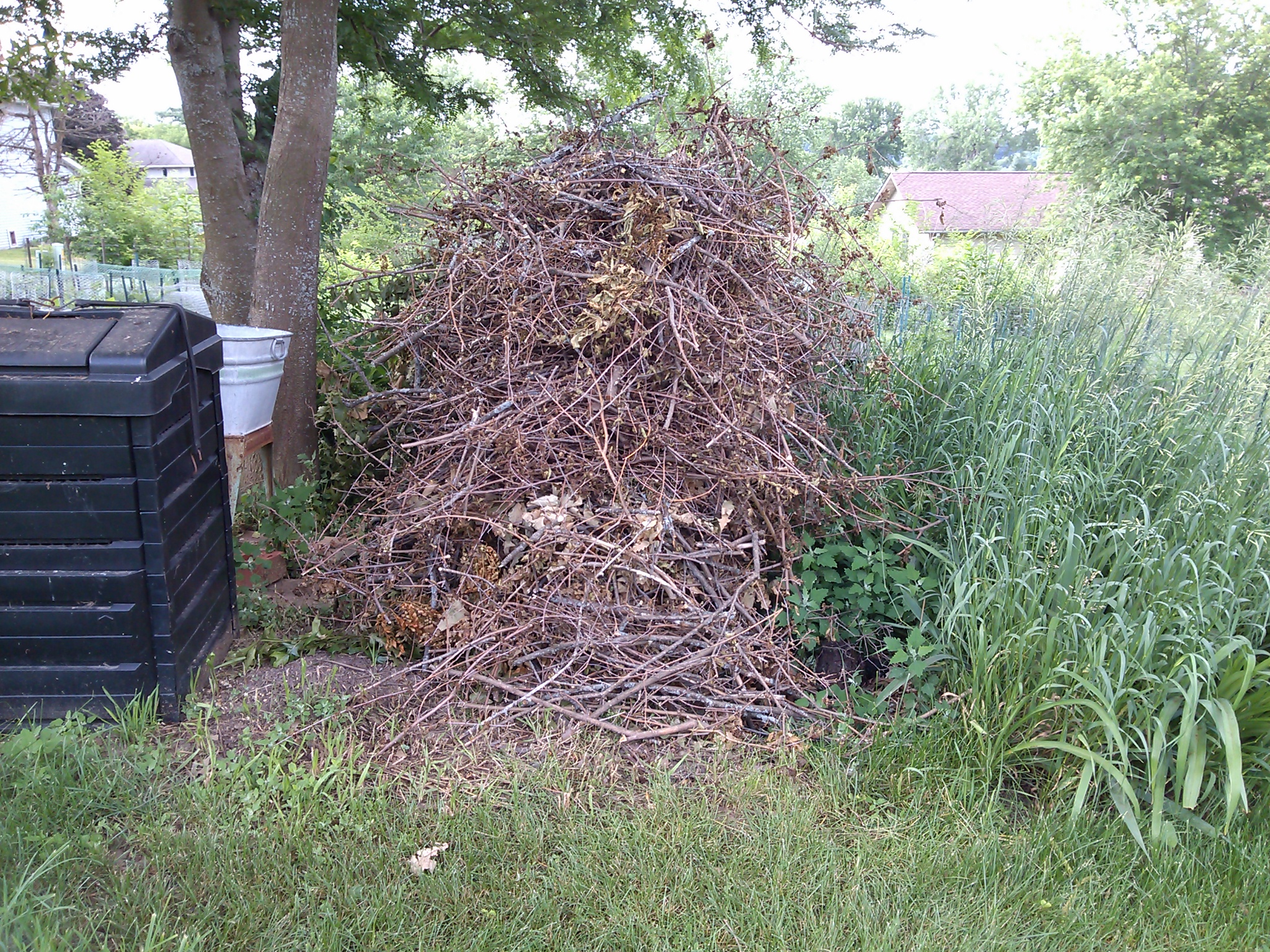
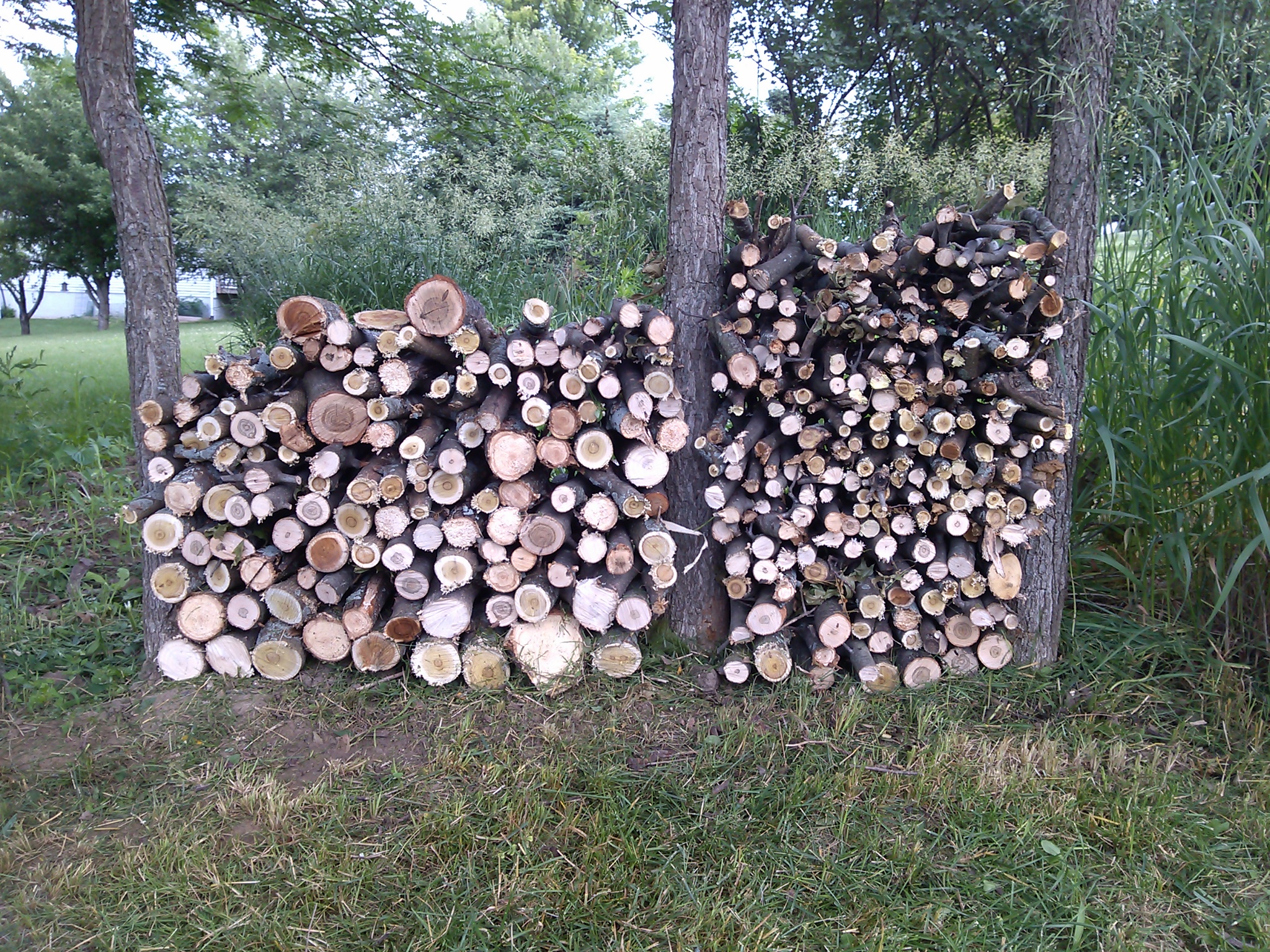
Burn Pile Storage
We don’t have a fireplace or use an outside burn pit for entertainment, so the brush needs to be cleared and disposed of. I’ll make a burn pile after the garden season, and store the brush for now. It should be a big fire.
If we lived in an apartment or condo, any yard work would be included in our association fees— others would do it. A state legislator recently said, “people want to live in cities,” but I don’t know about that.
Clearing the brush on a residential lot in the country is not the same as on a large acreage, but it remains a connection with nature and our attempt to cultivate it. This work runs through the heart of our lives in society, which might be less without it.
The exigencies of yard work and making something of the place where we live, in harmony with what remains of nature, takes work sometimes neglected. For a brief moment, when one job is done, and before another begins, we can feel good about our work, and that is something.
LAKE MACBRIDE— When people talk about suppression of wages in the United States, and the growing inequality between the richest Americans and the rest of us, Walmart and the heirs of Sam Walton have been the poster children with the biggest target on their back. Vermont Senator Bernie Sanders notably said in a tone of moral outrage, “today the Walton family of Walmart own more wealth than the bottom 40 percent of America.”
The Democratic staff of the U.S. House Committee on Education and the Workforce recently published a report based on data about Walmart employees in Wisconsin who participate in federal social programs. The report quantifies the financial impact of Walmart employees on the U.S. social safety networks, and on the economy more generally. The report said, “rising income inequality and wage stagnation threaten the future of America’s middle class. While corporate profits break records, the share of national income going to workers’ wages has reached record lows.”
Thomas Stackpole released a story about the Democratic report on Mother Jones yesterday, and if a person is interested in the issue of low paying jobs, it is worth a read. The author circulated two of the progressive nostrums I mentioned in my article, “Working for Low Wages,” increasing the minimum wage and union organizing. Stackpole wrote, “Walmart’s history of suppressing local wages and busting fledgling union efforts is common knowledge.”
In my article, I made the case, based on my personal experience as a warehouse worker, that there is more to working a low wage job than the pay. There has to be because the cost of living, including health care, transportation, food, shelter, and interest on debt, is more than low wage jobs pay. Nothing would change if the minimum wage were raised to over $10 per hour as some legislators propose. Low wage jobs fall short of a living wage, so people have to adapt, and one of the ways they do is to take advantage of governmental social programs. It’s not the only way people adapt, but it is an expense to taxpayers to provide these programs, and because Walmart is the largest private employer in the U.S. they are used as the whipping boy for the impact of their low wages on the expense of social programs to taxpayers.
Unions have to become more relevant to low wage workers before they have a chance in companies like Walmart. The repeated failures of union organizing attempts at Walmart serve my point. Part of the failure to organize is the resources the company’s management brings to bear on any organizing attempt. Part of it is the failure of unions to provide what is perceived by a majority of targeted workers as value. Creating a Walmart employee union does not seem to be in the cards despite all the noise in the corporate media. Sanders’ moral outrage, and ours, goes unaddressed, and will until unions become more relevant to the needs of low wage workers, as those workers perceive it.
The debate over Walmart employees using the social safety net seems a red herring, especially at the granular, local perspective of a person who has recently worked a low wage job. It is doubtful that government, especially one with close ties to Wall Street, will be able to do much to impact working people in a meaningful and positive way. Nor is it the role of government to preserve and build the middle class. It’s the working class that needs help and the two aren’t the same thing.
When government creates a program like the Low Income Home Energy Assistance Program (LIHEAP), reduced price school lunches, subsidized housing, or the Supplemental Nutrition Assistance Program (SNAP), they address poverty in the way government knows how. That a big company has employees on government programs is neither surprising, nor a source of the same moral outrage that should be expressed about the the disparities between the richest Americans and the rest of us.
Participating in government programs is one of the ways low wage workers get by. Shining light on Walmart and Sam Walton’s heirs contributes little to resolving the needs of working people, even if some with a national perspective are fond of doing so.
RURAL CEDAR TOWNSHIP— A student from Nepal greeted me at the work bench where four trays of soil blocks awaited transplanted eggplant seedlings. She was like so many college students, alert, intelligent, and possessed of the confidence of youth. She asked me a lot of questions: where I lived and about local culture. So many, I didn’t get a chance to ask her about Nepal and her reasons for coming to the United States. She had just finished laying down mulch in one field and planting rows of eggplant in another with a group of farm workers. She was ready to call it a day and go on to what’s next. One of many chance encounters that have made the last 15 weeks of farm work an enriching experience.
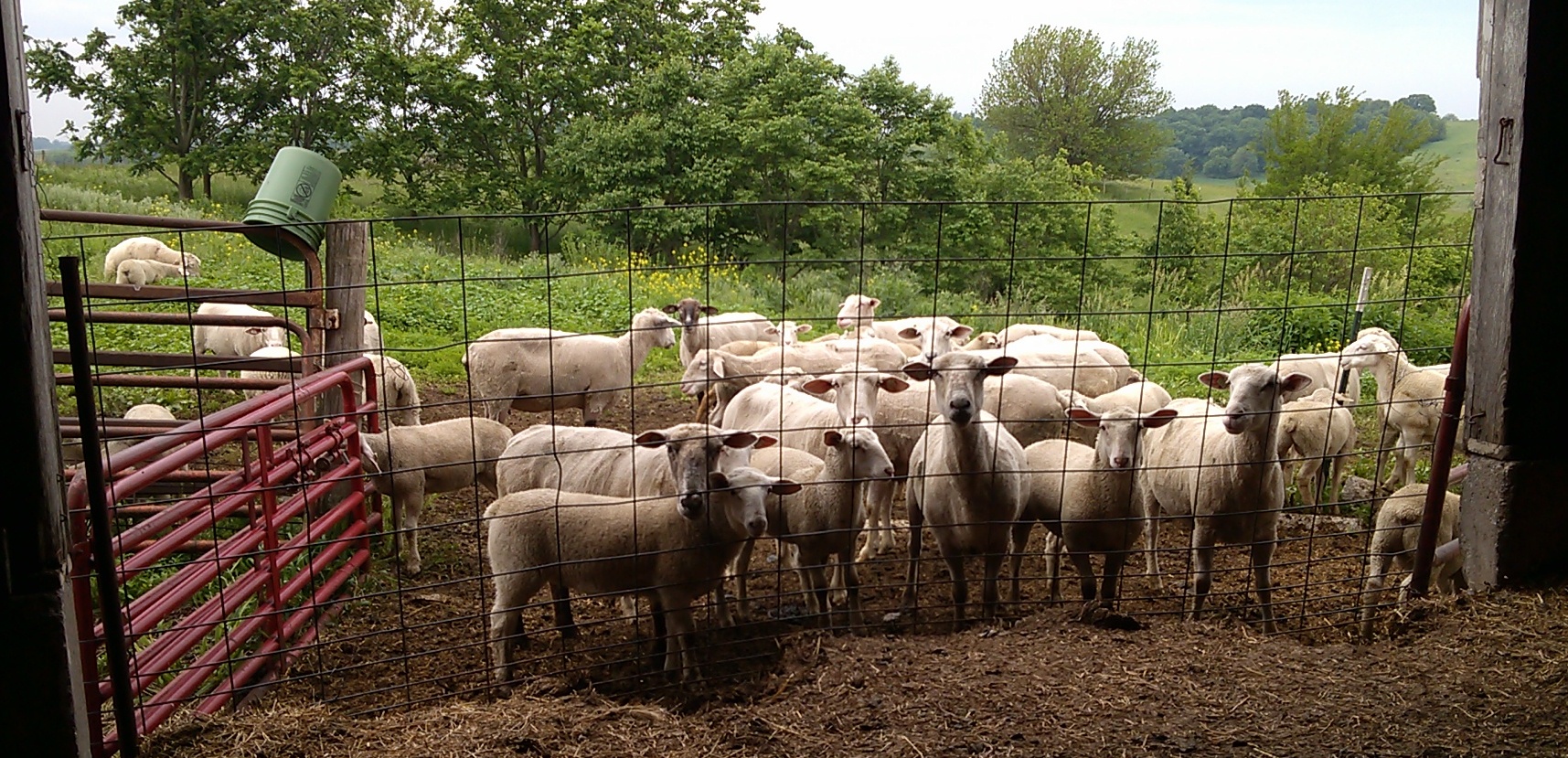
When my work moved from the germination house (formerly known as the greenhouse), to the barn, the sheep and lambs became occasional neighbors. The gentle bleating combined with bird songs made a soothing background while I made soil blocks, planted lettuce and transplanted seedlings. The two dogs hung out with me, napping most of the time. The intermittent encounters with other farm workers, combined with interludes of solitude in the barn—it is life as good as it gets.
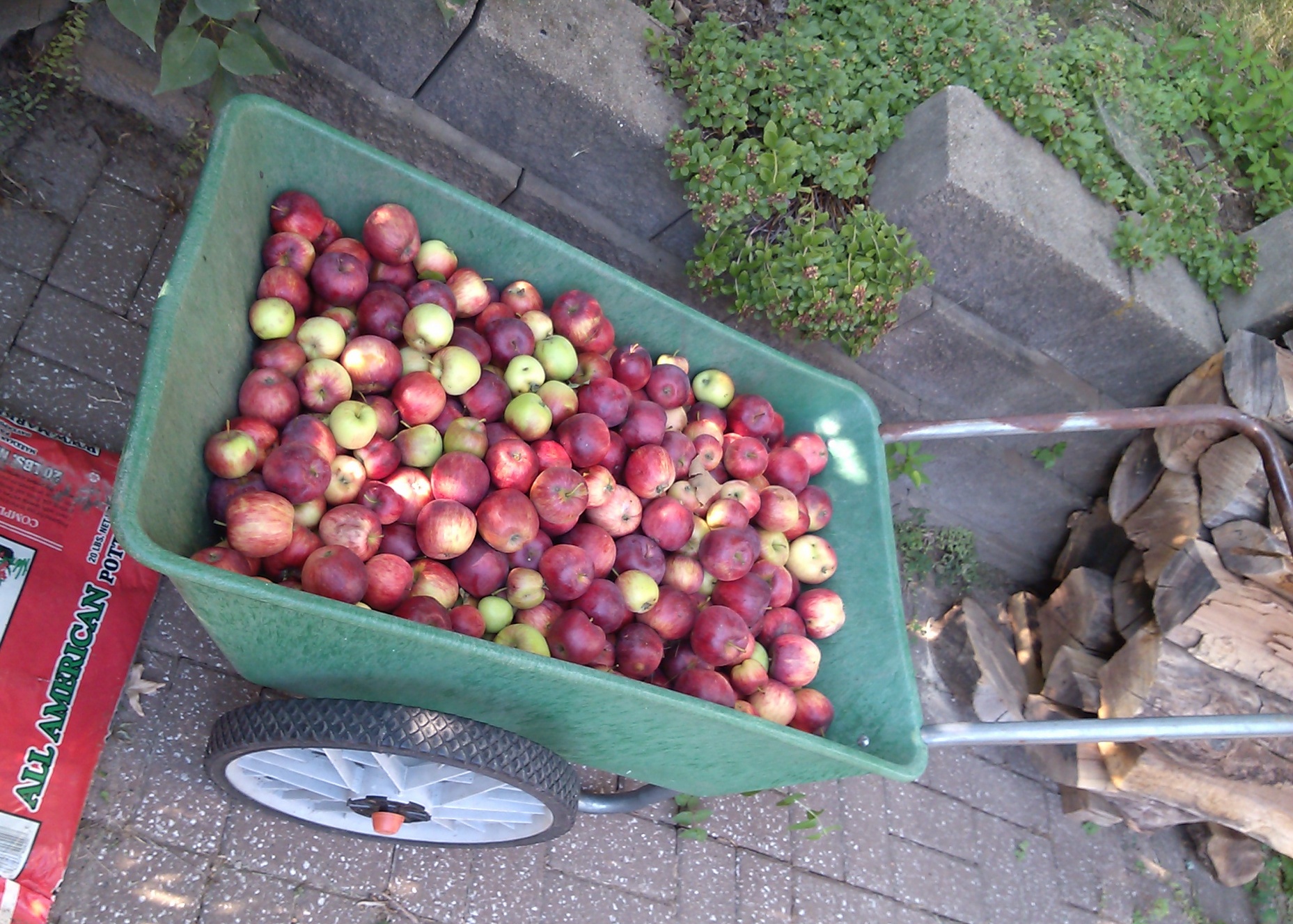
Last week I brought jars of home made apple butter for the crew. My apple trees are expected to bear fruit this year, so the old stock needs circulation. To a person they liked it, making me happy to contribute to their farm experience.
There are apple trees on the farm, and if things work out, I’ll make apple butter from the fruit in exchange for some of the apples. My part time work on the farm has become a bartering process that gains complexity as time goes on.
There is something deep in meaning about this work. To see plants grow from seeds to seedlings to rows and then harvest is a connection with life itself. As the Nepalese student asked questions, I felt connected in a way that is hard to describe. Part of a sustainable and hopefully endless cycle of life on earth.




 Journey Home
You must be logged in to post a comment.