Categories
Environment

Road to Paris Comes Through Iowa

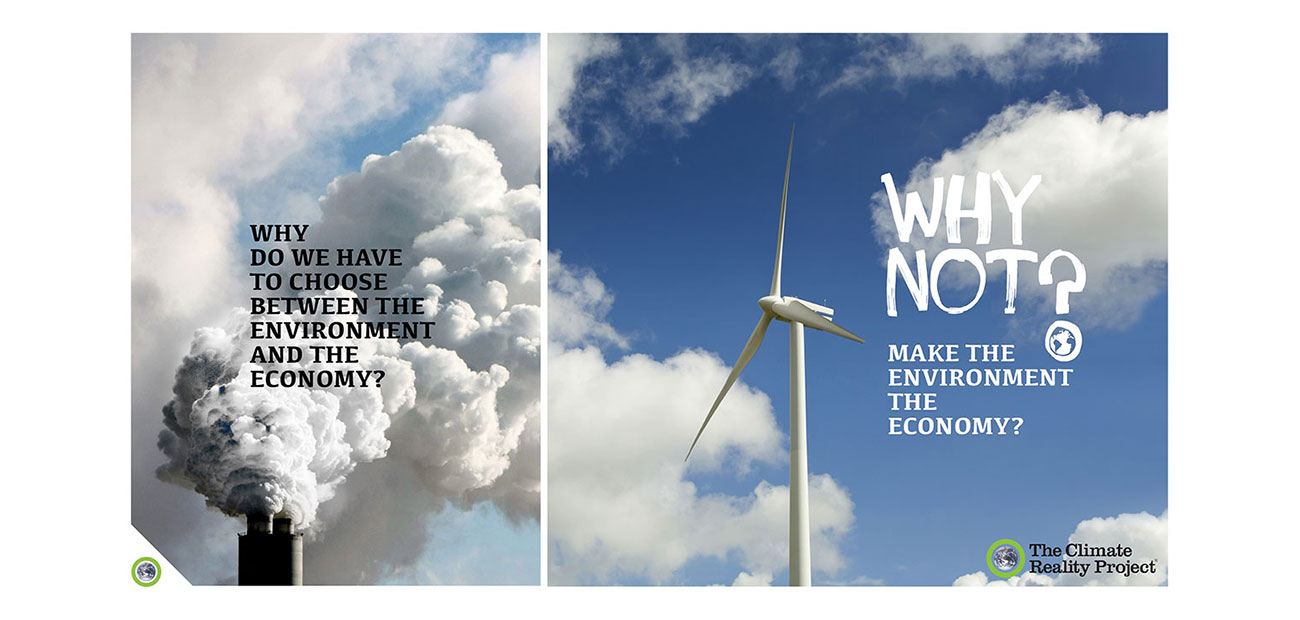
WHY-WHY-NOT-MELBOURNE2-4_0On Tuesday, The Climate Reality Project announced three North American trainings, one of which will take place within a short commute from my home. Here is the announcement email I received from colleague Mario Molina:

Dear Paul,

Our New Delhi, India training is coming to a close, and we have some important news to share with you as we continue along the Road to Paris.

We’re hosting three trainings in North America this coming year — and we’re going to need your help to grow the Climate Reality Leadership Corps! Below are the upcoming training locations and dates:

Cedar Rapids, Iowa: May 5-7
Toronto, Canada: July 9-10
Miami, Florida: September 28-30

Will you share this exciting information with your networks today? We know some of our best new Climate Leaders will be sent to us from you, and we trust your judgment. As a matter of fact, our training in New Delhi boasted the highest ever referral rate from existing Climate Reality Leaders.

Each one of these trainings is a key stop along The Road to Paris, and it’s extremely important that by the time COP21 descends on Paris, we have a strong, loud, and dedicated group of leaders to demand climate action.

Training applications are now open, so don’t let these future leaders wait. Their opportunity to make a difference in this crucial fight for a safe climate could be waiting in Cedar Rapids, Toronto, or Miami.

Thank you for your unwavering commitment to climate action, and for inspiring your friends, family, and colleagues to join you.

Warm Regards,

Mario E. Molina
Climate Reality Leadership Corps Director
The Climate Reality Project

Categories
Environment Living in Society

Is Iowa Prepared for a Megadrought?

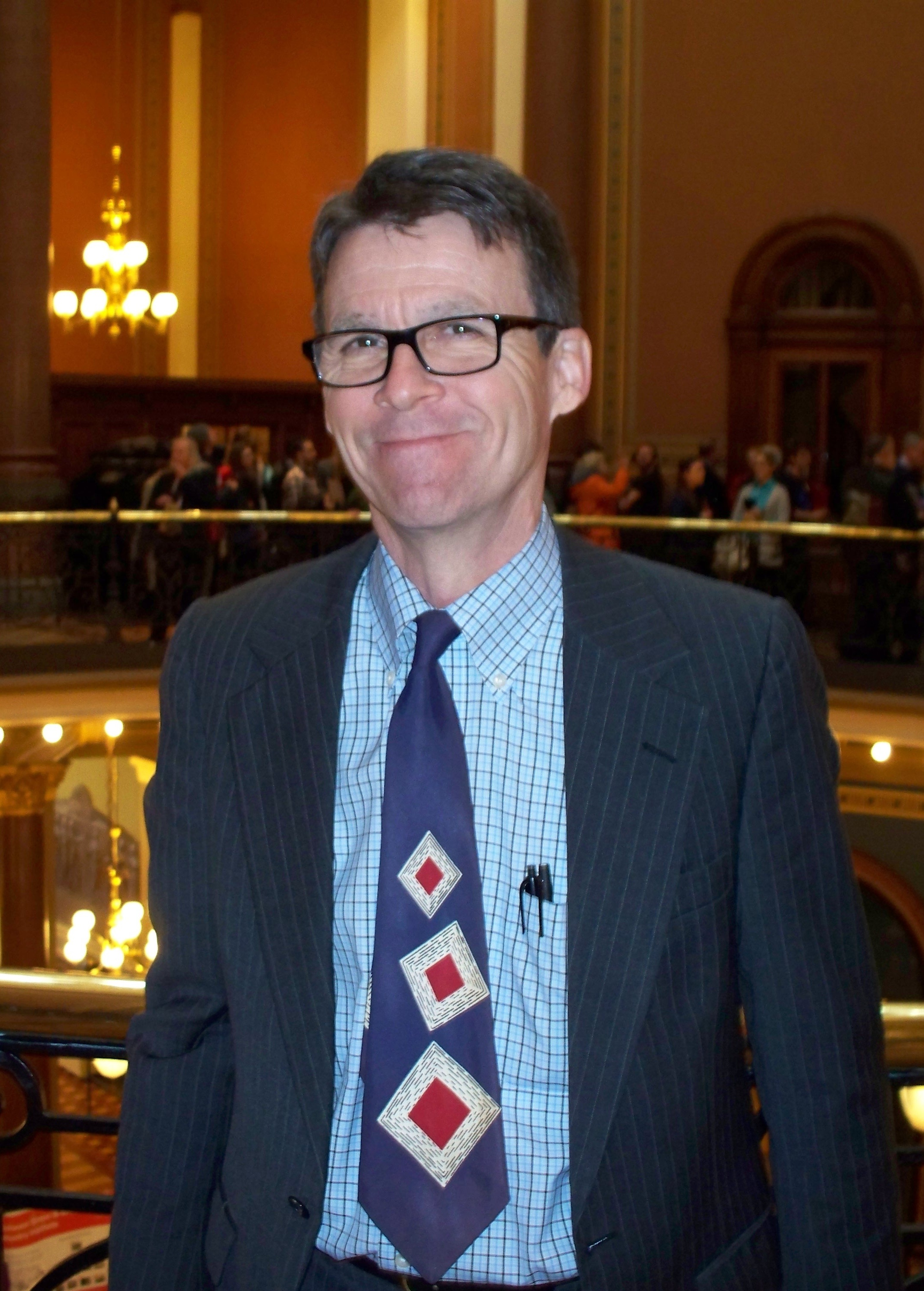
State Senator Joe Bolkcom (D-Iowa City)

State Senator Joe Bolkcom, member of the natural resources and environment committee, spoke last Tuesday at the capitol about environmental issues.

“Is there anything related to the environment you would like to see covered in greater detail?” I asked.

“There are some questions around megadroughts coming mid-century,” he said. “Have we dedicated enough attention and resources to protecting underground water systems?”

Bolkcom pointed to a number of concerns: recent defunding of the Department of Natural Resources underground water monitoring system; gaining an understanding of the water withdrawal rate for ethanol plant operations; a needed review of policy by the  Environmental Protection Commission; a review of DNR regulations pertaining to water permitting; the need for a geological survey of water resources, the Silurian and Jordan aquifers specifically; and the impact of water usage by data centers such as Google and Facebook. He had given the matter considerable thought.

“Should we have other thoughts about the Jordan and Silurian aquifers as we head toward 2050?” Bolkcom asked. “Today, once an industrial user secures a permit, they can withdraw as much water as they want.”

There were more questions than answers during my brief time with Bolkcom, but his thrust was that Iowa needs to do more to ensure resiliency during extended drought conditions.

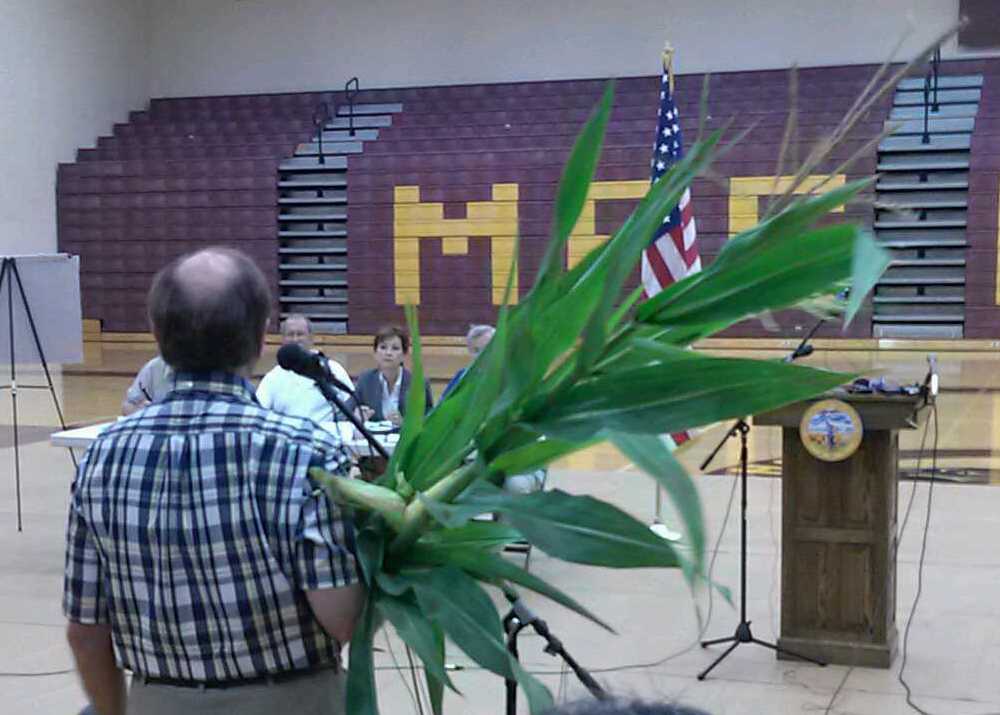
It is difficult to forget the severe drought of 2012. Governor Branstad called a special meeting of agriculture groups in Mount Pleasant that July. (Read my coverage of that meeting here.) Climate change was completely absent from the discussion, even if farmers had to deal with its enhancement of drought conditions. To paraphrase the reaction, farmers planned to plow the crop under, capitalize the loss, and plant again the following year.

What if the drought extended more than a season or two? What if it lasted for decades? According to a study released this month that’s what we can expect.

“Droughts in the U.S. Southwest and Central Plains during the last half of this century could be drier and longer than drought conditions seen in those regions in the last 1,000 years,” according to a Feb. 12 press release issued in conjunction with a new study led by NASA scientists.

“Natural droughts like the 1930s Dust Bowl and the current drought in the Southwest have historically lasted maybe a decade or a little less,” said Ben Cook, climate scientist at NASA’s Goddard Institute for Space Studies and the Lamont-Doherty Earth Observatory at Columbia University in New York City, and lead author of the study. “What these results are saying is we’re going to get a drought similar to those events, but it is probably going to last at least 30 to 35 years.”

When Bolkcom referred to megadroughts, this is what he meant.

The potential exists for megadroughts more severe than any in recent history, according to the study published in Science Advances by Cook, Toby R. Ault and Jason E. Smerdon.

“Future drought risk will likely exceed even the driest centuries of the Medieval Climate Anomaly (1100–1300 CE),” the authors wrote. “The consistency of our results suggests an exceptionally high risk of a multidecadal megadrought occurring over the Central Plains and Southwest regions during the late 21st century, a level of aridity exceeding even the persistent megadroughts that characterized the Medieval era.”

Whether Bolkcom’s questions find answers is uncertain, however he is alone among legislators I spoke with in asking them. He was correct that members of the public haven’t engaged on something the legislature should be taking up during its 86th General Assembly.

~ Written for Blog for Iowa

Categories
Environment Sustainability

Sustainability in a Turbulent World

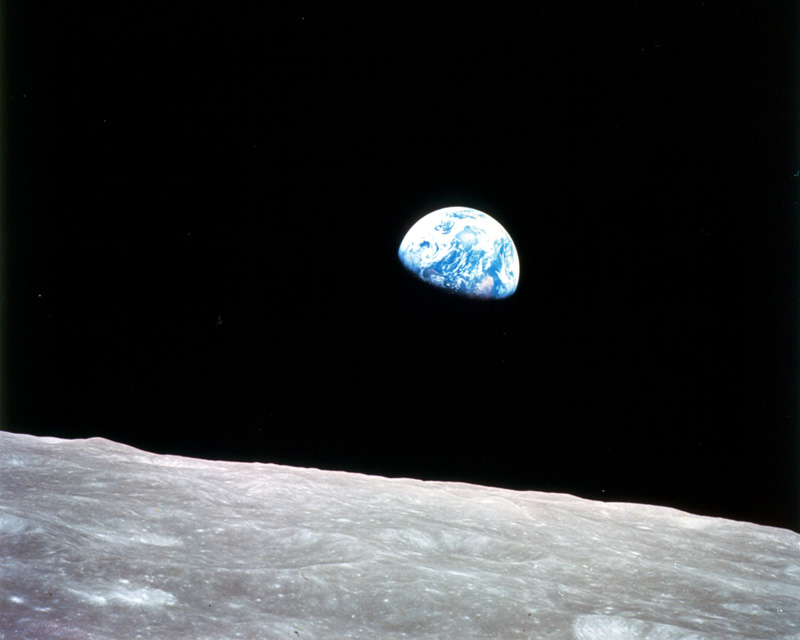
Earthrise 1968
Earthrise 1968

An approach toward sustainability begins the way Hollywood movies sometimes do—with a view of Earth from space, successively narrowing the frame until we arrive at street level. In U.S. cinema the final shot is of individuals, characters mis en scene.

A new perspective is possible with the launch of the Deep Space Climate Observatory last week. Aboard a Falcon 9 rocket, the 1,250-pound satellite was sent on a 110-day trip toward the L1 Lagrange point, a gravitationally-stable location nearly a million miles from Earth in line with the sun. While monitoring streams of particles from the sun, it will also look back to Earth. That’s a beginning point.

In a life one has to make choices. Using the Hollywood convention, my public focus can be narrowed as follows:

In the global community I make two engagements: nuclear abolition and dealing with the consequences of global warming. This means continued involvement with International Physicians for the Prevention of Nuclear War and the Climate Reality Project. IPPNW won the Nobel Peace Prize in 1985, and the Climate Reality Project’s founder, Al Gore, won it in 2007 along with the United Nations’ Intergovernmental Panel on Climate Change. These organizations have standing, and are worth engaging.

Nuclear weapons and global warming both impact people’s health and survival, which aligns my view with that of public health. On Tuesday, Pamela Mollenhauer of the State Hygienic Laboratory told me, “One can’t speak of the environment and health separately because they are intertwined.” Issues relating to nuclear weapons and climate affect us all and are likewise different sides of the same environmental coin.

My involvement in nuclear abolition is being part of the international humanitarian campaign. This movement has not gained traction in the U.S., but around the world people and nations are calling for nuclear weapons abolition.

The U.S. position is abolition will come through the established Nuclear Non-proliferation Treaty process. Advancing the NPT has stymied because the nine nuclear states fail to take their obligations under the treaty seriously enough to make progress. Quite the opposite is happening. The Obama administration is about to launch a massive modernization program expected to spend hundreds of billions of dollars on the U.S. nuclear complex over the coming three decades. If I spent all my time with the humanitarian campaign, it would be a full time job.

The effects of global warming are becoming increasingly evident, requiring action.

“We’re here to remind people that a changing climate is resulting in environmental degradation that is having severe health impacts we can’t afford to ignore,” said Dr. Maureen McCue of Iowa Physicians for Social Responsibility on Tuesday. The PSR advocacy targets are also mine.

“Climate change poses enormous threats to our health. Heat waves, immense storms, floods, droughts and expanding disease ranges are just some of the dangers we face,” said an article in the Fall 2014 issue of PSR Reports. PSR enumerated four main targets for advocacy.

The Clean Power Plan is a proposed national plan that will build on a rule proposed by the Environmental Protection Agency. States would be required to significantly reduce carbon dioxide emissions from power plants. EPA is expected to finalize the rule this year and then states would implement. In Iowa, the Clean Power Plan would be administered by the Iowa Department of Natural Resources. A few Iowa legislators are aware this rule is coming, but many are not.

Moving beyond fossil fuels is a key concern and Iowa has been a leader in promoting renewable energy. Iowa must move from coal-fired and nuclear power plants to renewable energy for electricity generation. A key possibility is distributed generation.

More wind, more solar, and distributed generation of electricity are part of Iowa’s energy future. Our state is a leader in using wind resources to generate electricity. Solar powered electrical generating stations offer cost-effective potential. A constraint has been an electrical grid fraught with partisan issues between land owners, regulated utilities, merchant plant advocates and investors, and complex contracts and agreements regarding distribution. Logically, it makes sense to use the sun directly to generate electricity, but so often industries invested in other processes drag our collective feet. This complex work calls for our attention.

Energy efficiency is about more than changing light bulbs. Demand for electricity has been dropping in Iowa, partly because the generation, distribution and use of electricity has become more efficient. This is a complicated issue, but taking steps toward energy efficiency is doable. Advocating for changes in building codes, expansion of mass transit, creating bike friendly communities, and recycling, reduction and reuse strategies all help take us there. We must also deal with related issues in the rural landscape that dominates our state but each census has fewer people.

There is a lot to be done beyond economic survival and maintaining our personal good health. Getting things done requires recognizing and setting goals that create a path toward what is possible—to sustain our lives on the blue-green sphere that is our only home.

Categories
Environment

Keystone XL and the Senate

Brush Fire
Brush Fire

LAKE MACBRIDE— During the run-up to the Nov. 18 vote on S-2280, a bill to approve the Keystone XL Pipeline, I messaged Senators Tom Harkin and Chuck Grassley, asking them to vote no. Harkin voted no, Grassley yes.

Senator Grassley sent along an explanation of his vote, which is pasted below. As he indicated, the motion failed to pass the Senate. What this letter doesn’t say is that I asked him to vote no, without any other comment. I have been around politics too long to believe that logic and rational thinking have much to do with why a U.S. Senator votes a certain way.

The framing of Grassley’s response points out the challenges opponents of the pipeline will have once the 114th Congress convenes. His arguments are rational in their way, if misguided.

It is hard to disagree with building a pipeline per se. There are many pipelines in the world, and they are a mode of transportation that serves the oil and natural gas industry, which in turn supports political stability. As Grassley pointed out, building pipelines creates jobs.

This is not a partisan issue. In Hillary Clinton’s secretary of state memoir, she mentions building pipelines several times, always as a solution to energy problems which in turn increases political stability around the globe. It will be hard to win the argument against Keystone XL because of the existential fact of it being a pipeline.

If oil prices continue to decline, the economic conditions which made the Tar Sands viable will erode. The reasons for declining oil prices are complex, but it boils down to a combination of increased U.S. shale oil production, lack of willingness by OPEC to curb production, and our society’s addiction to fossil fuels. It seems unlikely that the oil and gas industry will allow prices to get too low, and we are not in control here, except for our personal energy choices.

Something’s got to give to reduce reliance on fossil fuels. Plugging an electric car into our household grid is not an answer if all we do is switch our energy source from gasoline to coal and nuclear, both of which have their own risks to human health. Grassley doesn’t directly mention decreasing reliance on fossil fuels as an issue in his response.

The argument about what happens to the oil in Texas is unresolved, despite Grassley’s assertion otherwise. The issue with refining, in light of increased U.S. oil production, is one of limited capacity. It has been a while since I was familiar with refining operations, but I suspect refineries are still running every minute they can to keep up with demand.

Could the refineries re-tool to handle Tar Sands oil? Yes, definitely. Is there an economic reason to do so when there is plenty of Middle East oil entering the Gulf of Mexico at a low price? Probably not in the short term, and there appears to be little interest in increasing refining capacity in light of the current regulatory environment. Going forward, one would expect the Tar Sands crude oil to be exported the way U.S. light sweet crude currently is—because the refineries are already doing all they can to keep up with imports.

Grassley’s right to say we should decrease our reliance on imported oil. The simple fact is there is not enough oil being produced in North America to meet U.S. needs, and as I mentioned, there are economic constraints to refining capacity. What is missing is affirmation of the need to decrease use of fossil fuels, and that’s more the problem with the response.

The trouble for opponents of Keystone XL is that Grassley takes apart many of their arguments in a way that will build political support for a likely re-consideration of the project in 2017, if not in 2015. It is important to read his response and learn from it… and hope the climate doesn’t reach the tipping point while we dance around what most needs doing: reducing and eliminating our reliance on fossil and nuclear fuels.

Charles E. Grassley
Washington, D.C.
December 4, 2014

Thank you for taking the time to contact me. As your Senator, it is important for me to hear from you.

I appreciate knowing your concerns regarding the crude oil pipeline from Canada to Nebraska called the Keystone XL pipeline. On November 18, 2014, the Senate held debate and voted on S. 2280, a bill to approve the Keystone XL Pipeline. I was an original cosponsor of this bill and supported its passage. However, the bill failed by a final vote of 59-41, one vote short of the 60 votes necessary for it to pass the Senate.

The pipeline would supply more than 800,000 barrels a day of Canadian crude oil to U.S. refineries and help to counteract both insufficient domestic oil supplies in the United States and reduce dependence on less reliable foreign sources. The Keystone XL pipeline is a $7 billion, 1,700 mile pipeline that would create thousands of private-sector jobs at no cost to American taxpayers.

In 2008, TransCanada applied for a presidential permit from the State Department to construct and operate the pipeline. Due to environmental concerns, the State of Nebraska approved a modified route in January, 2013. Following this modification, the State Department released a draft Supplemental Environmental Impact Statement (SEIS) on the new presidential permit application. The State Department noted that oil sands development would go ahead regardless of the production of the pipeline by using different pipelines or rail to get to market. The report essentially found that the pipeline would not accelerate greenhouse gas emissions or significantly harm the environment along its route.

After nearly six years of rigorous regulatory review, the State Department issued its fifth environmental review on January 31, 2014. This fifth review reached the same conclusion as earlier reviews. It found that the pipeline will have no significant impact on the environment and is the safest way to transport the oil. It also found that rejection of the pipeline will not affect Canada’s decision to develop these oil resources. The administration had been in the middle of a 90-day review period for federal agencies assessing the State Department’s environmental study when, on April 18, 2014, the State Department announced an indefinite extension of the agency comment period.

Opponents of the Keystone pipeline argue that the pipeline will not increase oil and gas supplies in the United States, rather, that all of the Canadian crude would be sold to world markets. Even President Obama reiterated this claim when he said the pipeline would allow the Canadians to “pump their oil, send it through our land, down to the Gulf, where it will be sold everywhere else.” However, the Washington Post “Fact Checker” disproved this claim. It noted that the State Department’s final environmental impact statement specifically disputed claims that the oil would pass through the United States and be loaded onto vessels for ultimate sale in foreign markets. It found that the crude oil would almost certainly be refined in the United States, with at least 50 percent of the refined products remaining in the U.S. market. It stated, “market conditions could change, of course, but there is little basis to claim that virtually all of the product, or even a majority, would be exported.”

The energy and economic development benefits of this pipeline are too important to delay any longer. We need an all-of-the-above approach to meet the country’s energy needs and give consumers choice. That means oil, ethanol, electricity from wind, and nuclear power. A pipeline would be safer than transporting oil by rail. Canada will produce this oil with or without U.S. involvement in the shipment. I’d rather work with one of our strongest allies than continue to get oil from the volatile Middle East or Venezuela.

What is needed now in the United States is an increased supply of oil. It is simple economics. If you increase the supply, you decrease the price. We are still relying on a very finite amount of oil. We must increase our own domestic supply of energy while promoting the use of alternative sources of energy at the same time. I will continue to support these goals with your thoughts in mind.

Again, thank you for taking the time to contact me. I appreciate receiving your comments and urge you to keep in touch.

Sincerely,
Chuck

Categories
Environment

Keystone XL — Bright Shiny Object

Dave Loebsack
Dave Loebsack Voted for Keystone XL

LAKE MACBRIDE— Yesterday the U.S. House of Representatives passed a bill directing the federal government to move forward on the Keystone XL pipeline on a 252-161 vote. It was less than the number of votes needed to override a presidential veto, but Barack Obama has been holding his cards close to the chest on Keystone. What he would do if a bill reached his desk is uncertain.

According to the New York Times, the U.S. Senate scheduled a vote on the bill for Tuesday, and Senator Mary Landrieu (D-LA) believes there are already 59 of 60 votes required to overcome a filibuster when the vote comes up. If the senate can get past a filibuster, the bill’s passage is assured, although getting 67 votes needed to override a presidential veto is less certain than it is in the the house. It’s all political theater.

Our Representative Dave Loebsack voted for the bill, reversing his last vote on Keystone XL. He sent social media atwitter with shock and disappointment framed in terms that appeared to help the authors vent frustration more than say anything coherent. I am disappointed with the vote, but what politician ever consistently voted my way?

I know a couple of things.

When people talk about “environmentalists” I no longer have a clue to whom they refer. Is a farmer who plants a buffer zone based on a government grant an environmentalist? Is a non-governmental organization’s local staff member—overly dependent upon funding sources—an environmentalist? Is a Washington lobbyist for a large NGO an environmentalist? What about members of the defense department working toward a lower carbon footprint for the military? What about my neighbors who protest building a subdivision near Lake Macbride? There aren’t real answers to these questions, and that’s the problem with vague references to “environmentalists.” There is no club to which they all belong, and fewer common denominators. The idea is actually a right wing talking point, and the frame “environmentalists” is used to demonize advocates for the U.S. Environmental Protection Agency, and against production of electricity using coal, natural gas and nuclear fuels. Keystone XL is not a common denominator among environmentalists.

The failure of environmentalists was targeting the pipeline at all, instead of the tar sands. The tar sands is a bigger problem because of humanity’s inexhaustible thirst for oil and natural gas. This is the same problem for the Bakken, West Texas and Eagle Ford formations. Because oil and gas are in demand, there is direct financial return, subsidized by our government, in exploiting these resources. The environmental communities have been unable to adequately articulate the unrecognized costs in terms of human health of these exploration, discovery and production operations—even if a small number of people are working on it. Successful efforts have taken a targeted, NIMBY approach, like the fight against frac sand mining in Allamakee County. By targeting Keystone XL, environmentalists set themselves up for failure. As a friend wrote me last night, “there are hundreds of pipelines in this country already—what’s one or two more?”

I also know unions favor building pipelines. Ken Sagar and Bill Gerhard laid out their position in a Dec. 11 opinion piece in the Des Moines Register. Only a cynic would say that Loebsack’s vote on Keystone XL was quid pro quo for union financial and canvassing support during the 2014 midterms. It is likely more complicated than that, but it had to have been a factor. Part of being Democratic is the fact that Democrats don’t always agree. Keystone XL and Iowa’s proposed Bakken Oil Pipeline are a prime examples of that. Loebsack’s framing of the explanation for his vote makes his sympathies for the union’s legislative priority clear.

“I was skeptical of side stepping the normal processes, but the jobs attached to building the Keystone Pipeline are too important and can no longer be tied to D.C. gridlock,” Loebsack said, according to Ed Tibbetts of the Quad-City Times.

What I also know is October 2014 was the hottest month recorded on the planet since record-keeping began, according to the Washington Post. Yes, you skeptics, the world’s temperatures may have been higher or much colder in some prehistoric era. But what matters more is our civilization, and the changes produced by the industrial revolution are at risk. The underpinnings of basic facts about our lives, when the first frost comes, the amount of rainfall in a region, how we produce electricity, how we sequester carbon in the land, water sourcing, and others are all being undone.

It will take more than one vote in one governmental body to address these broader challenges. What I know is that is unlikely to happen in my lifetime unless we stop focusing on bright and shiny objects like Keystone XL.

Categories
Environment

Friday in Iowa: Climate March

Climate March Leaving Coralville

This week, the Great March for Climate Action headed east through Iowa and Blog for Iowa marched a small part of the route with them. About 150 people gathered in Coralville on Wednesday, Aug. 20, and marched leisurely to the Iowa City pedestrian mall. We marched down the Coralville Strip, past Carver-Hawkeye arena, the University of Iowa Colleges of Medicine and Nursing, the Veterans Administration Hospital, the university’s coal-fired power plant, Old Capitol, and ended in front of the Sheraton Hotel in the pedestrian mall where we were greeted with applause upon arrival. Speeches followed.

It was a chance to meet some of the marchers, and here are some of the people BFIA interviewed and heard:

Ed Fallon, "People need to be thinking of what changes they can make in their own life."
Ed Fallon, “People need to be thinking of what changes they can make in their own life.”
Berenice Tompkins and Andre Nunez. She's walking barefoot (mostly) and he's not talking.
Berenice Tompkins and Andre Nunez. She’s walking barefoot (mostly) and he’s not speaking.
Blair Frank "I'm here because of the shift that's happening around the planet in climate change.
Blair Frank “I’m here because of the shift that’s happening around the planet in climate change.
Miriam Kashia, Mayor.
Miriam Kashia, Mayor. “Imagine the audacity of a small group of ordinary citizens who believe they have to power to change the course of history.”
Ed Fallon, Jeffrey Czerwiec, Miriam Kashia and John Abbe at the marshaling area in Coralville
Rosella Lala Palazzolo selling raffle tickets. Rosella is a veteran of the Great Peace March for Global Nuclear Disarmament in 1986
Mike Carberry and Jimmy Betts
Mike Carberry, “How we deal with climate change is the defining issue of our generation,” with Jimmy Betts
Jeffrey Czerwiec, "I'm walking every step of the way."
Jeffrey Czerwiec, “I’m walking every step of the way.”
David Osterberg, "We need to make renewable energy 100 percent."
David Osterberg, “We need to make renewable energy 100 percent.”
State Senators Rob Hogg and Joe Bolkcom

And finally, here’s the whole gang crossing Burlington Street on Iowa Avenue in Iowa City.

Follow the Great March for Climate Action here, or better, join them.

~ Written for Blog for Iowa

Categories
Environment Living in Society

Climate Change is Really Political

2012 Drought Conference

If one didn’t think the U.S. discussion of climate change was political, think again. U.S. Rep. David McKinley (R-West Virginia), added an amendment to a House appropriations bill to fund the Department of Energy and the U.S. Army Corps of Engineers that would prohibit the two agencies from using funds that would “design, implement, administer or carry out specified assessments regarding climate change.”

Another way to put it, from McKinley’s perspective, is if you don’t like science, ban it.

House Republicans took exception to the Department of Defense addressing the recommendations of the National Climate Assessment, and have added two agencies whose work is directly related to mitigating the effects of extreme weather to their list.

The floor debate captured the essence of the politics of climate change:

“Spending precious resources to pursue a dubious climate change agenda compromises our clean-energy research and America’s infrastructure,” McKinley said on the House floor. “Congress should not be spending money pursuing ideologically driven experiments.”

Speaking against the amendment, Rep. Marcy Kaptur (D-Ohio) said it disregards the research of the overwhelming majority of climate scientists.

“The Republicans, in general, don’t seem to trust the scientists,” Kaptur said. “This amendment requires the Department of Energy to assume that carbon pollution isn’t harmful and that climate change won’t cost a thing. That’s nothing but a fantasy.”

What next? Click here to read the rest of David Gutman’s coverage of this story in the Charleston, West Virginia Gazette.

And consider that June 2014 was the hottest month on record since records have been collected. Politicians like McKinley would deny the reality of human contributions toward global warming at the same time climate data released from the National Climatic Data Center of the National Oceanic and Atmospheric Administration, found that the worldwide average temperature over land and sea in June 2014 was 1.3 degrees Fahrenheit hotter than the 20th century average of 59.9 degrees. That is reality.

People seeking scientific proof of anthropogenic global climate change are barking up the wrong tree. The goal of science, if unlike McKinley, we accept science, is not to prove, but to explain aspects of the natural world.

Around 1850, physicist John Tyndall discovered that carbon dioxide traps heat in our atmosphere, producing the greenhouse effect, which enables all of creation as we know it to live on Earth.

Carbon dioxide increased as a percentage of our atmosphere since Tyndall’s time at the beginning of the Industrial Revolution. As a result, Earth’s average temperature increased by 1.5 degrees Fahrenheit.

The disturbance of the global carbon cycle and related increase in carbon dioxide concentrations in the atmosphere is identifiably anthropogenic because of the isotope signature of atmospheric carbon dioxide.

We can also observe the effects of global warming in worldwide glacier retreat, declining Arctic ice sheets, sea level rise, warming oceans, ocean acidification, and increased intensity of weather events.

It is no wonder almost all of climate scientists and all of the national academies of science in the world agree climate change is real, it is happening now, it’s caused by humans, and is cause for immediate action before it is too late.

Politicians like McKinley don’t get it, and advocate against reality. That’s nothing new for some members of the Republican Party.

~ Written for The Climate Reality Project

Categories
Environment

Hegemony of Bad Ideas

Sunset
Sunset in Colorado

LAKE MACBRIDE— Leadership on what matters most for our future will come from outside the United States. It’s not that Americans are bad people— for the most part, we aren’t. However, many of us have mistaken the advancement of bad ideas as the right ideas, and there is a difference.

The most recent example was last week’s vote on an amendment to the National Defense Authorization Act (NDAA). The NDAA is one of the few pieces of legislation that still works through the legislative process the way most of them did back when Congress did more legislative work. Rep. David McKinley (R-WV) offered an amendment which would “prevent the White House from sending funds to the U.S. Global Change Research Program National Climate Assessment, the Intergovernmental Panel on Climate Change’s Fifth Assessment Report, the United Nation’s Agenda 21 sustainable development plan, or the May 2013 Technical Update of the Social Cost of Carbon for Regulatory Impact Analysis Under Executive Order 12866.” McKinley questions the validity of climate science research generally, but, according to his website, also argued that reducing the use of coal wasn’t worth the harm it would do to the economy. The amendment passed the House, and is expected to advance to the Senate.

I understand coal country better than most mid-westerners. My family tree has long roots in Appalachia, predating the discovery of coal in Boone County, West Virginia by John Peter Salley in 1742. My career in transportation and logistics took me to Boone County and I learned about its dependence on coal. When the Coal Valley News announced our truck driving school, it was front page news, next to a story about United Mine Worker layoffs in the county seat.

Meeting with businesses, the governor’s office, the school board, local residents and others, I got to know the issues around coal. People didn’t like the mine owners and operators, but were dependent upon them. If life has changed from company-owned coal camps for most, coal camps still exist along with poverty and an extreme dependence on coal to extract a life. The question, “what are we supposed to do without coal?” resonates there if answers don’t.

There is no greater good in McKinley’s legislative work, and there is little point in arguing with climate deniers like him. The preponderance of evidence is that climate change is real, it is happening now, and its effects are causing harm. As the business community wakes up, we are increasingly able to place a dollar figure on the social and economic costs of global warming and related climate change. Economics will drive action to mitigate the causes of climate change, as making a profit remains paramount for businesses. Like it or not, West Virginia, part of mitigation of global warming means drastic reductions in the amount of coal used across the globe.

At the same time, bad ideas like McKinley’s have enough support to advance, making the U.S. Congress less relevant in addressing the most important issue of our time. That’s why I say leadership on climate change, as well as on nuclear abolition and other threats to life as we know it, will come from outside our country. For whatever reason, too many Americans embrace bad ideas to sustain the political will for positive change.

What I don’t get about West Virginia and coal country is that while there is a church in almost every neighborhood, another argument should resonate equally with self-serving economic interests, but doesn’t.

If God is the author of creation and wants humans to do anything, high on the list would be to care for creation. We have not upheld that responsibility even though it transcends politics. Instead, people like McKinley look to mammon for their inspiration, forsaking all of us in the process.

Belief in God is not the same usage as belief in climate change, because the efficacy of the harm done to humans by climate change will out regardless of what people believe or don’t believe. Like many concerned citizens I feel we must wake up to the threat to human health posed by climate change before it’s too late. If the U.S. won’t lead, then others will, because taking action won’t wait for U.S. politicians to get on board with the obvious.

Categories
Environment

Farming and Climate Change

PSR - IowaPrepared Remarks for the “No Talent, Talent Show” at the National Physicians for Social Responsibility Leaders Meeting in Cedar Rapids, Iowa, May 9, 2014.

Farming and Climate Change

Welcome to Iowa.

In Iowa, where we hold the first in the nation political caucuses, we view political discourse as a talent. I heard Mitt Romney speak down the hall from here in 2010, so this argument remains an open question. Whether political discourse is talent will be for our out-of-state guests to determine tonight. My subject is farming and climate change.

One can’t help but notice the bucolic setting in which we find ourselves tonight at this first ever national meeting of Physicians for Social Responsibility in Iowa. Within walking distance, the spring images of agribusiness play out in real life: plant genetics, row cropping, fertilizers made from natural gas and associated nutrient runoff— a chemically intensive food production system developed in the industrial era. It features enormous single-crop farms and animal production facilities based on a misguided hope of feeding the world from these fields.

Expand the circle several miles, and a few dozen small farms engage in sustainable practices, have crop diversity, use cover crops to enrich the soil, muck out barns for manure to spread on fields, and produce pasture fed meat and dairy products along with vegetables. The contrasts between the two models couldn’t be more different even if they have the same roots in Iowa’s fertile soil.

In Iowa, agriculture connects us to the rest of the world. When Russia, Ukraine and Kazakhstan suffered a drought in 2010 and stopped wheat exports, neighbors of mine planted winter wheat almost immediately on the news. The dead zones in the Gulf of Mexico can be traced directly to our land. When Iowa trade missions visit China, South Korea and Japan, the framing is export of commodities that include pork, beef, corn and soybeans. When our cultural missions visit Africa it is partly to propagate plant genetics and row crop methods, displacing native staple foods with corn and soybeans in the ersatz colonization we call international development.

It’s all good… or is it?

More than most people, Iowa farmers deal with the reality of the effects of climate change and I want to spend the rest of my time on their resistance to mitigating the causes of climate change.

During the drought of 2012, more than 6,500 daily heat records were tied or broken in the United States, including in Iowa. July 2012 was the hottest month on record in the United States. I was engaged as a political consultant that summer, and the work took me out among farm fields on a daily basis. I learned what stressed corn looks like and came to understand what drought means to crop production. That year, U.S. corn production decreased by almost 20 percent.

Conditions were so bad the governor called a meeting in Mount Pleasant to discuss the drought. Invited speakers included farmers from Iowa agricultural groups: the Cattleman’s Association, the Pork Producers, Corn Growers Association and the Iowa Soybean Association. None of my sustainable farmer friends were invited.

Their comments were similar: the way farmers would deal with the effects of the drought would be to plow the crop under, capitalize the loss over five years, and start planting again the next year. Not once during the meeting were the words climate change uttered by anyone. Iowa agriculture doesn’t connect the dots between extreme weather and how it is made more frequent and worse by global warming. They just deal with it as best they can.

Iowa Farm Bureau economist Dave Miller provided some clarity about where farmers are coming from at a recent conference in Des Moines. Miller is a farmer who also ran the now defunct Chicago Climate Exchange, a company that made a market in carbon with companies who voluntarily adopted a cap on CO2 pollution and traded carbon credits toward that end.

“If there is no profit in farming, there is no conservation in farming,” said Miller. “You can’t pay for conservation out of losses,” he added. Farming economics drive farming behavior and what he said to close his remarks has broader significance:

“Capital investment horizons are three to 20 years, but my farming career is 20 to 40 years. The climate conditions and those things are millennial.”

There it is, the Iowa resignation that climate change may be real and happening now, but what’s a person to do about it since it is much bigger than my life?

From the perspective of a single life of economic struggle, it is difficult to raise our heads and connect the dots between an industrial society that includes farming and its production of greenhouse gases that contribute to the droughts and extreme weather that make our lives worse.

This is where Physicians for Social Responsibility must step in and connect the dots. With education, by framing actions, by pointing to the health consequences of global warming and the changes in our climate it is producing.

We must do this with an eye toward the future, and an avoidance of alarmist rhetoric that deniers use against us. We must make it a tangible behavior in our daily lives. The words are familiar. We must use our standing as health professionals and recommit to preventing what we cannot cure in every action we take in constant vigilance of the gravest threats to humanity.

Thank you.

Categories
Environment

Environment for Change

Corn Field
Corn Field

LAKE MACBRIDE— Green up has come and blossoming trees paint the landscape with their white and red petals. Back in the day, when work took me to Georgia and Tennessee, I managed to see dogwood in bloom most years. It was ersatz when reminders of spring were close by if we could have but recognized them.

Spring weather has been dicey and farmers are adapting. One farmer got sick of the fields coated with a thin layer of mud and headed into the house to stop looking at it. For some, planting began yesterday. With modern technology, the whole state could be planted in under a week— one of the ways farmers have adapted to global warming and climate change, although most wouldn’t talk about this.

The central question regarding global warming and climate change is whether people will join together and do something about it. Some are, and more will, but most don’t connect the dots. A common obstacle to progress has been that some people feel the problem is too big to deal with. There is no denying it is a complex problem that doesn’t lend itself to easy solutions.

What’s a person to do? Go on living.

If we don’t take care of ourselves first— by sustaining our lives together— we have little to offer. Taking care of ourselves is not optional.

At the same time, being self-centered is not good for us, or for society. There is plenty to occupy our bodies and minds on earth, and while some days we just get by, on others we rise to our potential and contribute something to a greater good. If this were a cafeteria, I would have another serving of the latter.

Life in consumer society may resemble a cafeteria, where we get a choice on everything, but it is not that. We have a home place, and somehow it has gotten to be a storage shed rather than a center for production. Once we make our choices, then meaningful articulation of our life becomes more important than accumulating additional things.

In the end, the case for taking action to mitigate the causes of global warming and climate change will be made by the environment itself. The environment doesn’t care much about humans.

It will become abundantly clear, and some say we are already there, that humans control our environment in a way we couldn’t when the population was much smaller. Logic won’t make the case to sustain what we have. It will be made of our existential experience and awareness that our lives have meaning beyond answers to the questions where will I stay tonight, and what will be my next meal. When people go hungry or without a place to sleep, it is difficult to think about much else, making change nearly impossible.

We live in an environment ready for change and there’s more to it than singlular voices on the platted land.