There has been a lot of news about the Dakota Access Pipeline (aka Bakken Oil Pipeline) during the last three months. Where does the project stand? Here’s an update based on information gathered this week.
After the petition has been fully reviewed by board staff and is determined to be sufficiently in order, an order will be issued by the board setting the date for a public hearing.
“Due to the size of this project, the petition review process will take considerable time and there is no certain way to predict an exact hearing date,” Tormey said. “When a hearing date is established, it will be posted on the Board’s hearing and meeting calendar on the IUB website.”
During a meeting with state Senator Joe Bolkcom (D-Iowa City) yesterday, he said a bill has been introduced into the legislature to increase the amount of liability insurance for companies seeking to pursue large projects such as the Bakken Oil Pipeline. State Rep. Bobby Kaufmann (R-Wilton) said he is seeking House support for a similar bill.
Wally Taylor and Pam Mackey Taylor, representing the Iowa Chapter of the Sierra Club, were at the capitol soliciting signatures on a letter to the IUB opposing approval of the Dakota Access project. The draft letter cited four reasons for opposition. The pipeline would provide no benefit to Iowans, landowners would be forced to give up their land by eminent domain, pipelines leak, and the pipeline will further enable this country’s addiction to oil.
A new pipeline will delay the U.S. transition to clean and renewable energy and more fuel-efficient vehicles according to the Sierra Club.
The period for filing comments, objections and letters of support is still open according to Tormey. Anyone seeking to file objections, comments, and letters of support in this docket may do so by using the Iowa Utilities Board’s Electronic Filing System (EFS), citing the docket number, and clicking on the “Submit Filing” tab and following all instructions to log-in as a guest. Persons lacking computer access may file written comments by mailing them to the Iowa Utilities Board, Executive Secretary, Docket No. HLP-2014-0001, 1375 E. Court Ave., Rm 69, Des Moines, Iowa 50319-0069
The direct link for electronic submissions is here. To view other filings, click here.
We look up from the grindstone and notice everything has changed. When did that happen?
Most often it’s climate—torrential storms that ripped through the yard, knocking down trees and branches—but it is more than that.
It may the human condition: a long walk to our worldly end—replete with biological aging, physical ailments and the like. It’s not only that.
We have milled life’s bounty and used it, only to find that the wheat berries, oats and corn we like have all changed from abundance to scarcity. We make bread from the flour, but it no longer sustains us.
Bit by bit, we are confronted with changes we didn’t expect.
I don’t visit John’s Grocery much, but this story about Wally the Wine Guy is just one of several about the changes in that neighborhood where I briefly lived after graduate school. He moved to a new gig in the downtown grocery store after 26 years at John’s.
I like some of the changes in downtown Iowa City: the tall buildings in the pedmall with high-end apartments, the constant bustle of businesses opening then closing, the proliferation of student housing that can make landlords a tidy sum and keep downtown populated.
Other changes not so much, particularly the demise of Murphy-Brookfield Book Store, and what is now a struggling Riverside Theatre that gave up Shakespeare in the Park because for three of the last six years, they were flooded out in City Park, resulting in reduced attendance and a financial loss. Something’s changing and it’s not just that people are aging, although that’s part of it.
Wally went corporate is how I read the story. He might as well if the deal is sweeter and the opportunities to service a new clientel more profitable. Can’t blame him for that, and as I said, I don’t frequent John’s Grocery much. They already have plans for a replacement.
We must adapt to change as we can. We don’t have to like it, although we should look up from our work and notice— from time-to-time.
Both of us had commitments in town, so the foot of snow had to be dealt with. I was outside digging at 4 a.m., illuminated by a full moon and clear sky. It took two hours.
After our daughter moved to Colorado, I would run on the lake trail by moonlight. It was a bit crazy, but I never turned an ankle or fell. It seemed necessary to get five miles in before work at the office, just as snow removal by moonlight was necessary yesterday. Moonlight activities have turned from recreation to mandates in the life we now live.
Not that the scooping was without therapy. Yet an unwelcome tick tock accompanied me as the deadline to depart for the warehouse approached.
The moon set as I finished the second third of the 80-foot driveway. Turning the car around, headlights replaced inconstant moon while spreading sand on the snow-packed gravel that connects our property to the rest of society. Didn’t want either of us to get stuck there.
During my Climate Reality training in Chicago, Al Gore that pointed out something that should have been obvious: in the morning, people pick up their mobile phones and catch a few swipes before turning on the lights. While doing so this morning, I found this:
“Apps, gadgets, hearts, likes. Taps, clicks, swipes, screens. These numb us with comfortable titillation. They thwart us from dreaming the unimaginable. They make us altogether too sensible to ever pursue of the unreasonable.”
While living by moonlight may be necessary, we should do it less sensibly from time to time. There is a chance to transcend la vie quotidian to effect change in a turbulent world. In fact, that may be why we are here.
Yesterday the U.S. Senate voted 98-1 that climate change is real. More specifically, “to express the sense of the Senate that climate change is real and not a hoax.” Senator Roger Wicker of Mississippi was the lone vote against the amendment to the Keystone XL Pipeline bill.
The Senate wouldn’t go so far as to say that climate change is influenced by human activity, thus providing wiggle room for the climate deniers who voted for this amendment.
Senator James Inhofe (R-OK) wrote the book on climate change as a hoax, co-sponsored and voted for the amendment. Once he took the gavel as chairman of the Senate Environment and Public Works Committee Inhofe proceeded to lay out his view of the matter on the Senate floor, including explaining what he meant by a climate change hoax. Emily Atkin took apart his presentation on Climate Progress, but here we are—a climate denier is now in charge on an important Senate committee.
This week, NASA released the largest photographic image of the Andromeda Galaxy ever, rendering the meaning of the Senate votes small by comparison. Comedian George Carlin said “the planet is fine, the people are fucked.” This too gets lost in the scope of the universe in which we live.
Nonetheless, life as we know it continues and where we’re bound is rarely certain. This week’s lesson is to be cautious about inflating our relevance as we endeavor to sustain our lives in a turbulent world.
The world has not tamed the nuclear beast and we should be concerned.
Later this month, the Bulletin of the Atomic Scientists (BAS), a group formed 70 years ago by some of the physicists who worked on the Manhattan Project, will decide whether to update their Doomsday Clock which says, “It is 5 minutes to midnight.®”
The clock has become a universally recognized indicator of the world’s vulnerability to catastrophe from nuclear weapons, climate change, and emerging technologies in the life sciences.
This may seem alarmist. So why should Iowans worry when most don’t think about nuclear weapons at all, yielding to the cacophony of radio, television and Internet noise?
Iowans don’t need to freak out, but they do need to be aware and concerned.
In 2009, President Obama announced pursuit of a world free of nuclear weapons in Prague. Things have gone another direction under his leadership.
“I note the United States does not support efforts to move to a nuclear weapons convention, a ban, or a fixed timetable for elimination of all nuclear weapons,” said Adam Scheinman, U.S. delegate to a Dec. 8, 2014 international conference on the humanitarian consequences of nuclear weapons in Vienna, Austria.
Jaws dropped in the room where people from around the world had gathered to hear the witness of Hibakusha, people who had survived the nuclear explosions in Hiroshima and Nagasaki. It was a tone-deaf statement.
According to the Congressional Budget Office, the administration plans to spend $355 billion over the next 10 years to modernize our nuclear arsenal, and a trillion dollars over the next 30 years. This is an absurd waste of taxpayer dollars on weapons that should never be used.
The Doomsday Clock is a reminder that we can’t afford the luxury of an incremental approach to nuclear disarmament.
The warehouse called me off this afternoon because of the weather. It created an opportunity to work my long to-do list and that’s positive, even if I’ll miss the income.
While driving home across Mehaffey Bridge Road on Sunday the front end of my automobile started vibrating at speeds above 35 miles per hour. Slowing down, I made it home safely.
The two brothers at the auto shop in town agreed to check it out Monday morning. I dropped the car off and walked the three miles home in an ambient temperature around seven degrees below zero. The walk was invigorating and needed.
They found one of the brake calipers had gotten stuck and was causing the vibration. It was a quick repair and I picked up the finished vehicle just as Monday’s snow started to fall.
I had to go to the county seat today, so I shoveled the driveway and ventured out. Between four and seven inches had fallen and the light, powdery snow made for quick removal.
After my meeting I picked up a few groceries, got a haircut, and headed home to weather the cold. The next warehouse shift is not until Friday, and as I mentioned, it’s an opportunity to get things done.
Between the warehouse, the car repair and the long walk home is another topic: consumer credit.
Because of the way we transitioned into a post-career life, we have credit. We have a line of credit against our home at a very low interest rate. We have credit cards to take the bumps out of monthly cash flow. Instead of creating immediate stress, the car repair went on the credit card and when income exceeds expenses, we’ll pay it down. These two financial tools make funding cash flow doable and to some extent, life easier.
Using credit is also a precarious thing to do.
There is the presumption of being able to pay it off, something not always possible. A lot depends upon getting the jobs and hours needed to generate income. Then there is the interest, an expense in its own right. Middle class people should get and use credit in a way that serves sustainability and nothing more. That’s what I try to do.
What else can working people do? What we always do. Keep working toward a life with a newer car, predictable income and less need for credit. However, if we get there, we will continue to take long walks on cold days.
Having bit my tongue for several years about the state of our electorate, 2015 will be a time of writing about our politics and society in a process of working through ideas, to determine a path by which progressive ideas can gain more solvency in government.
Meeting so many people since 2012—in politics, in retail sales, in farm work, and in writing—my understanding of how society works, and the attitudes of people who live in it has grown. Society is not what I thought—at all.
My formative years began when in 1959 I secured a card for the public library bookmobile that stopped near our house. I read biographies about people important to the growth of our culture. There were a lot of them, although the names I remember are the Ringling brothers, Thomas Edison and George Washington Carver. I gained an understanding that through personal industry, thrift and good ideas, a person could create things that mattered in society and made life better.
I wasn’t the only person who learned this as the ideas grew from the founders and persist. Matthew Josephson articulated this American idea in his 1934 book The Robber Barons.
In a brief cycle, the laissez-faire political philosophy of a Jefferson, having given free reign to self-interest, would stimulate the acquisitive appetites of the citizen above all. These, whetted by an incredibly rich soil, checked by no institutions or laws, would determine the pattern of American destiny. The idealism of Jefferson’s Declaration of Independence, and his Inaugural address of 1801, would be caricatured in the predatory liberty of the “Valley of Democracy” where, as Vernon Parrington has said, Americans democratic in professions, became “middle class in spirit and purpose;” where freedom came to mean “the natural right of every citizen to satisfy his acquisitive instinct by exploiting the natural resources in the measure of his shrewdness.”
With minimal modification, Josephson’s language could describe attitudes of an electorate that in the same year brought us U.S. Senator Joni Ernst and Representative Dave Loebsack. It elected State Senator Bob Dvorsky and State Representative Bobby Kaufmann. It is a spring which nurtures dichotomies: people worked long hours to elect President Obama while others fly the confederate flag; row croppers manage the land with chemicals while others restore it to prairie; consumers are more connected to the world, while seeking small enclaves to live their lives in isolation. The picture isn’t clear, but clarity is coming.
Josephson describes what so many people want to get to—satisfying our acquisitive instincts through exploitation of a world that hangs in a balance because of human activities since the dawn of the industrial revolution. This is a bankrupt idea in light of what we know about the interconnectedness of our lives, but it persists, driven by a social setting in which church, family and work play a pronounced role.
The rest of understanding will come. While beginning the new year I plan to spend more time in the garage, yard, garden and kitchen while continuing my work in sales, writing and other odd jobs assembled to sustain us financially. Hopefully that will be a sustainable framework for exploring these ideas.
There is everything to gain and nothing to lose as we sustain our lives in a turbulent world.
LAKE MACBRIDE— We hear a lot about income inequality and for me, those able to amass wealth should be congratulated—then they should pay a fair share of taxes. Neither happens with any regularity.
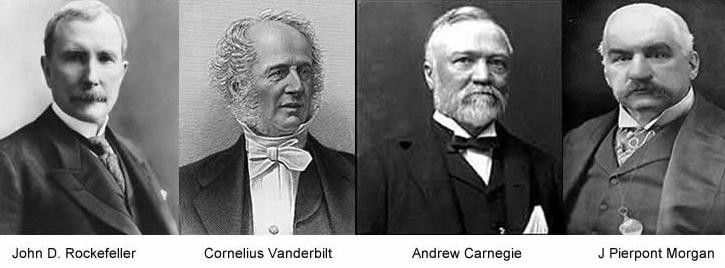
Feigning moral outrage at the wealthy getting wealthier isn’t possible for me. There are no massive scale opportunities for vertical integration of businesses like the railroads, steamship lines, oil companies and telegraph like there were in the Gilded Age. Investors like Warren Buffet vertically integrate segments of their business, and reap substantial profits for doing so, however theirs is a portfolio of diverse and far reaching business activities. The failure of any one wouldn’t matter much in the broader scope of their enterprises. That Buffet et. al. are skilled businessmen goes without saying. Let them have their loot and plunder, I say.
For the rest of us, the plight of the rich only matters when it impacts us directly. For the most part, it doesn’t. If a percentage of each consumer purchase filters back to some palatial estate, as long as we can afford basic necessities, what does it matter? We won’t be going backward from industrialization. The benefits of manufacturing particularly, whether it be home construction materials, food, clothing, transportation or modern health care, are worth more than the antiquated idea of doing everything by and for ourselves. We should be self-reliant, but take advantage of labor saving products and devices with reason.
When it comes to sustainability, there are paths though the seven stages of man that yield respect, viability and a light footprint on the earth among the small percentage of people who own the vast majority of wealth. We don’t want to admit it, but we are peasants all, and that is a tough life, but not terrible.
Next up on my reading list is The Robber Barons by Matthew Josephson.
Written in the wake of the 1929 Wall Street crash, the initial chapter is rich in a way today’s narratives about social and financial matters are not. There is a lot of information I didn’t know or had forgotten. I look forward to reading the book in what is normally one of the coldest months of the year.
We know part of the story.
In a direct line from the industry and frugality of founding father Benjamin Franklin, a group of men seized the opportunity of an expanding frontier following the Northwest Ordinance of 1787. They made their mark converting an agrarian economy to one based on discovery, exploitation and manufacturing using natural resources that were part of the commons.
“Shortly before or very shortly after 1840 were born nearly all the galaxy of uncommon men who were to be the overlords of the future society,” wrote Josephson. This coincides with the settlement of Iowa after the Black Hawk War, and indeed my life and those of my forbears touched the industrialization of the country. Everything from my great, great grandfather buying land in Minnesota from the railroad, to the method of land surveying, to living along U.S. Highway 30 where the Rockefeller trust anonymously bought land at every intersection they could. Their fingerprints remain on much of how we live our lives.
Today, some revere the wealthiest in our society. I am willing to give them their due, but that’s it as our post-Sept. 11, 2001 country approaches what can be called living a plantation life.
In the 1962 forward to The Robber Barons, Josephson wrote about revisionists who would change the contemporary popular dislike of the robber barons. “This business of rewriting our history—perhaps in conformity to current fashions in intellectual reaction—has unpleasant connotations to my mind,” Josephson wrote. “Recalling the propaganda schemes used in authoritarian societies, and the ‘truth factories’ in George Orwell’s anti-utopian novel 1984.”
Little has changed since the 1960s, except the rich continue to get richer, as they run out of resources to exploit in our global village.
There is an intellectual case to be made about the social problems of income inequality, but who believes what politicians and media pundits (or even academics and social scientists) say? Some of us would rather consider the riches in our own lives than seek justice from the wealthiest people. We are a long way from reaching a tipping point in public opinion that would yield a different result.
The American public is asleep on the importance of income inequality to their lives. Just as the continuing resolution to fund the government passed two weeks ago without notice, people don’t seem to care as long as their lives continue as expected most of the time.
Income inequality is not good, but it has been with us for a long time—going back at least to the Peasant’s Revolt in 14th century England.
The lesson is we had better take care of each other because the rich don’t care as long as their wealth increases. That is advice upon which we can sustain a life.
LAKE MACBRIDE— People don’t connect the dots between lower gasoline prices and the shale oil boom.
Yesterday I filled my gas tank for $23.70, with the per gallon price in the mid-$2.40 range. That’s not low compared to when I commuted to Eldridge and fueled at Walcott for $1.02 per gallon for what seemed like months. Neither is it like when I was young and gas wars yielded prices below $0.30, enabling me to top off my tank for a buck or two. However, we are now below $3 per gallon with the prospect of going lower, so prices seems low in a short-term, relativistic way.
There is no doubt that the revolution in shale oil production through hydraulic fracturing is causing the lower oil and natural gas prices in the U.S. The shale boom is replicable world-wide (at least to some degree) because shale is a common and abundant form of sedimentary rock. In some ways, the game changing of shale is just getting started, even though it began in the 1940s.
When I was in my 20s, we thought shale oil was inaccessible. Hydraulic fracturing is a technology that revolutionized exploration, development and production of shale oil. In light of higher oil prices, it became profitable. Some credit goes to politicians, but most credit goes to the oil companies who persistently lobbied for a relaxed regulatory environment with anyone who could be influenced from the president on down.
What does this mean besides lower gasoline prices? Three things seem most important.
The arguments for and against hydraulic fracturing are reasonably accessible.
“Hydraulic fracturing is highly controversial, proponents advocating economic benefits of readily accessible hydrocarbons, and opponents concerned for the environmental impact of hydraulic fracturing including contamination of ground water, depletion of fresh water, degradation of the air quality, the triggering of earthquakes, noise pollution, surface pollution, and the consequential risks to health and the environment,” according to Wikipedia.
There is plenty of meaning in the existential fact of hydraulic fracturing and use of its products. What is less discussed is the impact on climate change, and the impact on renewable energy development.
While shale oil production is booming, 2014 will be the warmest year on earth since record-keeping began, and a clear departure from the climatic conditions in which the industrial revolution emerged. It’s hot and getting hotter world-wide. The climate has changed and is changing.
It is a scientific fact that man-made pollution is contributing to the warming planet. Natural gas is a fossil fuel that emits carbon dioxide when burned. While part of domestic carbon emission reductions during the last ten years have come by switching from coal to natural gas for electricity generation, there are problems.
Methane released as a byproduct of hydraulic fracturing operations is a more potent greenhouse gas than CO2. Methane leakage would reduce the value of the air pollution reduction realized by shifting electricity production from coal to natural gas. Some say methane leakage could negate any gains made in CO2 reductions from switching from coal to natural gas.
As a fossil fuel, natural gas should be viewed only as a so-called bridge fuel, although the clear and present danger is that it will be perceived as a destination fuel and become a permanent fixture in our energy mix.
That raises the third issue. There is a broader economic impact that the Bulletin of the Atomic Scientists (BAS) spelled out in a Dec. 10, 2014 article. Not only is gasoline cheap in a shale gas development scenario, it is impacting the U.S. energy mix, and nuclear power and renewables are taking the hit.
The basic argument about bridge fuels is that the shale boom and its products can act as “bridge” fuels, curbing emissions while non-fossil energy sources such as renewables and nuclear energy are ramped up.
As we have seen in Iowa, new nuclear power has become financially untenable unless its excessive costs can be passed along to rate payers.
Not only are new nuclear power plants imperiled because of the economics of the shale boom, existing nuclear plants have been as well. “While cheap gas is not the only culprit eroding the profitability of nuclear energy, it is the straw that is breaking the camel’s back,” wrote BAS.
What’s more important is the economics of shale gas are suppressing development of renewable energy. As we have seen in Iowa, without government subsidies of renewable energy, production of new renewable capacity languishes. In the current political climate, it is uncertain whether renewable energy subsidies will continue, and for how long.
While the economics of wind and solar may be reaching parity with fossil fuels in some markets, we are not there yet, and the subsidies are essential to continuing development of alternatives to fossil fuels.
It is important that we extend our reach beyond personal or family budgets and do what is right about the shale boom. That means developing the political will to finish a transition to a fossil fuel free world.
Easier said than done, but the price society will pay for failing to do so is much higher than what we see at the gas pump.
Congress put an unexpected gift under the Christmas tree the National Defense Authorization Act (NDAA) has become.
The U.S. is poised to give a foreign mining company 2,400 acres of national forest in Arizona that is cherished ancestral homeland to Apache natives. Details of the proposed land deal can be found here.
The giveaway of Apache burial, medicinal, and ceremonial grounds is currently within the bounds of Tonto National Forest. Resolution Copper, a subsidiary of the Australian-English mining company Rio Tinto and BHP Billiton, is to be the beneficiary of Congress’ largesse at the expense of Apache natives.
News of the land provision in the NDAA was kept under wraps until late Tuesday, when the bill was finally posted online. The land deal appears on page 1,105. The bill passed the U.S. House on Thursday 300-119. The bill now goes to the U.S. Senate where it is expected to pass during the lame duck session.
The Resolution Copper website describes the deal as “developing an Arizona copper resource to benefit the world. Located near Superior, Arizona, the project hosts one of the world’s largest untapped copper resources.”
“Since time immemorial people have gone there. That’s part of our ancestral homeland,” Terry Rambler, chairman of the San Carlos Apache Tribe said, referring to the overall area in question. “We’ve had dancers in that area forever—sunrise dancers—and coming-of-age ceremonies for our young girls that become women. They’ll seal that off. They’ll seal us off from the acorn grounds, and the medicinal plants in the area, and our prayer areas.”
Rambler said whether Rio Tinto’s economic assertions are true or not, it may not matter.
“It seems like us Apaches and other Indians care more about what this type of action does to the environment and the effects it leaves behind for us, while others tend to think more about today and the promise of jobs, but not necessarily what our creator God gave to us,” he said.
This year Congress named the NDAA the “Carl Levin and Howard P. ‘Buck’ McKeon National Defense Authorization Act for Fiscal Year 2015” after the retiring Senate and House Armed Services Committee chairmen. Arizona Senator John McCain is said to have been instrumental in getting the mining deal added to the law.
“The Resolution Copper project has the potential to utterly transform these communities (near Superior, Arizona),” wrote McCain in an article in AZCentral. “At full capacity, the mine could create as many as 4,000 jobs and produce roughly 25 percent of our nation’s domestic copper supply. Arizona as a whole will likely benefit from tens of billions of dollars in increased economic activity over the lifespan of the mine.”
This is who we have become as a nation. Exploring for and producing every last resource on the globe, regardless of long standing and legitimate concerns, for the sake of jobs.
Where will the copper go? It will be traded on the world market. One of the buyers is expected to be the country with the biggest shopping cart. Today’s that’s China. Another indicator of the times in which we live.
The government favors the military, and since the NDAA is expected to pass each and every year, what better place to hang an ornament of interest to the richest corporations in the world? The goal is economic development, but at what cost? Politicians like John McCain don’t answer that question.
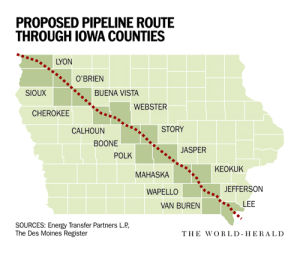 There has been a lot of news about the Dakota Access Pipeline (aka Bakken Oil Pipeline) during the last three months. Where does the project stand? Here’s an update based on information gathered this week.





 Journey Home
You must be logged in to post a comment.