Categories
Living in Society

Iowa’s Flight to No Preference

Solon VotingChad Brown of Ankeny, “the co-chairman of the Polk County Republican Party, has resigned and changed his party registration to independent, saying the GOP has become too conservative and is condoning “hateful” rhetoric,” reported Kathie Obradovich, political columnist for the Des Moines Register, on Tuesday. The flight of voters to no preference (a.k.a. independent) is not new in Iowa, although Brown may be the first GOP party chair to switch in a while, and it’s news.

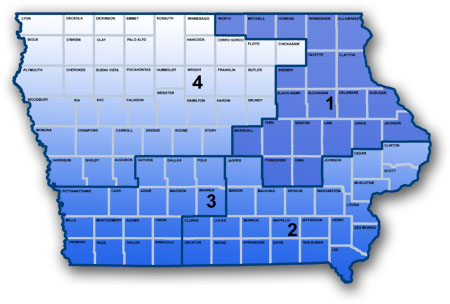
The flight to no preference is significant. Here are the Secretary of State’s August active voter registration numbers by congressional district.

First District: Democratic: 162,447; Republican: 136,290; No Preference: 192,715.

Second District: Democratic: 170,096; Republican: 138,517; No Preference: 182,097.

Third District: Democratic: 157,375; Republican: 164,176; No Preference: 157,076.

Fourth District: Democratic: 127,457; Republican: 178,158; No Preference: 174,307.

Iowa Total: Democratic: 617,375; Republican: 617,141; No Preference: 706,195.

During the 2012 general election campaign, the author spoke to thousands of voters in their communities and at their doorsteps, and the moniker of “no preference” is inaccurate. Voters do have a preference, although it is not based in a political party or the kind of politicized talking points that often characterize a campaign. Voters, in the majority of cases, want to do what they think is right, emphasis on thinking. Most who planned to vote gave careful consideration to the candidates in specific races. In the majority of cases, party affiliation was less important than whether the candidate would perform well in elected office.

Our campaign door knocked enough to meet voters and have multiple conversations with them over the course of the eight month campaign. It was an opportunity to see how the decision-making process went and how choices were made. Our campaign was in the second congressional district, and support for Rep. Dave Loebsack solidified first, as he is well liked in the district. Next was a reluctant choice for President Obama, and it was clear many voters did not like their choices for president. In the state house race in which I was working, people said they hadn’t decided, but I think they were just being polite at their door as the Republican candidate won 56.3 percent to 43.5 percent.

Perhaps most telling was conversations with poll workers during the June 5, 2012 primary election. I visited every polling place in our district on election day and to a person the poll workers said voter turnout was low and they expected it to be low. I asked why. The answers varied, but the consistent theme was that people did not want to be seen by friends and neighbors at the polls as a registered Democrat or Republican. This was particularly the case in mostly rural Cedar County, which is part of our house district and arguably a bellwether county.

The role of politics in daily life had been minimized by many voters I met. Politics mattered, but in a busy life, voters didn’t want to spend a lot of energy on it until the election was imminent, or a particular issue percolated to the surface of their lives.

There are exceptions to everything, but the upshot is that candidates will do better if they figure a way to gain favorable consideration among all registered voters, including members of the opposing party and so-called “no preference” voters. This is increasingly important the further down the ticket a race falls.

There are ideologues throughout the political spectrum, but in the wake of the 2006 and 2008 general elections, their time came in 2010, and is now hopefully receding. The resignation of the Polk County GOP co-chair is just one more example.

~ Written for Blog for Iowa

Categories
Living in Society

Iowa’s First District Democratic Primary Race

Iowa Congressional Districts

(AUTHOR’S NOTE: Since I live in the second district, I won’t be writing a lot about this race, but felt it important to acknowledge what’s going on in the first district. My views do not represent those of our beloved publisher or our other writers).

Five Democrats are at various stages of jumping into the race to represent the first congressional district when Rep. Bruce Braley exits the house, hopefully for the U.S. senate, after the 2014 general election. Of the five, I met only one, Swati Dandekar. I encountered Dandekar in my former life in the transportation business where we were introduced by one of the state’s key Republicans. We also had a chat in Des Moines while I was advocating against House File 561, the nuclear power finance bill. I said my piece about her here, and have nothing further to add. Let’s take a look at the other four candidates.

The remaining four U.S. house candidates, in alphabetical order, are: Anesa Kajtazovic, Pat Murphy, Dave O’Brien and Monica Vernon.

Anesa Kajtazovic is the face of the future of the Democratic party. She has served in the Iowa house since January 2011, and the only question about her for Democrats is whether or not now is her time. Yesterday she announced on Facebook and twitter that she is making a special announcement at press conferences in Marshalltown, Waterloo, Cedar Rapids and Dubuque on Aug. 20. Candidates don’t make four-stop tours to announce they aren’t running, so she is expected to make it official. She seems to believe now is the time.

Pat Murphy is the face of the past of the Democratic party. He already has done fundraising the way experienced pols do, and my former legislators Ro Foege and Nate Willems recently held a fundraiser for him. The Democratic activists with whom Blog for Iowa has spoken, who have had contact with Murphy, are not enthused about his candidacy. There is something to be said for experience, but in a field that has three women and several fresh faces, a Pat Murphy primary win would represent more of the same for Iowa Democrats and that could be problematic in the general election.

Dave O’Brien’s brief biography is what I know about him. He is a Cedar Rapids attorney and according to his web site, “his law practice consists primarily of fighting for Iowans who have been injured by the negligent and wrongful acts of others.” Where I come from, that’s called being an ambulance chaser, and has a negative connotation. Perhaps that’s an unfair comment, and as the campaign progresses, Democratic activists who don’t know him will get a chance to do so. At the starting line, he presents nothing unique or exciting in his resume, but that could be fixed. Bruce Braley is a progressive Democrat. O’Brien says he is one too, but that remains to be discovered.

Finally, there is Monica Vernon, a two-term city councilwoman from Cedar Rapids. Vernon posted on her Facebook page, “the last thirty years of my life were devoted to raising a family, growing a business and working hard to make my community a better place. As a Cedar Rapids city councilwoman, I have tackled extremely difficult issues as we recovered and rebuilt our community after the flood. Since the devastating storm of 2008, I have continued to work with other local, regional and national leaders on forward thinking, short and long term strategies to spur economic development, improve neighborhood safety and more.” It’s a well crafted and earnest statement. Perhaps the pizzazz will be forthcoming. Best of luck Monica.

Besides bloggers and political activists, few people I know are engaged in politics at the end of one of the best summers we have had in recent years. As an outsider looking into the first district, the opinions of this author don’t matter much. I look forward to seeing how the race plays out and what first district Democrats decide in the June 3, 2014 primary.

~ Written for Blog for Iowa.

Categories
Living in Society

Crazy Talk from Ames

Ted Cruz Boots Photo Credit Mike Wiser

Conservatives met in Ames this weekend at the Family Leader Summit 2013, making the case for detractors of Iowa’s first in the nation caucuses with their extreme views and media circus.

While views expressed at the event are in the minority among Iowans, who gave Barack Obama their seven electoral votes in 2012, Iowa conservatives garner broad bandwidth in the news media. President Obama and the congress are on vacation, so it was a slow news day.

Family Leader spokesperson Bob Vander Plaats indicated a number of news media outlets were credentialed. Iowa City’s Adam B. Sullivan posted,
Media CountC-SPAN has partial coverage archived, including speeches by Rick Santorum and Donald Trump, the latter appearing to be the media darling of the event.

Tumpmentum …although some disagreed, Not Going to work With his usual style, Trump named the impossible dream for Republicans,
Trump Quote

The event hit some of the current conservative memes, including the tug of war over who is the most conservative freak to occupy airspace about the 2016 Republican presidential nomination,
Blown Away Speakers touched on immigration,
Larry the Cable Guy … abortion,
Koslow … abolishing the IRS,
IRS … a call to break the law, King Defy IRS … and more votes to repeal Obamacare,Obamacare There were also bits of advice rendered,
Weird …and, Gay Agenda There was analysis, Analysis Gay… and,Analysis Ron Paul

Seems like a bunch of crazy talk to me, but what would a progressive blogger know? Oh, that’s right, I’ve read Sun Tzu, “pretend inferiority and encourage his arrogance.” There’s more on twitter at the hashtag #FLS2013 if readers can stomach it.

~ Written for Blog for Iowa

Categories
Sustainability

Iowa’s Campaign to Stop New Nuclear Power

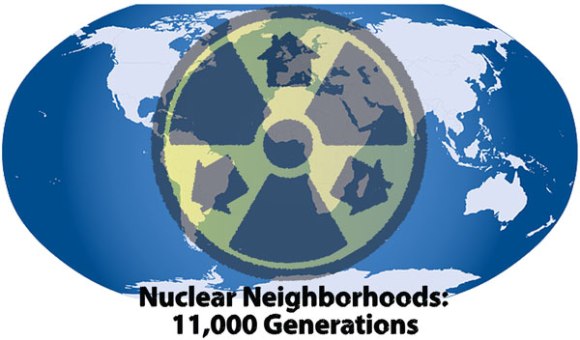
Nuclear NeighborhoodsPrepared remarks delivered by Paul Deaton at the Iowa City Public Library on the 68th Anniversary of Hiroshima, Aug. 6, 2013.

Thank you Maureen McCue for the kind introduction. I want to recognize some of our colleagues in this work who are in the audience tonight.

Well we held back new nuclear power in Iowa. Isn’t that great?

In February 2010, I wrote the first of a long series of posts on Blog for Iowa about what I believed to be the legislature’s infatuation with nuclear power during the last four sessions of the Iowa General Assembly. I wrote, “I heard the words ‘zero sum gain’ applied to MidAmerican Energy’s process toward change for the first time. It seems to fit. A zero sum gain is a situation in which a participant’s gain or loss is exactly balanced by the losses or gains of the other participant(s). If the state wants to move forward with nuclear power, it’s okay with MidAmerican Energy, but they are a business, so the customers will have to pay.”

The customers will have to pay. That pretty much sums it up. What’s missing is no one knew how much a new nuclear power plant would cost, then, or now. For this and other reasons, the people of Iowa decided there were better ways to generate electricity.

During this presentation I want to talk about what the nuclear power discussion was, and what it meant.

At the beginning, the legislation seemed on a stealth track toward passage without opposition. Physicians for Social Responsibility joined with an extensive and diverse coalition who found common ground in opposing nuclear power in Iowa. By the end of our work, according to public polling, a vast majority of Iowans opposed new nuclear power and some legislators who had supported House File 2399, the nuclear power study bill, and House File 561, the nuclear power financial bill, had changed their minds.

What I want to cover in my remaining time is three things: the campaign to stop the nuclear power study, the campaign to stop the nuclear power finance bill, and then some general remarks.

Before beginning, I want to set the framework in which the nuclear power discussions occurred.

The electric utilities in Iowa are looking at a 50-year horizon that compares where we are now with regard to electricity generation, to where we will be. Electricity generation is currently a mix of nuclear, coal, natural gas, wind and hydroelectric. The nuclear and coal plants are making their exit at the end of their life cycle, so the question is what is next?

After defeating two of three proposed coal fired power plants in the state, combined with our recent success in holding back nuclear, we seem bound to keep hydro the same, generate more wind and solar electricity, use no new nuclear or coal plants if we can manage it, with natural gas as the flexibility in the system to meet so-called baseload electricity needs.

Demand growth for electricity is slowing to less than one percent per year, so the primary issue is capital investment to replace depreciated generating capacity. Pretty tedious stuff for the environmentalists among us, but where Warren Buffett and others like him invest their billions is a real issue for us, with real world impacts on the environment.

When we talk about these big picture solutions, however, the missing piece of the puzzle is distributed generation. That is, how individual homes and businesses might produce their own electricity on-site, and sell excess capacity back into the electrical grid.

As prices come down for wind and solar, distributed generation becomes more viable, and could tilt what the regulated utilities do. The thing is, how long can we wait to take CO2 emissions out of the mix? The inconvenient truth is that we can’t wait.

Another thing to note is that while burning natural gas produces about half the CO2 emissions compared to burning coal, the gain for the environment is mitigated by methane leakage along the pathway from extracting the gas to delivery at the power plant where it is burned. Like with any energy source, burning natural gas should be considered in the context of its entire lifecycle. In that context, its greenhouse gas emissions are not much better than coal, if not worse, depending upon the amount of methane leakage.

From the preamble of House File 2399:

“It is the intent of the general assembly to require certain rate regulated public utilities to undertake analyses of and preparations for the possible construction of nuclear generating facilities in this state that would be beneficial in a carbon constrained environment.” There is a lot to unpack there, and the bill had additional aspects I have eliminated to save time. Suffice it to say House File 2399 passed both chambers of the legislature, and on April 28, 2010, Governor Chet Culver held a signing ceremony for what he called the “Nuclear Energy Jobs Creation Bill.” In a letter that is available on Blog for Iowa, Culver wrote, “this bill gives Iowa utilities and consumers more tools to make decisions on our energy future. The study will give us a clear idea of what the future for nuclear and alternative energies may hold in Iowa.” On June 4, 2013, MidAmerican Energy announced the study was complete, and they would be refunding a portion of the $14.2 million dollars collected for the study from rate payers, beginning this month. There was no mention of the words wind, solar or alternative energy in the 50 page final report from MidAmerican Energy to the Iowa Utilities Board. Governor Culver was wrong about the study’s purpose, as he was about many things.

Now let me talk about House File 561, the nuclear power finance bill.

On Monday, March 28, 2011, Wally Taylor, counsel to the Iowa Chapter of the Sierra Club presented an analysis of the Contruction Work in Progress or CWIP bill that eventually became House File 561. Iowa’s version of CWIP was much worse than those passed in other states in that its main purpose was to codify specific costs that rate payers would pay, up front, should the electric utility decide to apply for and construct a nuclear power plant. It included every cost the industry could envision. Among them, it defined “prudent costs” for the Iowa Utilities Board (IUB), when what would have actually been prudent was leaving costs to the board members discretion, rather than being directed by the legislature. It instructed the IUB on calculation of allowed debt and return on equity, something that should also have been left to the discretion of the IUB after performing due diligence on a proposed project. The bill also exempted nuclear power from the requirement, applicable to all other electric generation plants, that the utility has considered other sources for long-term electric supply and that the proposed plant is reasonable when compared to other feasible alternative sources of supply. There were other considerations, and in the end the legislation, if passed, would be biased to favor nuclear power over other methods of electricity generation.

By the close of session, House File 561 failed to gain traction in the Iowa Senate, as most familiar with our campaign are aware.

In closing, let me say something about new nuclear power. In its current state, no privately held company in the United States would take on the risks of nuclear power without significant government and rate payer subsidies. Period. If they would, the Nuclear Regulatory Commission is open for business, and accepting applications.

When we talk about subsidies, first, there is the risk of disasters as happened in Chernobyl and Fukushima. To encourage nuclear power, the U.S. Government created the Price Anderson Act which puts a ceiling on the losses that would be paid by a nuclear power plant owner in the case of a similar disaster. You and I would pick up the excess costs through our taxes.

Second, the Department of Energy owns and is responsible for nuclear fuel throughout its life cycle. While nuclear power utilities charge a small fee per kilowatt hour to help pay for disposal of their nuclear waste, every power plant’s disposal costs are underfunded. This underfunding is complicated by storage that could last for multiple millennia.

Any executive of a public utility, as a matter of personal competence, would want to know how much building a new power plant would cost. In the case of nuclear power, no engineer has a sharp enough pencil today to accurately predict the costs. When MidAmerican Energy CEO Bill Fehrman was asked how much a new nuclear power plant would cost during the last three and a half years, he constantly dodged the question, perhaps because he simply did not know. House File 561 got people like Mr. Fehrman off the hook, by transferring those financial unknowns to rate payers.

When nuclear power came into being in the wake of the Atomic age, whose birth we commemorate today on Hiroshima Day, it was scaled big. In retrospect, if used, nuclear power should have been modeled on the technology of nuclear submarines.

It seems likely the engineering challenges of small modular reactors (SMR) could be met and resolved, as could the issue of nuclear waste disposal. We are not even close to resolving either of those issues.

As MidAmerican Energy wrote in their report, “SMR licensing and SMR pricing could influence the decision to deploy nuclear generation in Iowa,” confirming my point― the technology is not ready for a proposal to the NRC.

We haven’t heard the last about nuclear power. But unlike the time prior to the fight to stop these bills, to stop nuclear power in Iowa, advocates are now ready to take up the fight anew if called upon.

Thank you for your time and attention. We’ll have a question and answer period at the end.

I’ll turn the discussion over to Dr. John Rachow who will speak to the issue of radioactive nuclear fuel. Thanks again.

Categories
Kitchen Garden Living in Society

Farm Bill Forum in Johnson County

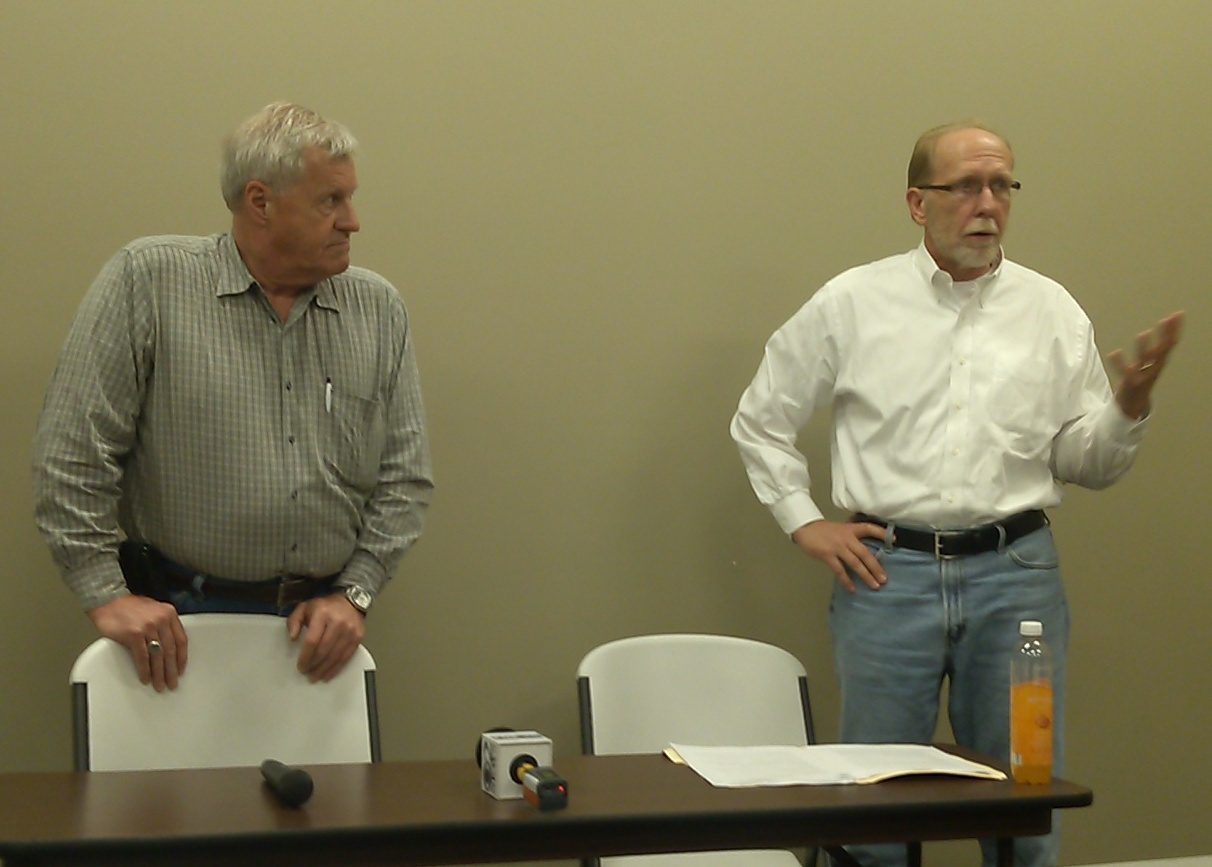
Representatives Peterson and Loebsack

On Saturday, July 27, Rep. Dave Loebsack (IA-02) and Rep. Collin Peterson (MN-07), ranking member of the house agriculture committee, held a farm bill forum at the Johnson County Extension Office. Over 40 people attended, and a lot of ground was covered related to the farm bill, how the U.S. Congress works (or doesn’t), and during an open question and answer period with discussion of the Supplemental Nutrition Assistance Program (SNAP), change in the agriculture committee makeup after the 2010 election, crop insurance, conservation, rural development, LIHEAP (Low Income Home Energy Assistance Program), the renewable fuel standard and target prices for direct payments for wheat, corn, soybeans, cotton and rice. The forum was a primer for anyone who wanted to learn the recent history of the farm bill.

Rep. Loebsack said, “last year was the time to pass the farm bill.” Congress extended the 2007 farm bill for a year, and that extension expires on Sept. 30. Representatives of the Iowa Farm Bureau and the Iowa Corn Growers Association present at the forum indicated they did not want another extension. One audience member pointed to a $50,000 direct payment he would receive this year he didn’t need and didn’t want. Loebsack attributed the situation to the failure of congress to pass a new farm bill last year.

Rep. Peterson said the agriculture committee members had reached a bipartisan agreement last year, but the problem was (and remains) the Republican leadership. He was more specific, saying “it wasn’t Speaker Boehner… he never got in the way.” He added, Eric Cantor is the problem, “he’s the guy who screwed this thing up in the house.”

Mike Owen, executive director of the Iowa Policy Project, entreated the congressmen to take the political spin out of SNAP because it was destructive to families who depend upon the $1.30 per person per meal the program provides. A food pantry volunteer added, “it’s not just SNAP.” The farm bill impacts food pantries, meals on wheels and other nutrition programs people rely upon. Rep. Peterson was direct, “there will be more SNAP cuts (in order to pass a farm bill).”

The clock is ticking on getting a farm bill passed by Oct. 1. After this week, congress begins the August recess, reconvening on Sept. 8 or 9. The U.S. Senate has formally requested a conference committee, but house members have not been appointed. According to Peterson, they may not be until after the recess. There is time, but not any extra.

The framework for the farm bill has been set by the U.S. Senate version, for which the entire Iowa delegation voted. Passing the farm bill comes down to the U.S. Congress doing their work, something at which they have been less than effective. Also something could go wrong between now and Oct. 1 to stop the farm bill from moving, according to Peterson.

After the farm bill failed last year, Peterson said, speaking of the Republican house majority, “you guys have finally made me a partisan.” If SNAP is cut completely by the conference committee and replaced with block grants, as some conservatives want, the Democratic house delegation is expected to walk away, and the farm bill would expire. Well funded groups like the Heritage Foundation, Club for Growth, the Wall Street Journal and others have lobbied hard to cut SNAP, get rid of conservation and rural development programs, and crop insurance.

If readers are interested in more information about any of these topics, please post a comment below, and I’ll reply with any relevant information from the forum.

Categories
Living in Society

Legislators to Tour Lake Macbride

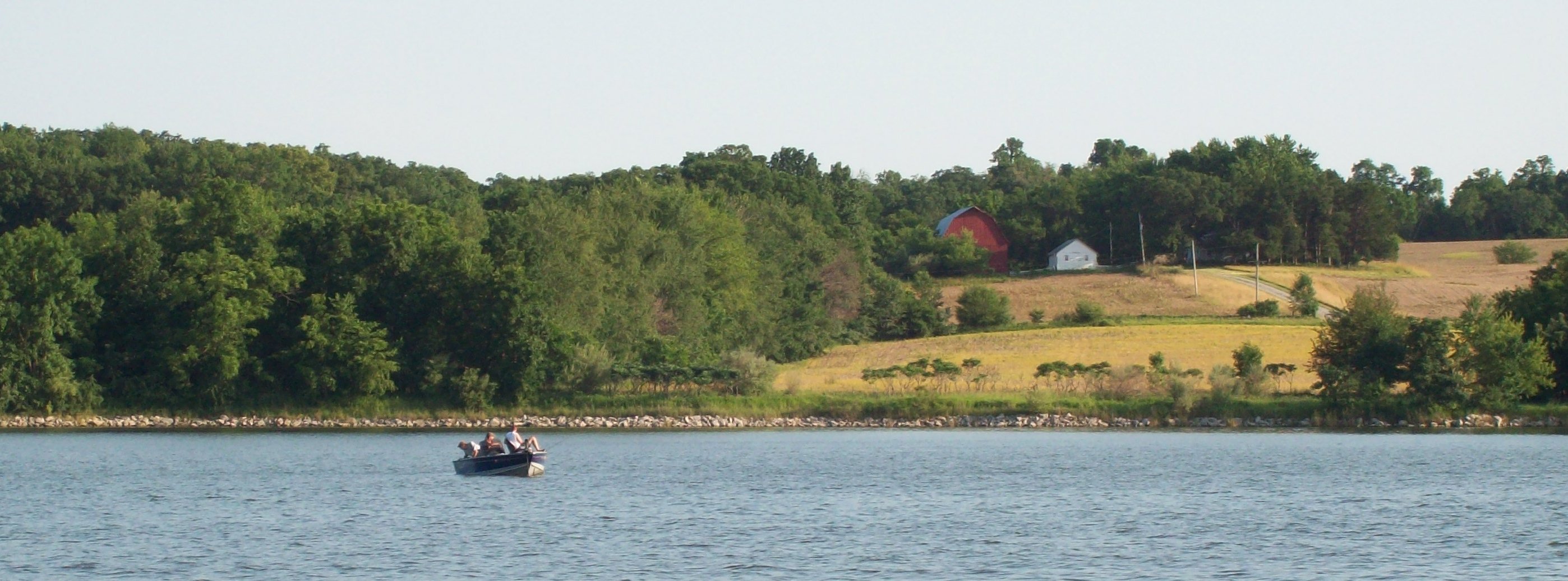
Lake Macbride
Lake Macbride

LAKE MACBRIDE— UPDATE Aug. 2, 2013. Organizers have delayed this event due to scheduling conflicts. Email me if you want a notification of the new date/time.

Lifting the ban on boat motors larger than ten horsepower on Lake Macbride has been a perennial issue in the Iowa legislature. The issue for opponents, including former Iowa state senator Swati Dandekar, has been Iowans can’t afford to own a second motor for their boats to use the lake. It seems a lame reason when there are so many other boating opportunities in the state, and nearby.

The Lake Macbride Conservancy is a group of area property owners that works to conserve Lake Macbride and environs. They have posted about the horsepower restriction on their web site. A neighbor sent this note from them yesterday.

Dear Lake Macbride Friends and Neighbors,

Our local legislators (Senator Dvorsky and Representative Kaufmann), along with members of the Senate Natural Resources and Environment Committee (Senators Dearden, Zumbach and Seng) will be joining us on Sunday, Aug. 4, for a tour of Lake Macbride.

Our plan is to tour the lake on a single pontoon (boat), starting on the North arm and ending on the South at the U of I Sailing Club dock.  We hope to start the lake tour at about 1:15 p.m. and end at about 3:30 p.m. This tour will be a great opportunity to explain the history of Lake Macbride and describe environmental and safety concerns around the park and lake.  We think it will strengthen our message to these legislators when they see, first hand, the number of individuals who use the lake and the number of different types of crafts employed.

Organizers indicated, “it’d be great to have a good showing of association watercraft use during the tour.”

Our family does not include regular boaters, but supports the efforts of the group.

Categories
Living in Society

RAGBRAI and Iowa Politics

From Trish Nelson at RAGBRAI

Trish Nelson, regular editor of Blog for Iowa, posted this photo on the Internet, reminding us that there is a world outside the confines of what Al Gore described as “the worldwide digital communications, Internet, and computer revolutions (which) have led to the emergence of ‘the Global Mind,’ which links the thoughts and feelings of billions of people and connects intelligent machines, robots, ubiquitous sensors, and databases.” That is, outside blogs, Facebook, twitter, the World Wide Web and cable TV.

On the real world front, while Governor Branstad was participating in RAGBRAI, his staff was meeting behind closed doors with regional Environmental Protection Agency (EPA) staff regarding Iowa’s compliance with the Clean Water Act. Read the community organizing group Iowa Citizens for Community Improvement (Iowa CCI) article here.

Putting the best face on it, the governor is managing mandatory compliance with the EPA on a number of fronts, including the Clean Water Act. Elections matter, and Iowa chose Terry Branstad, along with his views on EPA compliance, in 2010. To put the Iowa CCI face on it, they recirculated their frequent meme, “…the Farm Bureau does not run this state,” and demanded transparency. Both points have some validity, and there is no surprise by any of this as both party’s positions regarding concentrated animal feeding operations (CAFOs) are well known and have been.

Here’s the rub. In the May 31 letter from EPA staffer Karl Brooks to governor Branstad, Brooks wrote, “I respectfully suggest that those regulated parties with the most interest in Concentrated Animal Feeding Operation Clean Water Act permitting and evaluation should be invited to this conversation.” While some members of Iowa CCI may be “regulated parties,” the governor was under no obligation to hold public hearings on the matter and didn’t. The Iowa Farm Bureau response, with recommended revisions to the CAFO program work plan, was not only expected, it was, for the most part, the purpose of the meeting. The Iowa CCI response to the meeting was, like so many of their news releases, a red herring that gained some press coverage but diluted their effectiveness. I appreciate Iowa CCI making the information readily available, but there is no news here for anyone who follows water and air quality issues in Iowa. This meeting was predictable, and consistent with the Branstad administration outlook on EPA compliance.

For most Iowans who participate in RAGBRAI, it is a chance to get away from the daily grind for a while. The governor and thousands of others are participating in RAGBRAI, and for Branstad, as a politician, it was a photo opportunity. For Iowa CCI, RAGBRAI was a news hook to beat the drum on one of their core issues, one they know well. One of my groups, Veterans for Peace, uses RAGBRAI to publicize the true cost of our wars, as do a host of groups with their pet issues. All of it is good in what remains of our democracy.

The point is that involvement in a specific cause, regardless of how vocal one is, does not equate political change. There is a lot to hate about the Branstad’s approach to clean water, clean air and compliance with the Environmental Protection Agency. To effect political change means getting involved and working for political candidates, most of whom are subject to influence by moneyed interests like the Iowa Farm Bureau. Any candidate who dismisses as irrelevant the Farm Bureau, the livestock producers and row crop associations won’t be elected to statewide office in Iowa. It’s not going to happen in 2014.

Groups like Iowa CCI make political results more difficult when they throw out red meat as bait for their members and supporters, when most people are tuned out. For one, I’d like to see Iowa CCI less divisive and more involved with electing candidates that support progressive views, as many of their members are, and less focused on braggadocio after hammering the same nail once again.

RAGBRAI is happening, the summer weather has been unusually nice, and most people I know are unplugged from the global mind and living in the real world under Branstad until we can do better. For me, I prefer not to dip even a bicycle in the contaminated Mississippi River, long bike ride or not. Whether we as a state will do better on water quality and compliance with EPA depends a lot on whether people get together to elect a new governor in 2014. The work of doing so should begin now.

~ Written for Blog for Iowa

Categories
Living in Society

A Dose of Citizens United Reality

Writing in The Nation, John Nichols put the best possible face on what he described in as, “the broad-based national campaign to enact a constitutional amendment to overturn the U.S. Supreme Court rulings that ushered in a new era of big-money politics.” He was referring to the high court’s decision in Citizens United versus the Federal Election Commission.

Public Citizen, Move to Amend and others have organized, launched petitions, and convinced legislators in 16 states, the District of Columbia, and about 500 municipalities to support overturning Citizens United. There is tangible evidence in the form of resolutions and referendum results. As Nichols indicated, 2013 has been a banner year for efforts to overturn Citizens United.

At the same time, virtually no one I encounter in rural Iowa knows of this movement specifically. People can agree on generalities: that money is property, that humans are people, that corporations have property, and despite Mitt Romney’s assertion at the Iowa State Fair, corporations are not people.

People also don’t know much about the Citizens United case. They don’t know that it was about a conservative group airing a film critical of Hillary Clinton on television. They don’t know that the McCain-Feingold Act (a.k.a. Bipartisan Campaign Reform Act) prohibited airing the film within 30 days of the 2008 Democratic primaries. They don’t know, and for the most part don’t care, that McCain-Feingold’s regulation of how corporations spend money in campaigns was found to be unconstitutional. What my neighbors do know is a lot of money is spent on politics, and they get sick of television advertisements when it gets close to elections and tune out.

Iowa Move to Amend has had an uphill climb, made more difficult by the departure of Marybeth Gardam, who left the state. Gardam was the grassroots organization’s leader and spark plug. As a grassroots organization, Iowa Move to Amend will proceed without her, but whatever activity there is in Iowa regarding Citizens United will be concentrated in the liberal urban areas, especially Iowa City and Des Moines. The statewide reach that Gardam strove for and could well have organized is on hold with her gone. The Iowa web page on the Move to Amend site hasn’t been updated since 2012.

Groups of citizens pursue the idea of amending the constitution, but saying it is one thing— doing it is a rarity. There have been 27 amendments to the constitution. The last one, related to when pay raises take effect for members of congress, was ratified in 1992— more than 200 years after it was introduced. With an electorate informed by a corporate media owned by a small number of corporations, gaining consensus among three fourths of the states to ratify a constitutional amendment seems improbable without the broad based, bipartisan support for which groups like Move to Amend strive.

Good people are involved with getting corporate money out of politics. Three and a half years after the Citizens United ruling, proponents of a constitutional amendment are less than half way there, which puts any real action beyond the 2016 general election, and maybe further. As Nichols indicated, the cup may be half full, and an amendment may be advanced. However, the political reality is that corporate money will remain in politics for the foreseeable future unless a fire is lit under the movement to amend the constitution. Based on what we see in Iowa, we are a long way from ignition.

~ Written for Blog for Iowa.

Categories
Living in Society

It’s a Gatsby Kind of Summer

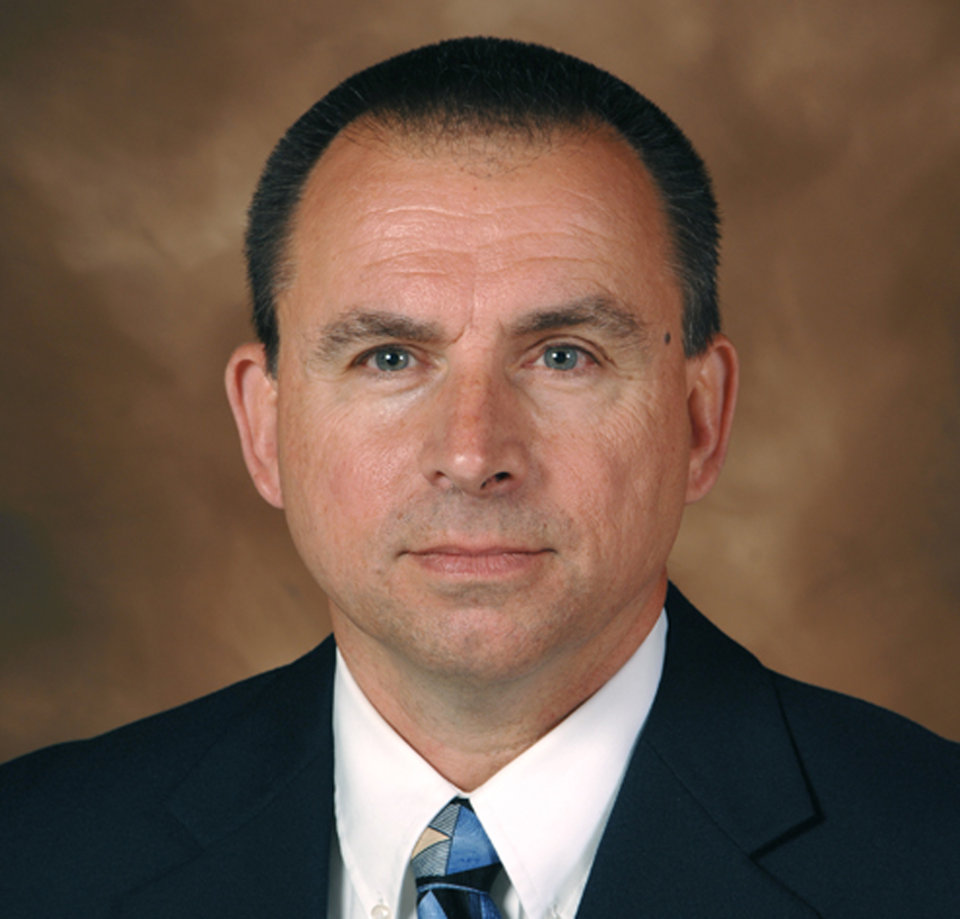
Larry Hedlund
Larry Hedlund

The story about the termination of Special Agent in Charge Larry Hedlund of the Iowa Division of Criminal Investigation won’t be going away soon. Ryan Foley of the Associated Press picked up the story, which is garnering some national attention. Read Foley’s story here.

The governor’s speeding around Iowa typifies the kind of reckless behavior present in his administration. Maybe Hedlund’s termination, and the governor’s flagrant disregard for public safety shouldn’t be the poster child.

With Director of the Iowa Development Authority Debi Durham’s poor negotiation of the Orascom fertilizer plant deal, her failing to connect the dots between China’s desire for self-sufficiency in corn and soybean production and sales of Iowa commodities to China, and her recent joke about the governor’s speeding while on a European trade mission, perhaps she should have been the one terminated for her negative and disrespectful comments.

On that German Autobahn trip, Governor Branstad and Ms. Durham remind one of Tom and Daisy Buchanan, characters in F. Scott Fitzgerald’s novel “The Great Gatsby.” Fitzgerald wrote, “they were careless people, Tom and Daisy- they smashed up things and creatures and then retreated back into their money, or their vast carelessness, or whatever it was that kept them together, and let other people clean up the mess they had made.”

Special Agent Hedlund appears to have been performing responsibly in this instance, and his wrongful termination lawsuit will be in the news. Taxpayers will likely pay for the administration’s defense.

While it is the state’s right to fire their employees, voters should take the reckless ones to task at the polls in November 2014, beginning with Governor Branstad. He has made his mark on Iowa. Isn’t that enough?

~ Written for Blog for Iowa

Categories
Kitchen Garden Living in Society

Vegetable Gardening and DOMA

After the Storm
After the Storm

LAKE MACBRIDE— When President Bill Clinton signed the Defense of Marriage Act (DOMA) in 1996, it seemed wrong. It was one more in a series of his actions I didn’t like. The political reasons for denying federal employee benefits were easy to understand. The blatant discrimination was not, and time and the Supreme Court of the United States (SCOTUS) decision yesterday vindicated the judgment of those who felt like I did.

Yesterday, bills were introduced in the U.S. House and Senate to remove DOMA completely, as some don’t feel SCOTUS went far enough in saying, “DOMA is unconstitutional as a deprivation of the equal liberty of persons that is protected by the Fifth Amendment.” The decision was good enough for me, although I downloaded the text and will read it— comparing it to Iowa’s Brien v. Varnum, dated April 3, 2009, that held the state’s limitation of marriage to opposite-sex couples violated the equal protection clause of the Iowa Constitution.

After three days of rain, thunder, lightning and hail, I spent time in the garden yesterday. Contrary to my previous post, I found hail damage, particularly on leaves of cucumber and squash plants. The damage was not severe, but a lot of leaves had small punctures.

Food production is outpacing our kitchen’s ability to store and process it. This afternoon’s local food shift at home will include harvesting turnips, preparing and freezing broccoli, planting seedlings and rearranging the fencing in the plot where the green beans are located. With the rain and fair weather, combined with more knowledgeable planting, this year’s garden is already a bin buster. More food will be given away as the week progresses.

At the farm, I soil blocked for the seventeenth week yesterday. The seeds planted are for fall harvest of cucumbers, broccoli and cabbage. While I was working, one crew had finished and was doing bicycle maintenance near the machine shed, and another was processing kohlrabi for share holders. The germination building was completely empty, and when I entered to get trays for soil blocking, the temperature was intensely warm. Seedlings trays were on wagons under a nearby tree to avoid the heat while they waited for planting.

With the rain, trip to Des Moines and farm work, everything is behind this week. Hopefully today will be a catch up day as I endeavor to stay on the property, with nose to the grindstone.