Categories
Living in Society

After an Iowa Caucus

Another campaign is over.

I am tired and borderline sick.

Tired because I didn’t get to sleep Monday night until 1 a.m. Tuesday morning, messaging back and forth at midnight with a local reporter.

Sick because a good friend was sick, came to our Democratic precinct caucus, and spent a few minutes with me.

The Big Grove Democratic precinct caucus was some fun and a lot of what I expected. I will provide analytics in a future post but here’s what was important: attendees were engaged and respectful. While everyone didn’t get the outcome they wanted, many did.

This was my first time as caucus chair for a large group. In 2016 I was Hillary Clinton’s precinct captain. In 2012 I was chair of Cedar and Graham precincts in a consolidated caucus. In 2008 and 2004 I was caucus secretary. Because of years of public speaking experience dating back to my time in the military I felt comfortable at the microphone and dealing with issues that arose during the event.

I had a great team of volunteers for secretary, registration and crowd control. We started registration a little after 6 p.m. and the line was gone a couple of minutes before our 7 p.m. starting time. I estimated 50 minutes for check in during my planning, which was about right.

Many pixels have been spilled about the new reporting application used by the Iowa Democratic Party. It took me a couple of days to figure out the process, however, by Monday morning I was running test scenarios to familiarize myself with it. I reported our results using it at about 10 p.m. without any issue.

Tuesday I was contacted about a potential on-air interview about the reporting application. MSNBC Field Producer Dan Gallo had obtained a copy of an email thread in which county caucus chairs discussed the application and I was on it. I phoned and told him my story. It turned out to be a nothing burger because from a user standpoint, it worked as expected. That’s pretty boring for television and the on-air interview didn’t happen.

Most of my friends who were caucus chairs in other precincts were tired Tuesday as well. The six and a half hours from arrival at the high school to returning home from turning in my materials to the county party weren’t long. They were intense. Recovery will take a few days.

Tuesday I gave an interview to a student from Northwestern about the caucus. He asked a couple of questions about the application which I said worked from my end. He asked about all the news stories and the then unreported results. I said it’s not my fault the national media had plane tickets booked to New Hampshire and a filing deadline they couldn’t meet. They may have planned to write about the outcomes, but the outcome they decided to write about became there were no results. The narrative was a bucket of malarkey.

People said they wanted more transparency with what went on at the Iowa caucuses. The state party worked toward that end. The new process was complicated and is taking more time for state-wide results to be tabulated. It is transparent. What do you want? This isn’t Burger King where you can have it your way.

The count of presidential preference groups was accurate. We counted four times in our precinct, and reported results in the application and on paper. If it takes more time to report aggregated results accurately, so be it. Accuracy and the paper trail are what matters more than feeding a media narrative.

Attendees in our precinct watched the process unfold and when it was finished, ratified the numbers and slate of delegates to the county convention and our new central committee members. To a person people with whom I spoke left caucus with a feeling they had contributed to the Democratic process. In the end that’s what the Iowa caucuses are about and will continue to be about for as long as we hold them.

I’m feeling better as I write. This campaign is finished and another has already begun as our eyes turn toward the general election. Being tired and sick will pass, it is passing as a new day begins.
Categories
Living in Society

2020 Iowa Caucus Day

I spent most of the last three days understanding and preparing for my role as chair of our 2020 Iowa precinct caucus tonight. I’m ready.

According to the voter rolls we have 462 registered Democrats in Big Grove precinct. More are expected to register at the caucus. Our party affiliations will likely decline from the 562 we had in 2008.

We never know who will show up. In 2008 we had 247, a record number. With the loss of Democrats in the precinct I expect less. We won’t know until registration closes after everyone in line at 7 p.m. is checked in.

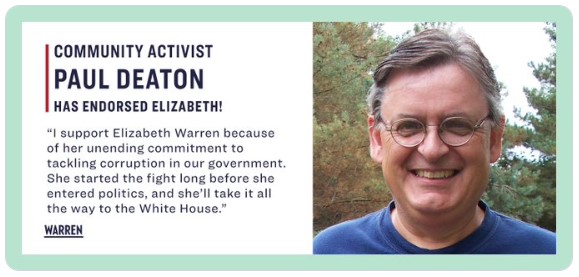
I’m seeing a couple of articles saying you shouldn’t “vote” for Elizabeth Warren because then Biden wins. Malarkey!

Reasons people support Elizabeth Warren as I do are complicated. For one night we should stand with our candidate, the one we want to advance in this way too long nomination process, and let the chips fall.

By mid March we’ll know who are the contenders for the nomination. Iowa will have faded into the background. If our candidate is not viable tonight, that’s another thing… one that will be decided in the dynamics of those rooms.

Since I began preparation for my role I’ve been thinking about what Obama said: Respect. Empower. Include.

Those are my guideposts in the crazy politics of the Iowa caucuses.

Categories
Living in Society

Why Should Progressives Consider Eddie Mauro For U.S. Senate?

Eddie Mauro

When Eddie Mauro is campaigning around Iowa he considers the communities in which he finds himself.

“Every time I drive into a community I look at places where I say we help insure that,” Mauro said. “We help insure that restaurant; we help insure that daycare…”

As president and chief executive of UIG, a Des Moines-based insurance company he founded, Mauro and his team of 70 people provide property and casualty insurance to businesses in all 99 Iowa counties. He’s also one of five candidates for U.S. Senate in the June 2 Democratic primary election.

On Thursday, Jan. 16, Blog for Iowa interviewed Mauro at a coffee shop in Coralville. When I arrived he was standing at a table with his hands on his hips. He appeared to be stretching after sitting in his vehicle for a while. He had another stop in Waterloo after our interview so it would be a long day of campaigning. This post reflects a transcription of his responses to my questions.

In addition to running a successful insurance company, Mauro spent a lifetime in community organizing and activism. Mauro is a founding member of AMOS (A Midwest Organizing Strategy) which “seek(s) to channel individual action into a responsible and powerfully organized force for the common good,” according to the AMOS website. He also worked as a coach in a number of small Iowa towns.

BFIA: What does being a community organizer mean to you?

MAURO: I started doing service work back to (when) I was 14 years old. Catholic Worker in Des Moines was forming then. I started getting involved with the homeless at an early age and have been involved with the homeless community ever since. As a teacher we used to take kids out in the mornings. We would crawl under bridges, and abandoned buildings, or wooded areas, and we would serve the homeless. We had a Saturday program as well with the produce in the impoverished neighborhoods of Des Moines. I’m still doing homeless work.

BFIA: In terms of community service, what are you most proud of?

MAURO: Proud of?

BFIA: What do you look at and say, “boy this was really good.”

MAURO: I’m not proud of any of it. I feel good that God’s given me the wherewithal to step up and help. I do a project in Tanzania called Water Systems of Tanzania. I go over there usually a couple of times a year. It’s a phenomenal project. We created a non profit called the Purify Project. We have some water quality issues here in this country for sure. People are dying every day in Africa. So it’s a good project.

BFIA: Why are you running for U.S. Senate?

MAURO: There are a lot of reasons for running. Primarily that Iowans deserve a leader today to address the problems facing this country with the urgency and the courage that’s demanded in this moment in history. We don’t get that out of Joni Ernst. We have a United States Senate that is broken and under performing.

BFIA: How do you deal with Joni Ernst’s popularity? She was popular in 2014, she continues to be popular.

MAURO: First of all her popularity has been sliding as people are starting to sense that a lot of that was a ruse. She’s been doing a good job of talking, misleading, and conning, and tricking people. It’s starting to become evident that she hasn’t done anything meaningful for Iowans. In fact, she hasn’t even been a senator for Iowans, (but) a senator for special interests and big industry, for her buddies the Koch brothers who created her, who she’s fiercely loyal to. The people in the state deserve better than that. I don’t think she’s overly popular here. I think there’s a lot of holes in that popularity. We are going to talk about she’s voted to take health care away from Iowans five times.

BFIA: I’m seeing people who don’t care about that and are willing to set her voting record aside and say, “she’s our girl.” There’s a plain acceptance of her votes on issues.

MAURO: Those issues are real, Paul. To go out to people and say, ‘Yep, you really like her. Well why do you like her?’ Are you aware of what she’s done for the healthcare? Are you aware of what she’s done to women’s rights? Are you aware what she’s done to turn her back on vulnerable women who are domestic violence survivors? Are you aware of what she’s doing to our public schools, the future for our kids and our teachers? Are you aware of what she’s done for rural Iowa, of the lack of courage that she’s displayed when it comes to the renewable fuel standard, and how she’s cow-tied to the president?

It’s not enough to say all the bad things she did, you have to very well stand for something. So I’m out preaching what I think are strong progressive bona fides while I talk about what we can be doing in rural Iowa. What we can be doing on Main Streets and town squares that I do business with now for over twenty years. What we can do with rural farmers to really give them a strong P&L and balance sheet, something they are yearning for. While at the same time tackling climate change. So we’re going to go out and communicate that we deserve better and we can do better than what we’ve gotten out of Joni Ernst who has not been a senator for this state.

We go out and sell that message wide and far, we’re convinced our strategy shows us that we win this race by five to seven points.

~ First published on Blog for Iowa

Categories
Living in Society Social Commentary Writing

Media’s Theft From The Commons

Iowa City Press Citizen Jan. 23, 2019

“Right-wing media have been laying the groundwork for Trump’s acquittal for half a century,” Nicole Hemmer wrote in the New York Times. “These tactics (i.e. minimize Trump’s transgressions and paint a picture of non-stop Democratic scandals) are not inventions of the Trump era. They are part of a decades-long strategy by the right to secure political power — a strategy originating in conservative media.”

For a student of history the story is not only about conservative mass media beginning in the mid-20th Century. It goes further back.

It’s been a few decades since I finished graduate school yet I remember we studied nineteenth century newspapers from the Old West in Kansas, Oklahoma, and the like. They were mainly gossip sheets in which people could and did say just about anything. Whatever was needed to engage locals and sell advertising, whether it was true or not. It is a part of human nature to want to hear gossip and the outrageous things that may or may not be going on in a community.

What’s different now is corporations have exploited this aspect of human nature to generate revenue. They’ve been successful at doing so. In a way, right wing media is yet another corporate theft from the commons.

One can’t make the argument that media has ever been without bias. Journalists, editors, and even historians have their implicit point of view which may or may not serve the truth or other human needs. I’m thinking here of the work of Howard Zinn, David Hackett Fischer, Clifford Geertz and others.

Joan Didion described it as well as anyone, “We tell ourselves stories in order to live.” What we hadn’t planned for was the malicious intent of people who would come to dominate news and information sources, and the role that would play in the stories we tell ourselves.

The first sign of trouble should have been when our favorite news personalities began to earn millions of dollars annually for what should have been a public service. That Sean Hannity earns $40 million per year is all one needs to know about FOX News. Even Walter Cronkite earned close to a million.

My media behavior toward this impeachment effort is similar to during the Nixon and Clinton proceedings. I tune it out. One exception though. While I’m still in bed, before I turn the light on, I pick up my phone and read Heather Cox Richardson’s daily letter. It’s about all that I can take. Is she biased? Of course. But my tolerance for the biases of Phillips Exeter Academy and Harvard where she was educated is a bit higher. Plus she feeds my confirmation bias.

Categories
Living in Society

Winter Has Arrived

Winter 2020

It was one degree below zero when I woke at 4:30 a.m.

It has now been 24 hours of freezing temperatures and perhaps the beginning of an extended streak. If this pans out I can prune fruit trees assured of their dormancy.

That’s what winter is about here in Big Grove Township.

The Iowa precinct caucuses are coming up on Feb. 3. I’m not ready to chair my precinct yet but will be in the coming two weeks. It’s surprising how much my view of the caucuses has changed since I became politically active again.

Our family walked into the 2004 caucuses together but weren’t sure John Kerry was the right choice. Our daughter brought along a copy of the local newspaper with a candidate comparison in it. In the end we all stood in Kerry’s corner.

After Kerry lost the general election I decided to do my part to regain the presidency for Democrats in the 2008 general election. I met Barack Obama in the rope line at the 2006 Harkin Steak Fry and wasn’t impressed. I ended up devoting many hours to supporting John Edwards, beginning with an October 2006 event at the public library. On caucus night Obama had the most people in the room. Hillary Clinton and Edwards had the same number so the caucus chair flipped a coin to determine who would get another delegate. Team Hillary won the game of chance.

Edwards placed second in the statewide delegate count and his staff dispersed to three other early states: New Hampshire, South Carolina and Nevada. Edwards ended up with one elected delegate when the decision reached the second district convention. It was clear then he would not win the nomination. When Obama formally won the nomination at the Democratic National Convention I supported him.

In 2012 Obama was the presumed nominee and I ended up leading the caucus for two precincts in nearby Graham and Cedar townships instead of my own. I remember we watched a closed circuit television address from the president. There was dissent in supporting Obama but in the long run nothing came of it.

In 2016 I again worked hard, this time for Hillary Clinton. She easily won our precinct caucus with enough people in our group to send 14 of them to make Martin O’Malley viable and deprive Bernie Sanders of a second delegate to the county convention. It was a close race and Hillary prevailed in Iowa just barely getting more than 50 percent of the delegates at the state convention.

This year is different with a slate of many great candidates. I support Elizabeth Warren for president but haven’t been campaigning for her like I did for my candidates in 2008 and 2016. It’s not that I don’t care because I do. It’s that whoever wins Iowa, the nomination will be decided in other states, maybe as soon as March 3 Super Tuesday.

Whoever is the nominee, Democrats will mostly be united to defeat the expected Republican candidate. The trouble is Democrats (or Republicans for that matter) aren’t the deciders. In Iowa, Democrats make up 30 percent of the electorate according to January 2020 numbers from the Secretary of State. Republicans comprise 32 percent. It’s been clear all along that factors besides political party affiliation will decide the outcome of the 2020 general election.

For now, the Iowa caucuses are first in the nation. I’ll note that Vermont and Minnesota have already started early voting so it’s not a clean first. We still have a lot of media attention, and people are deciding for whom they will caucus. My hope is someone else will step up to the Democratic central committee to fill the two slots at caucus so I don’t have to. My political work this year will begin in earnest once we have a nominee this summer.

In the meanwhile, I have a garden to attend as soon as spring arrives. There are also fruit trees that need pruning.

Categories
Living in Society Writing

Grass Roots or Participatory Democracy?

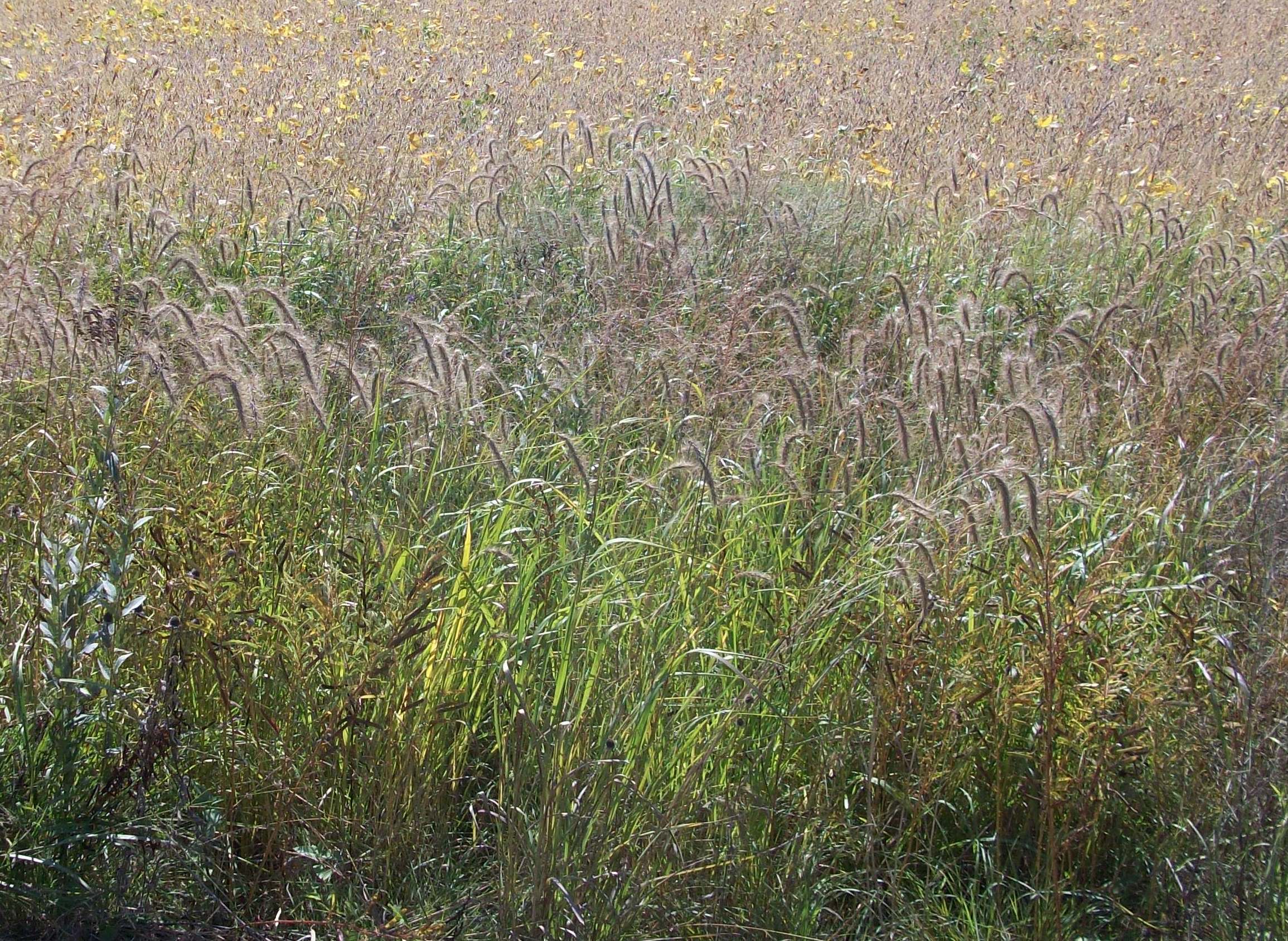
Prairie Grasses in Late Summer

It is a commonplace that effective organizations, especially political ones, should be “grass roots” driven. It is so commonplace the words are virtually meaningless.

Let’s think about this. What drove the election of the current president was a strong movement fed by the fertilizer of unlimited free speech in the form of dark money from a billionaire-led network. It was a grass roots movement supporting a demagogue. It yielded a predictable result, one we’d convinced ourselves wasn’t possible.

The basic validity of the movement to elect President Trump is hard to question. People are free to support political candidates and elect them to high positions including as president. The underlying efficacy of such movements is mitigated by deception and lies told to further its intent. Despite the number of presidential lies and false statements, people persist in their support of the president and the right wing propaganda machine provides many handles for voters to hold fast to the Trump train.

People mistake a participatory democracy as being grass roots driven. It isn’t necessarily. As Thom Hartmann points out in his book The Hidden History of the War on Voting: Who Stole Your Vote — And How to Get it Back, about six percent of eligible voters nominated Trump as the Republican candidate, eight percent nominated Hillary Clinton as the Democratic one. Hartmann’s message is more people should participate in elections.

Grass roots movements are important. Whether they can make needed changes in our governance is an open question. In our current right wing media-dark money-oligarchical society participatory democracy and being grass roots driven aren’t the same thing.

Our recent school board election is an example of a grass roots movement with more positive results. We had six candidates and the community joined together to vet them and pick two to serve. Our collective actions during the run up to the election made a change in the board’s composition. We elected a woman to serve with four other men. She has deep roots among families in the district and the electorate believed the board would be better for her service.

Does characterization of support for a political candidate as “grass roots” make a difference? Probably not. It becomes one more meme in a media environment of too many memes and not enough thinking. I get that tallgrass prairie plants have deep roots. If we hadn’t decimated the ecosystem in which they thrived it might be a more appropriate metaphor. Just like native prairies of Iowa meant something a hundred years ago, grass roots politics are rooted in an era of progressive politics no longer relevant in today’s ubiquitous right wing media and dark money environment.

Instead of coming up with descriptors, politically active people should encourage more people to participate in elections. What we know with some certainty is if everyone votes, common sense solutions to our problems are likely to prevail. Participatory democracy is the way to go.

Categories
Living in Society

Book Review: The Hidden History Of The War On Voting

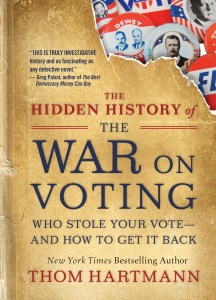
The Hidden History of the War on Voting: Who Stole Your Vote — and How to Get it Back by Thom Hartmann is a quick but important read for people who want or need to review the history and origins of today’s concerted, well-organized campaign to make it more difficult to vote for some while making it increasingly convenient for others.

It answers the question what can we do to ensure everyone has a voice in our democracy? It’s a page turner intended to teach us things we didn’t know about voter suppression.

Hartmann takes readers through the founders’ reasons for curbing the right to vote for Native Americans, women and slaves, the growing influence of moneyed interests beginning with the U.S. Supreme Court case Buckley vs. Valeo, the impact of Brown vs. Board of Education on voting, and more. The final section of the book offers solutions in the form of points of action to protect our fundamental right to vote.

“But isn’t Hartmann preaching to the choir?” engaged readers might ask.

What’s important about this book is it retells the story of voting in America from an actionable perspective. It is easy to read and understand with a focus on how to increase voter participation, eliminate political gerrymandering, end “voter caging,” and more.

Many of us are familiar with Ari Berman’s 2015 book Give Us The Ballot: The Modern Struggle for Voting Rights in America. It is a history of the 1965 Voting Rights Act which people interested in politics should read if they haven’t. What Hartmann adds to the discussion of voting rights is the history of voter disenfranchisement that is baked into our constitution, along with what readers can do to protect and restore voting rights going forward.

Thom Hartmann

In the final section of the book, Hartmann puts potential solutions to voter suppression efforts in high relief. Many may understand aspects of his narrative already. The benefit of reading the book is its long-form and coherent narrative.

So often our ideas about voter suppression are formed by snippets of information in various media about specific aspects of the overall effort. Increasingly social media is a key driver for informing our opinions, yet it presents an incomplete picture. It is not enough. What has been lacking is a more comprehensive look at voter suppression efforts and how to combat them in easy to understand language. Hartmann delivers that and more.

I found the book empowering. Last week I met a woman advocating for D.C. statehood for a group called Iowans for D.C. Statehood. I signed up as an endorser yet told her D.C. was not enough and explained the logic Hartmann put forward in his book about adding additional states. The Hidden History of the War on Voting: Who Stole Your Vote — and How to Get it Back well prepared me for the conversation.

Below is a clip of Thom Hartmann reading from his book. It will be available on Feb. 11, 2020. Click here to order your copy.

~ First published on Blog for Iowa

Categories
Living in Society Writing

Freezing Rain

Freezing Rain Jan. 11, 2020

It’s been tense the first days of 2020 as Iowa voters prepare for the upcoming election cycle.

I’m temporary chair of our precinct caucus and there is a lot to pull together before Feb. 3, including finding a new location after one was cancelled last week. There are 23 days left until the caucus yet that’s just the beginning of what is expected to be an absorbing political year.

Politics will dominate social discourse if we let it. The U.S. Senate trial of the president, the remainder of the current session of the U.S. Supreme Court, the June primary elections, the Democratic National Convention, and then the November general election will make the time pass quickly. In the middle of that, our country’s foreign policy appears non-existent, creating tension in the Middle East, South Asia, and with China and Russia. It is the second session of the 88th Iowa General Assembly where Republicans hold majorities in both chambers of the legislature. They convene on Monday and are expected to further their conservative agenda. That’s only politics. I haven’t forgotten about climate change.

I also have a life with a to-do list filled with many items that are not optional. If 2020 has been tense at the beginning, it will continue to be so throughout the year.

That’s not to say we should all freak out!

The tips of long evergreen boughs touched the ground near the lane leading to the highway. Because of immeasurable leaf surface, they collected more weight in freezing rain than they could handle. Some broke from the trunks of trees and were scattered along the lane.

It’s expected to warm above freezing again so the count toward fruit tree dormancy will have to be reset before pruning. Maybe by the end of this rapidly filling month.

Meanwhile, snow has begun to fall.

Categories
Living in Society Writing

It’s Not Really Winter

Roasted Root Vegetables: potatoes, rutabaga, turnips and carrots.

On Wednesday morning the ambient temperature is in the teens. By tomorrow at this time it will be in the mid-forties. I’m looking forward to a week of freezing temperatures so I can get tree pruning done.

Not yet.

What gripes me is there is limited work to do outside yet it feels like I should be spending more time there. Instead I write, cook, read, and do chores. It’s a winter life without the winter part of it.

I spent time Tuesday night following events in the Middle East. The Islamic Republic of Iran retaliated for the U.S. assassination of Qasem Soleimani by firing a 15 or so missiles in two volleys into Iraq where U.S. forces were staying. After the launches an Iranian government spokesman said they were done unless the U.S. retaliated with additional military action. They threatened to destroy the Israeli city of Haifa as well as Dubai where thousands of U.S. troops are stationed if we retaliated. It appears the president and his key leadership team stood down after the two volleys and neither Iraqis, U.S. troops, nor coalition forces suffered any casualties. Unrelated to the missile attack, a Ukrainian airliner crashed in Tehran last night killing all 176 people on board.

The Middle East action is a distraction from the president’s Dec. 18 impeachment. Senate Majority Leader McConnell announced yesterday he would proceed with the constitutionally mandated impeachment trail without an agreement to call witnesses. At present he has the votes to support his position although that could change.

Donald Trump is the 13th president in my lifetime and I don’t recall any predecessor who appeared so disorganized and superficial in their approach to international affairs. The conventional wisdom is he won’t be impeached, despite clear evidence of high crimes and misdemeanors, because his supporters in the U.S. Senate hold the majority. Based on everything we know, the two articles of impeachment, abuse of power and obstruction of Congress, are rightly promulgated. I was surprised other articles were not drafted, particularly one related to the emoluments clause of the constitution. My position is the president is as guilty as hell of the two articles of impeachment and I would like to see him removed from office even though from a policy standpoint, Vice President Pence could be a worse president.

The Republican Party has become the party of Trump and that’s not good for regular people like us. The corruption from money in politics has become overwhelming and it’s hard to see an end to it. Moneyed interests have a well-developed infrastructure to support what they want to achieve. Democrats have no equivalent response to it. If we can’t slow their progress by winning the presidency in November, it will be generations before a progressive agenda can be advanced.

What stood out to me over the weekend is about 100 people gathered in the county seat to protest the U.S. slaying of Soleimani. At the same time, that number and half again gathered for a nearby event with author Marianne Williamson who laid off her presidential campaign staff a few days previously. That tells me the populace is not engaged in the Middle East or in Trump’s incompetence.

Alice Walker wrote, “The most common way people give up their power is by thinking they don’t have any.” In a scenario like yesterday, where Iranians seem like reasonable people, it seems like we’ve given the president a blank check to have his way with the Middle East. I’d feel better about that if there was any shred of evidence he or his staff knew what they are doing.

It’s winter in America, but not really. Without it it’s an open question whether we will make it until spring with necessary chores completed. We will do the best we can.

Categories
Living in Society

Pre-Caucus Politics

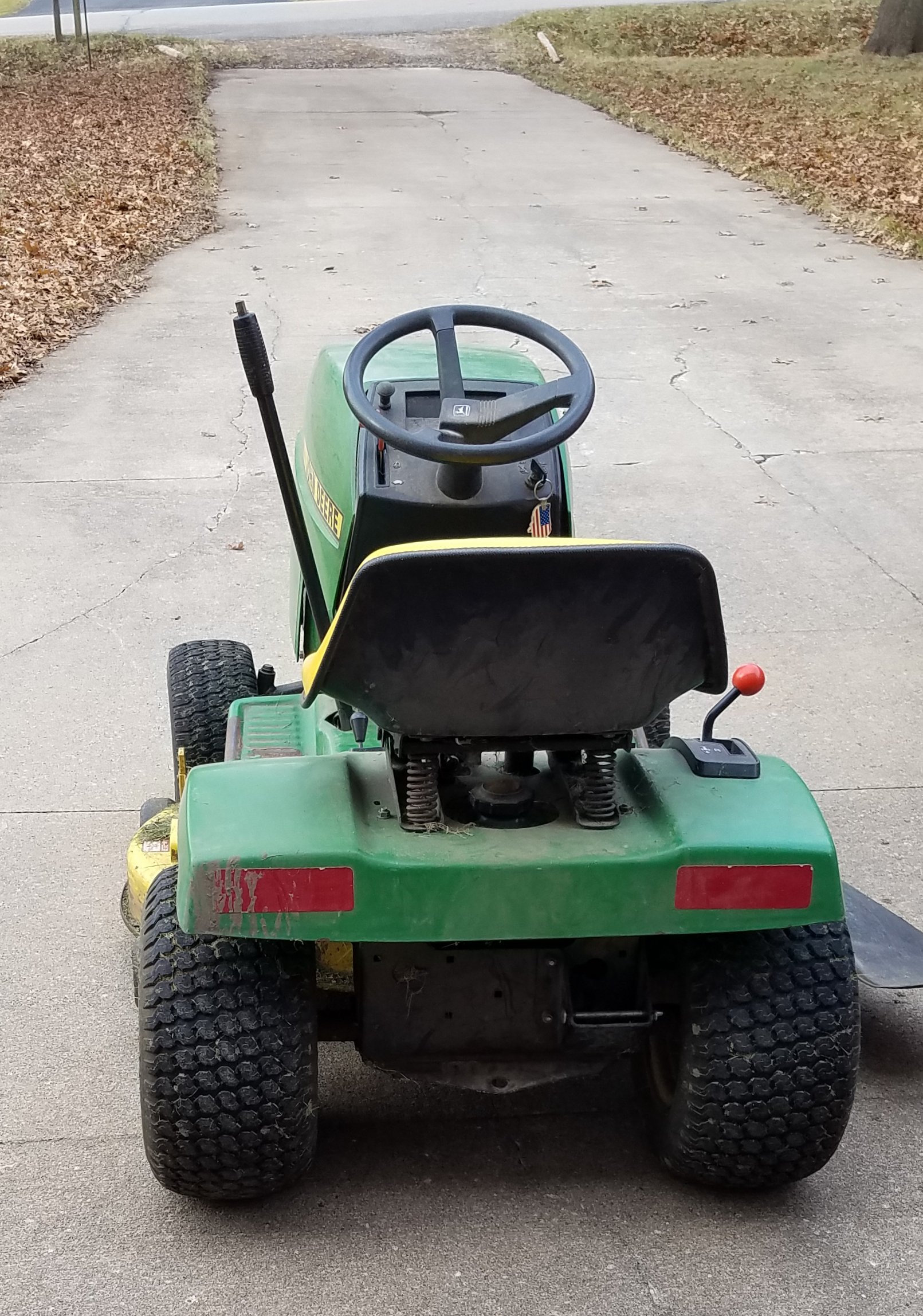
Yard tractor waiting to go to the shop for winter maintenance.

Yesterday a political canvasser rang our doorbell and was halfway down the street before I made it to the door. I can hardly hear the doorbell from my writing table. She came back to talk.

“I noticed your Elizabeth Warren bumper sticker,” she said hopefully.

I asked her to whom she had talked and reviewed the status of a few neighbors with her. We live in a bedroom community for larger urban areas surrounding Cedar Rapids, Iowa City and Coralville. More weren’t home than were on a Monday. Those who were are retired or work from home.

There are some Trump supporters in this neighborhood registered as Democrats,” she exclaimed.

No surprise. It’s a free country and in this white enclave in rural Iowa we get separated from labels like party preference that seem more relevant in urban areas. I didn’t ask her who it was.

There is no guarantee Democrats will win key federal offices in the 2020 general election. Even if we do, the rips in society seem beyond mending.

At a local level, regardless of party, voters can find common ground and get things done to improve our governance. Once we get beyond our rural school district borders, finding common ground becomes more difficult. The divisions and animosity that culminated in the election of this president seem likely to continue for years after the next general election regardless of who wins in November.

On Dec. 9, a white, 42-year old woman went on a crime spree near Des Moines, striking two people with her vehicle in separate incidents, and allegedly shoplifting and displaying public intoxication afterward at a local convenience store. She drove her vehicle on the sidewalk to hit a 14-year old girl walking to see a basketball game. The woman did it because the girl was Hispanic, she told police. Earlier in the day she struck a 12-year old black boy. The woman is charged with attempted murder.

Maybe this is an isolated incident. Justice will take its course as we expect in a society with laws. Yet maybe it isn’t isolated, but a sign of what’s to come, especially if President Trump loses the 2020 election. The steady escalation of tension in the Middle East by our government is sure to divide Americans even as it served to unite the people of the Islamic Republic of Iran.

I admire people who persist in political organizing in our current social environment. They haven’t given up. They inspire hope. Although I signed up for six shifts of door knocking and am the temporary chair of our precinct caucus, I want to do more. At the same time I know my limits and want political work to be meaningful to our community. I want it to endure beyond the Feb. 3 precinct caucuses.That makes me a rough gear in the machinery of precinct-level political organizing.

I asked our local organizer what they were doing after the caucuses. They are sworn to secrecy. To be honest, they may not know what’s next other than brief respite before New Hampshire, South Carolina, Nevada, and then Super Tuesday on March 3. By then the Democratic presidential candidate field will be winnowed to a couple of candidates. There is little doubt who will be the Republican nominee.

The challenge is the broad context of the society in which we seek to live. Presidential politics is part of it. Yet as Barack Obama’s administration demonstrated there is little permanency unless the electorate hands the new president an enduring mandate. As divided as we are, that seems unlikely. Somehow we must navigate our lives out of the tar pits in which we find them. It will be sticky and messy. It will take generations to clean up. All the same, we must persist. If we don’t, what would be the point?