Categories
Living in Society

Is Rural Iowa Different?

Saint John Lutheran Church, Ely, Iowa.

A lot is being made about the differences between voters who live in rural parts of the state compared to those who live in our cities and urban areas.

It’s a false distinction. The same social, economic and political forces are at work no matter where one lives. None of it favors regular people like us.

Why does everything cost more? Why do we have to drive so far for health care? Why is our broadband inconsistent at best if we have it? Why can’t farmers sell milk for at least the cost of production? Why are there patents on seeds? Why does new farm equipment cost so much? Many questions, few answers.

Why do more than half of working people in predominantly rural counties work in another county? The answer to this is easy. Farming does not pay unless one is a big corporation. Someone in most farm families has to work outside the farm to make ends meet and such jobs are mostly urban.

When people say of politicians, “We need someone who understands the rural areas,” it is true. It is also code for something: hard work, poverty, a lack of economic justice, and a type of Christian religious faith. For the most part it is about being a Caucasian farmer.

Of recent writers, Sarah Smarsh came closest to capturing what being rural means in her book Heartland: Working Hard and Being Broke in the Richest Country on Earth. The book resonated so closely with how I grew up yet I lived in Iowa’s third largest city. There are differences between the urban county where I grew up and the rural county I know best (Cedar County). Those differences are not significant. Try telling that to someone who lives in a rural area and you’ll find self-righteousness and resentment.

I won’t resolve this false dichotomy. Just as Jack Kerouac’s more conventional first book, The Town and the City gave way to the “spontaneous prose” of On the Road, it is difficult to focus on it for long when so much more about society is engaging.

Suffice it the assertion of ruralness isn’t about being rural. It’s about having dignity, justice and equal treatment under the law. It’s about a return for the hard labor so many farmers invest as part of their lives. At some point labor should be rewarded for its sacrifices instead of return on equity going to the richest people and corporations like Monsanto, Cargill, John Deere, DuPont and Archer Daniels Midland.

Iowa’s well-developed road system is partly to blame for the rural-urban divide. Because of inexpensive gasoline it is easy to drive to a metropolis when shopping for food, building products, household goods and clothing. When there are no rural jobs, a commute of less than an hour might produce income far above what farm earnings can be. Americans, rural or urban, are at a distance from producing their own food, shelter and clothing. Let’s face it. Who wants to live like Old Order Amish? I’ve met enough young people trying to escape that life to say not many. Yet we still see horse drawn carriages using Iowa’s rural road systems.

Use of the rural trope drives me a bit crazy. Not crazy enough to call the suicide hotline, yet enough to be a catalyst. The thing about catalysts is they can get us to where we should be going faster, the way iron is a catalyst for making ammonia. If people who live in rural areas want to get ahead, they need to steel themselves against language that would divide them from the rest of us. That includes their own language. We are stronger together and fabricating a rural-urban divide is counterproductive. That is, if we want society to advance toward something positive.

~ A version of this post appeared in the Sept. 13, 2020 edition of the Cedar Rapids Gazette.
Categories
Reviews

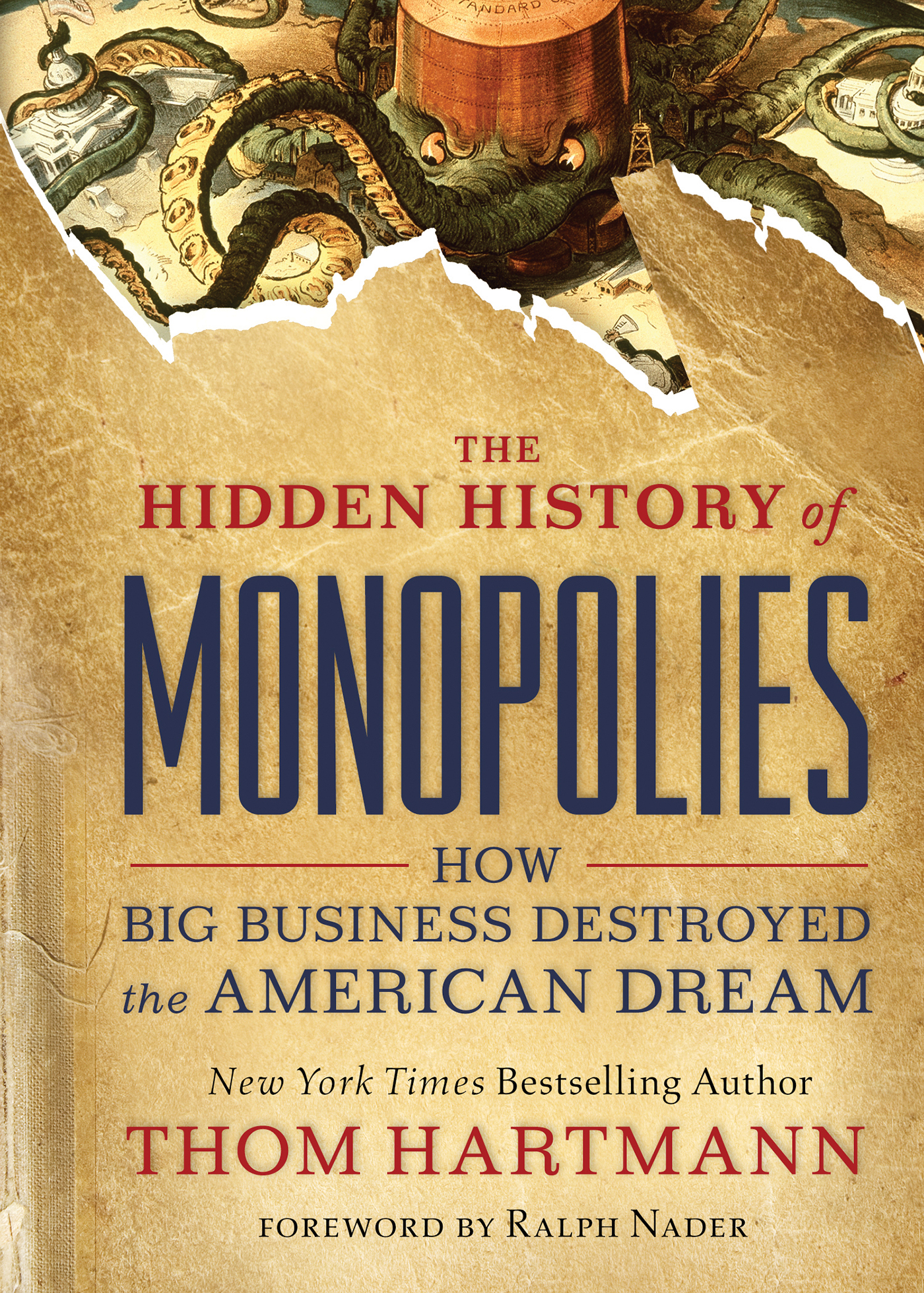
Book Review: The Hidden History of Monopolies

In The Hidden History of Monopolies: How Big Business Destroyed the American Dream, Thom Hartmann takes the reader from the founders’ fight against the monopoly of the British East India Company to the borking of the country by President Donald J. Trump.

Like his other Hidden History books, this one is a quick but important read for people who want or need to review the history and origins of today’s concerted, well-organized campaign by corporations to control commerce, government, and thereby our lives.

“Today, giant corporatism — the commercialization of just about everything at the expense of our civilization’s civic, spiritual, health, and safety values, and other conditions needed for the well-being of future generations confronting poverty, addressing planetary climate crises, and averting nuclear war — is crushing our democracy,” Ralph Nader wrote in the book’s forward. “It is corrupting our elections, and astonishingly enough, controlling the vast commons — public lands; public airwaves; vast pension and mutual funds; and industry-creating, government-funded research and development — owned by the American people.”

Thom Hartmann

We’ve heard the phrase “taxation without representation” as it pertains to the founding of the United States. Hartmann turns this around to what was really at stake: a monopoly on tea and other products sanctioned by the British government. It was concern with monopolies, the British East India Company specifically, not taxation that caused the Boston Tea Party. Founder Thomas Jefferson had monopolies on his mind even after the U.S. Constitution was ratified in 1789 according to Hartmann.

Nontheless, monopolistic practices grew during the 19th Century with the rise of industrialization. In his book The Robber Barons: The Classic Account of the Influential Capitalists Who Transformed America’s Future, Matthew Josephson described the rise of men like John D. Rockefeller, J. Pierpont Morgan, Cornelius Vanderbilt, Andrew Carnegie and others who pioneered vertical integration of companies, a form of monopoly. Their actions led to significant control over oil, railroads, steel making, coal mining, banking and other industries during the Gilded Age.

Beginning in 1887 with the Interstate Commerce Act, the U.S. Government began to regulate big business. It was followed by the Sherman Antitrust Act of 1890, and the Clayton Antitrust Act of 1914. If the founders opposed monopolies and they formed anyway, it was the role of government to regulate them. Hartmann well-describes this history.

It was president Ronald Reagan, under the guidance of Robert Bork and the Chicago School economists, who began de-fanging antitrust regulations.

Many of us are familiar with the July 1, 1987 nomination of Robert Bork to the U.S. Supreme Court and how Senator Ted Kennedy rose in the well of the U.S. Senate to oppose the nomination within 45 minutes of its being made. Previously, along with Milton Friedman, Bork pioneered the phrase, “consumer welfare.” It changed everything.

“In essence, (Bork) argued, it didn’t matter where a product was produced or sold, or by whom,” Hartmann wrote. “All that mattered was the price the consumer paid. As long as that price was low, all was good with the world.” The corollary was that business profitability was another measure of antitrust. Since Reagan the latter gained preeminence. This is referred to as the borking of America.

By the end of the book I became highly agitated and outraged that our government has become an instrument of corporations intent on shaking down the American people, giving any return on capital to a group of about 100 billionaires as Hartmann describes.

The Hidden History of Monopolies is written in classic Hartmann style and can be read over a weekend. If readers are concerned about banking abuses, dairy farmer bankruptcies, insulin price fixing, the cost of internet and telephone service, big agriculture, and more, Hartmann traces their roots to giant corporations and a systemic borking of America that deregulated business and freed corporations from constraints.

Highly recommend.

Don’t have time to read the book? Here’s a fifteen minute interview of Hartmann by David Pakman that covers some of it.

~ Written for and first published on Blog for Iowa.

Categories
Living in Society

Joe Biden’s Inclusive Tent

Turn around point near Seven Sisters Road.

I got my interest in politics from my late father. He canvassed our Davenport neighborhood for John F. Kennedy. Kennedy lost Iowa yet won the general election.

My first campaign was for Lyndon Johnson when I was 12. I delivered newspapers after school and one Saturday after paying my bill at the newspaper office I volunteered for the Democrats stuffing envelopes. They gave me a campaign button for my time. When Johnson won in the historic landslide I figured Democrats would win every future election like that.

I’m no longer 12.

In 2020 I’m voting for Joe Biden and Kamala Harris, the Democratic nominees for president and vice president. Prominent national Republicans announced they are planning to vote for Biden-Harris too. I have little idea who will win the election in Iowa or nationwide. To an extent what matters more than the Nov. 3 vote is what we as a nation will do about it.

Presently people can’t agree what our most pressing problems are. If we can’t agree on that, we will never solve any of them. Some days it seems difficult to have a reasonable discussion about things that matter in this country. Nevertheless, we must persist.

If people were more like we are in the Solon area we’d have a better chance at solving problems. I look back on my time on the Solon Senior Advocates board and believe we got good things done. It didn’t have a thing to do with our politics. As a society we need more of that.

I hope readers will vote on or before Nov. 3. Biden is building an inclusive tent where all are welcome. I invite you to join us. We are stronger together as a society when we participate in our democracy, regardless of for whom we vote.

~ Published in the Sept. 3, 2020 edition of the Solon Economist.

Categories
Living in Society

Revisiting the Yang Gang

Turn around point on the state park trail.

When Andrew Yang visited Iowa during the run up to the 2020 Iowa Democratic presidential caucuses he talked about Universal Basic Income and a Freedom Dividend. I thought he must be on crack.

What other politician would go for free money? Yang anticipated my response.

“You may be thinking, This will never happen,” he wrote in his campaign book The War on Normal People: The Truth about America’s Disappearing Jobs and why Universal Basic Income is our Future. “And if it did, wouldn’t it cause runaway inflation? Enable generations of wastrels?”

“In a future without jobs, people will need to be able to provide for themselves and their basic needs,” Yang wrote. “Eventually, the government will need to intervene in order to prevent widespread squalor, despair, and violence. The sooner the government acts, the more high-functioning our society will be.”

Along came the coronavirus.

The coronavirus pandemic brings into focus what scientists and others have been pointing out for a while: humanity is due for a new way of life. Any job or profession that interacts directly with people was devastated by the economic downturn as the virus spread throughout the world. People in the arts were hit particularly hard: live theatrical performers, dancers, musicians, amusement park operators, and people who support the arts were suddenly without work. Large corporations were hit as people used less shampoo and deodorant, less gasoline and diesel fuel, and reduced restaurant meals dramatically. When we add the impact of technology, automation and robotics to the mix, the number of jobs is expected to contract as global population increases. It seems unlikely these kinds of jobs will return to the way they were prior to the pandemic.

Much has been written about the global explosion of population and its consequences. This from Wikipedia is typical:

“The United Nations Population Division expects world population, currently at 7.8 billion, to level out at or soon after the end of the 21st Century at 10.9 billion, assuming a continuing decrease in the global average fertility rate from 2.5 births per woman during the 2015–2020 period to 1.9 in 2095–2100.”

How will all these people live? The society we adopted during the rise of agriculture and industrialization provided for humanity. It is also wrecking the planet to the extent we have entered a new geological era.

In their book The Human Planet: How We Created the Anthropocene, authors Simon L. Lewis and Mark A. Maslin suggest coping with human-made changes in society and our environment will lead us to a new way of life. How we will work in the near future is an open question highlighted by the massive unemployment resulting from the economic slowdown caused by the coronavirus pandemic. Longer term, things have to change.

This has implications for capitalism particularly. Owners of capital have been on a consistent pursuit of investment opportunities that serve to increase capital. Where labor is part of the business, it serves the profitability of the owners.

When I worked in transportation and logistics I knew some Pennsylvania-based capitalists who sold gasoline at truck stops and convenience stores. When a new housing development appeared, they noticed, and believed if they built a nearby convenience store it would be successful. “A lot of rooftops there,” they would say. Their analysis was not wrong. They had facilities all over the northeast United States. At issue was creating a return on investment based on assumptions about cost of gasoline, labor, environmental compliance and consumer habits. Creating jobs wasn’t the priority and whatever they paid, it was at or slightly above the market labor rates.

“Most people don’t own very much,” wrote Lewis and Maslin. “In today’s world they are required to sell their labor in order to obtain what they need to live.” This has given rise to labor unions, structured pay and benefits packages, and working conditions conducive to profitability. “The owners of resources live on the profits they extract from the labor-sellers, and reinvest some of those profits in order to further increase productivity to produce more goods and services.” It’s a simple expression of the capitalism.

I don’t know what the future holds although some form of Universal Basic Income would address how we might get along with many more people and fewer of the kind of jobs to which we have become accustomed. Yang wasn’t wrong. Whatever today’s politics are, they must adapt to a future where human needs are cared for and wealth is more equitably distributed.

How we get there is an open question.

Categories
Living in Society

Carding Wool With Joni Ernst

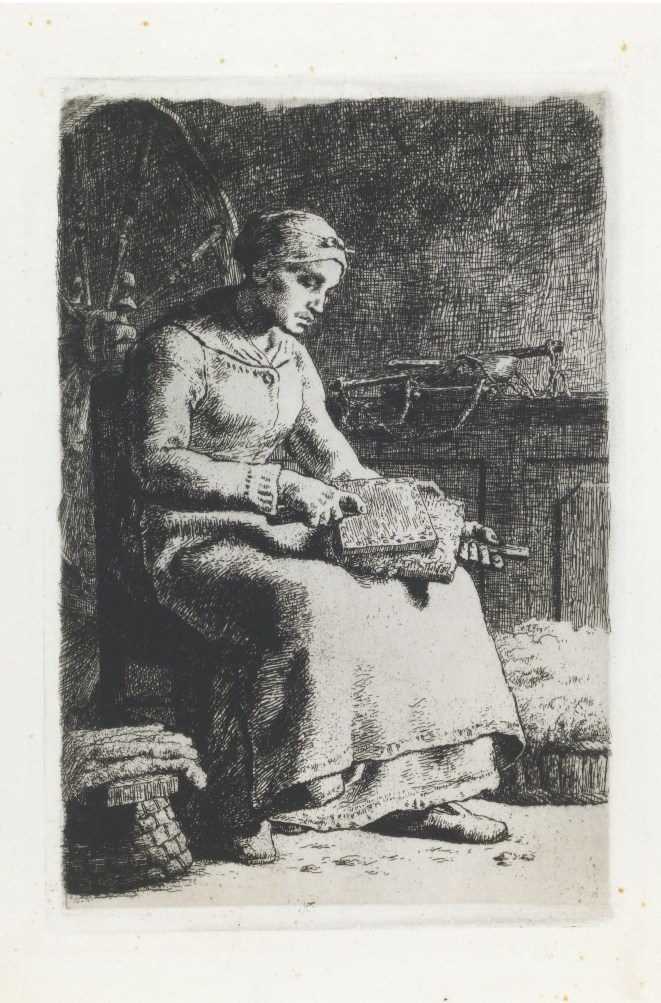
Hand Carding Wool – Image Public Domain from Wikimedia Commons

Every farm kid knows you should card wool before spinning it into yarn.

Joni Ernst’s campaign has spun some yarns about Democratic U.S. Senate candidate Theresa Greenfield and it’s clear they didn’t get things straightened out beforehand.

They don’t intend on getting the story right. They cast aspersions on their opponent’s character with disregard for facts and reasonable discourse.

On Monday, Aug. 24, Ernst released this statement on her campaign website:

“The American Dream is to own a home, which is why it’s so sad that while she was the President of Rottlund Homes, real estate executive Theresa Greenfield’s company was sued in Polk County for fraud, negligence and reneging on property purchase agreements,” said Joni Ernst spokesperson Melissa Deatsch. “For Greenfield, it’s always about looking out for herself. Once Rottlund Homes went bankrupt, Greenfield quickly jumped to Colby Interests and continued to put herself before others.”

Deatsch is saying: 1. Greenfield “quickly jumped” from Rottlund Homes to Colby Interests, and 2. she is implicitly guilty because Rottlund Homes was sued.

That’s a lot to swallow. Let straighten this the way we would card wool.

Let’s start with the LinkedIn profile Ernst wrote they accessed May 14, 2019. Here is the relevant part:

Greenfield LinkedIn Screen Print Aug. 26, 2020

Greenfield wrote she was unemployed from December 2011 until March 2012. She has been quite open about her experience with Rottlund Homes and how she lost her job during the real estate crash of the Great Recession. She told me earlier this year,

“From there I went into home building and eventually became the president of a small home building company in Iowa. That was fun through the recession, until it wasn’t any more fun. We sold the assets at the end of 2011. I became unemployed like a lot of people in the recession, then hired on with a commercial real estate company.”

For Deatsch to say Greenfield “quickly jumped” from job to job simply isn’t true. It was a recession caused in part by turbulence in the real estate business for Pete’s sake. With 100,000 Iowans out of work during the coronavirus pandemic Ernst is criticizing Greenfield for being laid off almost ten years ago? Now that Ernst is a U.S. Senator what is she doing for Iowans who are unemployed? That’s not a rhetorical question.

Let’s talk about the three lawsuits Ernst raised. It is part of business life that companies get sued. How responsible was Greenfield for these lawsuits? Ernst mentions people sued Rottlund Homes but says little else. The plaintiff is not always right and regular people know that. If you look at what happened, much of the basis for the lawsuits was out of Greenfield’s control and all three were resolved through legal process. What’s the beef?

James and Sheryl Moon: A deal between the Moons and Rottlund occurred in 2005, before Greenfield joined Rottlund Homes of Iowa in 2007. The Moons dismissed their case against Rottlund with prejudice and both parties waived claims for attorney fees.

The Villas at Berkshire Hills: The Villas at Berkshire Hills were built in the 1990s, well before Theresa Greenfield joined Rottlund Homes of Iowa in 2007. The Villas at Berkshire Hills Home Owners Association and Rottlund Homes of Iowa settled and the case was dismissed.

The Reserve Homeowners Association: The Reserve was built around 2005, and the neighborhood started to experience water pooling problems in 2006. Both occurred before Greenfield joined Rottlund Homes of Iowa in 2007. The Reserve Home Owners Association trial against Rottlund was cancelled because Rottlund was put into receivership in Minnesota to liquidate their assets and all pending litigation was stayed. The lawsuit was dismissed with prejudice after both parties agreed to dismiss the case.

Did Theresa Greenfield become president of Rottlund Homes of Iowa? Yes, she did, in 2007. Were there lawsuits? Yes, there were. Are those lawsuits long resolved? Yes, they are. How about we quit changing the subject by casting aspersions on Theresa Greenfield’s character and do something for the thousands of Iowans who are jobless because of the coronavirus pandemic?

While Joni Ernst claims to be fighting for Iowans, Monday’s attack shows how out-of-touch she is during the current and greatest economic crisis since the Great Depression. The Ernst campaign is criticizing and casting aspersions on Theresa Greenfield’s character at a time when: over 100,000 Iowans are unemployed, Iowa had record unemployment of over 10 percent in April, the GOP-led Senate, where Ernst as part of leadership, failed to renew needed extended unemployment benefits, and earlier this year, Ernst sought lower unemployment payments in COVID relief.

A person can spin from the lock but who would want to wear the garment, all lumpy and itchy? While Joni Ernst remains a Senator she should quit distracting, get to work for Iowans, and quit trying to persuade us her lockspun is cashmere.

Iowans are just going to shake it off.

Categories
Living in Society

Biden Harris 2020

Vice President Joe Biden in Cedar Rapids, May 2010.

In 1964 I had thoughts about politics.

One Saturday morning, after riding the city bus downtown to pay my newspaper bill, a friend and I stopped at the Democratic office to stuff envelopes in exchange for an LBJ campaign button. The same day, on a lark, we went to the nearby Republican office and did the same for a Goldwater button. Our family was Democratic yet I must have felt there was a choice about politics.

When Johnson won the election in a landslide I figured Democrats would prevail in all future elections. I was 12 years old.

Being a newspaper carrier was a formative experience. It taught me a lot about people, that some were honest and others would try to bilk me out of the cost of their subscription. When I threatened to stop deliveries for non-payment people would blame me when they pleaded with my supervisor to continue the paper.

People were mostly home when I made collections. When they weren’t I made a special trip later in the week. I got to know everyone on my route: who had a barking dog, who kept their yard tidy, who rented and who didn’t. Women were easier to deal with than men. A majority of households took the newspaper.

The street in front of our house dead-ended at a woods near the end of my route. Collecting from that house meant avoiding a dog and finding my way down a long driveway to the old farm house where it was hit or miss someone would be around. Collections taught me a lot about margins in a small business. If you didn’t collect, every penny came out of the margin. Today the street runs through and the farmhouse is long gone.

The years, especially the Ronald Reagan administration, removed any doubt I’m a Democrat. I’m proud to be a Democrat. Our days of landslide victories like 1964 are over so there is work to do in the remaining days before the Nov. 3 election. I plan to vote for the Democratic candidates Joe Biden and Kamala Harris. They are good people. It requires good people to effectively govern.

I’ve been in enough political campaigns to know time slips away if one doesn’t have a plan to support the election. I made a list of 12 things to do. It ranges from easy — like wearing a campaign button or t-shirt in public and installing an auto bumper sticker — to working with the campaigns to contact voters. We’re on a fixed budget yet we’ll find a way to spare a few dollars for our candidates. I’ve already been working the plan.

Why Biden – Harris? They are our party’s nominees. In addition to being good people, they have a coherent plan to address the coronavirus pandemic and the economic collapse it brought. There’s plenty more but unless we get through the pandemic and have a chance at restoring some of our previous life, our lives will become a worsening hellscape. Already it is clear there is no going back to how it used to be before the pandemic.

My life has been about people: getting to know them, working with them in a business environment, and doing things together because it is fun and rewarding. All that is on the line in the election because of the pandemic.

Yesterday CNN reported there is an asteroid heading toward Earth to arrive at the time of the election. The scientists at NASA say the chance of it hitting us is just 0.41 percent. The incumbent president has more chance of being re-elected than that. It’s time to get to work to reduce his chances to closer to zero.

The election will be here before we know it, the results known. In the meanwhile I’ll continue living — cleaning up after the derecho, conserving financial resources, learning how to cook from a kitchen garden, and doing things with people how and when I can. I’ll continue to strive to be a better writer and a decent human being. In 2020 preserving those abilities means supporting Joe Biden and Kamala Harris for president and vice president. That’s what I plan to do.

Categories
Living in Society

A Fall Campaign

Entering drought conditions.

The first thing I did upon waking was view Michelle Obama’s speech at the on line Democratic National Convention. She did her job.

Obama said just what we needed to hear: there is a different vision of the United States from that of the incumbent president.

This morning I viewed Senator Bernie Sanders’s speech. He did his job too. “Nero fiddled while Rome burned. Trump golfs,” he said.

I was too tired to stay up for the convention broadcast. A day of derecho cleanup, chores and kitchen work had me tired by 8 p.m. Because of the on line format convention content was posted soon after it occurred. That’s how our politics is becoming: an on-demand, personalized experience shared with friends and neighbors. I don’t like it as well as past campaigns yet with the coronavirus pandemic what other good choices are there?

When an issue is clear, it can be resolved. It was a mistake to elect Donald Trump president because he is not prepared to do the work. People are suffering because of his incompetence. Because there is agreement about this among a significant part of the electorate, voters of all stripes can come together to elect Joe Biden the 46th president. With the problems created or exacerbated by Trump since he’s been in office it’s not that easy.

There is no consensus around our most pressing issues. We lack a plan to resolve the global pandemic and the United States is trailing the rest of the world in addressing it. Last week’s derecho is only the latest example of extreme weather events caused by climate change. Racism and social injustice revealed themselves as issues that were never resolved. Income inequality increased during the pandemic with the richest Americans doing well while the rest of us wonder how we will survive. Why is it anyone in the United States has to worry about going broke if they get sick? These issues smolder like the burn pile I made after the derecho to return minerals from fallen branches to our garden soil.

No political party is perfect and a case can be made that the success of our country relies on two-party politics. The national conventions kick off the fall campaign and it seems more people will be a part of it. I hope so. No speech is going to resolve our biggest issues. Only political action in the form of voting can do that.

Categories
Living in Society

Leave It All On The Field

Chia Fen Preserve, Aug. 3, 2020.

As Joe Biden and company build an organization to defeat Donald Trump part of its energy comes from active Democrats. That’s to be expected. At the same time, the coalition Biden built is broad and more diverse. It has to be to bring in the votes needed to assure victory. Democratic votes alone won’t win the Nov. 3 election.

Democrats are a distance from being able to claim victory over Trump and his enablers.

The deciding factor may well be that much energy to defeat Trump must come from people with little connection to Democrats. Their allegiance is to something else — not politics — and their activism is energized by how the administration negatively impacts them personally. There are also Republicans unwilling to shed Republican values yet who believe electing Trump was a mistake and he must be removed through the ballot box.

With such a coalition, if the president is re-elected we haven’t worked hard enough. A lot can and will happen before the election. The hurricane of information is just forming to wreck havoc on our political life. To win we have to set aside our personal causes and follow the lead of our candidates. We must give up part of our individualism to work toward a greater good. If Angela Davis is on board with Biden almost any liberal should be too.

What does that mean?

Don’t shed a bucket of liberal tears over the current disaster in governance. Is current policy bad? Yes, it is. Are Republicans corrupt? Yes, some of them are. Can it be fixed? I don’t know and the only path to finding out is to hunker down and elect Democratic candidates from Biden on down the ticket to soil commissioner and dog catcher. Liberal tears are a distraction from the fundamental fact that Democrats, and most Americans, are good people with a desire to improve our common life.

Stay focused. Pick a couple of things you can do to support Democratic candidates. Got a few dollars left over in your bank account after monthly bills are paid? Donate part of it to your favorite candidates. Don’t know who the candidates are? Get a sample ballot from your county auditor and study it. Got friends and relatives? Make sure each of them is registered to vote. Encourage them to vote.

Develop a way of dealing with the noise. There will be a lot of radio, television, internet, and print ads. A lot of friends and neighbors will want to talk about “politics” and repeat awful falsehoods. Listen, consider, and think before reacting. Correct people where you can, tolerate where you must. Engender a sense that we are all in this together because we are.

Deal with the coronavirus. We’re no good to anyone unless we are healthy. The first wave of the pandemic is upon us and there is no easy fix to it. Do all the things health professionals recommend: wear a mask in public, get tested for COVID-19 if you have symptoms or have been with someone diagnosed with the disease, wash hands frequently, sanitize your hands immediately after shopping, and stay home when it’s possible to do so.

Don’t pay attention to the polls. The polls indicate Joe Biden stands a good chance of winning the Electoral College. Act like he is ten points behind and do something to further his electoral prospects. Do what you feel comfortable doing. Then pick something outside your comfort zone and try that too.

Above all else, be part of the solution to the disastrous problems caused by current Republican governance. The opportunity we have today is to elect Joe Biden president. Let’s go do it!

If we can make the change in elected officials then we can talk about the long, hard path to re-inventing America to be better than ever. As they say in sports, leave it all on the field.

~Written for Blog for Iowa

Categories
Living in Society

No Time to Spare – 103 Days Until Nov. 3

Rural Polling Place

The Nov. 3 general election is 103 days out. Buckle your seat belt. It’s going to be a bumpy ride to the polls closing.

Twitter maven Caroline Orr said it about as well as anyone. Her advice seems solid.

I noticed the number of trolls on my social media posts increased this year. Every day I block some alleged Twitter newcomer with a computer generated name, zero tweets and few followers. I don’t know who creates these bots and encourages the trolls but a basic user lesson is don’t feed them. They are trying to distract us. THIS ELECTION IS NOT ABOUT SOCIAL MEDIA ANYWAY. IT’S ABOUT VOTING!

Electing Donald Trump was a mistake. The challenge for reasonable people is answering the question what are we going to do about it? I understand the idea of resisting the Trump administration. It was a natural response to the hell hole of his inaugural address. Three and a half years into his first term it is now time for a counter attack. We must block his path to a second term.

The Trump administration is like riding a Tilt-A-Whirl whose anchoring has come loose. We love the ride for perverse reasons yet for all the crazy he and his enablers are dishing, we’re not the crazy ones. We’re not gullible enough to swallow it, especially after 2016.

During the election campaign, the Republican online goal is to disrupt people using internet applications to build bonds among real people in opposition to the president and his enablers. Chaos and confusion? Don’t get sucked into it by asserting a correction or condemnation to trolls. They want to distract you any way they can. Feeding the trolls with your attention serves their purpose, not ours. According to historian Michael Beschloss FDR said during the World War II national effort, “Lost ground can always be regained – lost time never!” 103 days from Nov. 3 we have no time to spare with trolls or other Republican sourced intended distractions.

The coalition that elects Joe Biden president will be on a spectrum that runs from Angela Davis to Bill Kristol. If we can get over the goal line don’t expect such a coalition to hold together. Republicans will go back to being their normal selves and Democrats can’t rest on our laurels. There will be difficult work to be done re-inventing American society to be better after the coronavirus pandemic and finding our place in the world again.

What we know now is more people acknowledge electing Trump has been a mistake. We are on the crest of a wave of enormous non-partisan energy to vote Donald Trump out of office. We can’t be distracted from our number one task to help build that wave until the general election. After the election results are certified by the Congress we can take some time off. Not much though. There will be plenty of work for everyone to do.

Categories
Living in Society

Dave and Terry Loebsack Inducted Into Hall of Fame

Iowa City Press Citizen, Nov. 8, 2006

On Saturday, July 18, Dave and Terry Loebsack were inducted into the Johnson County Democrats Hall of Fame.

The event is usually a dessert and cash bar event with socializing being the best part. This year, because of the coronavirus pandemic, it was held via Zoom. We yearn for the social element of the event yet made do.

U.S. Senate candidate Theresa Greenfield, and Second District congressional candidate Rita Hart gave brief speeches. They were both upbeat about their prospects for the Nov. 3 election even though their races are tight.

Many on the Zoom event were part of Loebsack’s first campaign for Congress in 2005 and 2006. Dave reviewed the names of attendees and remarked we are getting “long in the tooth,” highlighting the need for younger Democrats to get involved with party politics. The thing about older Democrats is we can spare a donation to attend events like the Hall of Fame and every Democrat will be needed going forward.

Dave recounted election night in 2006 at the Hotel Vitro in Iowa City, how he won the election day vote but we were waiting for the Johnson County absentee vote to be reported. He was confident he would win the absentee vote as we waited for his opponent to concede.

It is a long drive to the county seat so I went home after the polls closed. Like may, I wasn’t sure Dave would win. When it became clear Dave would win, toward midnight, I got dressed and drove in to join the celebration. It was a big win and Loebsack successfully defended the seat six more times.

Dave has been a journeyman congressman. He’s not flashy, he does the work of the district, his story hasn’t changed much since he went to Washington D.C., he remains the person I got to know in his 2006 campaign office. He is still working.

Last week’s news highlights some of his work: With Congresswomen Cindy Axne (IA-03) and Abby Finkenauer (IA-01) he introduced a cattle marketing reform bill. He co-sponsored the PPP Flexibility Act to fix problems with implementation of the CARES Act for small business owners. He co-authored a letter to U.S. EPA Administrator Andrew Wheeler to address the carbon neutrality of farm crops. He worked on the Water Resources Development Act of 2020. Loebsack is not in Washington just for the perquisite of the congressional gym, even if he often talks about who he sees there. He is doing the work we sent him to do.

From his speech, Dave and Terry are planning to actually retire. Dave is part of the Mount Vernon political crew that gave us David Osterberg, Ro Foege and Nate Willems. Over the years Dave has proposed legislation to prevent members of congress from becoming lobbyists after serving. It would be surprising and uncharacteristic for him to become a lobbyist now. He talked of going on road trips with Osterberg in retirement although what actually happens remains to be seen on the other side of the pandemic.

Congratulations Dave and Terry Loebsack for being inducted into the Johnson County Democrats Hall of Fame.

For more information about Congressman Dave Loebsack, visit his website at this link. Here is a link to a recording of the entire Zoom event.

~ Written for Blog for Iowa