Categories
Writing

Food Processing Monday

Hay Bales
Hay Bales

LAKE MACBRIDE— By 10 a.m. this morning I had cooked and cut sweet corn from the cob and made a large batch of hot sauce using five different types of peppers, onion, garlic and tomatoes from our garden. Waiting for the water to boil, I have one of five crates of tomatoes cored and ready to skin— the ones with bad spots are cut up and in another pot, to be processed into tomato sauce. That’s not to mention the buckets and buckets of apples ready to be made into something: apple butter first, then apple sauce, then more juice to can, and along the way some apple desserts. It has been and will be a busy day.

It is always a race against time and decay when preserving fruit and vegetables. Everything seems to come in from the garden at the same time and can intimidate. The secret is not to get wigged out, but do what one can to process the ones needing it first. That’s why I’m working tomatoes now. They were seconds when I started, and there are so many apples, they can wait and go to the farm.

In addition to the kitchen work, I delivered apples not good enough for recipes but great for livestock, and traded them for chicken eggs. Then off to the CSA to load the truck for tonight’s deliveries.

By the time I got home with the CSA share, it was time to clean up the kitchen so our house guest could prepare for a work potluck tomorrow. We made a simple dinner of corn on the cob, sliced tomatoes, steamed broccoli and freshly made apple juice. If your bones are weary at the end of a day, it isn’t all bad that they are weary from securing delicious local food for the dinner plate, made with your own hands and labor.

Categories
Writing

Summer Abundance

Heirloom Cherry Tomatoes

LAKE MACBRIDE— There’s a lot of work to do in a summer kitchen. One almost forgets that in addition to preserving the harvest, it is important to cook and eat in harmony with the season’s abundance. Yesterday at the the grocery store there were bags of two large loaves of French bread for sale at $0.99. I bought one, brought it home, sliced and toasted it, and topped each piece of bread with salad dressing, a slice of tomato, salt and pepper. As is said of good and tasty food, Yum!

On Wednesday, we were discussing abundance at the farm. Extra sweet corn, cantaloupe and cabbage were offered, along with small onions, seconds of potatoes and peppers. I took some of each and made a stew for dinner using potatoes, sweet corn, onion, peppers, potatoes, zucchini, yellow squash, carrot, celery and home made turnip stock: a fitting side dish for a meal of corn on the cob and sliced tomatoes. The cabbage was made into sauerkraut, and the cantaloupe were some of the best we’ve eaten.

This is not to mention the apples which are falling from the tree at a rate of a peck every hour or so. I got out the juicer and added apple juice to the vinegar jar, and bottled a gallon to drink fresh and add as the cooking liquid for apple butter— all using fallen fruit. There are lots more apples in buckets and bowls, and on the trees, and this is only the first variety.

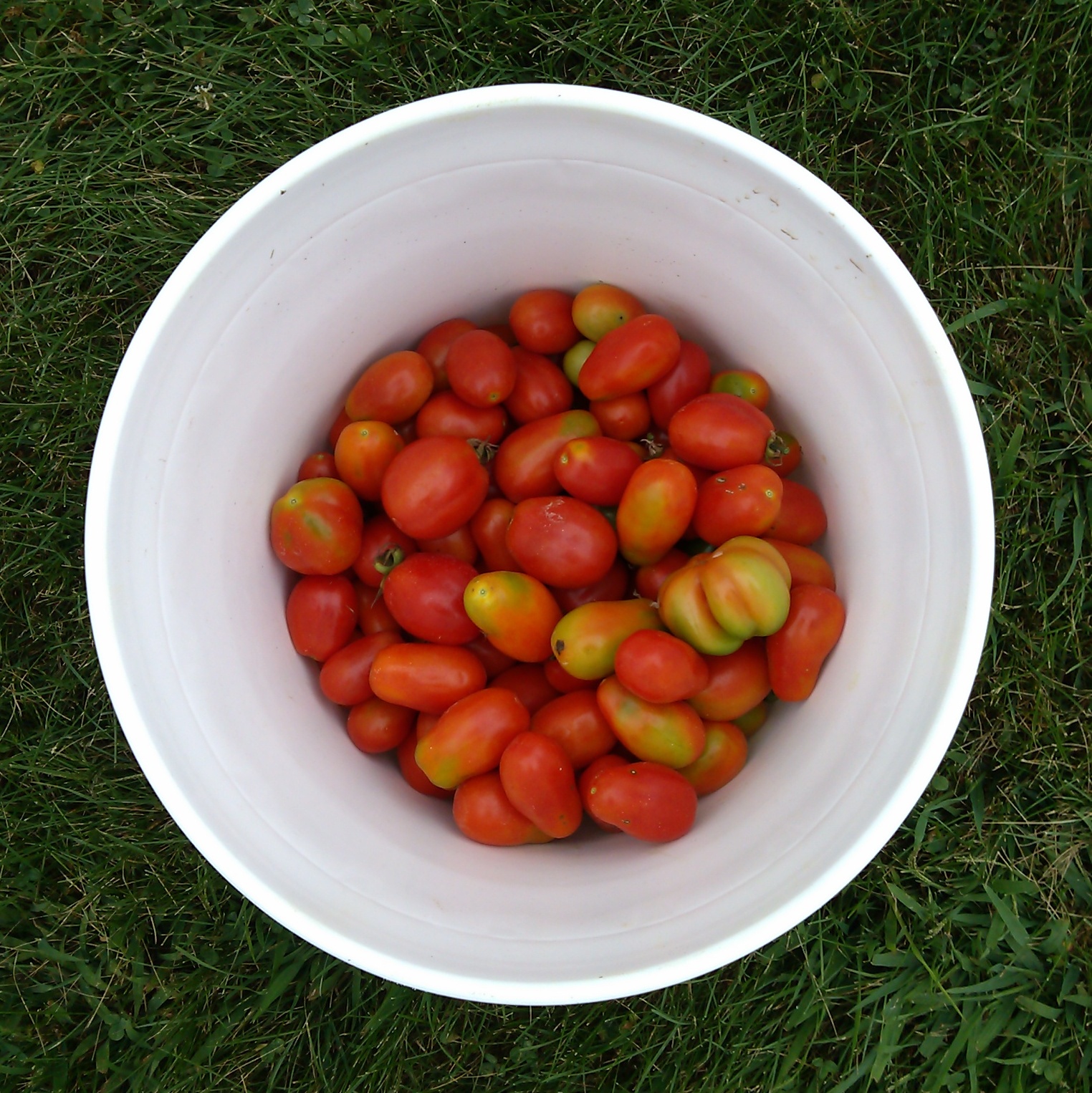
Roma Tomatoes
Roma Tomatoes

In a household-based local food system, we are not consumers. We may purchase items in the grocery store and farmers markets, but the act of buying is not what we are about. It is more the act of processing that is central to a home cook’s food system, and it has ramifications that stretch throughout the food supply chain.

Some gardeners and growers are a bit stressed figuring out what to do with the abundance. Because everyone has lots of tomatoes, peppers, potatoes, etc., selling them would be at depressed prices. It is important for a home cook with a local food system to recognize this happens each year and be ready for it. Unlike city dwellers who escape the summer heat, people with home-based local food systems don’t take an August vacation.

ProfileWhen I use the phrase, “local food system,” it is with a micro perspective. Rather than being a socially engineered process, on a grand scale, that competes with the industrial food supply chain, it means how individual kitchens leverage food availability to stock the pantry with ingredients to use all year. It includes some shopping, but more importantly, gardening, cultivating trees, working for food, bartering and foraging. Food preservation includes refrigeration, freezing, canning, dehydrating and if one exists, root cellaring.

This is not a throwback to the invention of the Mason jar, first patented in 1858. It goes much further back to the cultivation of land and domestication of livestock. It is also a statement of how we live in a post-consumer society. The idea is to live well. If we are lucky, and diligent, we can.

Categories
Home Life

Midweek Work

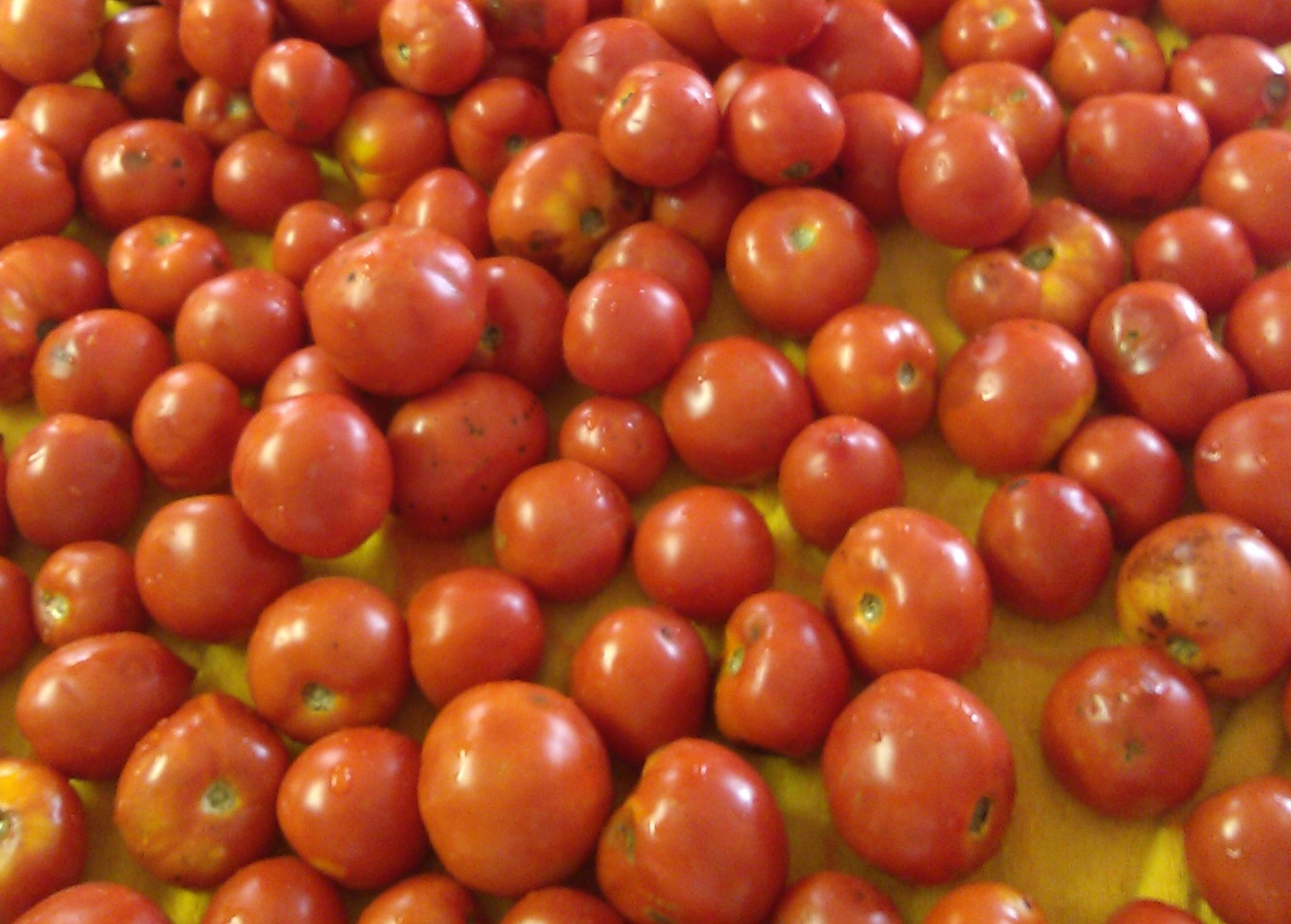
Early Girl Tomatoes
Early Girl Tomatoes

LAKE MACBRIDE— As my portfolio of local food system work builds, there is not enough time to do everything that is needed for optimum results. Apples fall faster than they can be processed, and tomatoes sit on the vine, ripe and ready. The work commitments fill in time at five locations, and that leaves less flexibility in a schedule that used to be pretty open.

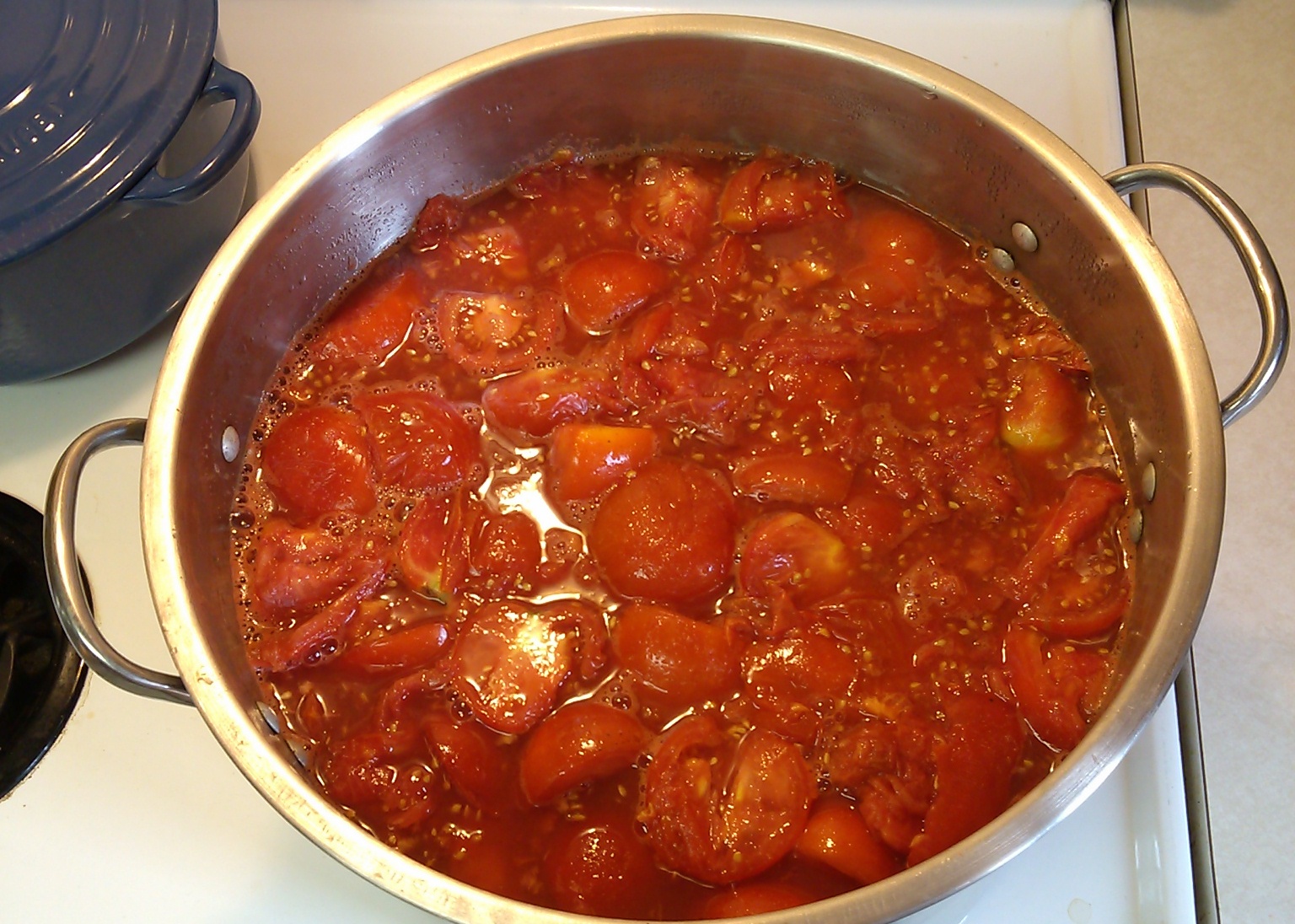
I just finished canning 36 quarts and 14 pints of tomatoes as juice, sauce and whole. The sauce is very expensive in that it takes a lot of tomato flesh to make a pint of the thick sauce. Hopefully it will enable me to make pasta and pizza sauce without reducing or adding tomato paste as a thickener. From last year’s first experiment it was a winner and worth it.

I was counting on a lot of slicers from the CSA, but there was blight and the production hasn’t been as good as in previous years. Luckily, I have plenty in our garden, at least for the moment.

When I come up for air, there will be other stuff to do. For now, swimming in all this work is invigorating and fulfilling.

Categories
Kitchen Garden

The Tomato Deal

Seconds
Seconds

LAKE MACBRIDE— There are six crates of organic farm tomato seconds in various states in our kitchen. Today’s goal is to process them all and have quarts of tomato juice and pints of plain sauce canned and ready before bedtime. I spent about an hour washing tomatoes last night after dinner, and have been at it since 6 a.m. this morning. The tomato deal is an important part of this local food system.

TomatoesHere’s the deal. A CSA produces tomatoes for farm shares, and has seconds, which are not suitable for the customers. I get a call when there are some, pick them up, along with canning jars, process and can them into a few categories of food ingredient. No salt, vinegar or preservatives, with the end result being jars of diced tomatoes, tomato sauce or tomato juice. The juice is the strained liquid left in the cooking vessels, and not tomatoes run through a hand or motor powered juicer. The farmer labor is producing the tomatoes, mine is processing them. We split the finished product 50-50.

So far, it is looking to be successful. Check back when the tomatoes really start coming in.

Categories
Writing

Checking out The Dock

The DockSOLON— In a small town any new restaurant gets a try from locals and last night we had dinner at The Dock on Windflower Lane. Billed as “Fine Dining and Spirits,” there were white tablecloths set out amid decorations reflecting proximity to a place where fish live and boats tie up. Despite nearby Coralville Lake and Lake Macbride, where fish live and boats do tie up, the experience was not intended to be local. The main sign on Highway 1 offered Seafood, Steaks and Pasta, and there were a number of additional signs the size of political yard signs stuck in the ground along the way to get the attention of passers by.

Whenever a new restaurant opens, we check out the menu for the ovo-lacto vegetarian in the house. On-line there was no mention of vegetarian fare of any kind, and while that is a sign, vegetarians know that in the Midwest, sometimes they have to choose some combination of salad and side dishes to fill up the plate. When asked, the server did not have an answer about the offerings for vegetarians, leaving an uncomfortable silence, which my dining companion filled by making some suggestions. Many of the 14 other dining places in our small town acknowledge vegetarians do exist and offer entrees for them. Nonetheless, when my omnivore friends come calling, there is no reason to rule out The Dock.

There were three seating choices: “high,” “low” and outdoors. The high seating was in close proximity to the bar where television sets were mounted to the wall, and a person could hang out, appreciate the work of the resident mixologist and catch a popular televised event. The low seating was in a dining room where the tables were a bit close together. I bumped a person at the table next to us when moving my chair. We didn’t try the outdoor seating, but might have had the greeter mentioned it upon arrival as it was a beautiful summer night.

When asked about specials, the server indicated there were none, attributing it to the fact that the chef was serving on reserve duty that weekend. He seemed a nice young man, but apparently had not been trained to market the offerings of the kitchen, chef or no. In fact, our dinner conversation turned to how the food came from farm to plate, trending toward late 20th century consumerism, where diners sought specific items, the act of purchase having hegemony over any celebration of food. Not a place a restauranteur wants customers to be.

The food was good, and reasonably priced, and that is a positive. However, rather than the good food, the restaurant’s operational issues dominated the evening. When one dines out once or twice a month, that matters.

Dining out is about expectations met, and The Dock has some work to do to earn repeat business. First, and foremost, the staff needs training. Everyone we encountered was friendly and sought to be helpful, but management hadn’t done their work. Staff is at the core of a positive restaurant experience, and while they promptly replaced the dirty forks on the table,  there shouldn’t be dirty forks, prompting diners to recall the Monty Python sketch on the subject.

An example of a mismatch between the kitchen offerings and the menu is that a side of coleslaw is listed on the online menu for $2.50. In the restaurant, the price had gone up to $3, and they were no longer offering it, the server said, indicating it should be taken off the menu. We agreed. Set aside that local cabbage is in season and abundant. All of this is an easy fix, the responsibility of management.

So at the end, the food was good and reasonably priced at The Dock, but they have some work to do to stay open in what is becoming a very competitive Solon restaurant scene.

Categories
Home Life Kitchen Garden

Will Work for Food

Preserving Eggplant
Preserving Eggplant

LAKE MACBRIDE— Two batches of pickles are fermenting in crocks downstairs, the second started three days after the first. The rule is to place cucumbers in the brine and let things get started for three days before checking. There was scum to skim on the first this morning— evidence the pickling process is proceeding as expected. The reason for a second batch is a local grower had excess cucumber seconds which were offered and taken to serve my dill pickle addiction.

Eggplant is abundant. I peeled and cut three into half inch rounds. They were baked for 15 minutes at 425 degrees, cooled and then frozen and bagged for future use, most likely in eggplant Parmesan. By then, the freezer was reaching capacity, and eggplant is not an everyday preference.

Last processed yesterday was two tubs of broccoli. This is part of a work for food barter, and unexpectedly came about while discussing seconds and surplus with a grower. All told, it took me about four hours to process the two tubs with a total yield of 20+ pounds frozen. The first tub, which yielded 8-1/2 pounds, was returned to the grower as compensation for the produce. I kept the second, added two heads I already had in the refrigerator, and that was the balance.

It’s a shame we had to compost the stems, as they are some good eating. If better organized, I would have made a big batch of soup stock using carrot, onion, celery, bay leaves and the broccoli stems and canned it in quarts. Our household uses a lot of stock.

The squash beetles mentioned yesterday avoided the butternut squash seedlings and congregated on the withering acorn squash plants. I need to study natural pesticides before I pull those vines, as the bugs will likely next migrate to the new cucumber plants, and infringe on my plans for more dill pickles. It is remarkable that I had tremendous abundance of zucchini and yellow squash before the squash beetles showed up.

The grower with whom I’m working on the broccoli and tomatoes stopped by to drop off some canning jars. We toured my local food operation which is situated on 0.62 acres. It is revealing to see what other growers notice about a home garden: the apple trees, my compost bin made from four pallets, the healthy Brussels sprout plants, my deer-deterrent fencing, and my pile of cut brush waiting for a fall burn after the garden is finished. She asked if I turned the compost. I won’t until spring when it is spread on the garden plots.

A local food system centered around a single household is both simple and complex. Cooking and preserving food are practices that have been around since hunting and gathering gave way to agriculture and domestication. Fresh food is sourced from a garden and a mix of growers. Specialty items are purchased where they are available at local retail outlets. There is a constant balancing act that regulates types and quantities. The refrigerator contents reflects how things are going, hopefully with the majority of foodstuffs having no commercial label.

While endeavoring to earn money for the tax man, insurance companies and lenders, we have to eat. The question becomes, what takes precedence? We can live without bankers, but sustaining a life requires a sophisticated, ever evolving local food system. The pay is not much, but the rewards are renewable.

Categories
Kitchen Garden Work Life

Suddenly it’s Busy

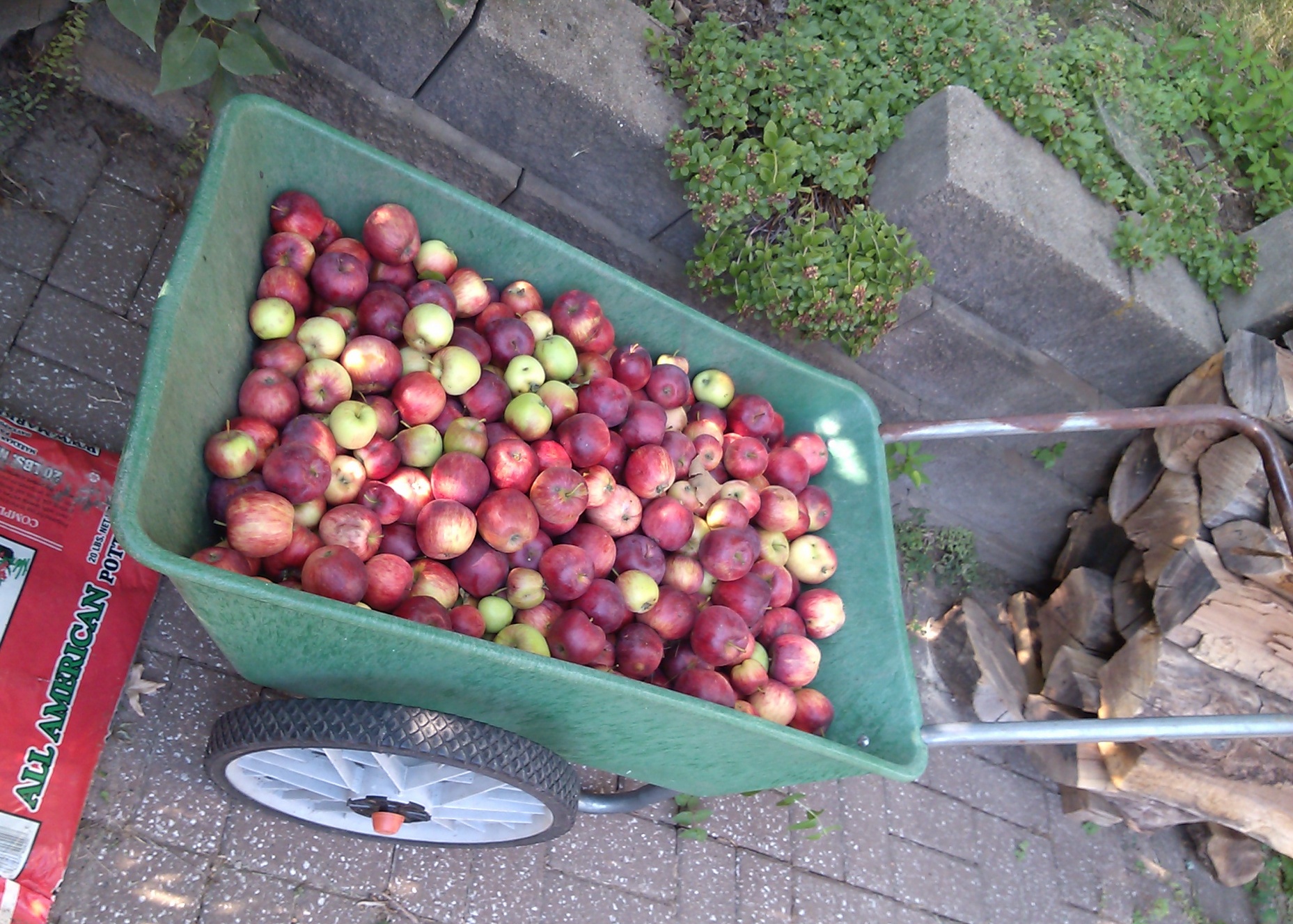
Apples for Livestock

LAKE MACBRIDE— Part of yesterday was clearing the dead and dying squash plants from the garden and planting turnips and transplanting butternut squash seedlings. It is dicey as to whether the squash will produce because of the timing of first frost compared to the 110 day growing cycle. Too, the abundance of squash beetles have nowhere to go without the zucchini and yellow squash plants, so even though they had not found the seedlings this morning, one suspects they will visit and if they like it, attempt to stay.

In that plot, the Brussels sprouts are thriving, as are the three kinds of peppers, Swiss chard and collards. This is the most bountiful year of gardening we’ve had.

In the cool downstairs await six bins of tomatoes and two of broccoli for processing. This is part of a work for food arrangement with a local organic grower. Combine it with the approaching and massive apple harvest and there will be plenty of work to do.

Yesterday I planted three trays of seedlings: lettuce, kale, broccoli, kohlrabi and squash. There is plenty of time left during the growing season for these crops to mature, and I am particularly hopeful about new cucumbers for pickling.

As summer races toward Labor Day and October frost, there is much to be done in the garden and in life. We have to eat to live, and because of this summer of local food, there will be no shortage there. It’s enough to sustain a life on the Iowa prairie, at least for a while.

Categories
Kitchen Garden

Zucchini Juice

Zucchini
Zucchini

LAKE MACBRIDE— In a quest to use the bountiful zucchini, I found a juice recipe. Zucchini juice? Before you click on the next page in your reader, hear me out. The apple harvest is beginning to come in, and they are also basic part of juicing recipes. Organic carrots were on sale at the mega market, as they often are, and they are another essential part of juicing. Put the three together, run them through a juicer, and the result is a sweet juice that immediately creates a boost of energy. The zucchini flavor is masked by the sweetness of the carrots and apples. Mmmmm.

I know what some readers are going to say, that vegetables should be eaten in the form nature presents them, and not highly processed. They have a point. The rationale is that if the zucchini and carrot are fed through the juicer first, the fiber can be used as a cooking ingredient, especially in soup. Too, there is an abundance of apples and zucchini, and a glass of juice in the morning gets the digestive tract moving, if you know what I mean.

Undecided whether this is the next new thing, or a pit of hopeless and despairing zucchini abundance, all there is to do is recommend readers try it and decide for yourselves. I’ll be having a few more glasses before the season is over.

Categories
Kitchen Garden Work Life

Working in the Onion Patch

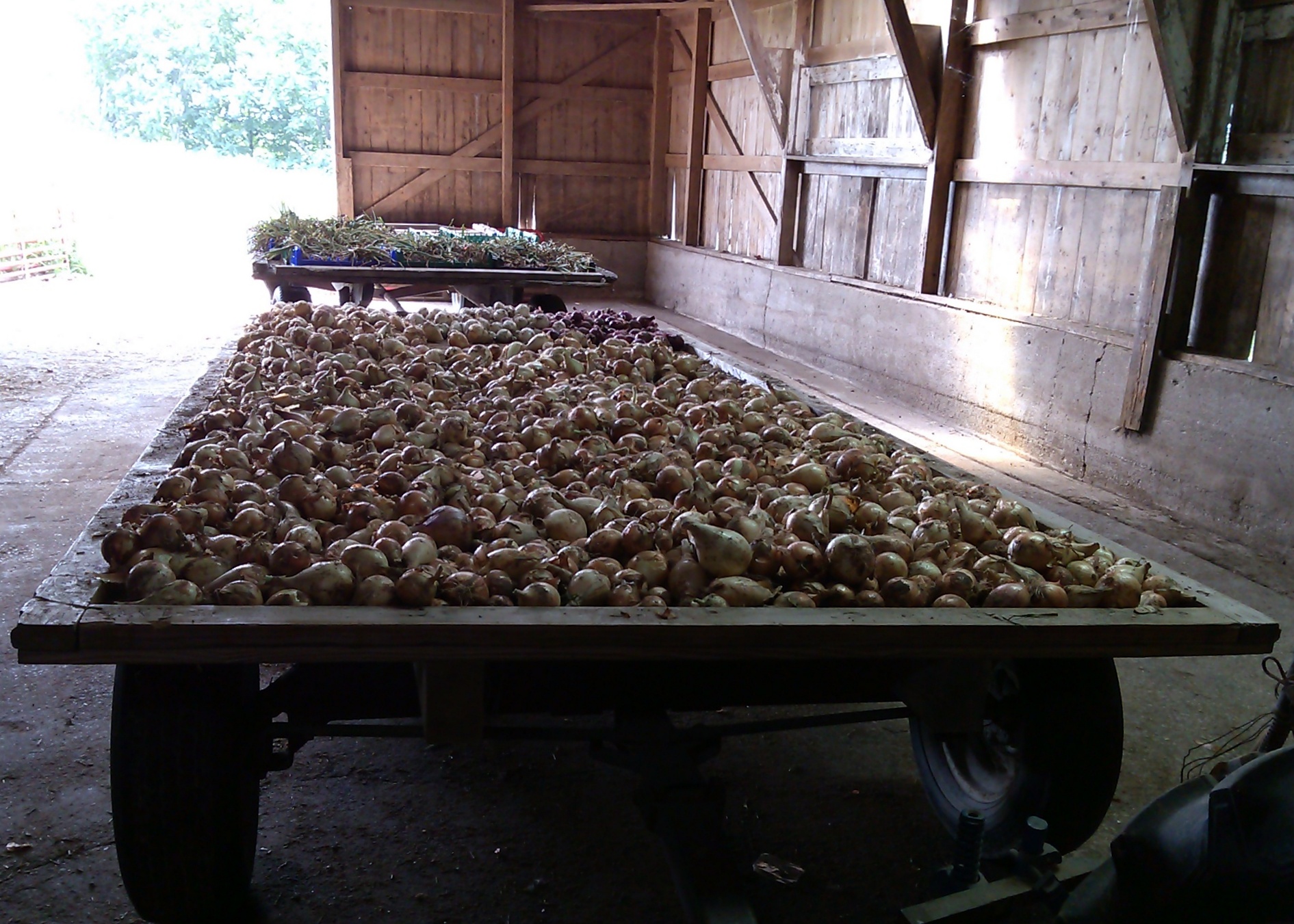
Two Wagon Loads of Onions

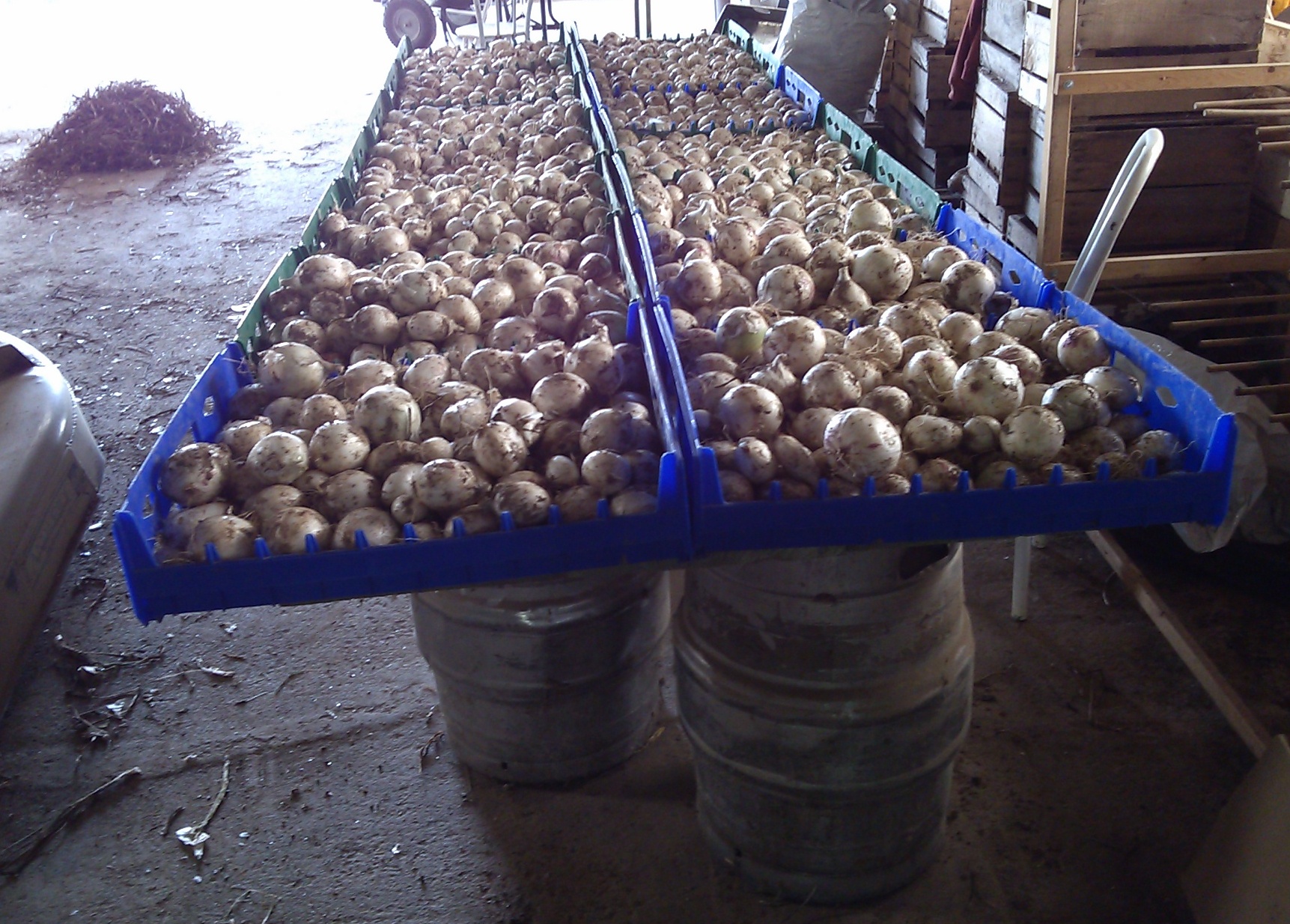
RURAL CEDAR TOWNSHIP— The onion harvest is in at the CSA, and more than two tons of white, red and yellow onions have been arranged in the germination house and barn to dry. Today begins the third day of trimming the excess leaves and arrange them for further drying. A few more four hour shifts and the project will be complete. Onions are one of the most popular vegetables, so the shareholders at the CSA will enjoy continuing to receive this bounty in their shares.

Trimming Onions
Trimming Onions

I filled the blank spaces in my garden’s cucumber row yesterday afternoon and gave the new patch a good watering. The zucchini are about done, the vines withering and yellowed. Same with yellow squash. There are butternut squash seedlings to plant, although I’m not certain they will make the 90-100 day window needed to mature— another experiment. Next weekend I begin paying work at a local orchard, helping with the weekend surge of city dwellers who come out for family entertainment and apples. That means this weekend will become a working time in the yard and garden, getting caught up on weeding, grass mowing, tree trimming, and preparing garden plots for the next iteration of planting.

White Onions
White Onions

Fall crops will include turnips for the greens, radishes, lettuce and spinach for sure, adding to the most prolific of gardening years here in Big Grove. (Note to self: prepare more trays for germinating seeds).

My first crop of apples is getting close to ripe (there will be two harvests this year, plus pears), which means the CSA operator and I have to stay in touch with the work for tomatoes project so everything can get processed as it comes in at the same time. In my garden, the large tomatoes are beginning to ripen. We’ve been eating fresh tomatoes for about three weeks.

In the kitchen the storage space is filling up with onions, potatoes and apples, and the soup stock is getting used, making room for the approaching tomato harvest in a week or so. There is a lot to do before Labor Day.

Categories
Writing

New Restaurant in Solon – Again

Salt Fork Kitchen
Salt Fork Kitchen

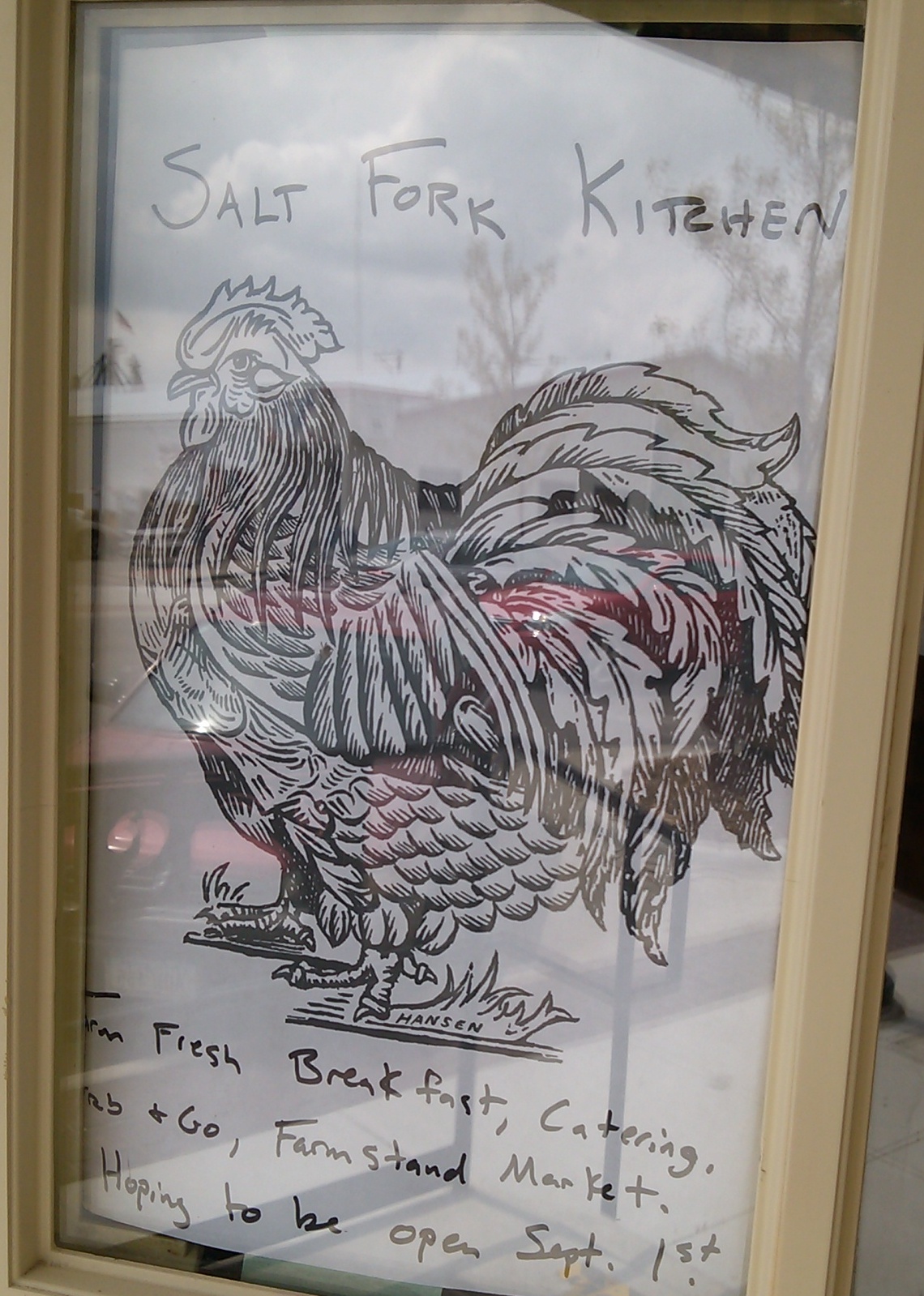
SOLON— While stopping in town to pick up a gallon of milk, I spotted something in the door of the restaurant previously known as Reggie’s Weenies. Salt Fork Kitchen, hoping to be open Sept. 1.

I checked with the Secretary of State, and Eric Menzel of Sutliff Road near here registered Salt Fork Kitchen, LLC. on July 8. It’s hard to read the sign, but it looks like they intend to compete in the breakfast business, cater and make other food related offerings.

A quick Internet search revealed the following by Pascale Brevet in The Atlantic:

I met Eric Menzel, a doctor of anthropology in his thirties who turned to farming because he couldn’t find the high quality of food he was looking for. Eric helps Bill (Ellison) on the farm and gets to use part of Lois’s (Pavelka) historic farmland in exchange. He organically raises chickens for eggs and meat, and in season he cultivates a vegetable garden. He sells at the nearby farmers’ markets and supplies restaurants. Eric worked as a chef for many years to help pay for his studies. He loves food and experiments with Bill and Lois’s cows’ milk. I tried one of his fresh cheeses. Similar to a ricotta, it had a slight tanginess nicely offsetting the richness of whole milk. The creamy yet pungent Camembert-like cheese I tried on my second visit was delicious too, and it made me nostalgic for France.

Whether the town of Solon, population 2,037, can support three new restaurants is an open question. The Dock recently took over existing space in a strip mall on Windflower Lane and turned it into a white tablecloth place with resident mixologist, Mick Malloy. The Dock is open now. Big Grove Brewery started brewing their first beer this week and brought executive chef, Ben Smart from The Herbfarm outside of Seattle, Wash. The Herbfarm was one of the first restaurants in America to focus on regional foods from local sources, and is widely considered one of the top 50 restaurants in the U.S. They also brought Doug Goettsch from the Culinary Institute of America in Napa Valley, Calif. With all of this talent, the food in town is expected to be good.

Here’s to the prospect of excellent dining during the coming months. I hope they aren’t relying on our family’s once per month eating out habits to survive.