Categories
Home Life

Sweet Corn in Big Grove

Putting up sweet corn.

My spouse and I processed local sweet corn for freezing last night. It is a relic from a past when food preservation played a bigger role in home life. We have stories about our lives with sweet corn to tell each other. A simple truth is we can buy big bags of frozen, organic cut corn from the wholesale club for less cost. If local corn is good, the taste of summer on a cob, it is worth the extra effort to buy local and put it up.

We have frozen corn leftover from last season, so our needs this year aren’t that much. Our main supplier went out of business and we’ve been hard-pressed to find a replacement. That is, we haven’t found outstanding sweet corn this year. Weather conditions have been a problem, according to our local ABC affiliate:

ELY, Iowa (KCRG) – Over thirty years as a farmer, Butch Wieneke knows what high quality sweet corn looks, and feels like. That’s why selling anything other than the best, is not an option for him and his family.

Last Thursday, they made the tough decision to stop selling.

“It just dried up. The ears weren’t filling out and I wasn’t going to sell sub-par corn. It’s just…I’m not going to do that. I don’t care what price it is,” said Wieneke.

The quality of sweet corn can change very quickly, and because of the lack of rain Eastern Iowa saw last week, the personal and public orders stopped.

Now, they’re waiting and watching to see how the crops develop.

Libbie Randall, KCRG-TV9, Aug. 2, 2022.

When we moved to Big Grove, I decided quickly to outsource sweet corn growing, in the mid-1990s. After a year or two, I found corn takes too much space and the results were not as good as what farmers produce. Because of today’s shortage, I’m considering a patch of sweet corn in next year’s garden. We’re not ready to give up on the annual family tradition and if I can produce a couple of bushels, that would best serve our culture.

While August grinds into its second week with hot, humid temperatures and plenty of rain, I’m ready to return to daily writing. I’m thankful for the break, yet there are important happenings not being covered by traditional media. When I write such stories, people find my posts and view them. I don’t have an editorial calendar yet, although as something new, I blocked out time today to write one.

The rest of the year is expected to be like drinking from a fire hose as far as news goes. I may as well dust off the keyboard and dig in now that sweet corn is put up.

Categories
Living in Society

Postcard from Summer Holiday – #3

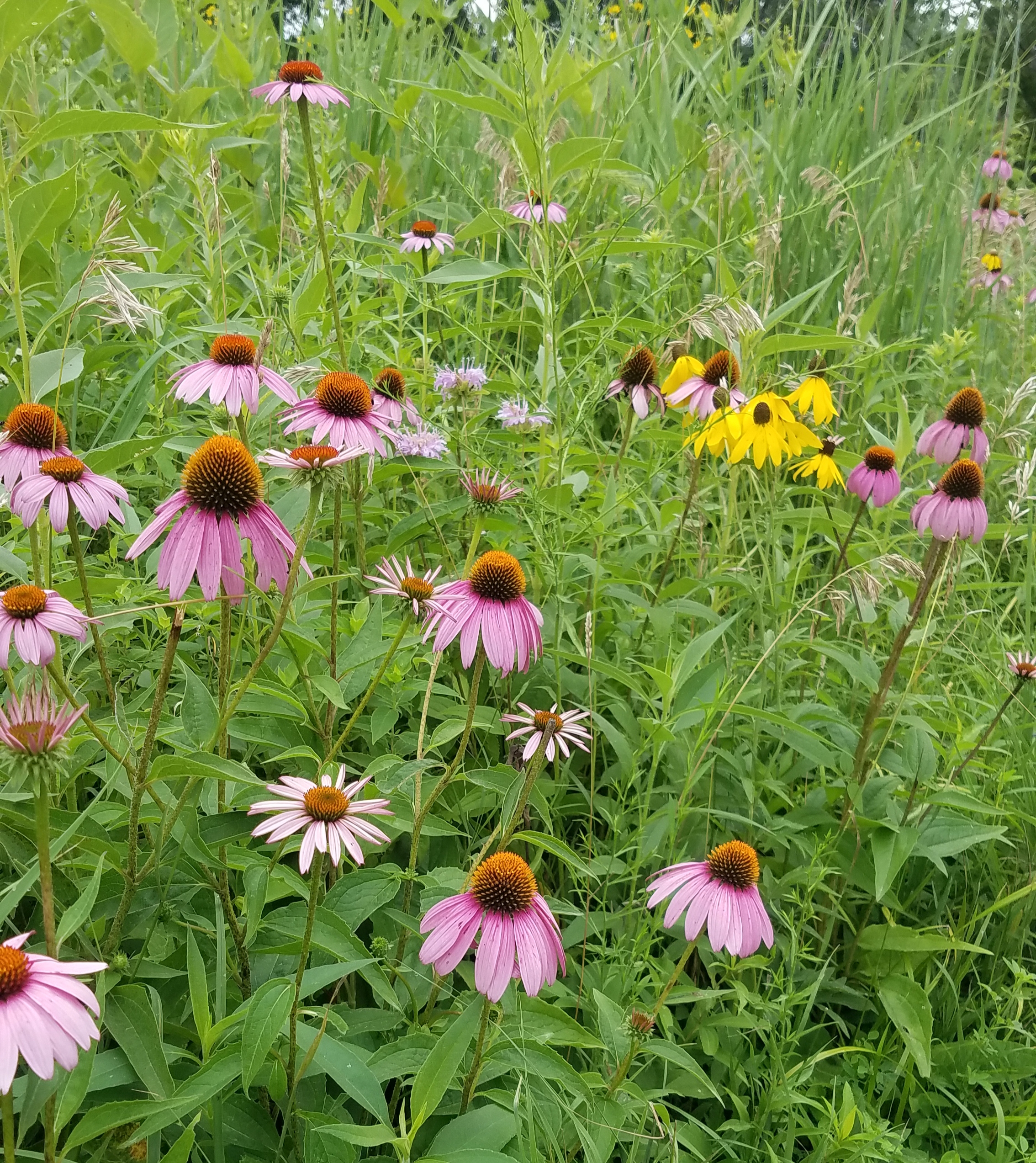
Wildflowers along the state park trail.

The Midwest is bracing for a heat wave next week when ambient temperatures are forecast in the 90s. On Wednesday it is expected to reach 103 degrees. The Iowa State University Extension and Outreach Service issued a reminder to farmers of what to do to protect their investment in livestock. It is going to be a scorcher in the corn belt from top to bottom.

I finished my month of posts at Blog for Iowa earlier in the week and am ready to turn my attention back to Journey Home. This blog has had four names since I created it to move from Blogspot to WordPress in 2008. If we ever get out of the coronavirus pandemic, I might give it a fifth. We are at a distance from the end of the pandemic.

The challenge in the garden is keeping the plants watered, yet not too much. They will survive the heat with adequate hydration. Early morning or late evening watering has been best.

Tomatoes are beginning to ripen and we had our first slicers for dinner last night. Yesterday I grated and froze zucchini for winter soup and tried a quick dill pickle recipe I saw on TikTok. From here until Labor Day, part of every day will be food preservation. I have a row of San Marzano tomatoes to convert to canned wholes for use throughout the year. I tasted the first ripe ones and they were deliciously different from other varieties I have grown.

My sleep patterns have changed while on holiday. I stay up until 9 p.m. and am sleeping through the night, getting six or seven straight hours of sleep. It has been a long time since I did that. I’m hoping the new patterns persist.

I keep plugging along with reading and have almost finished Loretta Lynn’s memoir Coal Miner’s Daughter. The book reminds me of the part of Appalachia where my father was born and how people there lived and still do. Lynn’s birthplace, Butcher Holler, Kentucky, is about 85 miles from Father’s birthplace. Of course, Lynn got to know June Carter Cash and Johnny Cash through her music. June Carter Cash is a shirttail relative of ours.

It is easy to see why people liked Loretta Lynn’s music back in the 1970s. She was part of a social revolution that changed how people lived. In part, it was based on Roe v. Wade and introduction of the birth control pill which Lynn wrote about. In her song, “The Pill,” she wrote, “I’m tearing down your brooder house ’cause now I’ve got the pill.” Husband Doolittle got a vasectomy after birth of their twins and Lynn wrote about that too.

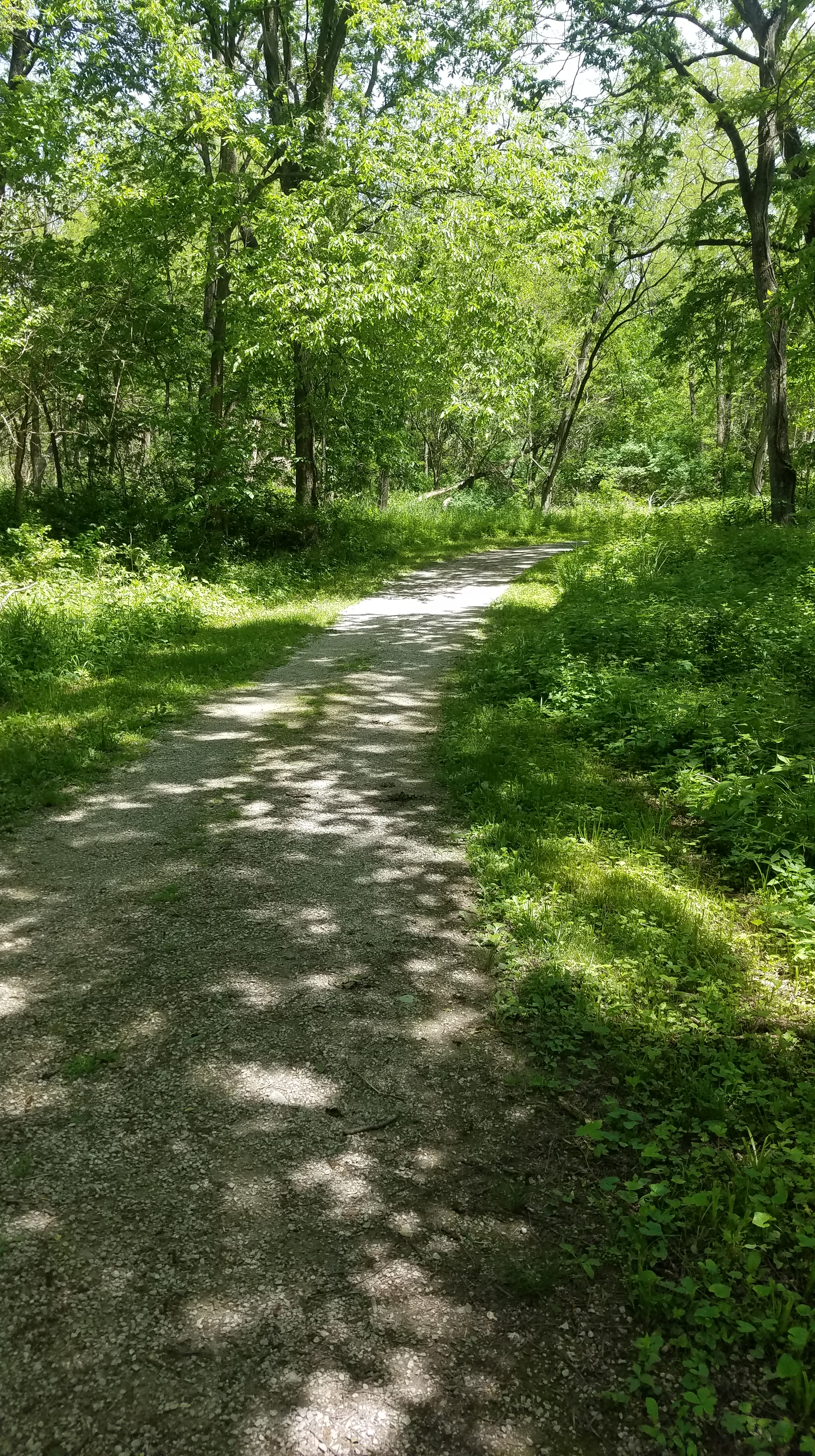
Wildflowers bloom in July with an ever-changing array of color. Now that the garden switched from planting to harvesting, I walk along the state park trail almost daily to watch nature’s changes. Even though The International Union for the Conservation of Nature added the migrating monarch butterfly to its “red list” of threatened species in July and categorized it as “endangered,” I saw a few Monarchs on the trail yesterday.

The world we know may be dying due to the climate crisis yet there is evidence of our past in every walk along the trail. Stay cool next week!

Categories
Living in Society

Personal Transportation

2019 Chevrolet Spark LT

Our 2002 Subaru reached the end of its life. The frame is dangerously rusted and other repairs are needed. We can’t get parts for it. If we could find used parts there is no assurance of their quality. If repairing it was possible, what else might break that we couldn’t find parts to repair? We decided to replace the vehicle as quickly as is practicable.

The fact we need motorized personal transportation is a result of our 1993 decision to live in a rural area. Back then, living within commuting distance of Cedar Rapids, Iowa City, Coralville, North Liberty and the Quad-Cities sounded good. I wanted the flexibility for work. Over time, I worked in all of these places. When in February 1999 I took a job in the Quad-Cities, gasoline was $1.029 per gallon. We inherited a 1989 Cadillac in excellent condition and I continued to commute rather than relocate there. Things have changed since then. We retired and turned our lives inward.

Our need for transportation is real. We have the same existential errands as other septuagenarian retirees: getting groceries and other household items, medical appointments, and occasional trips to the county administration building to take care of business. With the coronavirus pandemic, our trips for socialization have diminished, yet that may change going forward. It all takes transportation.

We spent time researching what kind of vehicle we wanted to purchase and first decided on a new plug-in electric hybrid like the Toyota Prius Prime. A number of friends drive a Prius and they recommended it. The future of personal transportation is electric and we were ready to make the transition.

After family discussions I called the dealer to discuss ordering a plug-in electric and secured a loan to pay for it. It turns out dealerships are subject to allocations from the manufacturer, all Prius products are made in Japan, and the waiting time for a Prius Prime to be delivered is well over six months. In fact, the dealer said he couldn’t accurately predict how long we would have to wait after specifying and ordering a car. For other Prius models, the wait time is less, three to six months according to the dealership. We couldn’t wait that long with the issues affecting our auto.

Our go-to dealership for used cars is the Ford-Chevy dealer in a nearby small town. I arrived around 1:30 p.m. on Thursday and they had my contact information in their computer database from the last purchase. We discussed new vehicles and they have the same problem Toyota does: allocation of vehicles from the manufacturer is less than demand and there is a long waiting time. We looked at used vehicles.

Their website had 147 used vehicles in inventory, but the in-person inspection revealed only a couple of them were suitable for us. The sales representatives at this dealership are paid on salary vs. commission and made a conscious effort to be honest and straightforward about the cars without exerting any kind of sales pressure. I identified two options and went back home to discuss. We returned to the dealership later that evening to buy a 2019 Chevrolet Spark LT. Used cars are currently expensive and selling quickly. We didn’t want to miss the opportunity on this particular vehicle. It took longer than anticipated to finish the paperwork so we returned the following day to meet with the business office and finalize the deal. The vehicle was delivered to our home less than 24 hours after I first arrived at the dealership.

On Saturday we went on a day trip to Des Moines in the Spark and it meets our expectations. As a subcompact hatchback, the cargo space is less than we would have liked, yet it will serve until we are ready to go electric. It drives well and there are a number of electronic gizmos to figure out, including how to display Google maps on the touch screen using my Android mobile device. When I bought my first auto in the 1960s, accessories like that didn’t exist. The fuel economy is better than our 2002 Subaru. We were able to make it to Des Moines and back without refueling. Importantly, we can start planning trips again.

I don’t want to contemplate the day when I have to give up driving. I have octogenarian friends who continue to drive and hope to be able to go at least that long. I don’t relish the thought of moving into a city to be closer to amenities. We navigated this crisis in personal transportation and reached a point of stability for now. That may be all we can ask in June 2022.

Categories
Home Life

Reading Today

State Park Trail.

Gentle rain suppressed my desire to attend the Amana free-will donation fire fighters breakfast this morning. It is part of my project to get to know Iowa County, which became part of my state house district and will remain so for the next ten years. It was a solitary endeavor and therefore easy to delay until next year. Now that the garden is in, we can use the rain.

I have indoor projects requiring attention, more than I care to admit. A main one is to develop a reading plan for the rest of summer. I closed May re-reading The Great Gatsby, a Memorial Day weekend favorite. Today I hit something of a wall.The books on my to-read shelves seem a tedious chore. Where did my reading mojo go?

Maybe I need a break. My program to read at least 25 pages of a book each day has been good and I look forward to resuming progress. During a break, I need to take stock of what I’m reading and figure out what I need to read. This post is toward that end.

Some dynamics are at work in my reading life. I have been a book buyer since I had an income as a grader. I have been a keeper as well. As a result, I have a large home library which contains as many unread books as those I read. My buying slowed in recent years, yet there is plenty to read a step or two away from my desk. I also bought books with a vague notion of building collections around a topic. For example, I have eight books about Iowa authors and the University of Iowa Writers ‘ Workshop. It is a collection waiting to be read when the spirit moves me.

Research for my autobiography set me on a path to read books to understand the background against which I was born, educated, worked and lived. This year, The Trader at Rock Island: George Davenport and the Founding of the Quad Cities by Regena Trant Schantz is an example. I bought it soon after publication and read it during the time I wrote about the 1950s in Davenport. It was a useful reference about a story that had not been adequately told until Schantz wrote her book. There will be others on my list like this.

I don’t write much poetry yet I read it each year to gain exposure to how other express themselves. I read Devotions: The Selected Poems of Mary Oliver this year and am looking for my next book of verse. Over the years, I built a large collection of unread poetry, bought mostly at thrift stores and used bookstores. There is plenty from which to choose without leaving the house.

Books about writing are a mixed bag. I have a shelf of them and once or twice a year I read someone different. I have yet to read one this year, so I’ll pick one.

A lot of my time is spent talking to people in person or online. I get book recommendations frequently. Sometimes they work out and sometimes not. It tends to stretch my understanding of what is worth reading. If left to my own devices, I would read and re-read the works of William Carlos Williams, Saul Bellow, Joan Didion, John Irving, Vance Bourjaily and David Rhodes over and over and over again in an unending loop. Recommendations are important to maintaining an active mind.

I have an appetite for good fiction and read a couple books per year in this category. The most recent is The Lincoln Highway by Amor Towles. With Gatsby, they are the only two fiction books read this year. Perhaps another is in order for the summer. Whatever summer fiction I read, I don’t want it to be too much work.

Finally, there are cooking books. These serve the endless quest to determine new dishes for our kitchen garden. I’m at the point as a home cook where I don’t consult with recipes very much. I know the range of ingredients and techniques and fit them into meeting the needs of ovolacto-vegetarian me and my vegan spouse. One of my projects is to build a cookbook shelving unit for the kitchen-dining room and reduce the number of cookbooks to what will fit on it. That’s a project for winter, though, so I’m still exploring.

With that in mind, here is my draft of a summer reading list:

  • Les Halles Cookbook: Strategies, Recipes, and Techniques of Classic Bistro Cooking by Anthony Bourdain.
  • The Groveland Four: The Sad Saga of a Legal Lynching by Gary Corsair.
  • Seven Sinners of Shiloh and other Poems by Franklin Walker.
  • The Hidden History of Neoliberalism: How Reaganism Gutted America and How to Restore Its Greatness by Thom Hartmann.
  • Goliath: The 100-Year War Between Monopoly Power and Democracy by Matt Stoller.
  • The Government of the Tongue: Selected Prose 1978 – 1987 by Seamus Heaney.
  • Sarajevo: An Anthology for Bosnian Relief edited by John Babbitt, Carolyn Feucht and Andie Stabler.
  • From Oligarchy to Republicanism: The Great Task of Reconstruction by Forrest A. Nabors.
  • Drawdown: The Most Comprehensive Plan Ever Proposed to Reverse Global Warming edited by Paul Hawken.
  • Siberian Dream by Irina Pantaeva.
  • Gone Girl by Gillian Flynn.

Wish me luck and/or comment with your recommendations.

Categories
Kitchen Garden

2022 Garlic Transition

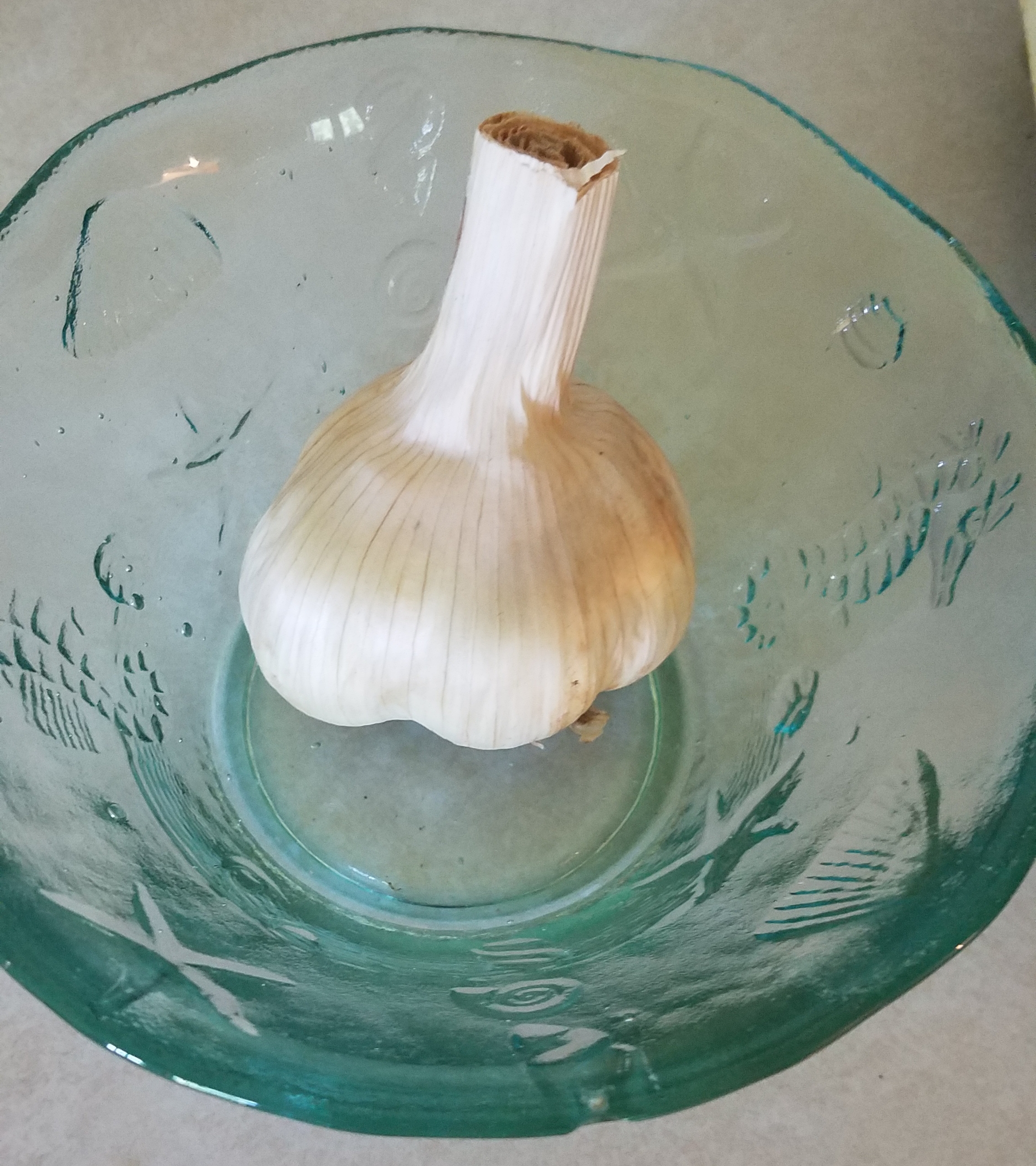
Last garlic bulb.

The last bulb of garlic from the 2021 garden is ready to use. By the time we consume it, scapes from the new crop will be available. This is where a gardener wants to be.

Since I began following the garlic-growing practices of my farmer friends, it has been an unmitigated success. Using seed from the farm, I grew my own seed for the following year crops with plenty for the kitchen. I also increased the size of the garlic patch this year. The plants looks healthy and should be ready to harvest in July.

I cut all the scapes to encourage the bulbs to grow large. Scapes serve as a replacement for garlic until the harvest.

Next steps in the cycle are to clear off the table in the garage and convert it into a drying rack later this month. Garlic is an important vegetable in a kitchen garden. Once one learns how to cultivate it, it is clear sailing to great culinary dishes.

Categories
Kitchen Garden

Vegetable Broth 2022

Winterbor kale, May 2022.

Someone asked me how I make vegetable broth when I posted this photo on Instagram. I wrote an exceedingly long explanation that may not really answer much. The method is centered around using the abundance of garden greens. Here’s how I explained it, although ask me again and the explanation might vary from the simple mirepoix, bay leaves and greens seasoned with salt.

I get out a big stock pot and evaluate how much I want to make depending on available greens. Usually one large onion, a pound of carrots, half a dozen stalks of celery and three bay leaves. Two large onions seems too much, but IDK. I know it’s controversial but I season the broth with salt at the beginning of the cooking. I want the flavor to be ready when I use it. I used to leave salt out completely but changed my thinking on that. Then I pile in whatever greens are available. I like turnip greens best, but they are not ready yet so I cleaned up the refrigerator, using bok choy, kale, collards, and tatsoi yesterday. Next I fill with tap water so the greens are covered and crank up the heat until it is boiling. Once it comes to a boil, I turn the heat to low and cook at least until the onions are transparent, often longer. Couple hours, for sure. Stir often. I use mostly cruciferous vegetable greens, yet would not be averse to adding wilted lettuce to the mix. If I have leeks, I’d add them too. I also put vegetable scraps in the freezer for broth and soup, yet in the spring I keep it simple with mirepoix, and cruciferous vegetable greens. I want to end summer with 3-4 dozen quart jars of broth made using the water bath canning process. No worries about electricity disruption. Thanks for asking.

Facebook post, May 28, 2022.

A bit rambling, perhaps, yet one could make a batch of vegetable broth based on this narrative.

Categories
Living in Society

Simple Fare in an Iowa Life

Dinner on April 6, 2022: Casserole with eggs, onions, celery, garlic, Parmesan, thyme and leftover rice, served with peas and carrots.

On Wednesday I loaded the automobile with obsolete and not working electronics to recycle at the county landfill. Three televisions, a wall-mount telephone, a non-working videocassette player, a laptop computer, and miscellaneous small items fell into bins there after I paid a $66 fee. There were also two computer towers, one of which was the one my spouse bought in 1996 when we dialed up the internet for the first time as a family. The other was a locally made machine built in the last millennium. I scrubbed the hard drives clean before recycling them.

Last week I took three big bags of clothing to Goodwill. One was scraps for recycling. The other two could be tagged and resold. I didn’t ask for a receipt. It felt good to be rid of some of the detritus of a modern life in Iowa. There will be more purging of unused stuff from our home this year.

Temperatures returned to near freezing so I have to bring seedlings indoors again. I don’t know what’s up with the lingering cold, rain and snow making it impossible to get into the garden. My onion starts are to arrive next week and I haven’t turned a spade in the garden yet. I find other things to do yet there is a certain stress lingering in the background because of the delayed season.

My impression of the political scene after candidates filed to get on the ballot is Democrats are teed up to take a shellacking in November. We have good people running for office yet there is a distinct lack of enthusiasm for politics. Likewise, a certain laziness permeates recent events in which I participated. I’m not seeing any fire in the belly to win an election among regular Democrats like me. Republicans in control of the state legislature and governor’s office are driving the narrative and making their points. They are highly motivated to tear down the long-standing culture of the state and replace it with something I don’t recognize. Democrats have been forced to play defense.

At a Zoom political event last night, I changed my political donation strategy while listening to Christina Bohannan and Elle Wyant speak. I budgeted $100 per month in donations and switched them around to candidates I believe will have the best prospects of being elected in November. In the big races, U.S. House, U.S. Senate and governor my $100 per month split three or four ways will be of negligible impact. Even my state senator’s race will be a big money campaign. The only political fund raising phone calls I received this cycle were from Iowa Democratic Party Chair Ross Wilburn, U.S. Senate candidate Michael Franken, and county attorney candidate Rachel Zimmermann Smith. Even with the small number of requests, my $100 per month doesn’t go far. I’ll revisit the strategy after the June 7 primary.

I’ve been keeping the thermostat at 58 degrees while my spouse is away helping her sister. This morning I donned three layers to retain body heat. I have also been making non-vegan vegetarian dishes while she is away. It’s not fancy food, just simple fare in an Iowa life.

Categories
Home Life

Unexpected Spring Break

Red beans and rice, Midwestern-style.

Home alone, I made a spicy dish for dinner: red beans and rice. There is no recipe, yet it was everything to which decades of kitchen and garden work led me. Supper was life, as good as it gets. The process of anticipation, planning, and pulling items from the freezer, ice box and pantry culminated in deliciousness. The meal was why we pay attention to flavor rather than the names of dishes or ingredients.

I didn’t know I needed spring break, yet here we are. The combination of my spouse helping her sister move to a new home, 45 mile per hour winds and cold temperatures for two days, and a form of isolated winter exhaustion led me here. Break will continue until I see my doctor later this week. I already have my blood test results and the key numbers improved from six months ago. I noted Earth Hour last night and feel rested and ready to get into the garden and yard. The winds subsided overnight.

Saturday I spent five hours participating in the county Democratic convention via Zoom. I don’t like virtual events, yet they are efficient. I’d rather be talking to political friends and acquaintances in person. The upside of a virtual convention is when it is over, there is no need to use an automobile to get home. A couple of notes.

1984 was my first Johnson County Democratic convention. Most people were nice, although I was frustrated with the process. The county convention revisited decisions made at the precinct caucuses and walked away from what voters said they wanted in favor of special interests. That burned me on politics for a while. Since then we spent six years in Indiana. When we returned to Iowa, I was not active in politics for ten years, until 2004. The virtual event was reasonably organized, yet kinda sucked. What’s a person to do? An old Polish proverb applies, “Not my circus, not my monkeys.”

Age is not treating some of my long-term cohorts well, at least from the images presented on Zoom. There are a number of new people, likely more than half. I’d rather step back from organized politics. I volunteered to be a delegate to the district and state conventions to make sure enough people were available to fill 74 slots. The district convention is at a nearby high school across the lakes. When it was time to ratify the slate, all slots weren’t filled. People don’t seem that engaged in politics this year, even if they should be. That may be bias created by the virtual format, yet I’m seeing the same thing in every segment of local culture.

There were ten platform amendments submitted at the convention. The platform is irrelevant, mostly because Democratic candidates for office don’t support every plank, even if they acknowledge a platform exists. Why does the county party spend time on it? The answer, I guess, is it is a way of life for party members who want a shared experience in articulating their beliefs. As a writer, I get plenty of that from elsewhere. As long as we keep the platform’s irrelevance to formal policy in mind, and don’t expect candidates to fully support it, let platformers platform.

I’m preparing to write about my senior year in college when I lived in a small house on Gilbert Court in Iowa City. Artist Pat Dooley rented it from a local businessman and managed the many residents who came and went during that six month period. It was a small, decrepit three-bedroom structure built on a stone foundation. According to Google maps, it has now been demolished.

Dooley was part of a group of writers and artists loosely referred to as “Actualists.” He did the cover art for The Actualist Anthology edited by Morty Sklar and Darrell Gray. Gray overnighted with us for a brief period before leaving Iowa for California. Many Actualists visited our house at Dooley’s invitation, where we socialized in the common room. Alan and Cinda Kornblum, Jim Mulac, Dave Morice, Sheila Heldenbrand, John Sjoberg and Steve Toth stopped by more than once, as best I can recall.

By 1974, I finished required coursework for a major in English and needed to fill out the total number of required hours. My coursework during that final undergraduate semester included French conversation, separate classes in ancient and modern art, Harry Oster’s American Folk Literature, and early modern philosophy. I hadn’t prepared for a career during university, although the Oscar Mayer Company, for whom I worked two summers, called to offer me a job as a foreman in the Davenport meat packing plant. I declined.

There are a couple of additional days before I must get to work in earnest. Spring break, while unexpected, is not over.

Categories
Kitchen Garden

2022 Gardening Season

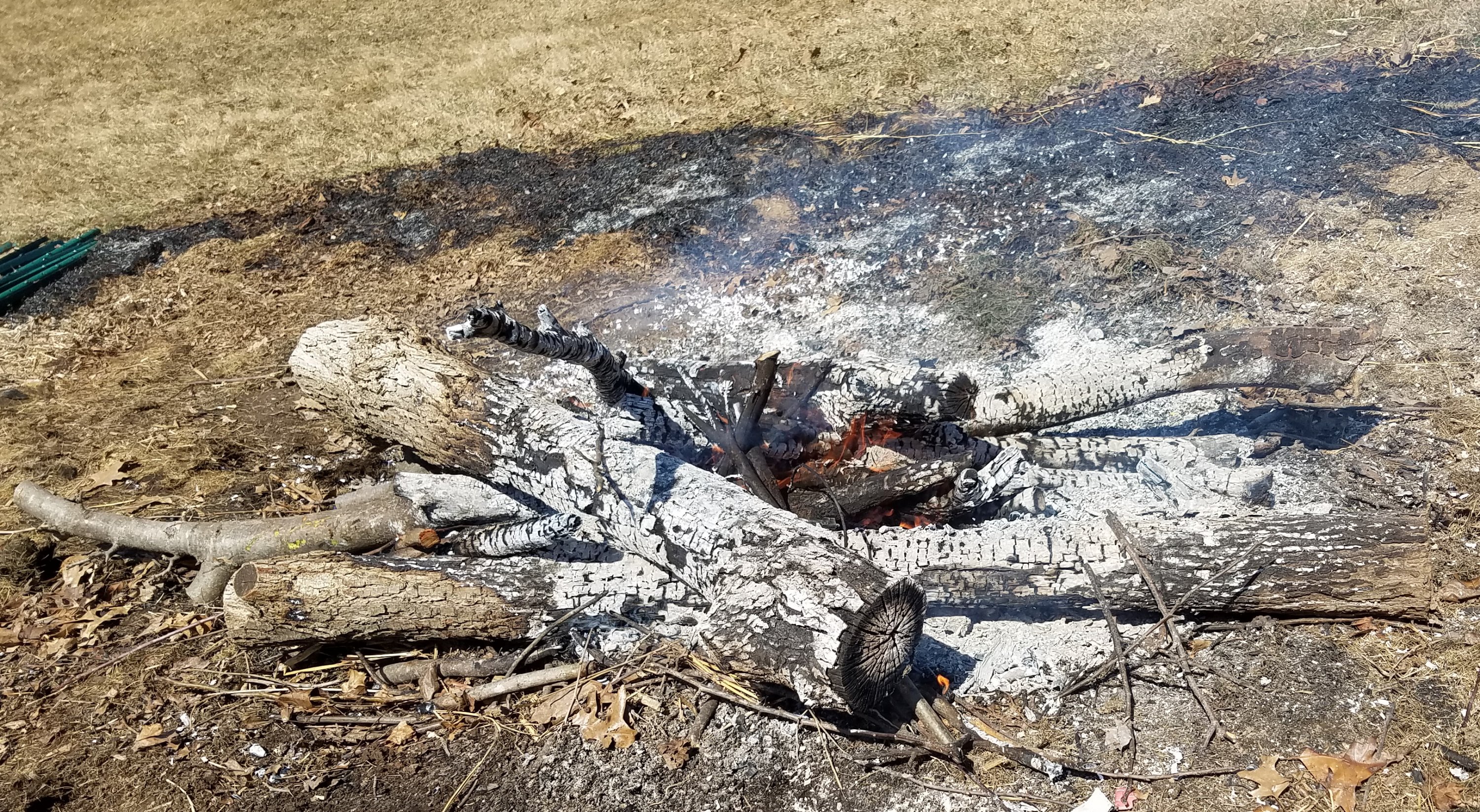
Spring burn pile, March 16, 2022.

Gardening season begins with a spring burn pile. Usually there are plenty of branches from winter tree pruning and windfalls. As elements return to the soil, our hope in the sustainability of life is renewed.

I lit this year’s burn pile with a single match applied to shredded paper. When I went to bed, embers were smoldering. The next day warmth radiated from the ashes even though a light rain had fallen. When the fire depletes its fuel, I’ll rake the ashes evenly over the soil and turn them into it.

I’m ready to garden.

How should I write about the garden this year? What terms should I use? What phraseology is best? What goals do I have for readers, and for myself? What is the lexicon of gardening?

This year I adopted a spreadsheet to track my seed planting, so no need to record that here. There are eight trays of seedlings started in the house. Once the weather breaks, I’ll set up the greenhouse. It is becoming routine. This is a year for recycling everything I can: ground cover, row cover, stakes and fencing. I’m seeking to optimize the gardening space to grow more food we’ll use. Over the last ten years certain plots have become predictable: garlic, tomatoes, greens, and squash. Same way with crops: there are a couple dozen we favor.

There was a sense of discovery in posts I previously wrote. I have come to know most of the crops that grow here, so discovery is mostly over. While being an adherent to a process of continuous improvement, I’m at a level where experiments are each of limited scope. For example, I’m trying San Marzano tomatoes to be used for canning this year. To detail such efforts seems a bit boring both to write and to read.

In college I read British romantics: Wordsworth, Coleridge, Blake, Keats, Byron, and the Shelleys. I understand the depopulation of the British countryside and increase in industrial activity in cities. Boring! I keep their books yet I don’t see returning to them any time soon. I seek to engender no romantic fantasy about gardening.

Growing a garden is an economic engine. Whatever I can grow at home is something I don’t have to buy from others. Perhaps the biggest money-saver is vegetable broth made diverse greens. Broth is expensive to buy and cheap to make. The quality of homemade is hard to beat. Once I’ve written about my vegetable broth, though, what else is there to say?

The idea of a kitchen garden needs further exploitation this year. Integrating what I grow and preserve with what we use is an important feature of the process. How many jars of pickles will we need? Not as many as I have been canning. Are we better to make sauerkraut or should we manage excess cabbage in the refrigerator, using it fresh? Based on the amount of old jars of kraut on the shelf, we don’t need to make much of it. Do I need to plant more fruit trees? At my age, whatever I plant won’t be productive soon enough to do much good. There is plenty to be done in a kitchen garden. I’m not sure how much people want to hear about it.

Each day, I walkabout the yard to review daily progress and consider the garden plots and how they should be planted. That process lives in the present and no amount of writing can render it otherwise. I’m not sure I want to write it down. What I know is the brush has been burned. As soon as the weather breaks, I should dig up rows for early planting. Just getting it done is satisfaction enough.

Categories
Home Life

Leftover Rice

Lake ice is melting.

When I make stir fry for dinner there is enough rice to produce leftovers. There are plenty of things to do with leftover rice, yet the most common in our kitchen is making another dish to serve on top of it. This week it was black beans cooked with onion, celery, garlic, tomato and bell pepper. Both meals were satisfying.

During walkabout, the edge of the lake was beginning to melt. The geese in the photo will soon be swimming instead of walking on the ice. Spring officially arrives on Sunday yet for practical purposes, it is already here.

The challenge during this transition is to take my exercise outdoors and work in the garage, yard and garden for part of the day while temperatures are above 50 degrees. While doing so, I hope to preserve the time spent writing and reading in early morning. I have a better process this year, so I am hopeful.

Yesterday, I attempted to change the headlight on the auto and gave up before I broke the clip that holds it in place. I called my mechanic and scheduled it in the shop on Friday. Maybe their expertise will get the job done. For the time being, I don’t drive after dark, and there are fog lights, so it’s not an issue if I do.

This transitional time is the most difficult of the year. There has been so much work delayed because of cold weather. Like with leftover rice, there are plenty of uses for the new found outdoors time. Here’s hoping I can get to work and preserve what I spent all winter developing indoors.