Categories
Kitchen Garden

Pick a Peck of Peppers

Hot Peppers
Hot Peppers

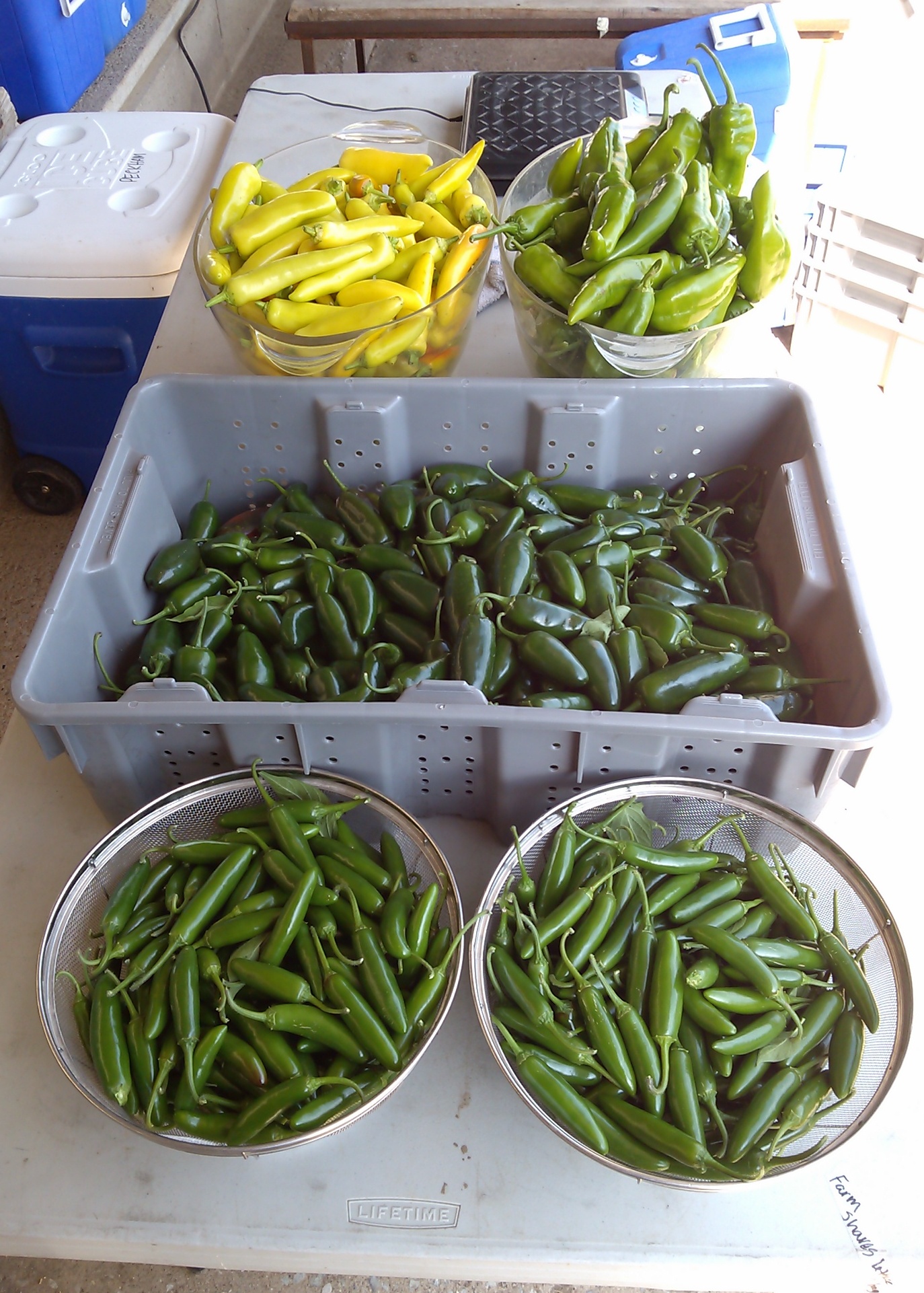
RURAL CEDAR TOWNSHIP— Part of Thursday’s work was to harvest the hot pepper row at the CSA. We have Anaheim, which is not really hot, Hungarian wax peppers, jalapeno and Serrano. The peppers looked very nice, and the work prepared me to discuss them with customers at the drop site later that afternoon. I am ahead of myself.

The day started by picking kale, as it does on delivery days after the plants mature. The customers like kale, especially young children who anticipate it will be turned into baked kale chips for snack. For every leaf put in the cooler, two are discarded in the field, so there is a lot of marginal quality kale that returns to compost.

On a vegetable farm, there is a lot of marginal food generally: not quite good enough for customers, yet still a fresh and delicious food ingredient. Some is offered as seconds to customers, the farm workers take some home, and some returns to compost. This year I am experimenting with a bartering business of processing labor traded for a share of marginal food. A crate of peppers with bad spots becomes cut pieces in bags to be frozen. This operation included broccoli, tomatoes, bell peppers, hot peppers and eggplant, resulting in a more than adequate household supply for the coming winter.

I harvested eggplant after the kale and before the hot peppers. There is a lot in the field. Eggplant is a global favorite vegetable, but in Iowa a person can only eat so much of it. We offer half a dozen varieties of eggplant, and customers take it with their share. The eggplant from my weekly share was aging, so upon returning home, I baked off half of it and removed the flesh to make babaganoush, some for now, and some to freeze for later.

While I was working, others were bagging potatoes, picking lettuce in the high tunnel, harvesting tomatoes, collecting herbs, counting onions, preparing garlic and doing all that is required to get the Thursday deliveries out to customers. It’s a day in the life of a community supported agriculture project.

Categories
Environment Kitchen Garden

Letter to the Solon Economist

To the editor,

National Farm Bureau’s spokesman Mace Thornton was recently quoted by David Biello in Slate Magazine, “we’re not convinced that the climate change we’re seeing is anthropogenic in origin. We don’t think the science is there to show that in a convincing way.”

That a large national organization with strong Iowa roots would assert such a thing is ridiculous.

First of all, farmers experience the effects of changing climate directly. If they do not connect the dots between the increasing use of fossil fuels and the warming planet, it is the talk of bureaucrats and paid analysis not grounded in the science of the greenhouse effect and its relationship to climate.

Secondly, whether farmers are convinced that climate change is anthropogenic (i.e. caused in part by human activity), has become increasingly irrelevant. The USDA has already begun to incorporate climate change in its projections and outreach. According to Biello, “many American farmers— even those who would question whether climate change is man-made— are already doing exactly what efforts to combat climate change would require: precision agriculture to cut back on fossil fuel use, low or no-till farming, cover crops, biodigesters for animal waste, and the like.”

Climate change is real, and it’s happening now. If you would like to hear more about the science of climate change and what you can do to help remediate its causes, please attend a public meeting with me and Senator Rob Hogg on Monday, Sept. 30 at 6:30 p.m. at the Solon Public Library. All are welcome.

Footnote: Slate Magazine, July 16, 2013, Why Don’t Farmers Believe in Climate Change? by David Biello. Link to article here.

Categories
Kitchen Garden Work Life

Rain and the High Tunnel

Western Sky at Sunrise

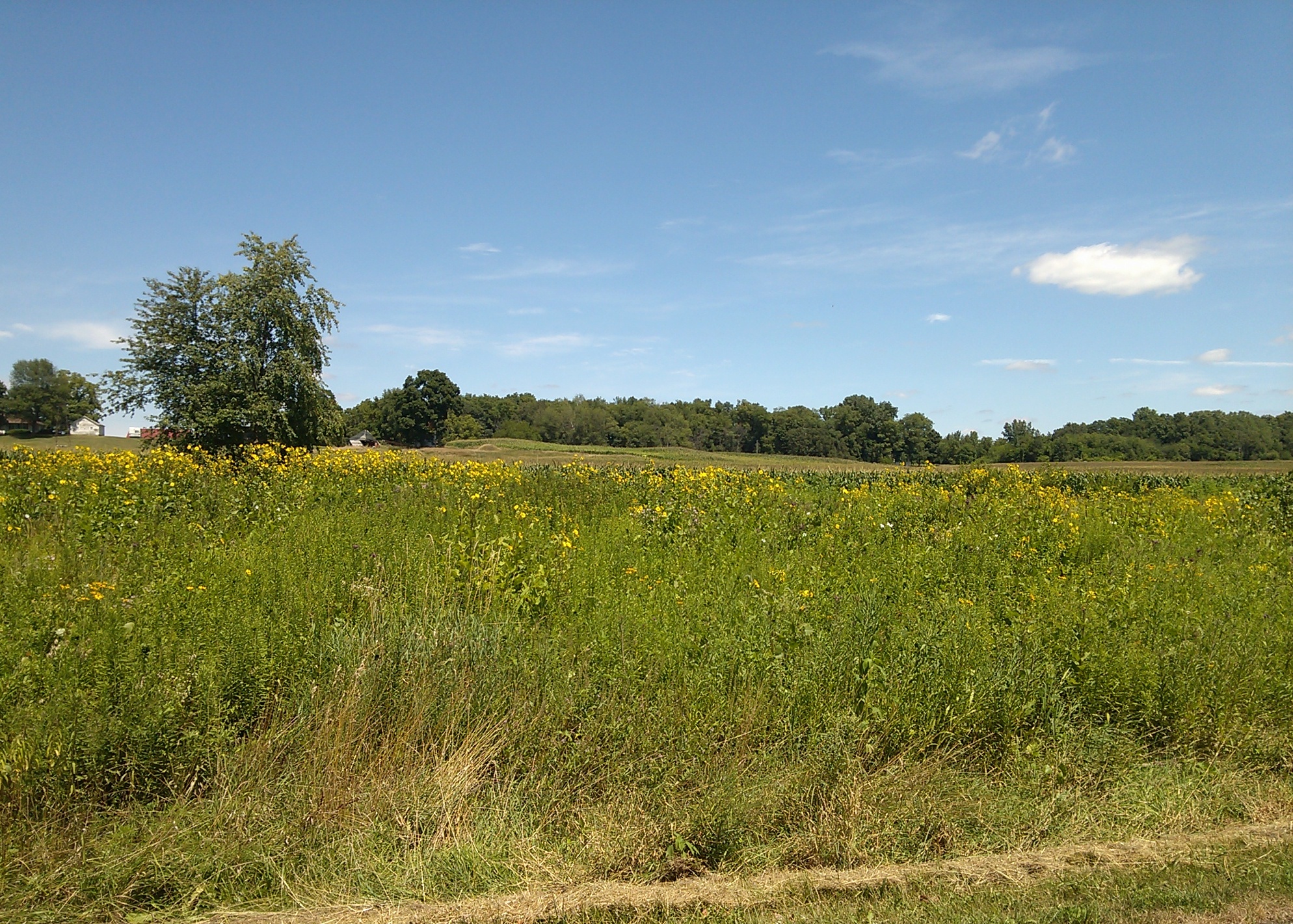
LAKE MACBRIDE— After arriving at the farm, I took this photo and headed to the high tunnel to plant lettuce. The western sky was illuminated by the sun, a harbinger of rain, which came, along with lightning and thunder, within the hour. I continued planting while the drops pattered against the heavy gauge plastic and nature’s light show played in the distance. We need rain, but not much fell. There are only three more weeks in the CSA and already we are preparing the farm for winter.

Part of the work was setting up irrigation in the high tunnel, repairing the drip line where it leaked and making sure it aligned closely to the rows of newly planted seedlings. It is more time consuming than one would think. When people depend on a vegetable crop, there is no choice but to irrigate when drought comes. It is difficult to budget for the extra labor of irrigation— one more uncertainty in the life of a farmer.

Using a margin trowel, I dug five or six holes in a row and then planted seedlings, covering each over the top of the soil block. By the end of the day, my shoulder was sore, so one flat remained from the job— perhaps tomorrow on that one.

There was a sense of connection today. Not only to the cycle of planting and harvest, but to everyone else. While I may have been alone, the presence of everyone I have known was with me. It’s hard to explain, but being protected from the storm in the high tunnel was part of it as I labored in the field of an indeterminate future— hopefully one with lettuce.

Categories
Environment Kitchen Garden

Then Rain Came

Carmen
Carmen

LAKE MACBRIDE— A co-worker and I were talking about the weather on the farm. For city-folk readers, people who work in agriculture do that a lot. I asked her, “when was the last rain?” Without hesitation, she answered, “in July.” And except for a couple of sprinkles, last night’s rain was the first since then. It was luxuriant.

My job at the orchard is related to the u-pick operation, and the rain meant customer activity would be suppressed after a very busy Saturday of temperatures in the 70s and clear skies. No orchard work for me today, so, to the grocery store to pick up some necessities and soon I’ll be at work in the kitchen preserving food.

There is a lot of food to work on. The first crop of apples is ready to be used today or never, so that will happen. It will either be juice or apple butter. Not sure yet. The pears are also in, so I’ll use 4-5 pounds to make a batch of pear butter while the rest ripen.

I have half a gallon of Concord grapes, from which I will make jelly.

From the aging hot and bell peppers, I’ll make pepper sauce with onion, tomato and garlic. Anything tomato-y or onion-y will get added to the pot. It is a variation on my traditional hot sauce mix, and designed to use up produce in the refrigerator. This will be run through the food mill and processed in pint jars.

Tomatoes are everywhere in the kitchen and garden. Some will be canned, some cooked into a batch of chili, and not sure what else. The vines are really producing this year, in my garden and at other local food sources.

So with this tentative plan in place, off to the kitchen and the work of sustaining a life on the Iowa prairie.

Update: 9:19 p.m. The stove was on most of the day, and I made chili and fruit salad for dinner, seven pints of pear butter, three pints of concord grape jelly, two pints of diced tomatoes, and six quarts, one pint and one half pint of hot pepper sauce. Did two loads of dishes and cleaned all the pots and pans before retiring to bed.

Categories
Kitchen Garden Writing

Water and a Farm Worker’s Dinner

Farm Worker's Dinner
Farm Worker’s Dinner

LAKE MACBRIDE— Hydration is important while working in the field, and water is the preferred beverage. Water drawn from the well at one of the hydrants on the property. What else would it be?

Once in a while, I stop at a convenience store in town, and buy a plastic bottle of sweetened soft drink. It’s a very expensive treat. I drank so many this year that two bags of empties accumulated to drop at a local octogenarian’s garage where they are process for the bottle deposits and donated to a local non-profit organization. I’d rather stick to water for a lot of reasons.

Why would first lady Michelle Obama catch flak for saying, “water is so basic, and because it is so plentiful, sometimes we just forget about it amid all the ads we watch on television and all the messages we receive every day about what to eat and drink. The truth is, water just gets drowned out?” Drinking more water, instead of sugary drinks, is something we just do on the farm, albeit things are different in the city, where most people live.

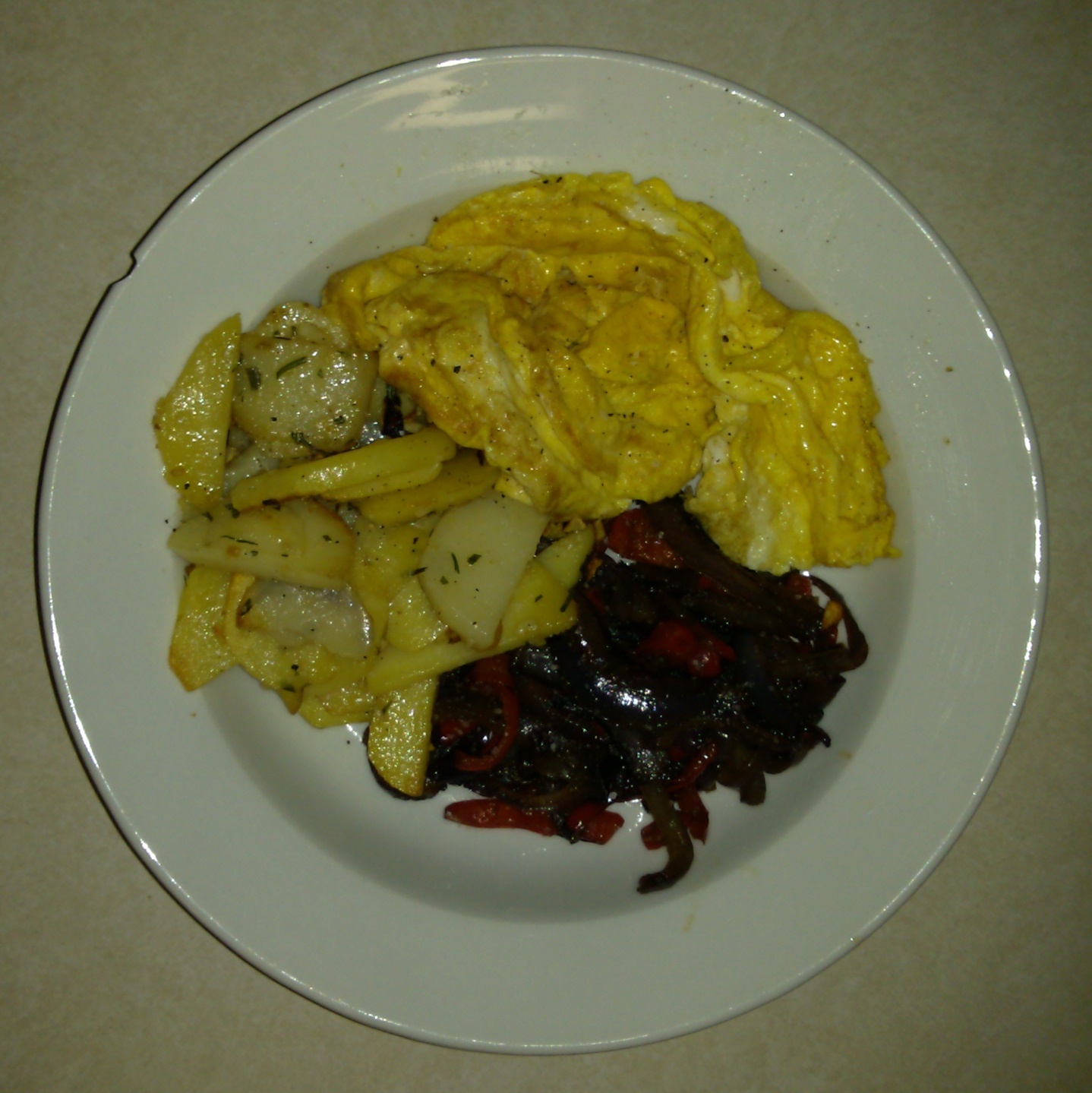
When I got home from deliveries for the local CSA, I made a farm worker’s dinner of caramelized onions and peppers, potatoes with rosemary and garlic and scrambled eggs. For beverage, a glass of chilled tap water, without prompting. It’s just the best thing to drink.

Categories
Kitchen Garden Social Commentary

At the Farm Bureau Annual Meeting

Resolutions
Resolutions

NORTH LIBERTY— Craig Hill, Iowa Farm Bureau Federation president, spoke last night at the annual Johnson County Farm Bureau meeting. What he said was surprising. He acknowledged that the lack of adequate regulation of air and water quality in China was problematic if people wanted to breathe and drink clean water. Specifically, he pointed to the pollution of coal-fired power plants in and around major population centers. He also commented on the poor water quality. He didn’t go so far as to say more regulation was needed, but for him to acknowledge these problems with this audience of anti-EPA folks seemed remarkable to me. One can only ignore the pollution of our air and water for so long, until action eventually will be required. If he didn’t say it that way, it was only a matter of degrees of separation of our positions.

The annual meeting is the only place I go where we take time to hear introductions of an organization’s insurance sales staff. They all seem nice, and competent, but seriously, there is only so much time and so much to do, why this? The answer is that my health insurance premiums through the Iowa Farm Bureau are the single biggest household expense we have. It is important to tune into what the organization is doing at least once a year. There is also a free meal, which is distinctive in its roots on Iowa farms. Too, as the years add up, I am getting to know more people who attend this event. Attending the annual Johnson County Farm Bureau meeting has become a part of living in rural Iowa.

Categories
Environment Kitchen Garden

Climate Changed Locally

Seedlings
Seedlings

RURAL CEDAR TOWNSHIP— A co-worker was asked when the last rain fell. The answer was July. In a community supported agriculture project, there is no option other than to irrigate when drought comes, and that means a series of hydrants spread throughout the farm, and frequent draws on the underground reservoirs. So far, there has been enough water.

In the list of 2014 legislative priorities recently sent to our state representative, I wrote the following paragraph,

Once again Iowa was short on rainfall, especially the last 6-8 weeks. If the dry weather and drought continues, there will be pressure to irrigate row crops in a place where traditionally we have had enough rainfall to do without. In late July, I traveled to Chicago and along Interstate 88 they are already irrigating corn. Water use will be a key issue for Iowa going forward, and if irrigation of Iowa corn and beans starts, I’m not sure how management would be structured, but more attention to water use would be needed. The legislature should play a role, in evaluating the science, and taking appropriate preventive action. Evaluating the science doesn’t mean just calling the folks at Farm Bureau, asking for an opinionaire from their members.

That there is a connection between human activity, climate change and the current drought can be a matter of some discussion in Iowa. For the most part, industrial agricultural producers see the climate changing, but do not attribute it to anthropogenic origins. It is just another thing to deal with while farming. Those of us more familiar with the science of climate change see the direct connection. The two positions haven’t yet been reconciled.

June 2013 was the 340th consecutive month with a global temperature above the 20th century average. 2012 was the 36th consecutive year with a global temperature above the 20th century average. On a local level, here in Cedar Township, this translates into wanting rain and wondering what would happen if the well runs dry. The answer to that question, is farmers may give up, especially small scale local producers like the one where I work.

There is a connection between the global climate crisis and extreme weather events like this year’s drought. As global CO2 levels have increased above 400 parts per million, global temperatures rose in tandem. As temperatures increase, the atmosphere can hold more water vapor. This makes rainfall and flooding more frequent and intense like spring 2013 was in our area.

The effect of global warming, and the hydrological cycle’s absorption of water vapor, also creates longer intervals between rainfalls, making droughts even worse. Because of the atmosphere’s increased capacity for hold water vapor, the land can become parched without irrigation.

People who live from the land, have to do something, and in Iowa we have relied upon abundant rainfall to grow crops without irrigation. As climate changes, that means considering how to make the land productive absent the conditions that led us to be what we are. It requires us to to adapt to the changing climate, and take action to mitigate the causes of this year’s flooding and drought. Before we begin large scale irrigation, Iowa should consider the consequences of increased water usage.

Locally, the climate changed, when we least needed or expected it. There is little to do now, other than adapt and mitigate the human causes of climate change.

Categories
Writing

Picking Up the Pace

Summer in Iowa
Summer in Iowa

LAKE MACBRIDE— Harvest season is accelerating, and there is more food available than we know what to do with. Through a complex system of work for food, gardening, barter and foraging, purchases at the grocery stores have averaged a ticket total of well under $20 consisting mainly of dairy, canned goods and sundries. It is down from an average closer to $100.

Last night we made a meal of a big salad that included lettuce, green peppers, kohlrabi, tomatoes and broccoli from our garden. The eggs came from bartering, the carrots from California, canned kidney beans from the grocery store, and everything else was part of my work for food deal at the CSA. That is, except for the dressing— balsamic vinegar of Modena (the less expensive stuff), first cold pressed extra virgin olive oil and salt and pepper. It is pretty exciting to have a salad with home grown lettuce in August, which is a result of my first attempt at sequential planting.

At the CSA, I picked half a bushel of ripe apples yesterday. On the kitchen counter a large bowl of them waits to be peeled and cut into slices for apple crisp. The apple harvest is going to be incredibly abundant this year, and will involve a lot of processing work. I am already thinking about grading the harvest into apples for hand eating, apple sauce and apple butter, juicers and livestock feed.

Likewise, with my work for food project with a second CSA, there will be an abundance of tomatoes for canning. We’ve been eating fresh tomatoes for a few weeks, and there is an abundance on the vines. We’ll be in tomato city soon.

The point in writing about this is to organize my thoughts and priorities. Without organization, the summer will be a hodgepodge of inefficiency. Too, if there is a chance to be a food broker, and leverage some of the abundance for sales, now is the time, despite being very busy. Even if a lot of other producers are thinking the same thing.

There is something about the transition of summer from celebration of Independence Day until Labor Day that is at the center of life. With the milder weather this year, cooler and wetter, we’ve had close to ideal growing conditions for home gardening. Every bit of food we can or freeze, is money in the bank. Now is the time to get this work done.

Categories
Home Life Social Commentary

On Urban Chickens

Chicken Feeding
Chicken Feeding

LAKE MACBRIDE— It is with a bit of trepidation that I venture into another expository piece about urban chickens. As people continue to move from rural areas to cities, attracted by jobs, apartments, and a type of society reliant upon the aggregation of diverse human interests, to raise chickens at home seems anachronistic.

By definition, city life eschews barnyard animals. Getting rid of urban chickens, pigs and cows was part of the rise of the public health movement. Whether intentional or not, urban society, by definition, replaced the need to produce one’s own food. Why else would so many people have left the farm but to take advantage of society’s mass production capacity? To seek a return of urban livestock is a throwback to an era that was not necessarily better.

Nearby North Liberty is considering an ordinance to allow city folk to raise chickens in their yards. As I mentioned in my March post, this type of pursuit seems to be a material interest in pursuit of respectability among peers, rather than about nutrition. What makes the North Liberty proposal different is the requirement for neighborhood consent, rather than providing a courtesy notification of a chicken coop under construction. If passed, the ordinance would build community feelings, predictably on both ends of the love-hate continuum. Already there’s squawking.

At first reading, it is unclear to whom the ordinance would apply:  whether or not the city would preempt home owners associations with a local address from making their own rules. The way the current ordinance is written, home owners associations could be more restrictive and disallow home chickens even if the city does permit them. Preemption has a long and controversial history in Iowa, notably as it applies to concentrated animal feeding operations where lobbying groups want control centralized in Des Moines in the self-interest of focusing their lobbying efforts with less resources. I’m confident the city council will work through this issue.

Some cried foul over the 25 foot rule (the coop, fowl house, or fenced pen area shall be a minimum of 25 feet from any property line), saying it was too restrictive, or the chicken coop location would be aesthetically challenged. This aspect of the draft ordinance serves my point that urban chickens are more like pets than food sources. More like a landscaping ornament or a window treatment for a view of lives where there is not enough constructive work to do.

The limit is four chickens, kept in a confinement facility— hens only. There were no instructions on how to determine if a chick was a rooster or a hen, but a Facebook friend resolved the issue by saying, “once a cockerel is old enough to crow, it’s big enough for the dinner plate.” This raises the issue of chicken slaughter. My grandmother lived on a farm, and knew the process well. During my time in French Army Commando School, we learned how to turn the gift of local partisan support into food for survival. Slaughtering animals for meat just doesn’t go with contemporary notions of city life. Maybe it should.

What I am saying is the idea of urban chickens is adjunct to local food systems. It is more an expression of bourgeois libertarianism in a consumer culture, than a revolution in local food production. Gil Scott-Heron famously wrote “the revolution will not be televised,” and we are hearing too much about regulation of urban chickens on the T.V., so a reverse logic applies: the local news is covering the story, so therefore it can’t be a revolution.

In the end, a community should have self-determination on how people live. I’m not against urban chickens, but don’t see the point. It seems like a lot of work and expense for a small number of boutique pet chickens. Why not buy the best eggs from the grocery store, or farmers market, or barter for eggs and save the money? And maybe get a dog or cat at the animal shelter, as they make better pets.

Categories
Environment Kitchen Garden

Paying Tolls on the Ronald Reagan Road

10 Percent Ethanol
10 Percent Ethanol

CHICAGO, Ill.— Yesterday I was surprised to notice the irrigation of corn fields along the Ronald Reagan Toll Road, or Interstate 88 in Illinois. What defines the Midwest and its row crops is the generous rainfall that enables crops without irrigation. This isn’t Nebraska after all.

Maybe the rigs have been there for a while, but they were not a good sign of how the Midwest is contending with dry conditions. It was irritating to see the nozzles aimed poorly, watering large sections of roads. Not irritating enough to stop the car, find the farmer and ask him or her about it. I didn’t want to be late.

In preventing the effects of climate change, depleting our aquifers for crop irrigation is not the right path.

There was plenty to think about as I made my way into the loop and McCormick Place for the conference. Water management in the climate changed Midwest is a thought that persisted until morning.