Categories
Environment

Closure on the Garden Season

Iowa Row Crops
Iowa Row Crops

LAKE MACBRIDE— Taking down the fences and mowing the garden plots brought a sense of closure to this year’s growing season. It’s over, and it was time. The remaining fall task is to plant garlic, and while it is late for that calendar-wise, if the warmth continues, the roots may get a couple of week’s growth before frigid temperatures set in and produce normally. With the variability in our weather, all bets are off about predictability. Why not plant garlic? The worst that could happen is it fails to grow, and we have plenty for winter eating.

Yesterday, the U.S. Environmental Protection Agency (EPA) announced a proposal to reduce the renewable fuel standard for ethanol. This is a first, and within hours, Iowa governor Branstad reacted negatively toward the idea (statement here). The New York Times posted a valuable article on the issue here. The EPA’s proposed 2014 renewable fuel standard program is here. The Wikipedia article on ethanol is here. While widely expected, the EPA announcement kicks off what is expected to be resounding resistance here in corn country.

The world has changed since ethanol was first blended with gasoline, and it is appropriate to re-evaluate the percentage mixed with motor fuels. Following is my take on the matter from a Big Grove perspective.

It is hard to argue with governor Branstad’s statement, “the EPA has turned its back on rural America, and our economy and family farms will suffer as a result. Corn prices have already dropped to the cost of production, and this will likely further squeeze corn producers and negatively impact income growth in rural America. We have more than 50 ethanol and biodiesel plants in Iowa, and these EPA reductions would negatively impact thousands of Iowa jobs.” All of this is true, but what the governor didn’t say is that if anything, Iowa farmers are resilient. Re-directing growing patterns to deal with the over-abundance of corn is possible and should be done.

People seem to forget that the gasoline gallon equivalency of ethanol is 1.5:1. This means it takes one and a half gallons of ethanol to create the energy of one gallon of gasoline. The reason ethanol blended motor fuel costs less at the gasoline pump has little to do with the energy it produces, and everything to do with the current structure of federal government subsidies. Ethanol is not cheap by this standard, or by any reckoning.

This week, U.S. crude oil production exceeded imports for the first time in more than 20 years (USA Today story here). To the extent ethanol use increased in response to domestic oil production declines, that trend appears to have been reversed, precipitating a need to re-evaluate the renewable fuel standards. The bad news is the increase in domestic crude production is due to the environmentally questionable process of hydraulic fracturing. In any case, as a society, we should reduce the amount of fuel we burn to supply energy, so this is a red herring argument. We should divest ourselves of fossil fuels.

Ethanol has provided a market for corn growers, comprising as much as 40 percent of sales. Some argue corn for ethanol has less market share when the value of distillers grain and other by products are considered, but in any case, a lot of the corn crop goes to ethanol production. This market is at the core of governor Branstad’s argument against revising the fuel standards. The thing is, either Republicans want society to suck at the pap of big government, or they don’t. This is the core hypocrisy of a group that seeks favorable treatment on only those issues that effect their segment of society. The EPA rules, once finalized may impact corn markets, and in the end, the markets will set an appropriate price. Farmers, like everyone else, will have to deal with it.

Finally, there is a criticism that the corn crop should be going to food, not fuels. In a self-serving way, industrial farmers tout their ability to feed the world. Freeing up some of the corn crop to serve a growing global population should be a suitable market, right? Have you ever bitten into a kernel of No. 2 field corn? Without processing it’s hardly food for humans. The overall trend for food production will be to produce it locally and sustainably, something that sending vessels full of Iowa grain to Asia and Africa does not accomplish. While a short term market for grain exports may exist, in the end, large scale buyers, will produce the same crops much closer to home.

Anyone who has studied the matter can’t believe corn ethanol production is good for the environment. The EPA is on the right track, and the public comment period enables people who are impacted by the proposed rules to have their say. Not sure what ore we want from our democracy.
Categories
Environment

Climate Disruption and Farming

Following are prepared remarks for my talk at the Iowa United Nations Association event, “Speaking of… The Environment!” held at Prairie Lights Bookstore in Iowa City, Iowa on Tuesday, Nov. 12.

Thank you Iowa United Nations Association for organizing this event, and to Prairie Lights Bookstore for hosting us tonight.

Climate change is real. It’s happening now. Just ask a farmer. There are few people as close to the intersection between the natural world and human activities as they are. Any conversation I have had with a farmer, included discussion of long term changes in our climate, and how they dealt with them.

Recently, I had a conversation with farmers about this year’s crazy weather: a wet spring that delayed planting, followed by drought conditions in July through September. It was bad, but the worse news was that we can expect more of the same during the next several years.

What does this mean? For one thing, this year’s soybean crop is in and reports from the field are that pods formed on the plants, but didn’t fill out with beans because of the lack of rain. What could have been a great year for soybeans turned into an average one because of drought conditions related to our changing climate.

According to a group of Iowa climate scientists and academicians, the consequences of climate change on farmers are easy to understand. “As Iowa farmers continue to adjust to more intense rain events, they must also manage the negative effects of hot and dry weather. The increase in hot nights that accompanies hot, dry periods reduces dairy and egg production, weight gain of meat animals, and conception rates in breeding stock. Warmer winters and earlier springs allow disease-causing agents and parasites to proliferate, and these then require greater use of agricultural pesticides.” In addition, changes in our hydrological cycle cause increased soil and water runoff, and complications with manure applications. There is also pressure on crop yields.

Everything I mentioned puts pressure on our food system. We can expect more of the same going forward.

There is overwhelming evidence that climate change is anthropogenic, or caused by humans, yet most farmers don’t accept it, even as they deal with its effects.

Scientists don’t know where the tipping point lies, but the effects of climate change on farm operations are clear, and getting worse. Yet, even as we adapt, and farmers do adapt, we can do something about the causes of global warming and climate change without changing our way of life or hurting our economy.

We could start by dealing with the fact that globally, each day we dump 90 million tons of CO2 pollution into the atmosphere as if it were an open sewer. That has to change.

I’m not alone when I say we can do something about the causes of global warming and climate change to protect our food system before it’s too late. We should. Thank you.

Categories
Kitchen Garden Work Life

Being a Farm Hand

Wilson's Orchard
Wilson’s Orchard

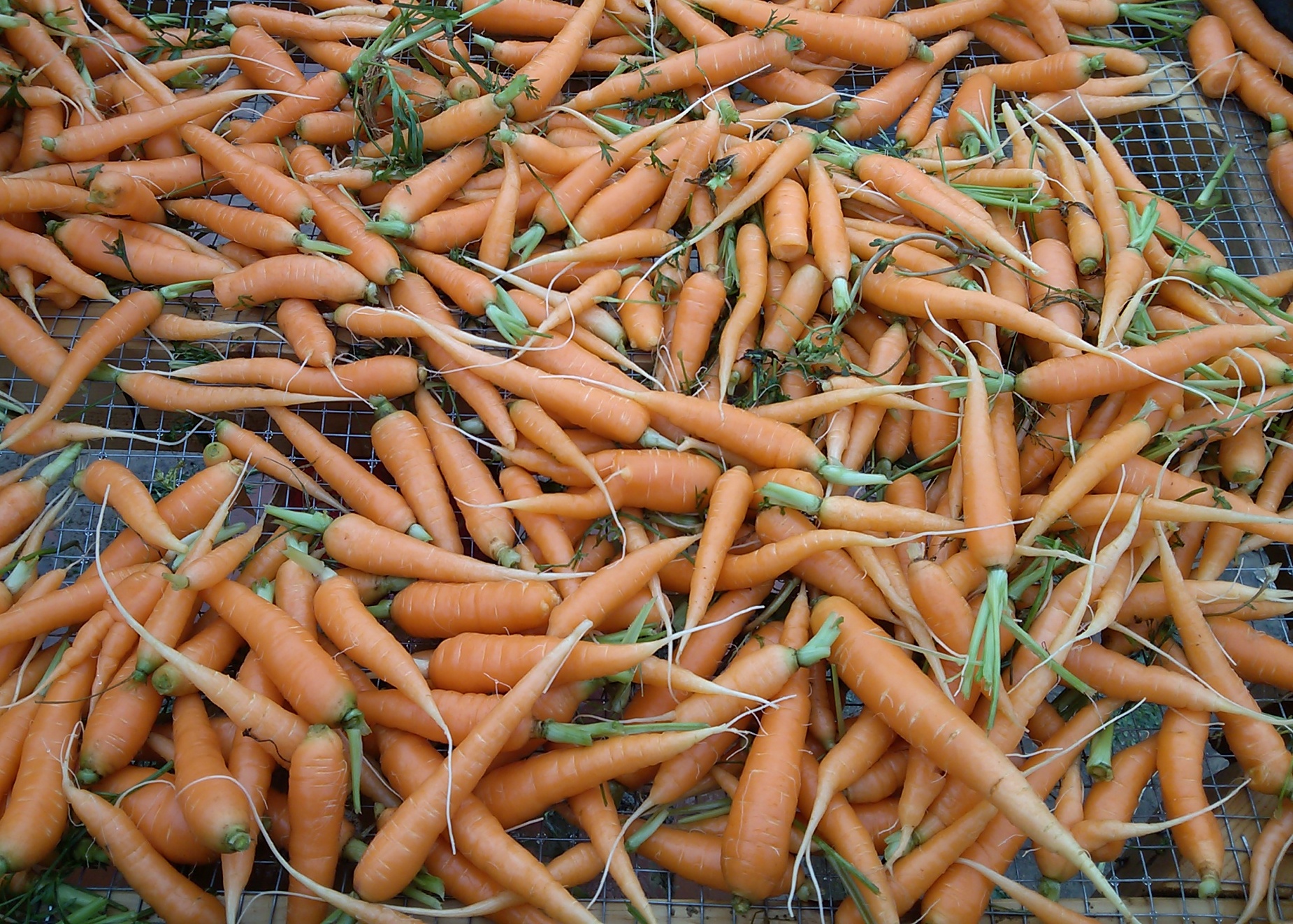
LAKE MACBRIDE— While we were washing root vegetables, the ambient temperature started at 34 degrees and made it to 51 by the end of our shift. A cold, wet day that yielded the soundest sleep I’ve had in a long time. My hands are chapped, and application of lotion and salve to re-moisturize them has had no effect. The repetitive motion of grasping a carrot and squeezing the water nozzle to wash it would be problematic if continued. Once the carrots are washed, it’s done for 2013.

As a paid farm hand, my view of local foods production is different from the farm owners and managers. Where there is inefficiency, or extra production, there is an opportunity to perform paid work.

Part of local food production is a constant discussion about how to improve efficiencies, and my participation is welcome. However, each planting, at each step of the process, is surrounded with a complex mix of issues, challenges, techniques and possible courses of action. In order to answer a question, broad experience is needed, and usually, I don’t have much to add.

The season is winding down, and eventually the crops will be harvested, prepared and distributed, hopefully by Thanksgiving.  It will be time to move on, richer in knowledge and experience if not in money. That matters in our life on the Iowa prairie.

Categories
Kitchen Garden

Root Vegetables in November

Farm Greeting
Farm Greeting

LAKE MACBRIDE— As the sun set on Monday I was washing 75 pounds of spinach at a friend’s farm. The two acres is a community supported agriculture project, and that morning, a lot of food remained in the field. The day’s work was to get as much of it harvested as five of us could. During a nine hour shift, we harvested spinach, carrots, daikon radishes, rutabaga, turnips and beets, loading up a 1973 Econoline van until we tested the limits of its capacity. A second vehicle was needed to transport the produce to off-site storage.

We left three rows of daikon radishes in the field because 600 was all we needed for member shares. Farm workers took home seconds of carrot and daikon, so today at home will be cleaning them and preparing a few dishes.

The season’s farm work is winding down, and as it does, thoughts turn to what’s next. It’s not clear right now. Maybe clarity will come with keeping my hands busy in the kitchen where there is a full refrigerator and all the root vegetables in canvas bags, waiting to become what’s next. Better soup than compost. If choices in life were as simple as making soup from the bounty of November’s root vegetables wouldn’t that be the top?

Categories
Environment Kitchen Garden

Adapting to Climate Change

Conference Welcome
Conference Welcome

RURAL CEDAR COUNTY— On a tour of an organic farm in Cedar County yesterday, talk turned to the impact recent unusual and severe weather events we have had. The story is similar to what others in the agricultural community have been saying.

Farmers are talking about two main weather events this year. The late, wet spring that delayed planting, and drought conditions during August and September. According to a recent gathering at the Farm Bureau, there will be more of the same during the next several years.

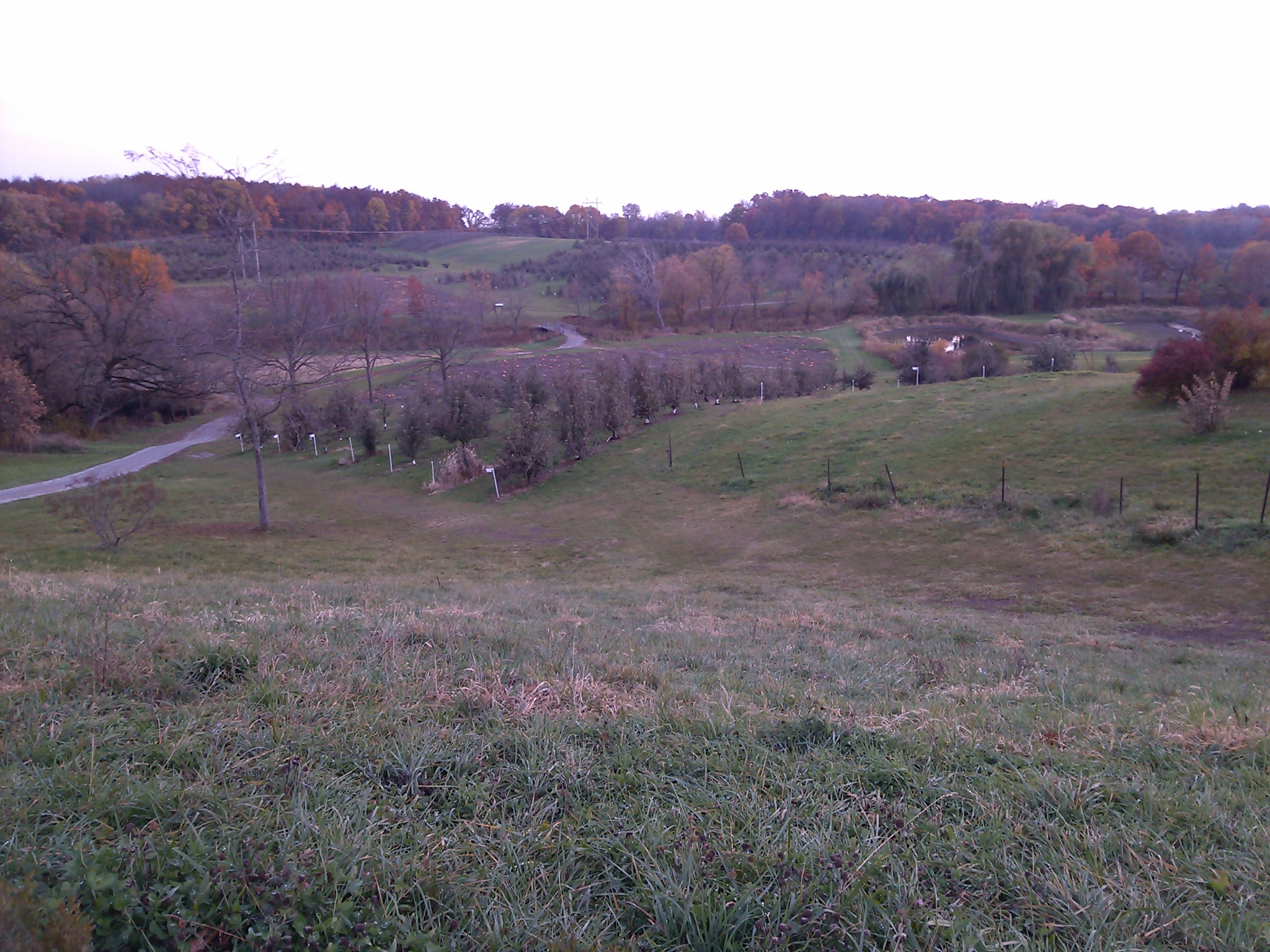
The late, wet spring caused some localized flooding on the property, but did not significantly impact the overall operations. They dealt with the weather. The apple crop was abundant because spring pollination conditions were almost perfect after a tough 2012, with the buds flowering after the last hard frost. A lot of apples were still on some of the trees.

Locally we lived through a period of six weeks without any rain. The effects of the summer drought on the vegetable crop were mitigated by irrigation using a drip tape system. There was plenty of water for irrigation, although like most farmers, he didn’t know how deep his well was dug. There was a farm pond should the well go dry.

Drought will reduce corn yield. We examined some ears on the stalk, and a second ear failed to form on many of them. What ears of corn were present did not fill out with kernels. Both conditions were attributable to the drought.

For the last several years, the ability to harvest vegetables later into the year exists because it was warmer later. Food can be harvested directly from the field, rather than drawn from storage and preserves during November and into December. My tour guide said he had only just begun to realize the persistent change, and was beginning to rethink his food planning for the 80 or so people who rely upon the farm for daily meals.

Farmers, more than most people, are sensitive to changes in the weather and climate. For 10,000 years the climate on earth has been stable, and this stability enabled the rise of agriculture, and along with it, our civilization. In Iowa, agricultural success is predicated on our assumptions about rainfall and the hydrological cycle. Things are changing, and what I saw yesterday is more evidence of that.

The era of climate stability is at an end, due largely to human activity. We continue to dump 90 million tons of CO2 pollution into the thin shell of atmosphere each day as if it were an open sewer. Without action on our part, adaptations like those on this farm will be ineffective over the long term. Whatever we were used to as normal has been disrupted by changing climate.

It may be evident to a farmer that the ecology of agriculture is changing in new ways. Yesterday’s farm tour was another example of why. Taking collective action to mitigate the causes of climate change has become the moral challenge of our time. We didn’t ask for this, but our personal involvement is as important as it has ever been as we work to sustain our lives in a turbulent world.

Categories
Kitchen Garden Work Life

Carrots and Farm Work on a Blustery Day

Fresh Carrots
Fresh Carrots

RURAL SOLON— It was a blustery day at the two acre farm where work took me yesterday. Carrots to harvest, tomato cages to deconstruct and roll up, and irrigation line to find and remove to the roads for later pickup. It was cold to the bone.

My time in the military prepared me for days like this. The key is to focus on the work and the cold will take care of itself, falling neatly into the background. Once one accepts there is no place to go to get warm, and nothing to do but the work, life doesn’t seem so bad and neither does the cold.

September HeatIt was recently reported that September was the 343rd consecutive month of above average global temperatures. No surprise there, and October will be the 344th. What I would rather see is a tally of the actions people take, on a daily basis, to reduce their carbon footprint. That and a measurement of the aggregate impact it has on global warming. We would do better to collect our progress and see how we are doing than tick off the number of months of doom.

Working in a sustainable agriculture operation is said to help solve the climate crisis. According to Wikipedia, sustainable agriculture is the act of farming using principles of ecology, the study of relationships between organisms and their environment. A couple of things seem most important. Sustainable agriculture is site-specific. What one farmer does on his/her land may last over the long term to satisfy human food and fiber needs, sustain the economic viability of farm operations, and enhance the quality of life for farmers and society as a whole. It is hard to find fault with this, and the connection to the climate crisis is clear.

Where it gets sticky is that as the environment changes, so too do the organisms encountered on a parcel of land. This suggests that the work of adaptation is never really complete in sustainable agriculture. Most farmers I know are engaged in a process of constant experimentation to determine what does and doesn’t work to solve ecological problems. What is worrisome is they seldom, if ever, talk in terms of adaptation to climate change, even if that is what sustainable agriculture represents at its core. Note to self: initiate this conversation.

After noon, the two of us harvesting carrots and working in the field were called to the barn for lunch. Grilled cheese sandwiches, vegetable soup and sweet carrot bread for desert. Much better than restaurant fare, and an unexpected perquisite to break the cold. Not to mention the conversation about the fall share, and our hopes, dreams and experiences. Brief and pleasant interval in another day’s work in our ever changing environment.

Categories
Kitchen Garden Work Life

Cabbage Harvest

Cabbage Regrowth
Cabbage Rows

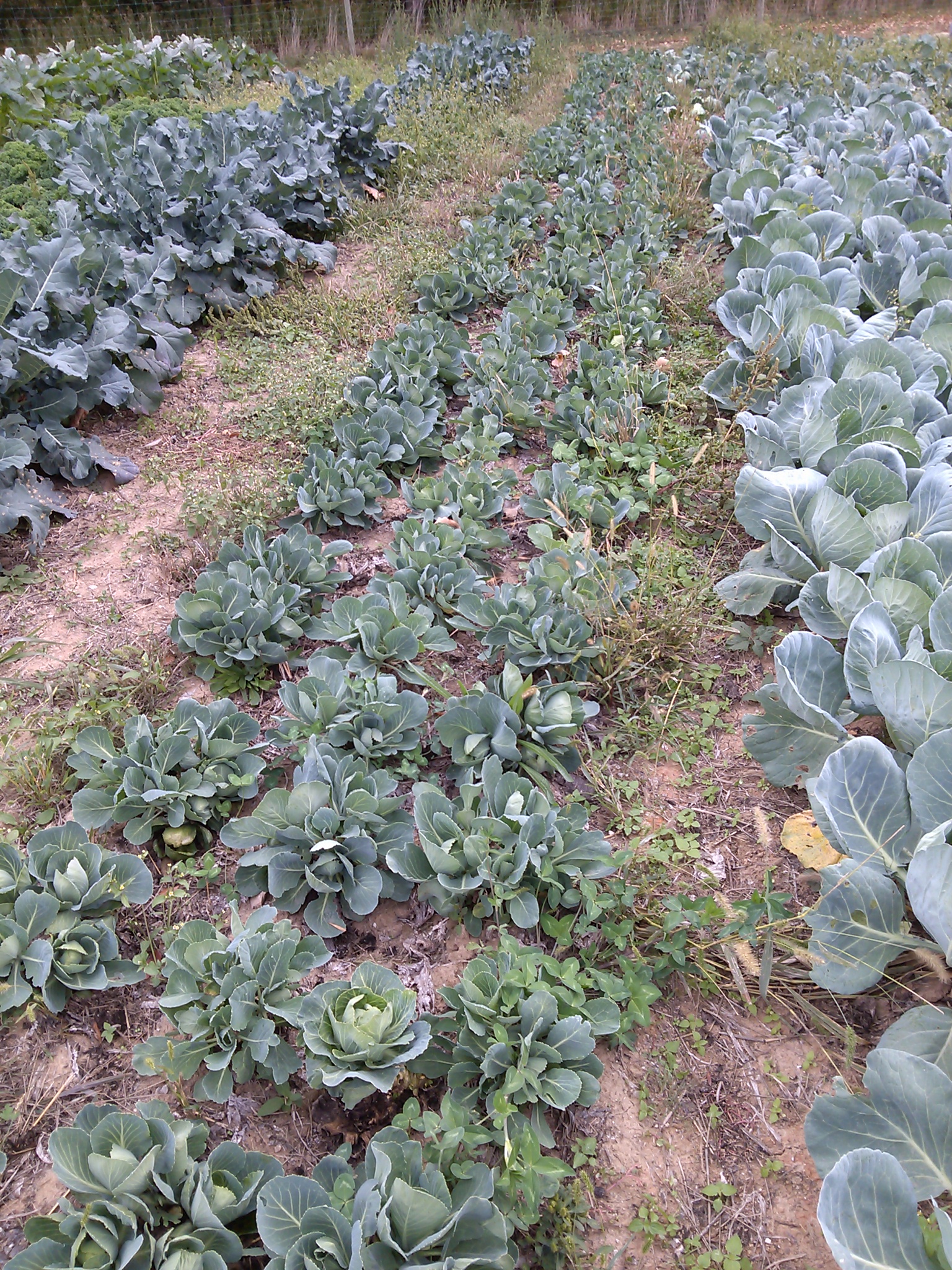
LAKE MACBRIDE— On Friday we diverted from planting in the high tunnel to harvesting cabbage at another farm: 400 heads of cabbage in 80 minutes plus travel and storage time. Frost is coming, and we need the cabbage for the fall shares. As we used to say as union workers in the meat packing plant, “it all pays the same.”

Actually, farm work doesn’t all pay the same. There is a complex web of reliance among farmers, and when one needs something, another reaches out to help, making a deposit in the relationship bank. Who knows when we may need to make a withdrawal?

There is a frost advisory Sunday morning from 1 until 8 a.m. Whatever plants need saving should be covered with the worn sheets kept for that purpose. Mostly, it is the leafy green vegetables and the pepper plants, since the tomatoes are done. Gleaning plot #3, and harvesting is on today’s agenda, so whatever might get bitten by tomorrow’s frost will come in. That is, except the greens, which will continue growing outside until the last minute.

The days are getting shorter, and attention turns toward inside work. There is a lot to be done before the end of the year. When isn’t there?

Categories
Environment

A Rising Challenge to Iowa Agriculture

DES MOINES— In the wake of 2013’s extreme weather roller coaster, marked by the wettest spring on record, followed by the second-driest July through September ever, a statewide group of leading Iowa science faculty and researchers released the Iowa Climate Statement 2013: A Rising Challenge to Iowa Agriculture at Drake University in Des Moines on Oct. 18. Below is the text of the statement. The document with the names of Iowa scientists endorsing it is here.

Iowa Climate Statement 2013: A Rising Challenge to Iowa Agriculture

Our state has long held a proud tradition of helping to “feed the world.” Our ability to do so is now increasingly threatened by rising greenhouse gas emissions and resulting climate change. Our climate has disrupted agricultural production profoundly during the past two years and is projected to become even more harmful in coming decades as our climate continues to warm and change.

Swings from one extreme to another have characterized Iowa’s 2013 weather patterns. Iowa started the year under the widespread drought that began in 2011 and persisted throughout 2012. But the spring of 2013 (March‐May) was the wettest in the 140 years of record‐keeping, creating conditions that hampered the timely planting of corn and soybean fields. During those months, sixty‐two Iowa counties experienced storms and flooding severe enough to result in federal disaster declarations.

By mid‐August, very dry conditions had returned to Iowa, subjecting many of the state’s croplands to moderate drought. These types of weather extremes, which are highly detrimental to Iowa’s crops, were discussed in our 2012 Iowa Climate Statement, where we also noted that globally over the past 30 years extreme high temperatures are becoming increasingly more common than extreme low temperatures. In a warming climate, wet years get wetter and dry years get dryer and hotter. The climate likely will continue to warm due to increasing emissions of heat‐trapping gases.

Climate change damages agriculture in additional ways. Intense rain events, the most notable evidence of climate change in Iowa, dramatically increase soil erosion, which degrades the future of agricultural production. As Iowa farmers continue to adjust to more intense rain events, they must also manage the negative effects of hot and dry weather. The increase in hot nights that accompanies hot, dry periods reduces dairy and egg production, weight gain of meat animals, and conception rates in breeding stock. Warmer winters and earlier springs allow disease‐causing agents and parasites to proliferate, and these then require greater use of agricultural pesticides.

Local food producers, fruit producers, plant‐nursery owners, and even gardeners have also felt the stresses of recent weather extremes. Following on the heels of the disastrous 2012 loss of 90 percent of Iowa’s apple crop, the 2013 cool March and record‐breaking March‐through‐May rainfall set most ornamental and garden plants back well behind seasonal norms. Events such as these are bringing climate change home to the many Iowans who work the land on a small scale, visit the Farmer’s Market, or simply love Iowa’s sweet corn and tomatoes.

Iowa’s soils and agriculture remain our most important economic resources, but these resources are threatened by climate change. It is time for all Iowans to work together to limit future climate change and make Iowa more resilient to extreme weather. Doing so will allow us to pass on to future generations our proud tradition of helping to feed the world.

Categories
Kitchen Garden

Thunderstorm Coffee Break

Storm Over the High Tunnel

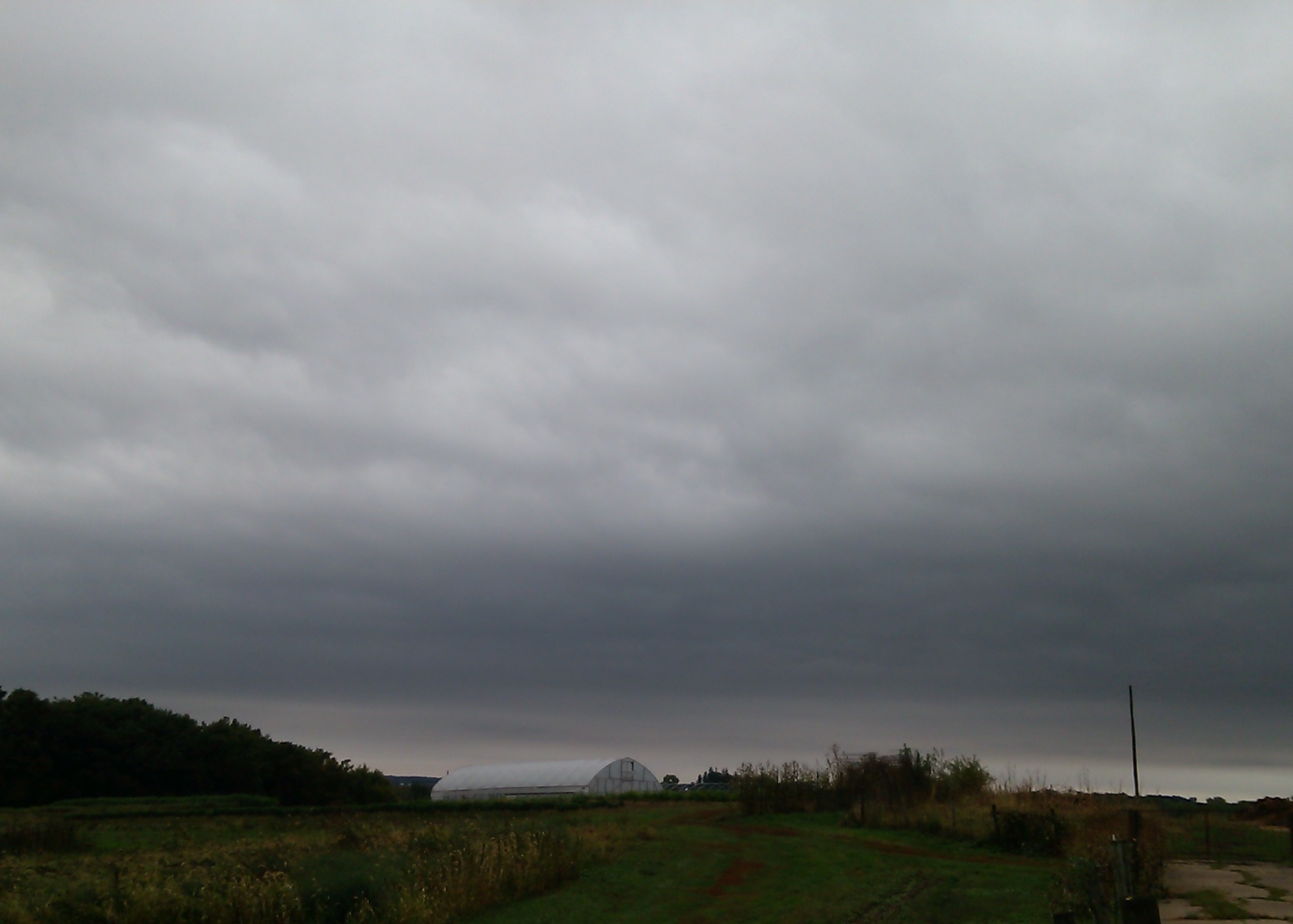
RURAL CEDAR TOWNSHIP— A task list arrived via email from the farm at 8:17 a.m. It included work in the germination shed and the high tunnel. After arriving, and before getting very far, thunder and lightning began, and after a phone call to the owner, we decided to stop work in the structures until after the storm passed. It meant a coffee break in town.

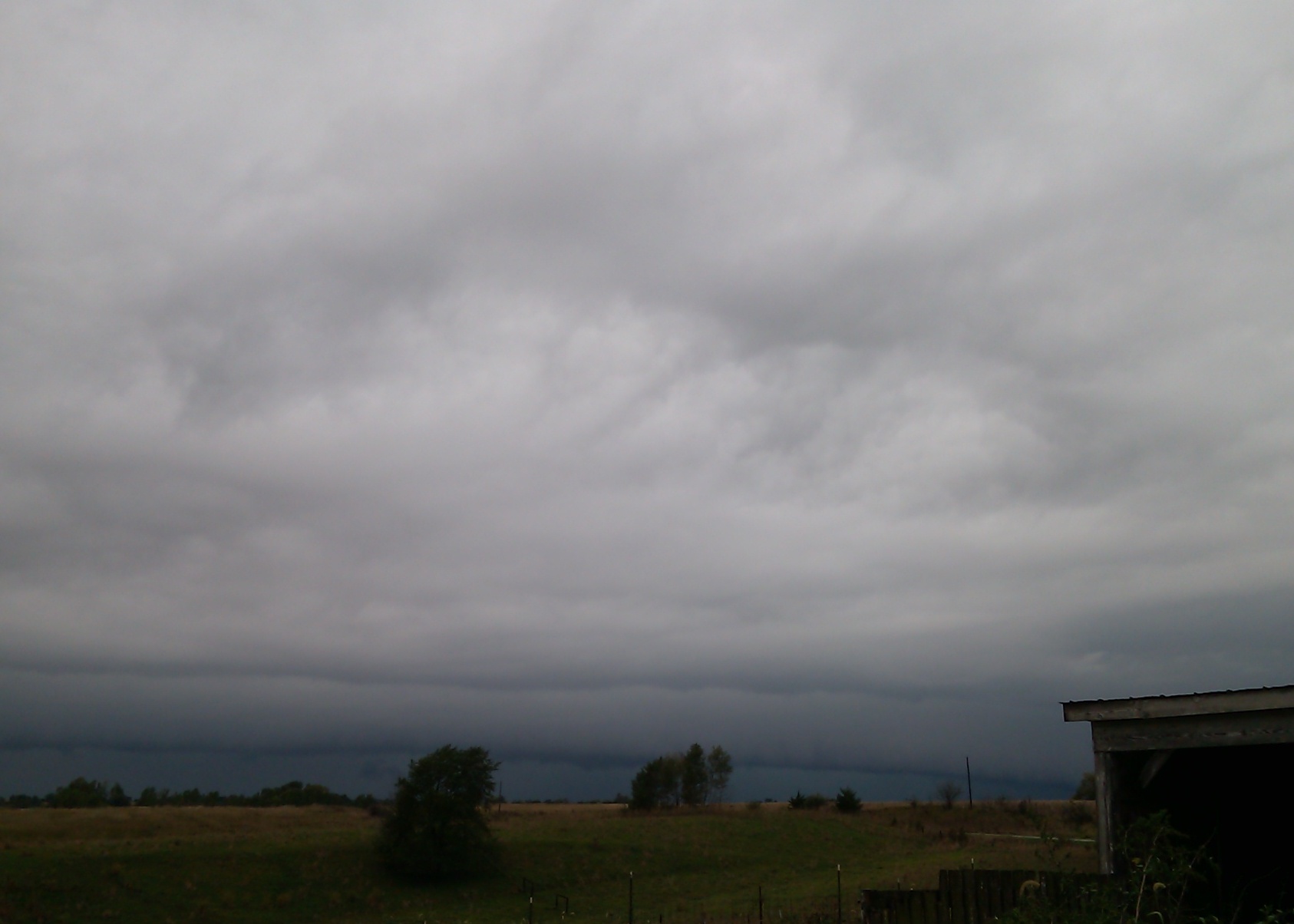
I watched the cloud formations move in, and they threatened and thundered, and ultimately did not bring much rain. As soon as it begins to clear, I’ll head back to finish what was started. In the meanwhile, I made hot sauce, and an apple crisp from Cortland apples is baking in the oven.

Thunderstorm Rolling In

A Cortland apple is a cross between McIntosh and Ben Davis apples, introduced in Geneva, New York in 1902. When peeling and cutting the slices, the browning of oxidation doesn’t occur as quickly as with other varieties. They are popular with people of a certain age, and last week I stopped by and picked the rest of what was on the trees at the orchard. There is enough to test my theory that any apple can be made into apple crisp… more than once.

The western sky is beginning to clear. As soon as the apple crisp is out of the oven, it’s back to the high tunnel to plant more seedlings. Better have that coffee soon.

Thunderstorm
Thunderstorm
Categories
Kitchen Garden

The Corn Harvest has Begun

`Setting Sun
Setting Sun

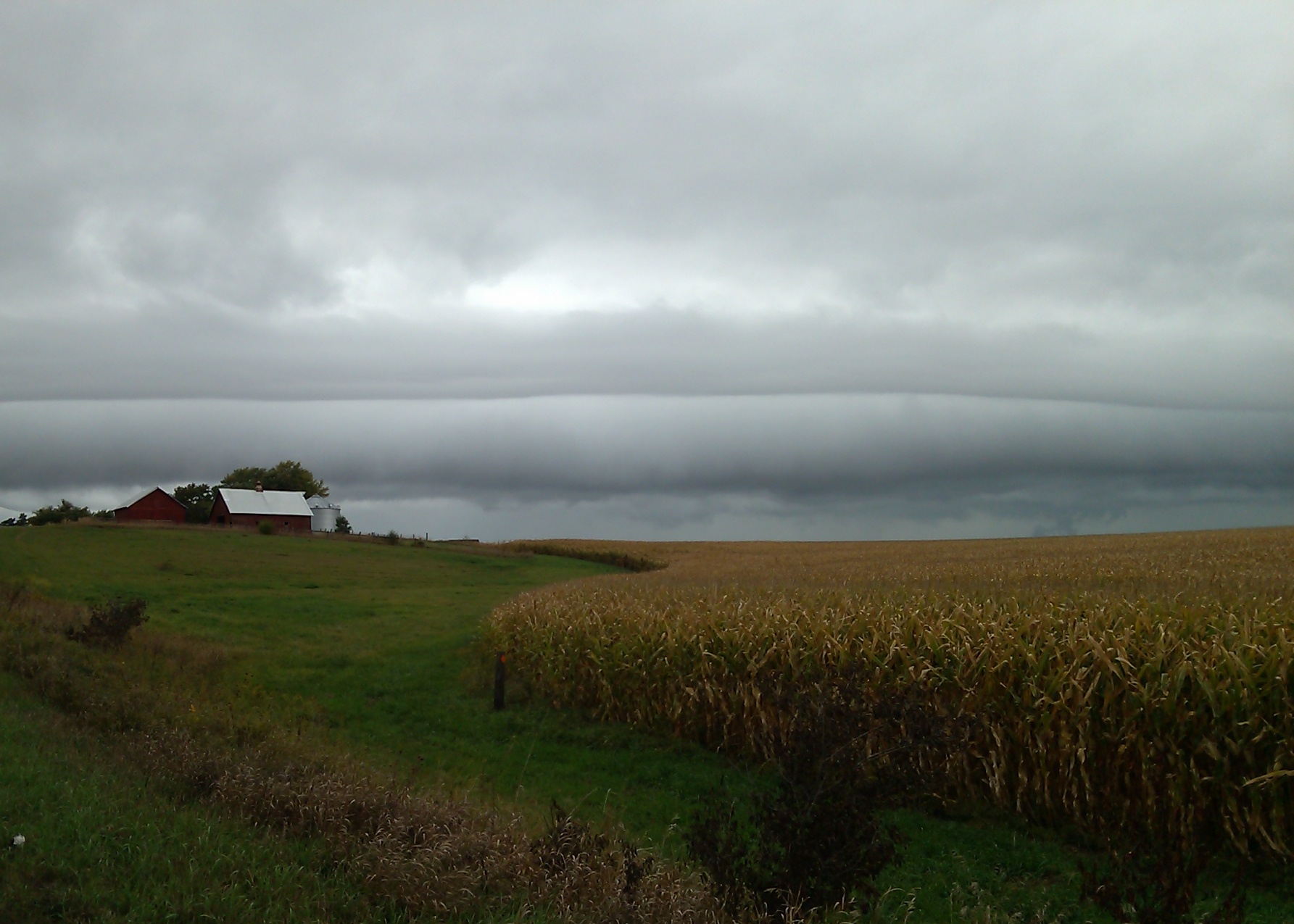
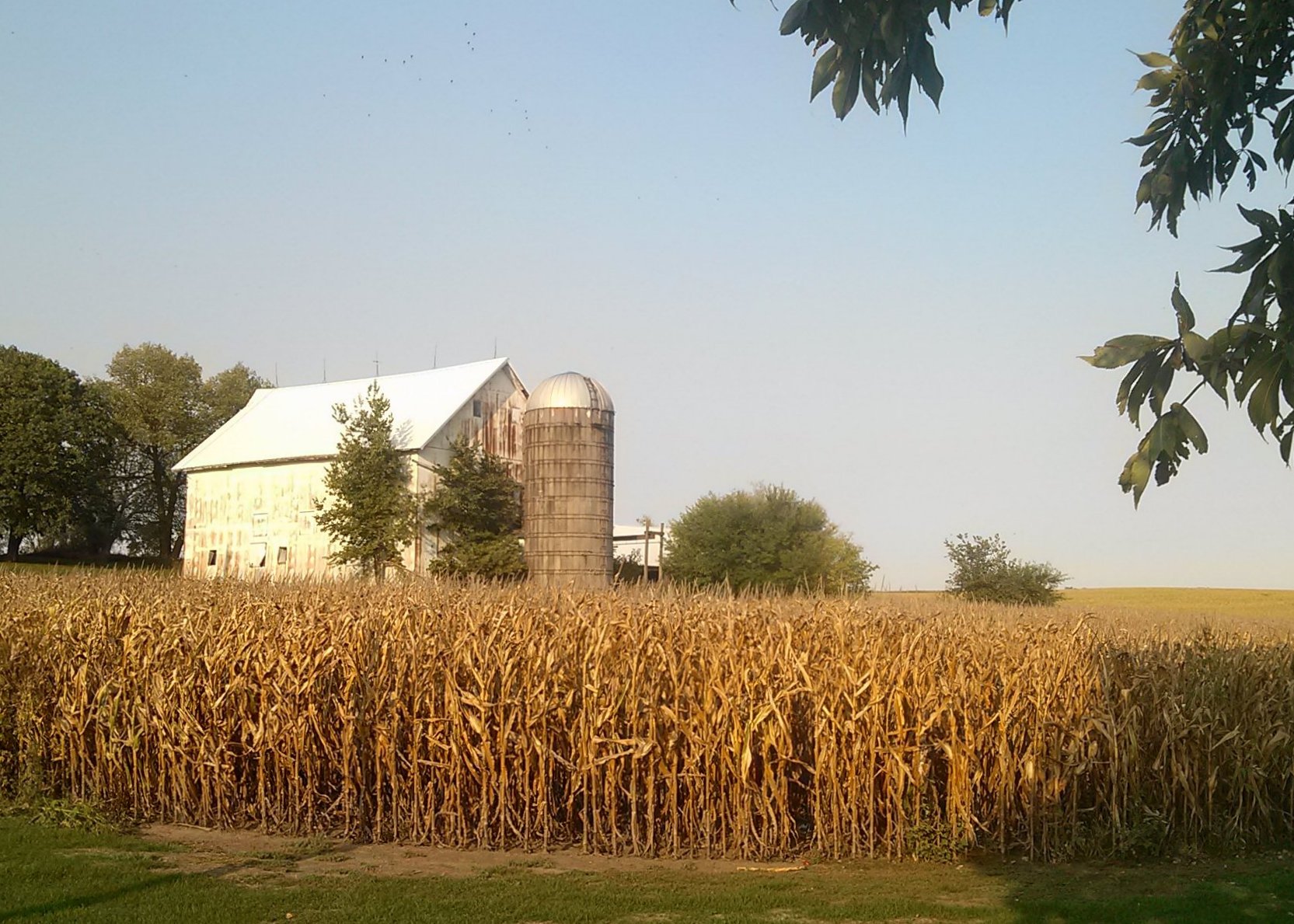
LAKE MACBRIDE— Combines are in the field, just beginning the corn harvest. There are a lot of brown corn plants standing in the field… another sign that winter is coming. The Farm Journal reported that 11 days ago, so this is not news. It is just that to read something in the media is one thing, and to see life actually unfolding is quite another.

There is a lot to write about from the farm, and then again, there isn’t. Working on a vegetable farm has been a rich experience. It has been a month since I began working most weekdays, and it is physically and mentally rewarding work. There is an endless succession of visitors and workers to the farm, and always something going on in the neighborhood. On Thursdays I deliver directly to our customers in North Liberty. When we talk about farm to market, there is no middleman and they see the face of the farmer as it is with soil from the field stuck to my clothes.

Last night I dreamed about where we spent my preschool years. The Clifton Hill area of Davenport has not changed much since the early 1950s when our family lived there. It is a scrappy neighborhood where people don’t spend a lot on education, and spend more disposable income on tobacco products than anything according to one survey. The crime rate is high compared to the national average, with rape and assault being the most frequent. On the plus side, the number of murders scores below the national average.

Clifton Hills is a blue collar neighborhood, but since the time we lived there, the blue collar jobs fled the Quad Cities, and 65 percent of those employed are now white collar workers. It is past time when the type of work is designated by the color of shirt a worker wears, as it is a meaningless appellation.

The home where I grew up sold for $58,000 in 2010 according to the assessor’s office. Visually, it hasn’t changed much, and in dreams and memories my recollections of life there are clear. Why I would remember last night’s dream of the old neighborhood, when my life is so different, is hard to understand. Nor is it important to remember. I accept the origins of my life in society. It’s just another thing in the cycles of time. Not unlike the corn harvest, it comes on schedule when conditions are right.