Categories
Home Life Kitchen Garden

Pesto Pasta

Apple Pile
Apple Pile

LAKE MACBRIDE— In 100 degree temperatures the walk to the garden to pick yellow cherry tomatoes and basil for dinner didn’t seem hot. Perhaps I am adapted to the unseasonably hot weather… intensified by climate change. We can’t recall the last rainfall. According to the state climatologist, “Iowa temperatures averaged 72.1° or 0.6° above normal while precipitation totaled 1.57 inches or 2.63 inches less than normal. This ranks as the 7th driest and 65th warmest August among 141 years of records.” It has been exceptionally dry in Big Grove. However, life goes on, and having a house guest provides a special reason to used locally grown food to prepare meals for the table.

That we would have a salad was determined when a co-worker at the farm carried a crate full of freshly picked lettuce from the field to the cooler yesterday morning. Mixed greens, washed and spun dry, topped with zucchini, cucumber, orange bell pepper, red onions, wedges of red tomatoes and sliced carrots were topped with a dressing of choice. Balsamic vinegar and olive oil with salt and pepper is my favorite.

We also served pesto pasta. During early summer I made and froze half a dozen jars of pesto, using various ingredients. Slicing the yellow cherry tomatoes in half and putting them in a small bowl along with a chiffonade of basil leaves, I cooked six cups of bow tie pasta to al dente. The pasta, tomatoes and basil, half a pint of pesto and a roughly measured cup of Romano and Parmesan cheese were mixed thoroughly in a large bowl and served alongside a one-inch thick tomato slice topped with kosher salt and strips of fresh basil. A simple late summer feast.

Categories
Kitchen Garden

Township before Dawn

Dolgo Crab Apples
Dolgo Crab Apples

LAKE MACBRIDE— Today begins with two Tylenol® for the headache caused by I don’t know what. Perhaps it was the lack of fresh vegetables and protein in meals made of potato bread purchased once a year from the grocery store, evenly toasted and  spread with salad dressing, topped with thick, red slices of tomato. An annual ritual of the tomato harvest in Big Grove Township. With coffee and writing, the headache is receding. It’s 4 a.m.

There was no harbinger of how it would in the local food system this fall. Farmers need help for harvest: picking kale, squash and tomatoes, selling apples, and cleaning onions and garlic. Add the work of preserving some of the harvest, gardening and just living, and it is a full life. Suddenly, I’m working four paid jobs, and a lot that aren’t paid.

More than the pay, which certainly isn’t a living wage, is the value of the experiences. Some of which I’ll recount here to provide a flavor of an Iowa life in September.

Last Sunday I sampled Dolgo Crab Apples and liked them so much, I made five pounds of them into Dolgo Crab Apple Butter.

Picked the pears from our tree. There was about a bushel of them.

A branch broke on the Golden Delicious apple tree. The fruit was ripe, so I picked it from the branches.

Perhaps the best tomato harvest from my garden in a single day.

Canned diced tomatoes, four quarts and 27 pints. Plus about three gallons of juice.

Roasted peppers and marinated them in olive oil with a clove of garlic.

Froze bell peppers for a farmer friend.

Put up a dozen ears of corn in the freezer.

It all takes time, with little reflection, which perhaps will come when the work is done, if ever.

Categories
Kitchen Garden

The Tomato Deal

Seconds
Seconds

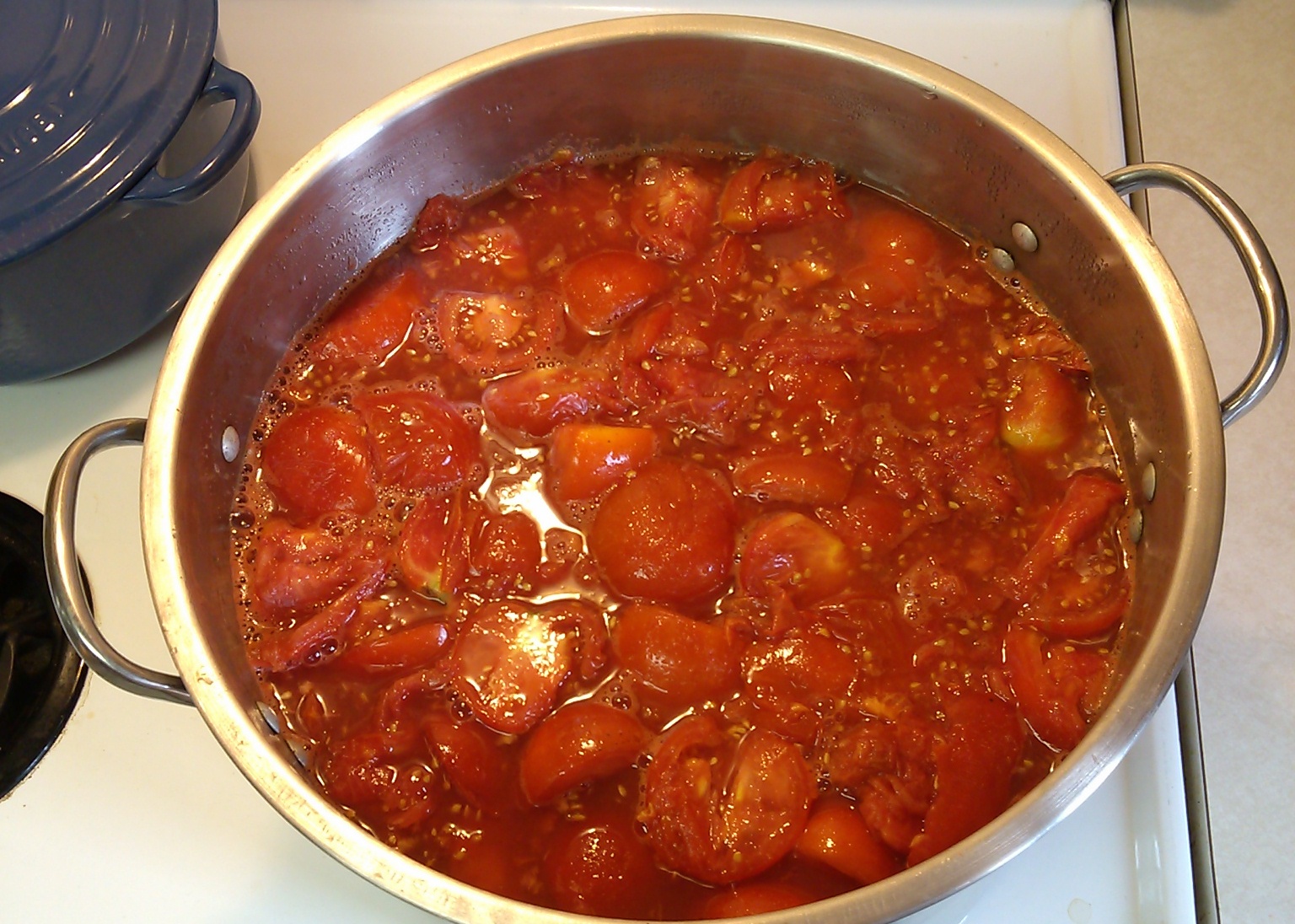
LAKE MACBRIDE— There are six crates of organic farm tomato seconds in various states in our kitchen. Today’s goal is to process them all and have quarts of tomato juice and pints of plain sauce canned and ready before bedtime. I spent about an hour washing tomatoes last night after dinner, and have been at it since 6 a.m. this morning. The tomato deal is an important part of this local food system.

TomatoesHere’s the deal. A CSA produces tomatoes for farm shares, and has seconds, which are not suitable for the customers. I get a call when there are some, pick them up, along with canning jars, process and can them into a few categories of food ingredient. No salt, vinegar or preservatives, with the end result being jars of diced tomatoes, tomato sauce or tomato juice. The juice is the strained liquid left in the cooking vessels, and not tomatoes run through a hand or motor powered juicer. The farmer labor is producing the tomatoes, mine is processing them. We split the finished product 50-50.

So far, it is looking to be successful. Check back when the tomatoes really start coming in.

Categories
Home Life Kitchen Garden

Will Work for Food

Preserving Eggplant
Preserving Eggplant

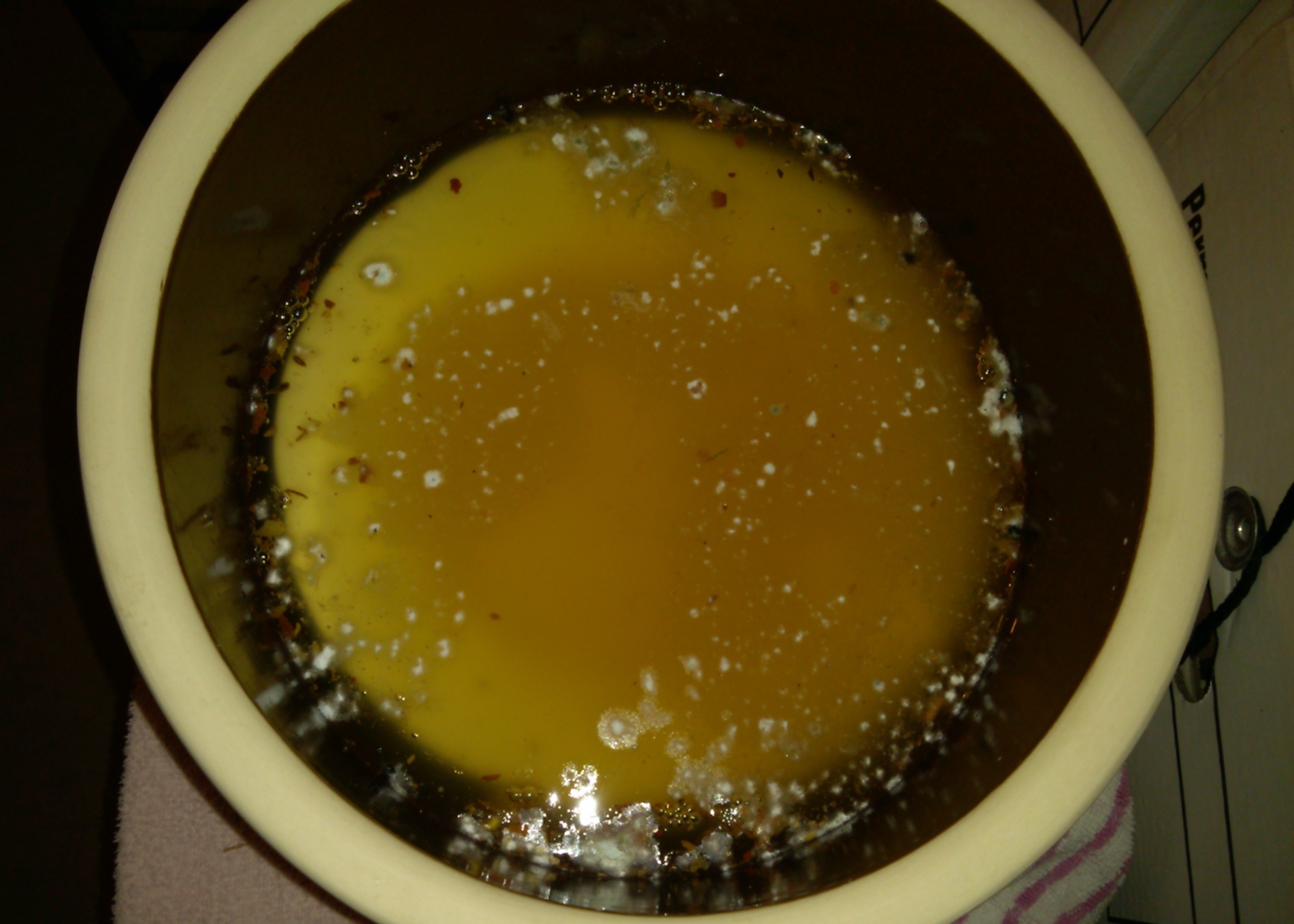
LAKE MACBRIDE— Two batches of pickles are fermenting in crocks downstairs, the second started three days after the first. The rule is to place cucumbers in the brine and let things get started for three days before checking. There was scum to skim on the first this morning— evidence the pickling process is proceeding as expected. The reason for a second batch is a local grower had excess cucumber seconds which were offered and taken to serve my dill pickle addiction.

Eggplant is abundant. I peeled and cut three into half inch rounds. They were baked for 15 minutes at 425 degrees, cooled and then frozen and bagged for future use, most likely in eggplant Parmesan. By then, the freezer was reaching capacity, and eggplant is not an everyday preference.

Last processed yesterday was two tubs of broccoli. This is part of a work for food barter, and unexpectedly came about while discussing seconds and surplus with a grower. All told, it took me about four hours to process the two tubs with a total yield of 20+ pounds frozen. The first tub, which yielded 8-1/2 pounds, was returned to the grower as compensation for the produce. I kept the second, added two heads I already had in the refrigerator, and that was the balance.

It’s a shame we had to compost the stems, as they are some good eating. If better organized, I would have made a big batch of soup stock using carrot, onion, celery, bay leaves and the broccoli stems and canned it in quarts. Our household uses a lot of stock.

The squash beetles mentioned yesterday avoided the butternut squash seedlings and congregated on the withering acorn squash plants. I need to study natural pesticides before I pull those vines, as the bugs will likely next migrate to the new cucumber plants, and infringe on my plans for more dill pickles. It is remarkable that I had tremendous abundance of zucchini and yellow squash before the squash beetles showed up.

The grower with whom I’m working on the broccoli and tomatoes stopped by to drop off some canning jars. We toured my local food operation which is situated on 0.62 acres. It is revealing to see what other growers notice about a home garden: the apple trees, my compost bin made from four pallets, the healthy Brussels sprout plants, my deer-deterrent fencing, and my pile of cut brush waiting for a fall burn after the garden is finished. She asked if I turned the compost. I won’t until spring when it is spread on the garden plots.

A local food system centered around a single household is both simple and complex. Cooking and preserving food are practices that have been around since hunting and gathering gave way to agriculture and domestication. Fresh food is sourced from a garden and a mix of growers. Specialty items are purchased where they are available at local retail outlets. There is a constant balancing act that regulates types and quantities. The refrigerator contents reflects how things are going, hopefully with the majority of foodstuffs having no commercial label.

While endeavoring to earn money for the tax man, insurance companies and lenders, we have to eat. The question becomes, what takes precedence? We can live without bankers, but sustaining a life requires a sophisticated, ever evolving local food system. The pay is not much, but the rewards are renewable.

Categories
Kitchen Garden

Vegetarian Onion Soup

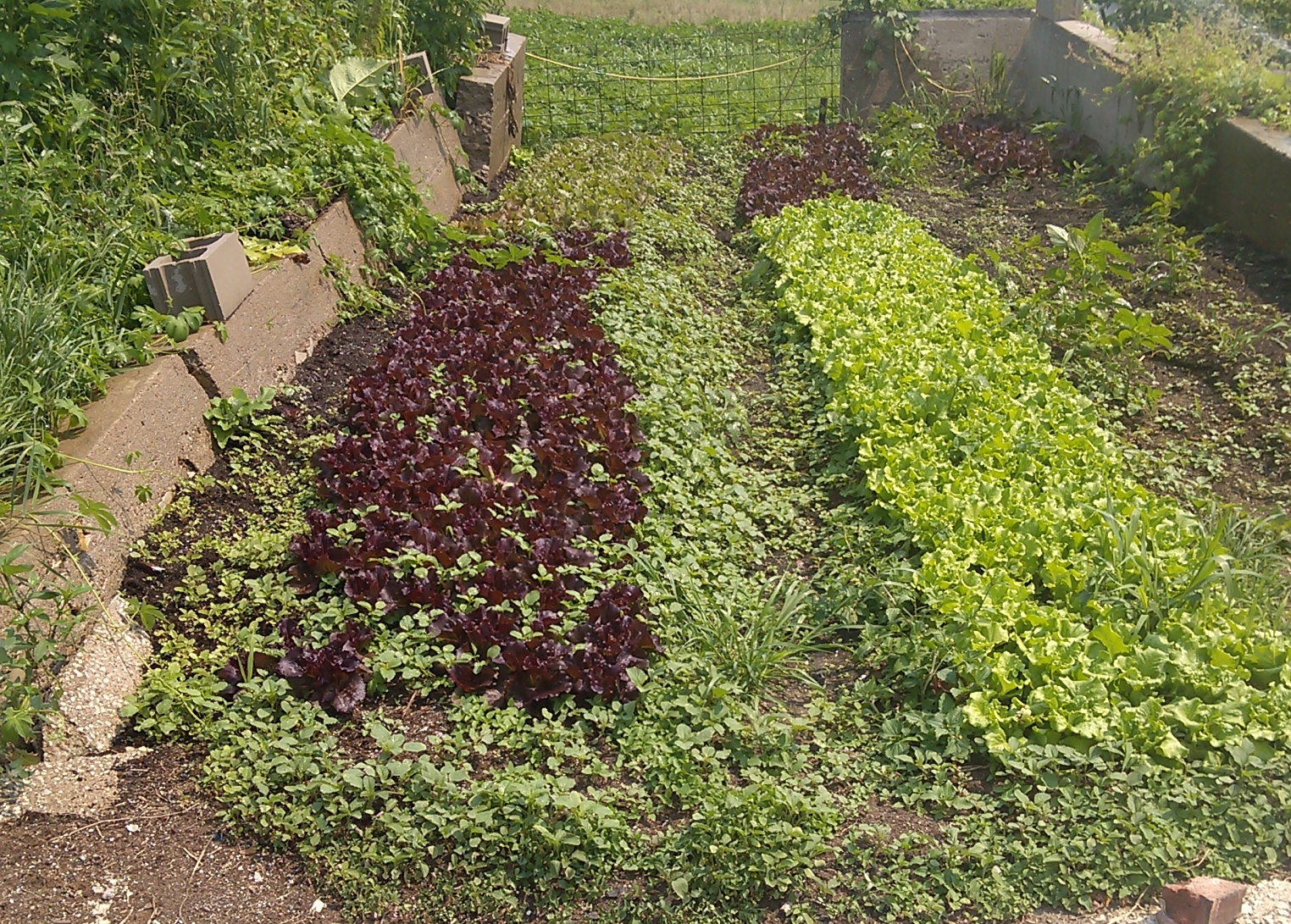
Lettuce Patch
Lettuce Patch

LAKE MACBRIDE— Sunday was cooking day after finishing my work at the newspaper and the farm: the beginning of a long season of using and preserving the summer bounty. It began with figuring out what was in the refrigerator.

Three heads of cabbage are holding up reasonably well, but there is leftover coleslaw from last week. The idea is to make sauerkraut, feeling bullish on fermentation after the success of my pickle experiment. For now, I peeled the old skin from the outer layer and neatly arranged them on a shelf.

I boiled potatoes to use in breakfasts and a potato salad. The potato salad included potatoes (skins on), two hard cooked eggs, diced dill pickles, diced red onion, and a dressing made from salad dressing, yolks of the cooked eggs, yellow mustard and salt. It will keep for a few days if it is not eaten first.

Juicing half a bushel of apples made a sweet, but almost clear liquid. I need to add juice to the mother of vinegar in the pantry, but decided to wait until an amber colored juice came from the apples in my back yard. I bottled half a gallon of apple juice for breakfast and casual drinking, then drank some.

While gardening, I found a stray turnip and harvested it for the greens. I made soup stock with turnip greens, carrot, celery, onion and bay leaf. I used some of the stock to make rice, some to make onion soup and the rest waits in the refrigerator for the next project.

Onion soup is a mystery solved. I piled vast quantities of sliced onions in the Dutch oven with a layer of olive oil on the bottom. A sprinkling of salt and then a low and slow cooking until they began to turn brown. Just covering them with the turnip soup stock, I simmered until done. Soup was served with grated Parmesan cheese. The soup was as good as any French onion soup to be had at a restaurant. So sweet and flavorful with the simplest of ingredients.

The tomatoes are starting to pile up, there are potatoes aplenty, apples and sweet corn is due any week from the CSA. This year, I’m ready for all of it.

Categories
Kitchen Garden

Zucchini Juice

Zucchini
Zucchini

LAKE MACBRIDE— In a quest to use the bountiful zucchini, I found a juice recipe. Zucchini juice? Before you click on the next page in your reader, hear me out. The apple harvest is beginning to come in, and they are also basic part of juicing recipes. Organic carrots were on sale at the mega market, as they often are, and they are another essential part of juicing. Put the three together, run them through a juicer, and the result is a sweet juice that immediately creates a boost of energy. The zucchini flavor is masked by the sweetness of the carrots and apples. Mmmmm.

I know what some readers are going to say, that vegetables should be eaten in the form nature presents them, and not highly processed. They have a point. The rationale is that if the zucchini and carrot are fed through the juicer first, the fiber can be used as a cooking ingredient, especially in soup. Too, there is an abundance of apples and zucchini, and a glass of juice in the morning gets the digestive tract moving, if you know what I mean.

Undecided whether this is the next new thing, or a pit of hopeless and despairing zucchini abundance, all there is to do is recommend readers try it and decide for yourselves. I’ll be having a few more glasses before the season is over.

Categories
Kitchen Garden

Cookbooks Galore

Books from the Library Sale

Will the Internet make cookbooks obsolete, except for nostalgia and sentimental attachment? I think it already has.

Late Sunday this email came in from Friends of the Solon Library: “There are four boxes of cookbooks leftover from the Friends Used Book Sale!   Stop by this week and bring home some new recipes!  They are located in the hallway on a small cart next to the regular used book cart.”

Comme d’habitude, I was an early bird for the sale, and had browsed through the much larger than usual cookbook selection. Not much of interest for me, as I have been collecting social group fundraising cookbooks for years, and have about all a person could wish for. Cookbooks from my home town, from my new home, from the hospital where I was born, and the one where our daughter was born, from the church where I was baptized, from area businesses, from the Stone Academy (a local one room school house), from the American Trucking Association, from where I worked, and a host of specialty and celebrity chef cookbooks. Adding more of the same seems so 20th century.

The truth is my focus when cooking has turned to what local food is fresh and available, and what techniques will be used to transform raw product into a meal. Occasionally I’ll search for a recipe, but it is usually on the Internet, making my point. The focus is on the food.

The attraction of browsing hundreds of cookbooks may serve some writing project, but it is not how we live now. It’s not how we cook. What matters more is producing local food, with fresh and local ingredients as an expression of character and personality, rather than that of the scion of a family kitchen disconnected from here and now.

Cookbooks will be around, and my collection seems unlikely to decrease in size. Clearly, from the email, if I add cook books to my downsizing, they won’t move at the used book sale. I can’t bear the thought of them languishing in the hallway with the other remainders.

Categories
Writing

Zucchini Madness… Again

Zucchini
Zucchini

LAKE MACBRIDE— More has been written here about zucchini than any vegetable of late. In an effort to figure out more ways to prepare and preserve it, I posted a note on Facebook. It proved to be beneficial.

Not only did I receive good suggestions on how to prepare the vegetable, several ways to dispose of excess were identified. This is an inherent part of a local food system— social networking to resolve issues like an abundance of zucchini.

It’s not that I have been short of recipes, I haven’t. So far, I have prepared crudites, toppings for salads, soup, zucchini fries, baked zucchini, a squash casserole, zucchini lasagna, mandolin sliced zucchini pasta, and as soon as there is eggplant, the classic zucchini dish— ratatouille.

There were new ideas for cooking. A friend wrote, “Oh and re. Zucchini— they’re never to big to stuff!  That’s what we do.  Cut in half length wise, core out the seeds.  In the depression add your favorite things  For us that’s lots of walnuts, mushrooms, celery, rice? and what ever else you have laying around— almost anything can make for a fine stuffing. Use favorite spices.  Melt Cheese on Top.   Enjoy again, and again.”

Here are other preparation suggestions:

“Sausage stuffed zucchini boats & zucchini fries.”

“A friend had a pretty good recipe for “mock apple pie” that was made with zucchini and a lot of cinnamon.”

“Sliced in half with some olive oil and garlic salt, then grilled. We’re also big fans of zucchini bread.”

“I just shared a thing about oven baked zucchini chips. never heard of them done that way before myself, but could be worth a try.”

What else to do with excess? There were people that wanted some to eat. Also here are some comments:

“Chop them up and feed it to the chickens. They love zucchini.”

“right to the compost”

“Sounds like you have the basis for a cottage industry… upgrade the packaging and sell frozen zucchini for those of us who aren’t in a position to have any in our own freezers!”

“Contact the veterans shelter house in Cedar Rapids, … they have storage and will distribute green grocery items to their homeless veterans.”

…and there is my favorite, trade zucchini as chicken feed for farmer’s eggs.

As we savor the most recent pick of zucchini, we’re far from exhausting the possibilities. And thanks to social networking, we’re better together.

Categories
Kitchen Garden

Fermenting a Path

Bacteria at Work
Bacteria at Work

LAKE MACBRIDE— People are surprised that I’m making pickles without vinegar. Truth be told, until this summer, every pickle I have made was with vinegar, and the results were not optimal, with jars of sliced pickles lingering on in the refrigerator— I quit canning them years ago. Using the fermentation process, the results are so good, I may be fermenting a path to addiction. So what’s different?

It is the lactic acid created by bacteria action that preserves the cucumbers and provides their distinctive pickle flavor. This instead of the acetic acid of vinegar. Basically, waves of different bacteria become active in the salt brine and transform the cucumbers.

The process is so easy, and the results so good, I needed a bigger crock. If you want to try them, I used a celebrity chef recipe which readers can find here.

Time to skim the scum, if you know what I mean.

Categories
Kitchen Garden

Processing Cucumbers and Other Things

Refrigerator Pickles

LAKE MACBRIDE— The dawn dew barely moistened my shoes while venturing to the garden to water the plants. Much needed rain failed to precipitate last night, and without daily irrigation, the produce yield would be reduced. The lettuce seedlings planted last week are surviving with twice a day watering. The morning shade of the locust trees protects them from the parching effect of the sun. The forecast is for zero chance of rain before noon.

Last night I made two quarts of deli-style refrigerator pickles. The brine is the same as the one processing cucumbers in the crock, just that in the refrigerator they will be ready in four or five days. There are more cucumbers on the vine, and one kept fresh for salads. The flow of cucumbers through the kitchen has been about right.

The ice-box is packed and filling with food. I added a couple of more packages of grated zucchini to the freezer drawer and today’s plan is to make pesto to freeze. Produce rotation and preserving to prevent spoilage has become a thing around our household.

I decided to take down the advertising calendar on the bulletin board in the garage and replace it with photos. I spent an hour sorting through digital photos on my computer and ordered prints from Walgreens online. They were ready for pickup across the lakes in about an hour.

After making the pickup, I spent another hour selecting prints to post, and processing memories of our life since we became empty nesters. Better to be reminded of our family life than the days on a calendar. If one has children, it is a blessing to know them at all. Reflecting on who they have become is a luxury as good as gold.

No pickling brine will stop death’s inevitable advance.  As long as we can process— cucumbers, zucchini and basil, photographs and memories— we can go on living. As Walt Whitman wrote, “and as to you death, and you bitter hug of mortality . . .  it is idle to try to alarm me.” Fearless we enter the day, endeavoring to accomplish something with our lives.