Categories
Kitchen Garden

Placeholders

Is This What Stalin's Community Kitchens Would Look Lie Today?
Is This What Bolshevik Community Kitchens Would Look Like Today?
Categories
Kitchen Garden

Making Soup

Root Vegetable Soup
Root Vegetable Soup

LAKE MACBRIDE— It’s hard to go wrong making soup. The dish is tolerant of variation, and is as diverse as can be. Soup is a pantry-based dish, good to use vegetables up, and has been the basis for meals since forever. It’s a never ending experiment in living. Here is how I made it today.

There were five components to this batch of soup: roots, soup base, canned soup, barley and frozen corn and peas.

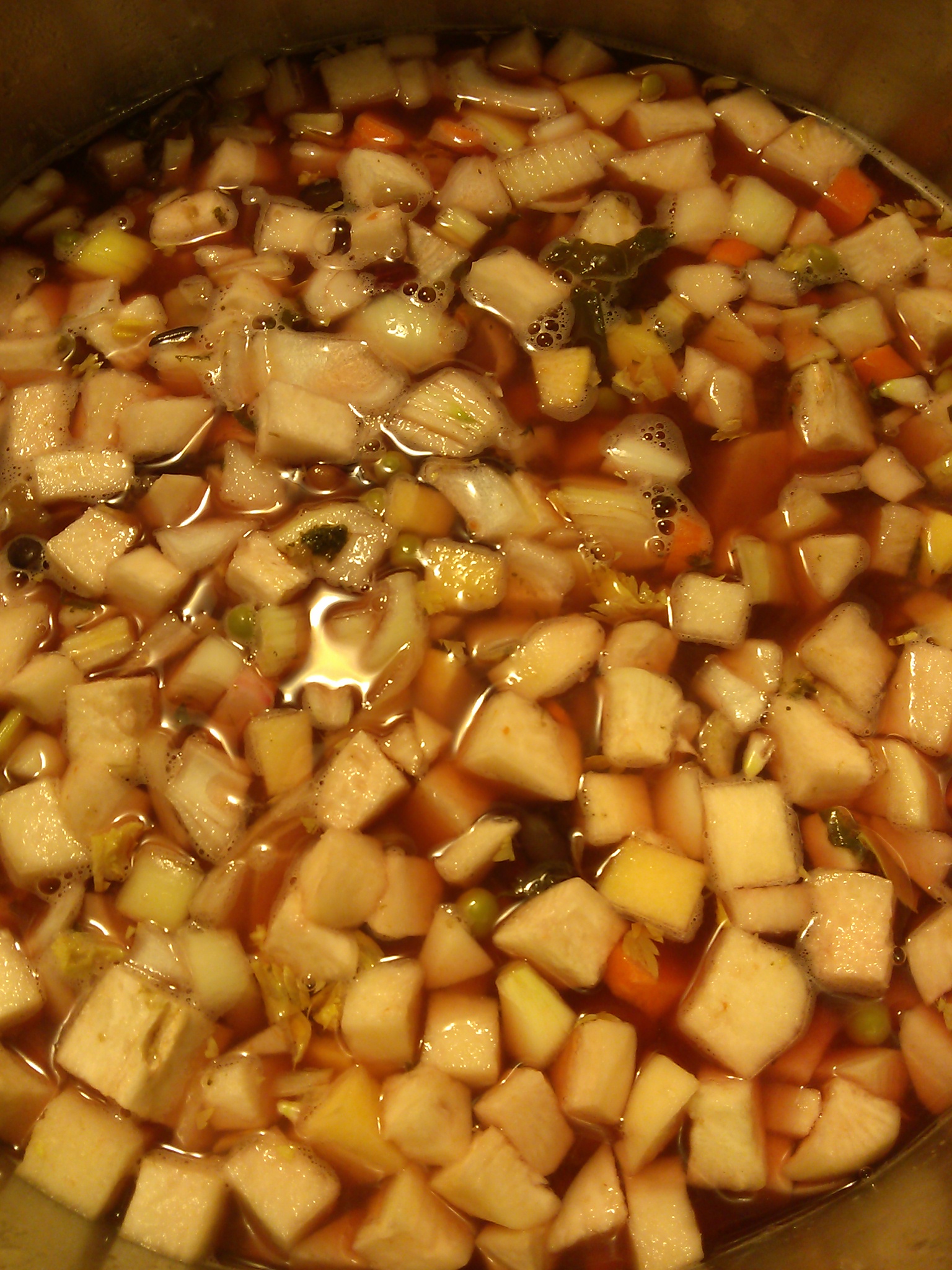
I picked five different types of root vegetables from the refrigerator drawer and counter: hakurei and purple top turnips, rutabaga, kohlrabi and potato. The point was to use what was on hand. These roots were grown in my garden, and on three different farms, so I know them well. I peeled and diced them into small, uniformly sized pieces, then covered them with cold water in a Dutch oven, and cooked until tender. I poured the whole lot into a strainer placed inside a stainless steel bowl to separate the roots and save the cooking water. The roots went back into the Dutch oven, reserving the liquid.

Soup base is a form of local frugality. In our kitchen, I make and use a lot of vegetable stock. What I call soup base is the remains of vegetables after straining away the cooked stock. I process the cooked vegetables through a food mill and can the result in a water bath. Soup base adds both flavor and texture to soups, and helps thicken them. At this point, I added a quart to the roots.

A farmer friend had a lot of kale at the end of the 2012 season. She typically mows everything down and plants a cover crop, but called me the day before to ask if I wanted any kale. I took a bushel and made soup from the pantry and canned it. The quart jars can be eaten as-is, but lately I prefer to use them as an ingredient. I added a quart of vegetable soup to the pot.

After stirring the mixture, I added enough of the root cooking liquid to cover, along with a quarter cup of pearled barley.

The mixture simmered the better part of four hours— until it was soup. At the end, I added a cup each of frozen peas and cut corn.

The next step to making a meal is flexible. The old way was to lay a plank of thick, coarse bread in the bottom of a bowl and ladle soup on it. It could be topped with bits of browned meat for omnivores, or seitan or fried or baked tofu for vegetarians. Salt and pepper and you’re ready for a hearty winter meal made from local ingredients, one that stands up to the test of time.

Categories
Writing

In the Mega-Mart Checkout Line

Mega-Mart
Mega-Mart

LAKE MACBRIDE— The last three times I’ve been to the grocery store, the person in front of me in the checkout line has commented that some baking must be planned in our household. What they don’t know is because of my work on farms this year, flour, sugar, butter, dried fruit, chocolate chips, and other shelf-stable and dried goods are all I need to pick up. Going into 2014, the pantry and freezer are still pretty full of the season’s goodness, with a couple of months food on hand should disaster strike.

There are usually some luxuries on the conveyor belt leading to the cash register: a small jar of hazelnut spread mixed with chocolate and skim milk, cured Spanish olives stuffed with pimiento, a bag of caramel corn on special, or a box of snack crackers. Those items not withstanding, the majority of food we buy at the grocery store is raw material to supplement our pantry while cooking our own meals. As people have noticed, what we buy at a grocery store is evidence that we use appliances beside a microwave oven in our home kitchen.

People snoop at my purchases, but I don’t mind. I do the same, but don’t usually comment, having been raised differently. When people comment, I respond politely, giving out as little additional information as possible, saying something like, “the sugar was on sale for $0.25 per pound, so I thought I would pick up a bag.” Like it or not, checkout is a sociable time.

I have gotten to know some of the cashiers at the mega-mart, and they call me by name after the transaction. They must read it on the display screen after my debit card goes through. It is not a personal relationship, but familiarity after long years of my repeat business and their continued employment. It is not a bad thing, and as people smarter than me have said, the sweetest sound is that of our own name. It’s good salesmanship to call customers by their name.

Neighborliness may have been reduced to these brief commercial interludes in the grocery store. Where I live, seldom do I see my neighbors outside, and even less frequent is an in depth conversation about anything other than the weather. I speak with my friends via email, and in person at events, but that is conversation through association rather than neighborliness. A little more neighborliness would be welcome in our increasingly contentious society. Even if it is only in the checkout aisle.

Categories
Kitchen Garden

Thanksgiving Menu 2013

Vegetarian Thanksgiving

Happy Thanksgiving!

Today, among many things, I am thankful for the readers of On Our Own. Whether we have met or not, having an audience is an encouragement that provides a sense of validity when I write. So thank you.

Today is a family cooking day in our house and we prepared a special vegetarian menu that will nourish us today and feed us leftovers for days to come. Our family is scattered around the U.S. and we’ll be thinking of them all as we prepare this meal:

Relish tray of pickled vegetables, Kalamata olives, bell pepper, young carrots
Deviled eggs
Cranberry relish
Lentils with carrot
Wild Rice
Baked beans
Sage dressing
Steamed broccoli
Sweet potatoes
Root vegetable stew
Apple crisp
Iced water

Best wishes for a happy Thanksgiving, and thanks for reading On Our Own.

Categories
Kitchen Garden

Restless Night of Pickles

Daikon Radish Pickles

LAKE MACBRIDE— Reaching for the two empty quart Mason jars in the cupboard, I filled them, and another pint— with daikon radish pickles. Rather, there will be pickles once the mixture of sliced daikon, vinegar, filtered water, salt, agave nectar, mustard seed, peppercorns, garlic cloves, jalapeno and Serrano peppers has been in the refrigerator a few days. The kitchen work was finished before 4 a.m.

There is more to the story of a sleepless night. Perhaps there was solid sleep, but after midnight, it would not return. As the screen from the mobile phone illuminated the room, I found a recipe for pickles in my twitter feed. The ingredients were in the refrigerator and pantry. The allure was too much, the daikon radishes too many. I turned on the light and started to get busy.

The day was ruined after that. Not enough sleep. A couple of hours at a farm planting garlic, then to town to get a gallon of milk and some limes. An afternoon of dozing in and out of activity. No dreaming. That’s the worst of it.

For if dreams kept me awake that would be good. Instead, it was a restless night of pickles, such restlessness leading to a day of discontent, and dreamless wonder— wondering about what’s next. Was it concerns of advancing age, with a spicy pickle to distract from quotidian blandness? No, it was the idea of pickles, as they were just made, not ready to eat. Not what I’d hoped for when I was young, this imaginary pickle making life.

As the sun moves toward the horizon, the day is coming back to life. The pickle disruption is over, with ingredients melding in the refrigerator. Fully awake, filled with wonder, I’m ready to take on a project. My restless pickle-making finished, at least for now.

Categories
Writing

Cleaning Onions

Trimming Onions
Cleaning Onions

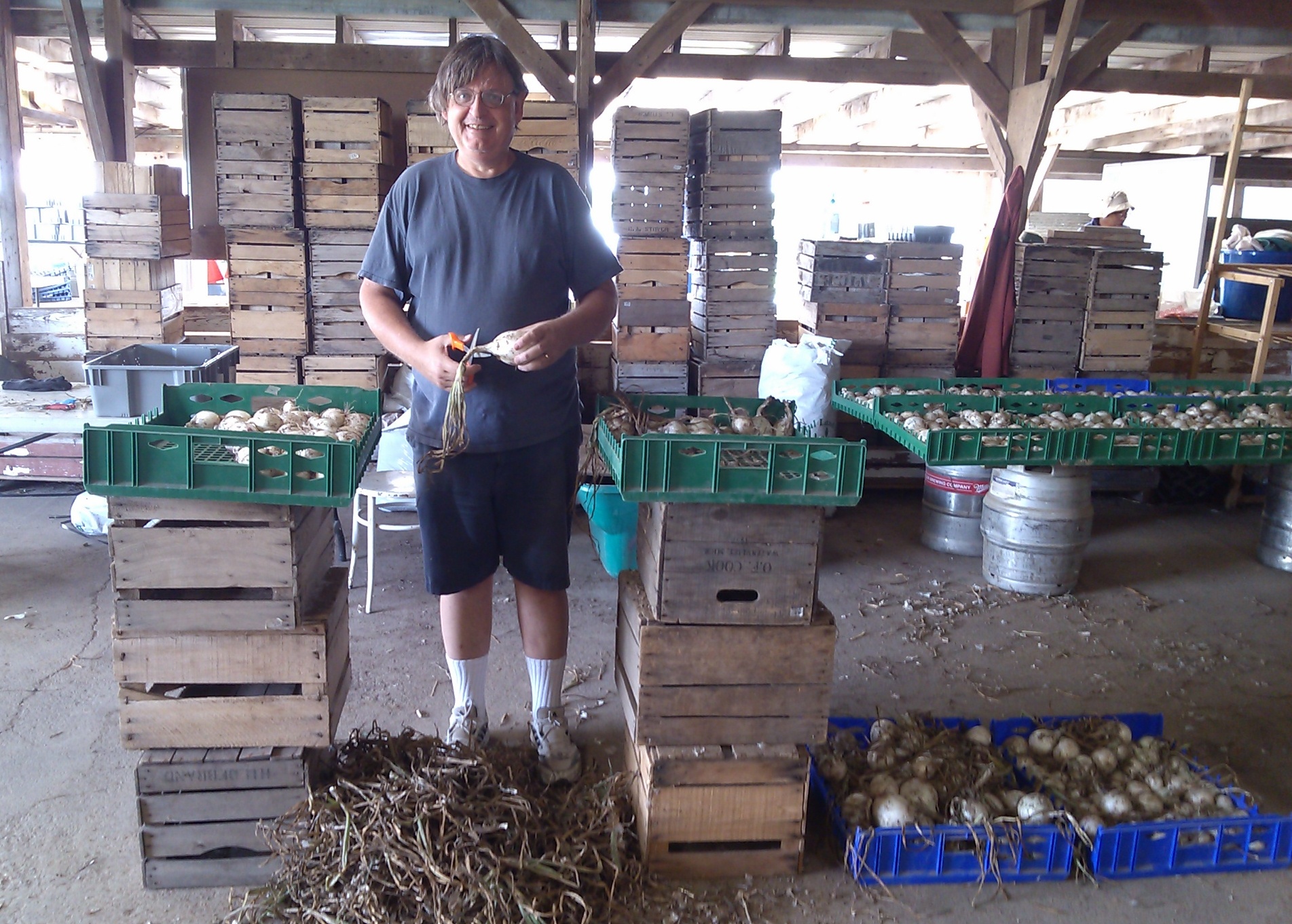
LAKE MACBRIDE— Napping when the email arrived, an hour later I woke, read it and made it over to the farm at a quarter to noon to clean onions. It was solitary work removing the tops and roots, and sorting them into crates. It took five hours. While I worked, one person was at a meeting in town, two sorted and cleaned potatoes, and another sorted spaghetti squash. Silent, but communal work in support of our local food system. Around 1 p.m. everyone else had finished and was gone, leaving me with my thoughts and work.

One of the ironies of this year has been that while working a lot of hours in local food production, my time in the kitchen has been limited. I prepared a number of seasonal dishes, but there was little experimentation or cooking for pleasure. Most of the kitchen time was spent preserving food, rather than preparing meals, converting that part of our home to a temporary mini-factory.

Rendering fresh produce into a shelf-stable product is a vital part of summer abundance. This year there are some new items: dill pickles, sweet pepper sauce, and grape and raspberry jam. As fresh cooking turns to pantry cooking, the household is ready.

In the declining light of the barn, something enveloped me. It was as if the world had been shut out as my pile of onions leaves mounted. I returned briefly to youth, and the holiday time. When there were trips to the drug store to see what seasonal offerings were made. There were trips to used book stores, to secure a supply of winter reading material, even though there was plenty to read already in the house. An trip to the liquor store to buy some wine made of German Riesling grapes, or distilled French spirits: Armagnac, cognac and Calvados. The luxuries of plain living all.

When the onion cleaning was done, the sun was setting and I headed home along the gravel back roads littered with fall foliage and deer crossings. For dinner I cooked veggie burgers and served them on buns bought from the day old rack at $1.40 for eight. Condiments were ketchup and a slice of onion, sides of coleslaw and baked beans. Comfort food for a hearty meal.

What did my onion day dreams mean? It’s hard to say, but the actuality of that feeling took me back to a time of less worry, and living in each moment. A time when our potential seemed unlimited as we left home to see what the world had to offer. In some ways, that journey was never completed. Who knew it would end up in a quiet barn cleaning onions?

Categories
Home Life Kitchen Garden

Making Soup and Applesauce

Potato Digger
Potato Digger

LAKE MACBRIDE— At the end of the season, before the last gleanings from the garden have turned to compost, home cooks prep and cook and preserve to make use of summer’s bounty.

Foraging in the refrigerator as if it were foreign turf, forgetful of how the mix of cut onions, diverse greens and leftovers arrived, the best is culled for a hearty fall soup. Kale and onions, Brussels sprouts and broccoli stalks, celery and carrot, a turnip, some potatoes, frozen sweet corn, and everything else suitable goes into a large, stainless steel stock pot.

Tomatoes are selected from the counter, their numbers diminishing without replenishment from the garden patch. Cutting away the soft and dark spots, they were cored and pulsed on low speed in the blender, skins and all. The red puree was poured all at once into the simmering ingredients. A handful of leftover farfalle, bay leaves, some dried red and black beans, and chervil were added. The pot simmered more than an hour on low heat. It was soup for dinner.

At 3:15 a.m. I brought the graniteware water bath canner from downstairs to the kitchen. Using the wire rack, four quarts and a pint of applesauce, plus the pepper puree made this weekend, were lowered into the pot which was then filled with warm tap water. Moving the heavy pot to the stove, I turned the heat on high to process the jars of summer goodness. Now breakfast.

While working in the local food system, one never knows when or where the next paying job will come along. I finished the season at the orchard yesterday, at one CSA the work is clearing the field, which won’t take too long, then there is the planting in the high tunnel and fall share help, which will end soon as well. There is the prospect of cutting firewood at another farm, but weather seems likely to intervene before long. It begs the question, what’s next?

While invited to return to the warehouse after the season, it doesn’t pay enough given the investment in health and well being required. It is a fallback position to pay some of our bills should no other opportunities present themselves. There are a lot of low wage jobs around town, but they present the same problem of occupying space without providing enough income. I’m confident something will materialize.

While there is fresh food, I’ll continue to eat well and stock the pantry for winter. Mostly, we eat to live, and there is still time to make deposits in the food pantry. Hopefully there will be enough reserves to see us through until spring.

Categories
Home Life Kitchen Garden

Stuffed Peppers

RURAL SOLON— While finishing a shift of deconstructing tomato cages, I walked along the row of frosted bell pepper plants toward the gate. It snowed yesterday and hard froze last night. I picked six pepper survivors for the flat side upon which to sit on the baking sheet. There was a lot of food that survived the snow and frost, but we enjoy stuffed peppers a time or two during each year, and that was my choice.

When it was time to begin preparing the meal, I cored, parboiled and stuffed the peppers with a mixture of rice, eggs, a blend of Italian cheeses, cooked onion and garlic, and dried rosemary and sage. They were topped with leftover pasta sauce and went into a 350 degree oven for 22 minutes. We had a working family supper, served with sweet corn and fresh tomato slices.

On a cold day food fresh from the oven, made with local ingredients raised by people we know is as good as it gets. It is a simple pleasure, one that bears repeating if that is possible.

Categories
Kitchen Garden

Gleaning and Arugula Pasta

Volunteer Arugula
Volunteer Arugula

LAKE MACBRIDE— Arugula volunteered in the tomato patch and we had a simple pasta with it last night for dinner. It has been growing for three additional years since the patch was planted in arugula. Here’s the recipe:

Put a pot on to boil one pound of pasta.

In a large bowl, add five medium tomatoes sliced in wedges, two cups roughly chopped arugula, 1-1/2 cups chopped fresh basil, one teaspoon dried, flaked oregano leaves, one half cup olives, two tablespoons balsamic vinegar, three tablespoons olive oil and salt and pepper to taste. When the pasta is cooked and drained, add it all to the bowl and mix gently with tongs. Add one cup of Romano or Parmesan cheese and continue to mix. Serve immediately. Makes five to six servings.

Red and Green Tomatoes

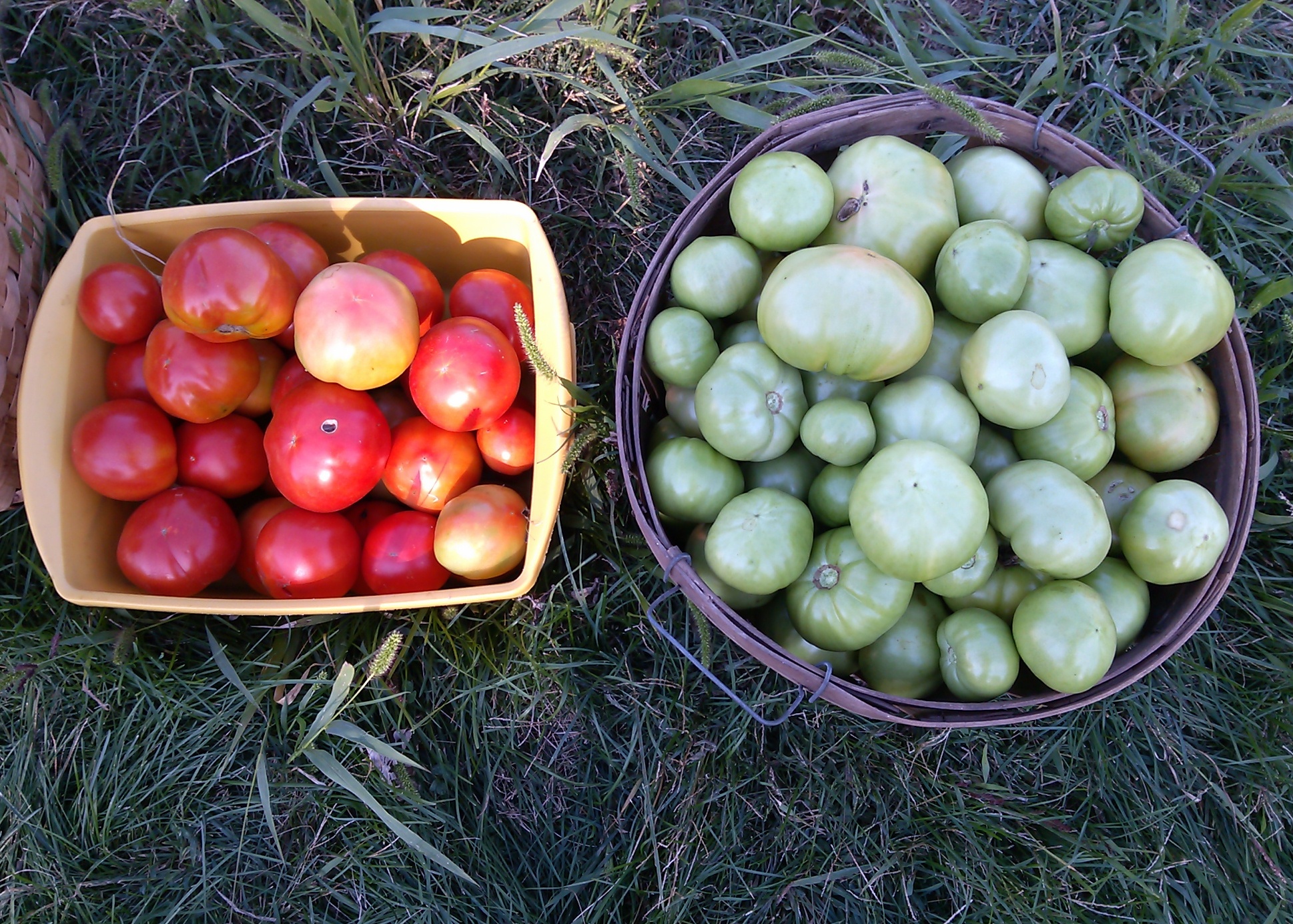
After the garden is through, we glean it. This means going through the plots, removing the plants and picking the last bits of fresh vegetables. Last night I gleaned half of the tomato patch and it yielded the arugula and green and red tomatoes. I also raked the mulch and put it in a pile to use later.

The best green tomatoes will be wrapped in newspaper to ripen indoors, and the lesser ones will go into a garden ends salsa which will include hot and bell peppers, ripe Roma tomatoes, onions, garlic and whatever else is found while clearing the garden spaces. I may make fried green tomatoes from the biggest slices as I have been experimenting with a buttermilk and cornmeal coating this year.

The empty garden plot will store a brush pile until the branches are either chipped for mulch or burned. It is time to consolidate all the piles of fallen branches around the yard and mow the lawn.

Adding to my to-do list: make soup stock from fresh turnip leaves, harvest and dry the rest of the herbs, and glean the rest of the garden. I saw at least one more patch of volunteer arugula, and there will be a few Brussels sprouts, more tomatoes and the turnip roots. There is leftover garlic from my shares at the CSA, and some may get cracked and planted.

With all of this end of season activity, some delicious dishes are in the works.

Categories
Environment Kitchen Garden

Then Rain Came

Carmen
Carmen

LAKE MACBRIDE— A co-worker and I were talking about the weather on the farm. For city-folk readers, people who work in agriculture do that a lot. I asked her, “when was the last rain?” Without hesitation, she answered, “in July.” And except for a couple of sprinkles, last night’s rain was the first since then. It was luxuriant.

My job at the orchard is related to the u-pick operation, and the rain meant customer activity would be suppressed after a very busy Saturday of temperatures in the 70s and clear skies. No orchard work for me today, so, to the grocery store to pick up some necessities and soon I’ll be at work in the kitchen preserving food.

There is a lot of food to work on. The first crop of apples is ready to be used today or never, so that will happen. It will either be juice or apple butter. Not sure yet. The pears are also in, so I’ll use 4-5 pounds to make a batch of pear butter while the rest ripen.

I have half a gallon of Concord grapes, from which I will make jelly.

From the aging hot and bell peppers, I’ll make pepper sauce with onion, tomato and garlic. Anything tomato-y or onion-y will get added to the pot. It is a variation on my traditional hot sauce mix, and designed to use up produce in the refrigerator. This will be run through the food mill and processed in pint jars.

Tomatoes are everywhere in the kitchen and garden. Some will be canned, some cooked into a batch of chili, and not sure what else. The vines are really producing this year, in my garden and at other local food sources.

So with this tentative plan in place, off to the kitchen and the work of sustaining a life on the Iowa prairie.

Update: 9:19 p.m. The stove was on most of the day, and I made chili and fruit salad for dinner, seven pints of pear butter, three pints of concord grape jelly, two pints of diced tomatoes, and six quarts, one pint and one half pint of hot pepper sauce. Did two loads of dishes and cleaned all the pots and pans before retiring to bed.