Congratulations on your reelection last month and thanks for the conversation after the Second District convention.
My wish list is brief, here it is.
Create a process to audit where defense dollars go. We are spending a lot on defense, more than I believe is needed. We ought to be able to determine where this money goes. I believe we can save money. I’d bet there is enough money to pay for the president’s wall, not that we should. Please work on such accountability for the Pentagon.
Protect Social Security and Medicare. I first paid into Social Security the summer of 1968 and 50 years later depend on my Social Security pension to help pay monthly bills. Most of my friends on Medicare believe it doesn’t cover enough. However, what we have adds value to our lives. Keep these both solvent and determine a better, more cost effective way to manage them.
No doubt you are aware of the dire reports on the potential consequences of climate change on society. The New Green Deal for which Nancy Pelosi has indicated support could be part of a government effort to mitigate the consequences of global warming and climate change. It is not enough. Scientists have indicated in the recent Intergovernmental Panel on Climate Change report that the horizon for catastrophic consequences is much closer than expected. It is time to act on climate change, and I hope you will do your part every day.
Thanks again for your representation. Best wishes for end of year holidays and an optimistic new year.
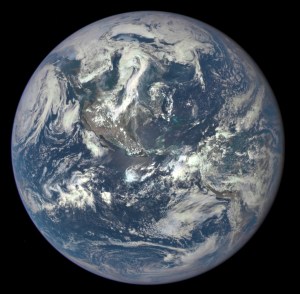
Image of Earth 7-6-15 from DSCOVR (Deep Space Climate Observatory)
Like others, I was skeptical the broad coalition to act on climate formed during and after the 21st Conference of the Parties to the United Nations Framework Convention on Climate Change in Paris would last. This week at COP24 in Poland, three top oil producing states, the United States, Russia and Saudi Arabia, along with number nine, Kuwait, blocked acceptance of the Intergovernmental Panel on Climate Change report the conference commissioned.
The four oil producers objected to “welcoming” the report and preferred the vague language of “noting” the report. Because the conference proceeds only after reaching consensus, and they couldn’t, the report was not adopted.
“Opposition to climate action is one of the issues motivating Trump’s cozy relationship with the corrupt leaders in Russia and Saudi Arabia,” State Senator Rob Hogg tweeted Dec. 9. “This is not who we are as Americans, and we need to put a stop to it.”
“Under Trump, instead of leading the world to act on climate change, the United States joined with Russia and Saudi Arabia to stop the recognition of a scientific report about the increasingly urgent need for climate action,” he tweeted.
Absent U.S. leadership on climate I expect further dissent within the coalition that reached consensus Dec. 12, 2015 with the Paris Agreement. Our politics, led by moneyed interests, hinders efforts to do what makes sense regarding climate change. We can’t even agree on the facts about climate change. Accepting the IPCC report, or “welcoming” it to use the vernacular of the conference, should be a non-issue.
Although President Trump announced his intent to withdraw from the Paris Agreement, the U.S. continues to be party to it. We live in a time when the truth has become unhinged from reality and it’s hard to see what path our country will take regarding our need to act on climate going forward.
What we see in Iowa is changing weather patterns enhanced and made worse by climate change. The 2012 drought was unimaginably oppressive and reduced corn and soybean yields. After local storms on Sept. 19, 2013 knocked trees down and damaged our home I wrote, “Everywhere in the farming community, people are concerned about extreme weather. Weather is always a concern for farmers, but this is different.” New research shows change in the atmosphere is reducing the nutritional content of foods we take for granted. None of this was expected. All of it hits home.
Whether people use the words climate change is less the issue. What matters more is our lives are changing, with tangible costs, and people are worried about it. Not only for the monetary damages of a storm, or for reduced crop yields, but for what it means for the future.
The aspiration of the Paris Agreement was noble, but likely unfeasible without leadership from the United States. Regretfully President Obama did not get buy-in from Republicans in government before he signed the Paris Agreement. Once he was gone, politics took over and his efforts to mitigate the effects of climate change are rapidly being rendered null.
There’s no easy solution to climate change. Was there ever? The truth before us is we must act on climate before it’s too late. Whether society is capable of doing so remains an open question. COP24 provided another setback to action.
It’s a fact: Fossil fuels are driving a climate crisis and threatening our health. On Dec. 3 – 4, Climate Reality and former Vice President Al Gore will be joined by an all-star line-up of artists, thought leaders, and scientists for 24 Hours of Reality: Protect Our Planet, Protect Ourselves. Tune in and learn how we can make a healthy future a reality: https://www.24HoursofReality.org.
Every few years, interest in climate change spikes, according to internet search frequency reported by Google Trends. When the Intergovernmental Panel on Climate Change released their special report on the impacts of global warming of 1.5º C above pre-industrial levels on Oct. 8, searches spiked again. Searches are already trending downward.
Newspapers in our area ran stories about climate change, about one a day in recent weeks. Is there a new window of opportunity to act on climate? I doubt it. There is no window because the walls of the house we used to live in have been blown out.
It is time to act on climate.
Every environmental activist has a to-do list. Mine has four parts.
Reduce, reuse and recycle personally. I don’t seek to create a livable environment for me only as the late George Carlin derisively asserted about environmentalists. It is better to buy only food the household can use rather than let it go to waste. We live a life of making do with old clothing, old cars, and recycling single use bread and celery bags for our garden crops. It remains important to have a discussion with Waste Management about why they won’t recycle plastic. If enough people do it, maybe they will find a better way than baling and shipping it overseas or discarding it in landfills. This is a starting point for almost everyone.
Band together with like-minded people. We walk a tightrope in life in which the risks are many. On one side, we avoid the insularity of confirmation bias in which like minded people often find themselves. On the other, we are stronger together. A recent Stanford University study of 30 years of data about street protests found “citizen activism, which has been shown to impact state and firm policy decisions, also impacts electoral outcomes.” A single voice can be amplified if it joins a chorus of hundreds or thousands.
Advocate with elected officials to mitigate the effects of climate change. There is an art to political advocacy. Where groups have been successful, we found common ground with people of divergent backgrounds to unify around a single action. This is partly how we stopped two new coal-fired power plants from being built in Iowa. It is also how we changed the minds of legislators regarding new nuclear power plants in the state. Two tactics serve little purpose: contacting a legislator every time we disagree with any action they take, and group think of people who advocate for a carbon tax as their primary method to combat climate change. We must understand the diversity of solutions to the climate crisis, keep our powder dry for when it matters most, then act in unison.
Help educate people on the threat of unaddressed climate change. It goes without saying there is uneven understanding about the impacts of climate change in society. My popular post, Climate Change in 200 Words explains the basic science, about which there is little disagreement from even the most strident climate deniers. Where society gets hit hardest is in the impacts of warmer atmosphere and oceans. The news is full of examples. Few people have missed the fires in California, hurricanes in Florida, Texas and New Jersey, or the severe 2012 drought in Iowa. All of these events were made worse by global warming. Much of the intensification of our weather events is predictable and likely avoidable with societal action. Education is a valid and essential part of creating collective action to mitigate the effects of climate change.
Perhaps the important lesson about climate change derived from Google Trends is there are clear news hooks which can make climate action more likely. The problem hasn’t gone away and we can’t rely upon news events to precipitate our actions.
Whether we will act on climate before it is too late is unknown. What we do know is the human condition includes hope for survival and a better world. It is unrealistic to believe global societies will unite around a single course of action. Part of the brilliance of the 2015 Paris Agreement was it enabled every nation to participate in their own way toward a common goal of reducing greenhouse gas emissions. Whatever deficiencies existed in the agreement, it was a positive sign of what humanity is capable.
The IPCC special report is another scientific explanation we must act on climate before it is too late. This is my to-do list. What is yours?
“January 20th, 2017 will be remembered as the day the people became the rulers of this nation again.”~ President Donald Trump inaugural address
It would be one thing if we had entered a new era of Jacksonian Democracy where the common man raised into prominence. Plain folk like me would apply common sense to problems with a focus on results.
When elites and moneyed interests control almost everything in our government, the way the aristocracy did in Andrew Jackson’s time, to invoke Jackson now as something positive is a cruel joke. Like Jackson, Trump exaggerated the size of the crowd at his inauguration and motivated mob scenes.
Under Republican hegemony I have less say than ever in government.
That said, there is a lot we can do. The perils of our times are obvious and beg solutions, beginning with electing people who more closely represent our values. During the next 14 days I’ll continue to contribute my part to electing such people. If anything, one effect of the Trump administration and Republican hegemony in Iowa has been to recognize and bolster my Democratic roots.
14 days will come and go quickly. What then? As I suggested in my recent letter to the editor, climate change and proliferation of nuclear weapons pose existential threats to society as we know it. We must embrace change and adapt as we can. We must also work to mitigate these threats for ourselves and future generations. There is a life’s work in that, especially as my personal bandwidth decreases with advancing age. The challenge is to make every effort meaningful, thoughtful and aimed at impactful targets.
I hope to elect more Democrats to the Iowa legislature and the U.S. Congress and in doing so gain a voice where what we’ve been saying has been muted in recent years. Even if we fail in this effort we must re-assert our voices. I’m optimistic things can get done.
Climate change is already negatively impacting agriculture, the mainstay of our state. If we seek to grow nutritious food in the corn belt there needs be a focus on soil health and water management. Today the focus is on yield and market prices and that tail is wagging the dog. Something has to give over the near term. Farmers’ attitudes toward cover crops, buffers, and soil and water management must be encouraged by government to change. Sending our topsoil to Louisiana and the Gulf of Mexico at a rate exceeding the land’s ability to regenerate it is unsustainable and farmers know it. It is made worse by precipitation patterns that combine heavy rainfalls, long periods of drought, and warmer, more humid nights. The impact of climate change on agriculture is significant and can no longer be denied.
A primary role of our federal government is national defense. With or without nuclear weapons, the United States remains the most powerful nation on Earth. It is a simple question begging an answer: why impose the risks of nuclear weapons on society if they are no longer needed for national defense?
The nuclear non-proliferation movement has ebbed and flowed during my lifetime. Whenever there is a broadly organized plan of action to do something about the Trump administration’s change to nuclear proliferation policy, I’m ready to join. Right now, there’s too few of us in Iowa and no fulcrum for action. I continue to follow groups like the Arms Control Association, Council for a Livable World, Friends Committee on National Legislation and Physicians for Social Responsibility in Washington, D.C. to stay informed.
While I am hopeful of positive advances mitigating these two threats, my optimism is tempered with realism gained through a few successes and many failed attempts to move the needle on them since the 1970s. Today is no time to give up.
Even if we knew our ecosystem was close to the tipping point of global warming and its consequences, it is hard to be ready for the recent Washington Post headline, “The world has just over a decade to get climate change under control, U.N. scientists say.”
The Intergovernmental Panel on Climate Change published its latest report a week ago. 10-14 years remain to address global warming and climate disruption to which it contributes, according to the authors. If our global society doesn’t address it, scientists find we will likely pass a tipping point toward climate breakdown from which there is no return.
Can we take adequate climate action in time?
“Even if it is technically possible, without aligning the technical, political and social aspects of feasibility, it is not going to happen,” said Glen Peters, research director of the Center for International Climate Research in Oslo. “To limit warming below 1.5 C, or 2 C for that matter, requires all countries and all sectors to act.”
I’m not hopeful society will react adequately.
Recycling programs are a case in point about society’s failures.
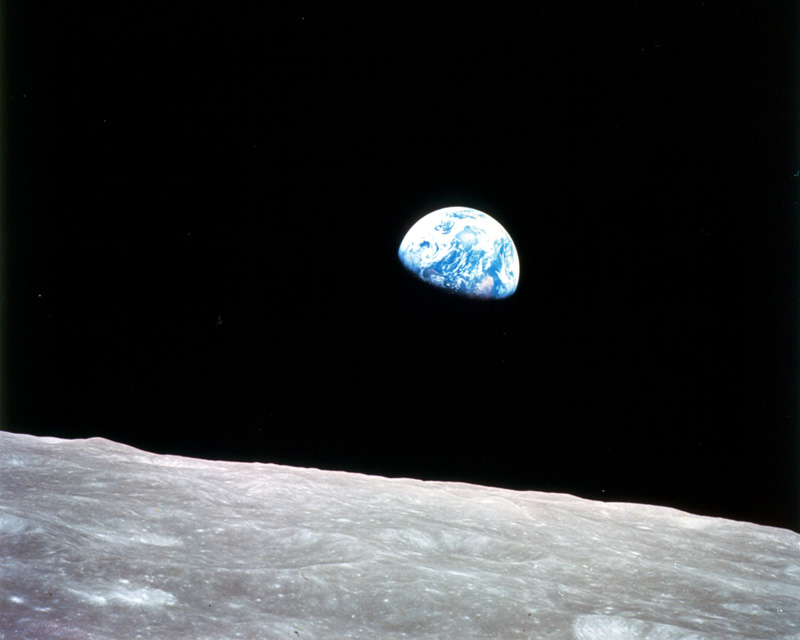
Driven by a desire to take volume out of waste streams, curbside recycling programs came up after the environmental awareness created by the Apollo moon flights and the widely circulated “Earthrise” and “Blue Marble” photographs. It just made sense to recycle materials like metal cans, cardboard, paper, glass and plastics that could be re-used. Along with that came a push by manufacturers to create containers that were recyclable. By any measure the programs were successful for a long time.
Time intervened and today, more and more communities are either scaling back or dropping their recycling programs. The reason? Contamination of waste, increased collection and processing costs, and lower sales prices for recycled material. Who is getting blamed? China. Here’s an explainer from a Pennsylvania television station:
The recycling markets, whether it’s paper, plastic, glass, or other items, are financially unstable now, local recycling coordinators said.
The cost of recycling, including collection and processing, is increasing, while the prices for recyclables sold is decreasing.
One reason, they said, is China. They control a huge portion of the world’s recycling markets and they now insist on taking recyclables that are not termed “contaminated,” meaning mixed with other materials. In fact, China is no longer accepting any recyclables from the United States.
Recycling is something individuals and families can get their arms around. To hear this story, Americans are no good at it. If we can’t do something as tangible as recycle plastics, cans and glass in a way to enable them to be recycled, how can we be expected to reduce vehicular fossil fuel emissions, use of lawn fertilizers, home heating oil and gas, and a host of other consumer products right in front of us? Take that to the next level and how are we to reduce greenhouse gas emissions in agriculture by changing our food choices to reduce consumption of meat, corn and soy found throughout grocery store aisles? What about the unseen manufacturing plants that use coal, oil and gas to create mundane products like cheap cat litter, toilet paper, hot dogs and home appliances?
What the IPCC is saying is time is short and we have a difficult task in front of us. It involves personal behavior which we have been no good at, and collective behavior that in the current political environment seems impossible.
An obvious precedent to these times is the extinction of Neanderthals after the rise of so-called “modern humans.” How they went extinct is not fully understood, but several theories have been advanced.
“Hypotheses on the fate of the Neanderthals include violence from encroaching anatomically modern humans, parasites and pathogens, competitive replacement, competitive exclusion, extinction by interbreeding with early modern human populations, and failure or inability to adapt to climate change,” according to Wikipedia. “It is unlikely that any one of these hypotheses is sufficient on its own; rather, multiple factors probably contributed to the demise of an already widely-dispersed population.”
Where do we go from here? The IPCC report is no surprise. It is a wake-up call for folks who haven’t engaged in mitigating the effects of global warming and climate disruption. At what point do we get enough people engaged? The day of reckoning has passed, now it’s up to us. We’ll see if we can become better at it.
Image of Earth 7-6-15 from DSCOVR (Deep Space Climate Observatory)
Regardless of winners, there are only two issues that matter on Nov. 6: climate change and nuclear weapons. They represent the only existential threats to society as we know it.
Will Democrats or Republicans do a better job addressing climate change responsibly? I don’t know.
Stakes have gotten higher.
The Intergovernmental Panel on Climate Change issued an Oct. 6 report which said the impacts on humans of letting the planet warm by 1.5 degrees Celsius are bad. If it gets warmer they are worse.
The good news is there is time to address it. It will be hard.
“Limiting warming to 1.5 degrees Celsius is possible within the laws of chemistry and physics but doing so would require unprecedented changes,” said Jim Skea, Co-Chair of IPCC Working Group III.
Humanity does not have a good track record of making sensible change.
The IPCC indicated society has between 10-14 years to address global warming before it reaches a tipping point after which it becomes uncontrollable.
In other words, it will be incumbent upon elected officials to address humanity’s contributions to global warming regardless of party.
Please vote, and consider what candidates might do to address climate change as you do.
The phone rang as I was preparing for a shift at the orchard.
Heavy rains had Rapid Creek flooding its banks and the nearby pumpkin patches. Apple trees on the south side of the creek would be inaccessible until the water receded, maybe Sunday, my supervisor said. We chatted a bit then I let her go to call the rest of the crew. They’d only need a few people for the anticipated number of customers.
Crates of bell peppers and onions were stacked downstairs waiting to be prepped for freezing, so there was plenty to do on an unexpected day off. Like most low-wage workers, when I don’t work, I don’t get paid, so I’m ready to work when the creek surge passes. Working in the kitchen, while important, yields no currency.
Fall Broccoli at Sundog Farm
The cancellation gave me a chance to arrive at the farm’s fall potluck dinner before the food was all eaten. I baked an apple pie from the orchard to share and drove over early for the first time in years. We toured the farm which was vibrant with fall colors. The food and company was excellent. I met new people and farm friends to hear their stories.
At home the ground was squishy with water. That hasn’t happened much since we moved to Big Grove. The garden continues to produce and I picked what is likely to be the last cucumber. I rely on my bartered CSA shares for fall cruciferous vegetables. Based on the visit there will be plenty this year.
Apple Pie for the Potluck from Wilson’s Orchard
Finding enough to eat has not been an Iowa problem. Ever since discovering and nurturing an ecology of food the abundance of nature became obvious and my focus turned local. What can I grow myself? What can I rely upon from my farmer friends? What can I get to improve the quality of our cuisine from the markets? Food ecology forms a framework upon which culinary culture is hung. Once recognized, nourishment flows like the rain that flooded the orchard and our yard.
2018 has been a year of weird weather and it is not finished. The state and municipalities did not adequately consider short, heavy downpours when designing our roads and infrastructure. Gravel roads were washed out after the storm. Flash flooding crossed major thoroughfares in the county seat. Call it what you will but the weird weather is taking a toll on food producers and their customers. We are all connected and the harm by changes in weather is obvious and everywhere.
It’s part of sustaining a life in a turbulent world.
Image of Earth 7-6-15 from DSCOVR (Deep Space Climate Observatory)
It is no surprise the Heartland Institute hosted a conference called “The America First Energy Conference” for climate change deniers on Aug. 7 in New Orleans.
Heartland is the libertarian think tank that teamed up with Philip Morris to deny the health impacts of tobacco use. Climate change denial is high on their priority list.
“The day-long conference reflected the political rise of global warming skeptics in Donald Trump’s America that is occurring despite mounting scientific evidence, including from U.S. government agencies,” Reuters correspondent Collin Eaton wrote, “that burning oil, coal, and natural gas is heating the planet and leading to drought, floods, wildfires, and more frequent powerful storms.”
“The leftist claims about sea level rise are overblown, overstated or frankly just wrong,” Heartland president and CEO Tim Huelskamp said in an interview with Reuters. Regarding the United Nations’ findings on climate change, he said it was “fake science” motivated by a desire for “power and control.”
An irony is the conference is being held in the American city most impacted by extreme weather made worse by climate change. New Orleans has not recovered and may never recover from the August 2005 Hurricane Katrina.
“One of the country’s largest credit rating agencies has put New Orleans and other coastal cities on notice: prepare for the effects of climate change or risk a hit on your credit score,” according to Tristan Baurick at the New Orleans Times-Picayune. When the risk analysis community says it, it must be real.
Climate change is real, it’s happening now, and human activity is a primary contributor to extreme weather events like New Orleans experienced.
The rise of a conference like this is attributable almost entirely to the rise in prominence of libertarian billionaires with a long range plans to re-make American society to their liking. They believe their liberties have been infringed upon by government regulations and the Trump administration has been removing barriers to the practice of unfettered capitalism. That’s not good for you, me, or the people of New Orleans.
It is shocking how much the Trump administration has deregulated government in less than two years. The fact the Environmental Protection Agency is deregulating asbestos, a known carcinogen banned in 55 countries, is a sign of how far they will go. The only check on such behavior is for Democrats to win a majority in at least one chamber of the next Congress during the 2018 midterm elections, or to vote Trump out in the 2020 general election. Much damage has already been done. Some of it can’t be reversed.
I met a nine-year-old from Saudi Arabia recently. He lives with his extended family on the Arabian Peninsula and has come to Iowa the last couple of years to visit his mother before school starts in September. We talked about the weather.
“It sure is hot,” I said.
“Yes, but I don’t believe it is climate change,” he replied.
“No, probably not,” I said. “It’s August in Iowa.”
It is one thing for children to learn the difference between weather and climate change. When adults in the room deny the science of climate change, it’s something else. It’s clear there were few adults at the conference in New Orleans.
(Editor’s Note: Iowa Farmers deal with an existential reality that is the weather. Regardless of increasingly polarized discussions about climate change, weather affects real people in tangible ways. Carmen recently wrote this piece to members of her Community Supported Agriculture project Local Harvest.)
The weather has been consistently challenging from the late spring to immediately hot May, from lots of rain to this current dry spell. There hasn’t been a catastrophic weather event, but all these different difficult weather conditions create more work to keep everything growing well.
I’ve been thinking more about it as we’ve been observing its impacts while harvesting more of the summer crops. I’ve talked to many other farmers (including folks that grow other types of crops) about the challenges of this season, and anecdotally it seems like the conditions have been hard on many types of crops and livestock alike. One of things that has struck me about this year is that it hasn’t been just one way like really hot or really wet, but every month has brought a different extreme to contend with. It’s made me wonder if it’s all this erraticness that’s been stressful to the plants and animals rather than just the heat or just the late spring.
I was curious to find out if the weather has just felt difficult to us or if it really has been extreme in the grand scheme of things, so I did a little internet research for weather data. What I found was interesting, and did seem to affirm my feeling that this year really has been weird. This was the coldest April on record (since records began in 1895), and was on average 10 degrees colder than normal. It was also somehow both the 5th snowiest April and the 13th driest April, which seemed a little ironic. 2018 tied for the 6th warmest May with 1887, and the average temperature was about seven degrees warmer than normal. Des Moines had three consecutive daily record highs from May 26-28. I was surprised that in Cedar Rapids the daily record highs for the end of May were all held by 1931 or 1934, and then I realized that was the dust bowl! June was the 10th warmest and 10th wettest June on record. July seems to have been pretty average after all those top 20 finishes for the previous months, as it was the 54th coolest July and the 47th driest July on record. Which I think kind of puts the extremeness of the previous months in perspective. Kind of nice to have an average month finally.
Anyhow, my main takeaway is that this year really does seem to be remarkably erratic when you look at the numbers, and it makes sense that plants and animals would respond unpredictably to all of these changes in the weather. I feel both good that I wasn’t making up that the weather has been extreme in many different ways this season, and kind of bad that it really has been historically weird this year. The fact that it took the dust bowl to beat this year out for daily heat records in May felt kind of grim.
Some crops like onions seem to have really suffered from this weather. You may have noticed that they’ve been smaller than normal this year, and after getting most of onion harvest done last week I’m sorry to report that many of the longer season onions are even smaller. This was especially disappointing to me after such a bountiful onion harvest of really giant ones last summer, but I think makes sense considering what we were up against. We planted more than 3 weeks later than we did last year because it kept snowing, and then had to irrigate the onions (which we hardly ever have to do) because it was so dry. We struggled to keep the weeds under control in the onion field in June when it was so wet, and spent almost a week wallowing in the mud trying to hand weed. All in all I’m glad we have some onions to show for all of it, and have a few ideas of things to try in case this ever happens again.
I also have to say that some crops seem to have really thrived in this weather. We’ve never had such a good cucumber or spring carrot crop before, both of which are crops that we have historically struggled to produce large quantities of for several weeks in a row. The combination of having plenty of carrots and cucumbers has felt like a great accomplishment, and I hope that we’re able to replicate it in a better weather year as well!
~ Carmen Black farms in Cedar Township in Johnson County, Iowa.



 Journey Home
You must be logged in to post a comment.