Categories
Reviews

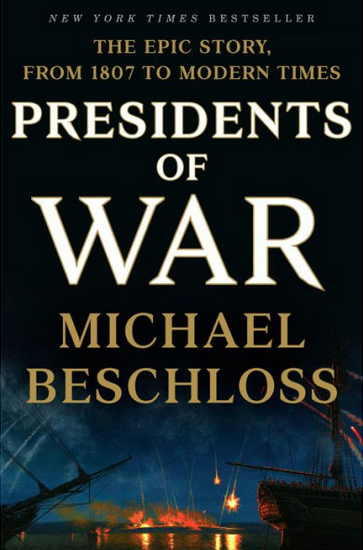
Book Review: Presidents of War

The Mason City and Urbandale school districts have both been in the news because of their efforts to comply with the new Iowa law which restricts what school children can read in class or in the school library. While this is a specific initiative driven by a small number of conservative groups, it seems appropriate to ask what should adults be reading? I submit it is books like Michael Beschloss’ 2018 history Presidents of War.

Presidents of War is a history of the use of presidential power conducting our nation’s wars beginning with the War of 1812 through the Vietnam War. Beschloss points out repeatedly our war presidents did not closely follow the intention of the framers of the constitution or the words in the document. They took liberties to accomplish their various objectives, some of which were needed, some political, some deceptive, and some flat-out ill-advised. Even the revered Franklin Delano Roosevelt weighed political considerations in his conduct of World War II.

In his review on Gates Notes, Bill Gates brought home why the book is important:

The richest insights for me came from the fact that the book’s broad scope lets you draw important cross-cutting lessons about presidential leadership…

[…]

Beschloss didn’t unearth much new material about any of these wars. But looking at each president and each conflict with a similar lens is what makes the book a worthwhile read.

Gates Notes, Bill Gates, May 20, 2019.

The barrage of misinformation and outright lies in our daily lives is non-stop. The technique is to drop a factoid, then pivot to an argument that has a political or commercial point to make. The point often isn’t rational or based on the asserted fact. It is hard to believe folks will summarize the complexity of World War II , or any of our wars, in a brief social media post to perpetrate a lie. Yet they do. We should be able to agree to leave World War II out of the pitch to buy life insurance. If we can’t, society has bigger problems.

Beschloss spent more than a decade writing this book. In the acknowledgements he wrote parts of the book were 40 years in the making. The reason to read Presidents of War is it equips us to deal with misrepresentations and lies in social intercourse. “Those that fail to learn from history are doomed to repeat it,” Winston Churchill said in a 1948 speech in the House of Commons. By presenting historical truth in the book, Beschloss enables us to call foul when someone misrepresents it.

In our political discourse, we spend a lot of time assessing our presidents. Presidents of War, and others like it, give us incontrovertible information about which presidents messed up and which didn’t. We should consult such information before blurting things out about Joe Biden, Donald Trump, and others like a loose cannon.

One aspect of Michael Beschloss’ package is he is active on social media and a historical consultant to news organizations. Room Rater consistently gives him a 10/10 for his presentation of self in video commentary. I mean, those are not really credentials we used to consider. As a historian, he became a participant in popular culture and this contributes to the book being readable and understandable. Presidents of War demonstrates proficiency in historiography as well as being relatable.

School boards are banning books and that makes it important for parents to be active readers. If you wanted to start reading again, or just need a good next book, President of War would be a great starting place.

Categories
Reviews

Book Review: The Hidden History of American Democracy

Is democracy the default state of humanity? In The Hidden History of American Democracy: Rediscovering Humanity’s Ancient Way of Living, author Thom Hartmann presents the case that democracy is our default state, overcome only by the intrusion of dictators, popes, and kings using the power of great wealth, control of media, or the force of arms and technology. He explains where society has gone astray and what we can do to restore democracy.

The Hidden History of American Democracy is the ninth volume in Hartmann’s Hidden History series. Like its predecessors, it is accessible and easily readable, especially for readers immersed in the issues it covers. Hartmann creates a narrative grounded in historical documents yet seems fresh, and modern in its interpretation. The first two parts of the book dispel myths about democracy and the meaning of our constitution. The rest of the book frames the modern war on democracy and regulated capitalism; outlines a 21st Century democracy agenda; and presents a call to action.

The United States is not a Christian nation. Although Christianity was introduced in North America by European settlers in the 16th and 17th Centuries, and has experienced periodic revivals, it did not appear to take. The founders did not envision the newly formed country as Christian. They took precautions to avoid affiliation of the government with religion. Author of the Declaration of Independence and US Constitution Thomas Jefferson studied the Bible yet was decidedly not Christian. In fact, the US Constitution never explicitly mentions God or the divine. In this book, Hartmann creates a narrative about the founding using Jefferson’s own experiences with the Cherokee and other indigenous people, depicting American democracy’s indigenous and broadly based intellectual roots.

While the US Constitution isn’t strictly based on the Iroquois Confederacy, it does have some elements in common with it. The greater impact of Native Americans, however, was in helping to shape the thinking of Enlightenment thinkers from Spinoza to Locke to Montesquieu to Jefferson.

Thom Hartmann, The Hidden History of American Democracy.

Here in Iowa, people refer to the US Constitution as if they read it. What they say and appear to believe about it doesn’t match the text. Not only do citizens believe the United States was founded as a Christian nation, they superimpose misguided characteristics on the Constitution regarding gun ownership, the U.S. Supreme Court, the Electoral College, the branches of government and more. In part two of the book, Hartmann takes apart these cultural myths in an effort to return us to a basic democratic outlook from before some were led astray.

The high water mark for post World War II democracy may well have been the election of Ronald Reagan as president. 60 percent of middle class Americans lived “the American Dream” in 1980, according to Hartmann. So-called Reaganomics, or the rise of neoliberalism, brought de-regulation of capitalism, “which measurably set back the working and middle classes while also weakening our democracy,” Hartmann said. Both Republicans and Democrats espoused principles of neoliberalism, ending in an all-out war on democracy and regulated capitalism. It is hard to find fault with Hartmann’s analysis of this important issue.

The rest of the book outlines a 21st Century democracy agenda. In it, action steps such as making voting a right instead of a privilege, changing the relationship with the U.S. Supreme Court so there is a form of oversight or “regulation,” expand the U.S. Senate immediately by adding two new states (Washington, D.C. and Puerto Rico), providing health care for all, and more.

Thom Hartmann

Importantly, part of Hartmann’s agenda is for each of us to get involved in our democracy.

You may think your voice is but a faint whisper in the wilderness, but there are ways you can amplify it at no cost other than a bit of effort. Write letters to the editors of your local newspapers. Become active on social media. Volunteer with the dozens of great good-government groups and organizations devoted to saving our environment, our democracy, and our world.

Thom Hartmann, The Hidden History of American Democracy.

As we enter the 2024 general election cycle, many of us are seeking things we can do to make a difference. A good way to start is to read The Hidden History of American Democracy: Rediscovering Humanity’s Ancient Way of Living and share it with your friends.

The author interviewed Thom Hartmann about the book on July 10, 2023. Readers can hear the 31:25-minute interview by clicking here.

Thom Hartmann is a four-time winner of the Project Censored Award, a New York Times bestselling author, and America’s number one progressive talk show host. His show is syndicated on local for-profit and nonprofit stations and broadcasts nationwide and worldwide. It is also simulcast on television in nearly 60 million U.S. and Canadian homes.

To buy a copy of The Hidden History of American Democracy: Rediscovering Humanity’s Ancient Way of Living, click here. The book is available July 18, 2023.

Categories
Living in Society Reviews

Book Review: Our Revolution

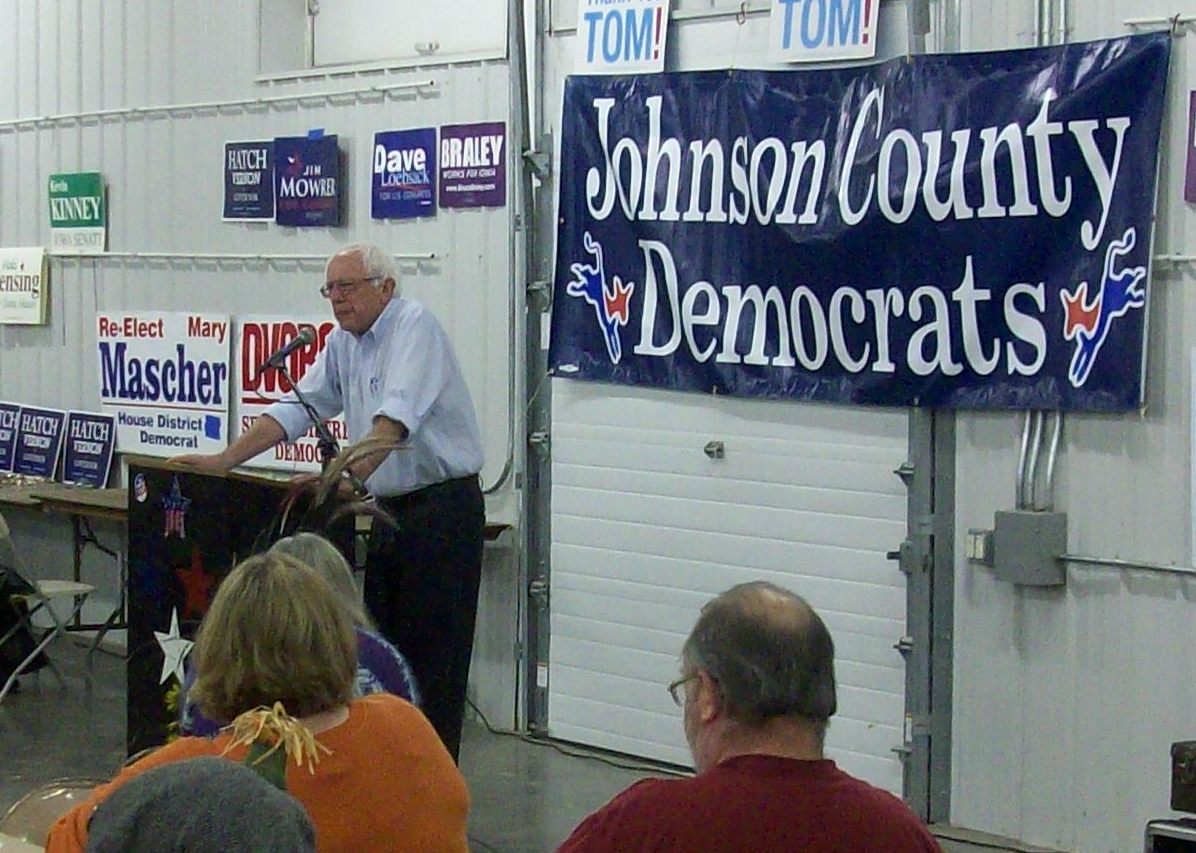
Bernie Sanders exploring a presidential run in Johnson County 2014. He mentions this event in Our Revolution.

Our Revolution by U.S. Senator Bernie Sanders is an outstanding blueprint for fixing much of what ails us in society. Income inequality, corporate greed, dark money in politics, climate change, immigration reform, prison reform, poverty, and more are all present in the narrative and adequately addressed. Here’s the rub: Sanders’ positions have been well known for a long time and twice Democrats rejected him as their presidential candidate.

Sanders used his position in the Congress to advance what he can of his agenda. He writes about his successes in the book. He also serves a useful role as a gadfly on Democrats. He has gotten work done during the two years after the 2020 election, especially as chair of the Health, Education, Labor, and Pensions Committee. There is value in having Sanders caucus with Senate Democrats. Sanders’ ideas haven’t gained broader traction.

During the 2020 Iowa Democratic caucus held in Big Grove precinct, Sanders was not even viable when four other candidates each took one of our four delegates to the county convention. This is to say while Sanders’ vision is based on common sense and logic, those two things can be found only in the discount bin of today’s political superstore.

The lack of common sense and logic in our politics is maddening. Our Revolution will serve as a reference when one of its topics arise. Yet because the electorate is only partly driven by common sense and logic, it will likely gather dust until such time as Democrats regain substantial majorities in the U.S. Congress. It is uncertain when that might be.

Politicians increasingly seem to lack foundational common sense and logic. My state representative posted on their website:

This week in the Iowa Legislature, we passed landmark legislation that protects children under 18 years of age from irreversible damage that happens through transgender surgeries and chemical therapies. My inbox absolutely exploded with “Thank You” emails from people expressing gratitude for taking action to protect children!

Brad Sherman Liberty Letter, March 11, 2023.

What does “absolutely exploded” mean? Does it mean a majority of the 22,000 registered voters in the district emailed their thanks to him? No, it does not. It means he got a lot of emails from close supporters of his last campaign. I can see why he would want to lead his weekly column titled, “Crimes of Communism & Our Moral Compass” with fake popularity. He is a long-time non-denominational minister used to writing jeremiads. He needs a strong first paragraph to get his message across.

Iowans do support the anti-trans, anti-LGBTQ+ agenda Iowa Republicans in the legislature have advanced.

Majorities of Iowans support Republican legislation to restrict instruction on LGBTQ topics in schools and ban gender-affirming care for transgender minors, according to a new Des Moines Register/Mediacom Iowa Poll.

Des Moines Register, March 13, 2023.

The issue is the poll does not come from a perspective of common sense and logic. It parrots the scare tactics of right wing media outlets that prevail in Iowa and have amplified anti-LGBTQ+ ascendancy as a moral imperative. The logical policy would be to assure every Iowan, including transgender children, gets equal protection under the Fourteenth Amendment to the U.S. Constitution, which states:

No State shall make or enforce any law which shall abridge the privileges or immunities of citizens of the United States; nor shall any State deprive any person of life, liberty, or property, without due process of law; nor deny to any person within its jurisdiction the equal protection of the laws.

U.S. Constitution, Fourteenth Amendment

Like Bernie Sanders, I am a voice without adequate support to enact my views, based on common sense and logic, into law. That’s not where society is right now. The question political writers and activists must ask is “What do we do now?” That’s an open question, and common sense will not be enough. I recommend keeping a copy of Our Revolution close by for when we break through.

Categories
Reviews

Book Review: Doggerel

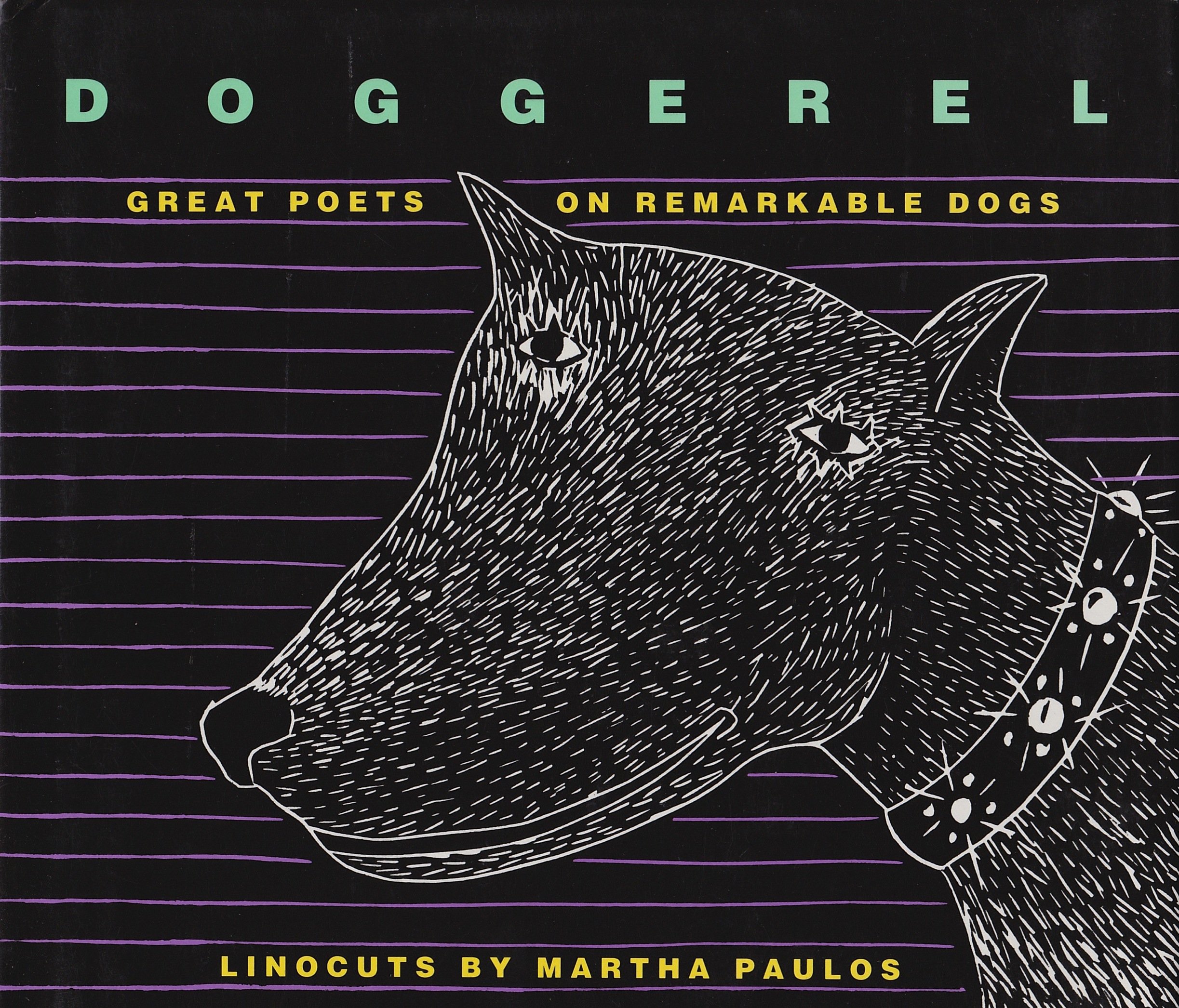
How does an artist survive and thrive in a highly competitive creative environment? Produce a book like Doggerel by Martha Paulos. More than thirty years after publication, it seems fresh and holds interest.

The linocuts in this book are compelling and well-executed. The poems written by their respective (famous) authors add to the linocuts. Nothing about this book is a hagiography of dogs and that seems to be the point. The book is funny, and based in a society the reader can understand. Who hasn’t been chased by a dog while riding a bicycle?

Linocuts take more time to produce than other media. Paulos’ high level of technical craftsmanship made it worth our time to appreciate her art.

Recommended for people working toward a career in creative endeavors. Also for anyone interested in linocuts. If a person collects dog stuff, they should get a copy for Doggerel’s uniqueness.

Categories
Reviews

Book Review: The Last Chairlift

I feel like I live in John Irving’s fiction. It’s mostly because he writes about things that resonate personally.

In The Last Chairlift he wrote about the 85th and 87 Infantry which were part of the Tenth Mountain Division during World War II. I was stationed in the 87th Infantry while I served in the U.S. Army in Europe. While there, it was part of the Eighth Infantry Division. When 8th ID was deactivated, the 87th Infantry was reunited with the Tenth Mountain Division based in Alaska.

I don’t know if I ran into Irving when I lived in Iowa City from 1970 to 1974. I remember seeing him in the English-Philosophy Building, but that could have been like one of the ghosts in The Last Chairlift. I may have imagined it. I know his novel The Water Method Man‘s main character lived at 918 Iowa Avenue in Iowa City. While reading the novel, I walked along Iowa Avenue from the Pentacrest to look at the house. That novel was published in 1972.

It is the familiarity with objects and places in his fiction that draws me in. Irving is one of the few fiction writers whose writing resonates. In Act III, my reading accelerated until I couldn’t put the book down. Few novels I read have this effect.

What surprised me about reading this and other Irving books is his work rarely appears on lists of banned books that circulate in Iowa and elsewhere. Perhaps he is not read by evangelical Christians, or librarians know enough to avoid placing his fiction in the stacks. Any engaged person should read his work.

I enjoyed The Last Chairlift a lot. Highly recommend!

Categories
Reviews

Book Review – Like a Rolling Stone: A Memoir

Jann S. Wenner. Photo Credit – Penske Media Corporation.

Jann Wenner’s Like A Rolling Stone: A Memoir would more aptly be titled A US Weekly Story of My Life. Its focus on his wealth, his celebrity friends and acquaintances, his wife and his husband, his Gulfstream II, his drug use, his magazine awards, his vacations in rare places, and other detritus of the self-centered rich would more appropriately appear in his publication US Weekly than Rolling Stone. I finished the book because I couldn’t avoid the mindless trappings of it: as if I were waiting in the dentist’s office with time to kill before a root canal.

Wenner’s work is evident in the book. It is competent writing yet the frequent mentions of famous people made it tedious. Why do we want to hear a person chatted with Bob Dylan about real estate? Or exchanged birthday gifts with Mick Jagger? Or vacationed with Ahmet Ertegun, a co-founder of Atlantic Records? Wenner had a substantial life yet this memoir is a puff piece. It could have been more, especially regarding the history of the Rock and Roll Hall of Fame, of which he is a member (because of his work with Rolling Stone) and past chairman.

I expected better writing. How could he have worked with and edited so many great writers — Hunter S. Thompson and Tom Wolfe particularly — and present such a dry, soulless narrative? He got a story down, yet it is not the story expected. It is largely devoid of the excitement that was San Francisco in the 1960s and 1970s. It didn’t improve after the story of the magazine moved to New York in 1977 where he met and spent time with a different set of celebrities including Jacqueline Kennedy Onassis, John Lennon, Yoko Ono, and Bruce Springsteen.

There are a few redeeming qualities. The Rolling Stone story of Annie Leibovitz is one. The development of political campaign coverage by Hunter S. Thompson and others is another. I can’t put my finger on many more redeeming qualities shortly after finishing the book. I wish I could.

Perhaps a reason for Wenner’s lack of commitment to exceptional prose in the book can be found in this quote from page 296, “If I were asked if I could do it again would I still have used all that cocaine, I wouldn’t hesitate. No. It was a waste of money, energy, and precious time.”

I’m keeping Like a Rolling Stone: A Memoir on my bookshelf as a reference for now. If I find another home for it, I’ll gladly give it away. Somebody had to publish Rolling Stone the magazine. I never figured it would be a person who came across in his writing as a dilettante when he had the capacity and interest in being deeply engaged in his work and the telling of its story.

As former Rolling Stone writer Kurt Vonnegut wrote in Slaughterhouse Five, “So it goes.”

Categories
Reviews

Book Review: Bet the Farm

The craftsmanship of Bet the Farm: The Dollars and Sense of Growing Food in America by Beth Hoffman is good, better than many books I read. For people unfamiliar with the challenges of Midwestern, sustainable agriculture, it is a good introduction, covering most issues.

Hoffman is a member of Practical Farmers of Iowa and so am I, so there are some connections. Even though we never met, I know people she mentions in the book and we would likely have friends and acquaintances in common. The PFI community is not that big.

For nine seasons, I worked with beginning and experienced farmers who operate community supported agriculture projects, large vegetable or fruit farms, and raise livestock, so I know some of the work and the challenges. In total, I worked on or did interviews for newspapers on a dozen or so of them.

As she mentions more than once in the narrative, she is from the coast and the land was owned outright by the Iowa family. The former is more typical of beginning farmers, the latter isn’t. It is a good book, yet I hoped there would be a connection to the author and her narrative. There wasn’t.

Bet the Farm was a quick read and if a person is interested in this topic, there are a number of other works by beginning farmers I’d read first.

I wish Beth and John good luck on their farm and would read another book about their progress after they have been farming five or ten more years.

Categories
Reviews

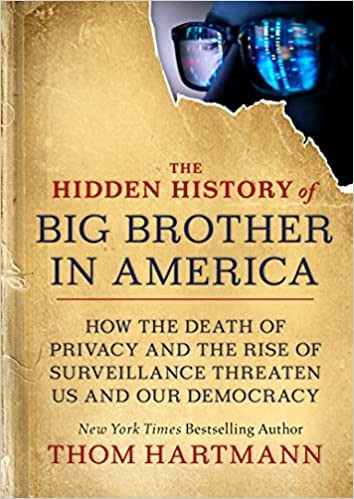
Book Review: The Hidden History of Big Brother in America

In The Hidden History of Big Brother in America: How the Death of Privacy and the Rise of Surveillance Threaten Us and Our Democracy, author Thom Hartmann focuses on Big Data and its consequences for all aspects of our lives. In the framework of surveillance and social control, Hartmann traces the history of surveillance and the threat of violence to control behavior, thought, and belief by our political and social masters.

Referencing George Orwell’s book 1984, Hartmann wrote, “Orwell was only slightly off the mark. Big Brother types of government, and Thought Police types of social control, are now widespread in the world and incompatible with democracy.”

What makes this book timely is the way Trump campaigns used Facebook and Cambridge Analytica to scrape personal data about tens of millions of voters from the internet, and then custom targeted them with tens of thousands of distinct daily ads designed to either persuade people to vote for Trump or not vote at all. On the day of the third presidential debate in October 2020, Hartmann wrote, team Trump ran 175,000 variations of ads micro-targeting voters. These ads were, for the most part, not publicly seen.

Here in Iowa the Republican legislature seeks to control our behavior with legislation intended to address perceived constituent needs. Iowa Republicans approach it with a dull knife. For example, because of feedback and paranoia about transgender girls, Republicans introduced legislation to ban trans females from Title IX activities. This legislation would create discrimination for sure, and potentially a bullying environment for children. They seek to control our behavior and even such crude attempts at social control are anti-democratic. By using bludgeoning methods, Iowa Republicans were not nearly as effective as Trump’s use of Big Data to spy on voters and use what they found to influence their decisions.

Thom Hartmann

Whether one is liberal, conservative, libertarian or whatever, we have concerns about how Big Data firms like Google, Facebook, Oracle, Microsoft, Amazon, and others surveil and use data we consider to be private. In the beginning we considered such data collection and use to be for advertising like generating sales for a brand of energy drink. Whether it is conservatives who have paranoid feelings that “Big Data” is collecting personal information, censoring and manipulating people, liberals who see companies like Cambridge Analytica violating their privacy, or Amazon Ring customers concerned about law enforcement gaining warrantless access to video from the camera at their doorstep, Big Brother is watching us, eroding our privacy, and threatening our democracy.

In The Hidden History of Big Brother in America, Hartmann uses extensive examples to highlight the consequences of Big Data on our lives. He traces the history of surveillance and social control, looking back to how Big Brother invented whiteness to keep order, and how surveillance began to be employed as a way to modify behavior. “The goal of those who violate privacy and use surveillance is almost always social control and behavior modification,” Hartmann wrote.

Big Data threatens privacy and enables surveillance, Hartmann wrote. The lack of alternatives to lifestyles that involve feeding into Big Data leads to almost forced participation in surveillance by Big Brother. Surveillance and lack of privacy are a threat to freedom, he wrote, because the information gathered can be abused, people have a right not to be observed, and being observed is an intervention that can affect those who are observed.

Are we doomed to live under Big Brother’s watchful eye? How much social and political control should corporations have in society? How much Big Brother will modern people tolerate? For discussion of answers to these timely questions and more, I recommend the Hidden History of Big Brother in America.

Thom Hartmann is a four-time winner of the Project Censored Award, a New York Times bestselling author of thirty-two books, and America’s #1 progressive talk radio show host. His show is syndicated on local for-profit and nonprofit stations and broadcasts nationwide and worldwide. It is also simulcast on television in nearly 60 million US and Canadian homes.

To buy a copy of the Hidden History of Big Brother in America: How the Death of Privacy and the Rise of Surveillance Threaten Us and Our Democracy, click here. The book is available March 8, 2022.

Categories
Reviews

Book Review: Peril

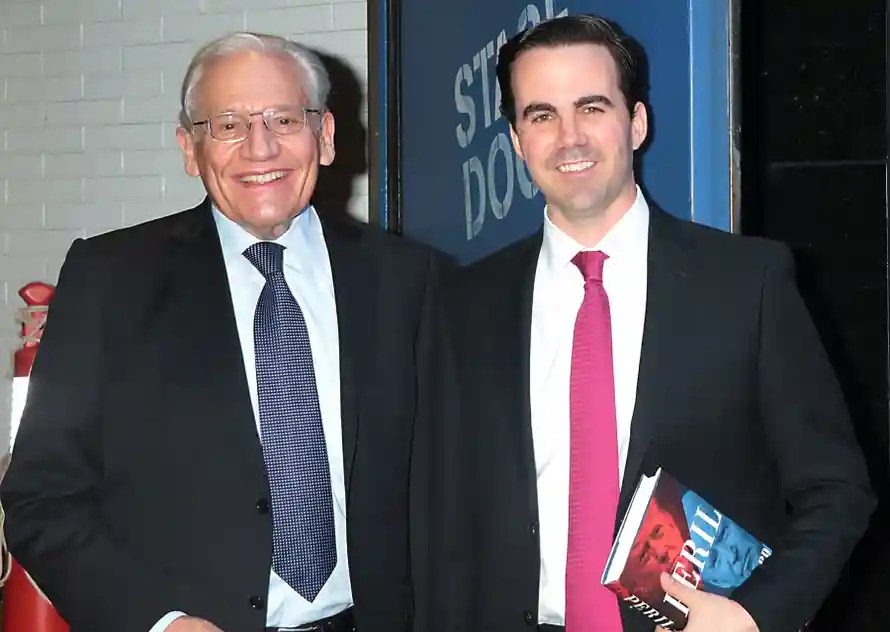
Bob Woodward and Robert Costa. Photo Credit – The Guardian

The effort to disrupt the Electoral College vote counting at the U.S. Capitol on Jan. 6, 2021 was appalling. It was made worse by the fact a sitting U.S. president, in order to overturn a legitimate election and cling desperately to power, organized, led and encouraged a mob. When events turned deadly, the president failed to call off the demonstrators in a timely manner. By any definition, what happened that day was insurrection.

Peril by Bob Woodward and Robert Costa is the first draft of historical narrative of events leading to that day and its aftermath during the first months of the Biden-Harris administration. The authors interviewed more than 200 people for the book and it reads like history. It’s not that. It is more like an extended newspaper article. Discovery of new aspects of the events leading to Jan. 6 have been released almost daily. The pace of new information is expected to accelerate in 2022. This book is what we have now to provide an overview of what happened.

To the extent Peril recounts what happened, it is useful the way a newspaper article is useful. It left me wanting to know more. It is neither the best written political book, nor does it provide meaningful insights. Its narrative is believable yet incomplete.

The good news about Peril is that it took less than 48 hours to read. Combined with our first winter storm and in between snow removal, cooking, and indoor work, it made an engaging companion. There will be better books written about Jan. 6 once the United States House Select Committee on the January 6 Attack finishes its work. For the time being, Peril can accompany us on the journey to determine what happened and what a voter can do to remedy the causes of this doleful day.

As an American the need for action is obvious. Reading Peril is an efficient way to get caught up after the end of year holidays. What comes next is an open question.

Categories
Reviews

Book Review: My Own Words

Ruth Bader Ginsburg Official Portrait. Photo Credit: Wikimedia Commons

The final book I read in 2021 was My Own Words by Ruth Bader Ginsburg with Mary Hartnett and Wendy W. Williams. It is a compilation of writing by Ginsburg framed by the co-authors as autobiography.

In 1993, when Ginsburg was sworn in to the Supreme Court, I was busy living: moving from Indiana to Iowa to take on new work at the corporate headquarters of the company with which I would finish my transportation career. I wasn’t paying much attention to this supreme court appointment. Maybe I should have been.

Reading My Own Words was part of expanding my range of what types of memoirs have been written. It became more than a writer’s exercise. I realized on how many important decisions Ginsburg opined, and the prominent impact her work for the court had on my liberal sensibilities. Her writing on gender equity, presented in this book, is particularly noteworthy.

My Own Words was for me an infrequent foray into the judicial branch of government. A justice’s official writing, mainly in the form of court documents and opinions, is a matter of public record. To a large extent their work eclipses the personal story of a justice’s life. I am more interested in Ginsburg’s remarks on Brown v. Board of Education, Loving v. Virginia, and Burwell v. Hobby Lobby Stores, Inc. than I am in her opera-going habits with Justice Antonin Scalia or her twice-weekly workouts in the Supreme Court gymnasium. I do not own a Notorious RBG t-shirt and am unlikely to get one, even after reading this engaging book.

The writer’s question was how did she handle her prolific writing as it relates to autobiography. I read reviews that expressed disappointment this wasn’t an “actual memoir.” I don’t understand that criticism. As a public figure, one of the most prominent in the United States, we come to the book knowing more about Ginsburg’s personal life than normal. News media of the time tended to focus on the fact her spouse was an excellent cook rather than her intellectual capacities as a jurist. The latter is clearly more engaging.

If you are a liberal, read this book. If you are a conservative, read this book. If you are engaged in society with its cultures around abortion, gender equity, corporate influence, equal protection under the law, or how the supreme court works, I recommend it as a primer. While Ginsburg was a liberal jurist, the lessons she presents in these writings apply to us all. Highly recommended.