Categories
Living in Society

Twitter and Me

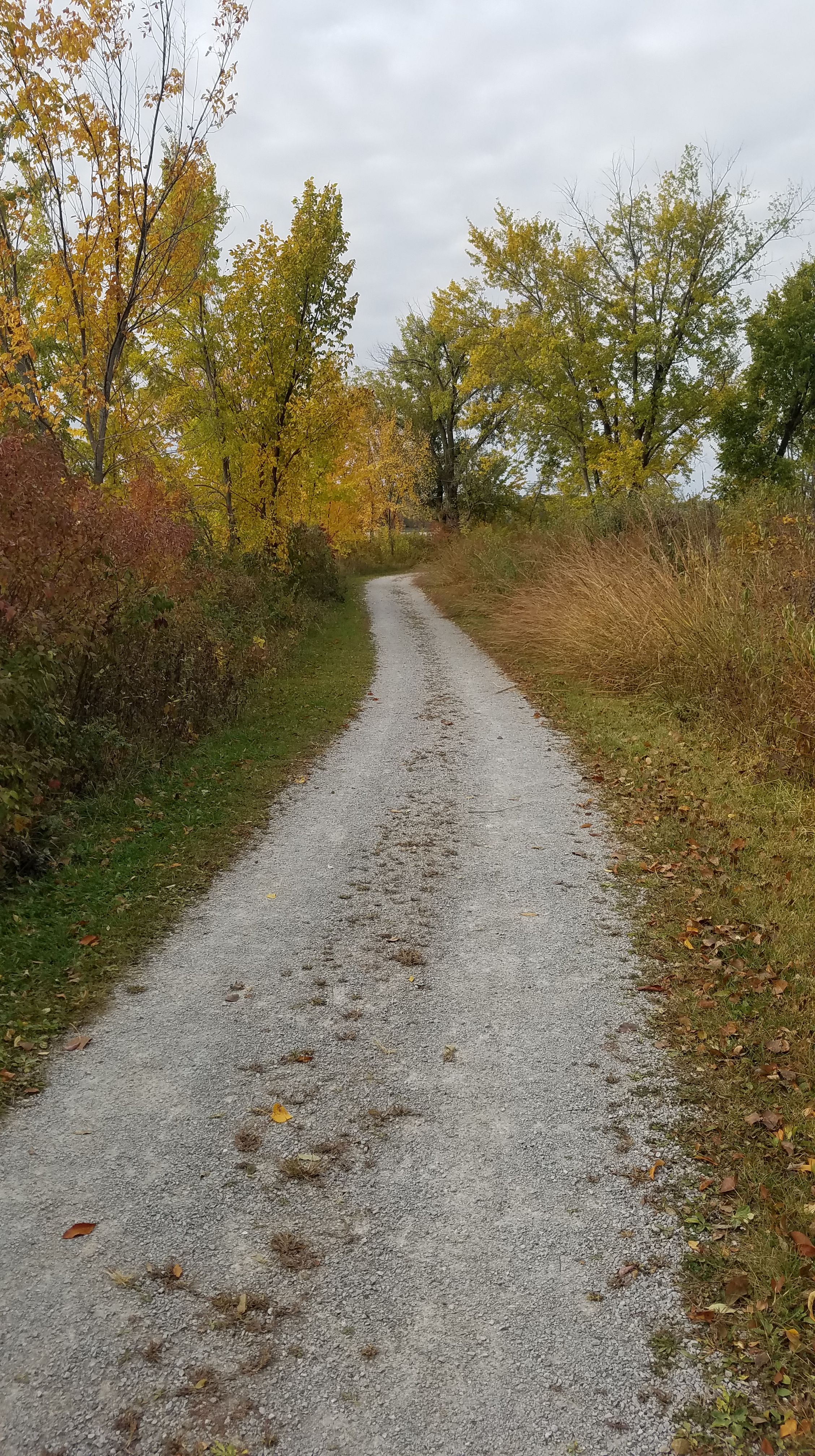
Transforming to autumn yellows.

After the general election I expect my Twitter use will change. Instead of using the platform for editorializing, I expect to revert to news gathering as its primary function. That’s to be expected after a long campaign season.

It is also a reaction to Elon Musk’s potential acquisition of the social media platform. We don’t need oligarchs structuring our social media any more than they already are.

There is also this from the Washington Post:

Twitter’s workforce is likely to be hit with massive cuts in the coming months, no matter who owns the company, interviews and documents obtained by The Washington Post show, a change likely to have major impact on its ability to control harmful content and prevent data security crises.

Washington Post, Oct. 20, 2022.

Whether or not this is accurate, I don’t know. Musk told the newspaper he would seek new ways of extracting revenue from the platform once the acquisition is consummated. It would be another blow to the foundational attractions of social media.

More than anything, composing a tweet helps me think things through and put ideas into words. Sometimes the process is successful, sometimes not so much. It seems essential to a writer to have some method of taking abstract, random contemporary experience and render it into something meaningful. Twitter accomplishes that, even if it is not the only methodology I use.

While working on my autobiography last winter, the writing process served as Twitter does, arguably to more useful purpose. I would locate some artifact or piece of writing, then think through what it meant in context of my narrative. I would either incorporate or discard it. I’ll need Twitter less for this type of function as I return to autobiography.

When I referred to Twitter use as having a news gathering function, I mean a person can follow specific people writing about current affairs without the structure of a news organization. I read seven newspapers yet it also matters what Jane Mayer, Naomi Oreskes, Elizabeth Kolbert and others have to say. If they have written something new, they are likely to post it on Twitter soon after publication. The same is true of a number of journalists and commentators I follow. This puts me ahead of the news curve.

There is a human side of Twitter. I met many of the 180 people I follow in real life and have a relationship with them. I would miss updates from them. At the same time a lot of accounts I follow are utilitarian in nature. Someone is running for office, or is important for a project, and there is a timeline on their useful nature. There will be a purging after the election.

After the election, I expect to protect my tweets to minimize the tweet-crashing experience and focus on what I want to say and write there. Life seems too short for distractions.

I haven’t studied how much time I spend on Twitter yet by reducing its use, I should free valuable time for other projects. There is an addictive quality to the platform. While aging I need less addictions. In my post-pandemic retirement, I also yearn for connection with people. That feeling will grow as I age.

I joined Twitter in September 2008 after our child graduated college and left Iowa. I needed a way to stay in touch. Twitter was okay for that, even if I feel a bit like a lurker. Lurking is actually a good thing on social media platforms like Twitch. One hopes our real life relationship continues more than our social media one.

I’ll remain on Twitter for now and see how the Musk deal proceeds. One useful function is to refer people to this website to read my posts. That may be reason enough to stay.

Categories
Living in Society

Autumn Sky

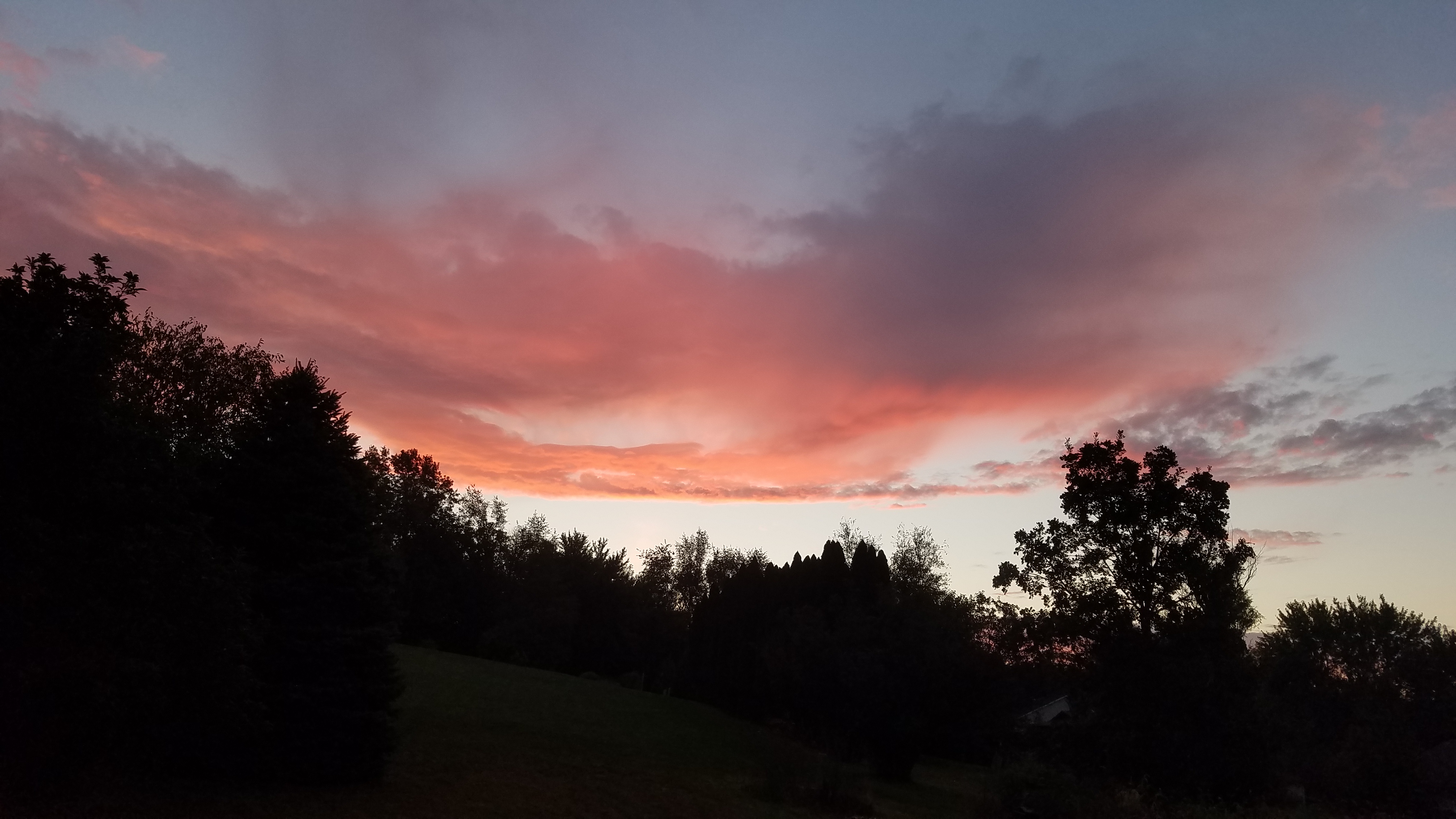
Autumn Sky.

Some days it is best to just be.

Categories
Writing

Road to Everywhere

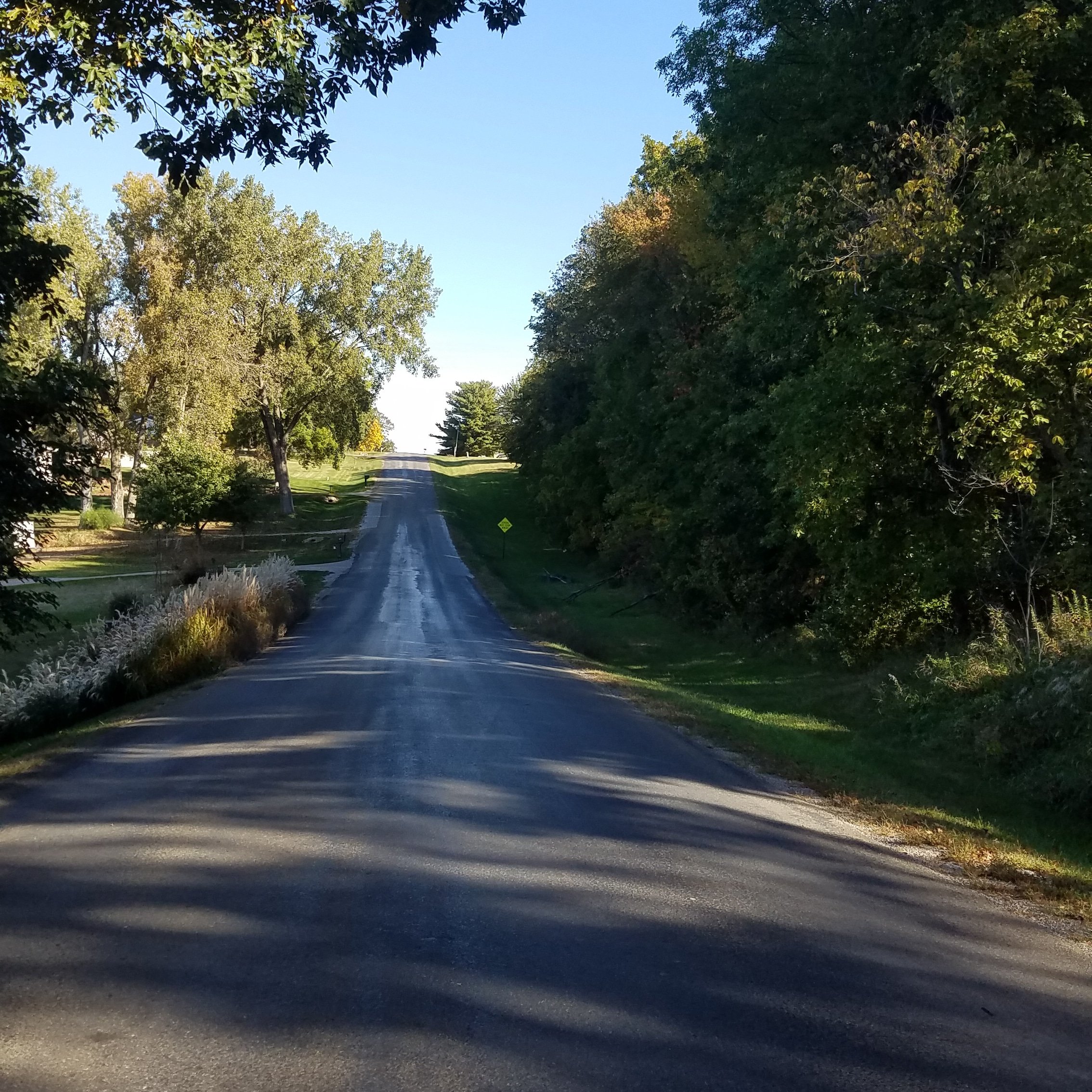
Single ingress/egress for the place where we live.

The coronavirus pandemic changed our family’s lives. It goes without saying the pandemic had us withdraw from society. I left paid work, quit all but utilitarian travel, spent more time at home, and downsized our operation to being a one-car family with a newer, smaller automobile. Change is not finished. The pandemic is not finished either, although it is being normalized.

When I consider leaving the property it is about trips to retail merchants, on political errands, or to visit family or friends. That is it. I did my traveling for education and adventure when I was young. Career work with a large transportation services firm had me traveling as well. We took a few vacations when our child was young. These days, when driving along the single egress from our home, I seldom leave the state. Usually a gallon of milk accompanies me on the trip home.

While the chip and seal access lane to our development is a road to everywhere, is it really if we choose not to travel it? Going left at the main road takes me to the dairy store, to my dentist, to political friends in Iowa County, and to the airport. A right turn takes me to town, to the clinic, to the county seat, to shopping, and to visit family. It is a much bigger world than that. I know, because I have been there.

I may plan a trip for recreation or learning. The Stanley Museum finally opened on the University of Iowa campus after being flooded out and permanently evacuated from its previous home along the Iowa River in 2008. Maybe I’ll visit and try not to get grumpy about repatriating all the African artifacts Maxwell and Elizabeth Stanley brought back from their travels. After all, seeing Joan Miró’s A Drop of Dew Falling from the Wing of a Bird Awakens Rosalie Asleep in the Shade of a Cobweb inspired me to learn more about the artist and eventually see him making a film in Saint-Paul de Vence in 1979. I have no desire to see Jackson Pollack’s Mural, which was a gift to the museum by Peggy Guggenheim. So maybe there is a possible non-utilitarian trip in the future.

For now, I appreciate the opportunity to walk along the road and take a photo on a beautiful fall day. That is travel enough in a time of pandemic.

Categories
Reviews

Book Review – Like a Rolling Stone: A Memoir

Jann S. Wenner. Photo Credit – Penske Media Corporation.

Jann Wenner’s Like A Rolling Stone: A Memoir would more aptly be titled A US Weekly Story of My Life. Its focus on his wealth, his celebrity friends and acquaintances, his wife and his husband, his Gulfstream II, his drug use, his magazine awards, his vacations in rare places, and other detritus of the self-centered rich would more appropriately appear in his publication US Weekly than Rolling Stone. I finished the book because I couldn’t avoid the mindless trappings of it: as if I were waiting in the dentist’s office with time to kill before a root canal.

Wenner’s work is evident in the book. It is competent writing yet the frequent mentions of famous people made it tedious. Why do we want to hear a person chatted with Bob Dylan about real estate? Or exchanged birthday gifts with Mick Jagger? Or vacationed with Ahmet Ertegun, a co-founder of Atlantic Records? Wenner had a substantial life yet this memoir is a puff piece. It could have been more, especially regarding the history of the Rock and Roll Hall of Fame, of which he is a member (because of his work with Rolling Stone) and past chairman.

I expected better writing. How could he have worked with and edited so many great writers — Hunter S. Thompson and Tom Wolfe particularly — and present such a dry, soulless narrative? He got a story down, yet it is not the story expected. It is largely devoid of the excitement that was San Francisco in the 1960s and 1970s. It didn’t improve after the story of the magazine moved to New York in 1977 where he met and spent time with a different set of celebrities including Jacqueline Kennedy Onassis, John Lennon, Yoko Ono, and Bruce Springsteen.

There are a few redeeming qualities. The Rolling Stone story of Annie Leibovitz is one. The development of political campaign coverage by Hunter S. Thompson and others is another. I can’t put my finger on many more redeeming qualities shortly after finishing the book. I wish I could.

Perhaps a reason for Wenner’s lack of commitment to exceptional prose in the book can be found in this quote from page 296, “If I were asked if I could do it again would I still have used all that cocaine, I wouldn’t hesitate. No. It was a waste of money, energy, and precious time.”

I’m keeping Like a Rolling Stone: A Memoir on my bookshelf as a reference for now. If I find another home for it, I’ll gladly give it away. Somebody had to publish Rolling Stone the magazine. I never figured it would be a person who came across in his writing as a dilettante when he had the capacity and interest in being deeply engaged in his work and the telling of its story.

As former Rolling Stone writer Kurt Vonnegut wrote in Slaughterhouse Five, “So it goes.”

Categories
Writing

Gleaning Before the Frost

Hot peppers gleaned from the garden before frost.

I’m slowly striking the tomato patch where garlic will soon be planted. Each beautiful, fall day is of bright sun, cool temperatures, and the promise of winter. Time spent outdoors offers a chance to clear my thoughts and commune with our patch of life. Younger me would already have the garlic in. Today I am savoring time in the garden.

I gleaned vegetables yesterday and there was a hard frost last night. It yielded tomatoes and peppers. I picked a big bunch of parsley and left the kale, collards and chard out to weather the cold. It has been a great year for bell peppers and tomatoes, for most everything.

It is time to put wool blankets on the bed and get out sweatshirts and woolen socks. Yesterday I walked on the state park trail in a t-shirt yet that won’t continue long. I’m ready for winter and it is coming.

I finished my goal of reading 40 books this year. It’s time to return to my autobiography as soon as the garlic is in and the garden prepped for winter. I’m looking forward to picking up where I left off with new ideas about approach and how to cover topics already on the outline.

I just finished Jann Wenner’s memoir and OMG! I’m not a rich guy, so I can do better than inventory all the homes, aircraft, and celebrity friendships I have. (That would take less than a page). Reading Wenner convinced me to make my story shorter. I envision the first part, up to my leaving Davenport, as chronological history. After that I expect to depart chronology to write thematic sections. I do want to finish the book so I can move on to other projects. If I keep nose to the wheel, I may be able to get a draft out to my editors by Spring 2024. I saw my medical practitioner Thursday and based on our conversation, my health should hold steady until then.

In these pre-dawn hours I’m anxious to get outdoors. If all goes well, I’ll finish clearing the tomato patch so I can prep the soil and plant garlic in the next few days.

I’ll have a fresh tomato for breakfast… because I can.

Categories
Living in Society

What We Value Persists Beyond Elections

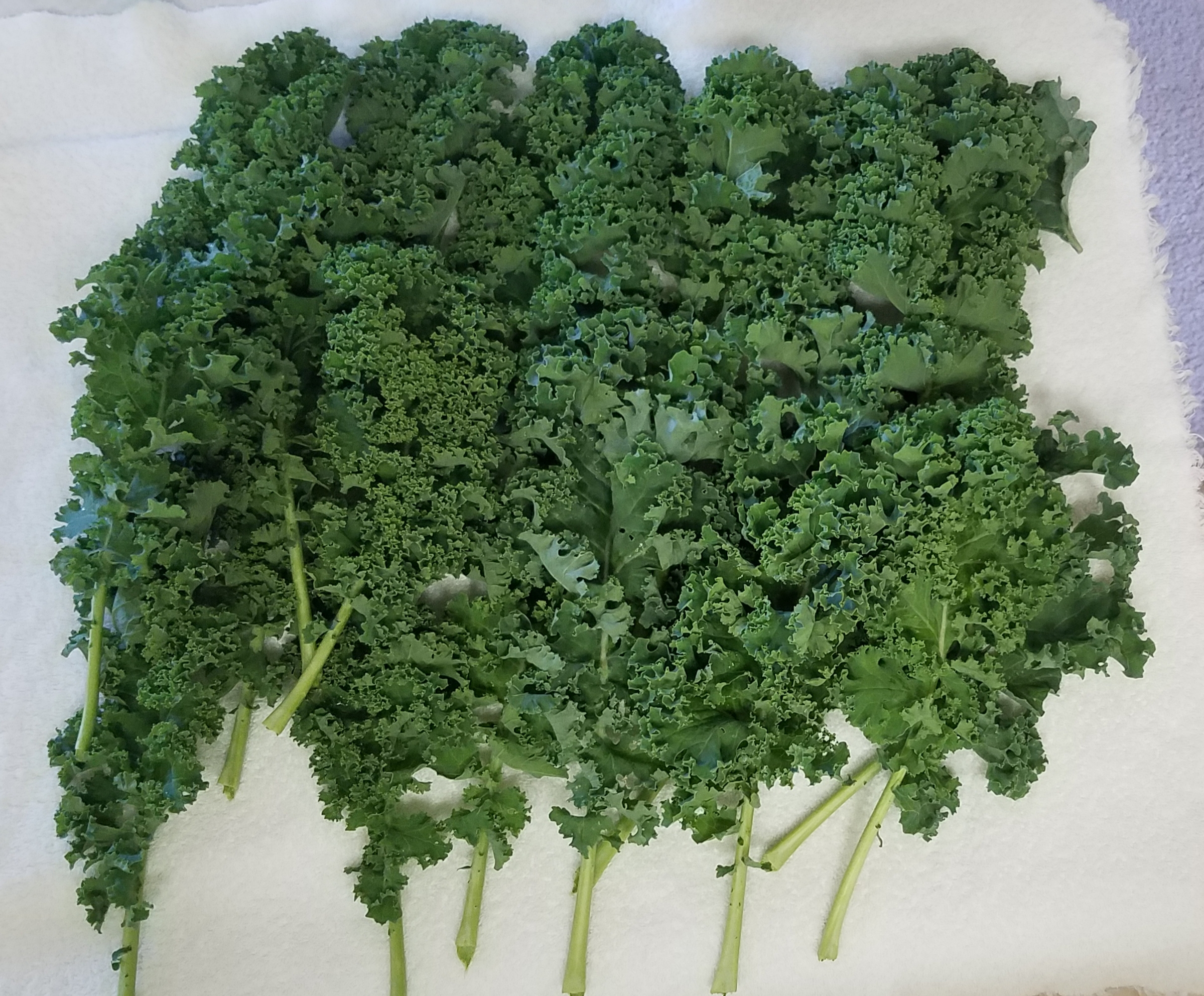
Winterbor kale picked on Oct. 2, 2022.

The Nov. 8 midterm election will be here before we know it. What then?

What we value persists beyond elections. Voters I know pick their politicians based solely on their position on abortion. Right next to that in importance is same-sex marriage. Other issues are deemed less important or not worthy of consideration. If a politician is anti-abortion and anti-same-sex marriage, half the electorate finds that to be sufficient qualification to earn a vote and serve in elected office.

In rural Iowa there is more to living in society than any single issue. Unlike members of the Congress, we aren’t in a constant state of campaigning. There are cultural nuances in the places we chose to live. We view those with whom we interact as people first and that makes rural life tolerable for most.

Several years ago, I volunteered with a group that served the needs of older members of society. Almost everyone from the community volunteered in some way. It was almost expected. Unless one knew the politics of another person among volunteers, the topic almost never came up in conversation. It was avoided. Our politics were something held private and kept from social discourse. Such restraint was a form of glue that held the organization together. That organization and others like it accomplished and continue to accomplish good work.

As we head into the midterms, candidates are focusing a message on the U.S. Supreme Court’s decision that overturned Roe v. Wade this year. The issue resonates because while we once had legal precedent that was settled law, with President Trump’s three appointees to the high court, we discovered it wasn’t as settled as we thought. Whether that is a winning issue for politicians, I don’t know. However, the ground shifted below us, requiring us to re-invent all the terms of Roe, something that may or may not be possible. It is, however, a political mess with real life consequences.

A focus on Dobbs, the case that overturned Roe, does injustice to everything else we value. Where is the role in our politics for addressing environmental issues? What about economic issues like the concentration of wealth among a small percent of the population and the damage that does? What about corruption in our politics without proper limits on campaign contributions? What about our inability to enable residents of our state to access needed health care? If we talk mostly about Dobbs during the remaining days of the election cycle, these issues and more get relegated to the back burner.

I guess we’ll just have to pick them up again after the election because they won’t resolve by themselves.

On Saturday former president Jimmy Carter celebrated his 98th birthday with a parade in his hometown of Plains, Georgia. I had no dog in the 1976 campaign that elected him president. I was serving in the U.S. Army in Germany and felt that with Nixon gone, the electorate should have free reign to either keep Gerald Ford or pick someone else. I feel Carter was unjustly criticized during his administration.

However, I broke with Carter after his July 15, 1979 speech, known as the “malaise speech,” in which he said, “The erosion of our confidence in the future is threatening to destroy the social and the political fabric of America.” I couldn’t abide by that and caucused for Ted Kennedy at the 1980 Iowa caucuses.

In his concession speech at the Democratic National Convention, Kennedy said, speaking of Ronald Reagan,

The great adventures which our opponents offer is a voyage into the past. Progress is our heritage, not theirs. What is right for us as Democrats is also the right way for Democrats to win. The commitment I seek is not to outworn views but to old values that will never wear out. Programs may sometimes become obsolete, but the ideal of fairness always endures. Circumstances may change, but the work of compassion must continue. It is surely correct that we cannot solve problems by throwing money at them, but it is also correct that we dare not throw out our national problems onto a scrap heap of inattention and indifference. The poor may be out of political fashion, but they are not without human needs. The middle class may be angry, but they have not lost the dream that all Americans can advance together.

Ted Kennedy, Aug. 12, 1980

Protecting women from the intervention of politicians in their health care is important. It is also an issue precipitated by Democratic failure to adequately support Hillary Clinton during the 2016 general election. This failure enabled Trump’s three Supreme Court picks.

What are the values that bring communities together? A right to self-determination is one of them yet there are more. As we head into the midterm elections, we would do well to recall what Kennedy said at the end of his speech, “For me, a few hours ago, this campaign came to an end. For all those whose cares have been our concern, the work goes on, the cause endures, the hope still lives, and the dream shall never die.”

I hope Kennedy was right.

Categories
Living in Society

Where Rural and City Meet

Sunrise, Oct. 1, 2022.

Jack Kerouac’s 1950 book The Town and the City was a white whale of fiction, rejected by most publishers. It was a conventionally-styled book, written before Kerouac developed his own style. It is said to be influenced by Thomas Wolfe. The problem for publishers was the book’s 1,100-page length. Paper and binding costs money and a long first book would eat into their profits. Eventually, the book was shortened and 15,000 copies were printed by Harcourt Brace, with 4,500 held in a warehouse without bindings in case it sold. It didn’t sell. Today, few are interested in this roman à clef comparison between Lowell, Massachusetts and the New York City of the beat poets. It is probably for the best.

Today we talk about the migration of people from the countryside to cities, as rural areas are being hollowed out. Patrick J. Carr and Maria J. Kefalas wrote about it in their 2009 book Hollowing Out the Middle: The Rural Brain Drain and What it Means for America. Robert Wuthnow examined the sociology of rural America as it related to the ascension of Donald Trump to the presidency in his 2019 The Left Behind: Decline and Rage in Small-Town America. There are trends in rural life, yet there is more than that.

Rural elected officials are the ones cutting budgets that handicap the Department of Natural Resources in doing their job. How regulations pertaining to water and air quality are enforced impact rural residents especially. Why do rural folks so often vote against their best interests? I submit it’s because they vote for candidates who reflect their position on LGBTQ+ (against same-sex marriage) and abortion (none permitted) and look no further. The crap legislation that moves state revenue from public schools to private and hollows out rural community life are part of the package. It is easy to say vote Democratic to avoid this.

The national media persist in depicting American society as divided along clear ideological lines. In rural Iowa life is more nuanced than that. I know how most of my neighbors vote. Practically, that’s a minor consideration in being part of a community.

When I say nuanced, a long time Republican neighbor stopped their car to comment while I was putting out political yard signs. I mentioned the candidates were both on the right side of issues important to our subdivision. These conversations are the glue that binds the community. We don’t have enough of them.

What I’m saying is don’t be like Kerouac and bloviate about divisions the popular culture left behind. Take time for a conversation with a neighbor. Donate to the food bank. Write a letter to the editor of the local newspaper if you are lucky enough to still have one. Forget about the divide between rural and city folk as is depicted in media.

If you talk to enough voters in rural Iowa, it is easy to see where things land on abortion and same-sex marriage. The best we can do is encourage people that there are other, equally important issues.There may be no changing one’s firmly held beliefs on an issue or two. At the same time, our lives go on and there are real threats to the environment, our economy, and our way of life. While we hold fast to our beliefs, we must also be open to change in areas that serve the common good. The false division of rural and city should be relegated to history the way Kerouac’s book has been. It turned out his second book, On The Road, was a much better read in any case.

Categories
Living in Society

Aging in America – Part VI

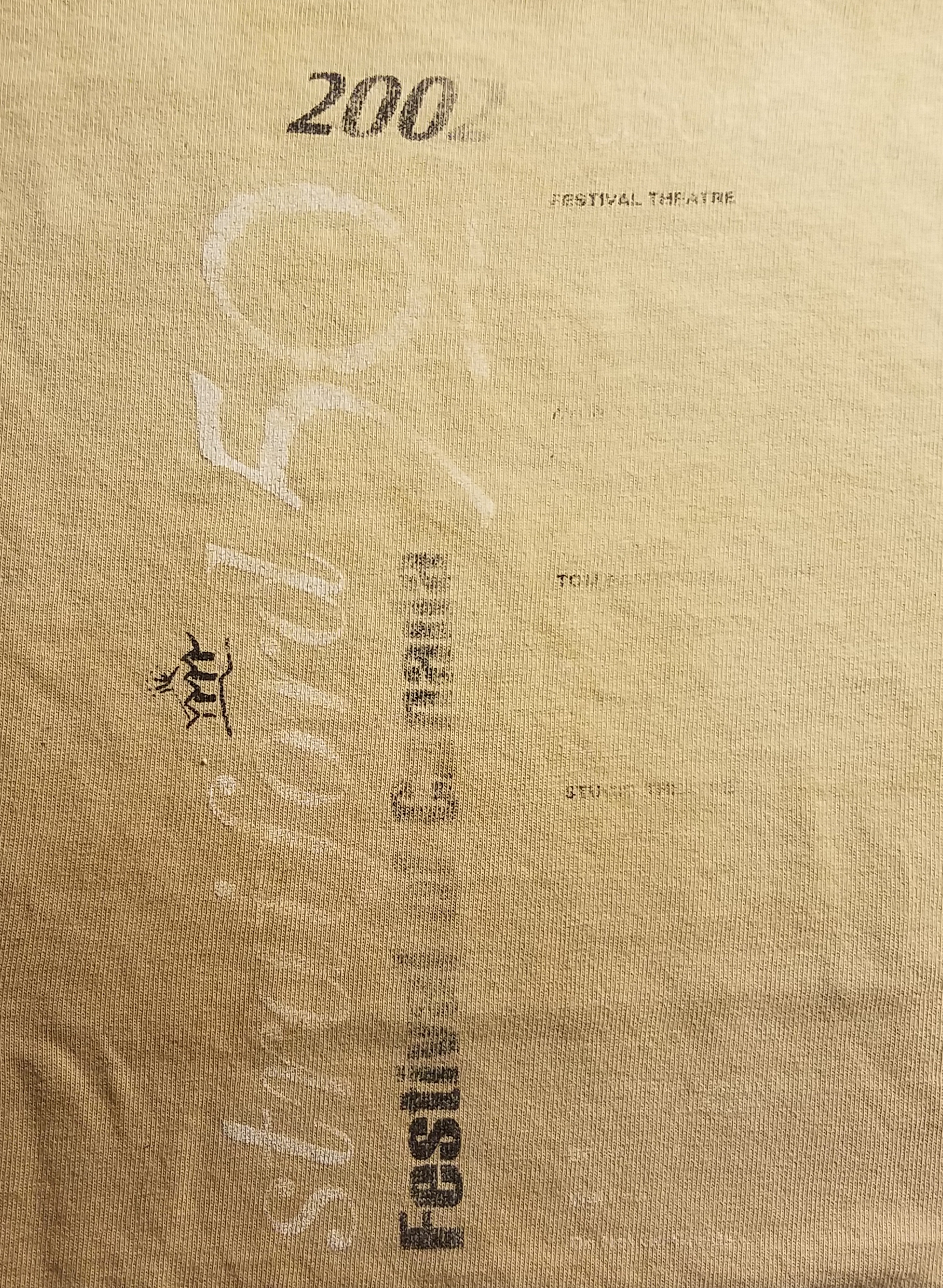
Worn t-shirt from the 50th anniversary of the Stratford Festival of Canada in 2002.

Passing Down History

I have conversations about stuff with our child. It is specific stuff. It is my stuff, eventually to be her stuff, at least some of it.

For example, a couple hundred vinyl LPs rest on my bookshelf. A lot of good music there, a lot of great memories. The technology is old and hardly portable. The sole album for retention to pass down is Beethoven’s Opera Fidelio because it was a memory from childhood. That will make it easier to dispose of the rest of them, I hope.

I want to pass down some of my Iowa history books but there are too many of them. I have hundreds. My guidance was to select maybe three or four of the best ones to pass down. My work is cut out. To get started, here are the first dozen that came to mind. It is a first draft of the list for posterity and by no means final.

  1. Iowa’s Groundwater Basics: A geological guide to the occurence, use, and vulnerability of Iowa’s aquifers by Jean Cutler Prior, Janice L. Boekhoff, Mary R. Howes, Robert D. Libra, and Paul E. VanDorpe.
  2. Eastern Iowa Prehistory by Duane Anderson.
  3. Black Hawk: An Autobiography dictated to Antoine LeClaire, edited by Donald Jackson.
  4. Wakefield’s History of the Black Hawk War by Frank Everett Stevens.
  5. Hunting a Shadow: The Search for Black Hawk: Eye-Witness Account by Participants compiled and edited by Crawford B. Thayer.
  6. The Emerald Horizon: The History of Nature in Iowa by Cornelia F. Mutel.
  7. In Cabins and Sod Houses by Thomas H. Macbride.
  8. Robert Lucas by John C. Parish.
  9. Executive Journal of Iowa 1838-1841, Governor Robert Lucas edited by Benjamin F. Shambaugh.
  10. The Trader at Rock Island: George Davenport and the Founding of the Quad Cities by Regena Trant Schantz.
  11. The Life and Times of Samuel J. Kirkwood, Iowa’s War Governor by H.W. Lathrop.
  12. Iowa: The Middle Land by Dorothy Schwieder.

Reducing the number of history books to three or four is an impossible task, although one worth considering as I write my autobiography. We’ll see how the list changes over time. By spring, I should have a better idea.

Figuring out what to pass down becomes more important as we age. Partly we seek to let go of the past. Partly we seek to make room for a future.

Categories
Living in Society

Autumn Begins

Wildflowers.

Autumn begins at 8:04 p.m. CDT today with the Autumnal Equinox. What I have to share is this photo of wildflowers along the state park trail and the thought spring and summer passed too quickly.

Categories
Writing

Late Summer Rain

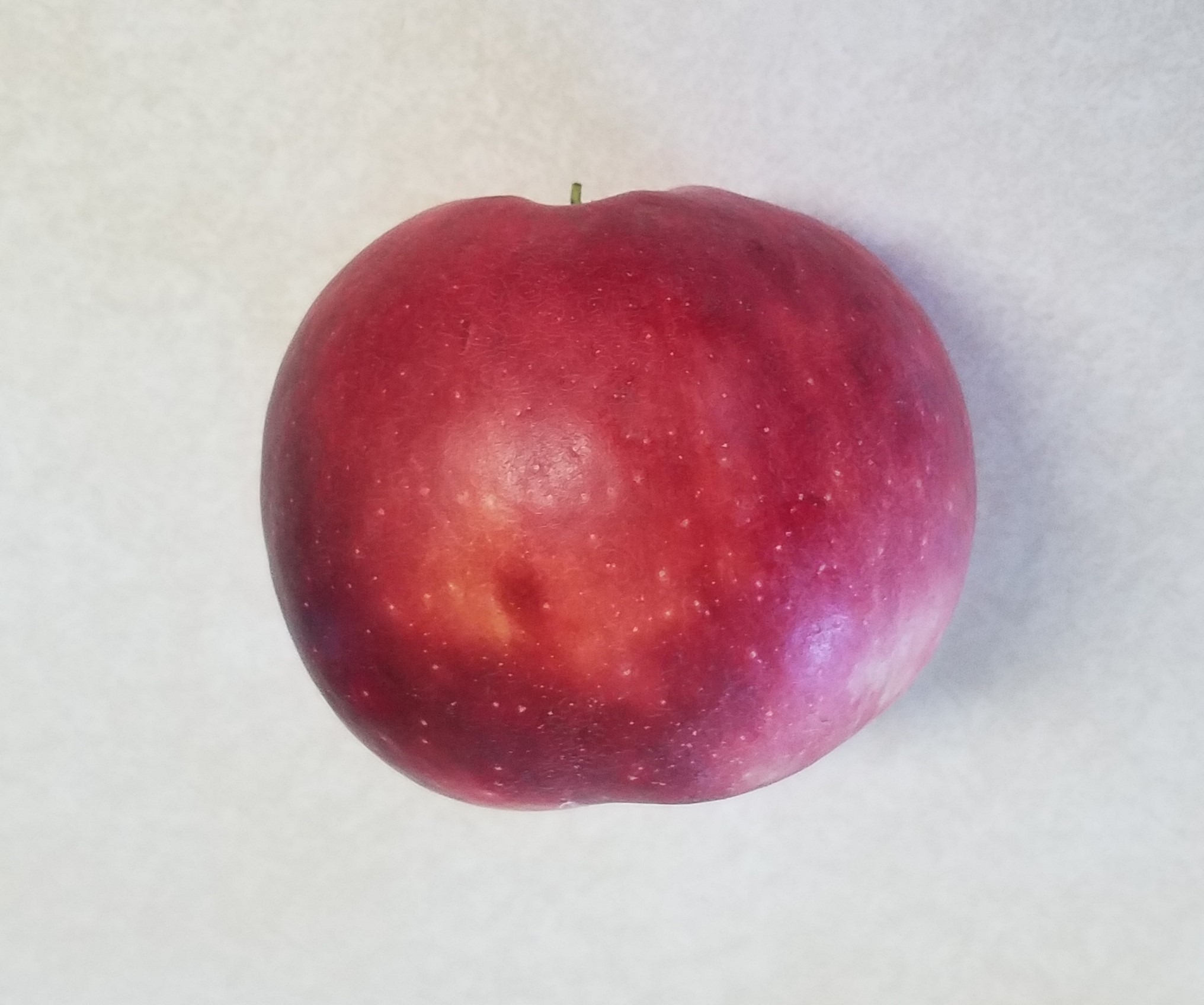
Red Delicious Apple, 2022.

It is a bit weird, although correct, to call it late summer. Autumn doesn’t begin until Sept. 22 this year.

We had lightning and rain overnight. The ground remains wet this morning. Leaves on deciduous trees have begun to turn. Yellow wildflowers along the state park trail got frosted, even if it wasn’t cold enough for frost.

There were overnight thunderstorms in the county seat, enough to halt the big football game at Kinnick Stadium — three lightning delays totaling 236 minutes in duration. The home team shut out the opponent once the game resumed after midnight.

Today, I’m considering what’s next.

We are out of the coronavirus pandemic as much as we will be. While Governor Kim Reynolds was early, her Feb. 3 declaration that the coronavirus was to become normalized in daily, routine public health operations on Feb. 15 is a convenient bookend to a distinct phase of my life: The Coronavirus Pandemic Time.

I’ll continue to monitor for COVID-19 symptoms and get tested if there are any. If I get the virus, I’ll follow Centers for Disease Control protocols for isolation and treatment. I’ll continue to wear a face mask inside crowded retail establishments, and wear a mask indoors when with groups of people and the local risk is high. Periodic immunizations will become part of the fall health regimen the way influenza immunizations have been. That’s that.

The main consideration is how I will spend time going forward. During the pandemic I developed a routine that varies little from day to day. Events and activities from the world outside my routine seem like an intrusion. I want to contribute to society, yet not in the same way I have since my retirement from transportation in 2009. Solving this problem, the problem of how to engage in society, begins with shedding the old skin of a life lived well yet has become obsolete.

First comes a shedding of the past and remainders of past engagements. This is neither quick nor easy. It turns out it is difficult to leave a group to which so much of oneself has been given to create. Old habits die hard, as the saying goes. I’ve been at this for more than a year and there is a long way to go.

Next is to determine what’s most important. That’s not easy either. It is work that comes after late summer rain.