Is the sound of a cricket in the house good luck or bad?
Early morning found me interrupted by chirping—loud and pronounced. I turned on the light of my mobile phone and shined it behind a bookcase, trying to locate the insect. He’s here for the second day.
It’s a long cricket walk from any point of entry to the lower level of the house and my writing desk. It seems doubtful the distinct rhythmic sound will attract a mate. It is distracting to me, but the range is very short.
“It is a sign of extreme good luck,” according to the Internet. “All the things that you have been working toward and dreaming about are now possible. Stay open to guidance and cosmic messages and you will know exactly what you have to do.”
Whatever Internet. If I catch the bug, he’ll be transported outside—unharmed if possible.
Yesterday my editor wrote that my last filing would finish the week. There has been a lot of news lately, so my features get pushed back. New assignments won’t happen until next week, and that’s okay with me.
At the warehouse the other shift supervisor turned in her notice, so it means more work for me in coming weeks until the corporate staff figures out what to do about leadership. Our regional manager seems in no hurry.
After an analysis of the retained value of our net worth during the six years since my “retirement,” it turns out we reached a floor in 2013 and have begun to grow net worth again. I don’t know how that happened since we seldom have extra money. It reinforces a couple of things about low income families. We make do with what we have. We have more than enough to occupy our time. Every income source, no matter how small, is important.
For the moment, I’m going to try to locate the cricket and move him outside. I hope it’s not bad luck.
In 2015, France will be hosting and presiding over the 21st Session of the Conference of the Parties to the United Nations Framework Convention on Climate Change (COP21/CMP11), otherwise known as “Paris 2015.”
COP21 will be held from Nov. 30 to Dec. 11 on the Paris-Le Bourget site, bringing together around 40,000 participants in total – delegates representing each country, observers, and civil society members. It is the largest diplomatic event ever hosted by France and one of the largest climate conferences ever organized.
COP21 will be a crucial conference, as it needs to achieve a new international agreement on the climate, applicable to all countries, with the aim of keeping global warming below 2°C.
The stakes are high: the aim is to reach, for the first time, a universal, legally binding agreement that will enable us to combat climate change effectively and boost the transition towards resilient, low-carbon societies and economies.
To achieve this, the future agreement must focus equally on mitigation – that is, efforts to reduce greenhouse gas emissions in order to limit global warming to below 2°C – and societies’ adaptation to existing climate changes. These efforts must take into account the needs and capacities of each country. The agreement will enter into force in 2020 and will need to be sustainable to enable long-term change.
France will therefore be playing a leading international role to ensure points of view converge and to facilitate the search for consensus by the United Nations, as well as within the European Union, which has a major role in climate negotiations.
If a task or event is on the white board, it is likely to get some attention. Yesterday I wrote “make real food” on it.
I knew I would draw from the garden, ice box and pantry for the meal, but what I would make—had no clue.
It became is a sort of enchilada, but not really Mexican. The intent was to use Swiss chard and other summer vegetables. Here’s what I did:
Cook 6 raw tortillas in a dry pan. Set aside.
Make tomato sauce by draining a quart of diced tomatoes and processing them in the blender. (In retrospect, I should have seasoned the sauce, but left it just tomato puree).
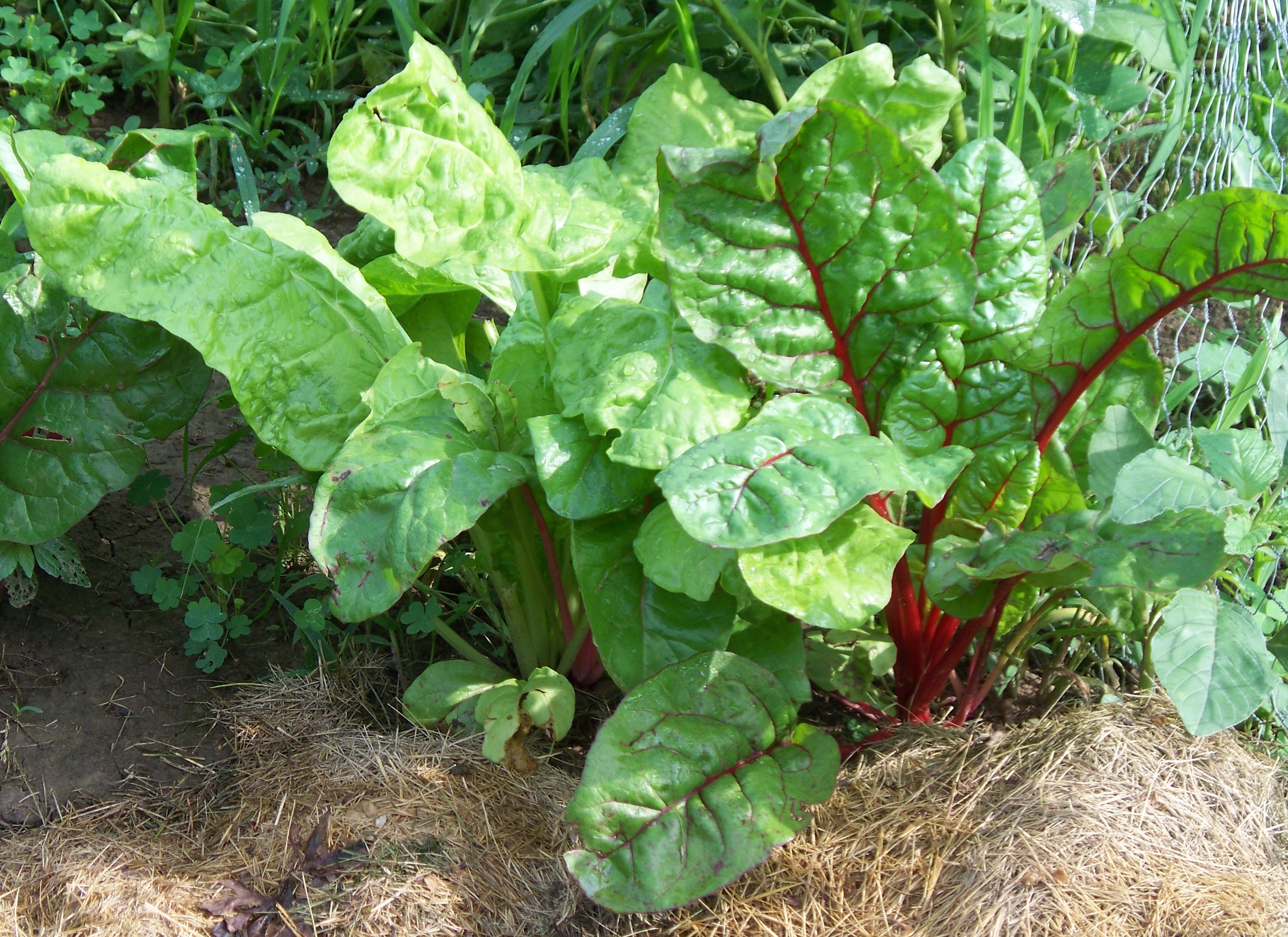
Prepare 6-8 Swiss chard leaves by removing the veins. Chop the veins and stems into bits and the leaves into one inch ribbons.
Using olive oil, sautee one third onion, chard stalks and veins, quarter cup chopped celery seedlings, one third of a zucchini cut into quarter inch cubes, and season with sea salt.
When the veg is softened, add one 15 ounce can prepared black beans.
Add the Swiss chard leaves, a generous tablespoon of lemon juice, and stir gently until the leaves start to wilt. Remove from the heat and set aside.
Into a rectangular baking dish pour enough tomato sauce to cover the bottom.
Take a cooked tortilla and spoon the vegetable mixture on the middle. Sprinkle on a tablespoon of feta cheese, tightly roll the tortilla and place it in the baking dish on top of the sauce. Repeat until the dish is full.
Pour the remainder of the tomato sauce on top, cover with aluminum foil and bake for about an hour in a 360 degree oven.
Remove the casserole and place on a rack. Remove the foil and sprinkle more feta cheese on top. Let sit on the counter for 10-15 minutes to cool.
Serve with a favorite accompaniment, such as hot sauce, sour cream or chutney.
At a convenience store in North Liberty yesterday, a young guy was fueling his large black pickup truck. A companion was riding shotgun, both clad in blue jeans and dark T-shirts. The brief moment would have passed unnoticed except for the full-sized Confederate flag flying on the passenger side of the cab.
Another flag, the stars and stripes, flew from the driver’s side of the cab, both set to ripple in the breeze as the truck drove away on the highway.
Should I have said something? Maybe. My military training came into play and two things stopped me. Others hanging at the convenience store seemed to know the driver, and while they were not necessarily sympathetic, it was not my turf. The other thing was the unknown as to whether the gent had a gun. Perhaps the association was unjust, but one assumes he was armed, and of course, I was not. I kept my powder dry for another day.
The Confederate flag can be found in abundance in the counties where I live. People fly them at home instead of the stars and stripes. There are big ones, little ones, and stickered-to-windshield ones. I am less concerned about one person’s expression of whatever it is the confederate flag means to them, than I am when it is displayed in public as part of an official function, like it was in the Marion County Republicans Independence Day parade float.
Marion County Republicans
Reality bleeds over into the construct of politics. Johnny on the spot, the Republican Party of Iowa chairman condemned this use of the Confederate battle flag by his associates, although he made no mention of the improperly displayed U.S. flag on the back of the trailing pachyderm. Like it or not, the attitudes behind flag usage—stars and bars or stars and stripes—are deeply ingrained in some Iowans and ever present.
My issue with the flag culture is why should I feel like I’m entering a war zone when picking up a beverage at the convenience store? Maybe its just me. Maybe it’s the coarsening of our community.
When I spoke to Rob Hogg about his July 8 announcement, he emphasized it was an exploratory committee to consider a run for U.S. Senate against incumbent Chuck Grassley. If Hogg was precise about framing the discussion, it matches his personality, and represents a desire to be clear when it comes to elections and the laws surrounding them.
Hogg has little to lose and everything to gain by running for U.S. Senate. He was re-elected to a four year term to the state senate in 2014, so his seat is secure. Already well known in Iowa as chairman of the senate judiciary committee, Hogg has a track record that goes beyond his signature issue of acting on climate change. Even if Hogg loses to Grassley, a challenge has the potential to burnish his credentials as a state-wide politician, and puts Grassley in a position where he has to organize and spend some of his campaign war chest locally. Hogg may win if he runs.
Before the 2015 legislative session, Hogg traveled around the country to promote his book America’s Climate Century: What Climate Change Means for America in the 21st Century and What Americans Can Do About It. Connections made on the book tour may translate into financial contributions to his exploratory campaign. He also toured much of Iowa speaking on climate change.
Mitigating the causes of climate change and dealing with its real world effects is Hogg’s signature issue. In a letter to colleagues in the environmental movement he wrote, “I am considering this candidacy, in part, because I believe it is long past time for Congress to act on climate change. By running, I would give voters a chance to vote for climate action. As I said in my release announcing the formation of the exploratory committee, ‘If we had a Congress that worked better, we could confront the challenge of our century–climate change–through solutions that work for our economy, our health, and our environment.’”
There is expected to be a Democratic primary for U.S. Senate next year. Hogg hasn’t formally announced, and plans to use the time raising money and discussing issues with party activists, two necessary prerequisites to making a decision to run.
Here is the text of Hogg’s announcement:
Hogg forms Exploratory Committee for possible U.S. Senate run
CEDAR RAPIDS–Today, I am announcing that I have formed an exploratory committee to consider becoming a candidate for the United States Senate in 2016. Like many Iowans, I believe we need Congress to work better for all of our citizens and our country’s future. If we had a Congress that worked better, we could:
> Build a vibrant, full-employment economy that works for all Americans.
> Improve public health and public safety through prevention, prevention, and more prevention.
> Strengthen Social Security and Medicare and fulfill our commitments to seniors, veterans, and people living with disabilities.
> Confront the challenge of our century – climate change – through solutions that work for our economy, our health, and our environment.
In order to get Congress to work better, Iowans know it will require new leadership. Iowans also know it will require significant reform in the way we conduct our political campaigns.
Over the coming weeks, I look forward to visiting with Iowans across our state, to have a conversation about our Congress, our country, and our future, as I make a decision about running for the United States Senate.
For more information, please visit http://www.robhogg.org, email Senator Hogg at rob@mail.robhogg.org, write the Rob Hogg Exploratory Committee at P.O. Box 1361, Cedar Rapids, IA 52406-1361, or call the exploratory committee at 319-360-3401.
IOWA CITY–Johnson County announced acceptance of applications for a new Community ID program on Wednesday. The county seeks to become more welcoming, and to resolve a practical public safety issue problem—undocumented residents prefer to stay in the shadows.
“Johnson County will be the first community in the Midwest, and the first outside a major metropolitan area, to offer community-issued identification,” according to a press release. “The Community ID program is designed to help people who may have difficulty getting a state-issued ID, such as seniors who no longer drive, the homeless, people in poverty or transition, and new immigrants. A Community ID can help these people interact with law enforcement, local government, pharmacies and banks.”
Rod Sullivan, Johnson County supervisor, explained the public safety aspect of the program in an April 9 email.
Why do we need a Community ID? I have a very personal story. After years of doing nothing, a few years ago, the board of supervisors finally began taking action against the criminals that own Regency Mobile Home Park. State law severely limits the ability of the board to intervene, but there were dozens of credible reports of fraud coming from Regency.
Johnson County detectives swooped in, gathered all the info they could, and began following up on leads. Then they ran into a stone wall. Most of the people they needed to speak with refused to talk to them. These folks saw law enforcement coming, and they went the other way–even when they were innocent victims!
I spoke at length with the lead detective on the case, and he said that this avoidance of law enforcement was common. When I asked why, he said it all came back to a lack of ID.
This illustrates the number one reason for instituting a Community ID – public safety. We need victims and witnesses to come forward in order to solve crimes and see to it that justice is served. The Community ID will help with this.
There have already been hundreds of applications for Community IDs. The program requires both documentary proof of identity and proof of residency. It is an open question whether the victims and witnesses Sullivan referred to will actually come forward to secure a Community ID, or change their behavior.
In an unrelated incident undocumented immigrants made news Wednesday when Rep. Steve King (R-Kiron) condemned the concept of “Sanctuary City” for the umpteenth time in the wake of the murder of Kate Steinle in San Francisco. The accused is a seven-time felon who has been deported to Mexico five times, according to the story.
“Sanctuary cities exist because of the left, because of the open border policy,” King told Newsmax. “Yes, there is blood on their hands and San Francisco is at fault. All of California is a sanctuary state today, and many states have these jurisdictions like this.”
Having a Community ID is not the same as being a Sanctuary City, but it may represent what is possible in governing the undocumented.
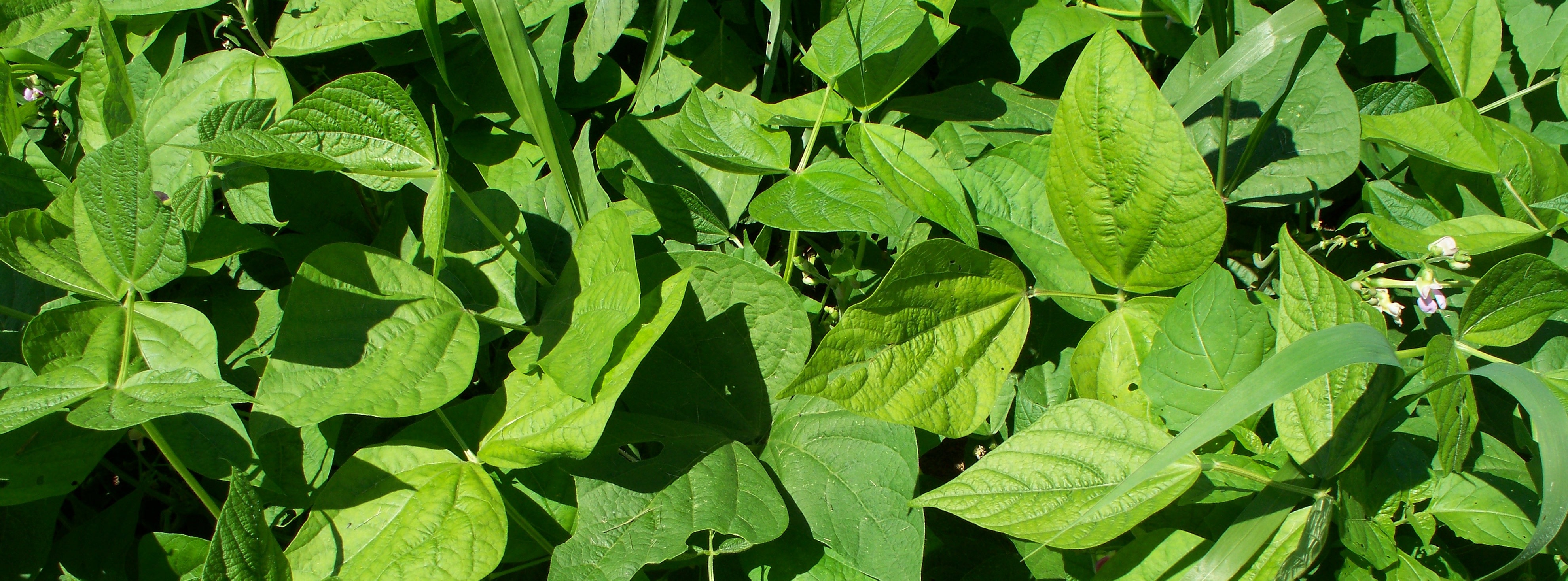
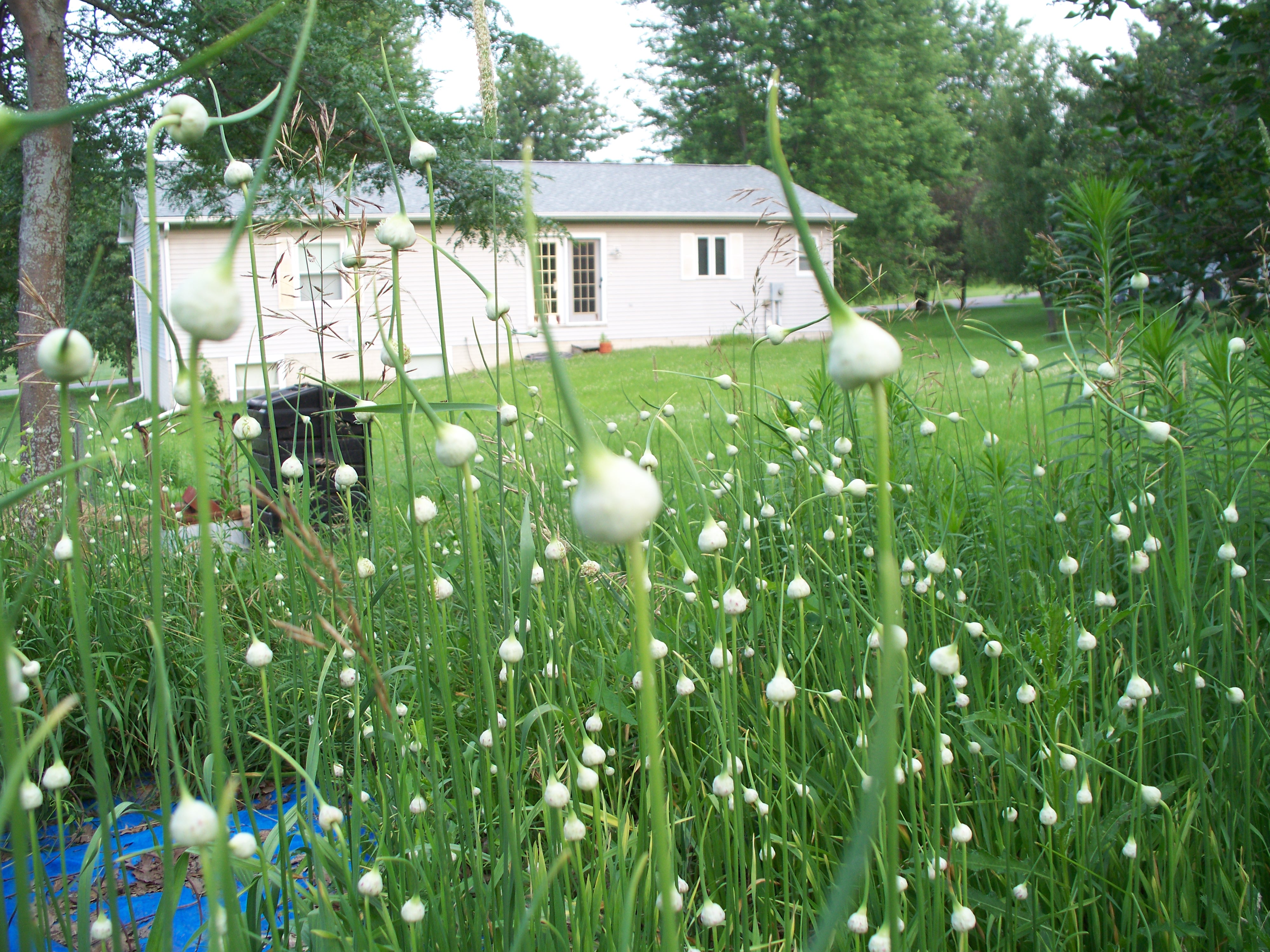
The first harvest of green beans is finished as humans enter a race with nature to get the best of what’s in the garden patch.
Rodents, slugs and insects all want a piece of the action. Today I’ll pull up the plants, harvest what remains that is edible and prep the soil for replanting.
Green beans are one of our favorites. We have about ten pounds in the ice box ready for cooking—not enough to preserve.
Yesterday I harvested Swiss Chard. While the preparation is a bit boring—slice leaves into ribbons, saute with onions and garlic—it is a tasty, seasonal side dish. With the kale and lettuce we have an abundance of leafy green vegetables.
The broccoli seedlings are coming along, and if there is time, I hope to prepare a plot for the planting today.
There is one other garden patch ready for second cropping, and it will likely be turnips and radishes. The weather has been very cool, and there may be a window to get them in before the traditional July 25. With the crazy weather, we press against preconceived notions about seasonality and try new things.
And we weed the garden, never catching up with the work as nature works incessantly to take over the plots again.
That Lincoln Chafee’s presidential campaign gets noticed is largely attributable to the small field of five announced Democratic contenders. Just by the fact of inclusive blogger to-do lists, Chafee gets an article mention here and there… not unlike this one.
Maybe it would be best if Chafee became president and imposed his will on a disgruntled nation. “Dammit,” he might say, “we’re switching to the metric system, and that’s that.”
Not really. As Arlo Guthrie said, “we have to solve our problems the way we made them, inch by inch, and mile by mile.”
If Chafee has been to Iowa this year, it was a forgettable moment. When he speaks at the Iowa Democratic Party Hall of Fame Dinner in Cedar Rapids on July 17, Democratic eyes will be watching just by the fact of his being there. For my part, I hope the event is broadcast on YouTube or CSPAN, as I am already scheduled to volunteer at my local community town festival that night. Politics takes a holiday for that.
Chafee’s views are Democratic ones, according to his website. He hammers Hillary Clinton for her vote for the Iraq War, and as the only Republican senator to vote against authorization, Chafee has standing to do so. But what else Lincoln Chafee? What differentiates your campaign?
(Editor’s Note: This is a revised and updated post about solar power).
Climate Reality Leadership Corps founder and former vice president Al Gore gave his slide show, an updated version of the one used in the film An Inconvenient Truth, in Cedar Rapids on May 5.
It’s the third time I’ve seen him do so in person. There were differences in emphasis, but the big message of day one came from the panel on renewables and policy.
“Go solar,” said Warren McKenna, president of Farmers Electric Cooperative, Kalona.
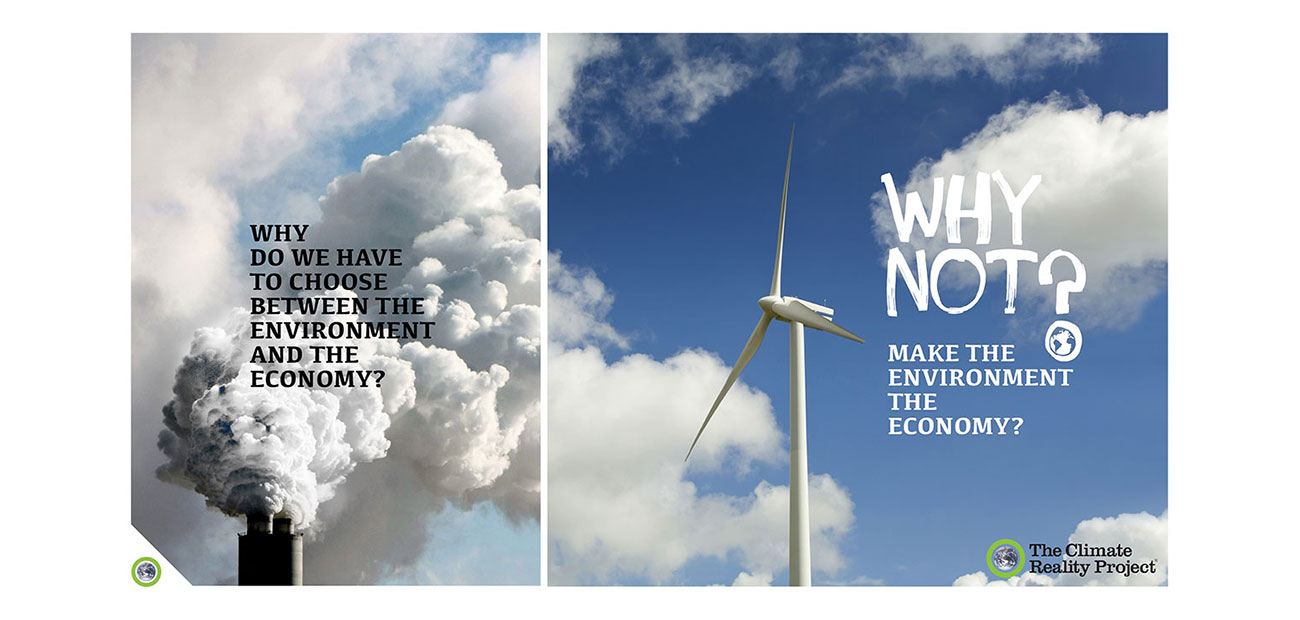
In significant ways, these two words sum up what’s needed to meet world energy needs, replace fossil fuels, and move civilization toward sustainability.
In an hour, sunlight shining on Earth provides enough energy to meet our collective needs for a year. Whether we realize it or not, fossil fuels represent ancient sunlight stored for millennia in the ground. Which is more accessible?
According to multiple speakers at the conference, most of proven reserves of fossil fuels cannot be burned if we seek to retain Earth’s livability.
What makes solar an attractive solution to the climate crisis is the cost of installation is plummeting. At the point solar electricity generation reaches grid parity it will be an easy financial argument to make that fossil fuels should stay in the ground in favor of the less expensive alternative.
It’s not just me saying this.
The Way Humans Get Electricity is About To Change Forever is an article that appeared on Bloomberg Business last week. Author Tom Randall outlines shifts in electricity generation that will transform markets in the next 25 years. Randall predicts investments in solar will surge into the trillions of dollars, including distributed generation in the form of rooftop solar panels.
Companies such as Berkshire Hathaway Energy (BHE) already like solar, wind and other renewable energy generating capacity.
BHE accounts for six percent of U.S. wind electricity generating capacity and seven percent of solar according to Warren Buffet’s 2014 letter to shareholders.
“When BHE completes certain renewables projects that are underway, the company’s renewables portfolio will have cost $15 billion,” Buffet wrote. “In addition, we have conventional projects in the works that will also cost many billions. We relish making such commitments as long as they promise reasonable returns–and, on that front, we put a large amount of trust in future regulation.”
Solar is not without it’s problems. Natural resources must be exploited to make photo-voltaic panels, and the issue of conflict minerals continuously gets pushed aside. There are manufacturing, labor and transportation issues with solar. Problems notwithstanding, the argument for solar boils down to do we want a future, or not?
What we know is dumping 110 million tons of CO2 pollution into the atmosphere every day is not sustainable, and already we are seeing the impact of global warming and related climate change damage the lives of tens of millions of people.
There are no simple answers to solving the climate crisis. As industry demonstrates the viability of renewable energy, the only thing holding us back is a lack of political will to take unavoidable steps to mitigate the causes of global warming.
The economic argument provided by declining solar electricity generating costs will be a potent weapon in the political fight.
In high summer, garden harvest is it. We eat a lot of fresh foods not available the rest of the year, and purchase less from outside suppliers.
Just having garden produce in the house means we eat more of it. Our plates are filled out with green beans, sauteed kale, and other dishes—our cooking is not fancy, but the results are often delicious.
Some mornings, all there is to do is harvest the day’s meals.
This week has been a challenge of work. When I began at the warehouse 18 months ago, accepting the work was partly predicated on shifts beginning at 10:30 a.m. to enable my writing.
Since our supervisor left employment about a month ago, two of us have been filling in while the corporation seeks a replacement. I don’t like the newer, 8:30 a.m. start because it pushes out creative time. It may be a temporary problem, so I’m cranking it out, writing as much as I can in the wee hours of morning before heading to the garden for the harvest.
And that’s where I’m heading as soon as I make this post.





 Journey Home
You must be logged in to post a comment.