Busy weekend ahead. Here’s a Johnny Cash version of a Kris Kristofferson song.
Busy weekend ahead. Here’s a Johnny Cash version of a Kris Kristofferson song.

The auditor sends out the first vote by mail ballots Oct. 5. I can’t wait to get mine. I’m hoping Democrats sweep Iowa yet the races are tight.
The Des Moines Register released a poll saying the presidential race is tied. What’s curious is Biden leads Trump by 20 points in every demographic of women and Trump leads Biden by 20 points in every demographic of men. If you want proof women are smarter than men there it is.
I’m voting for Theresa Greenfield for U.S. Senate because she’s smart and disciplined. During my interview with her this spring she stayed on message. She remains so despite the buckets of tar outside groups throw at her. Greenfield also understands the risk reelection of President Trump poses to Social Security. Trump would eliminate payroll taxes and bankrupt the trust fund by 2023. Greenfield is engaged, tough, independent and persistent.
Rita Hart is a farmer and former teacher. During her opponent’s three previous campaigns I spoke with Miller Meeks at parades. There is really no comparison between the two. Hart has the experience Iowa needs, the energy to get things done in the Congress, and she puts people over party.
Lonny Pulkrabek is the change we need at the statehouse. I like Bobby Kaufmann personally, he’s a hard worker. At the end of the day he votes with Republican leadership which is taking the state in the wrong direction. We know Lonny has the experience to make a difference in the Iowa legislature.
Please vote on or before Nov. 3.
~ Submitted as a letter to the editor of the Solon Economist
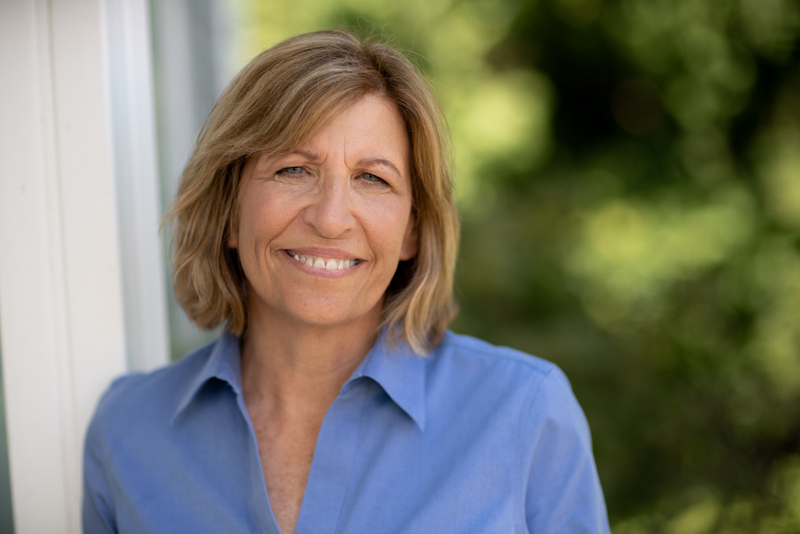
Thursday, Sept. 24, Second District Democratic Congressional candidate Rita Hart debated her Republican opponent Mariannette Miller-Meeks on Iowa Public Television’s Iowa Press.
Here’s the link. Starts at 15:35.
A few things in the election campaign need doing before turning toward home. Compared to past years the work ahead is enough to keep busy yet less.
Chaos in the pandemic response, racial tensions, economic turmoil, and the obvious impact of global warming made it easier to get to this point in the 2020 election cycle.
I’ve been discussing candidates with friends, family and neighbors. Everyone is planning to vote. Most have decided for whom.
I want to finish the lit drop for the state house candidate, take a look at our budget to see if we can afford another contribution to congressional candidate Rita Hart and state house candidate Lonny Pulkrabek, and finish the last writing for the campaigns before boxing up the memorabilia and moving on. Unlike in past years we won’t likely have a final get out the vote gathering or operating center in town because of the coronavirus pandemic.
What bothers me most about 2020 is the inadequate government response to the coronavirus pandemic. If African nations, with a lot fewer resources than the United States, can control the virus what is our problem? I don’t have good answers.
The fact that Russia is blatantly trying to influence the outcome of the election gets to me. It’s not because I viewed the former Soviet Union and Russia as an adversary while serving in the U.S. Army in West Germany. It’s because Republicans apparently agree with the Russian view that reelecting Trump serves their purposes. When did we become susceptible to Russian propaganda? I don’t know but Trump is without question their favored candidate. What the president does to contain Russian global aggression is pitiful. Did he think we wouldn’t notice?
The issue of China is problematic. In a new world order with the United States diminished by the president’s America first agenda, China is rising. They have been for a while. It’s been 11 years since I retired from my job in transportation and logistics when the appetite for American companies to do business with China could not be sated.
There were many examples, Hon Industries in Muscatine is one. They pursued a deal with China to manufacture and distribute office equipment in the Asian market. Manufacturing costs were much lower in China and there was proximity to developing markets combined with transportation infrastructure to export the goods. Doing business in China seemed obvious from a global perspective. The kicker was they could own no more than 49 percent of any China-based business, surrendering control to the Chinese. I don’t know how this worked out for Hon but they were vulnerable to the Chinese and deemed it worthwhile to expand use of their technologies into new markets.
Republican politicians repeat the words “Chinese Communist Party” without end. If China was such a good business partner a short while ago, what turned us on them now? The answer sounds dumb but rings true: the problem the president created with his management of foreign affairs is coming home to roost. Instead of managing diplomatic and economic relations with China the president let the whole thing turn into a mess. Our former governor now outgoing ambassador to China Terry Branstad’s personal relationship with the Chinese president couldn’t stop the president’s inept policy.
Part of the president’s message is about jobs. It is incoherent. For anyone following this as long as I have, history tells a different story about job migration. Once President Bill Clinton signed NAFTA the job exodus began. Jobs first went to the Mexican side of the border where labor was cheaper than in unionized plants in the United States. These plants were called maquiladoras. Ultimately corporations left Mexico and chased cheap labor around the globe, ending up in China and Southeast Asia. As I’ve written previously, there is no bringing those jobs back. The global system American business created would be difficult and costly to dismantle. I’m not sure we want it dismantled.
Whatever the outcome of the election we’ll go on living. As the disaster of 2020 governance has shown, it will be better with Democrats in positions of power. I’ll continue working to elect Democrats until the polls close on Nov. 3. At the same time I am ready to turn toward winter and what’s next.

As autumn begins we hit the six-month wall of the coronavirus pandemic. We are all getting tired of the masks, restricted activities, and video meetings.
We want our lives to return to a sense of normal with more reasonable human interaction, the kind to which we are accustomed.
The Aug. 10 derecho gave Iowans something to do at home. Now that it’s mostly cleaned up we are left with ourselves and more mask-wearing, restricted activities, and video meetings.
If we have to go to the doctor or dentist we understand there are specific protocols to maintain social distancing inside the clinic. They are labor and time-intensive. The clinicians are not used to them either. At least we determined a way to get routine medical checkups.
Time was we could escape from our daily lives. People took cruises, traveled to faraway places as tourists, or just went to the beach. Now there is nowhere to go because the pandemic is global. Cruise lines, those floating cesspools of infectious diseases, haven’t determined how to restart operations in the pandemic. Air travel is not much better.
We learned new ways of securing provisions, living at home, meeting with friends, working, and attending school. Some found new ways to entertain and enjoy ourselves. We prepare more of our own meals and exercise more. We make more telephone calls and participate in a variety of activities made possible by the internet. All the same it doesn’t seem normal. For the time being there is the wall.
Last Saturday NBC News reported the U.S. COVID-19 death toll surpassed 200,000 individuals. In March, Dr. Deborah Birx, coordinator of the White House Task Force on the coronavirus, said in a best case scenario, with Americans doing exactly what was needed to mitigate the effects of the virus, the death toll would be contained to between 100,000 and 200,00 deaths. At the time there had been only 3,000 COVID-19 related deaths. 21st Century Americans are not a disciplined lot nor good at doing what is needed. We are also not the best listeners. Whatever happened to us? The pandemic is expected to get worse.
“As we approach the fall and winter months, it is important that we get the baseline level of daily infections much lower than they are right now,” Anthony Fauci, director of the National Institute of Allergy and Infectious Diseases, told James Hamblin of The Atlantic. For the past few weeks, the country has been averaging about 40,000 new infections a day. Fauci said, “we must, over the next few weeks, get that baseline of infections down to 10,000 per day, or even much less if we want to maintain control of this outbreak.”
Up against the wall, many are not paying attention to public health officials. We want to get on with our lives. The coronavirus does not care.
The first step in dealing with the coronavirus pandemic is to admit it exists. Denial of the reality of the virus only serves the virus. We have to live like we are contagious. We get tired of hearing it yet we must wear a mask and pay attention to our immediate environment, what we contribute to it, and what we take away from it. Maintaining social distancing has been hard. I want to be closer to people when with them, to maintain customary behavior. We can’t do that as much in the pandemic. We also have to pay attention to the amount of time we are with people because duration of exposure is a key factor in COVID-19 spread. It is near impossible to view every person I know and meet as a disease vector.
Experts say the six month wall in a crisis arrives and dissipates like clockwork. We can muster a positive attitude and persist, be kind to those closest to us, and take care of our obligations. Before we know it we’ll be on the other side. That’s a start, and for many it may be enough. We have a long way to go in the coronavirus pandemic, maybe another year or more. To sustain ourselves we must let the chips fall and be prepared to climb when we discover a chink in the wall. It is there, although at times difficult to see.
The human condition is optimistic. We believe this pandemic will end. We know enough to see there will be another pandemic after this one. At the same time we should realize that the wall we encountered six months in isn’t the end, even as the coronavirus is permanently with us. We are able to parse the difference and should.
The predictable wall gives us a new kind of normalcy. It’s a bit weird yet comforting at the same time. In a couple of weeks we hope to be on the other side.

In a first for this blog I’m publishing a post by another author. I met Kim Painter during her election campaign for Johnson County Recorder in 1998. She continues to serve as recorder. I have the Painter yard sign I put up back then but don’t use it any longer because she has run unopposed for reelection. Readers may recall I frequently write about Big Grove Township. The Cottage Reserve, the subject of this article, is located in our township.This article first appeared in The Prairie Progressive in print edition. It is reprinted here with permission of the author.
Business as Usual by Kim Painter
Once in a great while, though you think you know what your job is and what it means, the earth of the greater wide world beyond will shift, sending you off-balance in a signal moment of realization. Suddenly the job is not what you thought, but rather all that and much more. For me, it’s happened a few times. Once, when same-sex marriage went from being a contentious back-room LGBT community issue to a national, front-burner fastball coming hard across the plate. Suddenly the media spotlight was intense, emotions ran high, and I was operating at a whole different level than on a day-to-day basis. Day-to-day kept coming to be sure, but so did this other social and civil rights issue with a life and velocity all its own.
It happened more recently when a gentleman wrote to me asking for some assistance with a research project. The man was F. Wendell Miller Professor of History at the University of Iowa, Colin Gordon. He wanted all our deed document images from 1900-1950. It was a new kind of request, for which there was no current template.
He explained that he hoped to get the digitized images into a file to run through optical character recognition (OCR) software. He and his class would then scan for phrases like “the Caucasian race” to locate what we now call ‘racially restrictive covenants.’ Back then, they were called business as usual. I was hooked on the idea, and proceeded to work with our software vendor and county IT staff to load the entire 50 years of deed documents into a file for him. It was a privilege to play a small role, and it is a marvel that today, all documents of this sort in Johnson County and Iowa City are online and mapped. The work is found here: https://dsps.lib.uiowa.edu/mappingsegregationia/.
As I began this article I was struck to recall a third occupational epiphany, a personal one. Some 15 years ago, I was printing off some covenants and restrictions for a customer with questions about a potential property boundary dispute. The situation was unfolding out around Lake Macbride, at what is known as the Cottage Reserve. My eyes stopped on a page, widening considerably, as I slowly comprehended in full the following verbiage:
(6) The said Cottage Reserve area is hereby platted for the sole use and benefit of the Caucasian Race, and no lot or parcel of ground shall be sold, owned, used, or occupied by the people of any other race except when used in the capacity of servant or helper.
Please note the awful and purposeful use of the word “used,” as in “used in the capacity of servant or helper.” There’s no mistaking that meaning. People of color are able to occupy space on this property only if being used… by white people.
As if the above weren’t clear enough, consider the fast-following item (7). It prohibits the ‘keeping or maintaining of hogs, cattle, horses or sheep.’ So in near proximity to reserving the Reserve for the sole benefit and use of the Caucasian race, people of color are categorized alongside hogs, cattle, horses, or sheep.
Again, there is no mistaking the meaning. This is what we thought at the time. This is what we ordained and enforced in legal documents. It is a mark of racism’s insidiousness that such documents were so
often mundane in one paragraph — stipulating maximum heights of garages or number and kind of outbuildings, delineating collective
use of shared roads or wells—only to pivot in the very next to equating entire swaths of humanity to livestock, allowing their presence only if white owners were using them.
Often, when the topic of reparations is raised, one observes the heads of certain kinds of white people exploding, if quietly. People of that sort might seek enlightenment in these covenants and restrictions, which were stipulated in property transactions from the early 1900s until outlawed in 1948. They were of like kind across the nation.
Consider the financial implications of the sheer volume of parcels
restricted in this manner. Tote up the generational losses of wealth caused by the absence of just one home and its plot of land from one family. Have you ever borrowed against your home and land? Think of all those who help kids through college by doing that very thing, and how many people of color had no means to do so. How many lost educations, how much lost income, what final tally of all the wealth lost forever to families over time? It is breathtaking to contemplate. And it all starts on pieces of paper, the day-today documents that come through an office as people buy and sell homes and property. It is that simple, and that monumental. In way, it mirrors racism itself.
Editor’s Note: Iowa DCI, Grinnell Police Department and Iowa-Nebraska NAACP held a press conference at 12:30 p.m. on Tuesday, Sept. 22. DCI announced four suspects had been apprehended and charged. There was no indication the crime was based on race. Coroner’s report indicated a cause of death consistent with strangulation. Investigation is ongoing. A number of major media companies attended the press conference and one assumes they will continue the story. I left this unedited and will let them tell the rest of the story.
The burned body of Michael Williams of Grinnell was found in rural Kellogg on Wednesday. The Iowa Division of Criminal Investigation is treating the death as a homicide. A hate crime has not been ruled out. Williams was black in a city that is 92 percent white.
“As if taking his life was not bad enough,” Powell Mejias, the victim’s mother wrote. “On Sept. 16 the perpetrators of this crime moved his body to Jasper County, dumped him on the side of the road, then set his body on fire.”
News has been scant. The Perry News headline is “Lynching possible in death, burning of Grinnell man.” Here are a couple of links to news stories.
Newer coverage from the Daily Beast.
Link to The Scarlet and Black.
This is Iowa in the time of Donald Trump. Black Lives Matter.

2020 was the first big experiment in onion growing. Onions are basic to cooking and until this year I relied on others to produce onions for the kitchen. It was time to take a step forward and grow my own.
I learned a lot.
Planting from seed at home on Feb. 7, Talon and Red Burgundy onions, and Matador shallots, failed to germinate. Luckily I had split the shallot seeds between home and farm. The farm seeds germinated well. To resolve the home issue I bought some channel trays from the farm and have a heating pad in my shopping cart at the seed store. Before the snow flies I’ll buy a bag of the special soil mix used for starting seeds in channel trays.
On March 21, I planted white, yellow and red onion bulbs bought at the home, farm and auto supply store. I started half in soil mix in trays, and the rest were to be planted directly into the ground. Planting them in trays helped establish roots more quickly. They went into the ground on April 8 and grew well. They produced a number of decently sized onions, yet they had little storage value. At the time they matured I had onions left from last season so these were going bad before I was ready to use them. I might try them again next year, although since I retired from the retail job I don’t get over to that store very often.
On March 23, I planted both pelleted and non-pelleted White Lisbon bunching onions in my newly assembled home greenhouse. They germinated but the wind knocked them off the shelf and ruined them. I have a lot to learn about this style of portable greenhouse. The greenhouse was destroyed in the Aug. 10 derecho so there is an opportunity to do something different next year.
I ordered onion starts from Johnny’s Selected Seeds this year. In the past I used leftovers from the farm. This year I wanted to control which varieties were planted. Ailsa Craig, Red Wing and Patterson starts arrived just in time for planting in our area. On April 14 the whole onion patch was in.

When planting the onions I measured the width of my stirrup hoe and allowed space on either side to fit it between rows while weeding. In theory this was a good idea because it maximized space usage. Next year I’ll follow recommendations and plant rows further apart. It was difficult to fit the hoe in between rows once the plants matured. I planted starts closer together in the rows so I could harvest spring onions as they grew. This part of the process worked well.
Once the rows were planted I used the rest of the onion starts in four or five places, planting them close together to use as spring or green onions. This ensured every spot in the garden plots was used. We had a steady supply of green onions in the kitchen well into summer.
The three varieties purchased as starts produced reasonably well both as green onions and as mature bulbs. The amount harvested will last well into winter if they store as expected. That remains an open question as of this writing, although so far, so good.
The results of this experiment were a step along the way to better onion production. I bought some channel trays from the farm and next year will use a more controlled process to start from seed. I will likely combine home starts with starts from Johnny’s again. The home process for starting from seed needs proofing. Planting rows further apart should help the size of the final product.
The shallots grew well and plenty for kitchen use are in storage. Next year I’ll get shallot seeds and try again to start them from home. I assume the channel tray will foster proper germination and I can use my own starts next year.
With a year’s experimentation behind me, key challenges to address in the 2021 gardening year are:
Onions are a basic part of American cuisine and growing them well should be high on a gardener’s to-do list. Good progress was made in 2020, as evidenced by the crates of stored onions by the furnace. I’m already thinking about next year.

On the driveway, under starlight, I remembered Ruth Bader Ginsburg.
It will be a busy fall Saturday.
For the first time since the coronavirus pandemic began with the governor’s March 9 proclamation there is a can and bottle drive at the high school. We don’t drink many beverages that come in cans yet I have six cases of glass bottles to recycle. I don’t know which charity gets the deposit refund although one person organizing the drive is a member of the school board.
While in town I plan to deliver seven sets of political yard signs. My supply of most signs is close to depleted. We are supposed to get more from the Biden-Harris campaign this month.
Yesterday we re-submitted requests for absentee ballots. A judge ruled our first requests, and those of thousands of others, were invalid because of a paperwork issue. Make no mistake. We will vote.
I expect politics to dominate our daily lives until the election results are known. The Commonwealth of Virginia began early voting on Friday. The line lasted for hours and is a harbinger of what’s to come. Turnout is expected to be higher than normal for a presidential election.
These are not normal times.
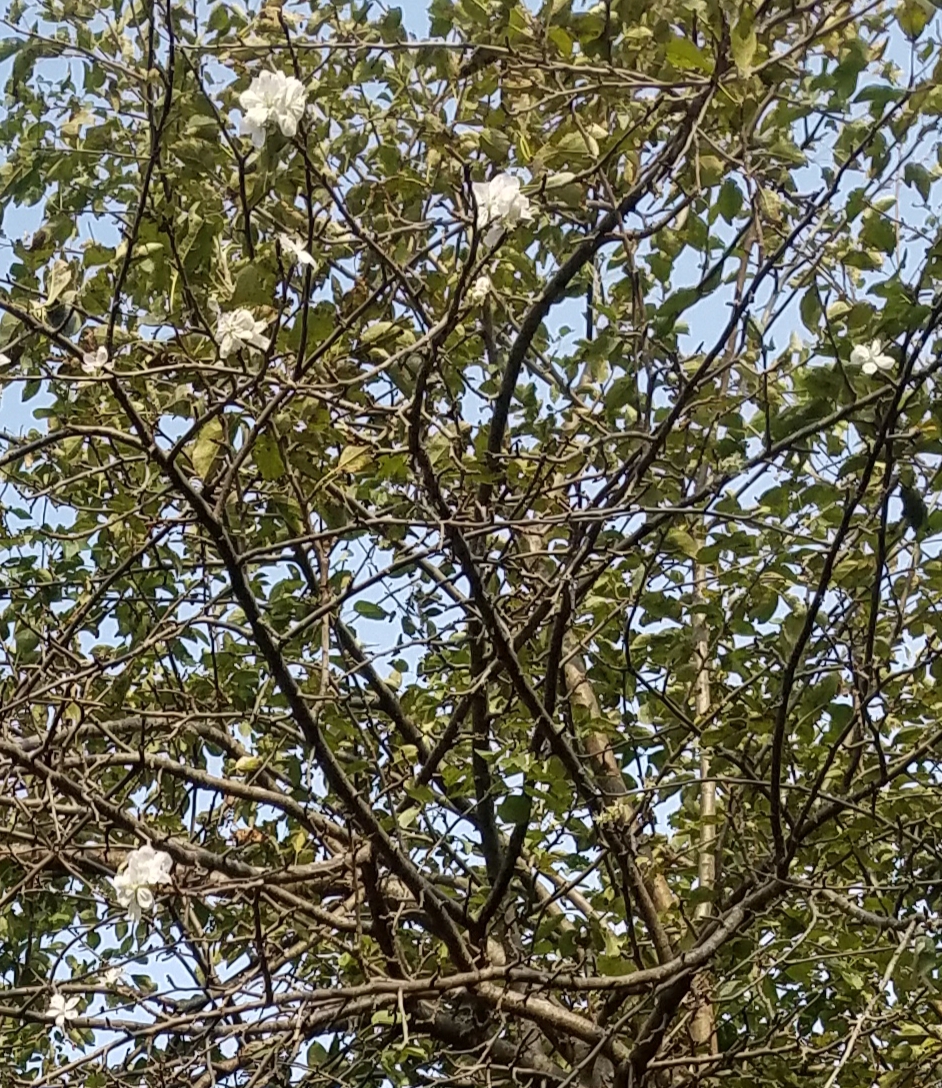
2020 is the year trees and shrubs planted in the mid-1990s took a hit.
While mowing for the first time after the Aug. 10 derecho I noticed an Earliblaze apple tree was in bloom. The branches with blooms had otherwise died.
The Red Delicious apple tree lost a major branch during the storm. It seems unlikely to survive, although I might be able to get a crop next year. The scar where the branch was is big. Sealing it from insect predators seems a temporary solution. I had the same experience with a Golden Delicious tree a few years ago. It’s already gone.
One of the lilac bushes suddenly lost all of its leaves. While mowing I noticed new leaves had begun to form. I presume it is next year’s leaves. It’s time to cut that bush out.
Our neighborhood continues to recover from the derecho. Chain saws run almost every day. Burn piles amass, piles of firewood lay everywhere. Although I cleaned up the fallen branches and trees this week, there is more work to be done and sadly it involves a chain saw rather than pruning shears.
Planting a tree is a long-term commitment. When we have a year like 2020 one questions the merit of decades of work when the derecho, combined with disease, mitigates that work so quickly and unexpectedly. I don’t measure my remaining time on this blue-green, turning brown sphere in decades any more. There is enough time to eat apples from new trees I planted this year.
The haze through which the sun shines originated in record-setting fires on the West Coast. The arctic also has a record number of fires. The arctic and antarctic glaciers are melting and don’t get enough snowfall to offset the loss. It is an increasingly hot planet. We are all impacted as the pollution spreads through the atmosphere.
Phase two of my tree work is taking care of many dead branches that cropped up since spring. There is time to work on it. The firewood pile is getting taller though, and isn’t finished growing yet.


 Journey Home
You must be logged in to post a comment.