Categories
Living in Society

Message Is To Vote. How Do We Get There?

State Capitol

In a 589-word article published Monday, July 11, Des Moines Register reporters Katie Akin and Francesca Block managed to reduce Sunday’s Reproductive Freedom Rally of thousands of people at the State Capitol to pabulum.

“Speakers encouraged attendees of the event to vote for candidates who support abortion access, donate to aid organizations that help women pay for abortions, and to discuss the issue with their communities,” they wrote.

It was unclear from the article how any of that would get done.

They featured organizers of the rally, which was reaction to the recent Supreme Court decision Dobbs v. Jackson Women’s Health Center which overturned Roe v. Wade. Akin and Block did little more than touch on enough aspects of it to get a story. The rally happened, the Register reported it, but it was the wrong story.

President Biden encouraged women to continue to protest this Supreme Court decision. Click here to view a video of his weekend statement to media. One assumes protests will continue, yet the unanswered question from Sunday is how can thousands of protesters turn into a functioning, effective movement?

The Democratic answer to almost every contemporary issue is to get out the vote for Democratic candidates up and down the ticket. For some of us, this needn’t be repeated as we get it: do everything we can to elect Democrats. Beyond this there is little depth or consistency in media messaging. Without solid organization and a master plan, Democrats risk being beaten again at the ballot box. This time, a lot more is at stake than in 2020, if that’s possible.

The Iowa Democratic Party is in transition. I’ve known Chair Ross Wilburn since he was mayor of Iowa City. I liked him then and I like him now. It is a mistake to look toward the small cadre of Democratic Party officials or state central committee members for meaningful guidance. By its nature, the Democratic Party and the tactics and tools we use are decentralized. Any get out the vote effort has to be grounded in precinct politics. Local voters must take ownership. I’m confident they can.

To an extent, the several Supreme Court decisions this year have motivated voters to get more involved. Dobbs v. Jackson Women’s Health Organization (abortion), West Virginia v. Environmental Protection Agency (agency regulation of the energy sector), Kennedy v. Bremerton School District (school prayer), New York State Rifle and Pistol Association v. Bruen (gun control), Carson v. Makin (state funding of private schools), and others engaged diverse constituencies across the nation. It would seem there is plenty to motivate folks to vote.

I understand many families and friends talk among themselves about politics. The challenge is expanding the circle of contacts to include others in our community. Several prominent campaigns in the state have encouraged just that. Some plans are specific, some nothing more than to contact a few new people each week about the election and why it is important to vote Democratic. It is something yet what are the metrics to determine the efficacy of these approaches? It’s hard to say. This is no plan unless one puts air quotes around the word.

I’m glad there was something in the Register about Sunday’s rally. What we need more than a boilerplate news story is a plan. One that goes beyond advocacy groups that organized the rally.

If you haven’t, give your local county party a call and get involved in the 2022 midterm now. You will be thankful you did.

~ First posted on Blog for Iowa

Categories
Living in Society

Newspaper Closings Cripple Our Democracy

Solon Economist – 2016

U.S. newspapers close at a rate of two per week, according to David Bauder of Associated Press, referring to a recent study. In most cases, there is no replacement, creating a news desert. Lack of local news is bad for our society.

The Medill School of Journalism, Media, and Integrated Marketing Communications at Northwestern University recently updated their multi-year research on the status of newspapers in the United States. Bottom line? “This is a crisis for our democracy and our society,” the study said.

To resolve the issue of how we secure local news, we must first understand the problem and what it means. The following is from the executive summary of Medill’s 2022 State of Local News Report:

  • Newspapers are continuing to vanish at a rapid rate. An average of more than two a week are disappearing.
  • Digital alternatives remain scarce, despite an increase in corporate and philanthropic funding.
  • More than a fifth of the nation’s citizens live in news deserts—with very limited access to local news—or in communities at risk of becoming news deserts.
  • The surviving newspapers—especially the dailies—have cut staff and circulation significantly as print revenues and profits evaporated.
  • The largest chains control the fate of many of the nation’s surviving newspapers. Their business strategies and decisions continue to shape the local news landscape.
  • There is a new—often overlooked—media baron on the scene, aggressively buying dailies and weeklies in small and mid-sized markets.
  • Dailies are becoming more like weeklies, and vice versa, but their business models and strategies are diverging.
  • Despite the recent increase in both corporate and philanthropic funds, the footprint of digital-only news sites is small, and predominantly a big-city phenomenon.
  • The disparity between communities that have strong news organizations and those that don’t is primarily the result of market demographics, ownership structure and available funding.
  • Getting news to those communities that have lost the news involves rethinking both current journalistic practices—as well as for-profit, nonprofit and public funding policies at the national, state and local levels.

This is a nation increasingly divided journalistically, between those who live and work in communities where there is an abundance of local news and those who don’t. Invariably, the economically struggling, traditionally underserved communities that need local journalism the most are the very places where it is most difficult to sustain either print or digital news organizations.

The loss of local journalism has been accompanied by the malignant spread of misinformation and disinformation, political polarization, eroding trust in media, and a yawning digital and economic divide among citizens. In communities without a credible source of local news, voter participation declines, corruption in both government and business increases, and local residents end up paying more in taxes and at checkout.

The State of Local News 2022, The Medill School of Journalism, Media, and Integrated Marketing Communications at Northwestern University.

Click here to access the entire 2022 State of Local News Report.

Also be sure to support your local newspaper by subscribing.

~ First posted at Blog for Iowa

Categories
Living in Society

Bipartisan Safer Communities Act Becomes Law

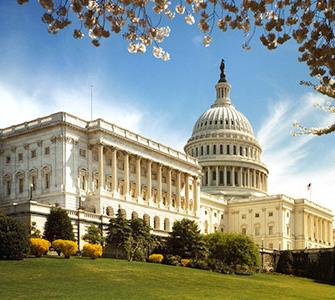
U.S. Capitol, Washington, D.C.

On June 25, 2022, President Joe Biden signed into law S.2938, the Bipartisan Safer Communities Act.

The bill passed the U.S. Senate by a vote of 65-33, and the U.S. House by a vote of 234-193. Chuck Grassley, Randy Feenstra, Ashley Hinson and Mariannette Miller-Meeks of the Iowa delegation voted no on the negotiated bill that rose out of the May 24 mass shootings at Robb Elementary School in Uvalde, Texas.

The White House supported the legislation, saying in a statement, “While the Bipartisan Safer Communities Act does not include additional important steps the President has called for as part of his comprehensive gun crime reduction agenda, it would make meaningful progress to combat gun violence. As communities continue to experience gun violence every day, the Administration calls for swift passage of this life-saving legislation.”

The bill is something, what a divided Congress could accomplish in the wake of a horrific series of mass shootings. It left out popular measures such as expanded background checks, an assault weapons ban, and a higher minimum age of purchase for assault-style weapons. Most Americans support these measures. Even Senator Joe Manchin (D-WV) said the age to purchase assault weapons must be raised from 18 to 21. Senator Amy Klobuchar summarized by saying, “We’ve taken one step to stop gun violence with the Bipartisan Safer Communities Act. But we need to do more. Families everywhere are counting on us. This is not over.”

Those who support additional gun control measures will accept this bill for the good things it does: enhance background checks for gun buyers under age 21, support state red flag laws, tighten gun possession on domestic abusers (including closing the so-called boyfriend loophole), clarify existing law regarding background checks, crack down on interstate gun trafficking, fund community violence intervention, invest in mental health services, and provide school safety funding.

For more information about the Bipartisan Safer Communities Act, here are some links:

Wikipedia

Giffords: Courage to Fight Gun Violence

CNN

Voice of America

U.S. Congress

~ First posted on Blog for Iowa

Categories
Living in Society

Politics In An Unending Pandemic

Coralville, Iowa Independence Day parade, 2021.

Part of the new protocol for summer events in Iowa, including political events, is recognition of and taking action to avoid contracting the coronavirus. It may not be going well because it seems a lot of people recently tested positive for COVID-19.

This came home when a participant in an Independence Day parade emailed a group of us they tested positive:

I wanted to let the people I had contact with on the 3rd know I tested positive for COVID so they can monitor their health. So sorry if I exposed you and I hope you all remain in good health!

Because parades are outdoors, one hopes the risk of contagion is minimal. Nonetheless, the coronavirus pandemic has not ended and is a palpable presence in everything we do in public, including political campaigning.

State Senator Rob Hogg tracks weekly Iowa COVID data and posts it on social media. He reported for the week ending July 6, there were 15 more deaths, 201 new hospital admissions, and 3,980 new cases. The Centers for Disease Control reports 88,056,795 COVID-19 cases (an under count), and 1,015,070 deaths (also an under count because of the way deaths are reported). We would like to get on with our lives after the pandemic without concern for contracting a virus that could kill us. Instead, we have a new reality.

Iowa Democratic response to the coronavirus pandemic in 2020 was a disaster. There were positive vibes about having great candidates that could retake a majority in at least one chamber of the state legislature. Person-to-person campaigning seemed very limited. Once the results of the election were in, such positive vibes dissipated as Republicans gained ground across the board. We can’t afford to be misled by the happy talk of campaigns again. There is no going back to the way our politics was because society was palpably changed by the coronavirus pandemic.

I attended a political event in Amana before the primary. U.S. Senate candidate Michael Franken was there and he incorporated coronavirus prevention measures in everything he did. For example, after shaking hands with everyone at our table, he got a small bottle of hand sanitizer from his pocket and sanitized his hands. On May 23 he reported a positive COVID-19 test. His symptoms were mild, yet he got the virus despite his precautions.

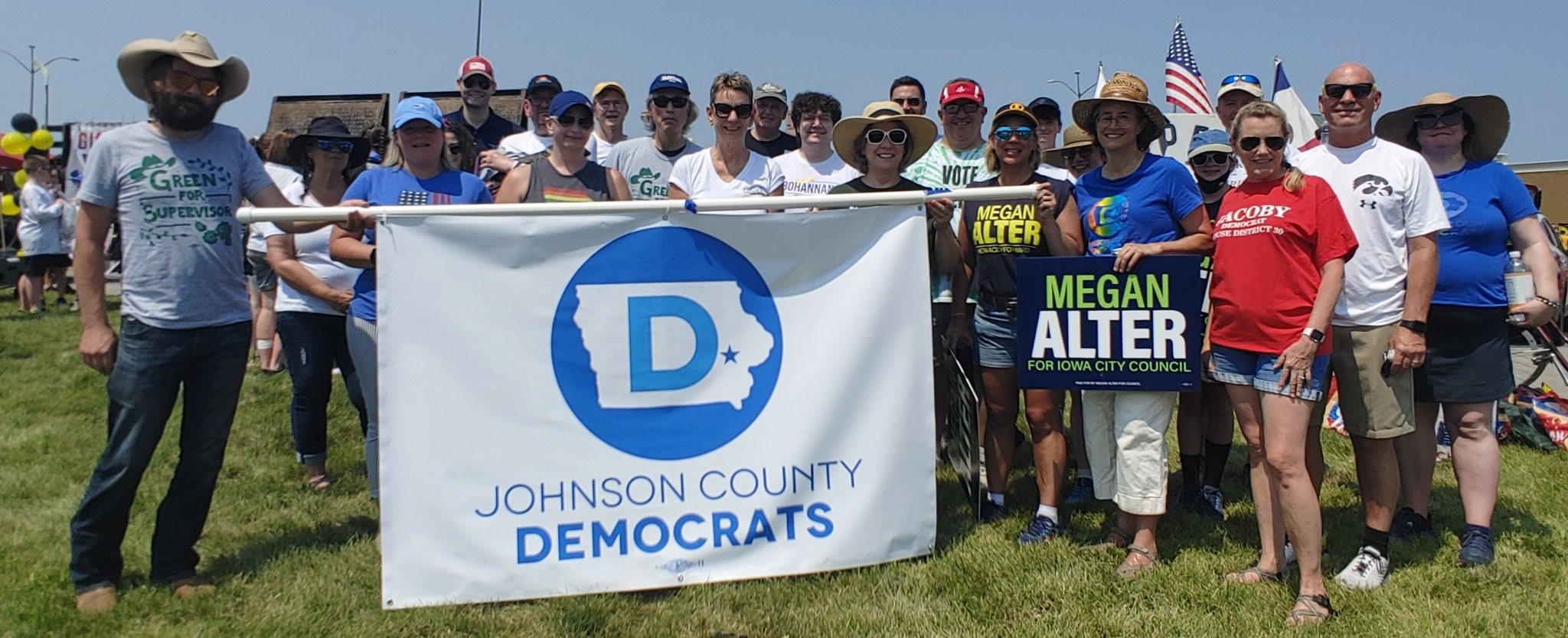
Here in Iowa’s liberal bastion of Johnson County there is a semblance of returning to normal as Democrats hold in-person meetings and open a second office next Friday. The coronavirus hangs over it all, a literal presence. Campaign offices serve as a meeting place, distribution center, and all-around way to connect Democratic voters. Having in-person connections is better than repeating 2020 would have been. These are positive things yet we must be careful regarding the coronavirus without withdrawing from engagement.

These are transformational times in Iowa Democratic politics. As one cohort of legislators finds their way to the exits, a new generation is rising to take their place. This is necessary and good. Scarred by the coronavirus pandemic, we are cautious, yet optimistic of rebuilding. By accepting the new reality of politics in the coronavirus pandemic we will be stronger in the long term. The immediate problem is the challenge of unseating Republicans this November and returning common sense to our governance.

The widespread presence of the coronavirus is a factor in our politics. It is essential we both get involved in campaigns and take necessary precautions to avoid contracting the virus. How that will evolve during the coming 17 weeks is an open question, yet evolve, we must! I recommend each person find a way to do something to advance the campaigns of Democratic candidates. It begins with contacting your county party and offering to volunteer. Taking care of yourself is equally important.

~ First posted on Blog for Iowa

Categories
Environment

Crops in Northwest Iowa Suffer Due to Drought

Photo credit: Josie Taylor | July 6, 2022.

Ten years ago I posted about the impact of the 2012 drought on Iowa agriculture. Read the post here, yet the crux of the article was climate change was absent from public discussion of the drought. Nothing has changed since then.

Drought conditions continue to affect Iowa crops. Josie Taylor with Iowa Environmental Focus writes about how the current drought impacts crops in Northwest Iowa:

“Corn and soybean plants are continuing to suffer in some parts of Iowa from excessive heat and drought,” she wrote. “This has been seen especially in far northwest Iowa where drought conditions are worsening. Large areas of Plymouth and Woodbury counties are in extreme drought, according to the U.S. Drought Monitor.”

Read the entire article here.

Isn’t it time, ten years later, we acknowledged the 800-pound gorilla in the room? Climate change is real and Iowa agriculture won’t discuss solutions to it. We are running out of time to address the climate crisis before it is too late.

Learn more about The Climate Reality Project and how you can get involved in solving the climate crisis by clicking this link: https://www.climaterealityproject.org.

If Iowa agriculture won’t take action to mitigate the effects of climate change on their primary industry, the rest of us must.

~ First posted on Blog for Iowa

Categories
Writing

West Virginia v. EPA

Lake Macbride

What is the meaning of last week’s U.S. Supreme Court decision in West Virginia v. Environmental Protection Agency? Certainly it is a setback for the environmental movement. A court bought and paid for by the billionaire class did industrial polluters a favor by eviscerating the ability of EPA to regulate greenhouse gases. There’s more.

In an Amicus Curiae brief in the case, U.S. Senators Richard Blumenthal, Bernie Sanders, Sheldon Whitehouse, and Elizabeth Warren weighed in:

“Almost everything about these cases—the theories, the arguments, and even many of the parties and amici curiae—is an industrial product manufactured in an effort to return to an era free from oversight by the government.”

Resistance to the power of money will be difficult, yet we must. Begin by arming yourself with knowledge and read the entire brief. It will take about ten minutes.

While you are at it, the brief mentions two important authors regarding the influence of money in our politics: Jane Mayer, author of Dark Money: The Hidden History of the Billionaires Behind the Rise of the Radical Right, and Nancy MacLean, author of Democracy in Chains: The Deep History of the Radical Right’s Stealth Plan for America. Take a deep dive and read these two books. The radical right has been preparing for this day for decades. Isn’t it time we armed ourselves with knowledge and got ready for battle?

~ First published on Blog for Iowa

Categories
Writing

Neoliberalism in Iowa: An Interview with Thom Hartmann

Thom Hartmann

On Wednesday, June 29, I interviewed Thom Hartmann in advance of the September release of his new book The Hidden History of Neoliberalism: How Reaganism Gutted America and How To Restore Its Greatness.

This will be the eighth book in Hartmann’s Hidden History series reviewed by Blog for Iowa. My reviews of the Hidden History books have been very popular.

The interview covers a wide range of progressive topics and Hartmann demonstrates his deep knowledge of them all. We discuss the exit of manufacturing jobs from the United States, Iowa soybean exports to China, the right-wing propaganda machine of talk radio and FOX News cable television, ALEC, Americans for Prosperity, the Heritage Foundation, and the influence of dark money that permeates Iowa society and our politics.

We read in the news media that Americans broadly support Social Security, gun control, abortion, universal health care, equal treatment under the law and more. At the same time, we send Republican politicians, who don’t support any of these things, to Washington, D.C. I’m speaking of Chuck Grassley, Joni Ernst, Ashley Hinson, Mariannette Miller-Meeks and Randy Feenstra.

The gadget below will play the 34 minute, 51 second interview. I hope you will listen to this timely, informative conversation.

Thom Hartmann interview June 29, 2022

~ First published on Blog for Iowa

Categories
Writing

Independence Day 2022

Blog for Iowa publisher Alta Price (right) in a Quad Cities parade entry. Photo provenance unknown.

Happy Independence Day from Blog for Iowa.

Where I live Independence Day is often about the weather. Today, the weather was exceptional: scattered clouds set against the azure sky, moderate temperatures and low humidity. It was a great day to be outdoors, and that is where many of us spent much of the day, celebrating the anniversary of the Declaration of Independence.

While tradition and family are part of holiday celebrations, the enactment of tribal culture, and each perceived instance of it are most significant. As we stood in the Ely parade lineup area, people walked past us in what seemed like an endless procession: to town, with folding chairs, in small groups, to watch the parade. It is this walking and the beliefs and artifacts around it that are at the core of shared values. It is less about the parade entries, even though they may be what people saw and talked about. It is more about the social behavior enacted by the larger group.

At the Ely Firemen’s Breakfast, compliance with cultural expectations was visible everywhere. The fire station was arranged for efficiency in handling the large number of people, there are public health considerations with food preparation. Extra activities, like the raffle, were organized to occur outside the fire station and after people had eaten breakfast. During breakfast, people gathered around the tables in family groups. There was not a lot of mingling. The expectation was that people would be friendly, but not intrusive. In this setting, it would be hard for an outsider to penetrate a specific social group without a means of introduction. Participation in the Firemen’s Breakfast becomes a cultural marker for such an introduction, which is unlikely to occur at the event and more likely to occur in other circles at other times. I enjoyed this event immensely and it looked like a lot of money would be raised for the fire station.

As a walker in several parades, I found joy in the interaction between participants and observers. Along the route, those closest to the parade were the youngest. Interaction with very young children, mostly through giving them a gift, made the day. I would present a sucker to the child, say “happy Fourth of July,” and wait for them to take it. Only one child did not take the candy, and most said thank you. At Fourth of July parades, the children are on display as much as the parade entries.

There were reactions to each entry in which I participated. The favorable reactions, cheering, clapping or thumbs up hand signs provided validity to the work we had been doing to get our message out. I am not sure we convinced anyone about any politician or cause we were supporting that day. Like all messaging, penetration can occur only with repetition. What I do believe is that in this aggregation of tribal groups, we were tolerated, and there were some supporters for our causes. These things make us Americans as we celebrate Independence Day.

~ This post is recycled from July 4, 2008, my first Independence Day blog post.

Categories
Living in Society

Summer Holiday

Police boot on a car violating street parking rules in Skokie, Illinois, June 25, 2022.

Thank you readers for sticking with me as I work through how to write in public in 2022. To write more meaningfully, I’m taking summer holiday to recharge my batteries and find inspiration for the next chapter of this blog.

I am working on some projects, which I will post here, notably, my upcoming interview with progressive talker Thom Hartmann scheduled this week. I’m also reviewing his upcoming book. I’m filling in a few days at Blog for Iowa this summer and anything I post there, I’ll cross post here. If I write any letters to the editors of newspapers, I’ll also cross post here. Mainly, I’ve gone on break, though.

As Robert Johnson wrote, “And I’m standing at the crossroads, believe I’m sinking down.”

I hope you will rejoin me in the fall.

Categories
Living in Society

Second Amendment Not Good Enough for Republicans

Iowa Capitol

Republican lawmakers twice passed an amendment to the Iowa Constitution which will appear on the Nov. 8 ballot. I urge readers to vote no.

According to House Majority Leader Matt Windschitl, “The Freedom Amendment is the proposal to enshrine in our state constitution protections for our Second Amendment rights.”

Most Americans appreciate the Bill of Rights. So do I. Here’s the Second Amendment:

“A well regulated Militia, being necessary to the security of a free State, the right of the people to keep and bear Arms, shall not be infringed.”

What Republicans propose isn’t the same:

“The right of the people to keep and bear arms shall not be infringed. The sovereign state of Iowa affirms and recognizes this right to be a fundamental individual right. Any and all restrictions of this right shall be subject to strict scrutiny.”

Whoa buddy! This isn’t the language written by the founders in 1789. It is lawyered up with terms like “sovereign state” and “strict scrutiny.”

Republicans are tampering with our Second Amendment rights. They would infringe on rights that stood since the founders wrote them and the states ratified the Bill of Rights. 

Readers should pay attention on Nov. 8 and vote no on this bogus constitutional amendment that reduces our rights, protecting nothing.

~ A version of this letter appeared at the Des Moines Register on June 23, 2022.