The garden soil is well conditioned and breaks up easily while using a rototiller. I move slowly through each row and take in the smells of this fertile soil. I probably shouldn’t breathe in the fine particulates, yet the scent of the earth is intoxicating… I can’t help myself.
The only way I can coax my 73 year old frame to do the work is to move slowly and take frequent rest periods. Basically, I till a couple of rows and take a seat on my tree stump for five or ten minutes. A couple more, then I go in the house and get a drink of water. It takes longer this way, yet I am in this for the long haul and want to live to have many more gardens. According to the Social Security life expectancy table, that means 11 or 12 more gardens if my strength holds.
Ambient temperatures got up to 90 degrees Fahrenheit, so I called it quits as soon as I tilled the whole plot, put down fertilizer, and raked it all in. Hot weather is forecast for Tuesday, so I’ll be up early getting tomato seedlings in the ground soon after sunrise.
Editor’s Note: Still short posting while I work on the garden. About another week to go before the main planting is finished.
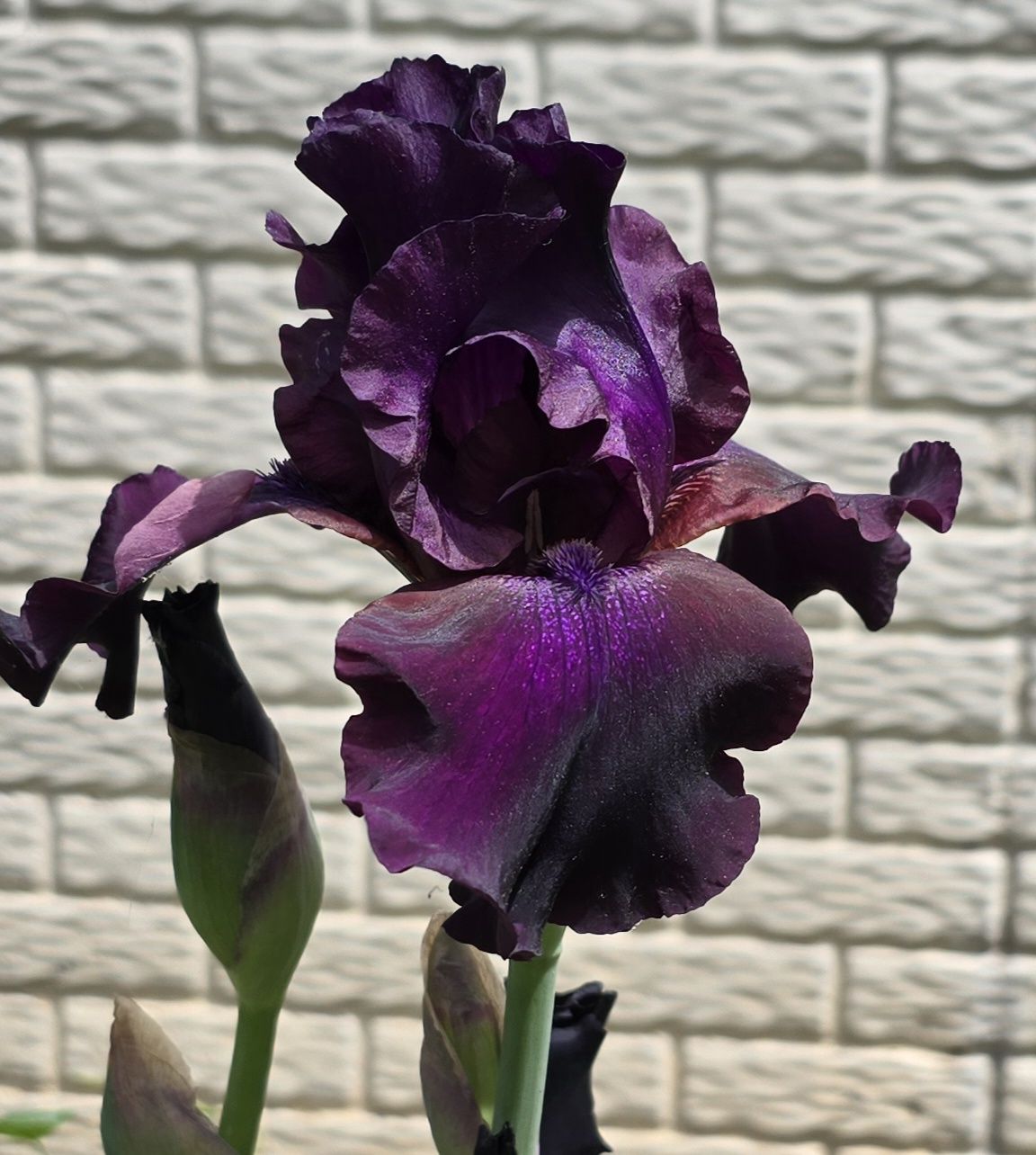
This photo does no justice to the color of the Iris, yet it is close. So I try.
It was hella windy the last two days. Forecast was gusts up to 50 m.p.h. Friday night, so I brought seedlings and the portable greenhouse into the garage for shelter. Today looks better.
Happy Sunday!
Editor’s Note: Another short post while I focus on the garden. Thanks for sticking with me.
Last night I spent time reading in a Discord group. That means about seven members of the community got together on the platform, set a timer for 45 minutes of quiet reading, then had a discussion after we finished. A couple of things stood out.
The host provided the platform and played music to read by.
The online chat was turned on but not many commented after saying hello. We each went about our business: various permutations of reading.
The point of the gathering was to have one more thing to do together in the established online community. Reading is good.
We didn’t all share what we were reading. My book was A Freewheelin’ Time: A Memoir of Greenwich Village in the Sixties by Suze Rotolo. Rotolo was an artist widely known as Bob Dylan’s girlfriend from 1961-1964, according to Wikipedia. Dylan acknowledged her influence on his music.
I was the oldest person, by far.
We had a voice discussion about public libraries. The group likes libraries. I mentioned they are easy on the pocketbook. In particular, we discussed process: visiting in person, using online tools, the value of checking a book out vs. buying, and placing reserves. The others were not that different from me in terms of process. I wrote about that here.
The time went quickly, and it was fun to know others were reading while I was. The after reading discussion was positive. A community event in a life where we need more of those.
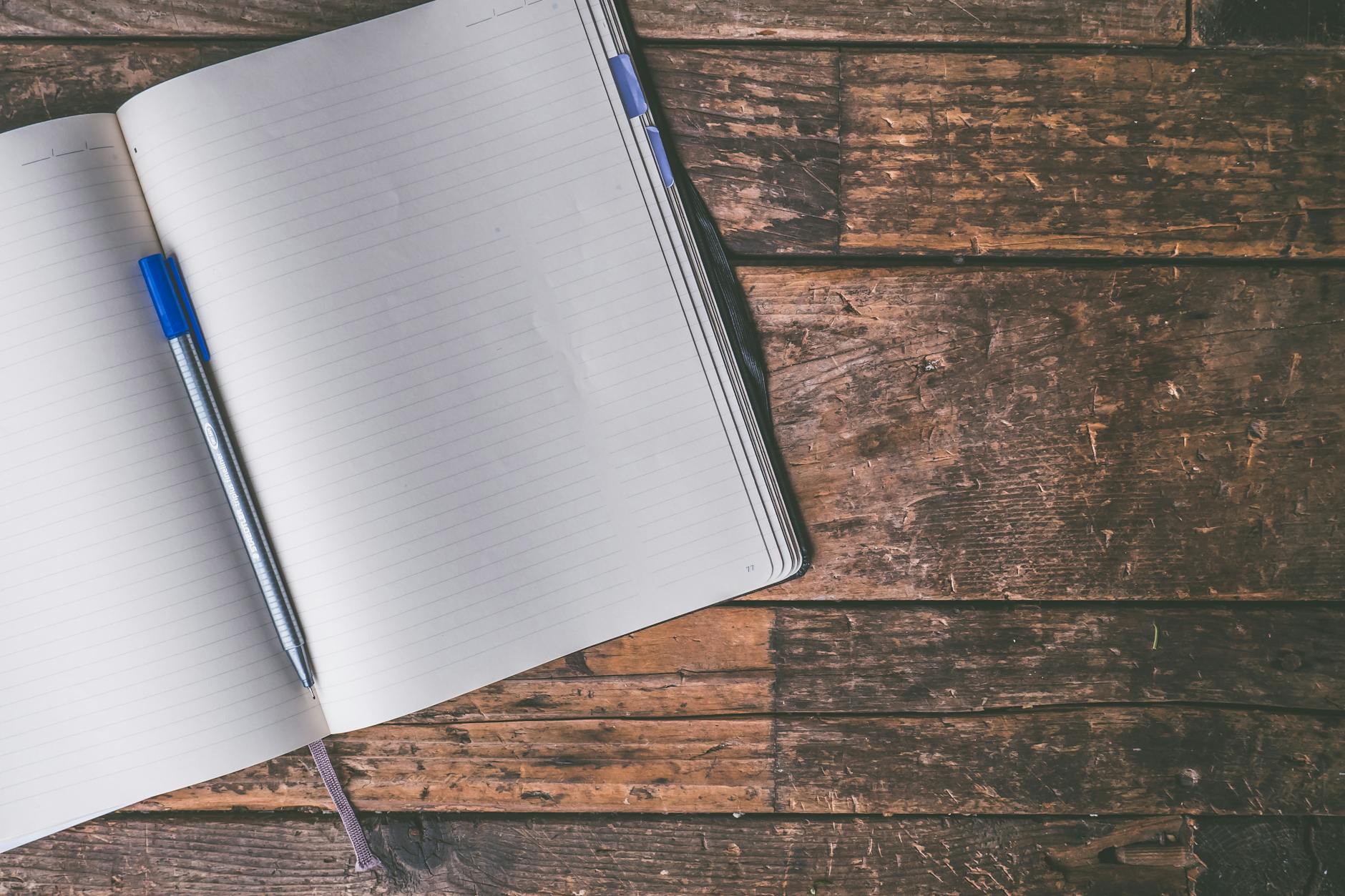
Photo by Jessica Lewis ud83eudd8b thepaintedsquare on Pexels.com
It’s time to shift gears and focus on getting the garden planted. That means my long streak of daily posts may break. I’m okay with that.
The rest of May will be devoted mainly to gardening.
Making a daily post to prime the writing pump has worked. I added 20,000 words to the book draft since the streak began. Thing is, if I don’t get a garden in in May, there won’t be much of one.
So, shovel in hand, off I go. I hope to get the work done so I can return to posting more regularly.
There is an obvious, intentional flight among journalists and others from working at a news organization to producing a newsletter. Many use the platform Substack, yet there are others. They all can attract viewers, and importantly, have a subscription component that can generate revenue. What they do not do is replace the collaboration of working for a newspaper. Substackers are on their own.
On the road to perdition, this seems the next evolution of journalism. It is littered with potholes and pavement cracks. It has all the aspects of a do-it-yourself, one-person start up. There usually is no editor except the author, unless one is lucky enough to join with others to build some basic, on-the-cheap infrastructure. Call it a newspaper, only without union employees or a big fancy building like the Des Moines Register used to occupy. If a writer misses an issue, they may not get paid, yet there is no blank front page to be concerned about. Newsletters are not redemption for the failings of news organizations. They fracture and fragment news gathering and reduce it down to one-person experiences broadcast on a semi-regular basis. There is value in that, yet it’s not the same by a distance.
Ana Marie Cox wrote on Monday, “Some of the best writing out there is from writers striking out on their own.” That may be so, yet what the proliferation of newsletters has done is enable focus on writers readers like to learn from and leave the rest behind. It is easy to build a silo out of newsletters we like, further breaking down the view that a diversity of writers and opinions is of value. The pressures of today’s society and the changing role of media makes us hunker down into our silos and that is not a positive thing.
“(The exodus from legacy journalism) has created something that it is so personality- and brand-driven, so geared to the success of one person at a time, it scares me,” Cox wrote. “Newsletters are atomizing. They incentivize speed and volume. The newsletter ecosystem isn’t built to support doing big things, or doing things slowly, or doing things collectively. Or doing big things collectively, slowly.”
I get most of my news from one of four sources: newspapers, newsletters, emails, and the social media platform BlueSky. Importantly, I seek news sources that are grounded in the human experiences of the author. Such experience comes at a cost, and newspapers seek to drive out costs by using content from sources like The Associated Press, or in some cases by using artificial intelligence to fill a page. When cost concerns trump personal experience, what is called news becomes less engaging, less worth following.
Newsletter writers try to make it on subscriptions, yet it can be a tough row to hoe. Writers know they need more than a newsletter on their financial platform to live a life. Part of the risk of writing an article is it can be a dud. Without the infrastructure of a news organization, that means less pay for the time spent on the article. As a long-time blogger, I realize the benefit of producing posts with 400 to 1,000 words. They can be produced in an hour or two with less investment of time gathering new experience or information. A seasoned news professional knows the ropes and can survive a dud on a newsletter platform. However, there is a need to produce content on a recognizable, regular basis. To be successful (i.e. generate enough income) a writer must produce engaging volume for their followers. That’s tough to do when an article is based on one person’s experience.
I made a few posts in my Substack account and they get a lot more views than my posts on WordPress. Part of that is how they count a “view.” They explain the same reader may count for multiple views while reading an article. I will continue to post unique content there to see what it does. I doubt I would move this blog to a newsletter format because that is already available to subscribers via email. Too, if there was potential to earn a decent income, I would consider more newsletter content. I don’t see that path as viable at present.
Freelancing has been part of the gig economy since long before we called holding portfolios of income producing jobs as such. Freelancing benefits the news organization because there is a fixed price for each piece of work, and because the number of freelancers can surge or be cut back depending on needs. I produced 100 newspaper articles as a freelancer and I neither felt part of an organization nor like I was paid enough for the investment in time. The idea of a gig economy sounds positive until one has to live in it.
I haven’t talked about “content creators” yet. Maybe that is a topic for a different post.
The Big Oak in Thomasville, Georgia. Photo Credit – Wikimedia Commons by Carla Finley
A foundational childhood memory is driving with my family through South Georgia and seeing Spanish Moss hanging over U.S. Highway 319 between Thomasville, Georgia and Tallahassee, Florida. Here is an excerpt from my upcoming autobiography where I wrote about this.
Our family drove from Iowa to visit Tallahassee, Florida, the place Father lived after re-uniting with Grandfather after his release from prison. Family lore is Grandfather’s conviction for draft evasion was a misunderstanding. He hadn’t meant to be a draft dodger during World War II, according to his late son Eugene. Apparently, there was a problem with the U.S. Mail service, he said. Father spent time as a teenager in the area and graduated from Leon High School. He then enlisted in the U.S. Army with his brother Don.
That trip was to visit relatives in Wise County, Virginia, according to a conversation with Mother. The Tallahassee stop was a side trip, although look at a map and see it was not on the way. I don’t recall whether the memory occurred southbound or northbound, maybe both.
I sat in the back seat of the family automobile as Father drove on two-lane Highway 319 where Spanish Moss hung from oak trees with branches extending over the road. I suspect it was live oak trees, yet I don’t know. Mother was in the passenger seat, I was in back with my brother and sister. Except for Dad, we had never seen Spanish moss before. We did not have that in Iowa. We visited the plantation where Father stayed, the high school, and maybe stayed over with a relative, I can’t remember. These events and the long trip at slow speed along U.S. Highway 319 rolled into one with my trips commuting back and forth between Tallahassee and Thomasville for work.
For three months in 1997 and 1998, I was assigned to a logistics project in Ochlocknee, Georgia. I flew home from Tallahassee every other week, driving the same road I had as a child, U.S. Route 319. Oak trees lined the highway, their branches leaning over the highway were hung with Spanish moss. I lived there long enough to recognize other flora and fauna, in particular, pine forests and pecan plantations. I made this regular trip between Ochlocknee and Tallahassee for most of my stay.
The main memory, of this drive is essential. It is an unchanging remembrance of something seen as a child in a way that shaped me. It has no time or place. Some days I don’t know if it’s real. It is the human condition to believe it is real, and eternal. So, I do.
I got out to the garden on Good Friday. In years past, I would plant potatoes that day as part of remembrance of my grandmother’s gardening folklore. Potatoes are an inexpensive food, readily available at the grocer, year-around: a simple carbohydrate in a life when I need to reduce my number of carbs. I enjoyed having home grown potatoes, yet skipped it in favor of other uses for the home made potato-growing containers.
Most garden work lies ahead. The weather forecast this week seems dicey for outdoors work. Such uncertainty is caused by our unpredictable, changing climate. Garden plants are resilient, however. If I protect against the last frost, chances are good there will be a crop.
I managed to move some brush around on Good Friday.
Celebrating Easter weekend is no longer a thing for me. While I was coming along as a grader, my grandmother was a driving force in celebrating Easter weekend and noting the resurrection. In studying the history of her community of Polish immigrants in Minnesota, I found her desire to don special clothing, attend Mass, and take posed photographs of everyone to note the day has its roots there. They lived an impoverished but good life in the late 19th Century. They also shared a vibrant cultural life surrounding the church. Parts of that cultural heritage found its way through grandmother to me, even if it didn’t stick.
I’ve been working on the part of my autobiography that describes the time our child started school while we lived in Indiana from 1988 until 1993. I kept written journals and re-reading them has been life changing. During the 30+ years since then, I have forgotten a lot of my own history. The current writing includes broader historical perspective I couldn’t get while living a life in real time. The end result is an appreciation for things I did do to help our child be the best they could be.
A main concern was how to spend more time with family. In February 1991, I put a pencil to it and found I was spending no more than 60-90 minutes per weekday plus time on weekends with our child. That seemed not enough. There are dozens of snippets of journal entries about our lives together. The challenge is how to weave those into a meaningful narrative, yet maintain the idea they are only a part of our lives together. This is perhaps the most interesting writing challenge thus far in the autobiography.
I didn’t make much progress on the book this weekend, although there was no shortage of things about which to think and remember. Some days, that’s what a writer needs.
Empty milk bottles, an empty wine bottle and a salad dressing bottle... filled with water and white tulips -- whose time will soon be past.
There is a dead spider in a milk bottle. I remember those milk bottles being left on the back porch, filled with milk. How it was...
Contemporary life has changed. We drive to the Stop N Shop to get our milk in plastic jugs (#2 recyclable). And glass milk bottles are the stuff of collectors and flea marketers.




 Journey Home
You must be logged in to post a comment.