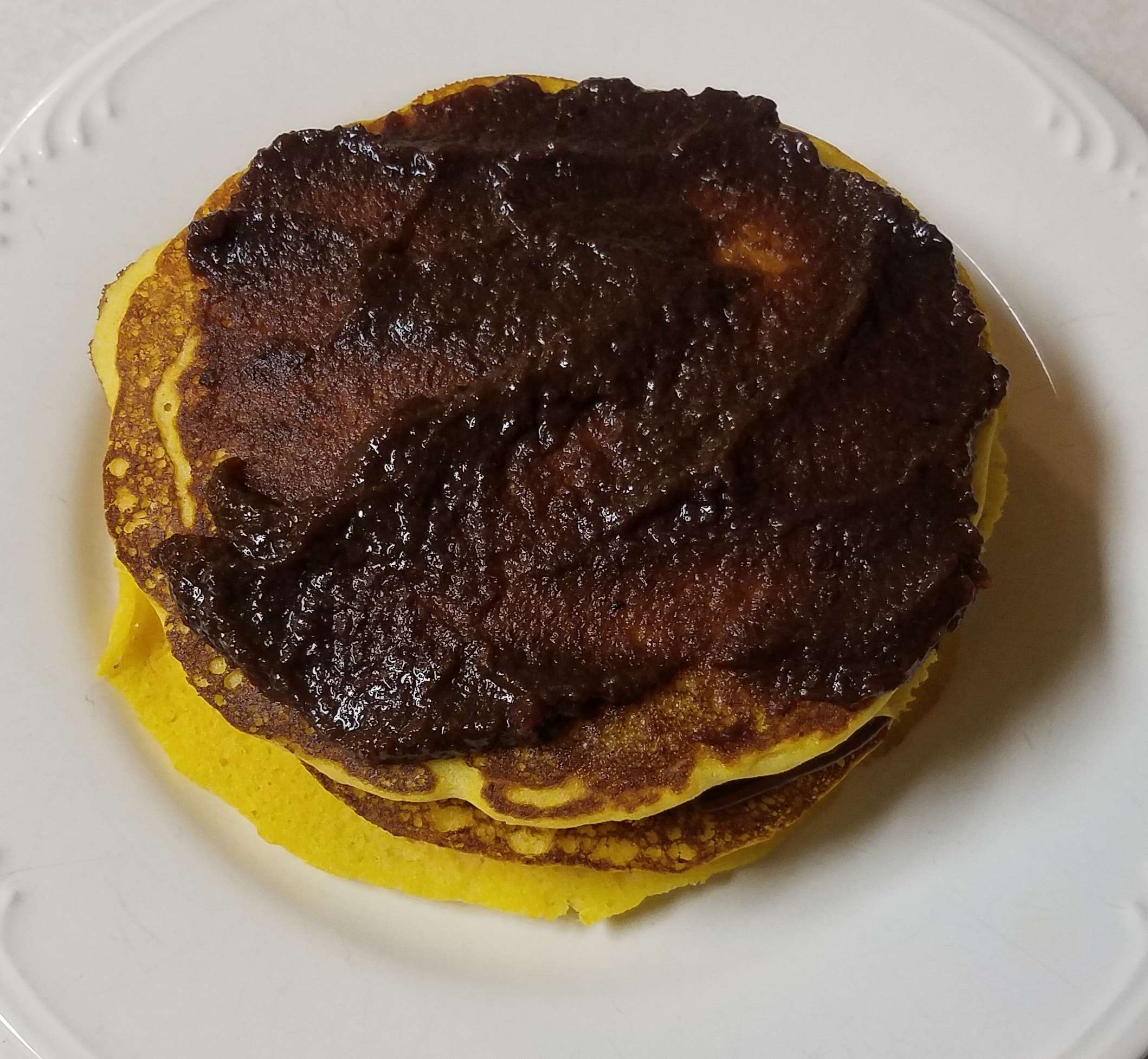
Experimenting with traditional pancakes using rice flour and butternut squash.
2021 has been rough out of the gates. The coronavirus pandemic is raging, armed insurrectionists occupied the U.S. Capitol for a few hours on Jan. 6, and as a society we are as divided as ever. Happy flippin’ New Year!
The combination of cold weather, snow cover, and the virus have kept me mostly indoors. No more trips to town unless it is for provisioning or medical appointments. In the last three weeks I made one trip to the wholesale club, and that’s it for leaving the house.
I go to the driveway and breathe fresh air a few times a day. I don’t want to risk turning an ankle walking on the trail or in the yard.
It’s just as well because I’m using the time before gardening season to get a solid start on my book. 8,882 words this week with a stack of edits waiting for later today. The process is a bit sketchy as it’s the first time I began the project with a long-term writing schedule. Some days writing is based on artifact(s) or previous text, some days mining memory. The main roadblock is so much of my archival material is unorganized and stored throughout the house.
Yesterday I used a photo album from the early 1960s. Taking time to observe each photo, letting memory work, one thing led to another and my daily word goal was met easily. We’ll see how the edits go yet I believe idea production was good. It’s pretty easy pickings because I’m at the beginning of the project.
Another thing is there is so much material. I’ve been a pack rat about keeping artifacts, and there will be inadequate interest to make this book as comprehensive as it could be. I’m undecided about photographs. Picking a dozen or so would take a lot of distillation and they would represent more than their content. A benefit of going through the writing process is the archives will get organized. Presumably the quantity will be reduced.
On the second Saturday of 2021 the local environment seems quiet. It is a good day to stay indoors and work on projects. With the coronavirus everywhere, it’s a safe thing to do.
During the coronavirus pandemic I resolved to make something of the raw material of life, a week at a time, going forward. Not a New Year’s resolution, subject to artificial pressure and expected failure — a structured, new life.
After decades of working jobs, the school years — mine and our daughter’s, political election cycles, and growing seasons, those patterns were blown apart by the pandemic. This year it’s time to put everything back together in a way that creates something familiar yet new.
The endless, unstructured days have been wearing and wearying. My daily routine, with its check list of recurring tasks and framing to accomplish something, is fine. For the first ten months of the pandemic I thought it would soon be over. Today I know it won’t.
I won’t dwell on this long, but American reaction to the virus has been pitiful. While other nations knew and followed protocols needed to stop spread of the coronavirus, our society is not so educated or disciplined. As a result, as of today, more than 20.6 million people contracted COVID-19 and more than 351,000 deaths were attributed to it. The projections are for multiple hundred thousands of additional deaths from COVID-19 before the pandemic is declared over.
Vaccines have been created and approved in record time. That’s good. Our government has done little to organize a distribution network. Last week, vaccine producers reported warehouses full of vaccine that had not entered the distribution pipeline. They were waiting for direction. Not only are Americans pitiful, so is our federal government in its response to the coronavirus pandemic. It’s not that hard. Develop a plan to get the vaccine into people’s arms.
Set all the crazy aside, though. If we can’t get our individual house in order, there is little hope of surviving the pandemic, let alone helping family, friends and neighbors who need it.
I want a week back. You know, one with weekends where we do special stuff. Leading up to it would be hard, diligent work for useful purpose. The kind after which we could take it easy for a while… over a weekend. Most of my working life I didn’t have that, so why now? Because it’s possible, and with the pandemic, needed for structure.
I built a weekly schedule to write the first draft of my autobiography by the end of 2021 as a first priority. There are Monday through Friday writing shifts that produce 1,000 words each. On Saturday, that same time of day will be devoted to editing the week’s rushes. Once I’m done with editing, I’ll take the rest of Saturday and all day Sunday off from writing. Sounds simple. It’s made possible thanks to FDR (Social Security) and LBJ (Medicare).
Writing these blog posts is quick. I haven’t counted how many I’ve written but more than 3,000. An autobiography grounded in history will take longer to produce the same number of words. I don’t know how daily writing will be organized, and the research materials are definitely not easily accessible. Figuring all this out is a process and by the end of it, when the first draft is in hand, artifacts will be well organized, I predict. By setting a daily word count goal there is a measure of success.
There is other work to schedule in my work week, not the least of which is working on household projects, gardening, cooking, and eventually returning to social activity and advocacy. All that can wait for the end of winter while I focus on being a writer. I’m resolved some good will come from this project. The end result is made easier to accomplish by having a realistic plan.
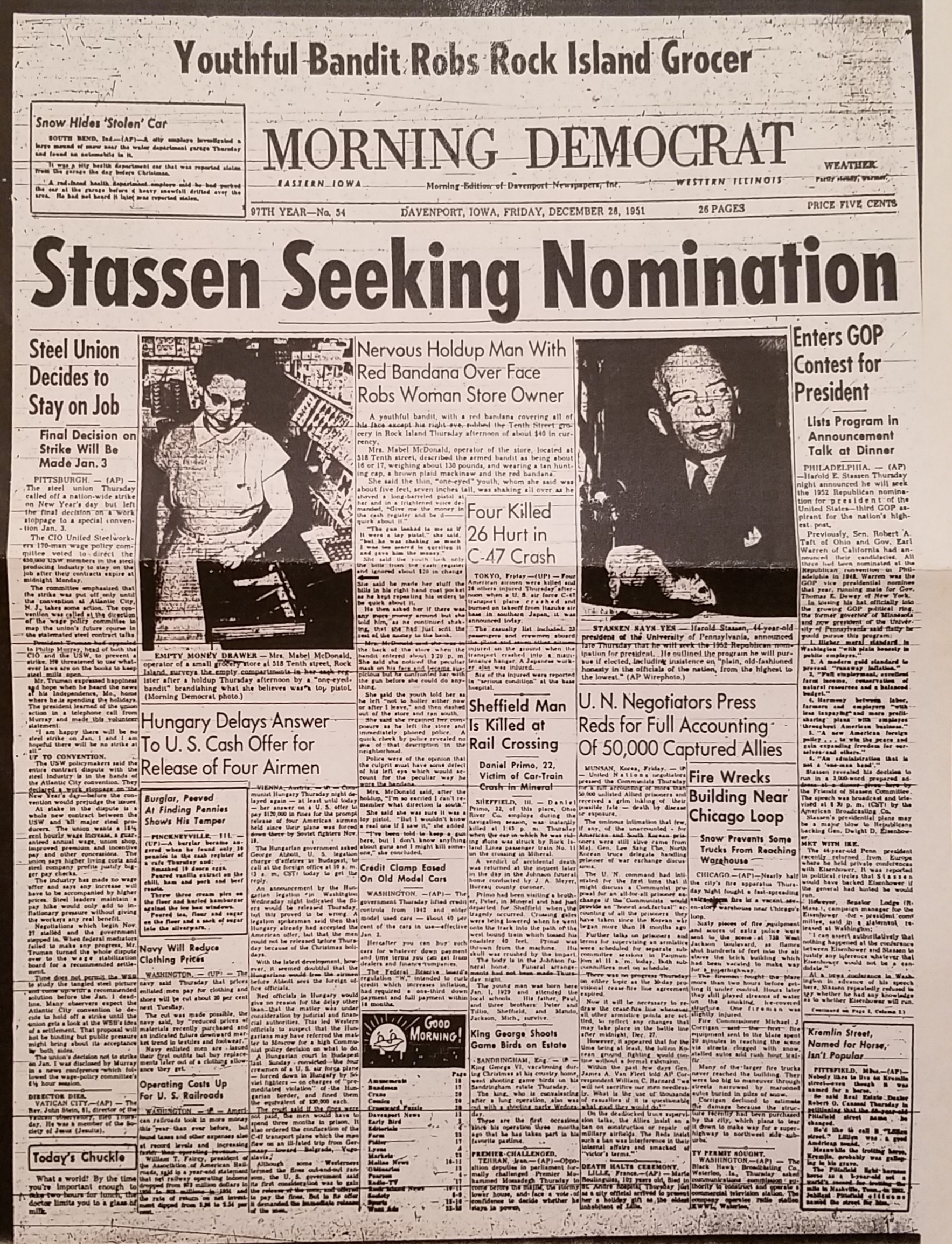
Davenport, Iowa Morning Democrat front page, Dec. 28, 1951.
Well, it’s happy #30 for me with a trip to Gettysburg and a reunion with old Army buddies. It is an occasion for reliving old memories and returning to Iowa to finish the unfinished business of my life.
Journals, Carlisle, Penn., Dec. 28, 1981.
Today is my 69th birthday and I’m happy to be among the living. It’s especially true given the alternative. We have no celebrations planned, no special meals, no gifts. That’s normal in our two-person household. We would enjoy getting back to normal.
With the coronavirus pandemic we’re even more inclined to stay home and indoors — to take care of ourselves. I didn’t want to retire from my part time jobs this year, yet here I am because of risk of contracting COVID-19. If I drew a map of our neighborhood, the houses I know that had at least one case of the virus surround ours like a fortress. According to yesterday’s news the pandemic in the United States has not peaked and one of every thousand Americans died of COVID-19. I’m learning about the term “excess deaths.”
My blood pressure was normal this morning. My weight has been the same since before Thanksgiving. There have been no dietary surprises to throw the vitals out of whack. At a certain stage one wants life to be normal. Better usage at age 69 is “as normal as it gets.”
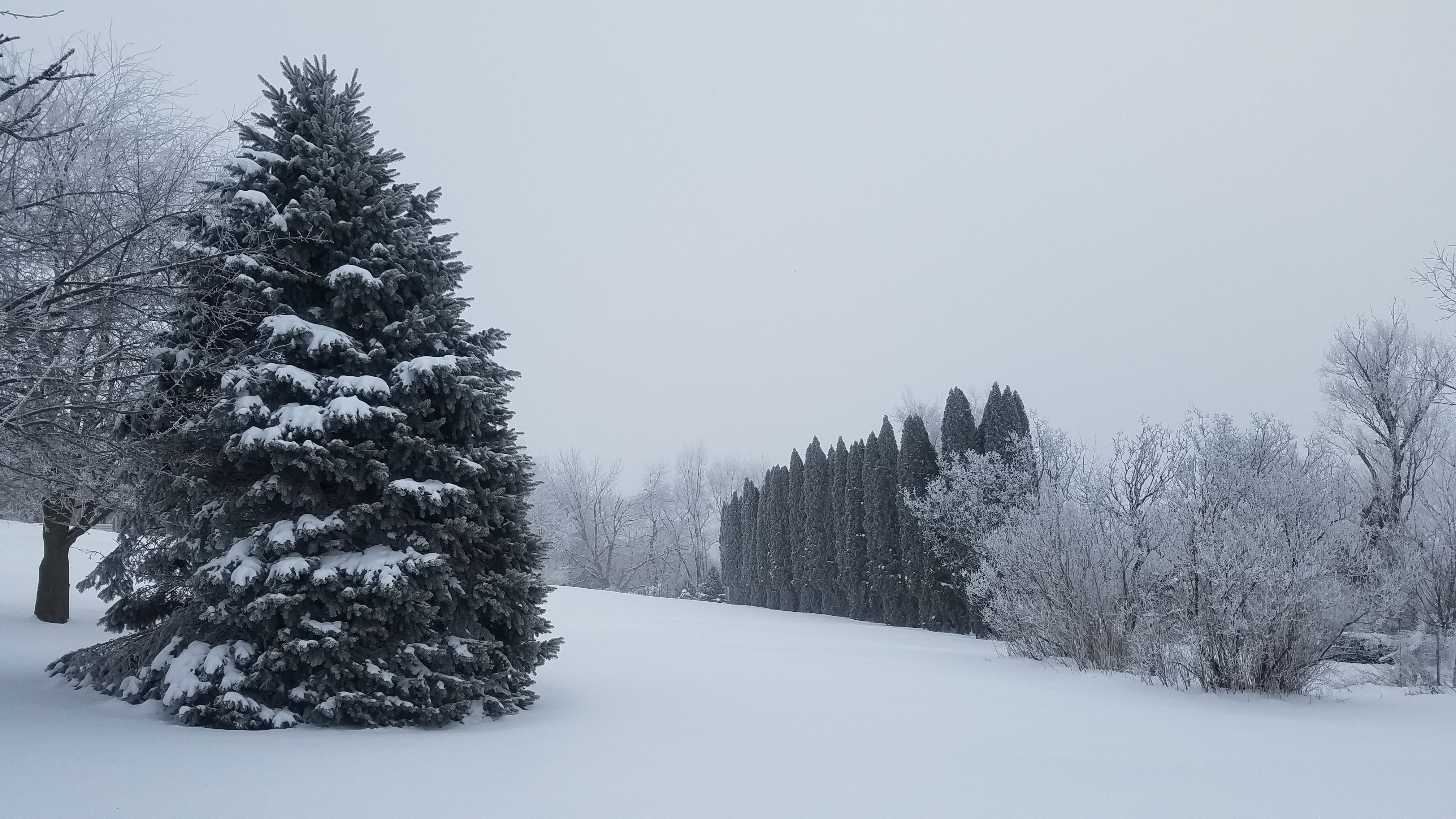
Today’s forecast is for wintry weather, although the snow is mostly west of us. Even though I am home most days there is a feeling of the holidays during this quiet time between our wedding anniversary and New Year’s Day. Just like it was 39 years ago, “It is an occasion for reliving old memories and returning to Iowa to finish the unfinished business of my life.” There remains a lot of living to do.
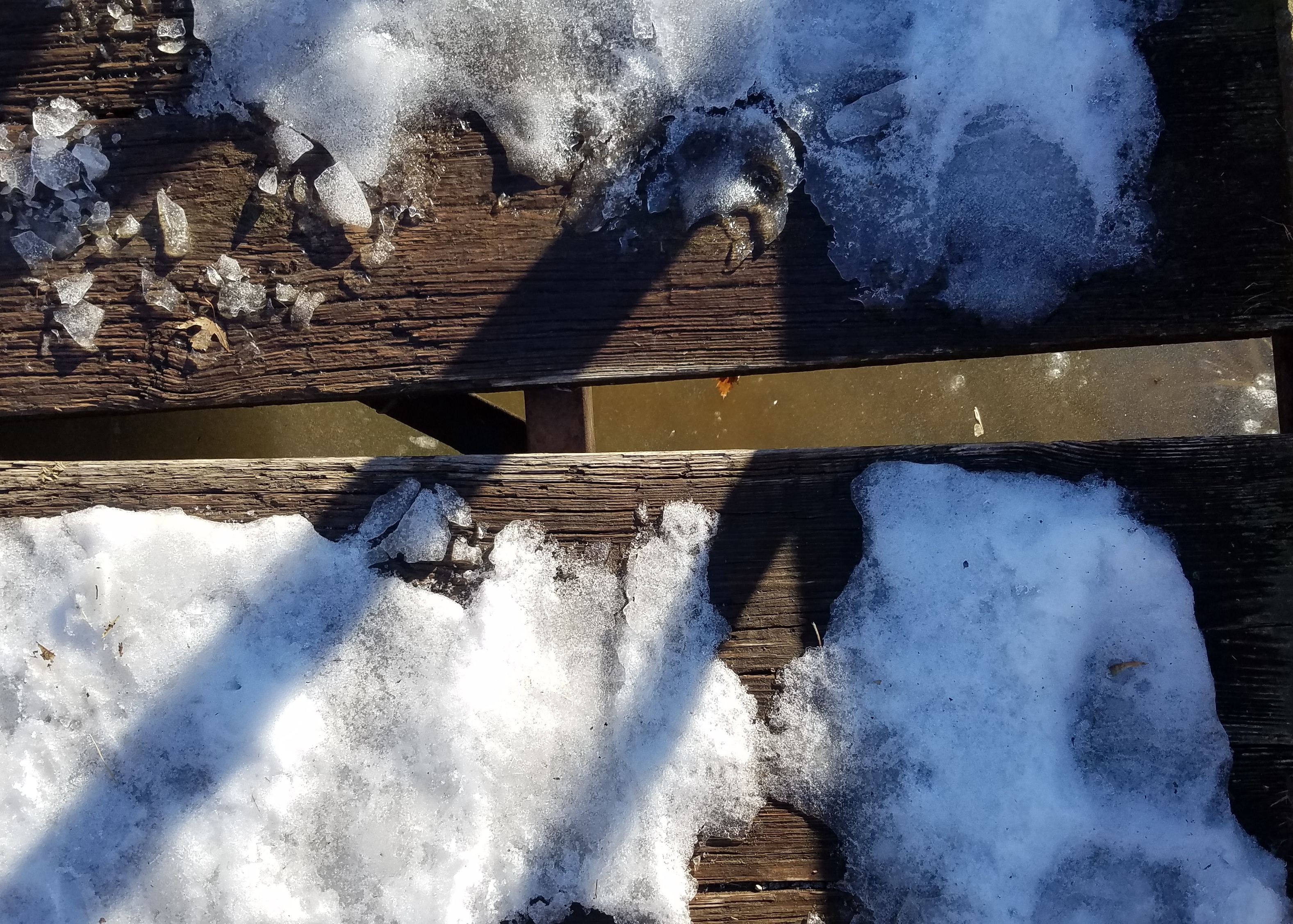
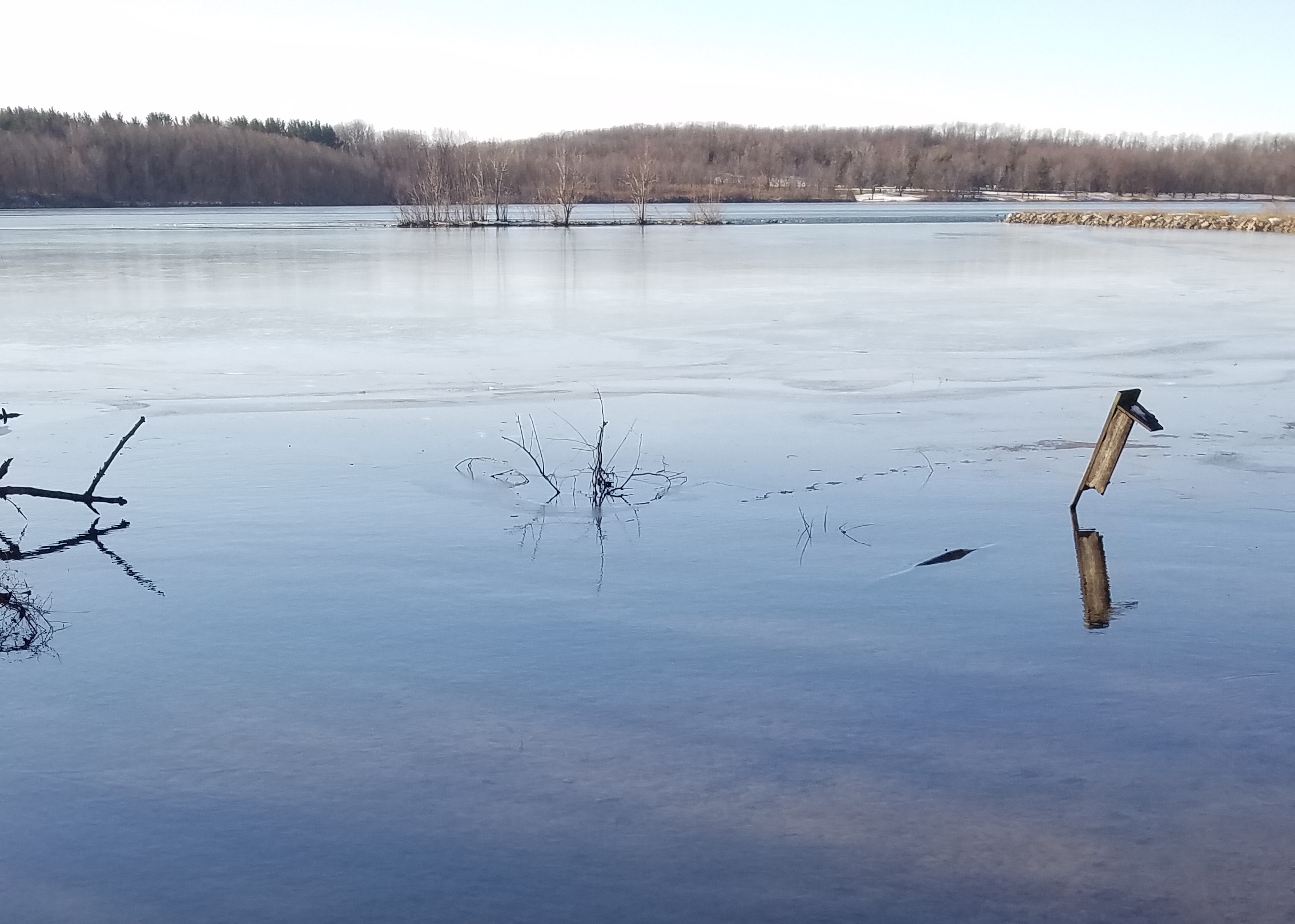
Bridge on the Lake Macbride State Park trail, Dec. 21, 2020.
I am alone, with a glass of Benedictine and Brandy beside my bed, a book nearby, and a desk of work undone. I write in this green notebook and am not sure what purpose it serves. Maybe someday a student will look at the pen flow and say, “Ahah! He changed pens between the pages!” But all of this is pettifoggery of minutia.
I don’t suppose anyone will be interested. Especially if I don’t get going here. I am nearing the completion of my application for graduate school. This has been quite a difficult procedure for me. I have labored and labored over the intellectual biography, to include what I wanted in three pages. To write it so I might be accepted, not rejected.
I am going to need every edge to get in. I have three recommendations on the way but expect they will be pretty much standard. Nothing unusual. The two from the military will be the ones I wrote for signature, more likely than not.
Returning to graduate school, while not being the most important thing in my life, would make my final adjustment into being a participating Iowan complete. If I am not accepted, I will get a degree for teaching English and concentrate on being a novelist full time, a continuation of the time in which I now find myself.
But I should leave negative thoughts by the wayside. I will be able to live a rewarding life. In fact, I live a rewarding life as it is. Deo Gracias.
Journals, Davenport, Iowa, Dec. 27, 1979.
I was accepted to the University of Iowa Graduate College and entered the program in American Studies the January semester.
The rented house on Grande Avenue was in a tough neighborhood. It stood at the end of a street that had very nice homes to the East of ours and rundown homes to the West. From time to time we would hear gunshots in the neighborhood at night. There were mysterious visitors seeking a previous occupant. Our outlook was that people were basically decent, and we were still cocooned in our life together, so the outside world did not matter that much, even when it came knocking at the door.
We brought our daughter home from the hospital to that house. Our parents came to visit, we harvested black walnuts from the two trees in the driveway, and bought new furniture from a real furniture store. My sister-in-law and her family came over for dinner at least once and that August I canned 15 pints of tomatoes from my mother and father-in-laws’ garden in Ames.
We attended services at the People’s Church, which was down the street. We established routines couples do, trying to contribute to our lives and to life in society. I remember feeling a new life was beginning with our settlement on the southeast side of Cedar Rapids.
I was fortunate to have the upstairs of the house for a study. I spread out my books, typewriters and papers to work on a novel in my spare time. No novel was completed in the wake of a new job, a new home, and a newborn who depended upon us.
The past 18 months have been physically taxing and mentally exhausting. I weigh in at 212 pounds, more than ever in my life. I have been spending a majority of my time outside work laying on the couch, digesting meals, and watching television. I need to stop this now, improve my family life, and proceed on the intellectual path that has been my calling from earliest days.
Journals, Cedar Rapids, Iowa, June 29, 1985.
Taking a few days vacation, I found time to retreat in my study and write in the journal. I asked, “Where is my life heading?”
This is the question to be answered in the next few days. I am not happy with it now, and I seek a change in daily life that will focus on daily events and find meaning in them. Too, I seek a meaning beyond the surface of things. I believe an individual’s actions have consequence in society and in the larger realm. Though our voice may not be heard beyond our solar system, each life on earth has consequence. We are all God’s children and this spiritual part of every life has been neglected too long, both in my life and in the life of society. Here on the pages of this journal I can begin to work out an answer to this problem.
Journals, Cedar Rapids, Iowa, June 29, 1985.
I’m not sure answers were forthcoming.
Our time at Grande Avenue centered around our daughter’s new life with us. There were visits from family and friends, and a focus on our lives together. I learned how to change a diaper and earned enough money to finance the household. We weren’t there long enough to start a garden.
There are two black walnut trees by the garage… this year the crop was hearty, my father-in-law said that if the summer is particularly dry then there is a sensibility in the trees that causes them to produce a large number of nuts, as if the species were in danger, and there was a need to propagate itself.
I gathered two bushels of nuts after a wind storm blew them to the ground in mass, early in the fall. I spread them on the front porch to dry. I left many more for the squirrels to eat and hoard.
Journals, Cedar Rapids, Iowa. 1985.
The walnuts dried for about a month. I then took plastic buckets of them to the basement and cracked them with a hammer. They are hard. Squirrels must have sharp teeth to eat them. After cracking I put them in a large bowl for a quick sorting, then turned them over to Jacque for the final sort of shells from nut meats. The crop produced about three pints which I put in a storage room along with the canned tomatoes.
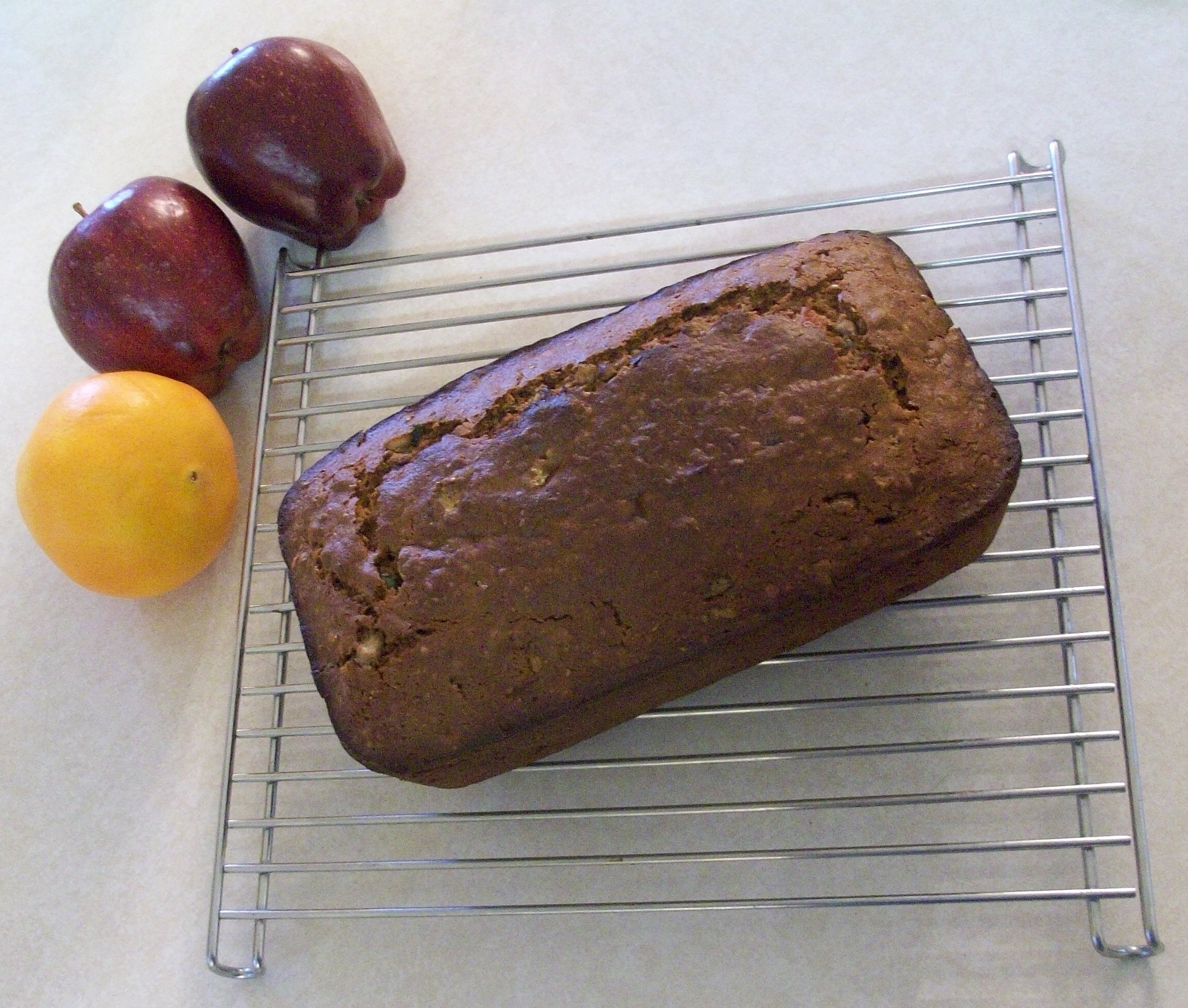
Jacque used them to make banana bread with barley flour, wrapping each loaf in foil to set overnight. I was in the basement cleaning up from the walnut operation when she brought down one of my canning jars. We opened the storage room and a pot of narcissus had sprouted.
She was happy. And she took it into the sun room. We thought that store bought narcissus only produced one season, but no, we’ll have another season of them.
Journals, Cedar Rapids, Iowa, 1985.
Our home became a collection of raw materials waiting to be used in singular production to create a life. Some days we were better at it than others. Some days we found unexpected flowers. Just like all of God’s children.
This is the first blog post I made about Christmas on Dec. 25, 2007.
The meaning of Christmas is derived from my remembrance of the priests at Holy Family Catholic Church in Davenport genuflecting while reading John 1:14 “And the Word was made flesh and dwelt among us…” There are many translations of this verse and the idea that an omniscient God would take human form remains a compelling idea. In order for our lives to have meaning, we should live them as Jesus did, through acts in human society.
If Jesus was the incarnate God, we are something less.
If the meaning of Christmas can be found in John 1:14, how should that affect us with our imperfections?
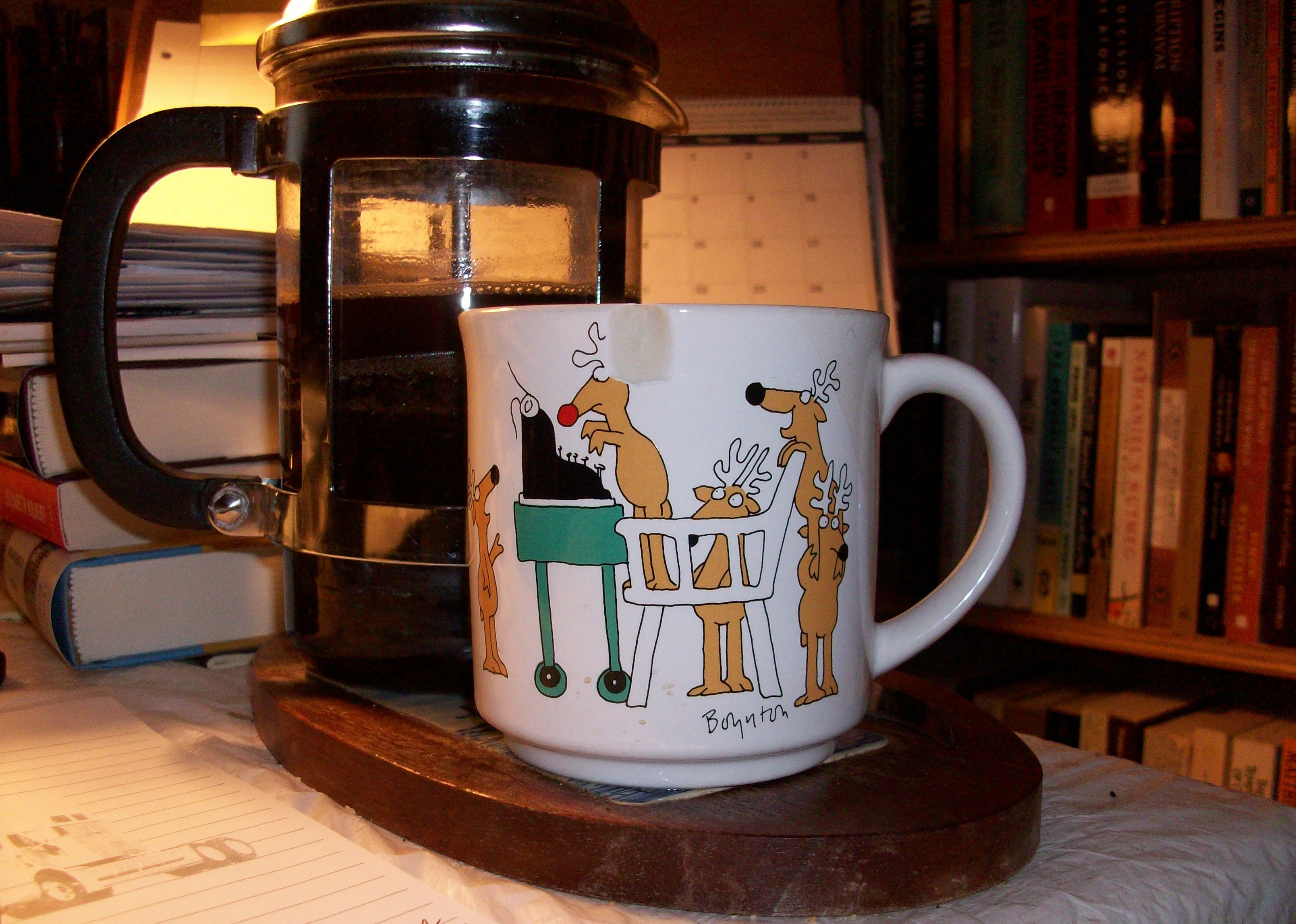
My Christmas story is about the coffee cup that we keep in our bins of Christmas decorations. It was a gift from Jacque and printed in the glaze are five reindeer around a typewriter consulting on a message. The reindeer at the keyboard has a red nose, and must be Rudolf. On the other side of the mug are misspelled the words “Merry Christmas,” presumably typed by Rudolf. At some point I chipped the cup and each year we discuss whether we should get rid of it because of the chip. I have always said no, although I should probably let go. The chipped cup with the animals trying to put a message into human language using human technology has become part of our Christmas tradition. Because it is so similar to the meaning of Christmas, I have trouble letting go of it. We have always ended up keeping the cup and I am using it now to hold the coffee I made this morning.
We humans can use some coffee on Christmas morning, and we need to put it in something.
I just spent the last few minutes waiting for water to come to a boil on the stove for tea. While waiting I skipped through this journal, stopping every so often, and read random pages. It seems that what I have written at other times is sufficiently removed from me to permit my pursuit of authorship of literature. This is good.
The things I read also pain me at times. The thought of a past once present now changed into memories.
As I sit today, Christmas, before my desk, I will not forget, I cannot forget myself when I am writing… it soothes me by its connection with the past, direct, like looking through the space that I have traveled from the eternal point of view. Sehr gut.
I sit down,, spreading ink on paper and what yields it? Ink on my small and ring fingers and a touch with the past.
Did my ancestors celebrate Christmas as they settled in southwestern Minnesota?
My great great grandfather, a Polish immigrant, bought land from the railroad and settled in rural Minnesota in the late 19th Century. Stories about the lives of these ancestors are few and sketchy. In none of them is Christmas mentioned. Because the Catholic Church of Saint John Cantius in Wilno played a role in their lives, I have to believe they did celebrate Christmas in a way now lost in history. While theirs was a Polish community the story is American.
The first Catholic edifice erected in Lincoln County was at Wilno. This was built in 1883, I think. The Polish people shared in common with other foreigners — coming as they did to a strange land with strange customs and speaking to them in an unknown tongue — the desire to form colonies, to segregate themselves from other nationalities. The motives that impel them to do this are not always understood by the native born American. Our civilization is necessarily a composite, receiving as we do, accessions from all the other civilizations, all are engaged in building the good that is peculiar to the older civilizations from which they come. For one, I have a doubt that freedom’s chemistry will be able to combine these seemingly alien elements into one harmonious whole.
Early History of Lincoln County, A.E. Tasker editor.
What we do know is there were fishing trips to South Dakota depicted in a well-circulated photograph of my great grandfather and great great grandfather.
The church history has a photo of men drinking beer and socializing after Sunday Mass. Great great grandfather would drink alcoholic beverages in Wilno then fall into a wagon to be drawn home by the horse. There was no drinking and driving in the horse culture as the horse knew the way to the barn.
There was the stream that separated grandmother’s house from her aunt. She told us about the flooding river, cutting the two houses off from each other. I now know this was the Yellow Medicine River. Grandmother’s aunt had a piano which she wanted to play. Her aunt would not allow it. This affected Grandmother until the end of her life.
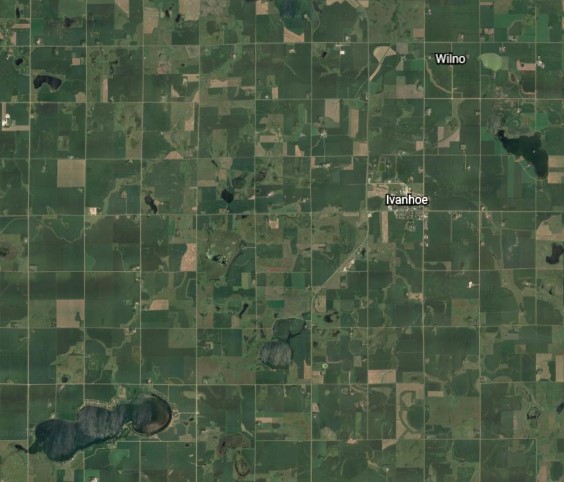
I looked at the county on Google Earth and the Polish culture that thrived there is not visible from satellites. It exists through stories passed on by grandmother on the front porch, at the dinner table, in her apartment, and at luncheons at Bishop’s Buffet. I believe they celebrated Christmas in Lincoln County, I don’t have proof. I don’t need it.
Al Gore conceded the Nov. 7, 2000 general election on Dec. 13. It was close, and as we know, it came down to a hand count of ballots in Florida which the U.S. Supreme Court stopped. While Gore won more popular votes than George W. Bush, he lost the electoral college. It was unlike anything I remembered in presidential politics. For weeks I printed out briefs filed in the court case at home and read them all.
I emailed a friend a couple of days after the election while on a business trip to Chicago:
11/9/00 8:35:57 PM Got your note…what an election. I left the house at about 7:10PM and drove to Princeton, IL, listening to the returns coming in. I stopped at the Days Inn (trying to be closer to Chicago for my early morning meeting Wednesday), and stayed up until after midnight watching CNN and their commentary. Whoever it is that gets elected is going to have a bear of a time making anything happen. I do not look forward to the next year or two.
Email to Dan Czolgosz, Nov. 9, 2000.
I had hope there would be some redeeming qualities about Bush. Such hope was reinforced by his inaugural address.
I am honored and humbled to stand here, where so many of America’s leaders have come before me, and so many will follow.
We have a place, all of us, in a long story — a story we continue, but whose end we will not see. It is the story of a new world that became a friend and liberator of the old, a story of a slave-holding society that became a servant of freedom, the story of a power that went into the world to protect but not possess, to defend but not to conquer.
It is the American story–a story of flawed and fallible people, united across the generations by grand and enduring ideals.
The grandest of these ideals is an unfolding American promise that everyone belongs, that everyone deserves a chance, that no insignificant person was ever born.
George W. Bush Inaugural Address, Jan. 20, 2001.
Following a brief period of support which lasted until after the Sept. 11, 2001 terrorist attacks, Bush lost me.
The point I would make about the election today is the winning margin in Florida was close, yet the closeness of the race did not make it too difficult for Bush to govern. Whatever support Bush had from the opposition, he squandered it in his reaction to the terrorist attacks and in the invasion of Iraq. Lack of a majority constituency was insufficient constraint to furtherance of Republican goals.
Al Gore’s 2000 loss and the Bush administration’s actions radicalized me to get involved in party politics again. I would no longer take politics for granted. The story about my radicalization unfolded during each of the next ten election cycles.
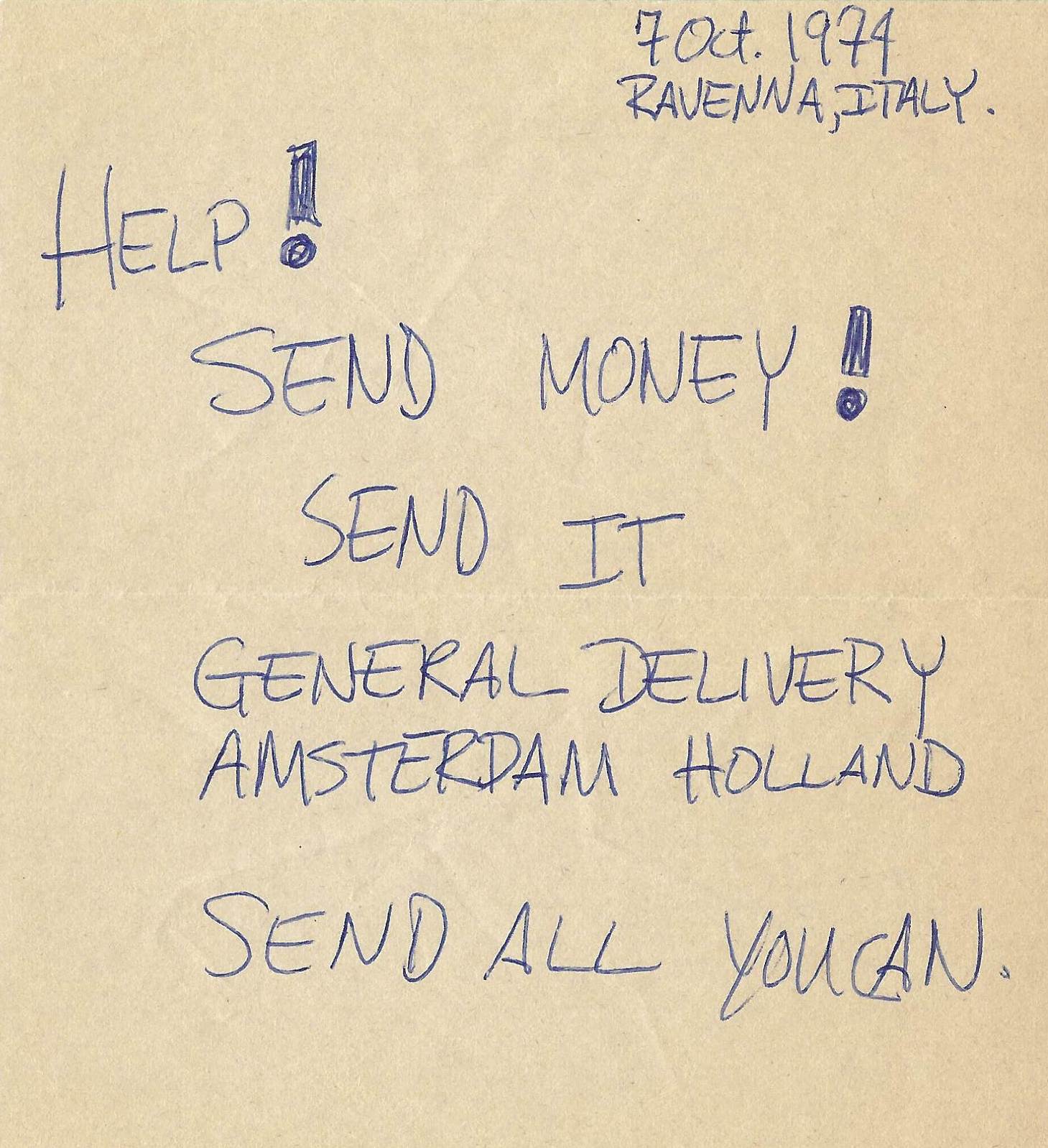
My trips to Europe took place before mobile telephones were adopted. There was no email either. Relying on postal service was dependable — only if one had a lot of time.
Changes in communications technology are in the background of much of my life.
When I took a 12-week trip to Europe after college, mail was the only accessible way to communicate. It caused me to think more about my activities and required advance planning. It caused one of my friends to keep all my letters until I returned home, “just in case something happened.” He pitched them the first time we got together after the trip.
The company I worked for in transportation, CRST, was hesitant to adopt new communications technologies when I rejoined them in 1991. They had a mainframe-based computer system yet wanted no part of email until it had been litigated by others. Of course they ended up adopting email like every other large company because customers demanded it and it created efficiencies.
I had worked in the Chicago Loop for Amoco Oil Company and carried a pager the operations group shared. I remember pulling over during my commute to find a pay phone to return a page. Once the person at an adjacent phone was closing a drug deal. Pagers worked but were not optimal. There was an email service at Amoco and it improved efficiencies within the organization. Those were the days before Microsoft introduced its 3.0 operating system (1990) with graphical user interface. Unlike CRST, Amoco was one of the first adopters of GUI, a process which began as I left the company.
On April 21, 1996 our family bought the first home computer. I recall the three of us gathering at the desk in the kitchen to log on to the internet via modem for the first time. We heard the characteristic modem squawk. Having a home computer would revolutionize how we lived at home. Eventually each of us had our own personal computer, with our daughter getting one in 1999.
My father in law died in December 1996 and Jacque used his mobile phone while traveling back and forth to settle the estate. We discussed it and can’t recall the type of phone it was, a bag phone she believes. After a while she got her own account and a Motorola flip phone. Motorola introduced the flip phone in 1996.
Eventually CRST did adopt mobile phones and issued them to people who were on call or had to travel. I had a company Blackberry and remember calling and sending messages from the 2006 Oracle Open World in San Francisco. The functions available were pretty limited. For email access I used a laptop with a modem in the hotel room where I stayed in Chinatown. The baud rate was very slow. No one talks about baud rates anymore.
Eventually CRST eliminated company mobile phones, expecting us to use our own account for business calls. I joined Jacque on her account and got an inexpensive flip phone. I still have some of the photos I took with it, including one of Barack Obama in the Harkin Steak Fry rope line in 2006. Flip phones were a useful tool. Many days I wish I still had one.
In 2012 I accepted a position as campaign manager for Iowa House candidate Dick Schwab and got my first smart phone. The accessibility to email and phone calls from anywhere in the district made staying in touch easier and proved to be important to the campaign. It changed my life by releasing the tether to a computer cable connection. At the same time, I became addicted to my smart phone. If asked, I would deny it.
A good portion of my creative life presumed a lack of communication with others. Isolation to create — writing, gardening, cooking, reading, garage-based projects — remains important to the creative process.
I maintain a mobile device and turn off all notifications except for the ringer when there is an incoming phone call. I don’t get many phone calls. When I do, I look at caller ID and screen them.
Personal communication has become complicated. I maintain ongoing conversations with friends and acquaintances through diverse media: text message, Instagram, Twitter, Twitch, Facebook, email, WordPress, phone calls, Zoom, Google, chat, and postal mail. I might start a discussion on one platform and finish it on another. I’m okay with how it evolved.
As I write an autobiography it seems important to keep this technology talk lurking in the background. It is an important consideration nonetheless.
 Journey Home
You must be logged in to post a comment.