Categories
Writing

Supporting Access to Abortion After Dobbs

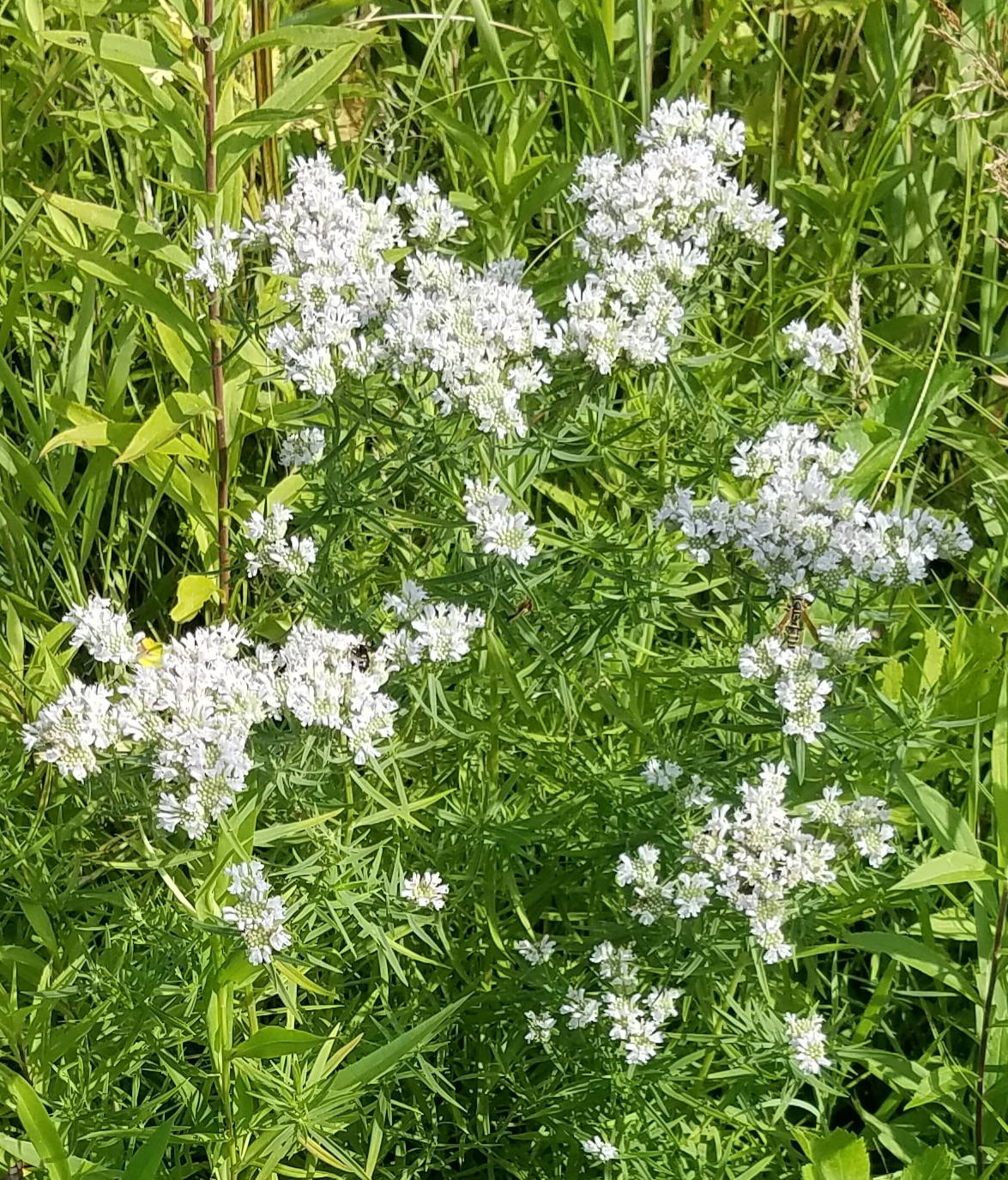
Wildflowers on the state park trail.

In the Des Moines Register Iowa Poll released on Sunday, “A majority of Iowans – 60% – say abortion should be legal in most or all cases, at a time when the state’s Republican lawmakers have new freedom to restrict the procedure.” That’s the highest percent since the Iowa Poll began asking the question. The percentage favoring keeping abortions a legal option is higher nationwide.

American voters opposed overturning Roe by a 30 point margin. Politicians such as Governor Kim Reynolds and Congresswoman Mariannette Miller-Meeks have said Roe was settled law. Nearly 70% of Americans did not want the U.S. Supreme Court to overturn Roe v. Wade. 75% of people say decisions on abortion should be left to the woman and her doctor, including 95% of Democrats, 81% of independents and 53% of Republicans.

With the willing help of Judiciary Committee Chair U.S. Senator Chuck Grassley, president Trump appointed three justices to the U.S. Supreme Court. All three said Roe was established precedent and settled law during their confirmation hearings. Yet here we are. What is popular doesn’t matter. Telling the truth doesn’t matter. In Dobbs v. Jackson Women’s Health, the court overturned Roe v. Wade. Conservatives who advocated overturning Roe v. Wade (since it was decided) are like the dog that caught the car.

No matter our income or where we live, Iowans value the freedom to make our own decisions, including access to safe and legal abortion. Abortion remains safe and legal in Iowa and we are fighting to keep it that way. We intend to protect our freedom from Republican politicians hellbent on taking it, who attempt to divide us and legislate for the wealthy few. From Sen. Grassley who stacked this court, to Gov. Reynolds who requested abortion rights be overturned at the federal and state levels, we seek their removal at the ballot box.

We all care about someone who has had or has considered an abortion. Most people likely know someone in this situation. We must ensure everyone has access to the care they need. Taking this right away won’t end abortions, it will simply make them harder to access for people with fewer resources. Limiting access to abortion puts pregnant people in danger and puts their lives at risk. Denying access to safe, legal abortions strips Iowans of a fundamental right.

What is there to say about abortion that hasn’t already been said? Very little.

Despite the Iowa Poll, some conservative Iowans continue to assert that a “majority of Iowans are pro-life and support every individual’s God-given right to an opportunity to live.” Thing about Roe is the discussion of when life begins was had in court and settled. I doubt conservatives who make the claim about when a fetus becomes an individual have read the court documents of Roe v. Wade. Their assertions reflect a position of ignorance.

If, as suggested, the dog caught the car, what comes next is a jump ball with conservatives having the home court advantage, especially those who have organized to overturn Roe v. Wade since it was decided. When asked why Roe wasn’t codified in law already, a Democratic legislator said “some things are just settled.” That is, until they aren’t.

~ First published at Blog for Iowa
Categories
Writing

Postcard from Summer Holiday – #1

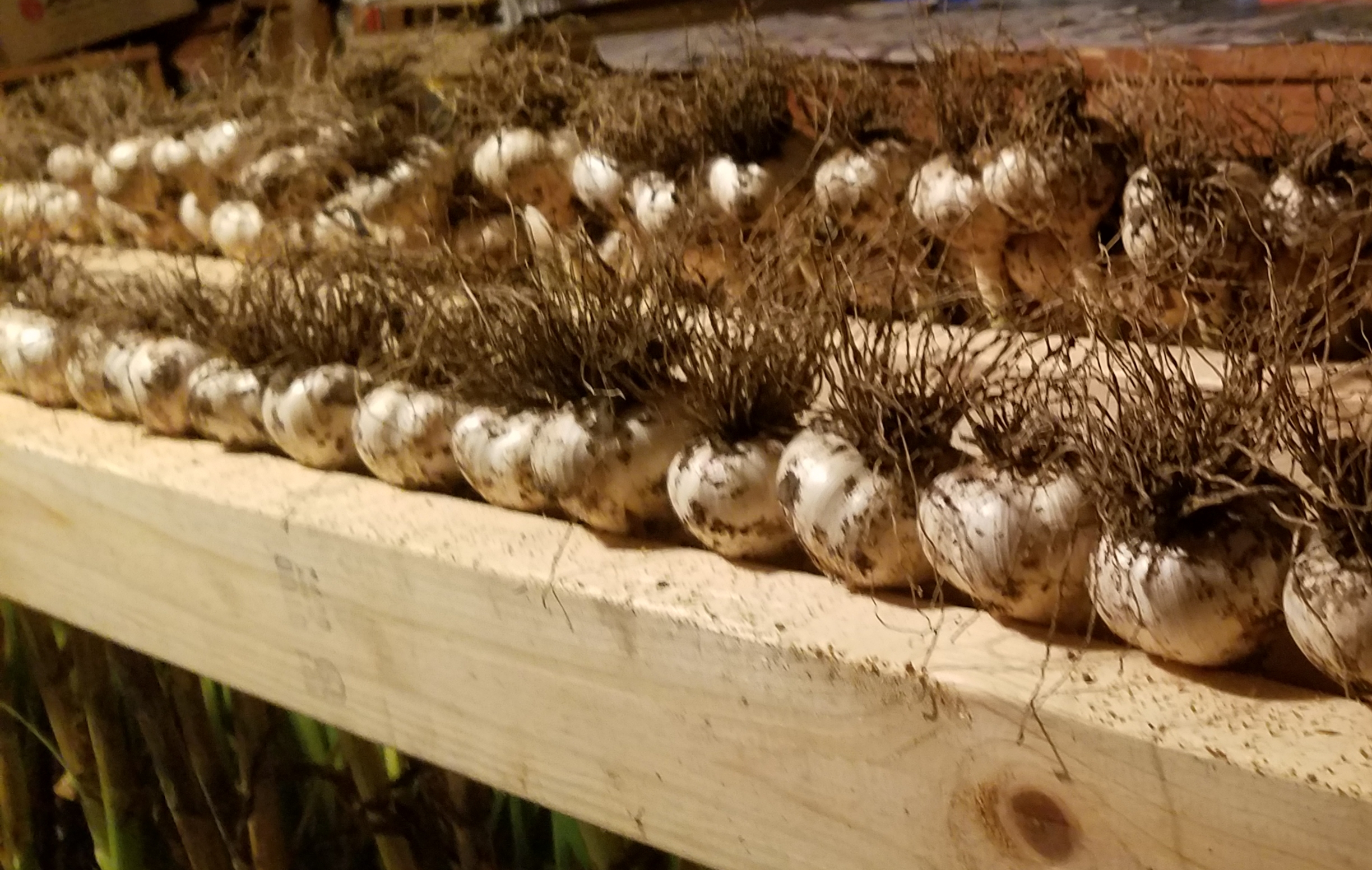
Heads of garlic curing in the garage.

The main effect of summer holiday has been to get more sleep. It hasn’t been good sleep, just more of it, maybe seven or eight hours per 24-hour period. I felt fully rested a couple of days since beginning this holiday and hopefully more of the same is in the immediate future.

My main activities have been gardening, walking the trail in the nearby state park, and cooking in tune with seasonal produce from the garden. There has been time reading on my mobile device, although my book reading slowed down. It is beginning to pick up again as I just finished Octavia Butler’s Parable of the Sower. Since my sister-in-law gave us her old television, I’ve been watching some of the January 6 Committee hearings and cooking shows on Iowa Public Television. These things are a preview of retirement life to come.

We decided I’m too old to be climbing on the roof for my annual inspection and cleaning of gutters. I haven’t resolved how to get this done yet I’m thinking of buying a drone to fly around the roof and send pictures of its condition back to the ground. At 12 years since the installation of the current roof, it may be showing some wear. When I’m ready to clean the gutters, I’ll post a notice on our community Facebook page feeling confident someone will help. The gutters do not appear to be clogged with organic debris and haven’t been since I cut down the maple tree I mistakenly planted too close to the house.

I drove our new car 1,196 miles since we bought it. A trip to Chicago, three trips to Des Moines, and the rest of the miles are local errands. It is good to own a newer car, one that runs well and gets better fuel economy. I also enjoy the ability to charge my mobile device while driving. The 2019 Chevy Spark is a subcompact and the feel of driving it is a bit rough. It’s not like I live in it, so it is tolerable. During holiday I’ve been considering what other trips I may want to make. No decisions, yet I’m looking at Saint Louis and another trip to Chicago.

When conditions are right, I spend time outdoors. There is unending garden work and a host of long delayed yard projects. There will never be enough time to do everything myself, so I’m going to have to hire some help. Once finances stabilize after replacing the freezer and auto, I’ll take a look at a fall project by a contractor.

The main purposes of this summer holiday were to rest and consider where I want to take this blog. I know some things about my writing, but haven’t made any progress toward a decision. I expect the blog will survive in some form.

For now, it has been raining with scattered thunderstorms. The lightning woke me earlier than usual this morning. If it stops raining, I’ll walk on the trail by the lake and take it all in. I’m in no hurry to determine what’s next.

Categories
Writing

West Virginia v. EPA

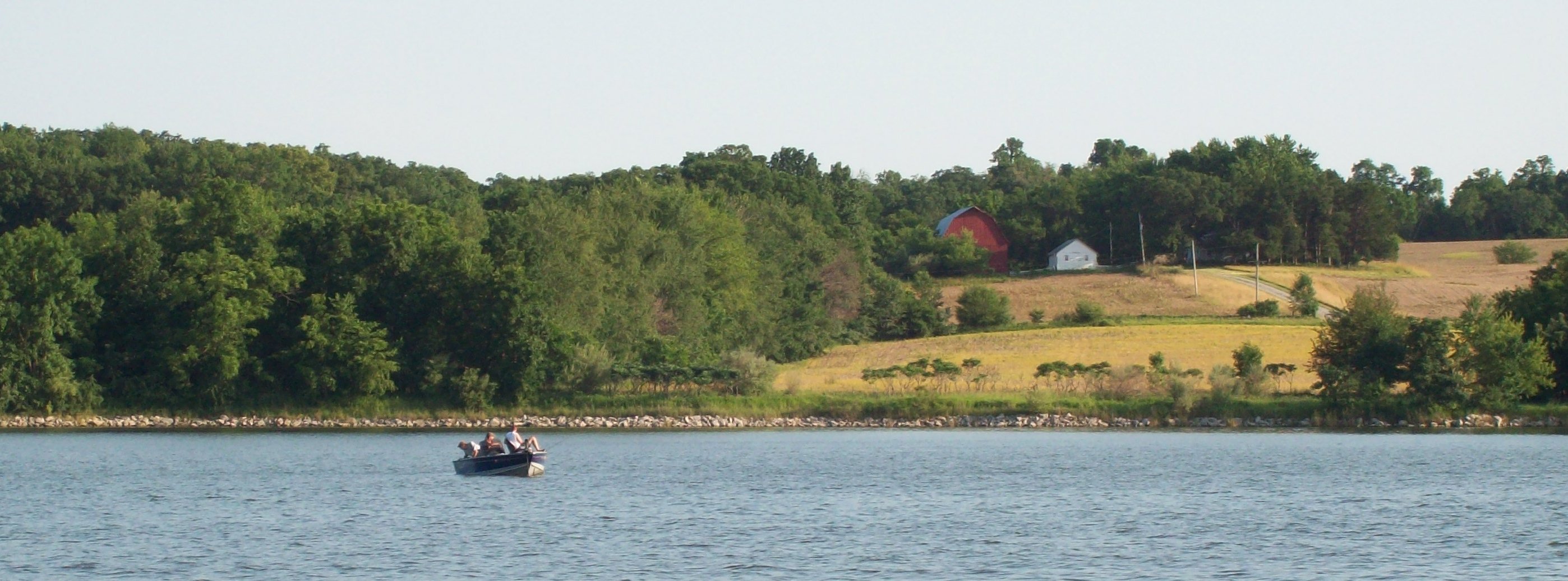
Lake Macbride

What is the meaning of last week’s U.S. Supreme Court decision in West Virginia v. Environmental Protection Agency? Certainly it is a setback for the environmental movement. A court bought and paid for by the billionaire class did industrial polluters a favor by eviscerating the ability of EPA to regulate greenhouse gases. There’s more.

In an Amicus Curiae brief in the case, U.S. Senators Richard Blumenthal, Bernie Sanders, Sheldon Whitehouse, and Elizabeth Warren weighed in:

“Almost everything about these cases—the theories, the arguments, and even many of the parties and amici curiae—is an industrial product manufactured in an effort to return to an era free from oversight by the government.”

Resistance to the power of money will be difficult, yet we must. Begin by arming yourself with knowledge and read the entire brief. It will take about ten minutes.

While you are at it, the brief mentions two important authors regarding the influence of money in our politics: Jane Mayer, author of Dark Money: The Hidden History of the Billionaires Behind the Rise of the Radical Right, and Nancy MacLean, author of Democracy in Chains: The Deep History of the Radical Right’s Stealth Plan for America. Take a deep dive and read these two books. The radical right has been preparing for this day for decades. Isn’t it time we armed ourselves with knowledge and got ready for battle?

~ First published on Blog for Iowa

Categories
Writing

Neoliberalism in Iowa: An Interview with Thom Hartmann

Thom Hartmann

On Wednesday, June 29, I interviewed Thom Hartmann in advance of the September release of his new book The Hidden History of Neoliberalism: How Reaganism Gutted America and How To Restore Its Greatness.

This will be the eighth book in Hartmann’s Hidden History series reviewed by Blog for Iowa. My reviews of the Hidden History books have been very popular.

The interview covers a wide range of progressive topics and Hartmann demonstrates his deep knowledge of them all. We discuss the exit of manufacturing jobs from the United States, Iowa soybean exports to China, the right-wing propaganda machine of talk radio and FOX News cable television, ALEC, Americans for Prosperity, the Heritage Foundation, and the influence of dark money that permeates Iowa society and our politics.

We read in the news media that Americans broadly support Social Security, gun control, abortion, universal health care, equal treatment under the law and more. At the same time, we send Republican politicians, who don’t support any of these things, to Washington, D.C. I’m speaking of Chuck Grassley, Joni Ernst, Ashley Hinson, Mariannette Miller-Meeks and Randy Feenstra.

The gadget below will play the 34 minute, 51 second interview. I hope you will listen to this timely, informative conversation.

Thom Hartmann interview June 29, 2022

~ First published on Blog for Iowa

Categories
Writing

Independence Day 2022

Blog for Iowa publisher Alta Price (right) in a Quad Cities parade entry. Photo provenance unknown.

Happy Independence Day from Blog for Iowa.

Where I live Independence Day is often about the weather. Today, the weather was exceptional: scattered clouds set against the azure sky, moderate temperatures and low humidity. It was a great day to be outdoors, and that is where many of us spent much of the day, celebrating the anniversary of the Declaration of Independence.

While tradition and family are part of holiday celebrations, the enactment of tribal culture, and each perceived instance of it are most significant. As we stood in the Ely parade lineup area, people walked past us in what seemed like an endless procession: to town, with folding chairs, in small groups, to watch the parade. It is this walking and the beliefs and artifacts around it that are at the core of shared values. It is less about the parade entries, even though they may be what people saw and talked about. It is more about the social behavior enacted by the larger group.

At the Ely Firemen’s Breakfast, compliance with cultural expectations was visible everywhere. The fire station was arranged for efficiency in handling the large number of people, there are public health considerations with food preparation. Extra activities, like the raffle, were organized to occur outside the fire station and after people had eaten breakfast. During breakfast, people gathered around the tables in family groups. There was not a lot of mingling. The expectation was that people would be friendly, but not intrusive. In this setting, it would be hard for an outsider to penetrate a specific social group without a means of introduction. Participation in the Firemen’s Breakfast becomes a cultural marker for such an introduction, which is unlikely to occur at the event and more likely to occur in other circles at other times. I enjoyed this event immensely and it looked like a lot of money would be raised for the fire station.

As a walker in several parades, I found joy in the interaction between participants and observers. Along the route, those closest to the parade were the youngest. Interaction with very young children, mostly through giving them a gift, made the day. I would present a sucker to the child, say “happy Fourth of July,” and wait for them to take it. Only one child did not take the candy, and most said thank you. At Fourth of July parades, the children are on display as much as the parade entries.

There were reactions to each entry in which I participated. The favorable reactions, cheering, clapping or thumbs up hand signs provided validity to the work we had been doing to get our message out. I am not sure we convinced anyone about any politician or cause we were supporting that day. Like all messaging, penetration can occur only with repetition. What I do believe is that in this aggregation of tribal groups, we were tolerated, and there were some supporters for our causes. These things make us Americans as we celebrate Independence Day.

~ This post is recycled from July 4, 2008, my first Independence Day blog post.

Categories
Writing

Mustard Greens Pesto

A young rabbit got into the greens patch. At first it ate the carrot tops. I sprinkled some dried hot peppers around them and it looks like they will recover. Now the cute little beast moved on to kale, collards and other cruciferous vegetables. I must do something about it. I grew enough to share but the rabbit doesn’t know any better and will take bites from multiple plants without finishing a particular leaf.

I must remove all the weeds that are providing cover, in the garlic patch and the greens patch. Then, I’ll replace the 2 x 4 welded wire protecting the greens patch with chicken wire. (Why do they call this mesh “chicken wire?”). There is enough season remaining to make the effort worth the time. In fact, kale I planted in February won’t finish until well after the first frost in October. I MUST do these things…

Winterbor kale is as good as kale gets and the rabbit appears to prefer the Blue Dazzling kale and collards. I picked the biggest leaves from our six Winterbor plants, washed, and froze them for winter. No, I don’t blanch them. Just because I grew something doesn’t mean I should preserve everything beyond the season. Winterbor is the best kale, though. I’ll freeze everything I don’t use fresh.

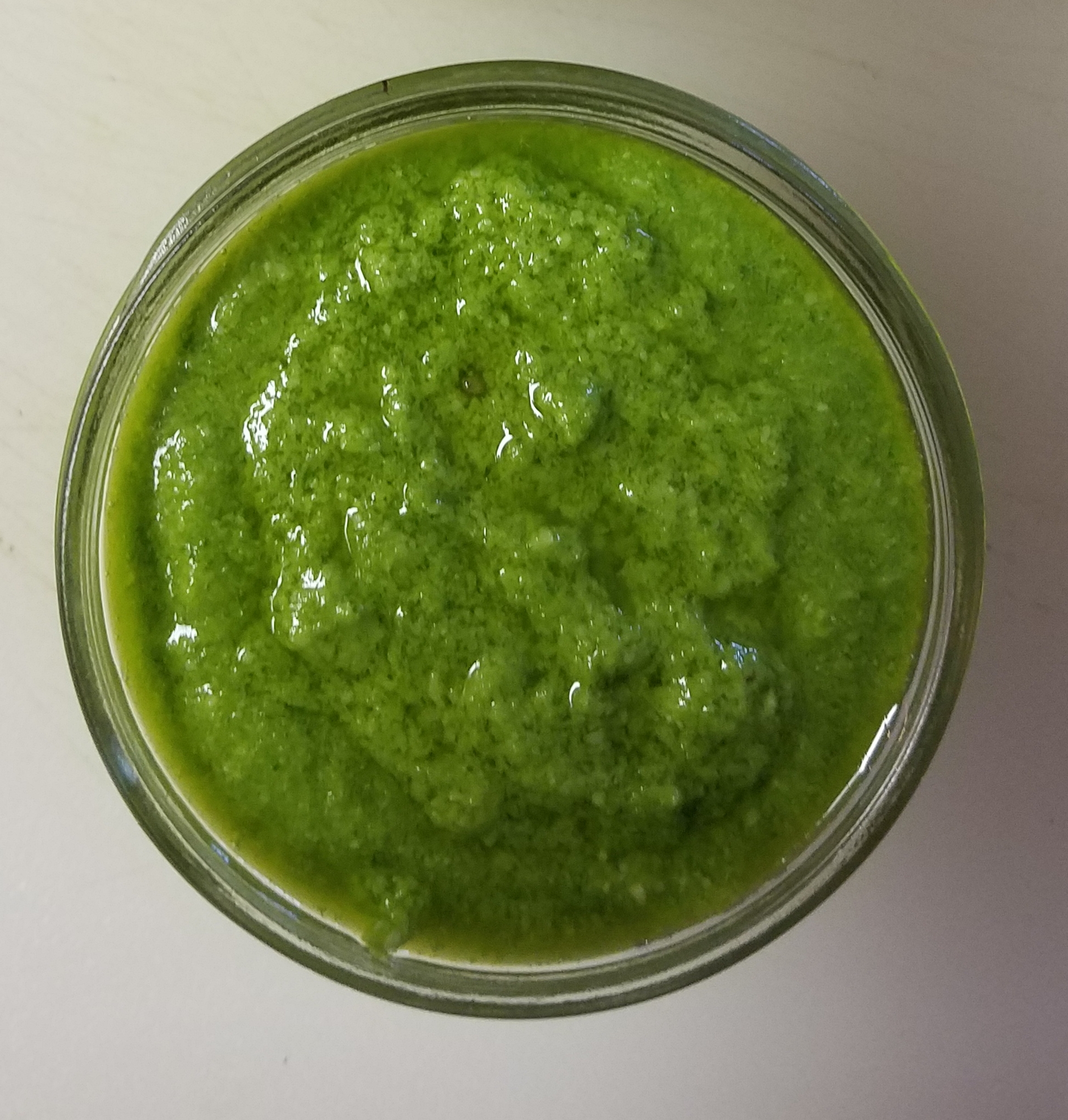
That brings me to mustard greens. I plant them because there are seeds left from previous seasons. There is not much use for them in our kitchen because it is so spicy. One of my recent traditions is to make pesto with them to spread on toast. This year’s batch included a generous amount of mustard greens, Pecorino Romano cheese, pine nuts, garlic scapes, salt and extra virgin olive oil. There are now two small jars ready for use. It is a tasty if somewhat expensive addition to the pantry.

Today, the auto auction company arrives to pick up our used Subaru. With the repairs needed they will likely sell it for parts. I donated it to Iowa Public Radio as I did our last one. I don’t understand how their financial settlement works, although I’m glad they have it. The dealer wouldn’t give us much in trade against the new purchase. We feel we are helping a good cause.

Categories
Writing

Channelling Talent

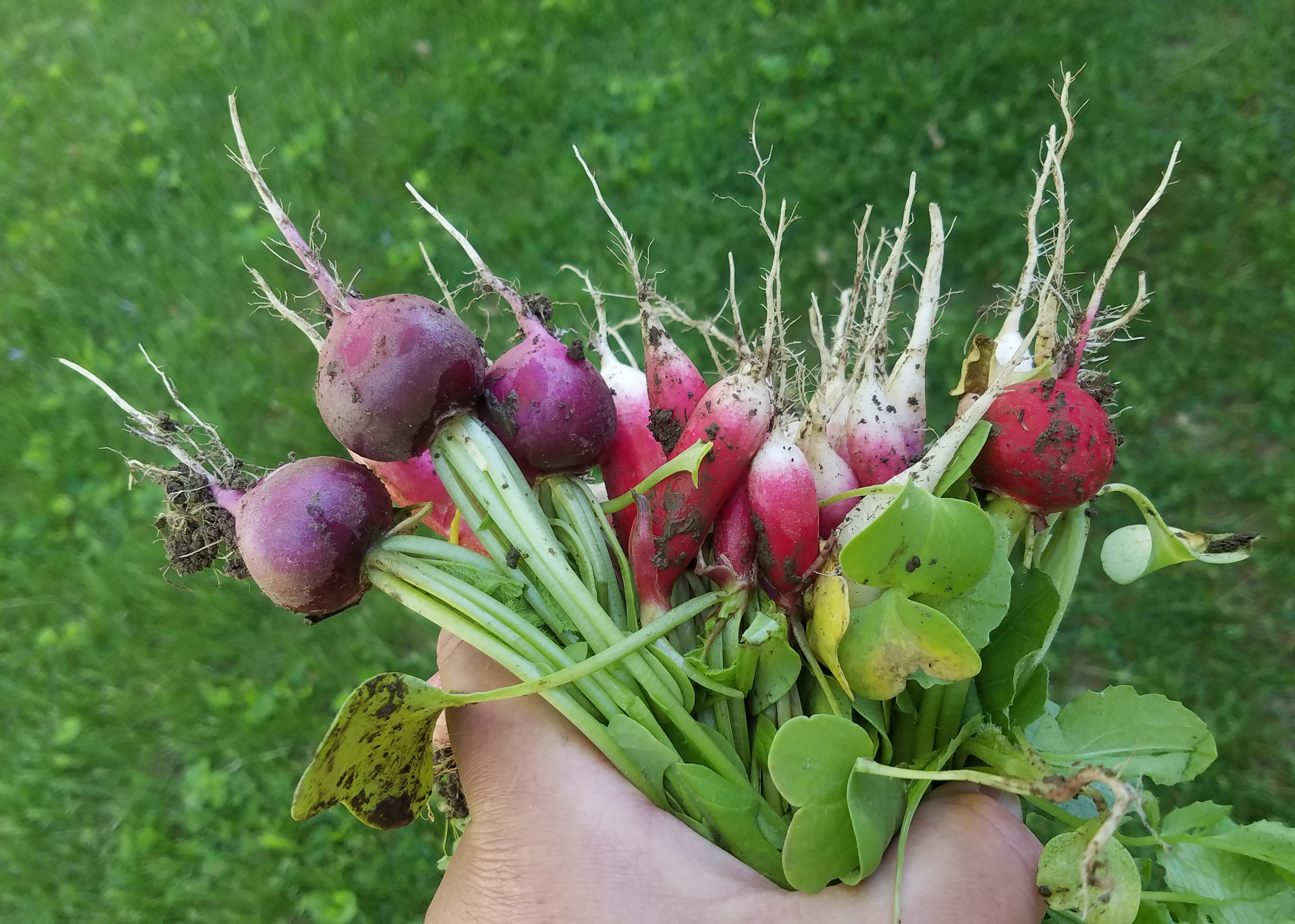
Fresh radishes.

It has never been easy for creative people to channel their talents, let alone make a living from their work product. My reaction to this fact of society was to get a job that pays a salary or wages and create on the side. I don’t know of any other way to finance creativity over the span of a single life.

When I was younger — from high school until finishing military service — I felt I could be anything I wanted to be. Hoo boy! To be that kid again! I bought some time when I returned to Iowa after military service by getting my Masters Degree in May 1981. I then faced the reality of how few jobs existed that provided an inherent ability to create. I worked for the University for a while, got married, and began what would turn into a 25-year stint in transportation and logistics. I created on the side, yet was often too tired after work and on weekends to get anything creative accomplished. There was creative output, but not as much as I wanted.

I tried a lot of creative media when I was young: ceramics, drawing, watercolors, performing music, and writing. Of these, writing is the one that stuck with me. I started a journal after undergraduate commencement, and have continued to write in it until today. Except for the volume stolen from me in Calais, France after crossing the English Channel, I have them all. I sought to get published in the local newspapers by writing letters to the editor beginning in 1974. I continue to write them. Beginning in 2007, I published online blog posts which have accumulated into a substantial body of work. I began with the Google Blogspot platform, then switched to WordPress. I have printed copies of all of these posts in 20 volumes. After trying things in my youth, I ended up using writing as my creative outlet.

Among my favorite writers is William Carlos Williams who made a living as a pediatrician while writing some of the most imaginative verse and prose I’ve read. I could never be like him yet he is a role model for the way he isolated himself from his day job to participate in literary culture of his time. His is a lesson every person seeking an outlet for creative endeavor should seek and likely emulate. While there is no single “literary culture” today, it is important to seek a group of like-minded writers with whom to share ideas and collaborate. For Williams, the literary culture of New York City was near his home in Paterson, New Jersey. One might think I would have something similar by living about ten miles from the University of Iowa Writers Workshop, but that hasn’t proven to be the case.

I recently wrote about living on Gilbert Court in Iowa City during my senior year as an undergraduate. It was a significant exposure to a group of poets, prose writers, artists and book publishers who made their own literary movement called “Actualism.” Darrell Gray even wrote about the movement in his book Essays and Dissolutions published in 1977. By that year, I was long gone from Gilbert Court, living in Germany after joining the U.S. Army. We didn’t consider ourselves to be “Actualists” when I was there. Gray and others were working through the idea. Actualism had become more prominent during the years after my graduation.

The realities of needing a job to pay bills has been present since undergraduate school. Since we married, I have been able to carve out a space to get away from daily life to be creative. I have a talent for something, and have done my best to maintain a quality of life that will support my writing as a separate endeavor. Now that I retired and have predictable pension income there is more opportunity to write. Thing is, all that writing since 1974 means something as well.

If I don’t have a firm idea of what I should be doing with my writing and creative endeavor, there is a sense I have a talent for something. For now, the major project of my autobiography takes a lot of creative energy. Between that, this blog, and letters to the editors of newspapers, I find a way to channel my talents. If each person’s journey is different, it is something to recognize where one is going.

Categories
Writing

Writer’s Week #7

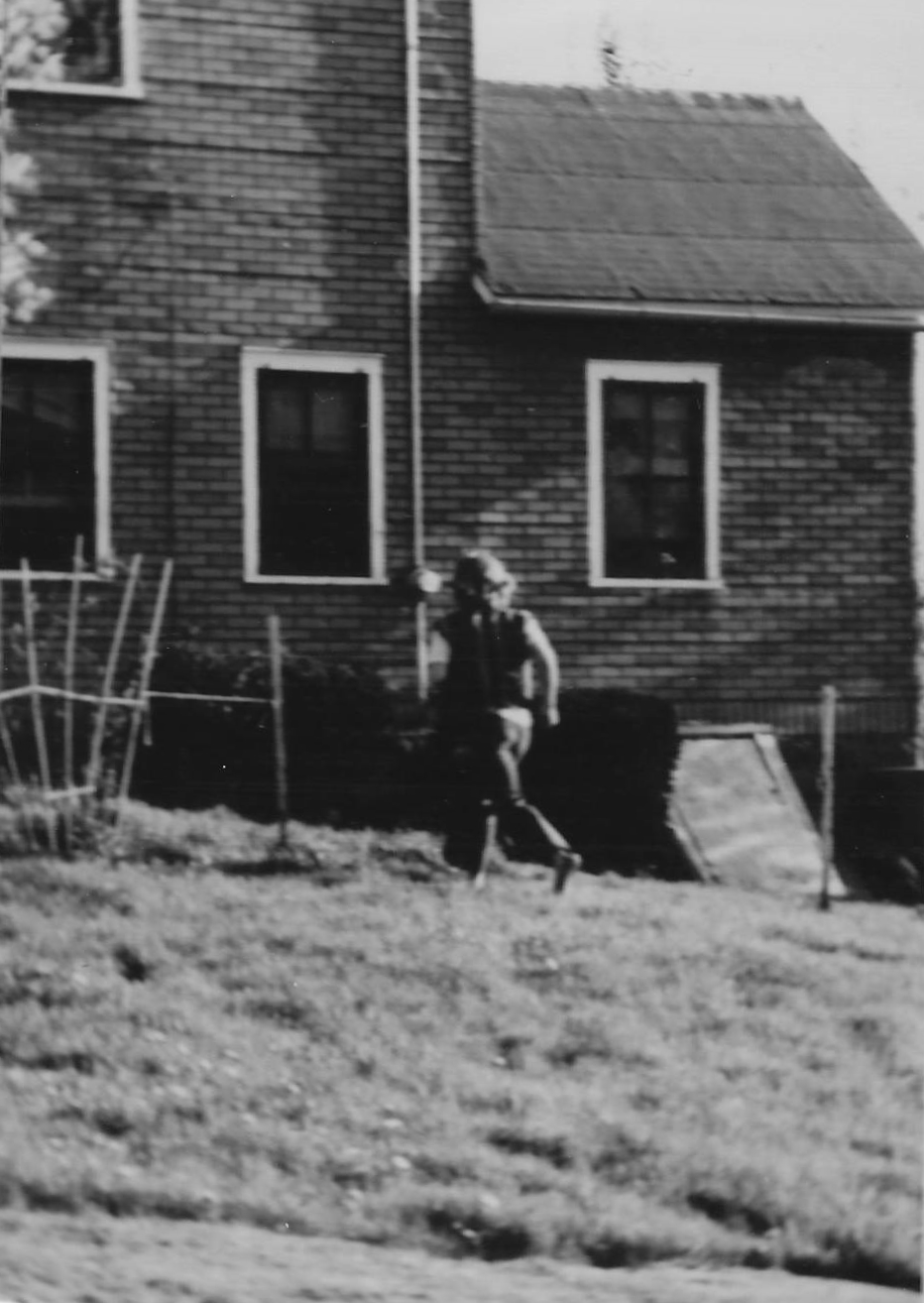
Playing with a Frisbee on Gilbert Court in Iowa City.

It isn’t clear when it began yet I’ve reached a stopping point in writing my autobiography. I had intended to breeze through my undergraduate education at the University of Iowa — touching key points only — so I could focus on my trip to Europe, military experience, and the time leading up to our wedding and the birth of our only child. I’m inside those years in Iowa City pretty deep and the dive has only begun.

As I wrote about my early and K-12 years in Davenport, it was easier to paint with a broad brush. The narrative I sought to reduce to paper had been forming for a long time, comprised of specific memories and a small set of people, places and things. I had never thought of my years from birth to high school graduation in a structured manner before. I’m learning about those times in a way I hadn’t considered. It was easy to avoid complexities as moving away from home, and what I became at university, gained more narrative importance. I have had to stop and take stock. That’s where I remain for the time being, likely for the rest of summer.

My last year of university was transformational and I’m just beginning to understand how much so.

Senior year, when I lived in a shared home on Gilbert Court, was the time when Oscar Mayer & Company offered me a job as a plant foreman. I appreciate the offer. They didn’t have to make it. Yet when they funded most of my education in the form of a grant from the Mayer family after the death of my father at the Davenport plant, it seemed appropriate. I recall the first summer I worked at the meat packing plant. One of the millwrights I was helping offered to take me to see the elevator which collapsed and killed Father. I had no interest in reliving that history then, or on a daily basis while working there. I declined the offer.

I had not developed any strong relationships with women by the time 1974 arrived. It seemed unlikely I would be ready to do so for a while. During summer gatherings with male high school classmates, they were often ready for sexual action. I was not and those nights we departed company so they could pursue their desires. I developed relationships with women at university, yet wanted to be friends. I couldn’t bear the possibility of a romantic breakup forcing us to separate. Lack of a “girlfriend” was a background tension I dealt with by living a full life in other ways.

The most important transformation may be coming to terms with the desire to be creative. After graduation I spent years considering what that meant. A group of poets and artists gathered at our house from time to time. Some are better known than others yet it was David Morice, Darrel Gray, Alan and Cinda Kornblum, Jim Mulac, and others who stopped by. I was enamored of Actualists, perhaps. In any case, I learned from them that a conventional approach to poetry, fiction writing and book making wasn’t necessary for success. I didn’t know any of them well, yet hanging with them in the living room helped me grow creatively.

I was taking art and art history classes to complete my degree in English. I dabbled in ceramics, tie dye, music, photography and other media. I realized there was no clear path to success as an artist, let alone the multi-media creator I vaguely wanted to become. I gave up a conventional career in the meat packing plant, in favor of a speculative future. It was unlike what I expected in high school and held a sketchy future at best. The desire to pursue this idea drove much of what I did throughout the rest of my life yet especially the following eight years.

The autobiography will be better for all this new understanding. Yet I have to get back at it. Currently, there is much work to get the garden planted. Once that’s done perhaps the muse will visit again.

Categories
Writing

Writer’s Week #6

Potato containers ready to re-plant.

Sunday’s high winds, with gusts up to 45 miles per hour, did their job. The wet soil turned over on Saturday has dried enough to till. Today’s list includes plant a row of early vegetables to be protected by row cover, dig a spot for the tubs in the photo, and continue the deconstruction of last year’s garden plots with an eye toward planting more early vegetables. Garlic is up. I chose the plot for tomatoes. Much planning remains.

I’d like to move the seedlings back into the greenhouse. The forecast later in the week is for ambient temperatures to fall below freezing again. I’ll think about that as I’m tilling the first row. I’m scheduling a five-hour shift, planning to use it all.

The main news since my last writing post is the 1950 U.S. Census was released. In it I found new information and as a result, need to re-write the chapter about Davenport in 1951. This is a positive development. The census provided the first specific evidence of family members living in Rock Island, something I’ve known, but with little detail. I found my Uncle Gene also lived there, separate from his father, working at a dairy where he “helps with milk.” He was seventeen years old. The census also clarified the status of the home to which I was brought from the hospital after being born. My grandmother was head of household with the three children from her second husband living with her. There is a lot to track down and the new census release makes it easier than it was. It also confirmed some things I knew with another, definitive source.

I scanned the 313 pages of double spaced manuscript. Boy, there is a lot more writing, editing, and proof reading to do! Some things seem solid. The outline I created this year will continue to serve as a coat rack upon which to hang things I write or discover. That will be followed by a re-write using the new information. The work I did before the coronavirus pandemic does not fit neatly into the new outline structure and needs a major re-write. Likewise there is much to accomplish to write through the period of time before I kept a journal, got married, and started working in transportation. Depending on my choices, there could be two volumes. The first through the birth of our daughter, the second covering everything else through the coronavirus pandemic. Reducing it down, last winter was a period of progress.

The unavoidable task ahead is going through all of my past writing and paper archives to distill something usable. Thus far, the writing has been fun adventures of me sitting in front of a computer screen making up the story. Once I tackle the physical record, writing will be real work. I’m looking forward to writing the whole thing so it may be time to put it in low gear and start climbing that hill.

Right now, all I can think about is getting to my shift in the garden.

Categories
Writing

Writer’s Week #5

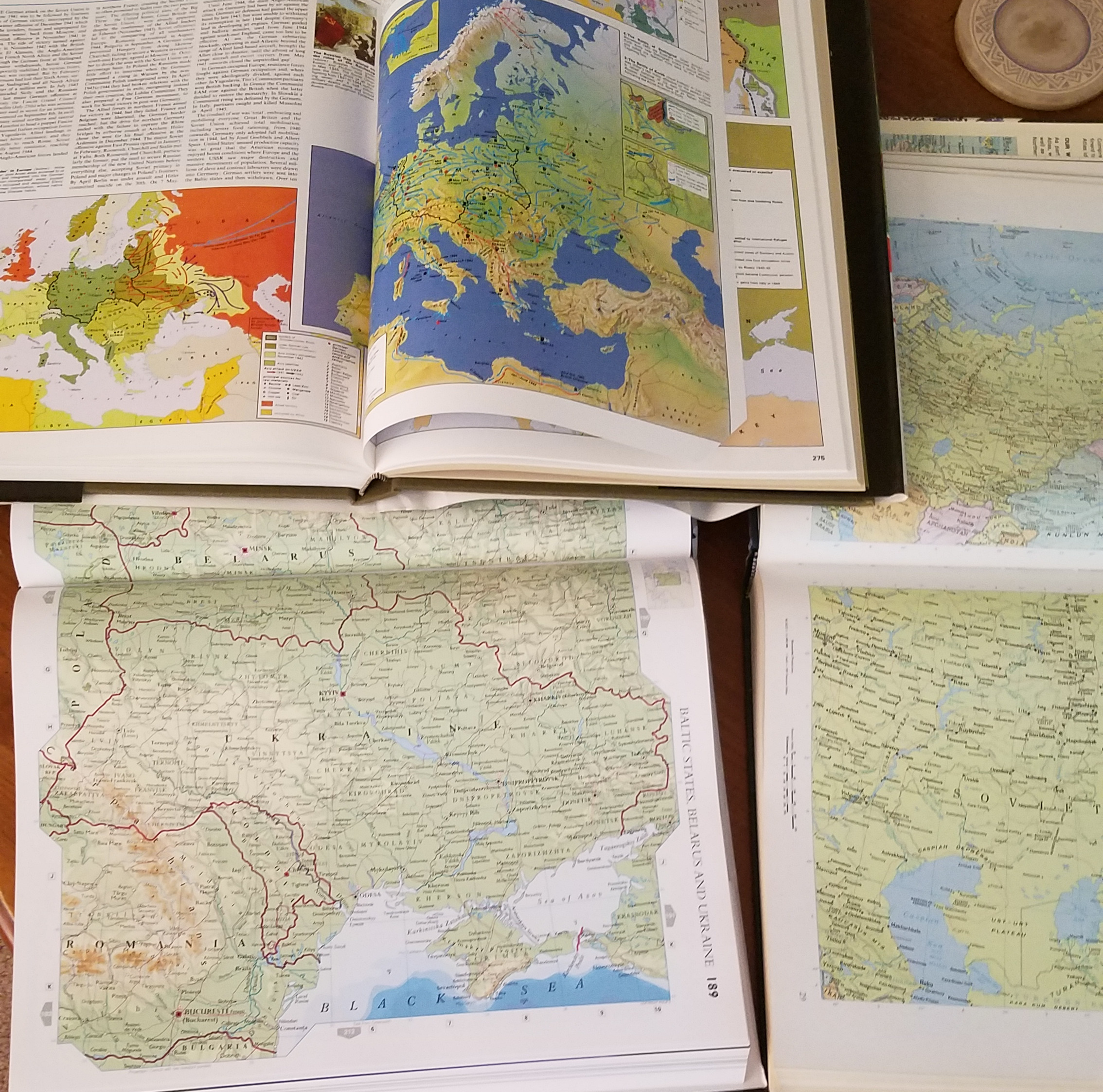
Atlases opened to Ukraine.

Every time I read the name of a new city in Ukraine, I look it up on a map. When considering the vast expanses of farm fields depicted in atlases, I wonder how Ukrainian farmers will get a crop in this spring. I also wonder about the number of war crimes the west will tolerate before doing something more substantial to stop Russian aggression. The invasion began on Feb. 24, although it is being framed as part of a war that began in 2014.

U.S. interest in Ukraine has to do with so many of its citizens being Caucasian. Also, I got to know a group of Ukrainians who were guest workers at the orchard. Many locals have Ukrainian connections. The easy access social media provides to the war (especially via Twitter) makes it real. I was barely aware of other modern genocides, like in Darfur, Rwanda, Myanmar, South Sudan, Central African Republic, Bosnia and Herzegovina, East Timor, and others. With social bias about white folks, the Ukraine conflict is getting plenty of media attention in the U.S. People here are engaged.

Following the Russia-Ukraine war takes more than a little bandwidth.

All the same, I passed 70,000 words in new writing this year. The main change over last year is the process I developed (and have written about) is working. There is much to consider in a single human life, yet time to experience it only once. As I use a chronological framing to work through the story, I’m surprised at how much I remember and how vivid those memories are.

This week I wrote about my time at the University of Iowa. A valuable resource has been the online archives of The Daily Iowan going back to 1868. I also have letters I wrote and letters written to me, my main school papers, as well as some artifacts from the period. All of these resources aid memory in production of writing that is personally meaningful.

I participated in the May 11, 1972 anti-war demonstrations to protest the Nixon administration’s mining of Haiphong Harbor in Vietnam. The tendency is to accept well published stories about what happened, suppressing our personal experience. I believe writing the story I did provides an alternative. Here’s a sample:

Newspapers reported about 1,000 demonstrators by the time they got to Dubuque Street. Some 60 patrolmen with night sticks and helmets stood side-by-side across Dubuque Street at the Park Road intersection near City Park. They deployed smoke into the approaching line of students in front of the Beta Theta Pi fraternity house.

At this point the newspaper narratives diverged. The Davenport Times-Democrat published a headline, “Patrolmen Block Sit-in Attempt.” However, a contingent of protesters returned south on Dubuque to Brown Street and we walked through neighborhoods, then into dense brush to gain access to Interstate-80. At least one person was treated for cuts from barbwire fencing as we found the way to the Interstate through a thickly wooded area. I was among the protesters clearing a path in the brush for others.

We reached Interstate 80, stopped traffic, and set a fire in the eastbound lane. As we did, a bus with Highway patrolmen arrived on the overhead crossing of Prairie Du Chien Road. They climbed down the embankment and formed a line across the eastbound lane. They charged toward us to break up the crowd and extinguish the fire.

From a draft of an autobiography in progress.

If we are not the main character in our own life’s story, then when are we? The new process helps me get a narrative down on paper. Once it is written, editing begins. By the time it is finished, the writing should be quite readable, I hope.

I’m having second thoughts about putting everything in this autobiography. There is too much previous writing I want to include. I see a second volume that is a collection of previous writing, with a section for each type of writing, including letters, poetry, newspaper articles, blog posts, journals and stories. Gleaning the best of this means reading it all. I’d better stick to my knitting and finish the chronological narrative first.

There is also a question of what to do with the images I have on hand. Part of me wants to close the interpretation of images by describing what is in them rather than publishing the image itself. That seems a useful technique. There are so many images there is likely another book with images with extended captions in them. I posted such a work on my Flickr account and it became one of the most widely read posts I made. I took it down when I exited the Yahoo platforms. There is a third book in images and the decision is whether to create it as a bound book, or to make a series of photo albums. It’s an open question.

It has been another good week of writing.