It was 2:30 p.m. by the time I took my daily walk along the lake trail. Many people were out as the ambient temperature approached 50 degrees Fahrenheit. It was a wholly different community in the afternoon compared to morning.
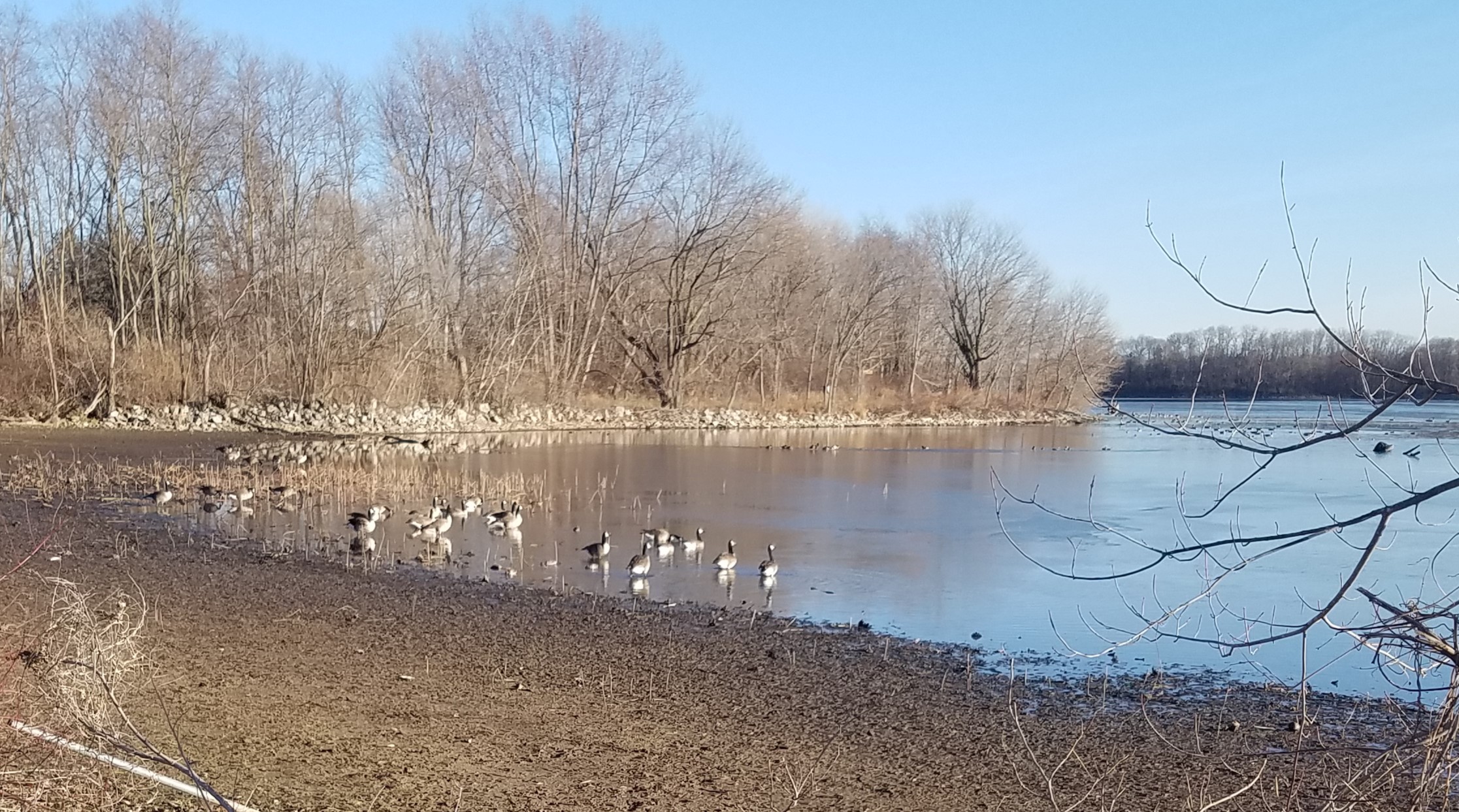
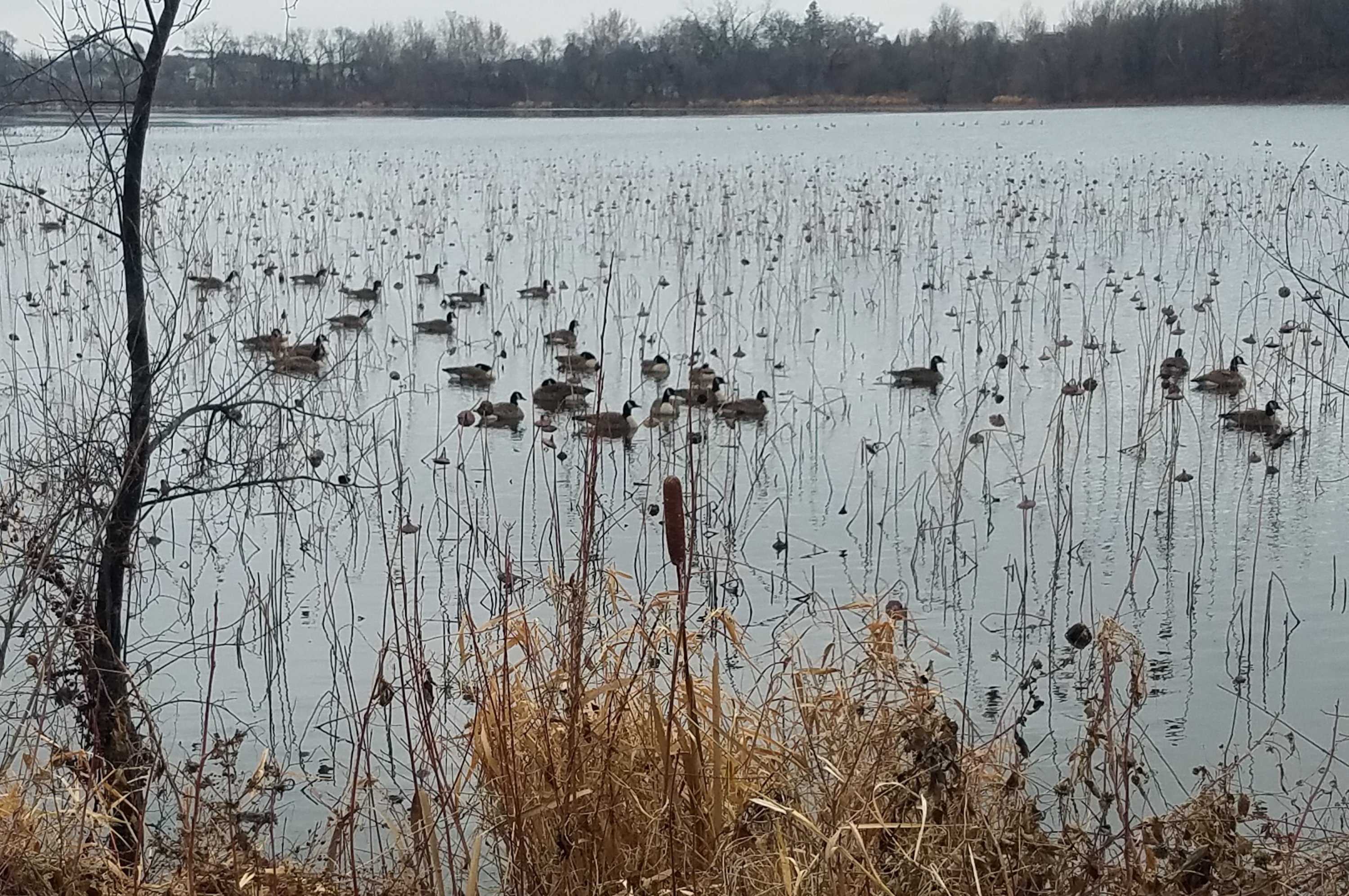
A large flock of geese swims on the lake. I don’t know why they linger. Ice had formed on parts of the surface, and waterfowl took to standing on it in groups. If it remains this warm, I’m not sure they will migrate further south. The lake has plenty in it to nourish them.
I was told by someone close to me I get a bit grouchy during winter. The warm weather encourages me to get outdoors, although communing with geese and other waterfowl doesn’t seem to relieve the condition. Breathing outdoors air is good for us, and the stench from nearby hog lots has mostly been absent. When spring comes farmers will spread manure on their fields and we locals will notice. This is part of living in Iowa, although anymore, grouchiness is endemic to living in the United States. We should treasure those among us who can resist this.
While checking the mail toward sunset, my neighbors were outdoors with their small children in the warm air hanging colored lights on a tree for the holidays. While walking back to the house, I remembered when our child was little. I said “hello” and minded my own business. Those early family memories are precious and fleeting. I didn’t want to intrude.
And so it is, we are living a life and then all of a sudden realize it is shorter than we thought it would be. My reaction to winter is to nestle into my writing room, turn on the space heater, and try to make progress on my autobiography. I also avoid thinking about my ultimate death and return to dust. Except for the manure spreading farmers, I look forward to spring. So it goes.
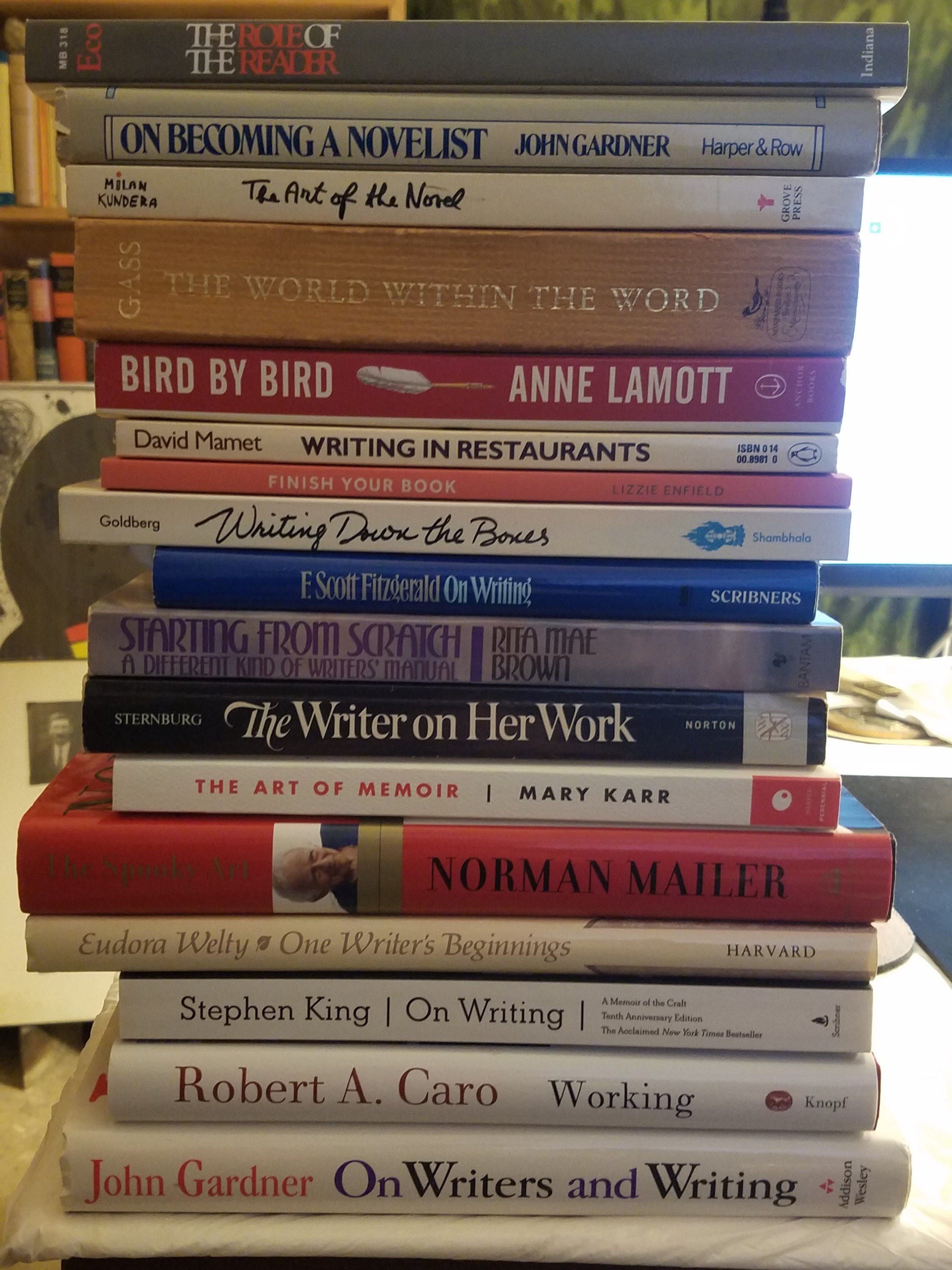
Over the weekend I read Anne Lamott’s Bird by Bird: Some Instructions on Writing and Life. Apparently I was the only person in the known universe who had not heard of her. Printed right there — inside the front cover — are 17 other published works of her fiction and nonfiction. My copy is the 25th Anniversary Edition! I’ve been here all along. Where has she been?
I couldn’t write like her. First, I don’t think I am capable of her stylistic renderings. Second, I prefer a more utilitarian approach. Maybe number two is a reason people have trouble finishing my longer works. The book was entertaining with a couple of nuggets I might actually use. The namesake one, “Just take it bird by bird,” is something similar to what I heard long ago during a Dale Carnegie course, “An air traffic controller can land only one plane at a time.” So it has been without knowing Lamott.
I don’t need to review Lamott’s book because it speaks for itself. I posted a photo of the cover on social media and so many people commented it was one of their favorites. Besides, there are 9,858 Goodreads reviews already.
What I do want to say is it is important to take a break from writing and read a book on being a writer and all that means. At a certain point such books are an easy read with a lot of head-nodding. In a long term project like my autobiography is, one that stretches into years, it is important to walk away for a while and listen to what others say about writing to gain a sense of perspective and hope. Reading about how to write can also be a way to break writers’ block.
I’ve taken to opening the garage door and standing outside in the predawn darkness. Today, stars were out. Because of the layout of trees in the yard, I couldn’t identify any constellations. It was just starlight shining down on me with a reminder we are all stardust. To put it in more utilitarian language, the way scientist Neil DeGrasse Tyson did, “The four most common chemically active elements in the universe—hydrogen, oxygen, carbon, and nitrogen—are the four most common elements of life on Earth. We are not simply in the universe. The universe is in us.”
My writing desk circa 1980. Five Points, Davenport, Iowa
Editor’s Note: Part of my autobiography in progress presents my experiences regarding work juxtaposed with the Reagan Revolution. This opening of part two is how I introduce the dialectic between my work experience, family life, and social changes after Ronald Reagan was elected president in 1980. This social environment would affect our family a lot through the years. Per every author who writes about writing, this is not the final draft.
Working title: Transition from bachelor to husband
Returning to Iowa from military service, it was tough to find work after graduate school. I made a conscious decision to stop moving from place to place, from activity to activity, and settle down. In June 1981, I looked for work that would pay the bills to stay in Johnson County. Then, and to some extent now, that’s where social action is for young, liberal-minded people in Iowa.
Buying every local newspaper, I marked each job in the help wanted pages with an “X” after contacting the company. The work environment had changed from a decade previously when all a person had to do was make the rounds of major employers to find a good paying, union job. No more.
My application for work got extra points for consideration at the university because of my military service. That led to more job offers. I took a job at the College of Dentistry because it was offered. At the University of Iowa there was a small retirement plan, no pension, and no health benefits.
About a month later, on Aug. 3, 1981, the Professional Air Traffic Controllers Organization (PATCO) went on strike. President Ronald Reagan ordered them back to work and on Aug. 5, he fired 11,345 workers who did not cross the picket line, breaking, and ultimately decertifying the union. While on a later business trip to Philadelphia, I met Reagan’s chief counsel in the PATCO action. We discussed the strike and Reagan’s handling of these government employees. My understanding of the action was confirmed. It was political.
What started in 1981 with the PATCO strike continues, without apology, as part of Reagan’s legacy of breaking unions. The unintended and maybe not considered consequence of Reagan’s union policy was to make life harder for middle class workers like me.
I met my future spouse at the beginning of the Reagan Revolution while we both worked at the University of Iowa College of Dentistry. We got to know each other, and a year after the PATCO strike, I proposed marriage on Aug. 18, 1982.
Waterfowl on the move, Tuesday, Dec. 5, 2023 on Lake Macbride.
My first was a handheld transistor radio purchased about 1963. I used it to listen to KSTT AM’s weekly Top 40 countdown. That year, the station moved from the Hotel Davenport to a new building at 1111 E. River Drive. When I was in high school we would drive past the station and wave at the disk jockey through the large picture window that faced the street. The corner drug store distributed paper copies of the KSTT Top 40 list and I tried to get one each week so I could follow along with the countdown. I have a couple of those in a scrapbook. The thing about radio was I could listen without the supervision of parents. If I plugged in the earphone, they wouldn’t know I was listening in bed. As a grader, that was important.
There was a large radio in the basement of the American Foursquare home from which I attended grade and high school. It was more a piece of furniture, standing taller than my waist. There was an AM dial yet I mostly used it to receive short wave signals from around the world. I spent a lot of hours roaming the dial and seeing what people said in English. It felt good to be exposed to radio signals from outside the United States. This is something I wouldn’t have done in my Midwestern life without that old radio.
I have few memories of listening to the radio in the series of Volkswagen vehicles I owned in high school and at university. I suppose I did listen to the radio, yet it made no lasting impression on me.
Upon arrival in Mainz, Germany in December 1976, I bought a General Electric multi band radio at the Post Exchange. It used batteries or could be plugged in. It gave up the ghost during the last few years, yet it produced high quality sound as I searched the AM, FM, and shortwave dials. I recall listening to live reports from the Vatican on Armed Forces Radio. The conclave of cardinals was electing a successor to Paul Paul VI and the reporter described the smoke rising from the Sistine Chapel after each vote. It seemed like a big deal when Pope John Paul I was named pontiff. It surprised everyone when he died 33 days into his pontificate.
While serving as an infantry officer, our unit had a long deployment to Baumholder for a training exercise that brought in much of Eighth Infantry Division and some of V Corps. The training was about readiness for a potential invasion of West Germany by the Warsaw Pact Armies through the Fulda Gap. I had roles to play at Baumholder, yet was also responsible to maintain garrison operations back at the kaserne in Mainz-Gonsenheim where we were based. I drove home from Baumholder most Saturday afternoons in my Chevy Truck while listening to Armed Forces Radio. The play list those days was old serialized mystery plays like The Shadow. The same playlist each Saturday helped make the 110 kilometer trip pass quickly. As each program ended, I ticked off the miles on the journey home.
In 1988 our family moved to Lake County in Northwest Indiana. We lived in a tract home in a neighborhood where all the homes appeared to have a similar design that included a ranch-style structure situated on a crawl space. Our version had a detached garage where most of my stuff lived in boxes. I had some space on the built in living room book shelves, an easy chair I received as a Christmas gift, and in the corner of the dining area we placed a word processor where I could write. I listened to local radio in our garage, mostly on weekends when I worked on projects.
Indiana, during the six years we lived there, was in transition. The heyday of large steel mills had ended and was being replaced by smaller, more efficient steel production facilities. Manufacturing across the Midwest was suffering because of the Reagan Revolution which drove it to locales where labor was cheaper. The local radio warned about developing a “steel-mill mentality” and to develop interests, especially among younger people, outside the mills.
There was a radio swap show on Saturday mornings. On it, callers would report items for sale and leave contact information. At the trucking terminal I managed, one Friday there was a theft from one of the parked trucks. The stolen consumer goods turned up on the radio swap show.
Folks in Lake County were mostly good people, although of an attitude that reminded me more of grouchy Bucks County, Pennsylvania folks than Iowans. Our daughter went to public school beginning in Kindergarten and it was a type of experience where kids, especially Hispanic kids, would be pulled out of school without notice, never to be seen in school again.
I traveled extensively throughout Indiana, visiting most parts of the state in my six years there. The radio was a constant companion even if I can’t recall to which stations I listened. About the only sure thing was listening to one of the two Chicago traffic radio stations when I had to make a trip into the city.
We moved back to Iowa in 1993 which was the heyday of Iowa Public Radio’s Saturday afternoon lineup. Programs like Thistle and Shamrock, Mountain Stage, and A Prairie Home Companion made an afternoon leading to supper time for me. It was more times than I can remember. I also listened to Car Talk while working in the garage on Saturday mornings. Listening to Iowa Public Radio on Saturdays was a thing until it wasn’t, due to budget cuts, Garrison Keillor retiring, and the coming to the air waves of local musician Bob Dorr who dominated the afternoons. To be honest, I could take only so many instances of Dorr going through his collection of vinyl LPs. It was the end of an era.
Today I mostly listen to afternoon news reports on public radio while fixing dinner, classical music when working in the kitchen during the afternoon, and to country music while driving in my automobile. The garage radio is usually tuned to country music. Automobile listening has become more important because the station to which I tune in is targeted by political advertisers. I can tell who’s got the dough for ads and who doesn’t. That, along with messaging, informs my view of what Republicans in the state are up to. Democrats don’t spend as much on radio advertising, simply because they don’t have the dollars.
The story of my radio listening isn’t just this. However, this post provides a sample of my life, something basic to my personality.
When our child lived in Colorado, before Keillor went off the air, I cooked dinner for us in their apartment with a Prairie Home Companion on in the background. It was a shared family experience that remained important to us. I value such memories. They can’t be repeated, only remembered. Memory of radio listening has become increasingly important as I age.
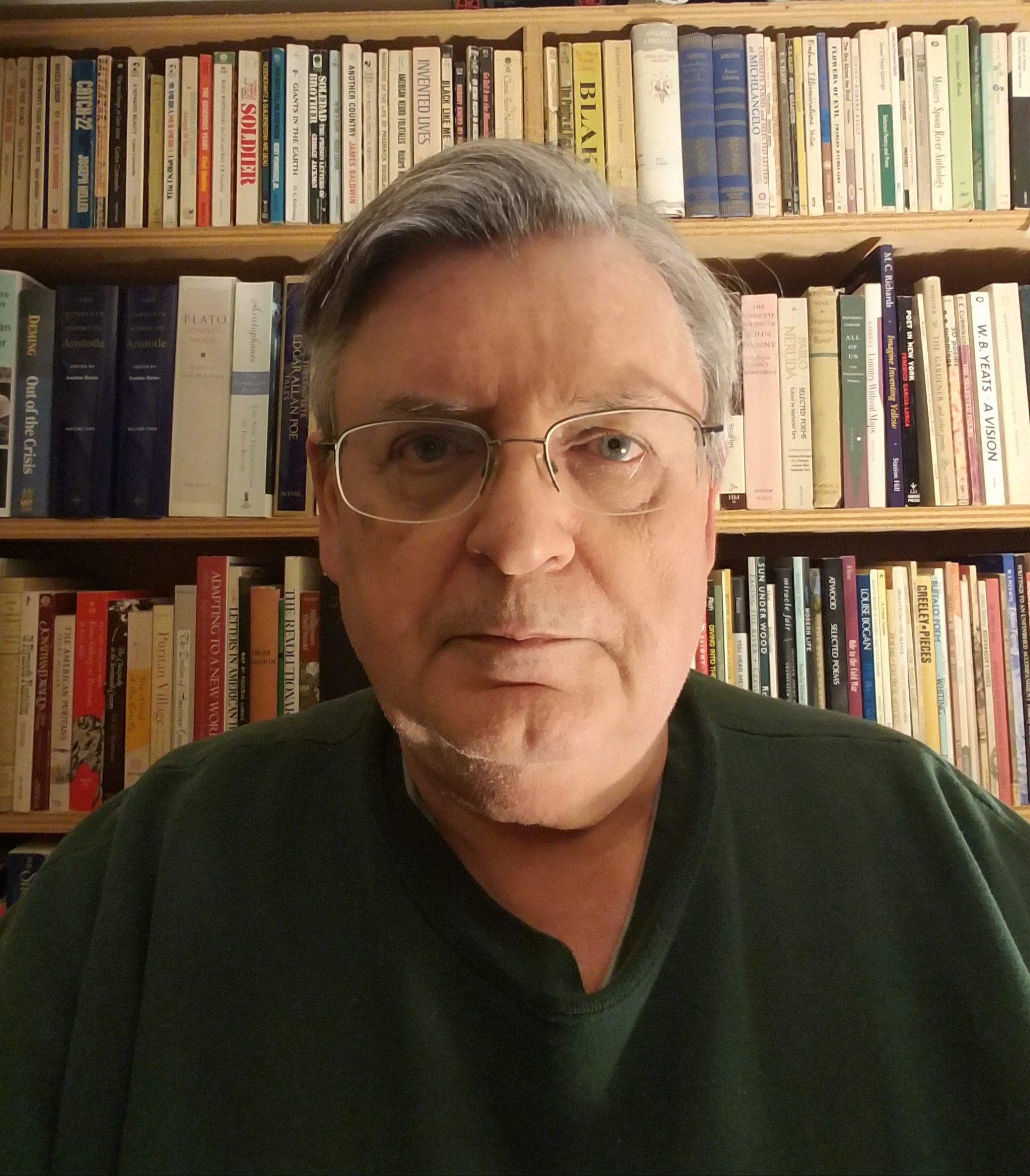
Yesterday I updated my profile picture across much of my internet presence. The 2011 image I had been using was taken in our garden by my spouse. That I’m now choosing a selfie is a sign of the times, the meaning of which is to be determined. Eventually the new image will be propagated throughout my accounts. I felt it was time for a change. An indoor shot in lieu of a garden image is indicative only of the season in which it was taken. The books in the background? Don’t make too much of those as it was a setting of convenience. In December it’s time to move most activities indoors and I spend a lot of each day in my writing room where there are shelved books.
The more impactful change is deactivating my X account on Nov. 22 after 15 years on the platform. That, combined with becoming more active on Threads decreased my personal mental tension almost immediately. I’ll miss certain people and accounts from X, yet the clean break will serve me longer term. So far, so good with Threads. There is so much more positive engagement on Threads it’s hard to believe that vibe will persist. In any case, there’s no going back to X.
I think the myth of the “big account” sustains X. That is, folks there feel like all the key players for their conversations remain. Likewise Threads in particular, but other new microblogging sites as well, have a paucity of news accounts. Some great news and commentary folk from X are moving or setting up accounts on other microblogging platforms, yet don’t post a lot. X is not dead, but gonna die, I predict, once news and political accounts abandon it. For now, I have newspaper subscriptions to get news when I need it. If I get desperate, there is always radio and cable television to backstop me.
As the year winds down, it’s time for budgeting as well as determining if this life in Big Grove Township is sustainable. Living on a fixed income has been challenging. I hope we can make it this way for a long while. Sadly, in American society, life is more often about financial numbers than fulfilling our wants and needs. This blog is an attempt to change that.
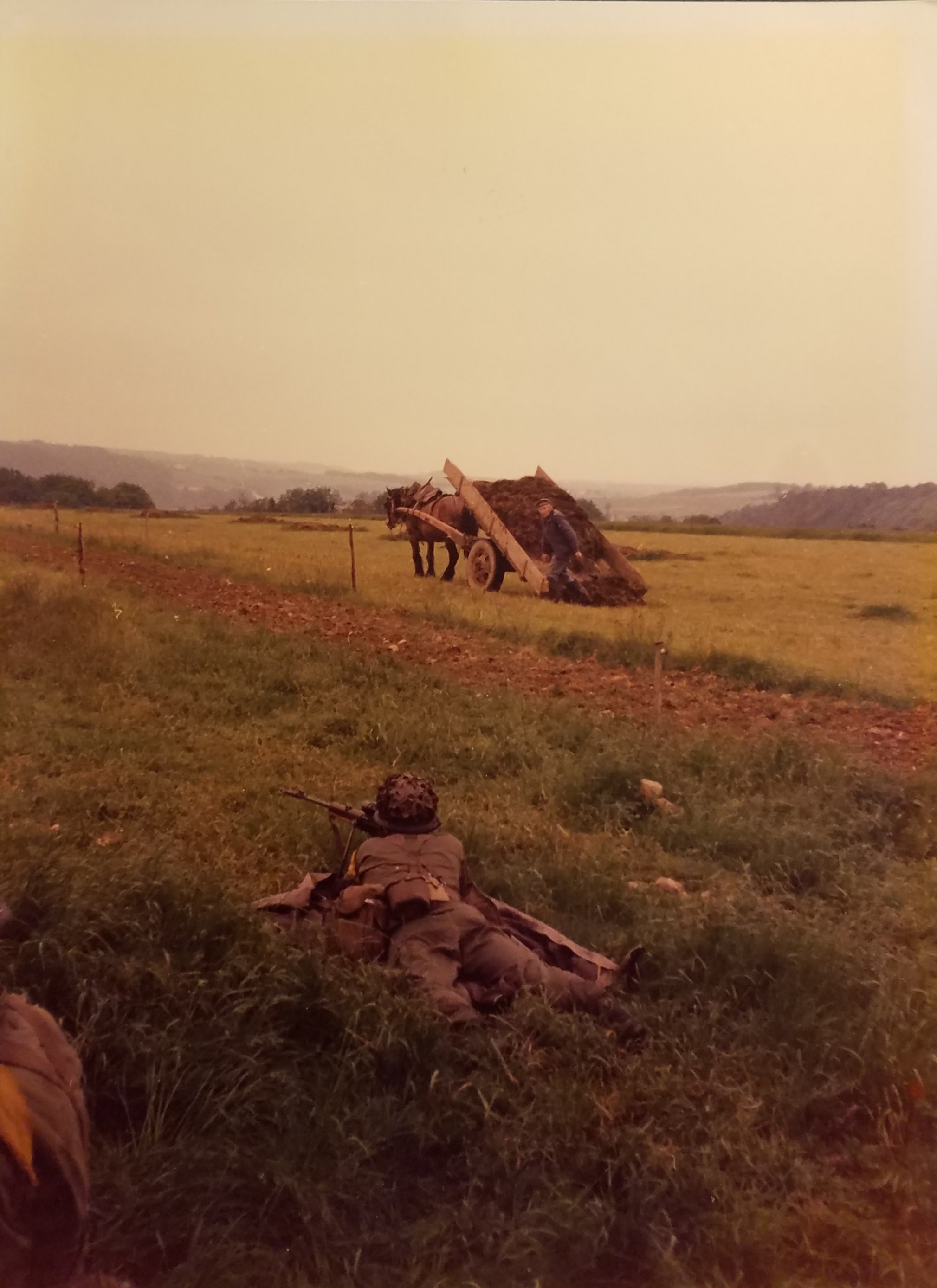
Farmer spreads manure while we were on maneuvers with the French Infantry Marines in Brittany, late 1970s. They keep the horse before the cart in Brittany. Photo by the author.
Three and a half years into retirement I’m not close to being finished culling belongings. It takes time, yet it’s more complicated than that. In particular, when I find a neglected packet of photographs, I can spend hours chasing memories close to whatever main event prompted me to take them. Moving to digital photography in 2007 hasn’t made it easier. If anything the number of photos multiplied each year because of the ease in taking them. Digital files mount up and I developed a special back up process so I don’t lose them. There are so many.
Everywhere I look in my archives, I find more photos all arranged in a hodge-podge manner. Once found, I remember taking most of them, yet how to tap them for pragmatic narrative is problematic. Each batch leads down a different rabbit hole.
I enjoy time spent with photographs yet need discipline in how I use my writing time, which sorting photos is. With the explosion of film photographs when I was a pre-teen, followed by digital in 2007, there are so many that simply looking at them is a huge task. There are six decades worth!
Luckily, Mother was keen on downsizing while living. Included in her belongings were many photos and she let me go through them, taking some prints, but mostly scanning them to files. That, too, was a massive undertaking. I got the images I wanted leaving the hard copies for my siblings.
When writing any book, the number of photos that can be included is small. I’m reading Rachel Maddow’s book Prequel and she used one or two images per chapter. That seemed like a lot. When I print my blog book each year, the photographs make the pages vibrant. They are a small subset of what’s available. I recently changed the size of them after recognizing the photo was as important as the text in many cases.
Sometimes I use a photograph as inspiration to write a paragraph or two without planning to include the snapshot in the book. A photograph can stir living memory from that mystical storage place in our brains. Often the narrative is better than the image. It focuses the reader’s attention on aspects of the story that drive narrative. Too many photos can get readers distracted from the narrative.
I have a short term project in my writing, but big picture I need to distill the boxes and crates of belongings to a usable number. I should pick photographs that advance a narrative, or record some specific moment in time. Seems like writing 101 and I’m only just arriving at this forking path.
Modern Woodmen Park (formerly Municipal Stadium), July 29, 2013. Photo Credit: Bohao Zhao, Wikimedia Commons.
Municipal Stadium in Davenport, Iowa was an important part of my growing up. As much as anything, it was a central gathering place for big events for the local proletariat in this sleepy city on the Mississippi River. Our family or I attended events there, including musical performances, high school football games, professional wrestling matches, and a revival meeting. I once attended a Minor League Baseball game there.
By the 1950s and ’60s no culture of big community events existed in Davenport. Segments of the population did gather at a stadium for events tailored to their interests. Promoters tried to make something of our sports teams, yet everyone seemed to have their own life with accompanying other things to do. Here are four things in which I participated at Municipal Stadium, as we called it then.
Herman’s Hermits
On Aug. 27, 1966, Herman’s Hermits played in Davenport at the Municipal Stadium. In the wake of Beatlemania, this was the best our Midwestern city could do. My cohort had watched the Beatles on the Ed Sullivan Show and talked about it at school. I had visions of becoming a musician, having gotten a guitar at the King Korn Stamp Store soon after the British Invasion began.
I don’t recall how I got tickets, but I had income from my newspaper route. Mother made the arrangements for bleacher seats. It was a sunny day for the concert.
If I wrote down everything I remember about the concert, the paragraph would not be long. Besides the concert, the Times Democrat story of Peter Noone and other band members shopping in the book section of the M.L. Parker Department Store struck home. It was the same place I had begun buying books with my own money. That made everything pretty real. A few of my classmates also attended the concert. The songs the band performed were not memorable, even the ones played on the radio.
All Star Wrestling
Father and we kids attended a professional wrestling match at Municipal Stadium. The stands were not packed although because of the popular Saturday morning television program, All Star Wrestling, the event drew a good-sized crowd. Patrons were unruly, with arguments breaking out among them. I almost got into a fight after mouthing off to a stranger. That day there was a cage match during which constructing a cage of chain-link fencing was part of the spectacle. Young women would visit the motel across the river where the wrestlers stayed and attempt to accompany them on tour. Such plebeian entertainments were typical in my home town.
The American Wrestling Association (AWA) was an American professional wrestling promotion based in Minneapolis from 1960 until 1991, according to Wikipedia. It was founded by Verne Gagne and Wally Karbo, originating as part of the Minneapolis Boxing & Wrestling Club. Unlike modern professional wrestlers of the WWE, Gagne was an amateur wrestling champion who was an alternate on the U.S. freestyle wrestling team at the 1948 Summer Olympics. He ran the AWA with a conservative sensibility, Wikipedia said, firmly believing that sound technical wrestling should be the basis of a pro-wrestling company. Cage matches reflected no basis in technical wrestling as Gagne had come to know it.
New Flying Buttresses
When Mother settled with the elevator company in 1973, after Father’s death, we kids got a share. Mine amounted to about $4,000, which I hastily spent on a Volkswagen micro bus, a Fender Telecaster Thinline guitar, a public address system and two Peavey guitar amplifiers. Some stage crew buddies and I formed a band. I’d call it a garage band but we mostly played in the basement of the bass player’s family home, or in Mother’s dining room. Because we invested in equipment from a music store on the Illinois side of the Quad Cities, when they staged a concert for bands to whom they sold equipment, we were invited to perform.
Municipal Stadium is the largest venue in which I played. We only performed a song or two, which made the rigamarole of setting up and tearing down, the main part of the time we spent there. We were all stage crew, so we lived in that realm. We played Six Days on the Road by Earl Green and Carl Montgomery. I remember breaking a string during the performance. We didn’t have a name and were introduced as Paul Deaton and his New Flying Buttresses. The name lasted exactly for that single gig.
Johnny Cash
On July 22, 1974, Johnny Cash, Carl Perkins and their band traveled to Davenport to perform at Municipal Stadium at the request of the Rev. Tommy Barnett, then of the Westside Assembly of God. During his tenure as pastor, Barnett grew the congregation from 76 to more than 4,000 members. Westside buses could be seen each Sunday, plying the neighborhoods throughout the lower part of Davenport, picking up its church-goers for service and then delivering them home.
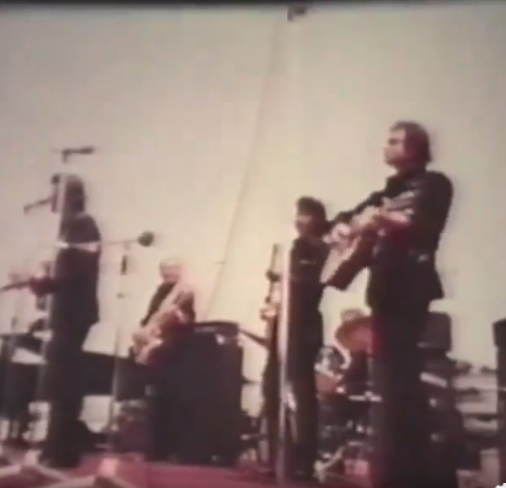
Carl Perkins and Johnny Cash playing at a Tommy Barnett Revival at Municipal Stadium. Screenshot from a video of uncertain provenance.
Cash was supportive of Barnett at the time, although he recanted his support in one of his memoirs. In researching this post, I found numerous stories about the concert, and having been there, found almost all of them to be greatly exaggerated. A short video of Barnett and Cash includes a panoramic shot of the crowd at Municipal Stadium (Link is here). The stadium and bleachers show the concert was well attended. I’d come to the concert to hear my shirt-tail relative June Carter Cash, but she stayed behind in Tennessee at the last moment. Since I had already been baptized, I passed on the opportunity to walk to the stage and be saved.
These are the kinds of events that attracted working class families in Davenport during the 1960s and ’70s. We weren’t Marxists, yet the word proletariat fits.
The year has been okay, yet nothing to write home about. In fact, most of the year was spent at home with three months of my spouse being gone to help her sister. Whatever happened mostly happened in Big Grove Township.
Each year, beginning at Thanksgiving, I review my life. In the past I reviewed my most viewed blog posts. There are additional highlights to include this year.
Writing
My most viewed blog post was History of a Wing Nut published Aug. 25, on Blog for Iowa. I wrote, “(Mariannette) Miller-Meeks has become a wing-nut institution. Iowans deserve better.” I reviewed the influence of the fossil fuel industry on her work in the Congress, as well as her six congressional campaigns. It was the third most popular new post on Blog for Iowa this year.
On Journey Home my remembrance of friend since high school Joe Garrity was the most popular post. Joe died March 22 of complicated health issues triggered by COVID-19. It makes no sense this post would get so much traffic, except for the fact his obituary was not widely published. I continue to miss Joe and our many conversations, letters and emails.
The worm turned for me regarding the climate crisis this year. In a Sept. 21 letter to the editor of the Cedar Rapids Gazette, I wrote, “Environmental activism seems unlikely to solve the climate crisis. All the talk about climate change distracts us from the fundamental problem: the effect of unmitigated capitalist growth ravaging the resources and systems of the earth and its atmosphere.” The words “climate change” have become a lightning rod for people who seek to sustain the unsustainable status quo. A single activist can do little unless they team with other, like-minded people. In the meanwhile, Earth is experiencing it’s hottest temperatures on record in 2023.
Health
My almost 72-year-old frame still carries me along. I developed a regimen of exams, tests, and monitoring. If I’m not in perfect health, I feel aware of my deficiencies. I can no longer jog the way I did and now walk 30 minutes daily along the state park trail. The path is similar each day and I have been able to watch the turning of seasons up close.
In our household, my spouse is vegan and I am ovo-lacto vegetarian. We’ve been working through menu planning since she decided to eat vegan during the coronavirus pandemic. We developed a core ten or so dishes which we prepare in rotation. We need more than that. This was an unexpected development, yet there is unique engagement in trying new things while shifting our diet. Much more to come from the kitchen on this next year.
Reading
As of today I finished reading 62 books in 2023.
In fiction, my favorite was Whose Names Are Unknown by Sanora Babb. I also enjoyed The Last Chairlift by John Irving, and American Dirt by Jeanine Cummins.
None of the poetry stood out particularly. I read Plantains and Our Becoming by Melania Louisa Marte. I believe she has a bright future and look forward to her next book. I revisited Adrienne Rich’s Diving into the Wreck. I first read this in graduate school. She’s an important poet, although reading her is a bit like taking medicine.
More than half of what I read was nonfiction. I interviewed Thom Hartmann regarding his new book The Hidden History of American Democracy and published my review here, on Blog for Iowa, and on Bleeding Heartland. I asked if this would be his last in the Hidden History series and he said he didn’t know but is negotiating with his publisher.
Timothy C. Weingard’s Mosquito: A Human History was likely the best nonfiction of the year. Other top nonfiction includes The Farmer’s Lawyer by Sarah Vogel, A Fever in the Heartland by Timothy Egan, Democracy Awakening by Heather Cox Richardson, and White Trash: The 400-Year Untold History of Class in America by Nancy Isenberg. Each of the nonfiction books I read had redeeming qualities. That’s likely because of how I selected them.
Three other books stood out yet defy category. I re-read Martha Paulos’ Doggerel. Martha and I were friends at university and we had constant conversations about art, literature, and living a creative life. Someone had given a mediocre review of the book on Goodreads and I felt I had to balance it with a positive one. Marilynne Robinson’s When I was a Child I Read Books was exceptional. I’m not a fan of some of her work, but this one… holy cow! The other was William Styron’s Darkness Visible: A Memoir of Madness. I had no idea of his problems when I heard him read in the English Philosophy Building at the university. We often live for such reading experiences as these three books represent.
Kitchen Garden
For the first year, deer got into the tomato patch. I changed the fencing to allow more space between rows and it was a disaster. Deer were able to land between rows and eat the tender leaves of recently planted tomatoes. Once inside the fencing they couldn’t figure out how to get out and bent the stakes over to make their exit. I’m going back to the old way in 2024.
Bell peppers were poor quality and cucumbers, zucchini, and cruciferous vegetables thrived. There was a bumper crop of hot peppers and fennel. There was a problem with the garlic mulch which cut production by about 20 percent. There was still enough garlic to last the full year.
We had all the pears we could eat. All four varieties of apple trees produced something and two were abundant. I put up all the apple cider vinegar, apple butter and apple sauce we would need for a couple of years. We filled the produce drawer of the refrigerator to preserve fresh apples, and there remains a bushel with which I need to do something soon. I didn’t hardly touch the production of Earliblaze and Red Delicious apples. The deer made out with nightly visits for an apple feast.
The portable greenhouse didn’t make it through the season and will have to be replaced in the spring. Row cover was great for herbs and lettuce, although the fabric saw its last crop in 2023 and will be replaced. The freezer and canning jars were filled early in the season with leafy green vegetables and vegetable broth. I figure I have 14 more seasons in the garden before age catches up with me, at least according to the Social Security Administration.
Overall the garden was a success, as was the use of produce in the kitchen. I put 100 cloves of garlic in the ground in October for next July’s harvest.
Photography
My Instagram account is a record of the best photos I’ve taken. The subjects are the kitchen garden, hiking, and sunrises, with a bit of travel and indoors shots thrown in. The quality of photos produced by the camera in my mobile device is remarkable. What once was a throw away snapshot process is now something more.
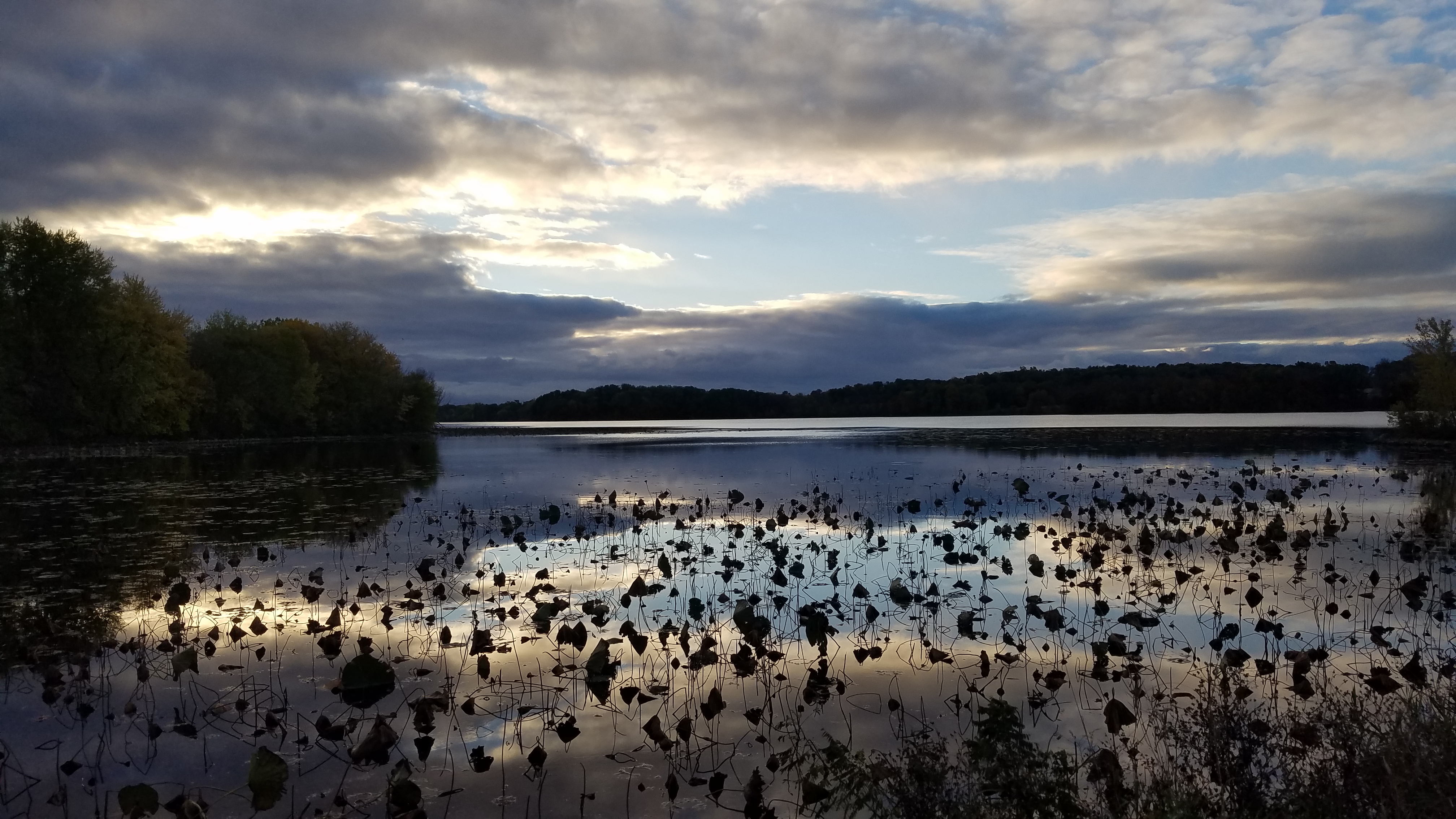
Sunrise on Lake Macbride October 2023.
Financial
Living on our pensions was a struggle so we had to borrow money. Maybe it’s because the mechanical systems in our home were mostly the original ones installed in 1993 and needed replacing this year. We are also living with a car loan for a couple more years. There are some health care bills but most of those expenses have been covered by insurance. Compared to most Americans, we are doing okay. There wasn’t as much discretionary spending in 2023. There will be less in 2024.
Compared to previous years, this one wasn’t stellar. All the same, it is important to give thanks for our many blessings this time of year.
Elon Musk’s purchase of Twitter led me to a dismal place regarding social media. Whatever I thought I had before him no longer exists. The whole idea of social media seems bankrupt. There is some good in that, accompanied by a lot of bad.
A couple of weeks ago I logged into every social media account I have and tried posting on them at least daily to see what best served my needs. The list is as follows:
Facebook
Instagram
Threads
X
Post
Blue Sky
Spoutible
LinkedIn
It is time to make some decisions, and here they are.
The trio of Meta applications is going to stay. I use Instagram to post an almost daily stream of photos about my life. Most of it is gardening and trail walking, with a few other things added as serendipity provides. These are all cross-posted on Facebook and are my main contribution there. A lot of people comment to me they like my photographs, both on the platforms and in real life. I publicize an occasional event on Facebook or post a link to a blog post I wrote. I also created Facebook groups to support my high school class and the home owners association where we live. Facebook and Instagram are mostly outlets for my creativity, not sources of news outside the two groups mentioned.
Threads is new with new opportunities. I plan to stick it out there until the inevitable advertising begins and things shake out as to whether or not I will develop the same kinds of relationships I had on X before Musk. In general, there are a lot of people posting as it relates to their jobs, and I fell into a place where creatives hang out and for now am enjoying the vibe of sharing less job-related stuff. The app is clean and easy to use. Because of habits developed at X, I don’t hesitate to block people/bots/porn sites as needed. I am open to staying or leaving, whichever is best for my mental health.
LinkedIn is the odd duck. I discover a lot of useful information there and connect with people I’ve known for decades. I keep saying to myself now that I’m retired and printed my LinkedIn resume there’s no further use for it. Right after that someone from a past life surfaces wanting to get in touch. Will let LinkedIn ride for now.
I haven’t been able to get any meaningful traction on Spoutible, Blue Sky, and Post. I won’t close my accounts, yet likely won’t use them much either.
I need to pull the plug on X. What keeps my account active is relationships formed over the 15 years I have been on the platform. The trouble is Musk’s politics and attitudes as manifest on the site. He is a bad egg and poisons the entire experience. Who needs that?
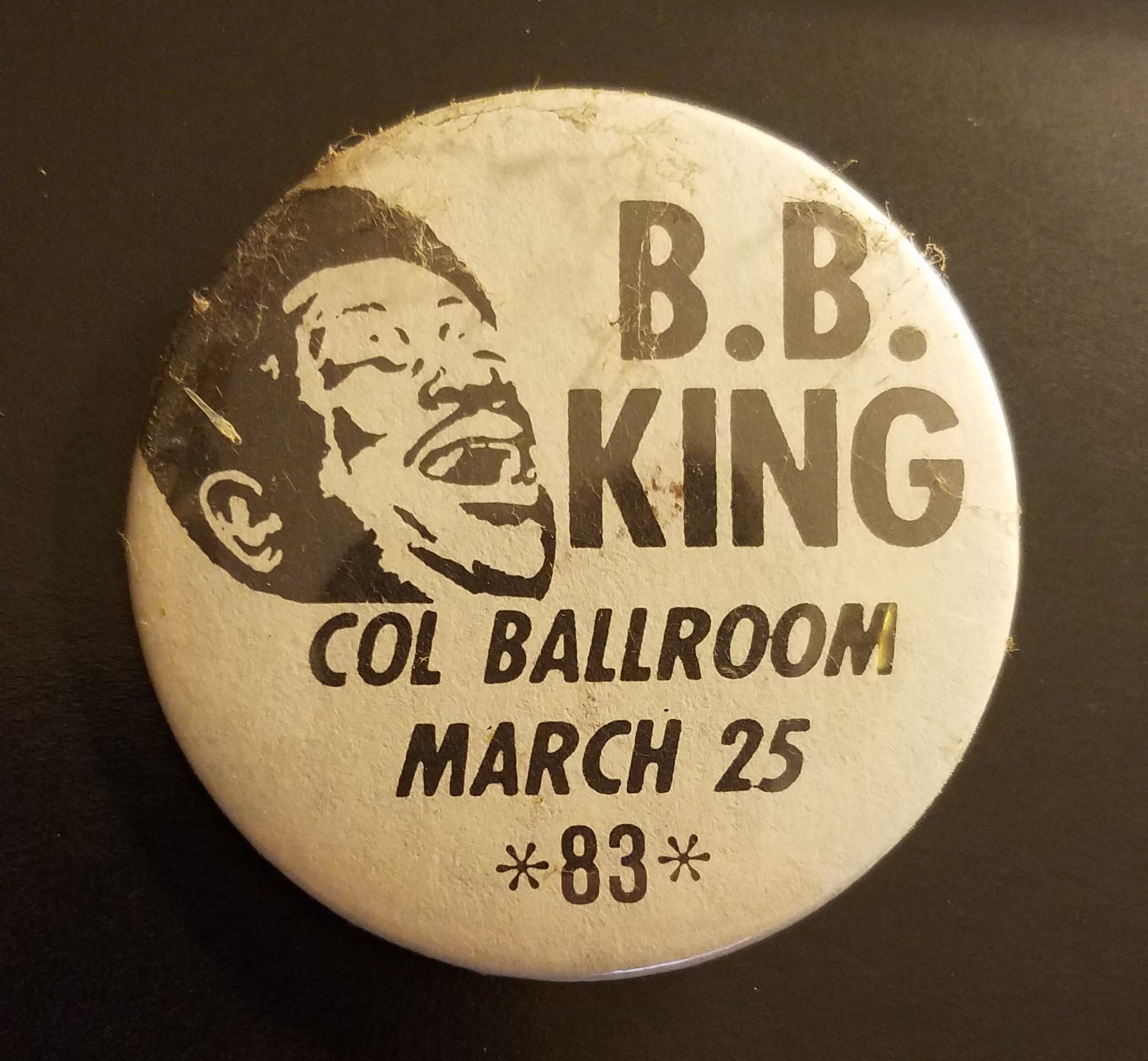
The one time I heard B.B. King sing Thrill is Gone live was at the Col Ballroom in my hometown of Davenport. My sister and I went together and a grade school friend from our neighborhood was the opening act. It was a great evening. I don’t know how he did it — maybe that’s part of his genius — but King put feeling into every song he sung. Here’s the money verse. May you have happy landings on social media.
You know, I'm free, free now, baby
I'm free from your spell
Oh, free, free, free now, baby
I'm free from your spell
And now that it's all over
All that I can do is wish you well
It is totally shocking that I’ve been procrastinating getting back to work on my memoir. It’s not like there is anything better to do.
Today I started with a small piece of editing. The task has been languishing on my to-do list and now it’s done. I decided to work on Part II, which is my life after university and military service, beginning the summer of 1981.
After graduate school, I took a trip, found a job, and met my future spouse. I wanted to stay in Iowa and Johnson County is an oasis in a cultural desert of corn, soybeans, hay, oats, hogs, cattle, and sheep which was and remains Iowa. I had no interest in returning to my home town of Davenport. There was really no other place to live in Iowa, I reckoned. The challenge today is memory and artifacts from the second part of my life are too numerous to mention them all in a book. I don’t relish going through everything to cull items for the narrative. Hence the procrastination.
I worked as an admissions clerk at the University of Iowa Dental Clinic after graduate school. We saw patients from all around Iowa — wealthy patients with private insurance, indigents with limited means, and everyone in between. Anyone who came to my desk was accepted for treatment. The exposure to people from diverse backgrounds was inspiring. In 1981 I didn’t worry about much beyond getting to work on time, learning what I could about people, and doing my best.
Outside my admissions work I put hours and hours into researching and writing fiction. I developed a couple of frameworks, read lots of books, and viewed countless movies. Somehow I failed to realize that writing means producing a certain number of words on a regular basis. I know that now and thus far produced about 127,000 words of an autobiography. All the same, I’ve been avoiding the big task of culling things into a viable narrative. I feel there are one, maybe two chances to go through everything while I’m alive. I want to gain what insights I can and get the story right.
I wrote a task for tomorrow: read the next 100 pages of the draft and take notes. This will lead to updating the outline and help identify where the narrative devolves into a series of snippets from journals and cut and paste paragraphs. The best way to get going is take one step each day and make sure it gets done. I don’t know any other way to get started, and time’s a wasting. This is what I mean by it’s time to get to work.




 Journey Home
You must be logged in to post a comment.