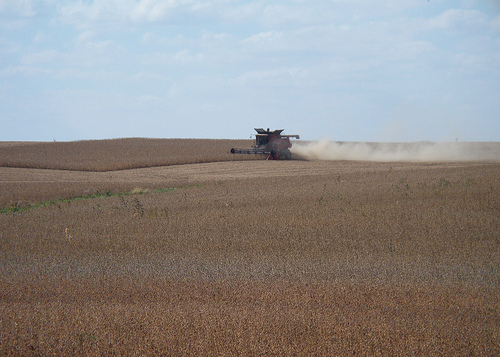
CHICAGO, Ill.— Yesterday I was surprised to notice the irrigation of corn fields along the Ronald Reagan Toll Road, or Interstate 88 in Illinois. What defines the Midwest and its row crops is the generous rainfall that enables crops without irrigation. This isn’t Nebraska after all.
Maybe the rigs have been there for a while, but they were not a good sign of how the Midwest is contending with dry conditions. It was irritating to see the nozzles aimed poorly, watering large sections of roads. Not irritating enough to stop the car, find the farmer and ask him or her about it. I didn’t want to be late.
In preventing the effects of climate change, depleting our aquifers for crop irrigation is not the right path.
There was plenty to think about as I made my way into the loop and McCormick Place for the conference. Water management in the climate changed Midwest is a thought that persisted until morning.
In Germany during the Cold War, we had nuclear weapons on our mind. It was expected that should the Soviet Army awaken from the vodka-induced hangover our intelligence reported among soldiers in their border units, they would use nuclear weapons to engage NATO forces at the Fulda Gap, in what we more specifically called the Hofbieber bowl. Those of us in a mechanized infantry unit in the Eighth Infantry Division hoped the balloon wouldn’t go up, and we’d arrive home safe and radiation-free.
Nuclear weapons were part of the tactics of infantry, armor and artillery units stationed in post World War II West Germany. Officers knew where nukes were stored, how they would be deployed, and pulled security missions to protect them. This wouldn’t have been the big bang as when the air force dropped atomic bombs on Hiroshima and Nagasaki. They were smaller, so-called tactical nuclear weapons. None of us had actually seen one go off.
We received training in what to do if we spotted a mushroom cloud on the battlefield of people’s farms, towns and businesses. The short version was to avert our eyes, find a low spot on the ground and cover ourselves as best we could with our poncho to prevent the radioactive fallout from touching our skin and clothing. The idea was to avoid the shock wave as best we could, shake off the radioactive fallout, and continue fighting.
In retrospect, the idea we would go through with it— position and detonate nuclear weapons— could only have existed within a culture of nihilism… and blind following of commanders’ orders. The officers I knew, who were selected for the nuclear mission, would have gone through with it. I’m not sure I would have, and maybe that’s why I wasn’t picked for detonation duty.
When we consider our recent wars in Iraq and Afghanistan, it becomes clear that conventional weapons wreak enough havoc, that nuclear weapons are no longer needed. To cling to them now is a form of nostalgia the world can’t afford, if it ever could.
LAKE MACBRIDE— David Biello of Slate wrote an opinion piece in Newsday titled, “Why Don’t Farmers Believe in Climate Change,” on July 16. Link to the article here or here, but here’s a spoiler alert: it’s the Farm Bureau. I commented on the article, but my comment was removed because it violated Newsday’s conditions of use. It’s their world. What’s a blogger to do? If you’re reading this, you know the answer.
In the article, Biello wrote, “take, as an example of skepticism, Iowa corn farmer Dave Miller, whose day job is as an economist for the Iowa Farm Bureau. As Miller is happy to explain, it’s not that farmers in Iowa don’t think climate change is happening; it’s that they think it’s always been happening and therefore is unlikely to have much to do with whatever us humans get up to down at ground level. Or, as the National Farm Bureau’s spokesman Mace Thornton puts it: ‘we’re not convinced that the climate change we’re seeing is anthropogenic in origin. We don’t think the science is there to show that in a convincing way.'”
If there is a record drought like last year, large farmers will capitalize the loss over a period of years, plow the crop under and start over next season. For them, it’s just another aspect of dealing with farming as a business. This attitude is consistent with what I experienced when listening to row crop farmers in Iowa.
The idea, “they think it’s always been happening and therefore is unlikely to have much to do with whatever us humans get up to down at ground level,” is ridiculous. Climate change doesn’t just happen— it happens for a reason. And today, the main reason is carbon pollution from dirty energy like coal, oil and natural gas.
I encourage you to read the article if you are interested in the interface between Iowa farmers, the Farm Bureau and the environment. There is a lot to learn before Iowa makes progress in protecting our environment. Some say the Iowa Farm Bureau runs the state of Iowa. I say it could only do so in a vacuum of action from people whose views are closer to the reality of climate change.
LAKE MACBRIDE— During childhood, our home had no air conditioning. We had four mature trees, two pine and two maple, on the south and west sides of the house. There was an exhaust fan on the upper landing of the staircase that led to our bedrooms on the second floor. During the summer heat, we slept with windows open and the exhaust fan on. When temperatures cooled as night progressed to dawn, our parents turned the fan off. On good days, we woke to the sound of songbirds in the predawn hour. It wasn’t so bad.
During my military service I became a morning person, craving coffee and exercise when I woke. Some of the exercise was provided at 6 a.m. at our battalion commander’s direction. I would dress in my VOLAR (for volunteer army) sweatsuit, pile into my pickup truck and drive past the white asparagus fields and vineyards to the caserne for a several mile run. Ours was an infantry unit, so we worked in whatever weather presented itself— exercise being part of our work. The caserne had no air conditioner either.
We didn’t have central air conditioning in our home until we moved here from Indiana and sold the two window air conditioners we had accumulated. Central air was a luxury we have come to depend upon during the heat spells of Eastern Iowa.
Last summer’s drought was the worst. Continuing days of extreme heat had us penned up in the house, with the air conditioner hum drowning out the exterior world. I have learned to get outside more during the extreme heat, to tend our garden in the morning light, to work under shade trees grown mature from saplings, and to take a break when feeling overheated. Partly, this is adaptation to changing climate, and partly the behavior reflects a need to be useful in life. Both are important.
As the sky turns gray this morning, I’ll finish this post and have first breakfast. There are green beans to pick, garlic to check, and onions to dig, all while the temperature is in the 70s. After that, the perennial question of what to do with the remainder of my life, something wanting an answer despite best efforts to focus on this moment.
According to the weather forecast, there are about three hours before the temperature hits 80 degrees. It’s time to get on the gardening, after some locally prepared food for breakfast. The beginning of another day, presenting just as much opportunity as any day every did. A time for action to improve the sustainability of our life on the Iowa prairie. Part of that is dealing with the Iowa heat.
In response to a writers group opinion piece that appeared in the Iowa City Press Citizen on July 14, 2013. Posted on July 16 via Facebook.
“The Public Policy Institute, housed at Iowa Wesleyan College, and with which Ms. Thornton is affiliated, can accurately be characterized as a home for climate change deniers. On their website it says, ‘…data from the Intergovernmental Panel on Climate Change shows an upward trend in the earth’s temperature over the twentieth century. However, satellite date (sic) compiled by climatologist John Christy shows no such trend. Nor does data provided by readings from weather balloons.’ There are other examples of denial.
The reality is Earth’s temperature is warming and burning the fossil fuels referred to in this article has played and continues to play a substantial role in global warming and climate change. Ms. Thornton’s purpose is to cast doubt on the the public discussion of climate change. In a free society, that is her choice, but the reality is her economic arguments will prove vapid if society cannot adapt to and mitigate the causes of global warming fast enough.”
SOLON— The Iowa Chapter of Physicians for Social Responsibility will be returning to the Solon Public Library for a display titled, “Nuclear Neighborhoods: 11,000 Generations.” This multimedia exhibit will be available for viewing from Aug. 6, the anniversary of the Hiroshima nuclear bomb explosion, through the Labor Day weekend.
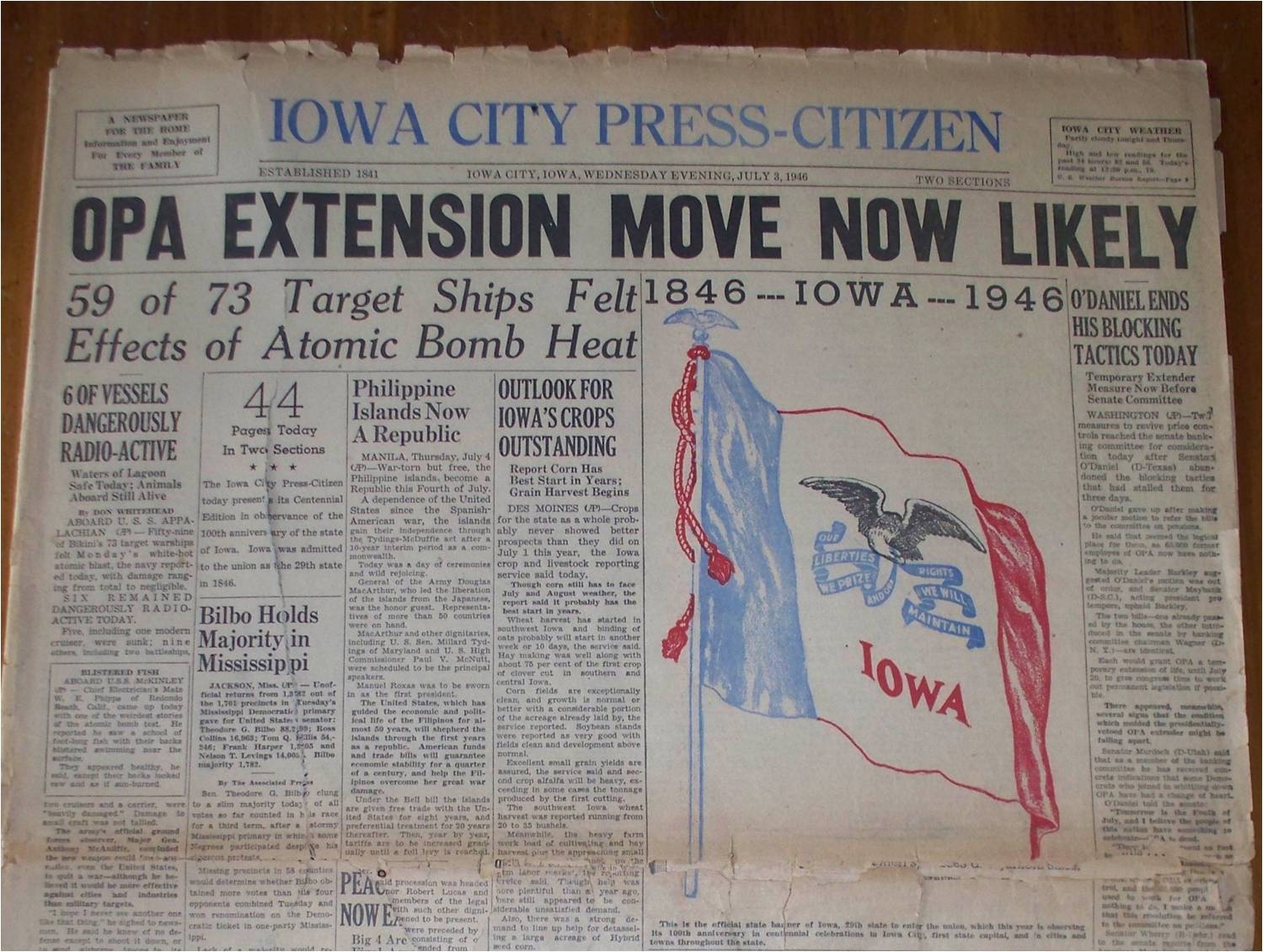
On display will be art and artifacts exploring the major themes of today’s nuclear age. Included in the exhibit will be photographs, period newspapers, personal writing and other items showing how the nuclear age affects us all today. Also included will be items related to nuclear power and nuclear medicine, both of which are in the Solon neighborhood.
The Solon display will be part of a multiple site event, with additional exhibits at the University of Iowa Hardin Medical Library, the Kendall Gallery at the Iowa Memorial Union, the Iowa City Public Library and at area businesses.
The display will be informative for all ages and will be available during normal library hours. Click on this link for more information.
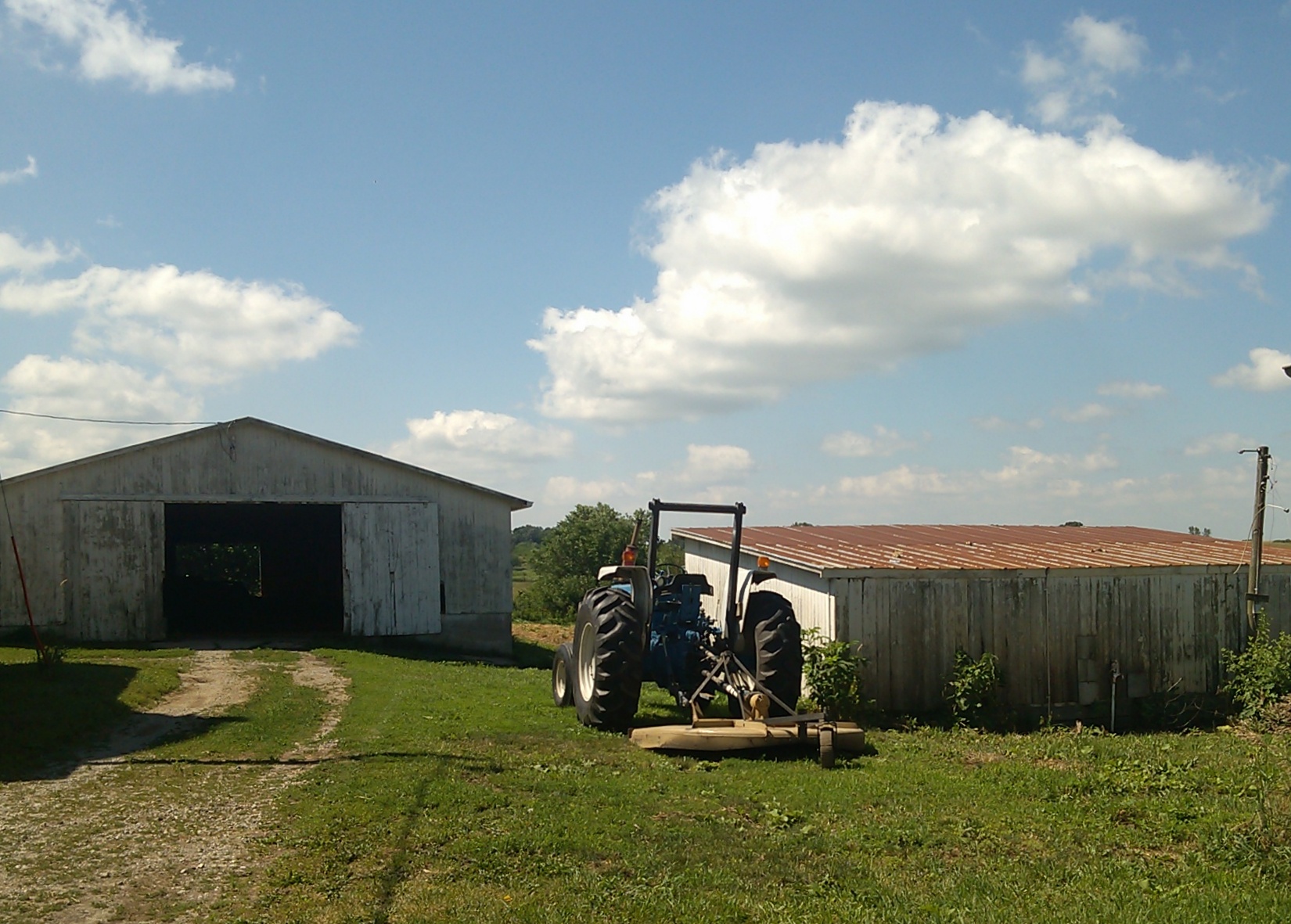
LAKE MACBRIDE— The advantage of a kitchen garden is when a cook needs something, it is a short walk to the food supply… and it’s ultra-fresh. While making red beans and rice for lunch, I remembered there were large Anaheim peppers in the garden so I went to pick a couple to dice and add to the dish. While there, the cucumber plants were droopy, meaning they wanted water in the hot sun. My policy is watering cucumbers and squash twice a day is all I’m willing to do. If they can’t make it here on that— well tough toenails.
Perhaps it’s a little harsh, but drought is an ever-present reality in Iowa. The pattern of average annual rainfall makes it possible to grow crops in abundance without extensive irrigation like they have on Nebraska’s Ogallala Aquifer. It’s part of what makes Iowa Iowa, but that may be changing.
While early summer has been as good as it gets, we need rain now. The few extra gallons I may sprinkle on squash and cucumber plants will not deplete the Silurian aquifer, yet frugal dispensation of water is one way I am adapting to climate change. The county actually studied the aquifer and found there is plenty of water to meet current and future needs.
There have been and will be plenty of cucumbers. I started my third fermentation of dill pickles this morning, and yesterday planted new cucumber seeds in trays for the fall harvest. Schedule permitting, I’ll plant a couple more rows directly in the garden as July wanes. These actions, with a supply from the CSA, and there is no need to preserve the current cucumber plants by abnormal watering. In any case, they still might make it.
Black Raspberries
It has been a busy day in the kitchen. In addition to dill pickles and red beans and rice, half of the black raspberries were made into a thick dark syrup to use on biscuits, toast, pancakes and other applications. If I had pectin on hand, I would have made jelly. The syrup is so good and can be used in other applications, so the pectin was not missed.
One other item for my wheat-free friends. We had a pint of pasta sauce on hand, and instead of pasta, I got out the mandolin, purchased for a buck at a household auction, and using the finest blade, cut a long yellow squash and zucchini into “noodles.” I brought a pot of water up to a boil, cooked them four minutes and served like pasta. Very tasty and gluten free. Also one more thing to do with the abundance of squash.
Now off to the kitchen for the perpetual cleaning up.
Last week was arguably the best summer weather we have had in many years. Temperatures were moderate and humidity low; some rain, but not too much; and glorious partly cloudy skies coupled with a light breeze. A bit of imitation vanilla extract on the nose, and even swarms of gnats couldn’t spoil the enjoyment.
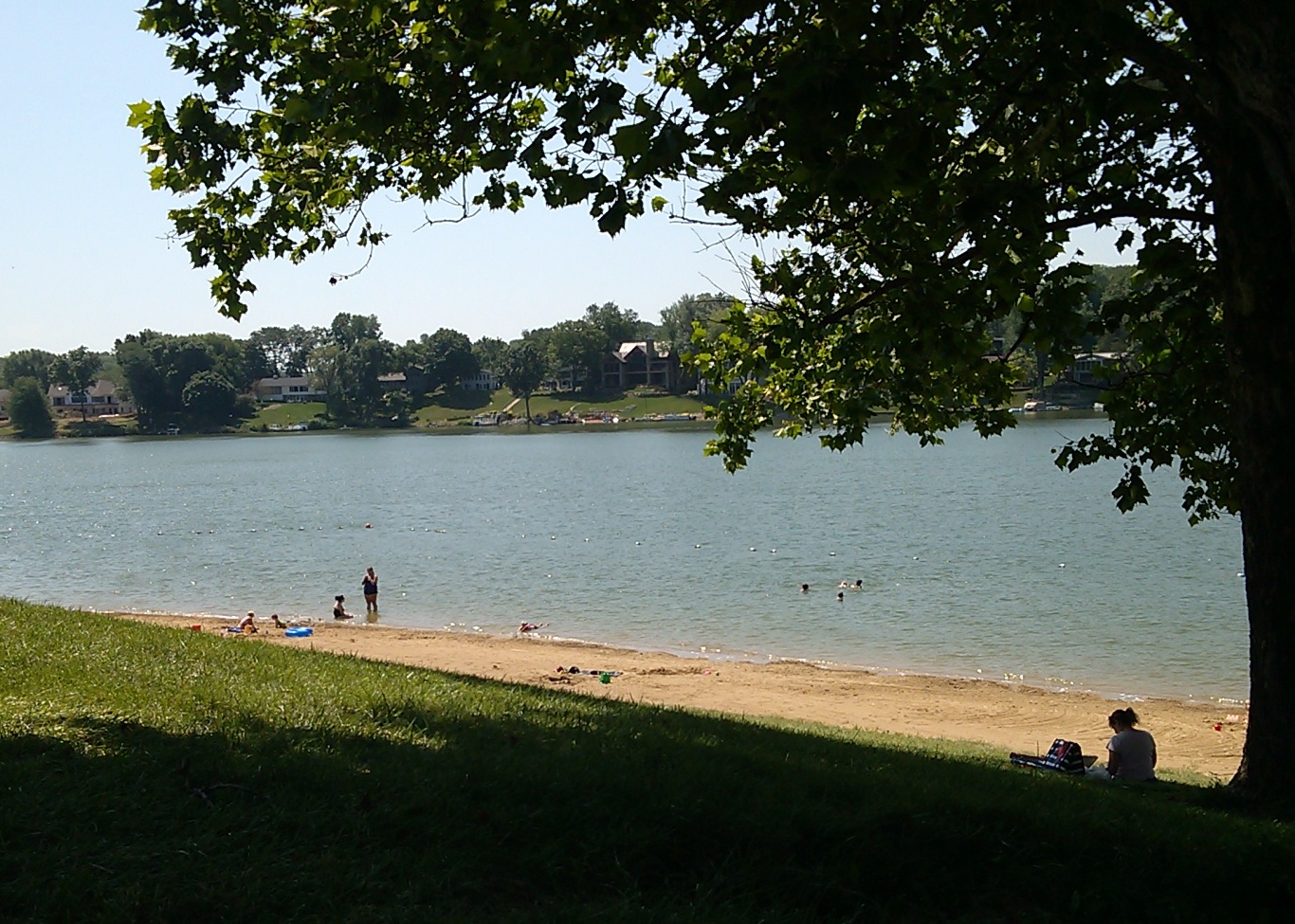
Everyone I know who has a garden is having an abundant year of produce. Foragers can find plenty of black raspberries, and while the Iowa DNR sprayed the lily pads on Lake Macbride, one more toxic substance in the water won’t kill us— we hope.
Climate change is real. Any question that greenhouse gases are warming the planet, and are caused by human activity has fallen away to leave the more appropriate one, “what will we do about climate change?” The crazy weather we have been experiencing recedes from view on days like last week, while coal and natural gas power plants continue to dump CO2 pollution into the atmosphere like it was an open sewer to air-condition our homes. There are two issues: protecting what we hold dear from the effects of climate change, and doing something to address the causes of greenhouse gas emissions.
While addressing climate change is complicated, things we can do to help are not. Reduce energy use at home by turning off lights after leaving a room and unplug your computer and mobile phone chargers when they are not in use. Change how we think about transportation by consolidating errands. We should be doing these things anyway.
The point is not to radically change how we live, but to join the vast majority of Americans in acknowledging that climate change is real, and poses a tangible threat to how we live. Then take steps to personally do something about it. You will be glad you did.
LAKE MACBRIDE— The question at the farm today was “will it rain?” We hope so. This spring was the wettest on record, and gardeners are harvesting an abundant crop. The crops in the farm fields also look good. As someone posted on Facebook, “walk out to the garden with a shaker of salt and no fear. Ahhhhh Iowa summer.” But we have been in a dry spell since the season turned. The fear is last year’s record drought is part of a pattern that repeats this year.
Another drought would be disastrous for farmers that depend upon keeping customers happy with vegetables that are the opposite of fungible commodities. Crop insurance might pay the expenses, but customers who can buy fresh vegetables trucked in from Florida, California, Mexico, Texas, and as far away as China might get discouraged. They are all-in with the farmer to share in the risk of the season. In a consumer society that means they could find other sources of vegetables next season if things turn out badly.
The ten day forecast shows a 60 percent chance of scattered thunderstorms tonight and tomorrow. After that, the chances diminish to 10 or 20 percent. The prospect for rain is not good.
At my meeting in the county seat tonight the same question was asked. Will it rain? No one was optimistic.
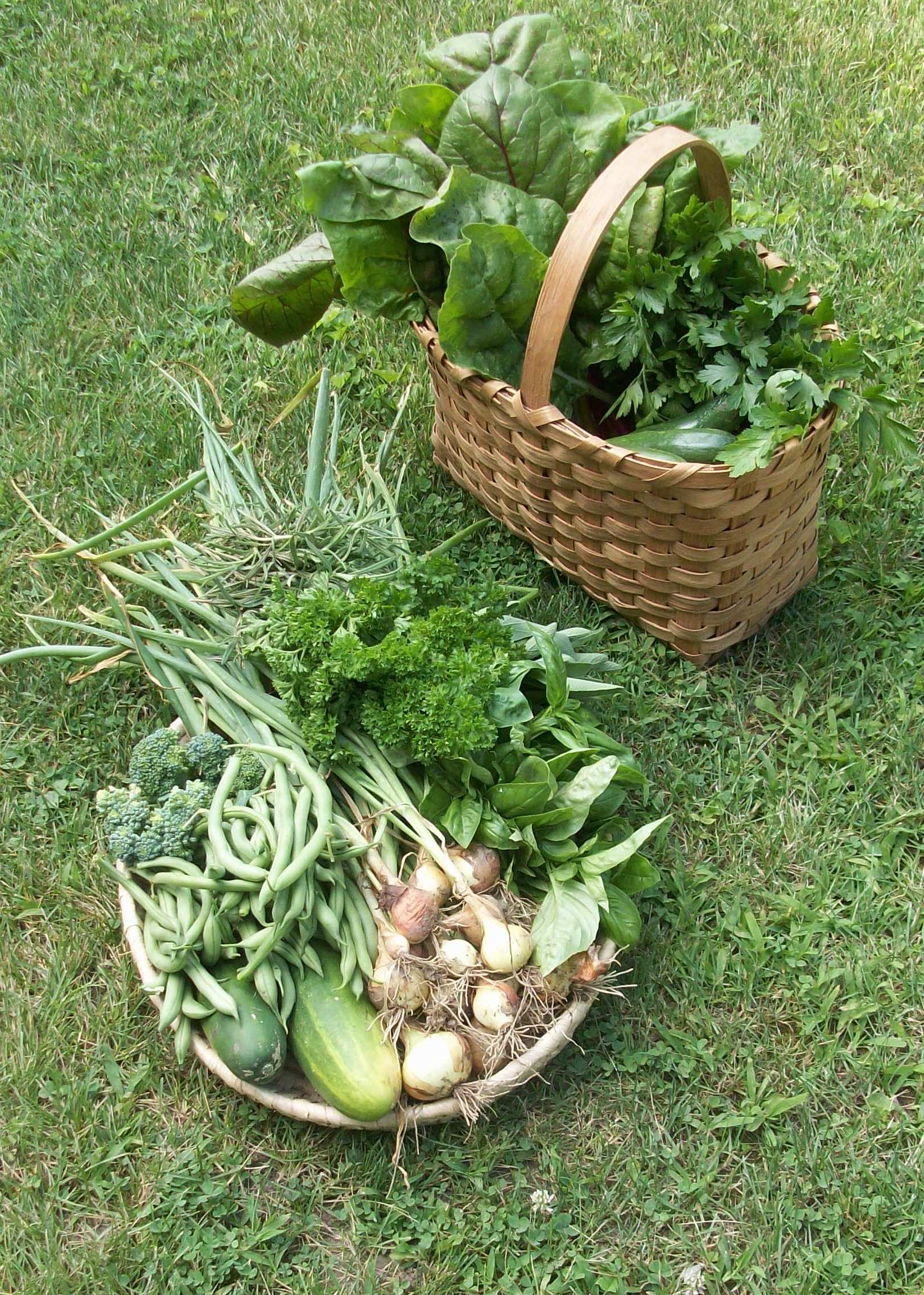
I shared my garden’s abundance at the meeting, taking zucchini, yellow squash, kale, basil, flat leaf parsley and kohlrabi in a cooler. The basil and parsley were popular, with everyone taking some. Everything else, except one kohlrabi found a home. The fragrance of basil filled the room while we met— it was intoxicating.
My sense is we are in for another drought. It already feels that way, despite tonight’s forecast. I hope I’m wrong. We can irrigate if we have to. When the county studied the Silurian aquifer, there was plenty of water. But more is at stake than a single crop, or a couple of bad seasons in a row. The extreme variation in weather is concerning and is consistent with what scientists are saying about the effects of global warming. Let’s hope our questions will be answered, “yes, it rained.”
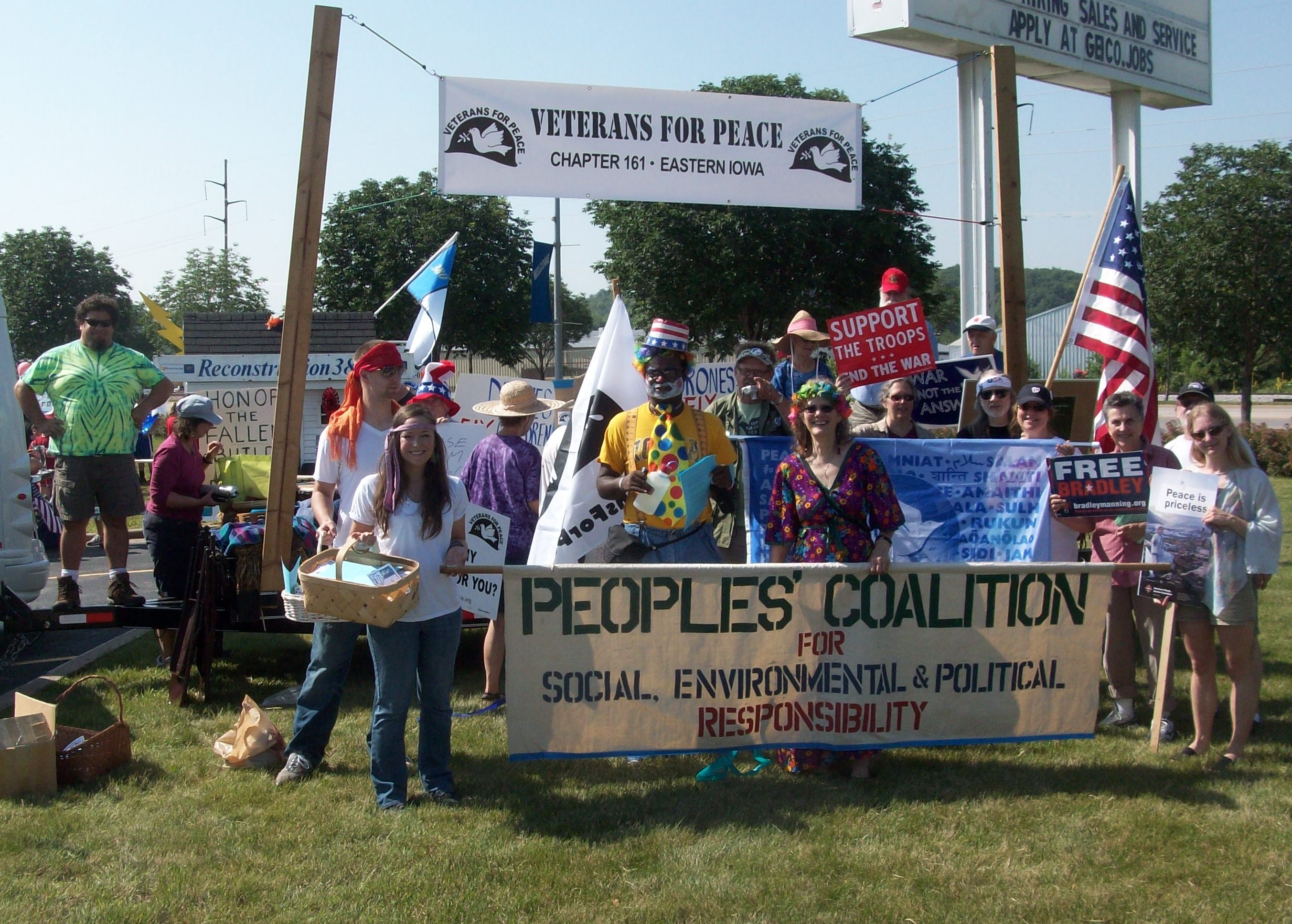
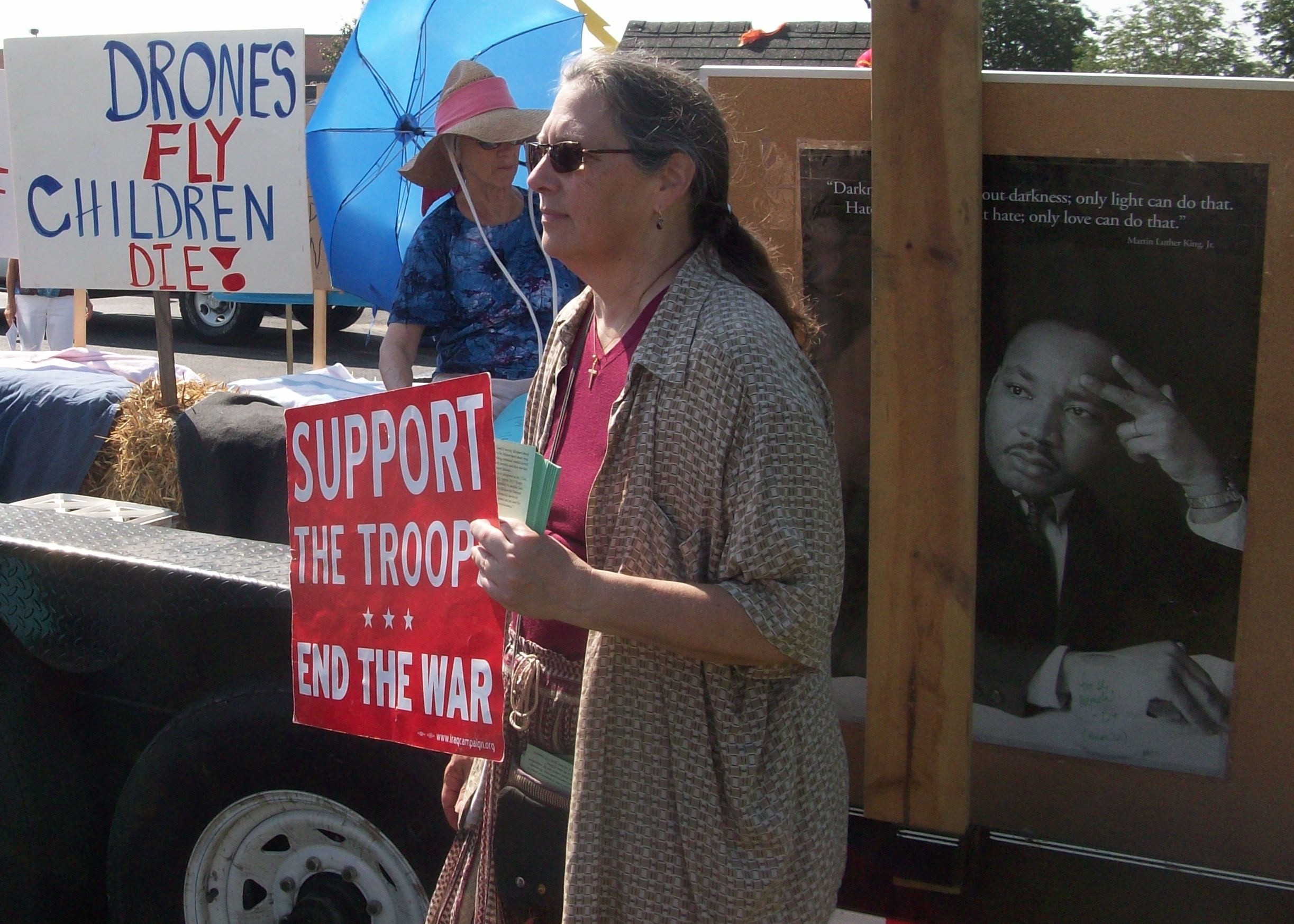
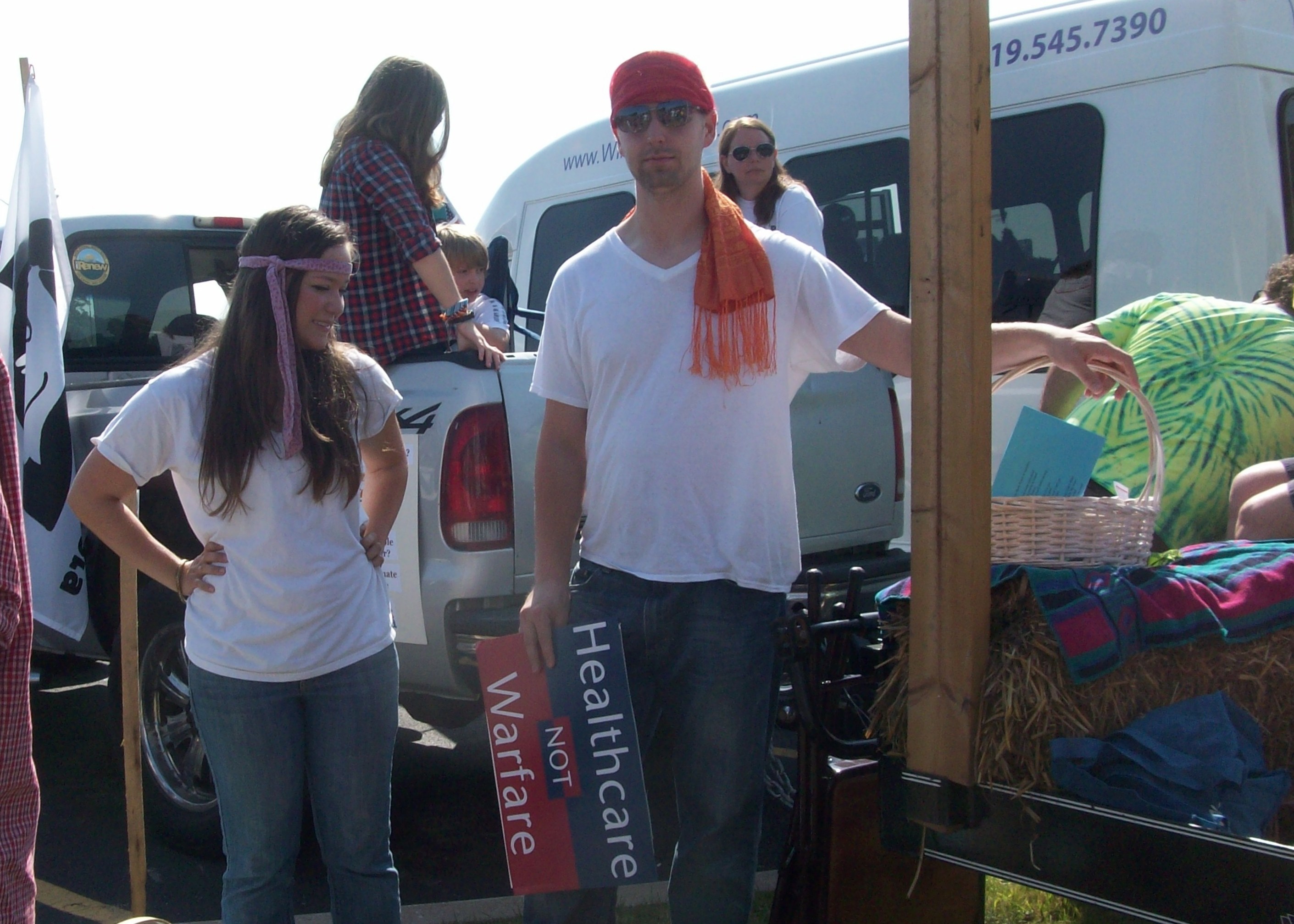
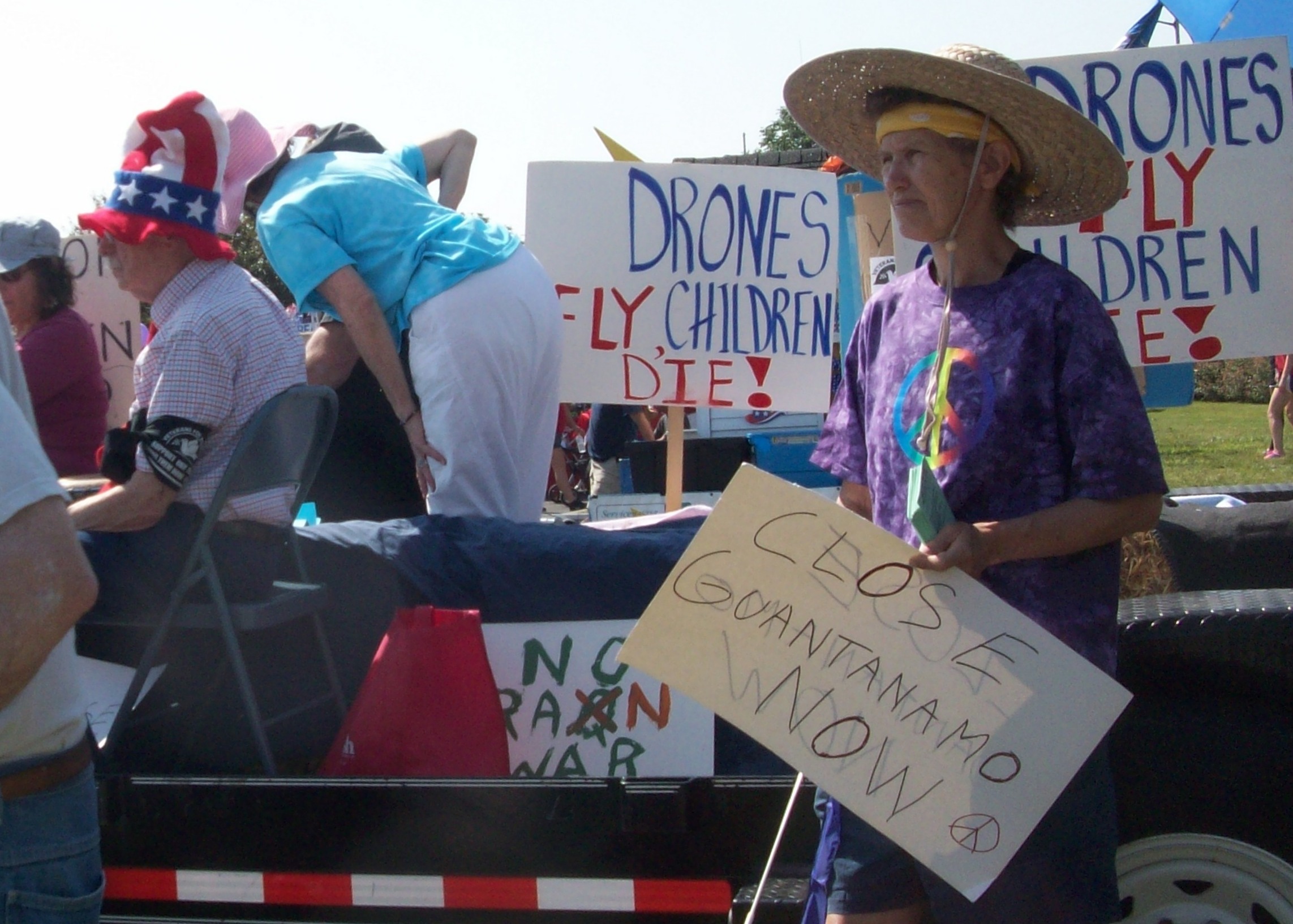
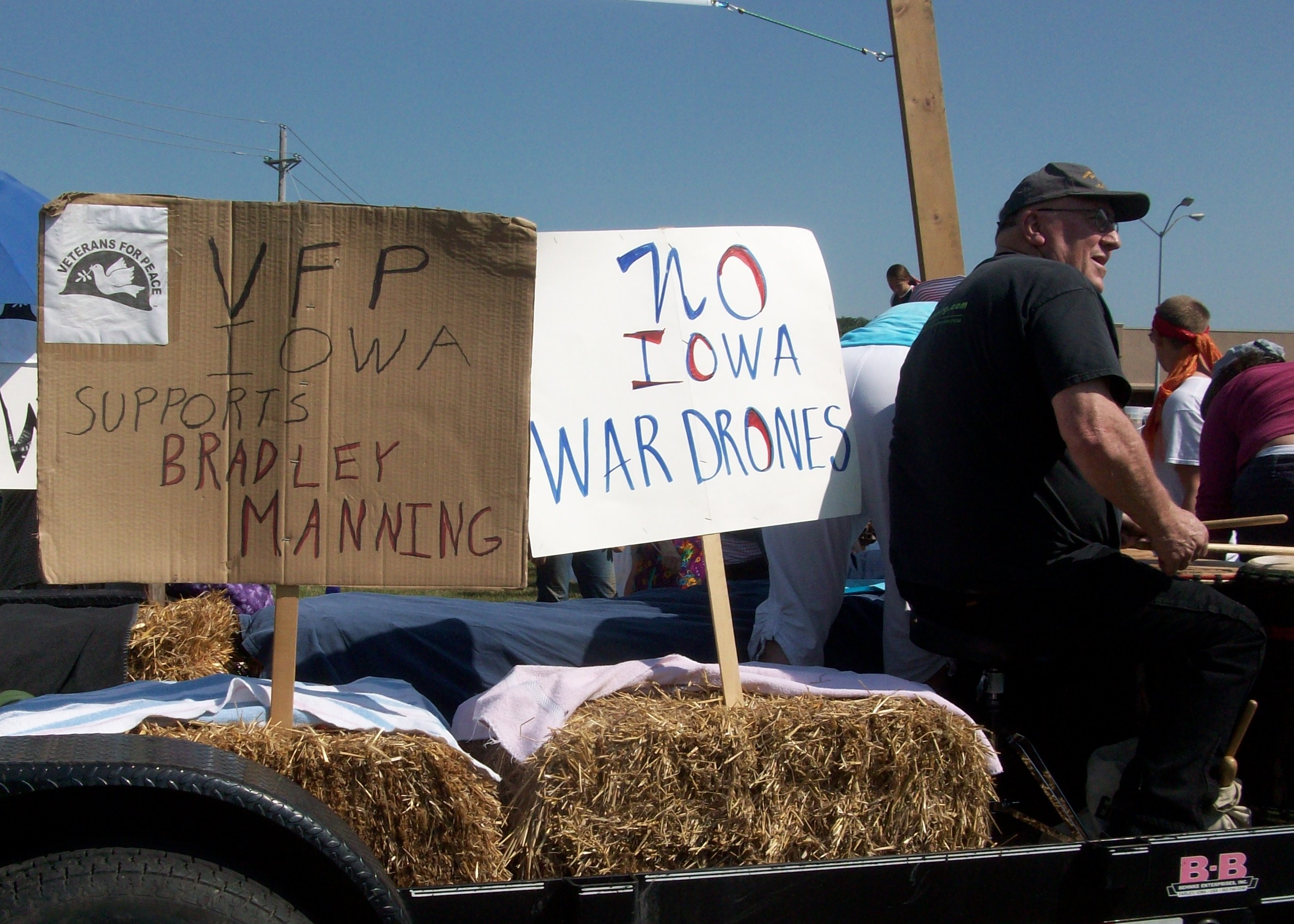
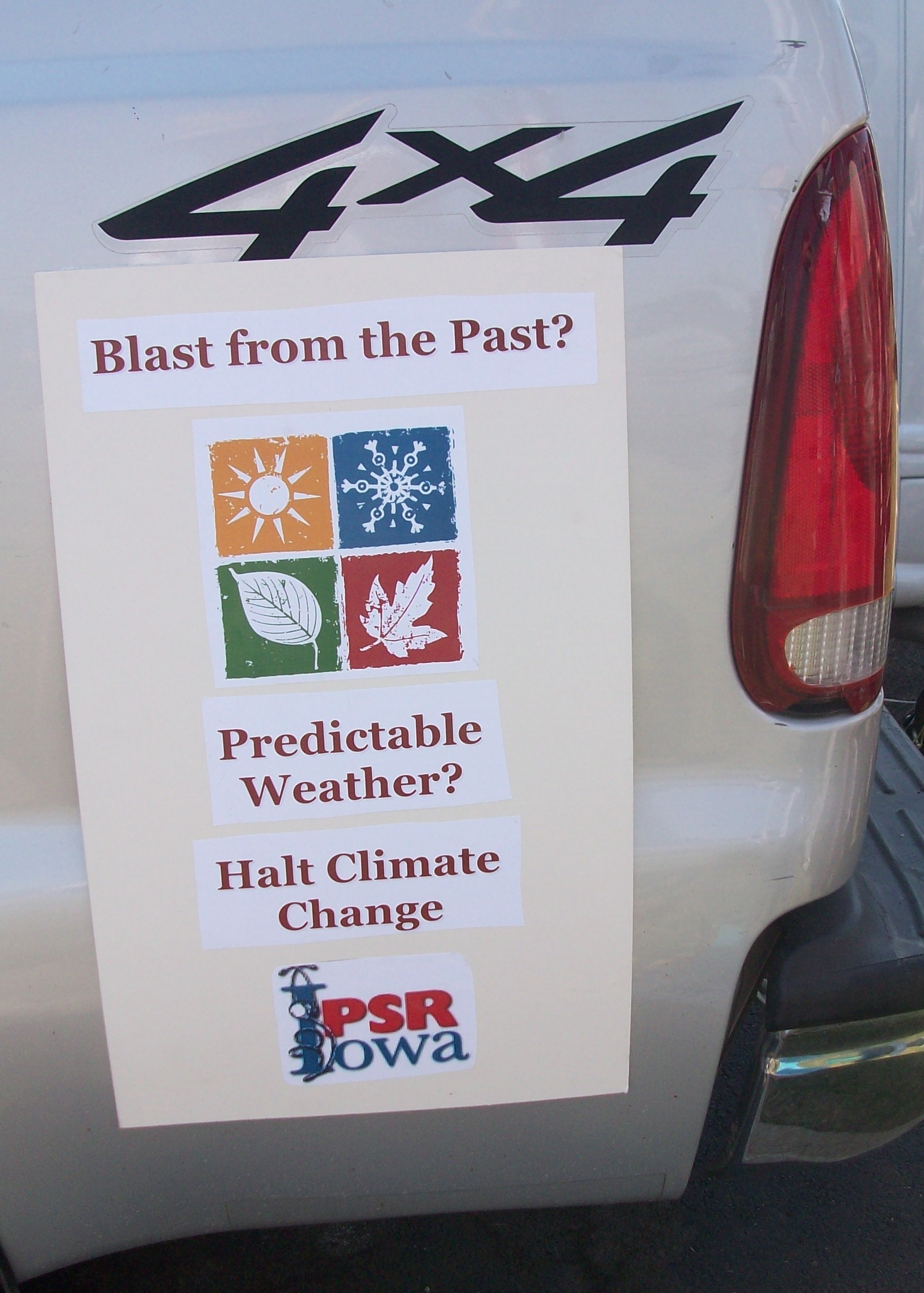
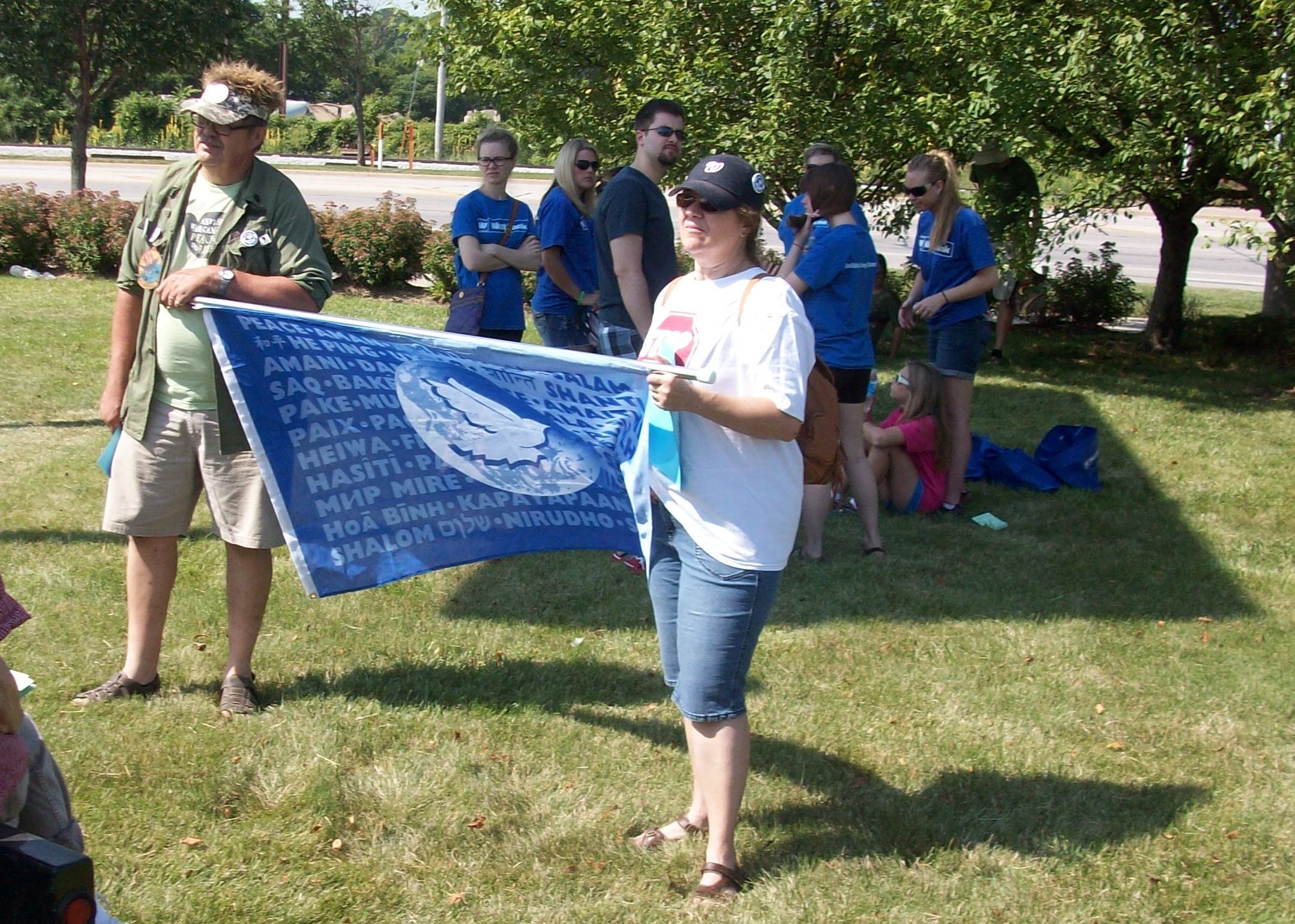
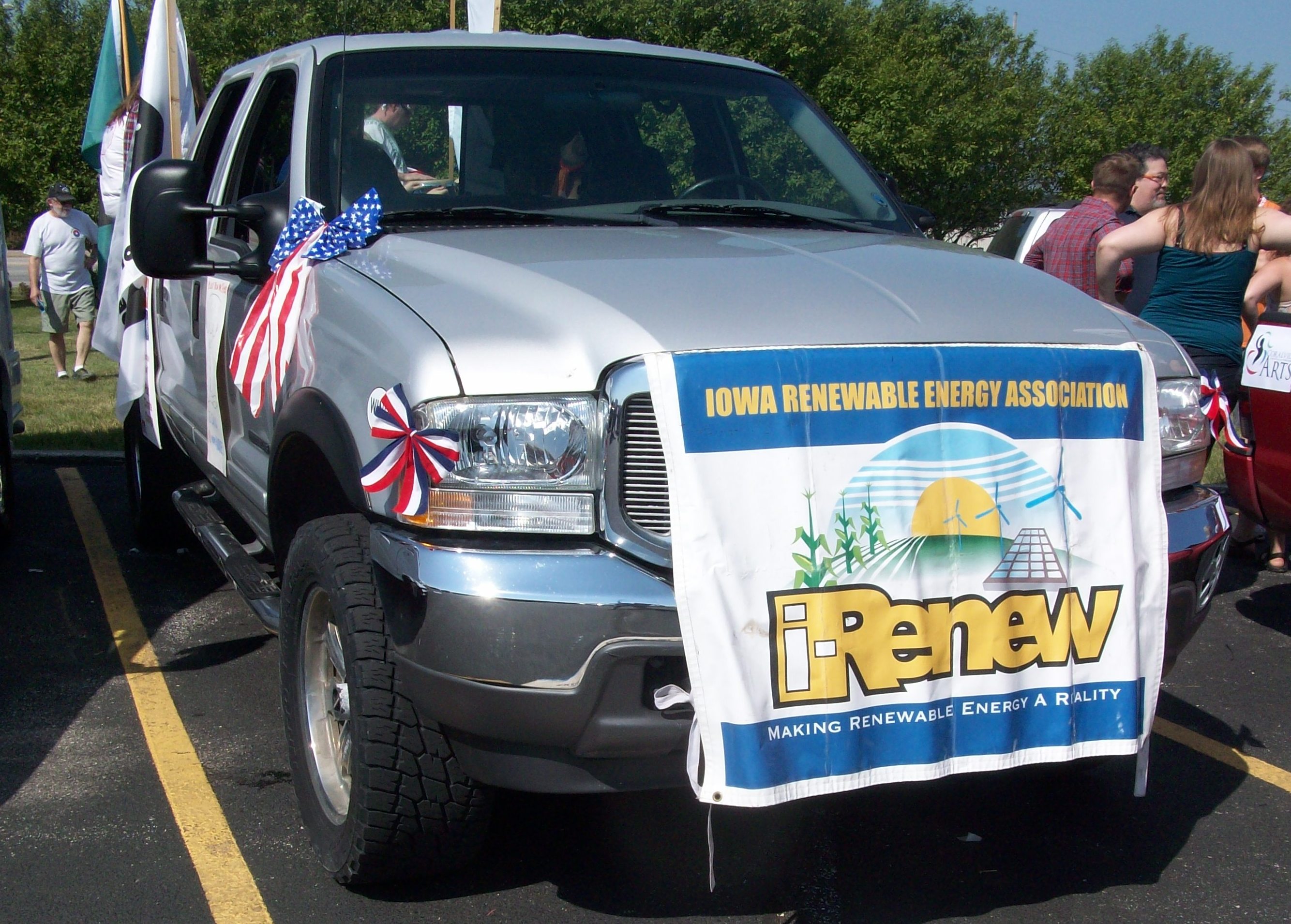
CORALVILLE— The Peoples’ Coalition for Social, Environmental and Political Justice walked in the July 4 parade here. The photos don’t include everyone, but you can get the flavor. The Peoples’ Coalition forms once a year for the purpose of getting peace and justice people together to interact with and get our messages to everyday people in the community. The parade entry was strong, with folks from Veterans for Peace, Iowa Physicians for Social Responsibility, PEACE Iowa, Yahoo Drummers, Green World Biofuels and others, all committed to peace, and social, environmental and political responsibility.
The Yahoo Drummers provided background during the entire parade route, and the group sang songs that included “We Shall Overcome,” “If I had a Hammer,” and “This Land is Your Land.” The songs were familiar and uplifting. Parade watchers joined in singing from time to time, and provided positive feedback to the group.
Contact Paul Deaton at paul.deaton@gmail.com if you would like to get involved with any of the groups, or be part of next year’s parade.
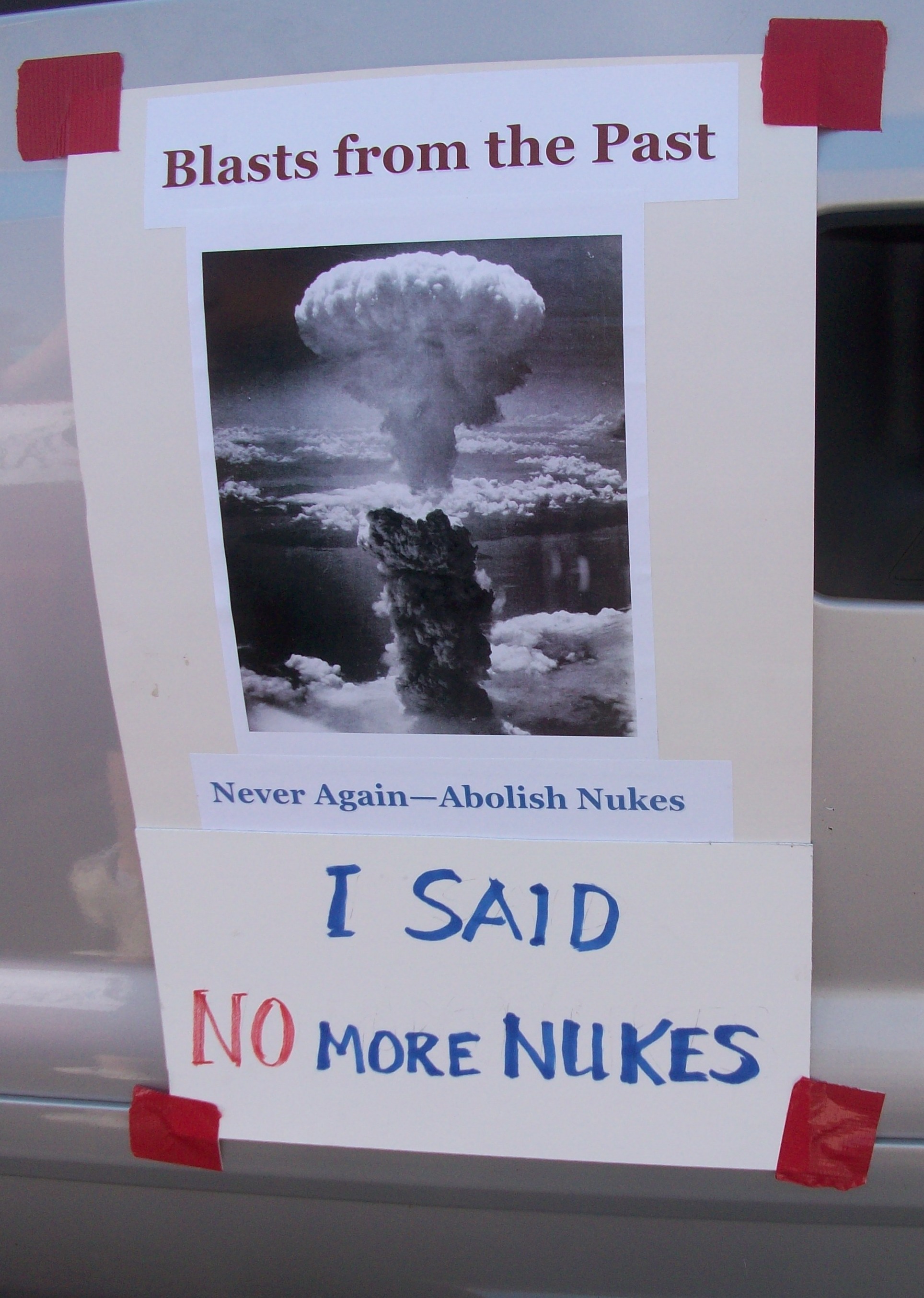
2013 Coralville Independence Day Parade.2013 Coralville Independence Day Parade. Theme was “Blast from the Past”2013 Coralville Independence Day Parade.2013 Coralville Independence Day Parade.2013 Coralville Independence Day Parade.2013 Coralville Independence Day Parade.2013 Coralville Independence Day Parade. Veterans for Peace was present in force.2013 Coralville Independence Day Parade. Theme for the parade was “Blast from the Past.”2013 Coralville Independence Day Parade.2013 Coralville Independence Day Parade.2013 Coralville Independence Day Parade. Biodiesel powered vehicle pulled the trailer.2013 Coralville Independence Day Parade.2013 Coralville Independence Day Parade. Michael, Dr. Maureen McCue and Dr. John Rachow, an anti-nuclear family.







 Journey Home
You must be logged in to post a comment.