A few people I know attended, but mostly the names and faces of the negotiators and players were reduced to certain heads of state and prominent activists.
Short version: now that the agreement is made, governments must adopt it.
“Senate leadership has already been outspoken in its positions that the United States is not legally bound to any agreement setting emissions targets or any financial commitment to it without approval by Congress,” he said.
Managing greenhouse gas emissions will be a challenge without U.S. leadership. The Republican-controlled Congress is unlikely to consider or adopt the agreement. The Heritage Foundation asserted the administration is planning to make an end-run around Senate scrutiny. That is ridiculous given the public nature of the negotiations that produced it and the long, lead-up to the accord.
Suffice it that the Environmental Protection Agency Clean Power Plan is the primary mechanism for compliance with the terms of the Paris agreement, and the Congress has been trying to kill it. Debate on the Clean Power Plan began long before it was published Oct. 23 in the Federal Register. On Nov. 18 the Senate passed a resolution to kill the plan. On Dec. 1 the U.S. House of Representatives did likewise.
The United States is not the leader we could be on mitigating the causes of global warming. Nothing about COP21 changed that.
What has changed is the world is coming together to address the greatest threats to human survival. Not only regarding greenhouse gas emissions, but in other areas. Whether the United States will lead or follow is to be determined. The direction has been set, and while there will be tenacious resistance to changes in the fossil fuel paradigm, new leadership is emerging. Life as we know it hangs in the balance.
Let’s hope our government steps up to the challenge. We have the capacity. Whether we have the political will is an open question as the world passes us by.
Global Zero’s Brittany Kimzey Bird-Dogging Hillary Clinton in Coralville
Full of exuberance after the election of Barack Obama, author of the April 5, 2009 speech on nuclear abolition in Prague, Czech Republic, we believed U.S. Senate ratification of the New START Treaty with Russia would proceed easily. Our attention could then be focused on ratification of the Comprehensive Nuclear Test Ban Treaty signed by president Bill Clinton in 1996.
It didn’t happen that way.
In 2009 I was part of a coalition of organizations advocating for CTBT ratification. The Senate minority had banded together to leverage their power. Ratification of New START became an epic struggle, rather than the slam dunk we expected. The final result was laced with irony. In order to get a cloture vote on New START, the Obama administration agreed to modernize the U.S. nuclear complex.
It was a bitter pill and an example of how the congressional minority was capable of blocking legislation advanced in a Democratically controlled congress. CTBT remains on the back burner.
“Each December, the First Committee resolutions goes to the full General Assembly for a second vote,” Beatrice Fihn, ICAN executive director wrote in an email. “The four key resolutions (humanitarian consequences, humanitarian pledge, ethical imperatives and open-ended working group) will be voted upon again on Dec. 7. This is a great chance for us to improve the voting results from First Committee and a good opportunity to put additional pressure on some governments.”
Whether the U.S. will vote for the resolutions is unclear, and Undersecretary for Arms Control and International Security Rose Gottemoeller has repeatedly said the U.S. seeks to eliminate nuclear weapons through the terms of the Nuclear Non-Proliferation Treaty, which is already in force, rather than in a new treaty.
ICAN, a global campaign coalition working to mobilize people in all countries to inspire, persuade and pressure their governments to initiate and support negotiations for a treaty banning nuclear weapons, is expected to lose a major portion of their funding for next year from the Norwegian government. The campaign, launched in 2007, and now with more than 400 partner organizations in 95 countries, is reacting to the funding stream change. Loss of the funding may have a significant impact on the campaign.
In Iowa, home of the first in the nation political caucuses, advocacy groups are asking questions about nuclear abolition at campaign events. Yesterday Brittany Kimzey, of Global Zero bird-dogged Jeb Bush at an event.
Others published letters to the editor and opinion pieces on nuclear abolition, and plan to get platform planks regarding abolition into party platforms. The Iowa Democratic Party state platform contains planks regarding elimination of nuclear weapons, containing the Iranian nuclear program, and engaging in diplomacy to contain North Korea’s nuclear weapons program. Because of the word limits imposed by the party, some slight modification of these planks may be possible. The Republican Party of Iowa platform is devoid of mention of nuclear weapons.
As I write, corporations are making a handsome financial return on modernization of the nuclear weapons complex. Conflicts in Asia, Africa and Europe escalate tension and raises concerns nuclear weapons may be used again or captured by terrorists. Arms Control Association Daryl Kimball posted one of the issues on Twitter:
Did you know: several dozen tactical nukes are in #Turkey? “Reassessing the Role of U.S. Nuclear Weapons in Turkey” https://t.co/xjzgREXT1q
Nuclear weapons should never be used again. At the grassroots it is unclear there is adequate support for abolition as 2015 ends. The work continues nonetheless.
President Obama is scheduled to depart Washington for Paris later today to attend the 21st Convention of the Parties (COP21 or Paris 2015). Paris 2015 offers our best hope to curb greenhouse gas emissions through the United Nations Framework Convention on Climate Change.
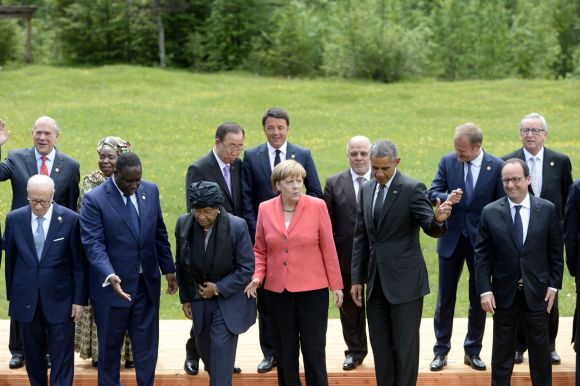
As of yesterday 150 heads of state had accepted the invitation to participate, with representatives of 196 nations planning to join. Each head of state will make a speech, with the order set by UN rules. President Obama’s speech will follow His Majesty Mohammed VI, the King of Morocco around noon local time.
In the wake of the Nov. 13 terrorist attacks, Paris is on lock down. Ed Fallon described the scene.
With public demonstrations banned, would-be participants lined up pairs of shoes in one of the rally locations that would have been. As I type, a human chain is lining up between Place de la Nation and Place de la Republic.
Even though people with means have traveled to Paris to demonstrate, contrary to what people like Naomi Klein and other prominent climate change advocates have said, accompanying demonstrations don’t seem so relevant to the bigger picture. With or without them, the heads of state and dignitaries will accomplish something with regard to mitigating the causes of climate change. Let’s hope it is enough.
That’s not to say there isn’t hope, just that all of the speeches could be reminiscent of the scene from Star Wars where Queen Amidala addressed the Galactic Senate.
Even though the U.S. political system, the legislative branch of government particularly, is unprepared to act on climate today, I believe, and with good reason, the effects of anthropocentric climate change will become so pronounced that even the most virulent climate skeptic will recognize the need to take action to mitigate its causes.
The time for which we have long waited is upon us. Here’s hoping our leaders take action.
My 1975 enlistment in the U.S. Army had everything to do with how screwed up the military was coming out of Vietnam. I asked myself, if regular people didn’t step up and fix the mess, who will?
I almost didn’t get in.
Enlisting for OCS (Officer Candidate School), the people who interviewed me before signing me up said, “If he washes out of OCS, then he’ll serve six years enlisted.” They said that right in front of me.
Perhaps my shoulder-length hair didn’t indicate “officer material.” I suspected then, and now, the reason they gave me a chance was because I met the qualifications on paper and they had a quota to fill during a time when public sentiment toward soldiers was as low as we consider Washington lobbyists, corrupt politicians, rats and blue green algae today.
I got in and breezed through basic training at Fort Jackson, South Carolina on the infamous “Tank Hill.” I remember standing at attention in front of our barracks with some of my mates while General Omar Bradley, the “G.I.’s General,” was driven by in the back seat of a car.
Next was Fort Benning, Georgia for OCS where the company commander tried to ditch me, drug testing me almost daily for a while. Even if I was a user, how was I supposed to get illicit substances when locked up on base for the first eight weeks of training without visitors? Regretfully, I brought some No-Doz with me from Iowa, which was discovered and confiscated (I think) during one of the repeated inspections of my personal gear. I made it through OCS and was commissioned a second lieutenant, with Mother coming down to pin on my gold bars. It was a big deal at the time.
From Benning I took leave and drove home in my brand new pickup truck. A half dozen of us newly minted lieutenants went to the car dealership in nearby Columbus to leverage our buying power. It was a brand new yellow Chevy Luv. After a week or so at home, I drove to Charleston, South Carolina, stopping overnight at a high school friend’s home in Terre Haute, Ind. My vehicle was loaded in Charleston to Bremerhaven, Germany, and I flew to Frankfurt am Main, arriving at my unit in Mainz-Gonsenheim just before the Christmas holiday.
I was assigned to a mechanized infantry battalion as a platoon leader and swear every soldier assigned was either on drugs or selling them. One-by-one people were caught and sent home or to the stockade. On Friday nights I remember catching people using heroin and running them down to the Military Police station. The charges almost never stuck, and if they did, when the soldier was released, he was required to see a drug counselor. It turned out the counselor was also a drug dealer.
In Germany we did most of our practice maneuvers in the winter to minimize what was called maneuver damage to the German countryside. Soldiers used every excuse possible to avoid going out for the sub-zero degree training. It turned out a group of them was dealing drugs and pimping prostitutes across the street from the base. The ring leaders needed trusted lieutenants to stay back and tend the business.
I served three years as an officer, becoming a company executive officer and battalion adjutant, and then got out. I liked the military because one always knew where one stood in the social pecking order. We wore that on our sleeves. It was some of the hardest work I ever did. I felt fully engaged in trying to do something positive for our country.
The mess I encountered didn’t get straightened out until later. I could see the beginnings of it from the group of officers coming to Europe from TRADOC. The unstated mission that everyone knew was to transition the Army from it’s post-Vietnam condition into a force with operational tactics designed to fight for oil in the Middle East.
Things were getting tense in Iran toward the end of my tour of duty. Evacuations had already begun through nearby Wiesbaden. When I asked a group of officers for a volunteer to go to Iran, no one raised their hand. As we used to say, “the balloon was about to go up.” Less than a month after I returned to Iowa, 52 hostages were seized at the U.S. Embassy in Tehran.
I don’t understand veterans recognition in the 21st Century. Everyone thanks veterans for their service if they know he or she served. At the grocery store there was a sign in the window advertising a free breakfast for veterans on Nov. 11. Do they think we can’t afford to make our own?
I’m sure they mean well, but to me, it is one more thing on a list of grievances with the rampant militarism and imperialism that characterizes the United States today. I didn’t defend my country for a free meal on Veterans Day.
Whether my military service was a success or a failure, I don’t know. I’m glad I served. It’s what somebody who is a nobody, just clay going to clay, can do to serve a greater good.
We can better thank veterans by taking care of their trauma from serving… and by giving peace a chance.
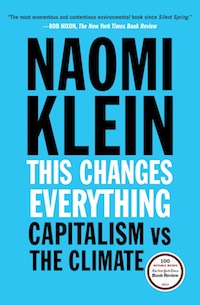
Unlike the climate crisis story spoon fed to us in decreasing numbers of corporate media stories, in social media memes, and in fleeting conversations at community gatherings, in This Changes Everything: Capitalism vs The Climate, author Naomi Klein said there is a nascent, global movement preparing to take climate action.
“The climate movement has yet to find its full moral voice on the world stage,” Klein wrote. “But it is most certainly clearing its throat—beginning to put the very real thefts and torments that ineluctably flow from the decision to mock international climate commitments alongside history’s most damned crimes.”
If you haven’t read Klein’s 2014 book, you should. Not because of a desire to take sides in the public discussion of global warming and the need to keep global temperature increase to two degrees or less. But because a). reading a paper book can be good for us, and b). with Klein you can hear her broader story and learn new things. Here’s more on why you should pick up a copy at your library or bookstore if you haven’t already.
In Iowa, as home to the first in the nation caucuses, we are inundated with stories about politics. Elections matter, and we have seen how in the Republican awakening after Barack Obama’s 2008 election. Progressives hardly understood that Republicans, though in the minority in the Congress, would exercise such power that much of Obama’s agenda was sidelined from the beginning. Republican comebacks in 2010 and 2014 have turned the congress from Democratic to Republican, and right-wing hardliners have more input to the legislative process than their numbers warrant. Taking climate action in Congress has, for the most part, been a non-starter.
“It’s not just the people we vote into office and then complain about—it’s us,” Klein wrote. “For most of us living in post-industrial societies, when we see the crackling black-and-white footage of general strikes in the 1930s, victory gardens in the 1940s, and Freedom Rides in the 1960s, we simply cannot imagine being part of any mobilization of that depth and scale.”
“Where would we organize?” Klein asked. “Who would we trust enough to lead us? Who, moreover, is ‘we?'”
Klein’s book frames answers to those questions: People are organizing everywhere, resisting unbridled extraction of natural resources by corporations. “We” includes almost everyone.
This Changes Everything reviews the recent history of the climate movement. It covers extreme extraction of natural resources that leave behind waste heaps, fouled water and polluted air, then are burned and produce atmospheric gases that warm the planet. Everyone from fossil fuel companies to environmental groups have been involved in what Klein calls “extractivism.” There is a growing resistance, including environmental groups divesting from investments in the fossil fuel industry, indigenous people mounting court battles, and community groups violating international trade agreements to move to renewable energy sources. The book is a snapshot of where the climate movement currently stands.
While Klein has her point of view, she depicts the complexity of a global network of fossil fuel companies seeking to extract hydrocarbons scientists tells us must be left in the ground. While the resistance may not have found its full moral voice, Klein’s book makes the case it won’t be long and recounts the significant inroads indigenous people and communities near extraction sites are making.
When we talk about taking climate action, Naomi Klein’s work should be part of our conversation.
The exchange between U.S. Senator Ted Cruz and Sierra Club president Aaron Mair during an Oct. 6 Senate judiciary subcommittee hearing was a brief flash in the news cycle. Was it also a debate about climate change?
The subject was to have been the impact of federal regulations on minority communities. The junior senator from Texas turned it into something else — a desultory grilling of Mair in which he brought out some old sawhorses from the climate denial tool shed. Here is the exchange:
Sierra Club board member Donna Buell posted this on Facebook after the hearing:
Mair was quick to reply on behalf of the Sierra Club:
View the entire two-hour hearing if you have the stomach for it here.
Cruz asserted in an Oct. 7 press release he “proved, contrary to liberal assertions that man-caused climate change is ‘settled science,’ that there is still a healthy and vigorous debate about the causes and nature of climate change based on the data and scientific evidence.”
So does Cruz picking a fight indicate debate? Decidedly not. In fact, as Mair pointed out in his video response, Cruz’s claims during the hearing have been debunked by the National Oceanic and Atmospheric Administration, an agency over which Cruz has oversight in his role as chair of the Senate Committee on Commerce, Science, and Transportation.
What’s this about?
It is about the attempt of right wing politicians like Cruz to hijack reasonable discussion among people with differing opinions in favor of a personal agenda.
On Oct. 12, I was part of a Sierra Club panel of presenters in which I suggested attendees could continue the discussion Cruz and Mair started by bird dogging Cruz in Washington, Iowa Wednesday morning.
Miriam Kashia, a veteran of the Great March for Climate Action, raised her hand and said, “I’ve done that.”
She reported the incident in an Oct. 13 guest opinion in the Iowa City Press Citizen,
Then, during a media interview with Sen. Ted Cruz speaking about the terrorist threat, I jumped in and asked him, “What is your response to the fact that the Pentagon tells us that climate change is the biggest threat to America’s security?” His response, “You don’t have the right to ask any questions, because you’re not a member of the media.” The media, meanwhile, was not doing its job.
Statements by Cruz and his ilk so often go unchallenged. People agree with him, and in Texas helped elevate him to power in 2012. His supporters are vocal and much of what is said serves the conservative agenda or it doesn’t get heard. I don’t doubt there is a Cruz community that buys into his world view, even though it appears to be based in something other than reality.
What becomes clearer each time people like Cruz are examined is nothing is behind the verbiage but vapidness. Sarah Beckman pointed this out about Cruz in an Oct. 13 post on Iowa Starting Line.
If you spend enough time with Republican presidential candidate Ted Cruz, you start to get the feeling that there is something “off” about him. His long pauses, his forlorn looks out into the audience, his deep crescendos and trailing whispers, his odd pop culture references. They all paint the picture that Cruz is maybe not as honest and authentic as he lets on while campaigning.
Never is Cruz talking about what we have in common, about how we can live better with each other, or how we solve the greatest problems of our time, like mitigating the causes of global warming.
Elections matter, and when the electorate elevates people like Cruz to positions of power over NASA, NOAA and the government’s scientific bodies, we are doing ourselves no favors.
If readers plan to move to Texas to sort out this mess, and elect someone who will enter the arena to fight for all of us, then God bless. I don’t see that happening.
Cruz gives us reason enough to engage in politics. Leaving important political work to others helped produce Senators Cruz, Ernst and Grassley, and the troubled time in which we live.
There is a better way, and it’s up to us to find and follow it.
It would be great to just plug into a socket, use electricity and be done with it. There’s more to it than that.
We take lighting after sundown for granted, as we do preserving food in the ice box and proper functioning of the myriad of appliances in a modern home.
Since before the Christian Era, humans have attempted to understand how our universe works. I was reminded of this while doing research on tonight’s supermoon lunar eclipse, the mechanics of which were worked out by the ancients around 200 B.C.E., according to Robert Mutel at the University of Iowa.
Since the industrial revolution began, humans have increased development of community solutions to improve lives. The expansion of electrical usage is one of the great things to emerge, transforming lives where whale oil, then kerosene were the primary fuels used to illuminate darkness.
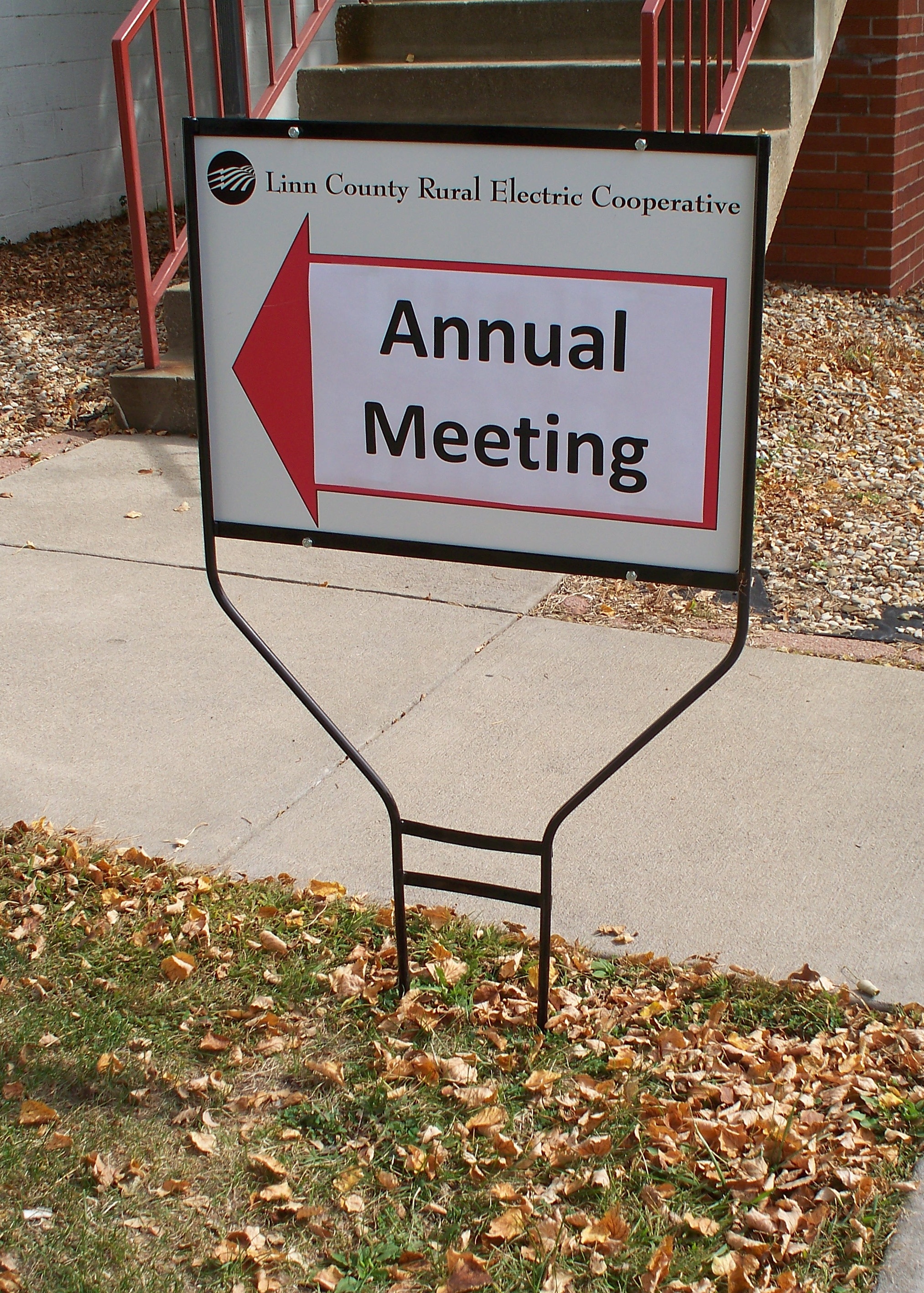
People continue to pay limited attention to electricity. Friday the Linn County Rural Electric Cooperative annual meeting was held at the Teamsters hall in Cedar Rapids.
The report from staff was that while the number of new connections was down in 2014, crews found plenty of maintenance work to do. The organization is financially sound.
The event turns out a lot of elderly couples who use the occasion to get out of the house, socialize with friends and neighbors, and take advantage of the free lunch, door prize drawing and gifts. Among this year’s gifts was a portable mobile phone charger, something even octogenarians might use.
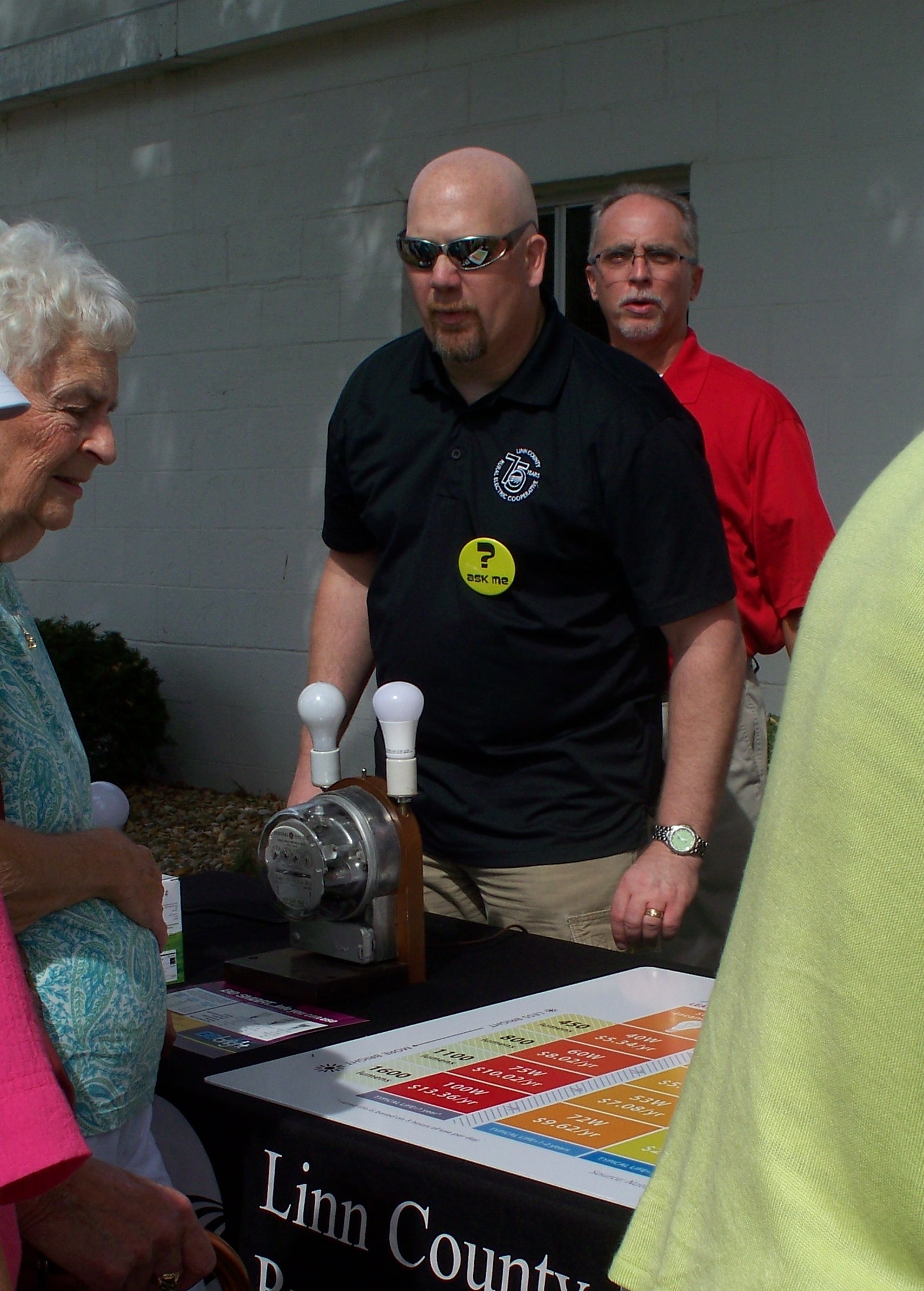
LED – Incandescent Light Bulb Demonstration
A demonstration comparing electricity usage of incandescent and LED light bulbs was set up outside. When the demonstrator threw a switch, changing which bulb was turned on, the change in speed of the rotating gear on the electrical meter indicating usage was obvious. The message was buy energy efficient light bulbs and when you do, look at the number of lumens rather than wattage when picking one.
While attendees ate lunch from their laps on folding chairs — choice of cheeseburger or chicken sandwich with sides of baked beans and potato salad — a slide show enumerated financial incentives for home owners and businesses to take advantage of to reduce electricity usage when installing new appliances or constructing a new home or business.
Would that life were so simple when it comes to electricity.
The REC has this statement about how their electricity is generated on its current website.
Linn County Rural Electric Cooperative is committed to providing electricity that is reliable, cost effective and sustainable. One hundred percent of our electric power needs are provided by Central Iowa Power Cooperative (CIPCO), a generation and transmission cooperative.
CIPCO meets our energy needs with a diverse fuel mix of coal, nuclear, hydro, landfill gas, wind, natural gas and oil energy resources. In 2013, approximately 95 percent of the power CIPCO provided to its members was generated right here in Iowa; and over 60 percent of its electricity is generated from carbon free resources that minimize the impact to our natural environment.
Specific generating capacity is listed on the CIPCO website.
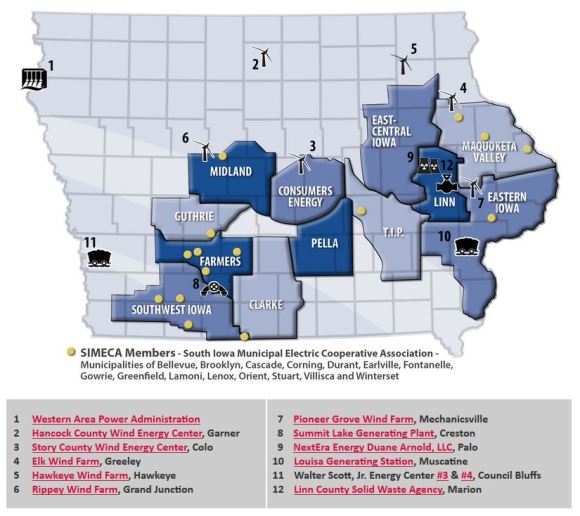
CIPCO Map of Generating Sources 9-27-15
There is some political posturing here, in that CIPCO draws electricity from the NextEra Duane Arnold Energy Center, Iowa’s lone nuclear reactor. One assumes that is part of the “carbon free resources” mentioned, even though tremendous carbon-based resources are used in preparation for the moment heat is produced by nuclear chain reaction to boil water.
There’s probably more obfuscation here if one took the time for analysis. It’s not worth the time. Scientific evidence is clear that the ceaseless emission of CO2 pollution by electricity generation stations using fossil fuels is a primary cause of global warming. If people are distracted and assuaged by door prizes and flowery language, they won’t be for long. Global warming is impacting our climate in a pronounced, negative (to humans) way.
The Environmental Protection Agency recognized CO2 as a pollutant and this summer rolled out new regulations in the Clean Power Plan. As with all things governmental, there is a political aspect to the plan. Some states are resisting implementation.
Each state is required to locally implement the Clean Power Plan. In many ways the Clean Power Plan is an opportunity for democratization of how energy is produced and used, and we should take advantage of it, said historian and political economist Gar Alperovitz. He called for “an all-out mobilization with potentially far-reaching consequences,” as states adopt a plan.
In Iowa, Governor Branstad has been resistant to the Clean Power Plan, saying only that he would wait and see the final regulations before commenting. The future is well known as Iowa has consistently said the state will adopt no stricter regulations than those required by the federal government. One expects the state to take minimal steps in compliance, and only after hearing from the American Legislative Exchange Council, and waiting out initial litigation regarding the new rules.
The trouble is transition to renewable, carbon-free sources of electricity can’t occur fast enough to undo the CO2 pollution already emitted into the atmosphere. Urgency at our annual REC meeting only took the form of opening water bottles and cutlery packs with reduced physical capacity.
Topic of the moment at Linn Cty REC is “which dor prize did you enter for?” mMany struggling with opening cutlery pack in plastic bag.
A lot of good work is going on regarding development of new electricity sources that directly harness the wind and sun. Our future is to accelerate development and implementation of carbon-free, nuclear free electricity. That means a lot more than using the phrase on the REC’s website or in a blog post.
People don’t react well to non-imminent threats. Our future is raising awareness of the climate crisis without causing people to withdraw from society.
While looking up a link for this post, I saw a Bobby Jindal web ad on my article. Jindal referred to the negativity in our world and said, “It’s time to turn to God.” Maybe. For those of us already oriented that direction, there is plenty of work to be done on earth to improve the human condition. Mitigating the causes of global warming is an important part of it.
Yesterday brought a truckload of news on three important issues: nuclear non-proliferation, the Iowa caucuses and local worklife.
Democrats in the U.S. Senate blocked a vote on legislation intended to derail the process of bringing the Islamic Republic of Iran into compliance with its obligations under the Nuclear Non-proliferation Treaty. By signing and ratifying the NPT Iran is entitled to a peaceful nuclear program in the areas of medicine and electricity generation as long as they comply with treaty terms. They weren’t in compliance.
How did Iran get to the point where developing a nuclear weapon became imminent? Thank the George W. Bush administration and its laissez-faire attitude toward Iran’s uranium enrichment program. Bush wouldn’t talk to Iran, or do much to enforce its obligations under the NPT. The Obama administration changed all of that, talked to Iran, and together with the P5 +1 nations forged an agreement to bring Iran into compliance.
Republicans howled that the deal was struck. Now that the political process has run its course, they shouldn’t have much to complain about. However, they do despite the administration’s cooperation with the Congress. Or as Laura Rozen, reporter for Al-Monitor posted on twitter,
Hard to understand McConnell’s gripe. they got review, they got 60 over 30 days, they got two offers for up or down vote from Reid.
In a survey of 832 likely Iowa Democratic caucus participants, Bernie Sanders closed the gap with Hillary Clinton to within the margin of error in the new Quinnipiac University poll released yesterday. People feeling “the bern” were quick to state Sanders now leads Clinton, but it’s early and one poll doesn’t mean as much as they may hope on Sept. 10.
Nonetheless, it is good news for Sanders to poll leading Clinton, even if it is within the margin of error. Already his campaign is raising money from the poll although the long odds continue to favor Clinton as the Democratic nominee. Steve Rattner of the New York Times posted the following analysis:
In a unanimous vote, the Johnson County Board of Supervisors approved an ordinance to raise the county-wide minimum wage to $10.10 by 2017. It was cause for celebration for the Center for Worker Justice of Eastern Iowa which helped organize a demonstration supporting the ordinance prior to the vote. The first $0.95 per hour increase is effective Nov. 1, although cities within the county can nullify terms of the ordinance, which they have been waiting for the county to finalize.
In the end this ordinance does little to alleviate the issues driving poverty in our county. According to Pew Research Institute, increasing the minimum wage benefits what Pew calls “near minimum wage earners,” or people who earn less than $10.10 per hour. “The near-minimum-wage workers are young (just under half are 30 or younger), mostly white (76%), and more likely to be female (54%) than male (46%). A majority (56%) have no more than a high-school education,” according to Pew.
The Iowa Policy Project uses the Economic Policy Institute data on minimum wage. Pew says 20.6 million people nationwide would be impacted by an increase in minimum wage to $10.10 per hour. EPI puts the number at 27.8 million. It is prudent to look at both numbers, but as low wage workers understand, the primary impact of public policy is on individual lives, more than broad statistics.
I favor the analysis of local author Paul Street who used the EPI family budget calculator to break down the impact of a minimum wage increase in Johnson County. He said, “considering all this, I can be forgiven, perhaps, for not showering praise on the Johnson County Supervisors for moving forward on a proposal that would raise the county’s minimum wage from $7.25 to $10.10 an hour by 2017.”
Read Street’s guest opinion in the Sept. 7 Iowa City Press Citizen here.
Thursday was not a bad day for those paying attention. I drove to the county seat to pay my property taxes. Coming straight from the garden, I wore rolled up blue jeans, sandals and a T-shirt, funding the government for another six months.
Environmentalists are having trouble wrapping their head around a president who visited Alaska above the Arctic Circle on Wednesday to speak on the need to mitigate the causes of climate change, while at the same time on Aug. 17 approved Royal Dutch Shell’s exploration and development of oil there.
It’s not that hard because the challenge of our time is the lack of political will to take action to reduce CO2 emissions in a culture dependent upon fossil fuels. The problem is politics, not physics.
Bill McKibben expressed the sentiment concisely:
It’s literally painful to hear Obama’s powerful words from Alaska and know that they’re so cheapened by his decision to let Shell drill
The Arctic drilling fight is less between enviros and oil companies than between human beings and physics https://t.co/351SRxv2SP#ShellNo — Bill McKibben (@billmckibben) August 30, 2015
It’s no use crying Bill McKibben’s tears.
In 2014, the U.S. used 6.95 billion barrels of crude oil with 27 percent being imported, according to the U.S. Energy Information Agency. That’s 19.05 million barrels per day, including biofuels. Most of it is for gasoline, diesel, jet fuel, heating oil and liquefied petroleum gas. (The EIA explains how the oil was used here).
During President Obama’s administration the U.S. took substantial action to reduce dependence on imported oil. During the eight years of President George W. Bush, the country imported 28.6 billion barrels of oil or 3.574 billion barrels per year on average. In 2014, the U.S. imported 2.68 billion barrels or 25 percent less than the Bush average.
The rub is that in order to reduce imports, the Obama administration encouraged domestic production through an all of the above strategy that included hydraulic fracturing and increased exploration and discovery like Royal Dutch Shell had been doing in the Arctic in 2012. The strategy worked, and has been revitalized, but at what cost?
Doing nothing about global warming is not an option. The Obama administration has been and is doing something significant. As much as some would like to shut down the coal trains, end hydraulic fracturing and stop drilling for oil – leaving fossil fuels in the ground – it is only beginning to happen under Obama. Whoever is president in 2017, an “all of the above” strategy would mean quite different things with a Democrat or Republican in office.
Scientists understand the basic physics of global warming, and mostly have since the mid-1800s. As long as there is demand for fossil fuels, there is no reason to think exploration and discovery by oil companies will end any time soon. The problem with denial is not so much with political climate deniers. The physics will out, hopefully not too late.
A bigger problem is denial of our addiction to fossil fuels. Most continue to use them like there is no tomorrow. A reckoning is coming and it will take more than renaming that mountain to climb it.
Dr. Maureen McCue speaking for the Iran Deal at Rep. Dave Loebsack’s Office
IOWA CITY – A group of peace-loving constituents assembled Wednesday afternoon in front of U.S. Congressman Dave Loebsack’s office to demonstrate support for the Joint Comprehensive Plan of Action negotiated between the P5 +1 nations and the Islamic Republic of Iran, also known as the “Iran Deal.”
The Iran Deal is designed to prevent Iran from enriching uranium to develop a nuclear weapon. If Iran complies with the agreement, they will get relief from sanctions that brought them to the negotiating table during the Obama administration.
Congress is expected to vote on approval of the Iran Deal as early as Sept. 9. Congressman Loebsack has not made a public statement on the matter, hence a concern of those assembled.
The gathering began with Dawn Jones, Wellman, serving as master of ceremonies. Jones helped organize the demonstration, which is part of a nationwide series of similar events under the MoveOn.org umbrella. At one point 55 people were in attendance, as well as the local FOX News/CBS Channel and a couple of videographers.
Dr. Maureen McCue, Oxford, board member of the University of Iowa Center for Human Rights and chapter organizer for Iowa Physicians for Social Responsibility, enumerated the benefits of the Iran Deal and urged Loebsack to vote for the bill. (Details of the Iran Deal are linked at this July 27 post).
Tom Baldridge, advocated for the Iran Deal on behalf of the Eastern Iowa Chapter of Veterans for Peace, as did Ann Stromquist of PEACE Iowa, Nancy Porter, John Rachow, Dan Daly and others.
Demonstrators Filing into Rep. Dave Loebsack’s Iowa City Office
After the speeches, Jones walked into the office and spoke to Dave Leshtz, district representative for Loebsack. The group was invited inside to present a petition calling for an aye vote on the Iran Deal.
“(Loebsack) has a strong concern that many of the people who are pushing for a ‘no’ vote are the same people that pushed us into a misguided war in Iraq,” Leshtz said. “He believes in diplomacy. It is better not to shoot first and ask questions later.”
The frustration of several in the group was that Loebsack had not taken a leadership position by speaking for the Iran Deal well in advance of the vote. Some hoped he could influence his colleagues in the lower chamber.
David Leshtz and Maureen McCue
“What’s holding him back from taking a position,” asked Shelton Stromquist, emeritus professor, University of Iowa American, Social and Labor History. “I just don’t understand. There’s broad support for this agreement. He comes from a progressive constituency. He hasn’t provided leadership on this or many other issues. What’s holding him back?”
I don’t know, Shel,” Leshtz said. “A vote will come. He will cast his vote. He may say something before. This (petition and demonstration) is helpful I think.”
Dan Daly, Iowa City, stressed that many in the room had helped Loebsack get elected in 2006.
“We want to stay positive. Urgency. Take action. Soon and very vividly, so more congresspeople can take cover behind his leadership,” Daly said.
Leshtz deferred to the congressman, who knows many of the demonstrators personally.
Both Iowa U.S. Senators Chuck Grassley and Joni Ernst are expected to vote “no” on the measure.
 Yesterday the 21st Conference of the Parties, including 195 nations, adopted an agreement to curtail greenhouse gas emissions.









 Journey Home
You must be logged in to post a comment.