Categories
Environment

Denial and Denali

Denali Photo Credit - Wikimedia Commons
Denali Photo Credit – Wikimedia Commons

Environmentalists are having trouble wrapping their head around a president who visited Alaska above the Arctic Circle on Wednesday to speak on the need to mitigate the causes of climate change, while at the same time on Aug. 17 approved Royal Dutch Shell’s exploration and development of oil there.

It’s not that hard because the challenge of our time is the lack of political will to take action to reduce CO2 emissions in a culture dependent upon fossil fuels. The problem is politics, not physics.

Bill McKibben expressed the sentiment concisely:

It’s no use crying Bill McKibben’s tears.

In 2014, the U.S. used 6.95 billion barrels of crude oil with 27 percent being imported, according to the U.S. Energy Information Agency. That’s 19.05 million barrels per day, including biofuels. Most of it is for gasoline, diesel, jet fuel, heating oil and liquefied petroleum gas. (The EIA explains how the oil was used here).

During President Obama’s administration the U.S. took substantial action to reduce dependence on imported oil. During the eight years of President George W. Bush, the country imported 28.6 billion barrels of oil or 3.574 billion barrels per year on average. In 2014, the U.S. imported 2.68 billion barrels or 25 percent less than the Bush average.

The rub is that in order to reduce imports, the Obama administration encouraged domestic production through an all of the above strategy that included hydraulic fracturing and increased exploration and discovery like Royal Dutch Shell had been doing in the Arctic in 2012. The strategy worked, and has been revitalized, but at what cost?

Doing nothing about global warming is not an option. The Obama administration has been and is doing something significant. As much as some would like to shut down the coal trains, end hydraulic fracturing and stop drilling for oil – leaving fossil fuels in the ground – it is only beginning to happen under Obama. Whoever is president in 2017, an “all of the above” strategy would mean quite different things with a Democrat or Republican in office.

Scientists understand the basic physics of global warming, and mostly have since the mid-1800s. As long as there is demand for fossil fuels, there is no reason to think exploration and discovery by oil companies will end any time soon. The problem with denial is not so much with political climate deniers. The physics will out, hopefully not too late.

A bigger problem is denial of our addiction to fossil fuels. Most continue to use them like there is no tomorrow. A reckoning is coming and it will take more than renaming that mountain to climb it.

~ Written for Blog for Iowa

Categories
Sustainability

Getting Nuclear With Loebsack

Dr. Maureen McCue speaking for the Iran Deal at Rep. Dave Loebsack's Office
Dr. Maureen McCue speaking for the Iran Deal at Rep. Dave Loebsack’s Office

IOWA CITY – A group of peace-loving constituents assembled Wednesday afternoon in front of U.S. Congressman Dave Loebsack’s office to demonstrate support for the Joint Comprehensive Plan of Action negotiated between the P5 +1 nations and the Islamic Republic of Iran, also known as the “Iran Deal.”

The Iran Deal is designed to prevent Iran from enriching uranium to develop a nuclear weapon. If Iran complies with the agreement, they will get relief from sanctions that brought them to the negotiating table during the Obama administration.

Congress is expected to vote on approval of the Iran Deal as early as Sept. 9. Congressman Loebsack has not made a public statement on the matter, hence a concern of those assembled.

The gathering began with Dawn Jones, Wellman, serving as master of ceremonies. Jones helped organize the demonstration, which is part of a nationwide series of similar events under the MoveOn.org umbrella. At one point 55 people were in attendance, as well as the local FOX News/CBS Channel and a couple of videographers.

Dr. Maureen McCue, Oxford, board member of the University of Iowa Center for Human Rights and chapter organizer for Iowa Physicians for Social Responsibility, enumerated the benefits of the Iran Deal and urged Loebsack to vote for the bill. (Details of the Iran Deal are linked at this July 27 post).

Tom Baldridge, advocated for the Iran Deal on behalf of the Eastern Iowa Chapter of Veterans for Peace, as did Ann Stromquist of PEACE Iowa, Nancy Porter, John Rachow, Dan Daly and others.

Demonstrators Filing into Rep. Dave Loebsack's Iowa City Office
Demonstrators Filing into Rep. Dave Loebsack’s Iowa City Office

After the speeches, Jones walked into the office and spoke to Dave Leshtz, district representative for Loebsack. The group was invited inside to present a petition calling for an aye vote on the Iran Deal.

“(Loebsack) has a strong concern that many of the people who are pushing for a ‘no’ vote are the same people that pushed us into a misguided war in Iraq,” Leshtz said. “He believes in diplomacy. It is better not to shoot first and ask questions later.”

The frustration of several in the group was that Loebsack had not taken a leadership position by speaking for the Iran Deal well in advance of the vote. Some hoped he could influence his colleagues in the lower chamber.

David Leshtz and Maureen McCue

“What’s holding him back from taking a position,” asked Shelton Stromquist, emeritus professor, University of Iowa American, Social and Labor History. “I just don’t understand. There’s broad support for this agreement. He comes from a progressive constituency. He hasn’t provided leadership on this or many other issues. What’s holding him back?”

I don’t know, Shel,” Leshtz said. “A vote will come. He will cast his vote. He may say something before. This (petition and demonstration) is helpful I think.”

Dan Daly, Iowa City, stressed that many in the room had helped Loebsack get elected in 2006.

“We want to stay positive. Urgency. Take action. Soon and very vividly, so more congresspeople can take cover behind his leadership,” Daly said.

Leshtz deferred to the congressman, who knows many of the demonstrators personally.

Both Iowa U.S. Senators Chuck Grassley and Joni Ernst are expected to vote “no” on the measure.

~ Written for Blog for Iowa

Categories
Environment

Oak Leaf Tatters and Herbicides

White Oak Leaf Tatters
White Oak Leaf Tatters Photo Credit Plant Management Network

What to make of a study of the impact of herbicide drift from farming operations on oak trees?

In a peer reviewed 2004 study at the University of Illinois, Department of Natural Resources and Environmental Sciences in Urbana, Ill., scientists found drift of chloroacetamide herbicides is a possible cause of the leaf tatters syndrome in White Oak trees.

During the last few decades, white oak (Quercus alba L.) in the north central region have developed malformed spring leaves often called “leaf tatters.” The symptoms begin with the death of some interveinal leaf tissues, eventually leaving only the main leaf veins with little interveinal tissues present (See Illustration Above). Leaf tatters reduces the overall canopy of trees, making them more susceptible to other stresses. Leaf tatters has been reported in Illinois, Indiana, Iowa, Michigan, Minnesota, Missouri, Ohio and Wisconsin.

It’s a single study, probably not enough data to fully ratify the relationship, even if there is concern among foresters about how herbicide drift may be affecting stands of trees in both urban and rural areas.

The topic is worth more study than it is getting, as chloroacetamide is the active ingredient in a number of herbicides used with row crop corn and soybeans.

Preserving our woodland heritage is more complicated than letting a stand of trees go on as it has. Existing oak-hickory forests are being subjected to a wide range of stress including growth of invasive species below the canopy, and a lack of significant events, like forest fires, to remove mature trees, permitting new growth. After being in place for thousands of years, the oak-hickory forest will become a thing of the past without modern forestry management.

If there are other studies of the impact of herbicide drift on forests, I couldn’t easily find them. In fact, I had to contact an acquaintance to locate the study referenced in this post. Besides a small group of scientists and foresters, I don’t know who else is even looking at this.

What this study suggests to me, and to others whose opinion I value, is chemical drift from large scale farming operations can impact life in urban areas where most of the population lives.

As we escape rural areas in favor of cities we remain connected to what goes on in the country. Part of that, perhaps, includes maladies caused by chemical drift from large farms.

It is time we, as a society, spent time and resources determining what the relationship between chemical drift and our lives in the city is.

Categories
Environment

EPA Clean Power Plan Adopted

WHY-WHY-NOT-MELBOURNE2-4_0Monday the Obama administration formally adopted the Clean Power Plan with targeted reductions of greenhouse gas emissions from coal-fired power plants of 32 percent by 2030 compared to 2005 levels.

If readers care about mitigating the causes of global warming and ceasing the practice of dumping more than 110 million tons of CO2 into the atmosphere each day as if it were an open sewer, this is it.

This is the majority of the United States plan to reduce emissions at the 21st United Nations Conference of the Parties in Paris (COP21) this December. It’s what we plan, as a nation, to do about climate change.

Adoption of the Clean Power Plan is expected to be greeted with derision, litigation, delay, obfuscation, contempt, denial and politically correct, but meaningless statements.

The Environmental Defense Fund, The Nature Conservancy and the World Wildlife Fund US queried 50 companies for their position on EPA’s Clean Power Plan. Their carefully worded responses are here.

They range from this:

Starbucks signed the Ceres letter supporting the EPA Clean Power Plan.”

to this:

“We don’t have a position on the EPA’s proposed Clean Power Plan, and Target does not support the US Chamber’s position.”

to this:

Cargill is part of Risky Business to lead a dialogue across the philosophical spectrum about the long-term impact that climate change could have on the ability to produce food and the ways that agriculture can adapt to ensure global food security. We believe progress can best be made by engaging with groups and discussing our point of view. In fact, Greg Page, former CEO of Cargill, briefed Tom Donahue, president and CEO of the US Chamber of Commerce, this summer about the Risky Business project and its findings. We also spoke with the Farm Bureau about the Risky Business report and asked their advice about how to effectively engage farmers on the climate change issue.”

to this:

Caterpillar filed comments with EPA opposing the coal-plant rules. The company said: ‘Caterpillar strongly urges EPA to withdraw the Proposed Rule in order to (1) reevaluate the agency’s legal authority to establish requirements on both the entire electric sector and end-users of electricity; (2) conduct a more full and realistic estimate of the economic impacts of its proposed rule; (3) consider changes that avoid the adverse impacts outlined in these comments; and (4) provide guidance to states so that they have the tools necessary to minimize adverse impacts as they construct compliance plans.’ In its sustainability report, Caterpillar says: ‘We support intelligent, responsible public policies addressing climate and energy issues.’”

Gov. Terry Branstad has been critical of the proposed clean power rule, saying it will push energy costs higher and “hurt Iowa consumers and cost Iowans jobs,” according to the Des Moines Register.

If everyday Iowans don’t support the Clean Power Plan, then what? Doing nothing is not an option when it comes to mitigating the causes of climate change, and the Clean Power Plan is something.

There are few better options to take climate action than supporting the Clean Power Plan. Letting government officials know of your support is part of the picture, but what matters more is making the discussion part of everyday life. We may be accused of being “political” in our social circles, and that may be better than suffering the consequences of inaction, now and going forward. The Clean Power Plan is a solution worthy of our support. As the administration adopts it, so should we.

~ Written for Blog for Iowa

Categories
Environment

DSCOVR Our Blue Marble

Image of Earth 7-6-15 from DSCOVR (Deep Space Climate Observatory)

This week NASA released new photographs from the DSCOVR satellite launched Feb.11 from Cape Canaveral. DSCOVR, or Deep Space Climate Observatory, is a NOAA Earth observation and space weather satellite. DSCOVR arrived at the L1 Lagrangian point, roughly 1 million miles from Earth, on June 5 and part of its mission is to photograph Earth and transmit images every two hours.

DSCOVR is the result of work initiated in 1998 by then vice president Al Gore. We take for granted the images of the fully illuminated Earth, but for most of the last 35 years, it has been the same set of images taken Dec. 7, 1972 by the crew of the Apollo 17 spacecraft.

Senator Ted Cruz, chair of the U.S. Senate subcommittee on space, science and competitiveness which funds NASA, has said NASA should spend less time studying the planet and more time finding ways to go out into space. Cruz views much of Earth study as “political distractions that are extraneous to NASA’s mandate.”

NASA Administrator Charles Bolden begs to differ.

“Our core mission from the very beginning has been to investigate, explore space and the Earth environment, and to help us make this place a better place,” Bolden said. “It is absolutely critical that we understand Earth’s environment because this is the only place that we have to live. Science helps exploration; exploration helps science.”

Whatever one thinks about the politics of NASA, the new images coming from DSCOVR remind us Earth is our only home, and there is no Planet B.

~ Written for Blog for Iowa

Categories
Sustainability

Iran and the Iowa Senators

USSenateBoth Iowa Senators, Chuck Grassley and Joni Ernst, said they would use the 60-day evaluation period congress mandated for their approval of the agreement between Iran and the P5+1 states (United States, the United Kingdom, France, Russia, China and Germany) to reign in the Iranian nuclear program and prevent Iran from developing a nuclear weapon. Their full statements on announcement of the agreement are below.

Many of their colleagues have already spoken against approval of the agreement, so a modicum of discretion to study the agreement is both needed and represents Iowa as well as can be expected from our two current senators.

President Obama campaigned on the idea of talking to Iran, something his predecessor was unwilling to do. He not only initiated discussions, he was a driving force behind rallying our allies to enter into negotiations to bring Iran into compliance with the Nuclear Non-proliferation Treaty to which they are a party. The United Nations approved the deal on Monday.

Here are some facts:

1. This is not, as Senator Ernst said, “the Obama administration’s nuclear deal with Iran.” Germany and the members of the United Nations Security Council reached this agreement.

2. Israel, while a U.S. ally, is a scofflaw in the community of nations by virtue of its nuclear weapons program. They are not party to the NPT, nor have they officially acknowledged their nuclear weapons program. Israel is the preeminent leader in covert nuclear weapons programs.

3. If the Congress seeks to stop Iran from getting nuclear weapons, killing the Iran deal is the wrong way to do it. “If the Congress kills this deal, there will be no restraints—none whatsoever—no inspections, it’s over, and the sanctions will disappear,” said Secretary of State John Kerry to Steve Inskeep on Monday. “Because our colleagues who we negotiated with will say, ‘Well, look, the United States Congress killed this, we didn’t—but now everybody’s free to do what they want.'”

4. The agreement is not about trusting Iran. “You can’t trust Iran,” said Kerry, “and nothing in this deal is based on trust. We trust that we have the ability to enforce this deal; we trust that the deal, if implemented, will do the job. And if it’s not implemented, we trust that we have every option available to us that we need.”

5. The deal does not empower Iran, enabling them to have greater influence in the Middle East. Kerry told Inskeep,

Iran without a nuclear weapon is a very different Iran than one with one, and this is why many of us are so amazed at the reaction of some people.

Israel, for instance, is much safer without an Iranian nuclear weapon. And we believe that what we have done in this deal—and even before this deal, in the last two years—is roll back Iran’s nuclear program. Before we became engaged with Iran, they had a two-month breakout time. Now they’ll be going to a year breakout time. Is Israel safer with a year, or aren’t you? I mean, this is pretty straightforward.

So, the fact is, we’ll have inspectors in the country; we’ll have restraints on what [Iran] can do, in terms of levels of enrichment, restraints on the size of their stockpile, restraint on their research and development. Clearly people are safer with those restraints in place—and forever, for lifetime, they have to live up to the access under the additional protocol of the IEA, they have to have huge restraints on the uranium production and other things.

So I believe over time we will show people in the Congress and elsewhere in the country that Israel, the Gulf states, the countries in the region are much safer with this deal than without it.

Now it the time to weigh in on the Iran deal with Senator Grassley here, and Senator Ernst here.

Senator Chuck Grassley statement on the Iran deal:

“I’ve always been skeptical about an agreement with Iran that fails to fully dismantle its nuclear program. This is a country that sponsors terrorism and has a history of hiding its nuclear program from outside inspectors. I’m concerned that Iran’s relief from international sanctions could offer a lot more carrot than stick. That would open the spigot to support Iran’s terror activities and nuclear capabilities, threatening our national security and the security of our allies in the region.

“It’s important that under the legislation Congress passed, the Iran Nuclear Agreement Review Act, Congress will have 60 days to review the agreement before the President could waive any congressionally imposed sanctions on Iran. Under the act, Congress will review every line of the agreement before approving or disapproving the deal. We need to understand all of the components of the agreement. Does the deal allow for anytime, anywhere inspections, including military sites? When and how will sanctions be lifted, and what process exists for re-imposing sanctions, should Iran violate the deal? Will sanctions on conventional arms and ballistic missile technology be lifted as a result of the agreement? Will this deal prevent Iran from acquiring nuclear weapons capability and improve the security of the United States and our allies? These are just a few of the questions that come to mind.”

Senator Joni Ernst statement on the Iran deal:

“The 60 days will allow Congress and the American people to thoroughly scrutinize every aspect of the agreement with Iran. While I am still reviewing the details, I have very serious concerns that this agreement concedes too much to Iran and will ultimately strengthen the pathway for Iran to achieve a nuclear weapon. The bottom line, Iran must never be allowed to develop a single nuclear weapon – not now or at any point in the future.

“Iran is the world’s leading sponsor of terrorism and has aligned themselves with groups that are hostile to the United States and our allies. Therefore, we cannot afford premature sanction relief which has helped to curb Iranian support of terrorist activity. We cannot trust that Iran won’t use additional resources as an opportunity to fund terrorism and other proxy groups which pose a direct threat to our allies and national security interests in the region.

“Iran’s quarter century effort to obtain a nuclear weapon and long-standing support for terrorism will not subside overnight. We also cannot trust that Iran is complying with limitations on their nuclear program without stronger inspections. It is paramount that we are able to verify and enforce every aspect of Iranian compliance in order to confront and contain their nuclear ambitions.

“Iran is one of the greatest threats to peace and stability of our time, and we have a duty to stand behind our friends and closest ally in the region – Israel. The stakes are too high for the United States to risk any mistakes in an agreement with Iran. I look forward to carefully reviewing this deal in Congress to make sure we preserve our own national security and the pursuit of stability in the world.”

~ Written for Blog for Iowa

Categories
Environment

Iowa’s Algae Blooms

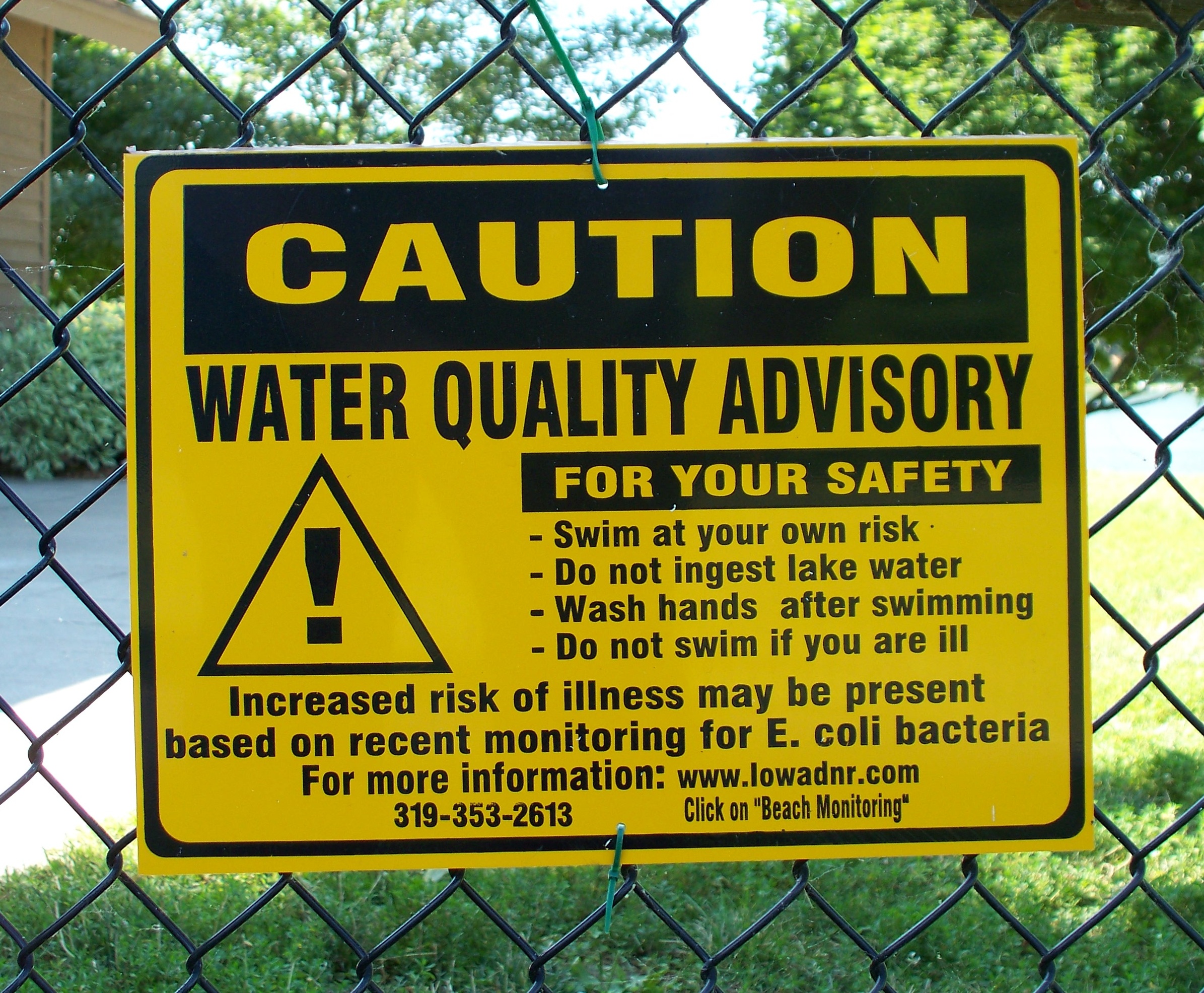
Bacteria Notice on Lake Macbride

Iowa recreational lakes have become a nutrient-rich soup in which blue-green algae thrives. The Iowa Environmental Council won’t say what I will: nutrient runoff from agriculture, and to a much lesser extent from home lawn applications, is a key ingredient in this toxic soup.

Algae can produce microcystin bacteria, which is toxic to humans and animals, and is only intermittently monitored outside Iowa DNR beaches. That means people who participate in low-impact water sports, like canoeing and kayaking may not get sufficient warning of the presence of microcystin bacteria.

While adventurers develop protective safety protocols for dealing with the unknown, the end result of recent warnings of elevated levels of bacteria was a scene where the homes of affluent locals looked on an abandoned beach on a brilliant summer day.

Cottage Reserve from Lake Macbride Beach July 14

 The Iowa Environmental Council made this press release on Friday:

Toxic algae blooms pose threat to human, animal health

DES MOINES– Summer is in full swing, and many Iowans are heading to the state’s lakes to swim, paddle, relax and cool off with family and friends. However, many Iowans are being greeted by an unwelcome sight at their favorite swimming spots: toxic blue-green algae blooms.

This type of algae, caused by a combination of high levels of phosphorus pollution and increased temperatures can produce harmful microcystin toxins that can make people sick and be deadly for dogs, livestock and other animals.

The Iowa Department of Natural Resources (DNR) has posted 14 swimming advisories cautioning Iowans to stay out of the water at 11 different State Park beaches so far this summer due to high microcystin levels. Independence Day weekend, one of the busiest outdoor recreation weekends of the year, the DNR posted microcystin warnings at five Iowa beaches – the worst week yet. Included on this summer’s list are Lake Darling, Pine Lake, Red Haw Lake and Twin Lake West beaches – all first-time toxic blue-green algae offenders.

“The threats posed by toxic blue-green algae blooms are serious,” said Water Program Director Susan Heathcote. “Iowans need to be aware of this problem, the health risks, and know how to recognize and respond to toxic blue-green algae blooms.”

Toxic blue-green algae blooms create green, murky water, visible surface scum and a foul odor. The blooms can spread across the water but tend to accumulate in shoreline areas. Beach warnings are posted by the DNR when microcystin levels exceed 20 ug/liter, a guideline established by the World Health Organization. Contact with water at or above this level can result in breathing problems, upset stomach, skin reactions, and even liver damage. Inhaling water droplets containing toxic blue-green algae can cause runny eyes and nose, cough, sore throat, chest pain, asthma-like symptoms, or allergic reactions.

After tracking microcystin poisoning cases in Iowa as part of a national pilot project, Iowa’s public health leaders recently announced plans to add “microcystin-toxin poisoning” to the list of conditions doctors must report to the Iowa Department of Public Health.

“To rid Iowa of toxic blue-green algae blooms and ensure our lakes are safe and healthy for our families and pets, we must improve our water quality and reduce phosphorus pollution caused by agricultural and urban runoff and wastewater treatment systems,” Heathcote said. “This pollution not only puts our health at risk, but also has negative economic impacts on communities that depend on lake tourism, as well as our environment.”

The DNR monitors 39 State Park beaches for microcystin on a weekly basis between Memorial Day and Labor Day, issues advisories and posts warning signs when conditions are unsafe for swimming. The weekly beach advisories can be found on their website. Last summer, the DNR posted 22 beach warnings for high levels of microcystin during the recreational season.

At this time, DNR only monitors State Park Beaches, so if you swim at other public or private beaches you need to be aware of the potential for toxic blue-green algae this time of year. Not all blue-green algae is toxic, but when in doubt, stay out of the water and call the DNR Beach Monitoring Hotline at 515-725-3434. If you think you or your pets may have been exposed to toxic blue-green algae, thoroughly wash it off with fresh water. If you or your pet are experiencing symptoms associated with high microcystin levels after suspected exposure, seek medical or veterinary care immediately.

Records showing State Park beaches with documented Microcystin levels exceeding 20 ug/L dating back to 2006 are available on the Iowa Environmental Council’s website.

~ The Iowa Environmental Council actively works in public policy to provide a safe, healthy environment for all Iowans. The Council focuses on public education and coalition building to give Iowans a voice on issues that affect their quality of life and to protect Iowa’s natural resources for current and future generations. For more information, visit iaenvironment.org.

~ Written for Blog for Iowa

Categories
Environment

Road to Paris – What is COP21?

Paris COP 21In 2015, France will be hosting and presiding over the 21st Session of the Conference of the Parties to the United Nations Framework Convention on Climate Change (COP21/CMP11), otherwise known as “Paris 2015.”

COP21 will be held from Nov. 30 to Dec. 11 on the Paris-Le Bourget site, bringing together around 40,000 participants in total – delegates representing each country, observers, and civil society members. It is the largest diplomatic event ever hosted by France and one of the largest climate conferences ever organized.

COP21 will be a crucial conference, as it needs to achieve a new international agreement on the climate, applicable to all countries, with the aim of keeping global warming below 2°C.

The stakes are high: the aim is to reach, for the first time, a universal, legally binding agreement that will enable us to combat climate change effectively and boost the transition towards resilient, low-carbon societies and economies.

To achieve this, the future agreement must focus equally on mitigation – that is, efforts to reduce greenhouse gas emissions in order to limit global warming to below 2°C – and societies’ adaptation to existing climate changes. These efforts must take into account the needs and capacities of each country. The agreement will enter into force in 2020 and will need to be sustainable to enable long-term change.

France will therefore be playing a leading international role to ensure points of view converge and to facilitate the search for consensus by the United Nations, as well as within the European Union, which has a major role in climate negotiations.

To learn more about COP21, go to http://www.cop21.gouv.fr/en

~ Written for Blog for Iowa

Categories
Environment

Going Solar in Iowa

WHY-WHY-NOT-MELBOURNE2-4_0(Editor’s Note: This is a revised and updated post about solar power).

Climate Reality Leadership Corps founder and former vice president Al Gore gave his slide show, an updated version of the one used in the film An Inconvenient Truth, in Cedar Rapids on May 5.

It’s the third time I’ve seen him do so in person. There were differences in emphasis, but the big message of day one came from the panel on renewables and policy.

“Go solar,” said Warren McKenna, president of Farmers Electric Cooperative, Kalona.

In significant ways, these two words sum up what’s needed to meet world energy needs, replace fossil fuels, and move civilization toward sustainability.

In an hour, sunlight shining on Earth provides enough energy to meet our collective needs for a year. Whether we realize it or not, fossil fuels represent ancient sunlight stored for millennia in the ground. Which is more accessible?

According to multiple speakers at the conference, most of proven reserves of fossil fuels cannot be burned if we seek to retain Earth’s livability.

What makes solar an attractive solution to the climate crisis is the cost of installation is plummeting. At the point solar electricity generation reaches grid parity it will be an easy financial argument to make that fossil fuels should stay in the ground in favor of the less expensive alternative.

It’s not just me saying this.

The Way Humans Get Electricity is About To Change Forever is an article that appeared on Bloomberg Business last week. Author Tom Randall outlines shifts in electricity generation that will transform markets in the next 25 years. Randall predicts investments in solar will surge into the trillions of dollars, including distributed generation in the form of rooftop solar panels.

Companies such as Berkshire Hathaway Energy (BHE) already like solar, wind and other renewable energy generating capacity.

BHE accounts for six percent of U.S. wind electricity generating capacity and seven percent of solar according to Warren Buffet’s 2014 letter to shareholders.

“When BHE completes certain renewables projects that are underway, the company’s renewables portfolio will have cost $15 billion,” Buffet wrote. “In addition, we have conventional projects in the works that will also cost many billions. We relish making such commitments as long as they promise reasonable returns–and, on that front, we put a large amount of trust in future regulation.”

Solar is not without it’s problems. Natural resources must be exploited to make photo-voltaic panels, and the issue of conflict minerals continuously gets pushed aside. There are manufacturing, labor and transportation issues with solar. Problems notwithstanding, the argument for solar boils down to do we want a future, or not?

What we know is dumping 110 million tons of CO2 pollution into the atmosphere every day is not sustainable, and already we are seeing the impact of global warming and related climate change damage the lives of tens of millions of people.

There are no simple answers to solving the climate crisis. As industry demonstrates the viability of renewable energy, the only thing holding us back is a lack of political will to take unavoidable steps to mitigate the causes of global warming.

The economic argument provided by declining solar electricity generating costs will be a potent weapon in the political fight.

~ Written for Blog for Iowa

Categories
Environment

Crossing Over

Apple Laden Branch
Apple Laden Branch

Before we knew it the year turned. Society’s distractions obscured it from time to time, yet the facts of days getting shorter, the planting season turning to harvest and second crops, and the humidity of summer are elemental, inescapable.

The construct of a year is artificial only from society’s view. Nature’s evolution in trips around the sun, with its changing angularity of light, formed deep expectations from which cultural patterns sprung. Patterns and culture are coming unhinged from human exploitation of the natural world. There have been unintended consequences for the biosphere just in living our lives.

Yet we go on living.

Today is the American holiday celebrating our independence from England. When I look at my life, the least benefited are descendents of the first people—who saw discovery, that loathsome word, genocide, and the great migrations from Europe, Africa and eventually from every habitable place on the planet.

At my workplace I hear the melodious, and sometimes harsh resonances of a dozen languages every day. We were never a melting pot, another loathsome phrase, but a garden of peoples who migrated and have taken to the land in its post settlement construct.

The name of our township is Big Grove, and what trees may have been here to warrant such appellation were mostly gone before the Civil War. It’s settled now, and to grow crops the soil must be augmented with chemical fertilizers. The rich topsoil, and that natural balance are mostly gone.

There is debate about whether to preserve, or recreate the oak-hickory forests that once dominated the landscape. What may have been here for thousands of years, has been relegated to parks and preserves, and not many of those. There’s no going back.

To say we understand nature is a lie, one I refuse to tell. Yet as the procession of days continues, I can’t help but notice things.

Like the wild blackberries I used to pick this holiday. The season is now finished, my favorite blackberry patches removed for development.

Like the cool damp days that have been good for garden lettuce, which by now had in previous years bolted.

Like the view of countless boats on the Coralville Lake as I crossed over the bridge under construction to North Liberty, despite warnings of underwater debris from the Iowa Department of Natural Resources. “Be careful out there” said one official, knowing little could prevent the overcrowded scene from developing on the high holiday of independence.

Like the nascent hope that despite these patterns, change is possible. Not hope against an inevitable reality, but something tangible, a path to preservation of culture that is eroding like the topsoil that was once so abundant.

One goes on living as best we can, making as light a footprint as possible in the dust of summer days. Our best hope is of crossing over into something more than a new bridge over old habits—to a better way of life clothed in fabric made of our past, over bodies naked and new like this place once was.

This is where I find myself this Independence Day.