I looked at a live image of the inside of my large intestine on the monitor. It originated from a camera in the tip of a a colonoscope being operated by the physician who performed my first colonoscopy 11 or 12 years ago. It is a humbling and fascinating experience. No polyps, so I’m good for another ten years.
Medical practitioners recommend a colonoscopy for people aged 50 and older as a screening for colorectal cancer, the third most common cancer diagnosed in both men and women in the U.S. With the changes initiated by the Patient Protection and Affordable Care Act, insurance companies are required to provide the procedure without any charge, co-pays or incidental expenses.
The worst part of the procedure is clearing the bowels the day prior to the office visit. As the anesthesia wore off, we were ready for a meal and stopped at Salt Fork Kitchen for breakfast on our way home.
Check that off this year’s to-do list. Now the work begins anew.
I called into the warehouse and got a shift for Saturday. Three days off in a row would have been too much, and we can use the income. I’m also writing three stories for the newspaper and contemplating what else can be done to generate income to pay bills and reduce our debt.
Caesura came between the weary past and tomorrow’s promise with the colonoscopy.
When I get to the warehouse, I’d better fill the tank because we’re not off fossil fuels yet and my Subaru has a few miles left in it before heading to a scrap heap.
When I had my first colonoscopy there was no President Obama, no Patient Protection and Affordable Care Act, I hadn’t begun blogging, and I was on my employer’s health insurance plan.
The company I worked for would have liked nothing better than to present a cash payment to employees in lieu of paying their 65 percent share of health insurance. However, people they asked wouldn’t go for it.
My second procedure is scheduled Friday and I’m curious to see how it will be paid for by the health insurance plan purchased through the ACA marketplace for some $14,400 annually.
The ACA requires health insurance providers to cover recommended preventive services without any patient cost-sharing such as co-pays and deductibles. A colonoscopy is one of these services.
Information is seeping out through administrative cracks in the health care system. It began with a voicemail from the doctor’s office. My insurance company wouldn’t pay for the sodium sulfate, potassium sulfate and magnesium sulfate solution called a “bowel prep kit.” The kit came with two 6-ounce bottles of the solution and a handy plastic measuring cup. I asked our local pharmacist if I could buy it directly as I remembered it was inexpensive. With a $10 off manufacturer’s coupon it would have been $110, making it worth the trip to the clinic in the county seat to pick up a physician’s sample of the brew.
What I am finding in my limited personal health care is the ACA is peeling off add-on procedures that used to be covered by health insurance. No add-ons to physicals, colonoscopies, and other preventive procedures, at least in my experience.
I don’t know, but the change has to have affected gross margin for these businesses and reduced the cost of health care. Whether savings will be passed on in terms of premium reductions remains to be seen, but I doubt it.
While I didn’t receive a bill for my last physical examination, the hospital sent me a bill for lab tests, which I paid. We’ll see if there are any more cracks in the system after my procedure. If there are, I’ll be posting again.
We look up from the grindstone and notice everything has changed. When did that happen?
Most often it’s climate—torrential storms that ripped through the yard, knocking down trees and branches—but it is more than that.
It may the human condition: a long walk to our worldly end—replete with biological aging, physical ailments and the like. It’s not only that.
We have milled life’s bounty and used it, only to find that the wheat berries, oats and corn we like have all changed from abundance to scarcity. We make bread from the flour, but it no longer sustains us.
Bit by bit, we are confronted with changes we didn’t expect.
I don’t visit John’s Grocery much, but this story about Wally the Wine Guy is just one of several about the changes in that neighborhood where I briefly lived after graduate school. He moved to a new gig in the downtown grocery store after 26 years at John’s.
I like some of the changes in downtown Iowa City: the tall buildings in the pedmall with high-end apartments, the constant bustle of businesses opening then closing, the proliferation of student housing that can make landlords a tidy sum and keep downtown populated.
Other changes not so much, particularly the demise of Murphy-Brookfield Book Store, and what is now a struggling Riverside Theatre that gave up Shakespeare in the Park because for three of the last six years, they were flooded out in City Park, resulting in reduced attendance and a financial loss. Something’s changing and it’s not just that people are aging, although that’s part of it.
Wally went corporate is how I read the story. He might as well if the deal is sweeter and the opportunities to service a new clientel more profitable. Can’t blame him for that, and as I said, I don’t frequent John’s Grocery much. They already have plans for a replacement.
We must adapt to change as we can. We don’t have to like it, although we should look up from our work and notice— from time-to-time.
There is a piece to be written about education and how it is supported in Iowa, although not the one that comes to mind.
It is a timely topic because the way our K-12 schools receive government funding includes what is called “State Supplemental Aid,” or as some slow to cultural adaptation legislators call it, “allowable growth.” The legislature is supposed to set the amount of SSA within 30 days of the presentation of the governor’s budget. They don’t always do that.
We know, with some certainty, that the bulk of a child’s education is not about school time. In fact, children do better in formal schools if they have a broader context of learning that includes family time, formal outside activities, and other social constructs to engage them. It’s not just me saying this.
“One in every five students drops out of high school and roughly 1.2 million students fail to graduate from high school each year,” reported the United Way in a 2012 issue brief titled, “Out-of-School Time.”
“Local United Ways and their partners must ensure that children and youth from birth through young adulthood have meaningful supports and opportunities across all settings (e.g., families, schools, communities).”
Education begins at home, and includes the society in which we live. The Iowa K-12 schools are a subset of that, and one doesn’t have to be a home schooler to appreciate it.
For some, it never gets far from there. Family life becomes an unending series of coaching, sharing, counseling, correction and stimulus moments injected, intentionally or not, into the arc of a child’s life. School becomes one more thing.
In our family, going to school was positive. Not only did we purchase special clothing and gear, and update our immunizations, the prospect of learning with other neighborhood children provided a broadening experience—one we couldn’t replicate at home.
There was some stress and uncertainty, and we didn’t agree with everything the schools taught, or the social environment they created, but the overall impact was positive. We learned how to get along in a diverse society, and that was and remains important. That applies to my own schooling and to my perceptions of our daughter’s time in K-12.
The other day I encountered a very young child in a stroller looking toward a conversation between the presumed mother and a store clerk. Silent and intent, the soon to be toddler took it all in. What unscripted learning took place? What observations did the child have and from what framework? The child focused on speech coming from the boisterous one. It was a look of wonder that is hard to forget.
Enter my Catholic upbringing and the concept of “free will.”
The question of free will ranks among the most important philosophical problems. The view adopted in response to it will determine a man’s position in regard to the most momentous issues that present themselves to the human mind.
On the one hand, does man possess genuine moral freedom, power of real choice, true ability to determine the course of his thoughts and volitions, to decide which motives shall prevail within his mind, to modify and mold his own character?
Or, on the other, are man’s thoughts and volitions, his character and external actions, all merely the inevitable outcome of his circumstances? Are they all inexorably predetermined in every detail along rigid lines by events of the past, over which he himself has had no sort of control? This is the real import of the free-will problem.
The progressive view is that life is not predetermined by circumstances of family or acculturation. Environmental factors may come into play, but every American can have the opportunity to share in the American dream, and the role of government is to give people a hand up in what often is a struggle toward an equitable and secure life in society. Public school funding is an important way governments do that.
This gets lost in the public debate on school funding. The Iowa House Republicans view setting SSA as a negotiation. They passed a bill—along party lines—to set the figure at 1.25 percent. This was a starting point, they said, intentionally set very low, and in line with the governor’s budget.
The Senate is expected to pass a bill setting the figure between four and six percent. One doesn’t have to be Jeane Dixon to see a settlement around three percent.
Interested parties will advocate for an SSA number and the process will be ugly. The schools will uniformly say it is not enough and cut budgets in response to the final amount. That will be ugly too.
School funding is one more reason elections matter and people should get involved in the political process. That they don’t is a problem our K-12 school system helped create. There is no bigger indictment than yesterday’s Des Moines Register headline, “only 23 percent of millennials can name their state’s senators.”
In our community, people remember attending the one-room schoolhouse Big Grove Township School #1, now called the Stone Academy. It closed recently, in 1953. Whenever there is talk at the legion or at public events about the school, an old timer or two will say, “I went there,” and recap who else did.
There is no going back to the one-room school house, and that’s a good thing. Living in Iowa, our schools have great facilities and well educated teachers and administrators. Yet something is missing.
As a society, we spend a lot on education. Details for Iowa can be found in the 2014 Annual Condition of Education Report. It’s not about the money, it’s about our priorities.
What is missing is a sense of connection. People may be connected to a local community the way a Stone Academy graduate is, but many won’t live here that long. They don’t want that type of connection.
It is not for me to say what people want, or how they get there, except to say I have hope that as a society we recognize we are not in the world alone. The interdependence of societies, cultures and resources on this blue-green sphere is becoming increasingly important. Education can and must play a role in bringing this outlook to the fore.
For the most part we tolerate diverse views. However, relativism has proven to be a false path toward resolving conflict and isolation. There is no right answer, just a notion that when we support education, it means a lot more than government budgets to support public schools. It means a type of engagement the creates hope for more than the success of an individual at the expense of community.
We are a long way from that type of sustainability, and it is unclear that education, in schools, at home and in society, is getting the job done.
That’s why I believe we should support education more than financially and more than we have.
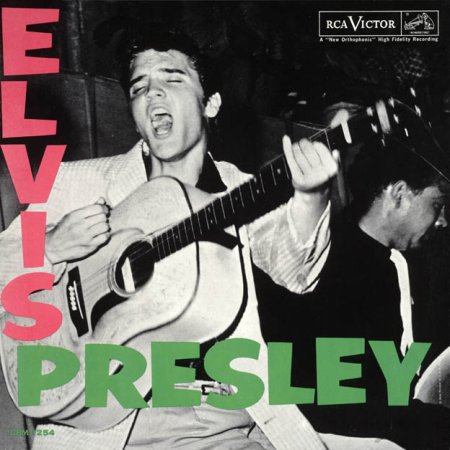
Elvis Aaron Presley would have been 80 today. He remains a presence despite his premature death on Aug. 16, 1977. He was one of the most celebrated musicians of the 20th century, and part of my life before and after his death.
I watched Elvis films at my first sergeant’s on-base apartment in Mainz, Germany with other members of our S-1 unit. We were cognizant of Presley’s military service in nearby Friedberg. It was just out of the the valley leading to the Fulda Gap where we went on maneuvers. We could connect to the King as a real person.
Today I realize that Presley’s military service was carefully planned by his producers at RCA records, who didn’t miss a beat releasing new records while he served. Presley died during the first year I was stationed in Germany and the “Aloha from Hawaii” version of Presley wasn’t my favorite. His southern roots resonated with our family history reaching back to the hills of Appalachia. I felt he was one of us.
Besides my USPS coffee mug, I have no Elvis memorabilia in the house, nor do I seek any. There are no plans to visit Graceland, or the birthplace in Tupelo, Mississippi, or anyplace else Elvis walked the earth. From time to time, I remember his work and God willing and the creek don’t rise I might watch Blue Hawaii one more time.
We don’t pick the times in which we live, yet we control our own destiny. Elvis Presley is an example of someone who made something unique of his life. While I won’t be impersonating him, I am glad to have lived part of my life when he lived his.
Having bit my tongue for several years about the state of our electorate, 2015 will be a time of writing about our politics and society in a process of working through ideas, to determine a path by which progressive ideas can gain more solvency in government.
Meeting so many people since 2012—in politics, in retail sales, in farm work, and in writing—my understanding of how society works, and the attitudes of people who live in it has grown. Society is not what I thought—at all.
My formative years began when in 1959 I secured a card for the public library bookmobile that stopped near our house. I read biographies about people important to the growth of our culture. There were a lot of them, although the names I remember are the Ringling brothers, Thomas Edison and George Washington Carver. I gained an understanding that through personal industry, thrift and good ideas, a person could create things that mattered in society and made life better.
I wasn’t the only person who learned this as the ideas grew from the founders and persist. Matthew Josephson articulated this American idea in his 1934 book The Robber Barons.
In a brief cycle, the laissez-faire political philosophy of a Jefferson, having given free reign to self-interest, would stimulate the acquisitive appetites of the citizen above all. These, whetted by an incredibly rich soil, checked by no institutions or laws, would determine the pattern of American destiny. The idealism of Jefferson’s Declaration of Independence, and his Inaugural address of 1801, would be caricatured in the predatory liberty of the “Valley of Democracy” where, as Vernon Parrington has said, Americans democratic in professions, became “middle class in spirit and purpose;” where freedom came to mean “the natural right of every citizen to satisfy his acquisitive instinct by exploiting the natural resources in the measure of his shrewdness.”
With minimal modification, Josephson’s language could describe attitudes of an electorate that in the same year brought us U.S. Senator Joni Ernst and Representative Dave Loebsack. It elected State Senator Bob Dvorsky and State Representative Bobby Kaufmann. It is a spring which nurtures dichotomies: people worked long hours to elect President Obama while others fly the confederate flag; row croppers manage the land with chemicals while others restore it to prairie; consumers are more connected to the world, while seeking small enclaves to live their lives in isolation. The picture isn’t clear, but clarity is coming.
Josephson describes what so many people want to get to—satisfying our acquisitive instincts through exploitation of a world that hangs in a balance because of human activities since the dawn of the industrial revolution. This is a bankrupt idea in light of what we know about the interconnectedness of our lives, but it persists, driven by a social setting in which church, family and work play a pronounced role.
The rest of understanding will come. While beginning the new year I plan to spend more time in the garage, yard, garden and kitchen while continuing my work in sales, writing and other odd jobs assembled to sustain us financially. Hopefully that will be a sustainable framework for exploring these ideas.
There is everything to gain and nothing to lose as we sustain our lives in a turbulent world.
LAKE MACBRIDE— We hear a lot about income inequality and for me, those able to amass wealth should be congratulated—then they should pay a fair share of taxes. Neither happens with any regularity.
Feigning moral outrage at the wealthy getting wealthier isn’t possible for me. There are no massive scale opportunities for vertical integration of businesses like the railroads, steamship lines, oil companies and telegraph like there were in the Gilded Age. Investors like Warren Buffet vertically integrate segments of their business, and reap substantial profits for doing so, however theirs is a portfolio of diverse and far reaching business activities. The failure of any one wouldn’t matter much in the broader scope of their enterprises. That Buffet et. al. are skilled businessmen goes without saying. Let them have their loot and plunder, I say.
For the rest of us, the plight of the rich only matters when it impacts us directly. For the most part, it doesn’t. If a percentage of each consumer purchase filters back to some palatial estate, as long as we can afford basic necessities, what does it matter? We won’t be going backward from industrialization. The benefits of manufacturing particularly, whether it be home construction materials, food, clothing, transportation or modern health care, are worth more than the antiquated idea of doing everything by and for ourselves. We should be self-reliant, but take advantage of labor saving products and devices with reason.
When it comes to sustainability, there are paths though the seven stages of man that yield respect, viability and a light footprint on the earth among the small percentage of people who own the vast majority of wealth. We don’t want to admit it, but we are peasants all, and that is a tough life, but not terrible.
Next up on my reading list is The Robber Barons by Matthew Josephson.
Written in the wake of the 1929 Wall Street crash, the initial chapter is rich in a way today’s narratives about social and financial matters are not. There is a lot of information I didn’t know or had forgotten. I look forward to reading the book in what is normally one of the coldest months of the year.
We know part of the story.
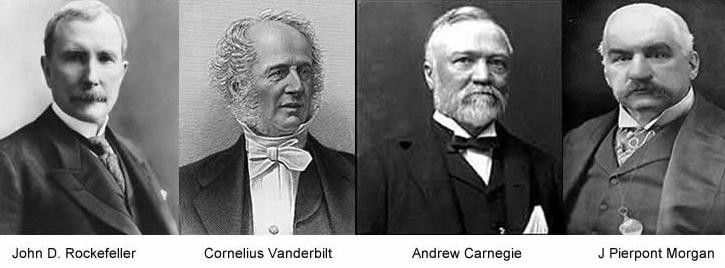
In a direct line from the industry and frugality of founding father Benjamin Franklin, a group of men seized the opportunity of an expanding frontier following the Northwest Ordinance of 1787. They made their mark converting an agrarian economy to one based on discovery, exploitation and manufacturing using natural resources that were part of the commons.
“Shortly before or very shortly after 1840 were born nearly all the galaxy of uncommon men who were to be the overlords of the future society,” wrote Josephson. This coincides with the settlement of Iowa after the Black Hawk War, and indeed my life and those of my forbears touched the industrialization of the country. Everything from my great, great grandfather buying land in Minnesota from the railroad, to the method of land surveying, to living along U.S. Highway 30 where the Rockefeller trust anonymously bought land at every intersection they could. Their fingerprints remain on much of how we live our lives.
Today, some revere the wealthiest in our society. I am willing to give them their due, but that’s it as our post-Sept. 11, 2001 country approaches what can be called living a plantation life.
In the 1962 forward to The Robber Barons, Josephson wrote about revisionists who would change the contemporary popular dislike of the robber barons. “This business of rewriting our history—perhaps in conformity to current fashions in intellectual reaction—has unpleasant connotations to my mind,” Josephson wrote. “Recalling the propaganda schemes used in authoritarian societies, and the ‘truth factories’ in George Orwell’s anti-utopian novel 1984.”
Little has changed since the 1960s, except the rich continue to get richer, as they run out of resources to exploit in our global village.
There is an intellectual case to be made about the social problems of income inequality, but who believes what politicians and media pundits (or even academics and social scientists) say? Some of us would rather consider the riches in our own lives than seek justice from the wealthiest people. We are a long way from reaching a tipping point in public opinion that would yield a different result.
The American public is asleep on the importance of income inequality to their lives. Just as the continuing resolution to fund the government passed two weeks ago without notice, people don’t seem to care as long as their lives continue as expected most of the time.
Income inequality is not good, but it has been with us for a long time—going back at least to the Peasant’s Revolt in 14th century England.
The lesson is we had better take care of each other because the rich don’t care as long as their wealth increases. That is advice upon which we can sustain a life.
LAKE MACBRIDE— What is going on in Ferguson, Missouri, and around the country, over the Aug. 9 fatal shooting of Michael Brown, 18, by Darren Wilson, 28, and subsequent absence of grand jury indictments? Don’t ask. What I know is filtered by biased media—both corporate and social. The many people with whom I spent time in a real place yesterday simply didn’t mention the topic—not one time among hundreds of people.
What matters more than this emotionally charged incident is how we view people in the context of the society we construct among friends, neighbors, family and acquaintances over the course of time in a place. We create our own enclaves, and that’s where we live much of our lives, and deal with human diversity as best we can.
When a person has experienced ethnic diversity in countless settings, the tropisms regarding Ferguson make little sense. By framing Ferguson in terms of ethnic diversity, I am already opening myself up to criticism. So be it—that’s who I am and have been since my youngest days. In my defense, I tried to live the dream as best I could.
“I have a dream that my four little children will one day live in a nation where they will not be judged by the color of their skin, but by the content of their character,” Dr. Martin Luther King Jr. said.
It takes more than citing a quote to achieve justice.
The 2013 population of our county was estimated at 139,155 by the U.S. Census Bureau. The white, not Hispanic or Latino population was 81.6 percent, with 5.5 percent black or African-American, 5.5 percent Asian, 5.4 Hispanic, and two percent other categories. These are facts.
Most people I encounter have little cognizance of them. Neighbors whisper about what would happen to property values if a black family would move in. Among working poor, conversation is often about how “different,” and by implication unacceptable, the behavior of “foreigners” is. In the most rapidly-growing parts of the county, a homogeneous culture centered around church, school, family and work blocks out basic facts about ethnic diversity. In each scenario participants have built an enclave that by any definition includes palpable intolerance.
“I cannot exceed what I see,” 1976 Nobel laureate Saul Bellow said. “I am bound, in other words, as the historian is bound by the period he writes about, by the situation I live in.”
In terms of ethnic tolerance, the situations I call home are not the best. What’s a person to do?
At a minimum, intolerance should not be ignored. We must say something when its ugly face is raised in conversation. It’s not easy to do when a lot depends upon our continued interaction with people found in the places we live, learn, worship, shop and work. Nonetheless, we must confront intolerance personally and directly. We can all do more in that regard.
A great diversion is following incidents like those in and around Ferguson and asserting actions, opining in media, taking direct action. This is little more than a distraction from the work that must be done to challenge intolerance in the tight enclaves where we live our lives.
The work has begun for many of us. If there is a lesson from Ferguson, it is we must do better.
“We hold these truths to be self-evident, that all men are created equal, that they are endowed by their Creator with certain unalienable Rights, that among these are Life, Liberty and the pursuit of Happiness.”
These first words to the Declaration of Independence, written by Thomas Jefferson, and proclaimed on July 4, 1776, are what most U.S. residents think of when considering equality—we all are created equal.
A month earlier, George Mason had written the Virginia Declaration of Rights, which included, “all men are by nature equally free and independent, and have certain inherent rights of which… they cannot deprive or divest their posterity; namely, the enjoyment of life and liberty, with the means of acquiring and possessing property, and pursuing and obtaining happiness and safety.”
As Jefferson and Mason both understood, liberty meant the right to own property, including slaves, something each of them did.
Whatever liberty and the enjoyment of life we have gets parceled out unevenly at birth. We are more alike genetically than different, but the circumstances into which we enter life and live make us more different with each passing day. The cards are already dealt in terms of family, religion, and social and economic status when we are born.
For those who come into a life of wealth and property—an increasingly small portion of the population—life can be good. For the rest of us, it can also be good, but we have to find our own happiness and hope our liberties are not eroded by the government our forbears helped create to protect them. That is hard to do in today’s political environment.
The influence of money in politics favors the wealthiest among us and has been eroding the commons and our well-being since the beginning of the Industrial Revolution. We held back the Robber Barons once. It seems unlikely the political will exists to do it again… yet.
On this Blog Action Day, what matters more is not the life we possess at birth, influenced by others. What matters is the way we seek common ground and lend each other a hand in times of adversity.
For if there is inequality in the circumstances in which we find ourselves, and there is, it’s whether and how we come together to fight oppression and get back to the best part of what the founders intended that will help resolve the greatest inequalities among us.
JOHNSON COUNTY— It is possible to fall into a trap of believing that the world and society are about us— our small circle of friends and family and how we live. That would be perilous.
Not only is it impossible to live outside the broader context of global society, believing so isolates us from serving any greater good, and ultimately from taking care of our personal needs. A day’s events can become “all about me,” and the most pressing issues of our time—man-made contributions to climate change, nuclear proliferation, economic justice, food security and public health— can wrongfully be set aside. Not only does this affect society, it filters down to each of us in one form or another.
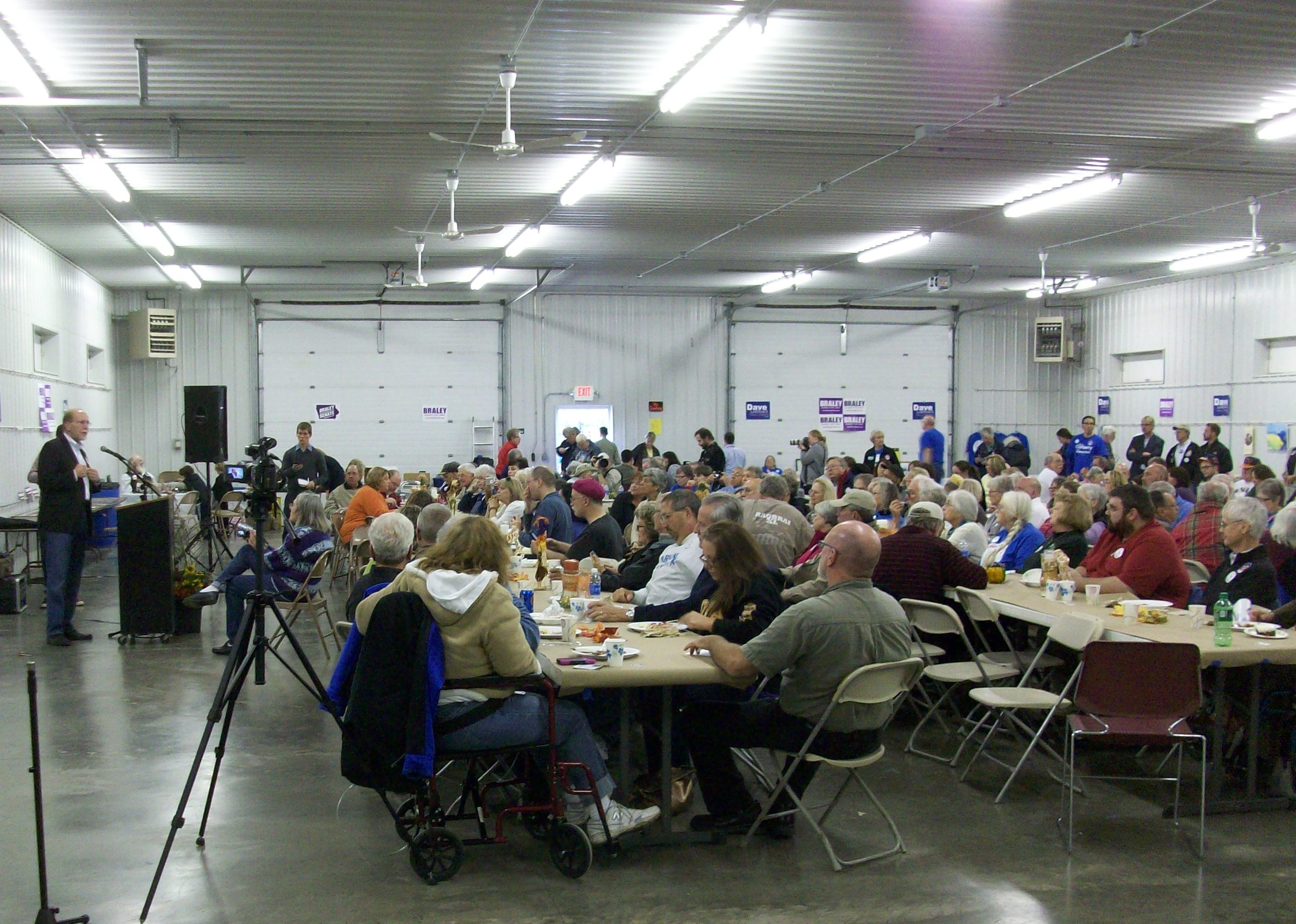
This weekend, I participated in different ways in a number of gatherings of people in diverse settings. Based on my personal interactions with hundreds of people, the definition of “us” needs broadening before substantial social progress is possible.
Make no mistake, there is a culture of “me.” I see it in everything I do outside our home. At the convenience store people line up to serve their addictions, whether it be tobacco, alcohol, sugar, gasoline or salted snacks. At the warehouse three generation families disperse in the aisles like an infantry squad on patrol exploring a foreign land. At the orchard, large groups of young friends bring along their usage of “perfect” or “awesome” as they head out to pick apples. At the political barbeque, activists gather to hear speeches and espouse judgments of each. At the same time, in the vast emptiness that is Iowa’s agricultural land, soybeans and corn stand ready for harvest and nary a person can be found as they were at home or in town, distracted from the leaching of nitrogen from last night’s rain. The culture of me creates isolation but not loneliness, even as people gather informally together in these settings.
To express my opinion, other than to select what is in this article, would be one more futile voice in the wind, and who has time for futility?
What I saw and participated in this weekend was a reminder of how little humanity has changed since Hieronymous Bosch made the painting below in the late 15th century. In a way we each seek our own giant strawberry to hold and consume. Despite ease of communication, we live compartmentalized and focused on personal delights, eschewing a broader perspective except as it serves our needs.
What to do about this weekend’s observations is uncertain. Figuring it out is important to sustaining a life at risk in so many ways as the days pass, and as people disengage from society.





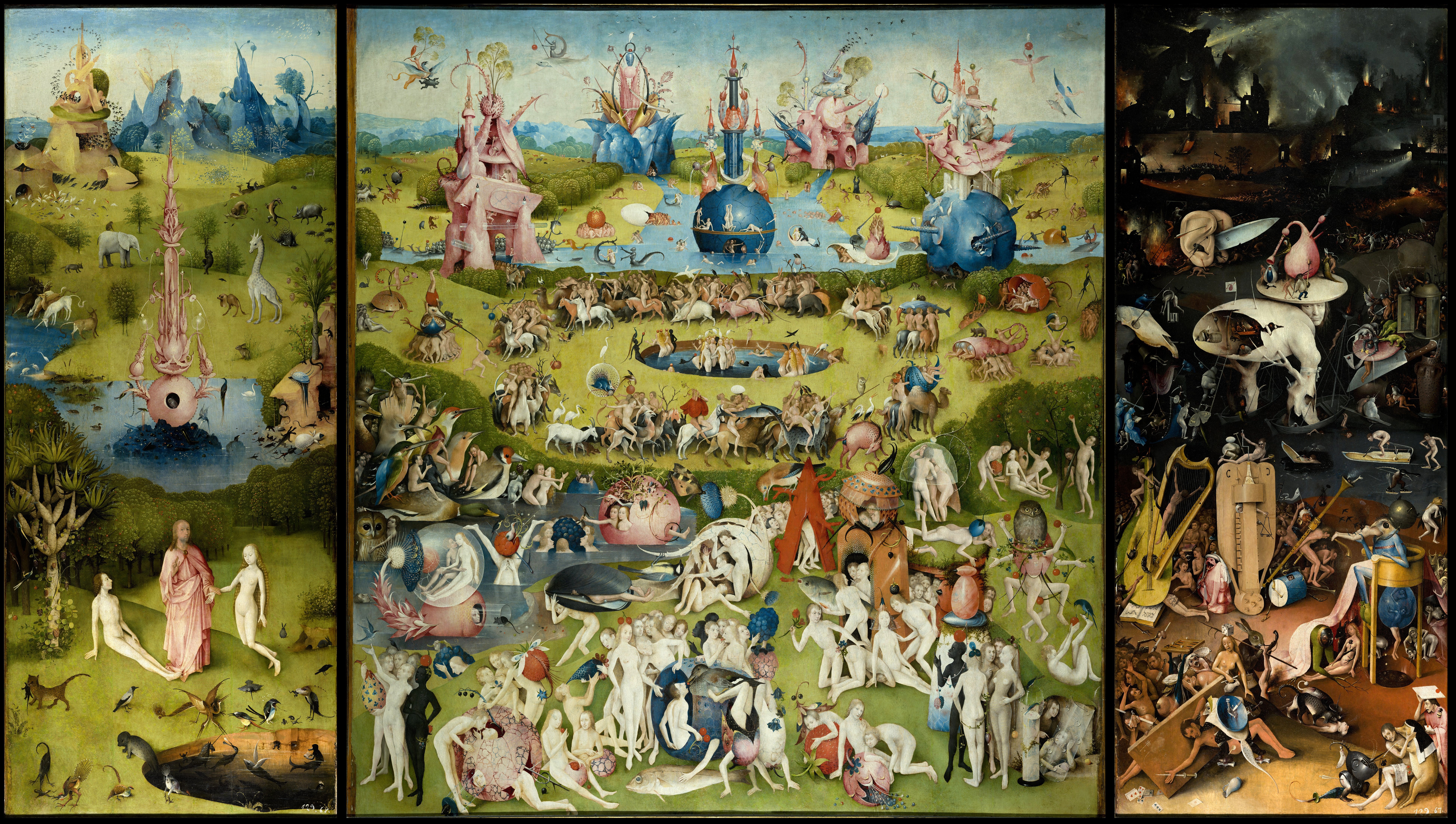
 Journey Home

You must be logged in to post a comment.