Categories
Living in Society Social Commentary

Not Much of a Boycott

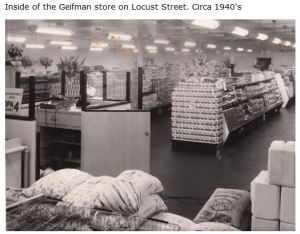
Geifman Food Store on LocustWord from a friend was to leave discussion of the Solon city council’s minimum wage vote at home when I visit later in the week. It’s nice to know stuff like that in advance.

More than a few locals are upset about the decision to lower the city’s minimum wage to the state figure after the county raised it. Some, including people who live here, have called for a boycott of Solon businesses.

My response is a boycott won’t matter much in our household.

Our main dining out is at Nomi’s Asian Restaurant where we have been going since she and her husband opened. Asian takeout will continue to be on our menu when we don’t want to cook at home. It is too far to drive anywhere else to get it. We only visit bars and eateries in town when there is a specific meet up with people we know, and not many times in a year.

I’ll continue to buy convenience foods at the grocery store. The staples are secured at a variety of other stores for lower prices, better selection, and to meet specific needs. We go to the grocery store more often than we dine out, but not by much.

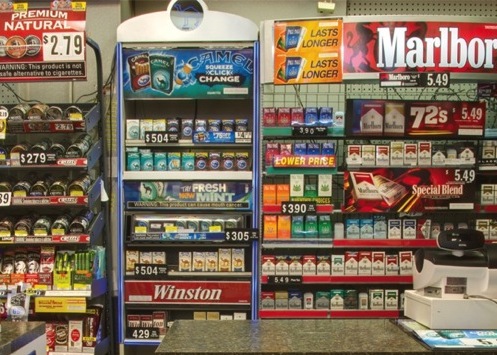
When I worked in Coralville I bought gasoline at Costco because of the convenience and a slight discount. This business will transfer to Solon, but the impact on the local economy will be almost nil. As everyone knows, margins are slim on retail gasoline sales. At our two Casey’s General Stores the revenue goes directly into whatever bank the Ankeny based corporation uses. Casey’s has the city’s lowest price for a gallon of milk, so when we run out of Costco milk at $2.60 per gallon, I’ll buy at Casey’s for a dollar more.

I visit the hardware store for certain needs. I buy canning supplies there even though they are more expensive. It is the kind of hardware store where a person can take in a bolt or screw and buy more like it — exactly how many are needed. They carry things used in a typical garage: lawn mower spark plugs, clips, fasteners, hand tools, lubricants and sundry items. If a need develops, they will be the first stop because of their inventory. The two women who run the place may or may not be making a wage. They didn’t come to the city council meeting. I suspect they have an opinion, but don’t want to share it publicly. Likewise for every other business owner that didn’t speak at the meeting.

All told, the amount of dollars we spend in the community never amounted to a hill of beans, or any other legume. If I participated in a boycott of local business it would hurt me more than them, increasing the isolation that has become home to us. In any case a boycott is not being organized like others that have been successful. The boycott talk is more fantasy than reality.

In 1965 our family boycotted grapes to support the Delano Grape strike. I remember Father explaining who Cesar Chavez was, that grapes were grown mostly in the California Central Valley, and the importance of a fair wage. We weren’t buying them at the Geifman’s Food Store near our house and didn’t for the duration of the boycott. I loved grapes, and still do, but accepted that there was a shared cause that required sacrifice.

There is none of that in the relatively wealthy Solon environs over this issue. If there were, a boycott would be more viable. For now, life goes on much as it did before the city council voted to lower minimum wage.

Categories
Living in Society Social Commentary

Letter to the Des Moines Register

Net NeutralityTo the Editor of the Des Moines Register

In her Sept. 1 Des Moines Register opinion piece, “Congress must protect net neutrality,” Clayola Brown gets it exactly wrong.

She wrote, “the FCC’s approach to net neutrality is a serious mistake,”  adding, treating the Internet as a common carrier utility could “dramatically cut back the new investments needed for the next phase of the Internet economy.”

What a bunch of bunk.

Title II protections were authorized by a bi-partisan vote of the U.S. Congress, giving the FCC authority to protect net neutrality. What the FCC did was restore these protections after millions of people urged the agency to do just that.

The rules set in February haven’t hurt investment and there’s no plausible reason to suspect they will. On the contrary, companies like Comcast, Google Fiber, Verizon and AT&T have made new investments in their Internet networks since the ruling.

For example, Comcast is rolling out new gigabit fiber services, called “Gigabit Pro” to 18 million locations.

What the FCC rules have done is provide a regulatory framework upon which Internet service providers will have to compete for business. The result has been investment in infrastructure.

As Brown asserted, “investment means jobs,” so what’s the problem?

Categories
Living in Society Social Commentary Work Life

Slavery and the Costco Halo

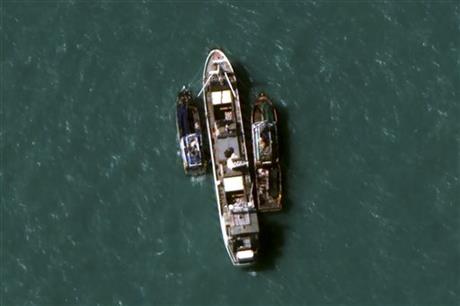
Slave Vessels - Photo Credit AP
Slave Vessels – Photo Credit AP

On Thursday the Los Angeles Times reported a Costco member sued the retailer on allegations that it knowingly sold frozen prawns that were the product of slave labor.

The lawsuit, filed Wednesday in U.S. District Court in the Northern District of California, alleges that Costco was aware that the prawns it purchased from its Southeast Asian producers came from a supply chain dependent on human trafficking and other illegal labor abuses.

The suit, which seeks class-action status, named seafood producers Charoen Pokphand Foods Public Co. in Thailand and C.P. Food Products Inc. in Maryland as defendants.

Based on claims of unfair competition and fraudulent practices, the lawsuit seeks a court order stopping Costco from selling prawns without a label describing its “tainted” supply chain and from buying, distributing and selling products they know or suspect to be derived from slave labor or human trafficking.

Read the rest of the article here.

If the allegations are true, the Costco halo with regard to labor relations should dim.

More than any other large retailer, Costco is in the good graces of members of the progressive community for its labor practices.

In January 2014, President Obama choose a Costco in Lanham, Maryland to advocate for an increase in the federal minimum wage because the retailer is “acting on its own to pay its workers a fair wage.”

“To help make that case, look no further than Costco,” said Thomas Perez, secretary of labor at the event. “Costco has been proving for years that you can be a profitable company while still paying your employees a fair wage. They’ve rejected the old false choice that you can serve the interests of your shareholders, or your workers, but not both.”

“Labor union officials and backers agree,” according to an article in USA Today, “saying other retailers, such as Walmart, could learn from the way Costco treats its workers and the results.”

Costco’s example is on the left end of the retail spectrum, and is set up to be taken down a notch. Slavery in its supply chain is nothing new as their shelves have long been stocked with canned tuna derived from a Thailand based fishing trade that sources from slave vessels. The Costco halo has protected it… perhaps until now.

When in high school I enjoyed having a tuna melt sandwich at Ross’ Restaurant in Bettendorf after working on the stage crew. The warm tuna salad, with a slice of melted cheese, served on toasted bread was sensually appealing and delicious. We are not in high school any more.

We live in a society where the mere mention of symbols of 19th century slavery creates cacophonous public debate. Just look at the recent news cycles regarding use of the Confederate battle flag in public places. It was a media firestorm with the defining act arguably being removal of the Confederate flag from the South Carolina state capitol grounds. Modern day slavery? Barely a word about it.

Whether Costco’s association with slaves in its supply chain will become an issue among its members is uncertain at best. As a society don’t like to take down the symbols in our hagiography, even if all large-scale retailers, including Costco, are far from saintly. We take comfort in developing patterns and relationships with our retailers, creating a refuge from a world that seems increasingly hostile. “I like this brand,” a consumer might say.

The argument comes down to the face of the farmer. When we discover the farmer is a slave, it requires action on our part. That is, unless we concede the world is so screwed up there is no hope.

I’ve never eaten a prawn, and don’t plan to start. If the lawsuit is successful, I’m not sure it will matter among prawn-eaters or other Costco members. However, progressives should care, and stop referring to Costco as a model for labor relations until it pledges, and lives up to the pledge, to take slavery out of its supply chain.

~ Written for Blog for Iowa

Categories
Living in Society Social Commentary

Coping with Iowa’s Coarsening

Convenience Store
Convenience Store

At a convenience store in North Liberty yesterday, a young guy was fueling his large black pickup truck. A companion was riding shotgun, both clad in blue jeans and dark T-shirts. The brief moment would have passed unnoticed except for the full-sized Confederate flag flying on the passenger side of the cab.

Another flag, the stars and stripes, flew from the driver’s side of the cab, both set to ripple in the breeze as the truck drove away on the highway.

Should I have said something? Maybe. My military training came into play and two things stopped me. Others hanging at the convenience store seemed to know the driver, and while they were not necessarily sympathetic, it was not my turf. The other thing was the unknown as to whether the gent had a gun. Perhaps the association was unjust, but one assumes he was armed, and of course, I was not. I kept my powder dry for another day.

The Confederate flag can be found in abundance in the counties where I live. People fly them at home instead of the stars and stripes. There are big ones, little ones, and stickered-to-windshield ones. I am less concerned about one person’s expression of whatever it is the confederate flag means to them, than I am when it is displayed in public as part of an official function, like it was in the Marion County Republicans Independence Day parade float.

Marion County Republicans

Reality bleeds over into the construct of politics. Johnny on the spot, the Republican Party of Iowa chairman condemned this use of the Confederate battle flag by his associates, although he made no mention of the improperly displayed U.S. flag on the back of the  trailing pachyderm. Like it or not, the attitudes behind flag usage—stars and bars or stars and stripes—are deeply ingrained in some Iowans and ever present.

My issue with the flag culture is why should I feel like I’m entering a war zone when picking up a beverage at the convenience store? Maybe its just me. Maybe it’s the coarsening of our community.

~ Written for Blog for Iowa

Categories
Living in Society Social Commentary

On a Murder

Apple Blossoms
Apple Blossoms

The premeditated killing of an Iowa Children’s Museum employee by a mall security guard in Coralville on Friday will have ripples in the community beyond the current news cycle. It was murder, the very definition of the word.

“In cases like this, where the shooter confesses to premeditated murder, there is a case to be made for capital punishment,” I said.

“Oh?”

“I understand you came up as a Quaker, but still,” I replied.

“I can think for myself.”

So too can we all.

Of the people I spoke to about the shooting, only one had been at the mall when shots were fired and was visibly shaken. When there is a murder in an innocuous place—to which most locals have been at one time or another—something changes. Murder becomes personal.

The movie theater gave rain checks to ticket buyers as the mall closed after the shooting—a sign of hope life could return to normal.

There will be a memorial for the victim later this morning at the mall, said the county attorney at a Saturday press conference.

Closure will be a longer time coming.

Categories
Living in Society Social Commentary

Letter to the Solon Economist

Writing About Apples

A Bloomberg/Des Moines Register poll published last week contrasted how Democrats and Republicans weigh subjects in their approach to selecting a candidate running for the 2016 nomination for president in their respective parties.

Republican likely caucus goers surveyed were most interested in the budget deficit, national defense and taxes; Democratic likely caucus goers surveyed were most interested in energy, income inequality and the nation’s infrastructure.

One of the few places the two results were close was on job creation, favored by both Republicans and Democrats 86-14. The partisans have different approaches on how best to create jobs.

This framing of Republican versus Democratic by news organizations does us a disservice. It perpetuates the lie that people are divided.

For those of us who talk a lot to people from diverse backgrounds, we can see it is simply not the case. More people want to join together and work toward a common goal than get involved with political discussions.

That is especially true in our small community where we can join a non-profit, serve on committees, volunteer at the fire department, at church, or at the library, or if we are simply celebrating a special event like our sesquicentennial, or hanging out Wednesday night for music in the bandstand. Political party preference just doesn’t matter that much.

There is data to back this up.

According to the May report of the Iowa Secretary of State, the number of no party preference active voters in Iowa House District 73 exceeds either of the main parties by a distance (with 1,492 more no party registrants than Democrats and 1,817 more no party registrants than Republicans).

My point is this: we have more in common with each other than we disagree. What matters more than partisan debate is working toward common goals.

Large news organizations may not get this, but if we look around at the familiar faces near us, we should.

Categories
Living in Society Social Commentary

Favorite Places – Linn and Market

Linn and Market Streets

I have been spending time near Linn and Market Streets in Iowa City for most of my adult life. I lived on Market Street after getting my master’s degree—my last long stint of bachelorhood before marrying in 1982.

Within a small radius, so much happened that anytime I return, the trip is imbued with memories. But for the traffic, I would stand in the intersection for hours. I mostly settle for a window seat at the nearby coffee shop for my daydreaming.

Linn and MarketOur daughter was born here, and performed the role of a dog on Gilbert Street. It was also one of the few times I remember her performing the guitar in public. We had breakfast at the Hamburg Inn No. 2 after pulling all-night security at Riverside’s Festival Theatre in City Park. Hamburg Inn No. 1 was gone by then.

“Shady streets, very old white frame houses, porch swings, lilacs, one-pump gas stations, and good neighbors…” wrote W.P. Kinsella in Shoeless Joe. “We have a drugstore with a soda fountain… It’s dark and cool and you can smell malt in the air like—a musky perfume. And they have cold lemon-Cokes in sweating glasses, a lime drink called a Green River, and just the best chocolate malts in America. It’s called Pearson’s—right out of a Norman Rockwell painting.”

Pearson’s is now the bank in the photo.

We still favor Pagliai’s Pizza and I bring home a pie from time to time when I’m near around supper time. It is one of the places that hasn’t changed much through the years.

Down the street on Jefferson the university had a portable building where students could drop off punch cards to run on the computer in the early days of programming. Who knew what computing would become?

I was briefly enrolled in James A. Van Allen’s astronomy class—a chance to learn from the legendary physicist directly. I had to drop after registering for more classes than I could handle that semester. More than any teacher I remember, he stretched the limits of my ability to learn.

After so many years of wanting to hear him, when Saul Bellow read from Something to Remember Me By at Macbride Hall, I did.

I met James Hansen, Bill Fehrman, Beau Biden, Elizabeth Edwards, and heard countless speakers—too many to list. With each visit I recall one or another who made an impression. How could I forget Toni Morrison, introduced by Paul Engle, and the bat flying around her head at Old Brick?

I bought books at Murphy Brookfield, Prairie Lights, Iowa Book and Supply, the Salvation Army, the Haunted Bookshop and at the State Historical Society. I still have most of them.

Rich with 45 years of memories, I look forward to each return to Linn and Market—for a cup of coffee, a meeting with my nearby editor, and often, just to sit and remember before a meet up with a friend or two. For me, it will always be home.

Categories
Living in Society Social Commentary Work Life

Seafood for Thought

Memory of Apple Blossoms

The silence on the story of human trafficking connected with slavery in the seafood industry is deafening.

Margie Mason of the Associated Press reported Tuesday that Indonesian police arrested seven suspects in an ongoing case.

“Five Thai boat captains and two Indonesian employees at Pusaka Benjina Resources, one of the largest fishing firms in eastern Indonesia, were taken into custody,” wrote Mason. “The arrests come after the AP reported on slave-caught seafood shipped from Benjina to Thailand, where it can be exported and enter the supply chains of some of America’s biggest food retailers.”

But for the investigative reporting by the Associated Press, these instances of slavery and human trafficking would have gone unnoticed, especially in the Western Hemisphere at the end of the global food supply chain.

American consumers don’t want to hear what goes on at the far end of the food supply chain. Using slave labor to fish is particularly egregious, and most people I meet don’t want to hear any of it. The focus is on the box, can, bag or piece of fruit or vegetable in front of them. Few want to dig very deep into where it comes from. We are the less as a society because of this prevalent American value.

I’m not a person who sees cause for alarm everywhere I look. I’ve been inside enough manufacturing and production operations during the last 40 years to know it requires oftentimes difficult work to make things we use every day. In most cases, there is a human impact with the means of production.

In the slow walk away from union representation since the Reagan era, much of what we learned about worker treatment has been abandoned by companies whose business model is to outsource or use subcontractors. That’s the immediate defense of Pusaka Benjina Resources: their subcontractors were responsible for any human trafficking and slavery. It is really no defense.

One should appreciate that the Associated Press is still willing to invest substantial resources in breaking stories like the slavery on Indonesian fishing vessels. Few others seem willing to do so as news organizations struggle to carve out a viable business niche, and as news and information gets blended into a vast soup of engaging, but largely irrelevant bits and packets transmitted with the speed of breaking news.

What’s a blogger to do? We begin like a fisher, setting sail on the sea of posts, articles, books, emails and letters that exist on electronic media. Waiting for what is relevant, what is news, and importantly, what matters. Not what matters to me, but what matters to all of us on this blue-green sphere.

What comes next is up to each of us.

Categories
Living in Society Social Commentary

Another March Madness

Wild Planet Foods Logo
Photo Credit Wild Planet Foods

While Iowans engaged in the NCAA Basketball Tournament another story was being written by Associated Press reporters Robin McDowell, Margie Mason and Martha Mendoza about food not far from televisions tuned into the games.

Following a year-long investigation, AP broke the story of slave labor being used to fish, sometimes illegally, in Indonesian waters for catch that finds its way to U.S. markets in stores like Walmart, Kroger, Albertsons and Safeway. You’ll find slave-caught seafood at the food service company SYSCO, and in restaurants. It is also used in popular pet foods such as Fancy Feast, Meow Mix and Iams according to AP.

During its investigation, AP interviewed 40 slaves on the Indonesian island of Benjina.

“The men the Associated Press spoke to on Benjina were mostly from Myanmar, also known as Burma, one of the poorest countries in the world,” the March 24 article said. “They were brought to Indonesia through Thailand and forced to fish. Their catch was shipped back to Thailand, and then entered the global commerce stream.”

The slaves interviewed by the AP described 20- to 22-hour shifts and unclean drinking water. Almost all said they were kicked, beaten or whipped with toxic stingray tails if they complained or tried to rest. They were paid little or nothing.

Runaway Hlaing Min said many died at sea, according to the AP.

“If Americans and Europeans are eating this fish, they should remember us. There must be a mountain of bones under the sea,” he said. “The bones of the people could be an island, it’s that many.”

There is plenty to provoke outrage among American consumers. Reactions to this story may include a boycott, begging the question who do we boycott? Better yet would be pressuring companies with our pocketbook by making better choices if we consume seafood. The Environmental Defense Fund provides a seafood selector site here; Greenpeace provides a shopping guide for tuna and there are other rating sites on the web. Slave labor is not the only issue with eating seafood.

It is important to note this story about slave labor buried in the U.S. food supply chain would have remained hidden if not for the resources of Associated Press and the work of McDowell, Mason and Mendoza.

Sometimes corporate media does their job, and Associated Press deserves a hat tip on this one.

Read the article “Are Slaves Catching the Fish you Buy” here.

Below is a link to a video version of the same story.

~ Written for Blog for Iowa, titled “Slaves Produce Seafood for U.S. Market”

Categories
Living in Society Social Commentary

Movies and Me

Poster_-_Gone_With_the_Wind_01In an unexpected development, Christmas in Connecticut and Frozen are the only two movies I viewed since January 2014. I have yet to view a motion picture in a theater or on a computer or television screen in 2015. That is so not me as I remember myself.

While YouTube videos make it to one of my screens, they are mostly bits of snark from the Internet, music clips, and an occasional segment of spoken word—footnotes to an argument or line of thinking.

Recent YouTube faves include Elvis Presley’s Return to Sender, Michael McIntyre’s standup bit on Condiments, and a clip from the Poster Central blog about Les Bell’s 1968 Jimi Hendrix Concert Poster. I digress.

One couldn’t help but notice that last night the Academy of Motion Picture Arts and Sciences presented their annual awards. I spent my evening with the computer off and the television dark, reading a book. Cultural residue from the event was everywhere this morning. Even if no one I knew made the least mention of the Academy Awards during the last week, there it was. (To prepare for this post I did read an article about Oscar picks in the newspaper).

I don’t watch very many movies these days when I used to take in three to five per week when in graduate school. What happened?

Movies have become indistinguishable from anything big business produces. Whether it is soap, paper products, electronic devices, vehicles, food, clothing, gasoline, whatever, Hollywood and the rest have been unable to escape the mechanized automation that generates “culture” and “products” for mass markets. Cognizant of that, why spend the time?

It may have seemed that wasn’t the case to a then young graduate student in the 1970s and 1980s. Since the 1929 winner Wings, return on investment has been a key Hollywood producer’s concern. One could argue that financial return has been part of the movies since W. K. L. Dickson first produced an Edison Kinetoscope Record of a Sneeze in 1894.

Frozen generated $1.280 billion as of last September, making it the highest grossing animated film of all time, and fifth highest overall. I watched it because I didn’t understand the constant references to it in the media. I felt I had to to keep up.

People with whom I spend my time just don’t talk about motion pictures—at all. The woodshop of society has sanded off the burr of cinematic interest. I don’t think that’s what Hollywood moguls had in mind when they built the gigantic economic engine Hollywood has become.

Over the years I collected VHS and DVD format movies and they sit on shelves and in boxes waiting for ultimate disposition. The ones I expect to watch have some personal connection. The movie my wife and I saw on our first outing; our stash of Christmas movies on VHS; perennial favorites Out of Africa, The Matrix and The Lord of the Rings trilogy; and movies related to my writing like The Power of Community.

Perhaps I grew out of movie watching. Maybe I learned the requisite lessons about Hollywood and moved on.

As with sporting events, movies have little attraction. In some ways I’d like to join others to view a film and discuss. Mostly, I’d rather films stand on their own without commentary, at the ready to view when there is utilitarian reason to do so. How boring of me.

People need useful work to provide meaning in their lives. Those involved with the movies aren’t that different even with their designer attire and well-catered parties on this special night.

As we search for truth and meaning there are better ways to experience life than by letting corporate entities tweak our intellect and emotions. Willing suspension of disbelief is a good thing. Helping us forget who we are and can be is the unforgivable part of cinema today.