Iowa Democrats have a rare opportunity for party building before the 2026 general election. Our governor is the least popular in the nation and Republican activists don’t really like their field of primary candidates, according to the Cedar Rapids Gazette. That includes Randy Feenstra who hails from the most conservative part of the state and is the current favorite in their gubernatorial primary. Lack of talent and personality never stopped Republicans, though.
Our neighbors in Minnesota are largely driving the opportunity I see. People just don’t like how federal agents are on the streets terrorizing U.S. citizens. Dislike is turning into action with more public demonstrations against the Trump and Reynolds administrations during the last year than I can count. Led by large, national groups, as well as by locals, millions of people across the country are being activated in the political process, including in Iowa. Not only are people participating in demonstrations and direct action, some of them showed up at our party caucus for the first time on Feb. 2.
I served as site leader for seven precinct caucuses and going in, I knew no one from my precinct who planned to attend. We did manage 32 people for seven precincts. I was surprised when three voters I did not know appeared in my group.
With the City of Solon’s annexation of a large, new subdivision, when the precinct lines were redrawn after the 2020 U.S. Census, we gained some neighbors. To a person, those who caucused with us were trying it out to see what local Democratic politics is about. That has been rare in my political life and is the reason for my optimism about party-building. I had to tap the deep well of memory to remember why we have precinct caucuses and explain the statewide process meaningfully.
I don’t know the future of Iowa politics, but Democrats are on the cusp of something big. The first step is to recognize the opportunity. Do that and hope remains for Iowa politics.
What characterized the 2008 presidential election for Democrats was the systematic use of nearly every procedural, legal, organizational, and technological lever within the electoral process to bring people to the polls that were previously infrequent voters. The Obama campaign innovated within the existing electoral system, integrating policy, organizational structure, data analytics, and ground tactics into one single, continuous outreach to voters. The results speak for themselves. Obama won — decisively.
I have living memory of that campaign, and it is worth examining how the underlying process has changed since then. In 2008, the focus was on persuading people to vote and vote for Obama and other Democrats. In the years since, a series of Republican-led changes in election law shifted the challenge away from persuasion and toward altering how voters participate in elections. These shifts in process are making a difference, particularly for the kinds of turnout strategies used by the Democratic campaign in 2008.
In Iowa, these changes took concrete form in the voting restrictions enacted by Republicans in 2021. The law signed by Governor Kim Reynolds redefined key elements of the electoral process in ways that made voting more difficult. I list the provisions of the law here in full because this post is intended as a reference. Taken together, these changes make campaigns like the one Obama ran in 2008 significantly harder to execute. The new laws must be followed, and campaign leaders have adjusted accordingly.
According to the Iowa State Association of County Auditors, the law required the following changes:
Voters must register to vote 15 days or more before the election to appear on the voter register on election day (formerly 11 days, and 10 days for general elections). Voters may still register to vote on election day, or when voting absentee in person, with both proof of identity andproof of residence.
A voter who has moved and has therefore been sent mail by the County Auditor to inquire of their proper address, andwho did not vote in the most recent general election (formerly the last two general elections), shall be marked inactive (unless they were not 18 years old at the time of the most recent general election). Registrations of inactive voters will not be cancelled until two more general elections pass with no voter activity.
Polls close at 8:00 pm for all elections (formerly 9:00 pm for primary and general elections).
When a registered voter is attesting to the identity and residency of a voter unable to present required forms of identification, the attesting voter must present his/her own required form of identification.
For a provisional ballot to be counted, the voter must either provide the necessary identification at the polling place before it closes at 8:00 pm, or provide it at the Auditor’s Office by noon on the following Monday. If the canvass by the Board of Supervisors will be held earlier than the following Monday (for cities with possible runoff elections), the identification must be provided before the canvass. (The post-election deadline was previously unclear.)
Employers must allow employees two consecutive hours to vote on election day, if they do not already have two consecutive hours off during the time the polls are open (formerly three hours).
The first day to submit an absentee ballot request form to your County Auditor is 70 days before an election (formerly 120 days).
The first day County Auditors may mail absentee ballots to voters is 20 days before an election (formerly 29 days).
The first day to vote absentee in person at the Auditor’s Office is 20 days before an election (formerly 29 days). (If you have requested a ballot by mail prior to this, your ballot will go out in the mail on this date.)
The first day to vote absentee in person at a satellite location is 20 days before the election (formerly 29 days), and satellite voting locations may only be established by a public petition with a minimum of 100 signatures (formerly County Auditors could establish satellite locations on their own motion). To learn how to request one, click here.
Absentee ballot requests for voting by mail must be received by 15 days before the election (formerly 11 days, and 10 days for general elections). Exception: If a voter is admitted to a health care facility, dementia-specific assisted living program, or hospital 14 or fewer days before the election, the voter may request an absentee ballot by telephone no later than 4 p.m. on election day.
Absentee ballots must be received by the county auditor by 8:00 pm on election day.(Previously, ballots were valid if postmarked before Election Day and received by the Monday following the election.) Postmarks or bar codes printed on ballot envelopes will no longer make a ballot received after election day valid, except in these cases:
Ballots from participants in the Safe at Home program received by the Secretary of State in time to be transmitted to the County Auditor by noon on the Monday following the election.
Ballots from uniformed and overseas citizens received by noon on the Monday following the election.
If an absentee ballot affidavit envelope is not signed by the voter, the County Auditor shall contact the voter, who may then:
Request a replacement ballot and return it by 8:00 pm on election day (changed from postmarked the day before the election or earlier).
Vote at the polls on election day.
Sign the affidavit in person at the county auditor’s office by 8:00 pm on election day (changed from 5:00 pm the day before the election).
Absentee ballot requests for voting by mail must be received by the County Auditor 15 days before the election (see exceptions above).
Must include the date the request is signed.
May not be sent to voters by County Auditors unless a voter requests one.
May not be sent to voters by the Secretary of State unless directed to do so by the state legislature in the event of a public health disaster declared by the governor.
May be sent to voters by candidates, political groups, and other private organizations, but no fields on the request form may be prefilled except for type and date of election.
The only people who may return a voted absentee ballot other than the voter are:
Someone living in the voter’s household
An immediate family member
The two special precinct election officials who deliver a ballot to the resident of a health care facility, dementia-specific assisted living program, or hospital
Voters unable to return a ballot due to blindness or other disability may use a “delivery agent” to deliver their ballots
Absentee ballots may be returned via designated ballot drop boxes (unless returned by a “delivery agent”), which if available must be located on the grounds of or within the building where the County Auditor conducts in-person absentee voting. (Auditors are not required to provide drop boxes.)
In the case of a voter unable to return a ballot due to blindness or other disability, the voter may ask a “delivery agent” to deliver their ballot. “Delivery agent” is defined as follows:
If a voter with a disability designates a delivery agent, the voter must complete and sign a designation form prescribed by the Secretary of State.
A delivery agent shall return no more than two absentee ballots per election.
The delivery agent shall fill out a receipt in a form prescribed by the Secretary of State and shall leave it with the voter.
The delivery agent shall collect the voter’s designation form at the same time as collecting the ballot, and shall deliver the ballot and designation form to the County Auditor at the same time. The delivery agent must:
Deliver the ballot in person to the County Auditor, not by mail or drop box.
Provide to the County Auditor the same identification as a voter at the polls.
Provide the following on a form prescribed by the Secretary of State:
Full legal name
Residential address
Phone number
Email address, if applicable
Sign a statement (prescribed in the law) certifying under penalty of perjury that the delivery agent has complied with the law.
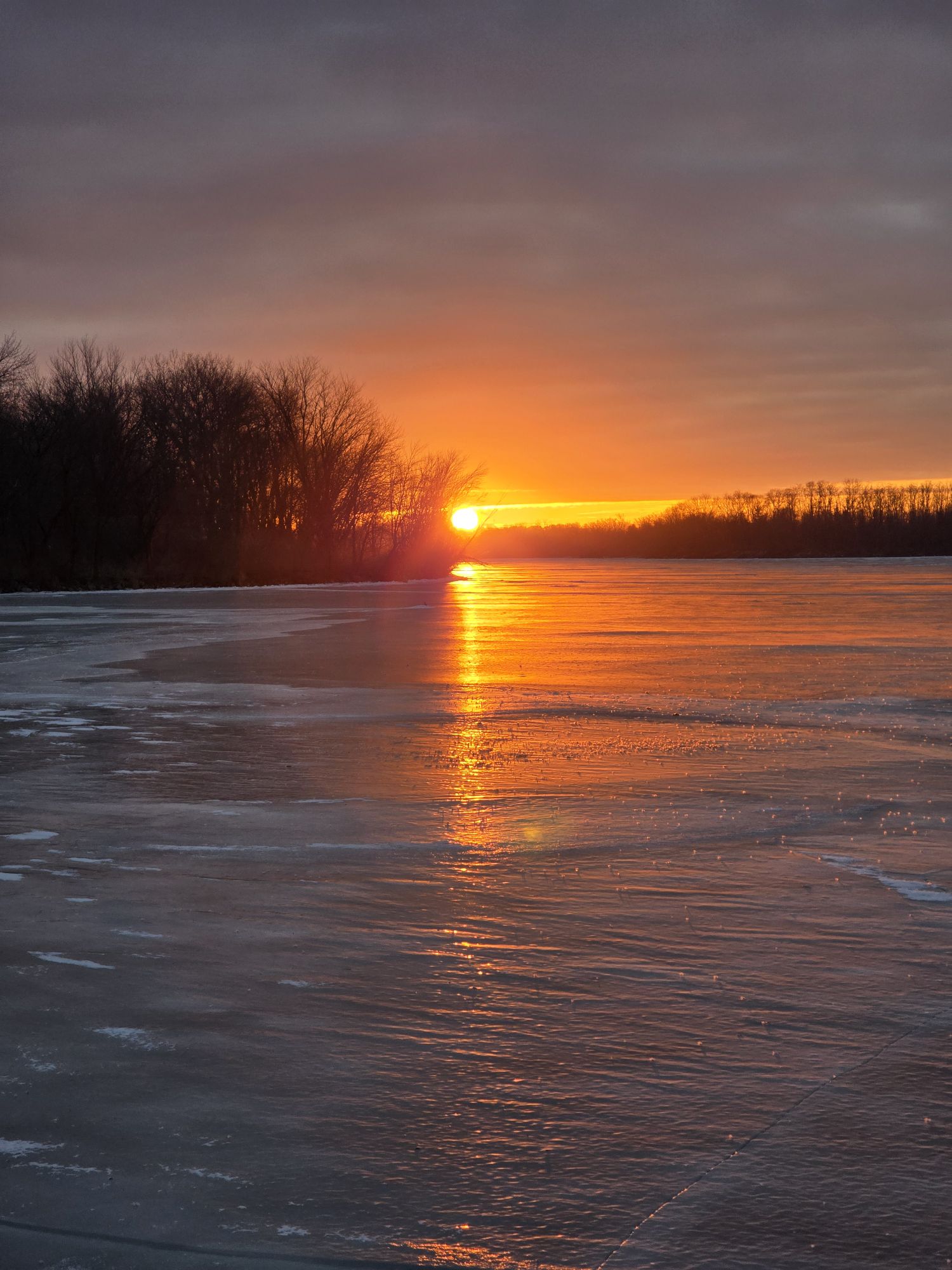
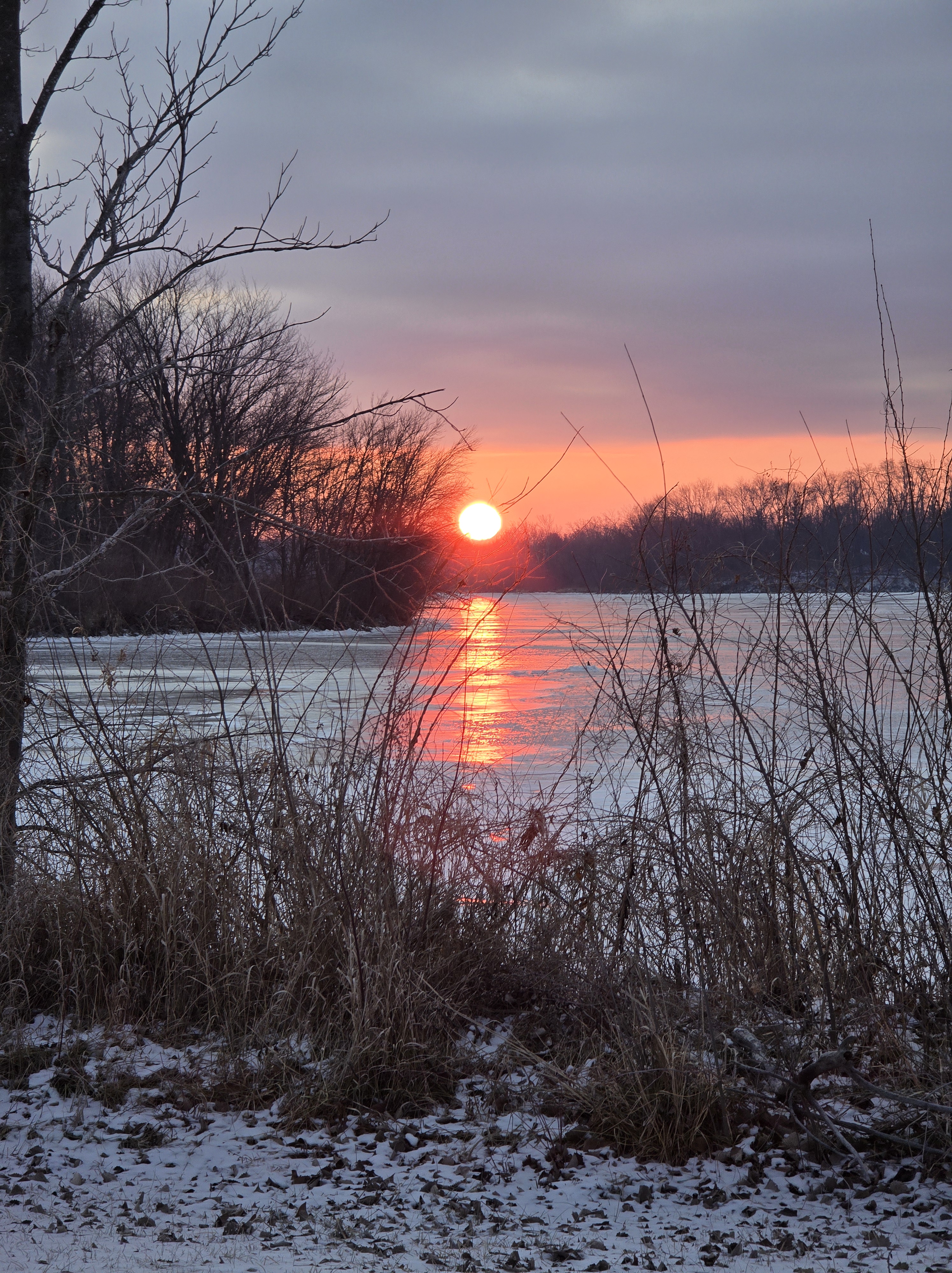
There is lots to do to get ready for Monday’s precinct caucus so I am writing this short post and adding a photo. May we focus on the rising sun of each new day.
This January I’m thankful to have gotten back into the writing groove so quickly. I finished the first draft of my book and am a third finished with the first major edit. The narrative and language keeps getting stronger. If I did nothing else, that would be an accomplishment.
I managed to get outdoors for my 30-minute walk every day but one. In past years I struggled to get exercise during winter but I remedied that. Among other things I remedied was sleepless nights. After using artificial intelligence to generate some ideas, I developed my own process to fall asleep and stay asleep until it is time to get up. I’ve now been getting seven to eight hours of sleep each night.
Reading seven books this month was in line with my plans. February should be another good month, especially if it stays cold.
Friday I attended a visitation for a friend’s spouse. The older I get, the more I feel a sense of loss regardless of how long or how well I knew the deceased. Luckily several other people I knew were there and we were able to talk about more than a few common things. We could go on living.
The current schedule is to start the first garden seeds indoors on Feb. 7. The year is rushing toward us with unrelenting fury. A lot remains to be done before spring’s promise arrives.
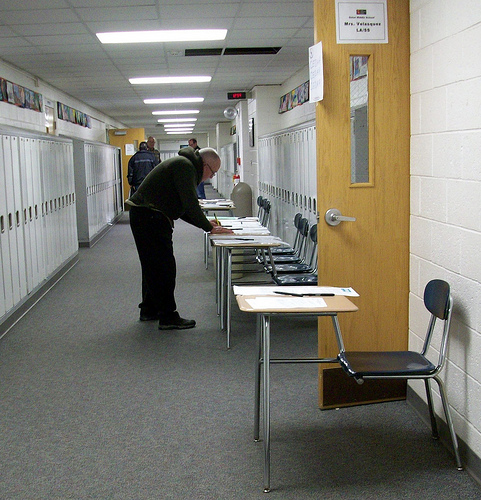
On Monday, Feb. 2, beginning at 7 p.m., the Iowa Democratic Party precinct caucuses begin the trek to the 2026 midterm elections. We will talk about issues, sign candidate nominating petitions, elect members of the county central committee, and pick delegates to the county convention. In the turbulence that has been the last 12 months, it is difficult to predict turnout. As a precinct captain, I am concerned about that.
It seems obvious our politics is moving away from political parties. A person does not need to be a Democrat to be outraged by the deaths of Renee Good and Alex Pretti. Likewise, showing up at a memorial or demonstration is speaking up against our government in what can be a non-partisan way. The caucuses are where the rubber meets to road in politics, and if people believe they no longer need a political party it has consequences.
One of my favorite movie lines is from Casablanca, in which Captain Renault says, “Major Strasser has been shot… round up the usual suspects.” From years of working in local politics, I know most of the usual suspects who will show up on Monday night. Here’s hoping they and others do. Regardless of who shows, we will get the engine rolling toward the midterms.
A group of us met to do a walk through of the elementary school where our group of seven precincts will hold caucuses. All of us have been working on Democratic politics for a long time, including one person who started during the 1972 Iowa caucuses. Experienced hands can make the process go smoothly. The weather is forecast to be warm, our leaders are energized. It should be a good night.
Family lore was we were kin to June Carter Cash, who was married to Johnny Cash. We had common family trees in southwest Virginia and for years, I called her a “shirt tail relative.” I descended from a line of Addingtons and so did she. I had an hour before having to get to the kitchen to prepare dinner so I typed in the ChatGPT chat box:
Genealogy question: I am descended from a person named Thomas Jefferson Addington who lived in Wise County, Virginia. He was my great grandfather. Family lore is June Carter Cash (spouse of Johnny Cash) also has an Addington from our area in her family tree, that she was or is descended from Addington line. What do you know about that and what are ways for me to learn more.
Long story short, AI determined, with additional information from me, that Cash was either my fourth cousin, once removed, or fifth cousin depending upon how the actual family tree branched out. By knowing my line traced back to William Addington and Margaret Cromwell, a founding family of the Trans-Appalachian frontier, and with the large language model’s vast access to public records, it took hardly any time of back and forth for it to draw this conclusion.
The key piece of the puzzle, which AI did not have, was a book called The Stallard Connection: A Family History edited by Nancy Clark Baker, Gladys Julian Stallard, and Margaret Russell Stallard, published in 1981. These women did legion work to assemble the information in this 900-page record of names, births, marriages and deaths, along with photographs and stories. It has been sitting on my book shelf since Mother gave it to me.
I lacked the ability to put the pieces together on my own. Artificial intelligence was helpful in that regard. After six rounds of back and forth I comprehended what years of studying the book and talking to relatives couldn’t effectively explain: What was my family tree and why was it important in history. At the end, I asked AI to write a narrative of the Addington-Cromwell part of the family tree. In less than a minute it produced the following.
William Addington and Margaret Cromwell: Founders of the Virginia Addington Line
The Addington family in southwest Virginia traces its beginnings to William Addington and his wife, Margaret Cromwell, who stand at the head of nearly all documented Addington lines in Scott, Wise, and surrounding counties. Though the surviving records do not reveal every detail of their lives, enough evidence exists—supported by county records, family histories, and consistent descent patterns—to place them firmly among the early settlers whose children helped populate the Appalachian frontier.
William Addington was likely born in the mid-to-late eighteenth century, probably in Virginia or the Carolinas, during a period when families were steadily moving south and west in search of land. His wife, Margaret Cromwell, came from a family name that appears frequently in early colonial and frontier records, suggesting established roots and connections. Together, William and Margaret formed a household that would become the nucleus of the Addington presence in the region.
By the closing years of the eighteenth century, the Addington family was part of the great westward movement into the upland counties of Virginia. At that time, Washington County, Virginia encompassed a vast area that would later be divided into several counties, including Scott County. It was into this evolving landscape of shifting boundaries, newly formed communities, and frontier conditions that William and Margaret raised their children.
Their sons and daughters grew to adulthood during a period marked by land clearing, subsistence farming, church formation, and the establishment of local governance. Records and later family histories consistently show that William and Margaret’s children married into other early families of the region, forming kinship networks that provided stability and continuity in an otherwise demanding environment.
One of their sons, William Addington, born circa 1784, carried the family line forward by marrying Sarah Stallard, a member of another prominent early family of Washington (later Scott) County. This marriage not only continued the Addington name but also cemented ties between families who shared geography, labor, and responsibility for shaping the early community.
Through these descendants, the Addington family became firmly established in southwest Virginia. By the early nineteenth century, multiple branches of the family were present in Scott County, and later in Wise County, appearing in census records, land transactions, court documents, and church memberships. These records reveal a pattern common to Appalachian families: close proximity among relatives, repeated given names across generations, and a gradual westward drift as new land opened.
The importance of William Addington and Margaret Cromwell lies not in public prominence but in continuity. Their legacy is measured in generations rather than monuments. From their household came farmers, soldiers, musicians, and community members whose lives intersected with major events in American history, including westward expansion and the Civil War. Notably, different branches of their descendants would eventually include both local families of Wise County and the Addington line that produced Maybelle Addington Carter, linking the family to a broader cultural legacy through her daughter, June Carter Cash.
Family histories such as The Stallard Collection, written close to the people and places they describe, preserve this origin story with a clarity that official records alone cannot provide. While gaps remain—as they do in all early genealogies—the consistency of the Addington descent from William Addington and Margaret Cromwell across multiple lines strongly supports their role as the founding ancestors of the Addington family in southwest Virginia.
In this way, William Addington and Margaret Cromwell stand at the threshold between colonial America and the Appalachian frontier, their descendants carrying forward not only a surname, but a shared regional history rooted in endurance, kinship, and place.
-o0^0o-
I take everything artificial intelligence says with a grain of salt. However, from my study of the Trans-Appalachian frontier, family history, and American culture, the narrative as written is not wrong. I need to set it aside and take another look in a week or so. By the way, I did prepare dinner on time.
The following was sent to U.S. Senators Chuck Grassley and Joni Ernst, and to U.S. Rep. Mariannette Miller-Meeks.
I watched the videos of the deaths of Renee Good and Alex Pretti. Major news media verified what I saw are real footage that depicts the killing of two U.S. Citizens who were no threat to federal agents. Good and Pretti were exercising their constitutional rights when federal agents killed them.
This can’t go on.
As our U.S. Senator I expect you to do something to prevent additional killings like this. I don’t presume to tell you how to go about that. The measure of whether you succeed will be the de-escalation of tension in states where federal agents have landed to address the administration’s concerns about immigration, including Minnesota and Maine.
As a U.S. Army veteran I am appalled by the apparent lack of training and control of these federal agents. Now is the time to put your experience in politics to work and do something most everyone can agree is the right thing to de-escalate these tensions.
Thank you for your service and for reading my note.
Should they respond, I will post the response below.
On Thursday, Feb. 5, Senator Joni Ernst emailed the following response to my letter. It is posted in its entirety.
Dear Mr. Deaton,
Thank you for contacting me about federal immigration enforcement. It is important for me to hear from folks in Iowa on matters like this.
No doubt Americans have firm disagreements on immigration, but it is essential for all of us, regardless of our political beliefs, to remain united behind a shared desire for the best future of our country. While I support Americans’ right to protest peacefully, no disagreement justifies violence.
Department of Homeland Security (DHS) data show Immigration and Customs Enforcement (ICE) law enforcement officers have faced a dramatic rise in violent incidents and threats while carrying out their duties over the past year. Reported figures include a 3,200 percent increase in vehicle-ramming incidents, an 8,000 percent increase in death threats, and a 1,300 percent increase in assaults against officers.
These alarming trends underscore the critical importance of enforcing existing laws intended to secure the border and preserve the integrity of our immigration system. During prior administrations, ICE encountered fewer violent confrontations, in part due to many apprehensions occurring within the controlled environment of local jails after criminal aliens had been detained by local authorities, enabling safer ICE transfers. In the last several years, however, cities including Portland, Oregon, and Minneapolis, Minnesota, have adopted “sanctuary policies” directing local law enforcement to disregard ICE detainer requests and decline arrests involving individuals otherwise eligible for removal. Sanctuary policies have complicated federal enforcement efforts and, according to DHS data, coincide with a sharp rise in threats and attacks targeting immigration officers.
As you know, federal immigration officers in Minneapolis, Minnesota, fatally shot Renee Good and Alex Pretti. While the U.S. Senate lacks jurisdiction over any pending investigations involving the actions of individual ICE or U.S. Customs and Border Protection (CBP) personnel, please know I appreciate you taking the time to share your perspective. The Federal Bureau of Investigation (FBI) is currently leading the investigation into the fatal shooting of Alex Pretti.
Following these incidents, White House Border Czar Tom Homan reaffirmed the administration will keep immigration enforcement efforts targeted, prioritizing public safety and national security threats in our communities. In Minnesota, federal officials have been working with state and local partners to improve coordination, strengthening the safety and efficiency of immigration operations for law enforcement officers, community interactions, and detainees.
I recognize folks have strong feelings about these incidents, and I understand the emotions these tragedies evoke, as any loss of American life carries immense grief for families and communities. As a member of the Homeland Security and Governmental Affairs Committee, I have the opportunity to engage with my colleagues on these topics. On February 12, the committee will hold a public hearing with leadership from U.S. Citizenship and Immigration Services, CBP, and ICE. This hearing is available at https://www.hsgac.senate.gov/hearings/ .
Should legislation on related issues come up for a vote, I will keep your thoughts in mind. I also welcome any additional insights or concerns you may have, as I always enjoy hearing from Iowans.
Sincerely,
Joni K. Ernst United States Senator
On Tuesday, Feb. 24, Senator Chuck Grassley emailed the following response to my letter. It is posted in its entirety.
Dear Paul:
Thank you for taking the time to contact me. As your senator, it is important that I hear from you. I know from your correspondence this is an issue you care deeply about.
I appreciate hearing of your concerns regarding U.S. Immigration and Customs Enforcement’s (ICE) presence in Minneapolis, Minnesota. I understand that there are ongoing investigations concerning the recent shootings in Minneapolis. We ought to let the investigation play out before making any judgments. Let me be clear, one death is too many and I will be watching the investigation closely.
Additionally, I was encouraged to hear that President Trump and Governor Walz spoke by phone as well as Mayor Frey. I sincerely hope Minnesota and federal law enforcement can reach an understanding so our federal immigration laws can be enforced safely.
Law enforcement continues to face a record number of threats in the course of their duties. When any incidents occur, potential misconduct is investigated; such is the case for the incident you referenced. I want to be clear though that our officers should never be threatened or harmed while enforcing our laws.
To that end, I believe there is a clear difference between the conduct protected by the First Amendment and unlawful obstruction.
I am continuing to monitor ICE’s operations and appreciate you sharing your comments.
Thank you again for taking the time to contact me.
This week was the one-year anniversary of the inauguration of President Donald J. Trump. In my view, he and his sycophants can not be forgiven for the pain and suffering caused in 12 months.
Long before he was president I knew of an association between him and Jeffrey Epstein, convicted human trafficker, child sex offender, and serial rapist. I didn’t know the extent of Trump’s involvement, just that the two of them associated freely. Apparently more specific evidence of his transgressions and potential crimes are available within the Department of Justice which refuses to release the Epstein files even though the Congress passed a law requiring them to do so more than 30 days ago. Trump is unforgiven for his stonewalling.
In dismantling USAID, the U.S. government is directly responsible for hundreds of thousands of deaths among people who relied on the largess of the world’s richest country. According to Harvard’s T.H. Chan School of Public Health, hundreds of thousands of people have died for want of USAID. Trump is unforgiven for his inhumanity.
On July 4, 2025, Trump signed H.R. 1, a budget reconciliation bill that did untold harm to families across the country. Among other things, it cut $793 billion from Medicaid and $268 billion from the Affordable Care Act, resulting in over 10 million people becoming uninsured; and $200 billion from SNAP putting 5 million people at risk of losing their food assistance. Trump is unforgiven for his cruelty.
Also in H.R. 1, Trump increased the budget for immigration enforcement by $170 billion and unleashed an undisciplined and violent DHS on several states. The violence, including against U.S. citizens, is difficult to fathom. At least one death caused by DHS has been ruled a homicide. Yesterday, his immigration thugs invaded the State of Maine. Trump is unforgiven for his violence.
In the U.S. Army we called poor operations a goat screw, and certainly the attempted implementation of DOGE by Elon Musk was that. He cut funding in places like our local public library only to have the courts rule his actions were illegal. This back and forth left librarians in a quandary about how to maintain service during the tumult. The same holds true for other institutions cut by DOGE. Trump is unforgiven for his chaos.
One of the blessings I feel in my life is the heroism of the Greatest Generation in World War II. More than 50 million civilians died during the war, along with more than 20 million military personnel. Out of that conflict the world came together, forming the United Nations and the North Atlantic Treaty Organization. Since then, Trump has been tearing those institutions apart, despite the many benefits. Trump is unforgiven for being a war monger.
Is there any positive side to this? The only one I can see is I know who I am, and this isn’t it. It is motivation to make change in our government which could then take action to change society for the better for everyone. It’s past time to get to work.
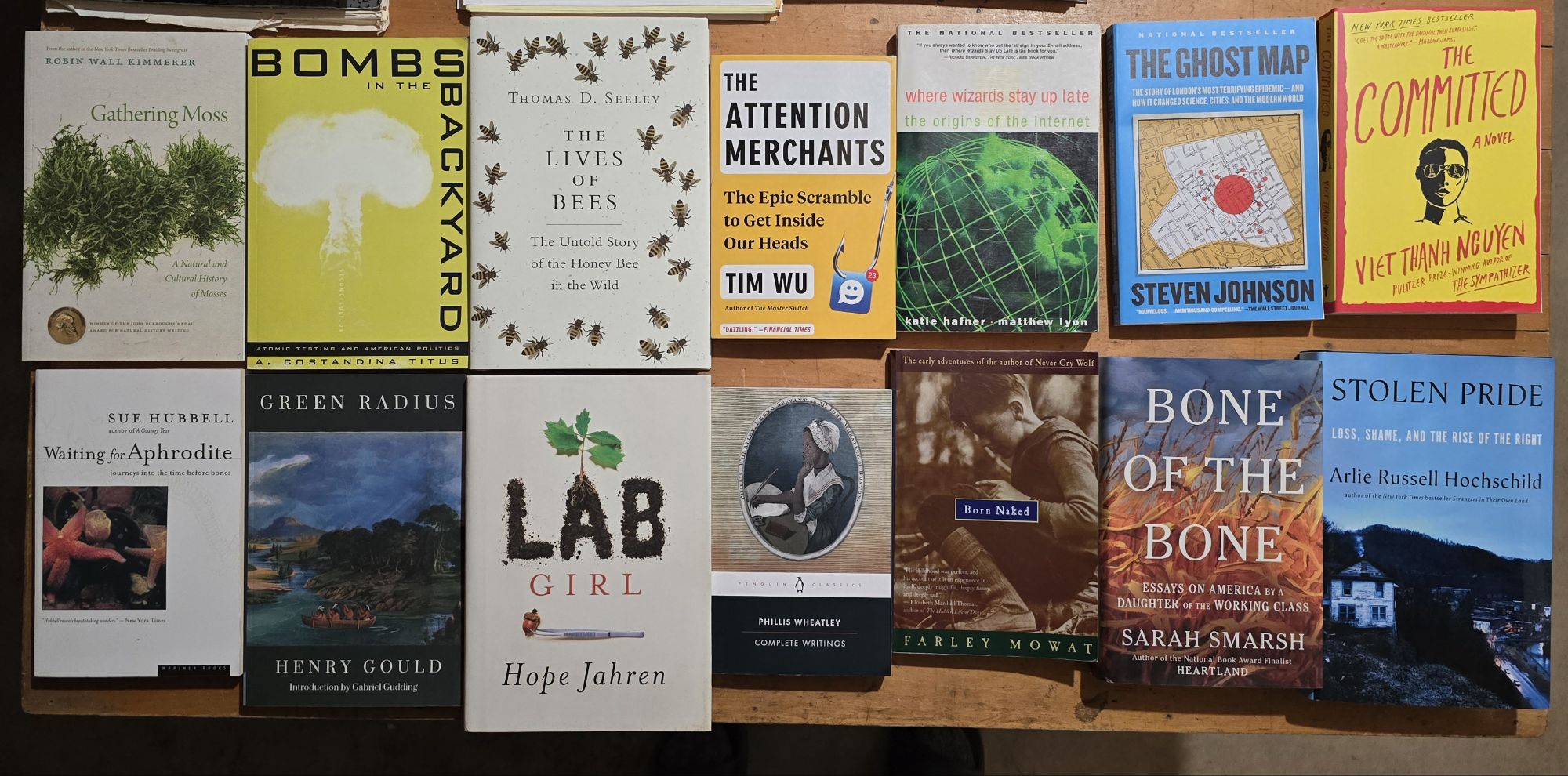
One use for my sorting tables: picking the next book to read.
The die is cast for 2026 winter reading. Books in this photo have been recently acquired and they, along with those already read match the number of books I read in January and February last year. I shut off acquisitions for now to focus on reading.
The first three books were The Lost Honor of Katharina Blum by Heinrich Böll, The Gastronomical Me by MFK Fisher, and The Marx Bros. Scrapbook by Groucho Marx and Richard J. Anobile. Currently The Ogallala Road: A Memoir of Love and Reckoning by Julene Bair is half finished by my bedside. The key to winter reading is to pick books that are both excellent and draw a person into the narrative. These four do both.
My standard is to read at least 25 pages per day. In my youth, the number was 50 yet over time I found 25 is sustainable. In winter it is easy to read more and I do. For example, Monday I was scheduled to work in the garage. When I arrived, it was too cold to work very long, so I went back to my book.
Reading takes about an hour per day, which is not a lot of time. Mostly, I read in bed in the morning before my morning regimen. However, I make sure to finish at least 25 pages whenever and wherever I read.
The Read Recently page on this blog lists books I read over the last number of years. If you are on Goodreads, find me there to follow me. Like any avid reader, I am always looking for what’s next.




 Journey Home
You must be logged in to post a comment.