Categories
Home Life Kitchen Garden

Walk in the Garden

Fall Colors
Fall Colors

The garden and trees turn to fall colors all at once — right now, as I write.

First frost can’t be far away, maybe next week. Leaves and grasses turn without freezing temperatures. The landscape assumes a warm brilliance.

Apple Harvest
Apple Harvest

I picked more than 200 pounds of apples Wednesday and donated them to Local Harvest CSA. Enough for shareholders to bake a pie or crisp, or even eat! The apple variety is Red Delicious.

The trees have never been sprayed, and grow as near organic as possible. Fruit sometimes develop black spotting which can be washed off easily. They are delicious in more ways than one.

I walked the garden, filling a bucket with bell peppers, Swiss chard, scarlet kale, celery, a few tomatoes, basil and oregano — what was available. Most of it became soup for dinner.

Beginning with a cup of tomato juice in the Dutch oven. I steamed a diced large onion, sliced chard stems, fine ribbons of kale and chard leaves, celery, turnips and carrots. Except the onion, all were grown in our garden. Once the vegetables softened I added savory, bay leaves, sea salt, dried orange lentils, barley and a can of prepared organic kidney beans. Tomato juice to cover. The pot boiled and I turned it down to simmer. While soup was on, I cooked a cup of organic rice. Plating was a scoop of rice in the middle of the bowl with soup ladled around it.

The next day I water bath processed two quarts of soup, along with three pints of apple butter and a quart of apple sauce. Because of the backlog of apple sauce and apple butter in the pantry, I’m making a limited amount, just to have this year’s vintage when previous jars are used up. There’s more than enough soup for winter into spring.

The tine of my apple peeler cracked, rendering it useless. I drove to the orchard to buy a new one, but in conversation with the chief apple officer, it turns out they had plenty of spare parts. He gave me a used replacement part which fit perfectly and put me back in business.

Cider, New and Apple Vinegar

We got to talking about apple cider vinegar.

This conversation began in 2012 with another friend, who also works at the orchard. He gave me some mother of vinegar which originated with his family in the 19th century. It’s still alive. The orchard used it to start a line of bottled apple cider vinegar to sell in the sales barn.

Today’s discussion was about whether or not to use brewer’s yeast. Jack, the source of the mother, has a large plastic container to which he occasionally adds new juice, but never any yeast. We decided that the yeast must have come from other sources, and therefore no new need be added. Since it works, and in a home kitchen we expect there to be variation in the level of acetic acid, I decided to forego using yeast for the time being.

Yeast is basically everywhere. As anyone who made sough dough from scratch knows, it needn’t necessarily be purchased from a store. Jack’s mother likely has yeast in it, although I rarely see bubbles forming after adding new apple juice. It makes vinegar and that’s the hope.

Fall’s progress is one of the best times of the year. Squirrels scour oak trees for every last acorn. Birds roost on tomato cages where vines still produce.

It takes a walk in the garden to remind us of Earth’s potential, providing soup for dinner and apples for the sweet and sour of life.

Categories
Home Life

Fall Setback

Fallen Apples
Fallen Apples

I slept for twelve hours last night fighting a cold I hope doesn’t turn into something else.

The big comforter kept me warm, and except for doing two loads of laundry around 1 a.m., I slept in four two to three hour parcels.

I feel achy, this morning, but the coughing reduced significantly. I’m easing into a day of writing, yard work and cookery. There is no other choice than to get to work.

The Social Security Administration sent us an annual statement last month. At the current benefits level, we should be fine if we can make it to full retirement age of 68. The current authorization is expected to fund it until 2041, in which year I will turn 90. After that, who knows if the Congress will address the program in a positive way. There’s a lot of living to do before then.

An acquaintance from working in the warehouse stopped at the orchard yesterday. He left as well, taking a part time job at a different warehouse store for $16 per hour. He said others have left. I’ll check the job out, and if accepted, and it fits my writing schedule, I may take it. All of those are unknowns — part of this week’s discovery. It was good to see him again.

Today seems like it will be alright. Not perfect — what day ever is — but serviceable. Perhaps a portal to potential unrealized in a turbulent world.

Categories
Living in Society

It Takes More Than A President

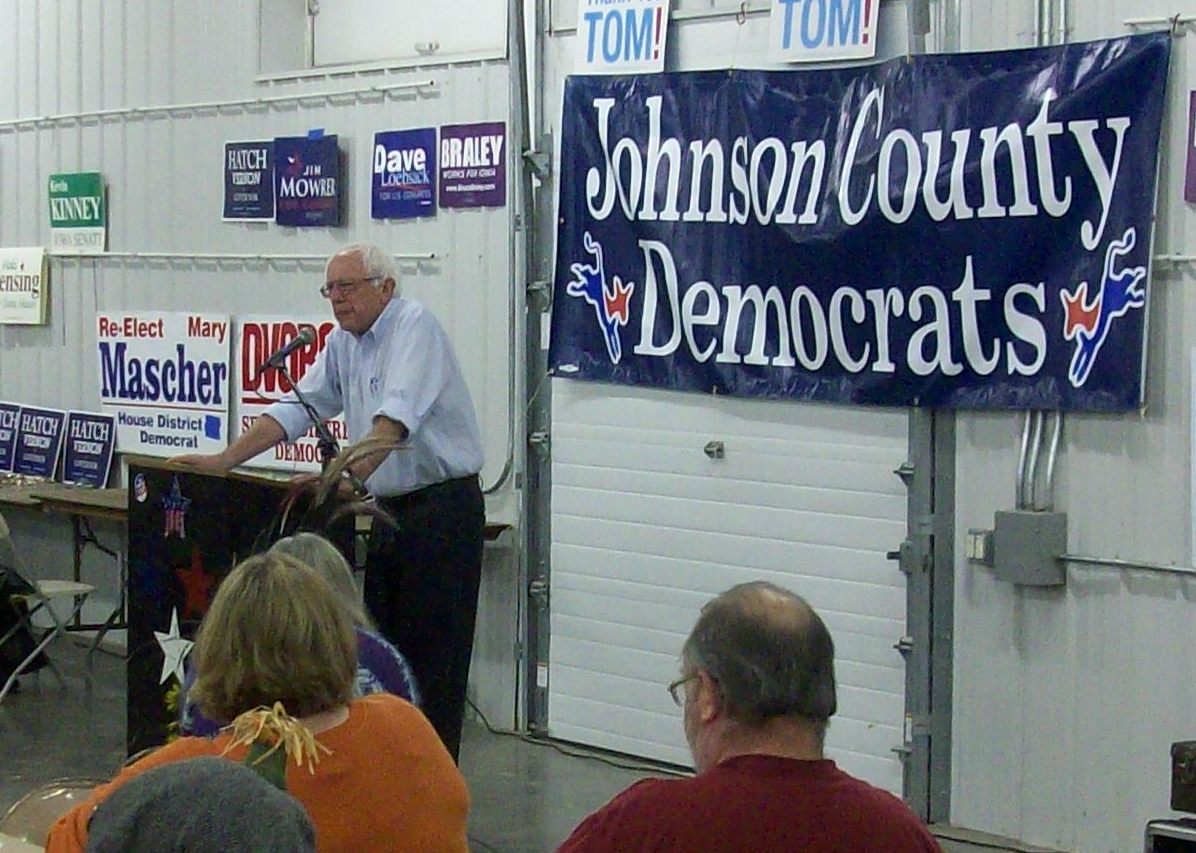
Bernie Sanders at the 2014 Johnson County Democrats BBQ

It’s hard to disagree with Bernie Sanders (I-VT): a political revolution is needed to make sustained, progressive change in the U.S. political system.

It takes more than a president.

“No president, not the best intentioned in the world can implement the changes we need in this country without a political revolution,” Sanders said at the University of Chicago on Sept. 28. “I am talking about the need to transform the political system.”

Unless Sanders can inspire more Americans to participate in the political process, any top-down plan for revolution is set to fail. He knows this.

“There is nothing that I am telling you today that is pie in the sky, that is Utopian. Nothing,” Sanders said. “We can accomplish all of that and more, but we will not accomplish that if 80 percent of young people do not vote. We will not accomplish that if 63 percent of the American people do not vote.”

Let’s say Sanders overtakes Hillary Clinton’s double-digit lead for the Democratic nomination for president. There is time for him to do that, and key Clinton endorsers acknowledge privately it is possible.

Much of the Democratic establishment in Iowa, including former senator Tom Harkin, has endorsed Clinton. Journeyman blogger Pat Rynard details some of them here. If Clinton secures the endorsement of Democratic politicos and Sanders wins the Iowa caucuses, what then?

What we know, or should, is once the nomination is finalized the party needs a kumbaya moment to elect the nominee. Mine is a history of picking losers when I have caucused in Iowa. Ted Kennedy, George McGovern, John Kerry (won caucus, lost presidential election), and John Edwards. I’m well familiar with having to settle for someone who was not my first choice.

Some, like aficionado of the sport of kings Jerry Crawford, will pivot or lose what credibility they have left. The rest will go along with mixed levels of enthusiasm. That’s not the core issue.

Without legislative support any president’s agenda is reduced to a small number of victories combined with executive actions. The power of the presidency is not insignificant, however, implementing the proposals evident in almost every Sanders speech will prove impossible if the Congress continues to be dominated by money, corruption and the influence of corporations. To be effective, the new president will need congressional support in the form of an Iowa congressional delegation consisting of more than Dave Loebsack (IA-02).

We each have some take-away from Pope Francis’ visit to the United States last week. Mine was his pointing to the bas-relief portrait of Moses by Jean de Marco hanging in the House chamber. It may take a Moses figure to lead us out of the political quagmire where we find ourselves in exile from the democracy created by the founders.

“You are asked to protect, by means of the law, the image and likeness fashioned by God on every human face,” Pope Francis said on role of Congress. We are a long way from that, and both Sanders and Clinton know it.

My bet is on Clinton winning the nomination, but a focus solely on the presidential horse race misses Sanders’ point. Winning the general election is by no means a slam dunk for Democrats. Key to Democratic success in 2016 is organizing now to bring more people into the process. This is where the use of corporate money, control of the media, and emphasis on religion is serving Republicans.

While voter registration matters to the party, it’s importance is eroded by the clear expression of more than a third of the electorate that “No Party” is better than any party. The focus on the Iowa caucuses and the presidential pick is a distraction from what we need to do to accomplish Sanders’ revolution.

There are no easy answers to Sanders’ call for a revolution. As long as Democrats focus on the horse race, revolutions will remain a part of history — something to distract us from today’s problems, the ones many avoid confronting.

~ Written for Blog for Iowa

Categories
Living in Society Social Commentary

Not Much of a Boycott

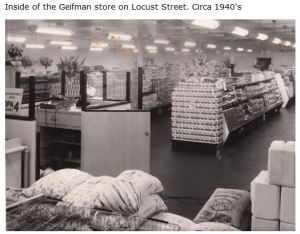
Geifman Food Store on LocustWord from a friend was to leave discussion of the Solon city council’s minimum wage vote at home when I visit later in the week. It’s nice to know stuff like that in advance.

More than a few locals are upset about the decision to lower the city’s minimum wage to the state figure after the county raised it. Some, including people who live here, have called for a boycott of Solon businesses.

My response is a boycott won’t matter much in our household.

Our main dining out is at Nomi’s Asian Restaurant where we have been going since she and her husband opened. Asian takeout will continue to be on our menu when we don’t want to cook at home. It is too far to drive anywhere else to get it. We only visit bars and eateries in town when there is a specific meet up with people we know, and not many times in a year.

I’ll continue to buy convenience foods at the grocery store. The staples are secured at a variety of other stores for lower prices, better selection, and to meet specific needs. We go to the grocery store more often than we dine out, but not by much.

When I worked in Coralville I bought gasoline at Costco because of the convenience and a slight discount. This business will transfer to Solon, but the impact on the local economy will be almost nil. As everyone knows, margins are slim on retail gasoline sales. At our two Casey’s General Stores the revenue goes directly into whatever bank the Ankeny based corporation uses. Casey’s has the city’s lowest price for a gallon of milk, so when we run out of Costco milk at $2.60 per gallon, I’ll buy at Casey’s for a dollar more.

I visit the hardware store for certain needs. I buy canning supplies there even though they are more expensive. It is the kind of hardware store where a person can take in a bolt or screw and buy more like it — exactly how many are needed. They carry things used in a typical garage: lawn mower spark plugs, clips, fasteners, hand tools, lubricants and sundry items. If a need develops, they will be the first stop because of their inventory. The two women who run the place may or may not be making a wage. They didn’t come to the city council meeting. I suspect they have an opinion, but don’t want to share it publicly. Likewise for every other business owner that didn’t speak at the meeting.

All told, the amount of dollars we spend in the community never amounted to a hill of beans, or any other legume. If I participated in a boycott of local business it would hurt me more than them, increasing the isolation that has become home to us. In any case a boycott is not being organized like others that have been successful. The boycott talk is more fantasy than reality.

In 1965 our family boycotted grapes to support the Delano Grape strike. I remember Father explaining who Cesar Chavez was, that grapes were grown mostly in the California Central Valley, and the importance of a fair wage. We weren’t buying them at the Geifman’s Food Store near our house and didn’t for the duration of the boycott. I loved grapes, and still do, but accepted that there was a shared cause that required sacrifice.

There is none of that in the relatively wealthy Solon environs over this issue. If there were, a boycott would be more viable. For now, life goes on much as it did before the city council voted to lower minimum wage.

Categories
Living in Society Work Life Writing

Thursday in the County

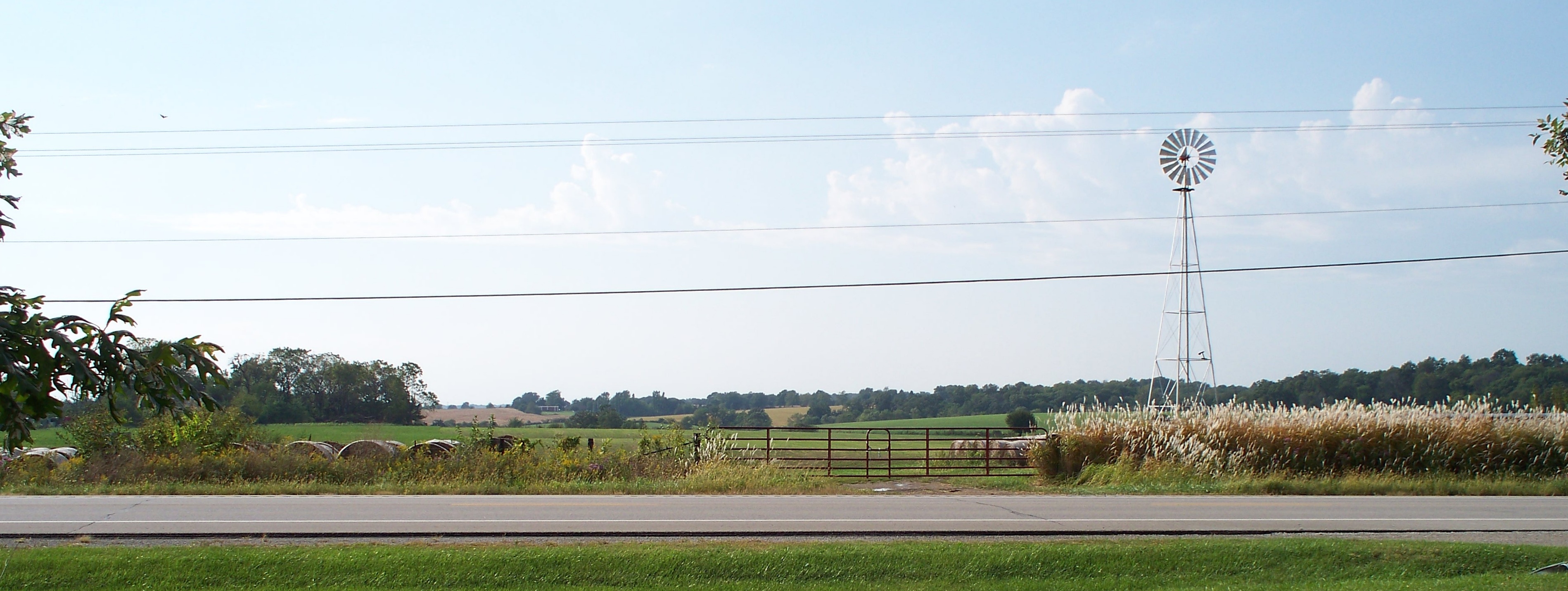
Along Highway One North of Iowa City

Leaves of soybeans turn, painting a landscape of green, amber and gold as the plants die, pods wither and beans dry in the field. Tall corn is also losing its green, its growing season done. Soon harvest will be here.

Freedom comes with being an unpaid blogger. Posting what I will with only the sense of propriety and culture gained over six decades restraining me, on days like today, I write about myself.

Outbuilding in Johnson County

Yesterday started with interviewing a farmer for a freelance article. Before going to the county seat, I interviewed another. When people talk about a “career” they often don’t consider how complicated a farmer’s life is. There is income from farm operations, but it often doesn’t cover the bills, so growing vegetables, selling eggs and becoming a sales representative for a national business are added into the mix.

People don’t farm alone. There is always a network of family and friends to lend a hand with the physically demanding work. It has been that way since we took the land from those who lived here before in the 19th Century.

Caucus Card
Caucus Card

After the interview I drove into the county seat at Linn and Market Streets to meet up with organizers for the Hillary Clinton campaign. I signed a caucus card and offered to canvass some area people I know, bring food to their Iowa City office when I come to town, and help organize an event or two.

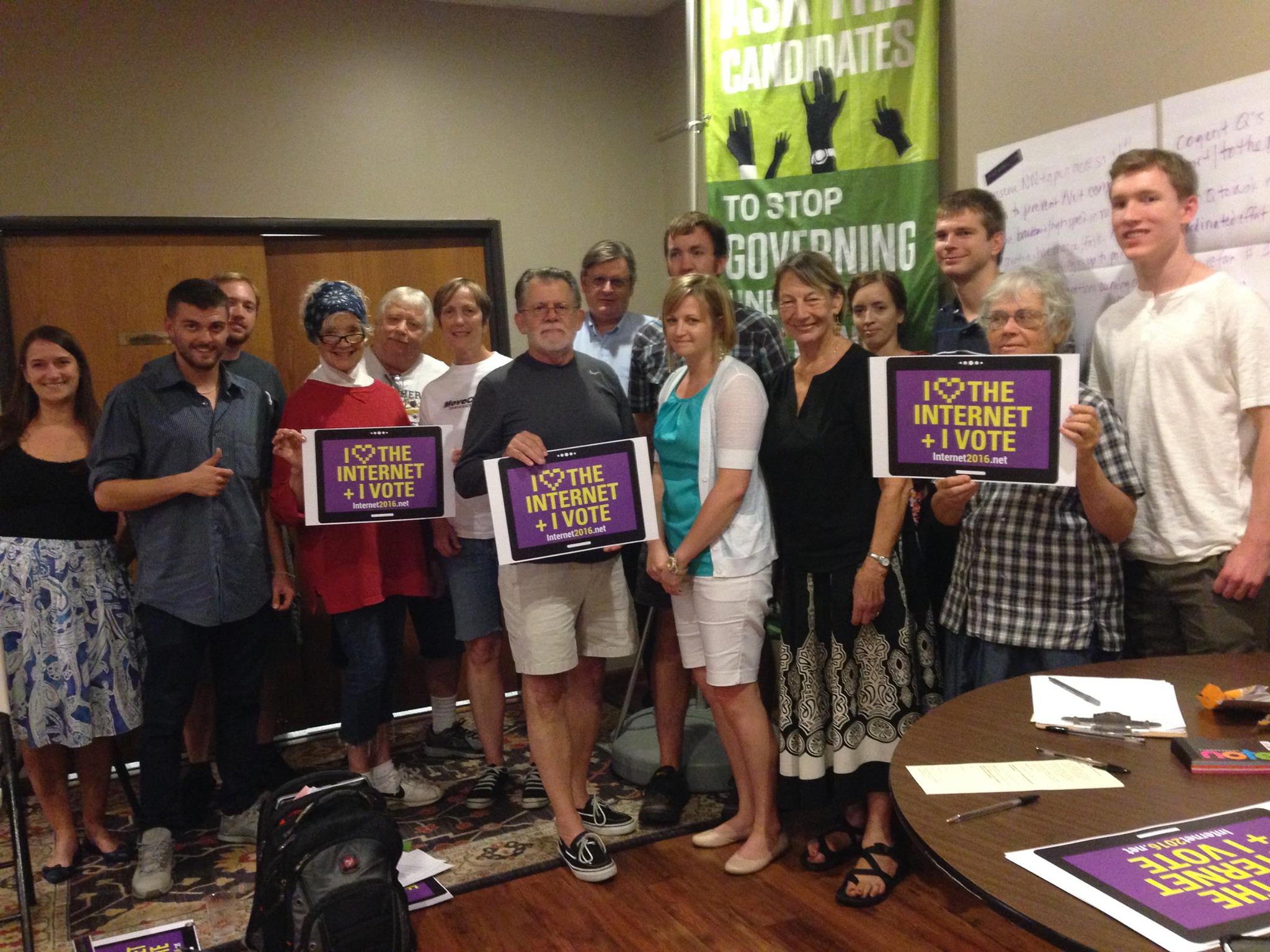
After that, I walked to Old Brick where Free Press Action Fund had organized a meeting about advocating for Internet access, affordability and freedom. More than a dozen people attended and at the end we took this group photo.

Free Press Action Fund Training at Old Brick

It was a long day, capped by getting caught in a rainstorm. Luckily it relented before getting thoroughly drenched.

Categories
Work Life

Letter to the Solon Economist

I attended the Solon City Council meeting regarding the minimum wage ordinance passed on Sept. 16.

This is a discussion worth having in the extended Solon community as we celebrate our dodransbicentennial.

A couple of things are worth mentioning.

It served no purpose for outside parties to participate in the discussion. Those from Davenport and Muscatine may as well have saved the gasoline. In the end the City of Solon must decide for itself where it stands regarding support of business at its intersection with social justice. If city residents don’t like what council is doing regarding minimum wage or anything else, then vote them out. Better yet, get involved and run for office.

None of the media coverage or statements at the meeting indicated the input of people who actually work for minimum wage in Solon was considered. The discussion was the less for that. The median household income of Solon is well above that of Iowa City and the rest of Iowa, so hourly wage is not a concern here as much as it is in larger urban areas. Nonetheless, the input of minimum wage workers would have added to the discussion.

During the recess following the minimum wage discussion someone said, “It’s just like the Scott Walker recall.” No, it’s not. I had expected the meeting to be more confrontational, but it wasn’t. Speakers and council achieved a level of decorum that stands as a model for other municipalities to emulate.

That Solon is having a discussion about minimum wage is an important step toward long-term economic vitality. We can thank the Johnson County supervisors for kicking things off. Their action served to prompt a discussion in which the city council members can be held accountable for their decision.

That’s good for everyone.

Categories
Work Life

Takes From the Solon City Council Meeting

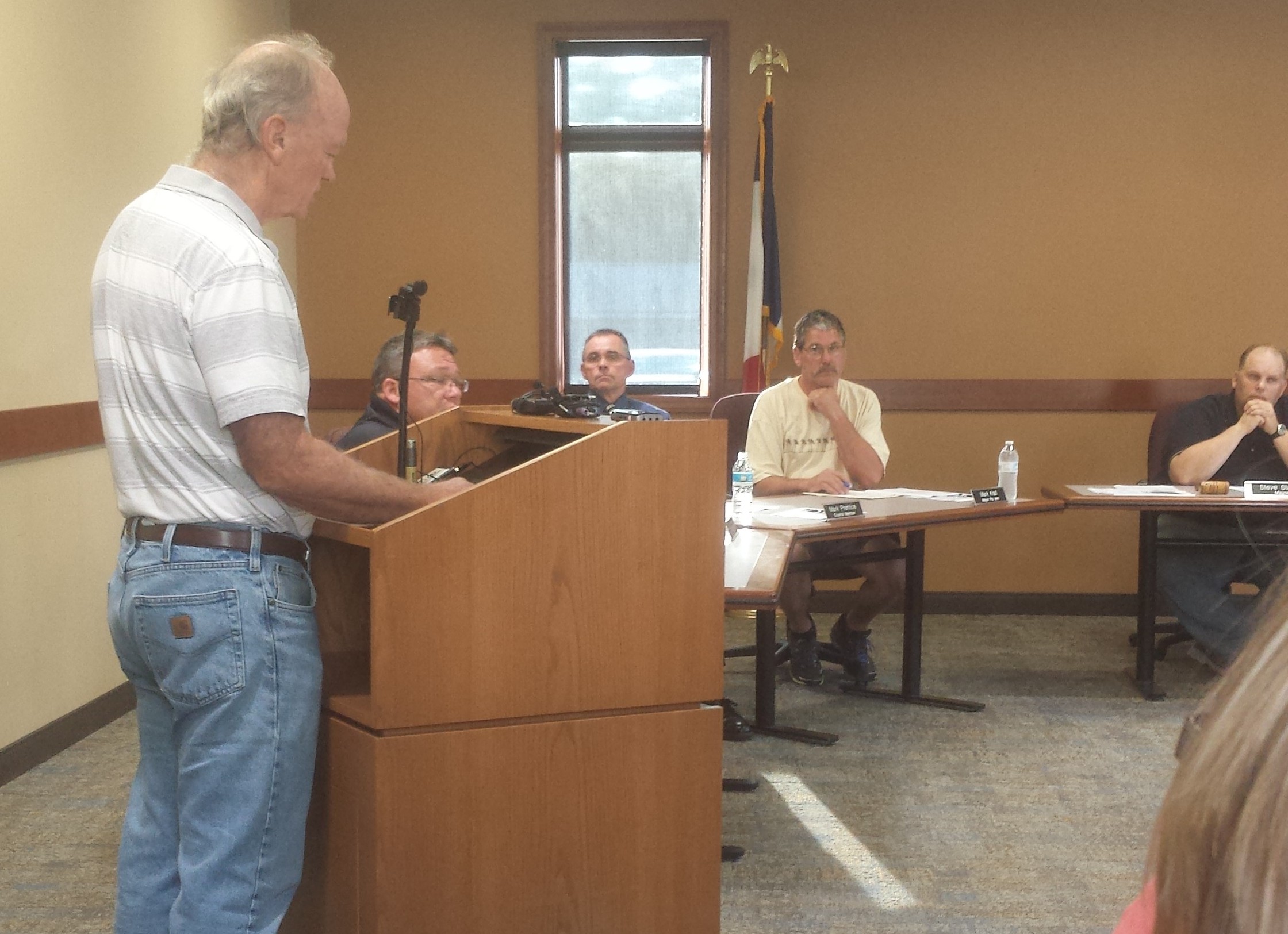
Peter Fisher of Cedar Township Addressing the Solon City Council

SOLON — The Solon City Council received more than 50 media and members of the public in its chambers this evening. In a unanimous vote, council rejected the Johnson County ordinance to raise the minimum wage in favor of state regulations. They collapsed three required readings into this one, so the decision is final.

Seventeen speakers on multiple sides of the issue made statements and appeals to council members. In the end, everything proceeded as it must have been foreseen by the mayor and council.

My last post about mau-mauing the city council got it wrong in that everyone who spoke, and the audience generally, were well behaved and non-confrontational. It didn’t make a difference.

Here are my takes:

The presence of people who lived outside the city made matters worse. Locals are well aware of what happened in Wisconsin during the unsuccessful recall of their governor. Kevin Samek of Solon mentioned Scott Walker by name during his remarks. Council supporters made clear outsiders weren’t welcome. One person said, “It’s just like the Scott Walker recall again.” Not in a good way regarding the coalition of organizations who were present.

Business owners don’t like the publicity. This is not a shocker, but word of a potential boycott got their attention. Jay Schworn of Salt Fork Kitchen said he hadn’t wanted to get involved until word of a potential boycott spread around on Facebook.

There were no minimum wage workers present. This voice should have been heard from and wasn’t. One speaker, whose name I couldn’t understand said she knew three Solon families working minimum wage jobs and couldn’t attend because they were working. One business owner said he employed a number of high school students at $7.25 per hour and they were a problem because of the limited hours they could work. He preferred hiring mature staff at a higher wage.

If people don’t like government, they should run for office. Solon voters made this council, except for one appointment. If it is perceived as broken, only they can fix it. The filing deadline in the Solon city races is tomorrow.

Public comments were a rich soup of heartfelt words deployed in a way that doesn’t work any more when persuading elected officials. For those of us who follow politics, there are lessons to be learned. I plan to listen to every minute of the audio recording — at least twice.

Categories
Work Life

Mau-mauing the City Council

Sunlit Alcove
Sunlit Alcove at the Solon Station

RURAL JOHNSON COUNTY — A group of advocates from the county seat is expected to arrive in nearby Solon for tonight’s city council meeting at 5:30 p.m.

On the agenda is an ordinance by which the City of Solon would opt out of the county mandate to raise the minimum wage from $7.25 per hour to $10.10 by Jan. 1, 2017.

The Center for Worker Justice is leading a direct action to confront the city council about their potential decision.

“Solon Council members need to hear the real facts about raising the minimum wage and how this change strengthens our communities,” Misty Rebik, executive director, Center for Worker Justice of Eastern Iowa said in an email last night. “Take action, protect what we’ve won.”

The center is organizing a car pool to the council meeting from their facility in Iowa City.

The story is gaining corporate media attention as Fox News/KGAN2 sent correspondent Matt Hammill to Solon yesterday. Hammill interviewed Sam Lensing, owner, Sam’s Main Street Market. It is noteworthy that Lensing points to the challenge others would have.

“It isn’t the idea of increasing wages for his employees that bothers Sam Lensing,” said the report. “In fact, most of his workers already make above minimum wage. He says the mandated increase would result in many businesses having to raise their prices to customers and pass along the increase in costs and in a small commuter town, where people have choices, that could kill businesses.”

Read and view Hammill’s report here.

The bright shiny object in Solon is the growing number of restaurant start-ups within city limits. By my count, there are nine places to get a bite to eat on Main Street and several more located in strip malls around town. Both city councilors and advocates are aware of this aspect of city life.

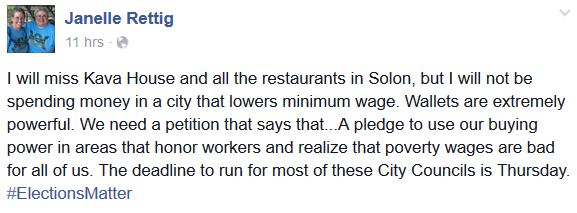
County supervisor Janelle Rettig and Iowa City resident David Goodner have suggested using the power of the pocketbook to influence the city council. Rettig made this post on Facebook:

Rettig FB StatementGoodner echoes the pocketbook theme:

GoodnerThe approach taken by advocates for the county minimum wage ordinance is an adventure in mau-mauing the city council. Councilors are unlikely to be influenced by these tactics unless Solon residents step forward to advocate support for the county ordinance. To date, no one has done so.

The face of poverty is invisible in Solon.

Who are Solon’s minimum wage workers? We don’t really know. They may be clients of the food bank at the Methodist Church. They may be taking advantage of government programs like SNAP and Medicaid. They may be neighbors who just don’t want to talk about it.

Unless arguments for and against raising the minimum wage consider actual people who take minimum wage jobs in Solon, they are a useless political construct among people who already have had more than their share of politics. This applies equally to city councilors, business owners who have come forward, and to out of town advocates.

We’ll see what happens tonight.

Categories
Home Life

Late Fall Reflections

Sliced Tomato, Salt, Pepper and Feta Cheese

Leaves are beginning to fall from the Green Ash trees. Those on the two early apple trees have been down more than a week. The garden is producing and likely will until the hard frost comes in mid-October.

This time, more than any in the year, is for work at home.

Today’s to-do list includes harvesting tomatoes and peppers, canning, and cooking gumbo. I prepared a lunch of sliced tomato, salt, pepper and feta cheese using blemished fruit. It’s a simple and satisfying repast.

For so many years, work was elsewhere. While downsizing I found a three-ring binder with papers from expense reports dated 1992. I was managing trucking terminals in Schererville and Richmond, Indiana, and starting recruiting operations in West Virginia, Georgia, Pennsylvania and Missouri. I would wake up on an airplane unsure of where I was, or where I was going. It was a busy time and there was little left for family. They were days of intangible hope for a future that included success. I don’t know what that means any more.

President Obama stopped at the Iowa State Library in Des Moines yesterday. The stop wasn’t on his formal agenda, but while there he submitted to an interview by Marilynne Robinson, the Pulitzer prize-winning author who lives in Johnson County. Obama reads Robinson and listed Gilead as one of his favorite books. It is pretty neat that one of our own has this kind of relationship with the president. Obama quoted from the book in his eulogy for the Rev. Clementa C. Pinckney in Charleston last July.

I’ve been trying to read Gilead without success. Starting it three times over the last three weeks, I don’t get it. Maybe eventually I will. It’s one of the must read books produced by an author affiliated with the Iowa Writer’s Workshop, where many less acclaimed books than Robinson’s have been produced. Maybe the time is not right. Maybe the president’s visit will encourage me to give it another try.

It’s two months to the 21st Conference of the Parties, or COP 21, in a suburb of Paris. Iowa environmental groups are wrangling for a unifying Iowa event just prior to the first day of the conference, Nov. 30. It seems a bit late to be planning as leaves fall, the harvest comes in, and we turn our attention to the work necessary to sustain ourselves. It’s important the parties reach an enforceable agreement. It won’t be the end of the world if they don’t. Or maybe it will.

Categories
Living in Society Work Life

Raising the Wage in Solon – Or Not

Corner of Main at Market

RURAL JOHNSON COUNTY — The nearby City of Solon is concerned about the impact of the recently passed county ordinance to raise the minimum wage. The city council doesn’t buy in, local businesses don’t buy in.

On Sept. 10, the Johnson County Board of Supervisors held the last of three readings of a new ordinance to raise the county minimum wage in $0.95 increments to $10.10 per hour by Jan. 1, 2017. The board passed the ordinance unanimously.

The Cedar Rapids Gazette reported the Solon city council is considering opting out of the new county minimum wage structure.

According to the Solon city administrator, the city council is considering just such an action.

An agenda of the council’s Sept. 2 meeting lists “discussion on minimum wage ordinance by Johnson County.” Draft minutes from the last council meeting, which have not been posted online, show council members unanimously voiced opposition to the county’s minimum wage ordinance. Local business owners also spoke out against it, saying they couldn’t afford raises for all of their employees while maintaining the same staff levels.

Doug Lindner of the Solon Economist recounted Mayor Steve Stange’s Sept. 2 survey of council members here. The council unanimously opposed raising the wage in Solon as laid out in the new ordinance.

City Attorney Jim Martinek was directed by Stange to review the proposed county law and research the city’s options and responsibilities, according to Lindner. Council is expected to take up the issue at its Sept. 16 meeting.

KCRG – TV9 interviewed local business owners Leo Eastwood and Sam Lensing in a news segment that aired Sept. 11.

Eastwood owns Eastwood’s Sports Bar and Grill. He is well known in the community and has placed political advertisements for favored Republican candidates at his place of business. His business recently moved from a strip mall at the edge of town to Main Street, where he joined a growing group of bars and restaurants in the city of 2,300 people.

“You’ve got to pass that along or you’re not going to be in business long,” Eastwood said to KCRG of a potential mandatory wage increase.

Lensing owns the most visible business on Main Street, Sam’s Main Street Market, a full service grocery store. Another of Lensing’s businesses, D & D Pizza, recently vacated its space across the street from the grocery store and Eastwood moved in.

Sam’s Main Street Market is and has been an important part of the community, sponsoring local events, collecting funds for the local food bank, and preventing the city from becoming a food desert for people with limited transportation.

“If this wage hike does increase that much where people have to raise their prices what’s it going to do for their business?” Lensing asked in the interview.

Sam’s Main Street Market competes with Fareway, Aldi, HyVee, Walmart and Costco. Because Solon is a bedroom community, people who commute to work have an easy option to buy groceries and sundries elsewhere. The convenience of his location brings customers willing to pay more rather than make a special trip to another town. KCRG didn’t report how many employees Lensing has at near minimum wage to validate his concern.

All of this seems like a tempest in a teapot, and here’s why.

The council’s concern, as reported by the news media, seems like a knee-jerk reaction to the minimum wage increase by a small number of business owners. The retail price increase a minimum wage increase may or may not require would have little impact in a community where the median household income is more than $62,000 per year — substantially higher than either the county-wide or state-wide figures. The argument about raising prices is a red herring.

How many low wage workers has the council heard from? I wasn’t at the meeting, but probably zero. In my experience covering council meetings for the Solon Economist I found councilors exercised a reasonable amount of diligence in matters like this. While the composition of the council has changed since I covered them, one hopes they will get feedback from Solon residents who work at or near the minimum wage in the city before opting out of the county ordinance. It is a voice not heard in this discussion to date.

There has been no public discussion of the impact on the Solon workforce of opting out. There are a lot of questions to be answered, including, how many near minimum wage jobs (earning below $10.10 per hour) would be affected? Where do Solon workers in near minimum wage jobs live? Would near minimum wage employees at Solon businesses seek employment at higher wages elsewhere as a result of the city opting out? How do near minimum wage workers in Solon get health insurance mandated by the Patient Protection and Affordable Care Act, and at what cost to taxpayers? Has the city council read the ordinance to understand which businesses are required to comply and which are not? At present, there are no public answers.

As I wrote on Friday, the new county ordinance does little to address the underlying causes of poverty here. It turns out getting cities like Solon to buy in will be yet another delay in pursuit of social and economic justice.

This post was updated on Sept. 15 at 4:21 a.m.