Categories
Living in Society

Giving Back

Sky at dawn on the lake.

Since our family moved to Big Grove Township, I volunteered to make lives better. Any monetary considerations were insignificant. A regular person does not volunteer in the community for the money. Part of living a sustainable life in rural areas is contributing to the general well-being. I did what I could. I felt blessed and had to give back to the community in which I lived.

Within the first year we arrived, the home owners association asked me to join the board. I did. These organizations get a bad rap. In our case, we managed the association like a small city. We provided a public water system, a sanitary sewer district, road maintenance, refuse hauling, and real estate sales and purchases. Over time, we upgraded the roads from chip and seal to asphalt, dealt with changing government standards related to arsenic in drinking water, reduced the number of wells from three to one, complied with changing Iowa Department of Natural Resources standards for wastewater treatment plant effluent, handled a lawsuit, and coordinated activities like road use and maintenance with neighboring associations. If the board doesn’t do these things, they don’t get done. Everyone is the better for such volunteer boards. I served, off and on, for over 30 years.

In 2012, when only one candidate was running for two township trustee positions, I ran a write-in campaign and won. Being a township trustee included managing emergency response and a volunteer fire department with other townships and the city. Toward the end of my tenure, we formed a new entity to manage emergency response. We maintained the local cemetery, and supervised a pioneer cemetery where the first person to die in the township was buried. This work helped me understand how tax levies work and how they were used to support things the county did not, things like a small fire department or saving someone’s life in an emergency. There was only a single conflict during my time on the board, about the main cemetery. All of the trustees showed up at the cemetery to resolve a dispute with an individual. No one wanted the job of township trustee and someone had to do it, so I stepped up.

When the local seniors group had an opening on their board, I volunteered and became its treasurer. This lasted about two years, but it provided insight into this segment of the community. Everything we did, from providing community meals to giving home bound people rides to medical appointments to arranging outings around eastern Iowa, served an often neglected segment of the population. It was a great opportunity to learn about the life of our senior citizens before I became one myself.

The contribution to society with the most personal meaning was financially supporting construction of the current Solon Public Library building, occupied in 2001. We didn’t really have the money in our budget yet having a decent public library is something we valued. We found the money to donate. The small city library went from being located under the city band stand, to a store front, to the old jail, to a modern building specifically designed to be a library. In the beginning, the library was staffed with volunteers from the Solon Young Women’s Club and the Solon Study Club. Today, there are full and part-time paid staff that work alongside volunteers. A library is something the whole community can use. I am proud to have helped build ours.

There are other ways I gave back to the community. Giving back is a personal value to hold dear in turbulent times. We should all find ways to give back to society in this Trumpian time of self-interest. If we don’t, who will?


Categories
Living in Society

Survivor with Plans

Bur Oak tree on Aug. 20, 2025.

The Bur Oak tree near the front of our property is one of the few of our 20 trees unaffected by the 2020 Derecho. Most of the others were blown over outright or began a slow dance with nature to see when their last leaf-out will be. Most of them will be gone in five years because of injuries sustained during the derecho. A lot of work went into planting those trees. I have memories of each of them and who worked with me when planting.

When I wrote the outline for my autobiography, I figured it would end with the coronavirus pandemic. Little did I know that Donald Trump’s assault on society as we know it would be a thing. After eight months, it seems clear the baton I will take up has to do with intellectual freedom, which best matches my skill set. What form it will take is to be determined. I’m going to a rally about saving the State Historical Society building in Iowa City this Saturday. I should see like-minded people there and be able to hook up and get started on developing an initial plan with others.

I expect to be active again soon. Like the oak tree, I expect to survive the storm.

Categories
Living in Society

Summertime Heat

Pears are not ripe yet.

The last week has been a combination of ambient temperatures in the high 80s to low 90s, heat index of 105 or more, and thunderstorms. As a septuagenarian I stay inside with air conditioning once I finish early morning, outdoors chores to avoid passing out in the heat and humidity.

I took a box of cherry tomatoes to the community food pantry. My other Monday errands included filling the auto gas tank and lottery gambling. It was a quick trip, with exposure to people. I like the people part of it, and finishing while it’s relatively cool. Monday errands has become a thing in retirement.

It has been a struggle to mow the lawn, so the grass is growing long. I’ll need the cut grass for garden mulch and if nature dials down the humidity for a day or so, I’ll harvest it. I did manage to mow the ditch as it dried out, and before it got too hot. It was a workout.

When I was younger I would work strait through the heat and humidity. A few years ago I got woozy and had to lay down on the ground to recover. After that I decided to take better care of myself. As an Iowan I’m used to the heat and humidity. As a senior I learned to live another day.

Then there are the big salad dinners of summer.

Big salad (before dressing) with fennel, celery, cucumber, tomato, bell pepper, and broccoli from our garden.
Categories
Living in Society

Vegetable Prices Jump

Cherry tomatoes picked Aug. 14, 2025.

When a person grows a garden they don’t think much about the price of vegetables at the grocer. All the same, when the Producer Price Index for fresh and dry vegetables jumped by 38.9 percent in July, everyone should stand up and take notice.

“The increase is the biggest one-month move for a summer month in almost a century,” according to NBC senior business correspondent Christine Roman. Why? Unpredictable weather, including drought. The ongoing roundup and deportation of immigrant agricultural workers. Tariffs on food. It is a commonplace that margins in the grocery business are thin. These disruptions in the process that produces our food have and will cause a price increase for consumers as wholesale purchasers pass through some or all of their additional expenses.

When I return from the garden with a tub of tomatoes, apples, or greens, I have forgotten how much I spent on the seeds, supplies and equipment to produce it. I looked at my spreadsheet and found it was $921, thus far in 2025 for the entire operation, including the repair bill for my John Deere. Is it a bargain? That question is out of the scope of my gardening. Learning to produce a year’s worth of garlic is a skill that is hard to price. I generate my own seed garlic, so there is almost no financial cost to produce it. Sweat equity is also difficult to price.

The increase in the Producer Price Index for vegetables is a bellwether for other things going on in the economy. Climate conditions, labor, and tariffs will impact pricing on items other than food. The conclusion to be drawn here is everyone should begin conserving resources if they haven’t already. I doubt this once in a century price increase is the last, and we will need every dollar we can squeeze from our budgets. Hear of belt-tightening? Feel lucky you still have a belt.

For now, the refrigerator and freezer are full. The pantry is as well stocked as it has ever been. Produce continues to grow in the garden and will continue until the first hard frost. I knew living on a fixed income would be challenging. I just wish our government would take its knee off our throat, back off, and give us space to breathe.

Categories
Living in Society

Democratic Primary

Rural Polling Place

The Iowa primary for the 2026 general election is on June 2, 2026. At the end of summer the year before the primary there is plenty of action among both Democrats and Republicans. This post is a recap of where I find myself landing in three races a long distance from the finish line.

The governor announced she is not running again, which leaves an open race. Multiple Republicans put themselves forward for governor. I notice superficial aspects of their action yet am more interested in what Democrats are doing. Brianne Pfannenstiel of the Des Moines Register is covering the governor’s race. I was able to get through the Gannett paywall to read her latest here. Rob Sand and Julie Stauch are running as Democrats and there is a no-party candidate, Sondra Wilson. I was an active participant in the 2006 election that made Democrat Chet Culver our governor. I don’t see that type of enthusiasm this summer. In particular, Sand seems a bit droll. The filing deadline for state and federal offices is March 13, 2026. A lot can happen between now and then.

The race for U.S. Senator from Iowa is where most of my interest lies. At the end of June I donated $10 each to the three then announced candidates, Nathan Sage, Zach Wahls, and J.D. Scholten. There are at least three more kicking tires on a run. That’s too many $10 dollar donations to make another.

While a lot can happen before the filing deadline, I believe Sage, Wahls and Scholten comprise the field. Of them I like J.D. Scholten best because of his experience of running against Steve King in Iowa’s fourth congressional district. In addition, he has been prominent in national news media, appearing on nationwide broadcast outlets and newspapers. Just last week he spoke at Netroots Nation. Likewise, he has the attention of Iowa-based political reporters. His ability to attract media interest in things like his recent farm policy statement is important in the primary because Iowa Democrats do watch national news reporting and read the newspaper. His strength in person-to-person campaigning honed during his race with Steve King, combined with media attention makes him a strong contender to beat the Republican nominee whether or not it is Joni Ernst.

I don’t know Nathan Sage, and haven’t heard him speak in person or viewed a media recording. I will do that eventually. He has been making rounds of state Democratic gatherings and keeps an aggressive schedule. I don’t rule him out at this point.

I’m not dismissing Zach Wahls either. His public campaign seems focused on messaging in a way to redefine who we are as Iowans, defining values we hold in common. Iowa needs more of that. Whether that is a path to winning the general election is unclear in August 2025.

So I lean Scholten in the U.S. Senate race.

I have no opinion about congressional races except for in the first district where I live. I attended the county Democratic Central Committee meeting last Thursday where we heard from three campaigns for congress. This race boils down to whether we accept Christina Bohannan’s argument that she lost by 799 votes in 2024, and she knows how to close the gap and win the third time around. She noted in her remarks early polling has her at a 4-point advantage over Mariannette Miller-Meeks.

I don’t know if I buy that argument. At the same time, she is the only candidate with several seasoned staff members from three general election campaigns. When I think of the district, I know many of those Democrats well. They lean more conservative than Johnson County where I live. Given what is known about Bohannan, they seem unlikely to take a chance on a newcomer when they have heard or met Bohannan during the last three campaigns. I didn’t hear anything from the other campaigns to break the attention I pay to Bohannan.

There are a lot of other important races this cycle. For me, though, the focus is on these three.

UPDATE: Since posting this, Jackie Norris and Josh Turek announced for U.S. Senate. I will do an update of that race in a new post once the other person kicking tires on a run makes a decision.

Categories
Living in Society

Working Today

Stump cut to make a resting place for the gardener.

With four weeks left until Labor Day, summer is about finished. A lot of work remains. The only compensation I receive for any of it is the satisfaction of a job well done.

Is my work the same as working for an employer? I think so, yet there is an attitude shift when we work for ourselves. I find more personal risk and am particularly careful I don’t get injured or make a bad financial decision. There is no malarkey in my work life. It is based on empirical tasks, cash flows, and bank loans, all of which are necessary to piece together a life. Most things break down into short projects upon which I can work until completion. There is no overtime pay, or any of the benefits allowed many workers. My spouse and I pool our pensions and hope they cover the bills.

I came up in a work environment where I earned more money than needed for minimal survival. It enabled buying a house, saving for our child’s education, and then later, when our savings proved to be not enough, it allowed us to pay the student loan to take that out of the child’s bucket. I also earned enough money to be able to quit my job multiple times without immediate prospects. The biggest adjustment to living on pensions is there is no longer any “extra” money.

From the time I left the job where my spouse and I met, until we moved back to Iowa and our child left to attend college, she worked at home. The work she did was valued and important to raising our child. There was the avoidance of child care expenses, and a clear division of labor, yet it was more than that. It was a way of life that had little to do with money except treating it as the fungible commodity it was. Ours wasn’t a perfect life, yet we got by.

I resist framing what I do every day as a job. The old farm word for it is “chores.” It’s more than that. With our more sedentary lifestyle, we need exercise, a healthy diet, and some amount of socialization. I suppose that makes us more than a cog in the machine of life. I hope we are more than that.

Categories
Living in Society

Peak Iowa Summer

Lilies growing in the state park lake.

I woke early and have been listening to boomers roll across the area. There is a severe thunderstorm watch according to the National Weather Service. Rain is expected to continue until around 10 a.m. It will be another good morning to spend in the kitchen.

There has been so much rain I haven’t unrolled the hose to water the garden for two weeks. That is a good thing on several levels. All the greenery has taken off, including plants I put in the ground and weeds. Indeterminate tomato vines are reaching more than eight feet long. When the rain slows down, I need to get under them and see if any tomatoes are ready. I planted the main rows four feet apart, yet the vines in all the rows reach up and touch each other. We like rain.

Thunderstorms are a characteristic of Iowa summer.

While picking green beans on Monday it was so hot and humid I pushed my physical limits. I was drenched in sweat and felt dizzy a couple of times, yet worked to finish picking mature beans. Sorting and cleaning them was a chore yet I got that done in the kitchen before dinner. We did not eat green beans for dinner, having broccoli from the garden instead.

Green bean harvest on July 28, 2025.

Lately I’ve been thinking about my decision to retire during the coronavirus pandemic. The combination of the lock down, becoming eligible for full retirement on Social Security, and the health risks of working in a retail environment brought the decision together. I’m having second thoughts about being retired. It was evident before, although is clearer today, that if the Congress does not address the shortfall in Social Security in 2032-2034, we will need more income than we have. Changing course to engineer a life that produces more income than our pensions produce is in the near future. That will give me something to think about while I work in the kitchen this morning. In the meanwhile, it is peak Iowa summer and we should enjoy it.

Categories
Living in Society

Mail Order Life

Photo by Brett Sayles on Pexels.com

When we live in rural Iowa, mail order remains important to our way of life. Shopping by mail has changed since I was a child. In addition to the United State Postal Service, there are Amazon, FedEx, UPS and other company trucks delivering in the neighborhood almost daily. The fact is, much of what I need to operate our household is not available in the city of 3,000 souls near our residence. Mail order is the most efficient way to find what I need, compare price, and receive goods in a timely manner.

Amazon is rightly the whipping post for all that is bad about modern mail order. The company is very large, and has a monopoly on what they do. They are hard on workers. The online retailer has made its owner one of the wealthiest men on the planet, and the upward flow of weallth to already rich people is an essential problem for society. After a family conversation I decided to do something about Amazon in my life.

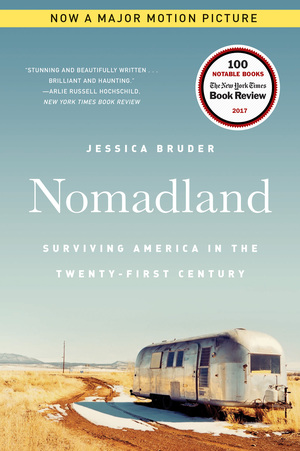
I looked at my Amazon purchases because I agree, at least in part, about their labor abuses. The book I just read, Nomadland, described the lifestyle of people who travel the country in mobile living vehicles and do temp work, including at Amazon warehouses during the push right before Christmas. The author does not paint a positive picture of working conditions, even if many people rely on that temp work to live. Amazon warehouses are already staffed with robots for certain tasks and the expectation is more humans will be replaced in the near future. For now, the temp jobs fill an economic need for these nomadic workers.

I spent $1,309.27 at Amazon this year, in 43 orders, or $194 per month. Here’s what I’m willing to do: a. cut back on the number of orders to no more than two per month (down from 6.4 per month). b. I plan to cut my overall spending in half.

While some purchases are unavoidable because the item (like the corded electric lawn mower) are simply not available here, I can reduce the amount of foodstuffs I get at Amazon and buy locally when I’m already at the market. Likewise, I have less need to own books. In writing my second book, there are plenty of research materials in our home library and we have a good public library for non-writing related reading.

So that’s the plan. Not too fancy, yet with specific goals. Hoping this will cut back on Amazon enough to improve my life. Mail orders will continue, yet hopefully better managed. Fingers crossed!

Categories
Reviews

Book Review: Nomadland

Jessica Bruder’s book Nomadland: Surviving America in the Twenty-First Century was recommended on social media. It contains the kind of crisp, clear writing, and solid narrative I seek to create. When combined with the topic of how septuagenarians and others fit in to a modern American economy where it is difficult to earn enough to afford a home, it was a quick read. I didn’t know it when British writer/photographer Marie Gardiner recommended it on BlueSky, yet it is smack in the middle of my reading sweet spot.

Bruder spent three years, driving 15,000 miles gathering information for the book. She interviewed countless people living in many different vehicles driving throughout the country. Each was making a life from dire financial circumstances combined with temporary jobs and a reasonably open road. The stories are compelling.

She worked as an associate at an Amazon warehouse in Haslet, Texas and participated in a sugar beet harvest in North Dakota. Neither job lasted long, yet they gave her a basis of experience to validate what the people she interviewed said. She immersed herself in the culture of the people about whom she was writing.

With a bit of a stretch, there is enough information to use the book as a how-to for living the nomadic life depicted. Bruder explains how people put together a life with complex facets. She presents examples of how people choose a vehicle in which to live. Finding adequate income through a combination of Social Security and temporary, seasonal jobs is important. Social programs like thrift stores, food pantries and SNAP also play a role. The book stresses how individualistic each solution to living can be. There is enough here to spark an interest in doing something similar.

Of Iowa interest is Adventureland in Altoona seeks labor among itinerant nomads called “Workampers.” They have a Workamper program that offers a free hook up campsite that includes electric, water, and sewer. There is no contract or time commitment to work at Adventureland. There are bonuses for working through the end of the season. Among the jobs on offer are ride operations, loss prevention, security, cook, ride maintenance technician, character performer, and others.

Bruder emphasizes the people she interviewed are not desolate. They are affirming members of a society hidden from most of us most of the time. There are few other, similar books. Recommend.

Categories
Living in Society

Budget Bills Pass

U.S. Capitol. Photo by Ramaz Bluashvili on Pexels.com

While I was sleeping early Friday morning, the U.S. House of Representatives passed the rescission bill which claws back funds approved by Congress in a bipartisan process. Republicans rescinded parts of previous spending agreements they didn’t like, which were needed at the time to pass the bill. They have a thin majority, so can do many things they want. Notably, funds for USAID and the Corporation for Public Broadcasting have been cut in the rescission bill. It now heads to the president’s desk for signature.

The rescission bill followed the widely unpopular reconciliation bill which also cuts federal programs while increasing the national debt. The president signed the reconciliation bill on July 4.

I need to stop and take a deep breath.

Like many, I contacted my federal representatives multiple times during the weeks the bills were being considered. They all (Chuck Grassley, Joni Ernst, and Mariannette Miller-Meeks) voted for both the reconciliation and the rescission. This week I received replies from Miller-Meeks and Ernst, explaining their vote on the reconciliation. Grassley posted a press release on his website. There are some nuances, but all of them gave the main reason for voting for it as extending the 2017 tax cuts.

Let’s start with Miller-Meeks. This was the crux of her email to me: “I was proud to support H.R. 1, the One Big Beautiful Bill Act, which permanently extended the Tax Cuts and Jobs Act. Without this bill, the average Iowan would have seen an increase of $2,063 in the annual tax bill. I was proud to work with my colleagues to prevent this from happening.” I don’t know this “average Iowan,” of whom she speaks. I didn’t see our household taxes change because of the 2017 tax cut. I paid zero taxes for 2024, so there are no taxes to cut going forward. Wealthy Iowans will do better. In each of my emails to the congresswoman I pointed out that we cannot afford to borrow more money for tax cuts. According to the Congressional Budget Office, that’s one of the main features of the bill, the U.S. will incur trillions of dollars in additional debt.

Someone in Senator Ernst’s office apparently read my emails opposing the bill. The response addressed Medicaid, as did I. The core message was similar to Miller-Meeks: “On July 1, 2025, I joined the entire Iowa delegation in voting to pass the One Big Beautiful Bill Act (OBBB), which the President signed into law on July 4, 2025. In addition to preventing the largest tax increase in history for our families, farmers, and small businesses, the bill strengthens the integrity of Medicaid and prioritizes those who truly need help by eliminating waste, fraud, and abuse.” Ernst did not address the borrowing needed to cover the loss of tax revenue for the U.S. Treasury.

Senator Grassley was singing the same tune in his July 1 press release, “Sen. Chuck Grassley (R-Iowa) today voted to pass the One Big Beautiful Bill Act to protect Iowans from being hit with the largest tax increase in history and provide historic investments in border security and law enforcement.”

If we think logic and reason apply to these votes, they don’t. They are simply Republicans doing Republican things with their audacity increasing with each day the Congress is in session. The direction hasn’t changed much since the Reagan administration, except for Republicans doing all this with more transparency. This one was really in our face. They rely on the American electorate being asleep at the wheel and paying their law-making only a minimum of attention. “Tax cut? Good,” the unwitting might say.

I haven’t come to understand the meaning of these bills, other than they go against the grain of good governance and Republicans don’ t care. What I do understand is Miller-Meeks and Ernst are up for re-election and if we care about our country, we should be contributing in some way to replacing them with Democrats.