Categories
Home Life Kitchen Garden

Transition Kitchen

Morning Shade
Morning Shade

LAKE MACBRIDE— Scum is forming on the surface of the crock liquid, and that’s a good thing: a sign of bacteria working the cucumbers, transforming them into pickles. Sounds kind of gross, but hopefully fermentation is going as it should— there are only so many times one can check the progress in a day, then it’s time to move on to something else.

Saturday’s weather was hot, but otherwise gorgeous. The work outside was invigorating and sweaty. The pest du jour was swarms of gnats which, upon arrival in the garden, were a reminder to apply repellent. An application of imitation vanilla around my nose and mouth took care of the annoyance, and unintentional ingestion of gnat protein.

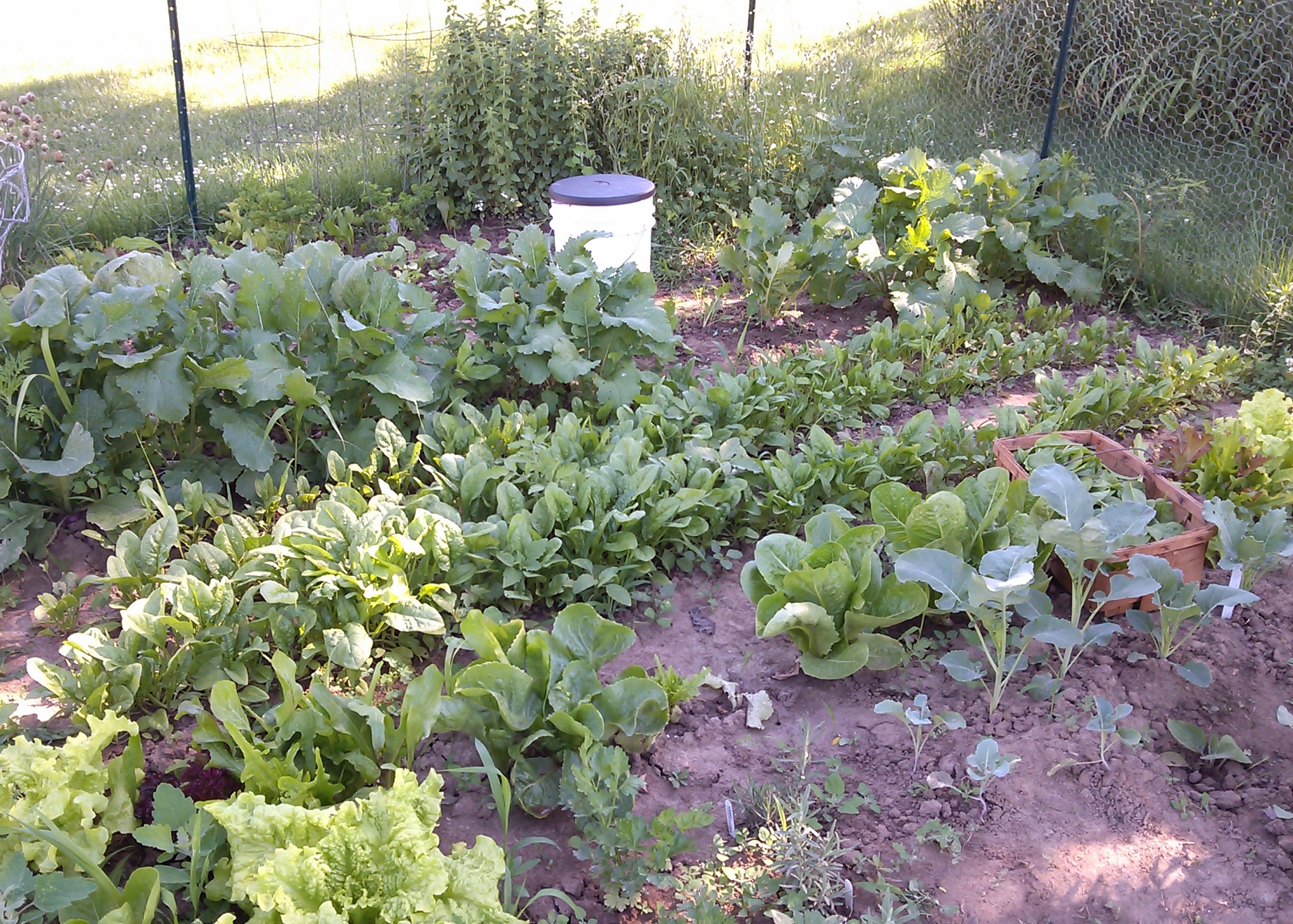
The main garden task was to turn over soil where the spinach and radishes were to plant lettuce seedlings. It seems hot to be planting lettuce, but with the shade of the locust trees protecting the plot in the morning, I am hopeful of another crop. Much of gardening consists of experimentation and my newly found ability to start seeds in the garage has me doing more of it this year.

I cleaned up the plot, removing the fence to cut the grass, weeds and small trees growing around its base. Then I picked a bushel of lettuce from the previous plantings, and sorted, washed and dried it to make two bags for salads. There were a couple of small turnips, one of which was later grated onto a dinner salad. When the work was done, the garden plot looked well groomed.

As the kitchen fills with food, it is time to process the new and do something with the old. I separated the leaves from the stems to make a quart jar of dried oregano for winter cooking. I cleared some space in the freezer by removing bags of last year’s Anaheim, Jalapeno and red and green bell pepper and cooked them in a Dutch oven in a cup of white vinegar. When they were tender, I ran them through a food mill and put the resulting green hot sauce in a Mason jar in the refrigerator to use in Mexican-style dishes.

Using four pounds of yellow squash and zucchini, I made a casserole, which will keep for a few days. The idea was to use the squash, and I made a large recipe with the idea of following the chef’s instructions to produce the desired result. Next time, and it won’t be long, I’ll scale it down to portions for a household of two.

How many kohlrabi can a person eat in one season? I intend to find out. I made mashed potatoes for dinner using leftover roasted turnips and two kohlrabi cut into half inch dice and cooked in a separate pan. When the potatoes and kohlrabi were cooked, I added them to a large bowl with the turnip and mashed them. Once the blend seemed right, I added some salt, butter, sour cream and chopped fresh rosemary. It seems wrong to mixed potatoes with cruciferous vegetables, but what came out passed the taste test.

After dinner, I inspected and watered the garden. The new lettuce will need watering more often, and there is more to harvest Sunday: zucchini, green onions, herbs and broccoli. Chard and collards are plentiful, but there are enough leafy green vegetables in the refrigerator, so they’ll stay in the garden for now.

Septoria Leaf Spotting blighted some of the tomato plants. The ones with the first cherry tomatoes look like they will make it to harvest, but not much longer. I noted the last planted tomatoes have not shown evidence of the disease. Will observe them as the season progresses to see if any conclusions can be drawn. We are a week or two away from some ripe cherry tomatoes.

This is how it goes in a kitchen garden. A constant activity that is not tremendously exciting, but a template for living and eating well on mostly locally grown food and the work of our hands. Life could be a lot worse than this.

Categories
Home Life Kitchen Garden

Making Pesto and Other Things

Fresh Kale
Fresh Kale

LAKE MACBRIDE— Summer’s harvest has been bountiful and we are less than two weeks in. Keeping up with the vegetables we grow and get from the CSA, has been a challenge of cooking, preserving, refrigerator and freezer space, and rotation. Thus far, little that was brought into the house spoiled. We are thankful to have enough food to eat in a society where so many people go hungry. Even our small town of 2,037 souls requires a food bank, making adequate food for everyone a tangible, local issue.

Yesterday was the first pick of green beans and we steamed them for dinner. Over the years Asian aphids have been a pest for this annual favorite— to the extent I quit planting them for a while. This year they were pristine in the basket. Not sure what happened, but I suspect row-crop farmers didn’t care for the damage to soybeans, and “did something” during the past few years.

I picked broccoli for dinner, and some Swiss chard. Spinach is ready to harvest, the last before the fall planting. There is also lettuce ready to go and plenty of herbs. The apple trees are still looking good: no sign of dreaded Popillia japonica, or Japanese beetle, which during previous years had made its debut by the first of July. Last year was a horrible year with them, and they are sure to arrive soon.

A summer indulgence is to make pesto. The process is simple. Into blender put a cup of first cold pressed extra virgin olive oil, with equal amounts of chopped garlic scapes, basil leaves and kale leaves with the stems removed. Blend the mixture, adding enough olive oil to make it a liquid, or additional garlic and basil to thicken it. Then add a handful of pine nuts, half a cup of Parmesan cheese and salt to taste. Blend until the mixture is a thick puree. The recipe produced enough to fill Mason jars with pesto for the freezer. I reserved some for immediate use, of course.

The thing about pesto, is it can be made with a number of summer greens and herbs. It’s a way to preserve the summer harvest. The other thing is a person can consume only so much of the delicious spread/sauce at a time. For now, we’re living the high life and contemplating dishes, other than just spreading it on bread, in which to use it. Pesto pasta will definitely be one dish on the menu.

Once one is plugged into the local food system, there is little cost to make pesto, except for the olive oil, which is always a luxury. During the summer harvest, a gardener and cook can live in the lap of luxury, even on a limited budget.

Categories
Home Life

Garage Day

Buckets Drying
Buckets Drying

LAKE MACBRIDE— Proofreading the newspaper didn’t take long this morning, so after making the smoothie mentioned yesterday, I inspected the cruciferous vegetables and found very few green caterpillars. Either the sunlight chased them away, or they were gone. I picked ten cucumbers, but my focus was on cleaning the garage.

Things had gotten spread out, rendering the garage space unusable. My car has been parked outside since spring began, and nothing seemed in a place when it could be found. By the end of the afternoon, the trash cart was full, there was room for both cars inside, and serious progress was made getting rid of things.

Walnut Logs
Walnut Logs

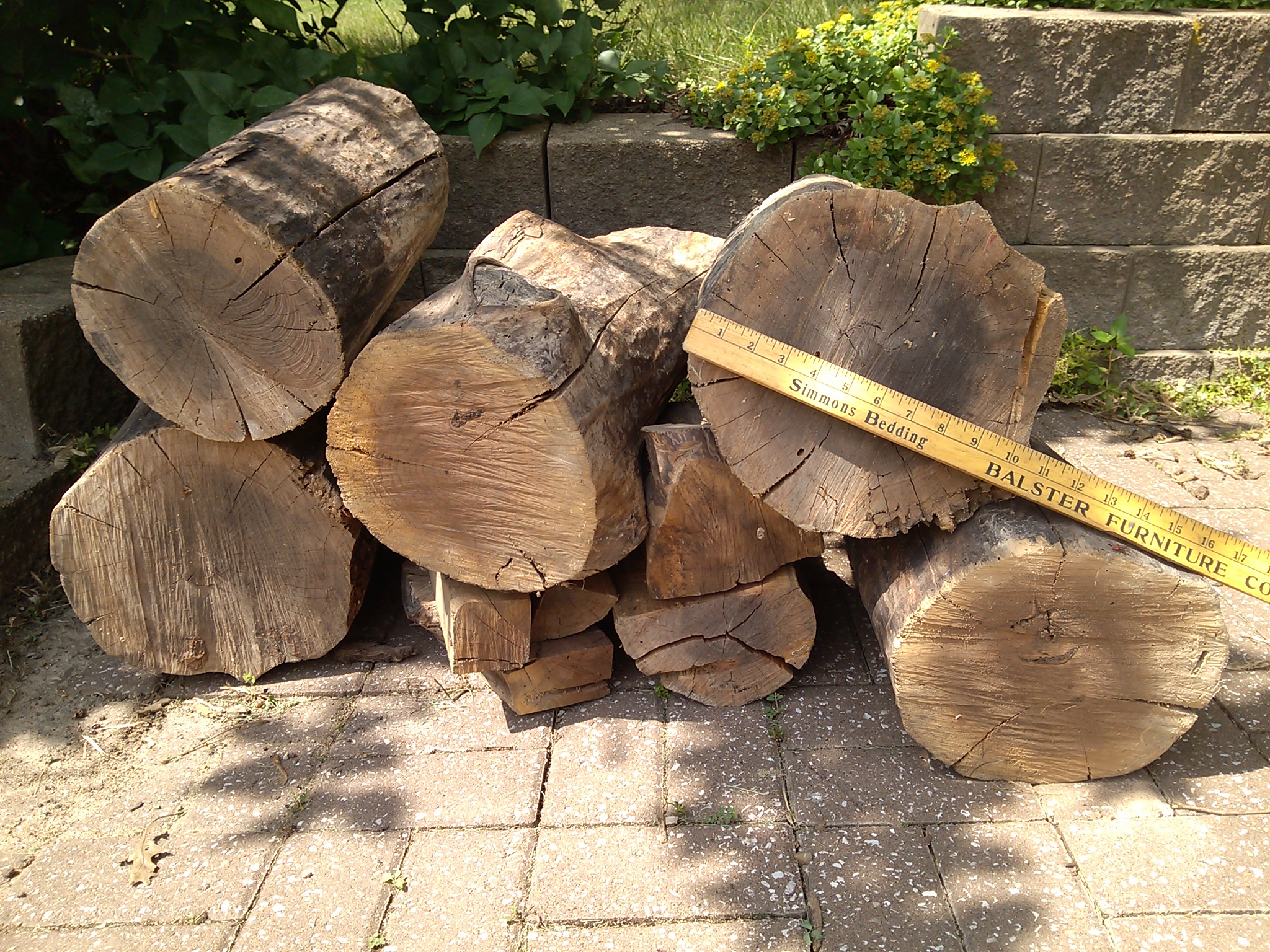
Some sections of walnut tree trunk have been sitting on the radial arm saw for a while— a long while. Time has come to either make something from them or get rid of them. I harvested them in the 1990s in Ames after lightning struck the tree and felled it. I cut them into 16 to 28 inch pieces to haul them around in our Plymouth Horizon. We got rid of the last Horizon in 2002, so that’s an idea of how long they have been in the garage. Too long.

Buckets, Plates and Flower Pots

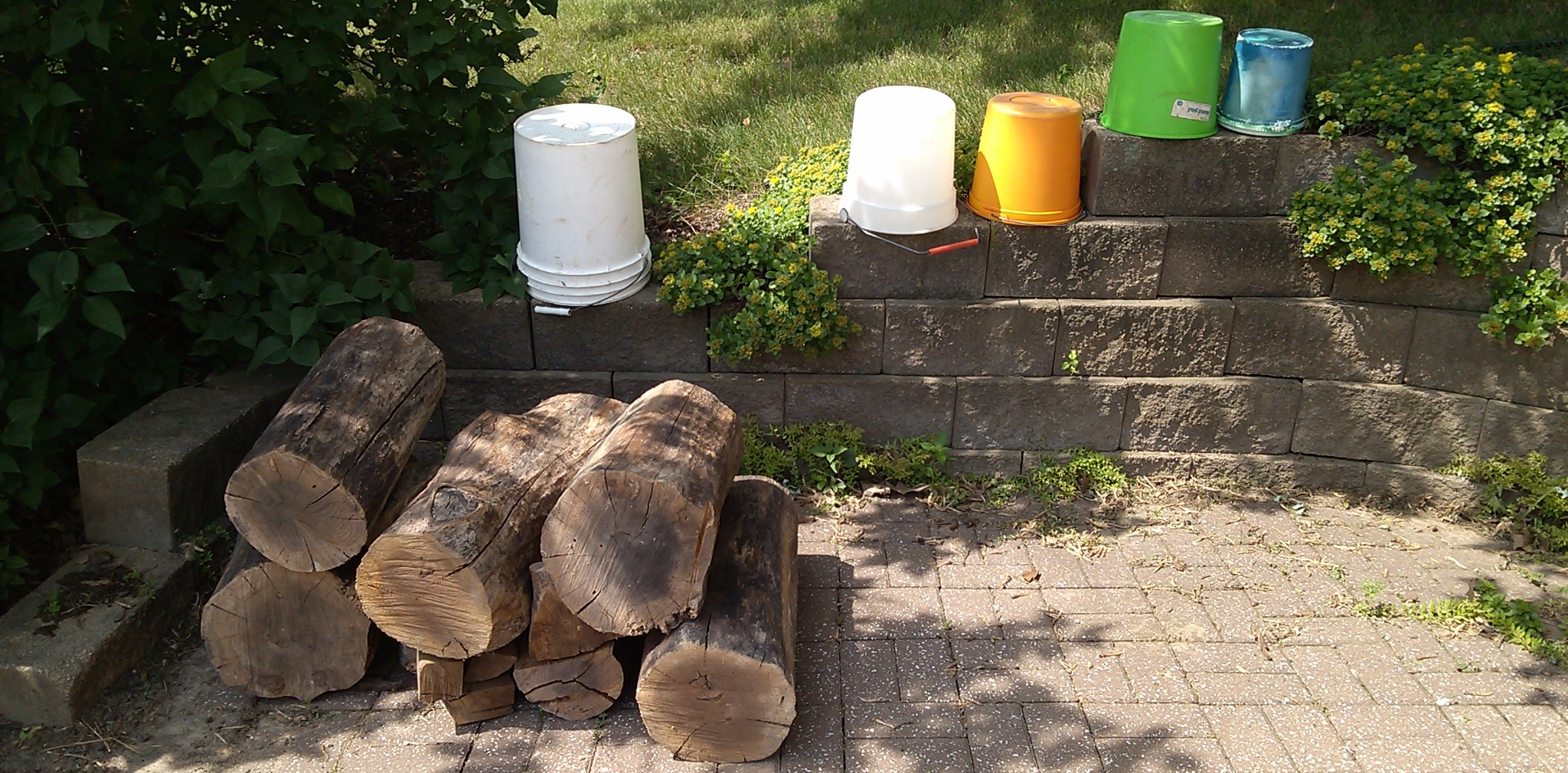
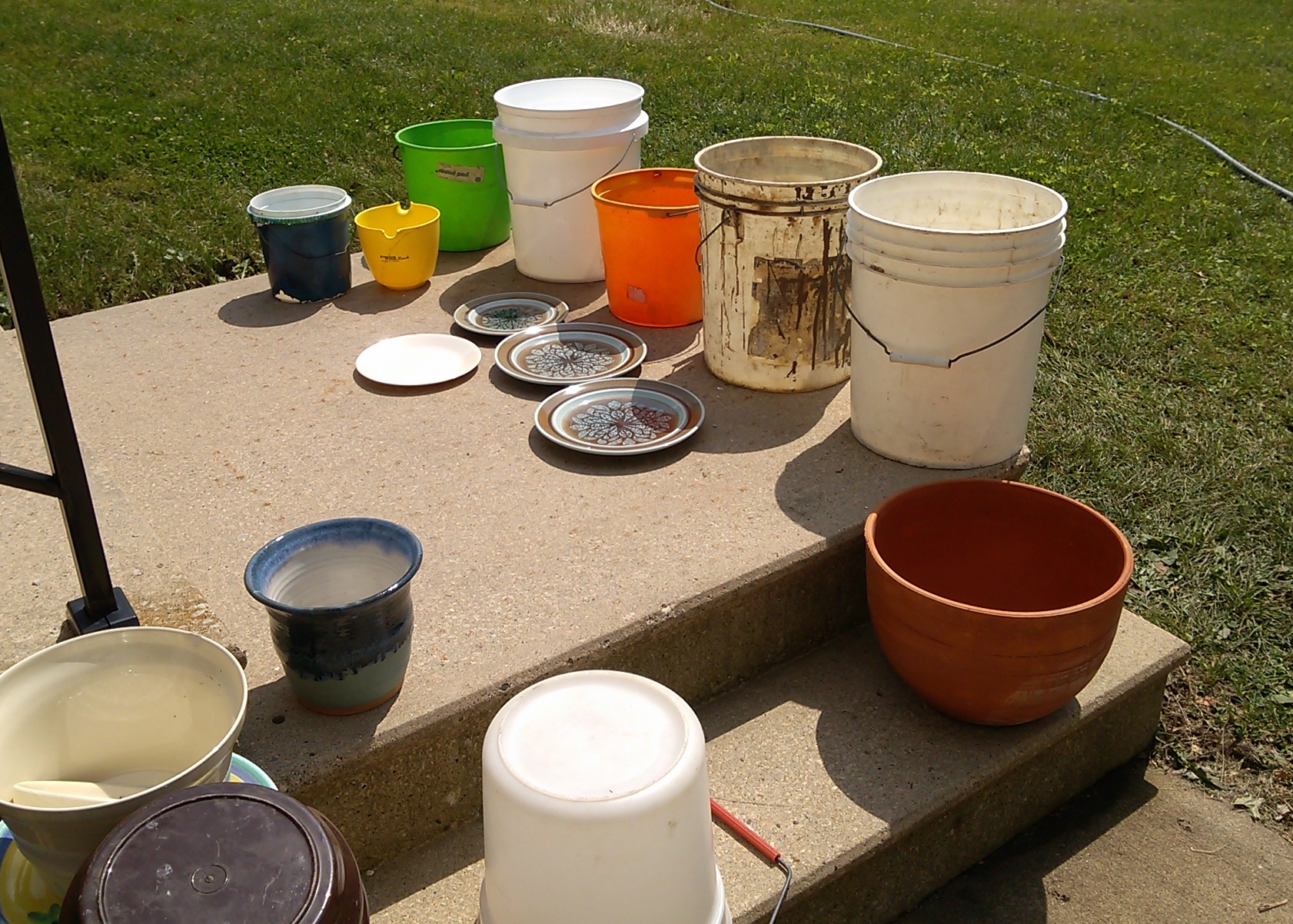
The buckets for gardening had gotten disreputable, so they all got washed. Same for the flower pots and vases. I re-seeded some cucumbers that didn’t germinate in the tray and watered the four trays of seedlings. They will get planted this week.

On a bulletin board near the work bench were pinned a number of magazine clippings of Adirondack chairs. The images were to be the inspiration to build a couple of our own. Like so many ideas, its diaphanous suggestion was torn asunder by a life occupied by a career. I took the clippings down and put them into the recycling container.

With a clean board, I pinned a poem by Wisława Szymborska, translated as “A Man’s Household”— a Polish poet for a descendent of Poles. A few other photos were already in the garage, a photo of our daughter at Lake Michigan, a post card of some textile workers holding a large 48-star American flag, a photo of my father when he was a toddler, a photo of my maternal grandmother and her second husband. It is the beginning of something hopeful— a place to make dreams into something tangible.

Categories
Home Life

Moment in Time

Fishing Trip
Fishing Trip

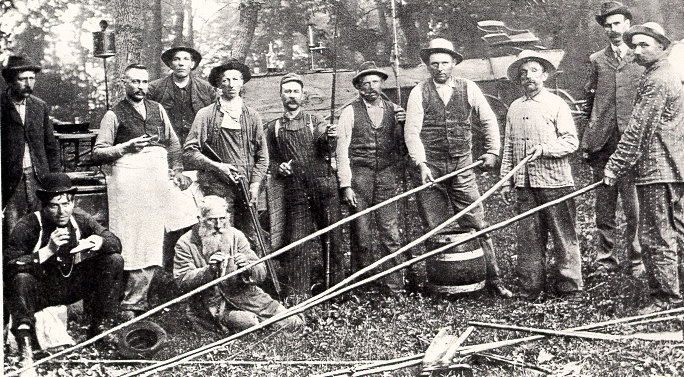
LAKE MACBRIDE— Today will be a work day, but before I get to it, there is this image of a fishing trip to South Dakota from the 20th Century. Among the men in the picture are my great, great grandfather, and my great grandfather. We don’t have a lot of photos of them, and this is the only known image of my great, great grandfather. He is seated in the foreground, baiting a hook.

With the explosion of photography, there are too many images to count and assign a meaning. So many people carry cameras all the time, on devices that are more powerful computers than were imaginable during the 1990s when I secured this image by photocopying the page of the book where it was published.
We select and bring artifacts into our narratives, just as this photo is now part of this blog.

Behind every narrative, there are moments in time when they are made, and when they take on meaning. In a consumer society, we can forget where things come from, the meaning of an artifact being the fact of its collection. That someone planned the fishing trip, invited guests and made this image using technology of the era is forgotten.

We seldom see the face of the photographer, but he or she is an unseen part of the narrative, as is the technology and the people who created it. The narrative of our lives is unavoidably collaborative, with people we know and those we don’t.
It would be presumptuous to pretend otherwise.

Today, I feel the presence of so many people who have influenced, fed and nurtured me. Whether they are here or not doesn’t matter. What matters if continuing the search for truth and meaning in the world, and creating a useful narrative out of these moments in time. Something that serves a greater good than a single life on the Iowa prairie.

Categories
Home Life

Busha’s Birthday

Mae Jabus

LAKE MACBRIDE— My grandmother was born on June 24 or 25, 1898 at home on the farm, west of the Catholic church in Wilno, Minn. The official record is unclear as to the precise date, and the clerk in the recorder’s office in the county seat told me that often births were not directly reported, but only when someone from the farm made it into Ivanhoe.

The church records show she was born Salomea Nadolski on June 25, 1898, and baptized on July 10, 1898 by the Rev. J.F. Andesejewski. Her godparents were Ladislaus Kuzminski and Maria Nadolski. I believe this version of the truth is closest.

The certified copy of the birth record I got from the county seat in Ivanhoe listed place of birth in Royal Township, Lincoln County, Minn. as Soluma Nadolski on July 10, 1898. Parents listed as Frank and Katie Nadolski.

Her certificate of death lists June 24, 1898 as the birth date of Mae N. and then Selmae M. Jabus, and those names and date were provided by my mother. The newspaper listed her as Mae M. Jabus in the obituary. Whatever may be official, we called her Busha after our daughter was born.

She told countless stories of life on the farm near Wilno and those stories came to life when I visited the home place, the church and the county seat after she died. If I am a story teller at all, it is because of her.

Her birthplace was still standing when I visited, and the owner kindly let me look around inside. I think he and his wife were looking to tear it down and build a more modern home for their growing family, although he didn’t say it. By today’s standards, the house was very small. There were shirttail relatives everywhere I went, including a gent who lived across the road from our home place. He was not doing well so we chatted only for the briefest of moments. He was connected through my great grandfather.

Like many descendents of Polish immigrants, my grandmother was fully assimilated. She still spoke Polish, but only with her sisters, and to the occasional wrong number who also spoke the language. There are stories about that for another telling.

Despite all the stories that have been and might be, I’ve been thinking about Busha’s life as I knew it the last couple of days. When I last saw her, she had moved to a nursing home where she used to work. She was mentally alert, and worried that the staff was stealing from her, even if there was not much to steal. She fumbled with her hearing aid so she could pay attention to what I had to say.
She got it to work, and we talked as we always had.

It has been 115 years since she was born, plus or minus a day. I feel so lucky to have known her for so long. The memory of so many things we did together persists as the sun sets over the Iowa prairie. I’m glad for that.

Categories
Home Life

Some Summer Pest Problems

Cucumber Plants
Cucumber Plants
Tomato Leaves
Tomato Leaves
Zucchini Leaves
Zucchini Leaves
Categories
Home Life

Brush Piles and Yard Work

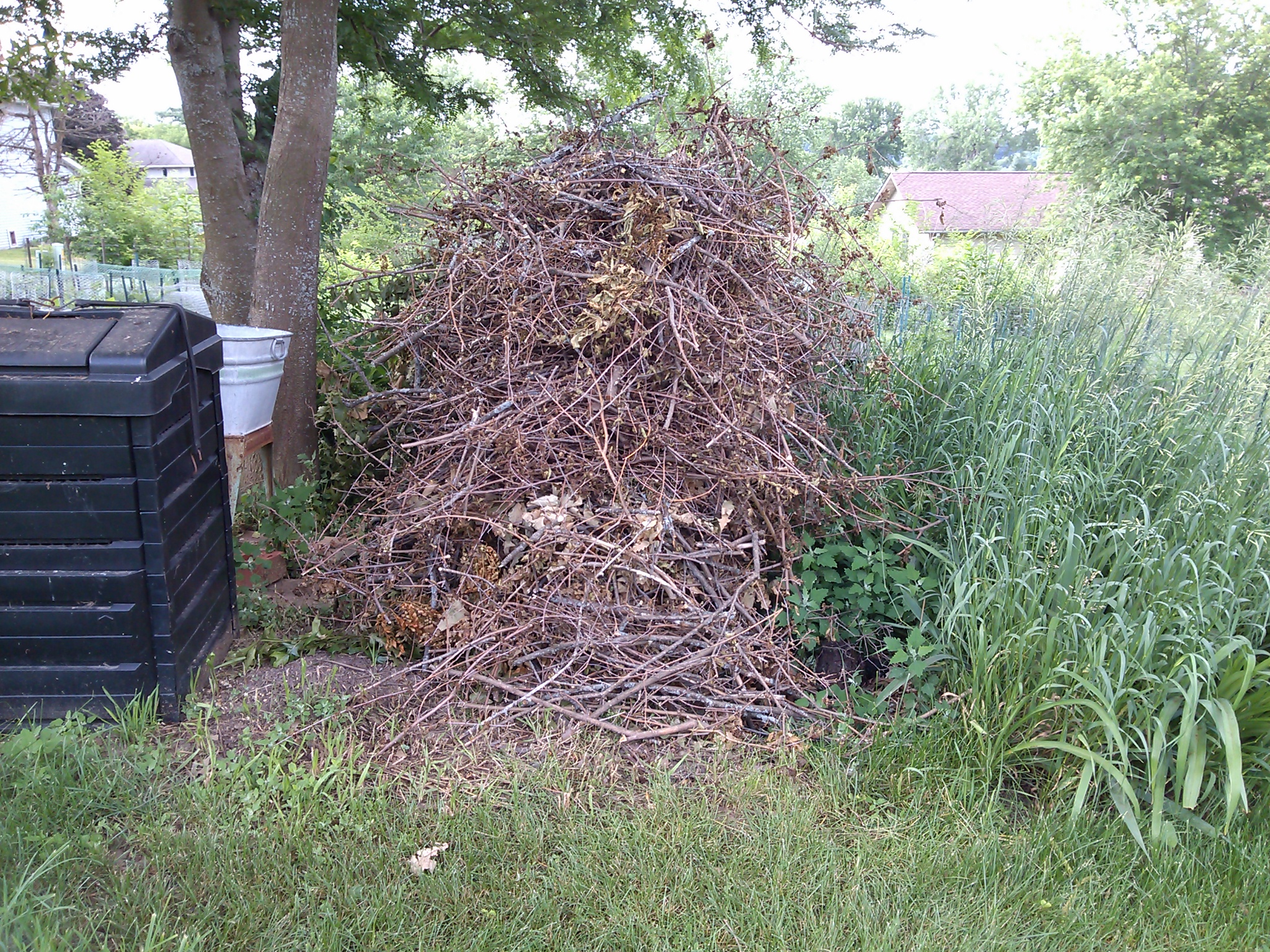
Brush Pile
Brush Pile

LAKE MACBRIDE—  To say yard work has been a low priority is an understatement. During the 20 years since we built our home, landscaping has been a haphazard process governed by whim and fancy— and a vague sense of design that sufficed to get trees and a large quantity of lilac bushes planted.

An important consideration of buying a 0.6 acre lot was planning a large garden, but there is more to it than that. Trees were planted with an idea of gaining privacy on what was a barren piece of farm ground turned residential lot. Until the neighbor’s bordering evergreen trees began to die and were cut down last year, we had succeeded in getting as much privacy as one can in a rural subdivision.

The only surviving tree from the two that came with the lot is the mulberry tree. Since arriving we added four bur oak, one pin oak, two maple, two green ash, four apple, one pear, and two locust. With the mulberry, that makes 17. It took me a week to prune and cut up the fallen branches from all of these.

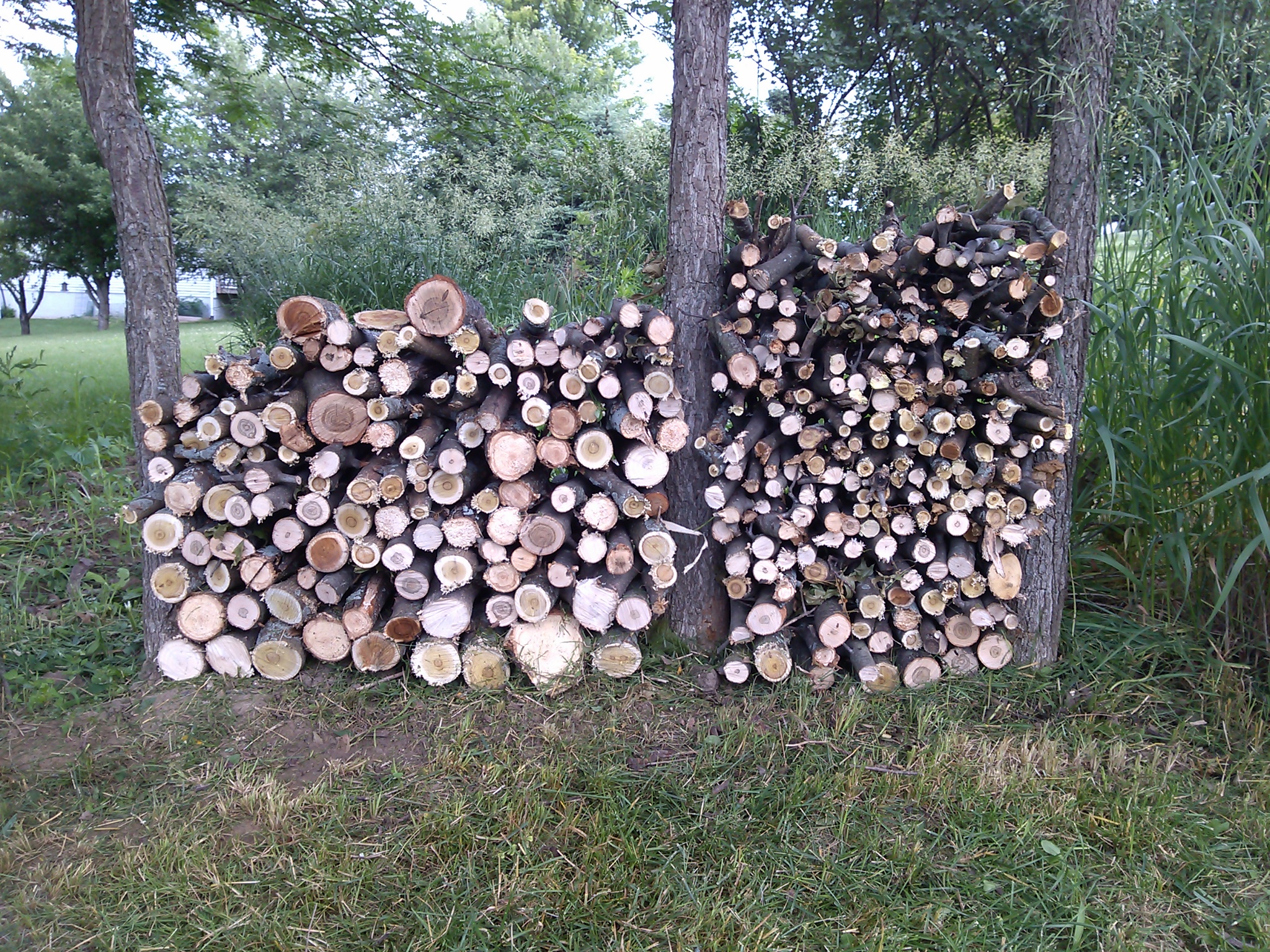
Burn Pile Storage
Burn Pile Storage

We don’t have a fireplace or use an outside burn pit for entertainment, so the brush needs to be cleared and disposed of. I’ll make a burn pile after the garden season, and store the brush for now. It should be a big fire.

If we lived in an apartment or condo, any yard work would be included in our association fees— others would do it. A state legislator recently said, “people want to live in cities,” but I don’t know about that.

Clearing the brush on a residential lot in the country is not the same as on a large acreage, but it remains a connection with nature and our attempt to cultivate it. This work runs through the heart of our lives in society, which might be less without it.

The exigencies of yard work and making something of the place where we live, in harmony with what remains of nature, takes work sometimes neglected. For a brief moment, when one job is done, and before another begins, we can feel good about our work, and that is something.

Categories
Home Life Kitchen Garden

Trimming the Mulberry Tree

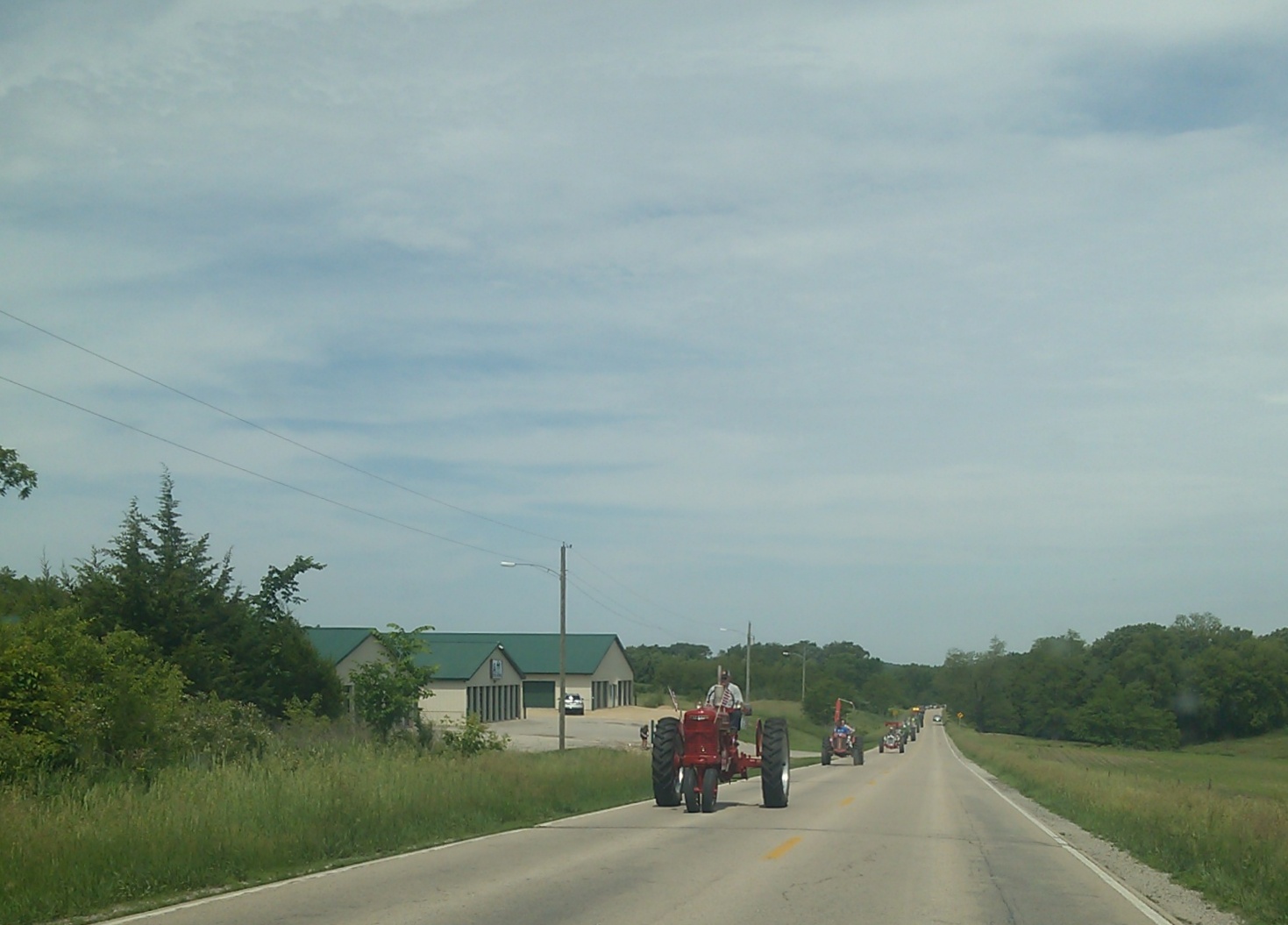
Tractorcade Hits Big Grove
Tractorcade Hits Big Grove Township

LAKE MACBRIDE— Reaching into the cooler, forearms covered with sawdust and sweat, I pulled out the last remaining bottle of chilled water. At 86 degrees and the air full of gnats, my mouth was dry.  I drank greedily— momentary coolness quenching my thirst.

The mulberry tree grew from a seed dropped long ago by a bird sitting on the rebar marker of the corner of our property. Because of the way it grew, three of us now own a part of that tree, although I have been its caretaker. In this tree I first saw Cedar Waxwings eating berries. Under it, the deer and rabbits graze on the fallen mulberries. While a volunteer, it has been a good tree and too long neglected.

A neighbor asked me to trim it because the branches were so low he couldn’t get under it with his riding mower. I thought to myself, “that’s my problem too.” Today it was pruned. It looks much better with all the low hanging and dead branches cut away. The mulberries are beginning to ripen, indicating the turn of the season to summer.

The Great Eastern Iowa Tractorcade is a thing here. Farmers from all over get together in Cedar Rapids and for four days, go on extended excursions in tractors of all kinds. Some of the equipment is older than I am and still working in fields. The caravan extended a long distance, and based on the errand I was running when I passed the tractorcade, it took more than an hour for them all to pass the lane to our home. It is a chance for families to do something fun to show off their farm pride. Children of farm parents take time off city jobs to participate.

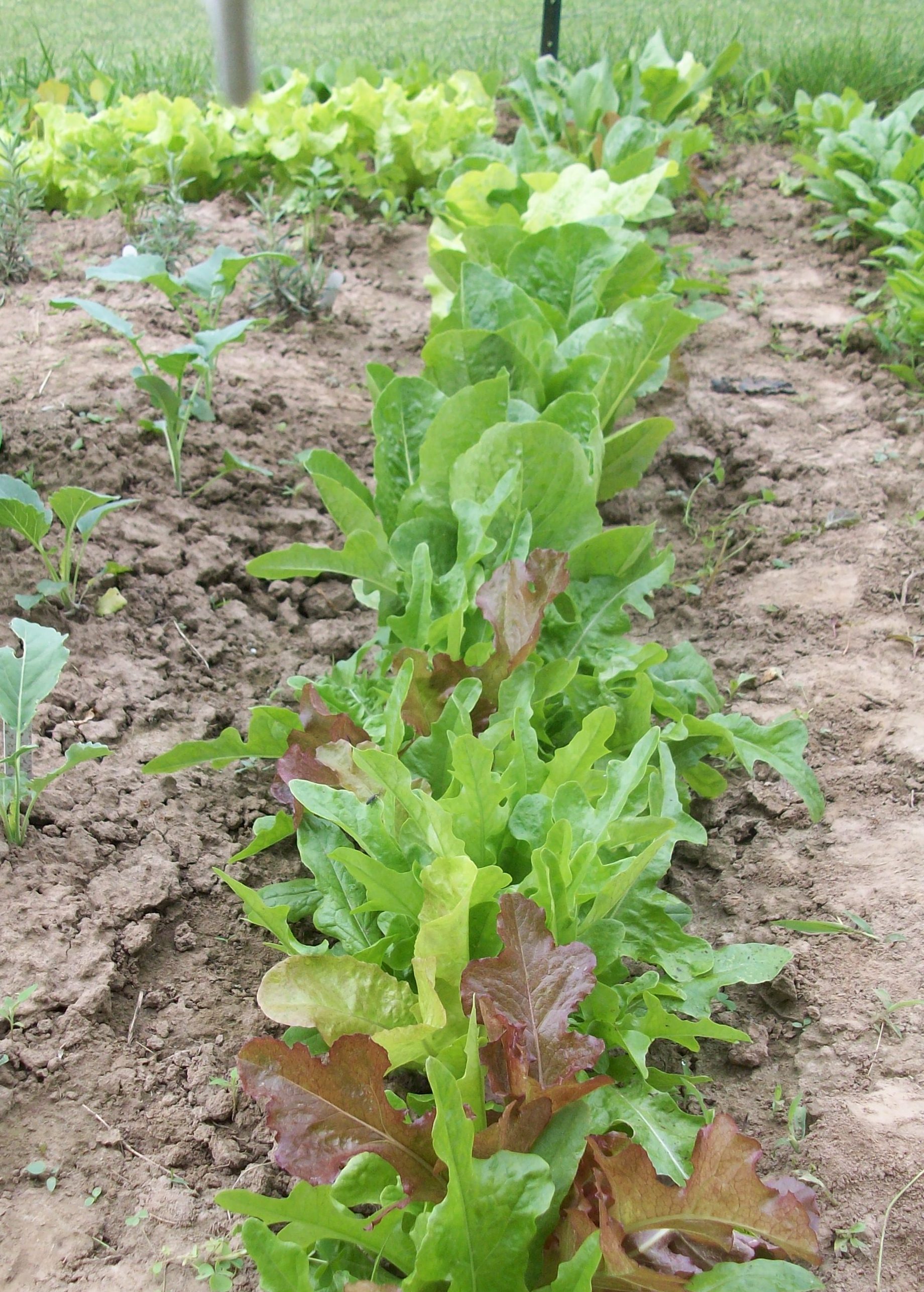
Row of Lettuce
Row of Lettuce

It’s the lettuce season and more in the local food arena. The lettuce in our garden looks better than I have ever grown it. The CSA has been providing four or more heads of lettuce per week, so between both sources there is enough to be generous with our friends.

The lettuce seeds I planted last week have sprouted, growing the next batch of seedlings to plant later in the month.

I picked the second cut of spinach from the first row of plants, washed and froze the leaves on a cookie sheet with a silicone mat. Once they were frozen, I bagged them for cooking later in the year. We usually make a spinach-rice casserole with frozen spinach leaves.

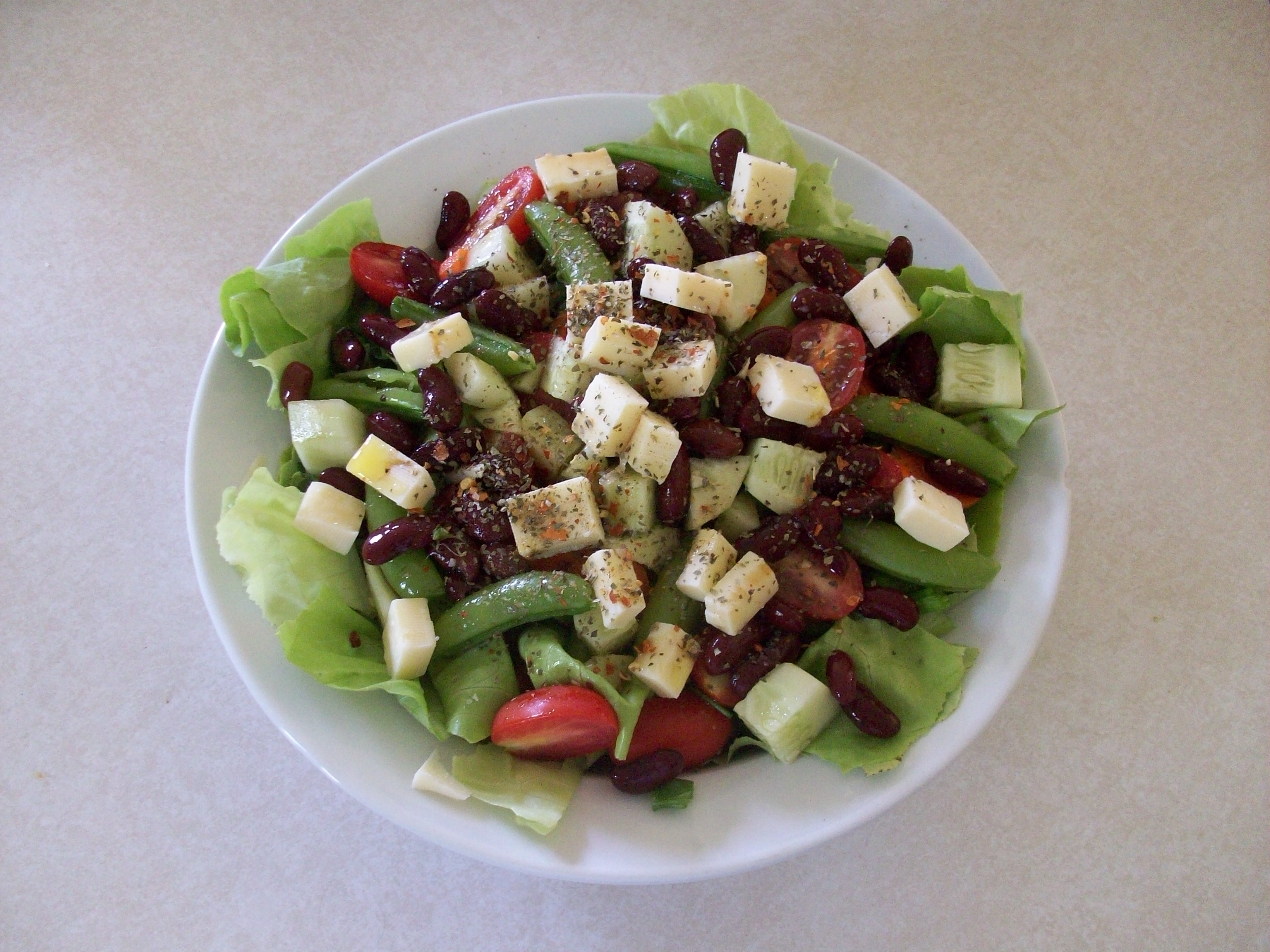
Each day is bringing plenty of work, and progress in getting the yard and garden in shape. After so many years of neglect, it needs it. At the end of a day, before an evening meeting, supper is a salad made with what’s on hand in the fridge. A simple spring life in Big Grove.

Dinner Salad
Dinner Salad

Categories
Home Life

Reluctant Downsizer

1000 BooksLAKE MACBRIDE— The pledge was to downsize by 1,000 books and this time I mean it. In fact, here’s photographic evidence of my commitment to this round of downsizing. The books in the photo will go to the local library for their used book sale. I really mean it.

Inculcated by American consumerism, it seems normal to collect stuff for later use whether it is books, groceries, clothing, shoes, tools, whatever. As the years aggregate, there is less of later in which to use all of this stuff. Using an on-line life expectancy calculator, mine is 89 years with a 75 percent chance of making it past 81. At two books per month, I can expect to read about 675 books during the my remaining time and that would be a hopeful schedule. Suffice it to say, in a time where publication on the Internet is exploding, there will be no shortage of articles and books to read. Downsizing by 1,000 books is a modest start to a much bigger downsizing.

When I visited the Library of Congress in 2009, there was a display of the books Thomas Jefferson sold to the government after the British burned the Library of Congress in 1814. That is, of what remained after a second fire in 1851 destroyed two thirds of Jefferson’s books. The exhibit was a reconstruction of Jefferson’s library using the original bill of sale. It is a cool display for book lovers, and my inevitable conclusion was that while Jefferson may have been an avid reader, there is no way he read all of the books he accumulated. I didn’t feel so bad about the size of my library after that.

There may have been a 19th century reason for personal libraries of books, and even a 20th century reason, but libraries today serve a more varied function than being the repository of printed matter. Public library programs like downloadable e-books and audio-books press the limits of copyright laws to make written material more accessible. In a corporate culture that seeks to make a fungible commodity of everything, books have been and will be included. Already some of the books in my photo are available on-line, some for free. Among other reasons, we keep personal libraries for sentimental attachment, to work on specific projects, and for convenience. All valid reasons, but how many books need to be on hand? The answer is less.

As spring turns to summer, some of my time will be taken counting out the books to be donated to the library to make my pledge. It’s time to let go and focus on more important endeavors, like sustaining our life on the prairie in a turbulent world— something that does not require a large personal library, as comforting as one might be.

Categories
Home Life Kitchen Garden

Summer is Coming

Radishes
Radishes

LAKE MACBRIDE— The weather was perfect today: temperatures in the high sixties and low seventies; sunny, then partly cloudy; and not a trace of humidity. Days like these are the harbinger of summer.

The lawn looks like a lawn, neatly trimmed and the grass clippings collected for mulch. A good part of today was spent weeding and mulching the garden. Everything is beginning to look good.

Because of the abundance, we’ve eaten fresh salads almost every night for dinner the last two weeks— spring fare that never gets old.

A simple and tasty salad dressing is to put equal amounts of balsamic vinegar and first cold pressed extra virgin olive oil, and a teaspoon of Dijon mustard in a small Mason jar. Add a pinch of Kosher salt and pepper to taste and shake until emulsified. Adjust to taste by varying the amounts of the ingredients. If available, add finely chopped herbs like oregano, thyme or basil before mixing. Serve immediately and make only enough for the meal. A millennial might write “yummy,” and so do I.

Today was the day to start reading “The Great Gatsby.” After the garden and yard work I set up a folding chair in the garage and upended a five gallon bucket to use as a table. From the refrigerator came a dozen spring onions and a handful of radishes. I poured a small dish of Kosher salt in which to dip them. From the cooler in the garage came a locally brewed beer. To the sound of birds in the lilac bushes and the engines of four wheelers in the neighborhood, I dove into the story of Nick, Daisy, Myrtle, Tom, Jordan and the rest of them. The dinner party at the Tom Buchanans took place two weeks before the longest day of the year, which is coincidentally what today is. It is a summer ritual in Big Grove to read Fitzgerald’s novel, almost since we lived here. At some point, I recognized it as an almost perfect novel of summer— an escape from the worries we found when propelled here so many years ago.

I’ll finish the book before the weekend is over, and get ready for summer.