LAKE MACBRIDE— A neighbor posted this message to our community email list last night,
Dear Neighbors,
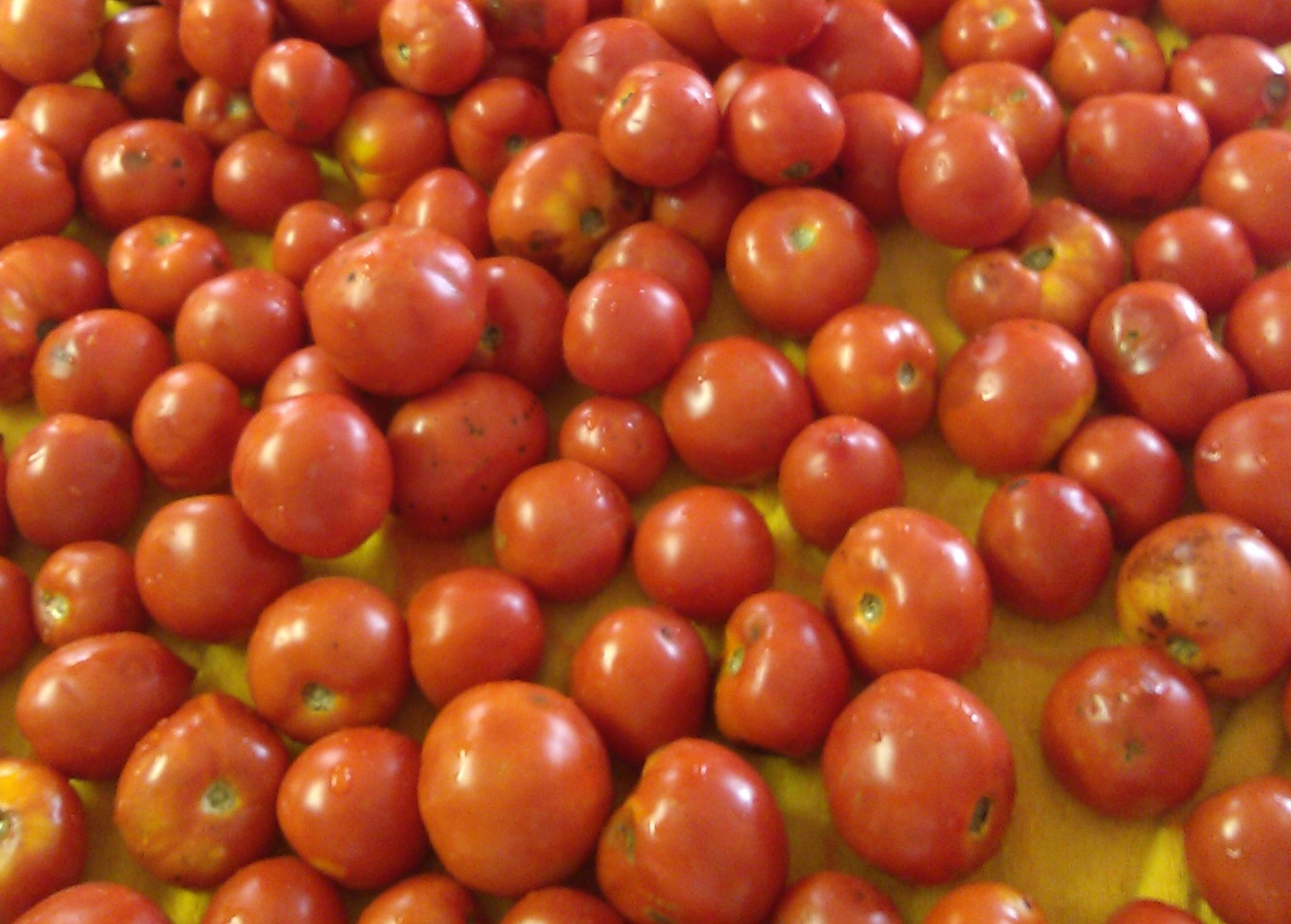
Our garden has produced tons of great tomatoes this year, more then we can or can. Tomorrow I will pull my trailer up to the road with some of the surplus tomatoes on it. If you would like some home grown organic heirloom tomatoes help yourself.
It was a generous gesture, the kind of which we need more in this dog-eat-dog world, where the Darwinian struggle for existence is taken literally and has also taken a turn toward the coarser side of human nature. He posted before the storm rolled in.
One neighbor called the brief storm, “(the) worst in 20 years.” He and his family built about the same time we did, during the early 1990s. The rain was intense and the wind sharp. With the climate crisis, one expects this sort of storm, and seeing how it plays out is never a pleasant experience.
We lost a tree, some lilac bushes and a big branch from our favorite tree, the autumn blaze maple in front. The apple crop was mostly knocked from the trees. When the sun rises we’ll see what is left to finish ripening, and whether there was any structural damage. I won’t be going to the farm today while spending time with post-storm cleanup. It could have been a lot worse.
Next steps are to finish coffee and breakfast, make a list and start doing things on it when the sun rises. There’s a song about that.
LAKE MACBRIDE— In 100 degree temperatures the walk to the garden to pick yellow cherry tomatoes and basil for dinner didn’t seem hot. Perhaps I am adapted to the unseasonably hot weather… intensified by climate change. We can’t recall the last rainfall. According to the state climatologist, “Iowa temperatures averaged 72.1° or 0.6° above normal while precipitation totaled 1.57 inches or 2.63 inches less than normal. This ranks as the 7th driest and 65th warmest August among 141 years of records.” It has been exceptionally dry in Big Grove. However, life goes on, and having a house guest provides a special reason to used locally grown food to prepare meals for the table.
That we would have a salad was determined when a co-worker at the farm carried a crate full of freshly picked lettuce from the field to the cooler yesterday morning. Mixed greens, washed and spun dry, topped with zucchini, cucumber, orange bell pepper, red onions, wedges of red tomatoes and sliced carrots were topped with a dressing of choice. Balsamic vinegar and olive oil with salt and pepper is my favorite.
We also served pesto pasta. During early summer I made and froze half a dozen jars of pesto, using various ingredients. Slicing the yellow cherry tomatoes in half and putting them in a small bowl along with a chiffonade of basil leaves, I cooked six cups of bow tie pasta to al dente. The pasta, tomatoes and basil, half a pint of pesto and a roughly measured cup of Romano and Parmesan cheese were mixed thoroughly in a large bowl and served alongside a one-inch thick tomato slice topped with kosher salt and strips of fresh basil. A simple late summer feast.
LAKE MACBRIDE— Dust is still settling on life made turbulent by the harvest, new work, writing and commitments with friends and family during August. Top that off with talk about retaliation against Syria for using banned chemical weapons, and summer is ending with a bang, perhaps literally. It’s time to regroup and deal with the challenges.
A neighbor and I did a deal on raspberries yesterday. He provided eight pints to process, half into a spread for his morning toast, and half into what I want, probably the same, or maybe pancake syrup. After a shift at the farm this morning, raspberries, tomatoes and apples will all enter the canning mix. It’s now or never for the ones already picked. An eight hour canning session begins at 1 p.m. and I’ll locate my second canning pot to process two batches at a time. Times like this, I wish we had six or eight burners on our stove.
The garden has been on its own for three or four days. Tomatoes are ready, and not sure what else. When I return from the farm, I’ll empty the compost bucket and find out, picking tomatoes for sure, and likely Anaheim peppers.
There is a lot more to organize, and the food work is in the must-do, nature-can’t-wait category. There’s more work, my presentations on climate change Sept. 17 and 29, particularly. That’s not to mention finding replacement revenue for when the seasonal farm work ends soon. It looks to be a very busy autumn as we enter September.
LAKE MACBRIDE— There is a sense that the season has turned. Clutching the harvest, preserving it as best we can for winter, its abundance slips through our hands to compost, and with time, back to the earth.
Bones and joints are weary from farm work, that work displacing time normally spent in the garden, yard and kitchen. Fallen apples line the ground and the branches of the late trees touch the grass, laden with the developing fruit. In nature’s abundance we cut a sliver and sustain ourselves on its freshness.
It’s labor day in the U.S., but that matters little in nature’s calendar. The work of a local food system goes on, and paid work calls me again today.
Soon I’ll finish preparing the onions drying in the germination house for storage. After that, I will be ready for autumn and the acceleration of changing seasons into winter.
LAKE MACBRIDE— First shift produced two quarts of tomato juice, four pints of tomato sauce and an experimental jar to see how my pickles take to water bath processing. There are still a lot of tomatoes to process.
I delivered frozen bell peppers to a farm where one of my work for food ventures is located, and stopped by the orchard to drop off a lead for some cheese curds. I bought a jar of sweet, dark cherry preserves on my employee discount.
Summer is waning, and I just took more harvest work to earn some money for the tax collector. Staying busy with the changing seasons is easy. There may be fewer posts for a while as the unofficial end of summer comes this weekend.
Thanks everyone for reading. It won’t be long until my next post. Meanwhile, I’ll be out in farm fields trying to earn a living.
LAKE MACBRIDE— As my portfolio of local food system work builds, there is not enough time to do everything that is needed for optimum results. Apples fall faster than they can be processed, and tomatoes sit on the vine, ripe and ready. The work commitments fill in time at five locations, and that leaves less flexibility in a schedule that used to be pretty open.
I just finished canning 36 quarts and 14 pints of tomatoes as juice, sauce and whole. The sauce is very expensive in that it takes a lot of tomato flesh to make a pint of the thick sauce. Hopefully it will enable me to make pasta and pizza sauce without reducing or adding tomato paste as a thickener. From last year’s first experiment it was a winner and worth it.
I was counting on a lot of slicers from the CSA, but there was blight and the production hasn’t been as good as in previous years. Luckily, I have plenty in our garden, at least for the moment.
When I come up for air, there will be other stuff to do. For now, swimming in all this work is invigorating and fulfilling.
LAKE MACBRIDE— Two batches of pickles are fermenting in crocks downstairs, the second started three days after the first. The rule is to place cucumbers in the brine and let things get started for three days before checking. There was scum to skim on the first this morning— evidence the pickling process is proceeding as expected. The reason for a second batch is a local grower had excess cucumber seconds which were offered and taken to serve my dill pickle addiction.
Eggplant is abundant. I peeled and cut three into half inch rounds. They were baked for 15 minutes at 425 degrees, cooled and then frozen and bagged for future use, most likely in eggplant Parmesan. By then, the freezer was reaching capacity, and eggplant is not an everyday preference.
Last processed yesterday was two tubs of broccoli. This is part of a work for food barter, and unexpectedly came about while discussing seconds and surplus with a grower. All told, it took me about four hours to process the two tubs with a total yield of 20+ pounds frozen. The first tub, which yielded 8-1/2 pounds, was returned to the grower as compensation for the produce. I kept the second, added two heads I already had in the refrigerator, and that was the balance.
It’s a shame we had to compost the stems, as they are some good eating. If better organized, I would have made a big batch of soup stock using carrot, onion, celery, bay leaves and the broccoli stems and canned it in quarts. Our household uses a lot of stock.
The squash beetles mentioned yesterday avoided the butternut squash seedlings and congregated on the withering acorn squash plants. I need to study natural pesticides before I pull those vines, as the bugs will likely next migrate to the new cucumber plants, and infringe on my plans for more dill pickles. It is remarkable that I had tremendous abundance of zucchini and yellow squash before the squash beetles showed up.
The grower with whom I’m working on the broccoli and tomatoes stopped by to drop off some canning jars. We toured my local food operation which is situated on 0.62 acres. It is revealing to see what other growers notice about a home garden: the apple trees, my compost bin made from four pallets, the healthy Brussels sprout plants, my deer-deterrent fencing, and my pile of cut brush waiting for a fall burn after the garden is finished. She asked if I turned the compost. I won’t until spring when it is spread on the garden plots.
A local food system centered around a single household is both simple and complex. Cooking and preserving food are practices that have been around since hunting and gathering gave way to agriculture and domestication. Fresh food is sourced from a garden and a mix of growers. Specialty items are purchased where they are available at local retail outlets. There is a constant balancing act that regulates types and quantities. The refrigerator contents reflects how things are going, hopefully with the majority of foodstuffs having no commercial label.
While endeavoring to earn money for the tax man, insurance companies and lenders, we have to eat. The question becomes, what takes precedence? We can live without bankers, but sustaining a life requires a sophisticated, ever evolving local food system. The pay is not much, but the rewards are renewable.
LAKE MACBRIDE— It is with a bit of trepidation that I venture into another expository piece about urban chickens. As people continue to move from rural areas to cities, attracted by jobs, apartments, and a type of society reliant upon the aggregation of diverse human interests, to raise chickens at home seems anachronistic.
By definition, city life eschews barnyard animals. Getting rid of urban chickens, pigs and cows was part of the rise of the public health movement. Whether intentional or not, urban society, by definition, replaced the need to produce one’s own food. Why else would so many people have left the farm but to take advantage of society’s mass production capacity? To seek a return of urban livestock is a throwback to an era that was not necessarily better.
Nearby North Liberty is considering an ordinance to allow city folk to raise chickens in their yards. As I mentioned in my March post, this type of pursuit seems to be a material interest in pursuit of respectability among peers, rather than about nutrition. What makes the North Liberty proposal different is the requirement for neighborhood consent, rather than providing a courtesy notification of a chicken coop under construction. If passed, the ordinance would build community feelings, predictably on both ends of the love-hate continuum. Already there’s squawking.
At first reading, it is unclear to whom the ordinance would apply: whether or not the city would preempt home owners associations with a local address from making their own rules. The way the current ordinance is written, home owners associations could be more restrictive and disallow home chickens even if the city does permit them. Preemption has a long and controversial history in Iowa, notably as it applies to concentrated animal feeding operations where lobbying groups want control centralized in Des Moines in the self-interest of focusing their lobbying efforts with less resources. I’m confident the city council will work through this issue.
Some cried foul over the 25 foot rule (the coop, fowl house, or fenced pen area shall be a minimum of 25 feet from any property line), saying it was too restrictive, or the chicken coop location would be aesthetically challenged. This aspect of the draft ordinance serves my point that urban chickens are more like pets than food sources. More like a landscaping ornament or a window treatment for a view of lives where there is not enough constructive work to do.
The limit is four chickens, kept in a confinement facility— hens only. There were no instructions on how to determine if a chick was a rooster or a hen, but a Facebook friend resolved the issue by saying, “once a cockerel is old enough to crow, it’s big enough for the dinner plate.” This raises the issue of chicken slaughter. My grandmother lived on a farm, and knew the process well. During my time in French Army Commando School, we learned how to turn the gift of local partisan support into food for survival. Slaughtering animals for meat just doesn’t go with contemporary notions of city life. Maybe it should.
What I am saying is the idea of urban chickens is adjunct to local food systems. It is more an expression of bourgeois libertarianism in a consumer culture, than a revolution in local food production. Gil Scott-Heron famously wrote “the revolution will not be televised,” and we are hearing too much about regulation of urban chickens on the T.V., so a reverse logic applies: the local news is covering the story, so therefore it can’t be a revolution.
In the end, a community should have self-determination on how people live. I’m not against urban chickens, but don’t see the point. It seems like a lot of work and expense for a small number of boutique pet chickens. Why not buy the best eggs from the grocery store, or farmers market, or barter for eggs and save the money? And maybe get a dog or cat at the animal shelter, as they make better pets.
LAKE MACBRIDE— Hundreds of us are converging upon Chicago for the Climate Reality Leadership Corps training. To avoid the expense of the conference hotel, I will be staying with friends of a friend for the duration. I’m making up a gift basket of produce for them. It’s a showcase of the local, organic produce that is passing through our house this summer.
Included will be a pointed cabbage, green and yellow zucchini, blue lake green beans, market more cucumber, yellow squash, a box of cherry tomatoes, kohlrabi, daikon radish, broccoli and a jar of home made apple butter. If there’s sunlight in the morning, I’ll add herbs: rosemary, basil, flat leaf parsley, sage and thyme.
To keep the veggies, I’m dumping the freezer’s ice in a cooler, topping it with a water barrier and the veggies. Hopefully it will survive the trip.
It is somewhat ironic that while I am with Al Gore, one of the leaders in the use of technology, and a board member of Apple, I’ll be leaving my laptop at home. I’ll be off the Internet, except to communicate through my mobile device. Regular posting will resume over the weekend, so stay tuned.
LAKE MACBRIDE— The summer weather has been as good as it gets, a reminder of what it was like as a child, with endless days to play in the sunlight, safe and without worry. This summer has been unforgettable. Besides the weather, it has been a different and somewhat tribal life after turning to those with whom we live out our lives in the neighborhood.
A quick garden update. Removing the green caterpillars with a medical grade forceps did the trick of removing the pest, and the new leaves are growing bug free. The white butterflies are around, so there may be more, and I lost one plant, but the new growth looks great.
Cucumber Seedlings
Today, I harvested the rest of the green beans, composted the plants, and planted a row of cucumbers from seedlings. I planted the seed in pots on July 13, so they are two weeks from seed to seedling. The benefit of growing them this way is with the wet root ball, they can tolerate diverse conditions better to get off to a good start in the ground. They bring their own moisture with them to the initial planting. I watered them well and mulched. With my newly developed pickle addiction, I may plant more before summer is gone. There were some seedlings leftover from planting a row, so maybe next weekend.
Three Rows of Lettuce
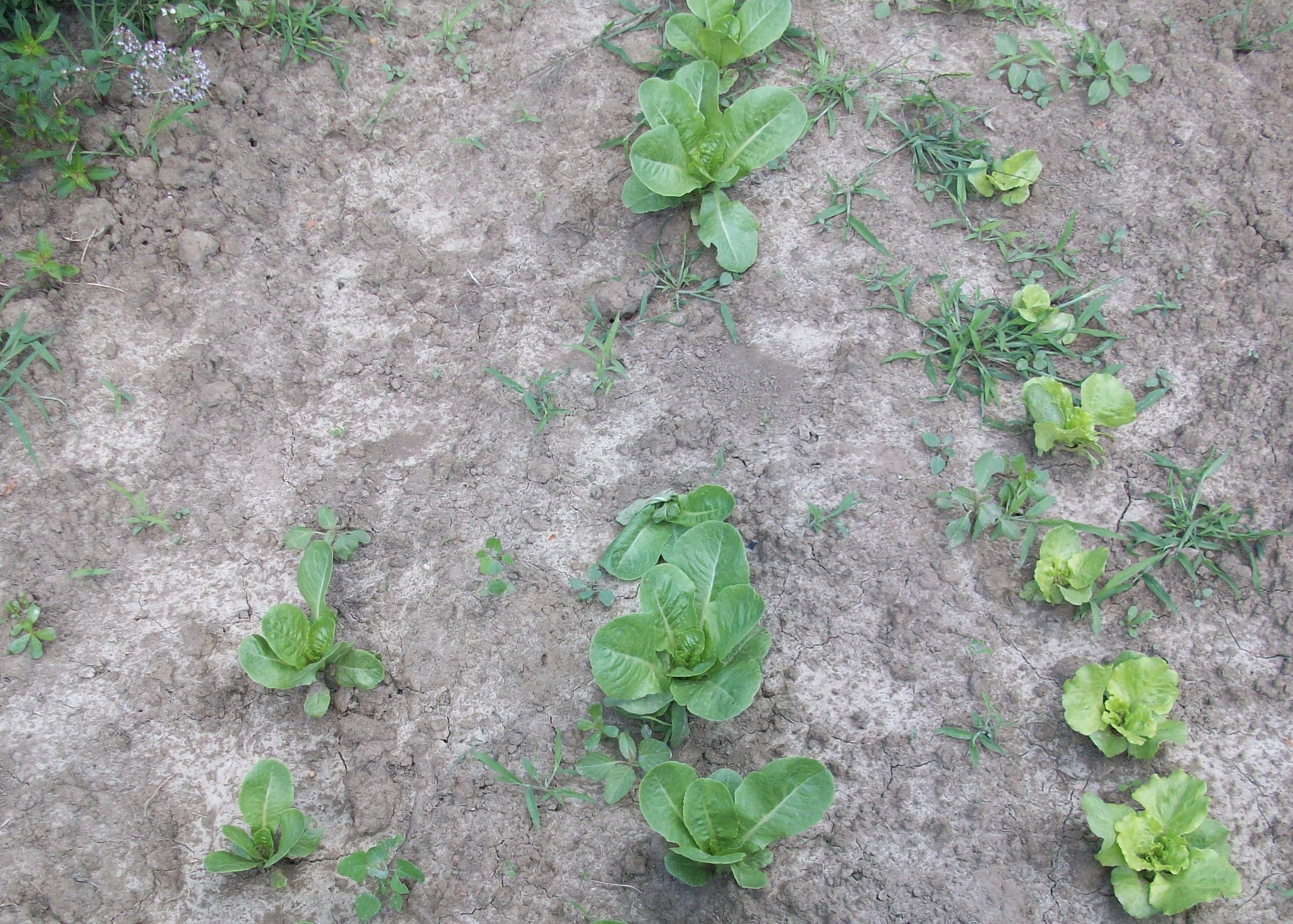
The current crop of lettuce is suffering. Not from the heat, or lack of water, but from disappearing. There used to be three full rows here, and some plants are missing. Not sure what is the pest, but it seems doubtful deer are jumping the fence as there are no deer footprints inside. Perhaps a rabbit, or something else. Whatever is left, will be enjoyed by the humans. The leaves are big enough to pick, so when I return from my trip, we’ll bring some in for a tasting.
Green Tomatoes
Finally, the tomatoes are maturing and three varieties have begun to ripen: two cherry tomatoes and Roma. Tomatoes have been the continuous crop in our garden, since the first duplex where we lived after our wedding ceremony. Perhaps there was a gap in Cedar Rapids, but not much of one. This year’s crop was the first I planted as seeds, and based on the results, I’ll do that next year as well.
Roma Tomatoes
The primary concern this year is to finish processing tomatoes before the apples come in. There are a lot of apples. I know what I want from the tomatoes: 12 quarts and 12 pints of tomato sauce, the leftover juice, 24 pints of diced tomatoes, and maybe a dozen pints of hot sauce using the cayenne and jalapeno peppers. Knowing how to approach it is half the battle.
Tonight for dinner, I made a pizza. Thin, wheat crust with tomato sauce I canned in 2011 mixed with fresh basil and salt. Toppings were half an onion from the CSA, thinly sliced zucchini, diced green peppers, sliced green olives with pimiento, halved cherry tomatoes and 6 ounces of mozzarella cheese. It is out of the oven, so I had better go sample.







 Journey Home
You must be logged in to post a comment.