There was a time when I attended estate and farm auctions and bought things on the cheap for later projects. The years since then can be measured in decades. At a point in my life when I have to either do something with stuff, or otherwise dispose of it, I got out the top and legs of a table I bought for a buck at auction. It was time to make something. Since I rearranged the garage, I have space for a work table that is shorter than the custom-height workbench I made when we lived in Indiana.
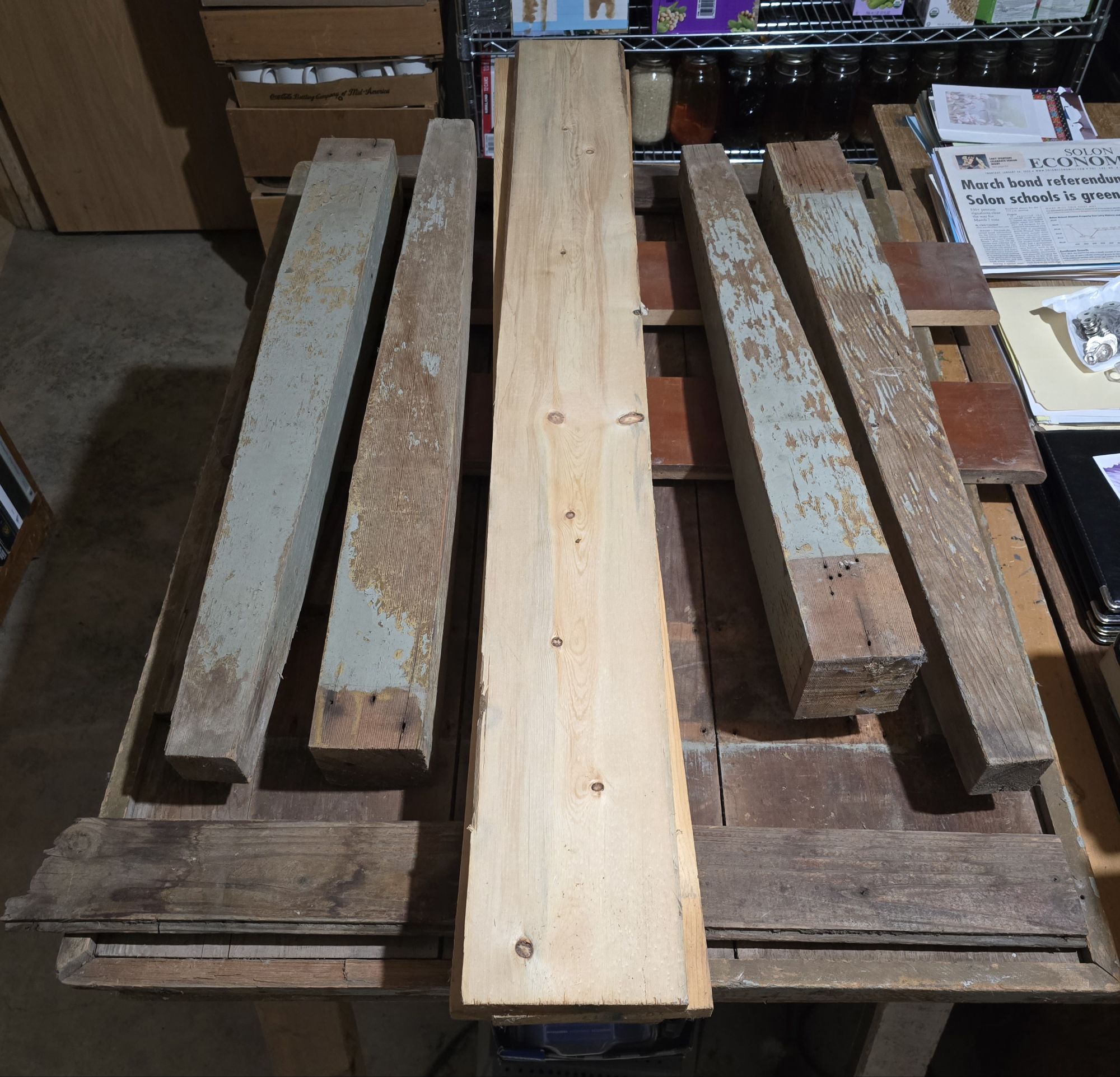
I went through the woodpile and found planks to make an apron and five of rescued lumber to reinforce the top. I laid the materials out on this workbench made of sawhorses and thought about what I would do for a couple of weeks.
After looking at local hardware stores and large online retailers, I finally found a packet of figure 8 steel desk top fastener clips with screws. They are not commonly available. To make a recess in the apron for the fastener, I got a 20 millimeter forstner drill bit. $20.12 all in.
After 12 cuts on the radial arm saw, I was ready to assemble. I spent about three hours on the project before my attention began to wander. I am better at recognizing when that happens, so I knocked off for the day. If everything goes together as planned, it will take an hour or two to finish assembly.
After a few hours of furniture building I had to take a break.
I don’t plan to refinish the wood. Inside the garage it will be protected from the elements. I expect it to get scuffed up with heavy use, so what’s the point of a coat of paint or finish? The wood it’s made of has been around for a long time, based on the assembly techniques my predecessor used to build it.
Fingers crossed the final assembly passes muster and I can begin using the new table immediately. One never knows about these things until the work is done and the piece is in operation.
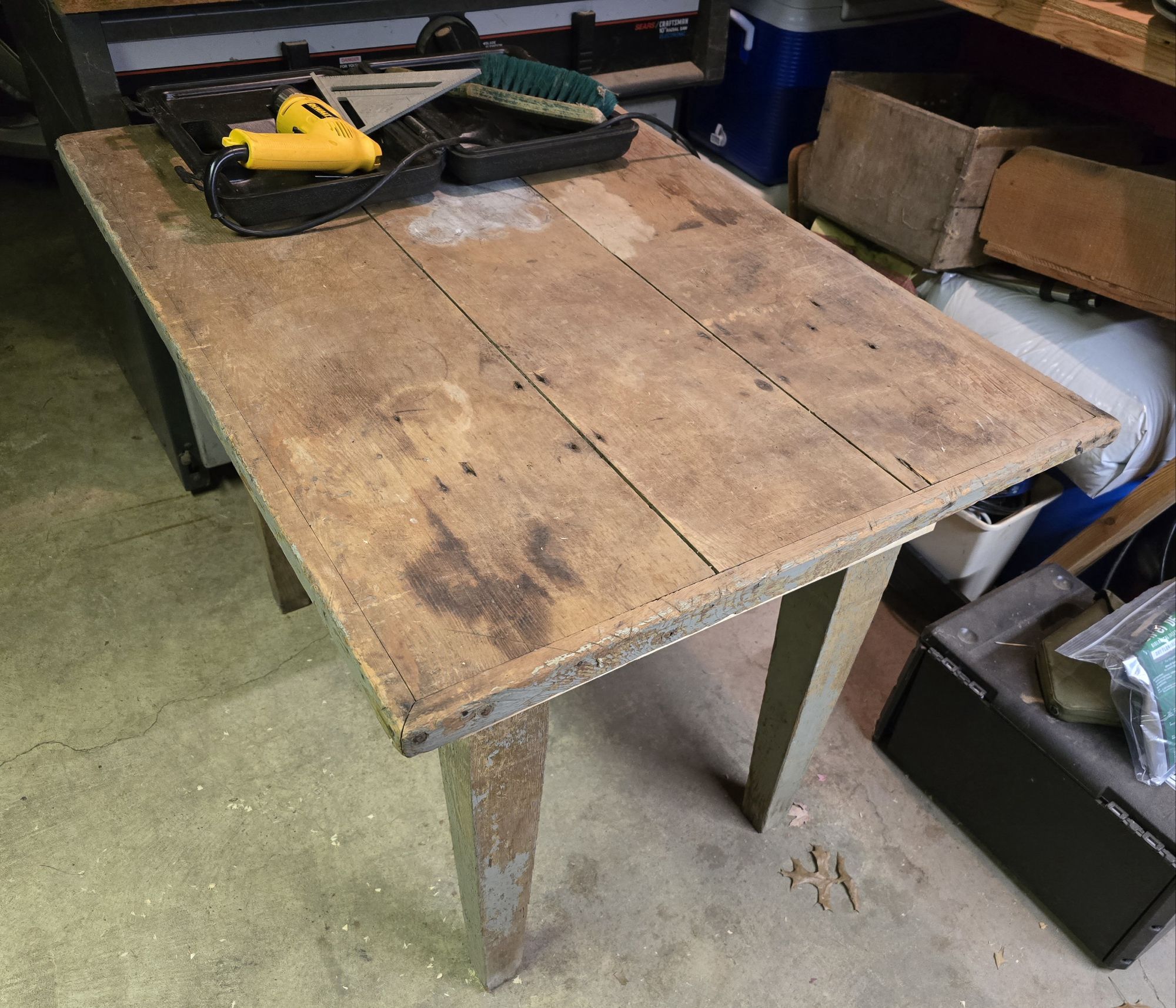
Here is the finished product in the garage.
Table made from a top, four legs and salvaged lumber.
It’s bigger than I thought, but I will adapt. No adjustments were needed.
This post is about social media and blogging. My perspective on these two technology tools is they both require a creative process of putting together meaningful words and photographs in a way that provides insight to readers. When I use them, I am a content creator, although those two words don’t really capture my vision for what I’m doing. I seek to bring understanding to the complex and ever changing world in which we live.
I joined Facebook March 20, 2008 to follow our child. They had graduated college and moved to Colorado in 2007. While I could easily drive in a single day to visit, it was a long trip to spend much time together. My reaction to Facebook? Yikes! Here is my blog post about joining:
Tonight I joined Facebook. Yikes! Facebook connects us to people we have not thought of in years. In some cases we haven’t made contact in over a quarter of a century. All within a couple of hours. From moment to moment, the number of “friends” builds. What to say on the site? What elements to show? What pictures to place? How much time to spend? When a friend accepts the invitation, it feels good. The wave has broken, now I’ll ride it in. (On Facebook, Big Grove News, March 20, 2008)
In the end, our child quit posting on Facebook and while I developed a Facebook life, it was not good for me. Social media introduced loneliness in my days, something with which I had little experience. It reinforced loneliness. As I mentioned in yesterday’s post, I am aware of being alone yet don’t experience much loneliness. I feel connected to the whole of society. If I continued with Facebook, even with all of the familiar faces and common experiences, I would feel how much apart we are. I deactivated my account in February this year.
After much experimentation, I ended up with an account on BlueSky, which is a text-based social media platform where it is easy to connect with like-minded people. My posts there have been hit or miss, yet I need the creative outlet. BlueSky is my only social media account.
My first blog post was on Nov. 10, 2007. I first titled the blog Big Grove News, then Big Grove Garden, Walking There, On Our Own, and now Journey Home. The purpose was always the same: provide an outlet for creative expression and pull in pieces I wrote for other purposes to make a record of them.
When I began blogging I had no idea where it would go. I wrote at least 5,600 posts since beginning. For a long time, it was the only writing I did each day. It has become a writer’s workshop to test ideas and how to express them. Some days the posts are cringe worthy. Some days I touch the sky. Part of me would return to handwriting paper journals the way I did before 2007. I may yet do that, but not in 2026.
In writing my autobiography I find I repeat topics often. For example, the story of the apartment in yesterday’s post has been written and re-written with different details and posted on my blog at least a dozen times. An early reader of my autobiography commented about my propensity to repeat myself. All I can say is I’m working on that.
I used to write blog posts in the early morning. Lately, especially since I began learning about circadian rhythms and tuning my physiological life to them, my best creative time is in the afternoon work blocks. I still work on creative writing in the morning but it is more the next chapter of my autobiography until that work is finished. I am more alert when I write blog posts. The quality of writing seems better. Like everything, it is a work in progress.
People do read my blogs. It is hard to believe the number of people in real life who identify me as a writer. A lot of this is due to letters to the editor and posts on Blog for Iowa. That type of feedback is rare and precious to me. It helps me feel like part of a community.
Is there a limit to the creative expression I put into my writing? If I have to get a job to make up for the percent of Social Security that will be absent after the trust fund runs out, there will be a loss of time for writing. For now, though, I’ll continue on.
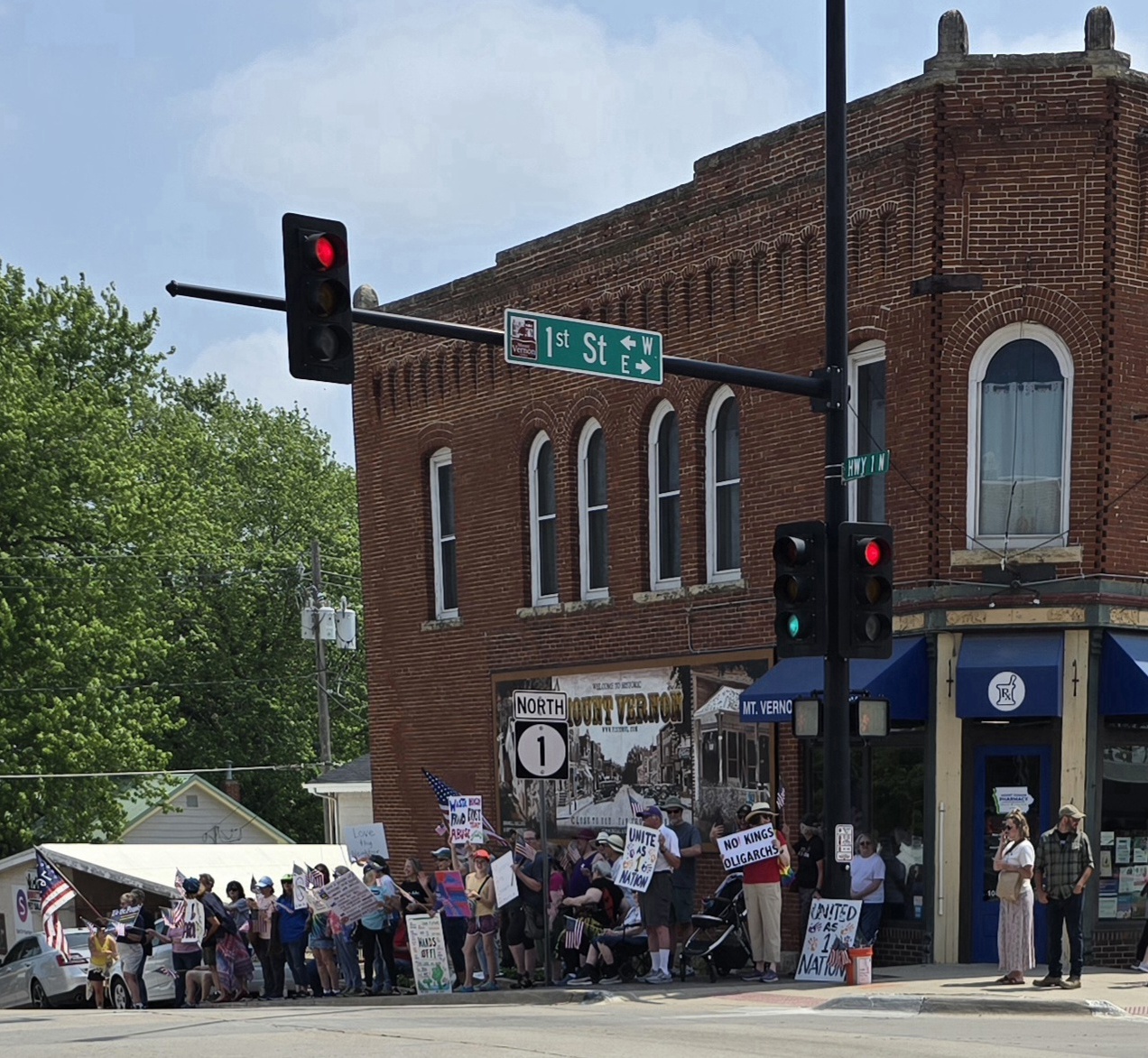
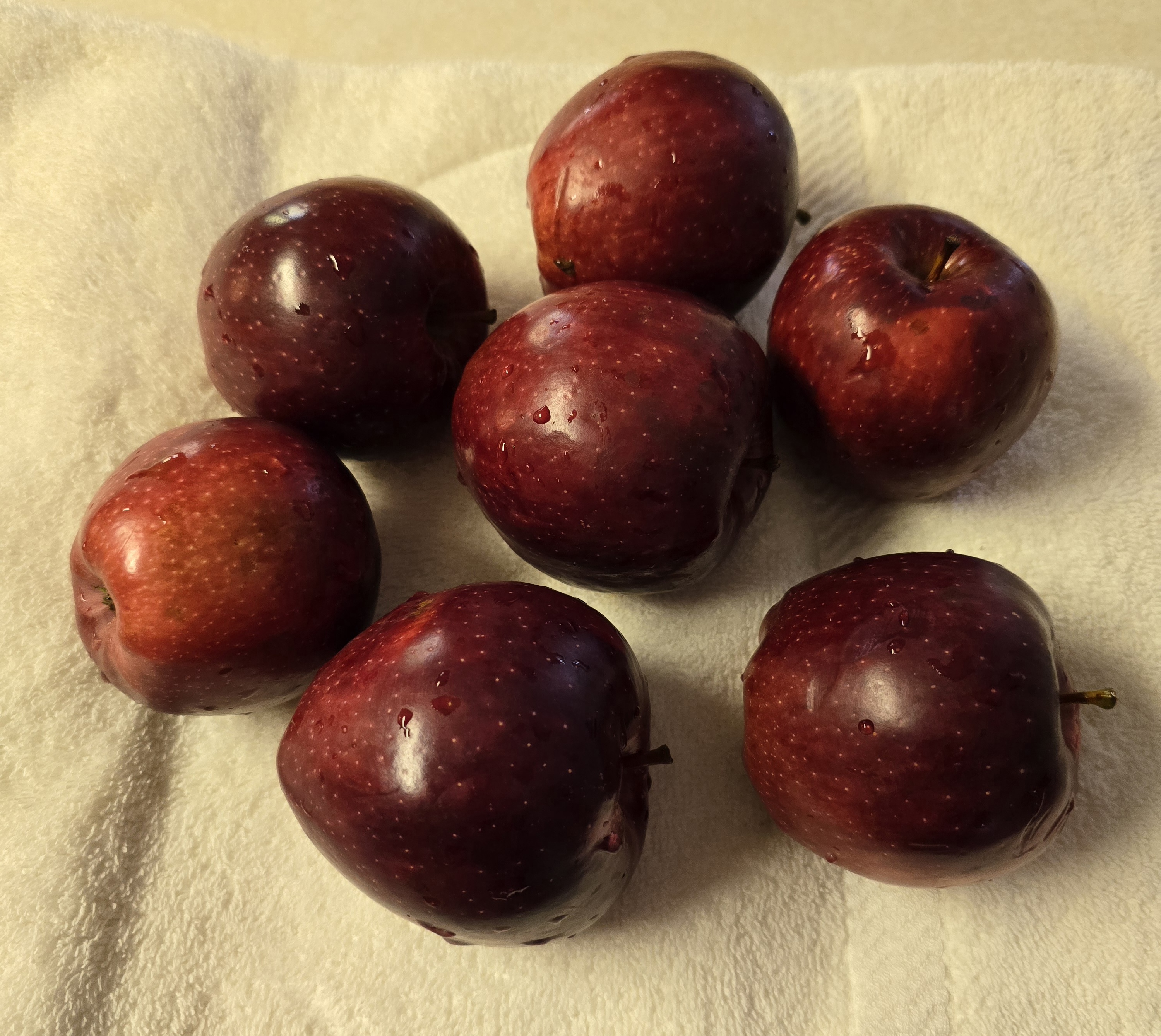
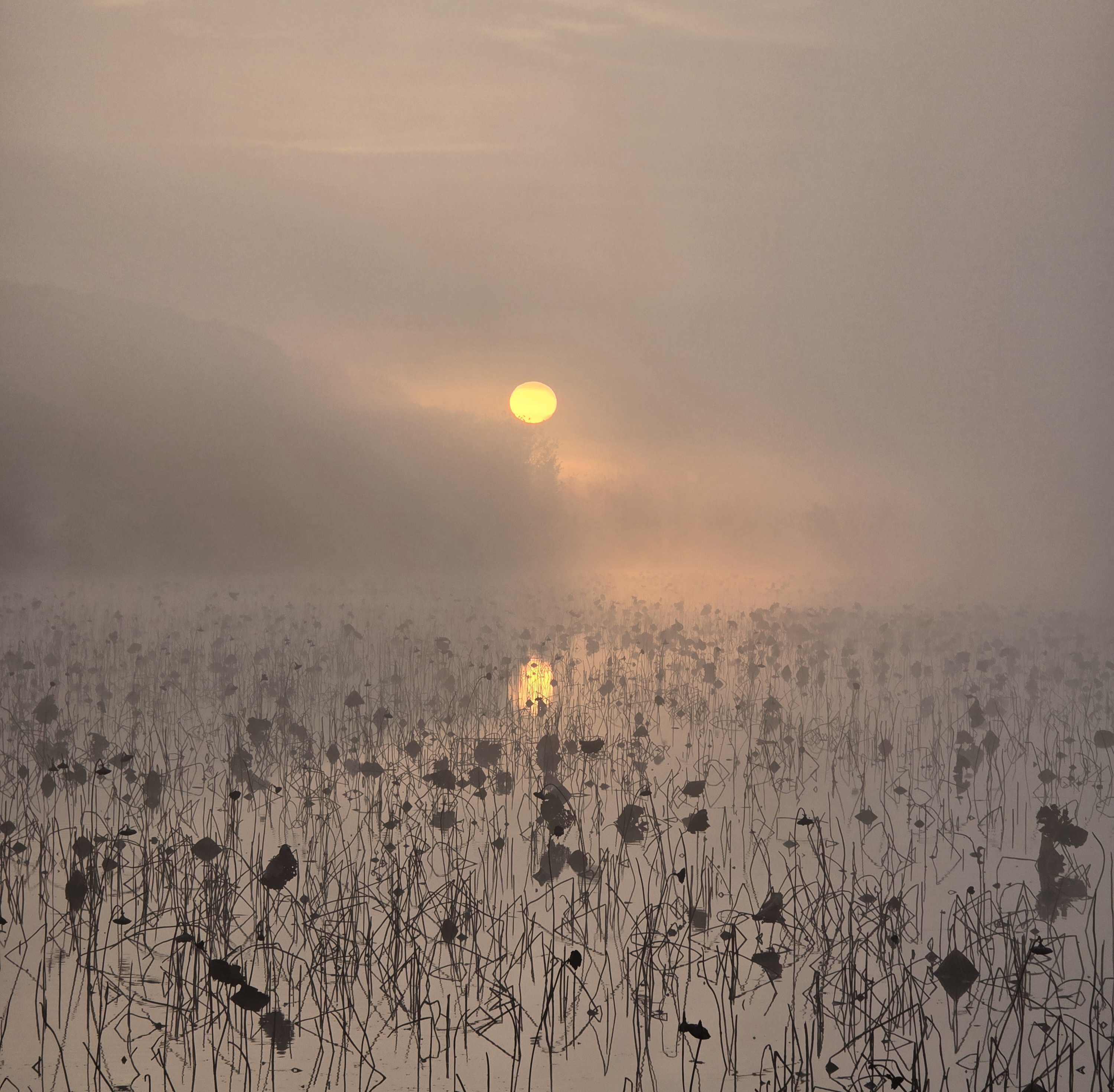
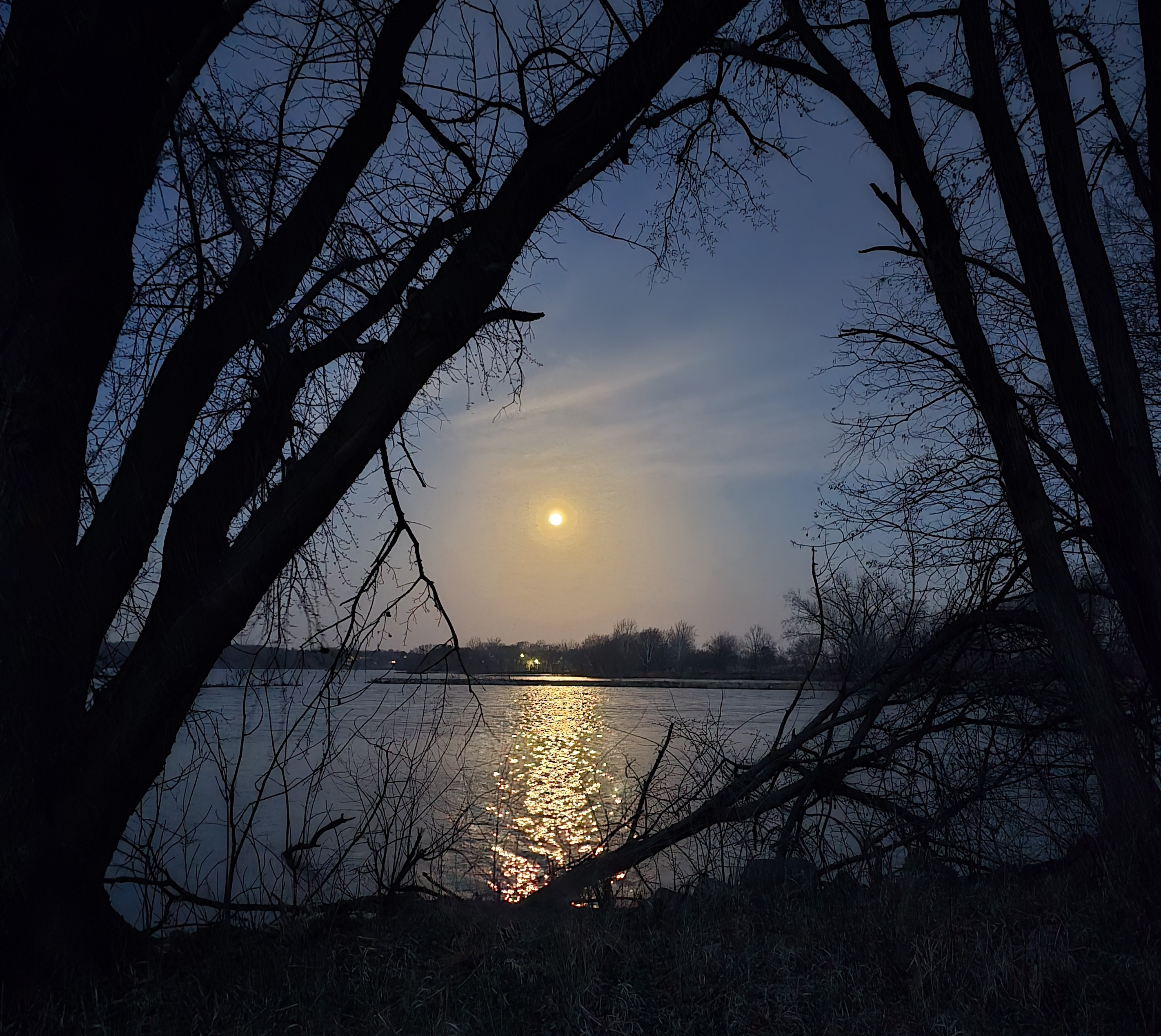
Here are my current favorite photos from the thousands taken in 2025.
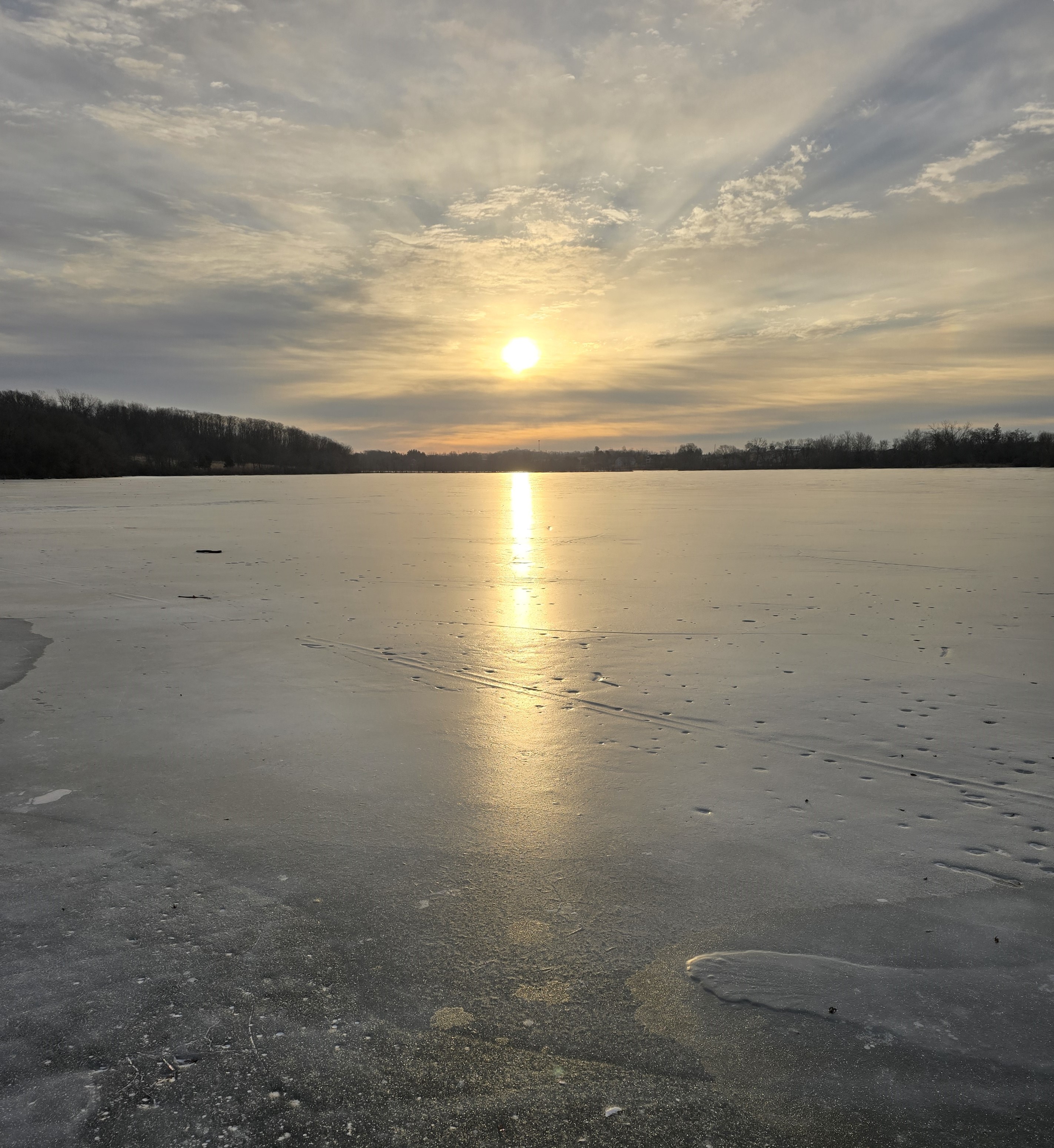
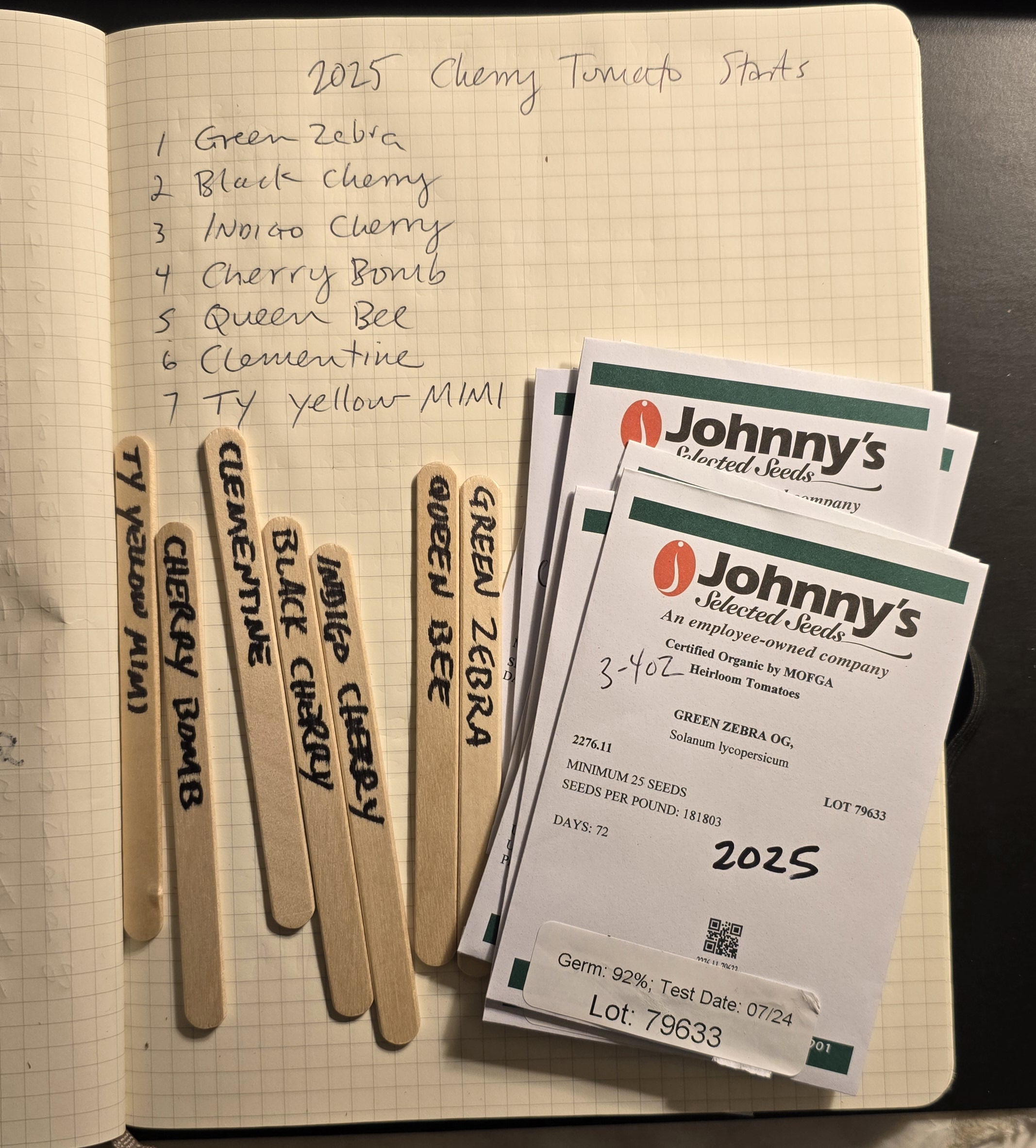
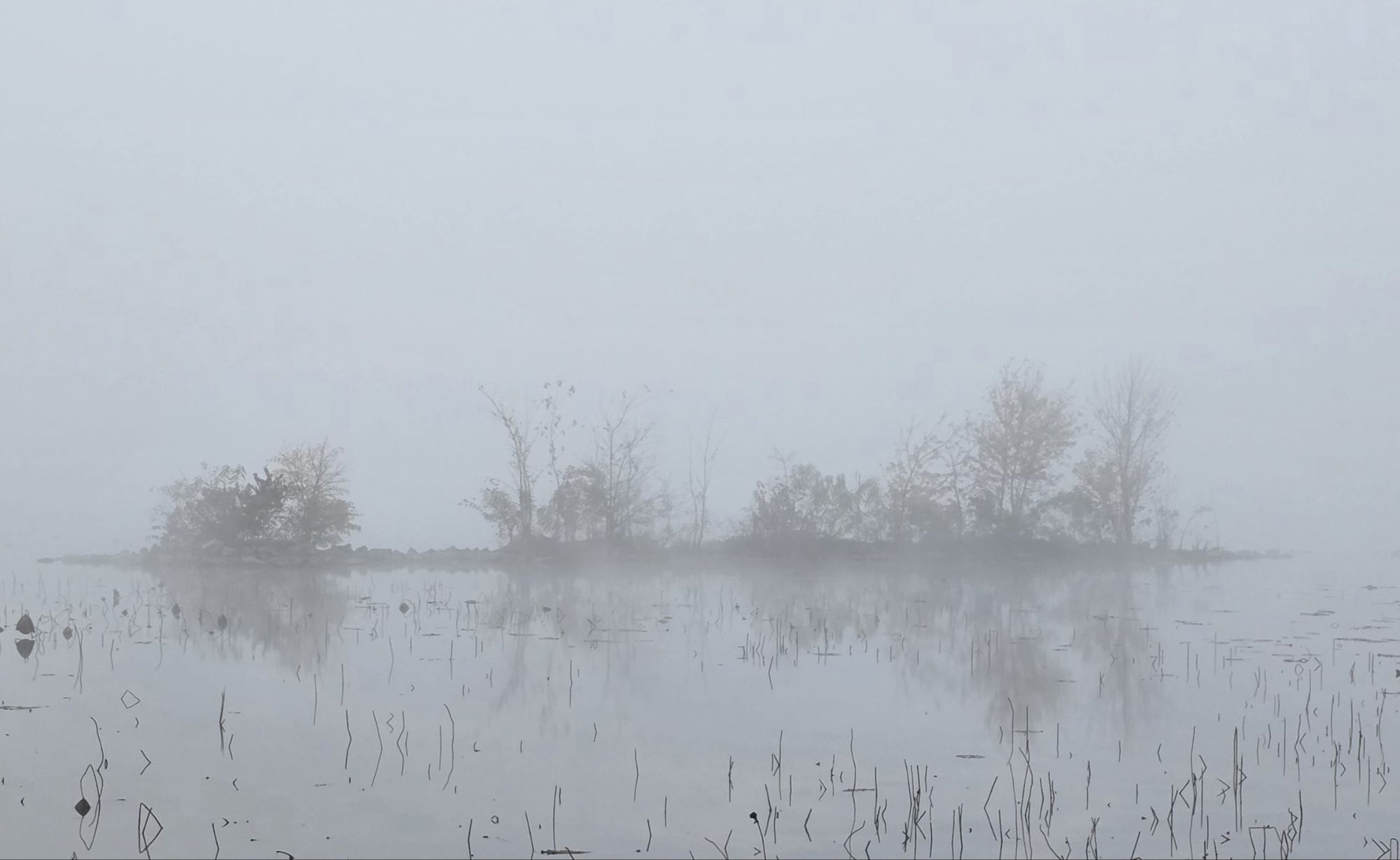
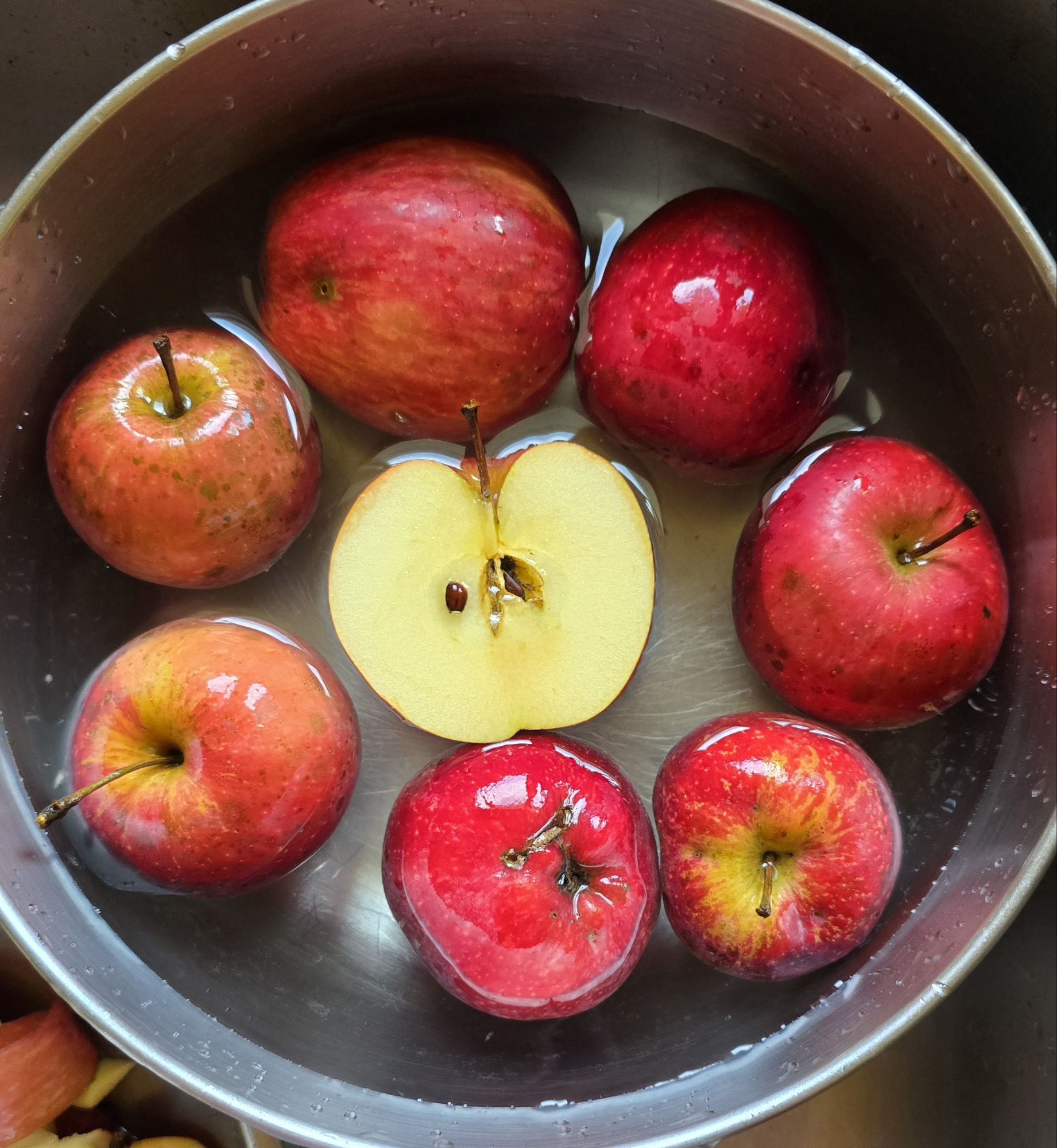
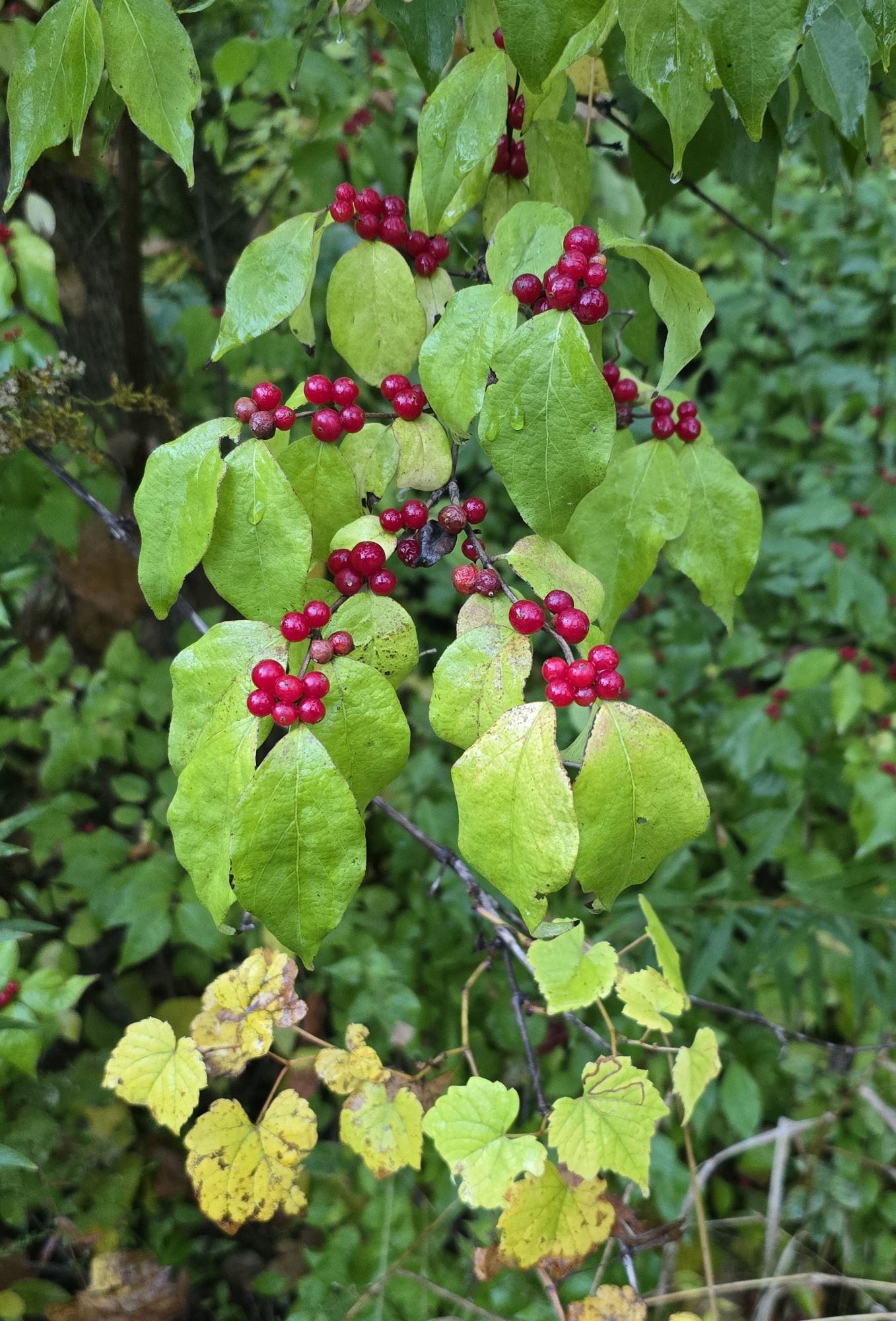
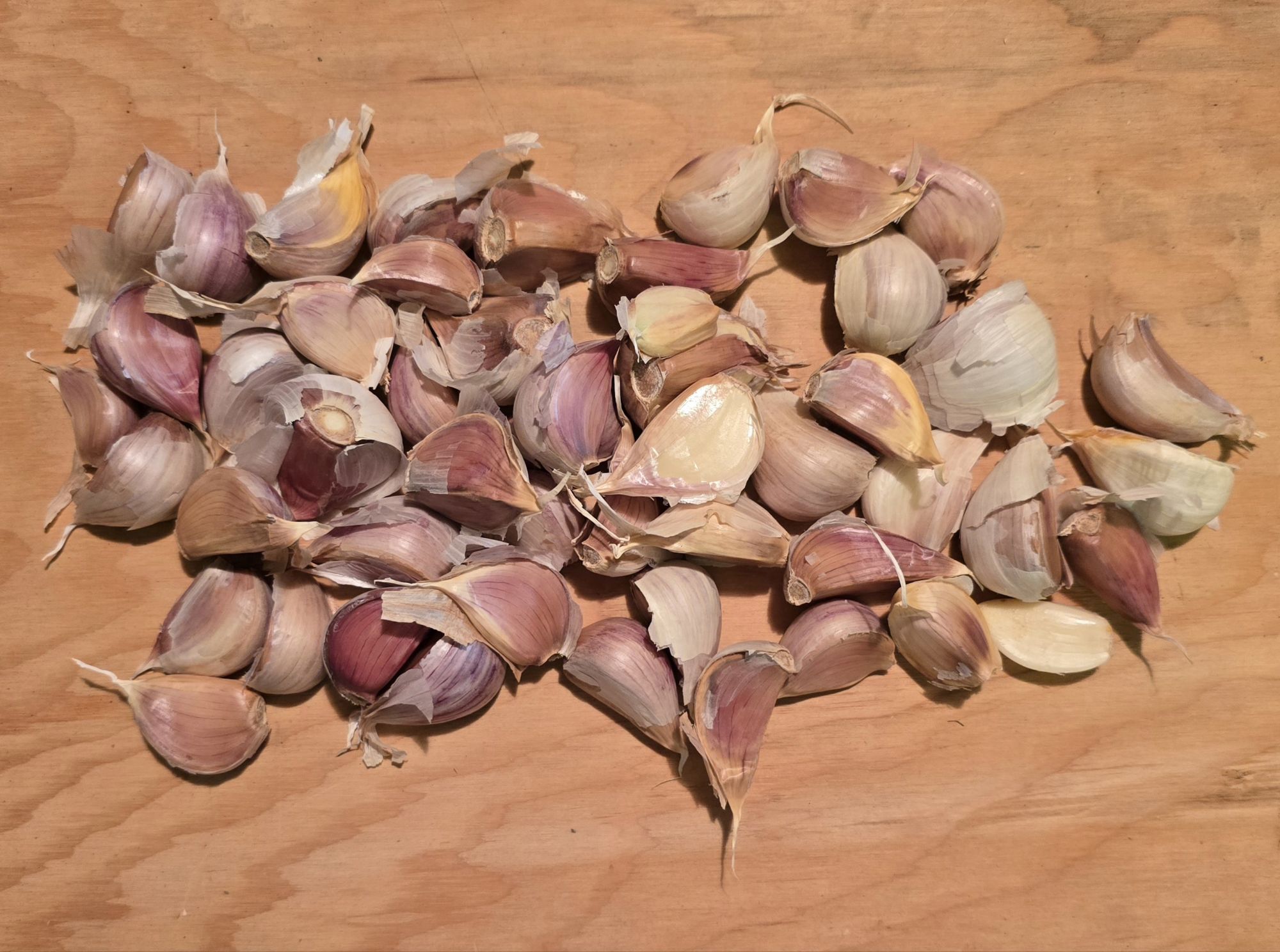
Ice on the lake — February 2025.Chili and cornbread — March 2025.Time to start seeds — April 2025.Spring brush fire — May 2025.No Kings Day demonstration in Mount Vernon, Iowa –June 2025.Zestar! apples were first harvested — July 2025.Garlic was late getting out of the ground — August 2025.Pears were special this year — September 2025.Red Delicious apples — October 2025.Foggy sunrise — November 2025.Moon set on March 14, 2025.
I’ve been meaning to get out on the eastern part of the state park trail and Saturday I did. When we moved here, I said to my spouse that all of the land between us and the nearby city to the east of us would eventually be developed. It didn’t happen in the first 32 years, yet it’s got a good start.
My normal walk is designed to be 30 minutes along the same part of the trail. The walk I took Saturday afternoon was much longer at 80 minutes. It was no hill for a climber.
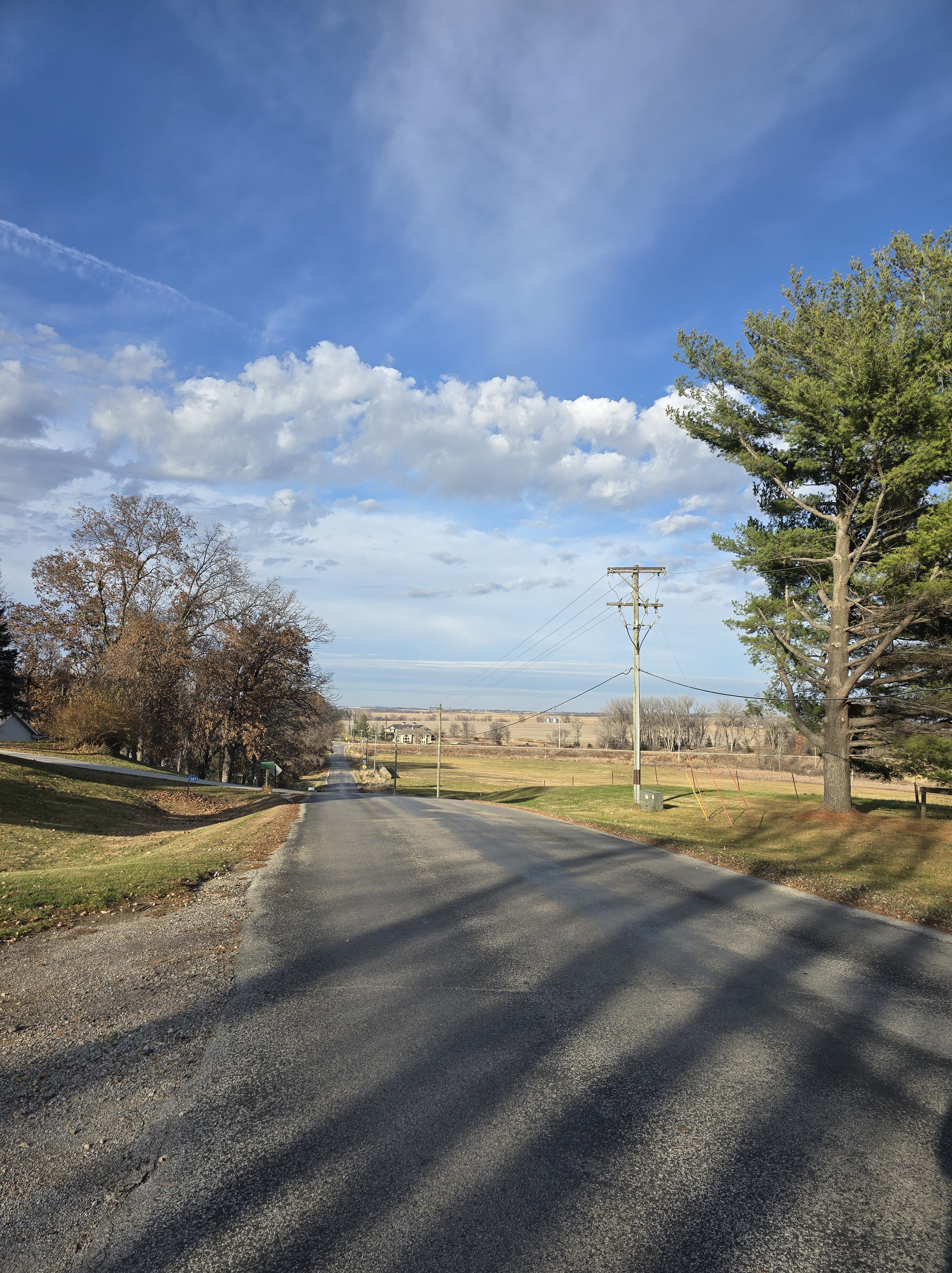
Road leading to the Hoover Trail.
The Hoover Trail has been a tremendous perquisite for those living in the area. The paved trail is wide enough for bicycles to pass each other going in the opposite directions. It is also clean. During the coronavirus pandemic I rode my bicycle on it almost daily. One of the first things to see is this old barn.
Historic barn in Big Grove Township.
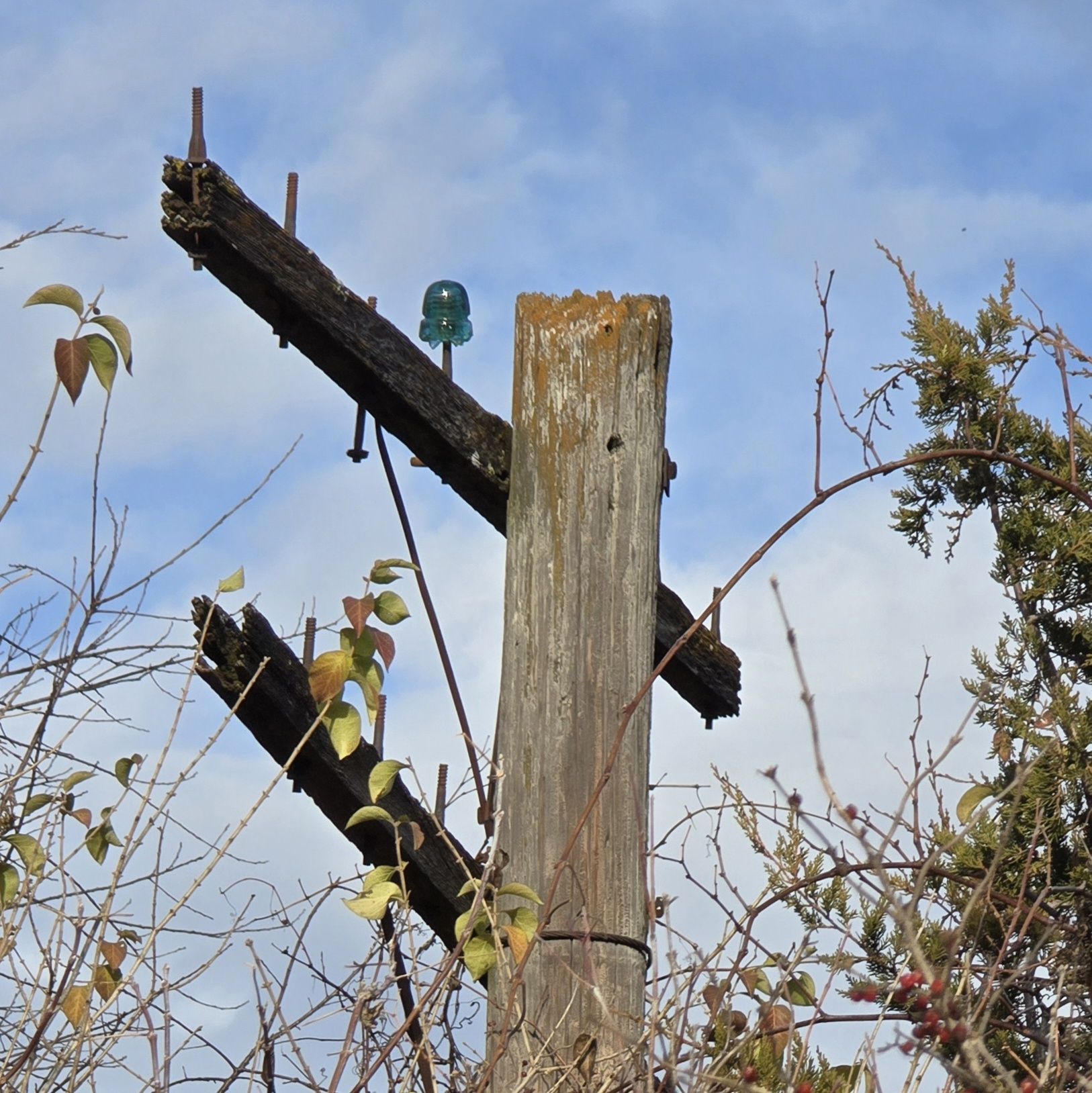
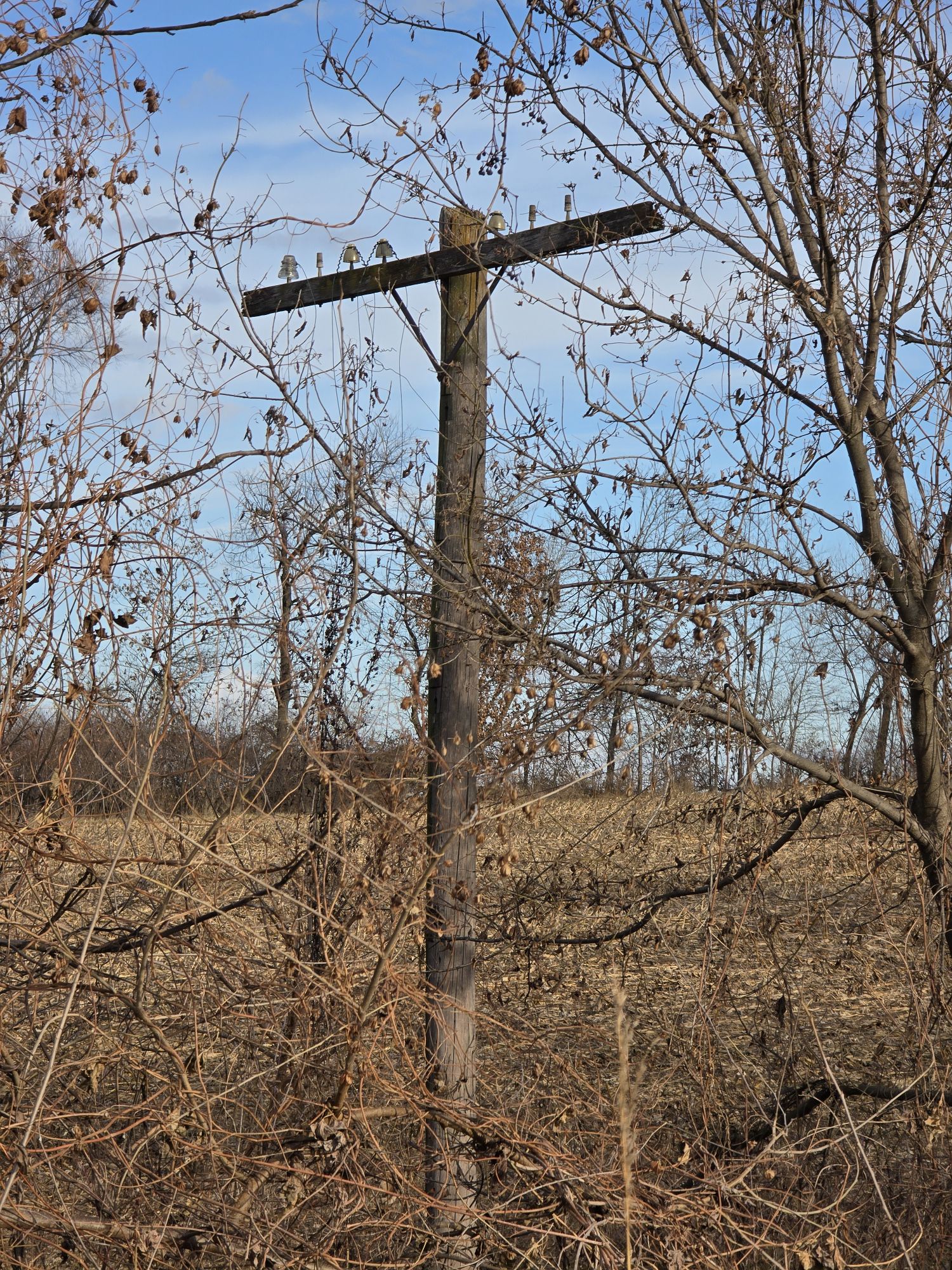
The trail was made in the bed of an old railroad track. The power lines have been moved, leaving the old poles to decay in the encroaching woods.
Trail runs along the former railroad tracks.
There are only a few glass insulators left on the poles. I found one blue one and these clear ones.
Note the clear glass insulators. These are some of the last ones left on a pole.
The worst part of the trail walk is the development. The homes in this photo were not there the last time I was on this stretch of trail.
This construction is all new since last time I was here.
In addition, a lot of the wooded and prairie areas were cleared and mowed. We are moving the opposite direction from a nature preserve.
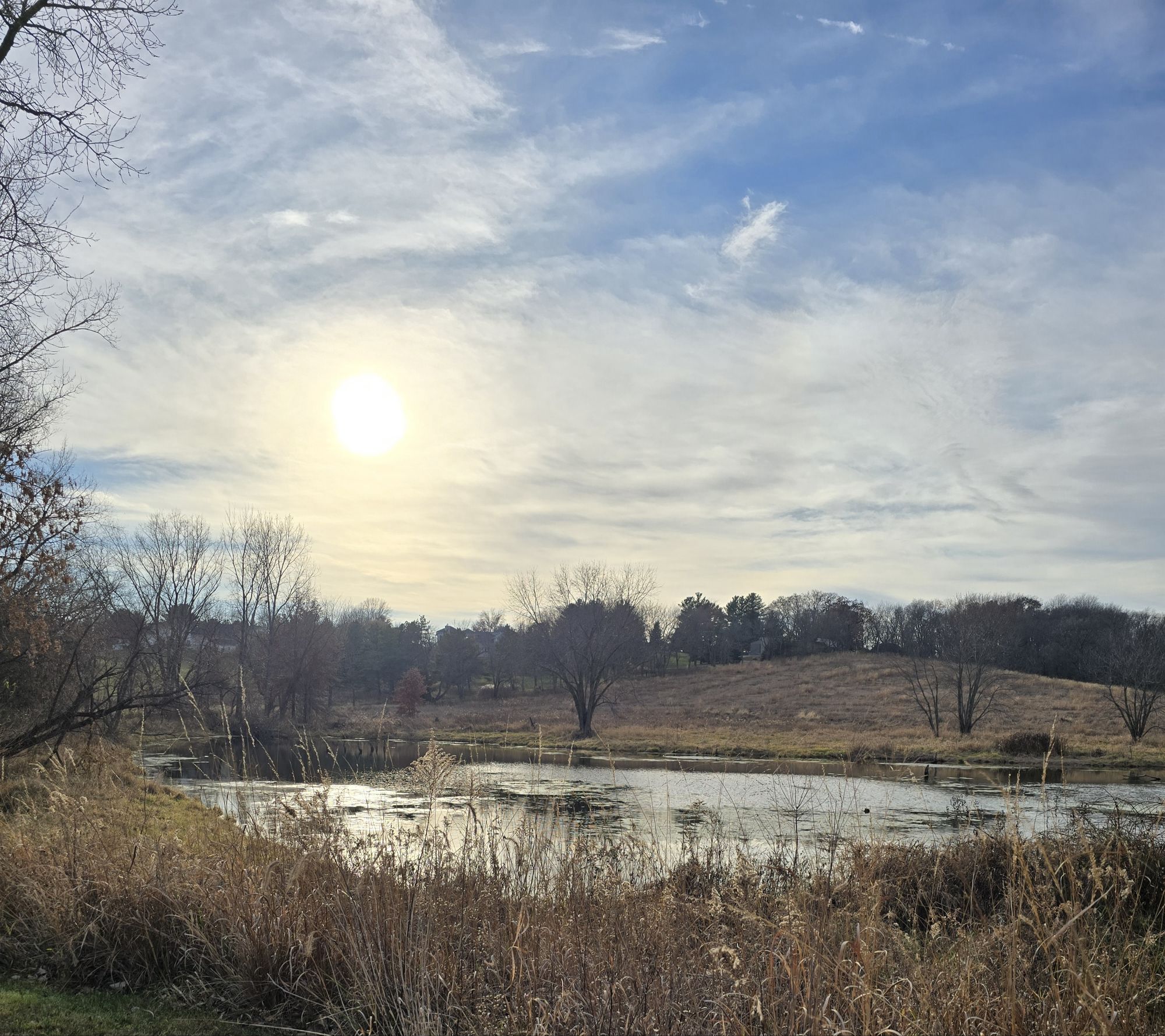
Pond near a rest area along the trail.
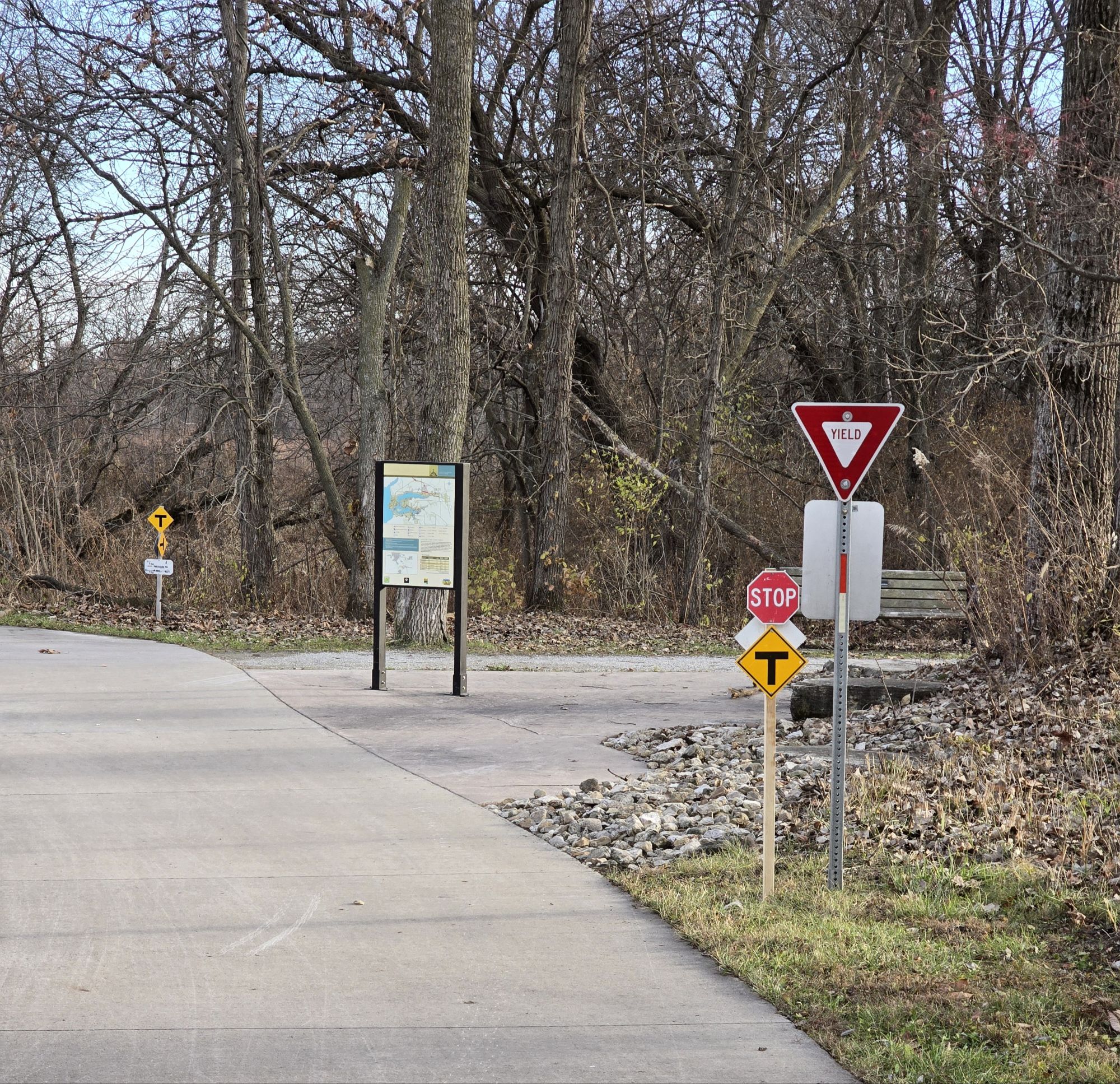
There is a fancy intersection where the Lake Macbride State Park Trail intersects with the Hoover Trail.
Busy trail intersection.
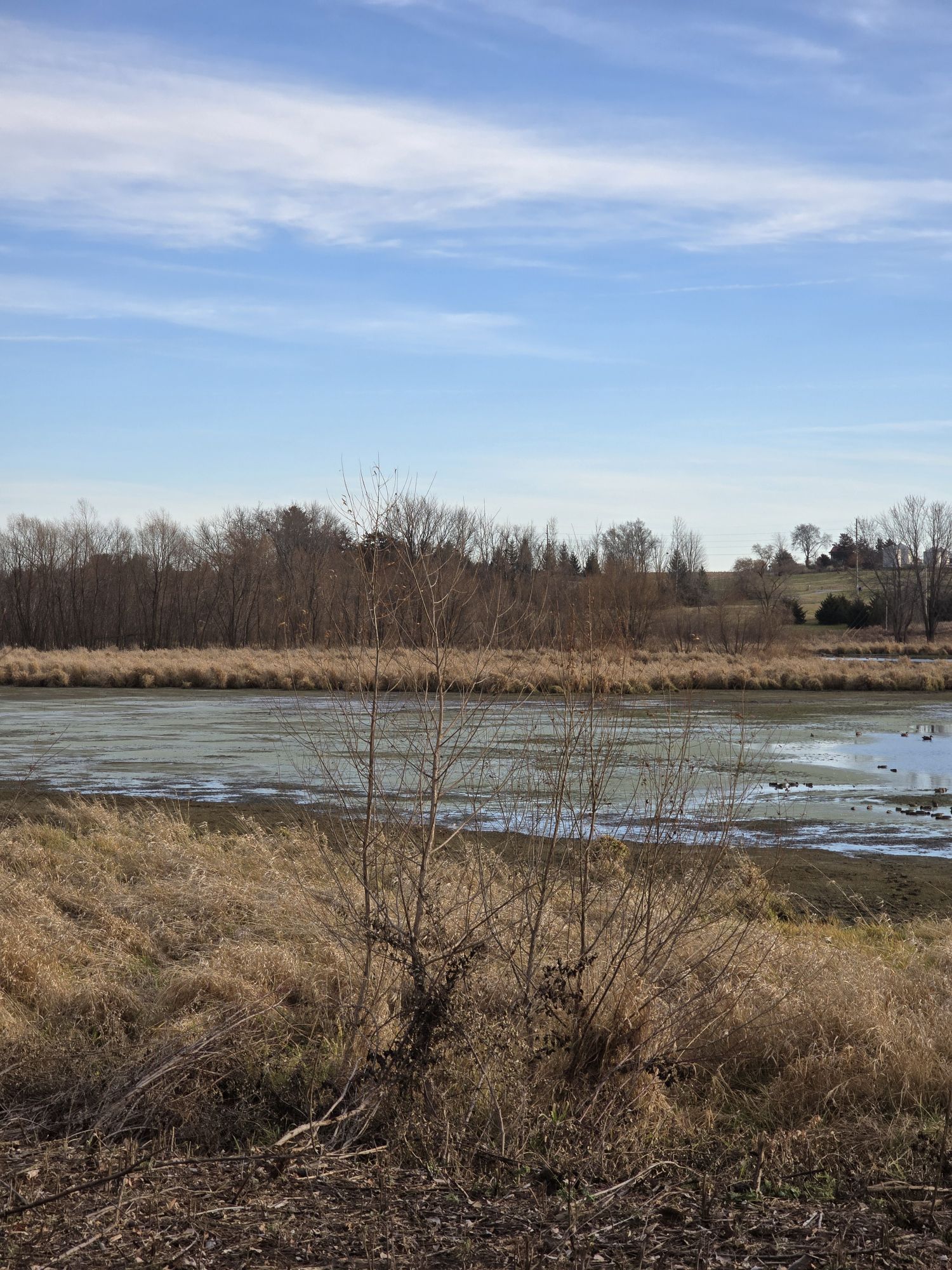
Waterfowl like the east end of the north branch of the lake. Probably because the growth prevents we humans from getting too close. That and the relatively shallow water makes it easier to catch fish.
East end of the north branch of Lake Macbride.Pelicans like the shallower water at the eastern edge of the lake.
Development may be encroaching, yet there are still plenty of good photos to be taken.
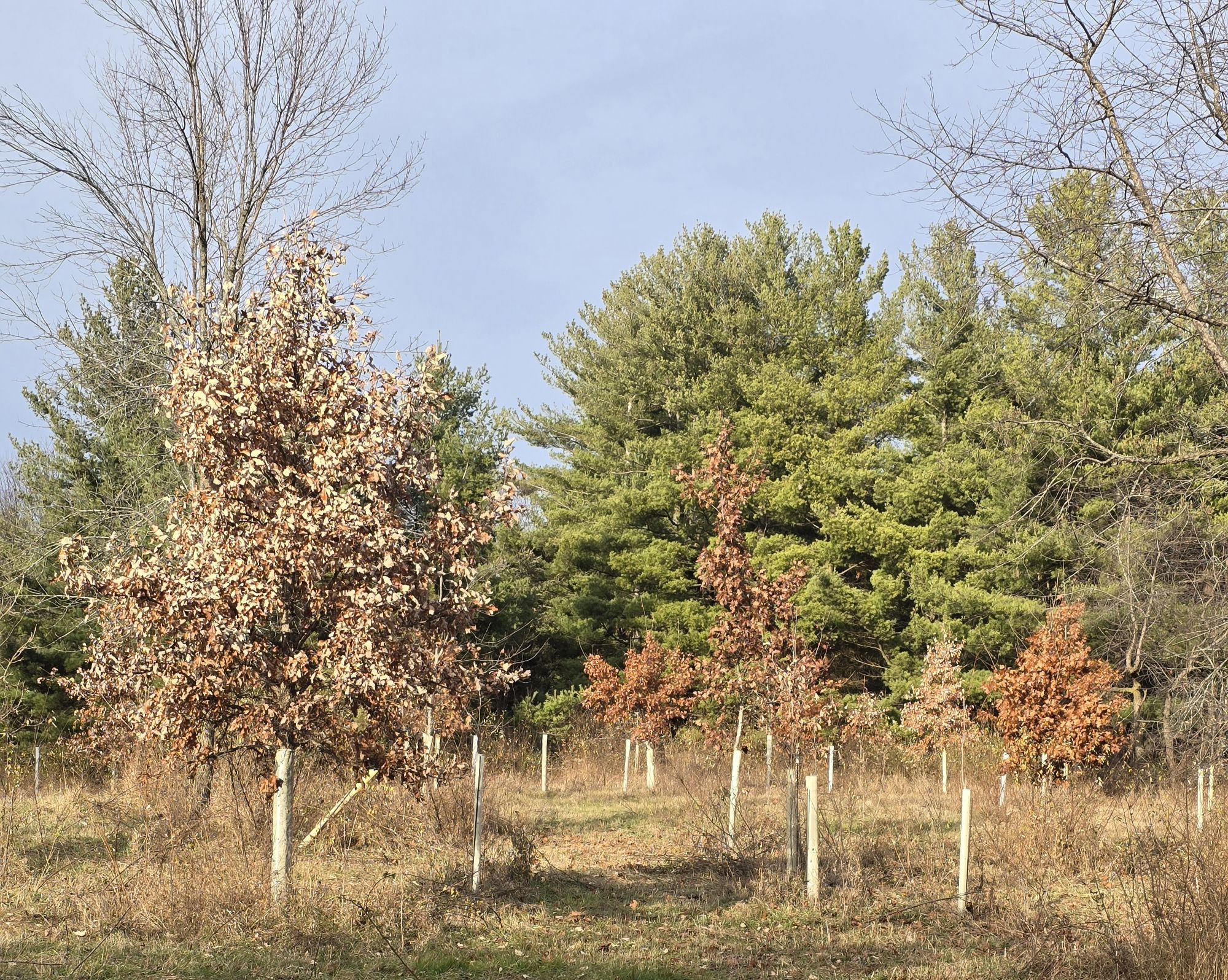
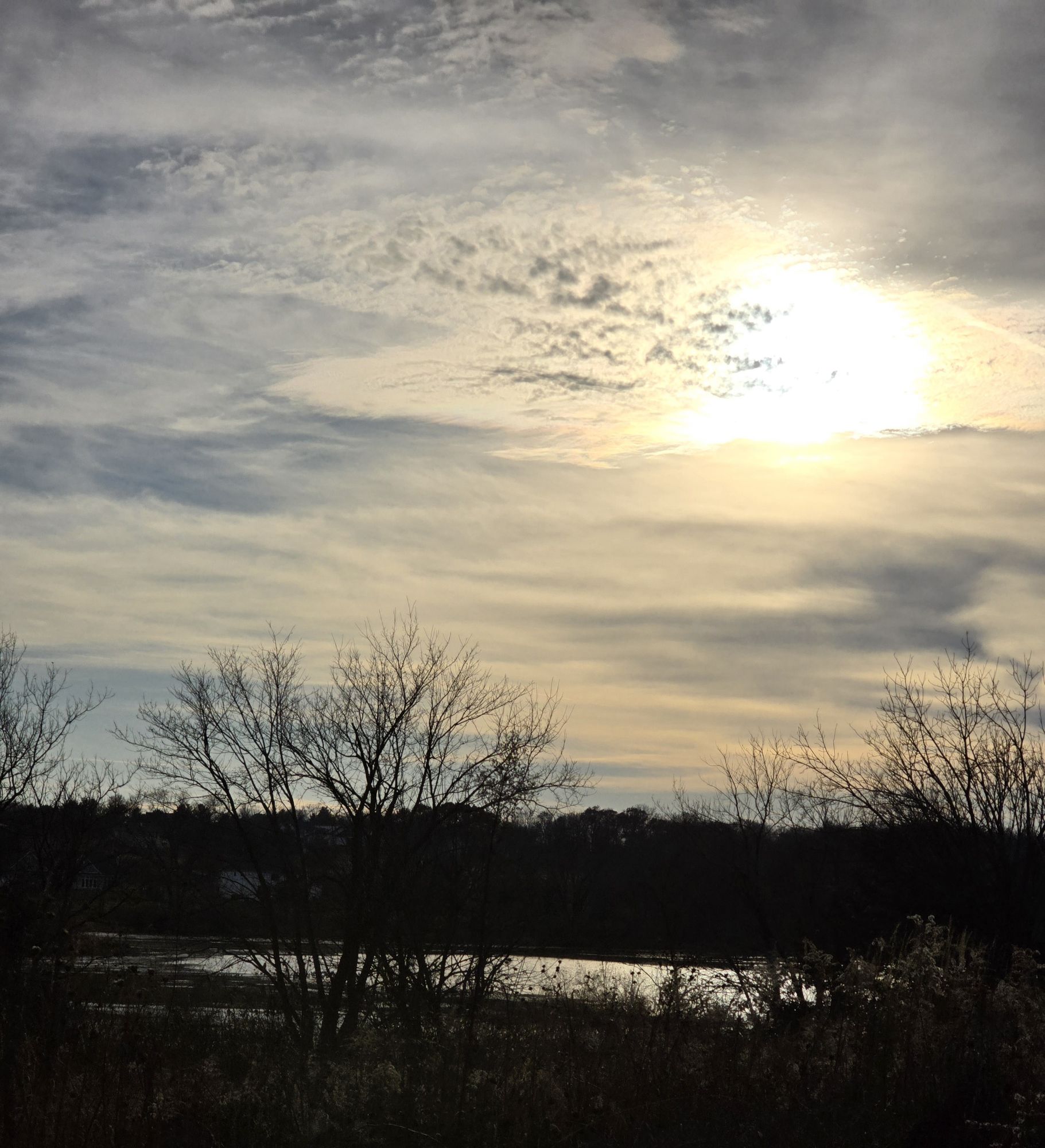
These trees were mere sticks when I first saw them.Another view of the lake.Heading toward home.Sun setting.
Sunrise on the state park trail. Taken with my Samsung Galaxy S24 Ultra smartphone.
If it seems impossible to curate my life-long collection of analog and digital photographs, that’s because it is. My presumption is of making a useful archive for others to use when I’m gone. However, that is an old school idea poorly aligned with the way photographs have come to be used. I am fine with sharing photos via social media and email. I also believe they have more than transient value. This is at the core of my struggle to make progress in curating my photographic work.
I am interested in technology. My maternal grandmother participated in photography culture and bought a Kodak Brownie and Instamatic 126 at the local drug store. She developed her exposed film at the same drug store. It was a creative outlet for her, creativity being something her family discouraged when she was young. When she asked us to pose in our Easter best clothing, how could we refuse? She had the camera and wanted to preserve the moment. That felt important.
In college, I experimented with a Minolta SRT-101 I bought from one of my band buddies. I got away from posed photographs to the extent possible and captured where I lived, both in my residence and on day trips to neighboring places. I bought a small 35mm camera and a dozen rolls of film to take on my 1974 trip to Europe. When my backpack was stolen in France, I lost all the film and ended up with only two rolls to develop after three months away. When I bought a mobile flip phone, I took a few photographs with the built in camera, notably one of Senator Barack Obama at the 2006 Harkin Steak Fry. In 2008, I bought a Kodak EasyShare digital camera, and then when I converted to a smartphone in 2012 the smart phone became my primary photographic method. There is a whole story in technology. My experience since the 1950s is likely not that different from other amateur photographers in my cohort.
The cultural aspect of my photographic history is more interesting. I was able to own a simple camera because I had an income from delivering newspapers. I became the person in the family called upon to record an event when Grandmother was not available. My early photographs are packed with domestic images of holidays and birthdays, vacations, and the stuff in our lives like pets, houses, cars, and more. In high school, I worked part time at a department store and had means to use photography. I accumulated photographs in shoe boxes and a few albums. Mother had a short filing cabinet on wheels where all of her photographs migrated. Photography has always been a simple, affordable, and happy thing to do. There was always a half life of attention given to photographs. However, we couldn’t bear to get rid of them.
To some extent, my photographs are a visual record of how I lived. At the same time, I have been journaling since 1974 and have given more thought to what I wrote than I did to photographs. As I write an autobiography, I decided to use only one photograph in the first book, and am not sure whether or how many I might use in the second. To avoid consideration of photography as part of my life would be decidedly wrong.
Social media changed how we use photographs. With digital cameras and smartphones, photographs have no operating cost other than the time and attention paid to them. When I take a photograph like the sunrise in this post, I make multiple exposures and edit them to pick the “best” one to post. This form of curation was not easy in analog photography, yet is basic to posting photographs on social media. I archive all my saved photographs on the cloud, yet seldom go back to them.
On social media, we get to know people a certain way. For example, on BlueSky, the 99 accounts I follow post photos and create an account ambience I came to recognize over time. This is a real thing, yet not the same as having an in real life relationship with a person. I submit I have a different relationship with someone I know in real life as compared to their social media account. Both seem valid.
Photography in 2025 does not entail a lot of curation. We take photographs, briefly edit and share them, and then forget them. Seldom do we have a processor make prints. I’m okay with that. When I curate four photos for a post on social media, that suffices to sate my urge toward a creative life. Maybe I will use the same photographs in a blog post, or maybe not. I want to believe there is more to this creative process as I look at thousands of images captured over a life and work to define their meaning and gain insights. Because of my current autobiography project, I am willing to devote time to photography. I continue to believe the words are paramount.
Will I end up with a usable archive? It may seem impossible now, yet I hope it ultimately isn’t. Figuring this out is just another part of my life.
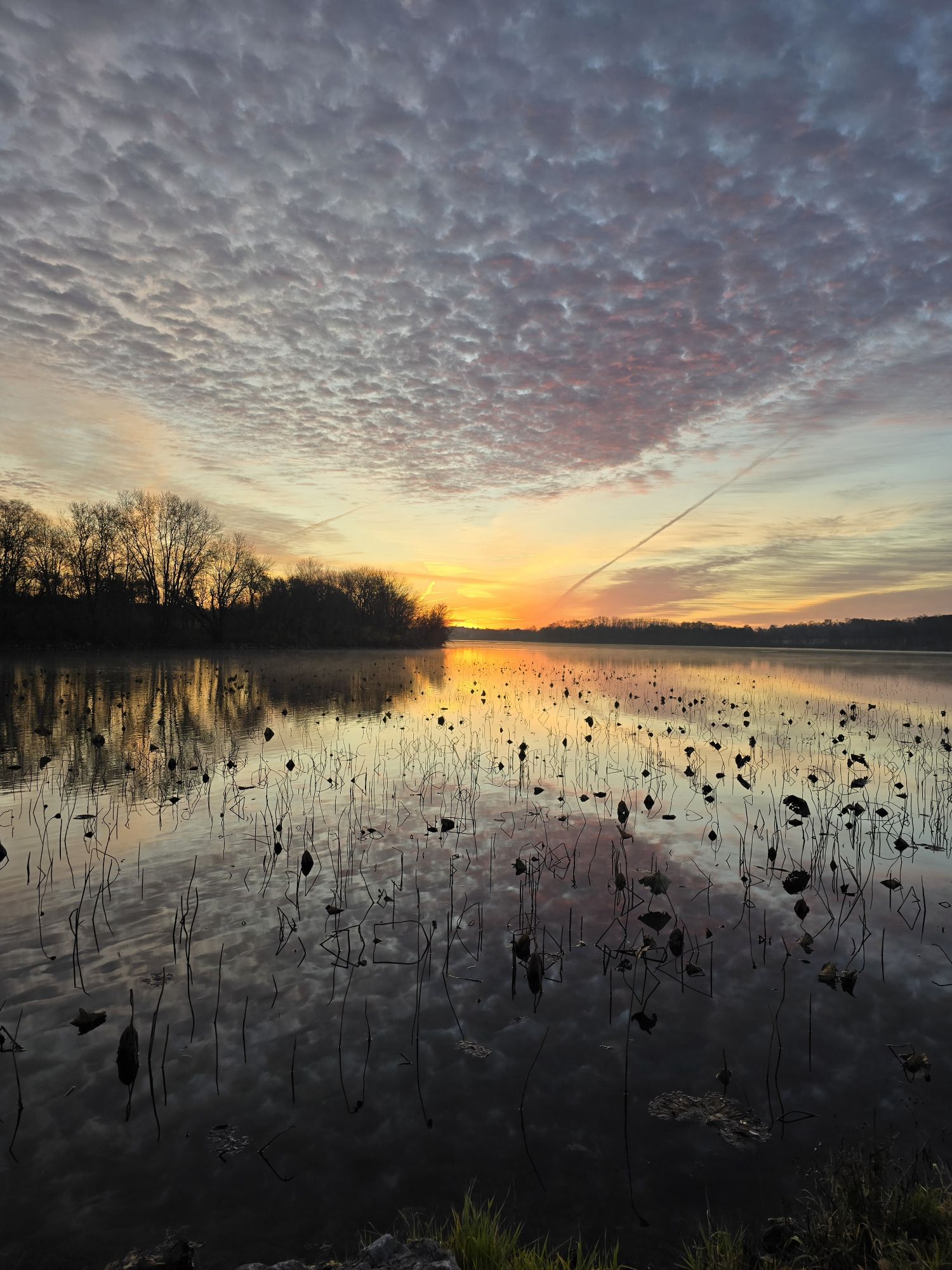
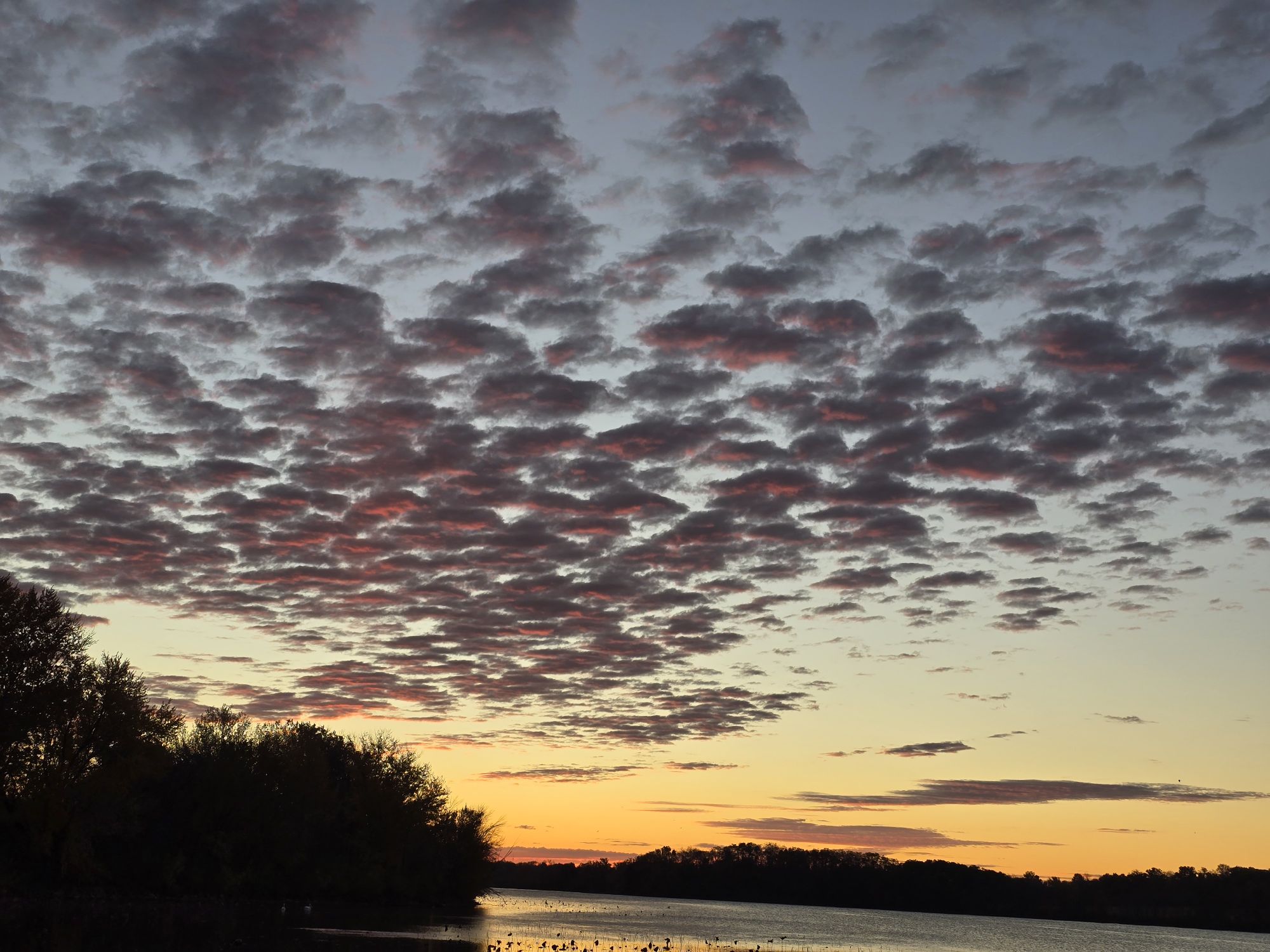
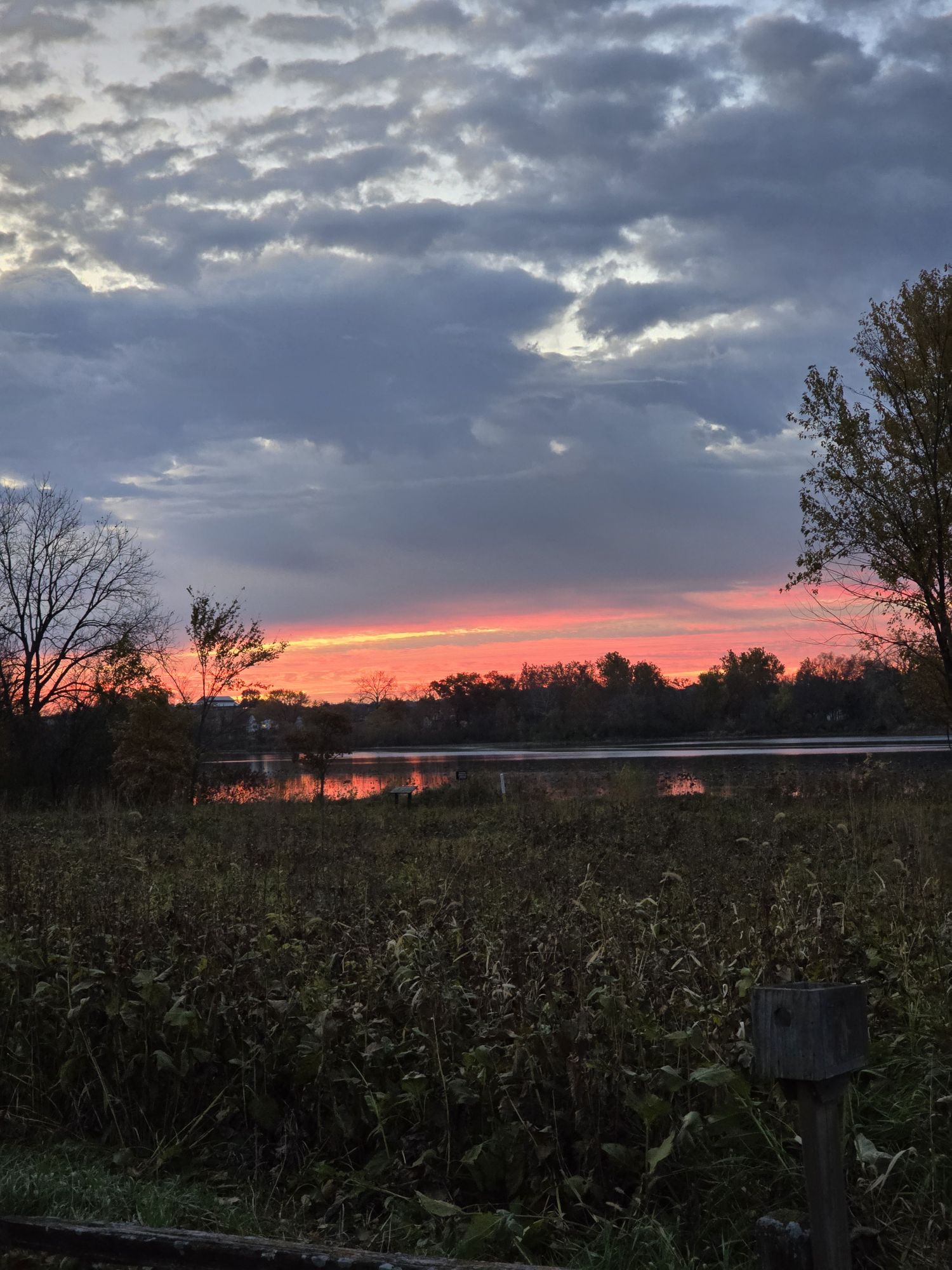
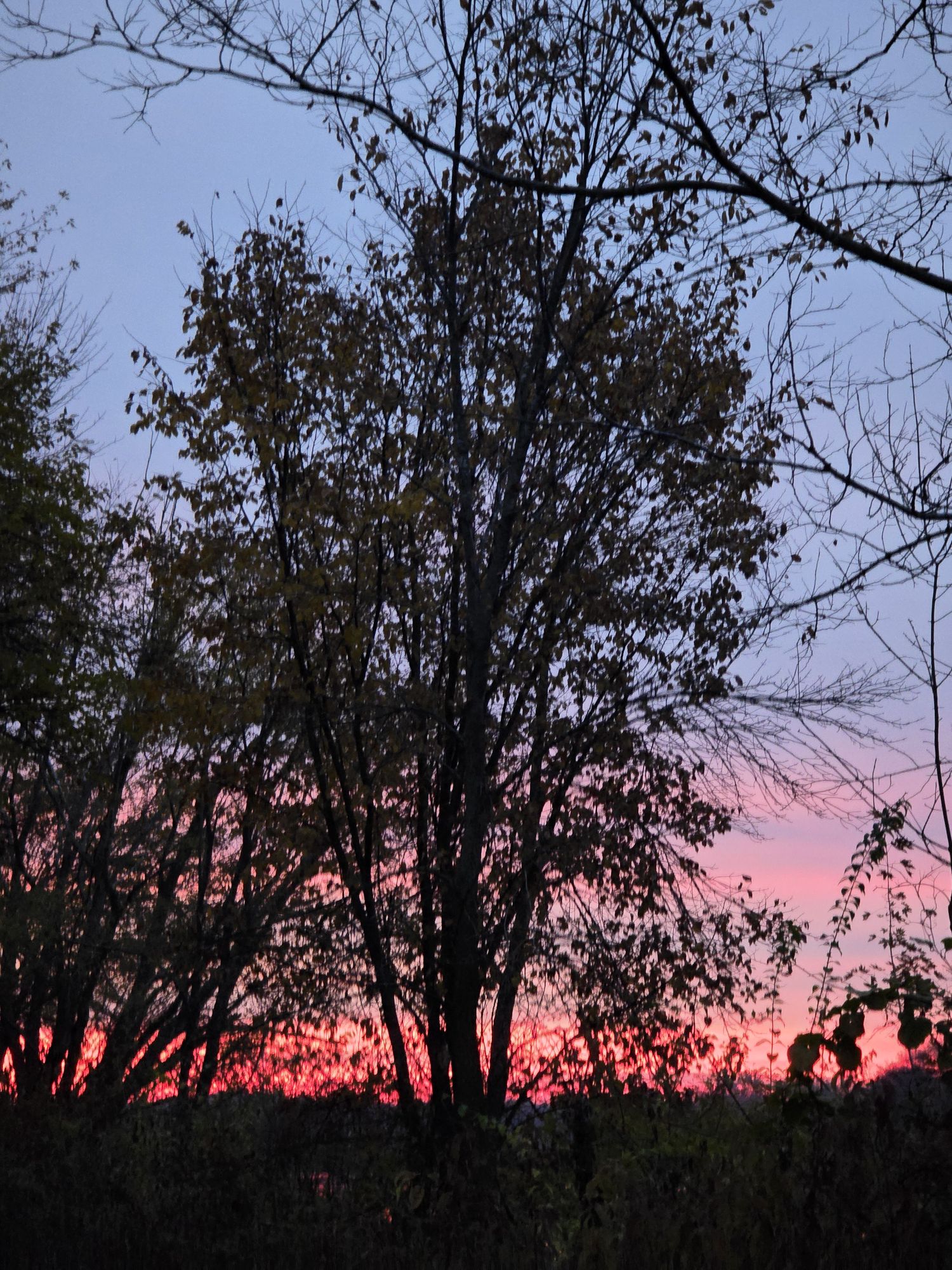
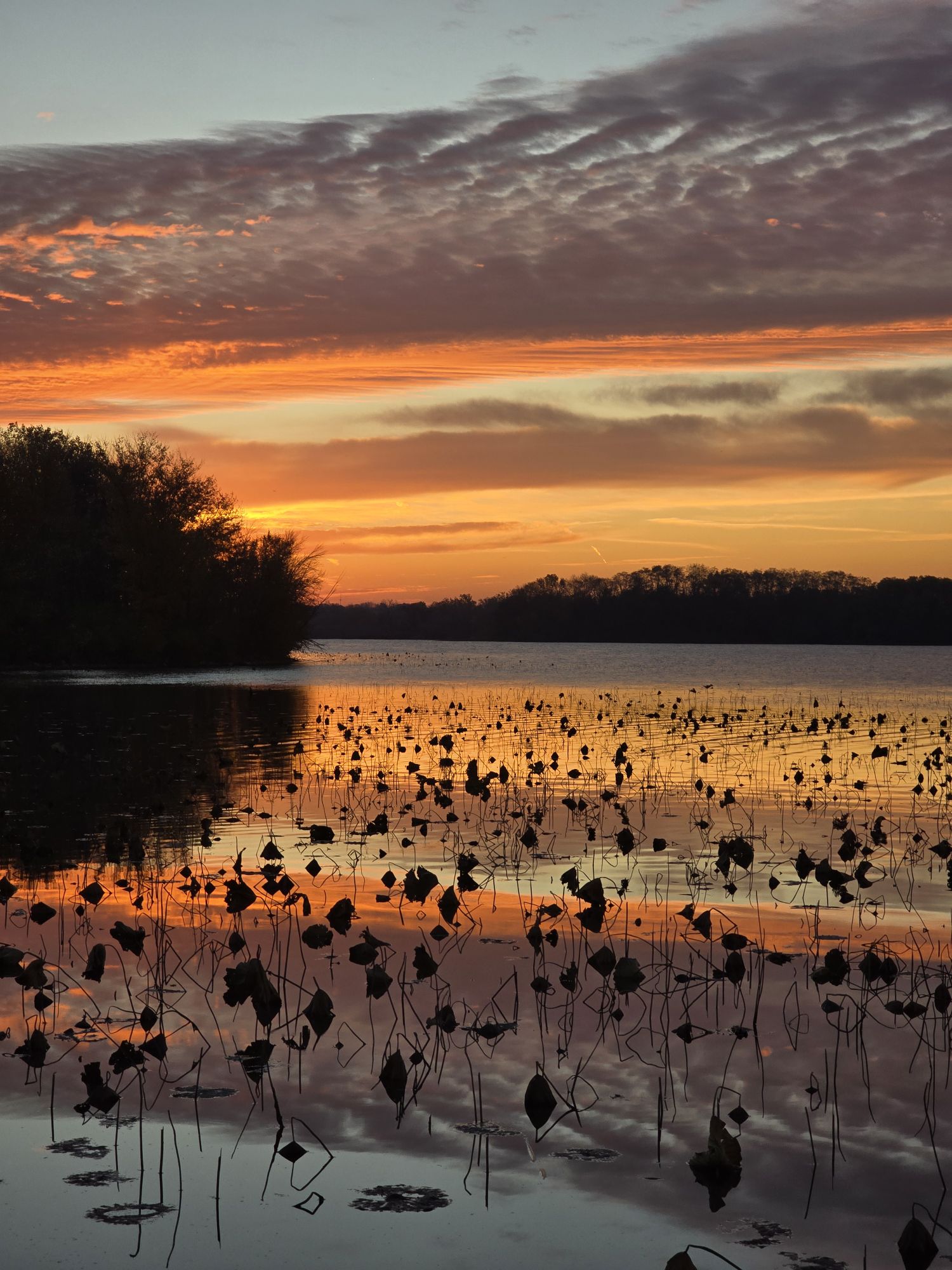
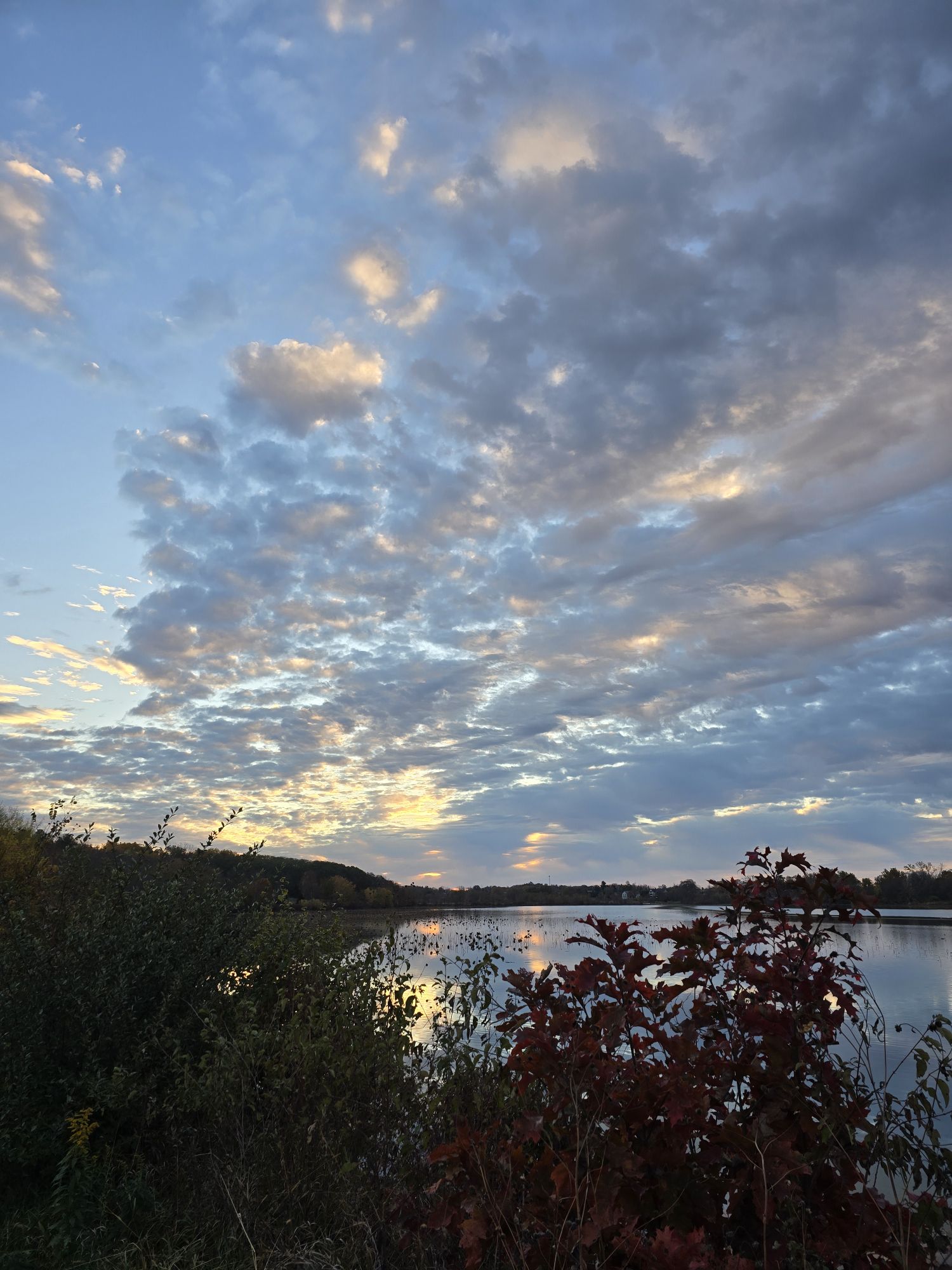
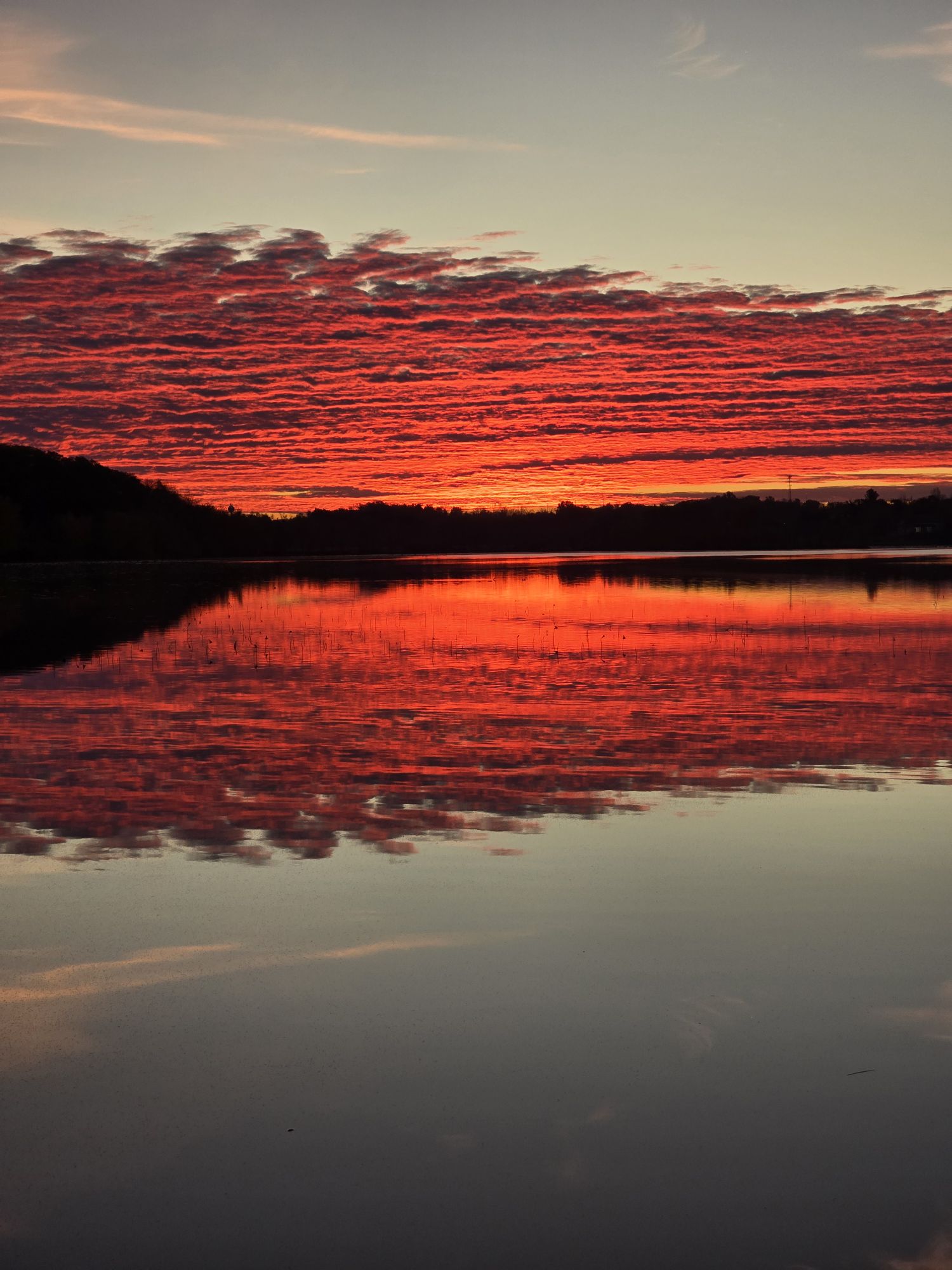
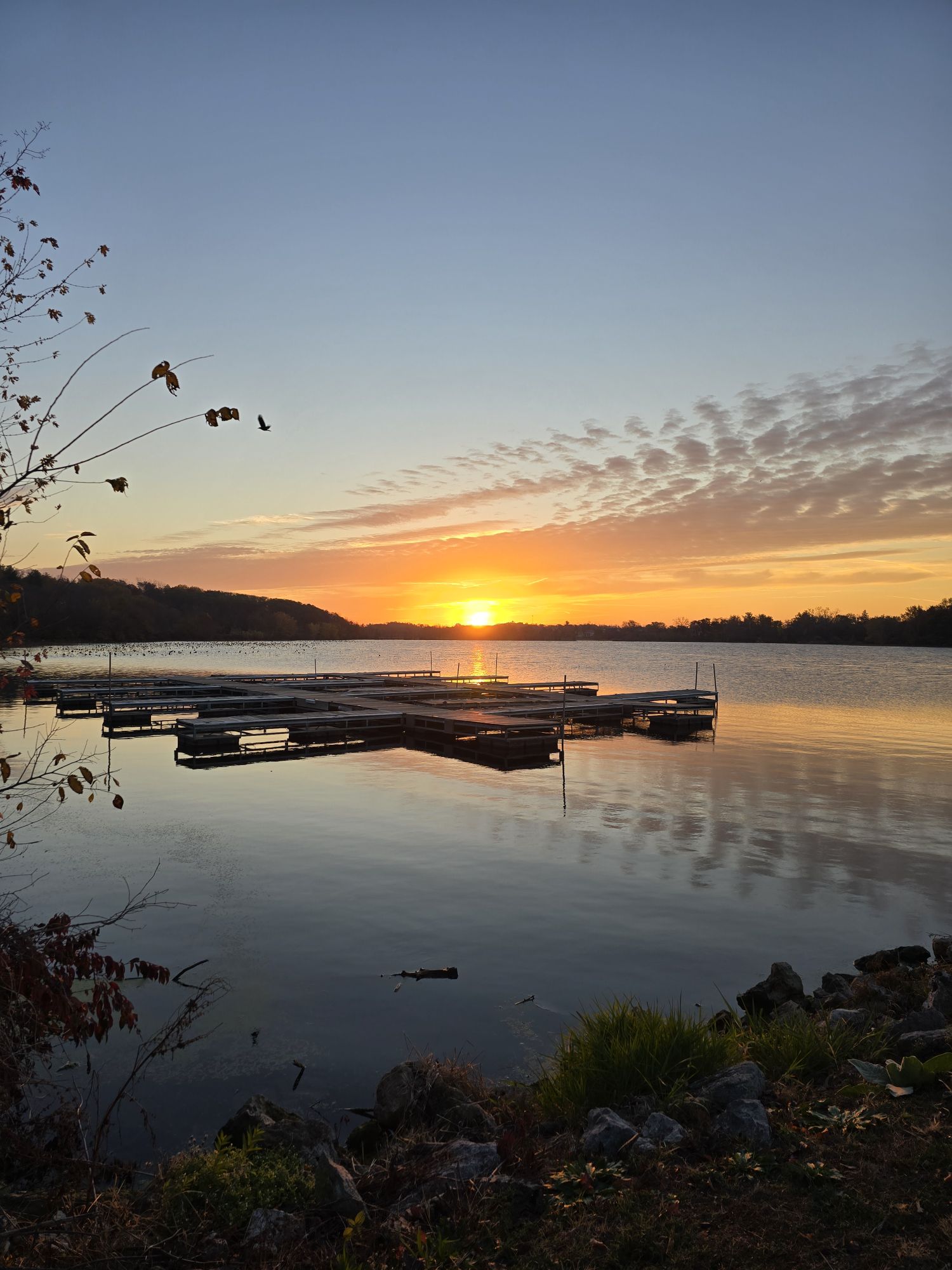
I walk for 30 minutes on the state park trail almost every day I’m home. The timing is about 20 minutes before sunrise so I can view the transition in the sky. I don’t think I will ever tire of seeing a sunrise.
Sunrise on the state park trail.Sunrise on the state park trail.Sunrise on the state park trail.Sunrise on the state park trail.Sunrise on the state park trail.Sunrise on the state park trail.Sunrise on the state park trail.
It is usually quiet on the state park trail during my morning walk. If someone is coming I hear their footsteps, or if they are on the phone or in a group, their talking voices carry a long distance. It was foggy Sunday morning when I heard young women talking. Before long, I could see headlamps bobbing above the trail. It was plenty light, yet the idea of a headlamp gained prominence over whether or not one was actually needed. I wished them a good morning as they passed me going the other way. They returned the sentiment. Even at dawn there is traffic on the trail.
I leave for the trail 20 minutes before sunrise. It is usually light enough to see and the transition period presents great light for capturing photographs. On Saturday I started walking on the boat dock to get an unobstructed view of sunrise. There was frozen frost on the deck and I slipped and fell on my backside. I let loose my mobile device and feared the worst. When I got up it was just less than halfway over the edge of the dock. I had visions of it plunking in the water, yet not this time. I am one lucky guy.
Last winter I walked the trail almost every morning regardless of ambient temperature and snowfall. I expect to do likewise this year. The state park trail is the perquisite that comes with living here I enjoy most. It also provides an opportunity to work on my photography.
It’s hard to believe it is November already. Following are some photos taken in the last two weeks.
Late harvest of Red Delicious apples.Pelicans returned.School bus.Morning light on the state park trail.Last gleaning of kale.View of our Autumn Blaze maple tree.The trail goes on forever.Autumn Blaze maple tree at peak color.Before sunrise on the state park trail.Kroul Farms specialty pumpkins.Autumn Blaze maple tree.
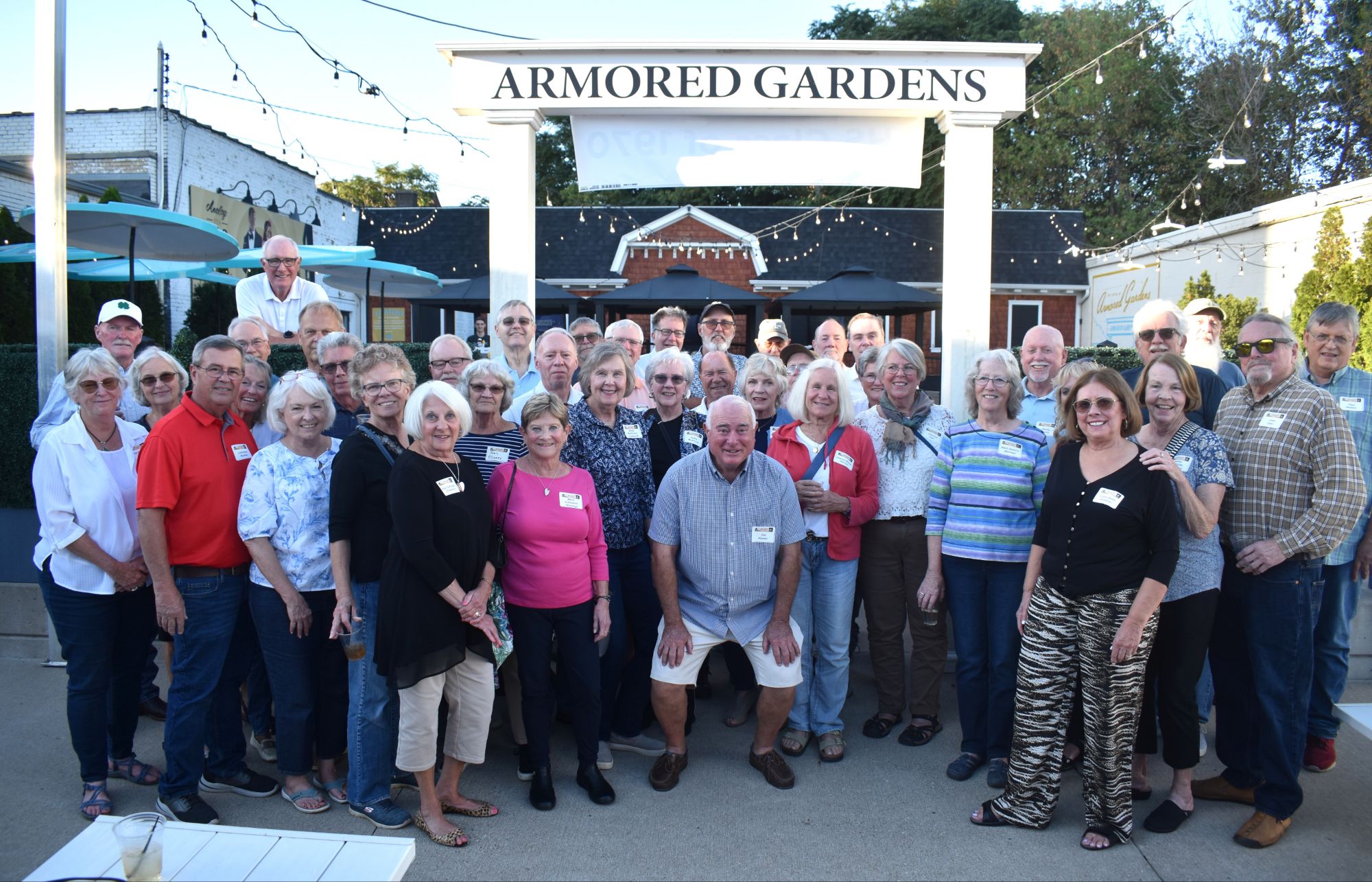
AHS High School Class of 1970 reunion on Sept. 25, 2025.
It’s one thing to take a posed photo — another to decide how it should be used: framed, shared online, or tucked away. That’s what this post explores.
We hired a photographer for our 55th high school class reunion. My instructions were to catch people looking at the lens with eyes open. I count 42 cheerful faces in this group photo. Of a class that numbered 260, that’s a lot still living. A few faces are partly hidden yet the image captures what was most important: proof we were there and together again.
Anyone who uses a camera seems likely to take posed photos. In the digital age it is easy to post them in social media and forget. Likewise, without being tethered to film, we can take many multiple shots of the same pose and then easily pick the best one to use. This is basic modern stuff.
The roots of my interest in posed photography, like so many creative things, lies with my maternal grandmother. I wrote about this in my book, An Iowa Life.
Mae was an influence on my photography. She purchased inexpensive cameras at the drug store and used them to record moments with the family. After researching the Polish community near Wilno, Minnesota, I came to believe her behavior with cameras in the 1960s had its roots in the inner cultural and spiritual realm filled with drama and emotion described previously. The surviving photograph of her sister Tillie’s confirmation is one example of this. The desire to pose and capture a photo was something creative I didn’t understand at the time. We were plain folk and when we got dressed for church, or to attend an event, it was a big deal. Mae wanted to capture those moments on film, consistent with her Polish upbringing. It’s a natural impulse that presents an interpretation of who we were. Of course, we always wanted to put the best foot forward in these constructed frames. (An Iowa Life by Paul Deaton).
When I was a grader, use of a photograph was simple: put it in an album. Such albums were defined more by the time frame in which film was exposed than subject matter. It was as if to say, “I just took these photographs, let’s save them.” On occasion we would make multiple prints of a “good” photo to give or mail to friends and relatives. Anything that did not make it into an album was stored in the envelope in which it came from the processor, along with the negatives. Eventually they accumulated in shoe boxes.
On May 4, 2008, I took my first photograph with a Kodak Easy Share digital camera. It changed everything. In particular, the subject matter of images was less about posing and more about casual capture, landscape and still life. We could snap photos like there was no tomorrow because of the lack of constraints caused by film. The number of images stored on a camera, and then transferred to a computer, exploded. A photograph became less special the way my grandmother understood it. It became a fungible commodity where without close examination everything looked the same. I mean, who had time for close examination of all those digital photographs?
With the rise of social media after 2006, a new place to save photographs began. When I post a photo on my BlueSky account, I do so with the idea other people might appreciate the work. Sometimes one goes viral but most of them get a few likes and then move on in the endless feed. Who knew looking at photos would become doom-scrolling? Social media lacks the permanence of a print or album, yet it is something important.
Most of the photographs from my high school class reunion will likely sit in a folder on the cloud until I want them again. I may get an 8 x 10 version of the reunion class photograph and put it in a standard frame. Partly to keep it handy to evoke its memories. Partly because as one person on our planning committee wrote, “regrettably, we will likely lose more classmates before our 60th reunion.” According to Social Security actuarial tables, 10 or 11 of the people in this photo are likely to die by then. The meaning is obvious. It remains what may be the last time I saw some of my friends. Isn’t this the reason we take photographs?


















 Journey Home
You must be logged in to post a comment.