I spent the last couple of days re-writing the end of part one of my autobiography. I am getting so close to finishing the narrative, I can visualize the printed book. Soon I’ll be proof reading for spelling and punctuation, setting margins, and picking a font.
It is the story I want to tell about my first 30 years. Some history, some background, some new writing, and many recycled passages from past writing. More than anything, the narrative is grounded in the reality that was my experience living through it. Writing chapter titles unleashed an avalanche that got this phase of the book finished six months earlier than I recently thought.
I can go into gardening season with the end of this project in sight.
Formerly nicknamed cable guys pay a visit on April 9, 2024.
Our cable television provider sent a message that if I don’t get a new device installed for our television the service will end. I said okay and they shipped an encryption device designed to make the internet signal readable by our television.
To install the equipment required a service technician. We used to call them cable guys, yet no more. The new technology eliminates the need for a coaxial cable for television. The internet, voice and video provider is removing television from their existing cable and moving it to the internet. They plan to use the freed up cable bandwidth to improve internet speed without laying new cable. A cable still comes into the house, yet the television connects via WiFi.
The technicians were here about two and a half hours.
The senior technician was training someone new. I have gotten to know my technician, and he provided his personal telephone number. He said call him directly should there be any problems. He lives only a couple of miles from my home and would come right over and fix whatever cropped up. I haven’t used this availability yet would, if needed.
At the end of the repair session, I checked the two channels we use, and both were coming in clearly. Here’s hoping I don’t need to call them again any time soon.
Organic juice section at the grocer on April 7, 2024.
It was a punk week as far as weather goes. Rain and snow kept me mostly indoors. My exercise log shows more indoors workouts which are never as much fun as walking on the state park trail. I managed as best I could.
Women’s Basketball
Sunday I turned on the television and found ABC which was carrying the NCAA Women’s Championship basketball game. Iowa lost to the University of South Carolina 75-87. It was the first time I tuned into a college sporting event since I watched the Iowa football team get shutout by Washington, 0-28 in the Jan. 1, 1982 Rose Bowl. The moral of the story is I shouldn’t jinx the luck by tuning in.
Our high school class reunion planning group was talking about women’s basketball at our meeting this week. I suggested we find one of the women who were leaders in high school to lead the formal program we have planned. One person asked if we had a women’s basketball team. Perhaps there would be a leader from there. We didn’t. We graduated high school before Title IX was signed into law.
Editing the Book
I finished the final rough draft of the first 38 of 62 chapters in my autobiography. This thing may not drag on until summer. My conclusion is I have been over the text so many times, it has become the story. There were some chapters that needed work, but it is a much better draft than what I finished last year.
One lingering concern is including long passages from my journal in the narrative without editing. Some of that writing is a bit rough. When I started journal writing in 1974, I was not very good at it. My argument to myself is that it is better to show the work than sand off the edges in a new narrative. In part, that is to show my progress as a writer in a work intended to showcase my writing. The long passage I wrote in France was particularly rough, yet it serves as an example of how my journal writing started. For now, I’m leaving it in.
The other question is about passages written about long ago events since I started this blog in 2007. There may be a case to just rewrite these. At the same time, they capture a moment in time that would vanish should I re-write them. I left them in at this point.
End of Life Planning
I read Mary Ann Burrows new book, The Last Hurrah: A Living Workbook for a Happy Ending. The book is about end of life planning, but not the kind I expected. She defers to others the tasks of financial and legal advice and writes mostly about how to turn our last days into a celebration. If someone knows me, they know I am not a big one to celebrate moments or have a big to-do about life’s events. The biggest events in my life were our wedding and its two receptions, and our child’s high school graduation. We had gatherings for them. So many of my good friends have died already, I’m not sure who would be left and in good enough shape to travel for a celebration. I started keeping my own obituary a number of years ago. It is pretty bare bones, and that’s the way I like it.
Clear Organic Juice
I went to the grocer to find clear organic juice for my spouse. She wanted organic apple juice, which wasn’t available. In typical (for us) form, I started sending images of various ingredient labels and products. I offered to get non-organic apple juice. In the end, I phoned her and said, “I’ve been waiting in this juice aisle and am starting to get thirsty.” We gave up and I brought home boxed vegetable broth instead.
It was unsettling to be unable to dig in the garden because of inclement weather. The seed potatoes appear to be doing well, and the seedlings are growing. Here’s hoping the coming week find me spending more time in the garden.
Editor’s Note: This is a chapter from my autobiographical work in progress.
By 1962 I owned a camera and used it to photograph our neighborhood. It was an early form of creativity that stayed with me all my life.
I walked north from home on Marquette Street and took snapshots of the Levetzow’s holiday display at the intersection with High Street. They owned Model Dairy Company and at Christmas filled their whole yard with lighted Christmas decorations. On the southwest corner of their house was a large crèche. To its right was a lighted display of Santa, his sleigh, and reindeer. We viewed them as an affluent family, such affluence being on conspicuous display at the holidays. They had a kid-sized model of their dairy delivery van, although none of us local kids got to drive or play with it.
I photographed the holiday display at the house across the street to the south. This was a rental through which families moved frequently. Eventually, a young Joe Whitty and his family moved there when he worked at the nearby Mercy Hospital bakery. He later opened his own chain of pizza and ice cream restaurants called Happy Joe’s.
Using a camera was an inexpensive way to have fun. Because the process took so long, it seemed more creative: requiring thought, editing, and an ability to understand the camera viewer and how it would relate to the finished print. I did not crop many photos at first but accepted what the processor developed.
We posed for pictures with my film camera. I gave more thought to each frame than I might today because the results were not immediately available. There were only so many shots on a roll of film, so it felt necessary to get the framing and pose right. It was a process of experimentation and of managing expenses. Developing film could take a while, depending upon when the entire roll was exposed, and when one could get it to the drug store to be developed. Photographs were special and I believed they would have enduring value.
There is a photo of me in my altar boy cassock and surplus, one of us kids bowling, and many posed photos of all of us in the foyer. One favorite foyer photo is of Mother and Father dressed up in costumes to go out on New Year’s Eve in 1962. The following January, I captured my sister’s birthday party during which we all danced the twist. Mother took some of those shots. My parents had just begun listening to long-playing records at home and had copies of popular LPs by twist artists like Chubby Checker and Fats Domino.
In 1963 I began buying color film. Pictures survived: of Easter, my sister’s first communion, a trip to the park, Father standing next to the wrecked 1959 Ford. Mostly they were posed and signified a special event.
Mae was an influence on my photography. She purchased inexpensive cameras at the drug store and used them to record moments with the family. After researching the Polish community near Wilno, Minnesota, I came to believe her behavior with cameras in the 1960s had its roots in the inner cultural and spiritual realm filled with drama and emotion I described previously. The surviving photograph of her sister Tillie’s confirmation is one example of this. The desire to pose and capture a photo was something creative I didn’t understand at the time. We were plain folk and when we got dressed for church, or to attend an event, it was a big deal. Mae wanted to capture those moments on film, consistent with her Polish upbringing. It’s a natural impulse that presents an interpretation of who we were. Of course, we always wanted to put the best foot forward in these constructed frames.
Because photography was a technology with numerous steps, and there was a cost of film and prints, I don’t have many photos from my earliest days. However, I have a lot by comparison. The ones that survive tell me who I was and inform us about our family culture. They are an important part of remembering who we were. From that early time, I began thinking about how to narrate my life using a camera. There is a direct creative thread running from 1962 to the present and spun on my use of cameras.
In an interview with Missouri political activist Jess Piper, Iowa journalist Doug Burns captured this statement:
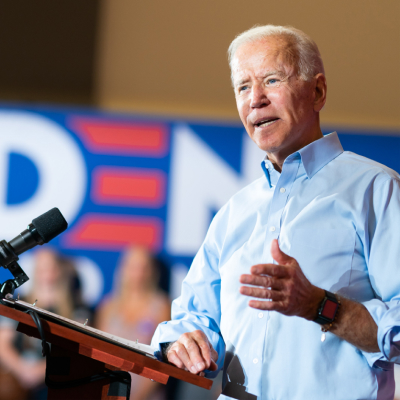
“I specifically don’t talk about Biden because all he’s doing is delivering roads and that sort of thing, but they need to talk about who’s really impacting their life and that’s people in the Statehouse,” Jess Piper, the executive director of Blue Missouri and the host of the “Dirt Road Democrat” podcast, said in an interview with The Iowa Mercury.
The Iowa Mercury Substack by Douglas Burns, March 31, 2024.
What in the bleeding hell? Maintained roads, bridges, airports and the like don’t impact people’s lives?
Where to begin?
Piper was in Des Moines to speak at a Progress Iowa meeting celebrating the organization’s 12th birthday. Her statement is an example of “one size fits all” political advocacy. She denies complex realities of modern campaigning and should be rejected out of hand. It is possible Burns took her out of context, yet I doubt it.
The kernel of truth in the statement is voters just expect that government will take care of infrastructure without making a big to-do about it. For example, in August 2023, as the the intersection improvements at Interstates 80 and 380 neared completion, there was a photo opportunity for local elected officials to celebrate the five-year project. No one gives two hoots in a holler that politicians were there at the end of the $387 million interchange project. Sure, the money for the project came from government. The government was doing what it is designed to do. Does the new interchange impact my life? It certainly does, contrary to Piper’s statement.
Here’s the rub. While the Biden Administration gets full credit for promoting and working with the Congress to pass the Infrastructure and Investment Jobs Act, it was needed because of decades of bipartisan neglect of our roads, bridges, airports and railways. Biden exercised his power and influence to convince a do-nothing Congress to do something in the real world. The need was so obvious, even Republican Chuck Grassley broke ranks with Iowa Congressional Republicans and voted for the bill. That is something positive about Biden. Why wouldn’t we mention it? Chuck Grassley certainly does when funds from the new law hit Iowa.
What should Democrats be saying to voters?
Let’s start with elections 101: voter registrations. On April 1, the Iowa Secretary of State reported 1,521,112 active, registered voters in the state. Of those, 460,253 were registered Democratic, 608,383 Republican, and the remaining 452,476 No Preference or Other. With a diverse electorate, at 30,000 feet, “one size fits all” is preposterous.
What about something that matters more: the constant barrage of lies, misrepresentations and disinformation originating in the governor’s office? This week, Governor Reynolds released a press release supporting the Iowa Attorney General’s lawsuit against the Securities and Exchange Commission. The SEC is implementing a Greenhouse Gas Disclosure Rule and Iowa Republicans don’t like it. Here is the governor’s statement:
Joe Biden has become a radical climate alarmist, seeking to transform every agency, including the SEC, into his personal EPA. The SEC is not a climate regulator, and the Greenhouse Gas Disclosure Rule is not constitutional. I appreciate Attorney General Bird taking the lead on this lawsuit, taking Biden to court yet again. It has become increasingly clear that the Biden Administration wants to destroy America’s energy independence, trounce on the sovereign rights of states, and cripple the livelihoods of American workers.
Press Release: Gov. Reynolds Statement on Iowa AG Lawsuit Against SEC, April 3, 2024.
Why is Reynolds making an issue of this? The press release is intended to enhance her political standing. Anyone who met and knows Joe Biden also knows he is far from being a “climate alarmist.” If anything, he could make further improvements to protect our air, water, and land. That phrase comes from conservative talking points handed down with fossil fuel money like that provided by Charles Koch. His organization, Americans for Prosperity, is a constant presence inside the state capitol, and Koch’s Heritage Foundation is a prime driver of conservative political initiatives in the state. Climate alarmist? Give me a break.
In the last sentence of her statement Reynolds denies the reality that under Biden, America has become a net exporter of petrochemicals and improved our energy independence. Far from “trouncing state’s rights,” Biden uses the authority of the federal government to make positive change when the states will not. I trust he will step in over Iowa’s failure to regulate agriculture to reduce pollution of our air and water. Iowa Republicans won’t like that either. Biden cripples American workers? Poppycock! Governor Reynolds, work with your colleagues in the legislature to raise the minimum wage, improve workplace safety, and put real teeth in state regulations that affect workers. This sentence, along with the entire press release, is intended to distract Iowas from real issues that impact their lives. I submit there is plenty to talk about here. In a time of misinformation and disinformation our governor is leading the pack. Democrats can’t allow her statements to exist in a vacuum.
Democrats will never get away with saying only that Joe Biden is great. What we should add to our political discussions is correcting the lies and disinformation coming from the state’s highest officials on a daily basis. We also need to be talking up what Joe Biden has done for Iowans. He is doing what Iowa Republicans have not and they seem to be bristling under his achievements.
Jess Piper appears from her public presence to be a good person, a solid progressive. Iowa politics requires a difference approach from what she is using in Missouri.
Last Obama Campaign Rally in Des Moines, Nov. 4, 2012.
Beginning with a Herman’s Hermits concert at Davenport’s Municipal Stadium on Aug. 27, 1966, I’ve attended a lot of live musical performances. In this post, I write about some that stand out. They are listed in chronological order.
Van Morrison – On April 3, 1970, I saw Van Morrison play at the Fillmore East in Manhattan. Members of my senior high school class took a trip to Washington, D.C. and New York. I lived on poker winnings from nightly games with my classmates for the Washington part of the trip. Three of us decided to use one of the free nights in New York to walk from our hotel on Herald Square down to the Fillmore East and see a concert. We had no idea what we were to experience.
Morrison played Brown Eyed Girl, which was popular at the time. Some of my fellow guitar players had tried their hand on that classic in Iowa. The big event was Warner Brothers Records had released the Moondance album in January, and those songs made up most of the show. The whole thing was an experience, including the famous Joshua Light Show. I am thankful for that opportunity even though it was not part of the plan when we left Iowa.
Grateful Dead – When the Grateful Dead played at the University of Iowa Field House on March 20, 1971, I ran a Strong Trouper carbon arc spotlight. The evening started with floor seating, but the crowd promptly stacked all of the chairs on the sides and despite efforts by the campus police to bring order, the band played on. My partner, running a spotlight on the opposite side of the field house, had to leave early to strike a set at Hancher Auditorium. For a while, after campus police turned off the stage lights, I was the only illumination during the performance. I saw the Dead again on Feb. 24, 1973.
Allman Brothers – The Allman Brothers Band was something. When they appeared at the University of Iowa Field House on Feb. 19, 1972 the album they had been working on, Eat A Peach, had been released the previous week. Duane Allman died after a motorcycle accident in October 1971 while they were working on it. The idea of dual lead guitars had not occurred to me but it became a signature sound for the band. I saw them again when they returned on Nov. 9, 1973.
Ravi Shankar – An art student friend and I drove to Cedar Rapids to hear Ravi Shankar with Alla Rakha perform at Sinclair Auditorium at Coe College. The improvisational nature of their music was astounding. I can’t forget it. The date was Feb. 20, 1973.
Eric Clapton – The Mississippi Valley Fairgrounds in Davenport was host to Eric Clapton, Yvonne Elliman, Carl Radle, Jamie Oldaker, and others on July 27, 1974. I had listened to Clapton’s records going back to his work with John Mayall and the Bluesbreakers. The band was clearly into the performance as the sun set over the fairgrounds, making it a memorable evening.
Judy Collins – My friend and I saw Judy Collins perform at the Des Moines Civic Center on July 30, 1982. I proposed marriage to my friend 19 days later. She accepted and we remain married.
B.B. King – My sister and I went to hear B.B. King at the Col Ballroom in Davenport on March 25, 1983. My grade school friend, Red Gallagher opened for the blues legend. There is nothing to say but B.B. was the king.
Sir Elton John – At one of the weirdest concerts I attended, Sir Elton John performed at the Cow Palace in San Francisco as part of Oracle Open World on Oct. 24, 2006. Tens of thousands of Oracle users were in attendance. I knew virtually none of them yet enjoyed the performance. Corporate concerts are just a different vibe.
Bruce Springsteen – The night before the general election, Nov. 4, 2012, President Barack Obama hosted Bruce Springsteen on the streets of Des Moines. My friend Jan and I left a canvassing operation for a house candidate early to drive to Des Moines and be part of Obama’s final campaign rally. The two of us met Obama in the receiving line after his 2006 speech at the Harkin Steak Fry and wanted to get closure on the campaign. No regrets about that decision.
Precipitation was forecast all day Wednesday so I did my exercising indoors. On Tuesday, I went to town and bought a Powerball ticket. I understand the odds of winning are against me. Most days I fail to match a single drawn number. Other days, I don’t buy a ticket. At least we can depend upon it snowing in early spring.
I’ve been working on our high school class reunion. We missed the 50th because of the coronavirus pandemic. We scheduled a 50th-ish reunion this July. The former classmates on the planning committee are all great.
When I think of high school, I return to the most dominant feature: the death of Father in an industrial accident on Feb. 1, 1969. Dealing with his sudden death occupied me during the remaining 16 months of school. It was a brutal and clear demarcation of my life. There was a before and an after which defined who I was, and who I would be.
High school was no fun. I checked things off while in school. Tried out for football and swimming and didn’t make either team. Played intramural basketball with some of my nerdy friends plus the one Hispanic person in our class. Sang in chorus all four years. Was inducted into the National Honor Society. Was on the stage crew. Got a part time job after school at a local department store. Bought a used Volkswagen Beetle to get around and began driving it to school. Practiced and played guitar, taking lessons from someone not far from our neighborhood. While this seems bucolic as written, whatever was pleasant about it vanished with Father’s death.
I was lucky to form a new group of friends after Father died. They helped me through a turbulent time. My new friends helped me cope with finishing high school, and getting through college. Not to mention their help with the pressures of a society in transition in the late 1960s and early ’70s.
I had only begun to discuss how I would live my life with Father when he did not return from the meat packing plant. He didn’t have any suggestions as we discussed college and beyond. I enrolled in engineering classes at university but couldn’t master calculus or the slide rule. Without my new friends, I would have drifted into oblivion. With their help, I graduated in four years with a degree in English.
It is good to remember all this about high school now. For that, the reunion and its planning will serve. I still have friends among former classmates. I enjoy thinking about them while stuck indoors during this spring snowfall. It will be good to see them again. The odds of that are better than winning the Powerball.
With chapters of part one of my autobiography named and numbered, it feels I turned a corner from being stuck, to completing the narrative this year. As soon as I typed them all and shrunk them to fit on a single page, it became clear what I had to do next to produce the first volume.
In naming the chapters I re-read part one. The narrative seems sound. The story has defined beginnings, middle points, and an ending. The ending leaves enough suspense to engage readers until I finish part two. Finishing part one this year is definitely possible.
The next step is to return to the text and make a “final rough draft.” What that means is to edit chapter by chapter and resolve any open issues through editing. I had a tendency to defer open issues until “later.” With this phase of the writing, there will be no “later.”
On Tuesday I finished the Dedication, Preface and Chapter One. The early chapters have been worked the most so editing should proceed quickly. There are 62 chapters, so if I proceed with due haste, I should have a finished final rough draft by Labor Day. Some of the later chapters were rushed last year in the interest of “completion.” They will need more work than earlier ones.
Once the final rough draft is finished, I plan to find a reader or two to provide feedback. Many thanks to the three early readers. I don’t want to wear them out with this project so I’m picking new ones. I will also price a professional reader to go through and make suggestions. If I can afford it, I’ll go that route. Following the readers, there will be corrections, more editing and hopefully a “final” product..
At that point, I will need to weigh options. While there is finality in “final rough draft,” is a book ever really final? If any changes are needed — a chapter added, narrative clarified — that will be the time for it.
Once I settle on the narrative, formatting is next. The hodge-podge of cutting and pasting that produced it will have been pasteurized by then. I can focus on making paragraphs, quotes, punctuation, line spacing, chapter breaks, and spelling consistent throughout. This is a kind of work that should feel good when finished, but will be a bear while going through it.
I will need to decide what to call my maternal grandmother. I visit her character at least ten times in the narrative. She was referred to by her birth name Salomea,* nickname Mae, Mae Robbins, Mae Nadolski, Grandmother, and Busha over the years. This will be the time to decide usage so readers recognize her wherever she appears..
While we don’t know exactly what this year will bring, I’m hopeful that by early 2025 I will be holding this book in my hand.
*Footnote: It seems possible Grandmother was named for Salomea of Poland, a princess and queen during the 13th Century.
Saturday was the first day I worked up a sweat in the spring garden. I moved storage items around and contemplated where I should bury the potato containers. The fence around the southwest plot needs to come down, and ground cover taken up. The layout will be changed to accommodate six potato containers, mowing around the apple tree, and placing the large compost bin made of old pallets. There will be space leftover. It will be an awkwardly shaped space.
Potatoes do better when there is a fence around them to keep deer away. If I can find mulch to put around them, they won’t need much besides water and pulling a few weeds. I must remain vigilant to see if the Colorado Potato Beetle arrives. The insect hasn’t been around the last few years.
I moved chard, collards, and fennel seedlings into larger pots to allow them to grow. I also thinned the bok choy family of seedlings to one sprout per block. One never knows how older seeds will perform so I doubled up. About half the celery seeds germinated. I’m not sure if twelve plants will be enough and I may plant more.
How many varieties of pepper seedlings should be planted? I cut back. Using the remaining bell pepper seeds from last year, I may not attempt to grow them again. With nice bell peppers available year-around at the wholesale warehouse, I am less worried about my failure to grow good bell peppers. The rest of the peppers are Serrano, Jalapeno, and a variety of long, red hot peppers for drying and converting into red pepper flakes. Reducing the variety aligns with how I use them. If I want a specialty pepper, I can likely get them at the farmers’ market.
The most important annual crop is tomatoes and I cut back the number of varieties this year. I’m a bit nervous about that with three varieties of plum, three slicers, and five cherries. For fresh eating, we tend to consume more cherry tomatoes than slicers. Both are reasons to grow a summer garden. The plums are mostly for canning whole or as sauce. There can never be enough of those.
I collected fallen branches and twigs from the yard and started a burn pile. I’m running behind on that, yet there is not a lot to burn. All the same, spring gardening has begun. It will be a constant activity from now until Memorial Day.
It is difficult to grasp that one fourth of the year is gone. Days gallop by and run into each other. It is an acceleration I neither prompted nor enjoy. This week’s journal is a bit of hodge-podge. Sometimes that’s how the words fall.
Chapters
One of my early autobiography readers recommended breaking the narrative into chapters. This has been the single most useful piece of advice I received. With chapters, the stream of consciousness style – emulating Jack Kerouac – is parceled into understandable bits suitable for people with shorter attention spans. Likewise, it enables me to consolidate writing about specific topics in one place as appropriate. With chapters I have a better understanding of where the narrative is and is going. It will enable me to determine what’s missing and what needs cutting. Part I stands at 67,271 words, Part II at 60,950.
With that in mind, I plan to push through spring and summer to finish Part I, the story leading to 1982. If all goes well, I’ll self-published that part in early 2025.
Reading more, retaining less
I am reading more yet retaining less of what I read. I don’t like it. I have a shelf of recently read books and only a few scenes in a small number of them stand out. Not sure what, if anything, to do about that.
Reading 25 pages per day is a first priority. I make coffee, tend to chores and then read. My reading habits go way back. Here is an excerpt from my autobiography.
When I was an altar boy at Holy Family Church, Monsignor Barnes influenced me, although I didn’t realize it at the time. He taught me to structure things, with the most memorable advice being about reading. He said, set aside a goal in reading. Read 50 pages each day and stick to your goal. I have not followed that advice religiously, and lapsed in my reading, yet it became part of me, continuing into my seventies.
Unpublished autobiography.
There may be a self-improvement project in this. Unlike many, I won’t give up on reading.
The Jacob’s Ladder
In my quest to read one more book in March, I headed to my poetry shelves and picked Denise Levertov’s The Jacob’s Ladder. I wrote a brief review: “These poems are rooted in a post-war ecosystem of ideas, images, and language. As such, they are a snapshot of that period, and less relevant to the sensibilities of the third decade of the 21st Century. I don’t regret reading them. Some images stand out, especially in the namesake poem. Returning to them seems unlikely.” So it goes. Seven books read in March.
Disposing of Old Medicine
I took some old medicine to the United Methodist Church where pharmacy students from university would dispose of it. As I opened the door, about 15 sets of eyes greeted me, saying I was their first person. I felt obligated to sit down and talk about vitamins and medicine I am taking. It would have been rude to just drop my pills and leave.
The discussion went on to nutrition, dietary practices, sweet corn in the area, gardening, grocery shopping, everything a gardener would have to say about life. They offered choice of gifts and I picked a pill splitter over the multiple pill planning devices. They asked permission to use a photograph with me in it. I said okay.
Green Up
Leaves are budding on lilacs, fruit trees, and all around. Spring flowers pushed through the surface of the soil and flower buds have formed on some of them. This is a period of hope and promise. A cyclical explosion of greenery for which I’m ready.
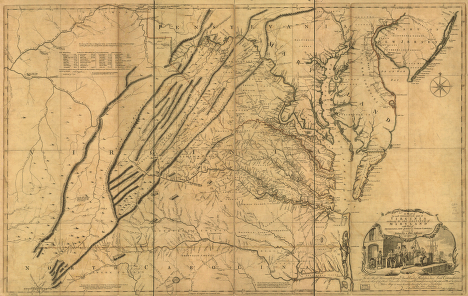
The first time I heard the phrase “green up” was in the motion picture The Trail of the Lonesome Pine, based on the book of the same name, written by John Fox Jr. It is set near Big Stone Gap, Virginia, about 17 miles from Glamorgan where Father was born.
“I’ve been talking to your pappy,” Dave Tolliver said. “We’s going to get married.”
“When?” queried his cousin June Tolliver.
“Hog killing time. Your pappy has invited all the Tollivers. The whole kit and boodle of them.”
“I ain’t marrying till green up,” June Tolliver said. “Spring’s always the time to do them things. Then it’ll be next green up and the next. I don’t feel nothing.”
The Trail of the Lonesome Pine, Paramount Pictures, March 13, 1936.
Despite the speed with which time flies, I am leading a decent life. Decent enough to write about it a while longer. Thanks for reading.





 Journey Home
You must be logged in to post a comment.